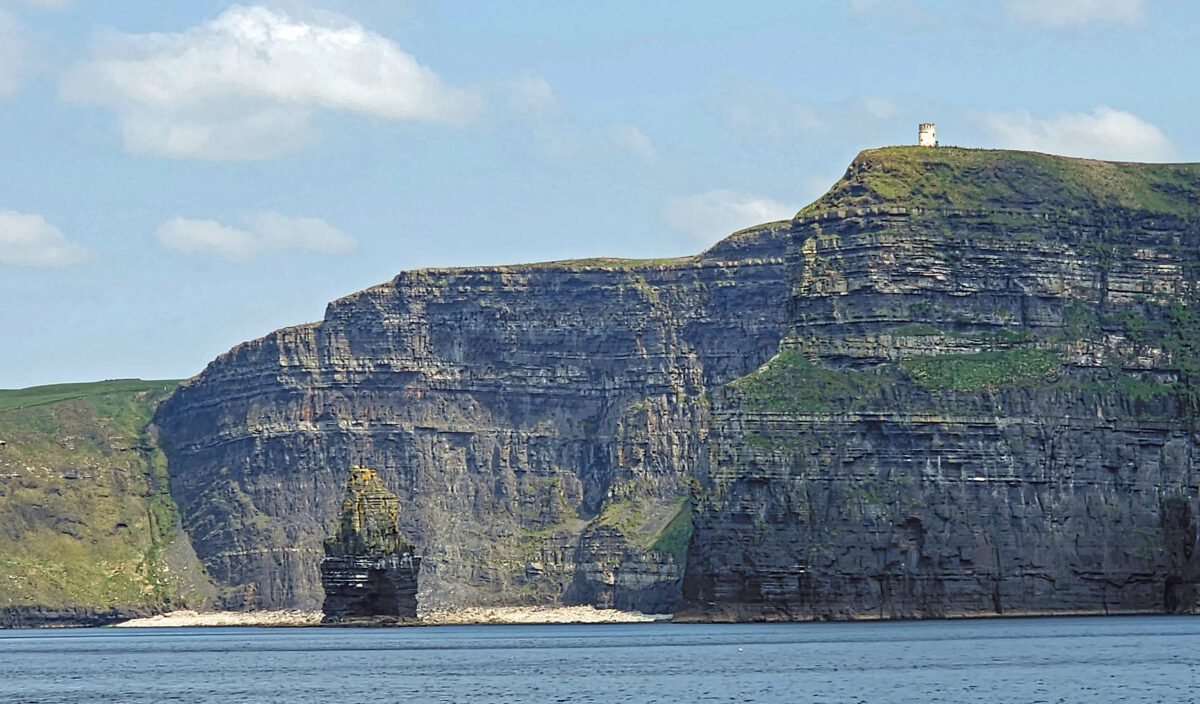
Galway and Western Ireland

By Alan K. Lee

Introduction

My wife and I had the pleasure of visiting Ireland in the summer of 2025. We split our time between Dublin and Galway and Western Ireland. Galway is an easy train ride or drive from Dublin and makes a good base from which to explore the west coast of Ireland. The Cliffs of Moher (Ireland’s number one tourist attraction), the Aran Islands, the Burren, and Connemara are all easily accessible  from Galway by car. Several tour companies (e.g. Galway Tour Company and Lally Tours) offer day tours to all four for those visitors (like my wife and I) that choose not to rent a car.
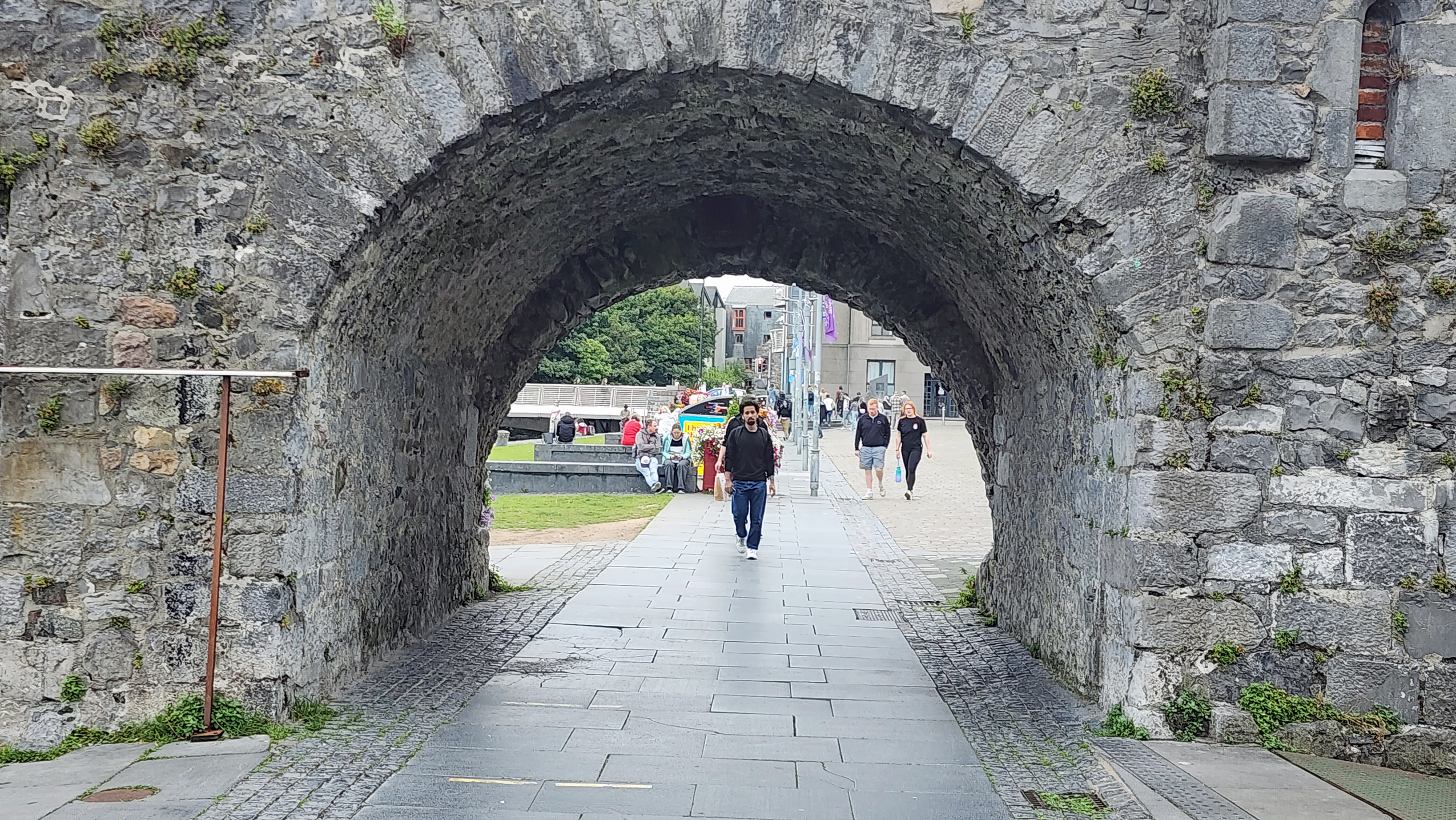
Spanish Arch, Galway

History and Culture

Galway and Western Ireland are culturally closer to their Celtic (and Norman) roots than the more cosmopolitan and English influenced east coast. Most of the population has deep Celtic roots. A significant percentage of the population speaks Gaelic (or Irish as the British call it) on a regular basis, although everyone speaks English as well, and road signs are in both English and Gaelic. The city of Galway is a bit of an exception in that it was conquered by the Normans in the 13th century and early in its history attempted to keep the Celts out of the city entirely. And about a quarter of the residents of Galway were born outside of Ireland, as is the case in Dublin.

The residents of Connemara, to the north of Galway, and the Aran Islands and the Burren, to the southwest, are more traditionally Irish than Galwegians. While we didn’t get to really explore the culture of Connemara, the Burren, and the Aran Islands in our brief visits, we did get at least a taste of the culture from our tour guides. And, as in both Dublin and Galway, the locals that we did interact with were friendly and welcoming.
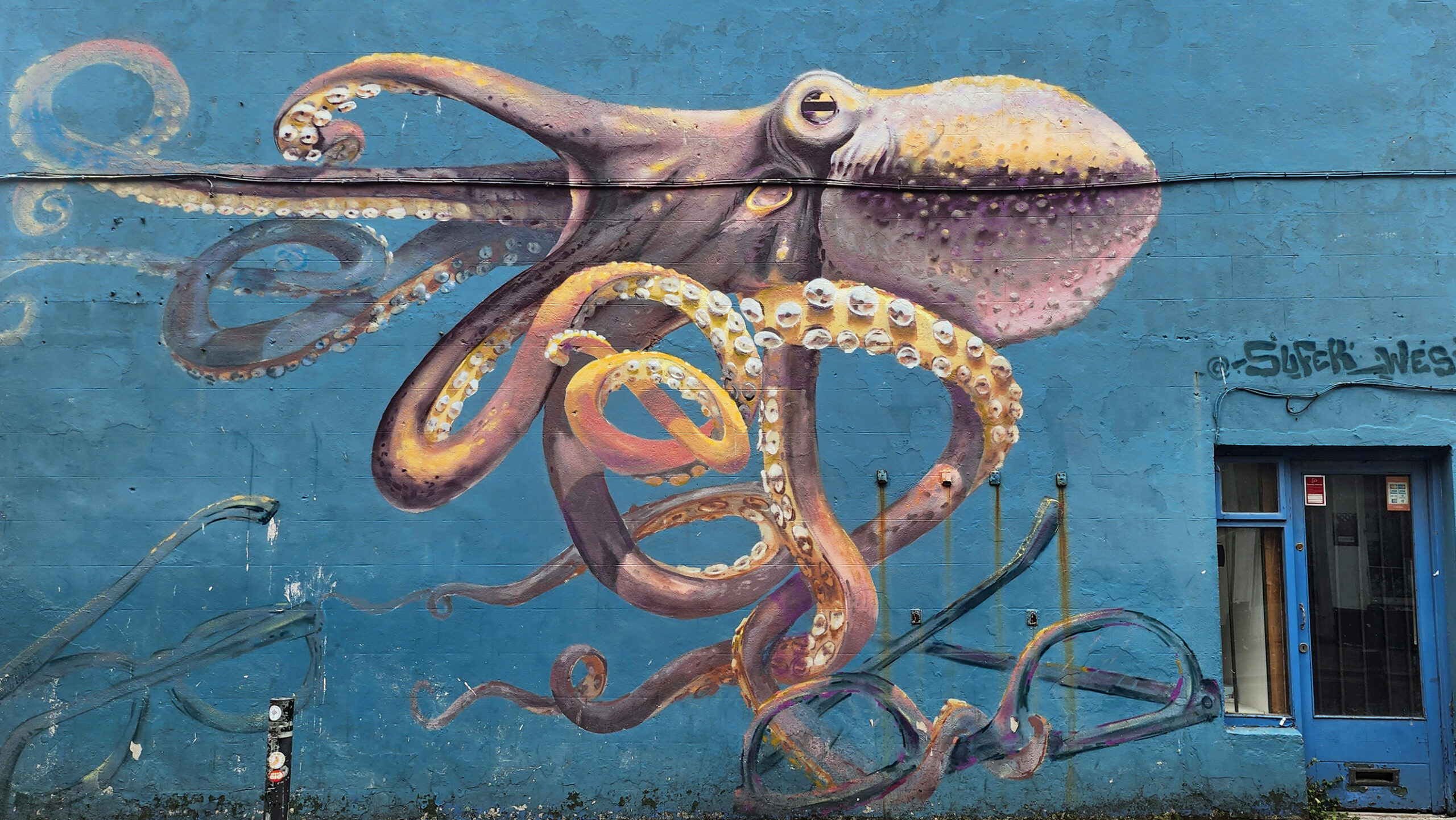
Building mural, Galway

Galway

Galway grew up around a castle that was built by the King of Connacht in 1124. One hundred years later, the city came under Norman rule. In the Middle Ages, fourteen merchant families (the “Tribes of Galway”) ruled the city, which became an important trading port. Twelve of the fourteen “tribes” were of Norman descent and two were Irish. Today, Galway is the fourth largest city in the Republic of Ireland, with a population of about 85,000.
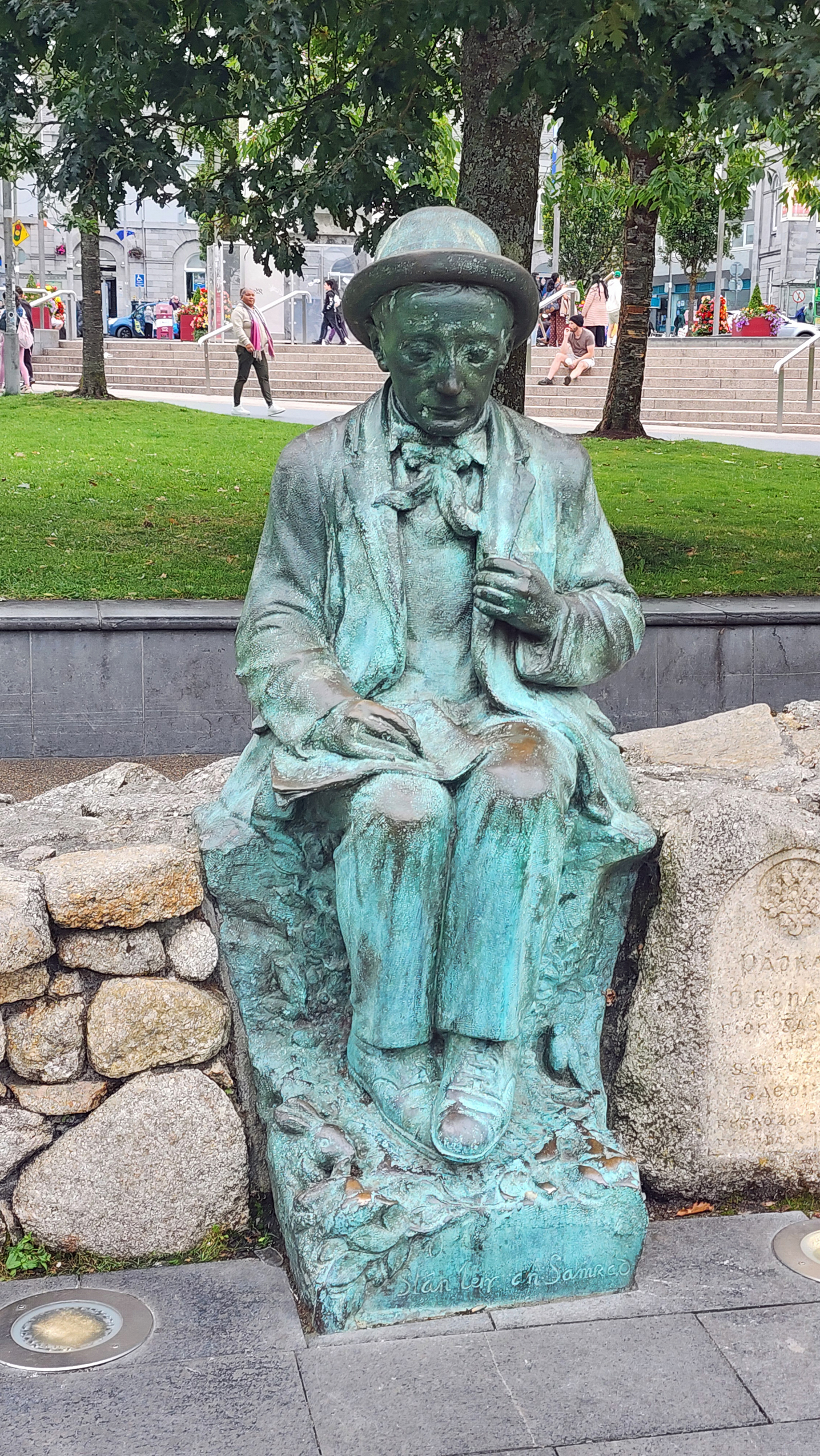
Eyre Square statue
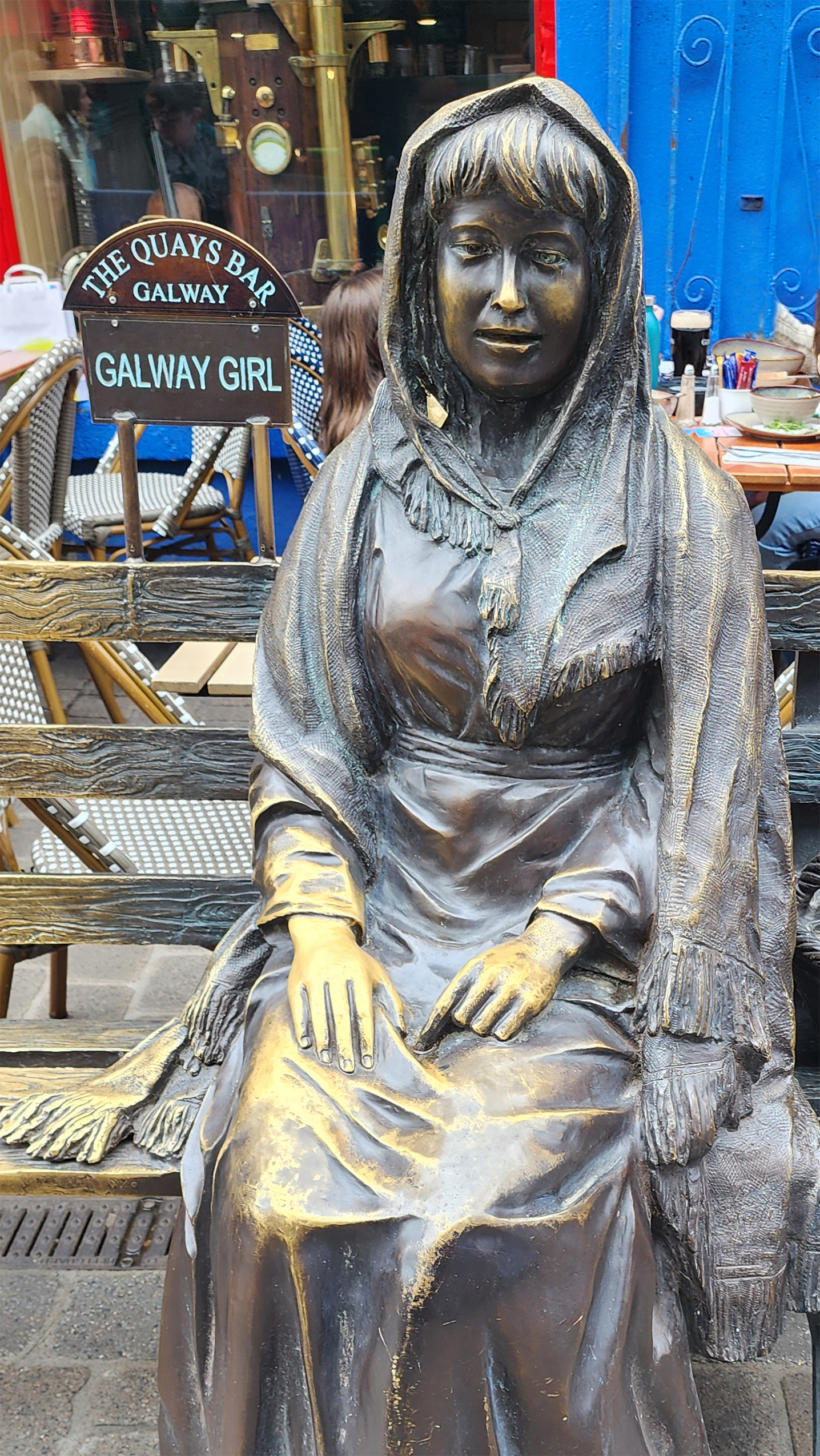
Galway Gal statue

While we primarily used Galway as a jumping off point for tours of the Burren, one of the Aran Islands, the Cliffs of Moher, and Connemara, we also had some time to explore the city. Eyre (pronounced “air”) Square is the heart of Galway. It’s surrounded by restaurants and shops, the train station is next door, and it hosts festivals and concerts throughout the year. There was an arts and crafts festival going on while we were there. We started each day with breakfast at one of the restaurants bordering the square (try Esquires Organic Coffee Company). All of our tours started from near the square (aka John F. Kennedy Park).
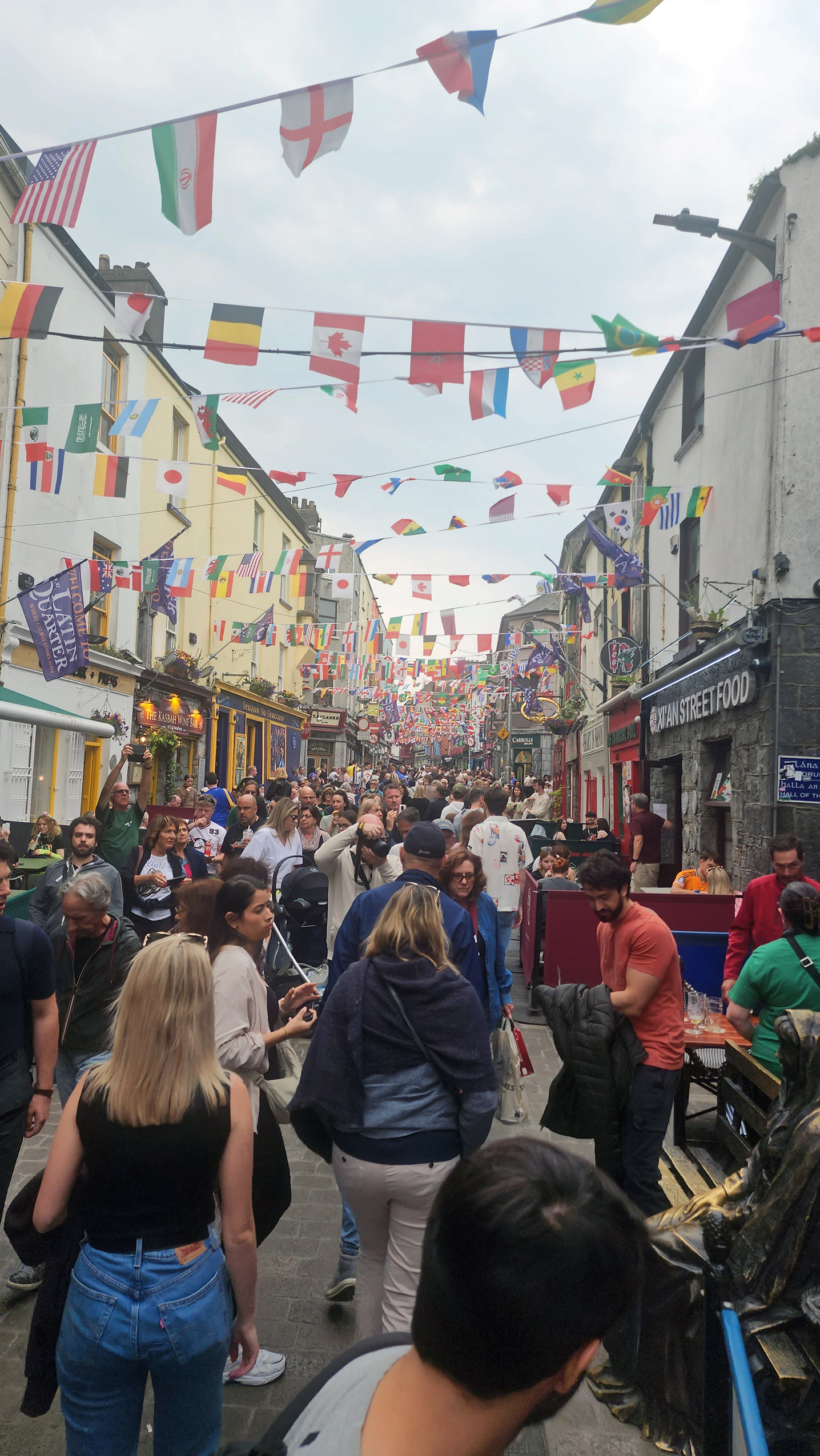
Latin Quarter, Galway
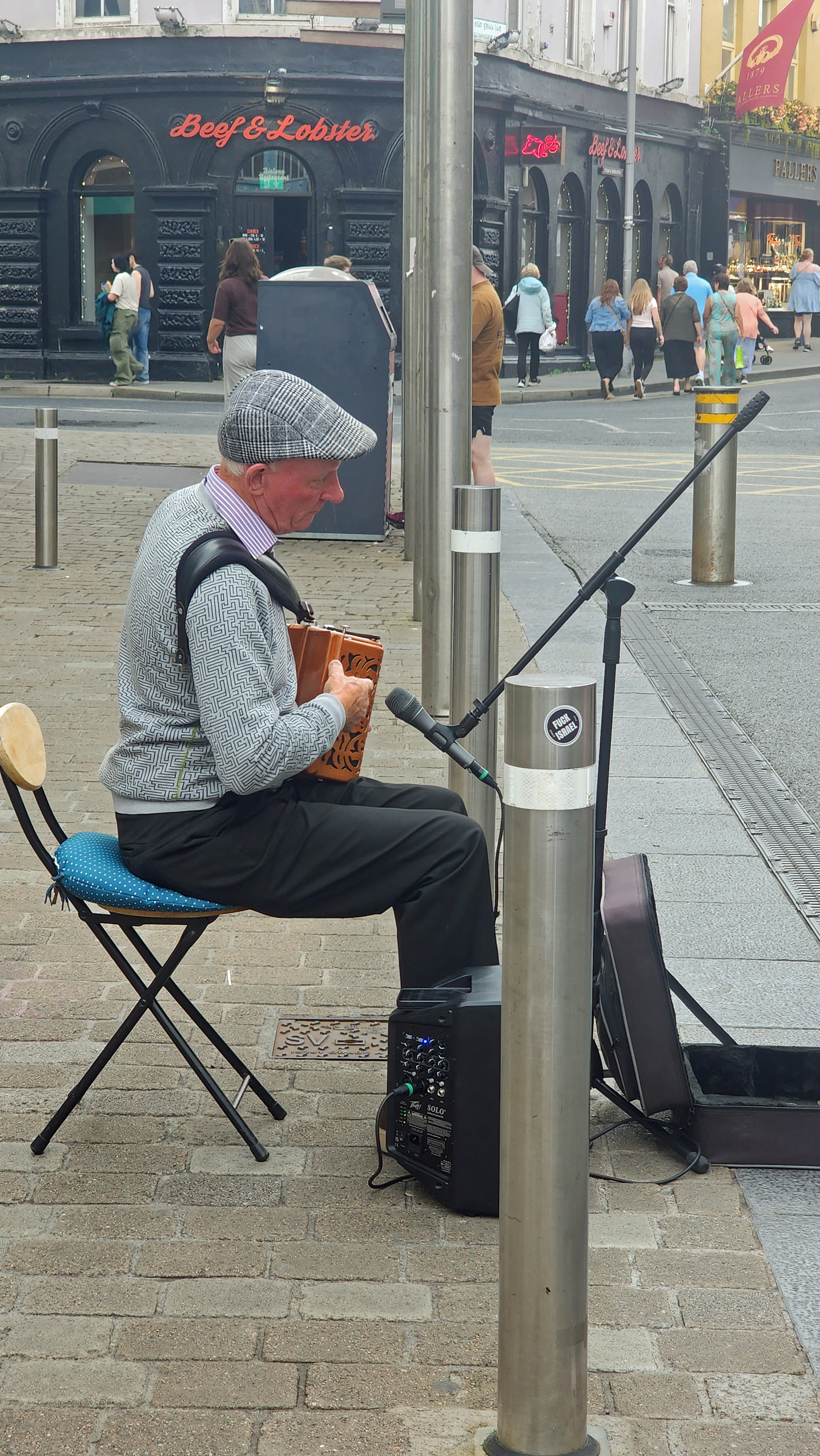
Street musician, Galway


From the northwest corner of Eyre Square, William Street takes you into the Latin Quarter, a lively (and crowded) area with plenty of shops, restaurants, pubs, and attractions, like Lynch’s Castle. William Street becomes the well-named Shop Street after a few blocks, then High Street, and finally Quay Street before reaching the River Corrib and Wolfe Tone Bridge. Turning left just before the bridge brings you to the Spanish Arch, one of the two remaining sections of the original city wall. Walk through the arch to get to Galway City Museum.
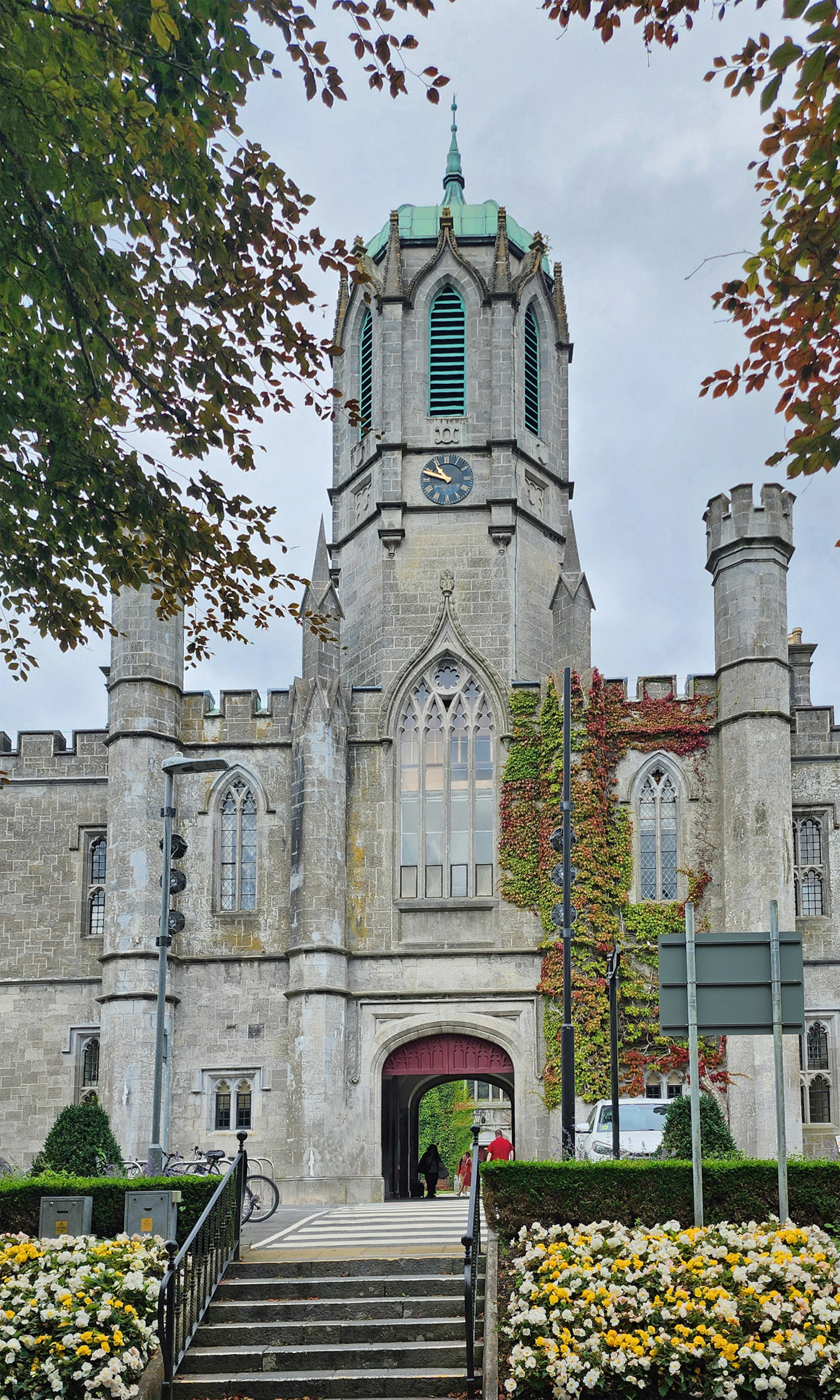
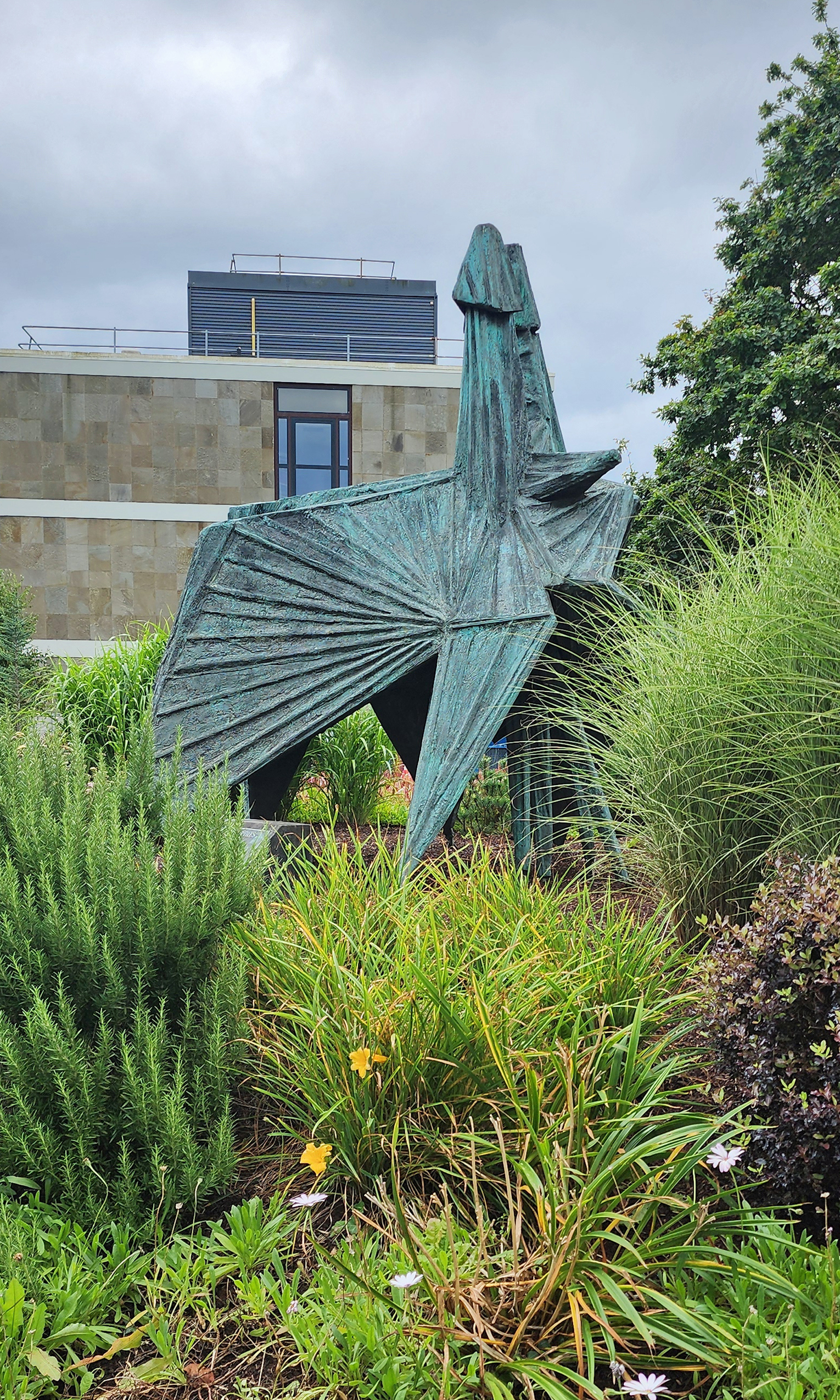
Galway University
Galway University

There is a nice walking path upstream along the east bank of the River Corrib that will take you from Wolfe Tone Bridge to the Bridge of Hope, a pedestrian and cycling bridge leading to Galway Cathedral. Just northwest of the cathedral, we wandered through the south campus of Galway University, then back across the Corrib and past the ruins of Terryland Castle before returning to our Airbnb.
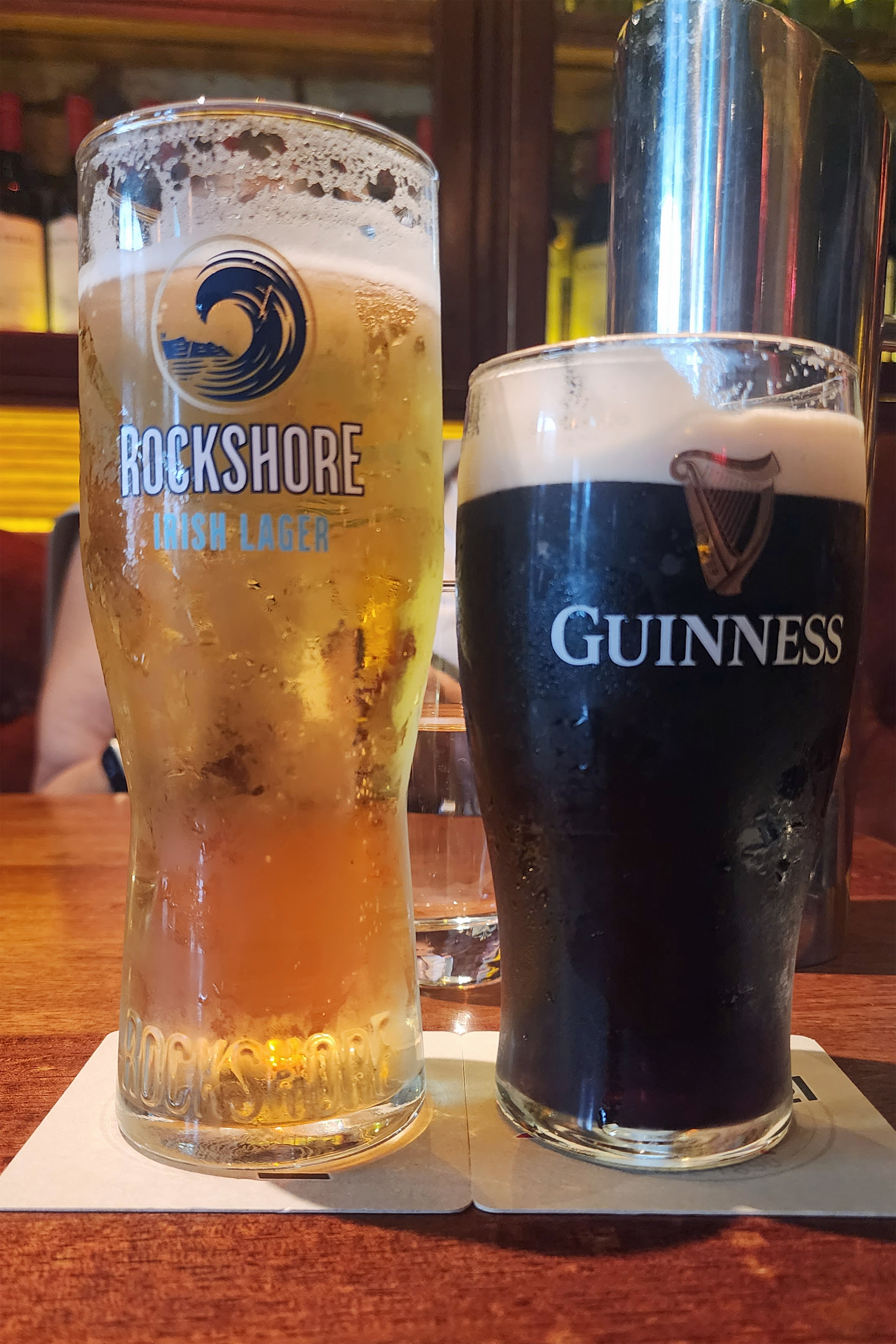
No visit to Galway is complete without a visit to an Irish pub, and there is a long list to choose from in downtown Galway, particularly in the Latin Quarter. We sampled a few pints at Jack J. Foley’s across the street from Eyre Square, Blake’s Bar on Eglington Street, a couple of blocks from the square, and Seven Bridgestreet, which is both its name and its address.
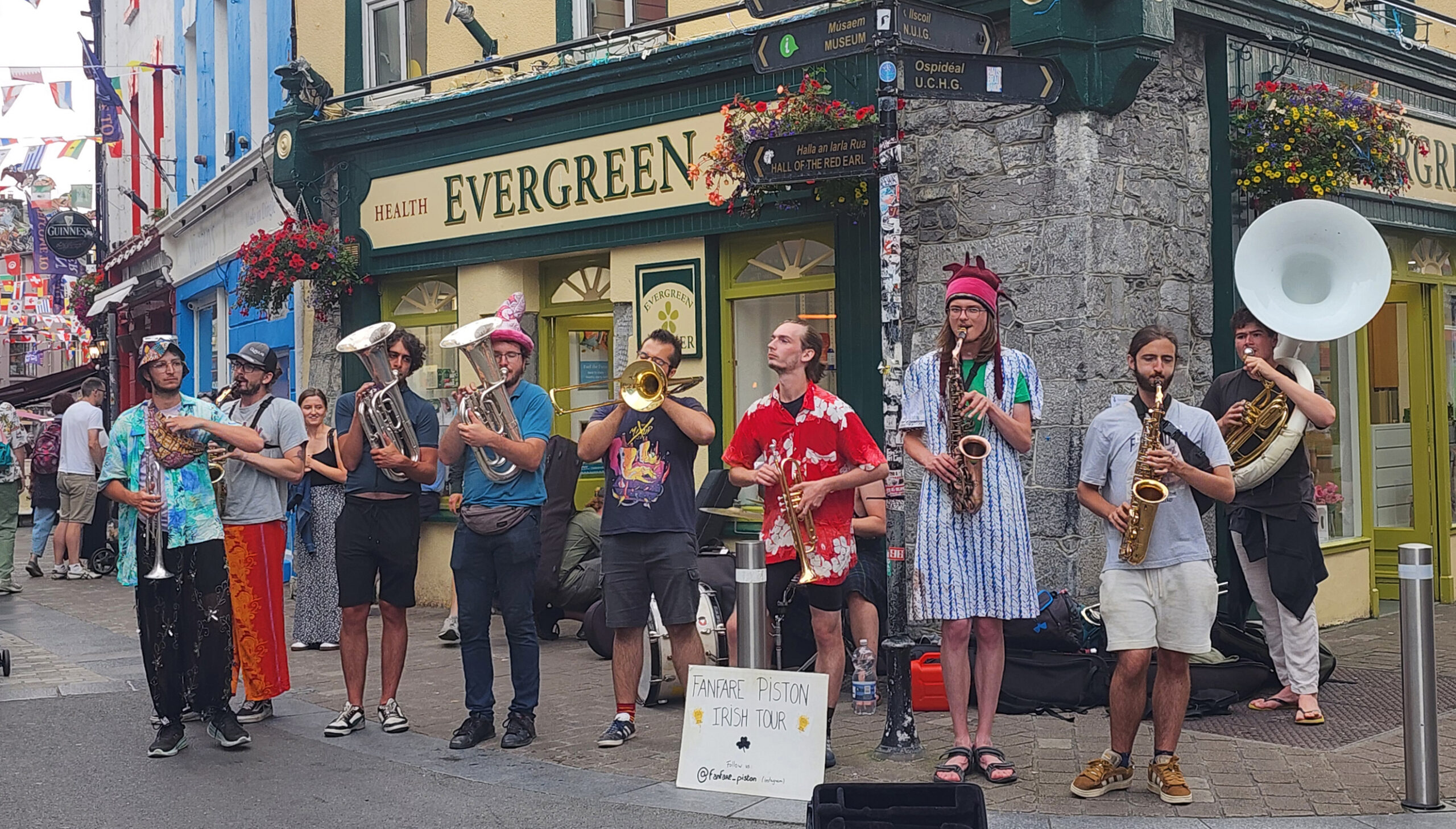
French brass band Fanfare Piston performing in the Latin Quarter, Galway

Music is also a big part of Galwegian culture. You can find street musicians performing during the day in downtown Galway and many, if not most, of the downtown pubs feature traditional Irish music in the evening.
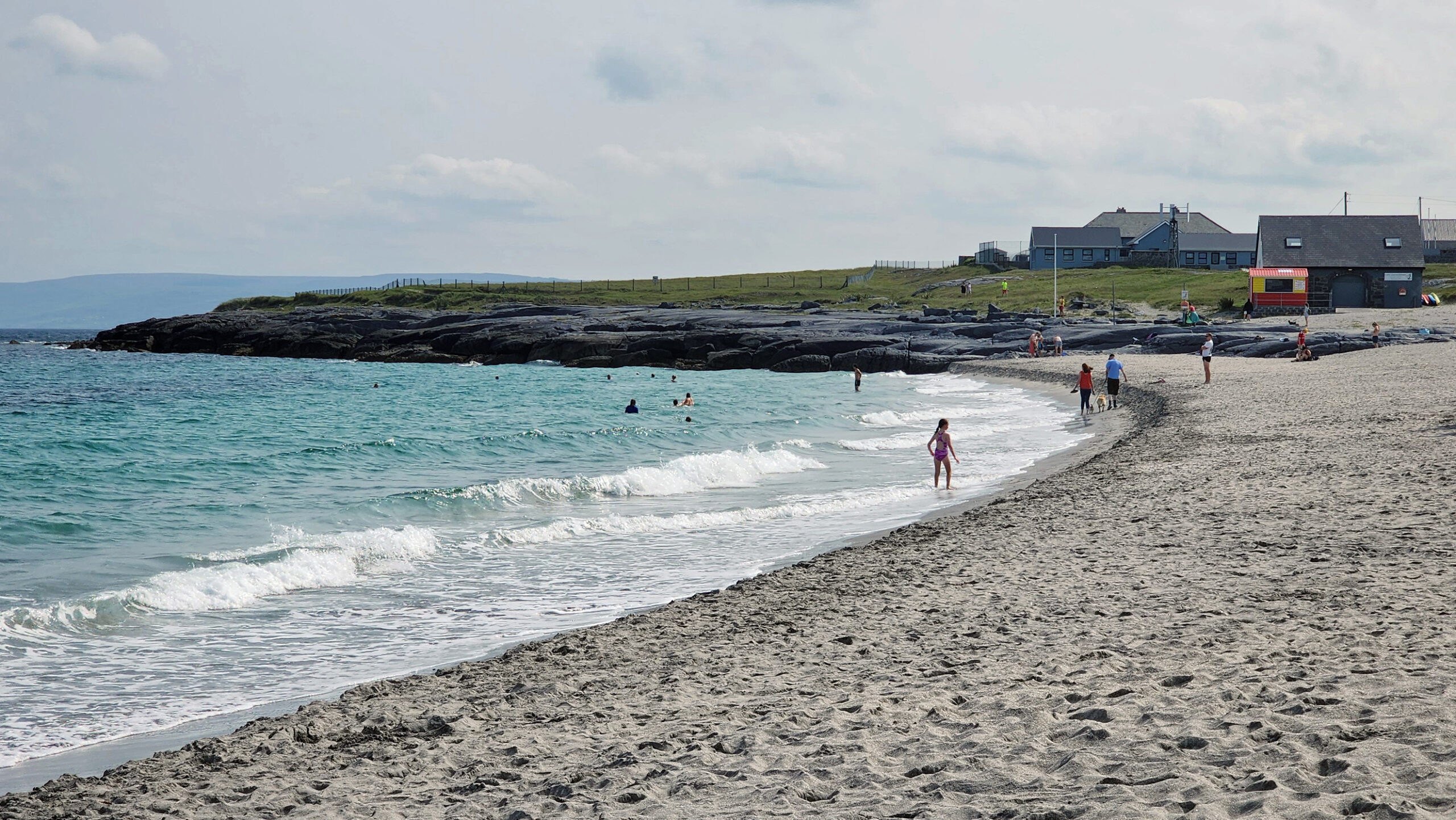
Beach at An Tra, Innisheer, Aran Islands

The Aran Islands

The day after arriving in Galway, we took a bus tour through the Burren to the small town of Doolin, where we boarded a ferry that took us to the nearest of the Aran Islands, Inisheer (or Inis Oirr in Gaelic). Inisheer is the smallest of the three islands, Inishmaan (Inis Meain) and Inishmore (Inis Mor) being the others.
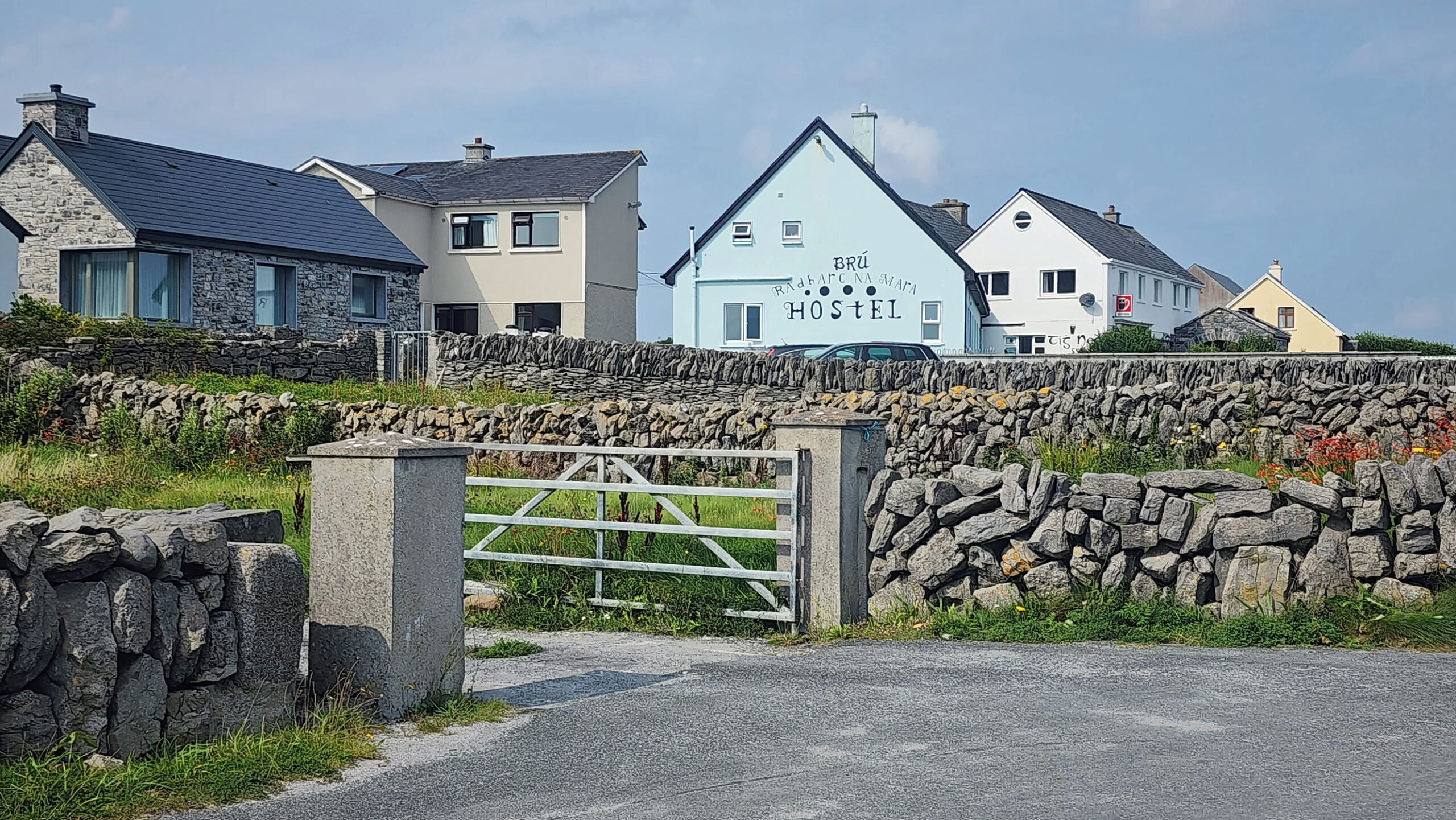
Village of An Tra, Innisheer, Aran Islands

After getting off the ferry, we explored the town (An Tra) and the shoreline for a while, then my wife hiked up to the ruins of O’Brien’s Castle. I didn’t feel like making the climb, so I hung out on the beach and explored the town some more.
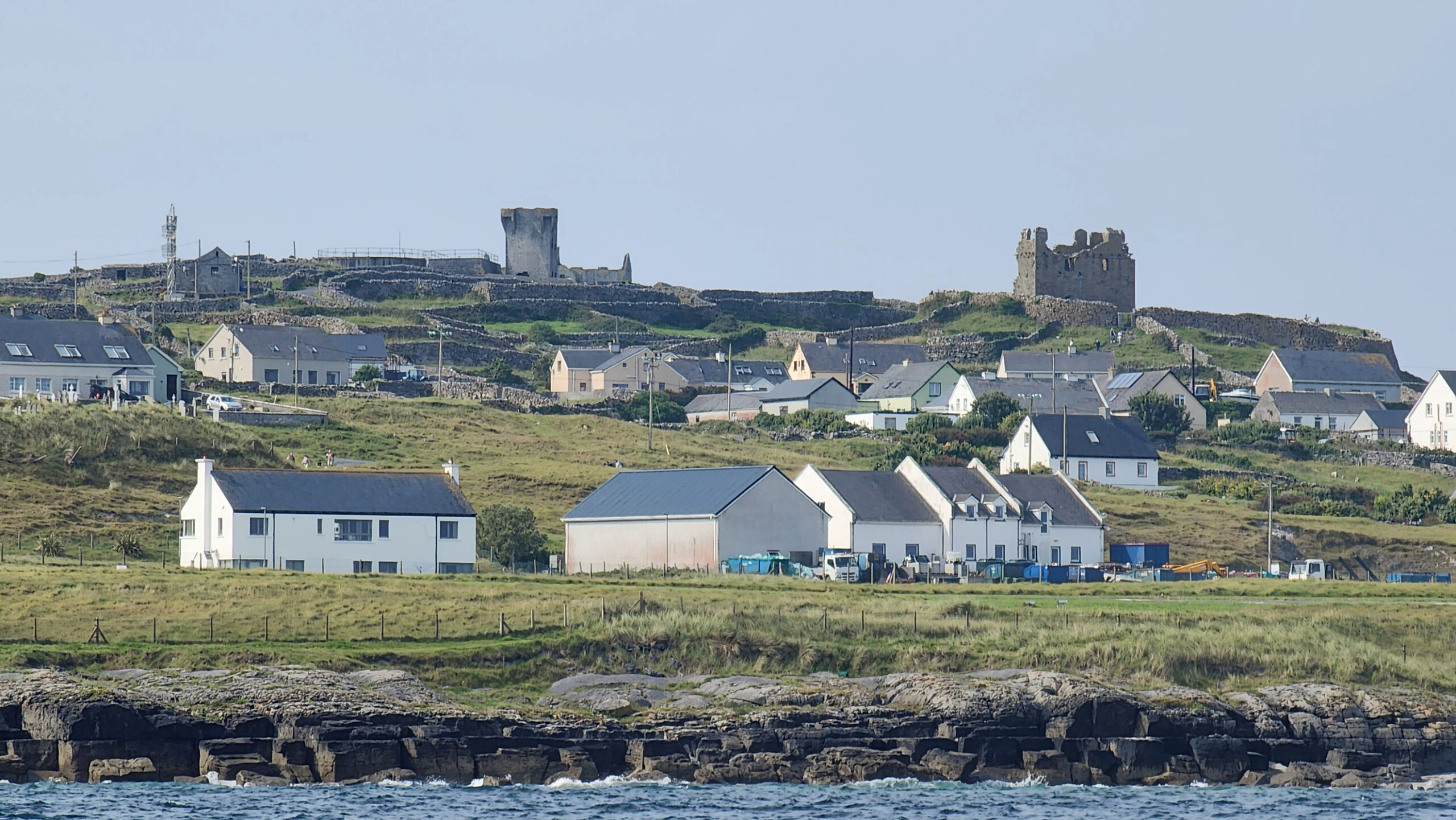
Village of An Tra, Innisheer, Aran Islands

When we rendezvoused an hour or so later, we had a little more time to wander around before boarding the ferry again, but we really didn’t have enough time on the island to get more than just a glimpse. It’s a beautiful place and I wish we had more time to spend there.
Cliffs of Moher

The Cliffs of Moher

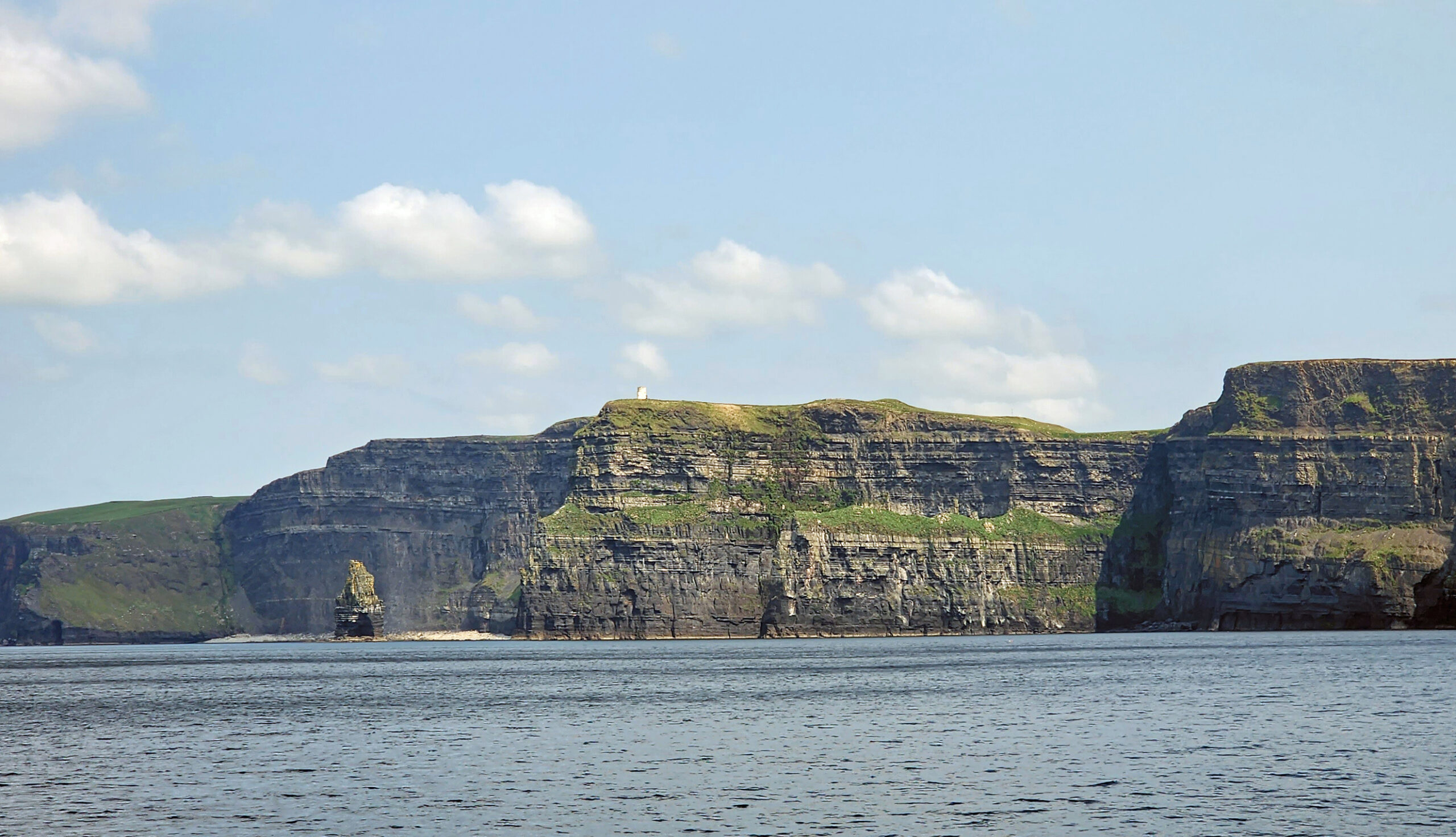
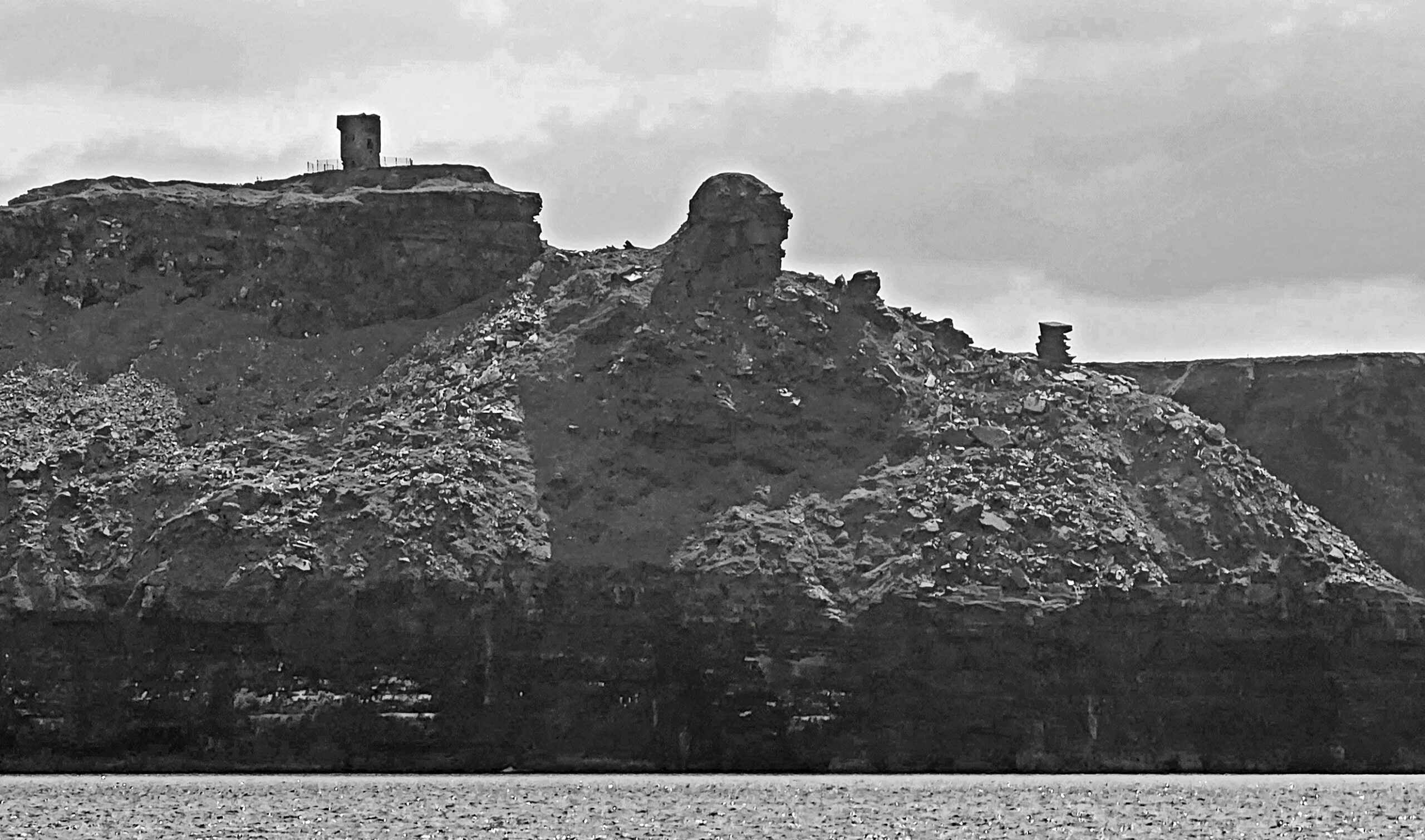
The ferry returning to Doolin from Inisheer takes a detour to cruise along the base of the Cliffs of Moher. The nearly vertical cliffs range from 400 to 700 feet in height and the view from the water is truly spectacular – one of the highlights of our visit to Ireland.
O’Brian’s Tower, Cliffs of Moher

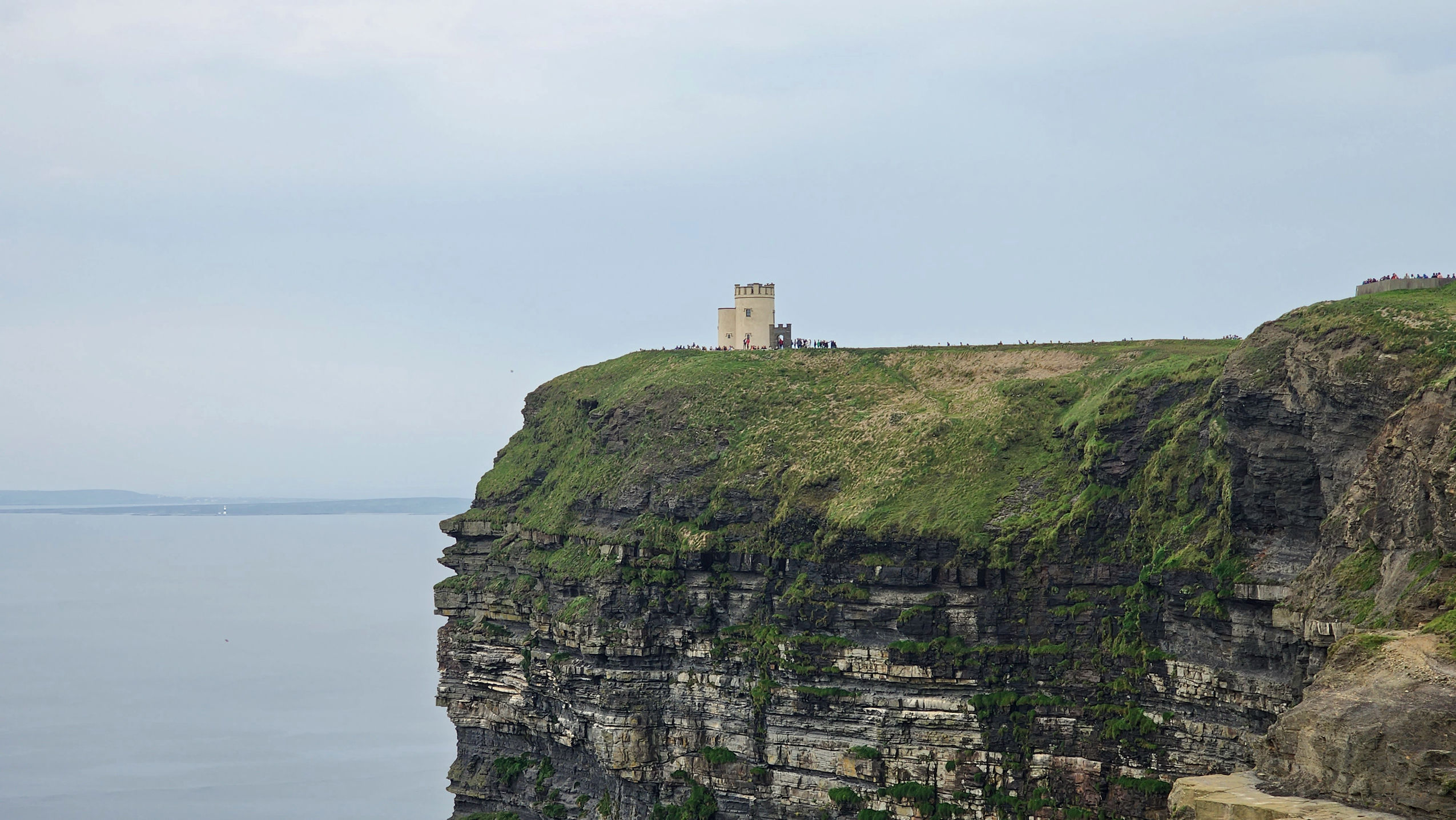
Back in Doolin, our tour group had lunch at McGann’s Pub, then we bused to the top of the cliffs, giving us an entirely different perspective. We hiked the trail to the north for about three quarters of a mile along the very edge of the cliffs, past O’Brien’s Tower, with awesome views all along the way. We even got a little bit of sunshine while there.
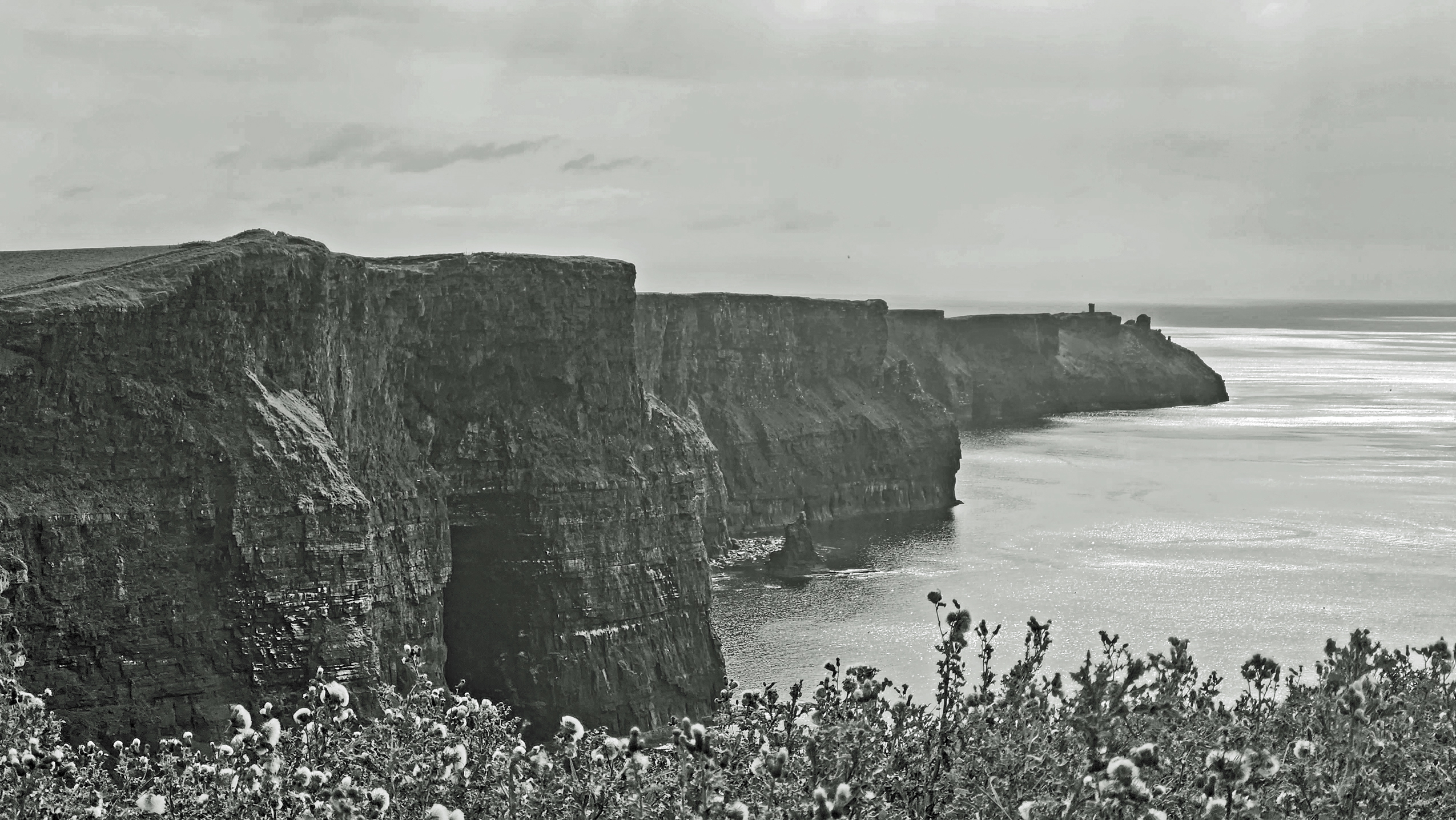
Cliffs of Moher

The next day, we took another tour through the Burren (see below) that took us to the top of the cliffs for a second time. We booked both tours in hopes that the weather would be good on at least one of the days. The weather wasn’t as good on our second visit as the previous day, so we just did the short hike along the cliff tops to the south that we hadn’t done, then went to the visitor center (well worth spending some time there) and a gift shop before having to return to the bus.
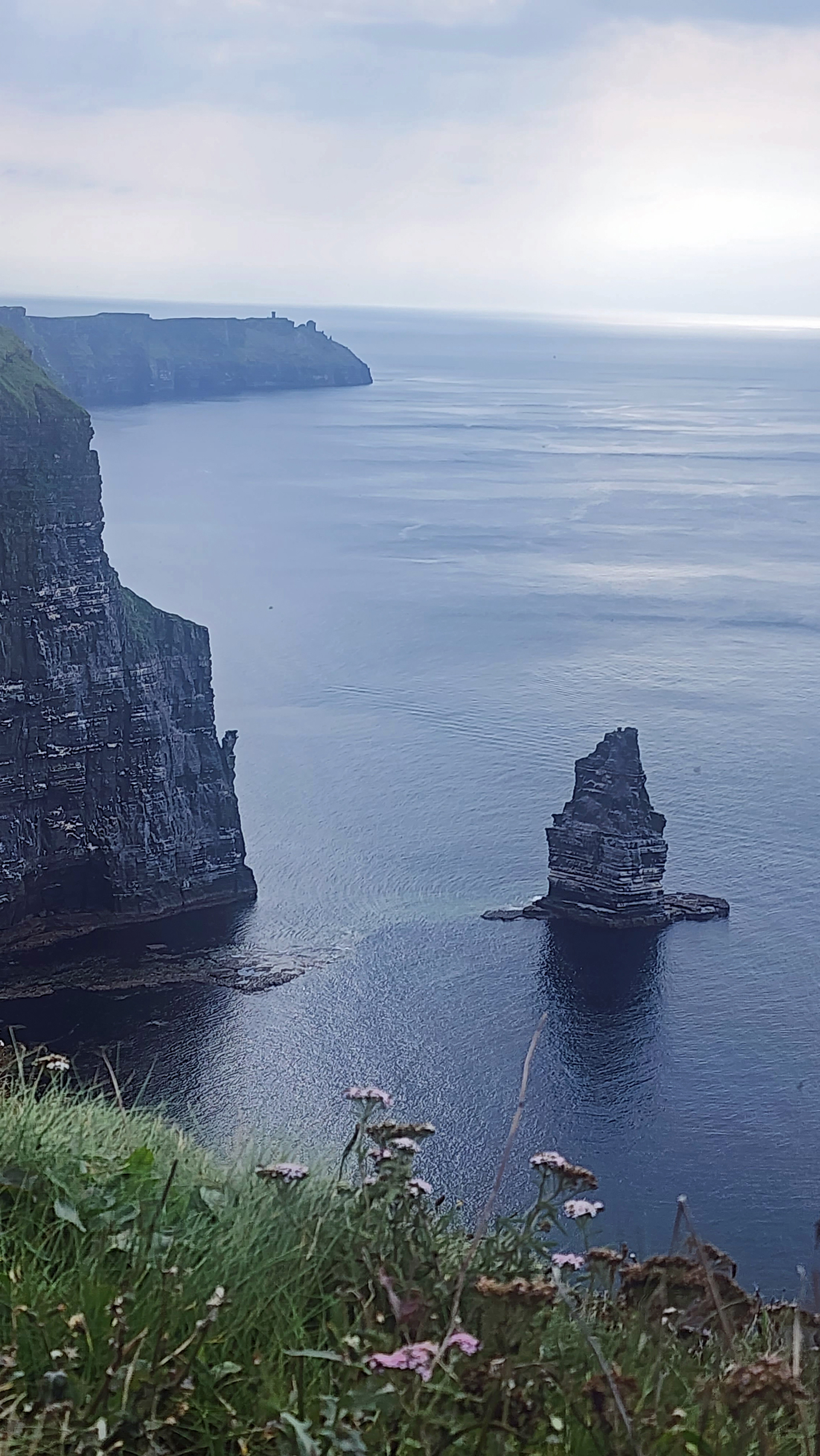
Cliffs of Moher
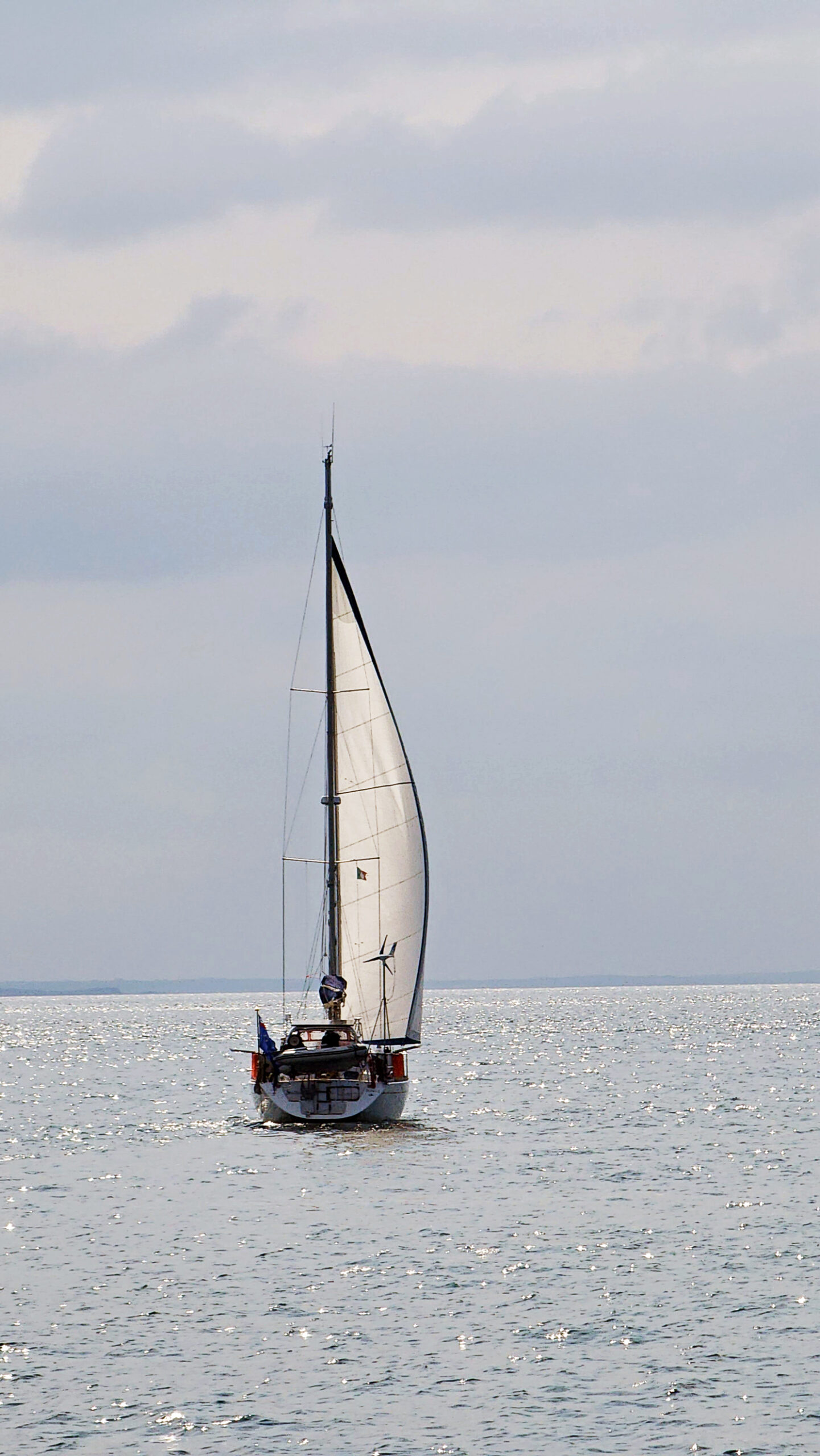
Sailing off the Cliffs of Moher

The Cliffs of Moher are the most popular tourist destination in all of Ireland for good reason. About 1.5 million people visit every year. In the summer, you can expect to be sharing the view from the top with several thousand other people at any given time. But that doesn’t detract from the experience very much. If you have only one day in the area, though, take the ferry to Inisheer and the return trip along the base of the cliffs. Even on a rainy day, it will be awesome.
The Burren

The Burren

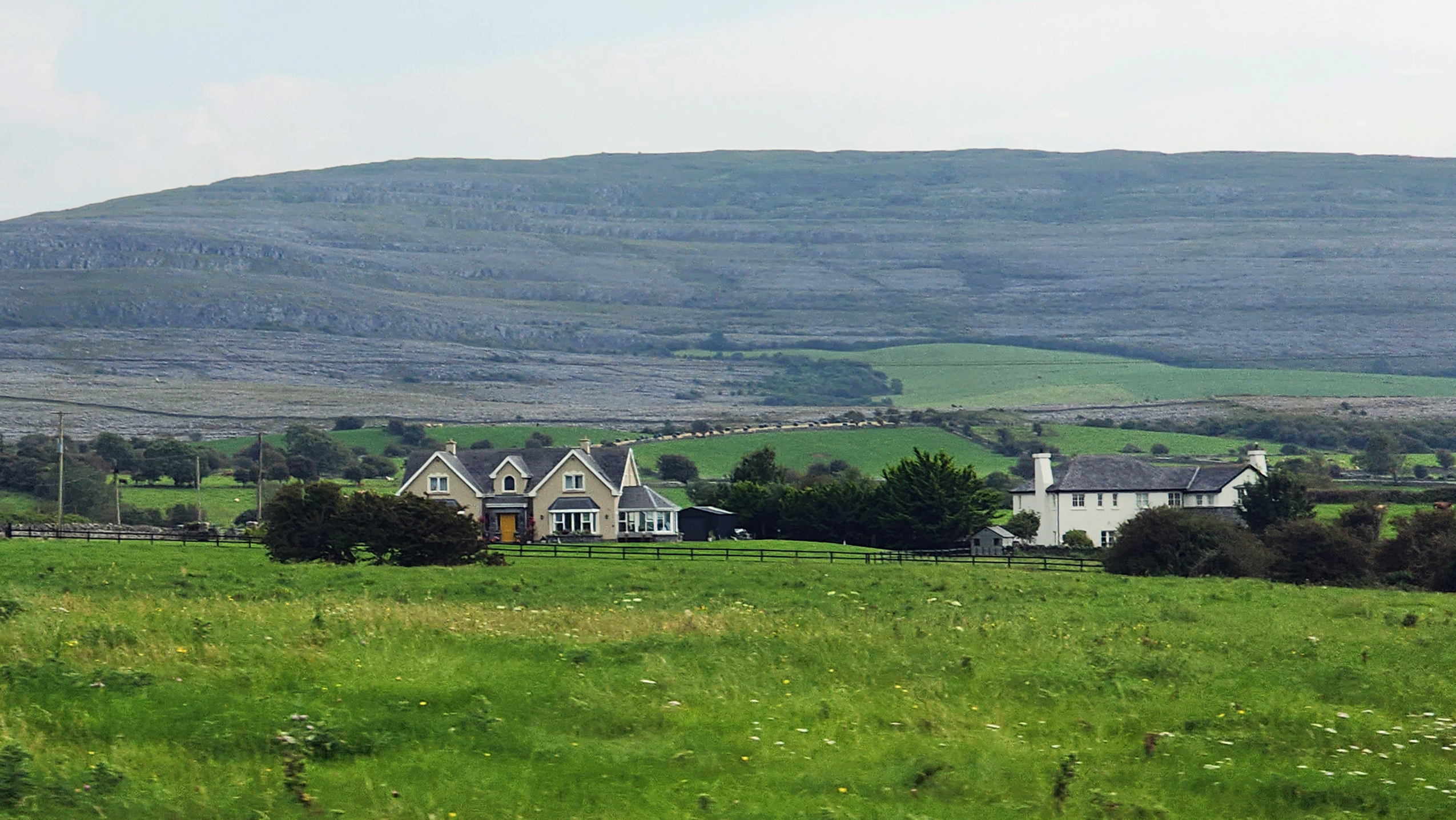
The Burren, southwest of Galway, is a land of otherworldly beauty. Much of the land is bare rock, ancient limestone hills with little or no vegetation. It’s not hard to imagine that you have gone back in time a hundred million years and are walking the surface of a more primeval Earth. The limestone was, in fact, formed from sediments laid down in a tropical sea more than 300 million years ago. It’s also not hard to imagine that you have traveled to another planet entirely.
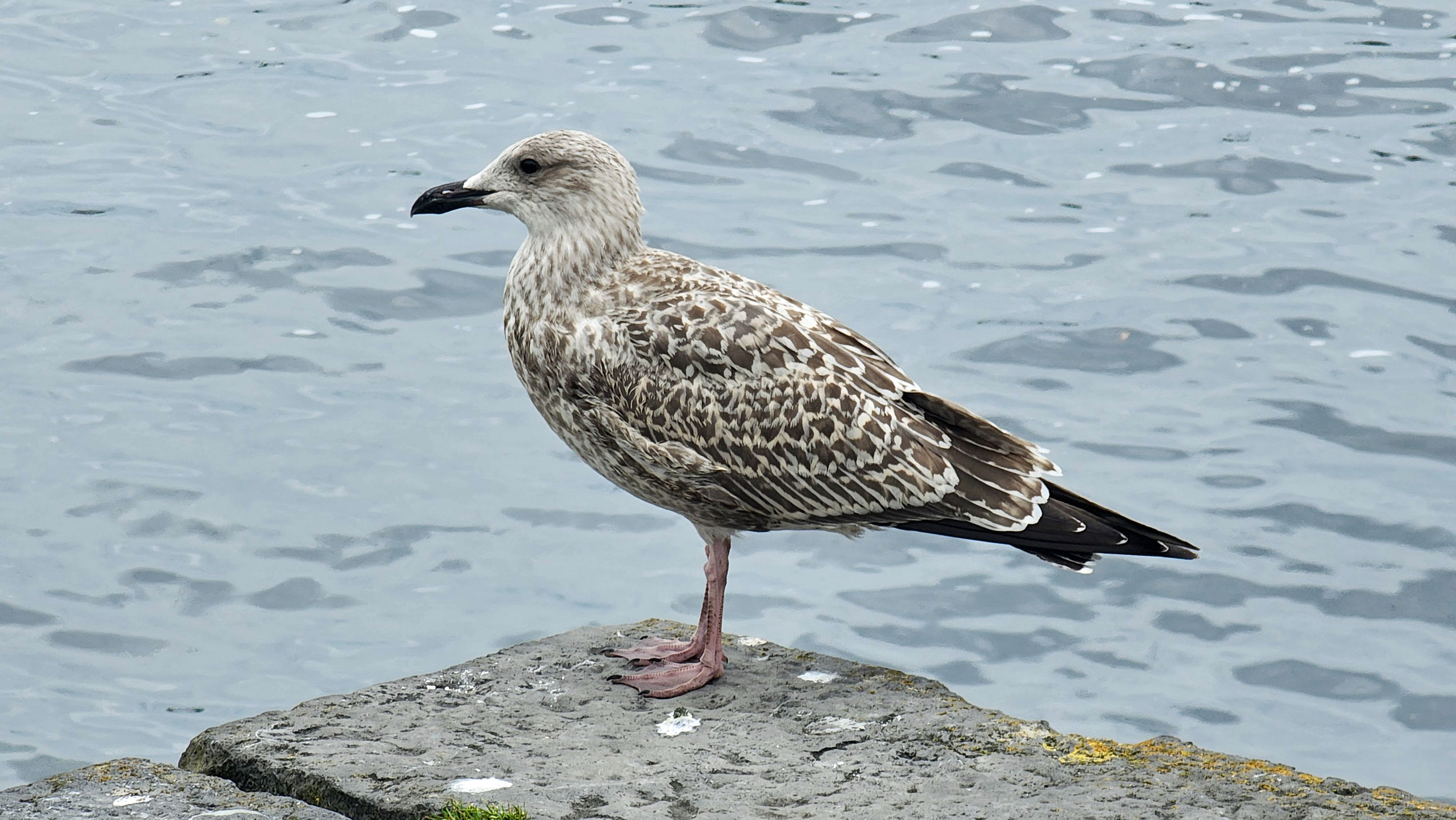
The Burren is also the home of an ancient Celtic culture that dates back 6000 years. The Burren today is a place of tradition, music, the land, and great local food. Our tour hardly touched on all of that, but was still an enjoyable and worthwhile outing.
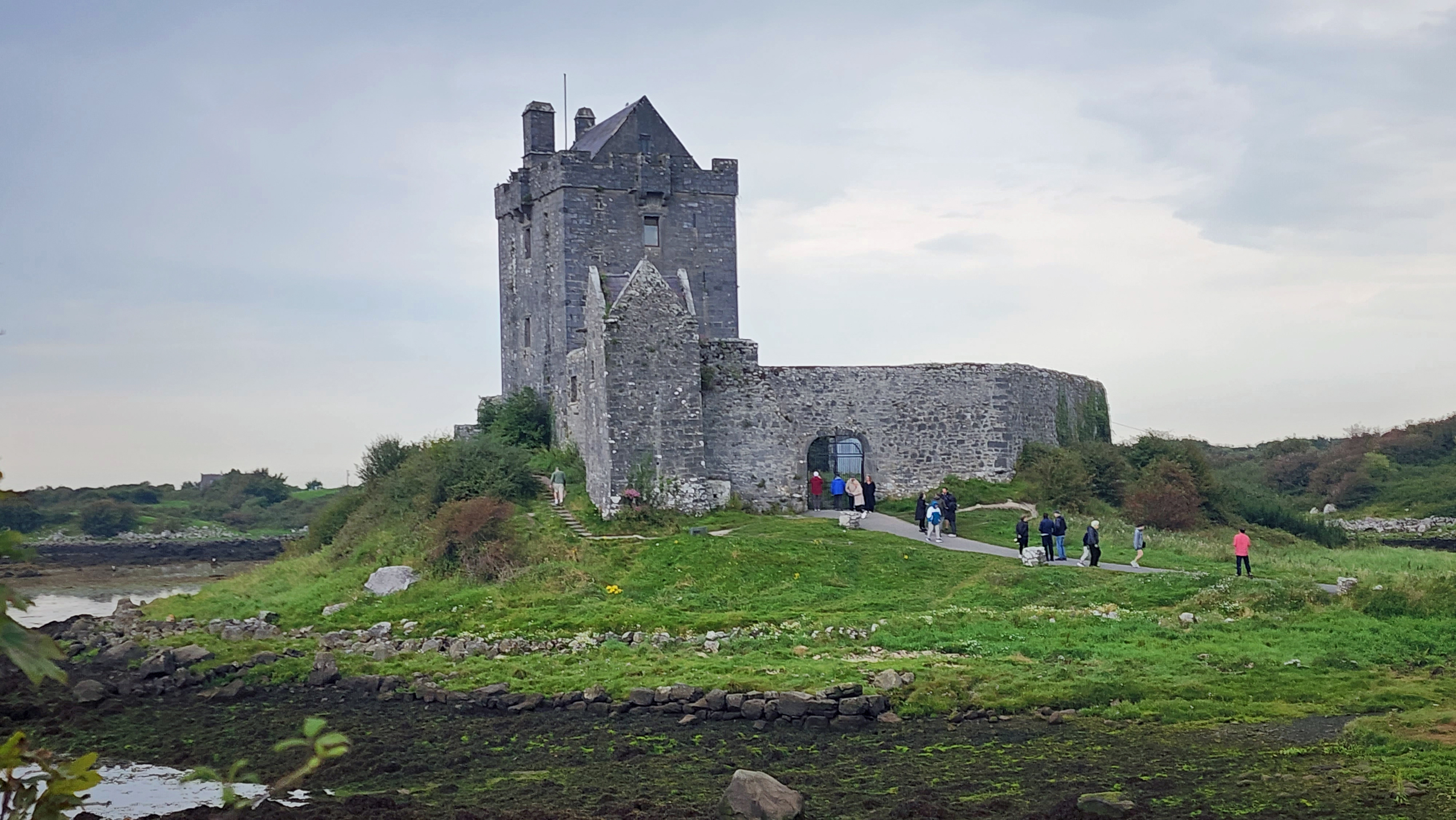
Dunguaire Castle

Our tour through the Burren stopped at only a few places other than the Cliffs of Moher, but was definitely worth doing. We first stopped (briefly) at Dunguaire Castle.
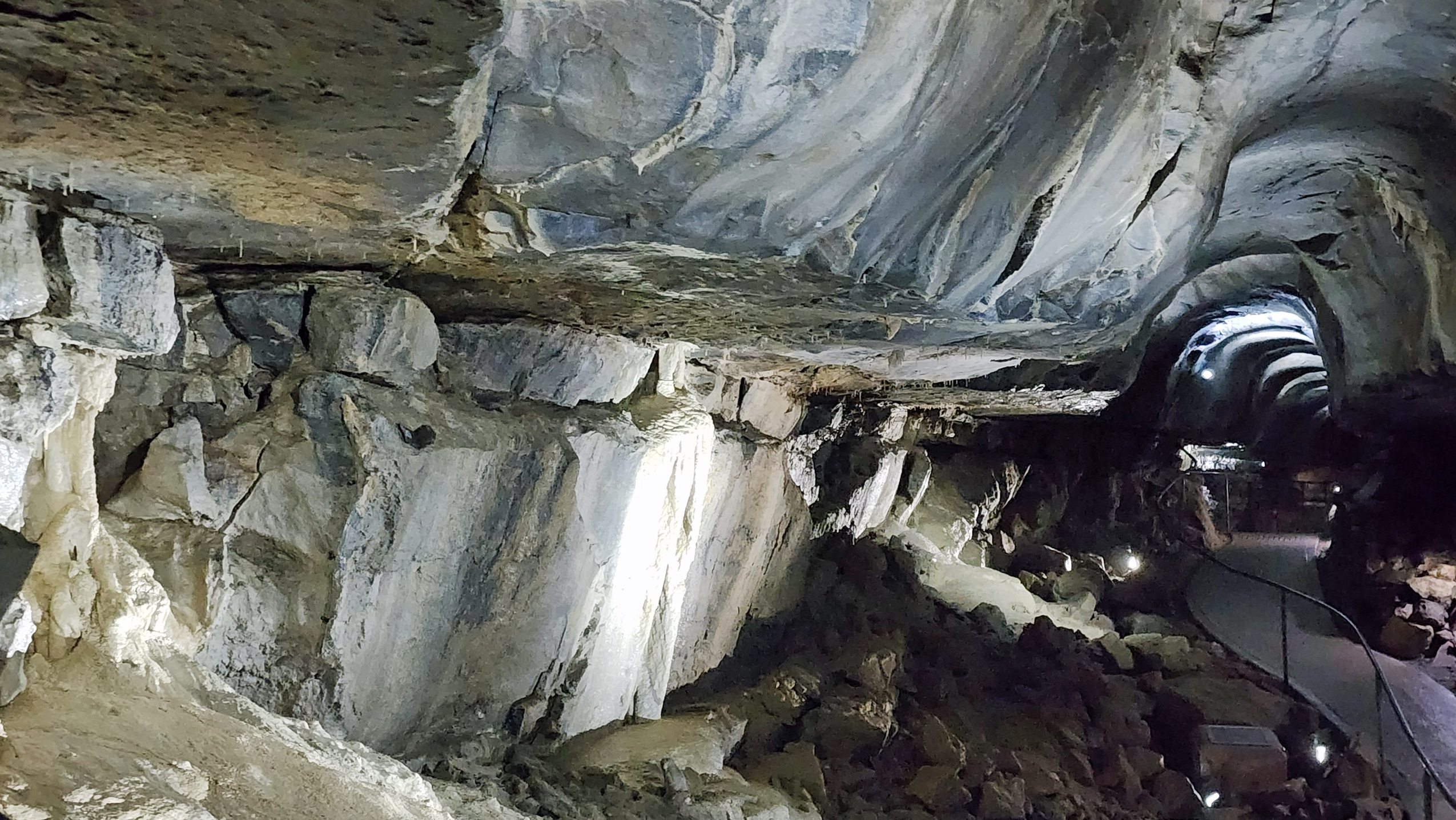
Aillwee Cave

Our second stop was at Aillwee Cave. It’s not the most spectacular cave that I have toured, but the 45 minute guided tour was interesting. There’s also more going on there (officially the Aillwee Burren Experience), including a birds of prey and falconry exhibit and a farm shop specializing in local produced cheeses, neither of which we had time to experience.
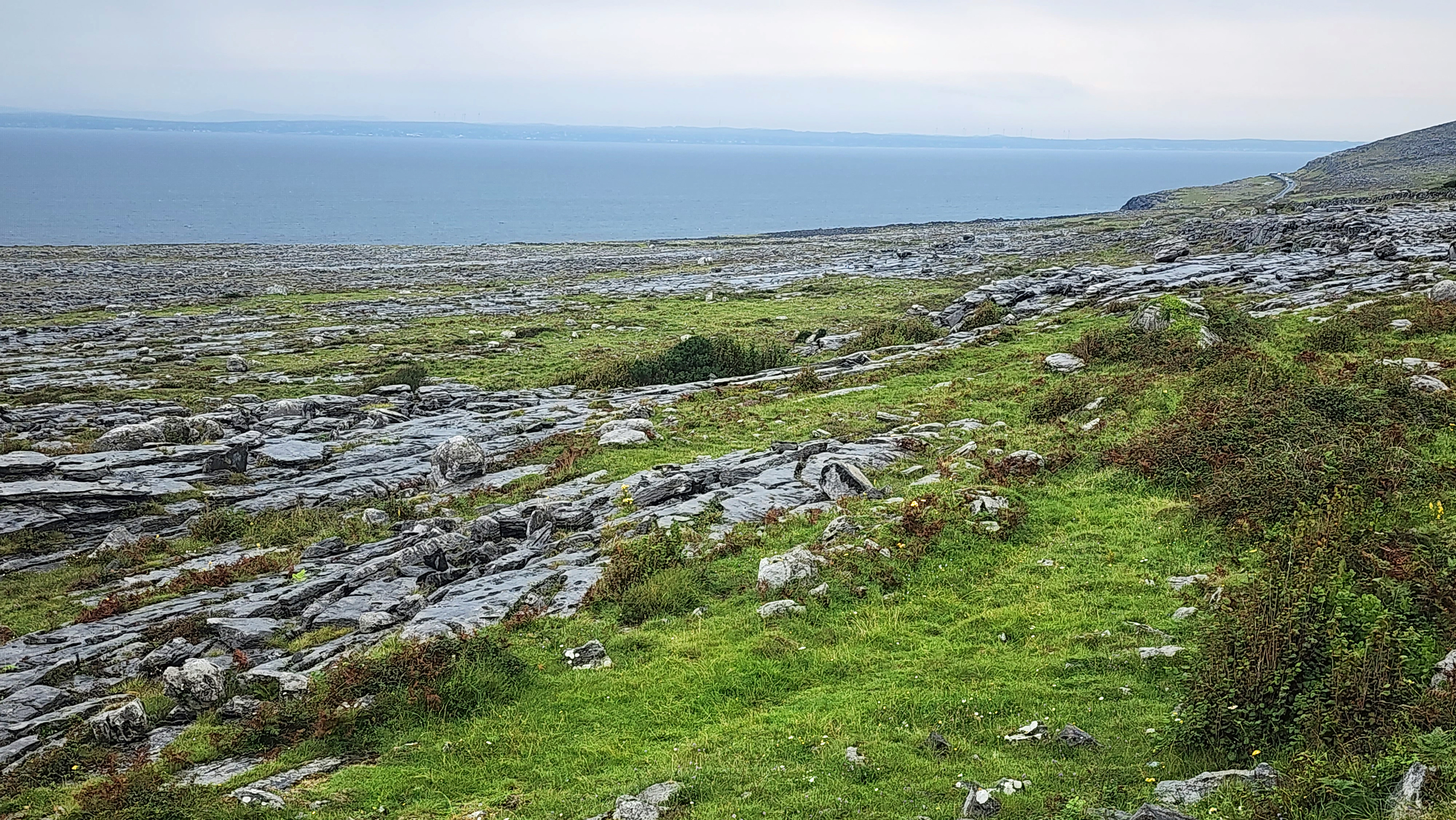
The Burren

After our visit to the top of the Cliffs of Moher, our group had lunch at a different pub in the Doolin area (O’Donohue’s), and made a stop along Galway Bay where the limestone bedrock is exposed, as it is in many places throughout the Burren.
Connemara

Connemara and Kylemore Abbey

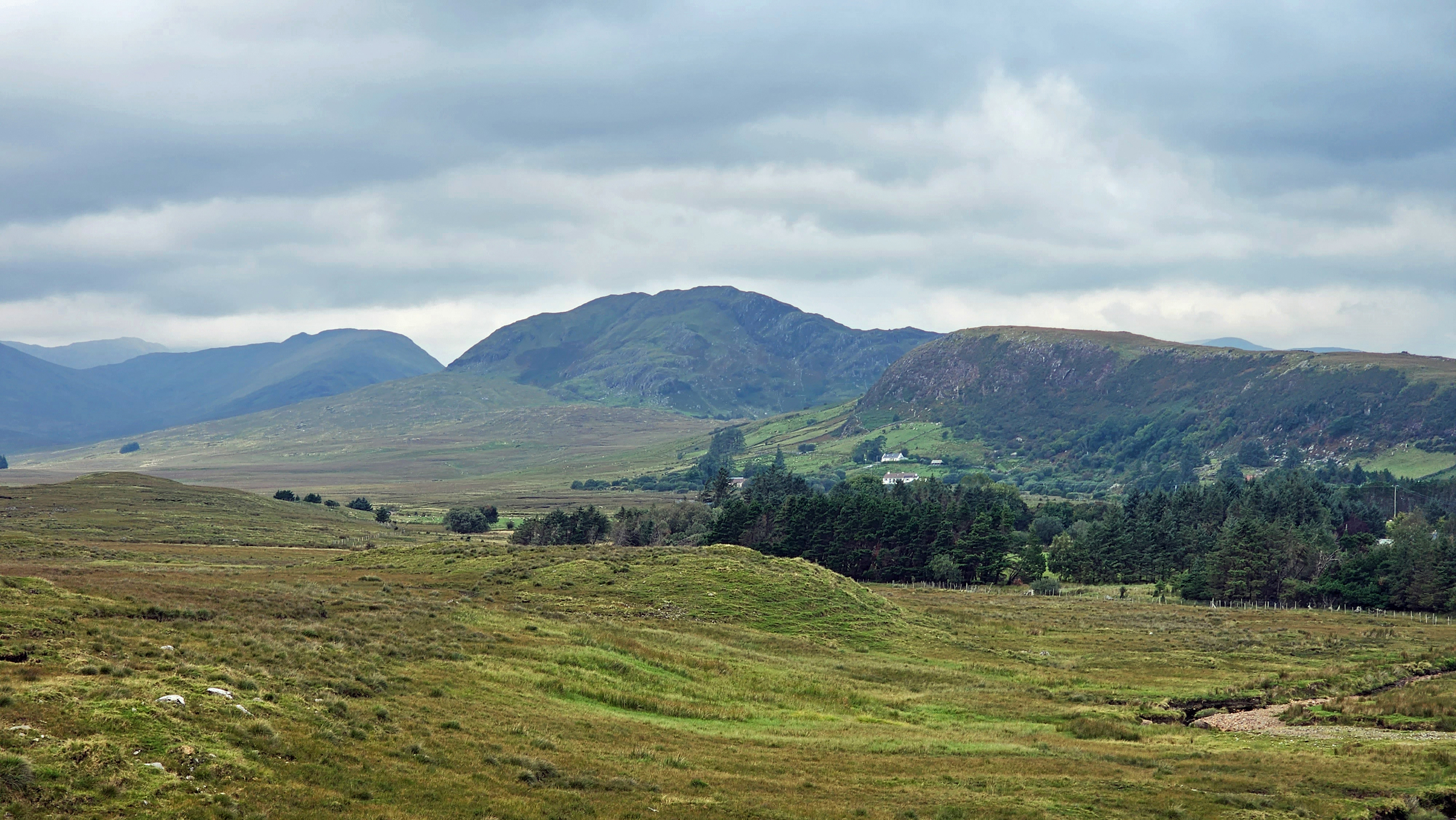
Connemara, the region northwest of Galway, is often described as the “authentic” Ireland. Whether that is an accurate description or not, tradition and history are clearly important in the region. Gaelic is spoken by many of the residents as their primary language. Road signs are in both Gaelic and English. And what we saw in Connemara is what I envisioned when I thought of the Irish countryside.
Leeane, Connemara

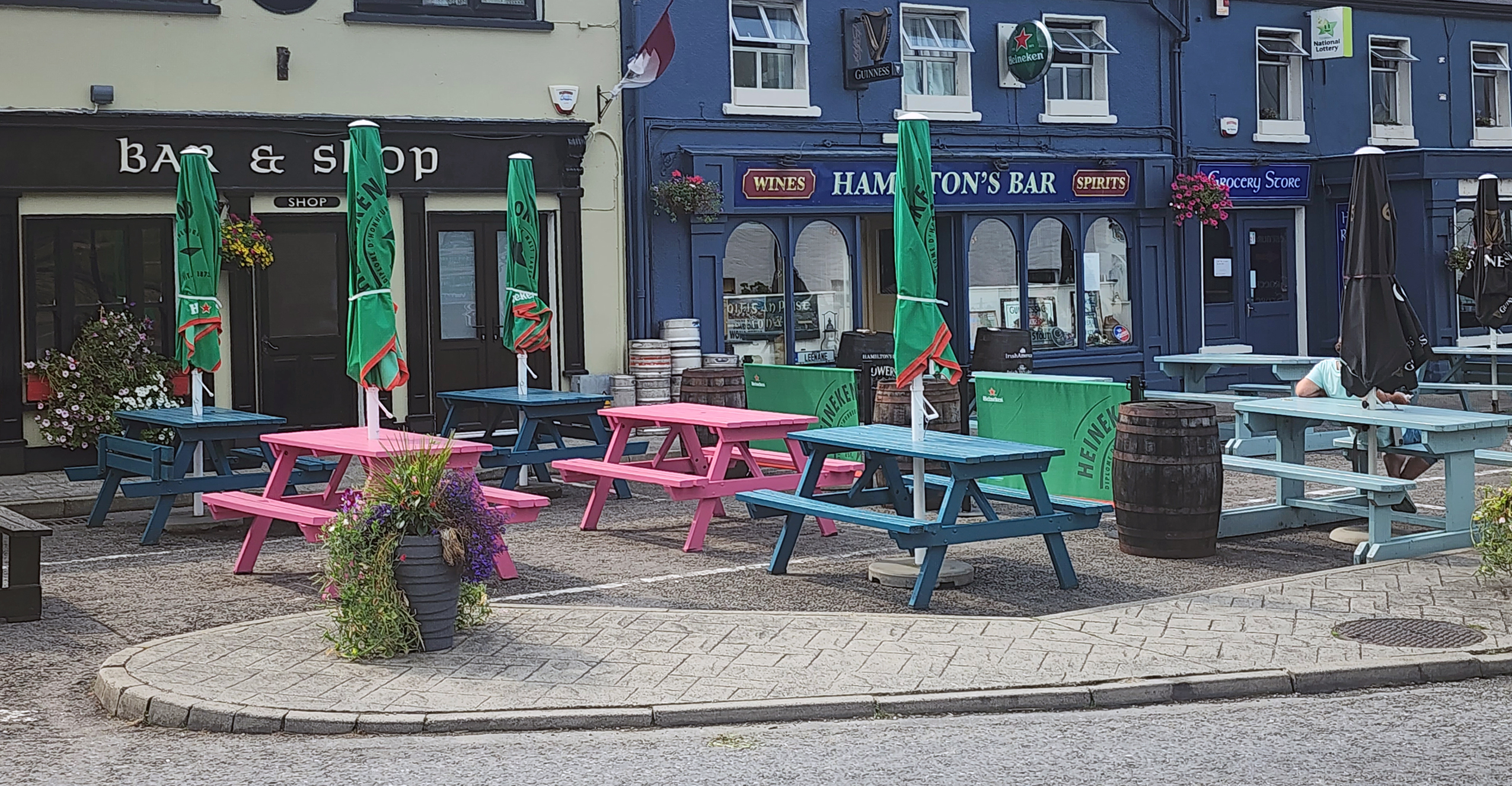
Our tour’s first stop was the crossroads community of Leeane (Leenaun).  The town has a couple of restaurants, a pub, several hotels and inns, and the Connemara Sheep and Wool Center, which is actually worth checking out if you’re in the vicinity.
Killary Fjord

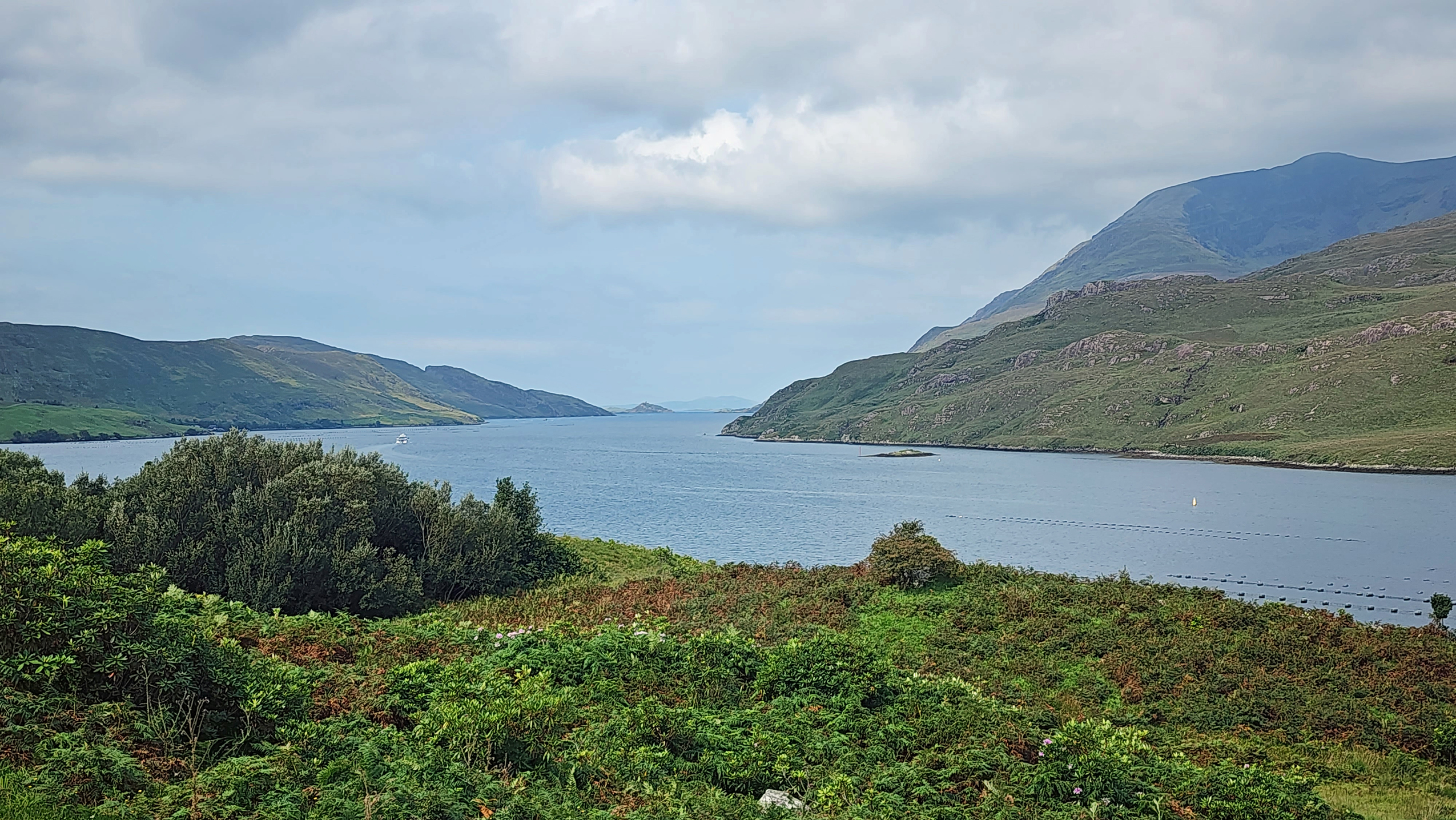
Leenane is located near the head of Killary Fjord, a 9½ mile long inlet of the Atlantic Ocean. It’s scenic enough, but bears little resemblance to the fjords of Norway or Alaska.
Kylemore Abbey

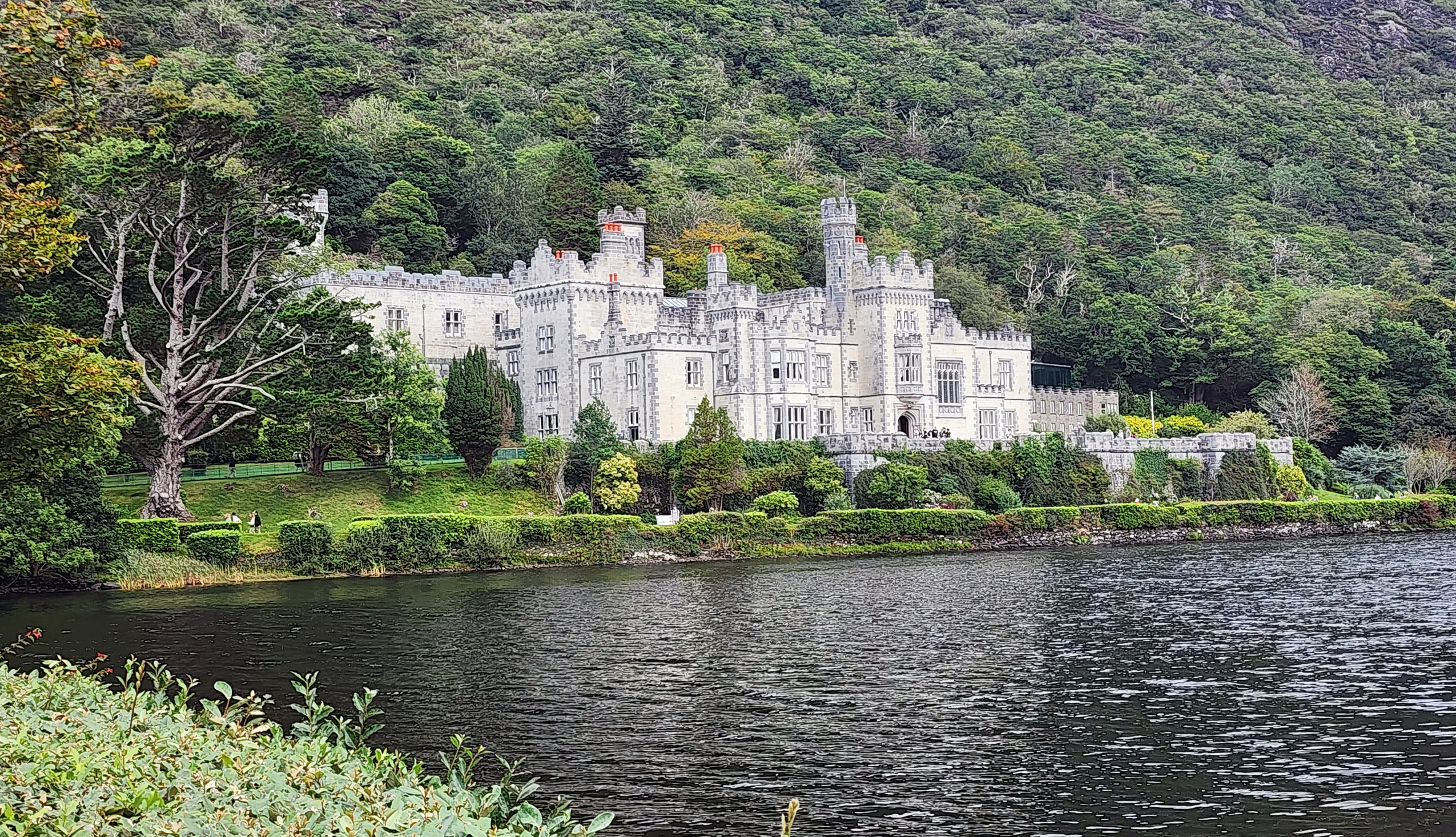
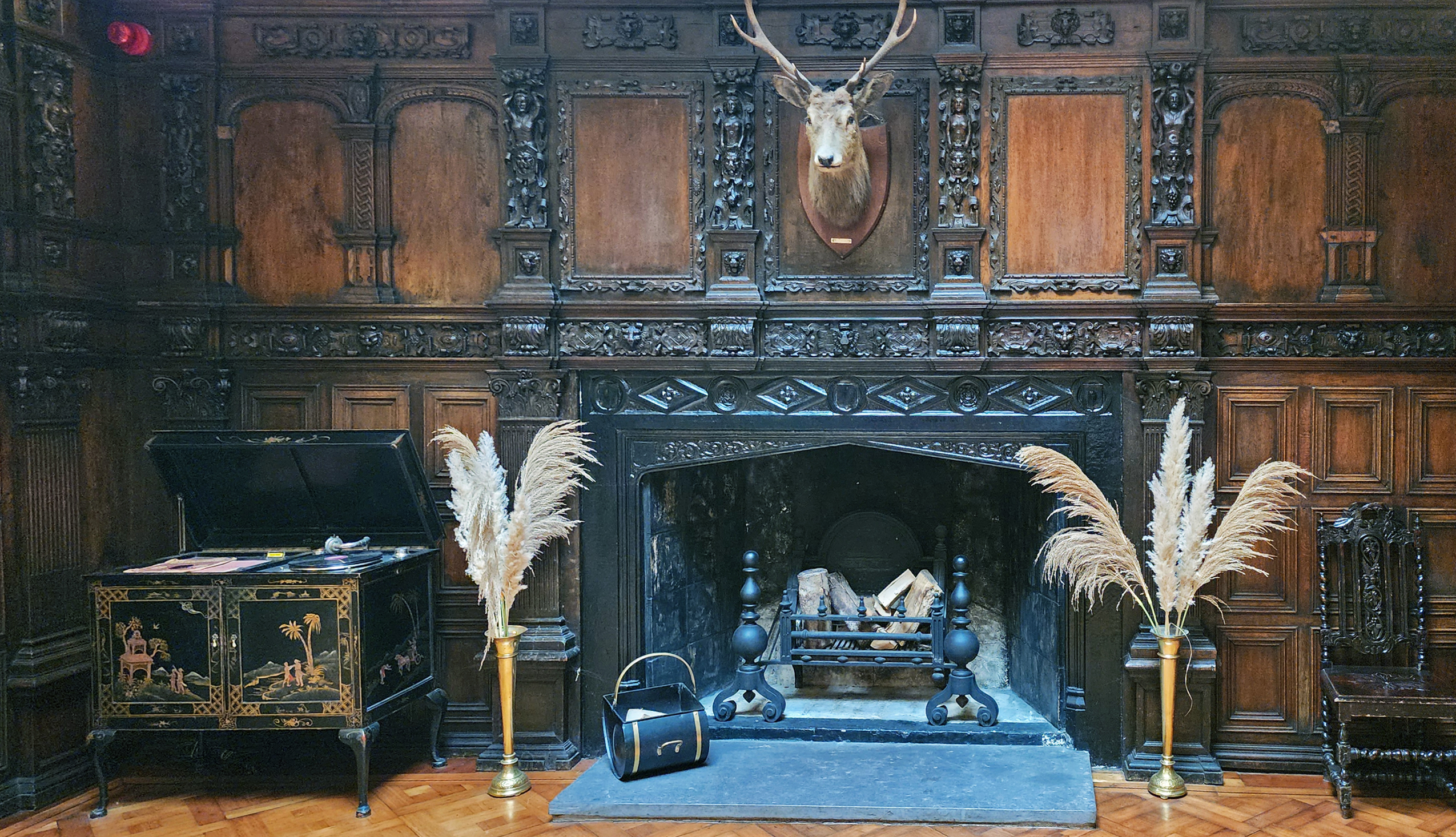
From Killary Fjord, the tour took us to Kylemore Abbey. Originally called Kylemore Castle, it was built as a private residence by Mitchell Henry, a wealthy English businessman, after he and his wife Margaret honeymooned in Connemara.
Kylemore Abbey

The castle was completed in 1871, has 70 rooms, 33 bedrooms, four bathrooms, and 40,000 square feet of living space. Unfortunately, Margaret Henry died in 1874 while on a trip to Egypt. Mitchell Henry built a church and mausoleum on the estate grounds to honor his late wife, but didn’t spend much time at Kylemore after her death. Mitchell Henry died in 1910 and is buried along with his wife in the mausoleum. In 1920, the castle was purchased by the Irish Benedictine Nuns and became Kylemore Abbey. From 1923 to 2010, the nuns ran a girls boarding school and a day school for local girls. The nuns still own and live on the estate grounds.
Kylemore Garden

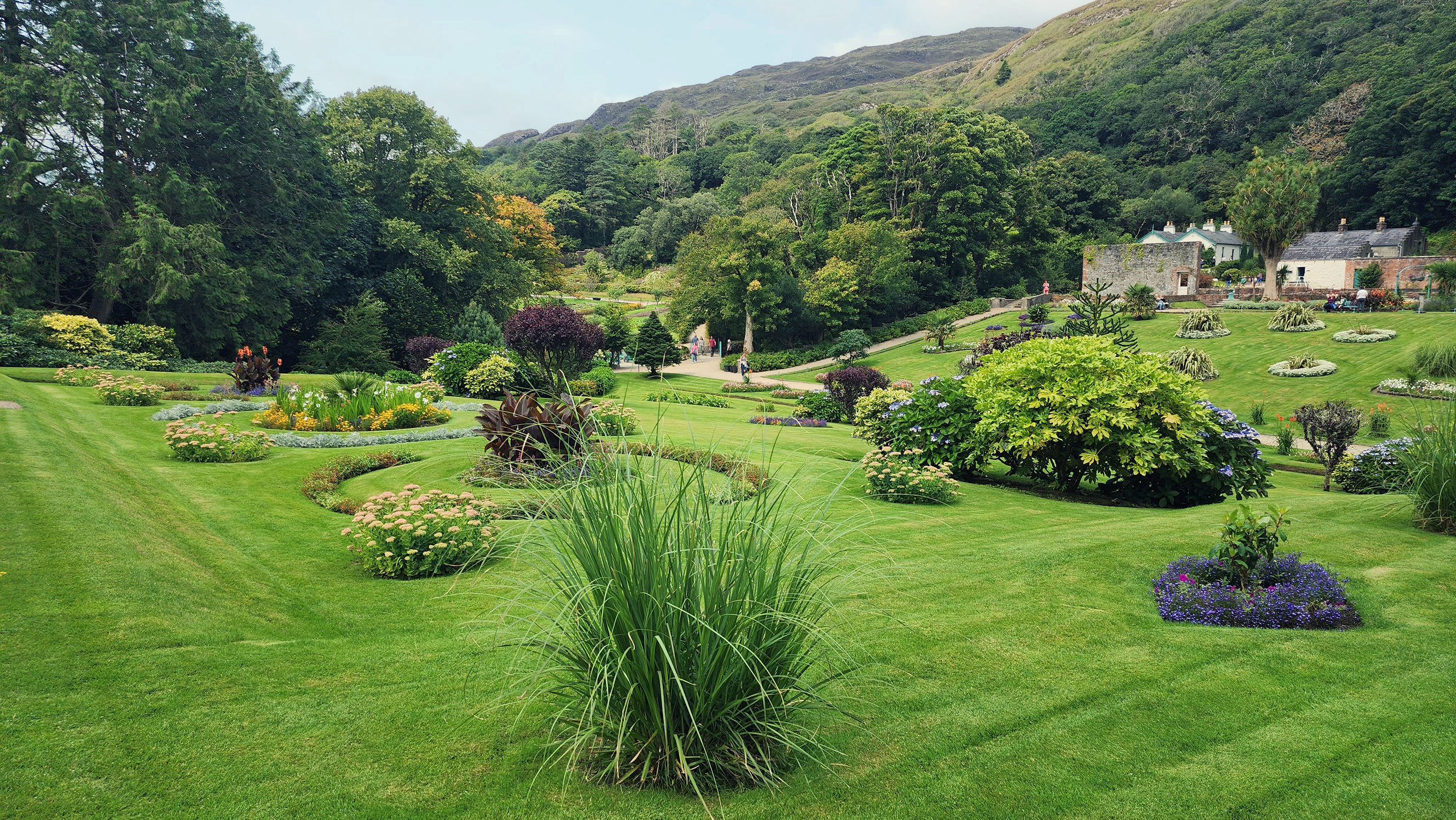
Today, tourism supports the nuns, and the abbey is a bit of a tourist trap, although an impressive one. A walled Victorian garden is located on the estate, to the west of the abbey. It’s about a 15 minute walk or a five minute shuttle bus ride from the abbey. The gothic church built by Mitchell Henry is a seven or eight minute walk to the east of the abbey. It is also open to the public.
Galway Bay

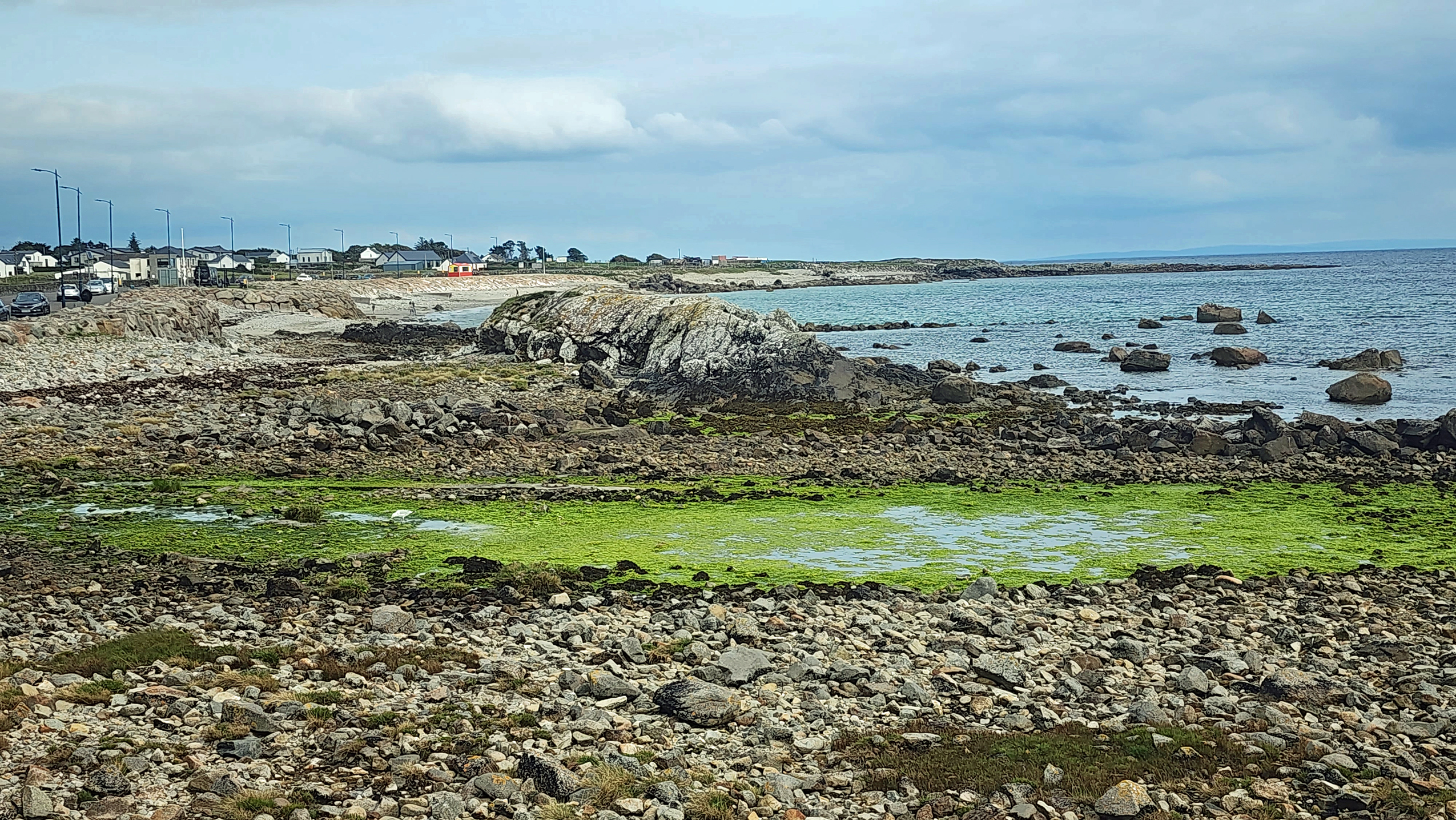
From Kylemore Abbey, our tour returned to Galway, with one stop to explore a peat bog, which was actually fairly interesting, and another along Galway Bay in the western suburbs of Galway.
Cliffs of Moher

Conclusion

The Cliffs of Moher, the Aran Islands, the Burren, Connemara, and the city of Galway are all well worth visiting. All can be seen in a short four or five day visit like we did, but I don’t think you’d run out of worthwhile things to see and do in a ten day or even two week visit. There’s a lot in Galway and Western Ireland for the traveler, whether it’s the history, the food, the music, the land, or whatever else brings you there.
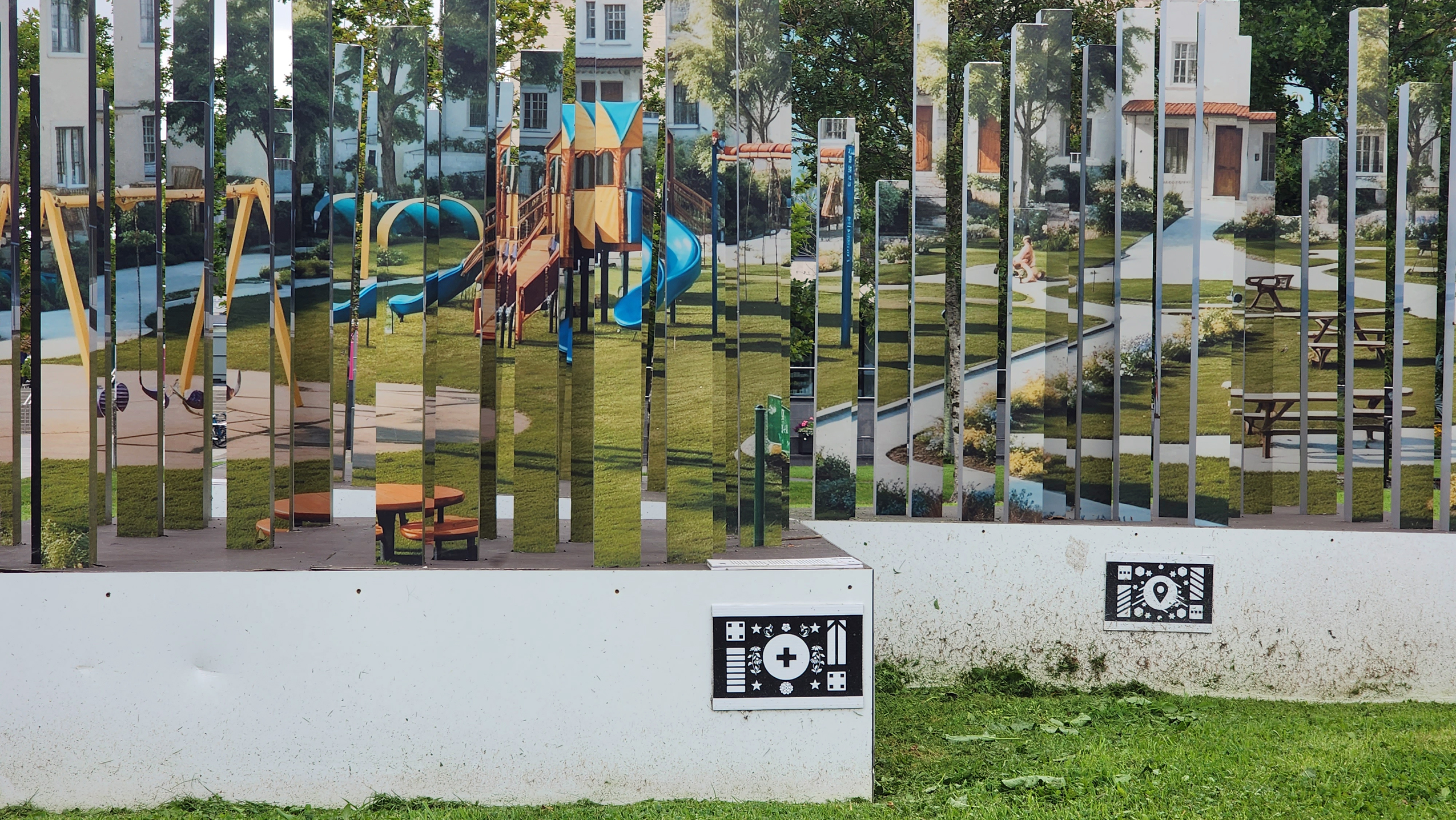
Galway University


Posted May 28, 2026

All photos © Alan K. Lee
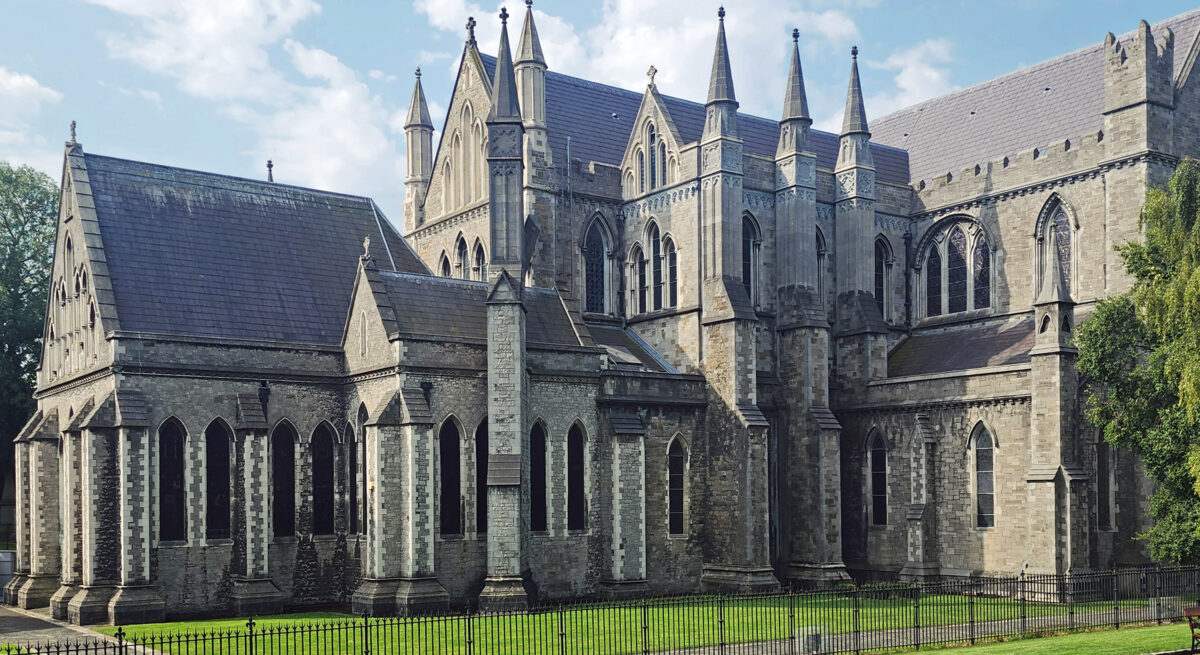


Dublin, Ireland

by Alan K. Lee
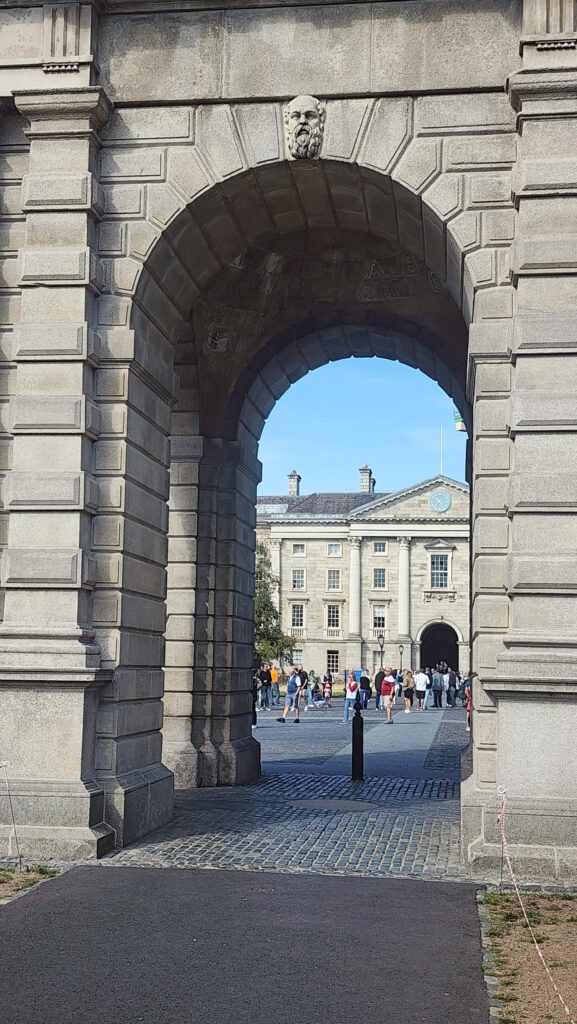
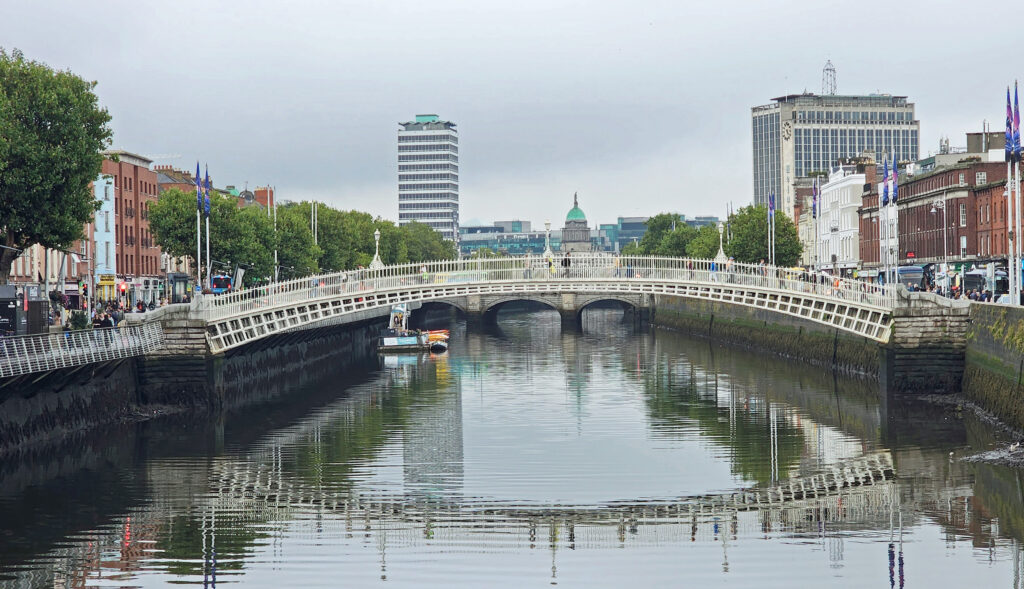
Ha’penny Bridge, central Dublin

Introduction

Dublin is the capital, largest city, and cultural hub of the Republic of Ireland. It is also the most diverse city in Ireland with more than 25% of the population having been born outside of Ireland. And it is the most visited city in Ireland. If you travel there in the summer, as my wife and I recently did, you will probably find that there are more tourists than locals walking the streets and populating the pubs, museums, parks, and galleries of the city. But don’t let that dissuade you from visiting. Even in high season, Dublin is well worth visiting. And its’s not hard to get away from the more touristy parts of the city and get a taste of what everyday life in Dublin is like.

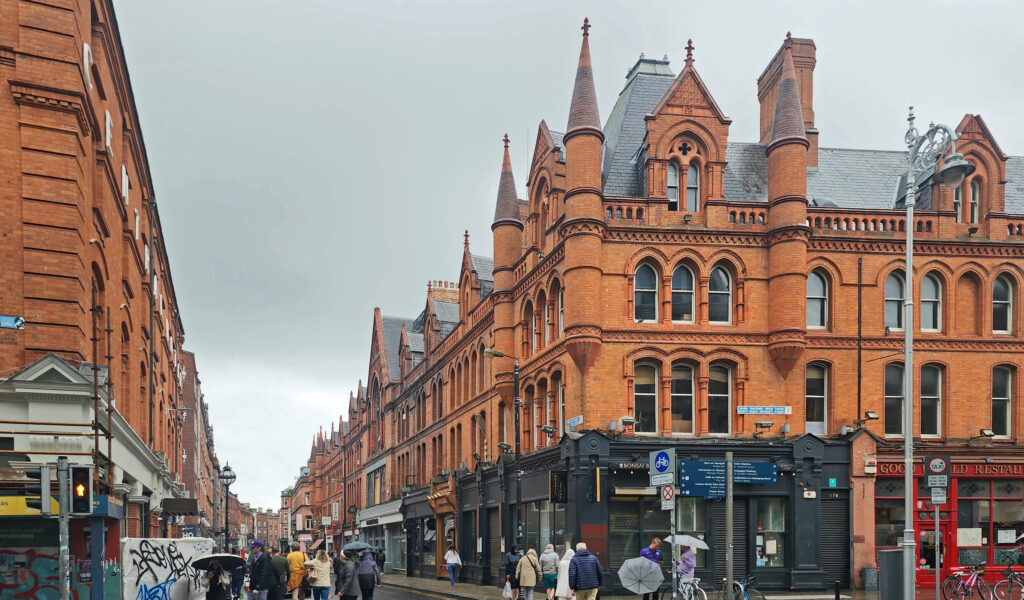
Downtown Dublin

History

There are a number of themes that run through the culture of Dublin. One of those is history. History is central to all aspects of life in Dublin, and there is plenty of history to be found there. The city of Dublin is over a thousand years old and the area has been inhabited for many millennia. The Vikings established a settlement in the Dublin area in 841 CE, but an archaeological dig in the Temple Bar area uncovered evidence of an Anglo-Saxon settlement that predated the arrival of the Vikings.

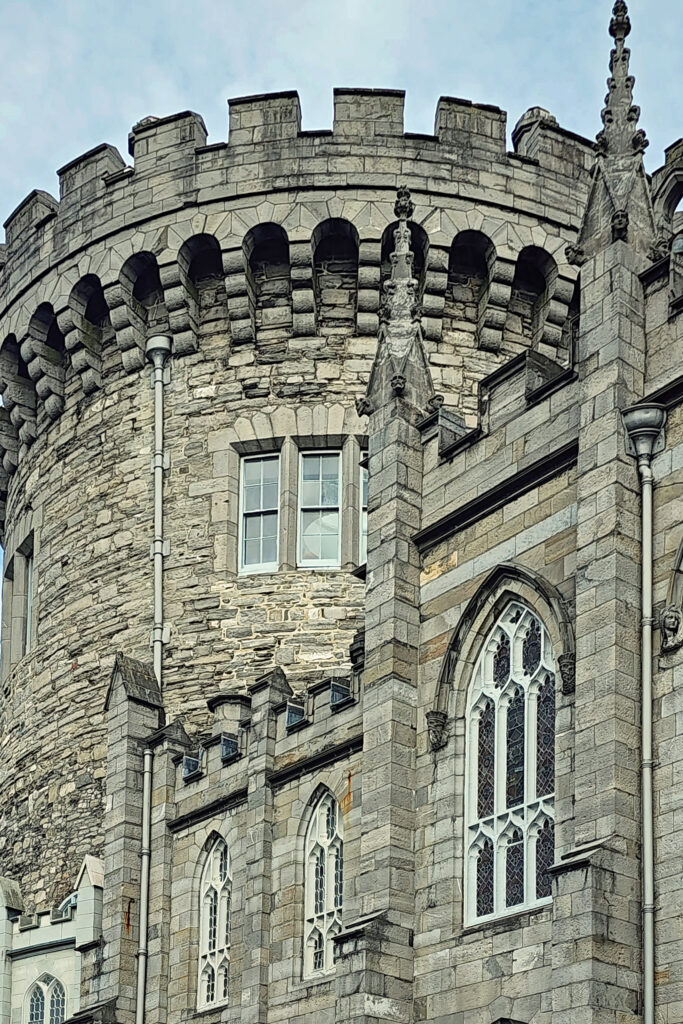
Dublin Castle
Dublin Castle

The Norman invasion of Ireland in the 12th century established English rule of Dublin. Dublin Castle was built in 1204 on orders of King John of England and became the center of power of the English ruled portion of Ireland. (It wasn’t until the 16th century that all of Ireland came under English rule).

Downtown Dublin

Dublin grew to be the city it is today during the 18th century. At one point it was the second largest city in the British Empire and the fifth largest in Europe. Dublin suffered a decline in the 19th century, but rebounded in the mid-20th century, and even more so in the last couple of decades. Today the city is vibrant and alive. The city itself has a population of about 600,000, County Dublin’s population is about 1.5 million, and the Greater Dublin area counts more than two million people – similar in size to Portland, Oregon.

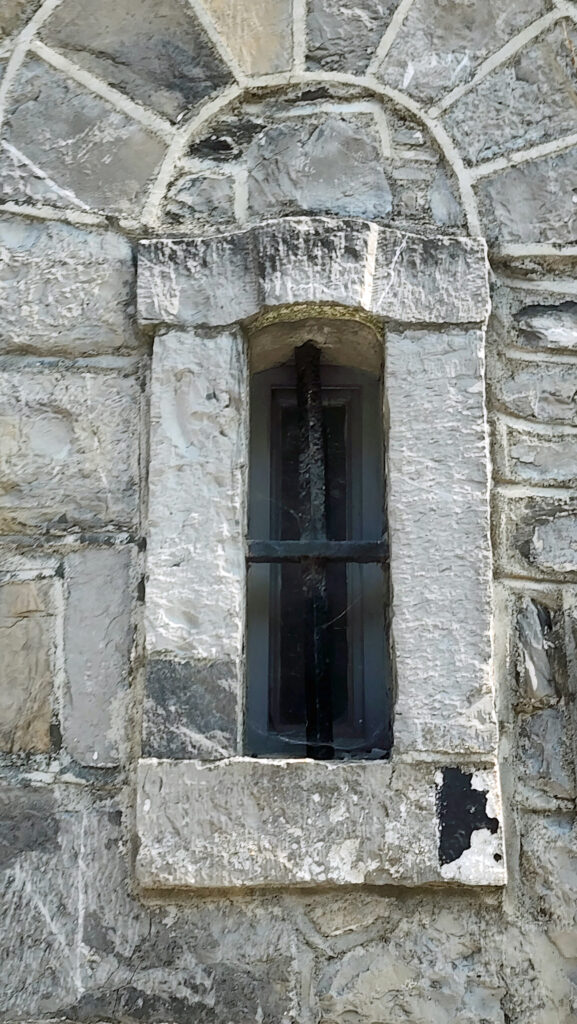
Cell window looking out on a courtyard, Kilmainham Gaol
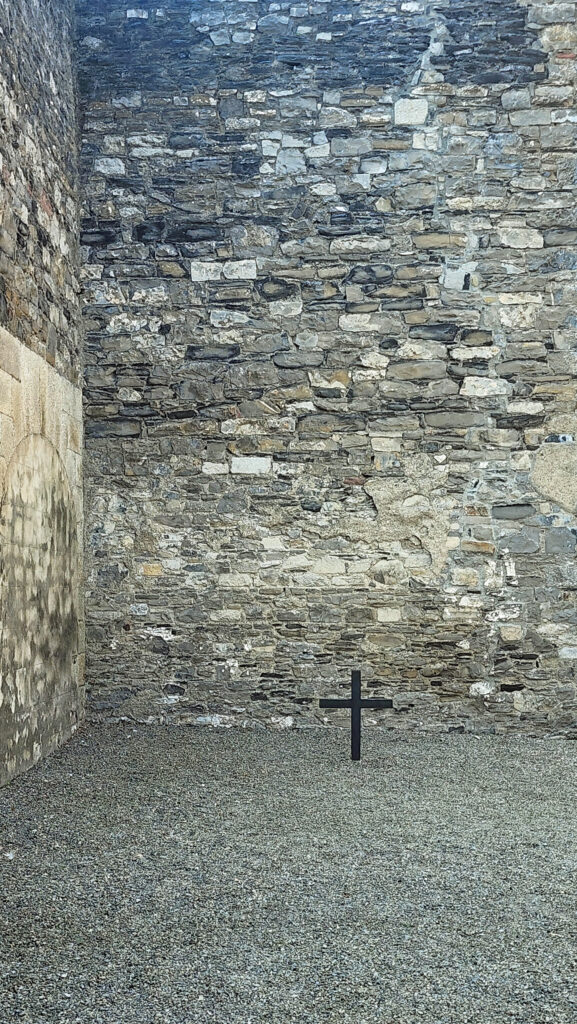
Site of the execution of Easter Rising leaders in 1916

The 20th century was marked by conflict, first between those seeking independence from Great Britain and those opposed, and later between Catholic nationalists and Protestant traditionalists, colloquially known as the Troubles. The first led to the Easter Rising rebellion in 1916 and then the Irish Civil War, which resulted in the establishment of the Irish Republic in 1923. The Troubles were mostly centered in Northern Ireland, and there are still segregated sections of the cities there. But the Troubles also affected Dublin to an extent. There were several bombings in the city during that time. Today, peace reigns, and the border between the Republic of Ireland and Northern Ireland is completely open, even after Brexit. We took a bus tour from Dublin to Belfast during our visit and the border was hardly marked by even a sign.

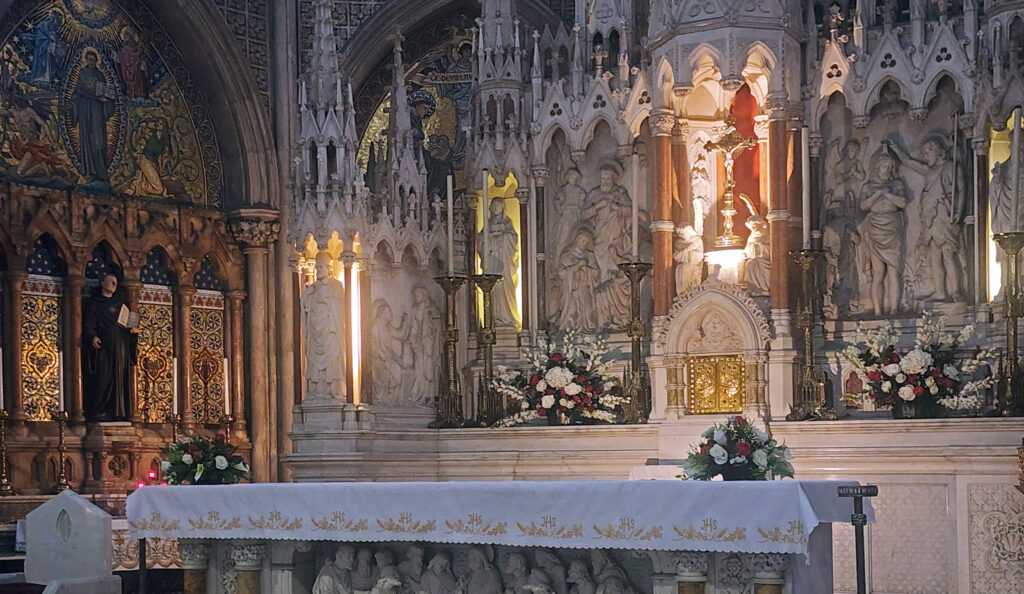
St. Augustine and St. John the Baptist Catholic Church

Churches and Cathedrals

In addition to history, religion is also central to life in Dublin, perhaps a bit less than elsewhere in Ireland but it is still a majority Catholic city, and churches and cathedrals are found throughout the city. Neither my wife nor I are church goers, but we always visit the local churches and cathedrals when in Europe, for the incredible architecture and artworks, if nothing else.

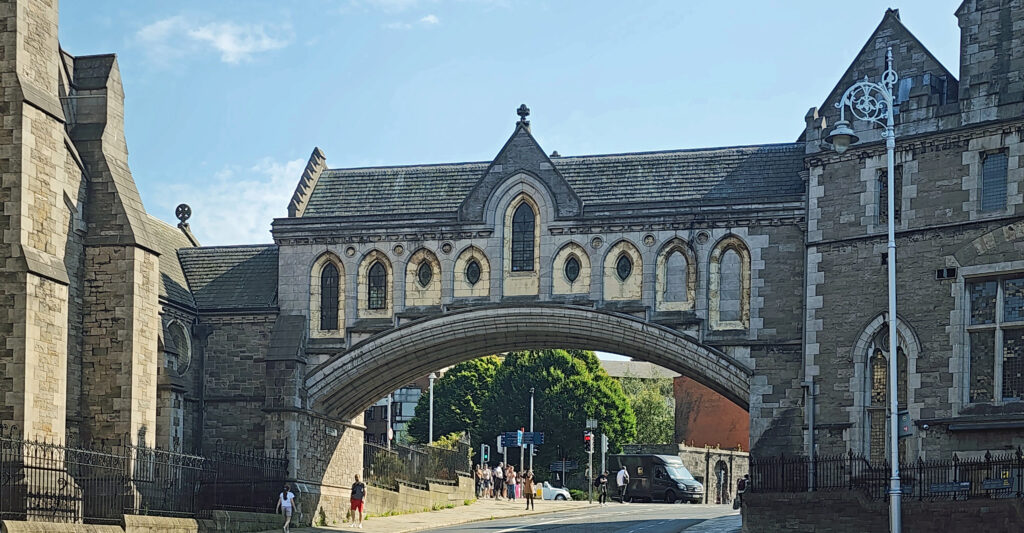
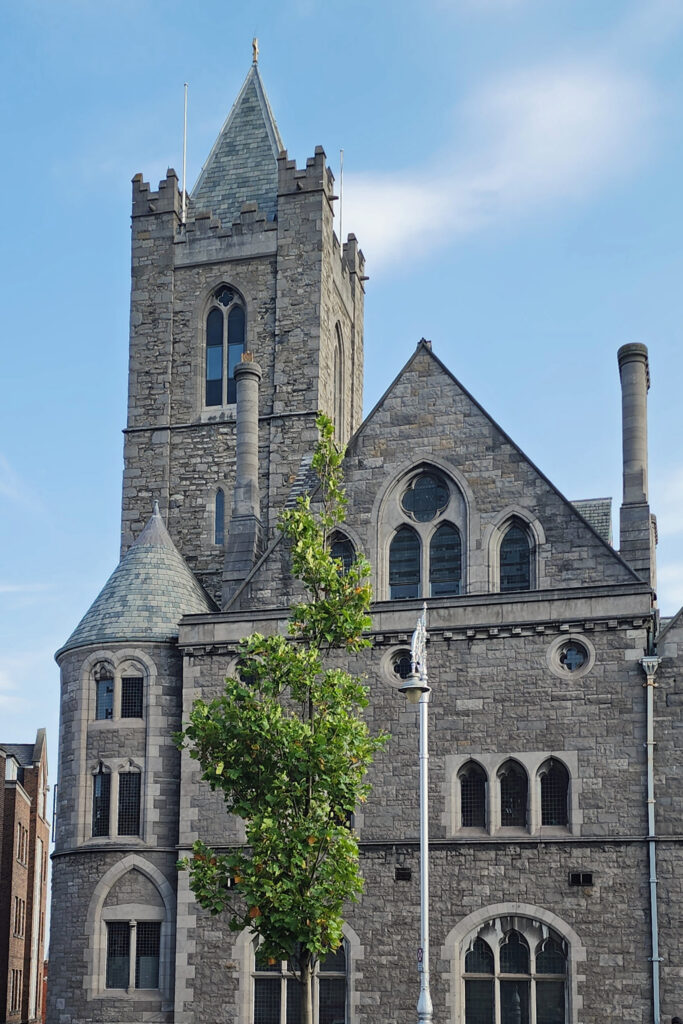
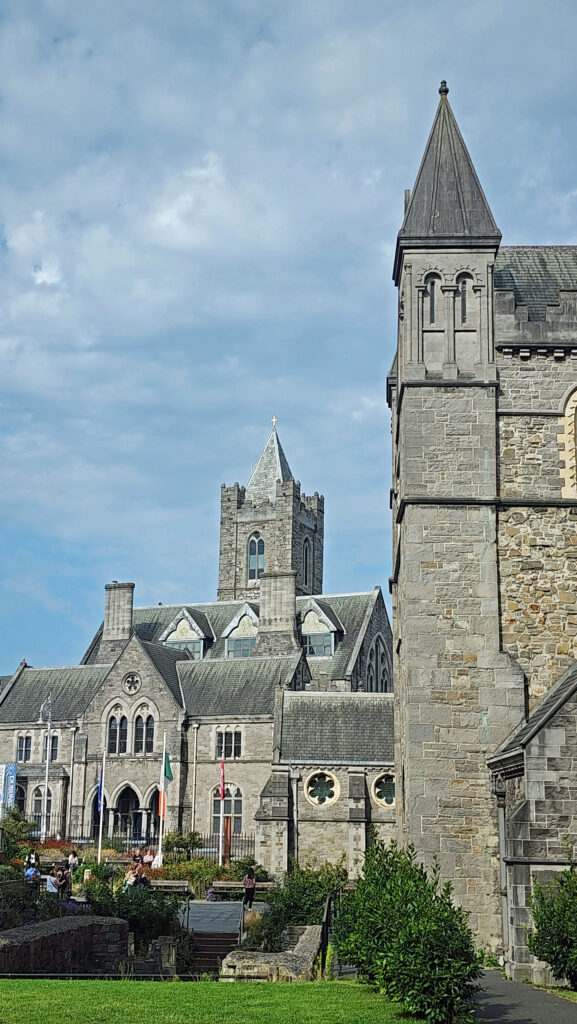
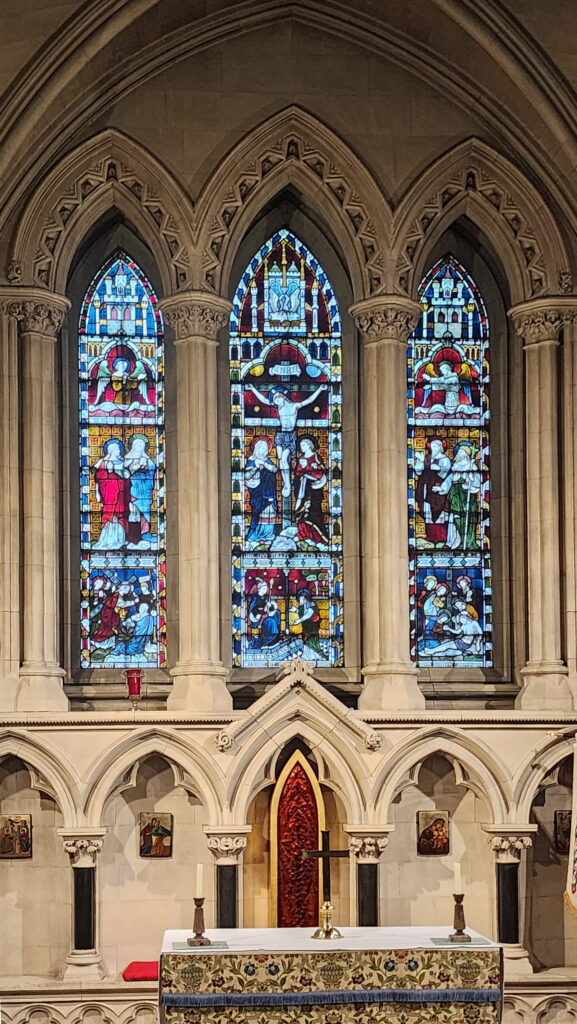
Christ Church Cathedral

In the center of the city, Christ Church Cathedral and St. Patrick’s Cathedral (pictured in the featured image at the top of this post) are must see attractions.

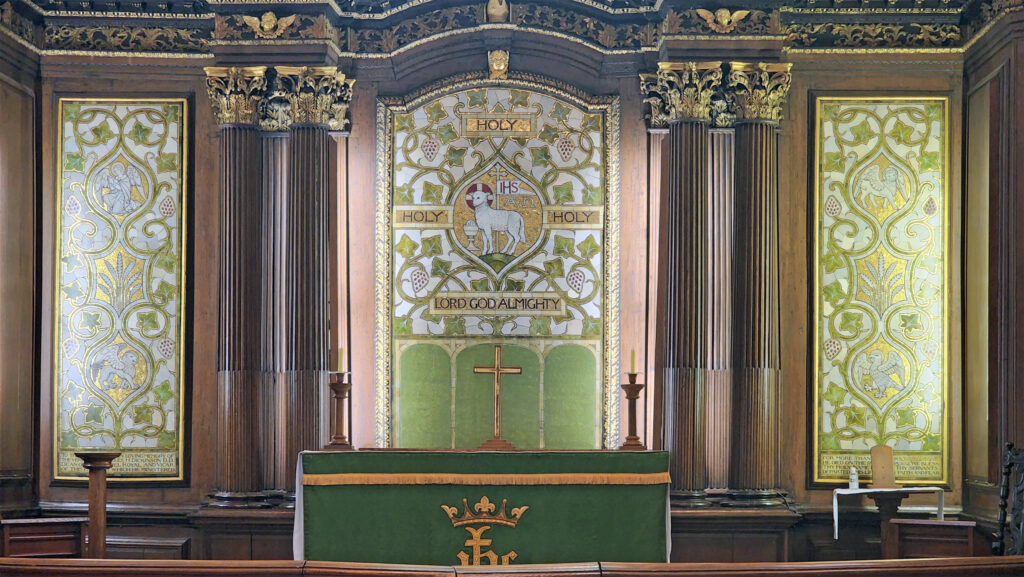
St. Ann’s Church

We also spent some time exploring St. Ann’s Church, between Trinity College and St. Stephan’s Green, St. Augustine & St. John the Baptist Church, as well as a few smaller churches in our wanderings outside of the main downtown area.

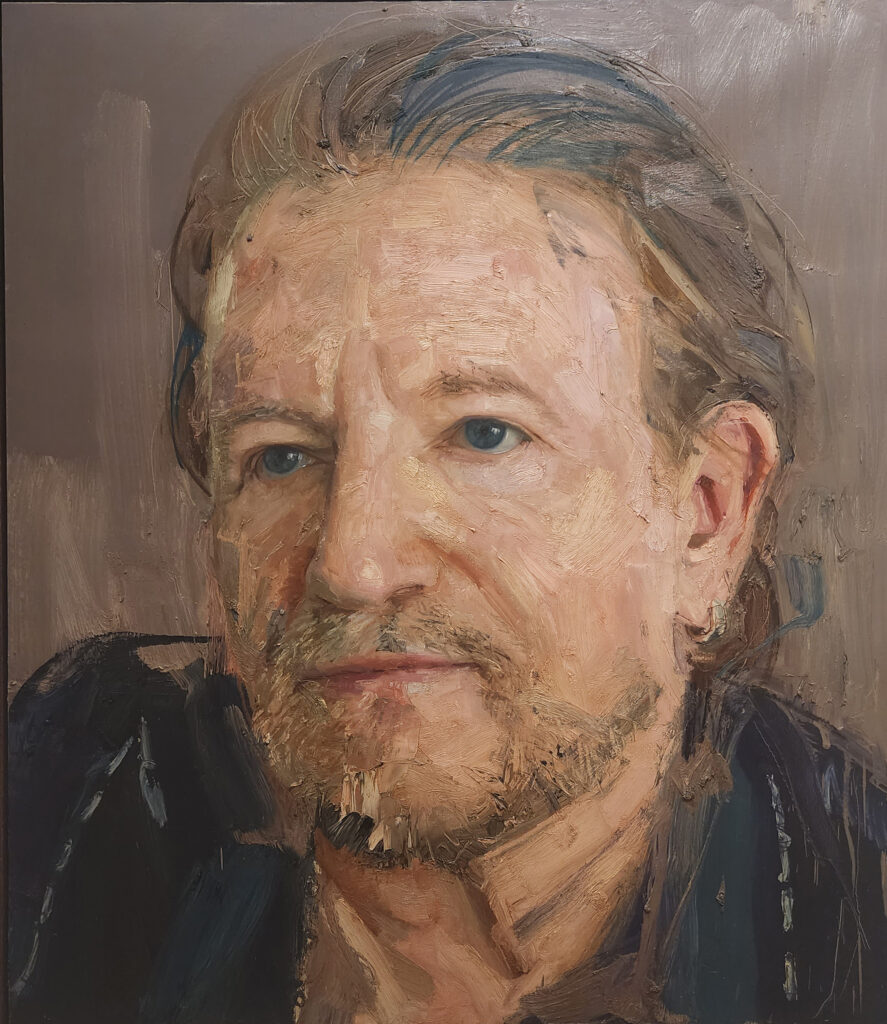
Painting of Bono, National Gallery of Ireland

Museums, Galleries, and Public Art

Dublin is a city of art. There are many museums, galleries, and public artworks to be found in the city center. And since my wife and I are interested in both art and history, we spent much of our time in Dublin’s various museums and galleries.

National Museum of Ireland (Archaeology)

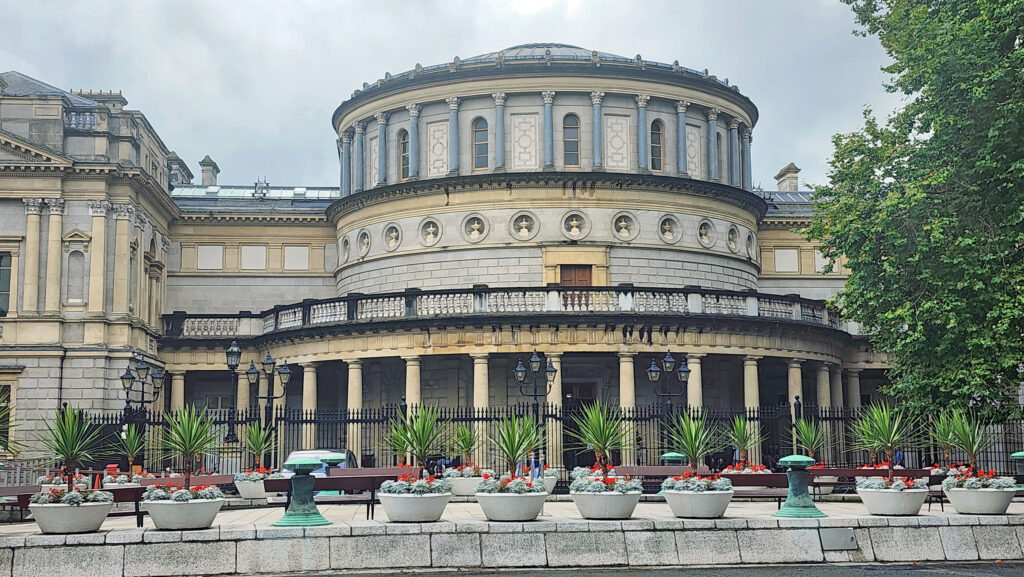
The National Museum of Ireland has three branches in Dublin, one featuring local archaeologic finds (on Kildare Street in downtown), one featuring decorative arts and history (at Collins Barracks just west of downtown on the north bank of the River Liffey), and another (colloquially known as the “dead zoo lab”) dedicated to natural history, located adjacent to Collins Barracks. Entry to all three is free. The archaeology museum is huge and impressive, to say the least. You could probably spend a whole day there and not see it all. Admission to all three museums is free.

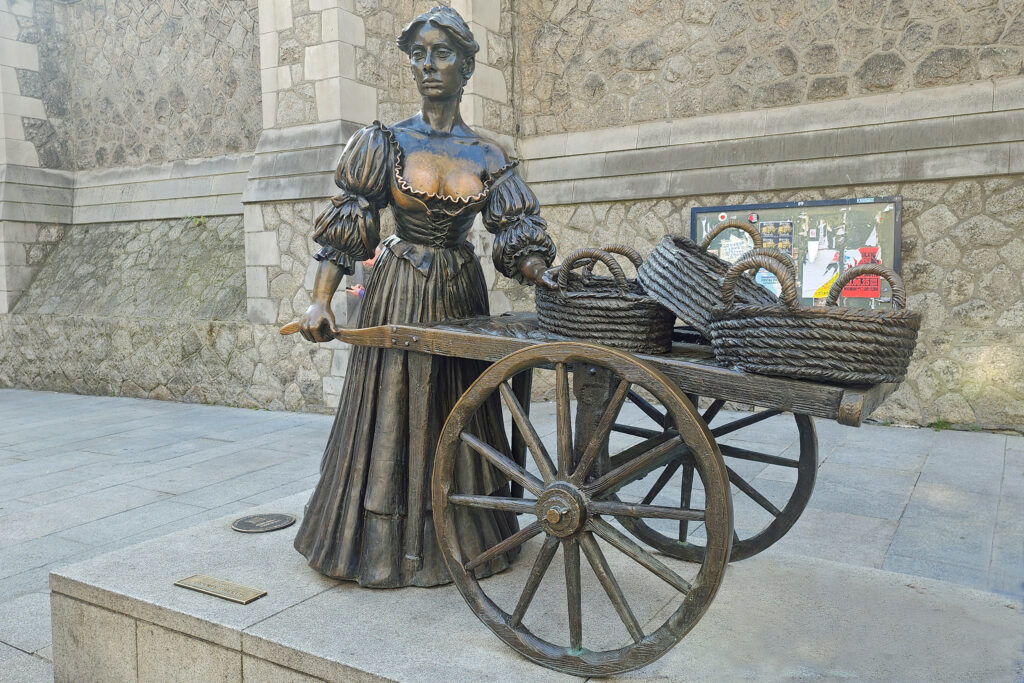
“Molly Malone” statue

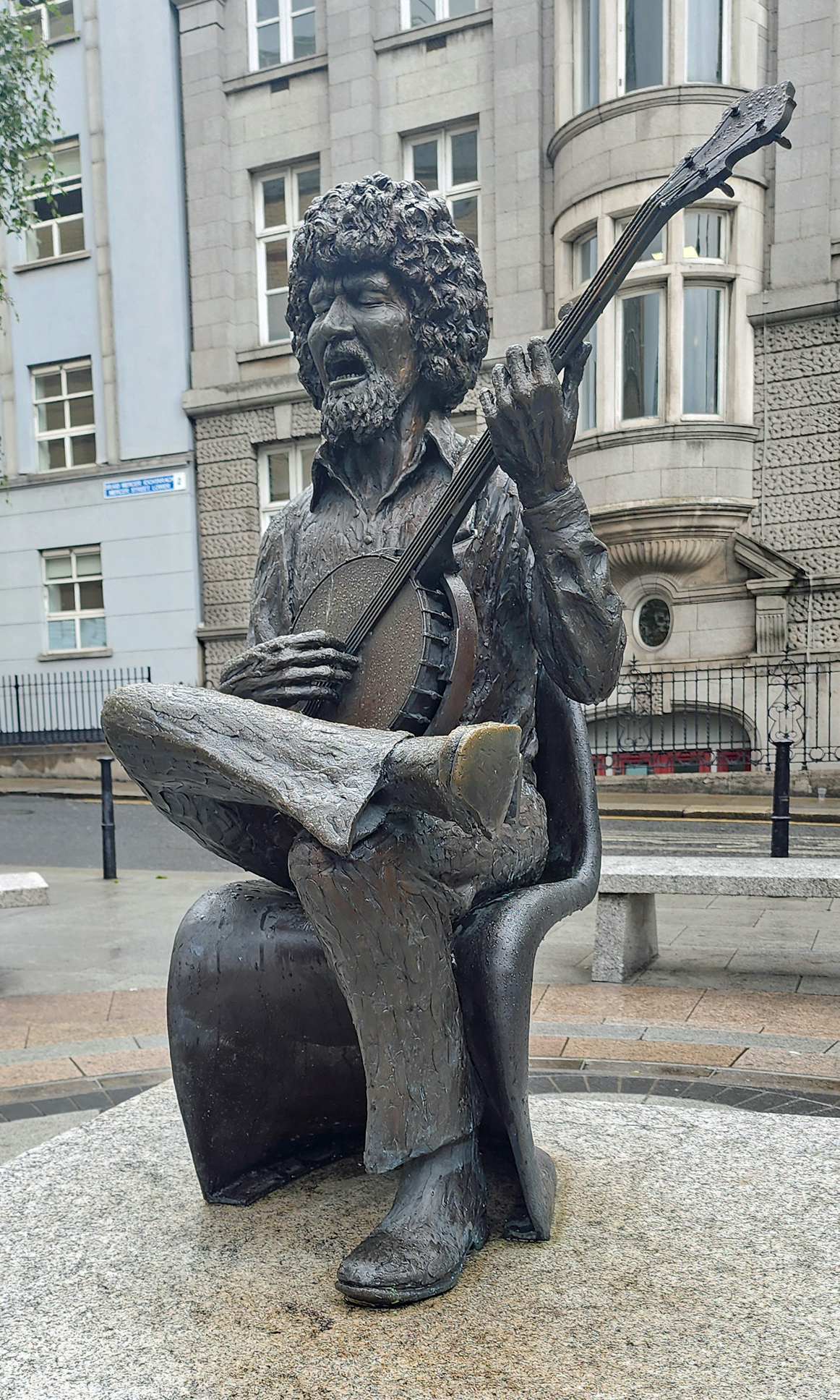
Sculptures and other public artworks dot the central city, perhaps none more iconic than the statue of Molly Malone. The song “Molly Malone” has been Dublin’s unofficial anthem for more than a century. Tourists have taken to rubbing the statue’s bosom for good luck, though locals are generally opposed to that practice and city officials plan to install plantings around the statue to keep tourists away from the sculpture. I kept my hands to myself. Another iconic sculpture is that of Luke Kelly, a folk musician and founding member of the band The Dubliners, who died at the age of 43 in 1984.

Luke Kelly statue, downtown Dublin
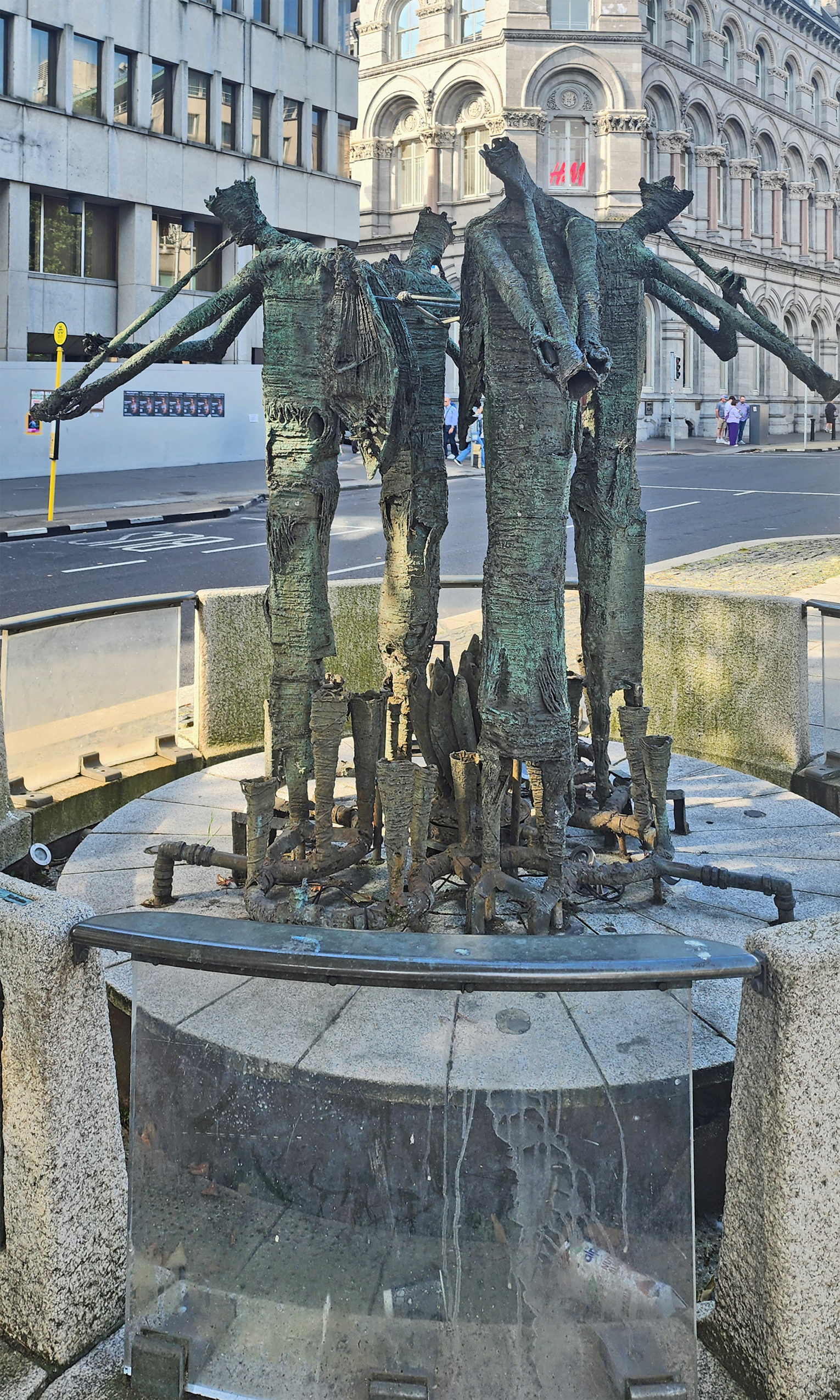
Fountain sculpture, downtown Dublin
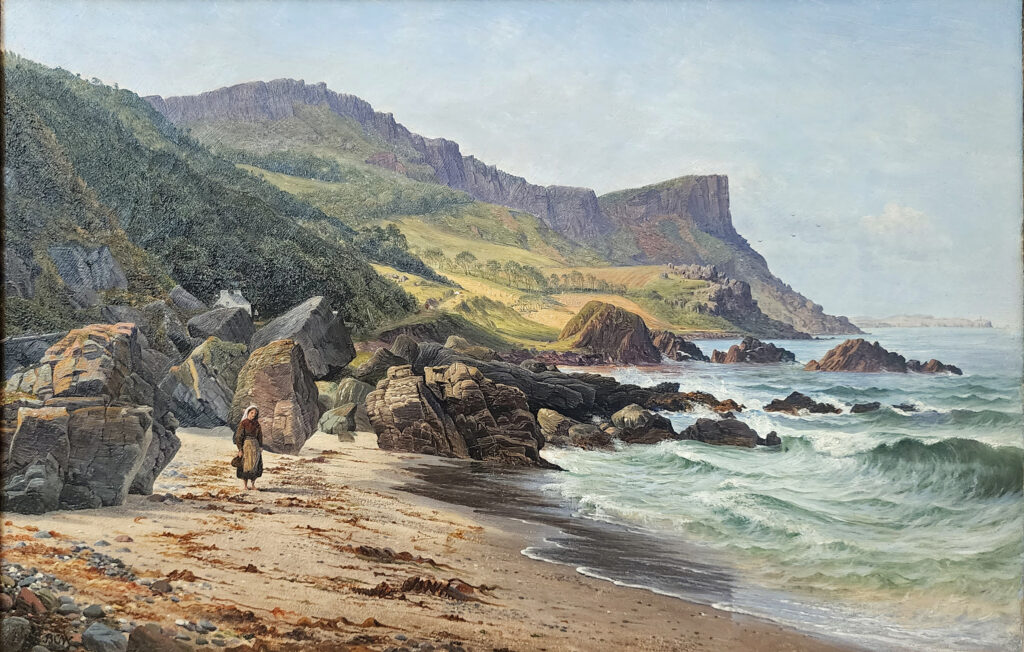
Painting of the Irish Coast, National Gallery of Ireland

The National Gallery of Ireland, located in the central part of the city near Trinity College and Merrion Square Park, houses more than 14,000 artworks. The gallery was opened in 1864 and has been expanded several times, most recently in the 1960s. Like the National Museums, admission to the National Gallery is free.

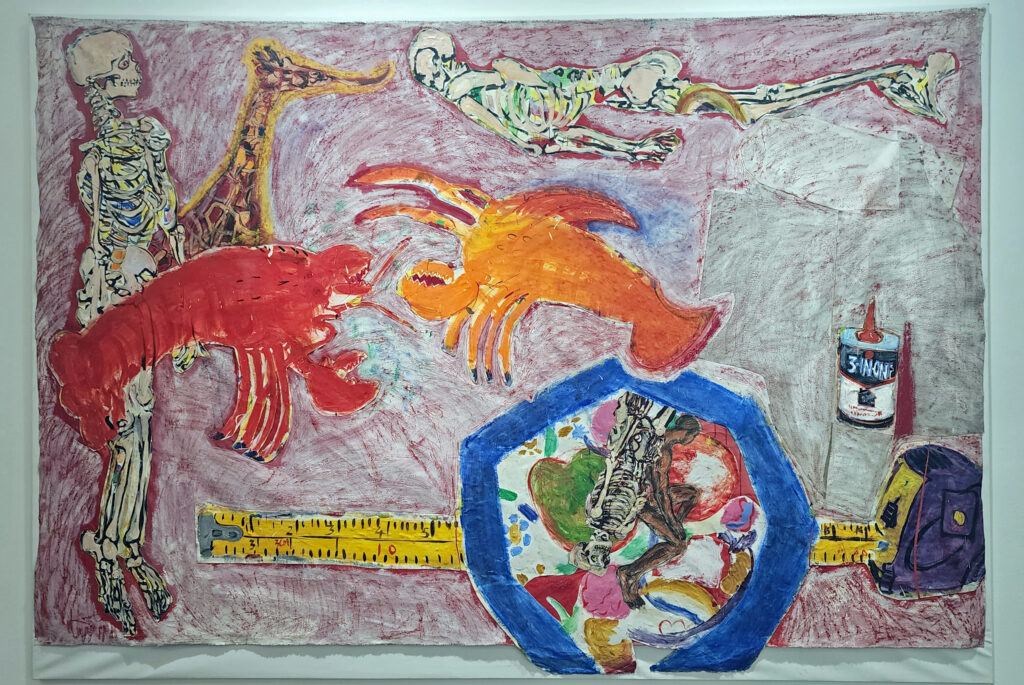
Irish Museum of Modern Art

The Irish Museum of Modern Art, located on the west edge of downtown not far from the railroad station, opened in 1991, but the building it occupies is much older. The building was once the Royal Hospital Kilmainham and dates to the 17th century. The museum houses 3500 works of contemporary art. Again, admission is free.

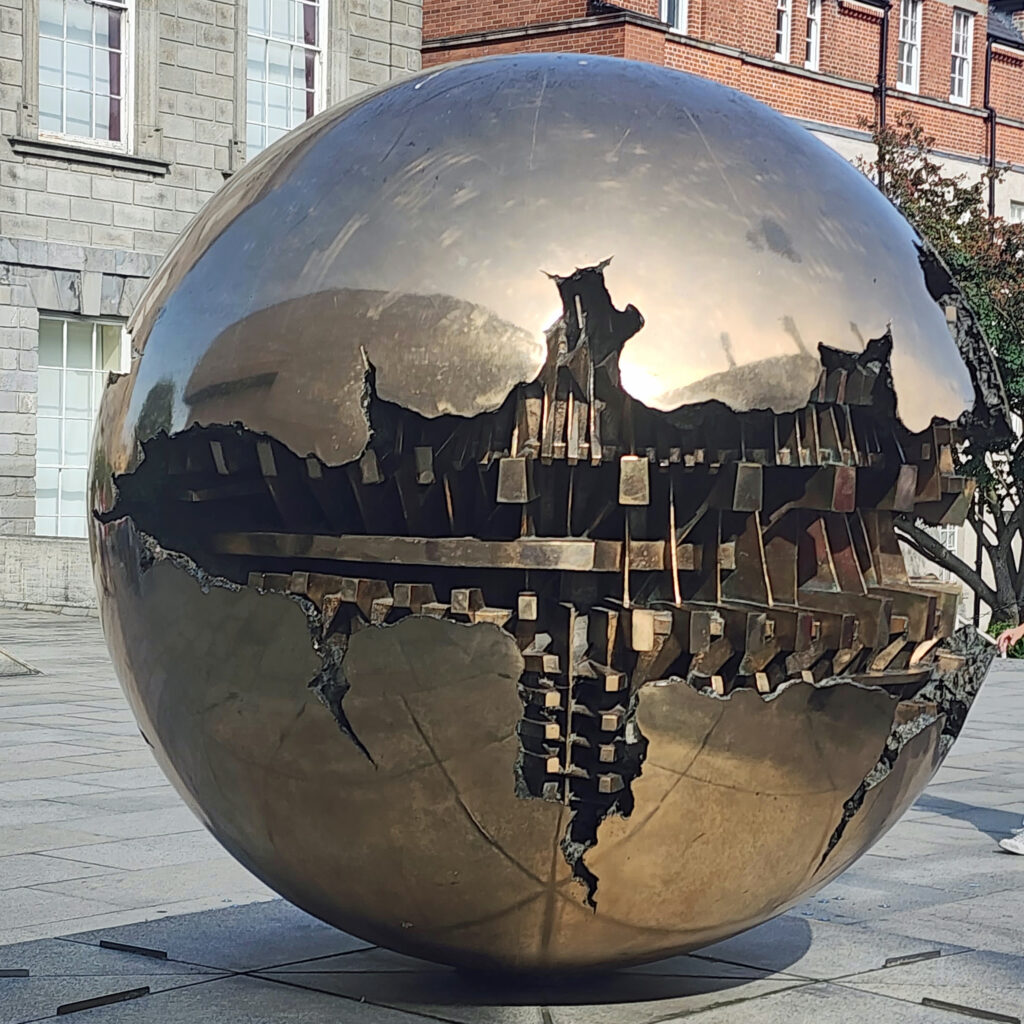
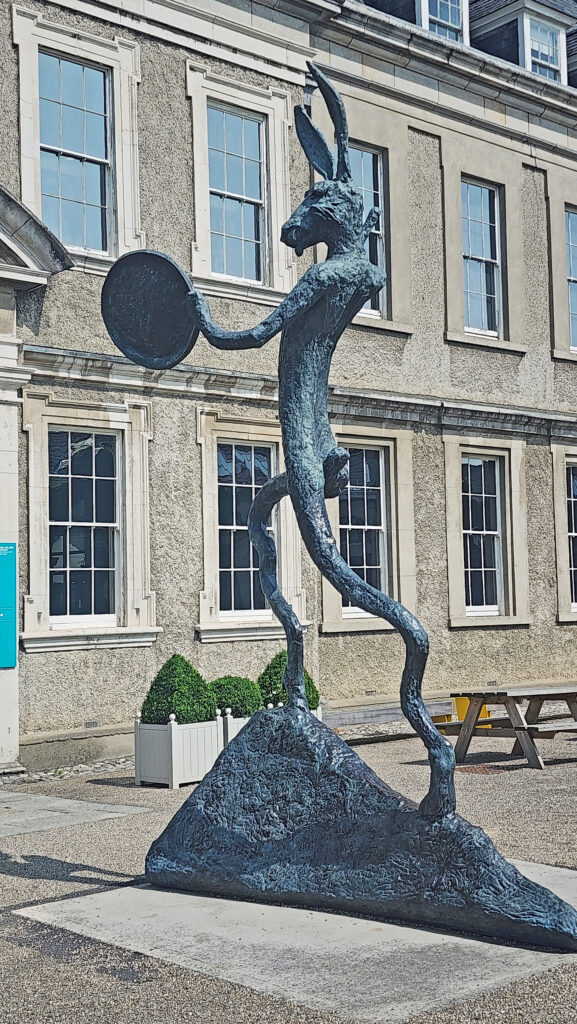
Metal sculpture, Trinity College
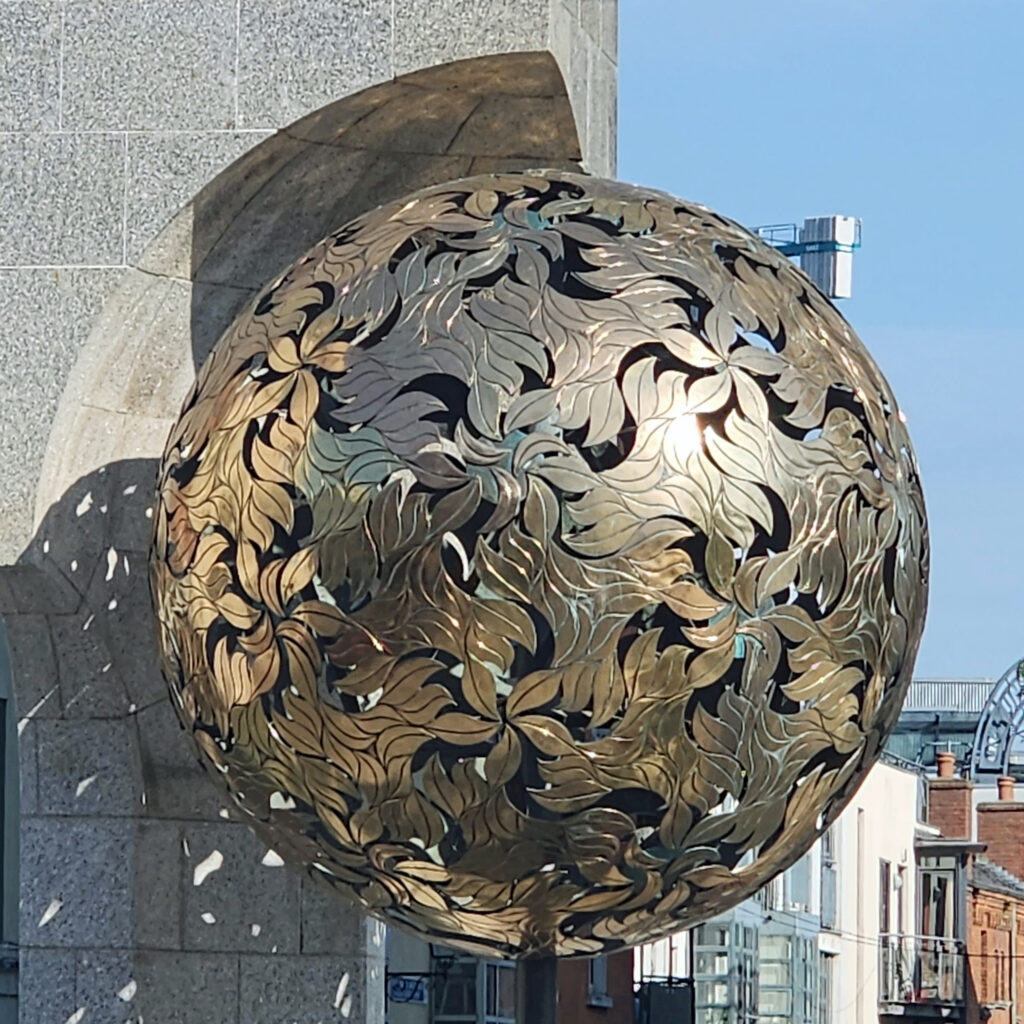
Metal sculpture, downtown Dublin

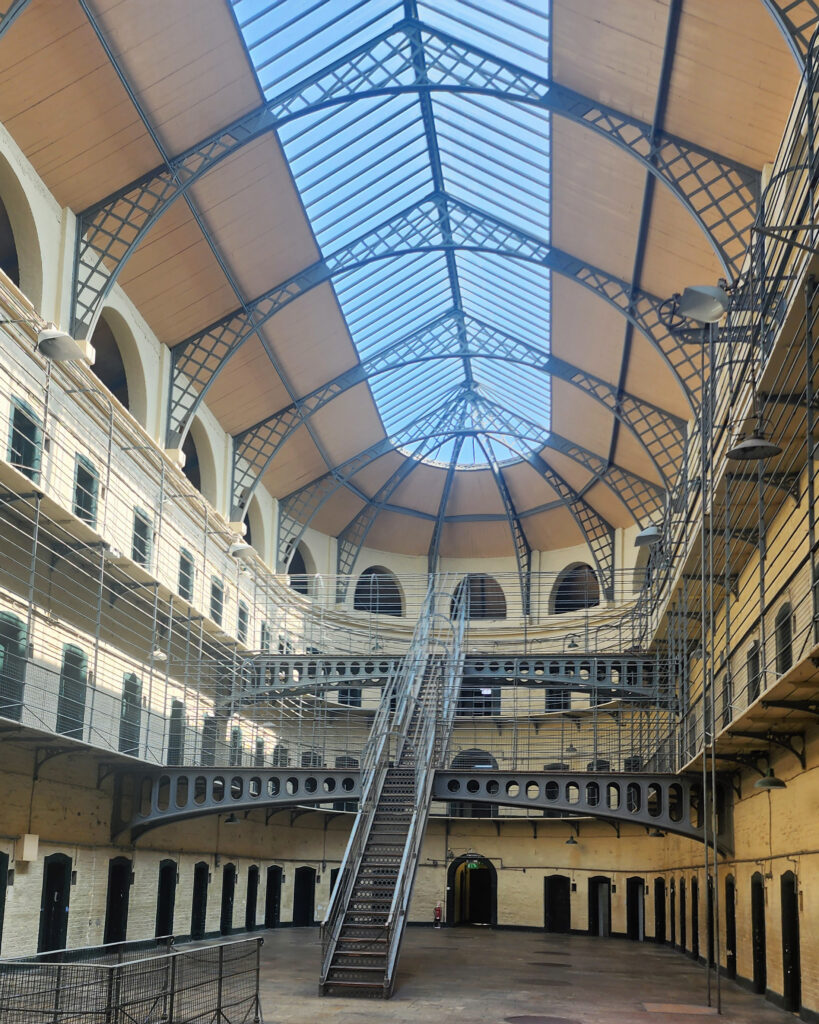
Kilmainham Gaol

A tree-lined lane takes you from the Irish Museum of Modern Art to the Kilmainham Gaol (“gaol” being the British and Irish spelling of “jail”), which was built in the late 1700s as the County Dublin jail. It is perhaps best remembered as the site of the execution of the leaders of the 1916 Easter Rising (including one who was transported from a hospital to the goal, tied to a chair because he was too injured to stand on his own, and shot by firing squad). The Easter Rising eventually led to the Irish Civil War and independence from the United Kingdom in 1923. Kilmainham Gaol was closed in 1929 and became a museum in the 1930s.

Kilmainham Gaol

Today, Kilmainham Gaol is one of Dublin’s top tourist attractions. If you plan to visit, it’s best to purchase tickets online in advance. We didn’t, and when we inquired at the entrance, we were told that we would have to wait several hours for the next available tour. However, we were told to return in half an hour, and were given an abbreviated tour at no cost. (Adult admission for the full tour is €8). We didn’t see the whole facility, but the tour we got was interesting and informative.

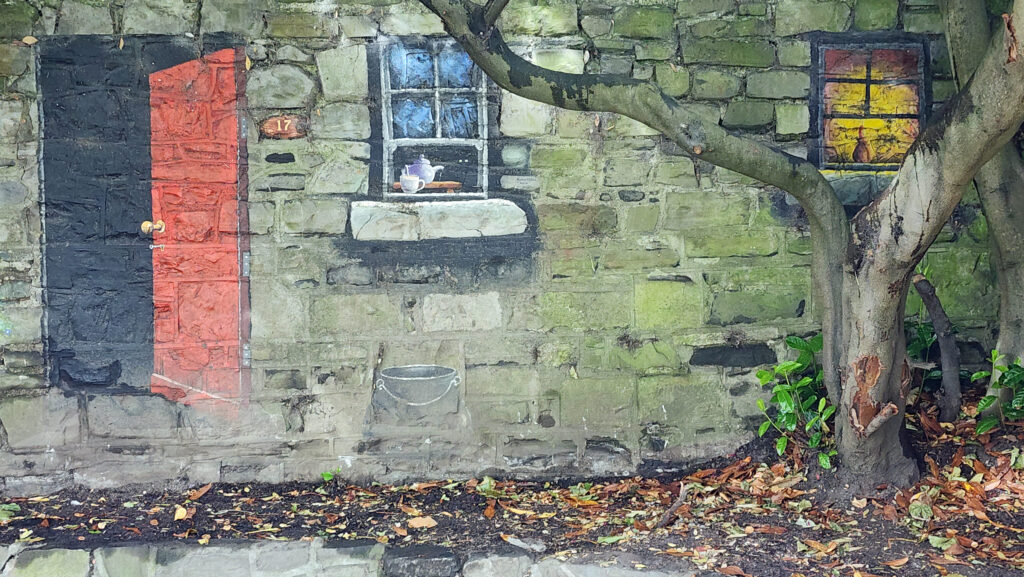
Wall mural at Blessington Basin Park

Parks

Dublin is a beautiful city, both in terms of its architecture and the natural beauty that can be found in the more than 300 parks in the city. We visited a number of parks, including Croppies Acre Memorial Park near Collins Barracks, St. Patrick’s Park at St. Patrick’s Cathedral, Merrion Square Park, St. Steven’s Green (the largest park in the central Dublin area), Iveagh Gardens, and Blessington Basin Park, a former water reservoir converted into a city park.

St. Steven’s Green

Trinity College and the Book of Kells

Trinity College was established as a Protestant institution in 1592 by Queen Elizabeth I in her attempt to make Dublin a Protestant City. For centuries, Trinity College was an institution of the Protestant ruling elite. While Catholics were not prevented from attending the college, they had to take an oath objectionable to Catholics to graduate. That requirement was not lifted until 1793, and even then Catholics were not allowed to be Fellows or members of the faculty, and scholarships were restricted to Protestants only.

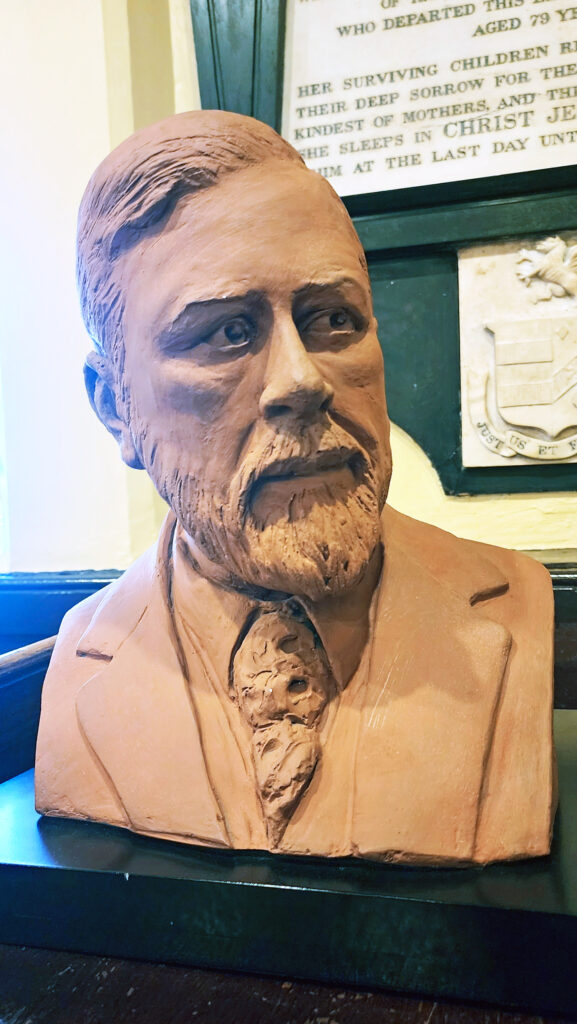
Bust of Bram Stoker in St. Ann’s Church

Notable alumni of Trinity College include Oscar Wilde, Samuel Beckett, Jonathan Swift, and Bram Stoker, author of Dracula. (I always thought of Bram Stoker as being Eastern European, but he was in fact Irish. His name was actually Abraham Stoker.)

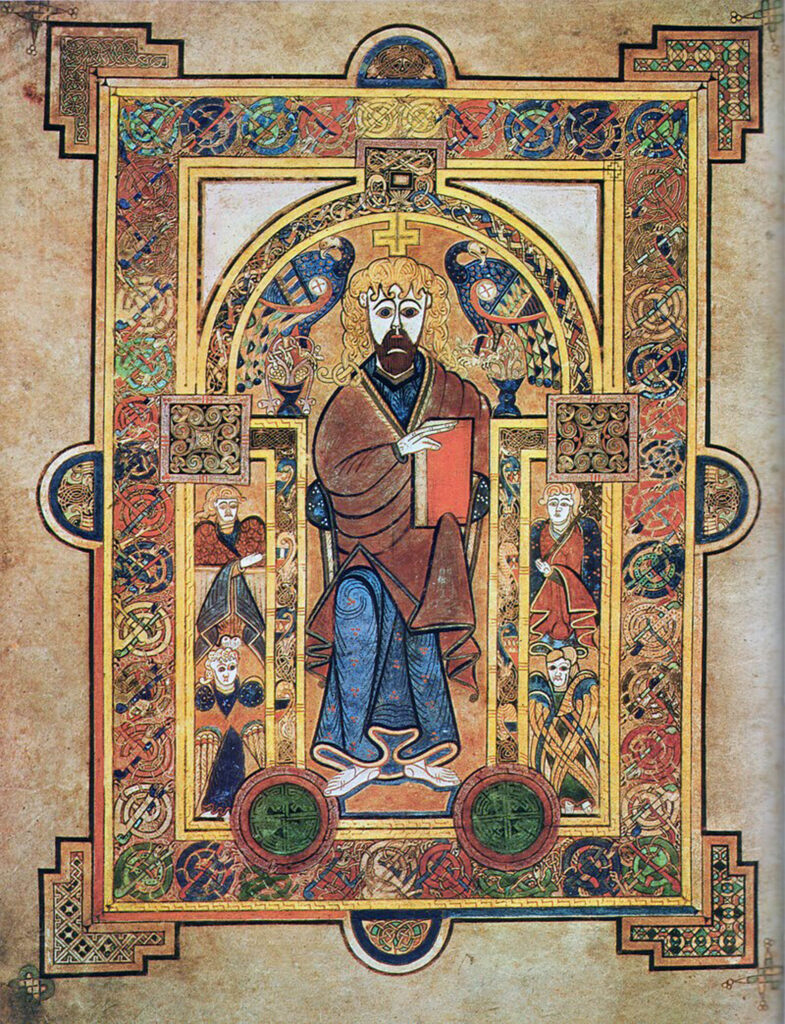
Book of Kells Folio 32v, sourced from Wikimedia Commons

Trinity College is perhaps the best known for the majestic Book of Kells, the spectacularly illustrated Celtic Gospel that is housed in the Trinity College Library. But Trinity College is anything but stuck in the past. Today, Trinity College is a modern institution with an enrollment of approximately 22,000 students and one of the leading educational institutions in Europe.

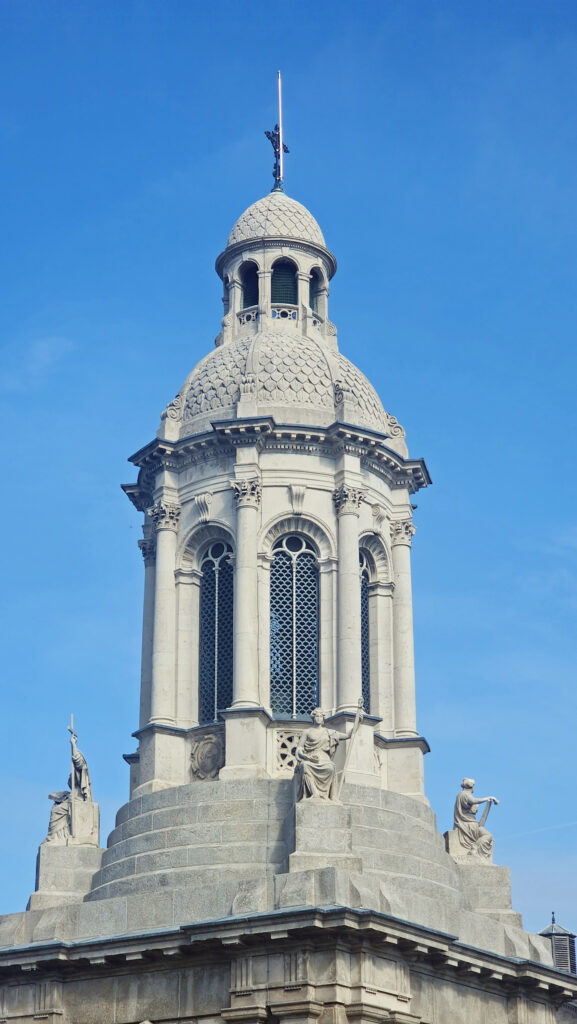
Trinity College
Trinity College

While we did not take the Book of Kells Experience tour, it will be on our agenda if we ever return to Dublin. And, as I discovered after we had already booked our accommodations, you can stay on campus if you visit during the summer. A room with a private bathroom in the Printing House, for example, can be rented for under €200 per night. That would be quite an experience.

Temple Bar and Guinness

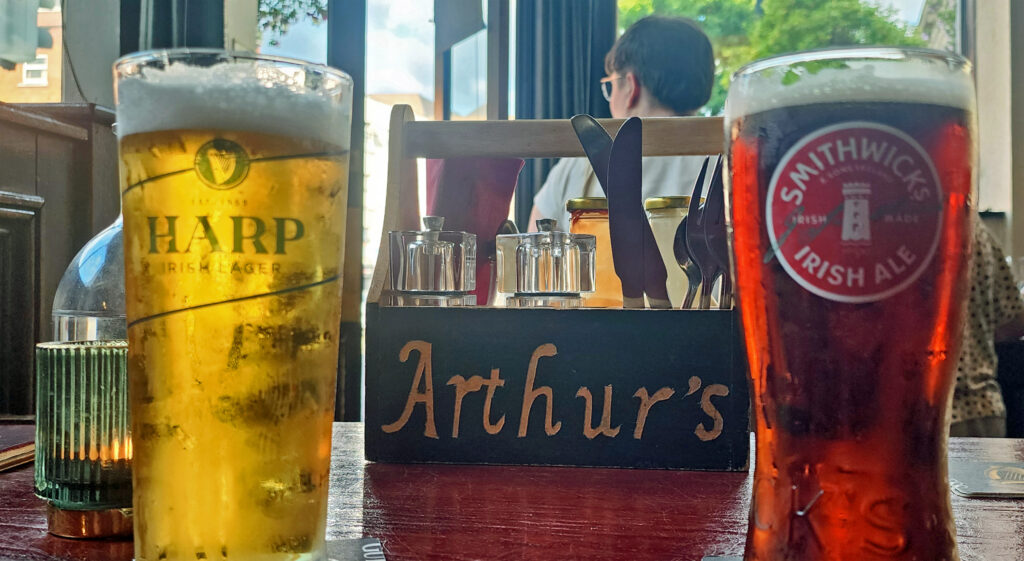
And then there are the pubs. Ireland is known for both their whiskey and, of course, for Guinness. The Guinness Storehouse is the top tourist attraction in Dublin and second most popular in the country, behind only the Cliffs of Moher (which I’ll cover in a future post).

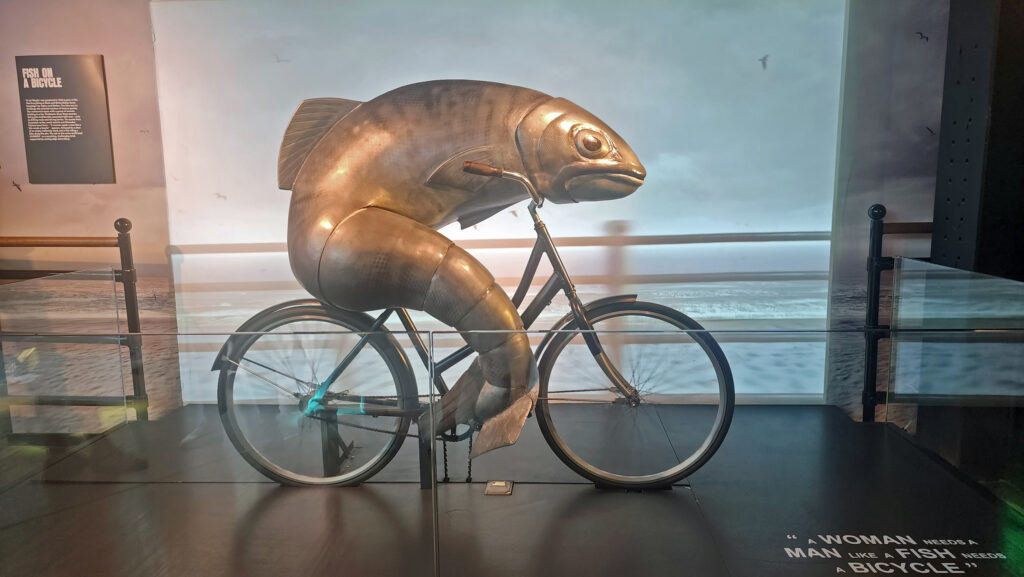
Guinness Storehouse

Guinness has been brewing beer in Dublin since 1759, when the founders signed a 9000-year lease for the property that now houses the oddly entertaining (and informative) Guinness Storehouse, which was originally a fermentation plant in the heart of the St. James Gate brewery complex. Today, it is a seven-story showcase of Guinness beer and the history of Guinness Brewing. Your €30 entry ticket also gets you a free pint at the glass walled Gravity Bar on top of the structure that has a 360⁰ view of the city. Good luck finding a table, though. It took us a while.

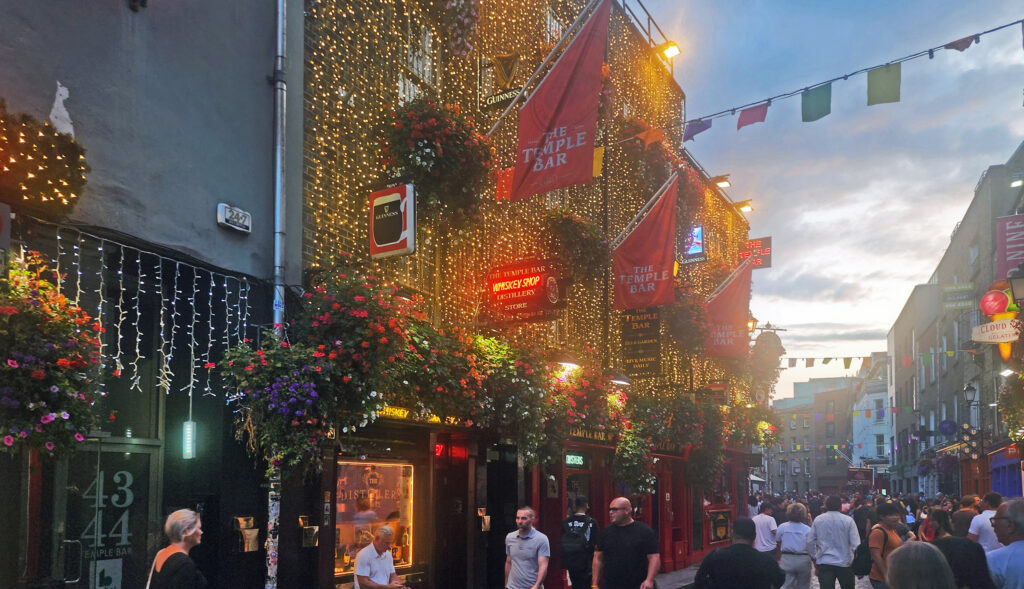
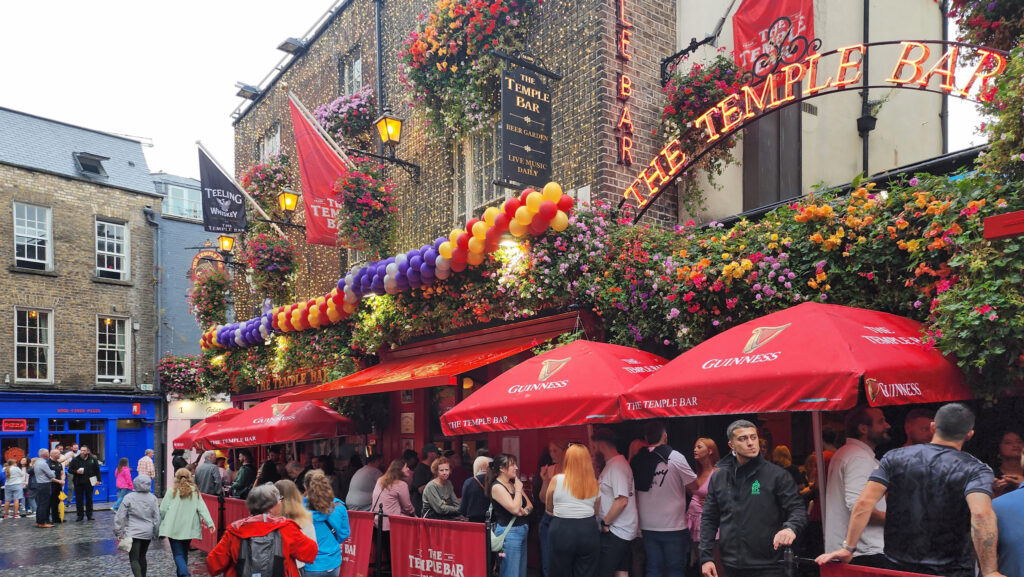
Temple Bar

And about a mile to the east, the Temple Bar neighborhood, on the south bank of the River Liffey, is the nightlife center of Dublin, akin to Bourbon Street in New Orleans or Duval Street in Key West. You won’t find many locals in any of the Temple Bar pubs in high season, except for the bartenders, but it’s wildly entertaining in the evening, even early in the evening when we were there.

The Temple Bar

Many of the pubs in Temple Bar have “Temple” as part of their name, but The Temple Bar is probably the most popular.  And the most crowded. When we were there early on a Friday evening, we could barely get in the door, much less get a table or get served. So, we just crowded our way in to say we had been there and left to find a less crowded place to get a pint and get some food. We landed at The Mercantile Bar and Restaurant on Dame Street – good food and, of course, good beer, and not crowded.

Temple Bar isn’t a truly Irish experience, but get even a little way off the beaten track and you can find a more authentic Irish Pub without much difficulty. Ryan’s, just west of Iveagh Gardens and St. Steven’s Green on Camden Street Lower, was one of two pubs that we took refuge from thunderstorms in on our last day in Dublin. I’m not sure what percentage of the patrons were locals, but they’ve been serving beer there since 1882. You can find a similar bar almost anywhere in Dublin.

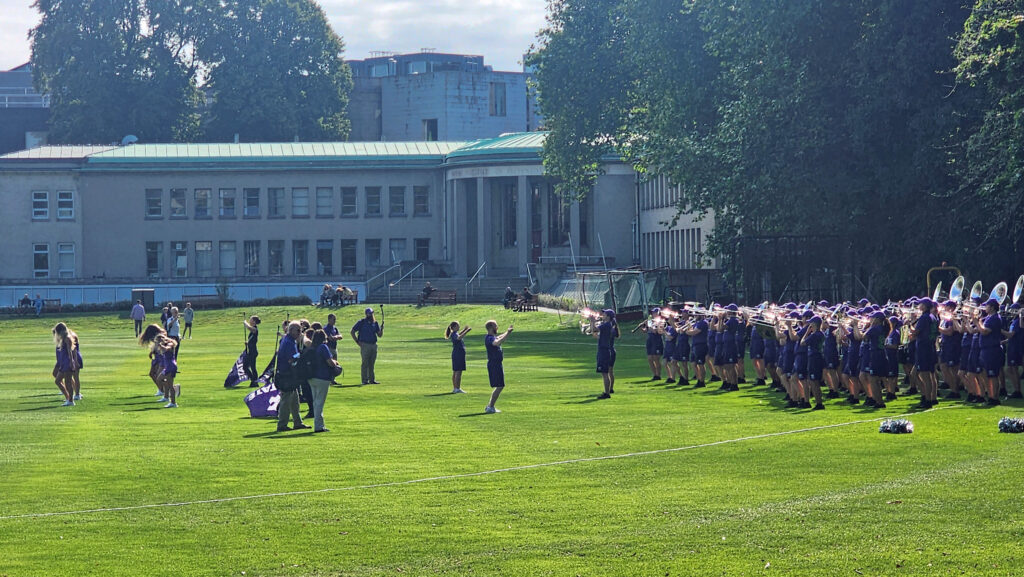
KSU band at Trinity College

Sports

Sports are an important aspect of Irish culture, although probably not to the traveler, so I won’t get into that here except for one slightly weird note on our visit. While exploring Trinity College, we came across a marching band, complete with cheerleaders, rehearsing on an athletic field. I thought it odd that Trinity College would have such a stereotypically American thing, but didn’t give it much more thought. But a few hours later we came across the same group performing in a nearby square. Turns out that it wasn’t the Trinity College Band, it was the Kansas State University Band. They were there because Kansas State and Iowa State were opening the college football season the next day – in Dublin. We came 5000 miles to immerse ourselves in Irish culture and smacked into an outbreak of pure Americana. Small world, I guess.

Irish Museum of Modern Art
Guinness Storehouse

Conclusion

We had a great time on our visit, and while our interests and your interests may not be the same, I think I can truthfully say that you will find Dublin to be an interesting and worthwhile place to visit, regardless of where your interests lie. It’s a cliché to say that there’s something there for everyone to enjoy, but I think Dublin is one place where it may literally be true. If a visit to Dublin is on your bucket list, go sooner rather than later. And if it’s not already, you should consider adding it. You won’t be disappointed.

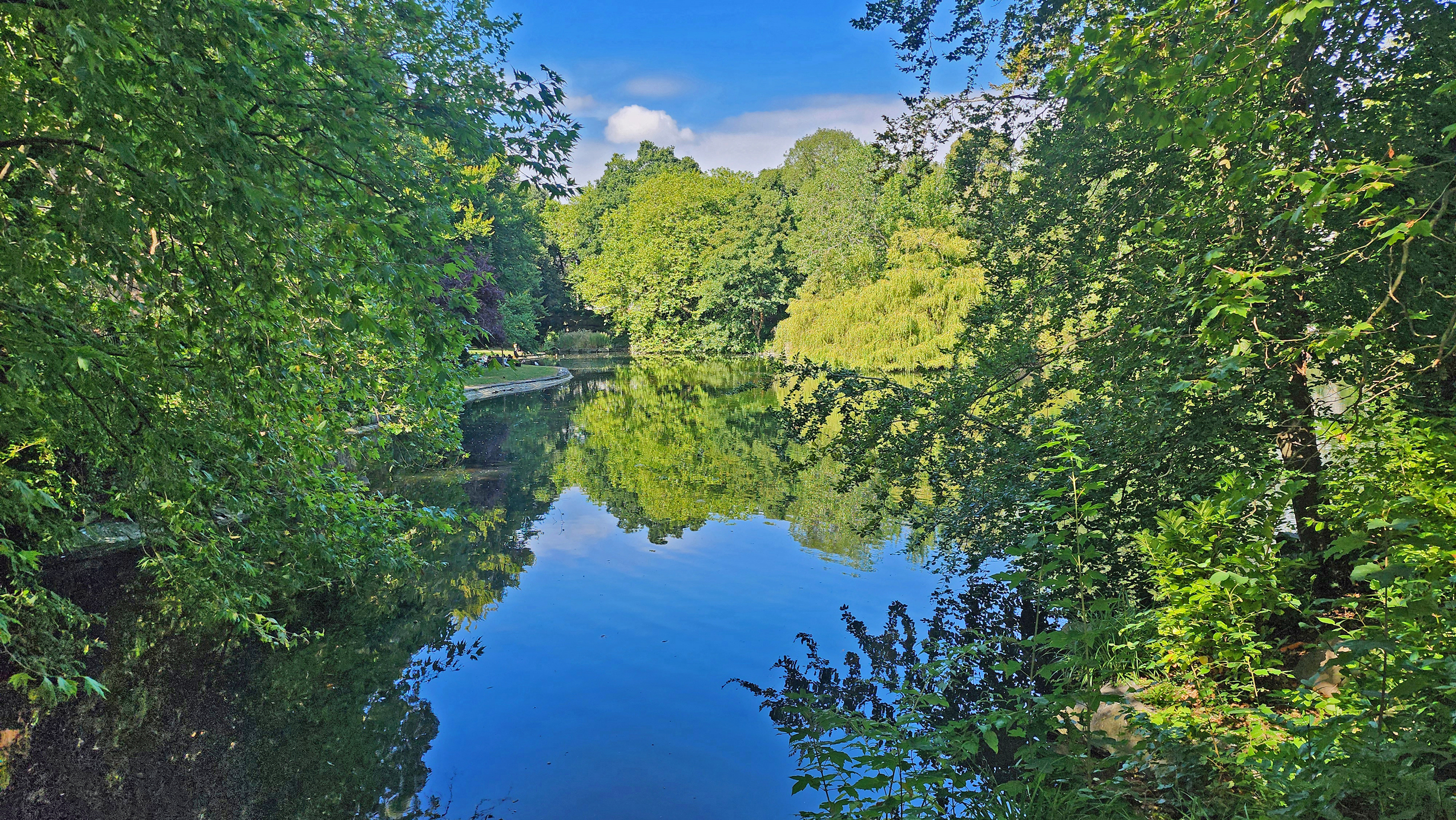
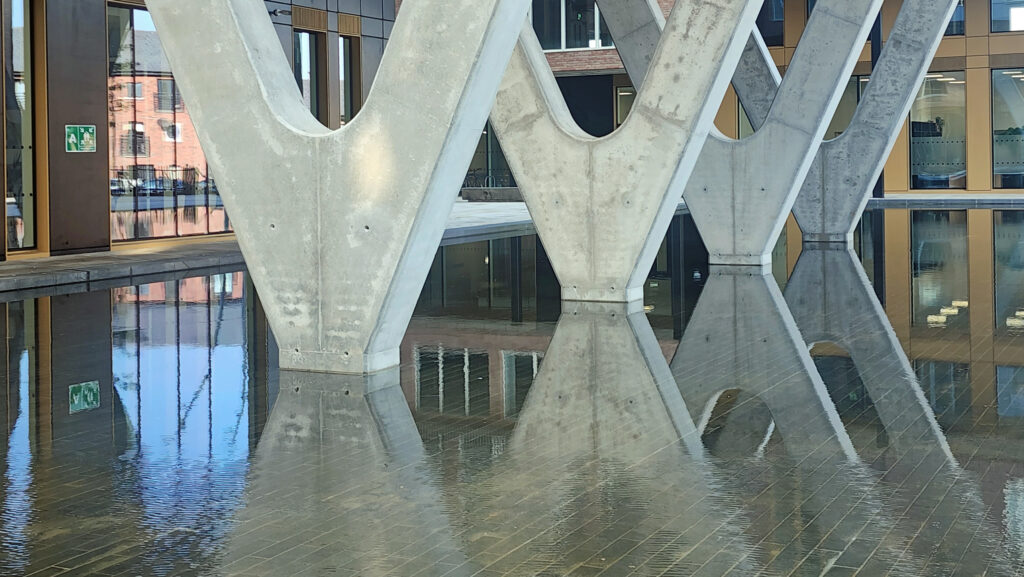
Reflecting pond at a building near the Guinness Storehouse


Posted November 3, 2025

All photos © Alan K. Lee, except the Book of Kells photo