On the tour of Scandinavia that my wife and I took in August 2026, Odense was our first stop after we left Copenhagen. (It’s pronounced something like ood-en-say, although that may not be exactly correct, but it’s definitely not oh-dense, which is how I was initially pronouncing it). I knew nothing about the city prior to our visit, but quickly learned that both Hans Christian Andersen and Thomas Danbo, whose giant troll sculptures can be found around the world, were born in Odense. We were only there for a few hours, but that was enough to tour a couple of the churches in the city center, spend some time exploring Fairy Tale Park, and get an unexpected taste of Andersen’s legacy.
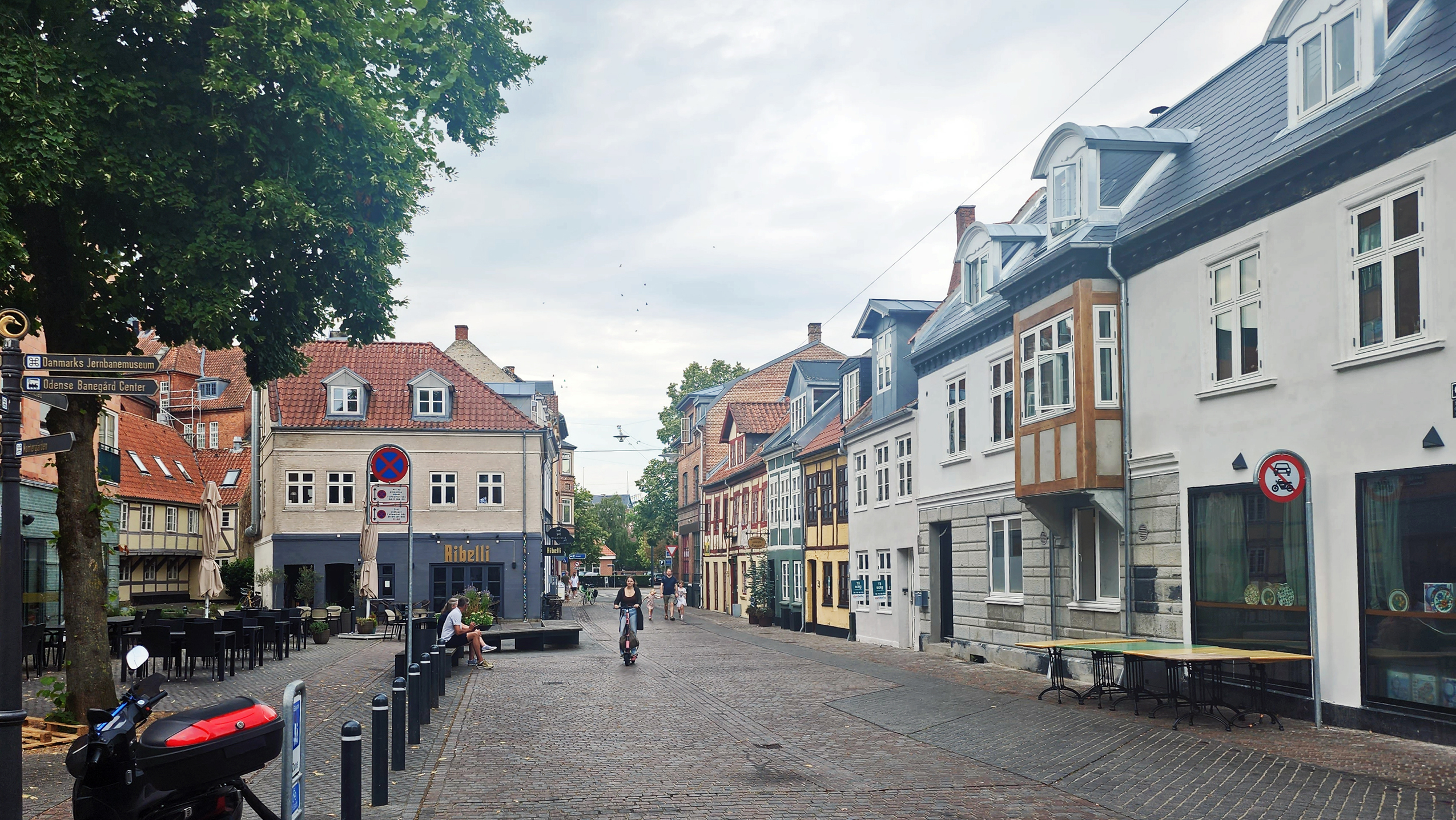
Old city center, Odense
History
The Odense area has been inhabited for at least 4000 years, and the city of Odense is more than 1000 years old. By the late 11th century it was a thriving city. Throughout the Middle Ages, Odense was a commercial center. In the 18th century a five mile long canal was constructed from Odense to the sea, making the Port of Odense a center of maritime trade. From 1919 to 2012 the Odense Steel Shipyard was one of Denmark’s largest ship builders. And Odense has been a railroad hub since a large railroad terminal was built there in 1865, further enhancing the area’s commerce and increasing the city’s population.
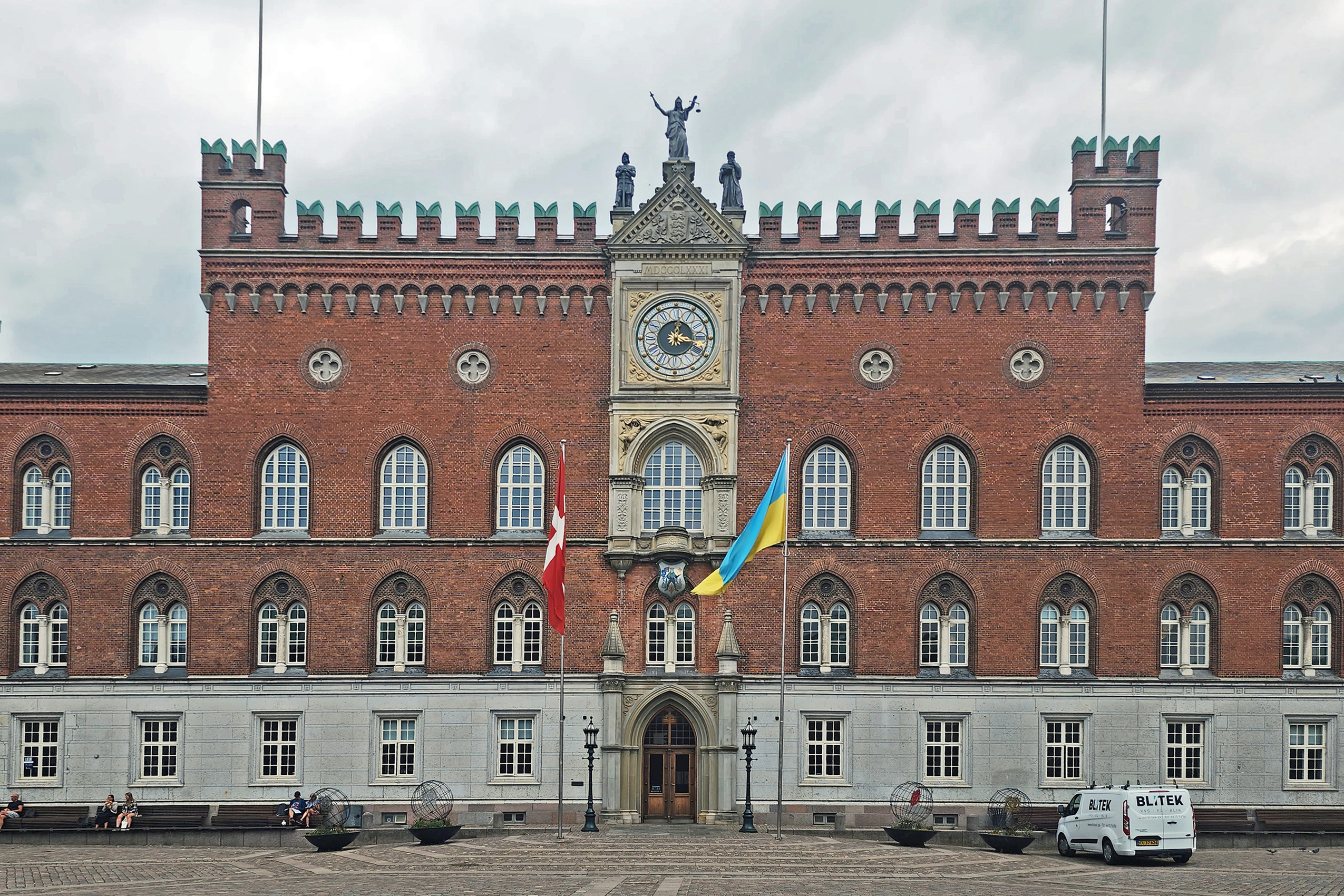
Odense City Hall
The City
Today, Odense is the largest city and commercial center of Funen Island, about 100 miles (160 km) west of Copenhagen. Odense is the third largest city in Denmark, with a population of about 185,000.
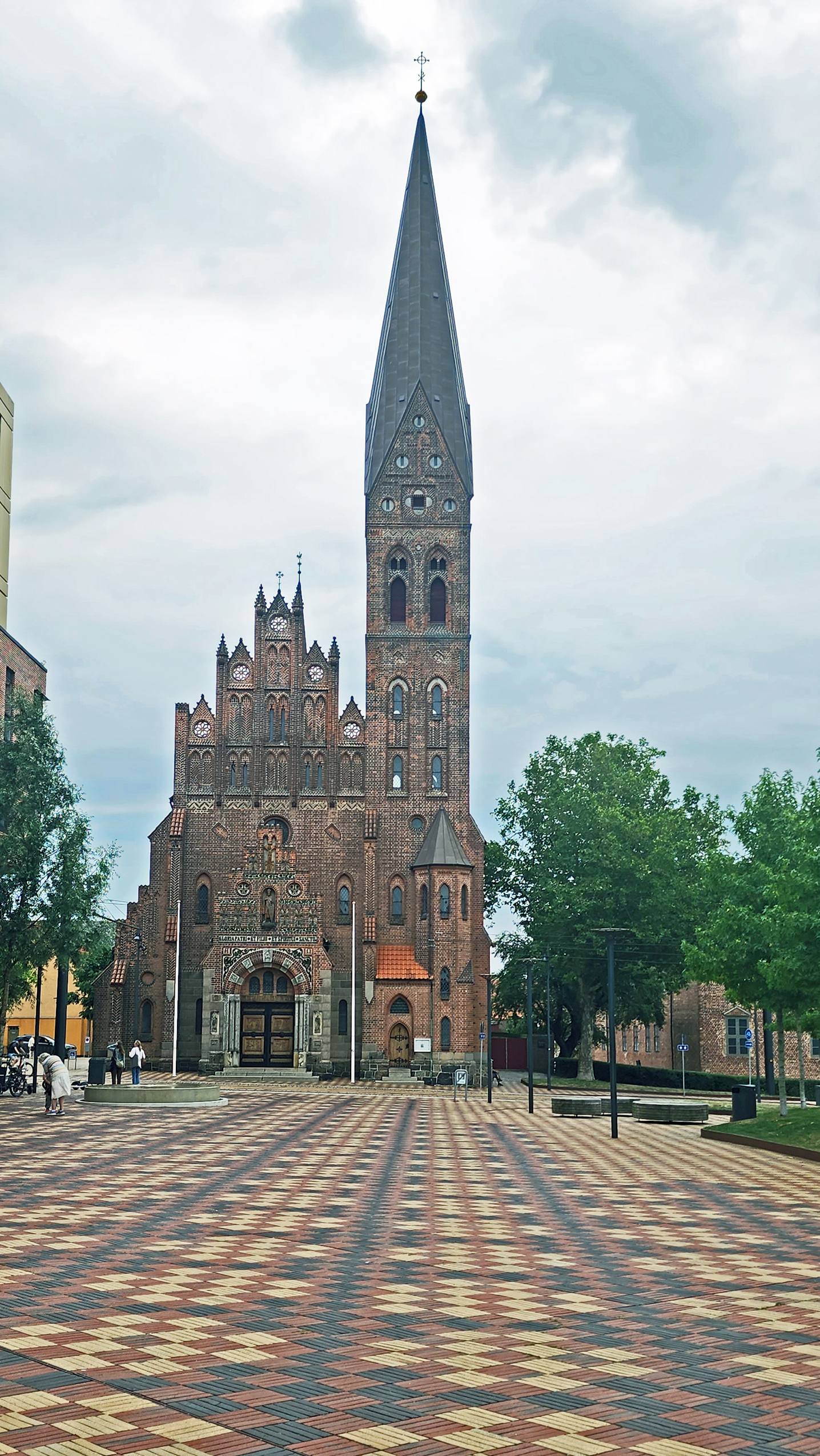
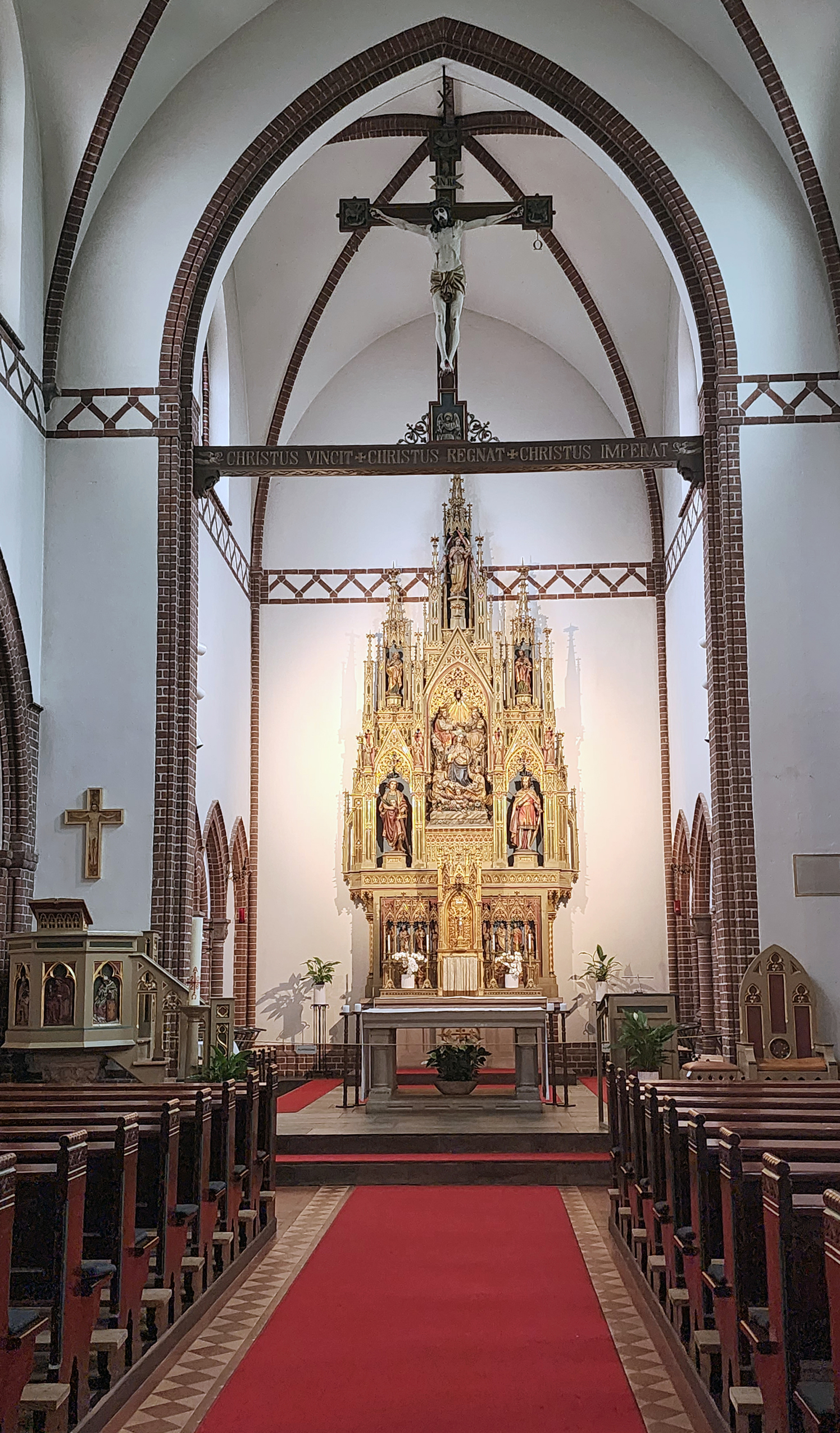
Sankt Knud’s Kirche
The historical center of Odense boasts two large churches, St. Alban’s Church (Sankt Albani Kirche) and St. Knud’s Church (Sankt Knud’s Kirke), only a short walk from each other.
Sankt Knud’s KircheSankt Knud’s Kirche
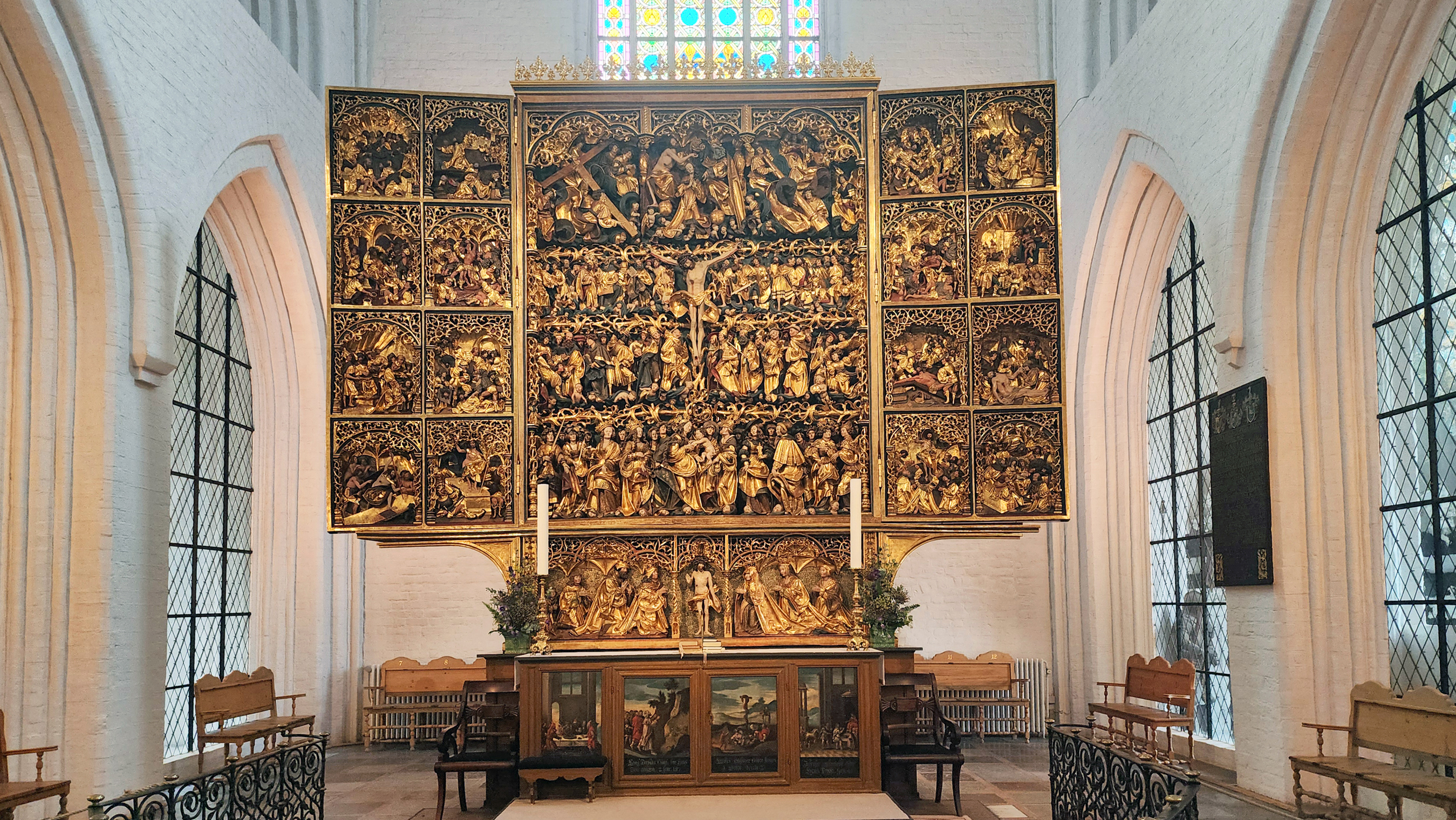
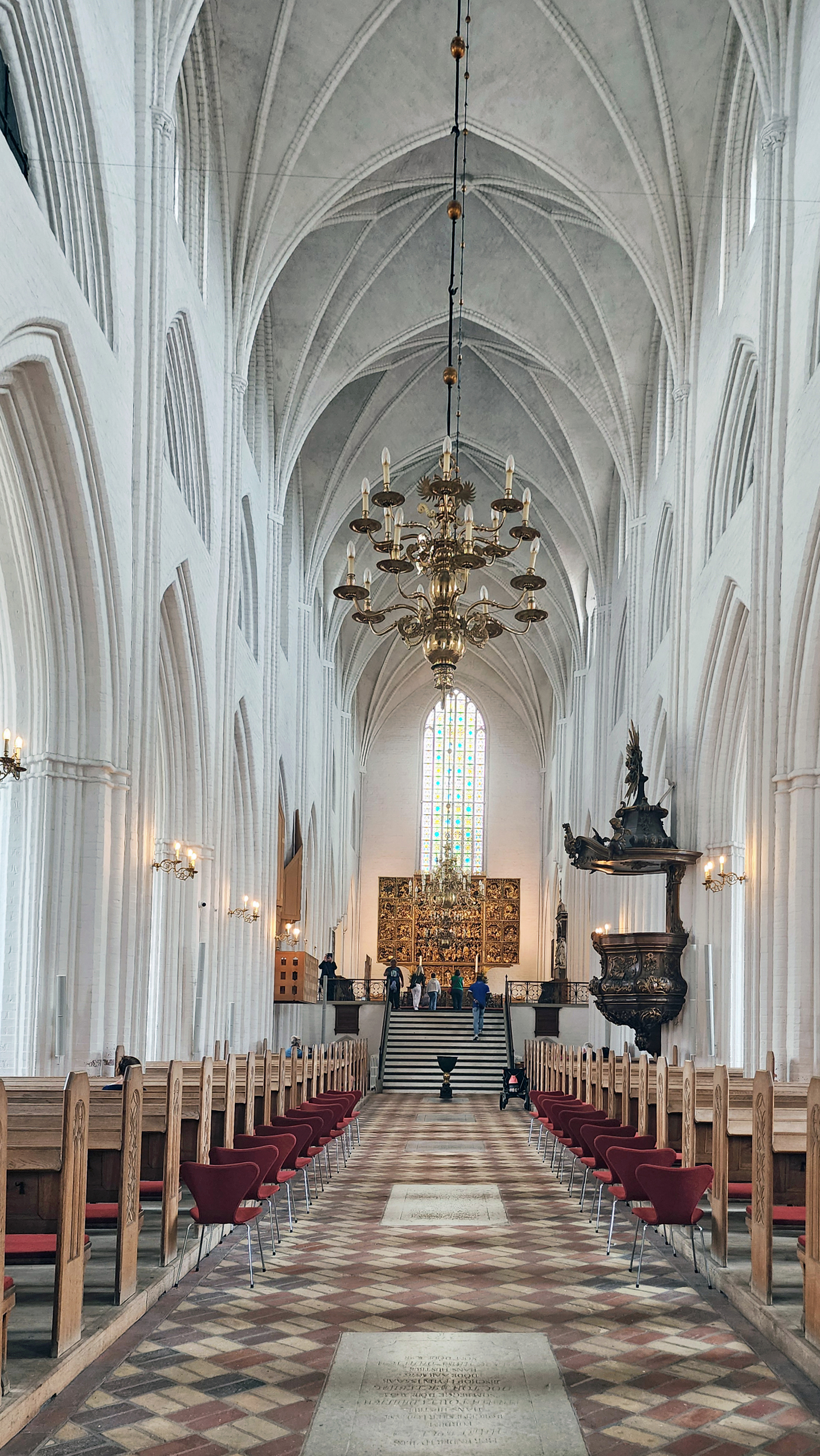
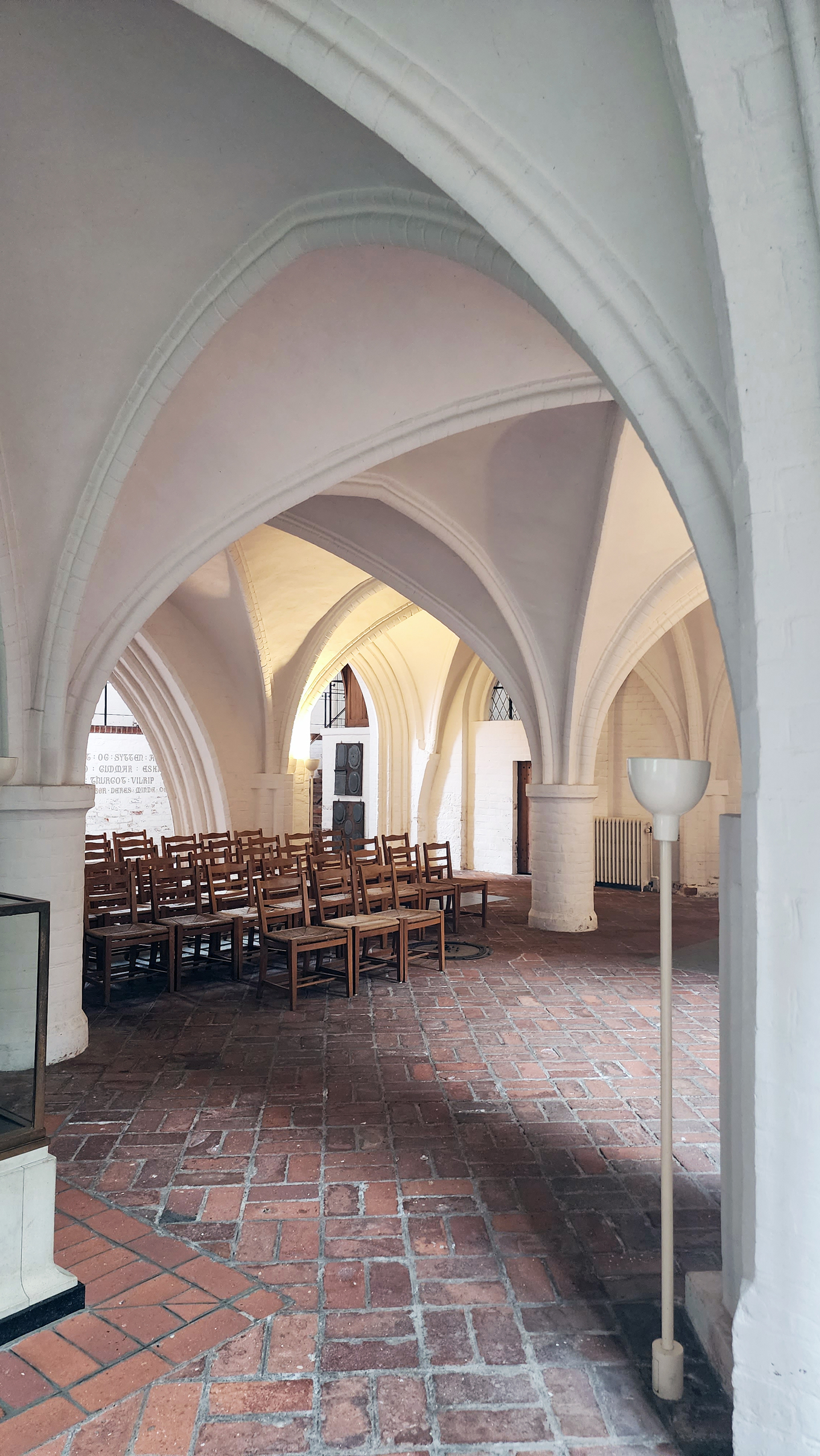
Saint Knud’s Church (aka Odense Cathedral) was built sometime after King Knud (King Canute) and his brother were murdered in 1086. The present church was built adjacent to the ruins of St. Alban’s Priory, where the murders took place. The exact date of the construction of Saint Knud’s Church is not known for certain.
Sankt Albani KircheSankt Albani Kirche
The present day Saint Alban’s Church is a Roman Catholic church and not to be confused with the earlier St. Alban’s Priory. It was built in the early 20th century.
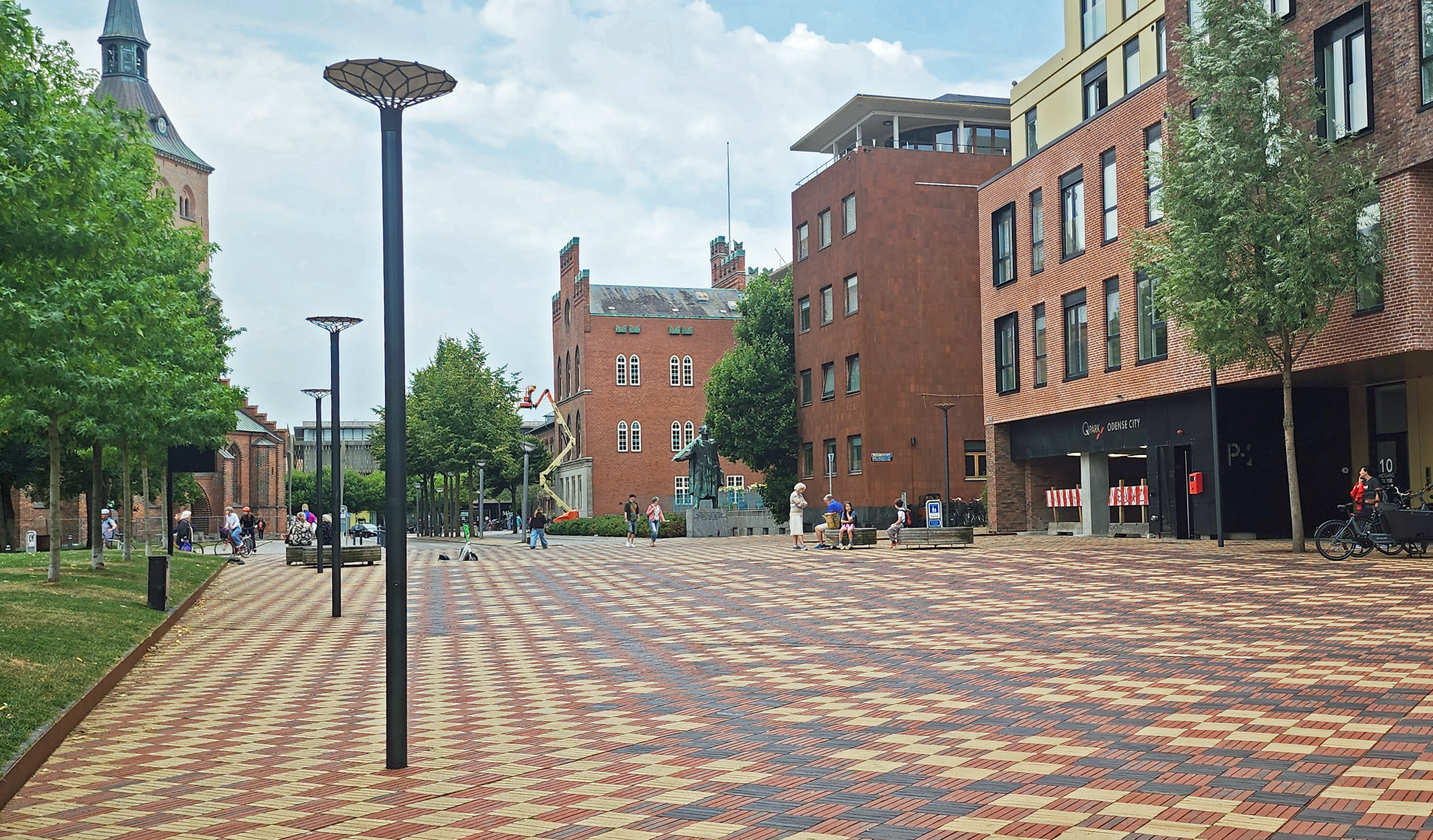
Albani Torv
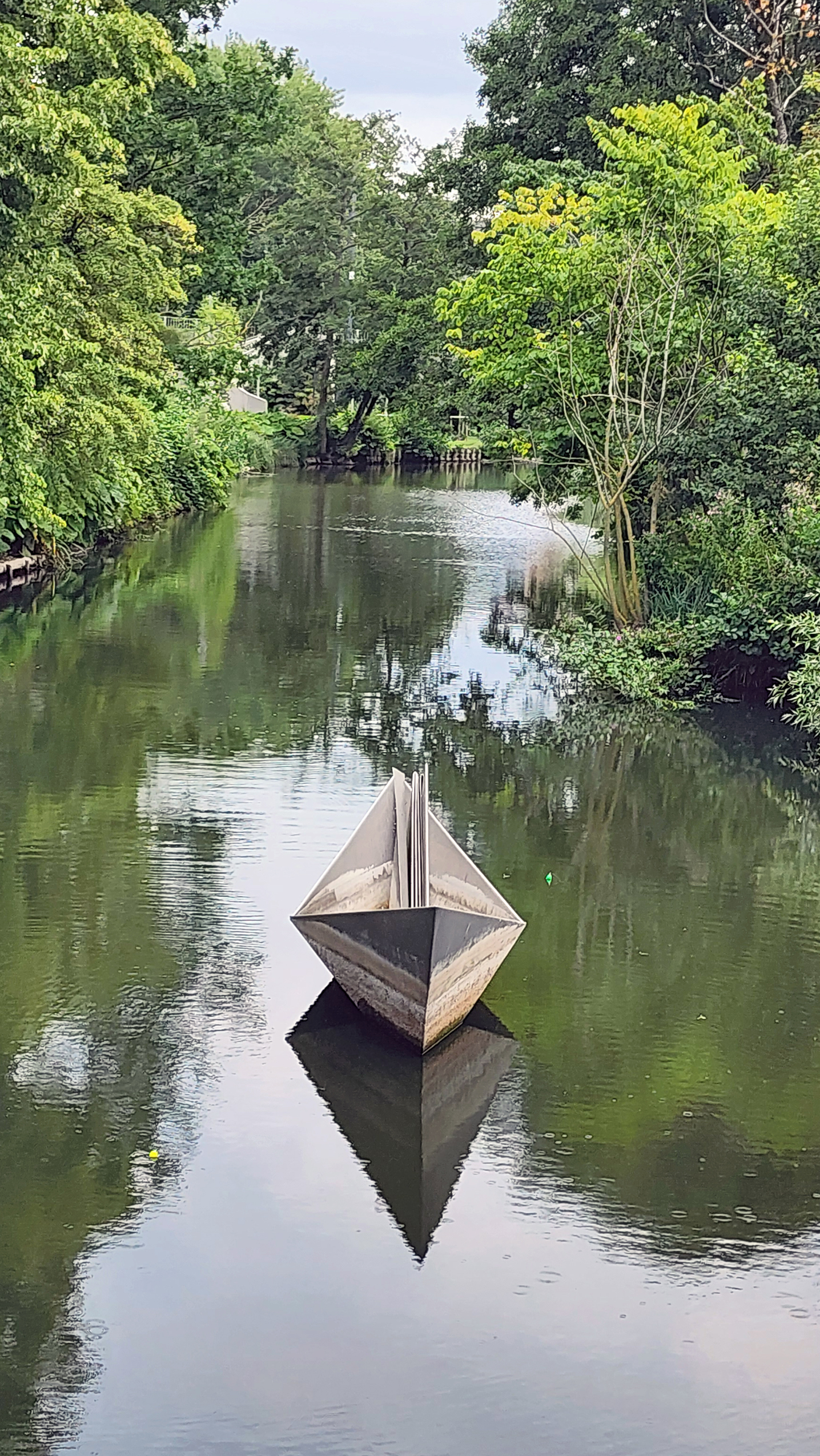
The two churches are separated by the Albani Torv plaza, which sits on the site of the ancient St. Alban’s Priory, and are only about 400 feet apart. Just south of St. Knud’s Kirke, the Fairy Tale Garden is a beautiful little park with a stream running through it.
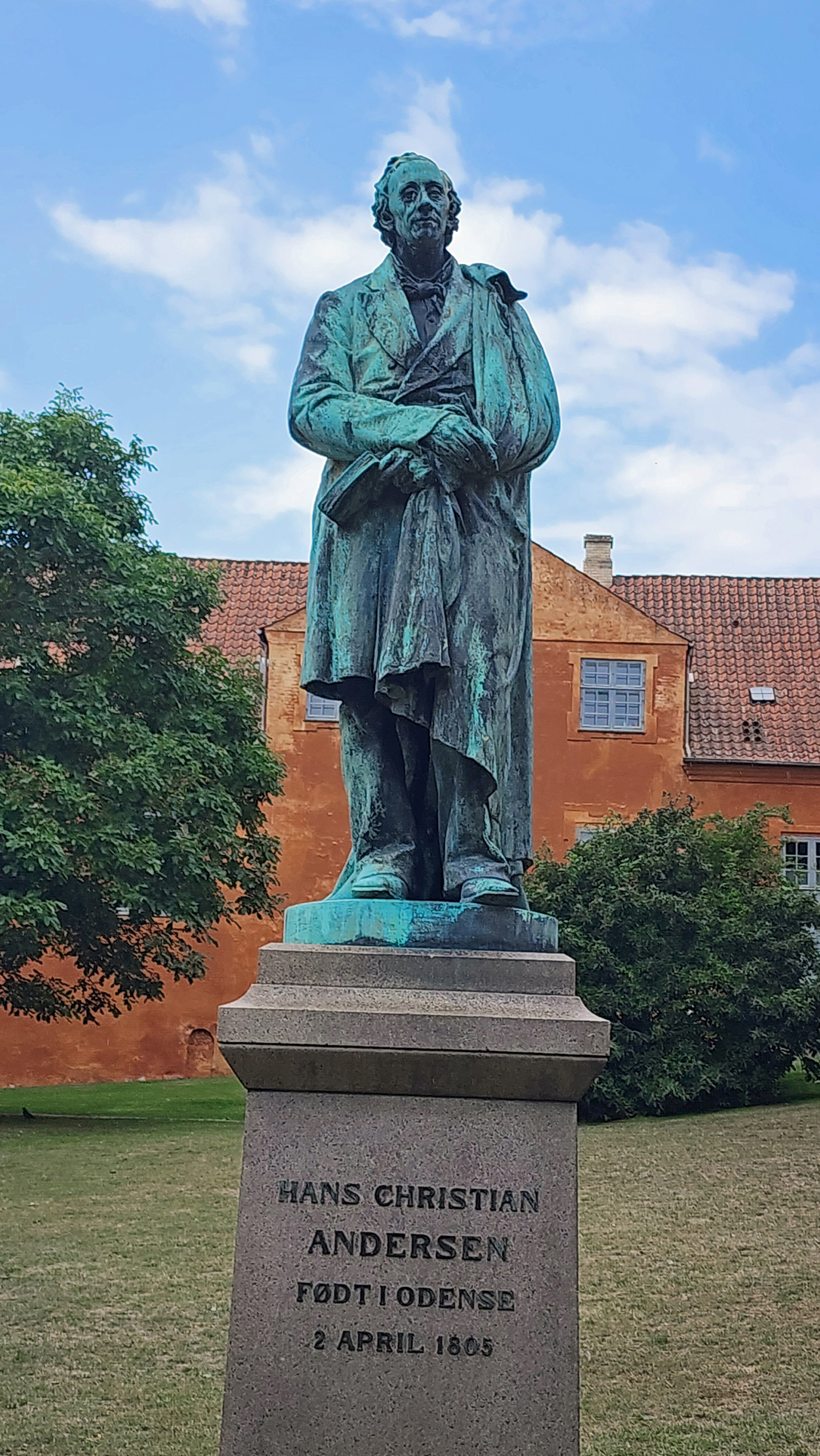
Hans Christian Andersen statueFairy Tale Park
Hans Christian Andersen
Andersen was born in Odense in 1805. Andersen is, of course, known for his fairy tales, including The Little Mermaid that inspired both the famous sculpture in Copenhagen and the Disney movie of the same name. He also wrote plays, poems, novels, and travelogues.
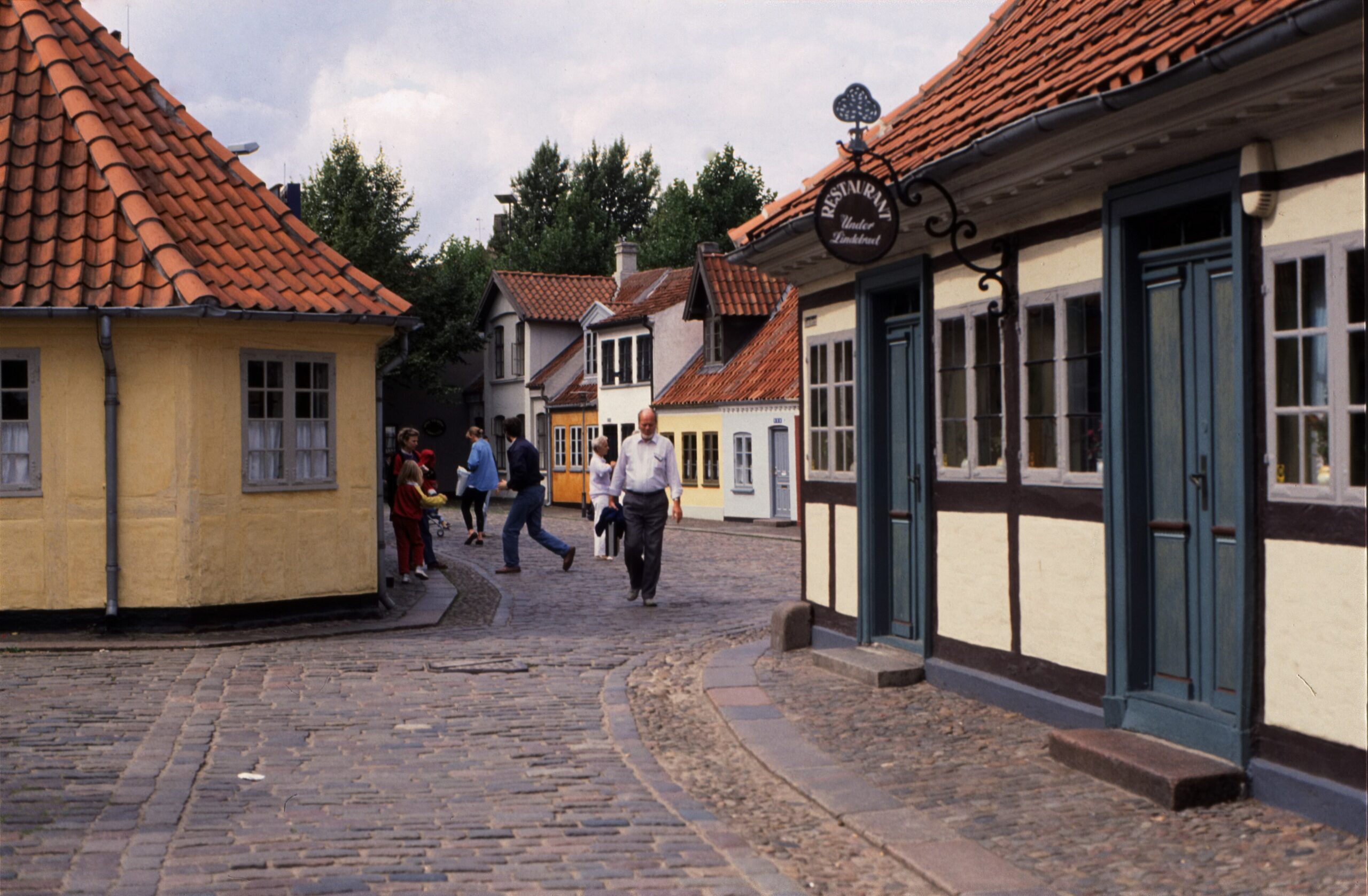
Birthplace of Hans Christian Andersen (yellow house on left), photo credit to Rudiger Stehn, sourced from Wikimedia Commons
Andersen left Odense at the age of 14 to pursue an acting career in Copenhagen. What is believed to be the house where he was born in is now a museum. His childhood home is also now a museum. Both are within easy walking distance of St. Alban’s and St. Knud’s churches in the old city center.
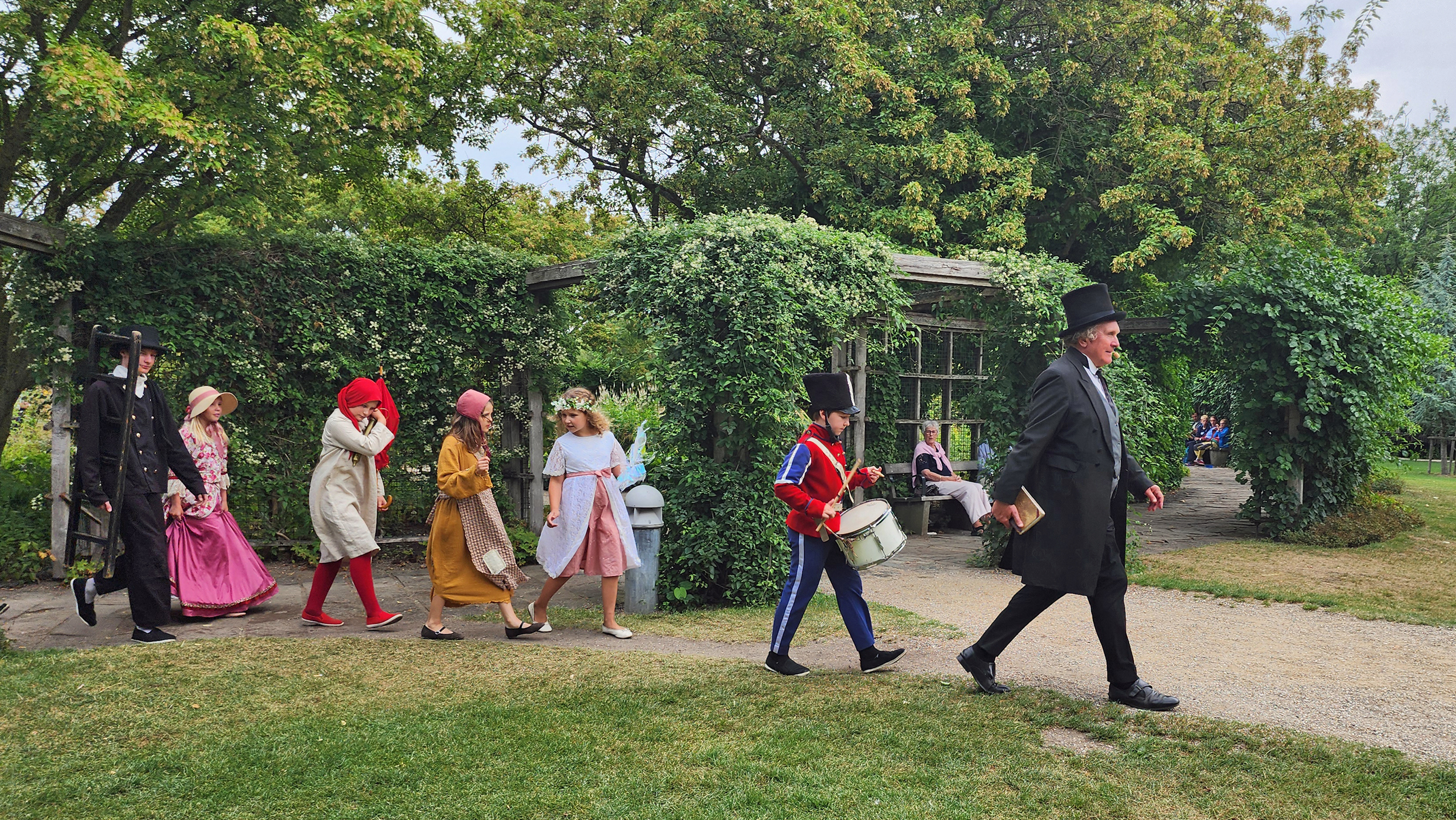
Hans Christian Andersen Parade, Fairy Tale Park
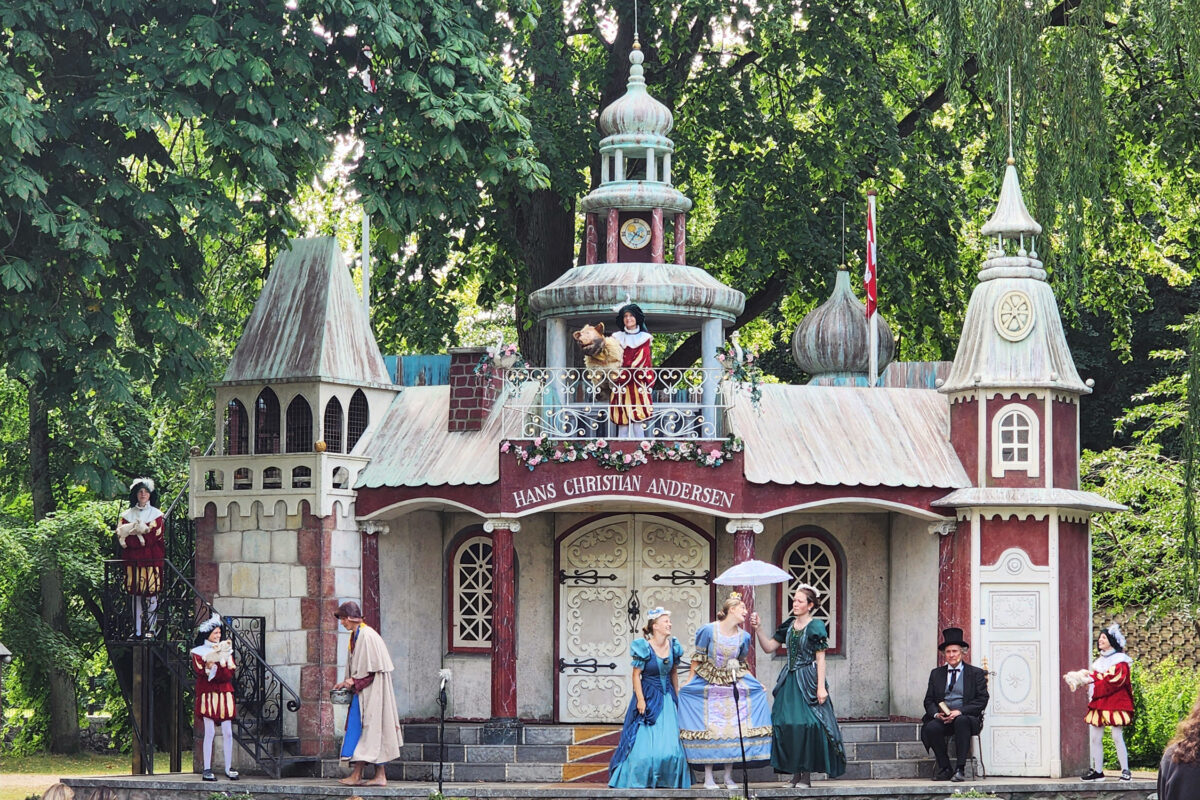
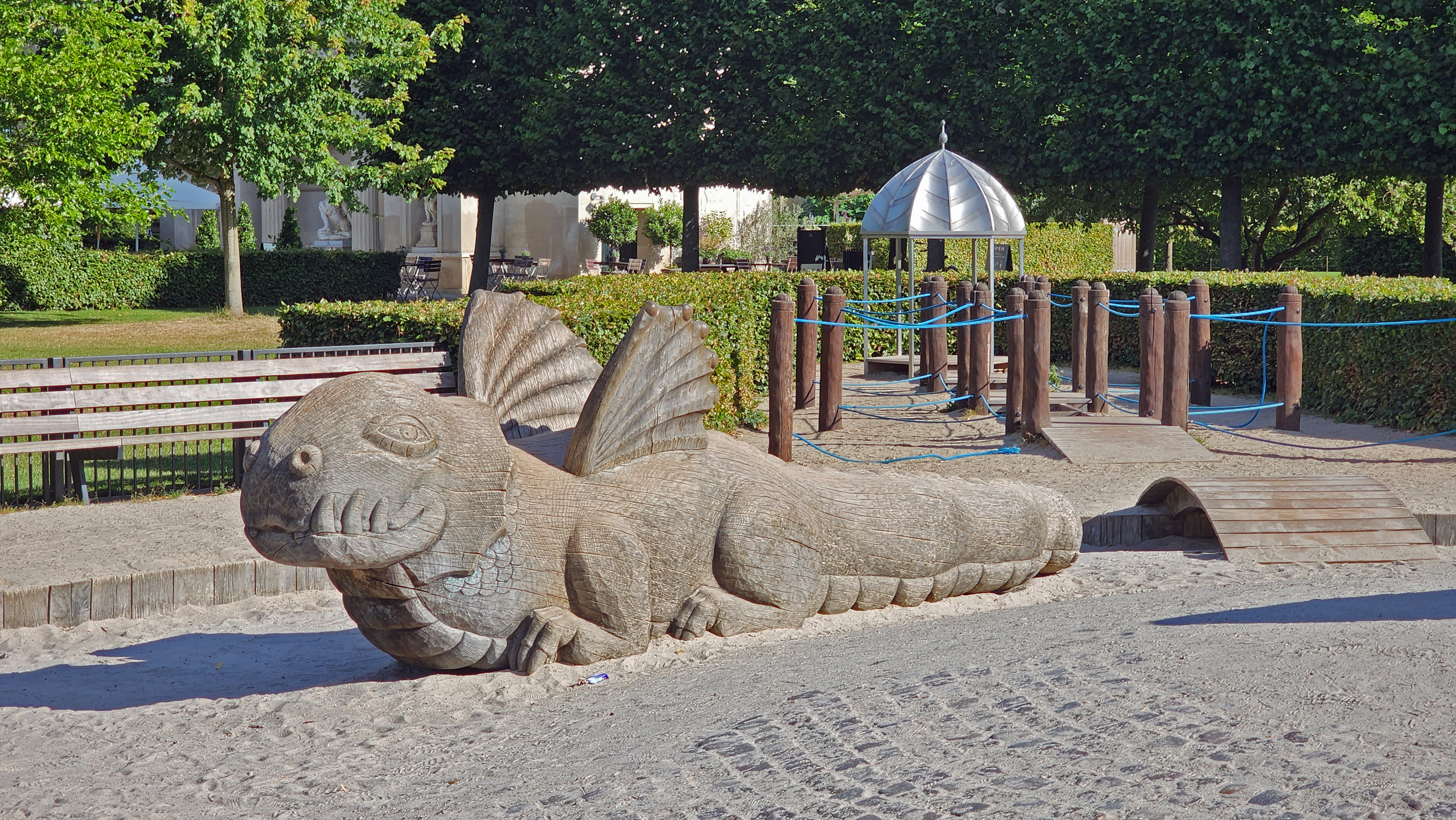
My wife and I were wandering through the Fairy Tale Garden when we started hearing a drum beat that kept growing louder. Then a man dressed as Andersen entered the park followed by a troupe of children dressed in period costume, one of whom was the drummer we had been hearing. This procession is known as the Hans Christian Andersen Parade. They marched through the park to the Fairy Tale Castle (depicted in the featured image at the top of this post) children’s playhouse where they later performed a play inspired by Andersen’s fairy tales.
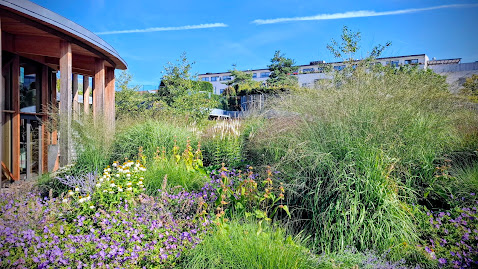
H.C. Andersen Haven, photo credit to “dg b.”, sourced from Google Maps
We did not have time to tour either Andersen’s birthplace and the adjacent garden (H.C. Andersen Haven) or his childhood home, but both look like places we would have enjoyed visiting if we had had more time.
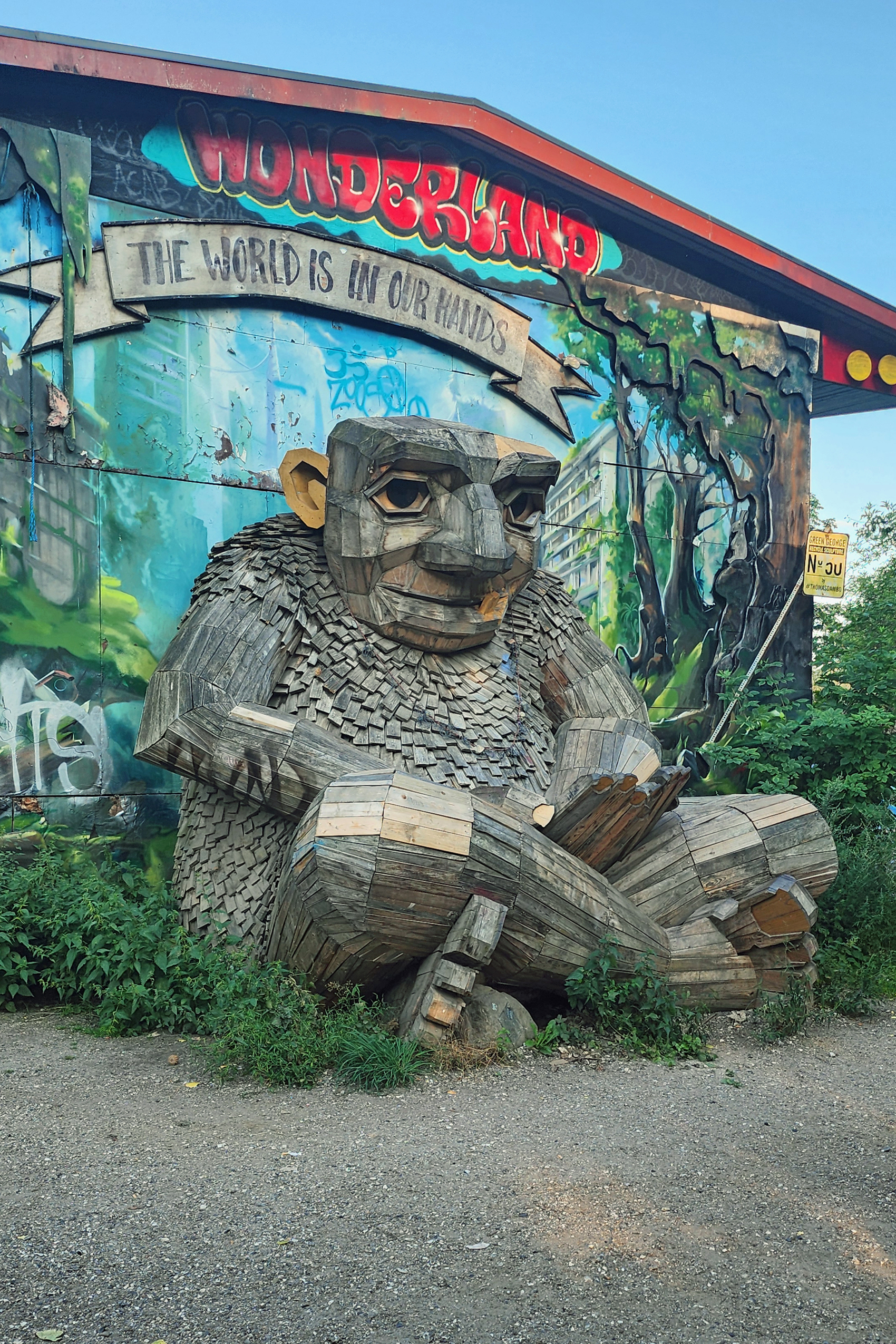
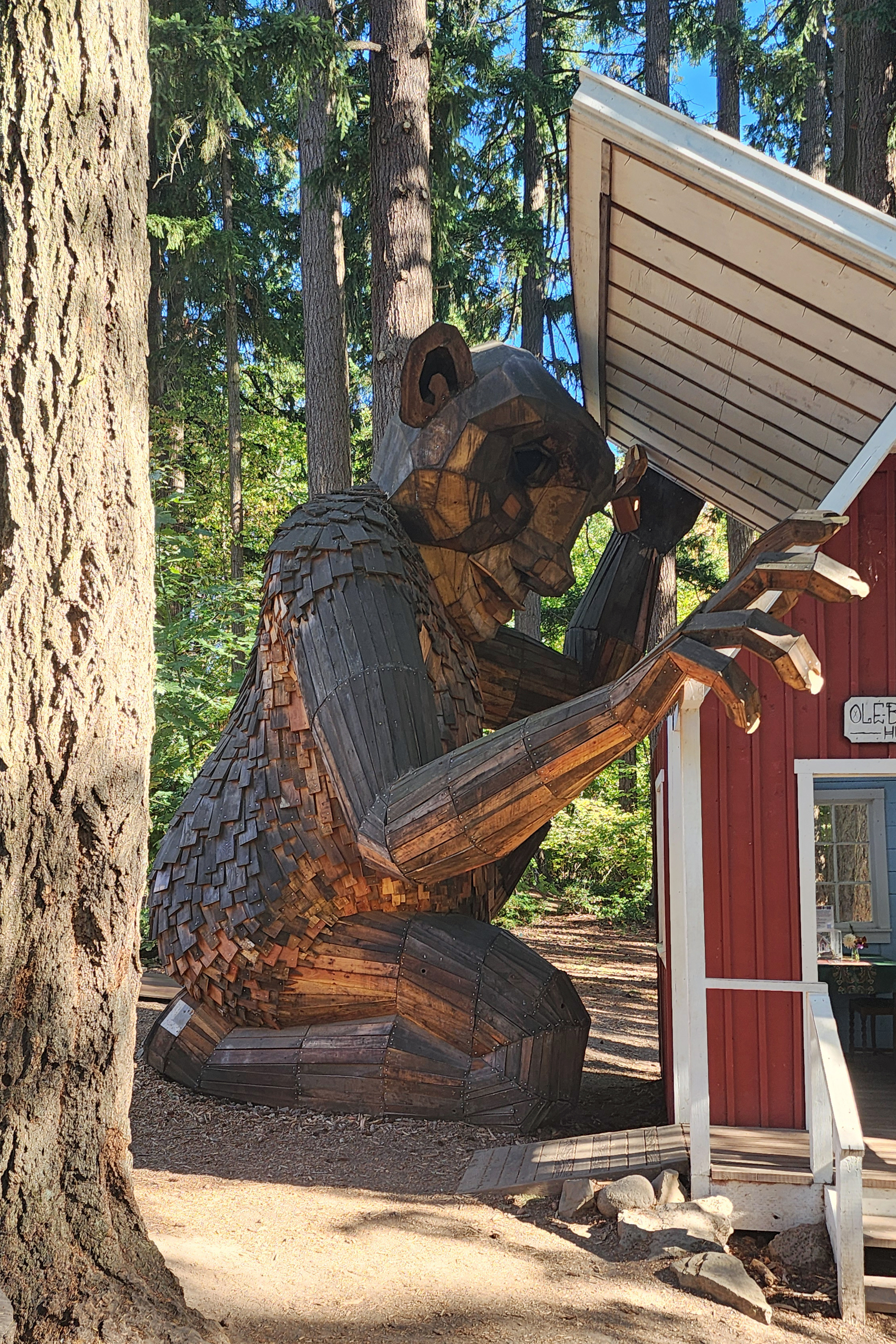
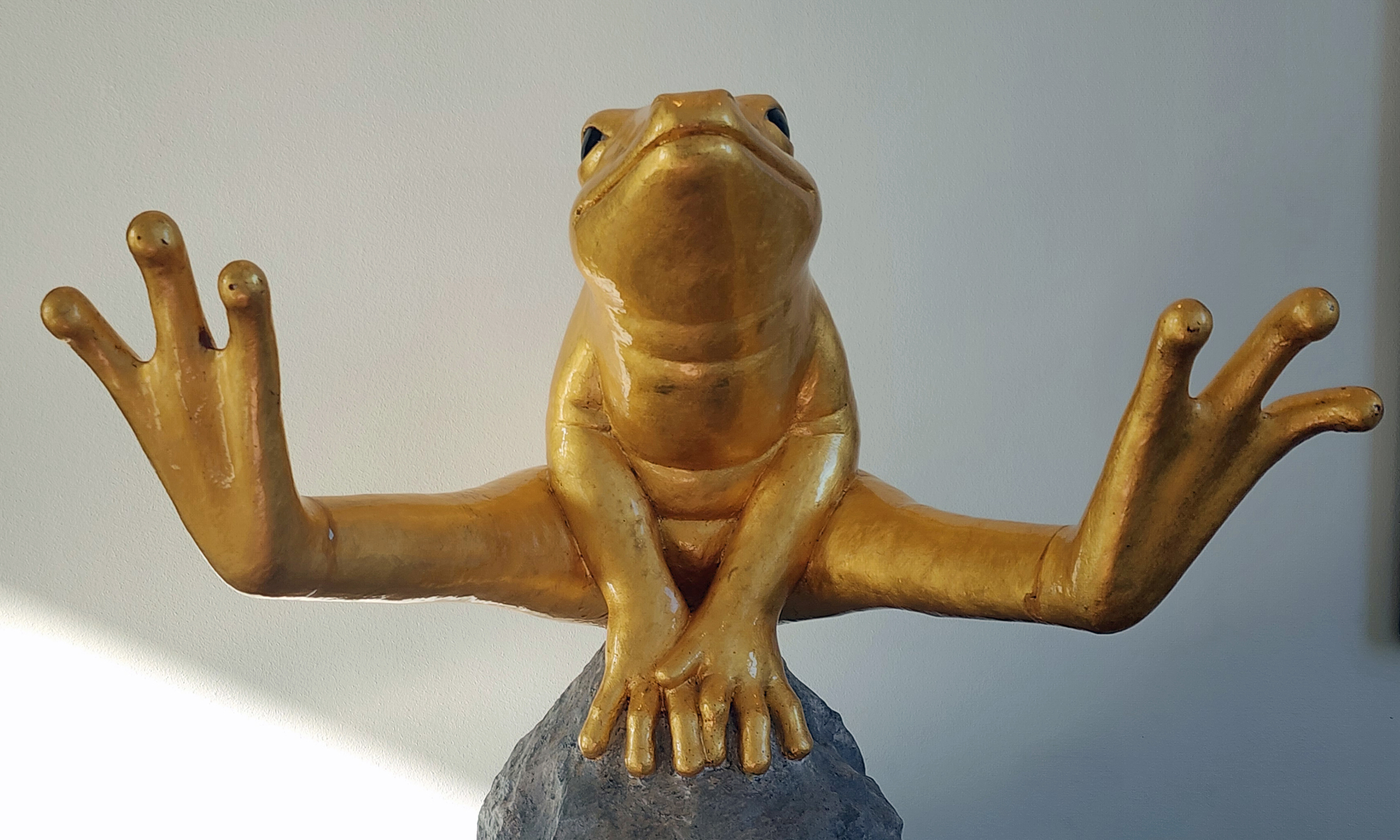
Danbo was born in Odense in 1979. His early art works included music, street art, and graffiti. In 2006 he enrolled in the Kolding School of Design, studying Interaction Design. He began making giant troll sculptures in 2014, using reclaimed materials. He has created more than 150 troll sculptures located in 20 countries in Europe, North America, Asia, South America, and the Caribbean Islands. One of his trolls is located in Portland, Oregon, only a few miles from our home.
Odense street art
Street Art
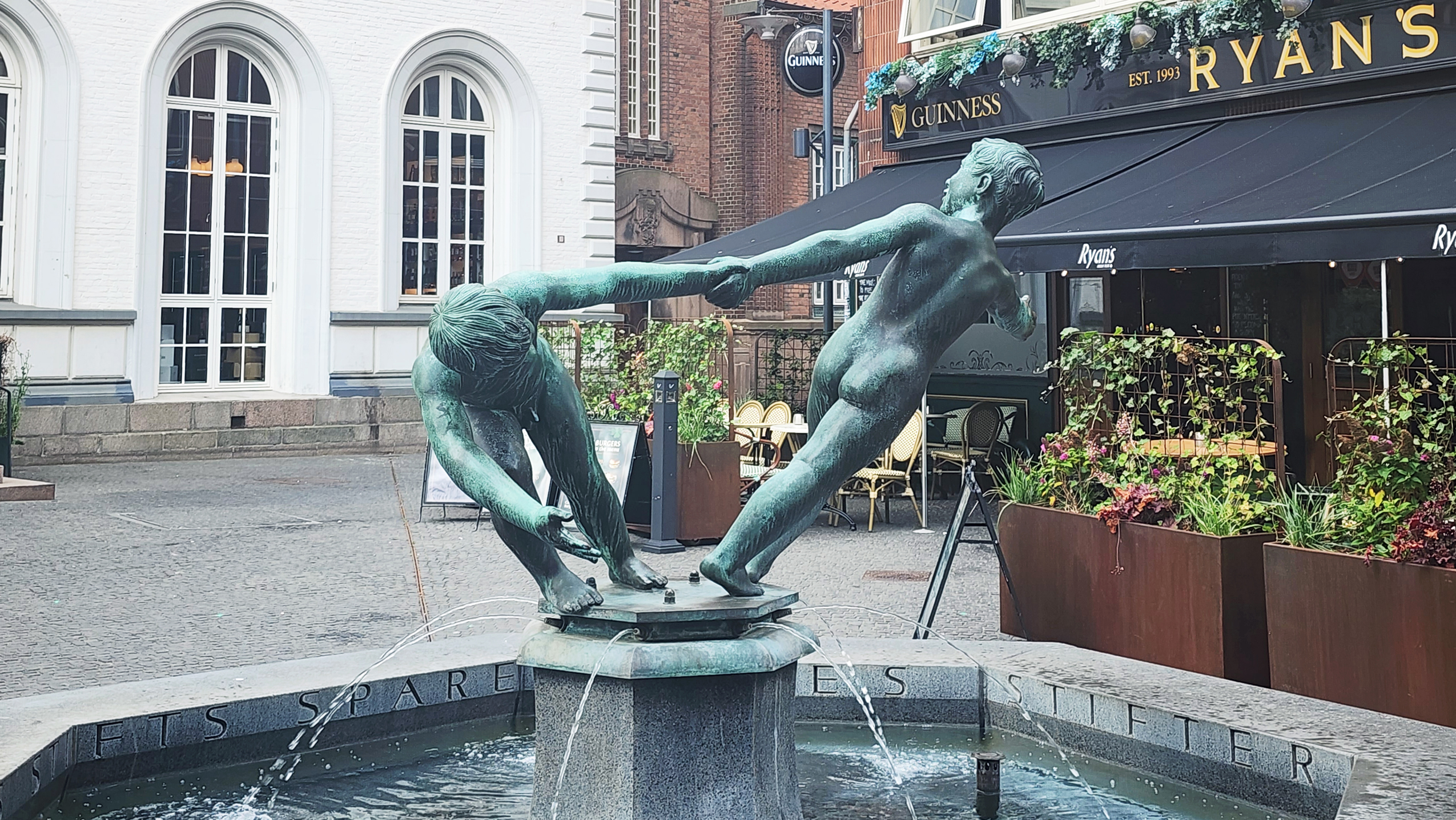
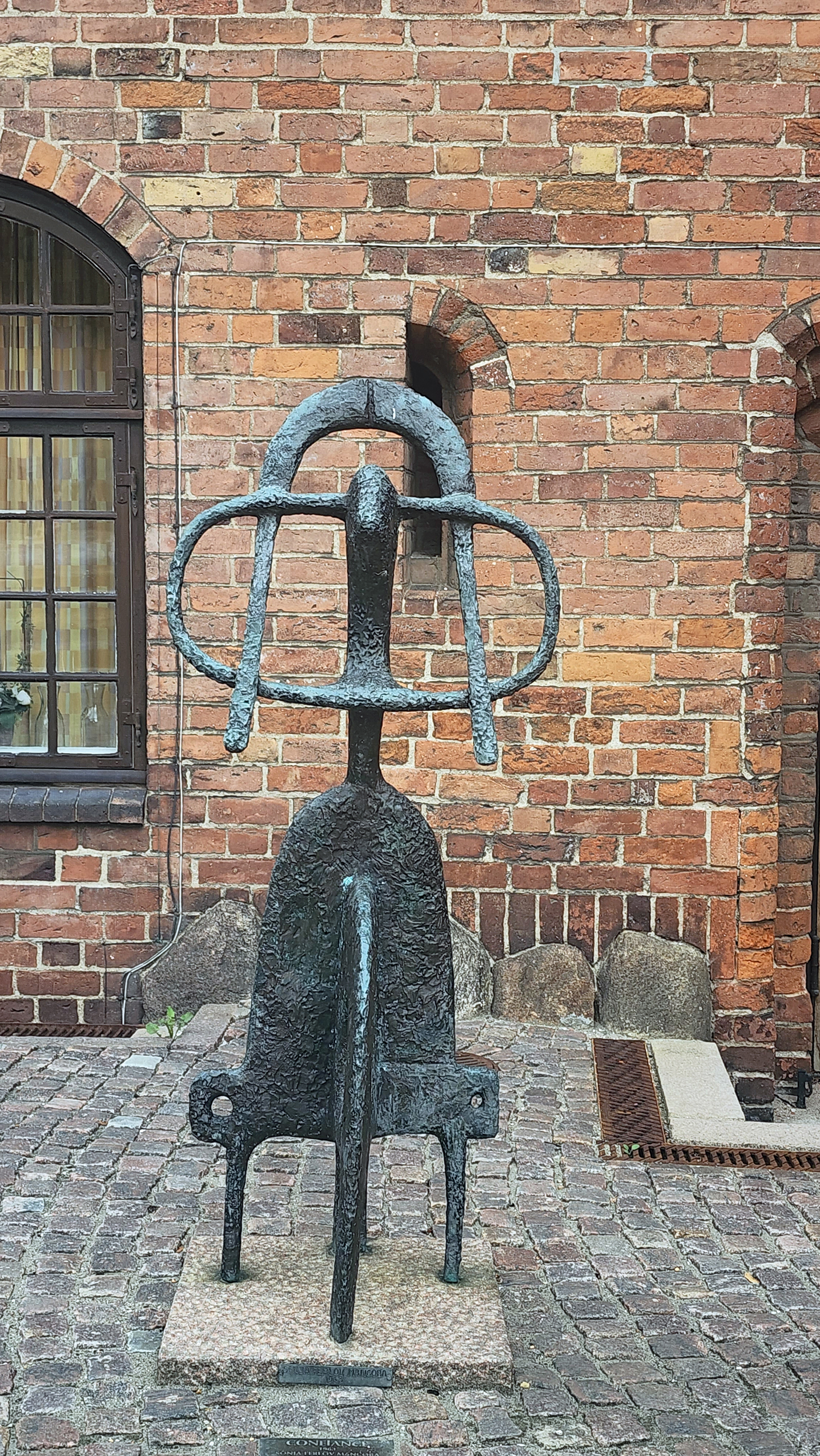
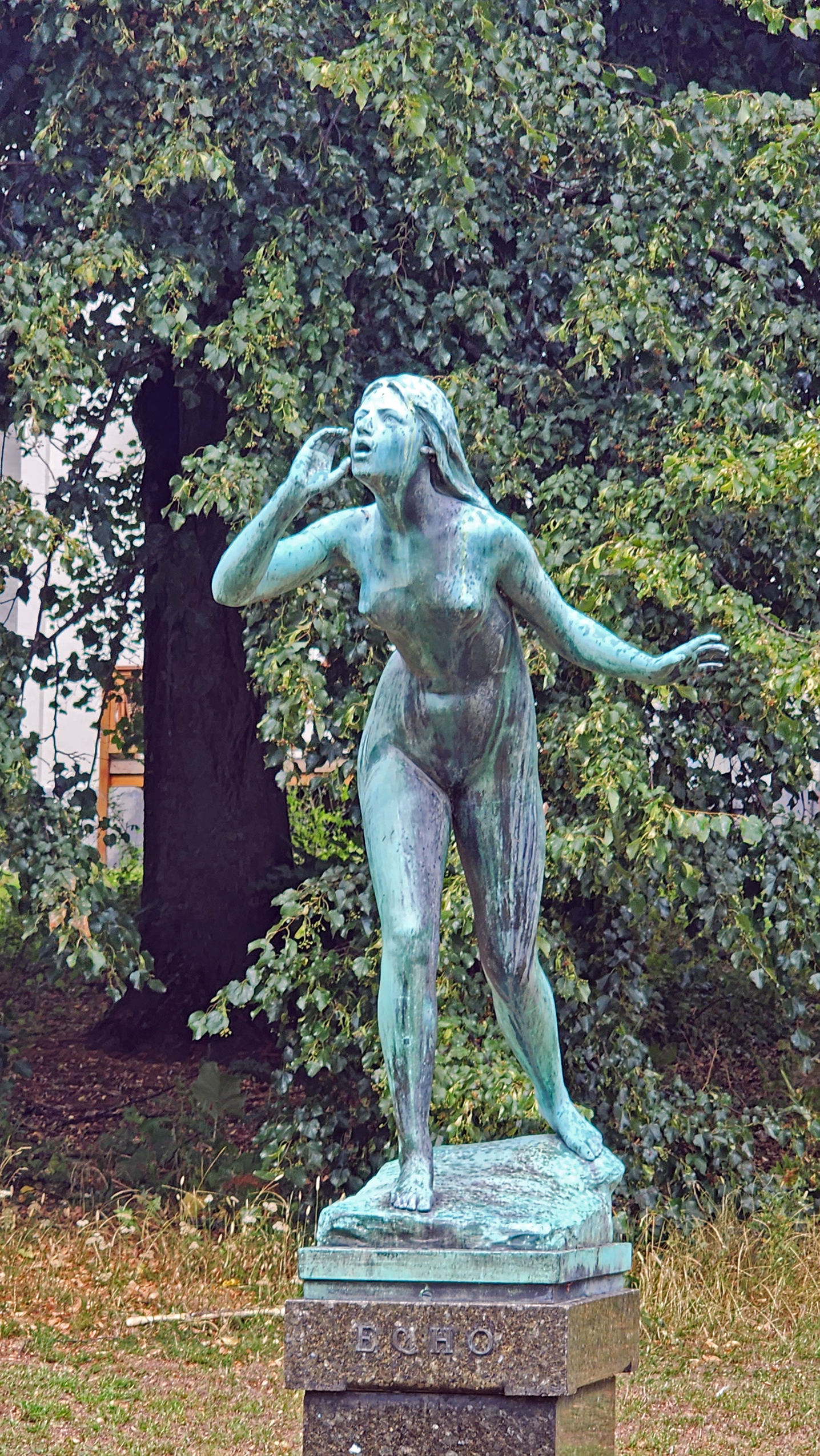
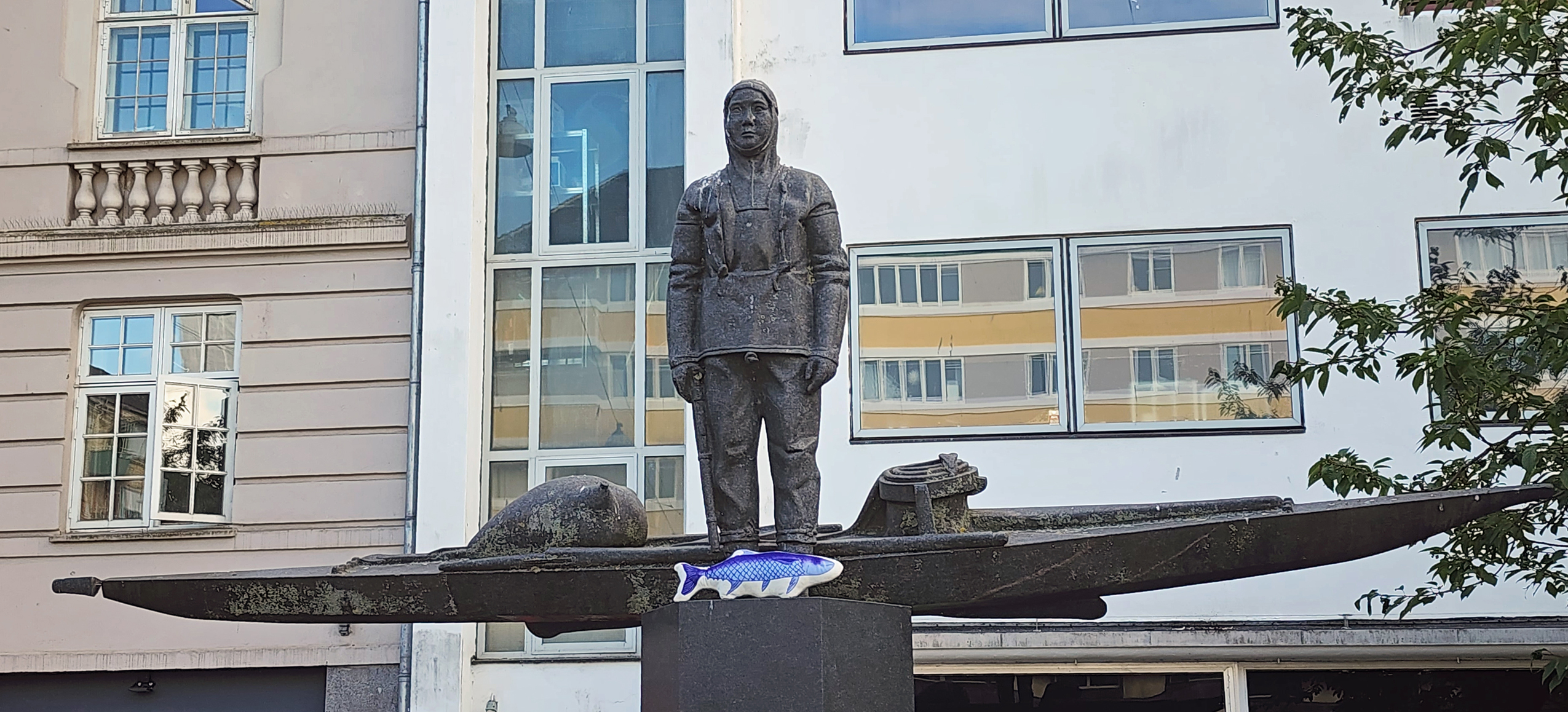
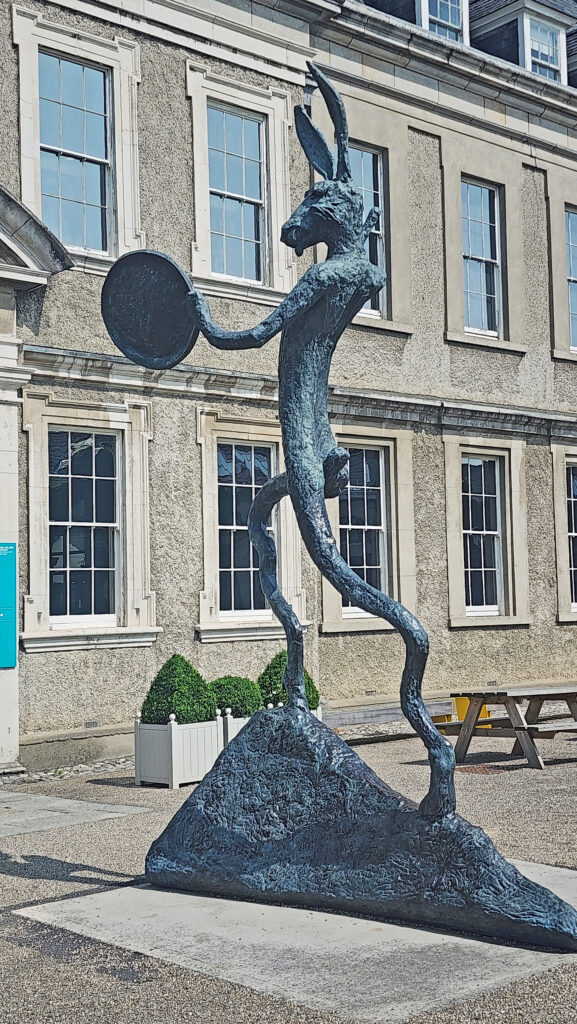
My wife and I are both art lovers, and for us part of the fun of exploring a city new to us is simply wandering around and discovering public works of art. And the old center of Odense has a number of interesting bronze sculptures and other artworks, some of which are shown above and below. Odense also has a number of art museums and galleries, including the Brandt Art Museum (Kunstmuseum Brandts) and the Albert Contemporary gallery, neither of which we had time to visit.
Odense street artFairy Tale Park sculpture
Conclusion
While Odense does not offer the amazing amount of attractions for the traveler that Copenhagen does, it is a worthwhile stop on a tour of Denmark, particularly if you are a fan of Hans Christian Andersen. We did not get to spend much time in Odense, but we saw enough to wish that we could have spent more time there. If we ever decide to revisit Copenhagen, I’m sure that we will also return to Odense to discover what else it has to offer.
If Copenhagen is a bucket list destination for you and you are trying to decide between it and any other place, you can’t go wrong by picking Copenhagen. It wasn’t particularly high on my bucket list, but Scandinavia in general was, partly because all four of my grandparents were born in Scandinavia (none in Denmark, though). So, a tour of Scandinavia won out when my wife and I were planning our latest adventure. Copenhagen just happened to be the starting point of the tour. And we couldn’t have been more delighted by the charm and history of the city. We enjoyed our visit immensely. It’s a very cool place and I would love to go back someday.
The City
Copenhagen is the capital of Denmark and its largest city. Its population of 670,000 and metropolitan area population of 2.1 million make it very similar in size to Portland, Oregon, where we live. Copenhagen is a much more international city than Portland, though. In fact, the closest city to Copenhagen is Malmo, Sweden, only 15 miles away as the crow flies. The two cities have been connected by a road and rail bridge since 2000, making travel between the two cities and two countries quick and easy. And Copenhagen is very much a European city.
Copenhagen, especially the old city center, is bounded and defined by water. The name Copenhagen translates to Merchants Harbor and the city has been a center of maritime trade since its inception.
Most of the city is located on the island of Zealand. A smaller part is on the island of Amager. An even smaller part is the islet of Slotsholmen, the location of Christiansborg Palace. In addition to the channel separating Zealand from Amager, the city has numerous canals and side channels, so that no part of the city center is far from a waterway of some sort.
And one of the best ways to get an introduction to the city is by boat. We booked a small (twelve passenger) boat tour on our first full day in Copenhagen that was well worth the price. Our captain described the city’s sights in ways that were both informative and hilarious at times. We learned a lot and laughed a lot on that tour.
There were many people on the water that day (and every day that we were there). In addition to the tour boats, both large and small, there were many kayakers out exploring the city, and many others in private boats and rented “Go Boats.”
Rose garden in the King’s Garden (Kongens Have)
We found the city and its people to be friendly and welcoming. Denmark (and all of Scandinavia for that matter) ranks high on both the lists of the happiest places in the world and those having the highest quality of life. And you don’t need to learn any Danish to get by. Almost everyone speaks English.
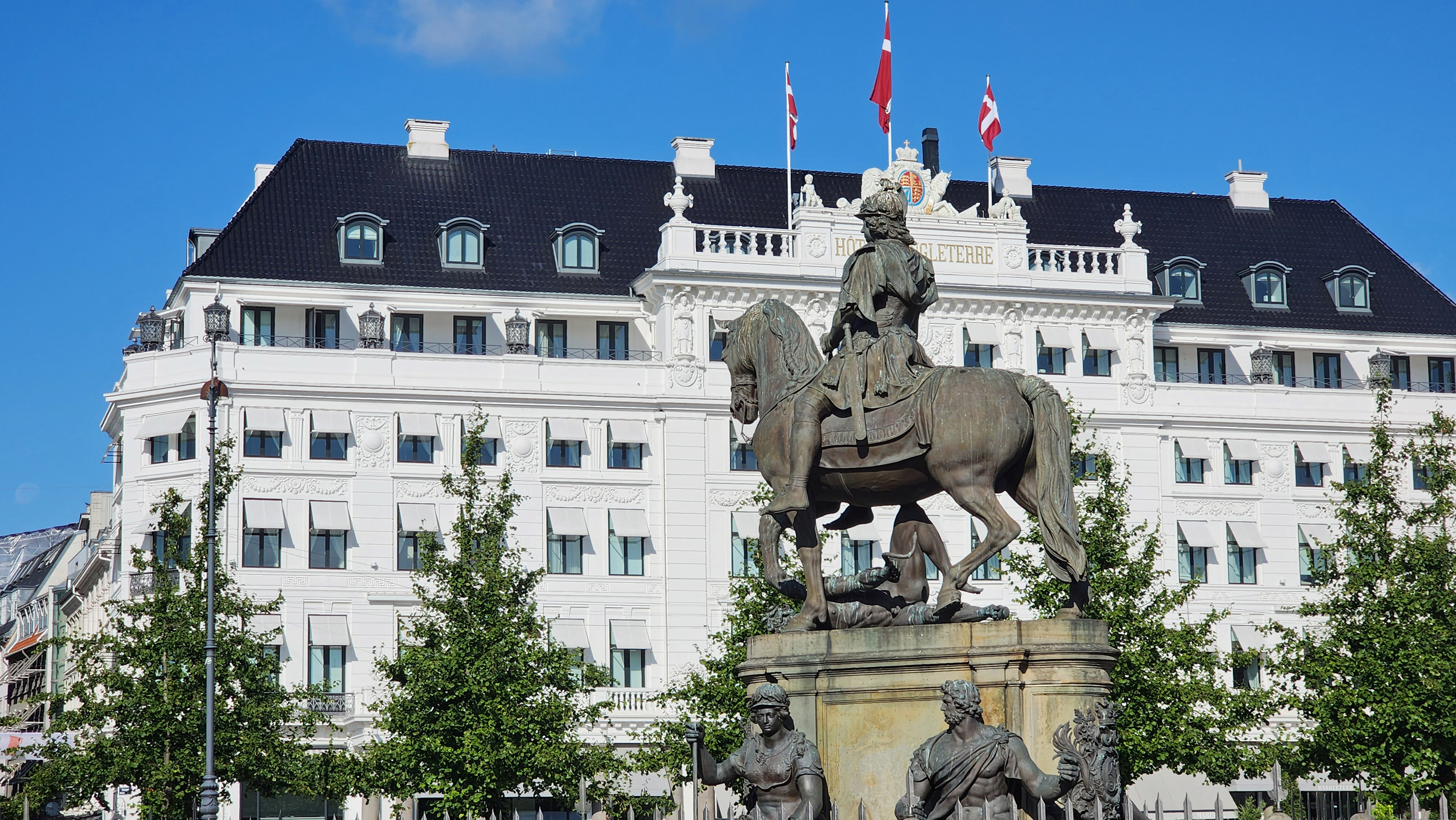
King Christian V sculpture, Kongens Nytov Square, Copenhagen
History
Archeological evidence indicates that the Copenhagen area has been inhabited for at least 5000 years, and probably much longer. Copenhagen itself originated as a fishing village in the 11th century. The city of Copenhagen dates to the 12th century construction of a fortress on the site of what is now Christiansborg Palace. The original fortress was replaced by Copenhagen Castle in the 14th century, which was torn down and replaced by the first Christiansborg Palace in the 18th century.
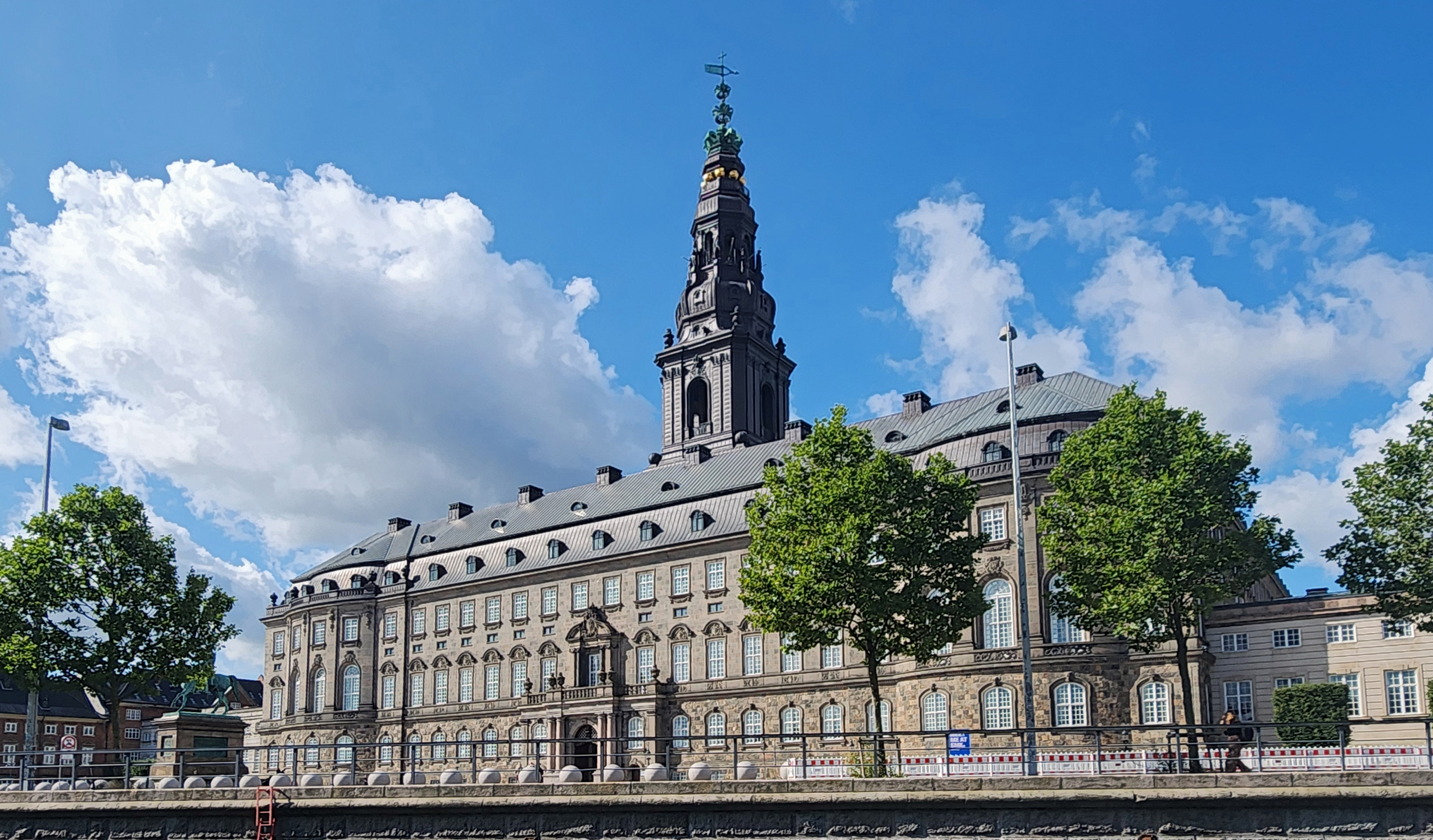
Christiansborg Palace
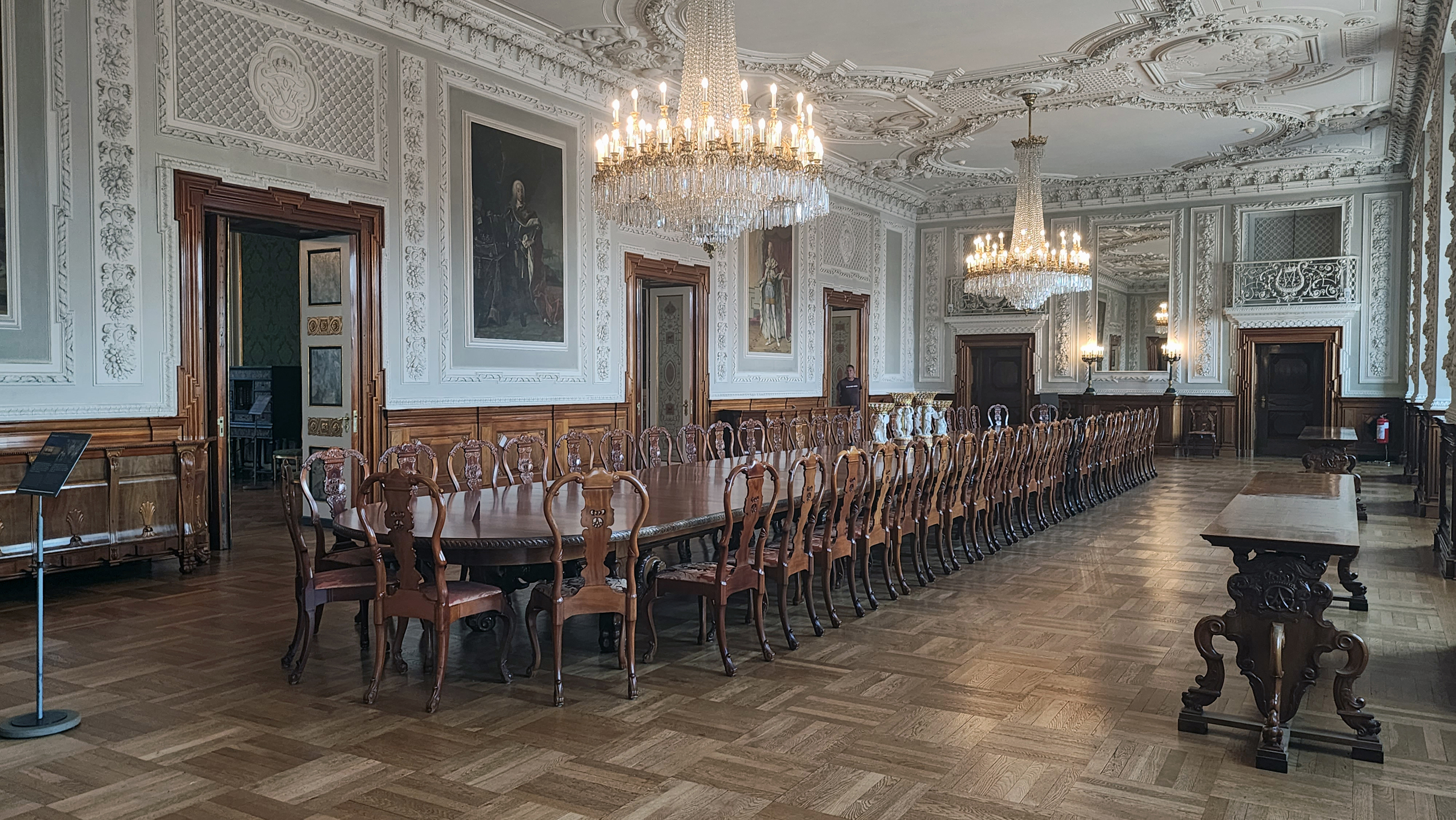
We spent one whole day exploring Copenhagen’s history, touring Rosenborg Castle (finished in 1624), Christiansborg Palace, and the Amalienborg Museum (in one of the four palaces making up the Amalienborg Palace complex). The three palaces (or “slots” in Danish) can be visited on a single combination ticket. Rosenborg Castle is the only one of the three that requires a timed entry ticket, so visit it first if you want to see all three.
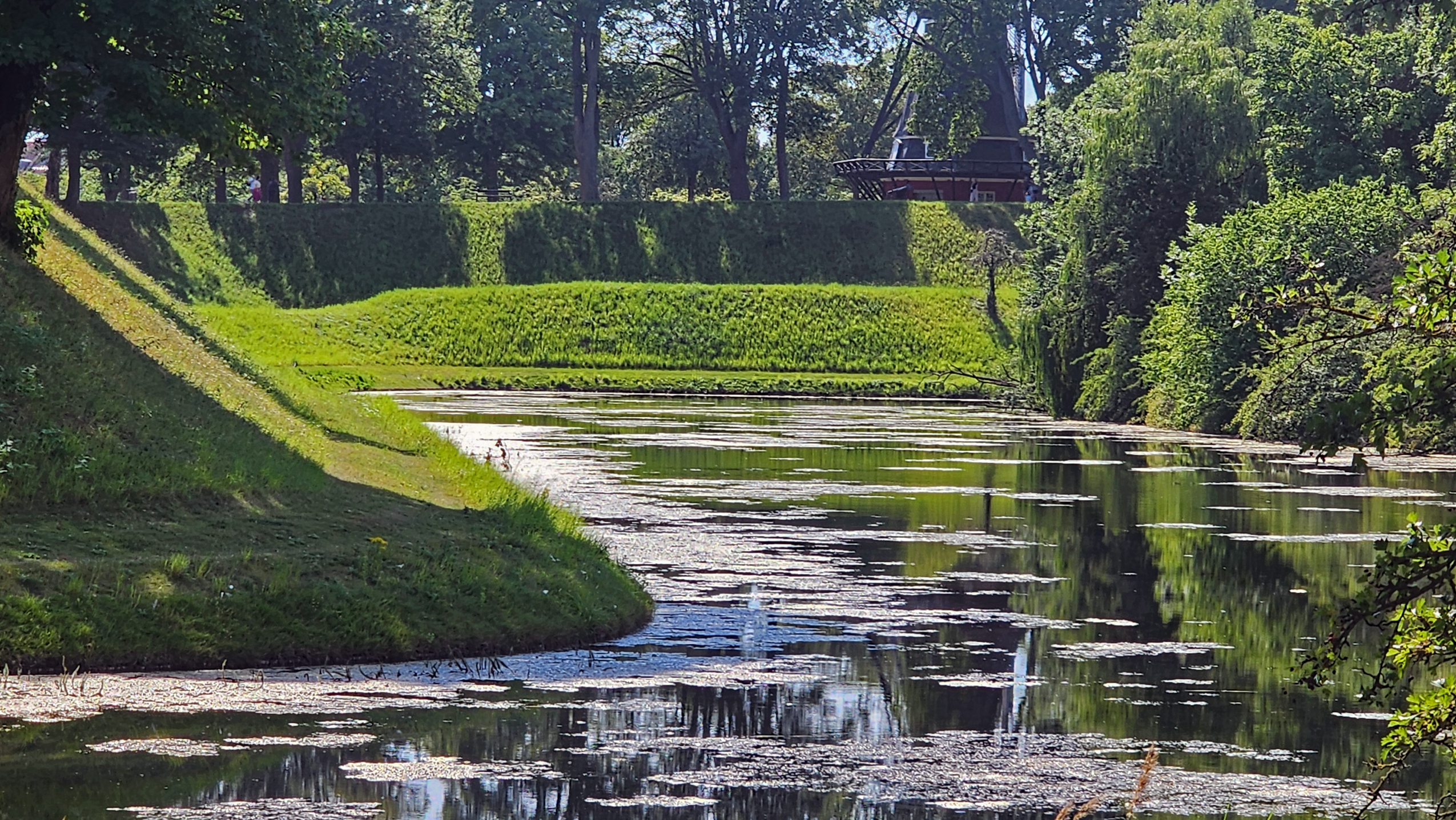
Kastellet, Copenhagen
We also visited Kastellet on that same day, a former fortress near the site of the Little Mermaid sculpture that continues to house military buildings (of no particular architectural interest) that are surrounded by a beautiful public park. And we ended the day with a visit to Freetown Christiania (see below). That made for a long and tiring, but very interesting, day.
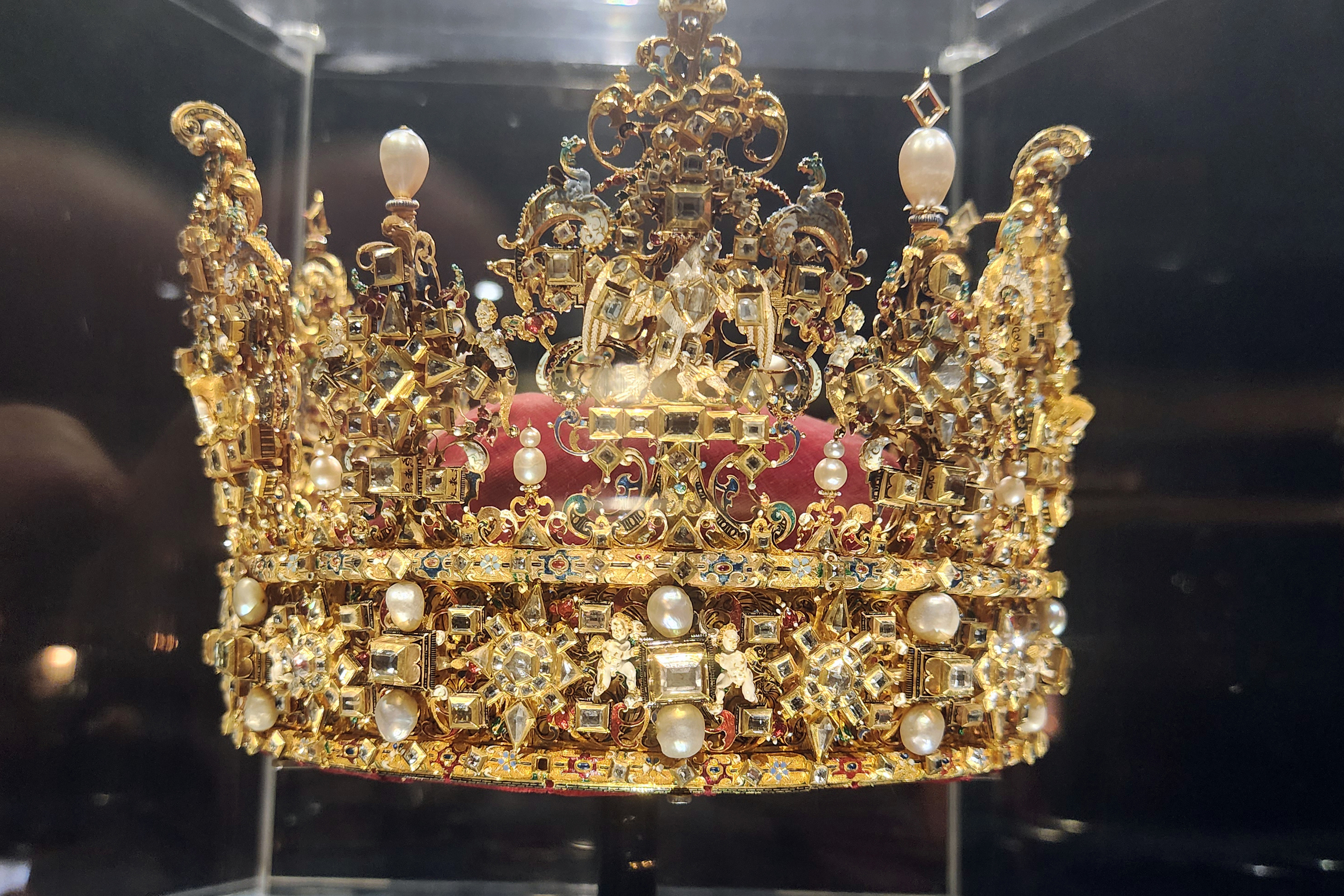
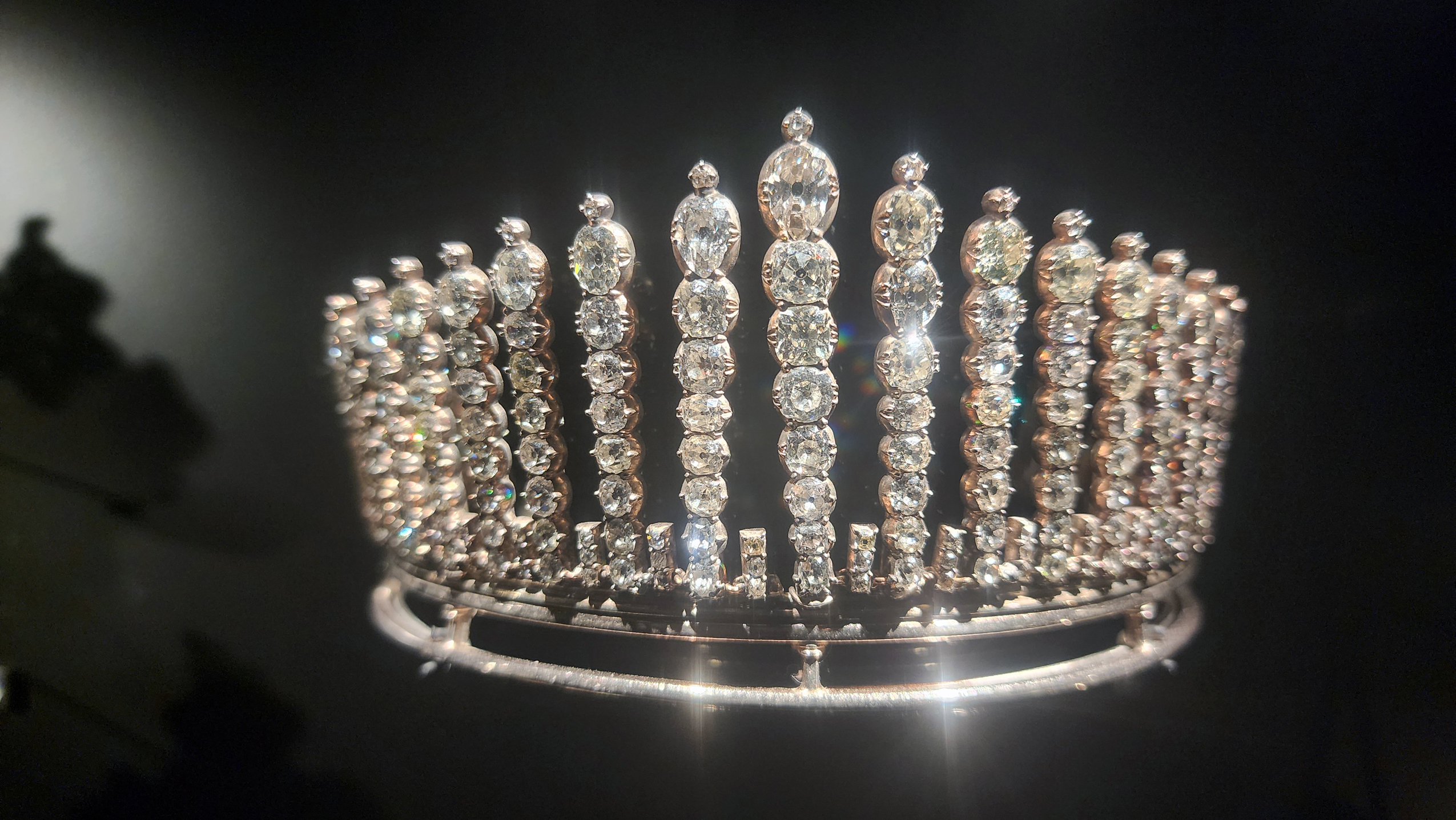
Crown of King Christian IV, Rosenborg Castle
Rosenborg Castle
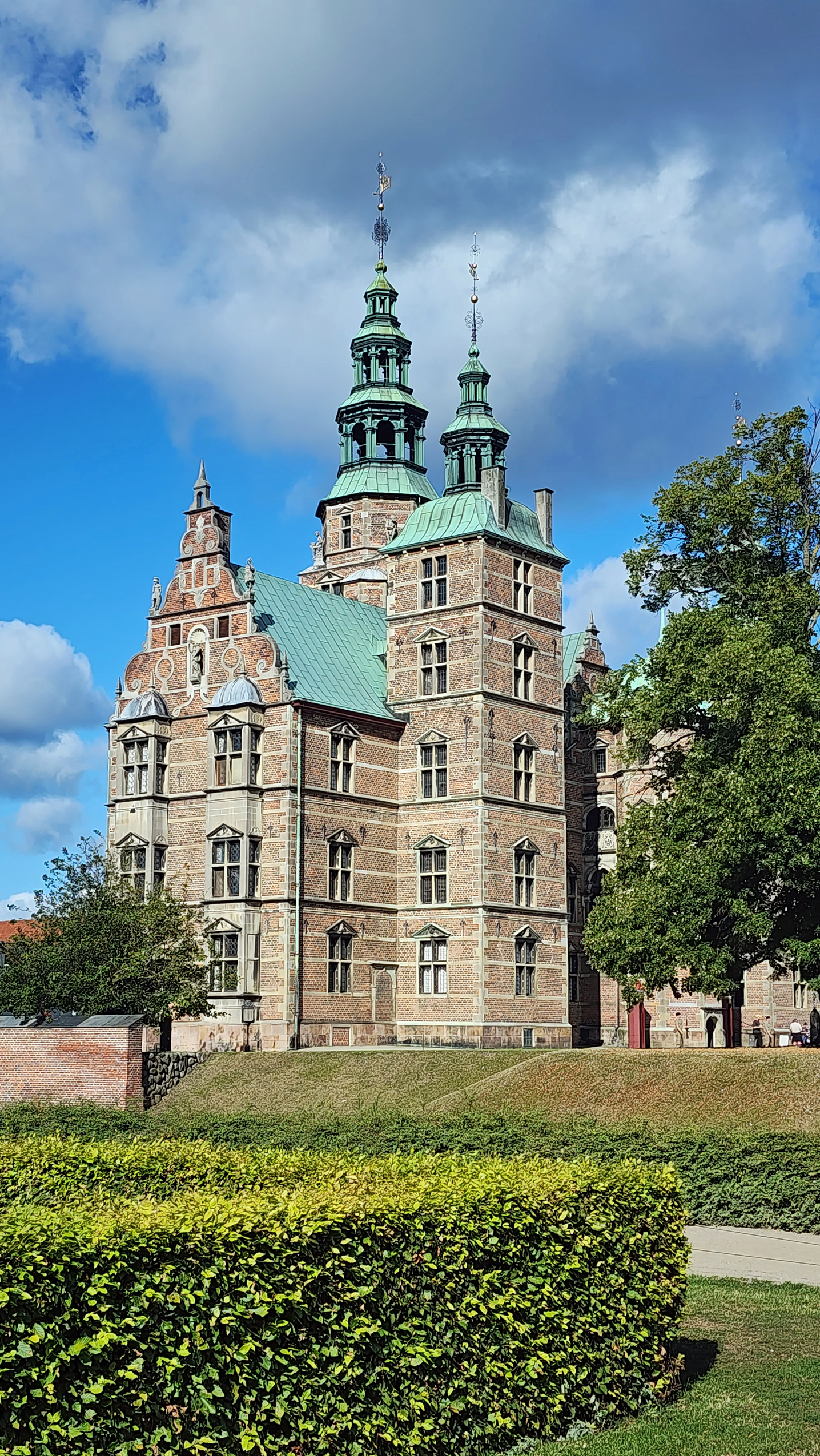
Rosenborg Castle (Rosenborg Slot) was built by King Christian IV as a summer residence in 1606, then expanded to its present size in 1624. Some of Christian IV’s possessions, including his private writing cabinet (and his bathroom) are on display. And everything on display can only be described as magnificently opulent.
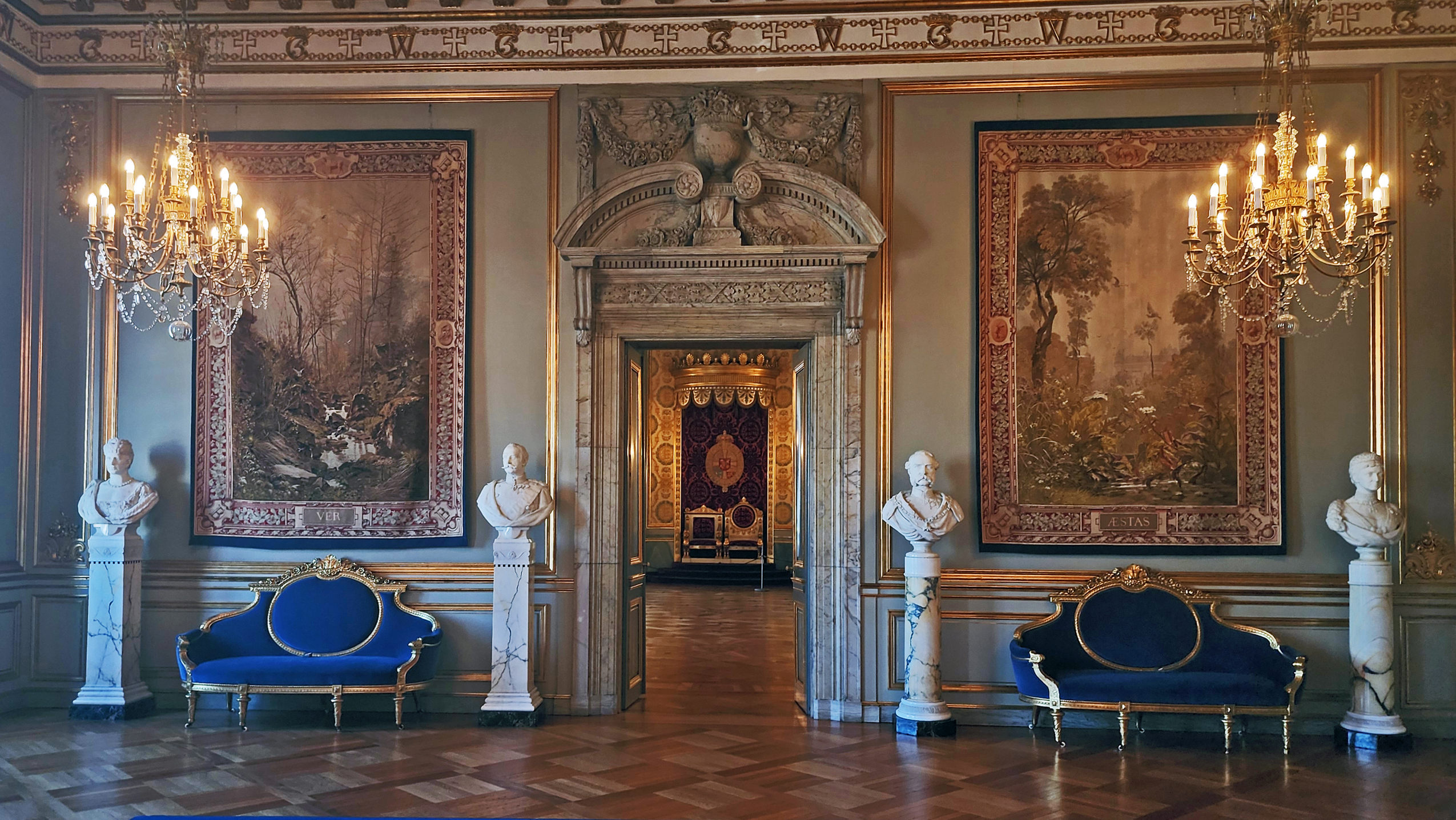
17th century tapestry, Rosenborg Castle
The Knight’s Hall contains the coronation throne, queens throne, three life-size silver lions, and twelve tapestries from the 17th century. The Danish Crown Jewels can be viewed in the castle basement (which has a separate entrance from the main castle).
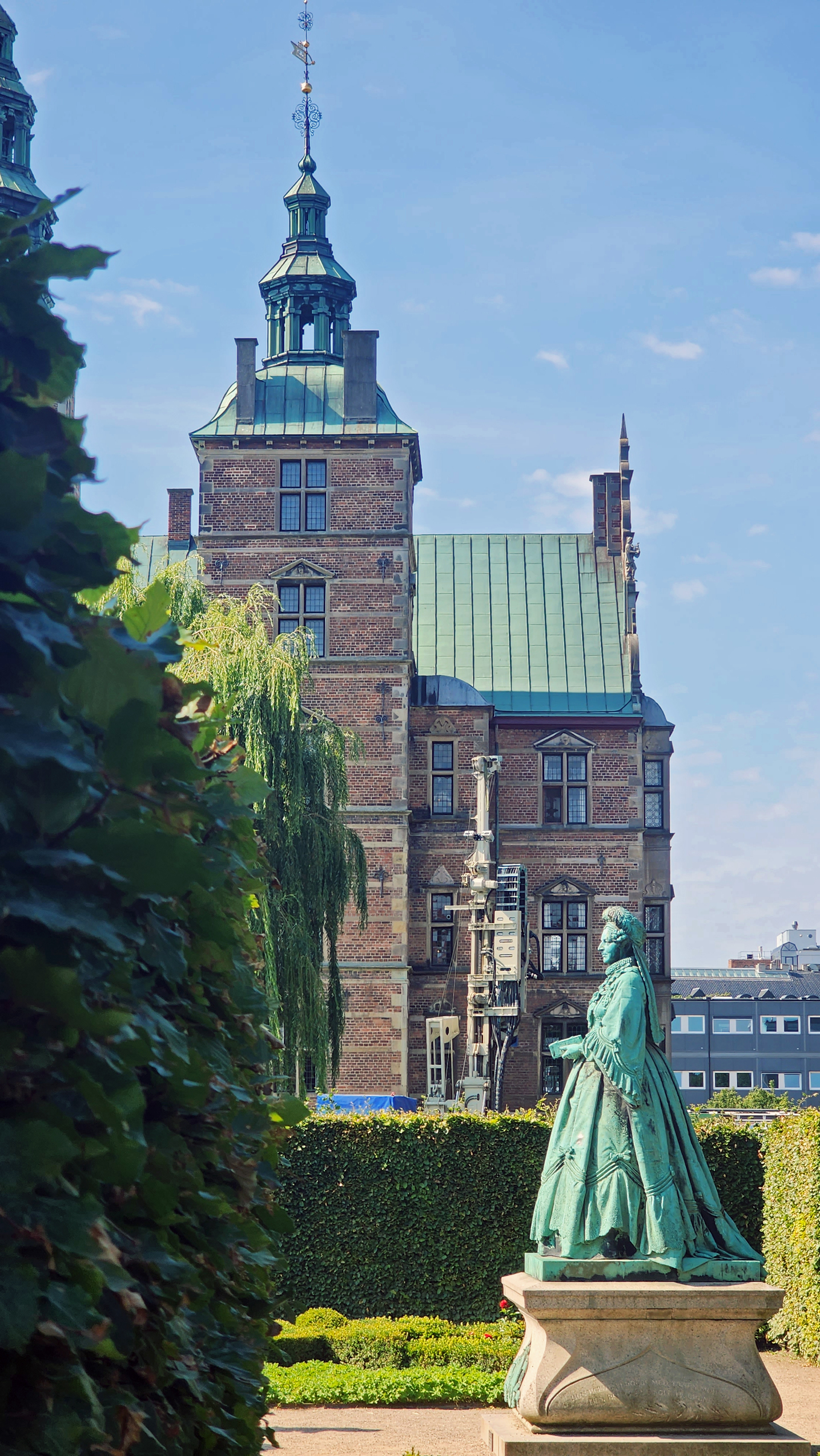
Rosenborg CastleRosenborg Castle
The King’s Garden (Kongens Have), also known as the Castle Garden, is located adjacent to the castle. See the Parks and Natural Areas section below.
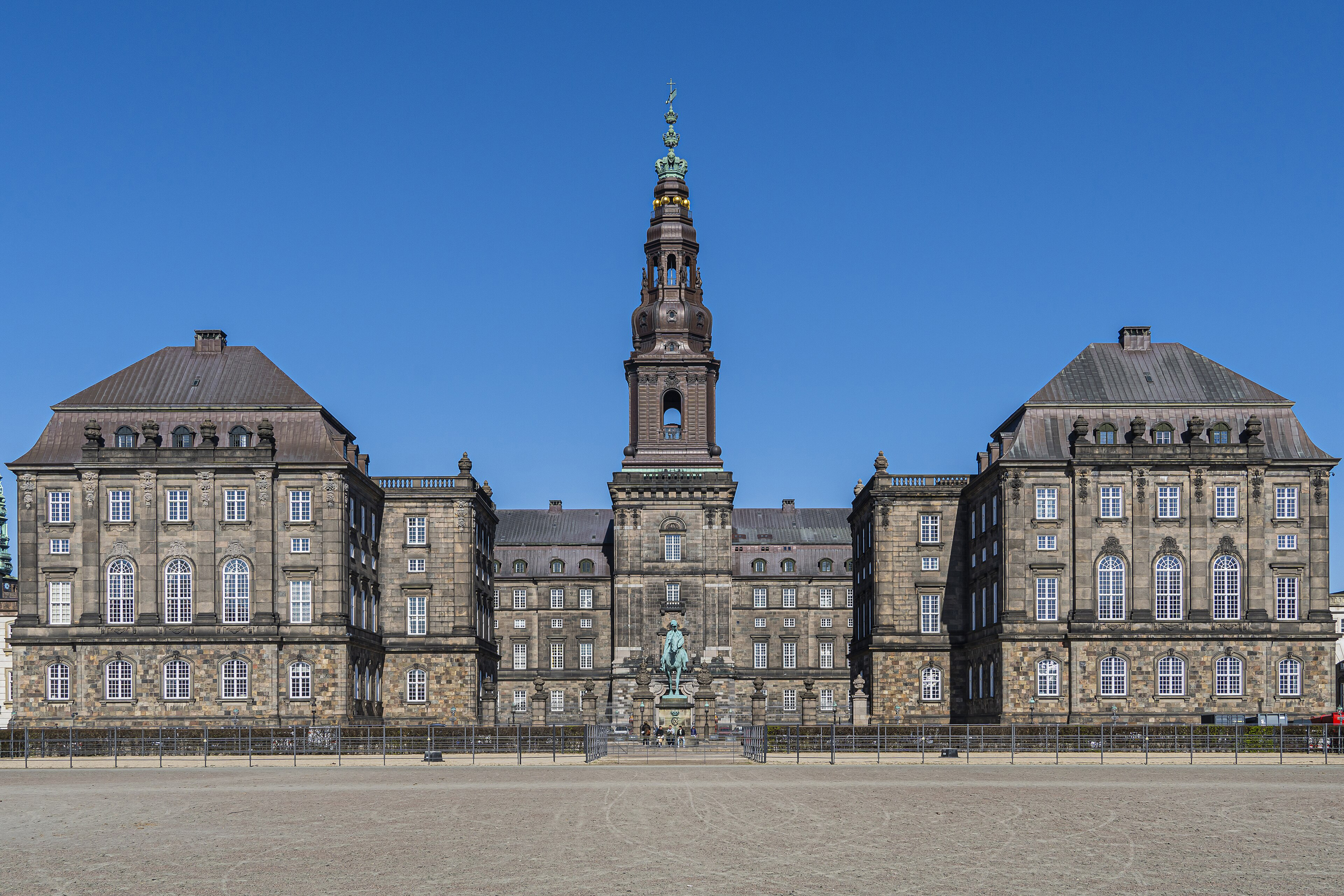
Christiansborg Palace, photo credited to Jakob SR, sourced from Wikimedia Commons
Christiansborg Palace
The original Christiansborg Palace (Christiansborg Slot) was completed in 1745. A fire in 1794 nearly destroyed the structure, which was then replaced by the second palace, completed in 1828.
Christiansborg Palace
In 1849, when Denmark became a constitutional monarchy, the first Danish Parliament met in the south wing of the palace. The only king to use the second palace as a residence was Frederick VII, from 1852 to 1863.
Christiansborg Palace
The second palace also burned, in 1884. Construction of the current palace was completed in 1928 and is the seat of the current Danish Parliament, as well as the Danish Supreme Court and the office of the Prime Minister, making it the seat of all three branches of the Danish government.
Amalienborg Museum
Amalienborg Museum
The Amalienborg Museum is located in one of the four buildings making up Amalienborg Palace. The palaces surround a central courtyard with a statue of King Frederik V at its center. The structures were originally the homes of four noble families, but were purchased by the Danish royal family after the original Christiansborg Palace burned in 1794. The palace has been the official residence of the royal family ever since.
King’s Garden (Kongens Have), Copenhagen
Parks and Natural Areas
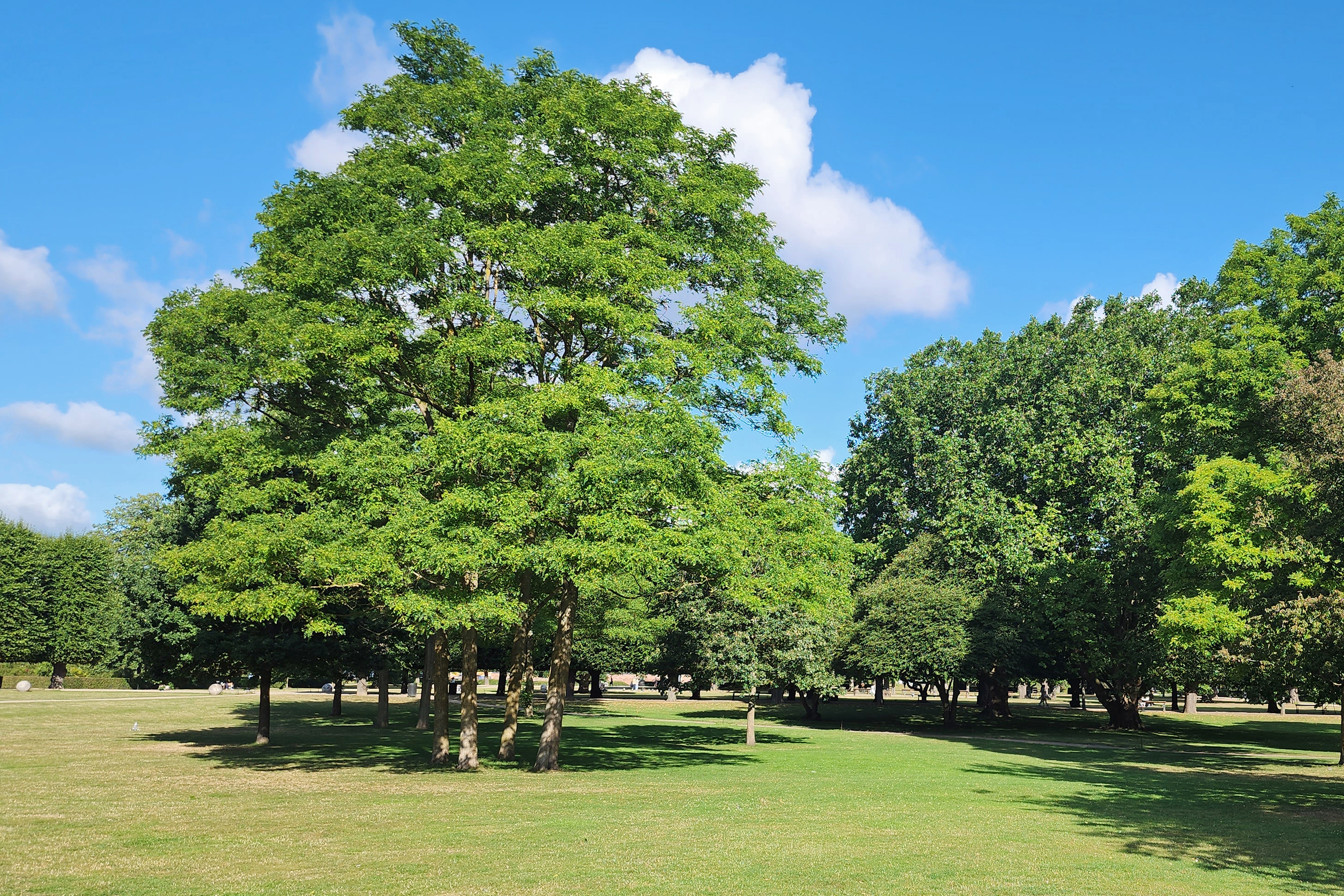
Copenhagen is a beautiful city with many parks and natural areas. The largest park in the central city is Kongens Have, adjacent to Rosenborg Castle.
Kongens Have, Copenhagen
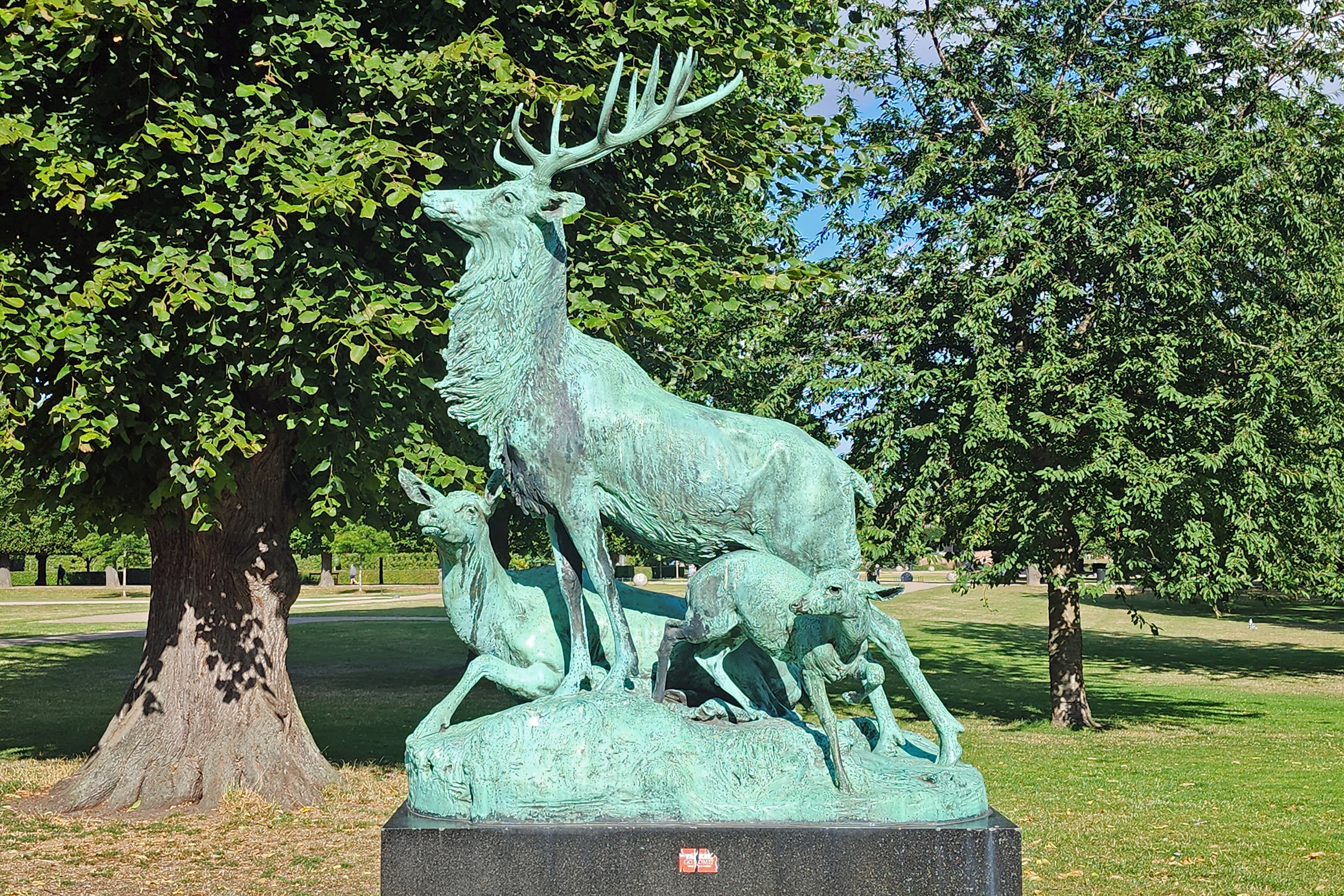
The park has large open areas, shaded lanes lined with trees, a formal rose garden, and a children’s playground. There is also a monument to Hans Christian Andersen, and a café (the Herkules Pavillon Café).
Children’s playground, Kongens Have, Copenhagen
There are many other parks that we did not have time to explore, including Faelledparken, about a mile north of Rosenborg Castle, and Amager Faelled, on Amager Island about a mile south of the city center.
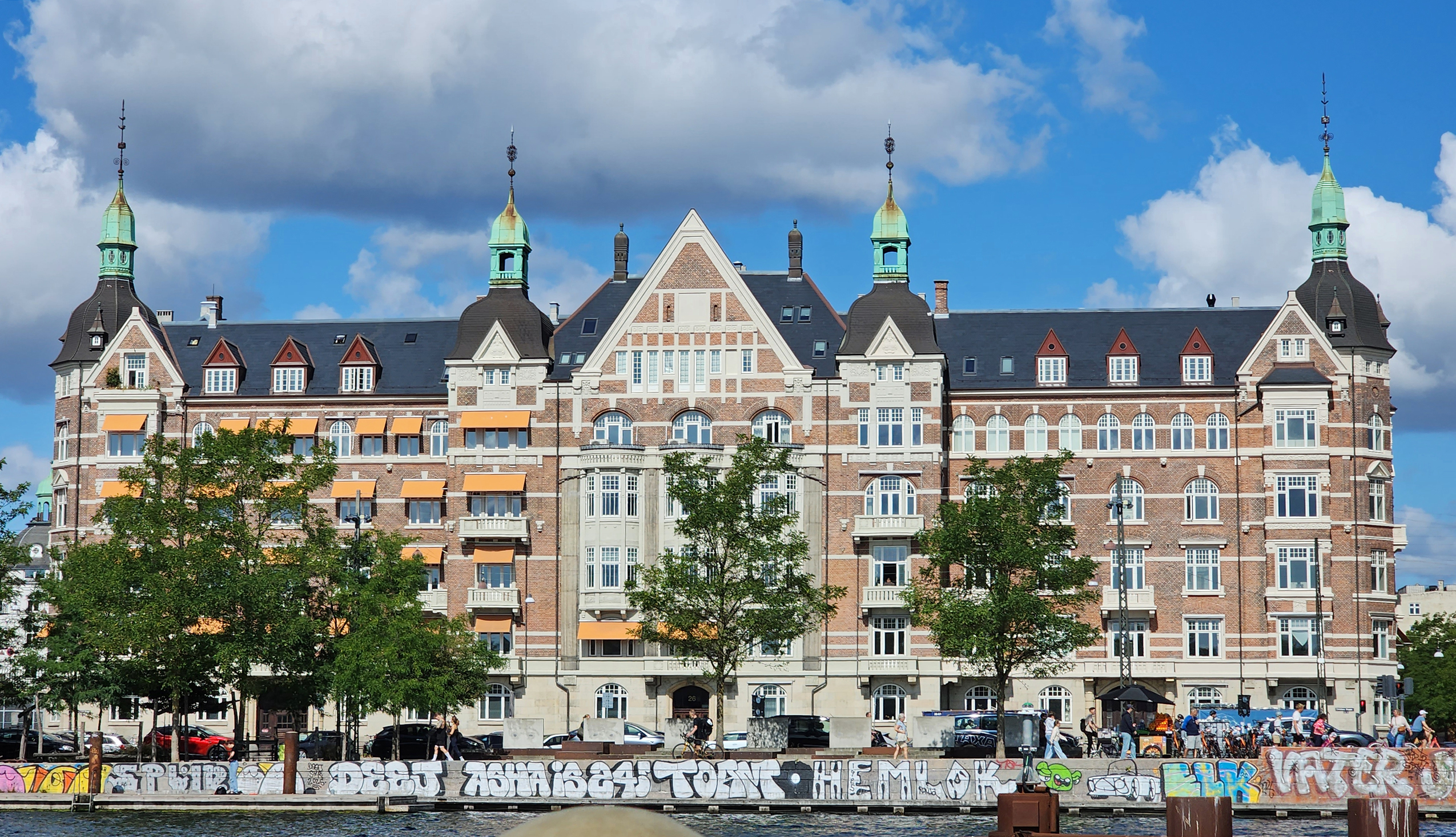
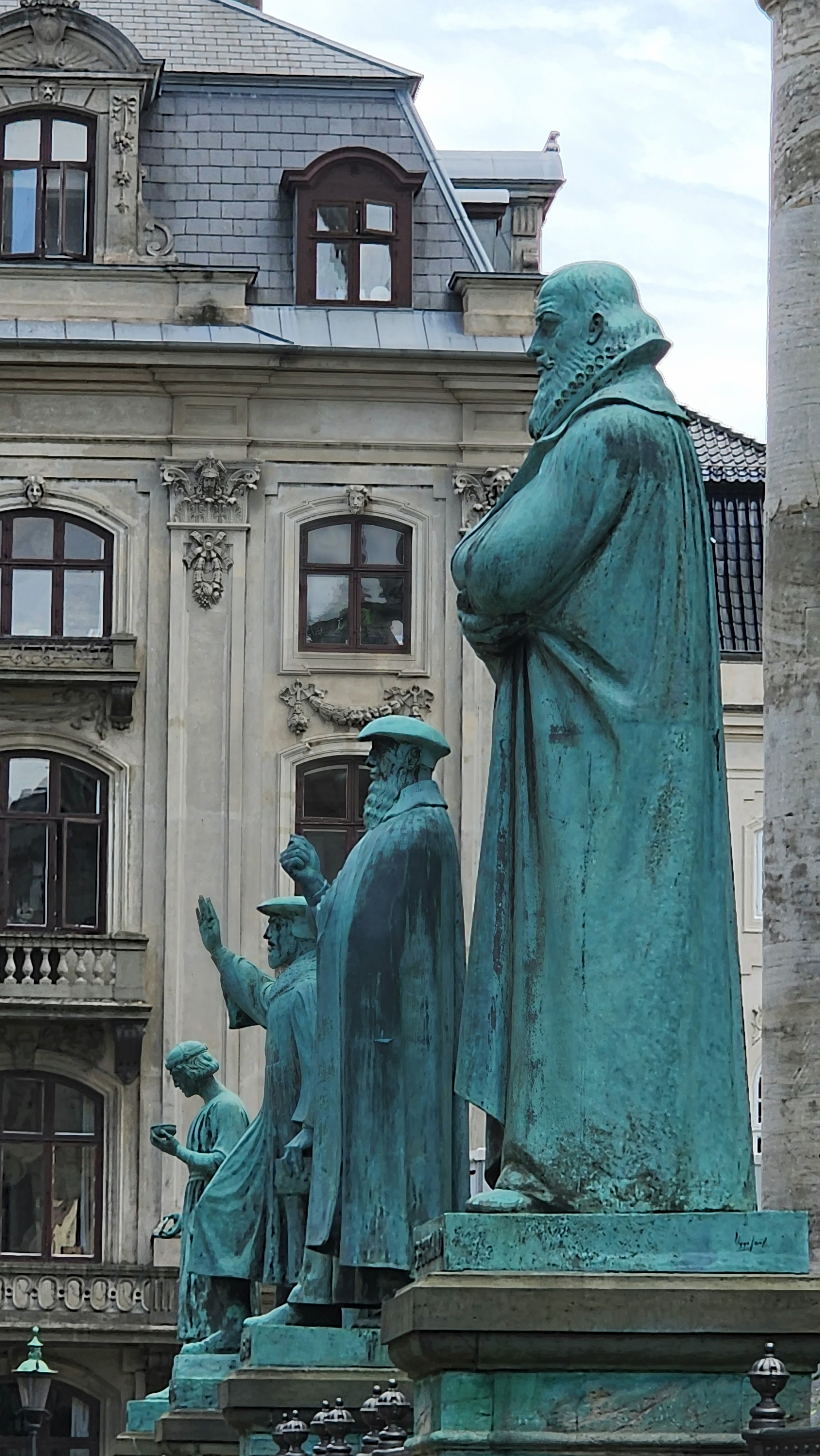
Art and Architecture
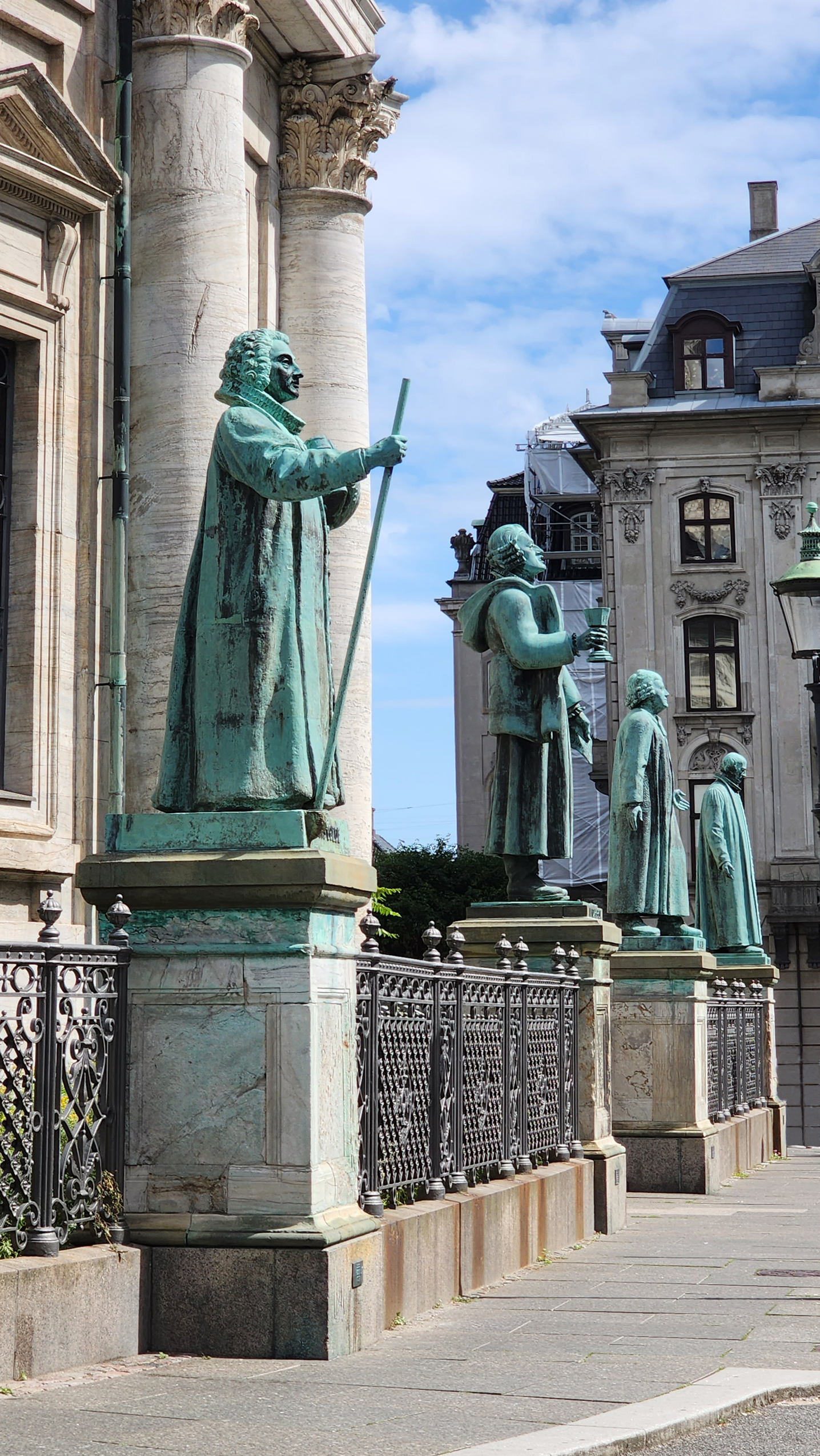
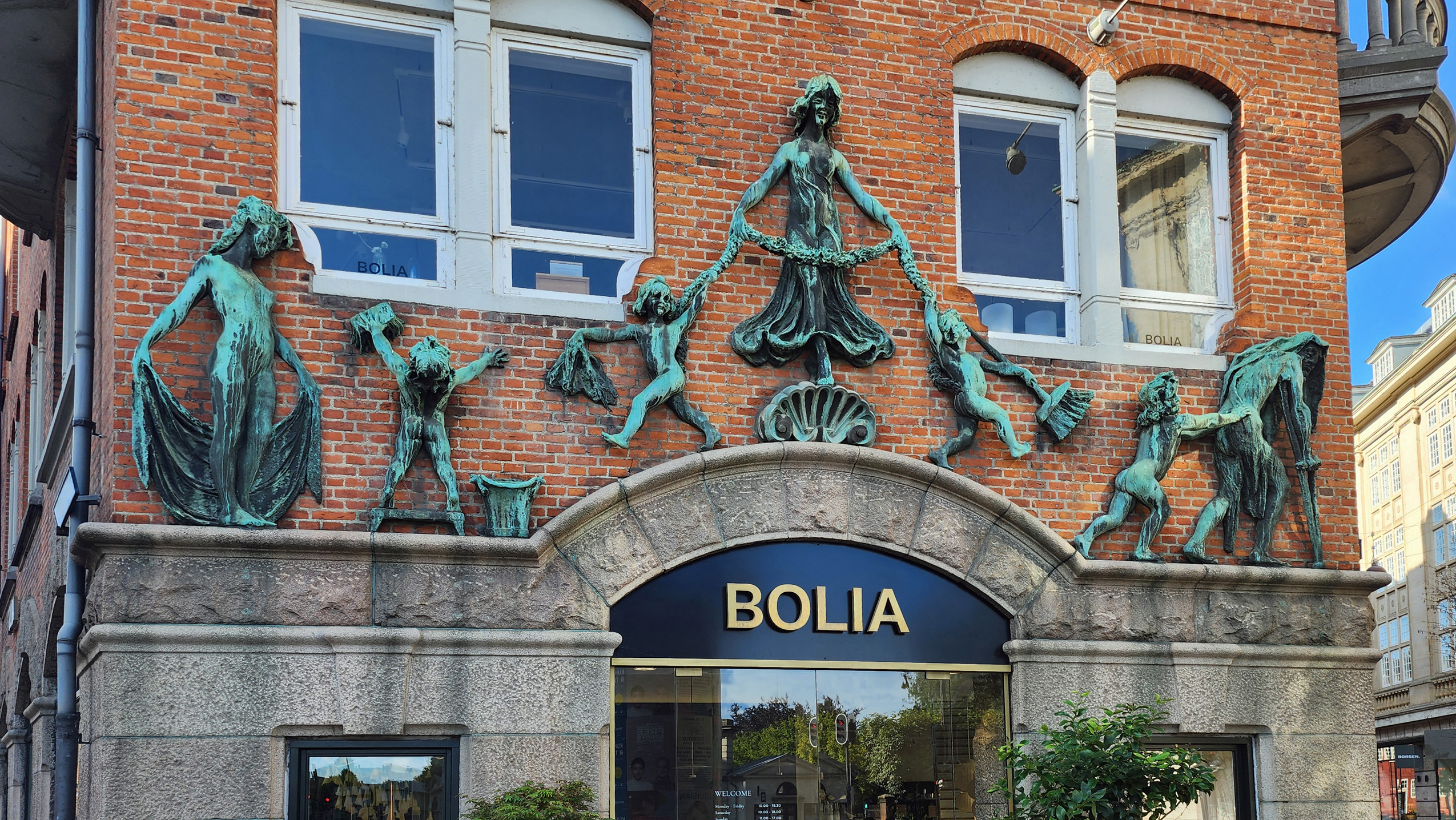
Statues, monuments, and many other public art exhibits are scattered throughout the city center. And there are many art museums and galleries in the old city, including the Nicolaj Art Gallery and the Ny Carlesberg Glyptotek.
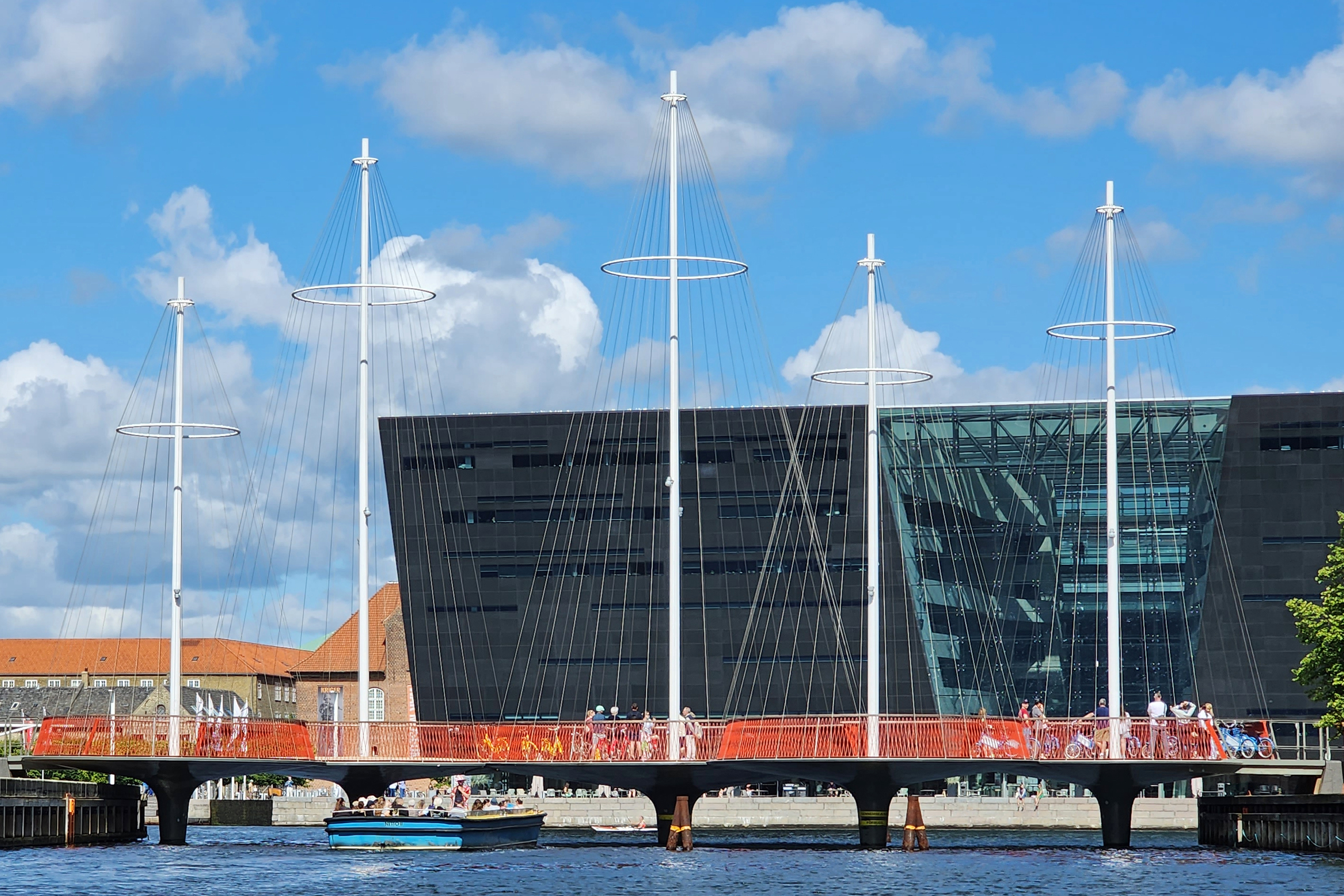
I’m a big fan of architecture in general and Copenhagen has a wide range of building styles from centuries old churches to ultra-modern office buildings. The images above are only a tiny slice of what you can find in the city center.
The Little Mermaid
The Little Mermaid
Edvard Eriksen’s iconic bronze sculpture is one of the top tourist attractions in Copenhagen and not to be missed. Although not imposing (the sculpture is less than five feet tall), it has been captivating people ever since its creation in 1913.
The Little Mermaid sculpture was inspired by the 19th century Hans Christian Andersen fairy tale of the same name. It was commissioned by Carl Jacobsen, son of the founder of Carlsberg, one of the ten largest beer brewers in the world. He was inspired by a ballet based on the fairy tale and wanted the ballerina, Ellen Price, to model for the sculpture, but she refused to pose nude. The model was actually Ericksen’s wife, Eline Ericksen.
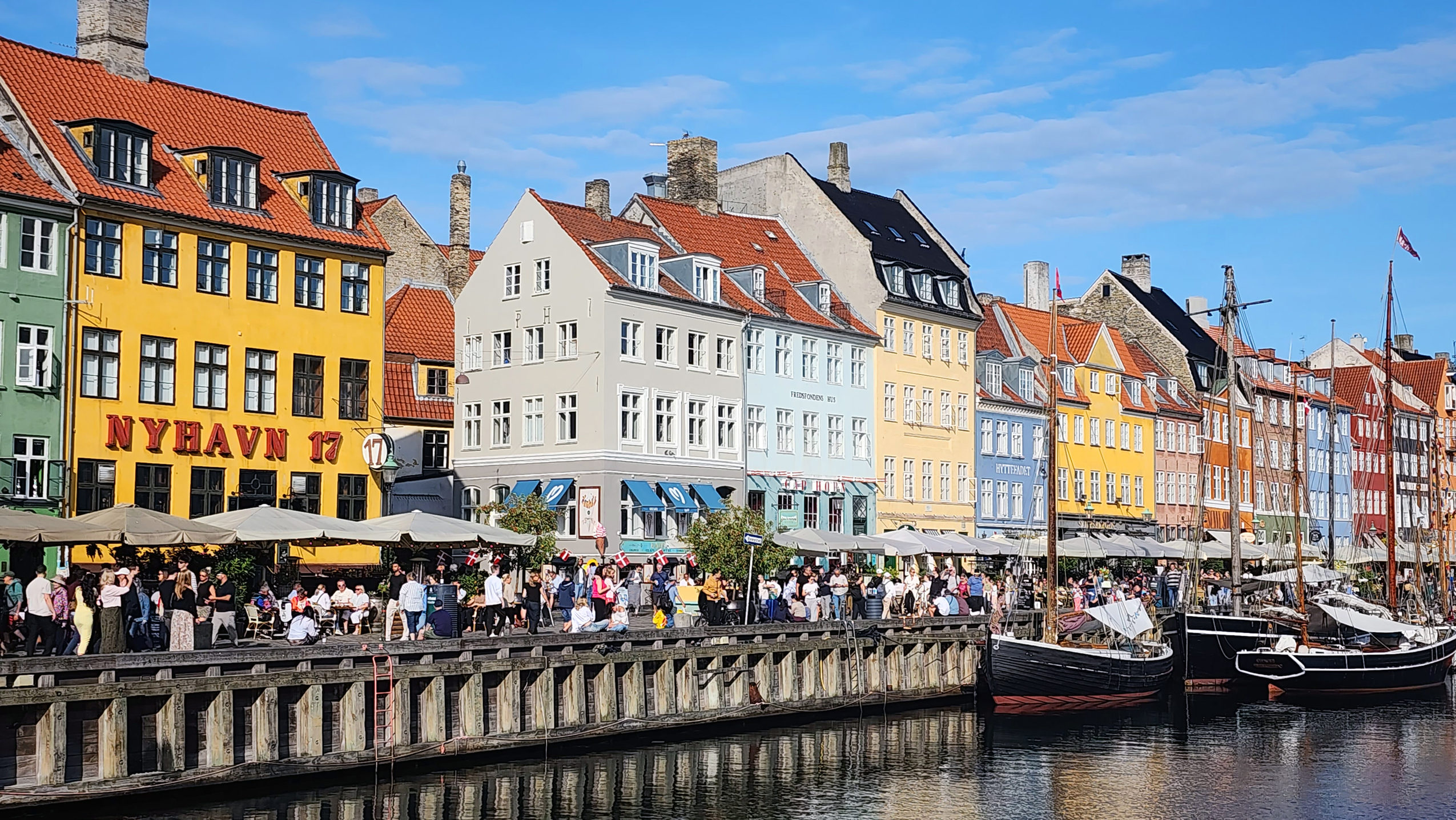
Nyhavn, Copenhagen
Nyhavn
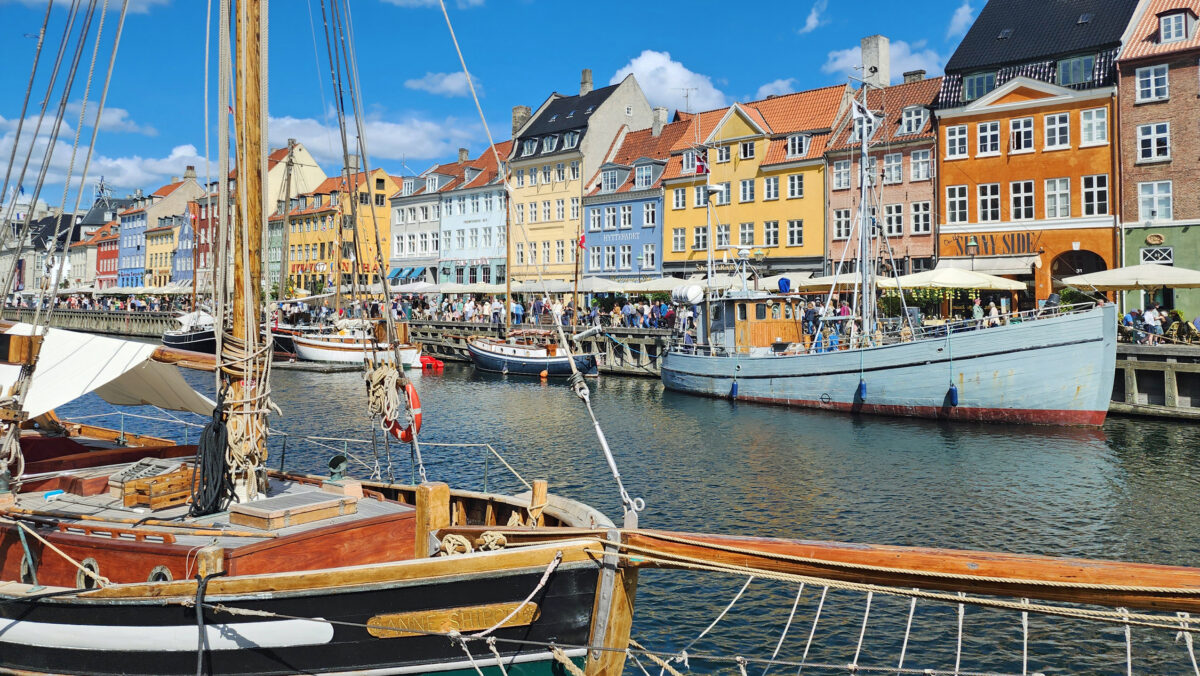
Another iconic location in Copenhagen is Nyhavn, where brightly colored buildings house cafes, pubs, and townhouses along both sides of a canal. Hans Christian Andersen lived and wrote in three different houses in Nyhavn. Built in the 17th century, Nyhavn (“new harbor”) was once home to sailors, merchants, taverns, and bordellos. Today it a mecca for tourists.
Nyhavn, Copenhagen
In summer, Nyhavn is a great place to get a beer and relax in an outdoor café, as long as you don’t mind the throngs of tourists that flock there. In winter, it is home to a Christmas Market that is something of a tourist attraction of its own.
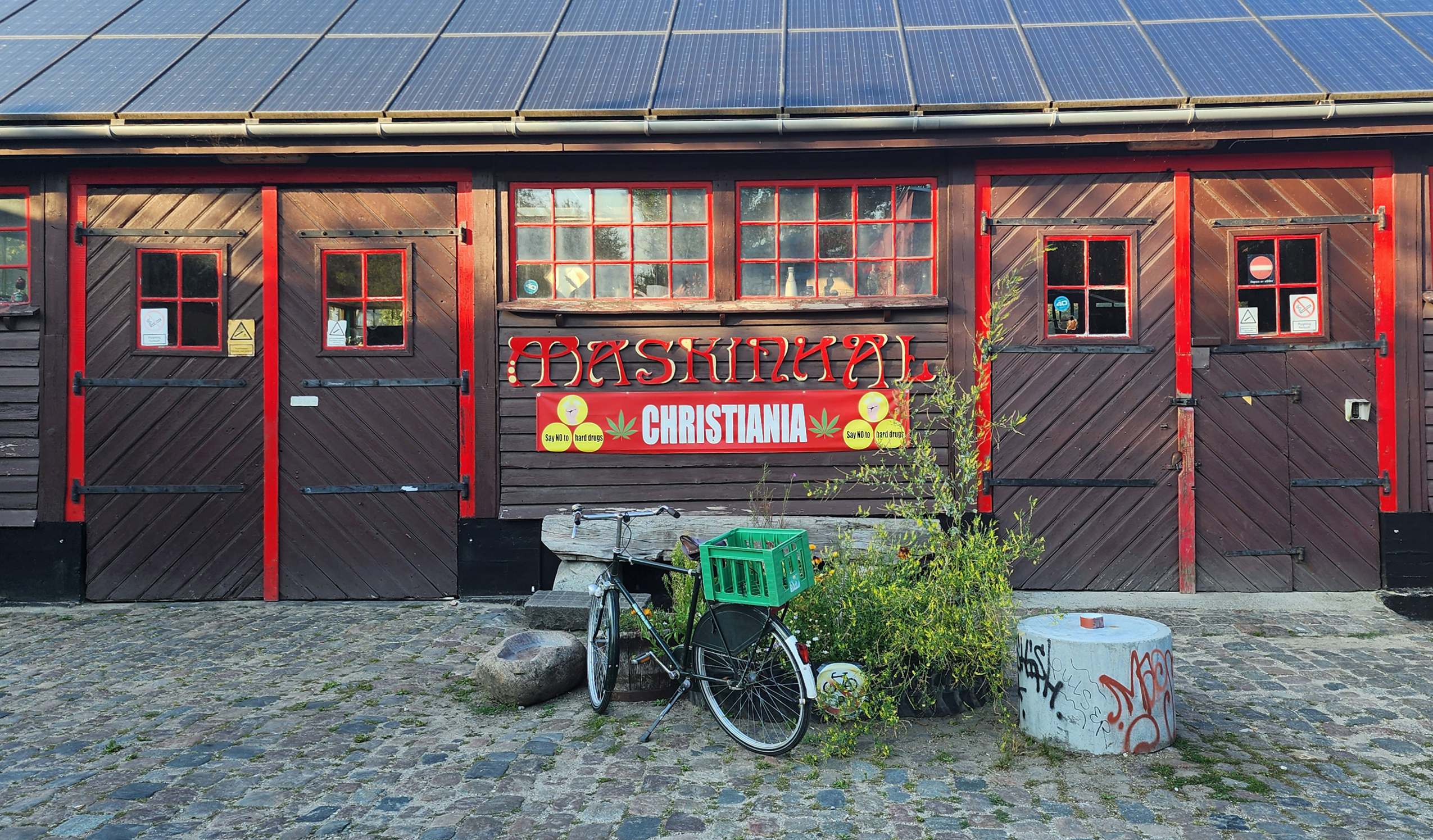
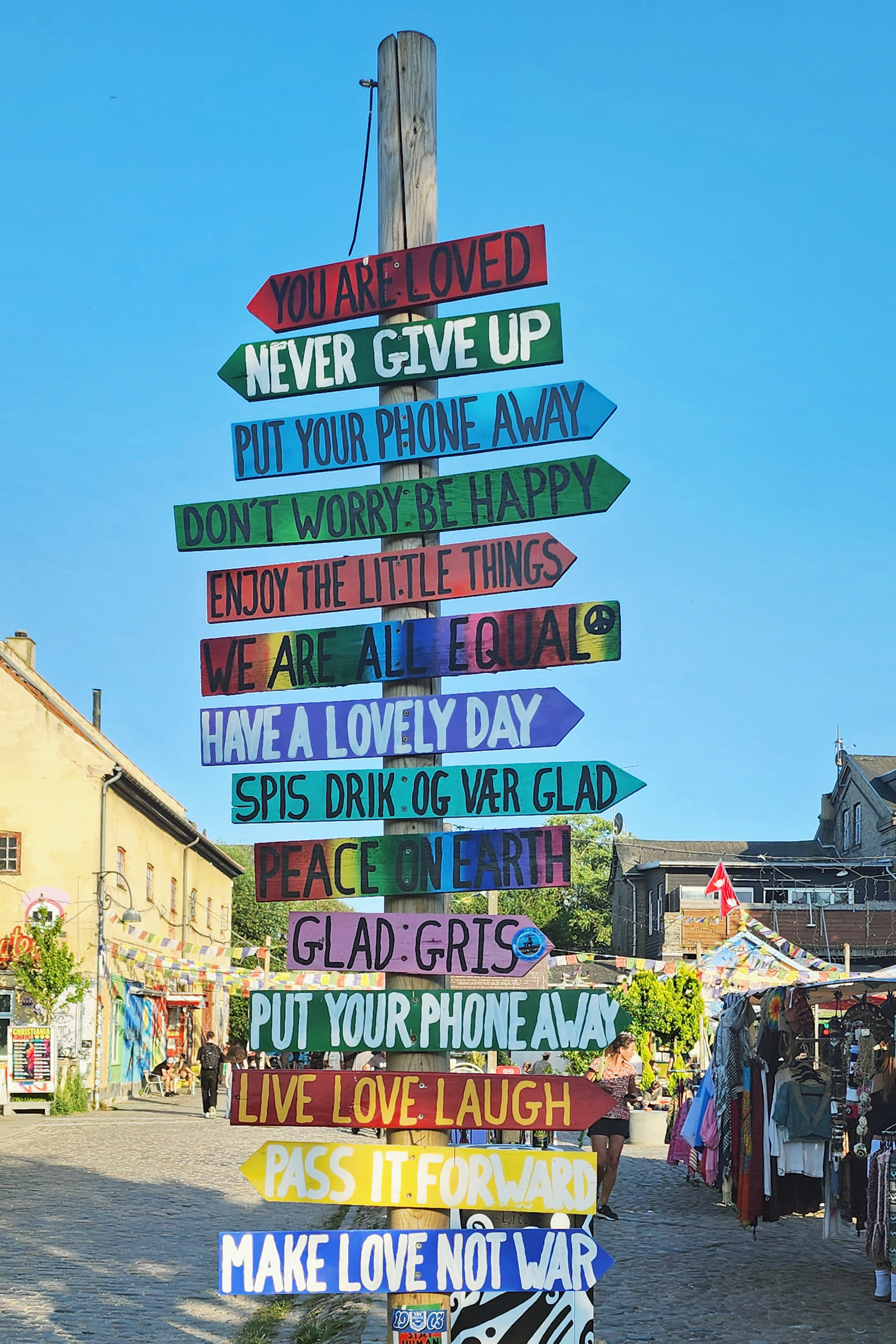
Freetown Christiania, Copenhagen
Freetown Christiania
In 1971, counter-culture journalist Jacob Ludvigsen declared a former military barracks on Amager Island “open” and Freetown Christiania (more often just called Christiania) was born. Christiania was, and still is, an intentional community akin to a hippie commune.
Christiania, Copenhagen
One of Christiania’s most contentious (mostly to outsiders, but also to a lesser extent to Christiania residents) provisions was open tolerance to drug use and drug dealing. Aptly named Pusher Street became home to open stalls selling cannabis, but hard drugs were only slightly less publicly sold. The cannabis stalls were removed by the residents and Pusher Street was dug up in 2016 after two police officers and a citizen were shot by a cannabis dealer. Cannabis is still widely tolerated, but hard drugs are not.
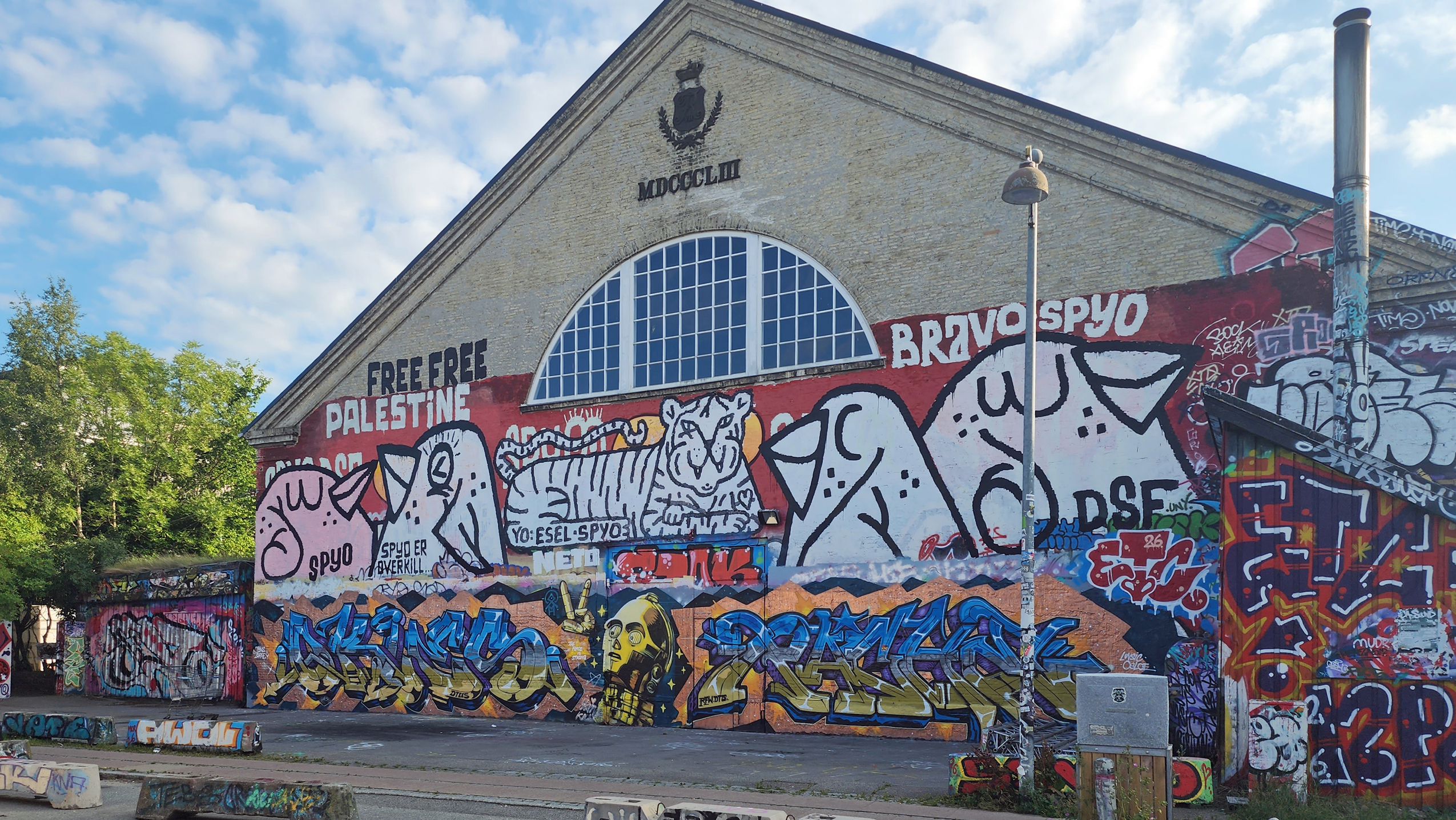
Christiania, Copenhagen
Ownership of the former barracks was bandied about in Danish courts until the Danish Supreme Court ruled that the state was still the ultimate land owner. But Copenhagen and Christiania leaders came to an agreement that resulted in the newly created Foundation Freetown Christiania acquiring 19 of the 84 acres of the former barracks. Residents of Christiania went from squatters to the legal owners in 2012.
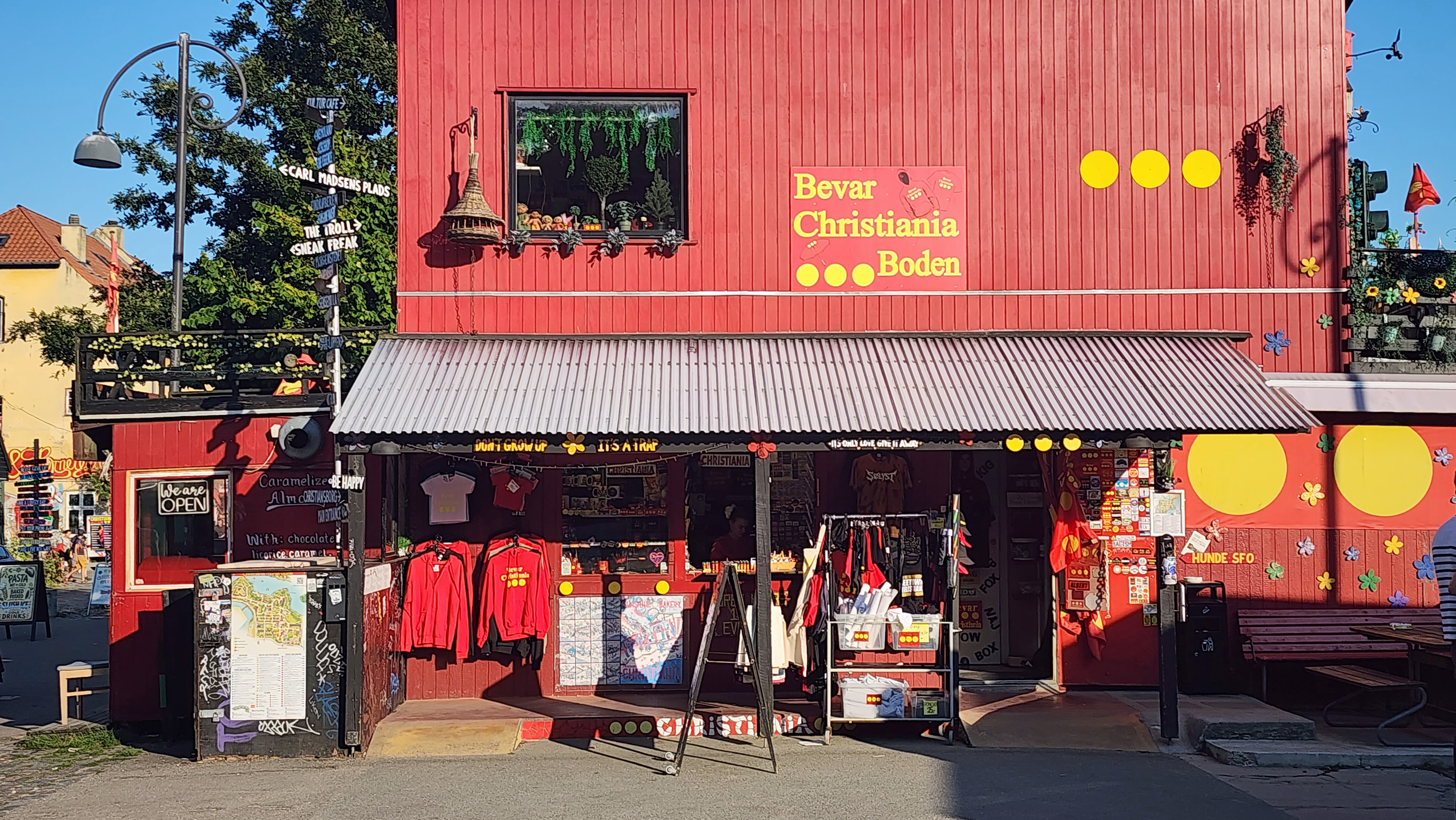
“Green George”Freetown Christiania
Today, Christiania is one of the top five tourist attractions in Copenhagen. It is home to many artists, and public art installation are common, including one of Thomas Dambo’s giant troll sculptures. Other troll sculptures of his can be found around the world, including one in Portland, only a few miles from my home. The Christiania Art Gallery is also a place you might want to visit. (Bring Danish krone if you might want to buy anything – they don’t accept Euros or US dollars). There are also numerous shops and cafes, including Café Nemoland.
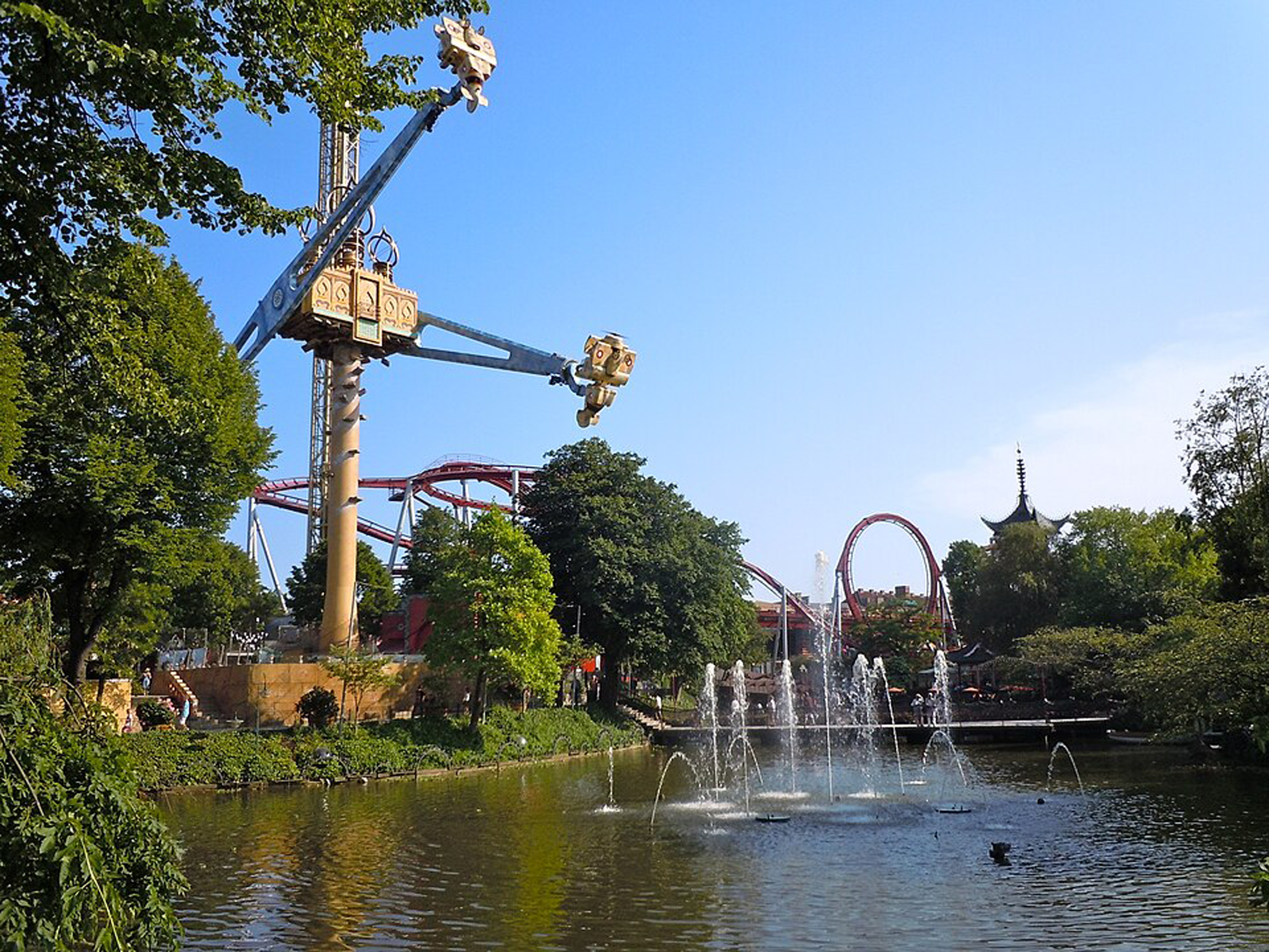
Tivoli Gardens, photo by Sarah Ackerman, sourced from Wikimedia Commons
Tivoli Gardens
Tivoli Gardens (often referred to as just Tivoli) is an amusement park located in the middle of Copenhagen with 30 different rides and many other attractions. It opened in 1843 and has been in continuous operation ever since, 183 years and counting. It is the second oldest continuously operated amusement park in the world, second only to the Dyrehavsbakken (or simply Bakken), which opened to the public in 1756 and is also located in Denmark, not far from Copenhagen. We did not visit Tivoli, but if you have young children or are just into thrill rides, it might be a must see attraction. It gets somewhat mixed reviews, though. Most of the criticism seems to be due to the cost of admission. An entrance and ride pass (for ages eight and up) currently costs about $60. Children 3-7 get in for half price and children under three get in free.
Practical Matters
Today, Copenhagen is a sprawling metropolis, but the old town section of the city is compact and walkable. Getting around is easy, either on foot or by the efficient, safe, and quick Metro train system or municipal buses. Our hotel was several miles from the city center, but only about a five minute walk to a Metro station and a 15 minute train ride away from the old town center.
Denmark is part of the European Union but uses its own currency, the Danish krone. Euros are accepted most places, though, and even American dollars in some places. And almost every place accepts credit cards.
Nyhavn
Pubs and cafes are found everywhere in the city center, especially along the waterfront and in other touristy areas. You don’t really need a guidebook. Menus in most cafes and restaurants are printed in both Danish and English, some in English only. And almost everyone speaks passable English, so if you have any questions just ask your server. Servers are paid a living wage, so tipping is optional, but appreciated. At some of the cafes and pubs that we ate it wasn’t even an option, but where it is 10% is sufficient.
Hotel Bella Sky
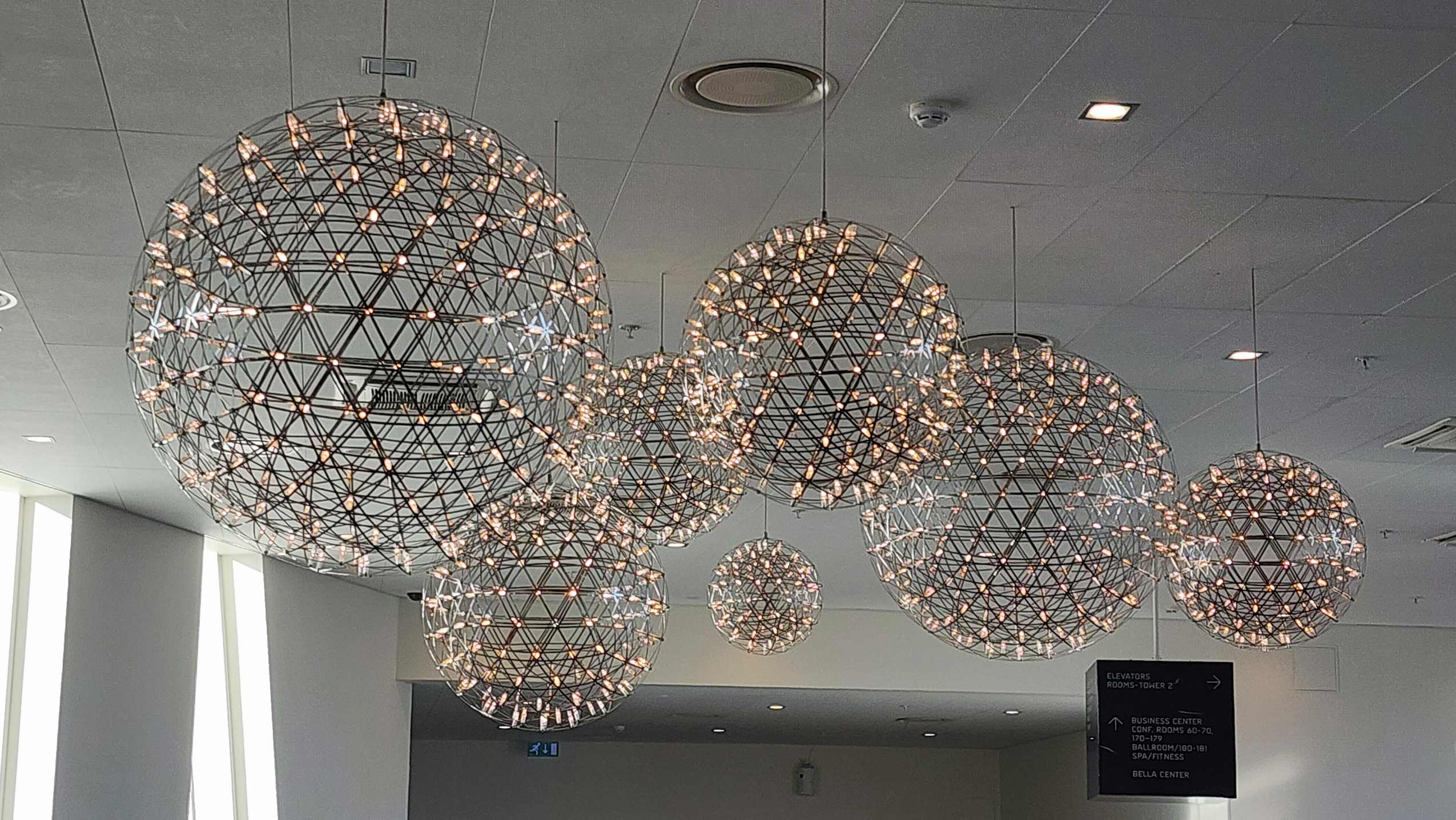
There are many hotels and other accommodations available in downtown Copenhagen. Prices (including taxes and fees) for hotels generally start at about $350 per night on summer weekends, but can be much higher depending on location and degree of luxury desired. Our hotel, several miles from the city center, was a little over $300 per night and was more than adequate.
Conclusion
Copenhagen’s a fascinating place, especially if you love to be on the water, with a long and interesting history, friendly and welcoming people, beautiful art, architecture, and parks, and far more to see than we could in the three days we had there. A week (or two) would have been better. But our visit was long enough to fall in love with the city and its people. I heartily recommend that, if you can, you should visit at least once in your life. It’s really a magnificent city.
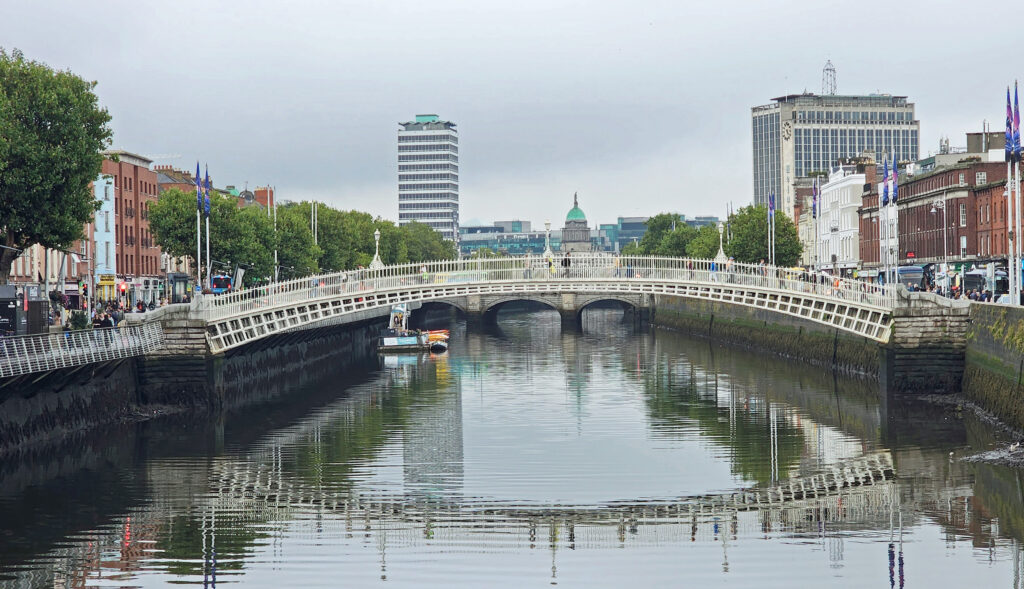
Dublin is the capital, largest city, and cultural hub of the Republic of Ireland. It is also the most diverse city in Ireland with more than 25% of the population having been born outside of Ireland. And it is the most visited city in Ireland. If you travel there in the summer, as my wife and I recently did, you will probably find that there are more tourists than locals walking the streets and populating the pubs, museums, parks, and galleries of the city. But don’t let that dissuade you from visiting. Even in high season, Dublin is well worth visiting. And its’s not hard to get away from the more touristy parts of the city and get a taste of what everyday life in Dublin is like.
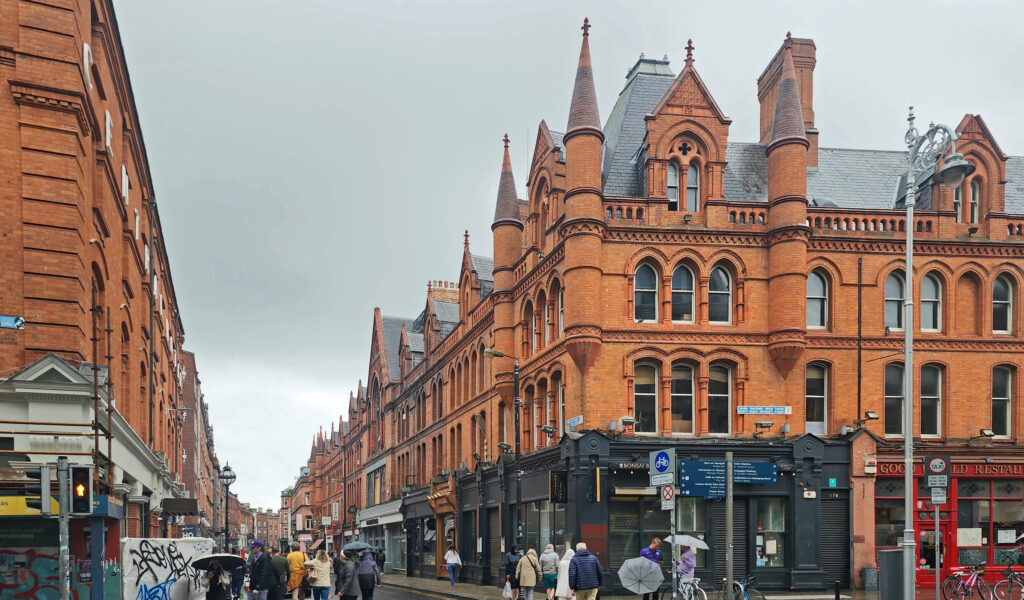
Downtown Dublin
History
There are a number of themes that run through the culture of Dublin. One of those is history. History is central to all aspects of life in Dublin, and there is plenty of history to be found there. The city of Dublin is over a thousand years old and the area has been inhabited for many millennia. The Vikings established a settlement in the Dublin area in 841 CE, but an archaeological dig in the Temple Bar area uncovered evidence of an Anglo-Saxon settlement that predated the arrival of the Vikings.
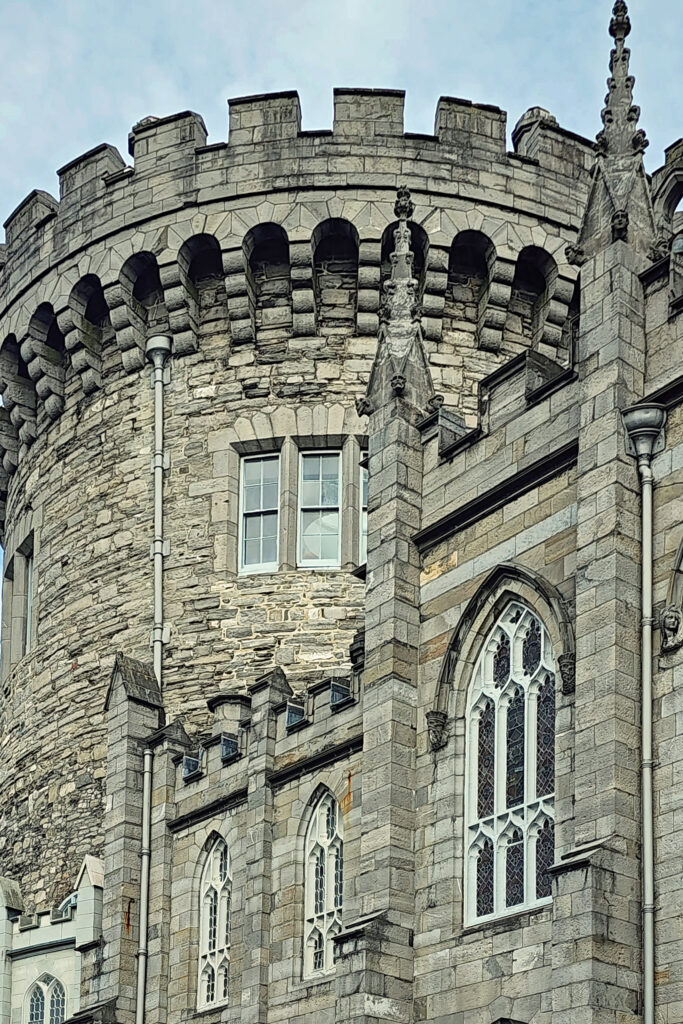
Dublin CastleDublin Castle
The Norman invasion of Ireland in the 12th century established English rule of Dublin. Dublin Castle was built in 1204 on orders of King John of England and became the center of power of the English ruled portion of Ireland. (It wasn’t until the 16th century that all of Ireland came under English rule).
Downtown Dublin
Dublin grew to be the city it is today during the 18th century. At one point it was the second largest city in the British Empire and the fifth largest in Europe. Dublin suffered a decline in the 19th century, but rebounded in the mid-20th century, and even more so in the last couple of decades. Today the city is vibrant and alive. The city itself has a population of about 600,000, County Dublin’s population is about 1.5 million, and the Greater Dublin area counts more than two million people – similar in size to Portland, Oregon.
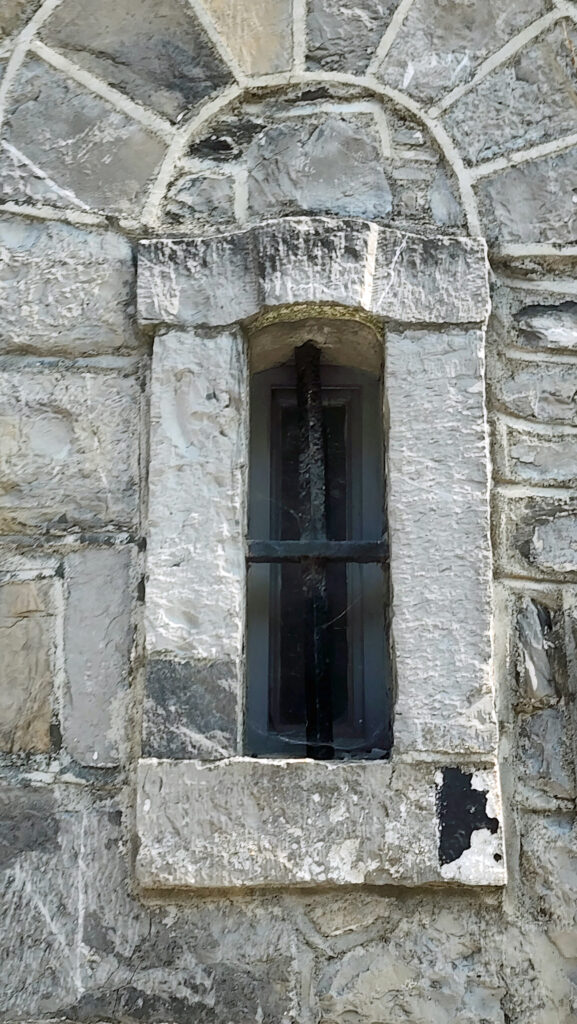
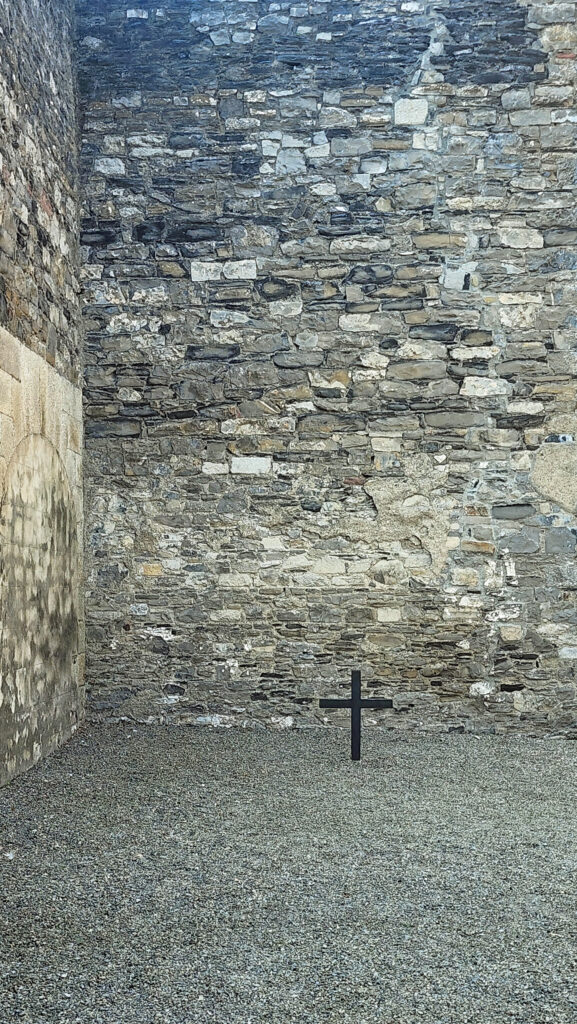
Cell window looking out on a courtyard, Kilmainham GaolSite of the execution of Easter Rising leaders in 1916
The 20th century was marked by conflict, first between those seeking independence from Great Britain and those opposed, and later between Catholic nationalists and Protestant traditionalists, colloquially known as the Troubles. The first led to the Easter Rising rebellion in 1916 and then the Irish Civil War, which resulted in the establishment of the Irish Republic in 1923. The Troubles were mostly centered in Northern Ireland, and there are still segregated sections of the cities there. But the Troubles also affected Dublin to an extent. There were several bombings in the city during that time. Today, peace reigns, and the border between the Republic of Ireland and Northern Ireland is completely open, even after Brexit. We took a bus tour from Dublin to Belfast during our visit and the border was hardly marked by even a sign.
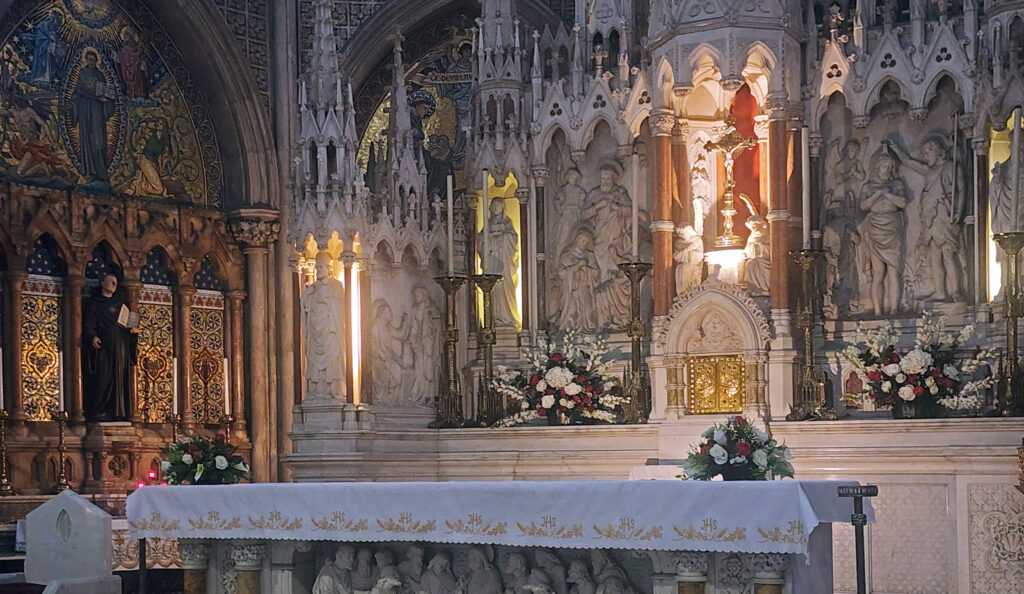
St. Augustine and St. John the Baptist Catholic Church
Churches and Cathedrals
In addition to history, religion is also central to life in Dublin, perhaps a bit less than elsewhere in Ireland but it is still a majority Catholic city, and churches and cathedrals are found throughout the city. Neither my wife nor I are church goers, but we always visit the local churches and cathedrals when in Europe, for the incredible architecture and artworks, if nothing else.
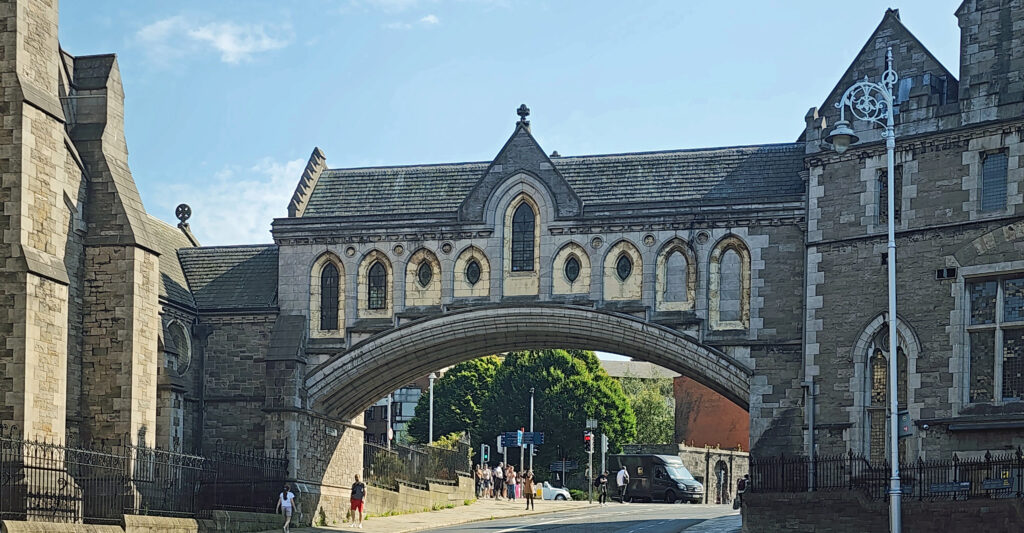
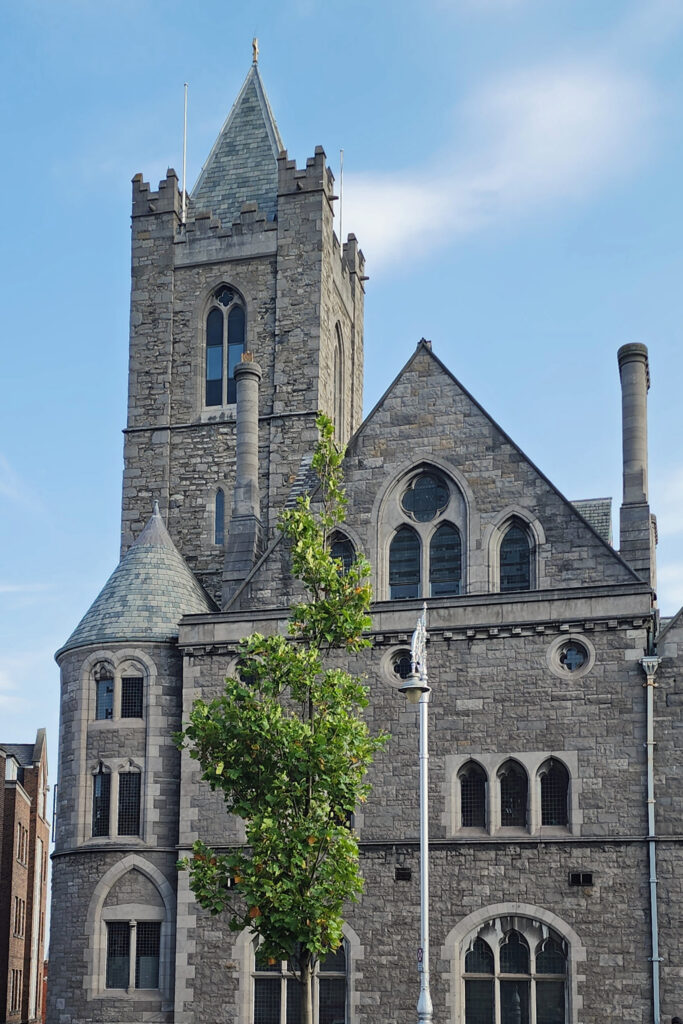
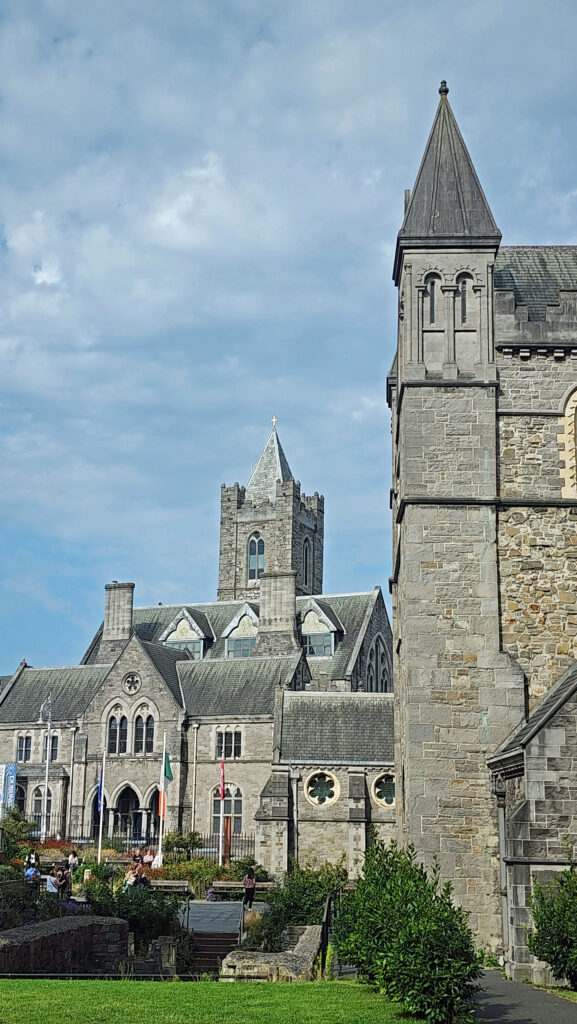
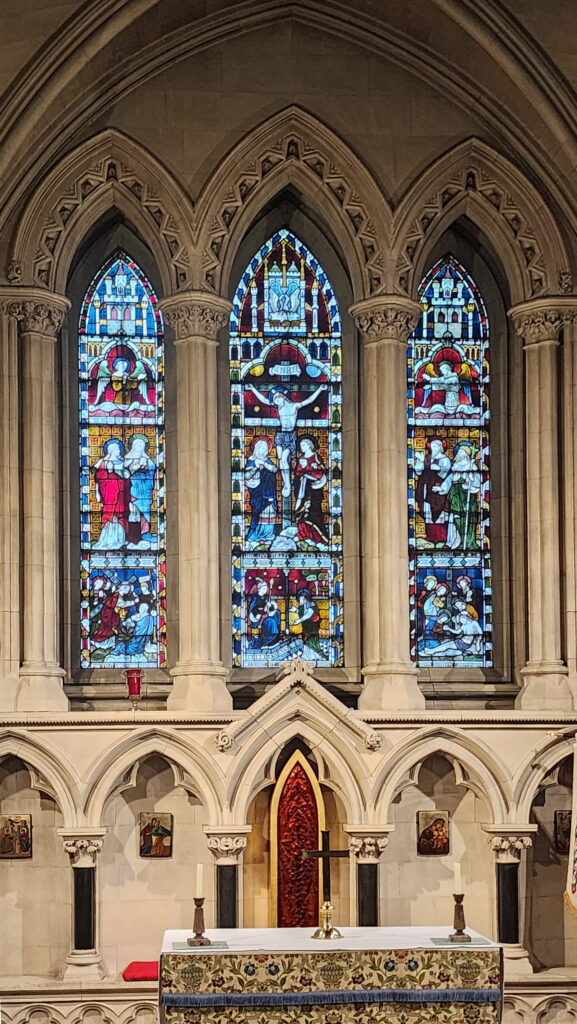
Christ Church CathedralChrist Church Cathedral
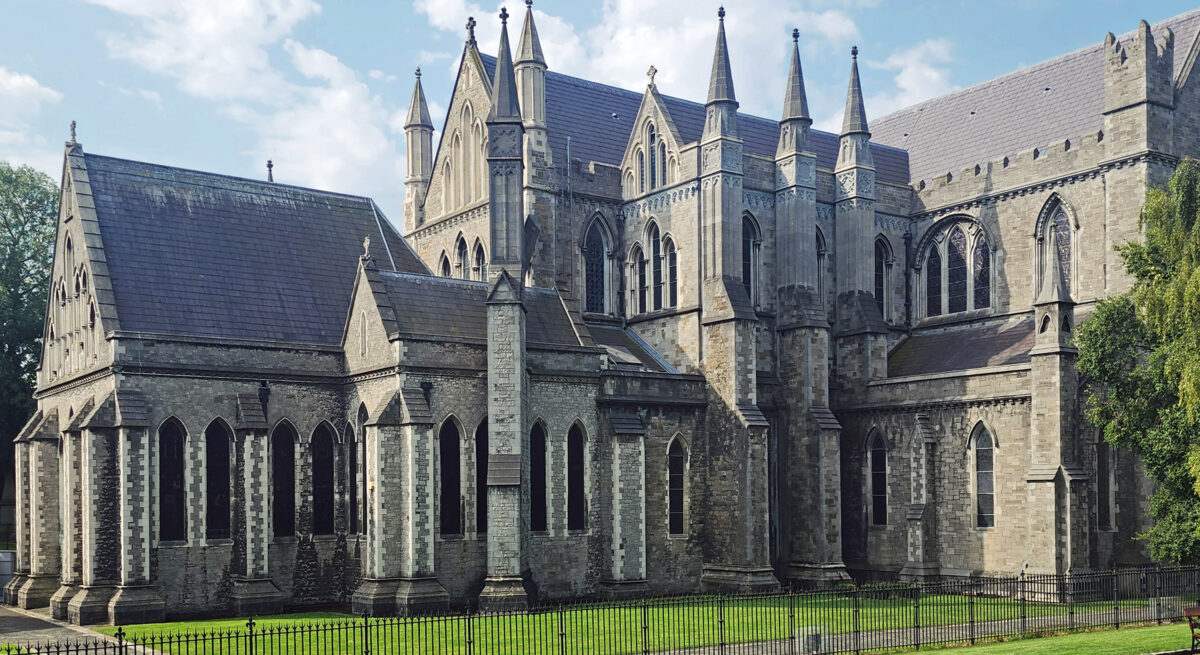
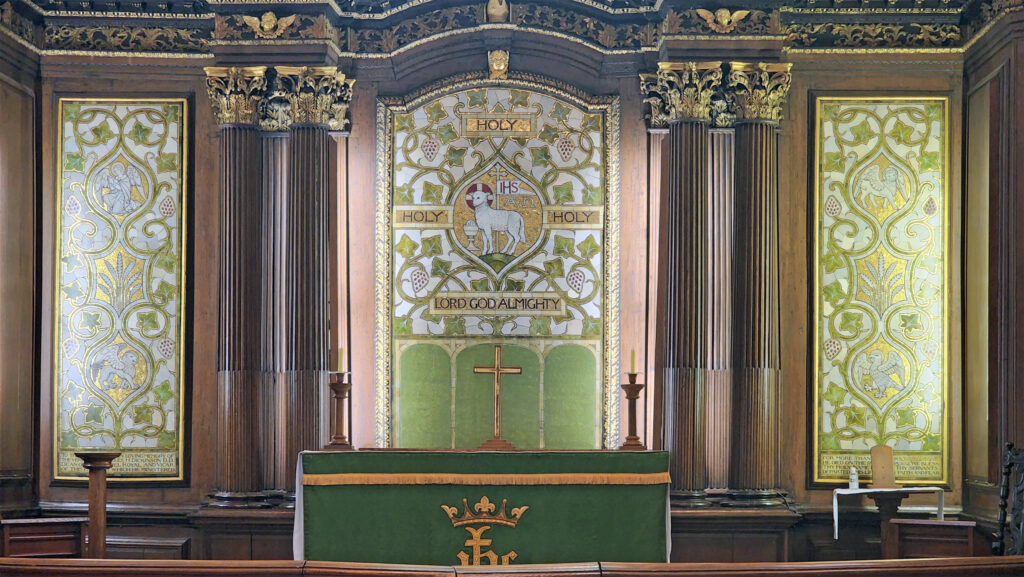
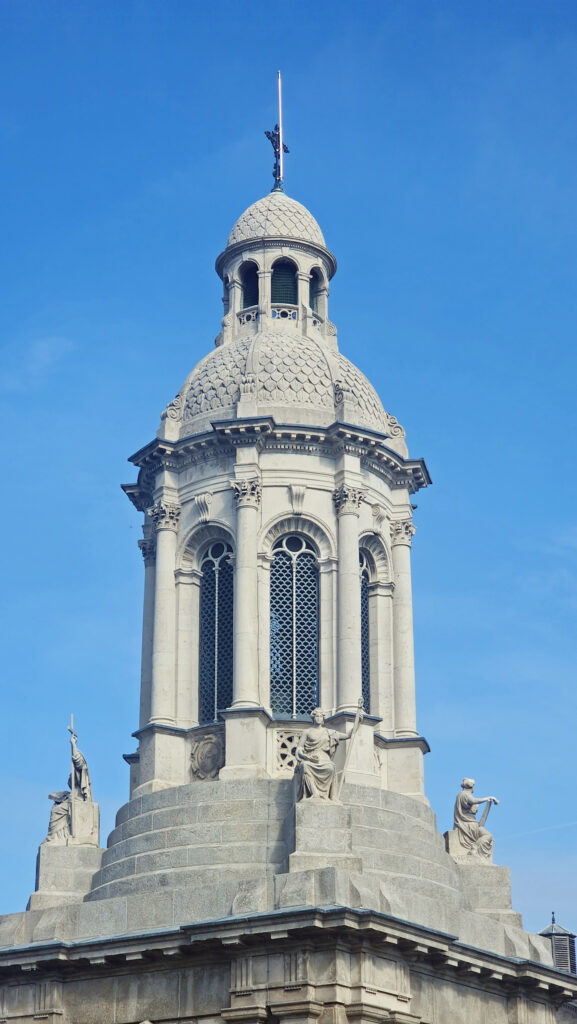
In the center of the city, Christ Church Cathedral and St. Patrick’s Cathedral (pictured in the featured image at the top of this post) are must see attractions.
St. Ann’s Church
We also spent some time exploring St. Ann’s Church, between Trinity College and St. Stephan’s Green, St. Augustine & St. John the Baptist Church, as well as a few smaller churches in our wanderings outside of the main downtown area.
Painting of Bono, National Gallery of Ireland
Museums, Galleries, and Public Art
Dublin is a city of art. There are many museums, galleries, and public artworks to be found in the city center. And since my wife and I are interested in both art and history, we spent much of our time in Dublin’s various museums and galleries.
National Museum of Ireland (Archaeology)
The National Museum of Ireland has three branches in Dublin, one featuring local archaeologic finds (on Kildare Street in downtown), one featuring decorative arts and history (at Collins Barracks just west of downtown on the north bank of the River Liffey), and another (colloquially known as the “dead zoo lab”) dedicated to natural history, located adjacent to Collins Barracks. Entry to all three is free. The archaeology museum is huge and impressive, to say the least. You could probably spend a whole day there and not see it all. Admission to all three museums is free.
“Molly Malone” statue
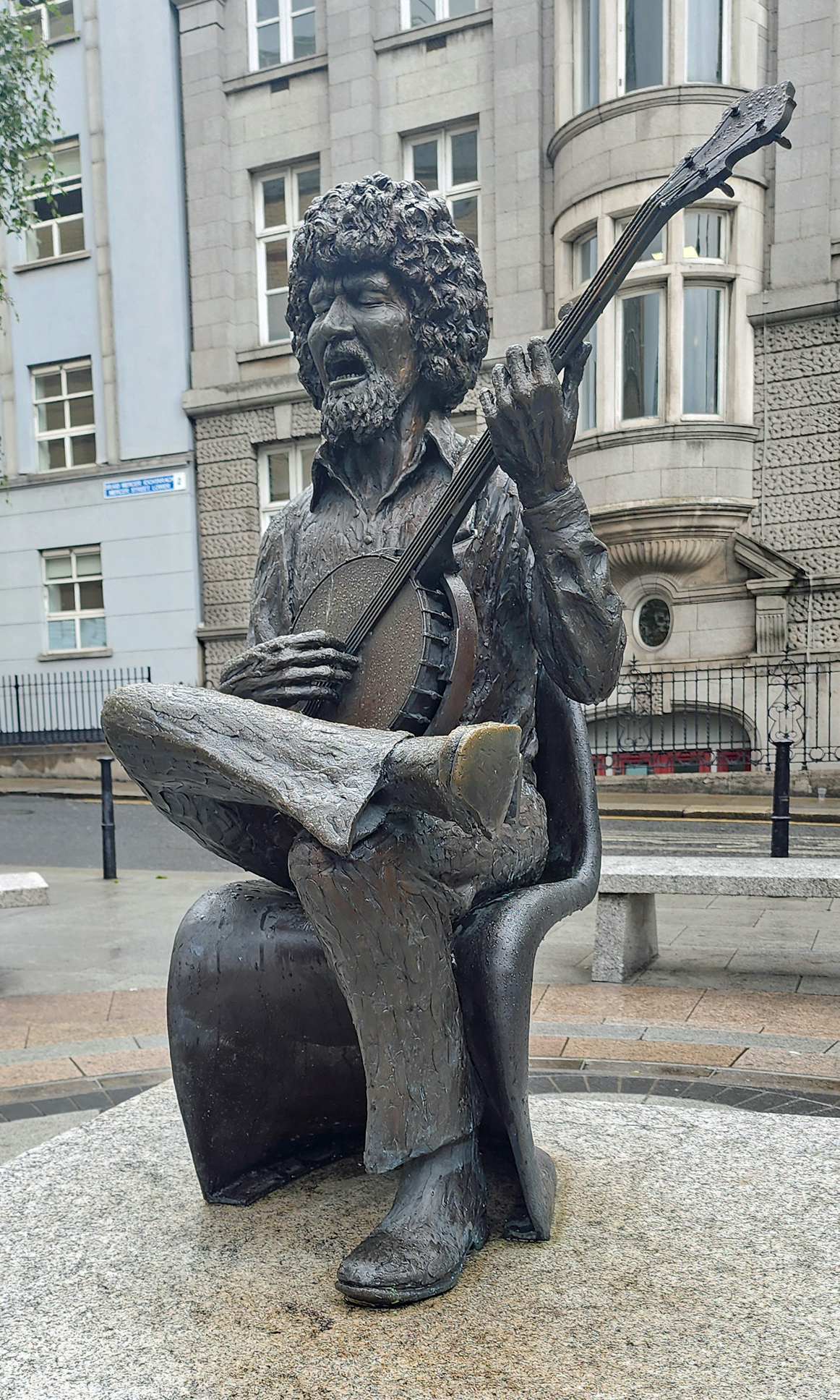
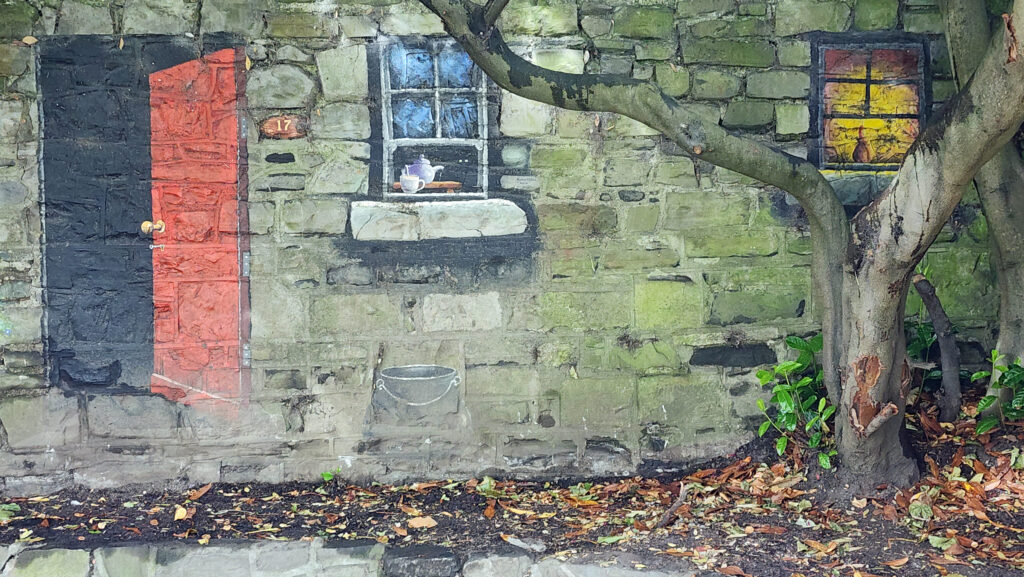
Sculptures and other public artworks dot the central city, perhaps none more iconic than the statue of Molly Malone. The song “Molly Malone” has been Dublin’s unofficial anthem for more than a century. Tourists have taken to rubbing the statue’s bosom for good luck, though locals are generally opposed to that practice and city officials plan to install plantings around the statue to keep tourists away from the sculpture. I kept my hands to myself. Another iconic sculpture is that of Luke Kelly, a folk musician and founding member of the band The Dubliners, who died at the age of 43 in 1984.
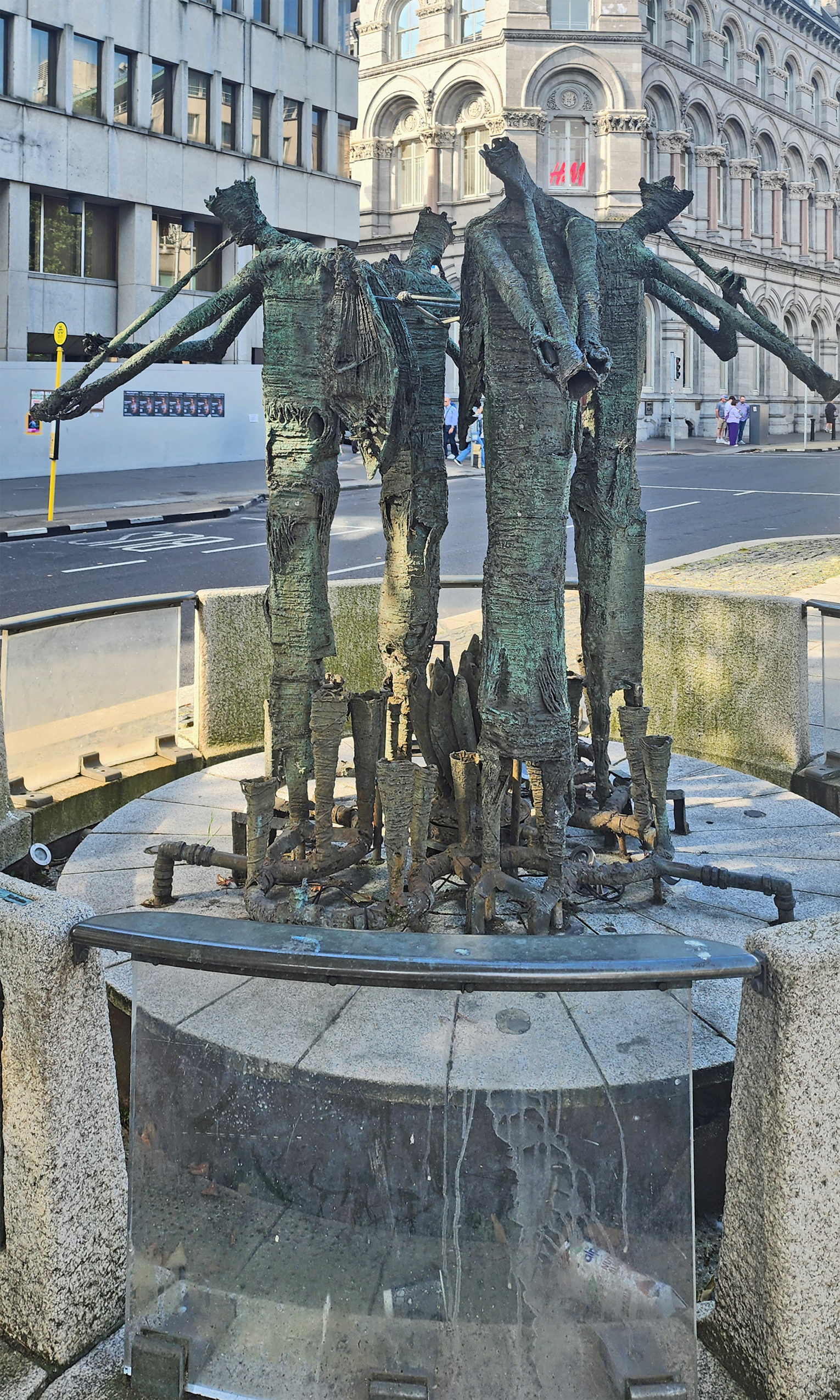
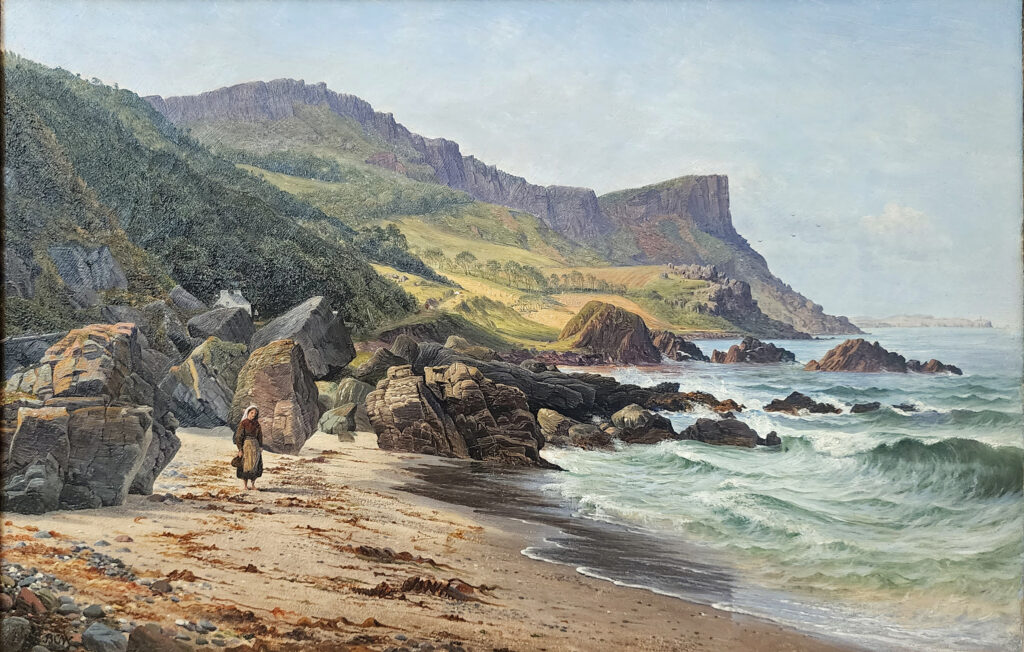
Luke Kelly statue, downtown DublinFountain sculpture, downtown DublinPainting of the Irish Coast, National Gallery of Ireland
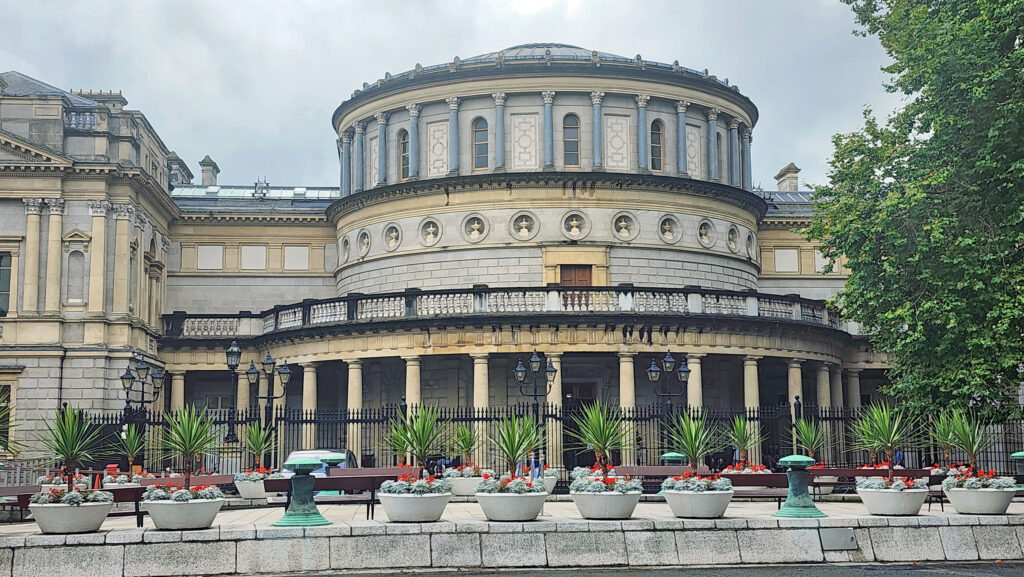
The National Gallery of Ireland, located in the central part of the city near Trinity College and Merrion Square Park, houses more than 14,000 artworks. The gallery was opened in 1864 and has been expanded several times, most recently in the 1960s. Like the National Museums, admission to the National Gallery is free.
Irish Museum of Modern Art
The Irish Museum of Modern Art, located on the west edge of downtown not far from the railroad station, opened in 1991, but the building it occupies is much older. The building was once the Royal Hospital Kilmainham and dates to the 17th century. The museum houses 3500 works of contemporary art. Again, admission is free.
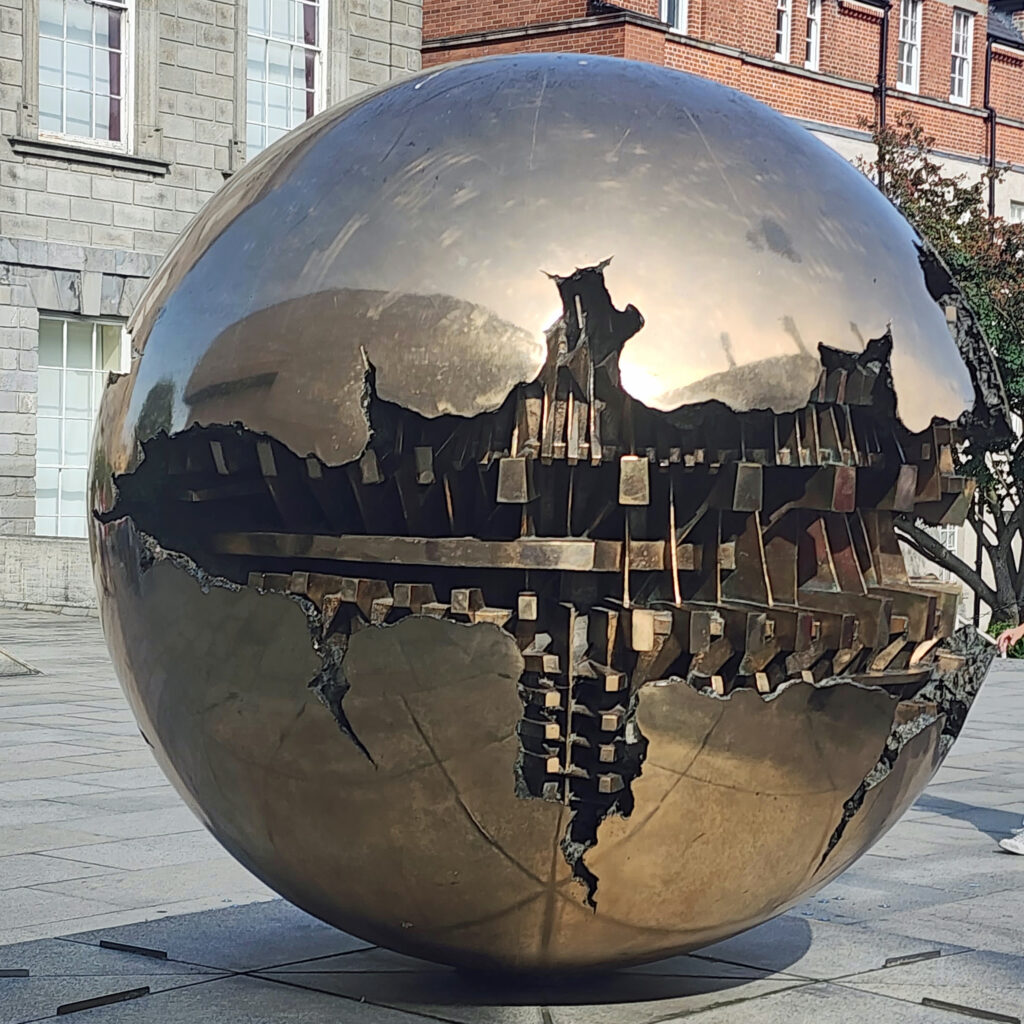
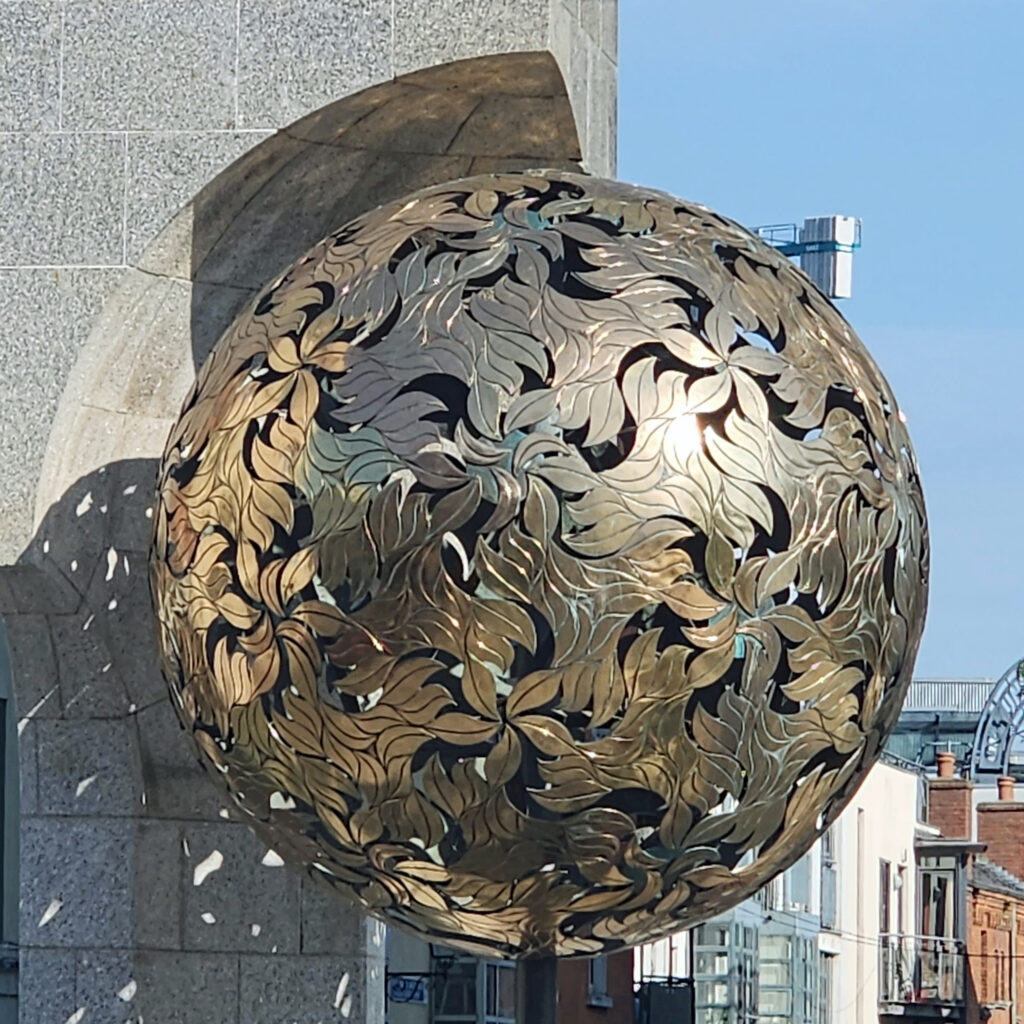
Metal sculpture, Trinity CollegeMetal sculpture, downtown Dublin
Kilmainham Gaol
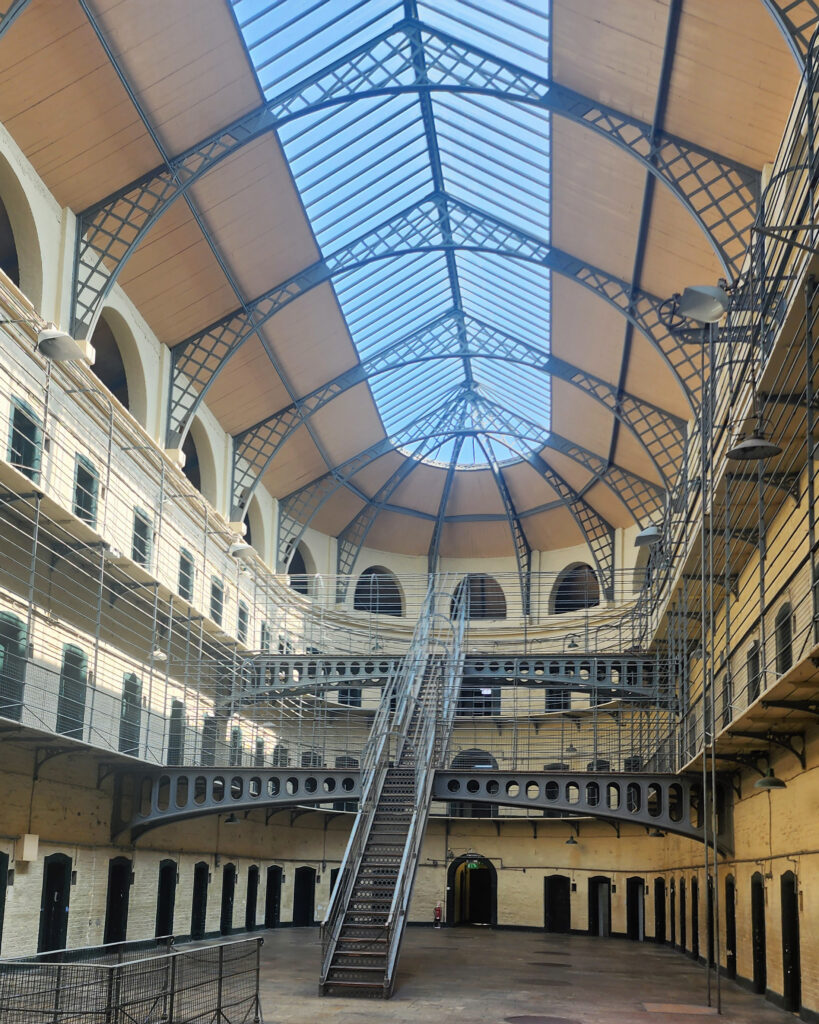
A tree-lined lane takes you from the Irish Museum of Modern Art to the Kilmainham Gaol (“gaol” being the British and Irish spelling of “jail”), which was built in the late 1700s as the County Dublin jail. It is perhaps best remembered as the site of the execution of the leaders of the 1916 Easter Rising (including one who was transported from a hospital to the goal, tied to a chair because he was too injured to stand on his own, and shot by firing squad). The Easter Rising eventually led to the Irish Civil War and independence from the United Kingdom in 1923. Kilmainham Gaol was closed in 1929 and became a museum in the 1930s.
Kilmainham Gaol
Today, Kilmainham Gaol is one of Dublin’s top tourist attractions. If you plan to visit, it’s best to purchase tickets online in advance. We didn’t, and when we inquired at the entrance, we were told that we would have to wait several hours for the next available tour. However, we were told to return in half an hour, and were given an abbreviated tour at no cost. (Adult admission for the full tour is €8). We didn’t see the whole facility, but the tour we got was interesting and informative.
Wall mural at Blessington Basin Park
Parks
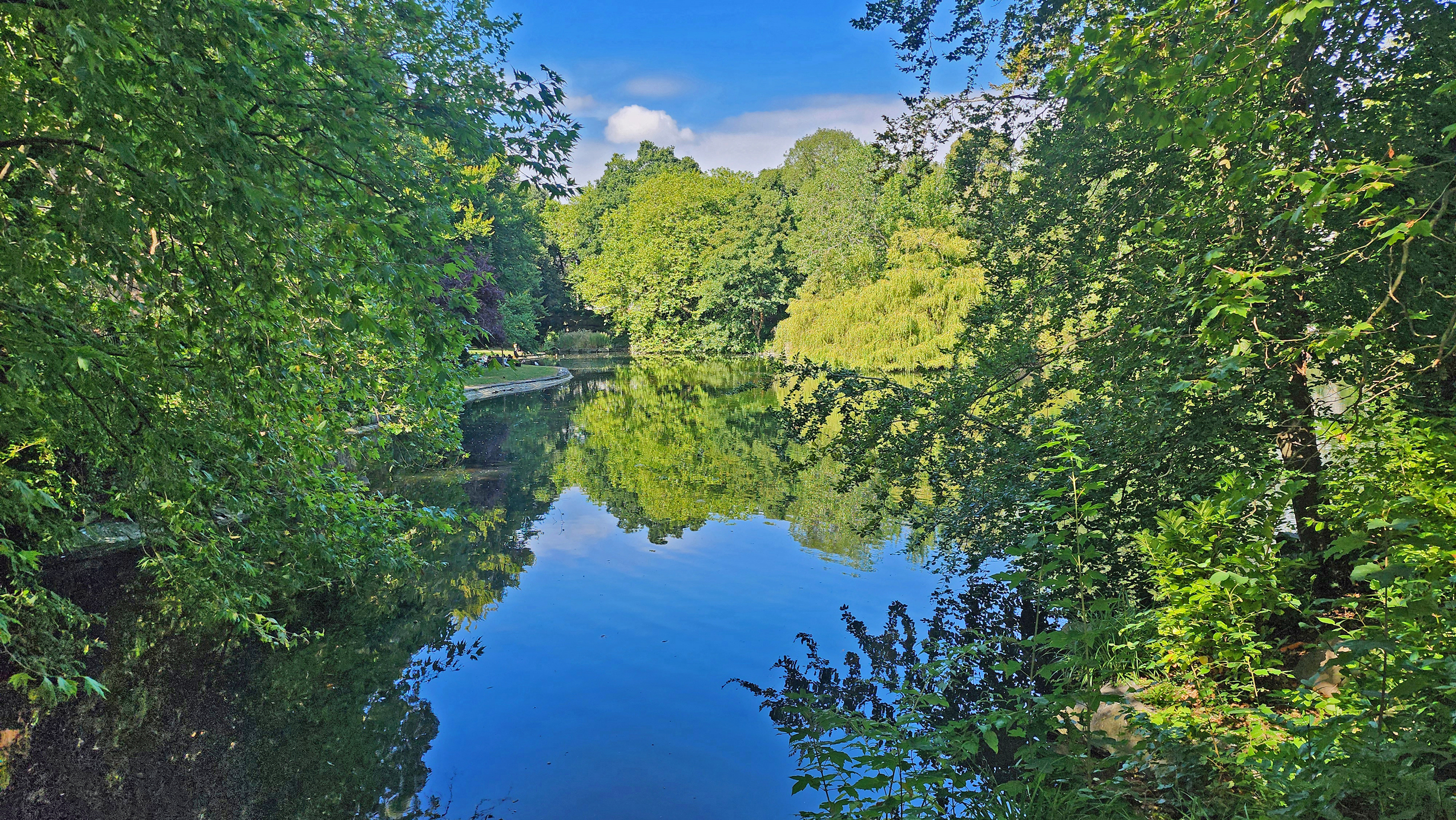
Dublin is a beautiful city, both in terms of its architecture and the natural beauty that can be found in the more than 300 parks in the city. We visited a number of parks, including Croppies Acre Memorial Park near Collins Barracks, St. Patrick’s Park at St. Patrick’s Cathedral, Merrion Square Park, St. Steven’s Green (the largest park in the central Dublin area), Iveagh Gardens, and Blessington Basin Park, a former water reservoir converted into a city park.
St. Steven’s Green
Trinity College and the Book of Kells
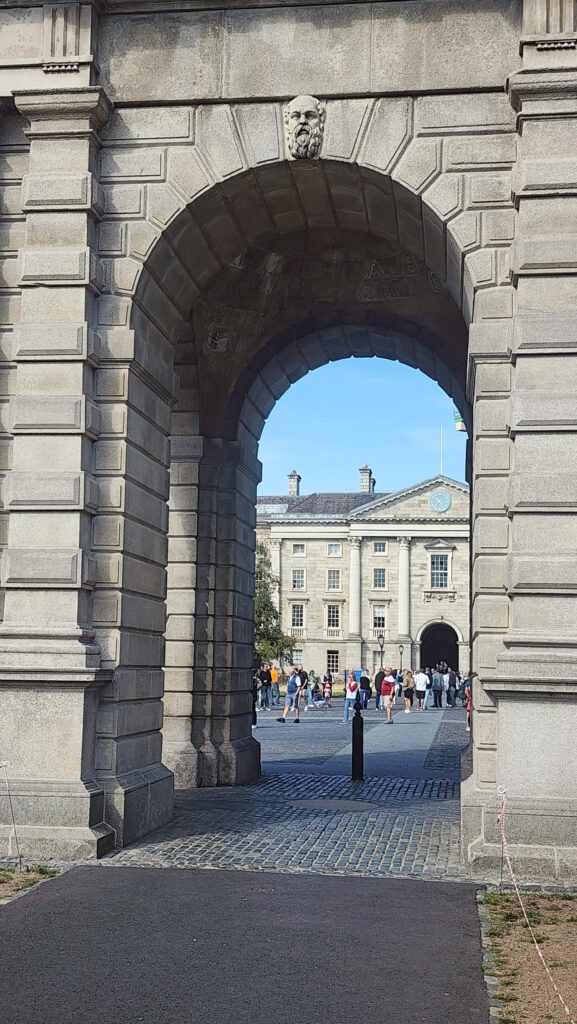
Trinity College was established as a Protestant institution in 1592 by Queen Elizabeth I in her attempt to make Dublin a Protestant City. For centuries, Trinity College was an institution of the Protestant ruling elite. While Catholics were not prevented from attending the college, they had to take an oath objectionable to Catholics to graduate. That requirement was not lifted until 1793, and even then Catholics were not allowed to be Fellows or members of the faculty, and scholarships were restricted to Protestants only.
Bust of Bram Stoker in St. Ann’s Church
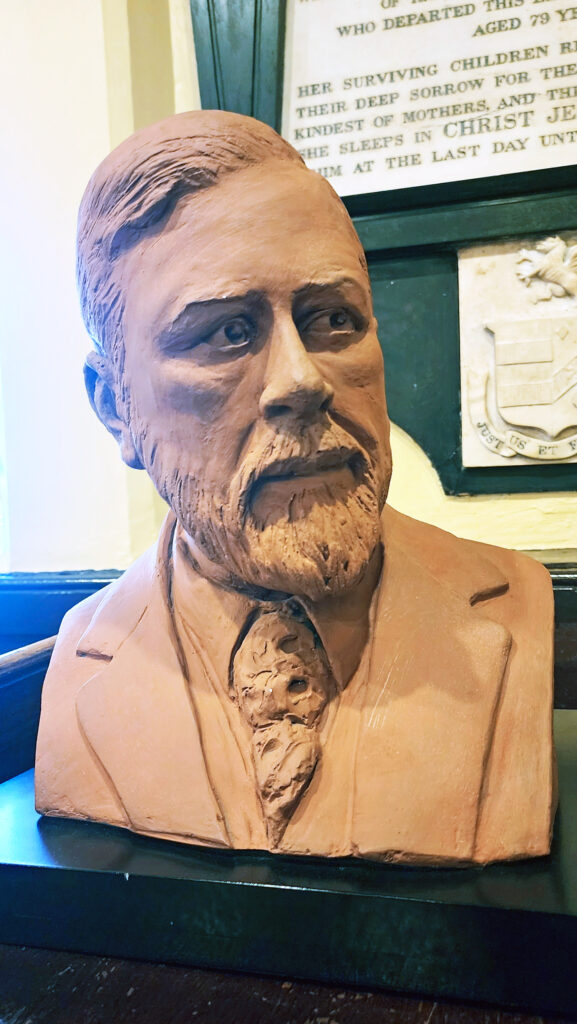
Notable alumni of Trinity College include Oscar Wilde, Samuel Beckett, Jonathan Swift, and Bram Stoker, author of Dracula. (I always thought of Bram Stoker as being Eastern European, but he was in fact Irish. His name was actually Abraham Stoker.)
Book of Kells Folio 32v, sourced from Wikimedia Commons
Trinity College is perhaps the best known for the majestic Book of Kells, the spectacularly illustrated Celtic Gospel that is housed in the Trinity College Library. But Trinity College is anything but stuck in the past. Today, Trinity College is a modern institution with an enrollment of approximately 22,000 students and one of the leading educational institutions in Europe.
Trinity CollegeTrinity College
While we did not take the Book of Kells Experience tour, it will be on our agenda if we ever return to Dublin. And, as I discovered after we had already booked our accommodations, you can stay on campus if you visit during the summer. A room with a private bathroom in the Printing House, for example, can be rented for under €200 per night. That would be quite an experience.
Temple Bar and Guinness
And then there are the pubs. Ireland is known for both their whiskey and, of course, for Guinness. The Guinness Storehouse is the top tourist attraction in Dublin and second most popular in the country, behind only the Cliffs of Moher (which I’ll cover in a future post).
Guinness Storehouse
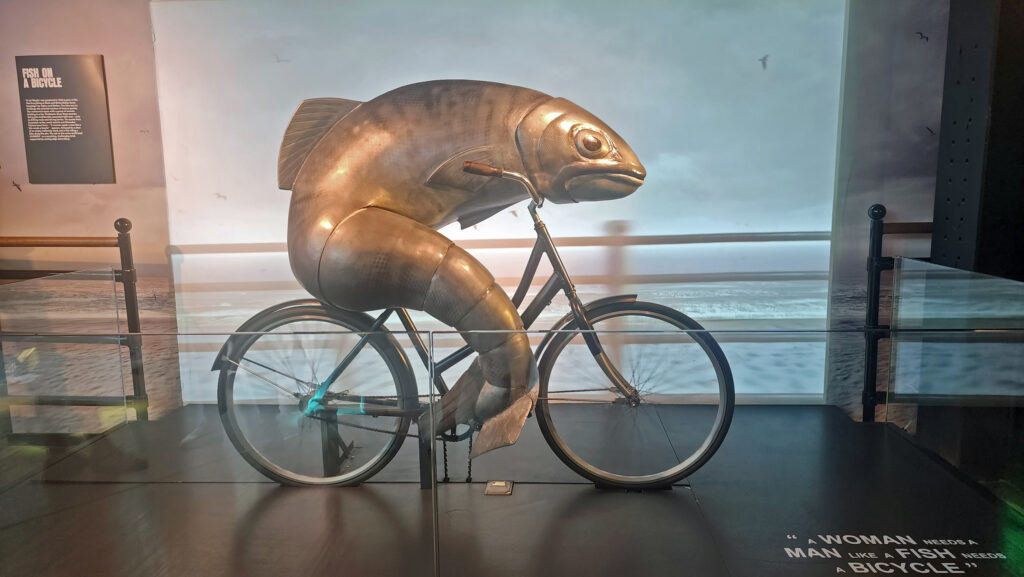
Guinness has been brewing beer in Dublin since 1759, when the founders signed a 9000-year lease for the property that now houses the oddly entertaining (and informative) Guinness Storehouse, which was originally a fermentation plant in the heart of the St. James Gate brewery complex. Today, it is a seven-story showcase of Guinness beer and the history of Guinness Brewing. Your €30 entry ticket also gets you a free pint at the glass walled Gravity Bar on top of the structure that has a 360⁰ view of the city. Good luck finding a table, though. It took us a while.
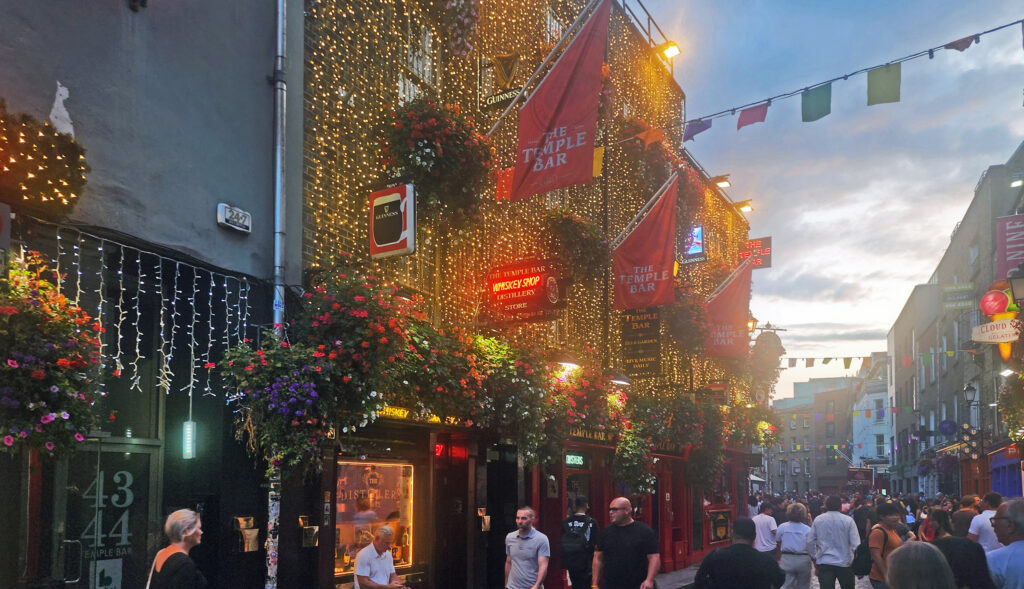
Temple Bar
And about a mile to the east, the Temple Bar neighborhood, on the south bank of the River Liffey, is the nightlife center of Dublin, akin to Bourbon Street in New Orleans or Duval Street in Key West. You won’t find many locals in any of the Temple Bar pubs in high season, except for the bartenders, but it’s wildly entertaining in the evening, even early in the evening when we were there.
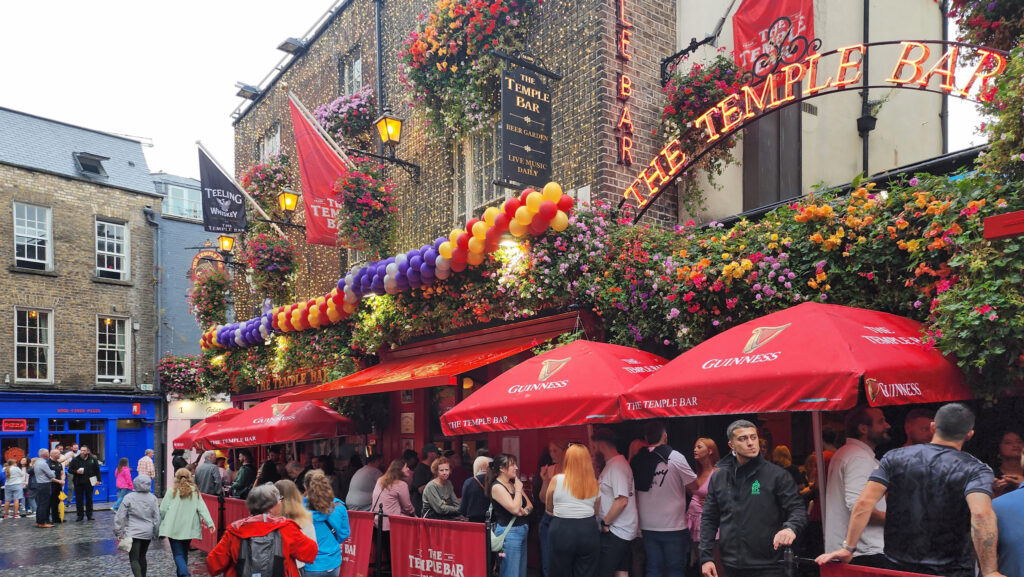
The Temple Bar
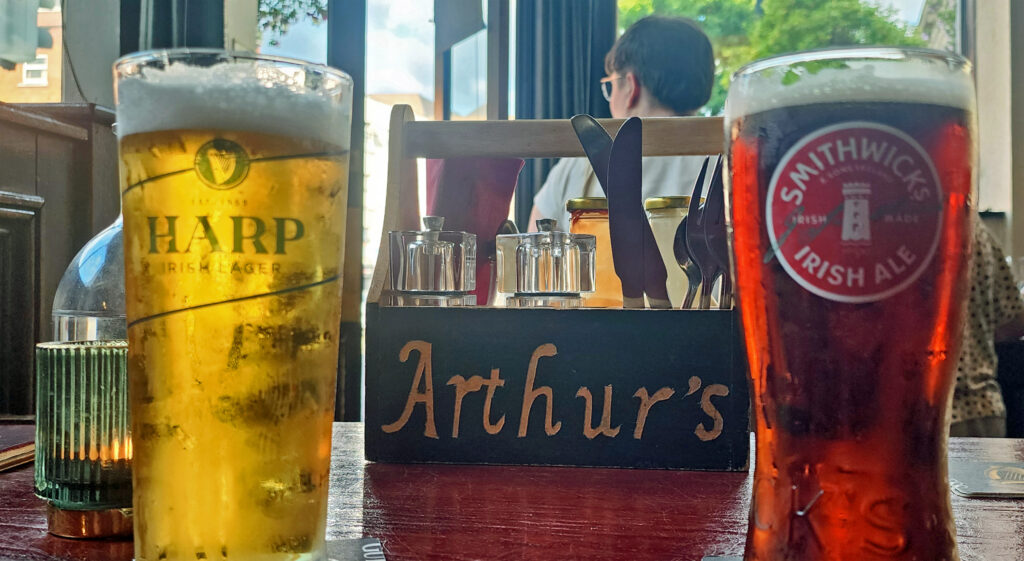
Many of the pubs in Temple Bar have “Temple” as part of their name, but The Temple Bar is probably the most popular. And the most crowded. When we were there early on a Friday evening, we could barely get in the door, much less get a table or get served. So, we just crowded our way in to say we had been there and left to find a less crowded place to get a pint and get some food. We landed at The Mercantile Bar and Restaurant on Dame Street – good food and, of course, good beer, and not crowded.
Temple Bar isn’t a truly Irish experience, but get even a little way off the beaten track and you can find a more authentic Irish Pub without much difficulty. Ryan’s, just west of Iveagh Gardens and St. Steven’s Green on Camden Street Lower, was one of two pubs that we took refuge from thunderstorms in on our last day in Dublin. I’m not sure what percentage of the patrons were locals, but they’ve been serving beer there since 1882. You can find a similar bar almost anywhere in Dublin.
KSU band at Trinity College
Sports
Sports are an important aspect of Irish culture, although probably not to the traveler, so I won’t get into that here except for one slightly weird note on our visit. While exploring Trinity College, we came across a marching band, complete with cheerleaders, rehearsing on an athletic field. I thought it odd that Trinity College would have such a stereotypically American thing, but didn’t give it much more thought. But a few hours later we came across the same group performing in a nearby square. Turns out that it wasn’t the Trinity College Band, it was the Kansas State University Band. They were there because Kansas State and Iowa State were opening the college football season the next day – in Dublin. We came 5000 miles to immerse ourselves in Irish culture and smacked into an outbreak of pure Americana. Small world, I guess.
Irish Museum of Modern ArtGuinness Storehouse
Conclusion
We had a great time on our visit, and while our interests and your interests may not be the same, I think I can truthfully say that you will find Dublin to be an interesting and worthwhile place to visit, regardless of where your interests lie. It’s a cliché to say that there’s something there for everyone to enjoy, but I think Dublin is one place where it may literally be true. If a visit to Dublin is on your bucket list, go sooner rather than later. And if it’s not already, you should consider adding it. You won’t be disappointed.
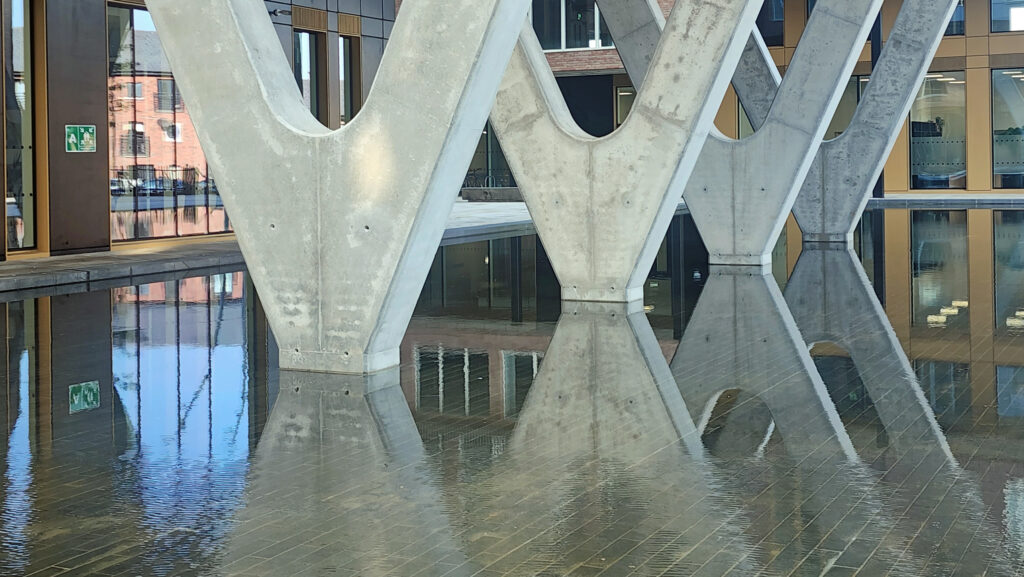
Reflecting pond at a building near the Guinness Storehouse
The Tualatin Hills Nature Park, located on the west side of Beaverton, Oregon, is one of many natural areas and nature parks in the Portland metro area that provide a natural environment that is often a quiet, calming, and refreshing escape from the hustle and bustle of urban life. Beaverton is one of Portland’s largest suburbs, and Tualatin Hills Nature Park is highly valued by local residents. It gets a lot of use (200,000+ visitors a year), but it’s large enough (222 acres) that it has never really felt crowded on any of my visits.
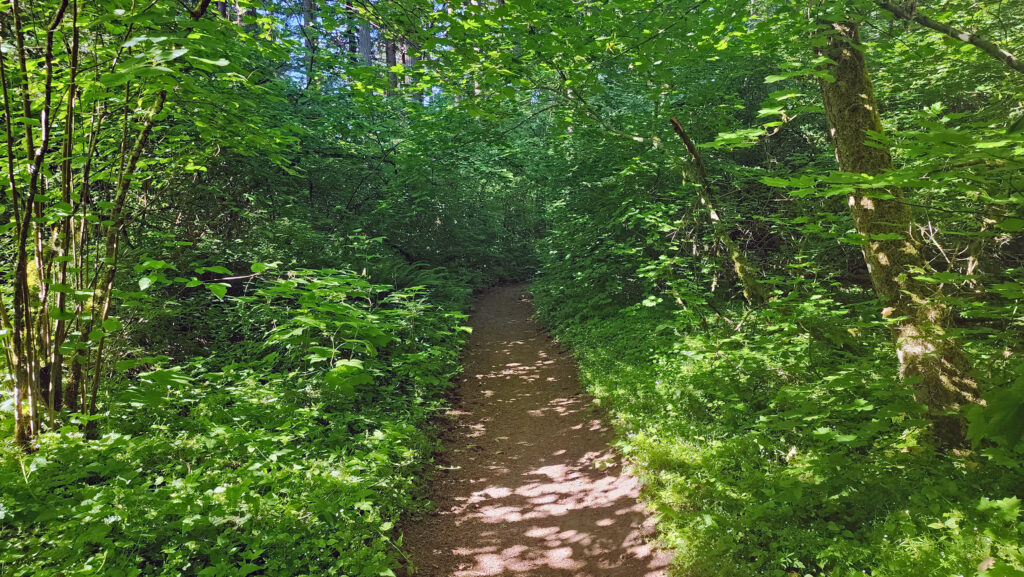
Oak Trail
The Park
Most of the land that now makes up the Tualatin Hills Nature Park was purchased by the Tualatin Hills Park and Recreation District in 1981, when the city of Beaverton was rapidly growing and open spaces were quickly being converted to residential and commercial developments, but the park was not officially opened to the public until 1998. Smaller additions to the park were made in the early 2000s.
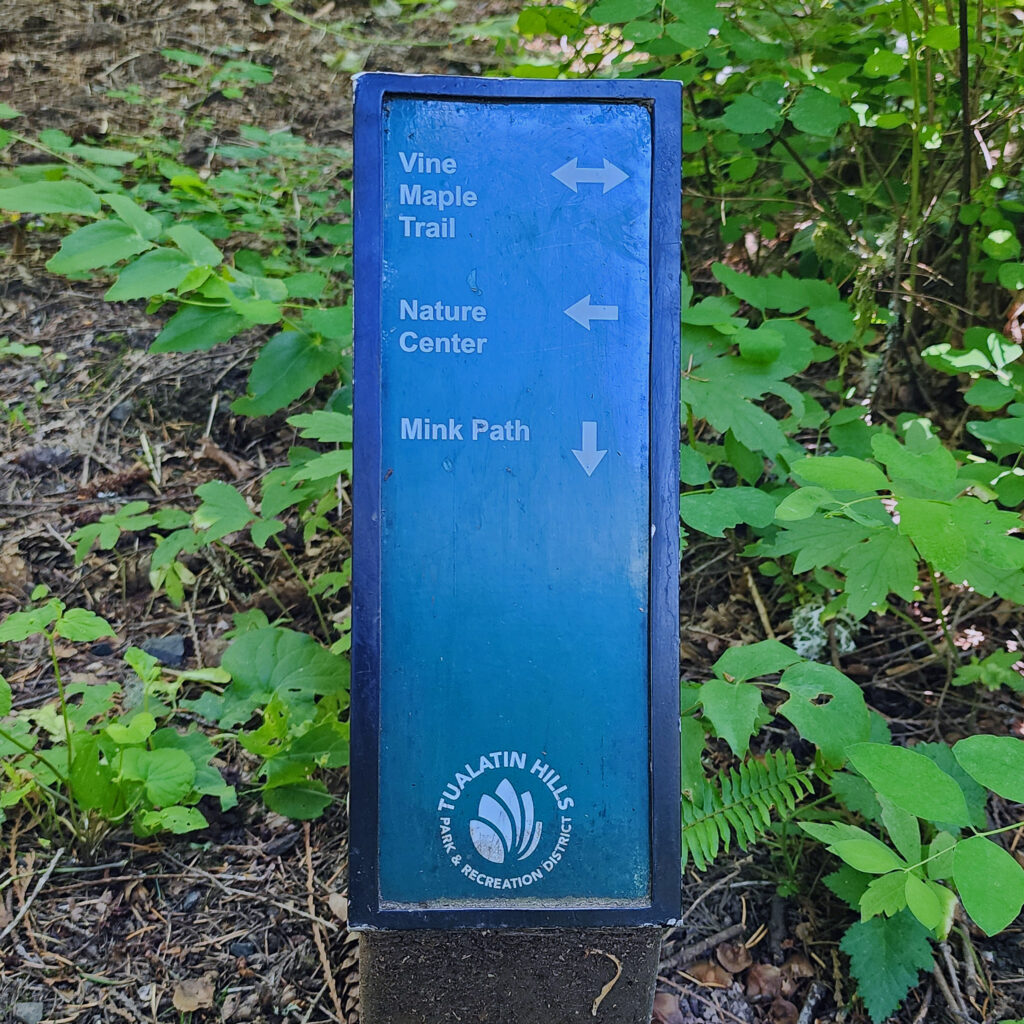
Trail junction sign
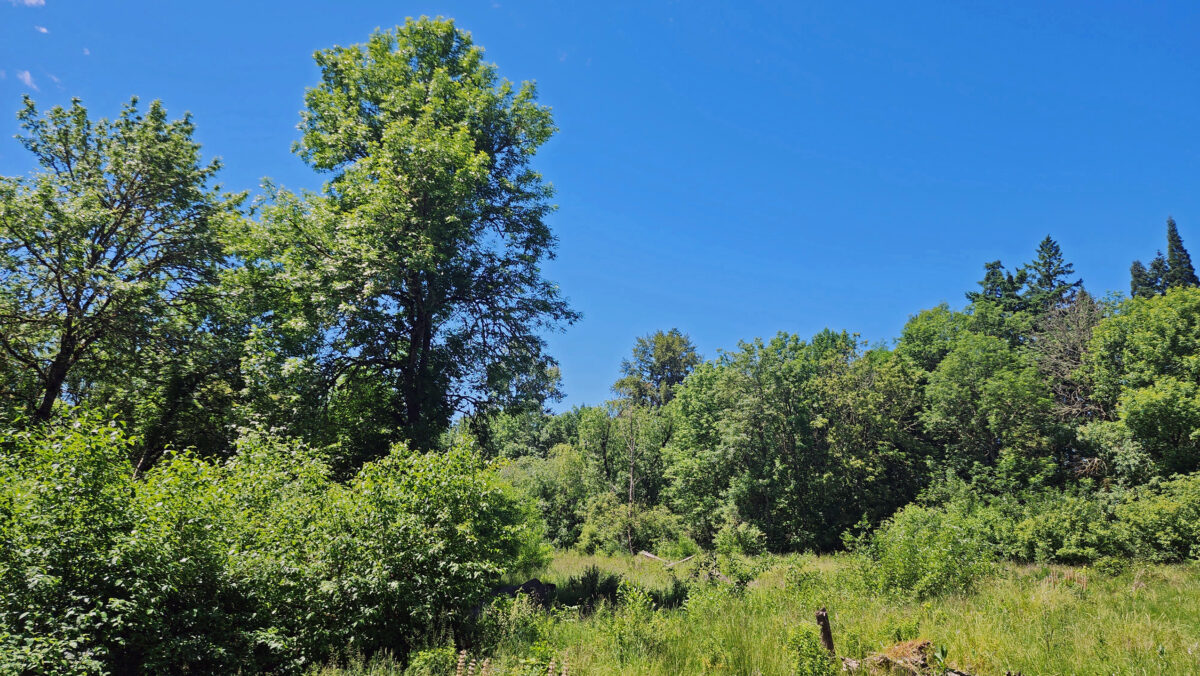
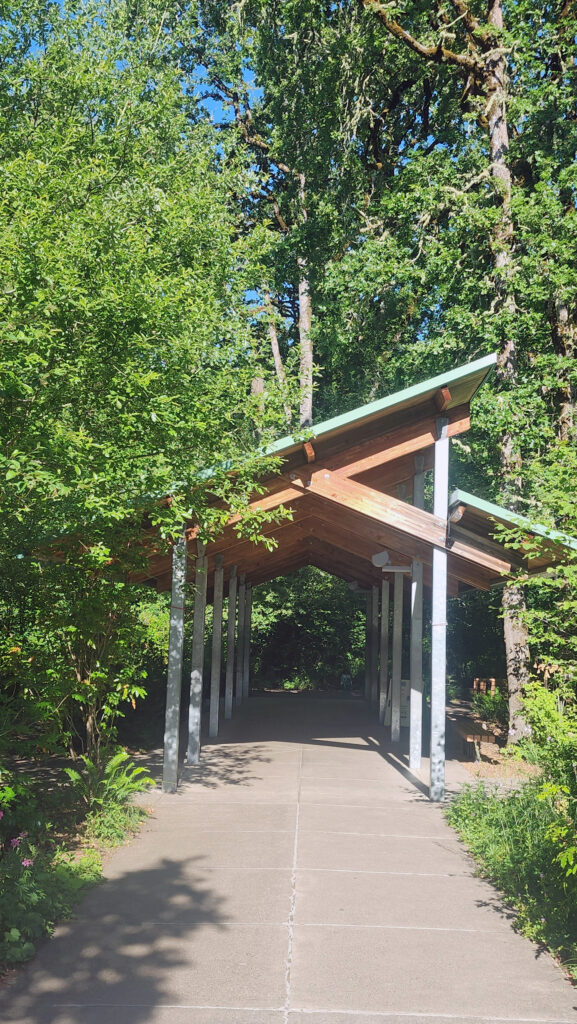
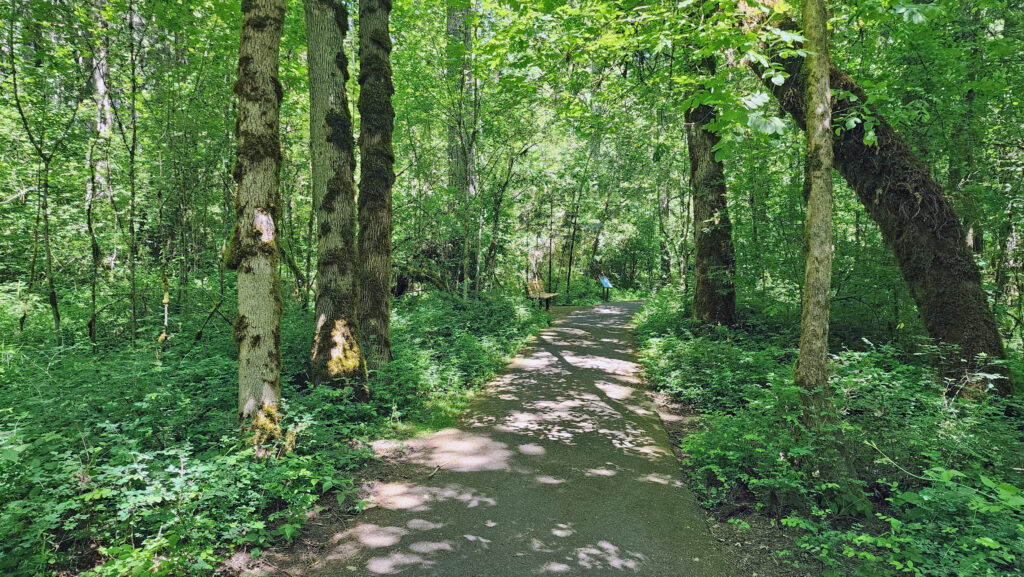
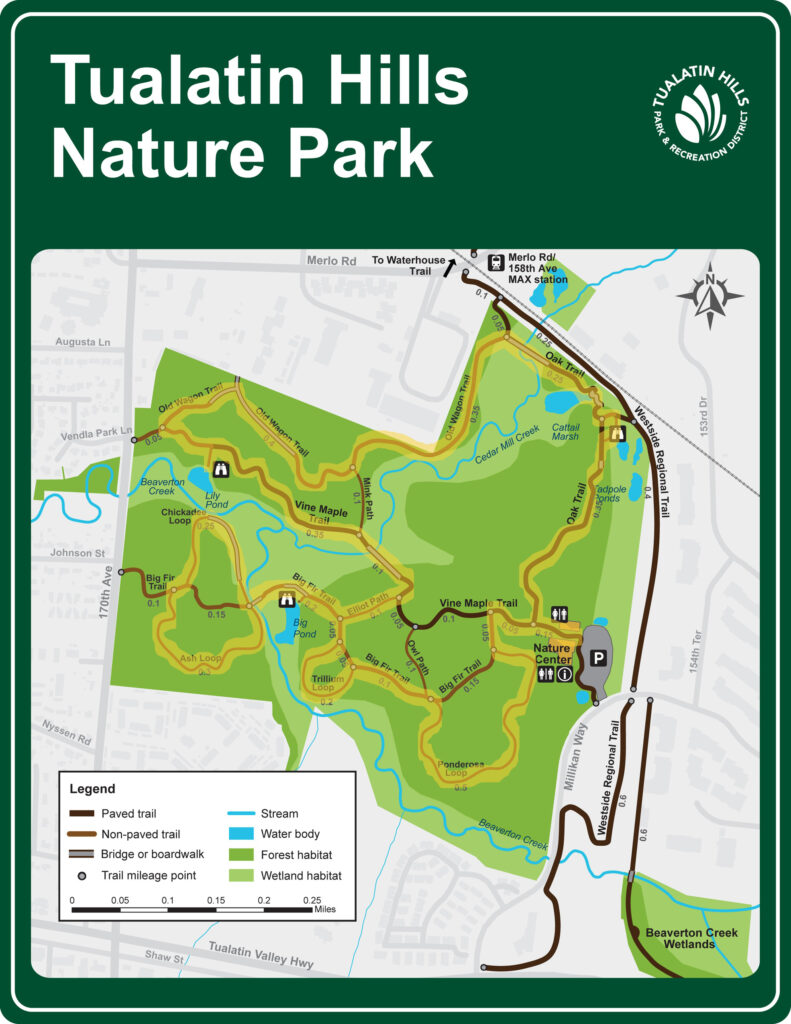
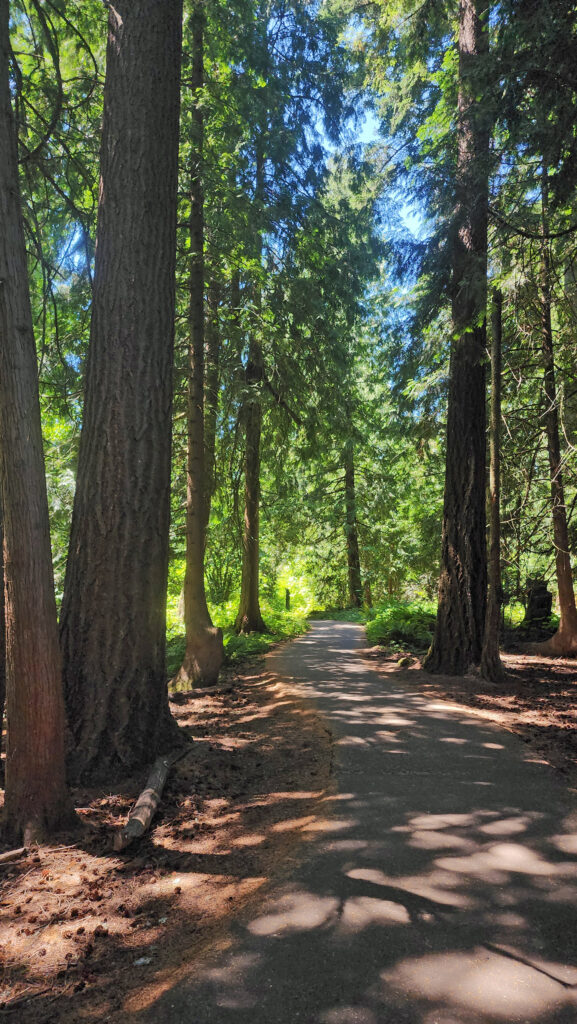
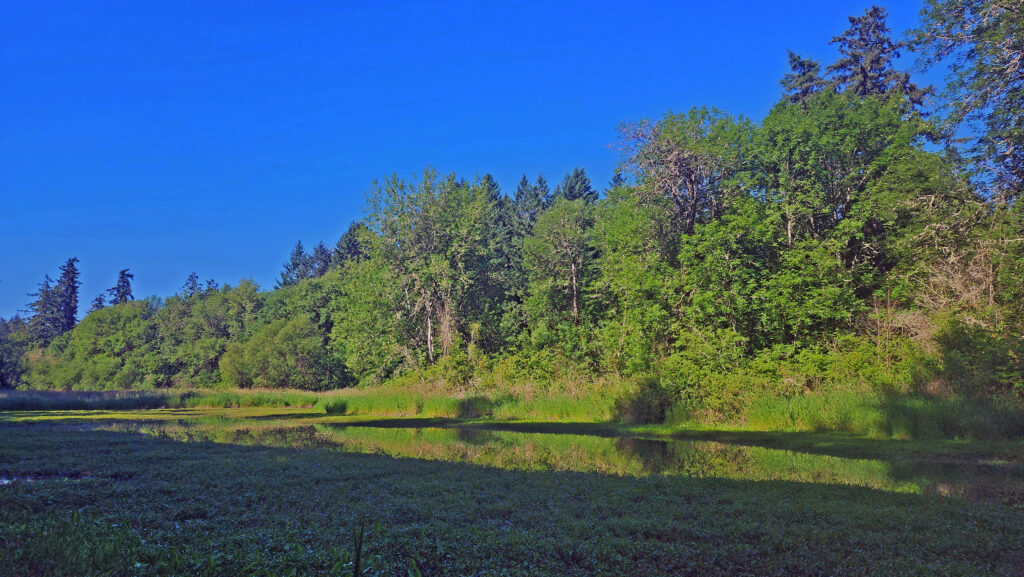
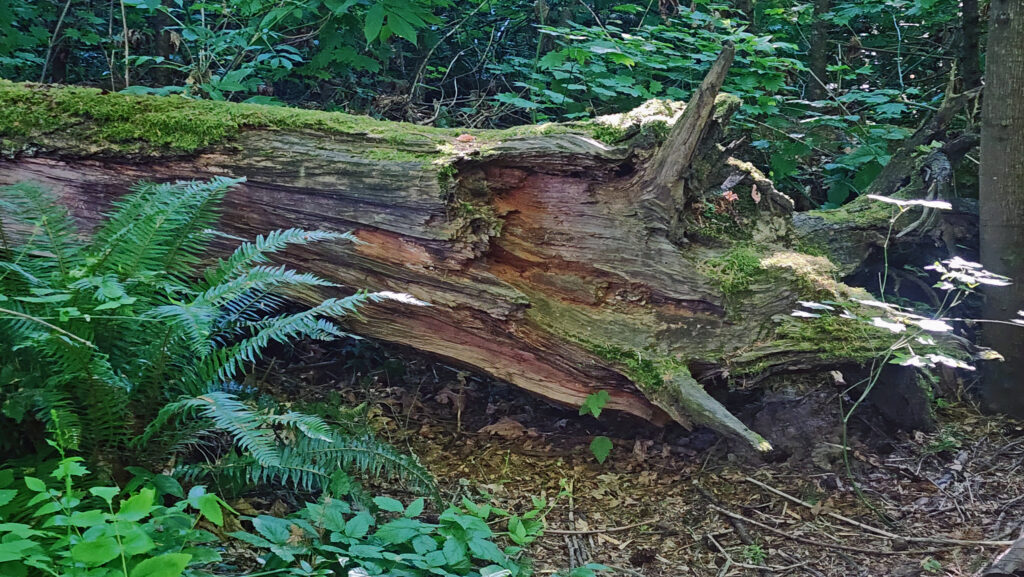
The park is mostly forested, but also has several ponds and marshes, and some open grassland along the creeks. There are five miles of hiking trails in the park (one and a half of which are paved and wheelchair accessible). Most trail junctions are signed, but a few are not, so carry a map. Maps are available in the Nature Center and at the Millican Way trailhead information board. A digital map is linked below.
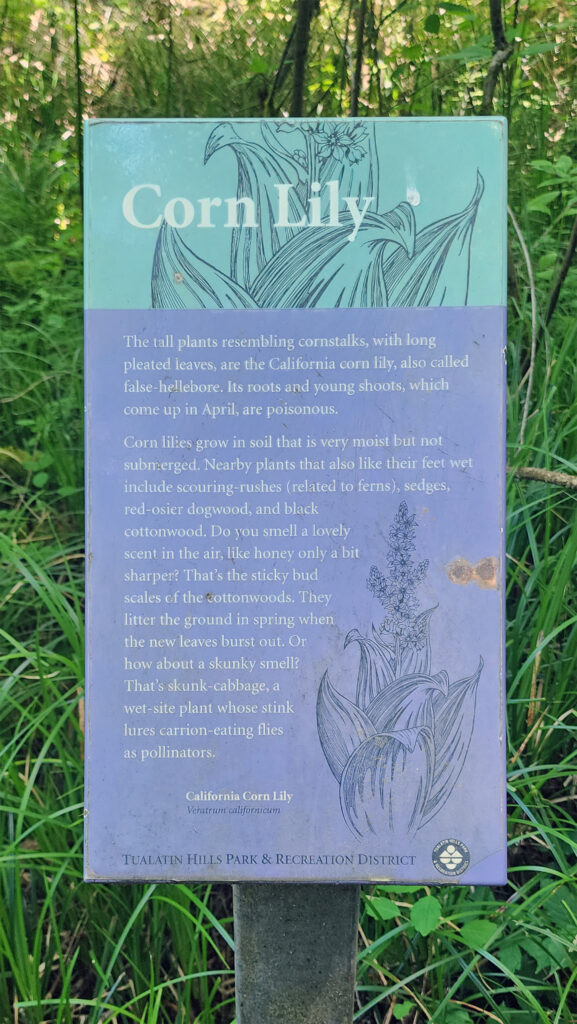
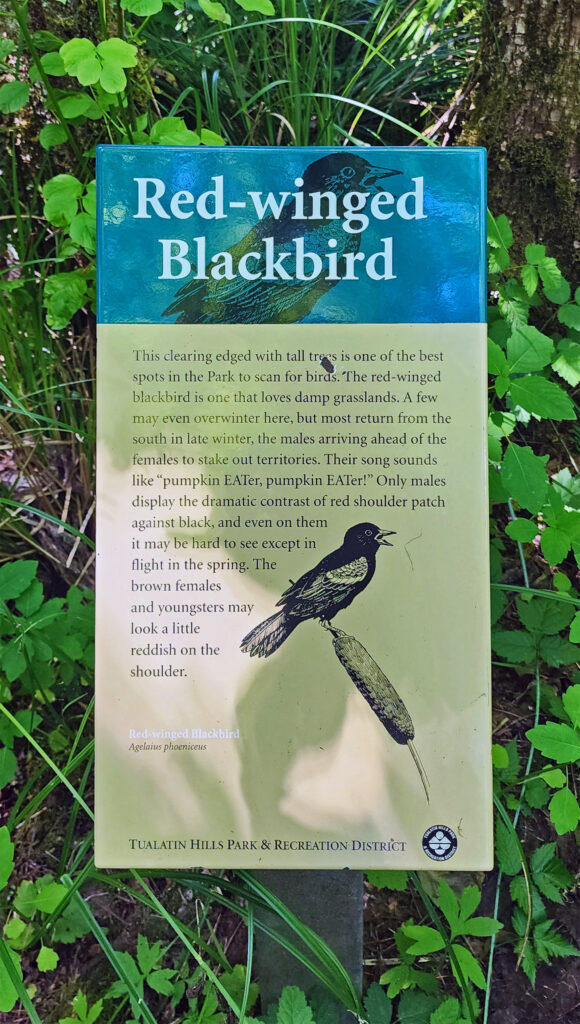
The hike described below covers four miles of those trails. There are also a number of connector trails that make for a variety of shorter hikes or other routes of similar length to the one described here. Throughout the park, interpretive signs along the trails give the visitor information about the flora and fauna of the park.
Nature CenterMillikan Way trailhead
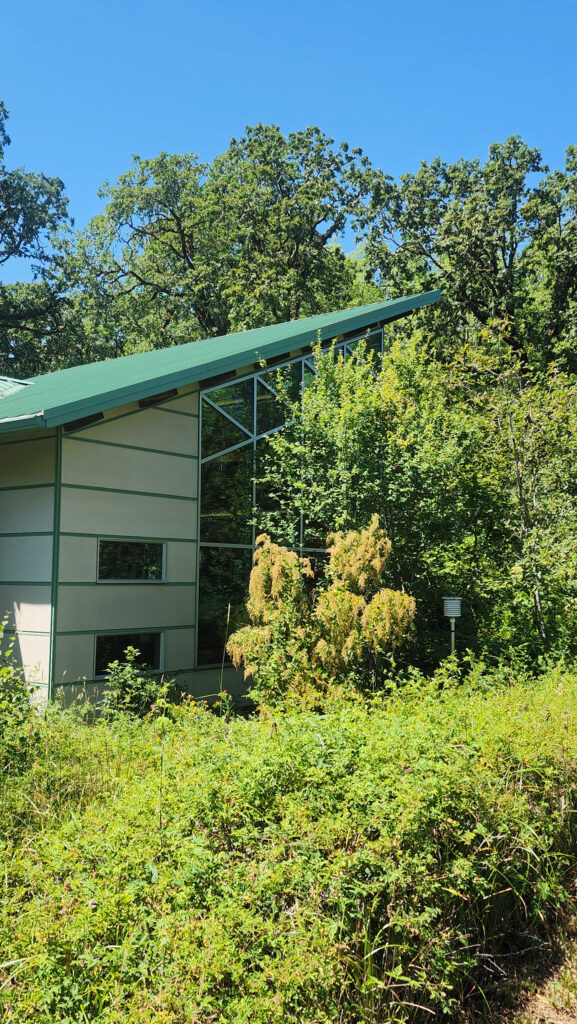
If you’re arriving by car, the Nature Center at the Millikan Way trailhead is a good place to start. Staff there can answer any questions that you may have, you can pick up a map, and there are some interesting exhibits. If you’re accessing the trails from the light rail station or the 170th Avenue trailheads, the Nature Center is just a few hundred feet from the junction of the Oak and Vine Maple trails.
Old Wagon Trail
Getting There
By car, the main access is from Millikan Way (15655 SW Millikan Way). There are also two trailheads on 170th Avenue on the west side of the park (but no parking lots). And you may be able to park in a lot just east of the Max light rail station at Merlo Road and 158th Ave (not sure it’s public parking, though). The Oak Trail begins just south of the train tracks near the station. The Max station is also served by Tri-Met bus line #67, and line #57 runs along Tualatin Valley Highway, just south of the park.
Vine Maple Trail
The Hike
Trailheads:
The only trailhead with any amenities is the Millikan Way trailhead. The large parking area has space for about 100 vehicles. There are restrooms there and drinking water is available. The Nature Center is just a few feet from the trailhead.
Starting at the Millikan Way trailhead, follow the paved Vine Maple Trail past the Nature Center on your left and the restroom building on your right for a few hundred feet to the junction with the Oak Trail. Turn right and follow the Oak Trail for about a third of a mile through the forest, then take a short side trip to the Tadpole Pools. Continue on the gravel trail until it rejoins the Oak Trail.
Oak TrailCedar Mill Creek Bridge, Oak Trail
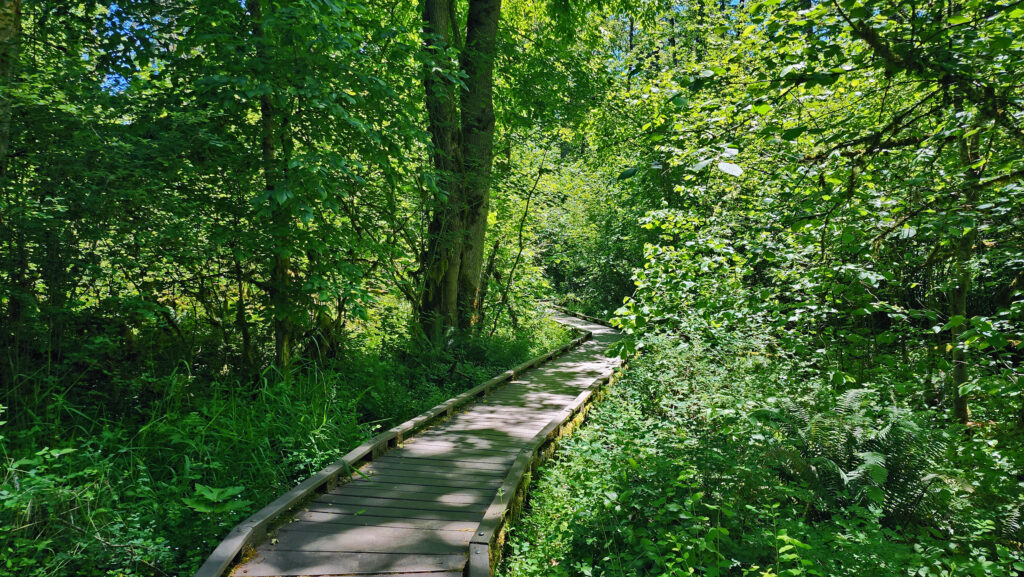
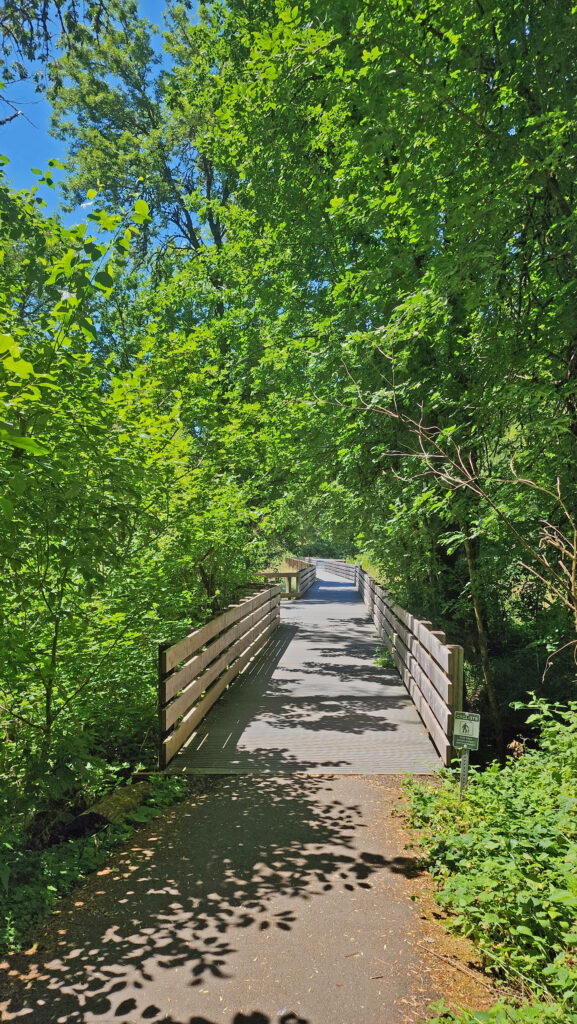
The Oak Trail crosses the edge of Cattail Marsh on a boardwalk, then crosses over Cedar Mill Creek on a wooden bridge where you’ll get a good view of the open marshland along the creek. Just beyond the bridge, you’ll come to the junction with the Old Wagon Trail at the 0.65-mile mark of the hike. Turn left onto the gravel Old Wagon Trail, which leads you through the forest with occasional views of Cedar Mill Creek.
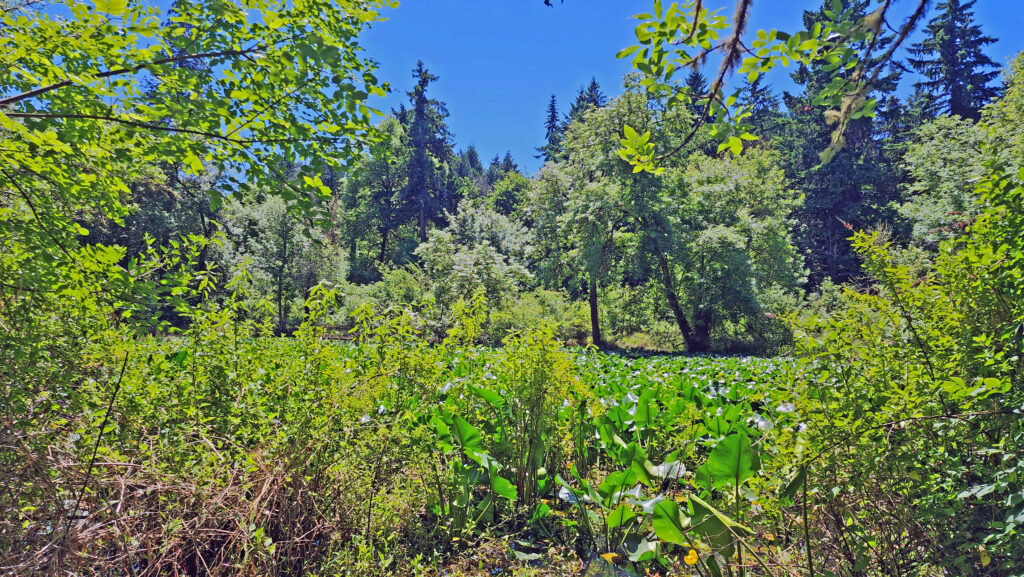
Lily Pond
At the 1.0-mile mark of the hike, you’ll come to the junction with the Mink Path. Stay on the Old Wagon Trail. (The Mink Path will take you back to the Vine Maple Trail if you want to shorten your hike). About 500 feet from the Mink Path junction, you’ll come to a long section of the Old Wagon Trail that is a slightly elevated boardwalk. Stay left at the next junction and continue on the boardwalk. Just past the end of the boardwalk, at the 1.4-mile mark, the Old Wagon Trail rejoins the Vine Maple Trail. Turn left and follow the Vine Maple Trail to a side trail to Lily Pond.
Back on the Vine Maple Trail, the now paved trail takes you through the forest, passing the junction with the Mink Path and across another bridge over Cedar Mill Creek with open views, to a junction with the Elliot Path at the 1.85-mile mark of the hike.
Big Pond
Take the Elliot Path for about 500 feet, then turn right onto the Big Fir Trail and follow it to Big Pond. There is a side trail to the pond, but the best views are from a bridge a little ways down the trail. Beyond Big Pond, the trail turns to the southwest and crosses Beaverton Creek on another wooden bridge. On the other side of the bridge is a four way junction. Turn left onto Ash Loop.
Follow Ash Loop for a third of a mile through the forest, where it returns to the Big Fir Trail. Go right on the Big Fir Trail, then left on Chickadee Loop, which will take you back to Cedar Mill Creek, then back to the Big Fir Trail on a boardwalk.
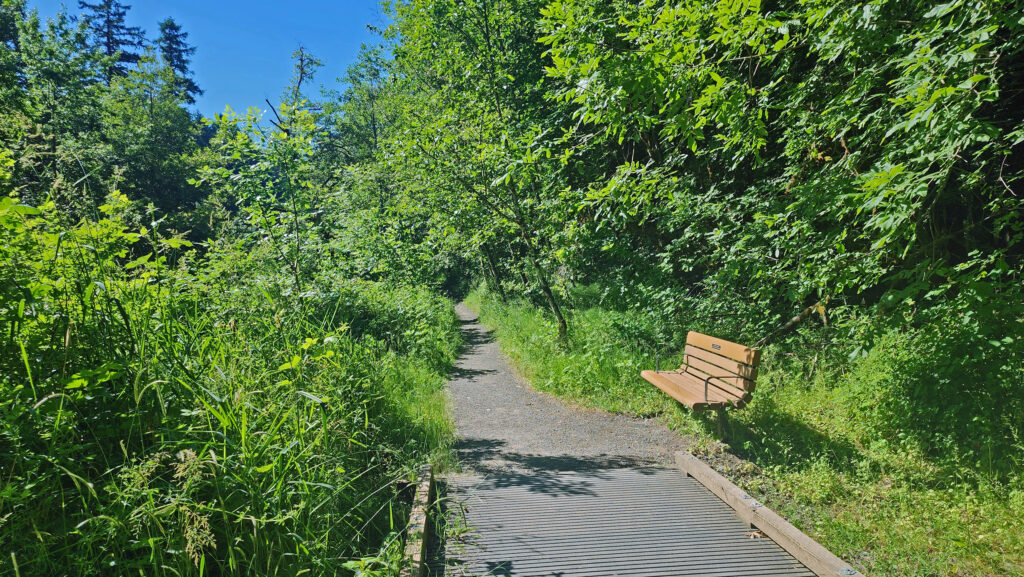
Chickadee Loop featuring one of the many benches along the park’s trails
Cross back over Beaverton Creek and retrace your route on Big Fir Trail for a quarter mile, passing Big Pond and the Elliot Path junction, to the junction with the Trillium Loop at the three-mile mark of the hike. Take the short Trillium Loop, then rejoin the Big Fir Trail for a tenth of a mile to the Ponderosa Loop junction. Turn right and follow the Ponderosa Loop through the forest for half a mile before rejoining Big Fir Trail, which then rejoins the Vine Maple Trail, which takes you back to the trailhead.
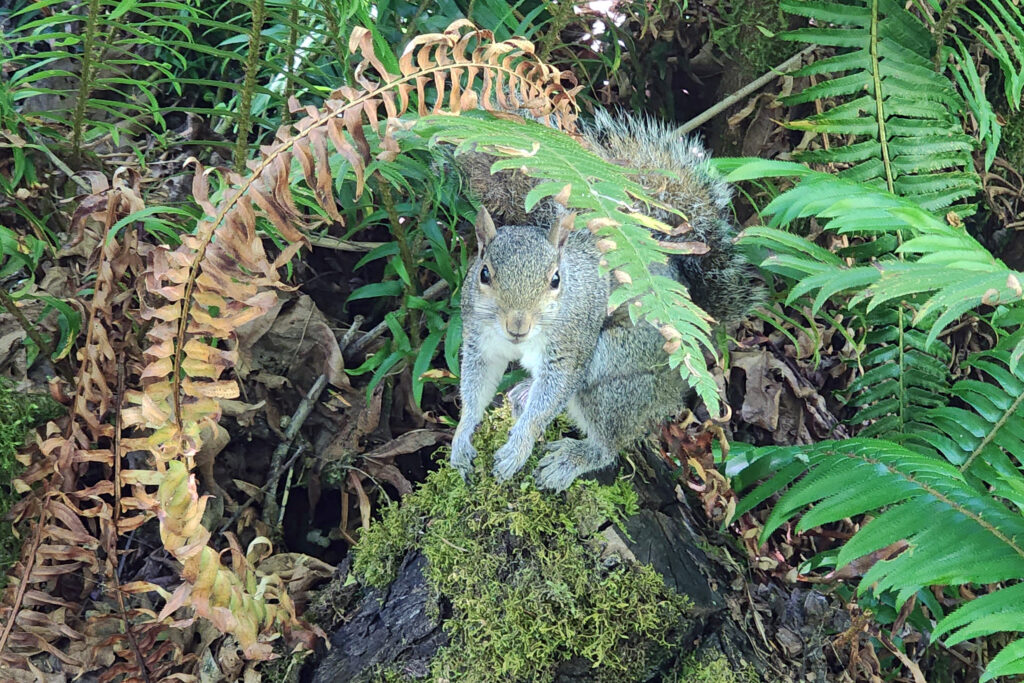
Gray Squirrel
Conclusion
The Tualatin Hills Nature Park has become one of my favorite hiking spots in the west metro area. It’s well used, but if you go early in the day on a weekday you might find the park relatively empty. You’re almost guaranteed to see birds (Dark-eyed Juncos, Song Sparrows, and American Robins are common) and wildlife (squirrels, if nothing else) along the trails. Stop and sit for a while on one of the many benches you’ll find along the trails. Look and listen and soak up the peace and quiet. It’s well worth your time.
Beaverton Creek Wetlands
Other area attractions and activities
Just southeast of Tualatin Hills Nature Park, the 15-acre Beaverton Creek Wetlands is located where Johnston Creek flows into Beaverton Creek. The wetlands are home to Great Blue Herons, Belted Kingfishers, a variety of other waterfowl, and beavers and other small mammals. A paved trail along the southern shore of the wetlands can be accessed from 153rd Avenue just north of TV Hwy, or by a short trail from the Millikan Way parking lot.
Cooper Mountain Nature Park
Cooper Mountain Nature Park, about four miles southwest of Tualatin Hills Nature Park, is another of the many natural areas and parks in the west metro area that offer miles of prime hiking trails.
Photo from the Loyal Legion website
And the Beaverton area is awash in places to get a bite to eat or a cold drink after your hike. Three Mugs Public House, just north of the park on Jenkins Avenue, has 14 beer taps, and also has kombucha, several ciders, and two wines on tap. They also have a full food menu. Prime Tap House, just southeast of the park, has typical pub food (heavy on wings) and a good selection of beers. And a couple of miles east of the park, in downtown Beaverton, you’ll find a number of good pubs, including Breakside Brewery, Lazy Days Brewing, Raindrop Taphouse, and Loyal Legion.
One of the benefits of living in the Pacific Northwest is its natural beauty and easy access to nature. Even the large urban centers have abundant parks, forests, and streams close by. Cooper Mountain Nature Park in Beaverton, Oregon is one of the many protected natural areas and nature parks the Portland metro area is blessed with that range in size from less than five acres to the 5200-acre Forest Park in Portland. Dozens of such natural areas dot the landscape, several of which are near my suburban neighborhood. I can leave my house on foot and be surrounded by nature in less than ten minutes.
The Park:
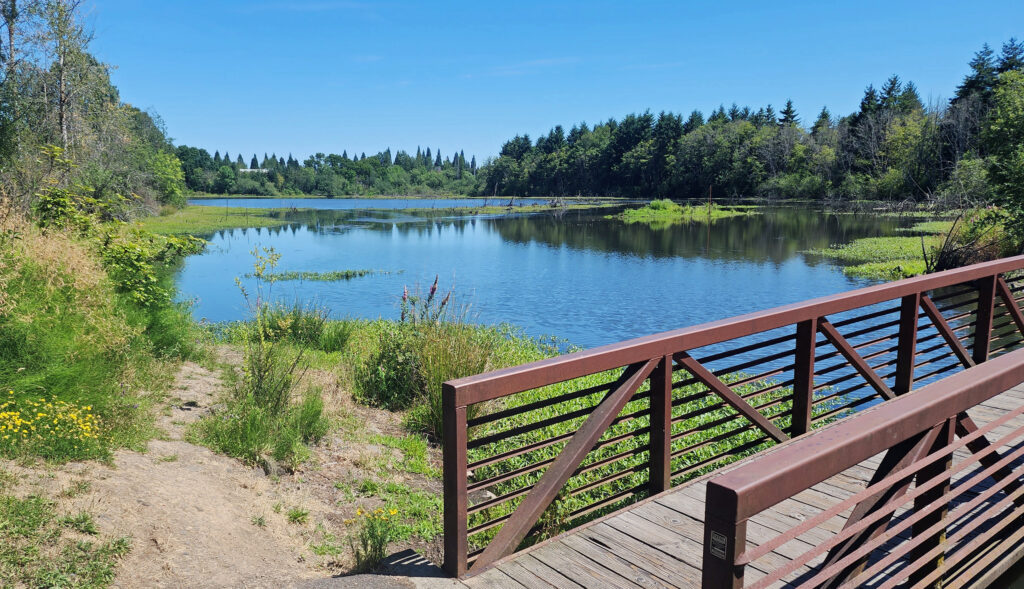
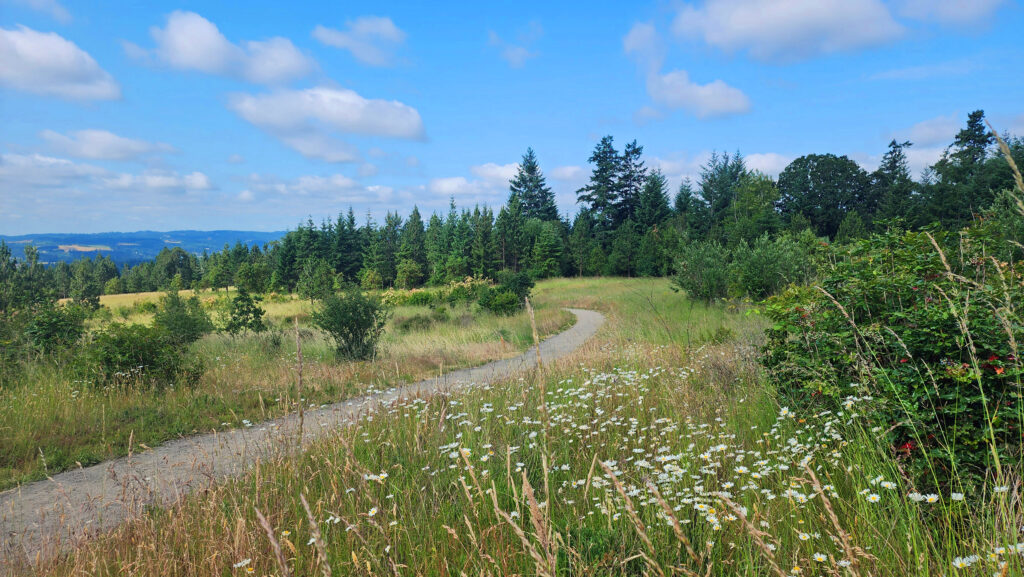
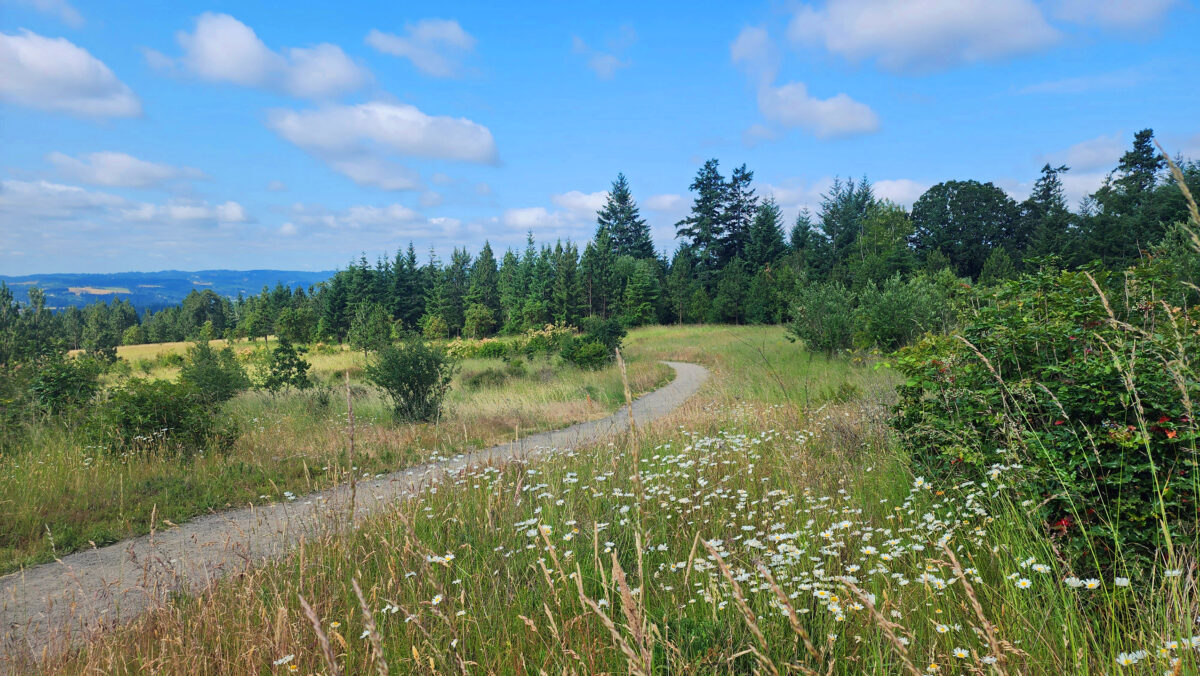
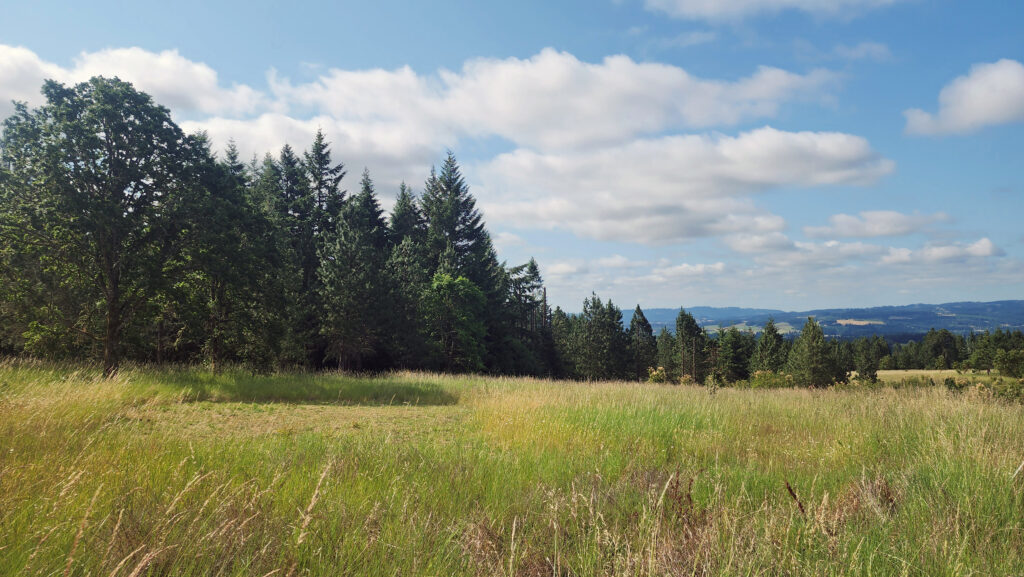
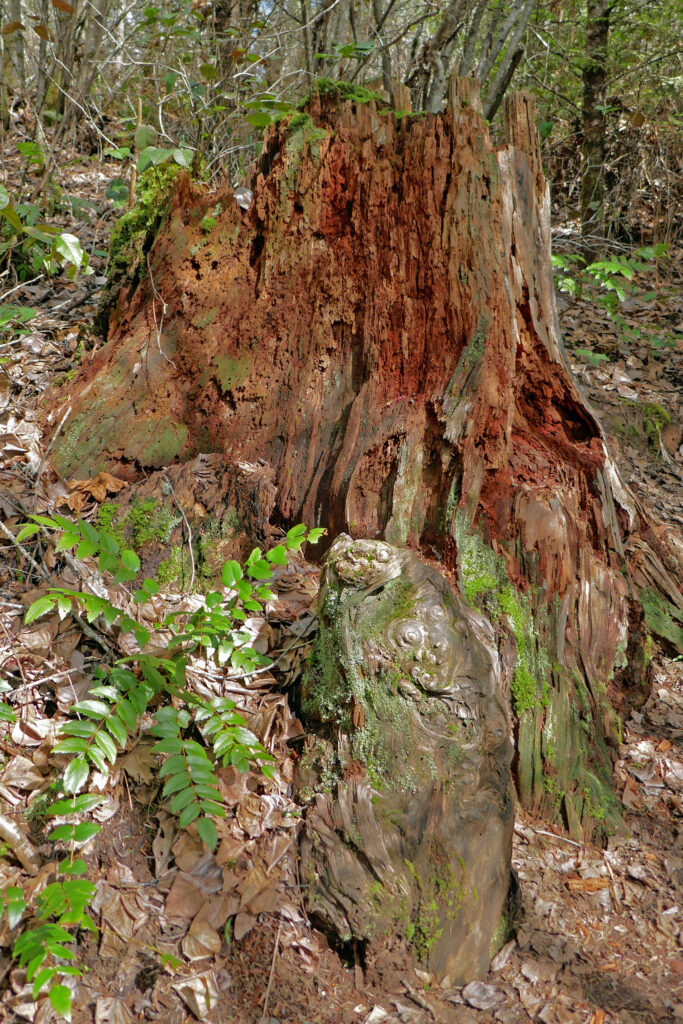
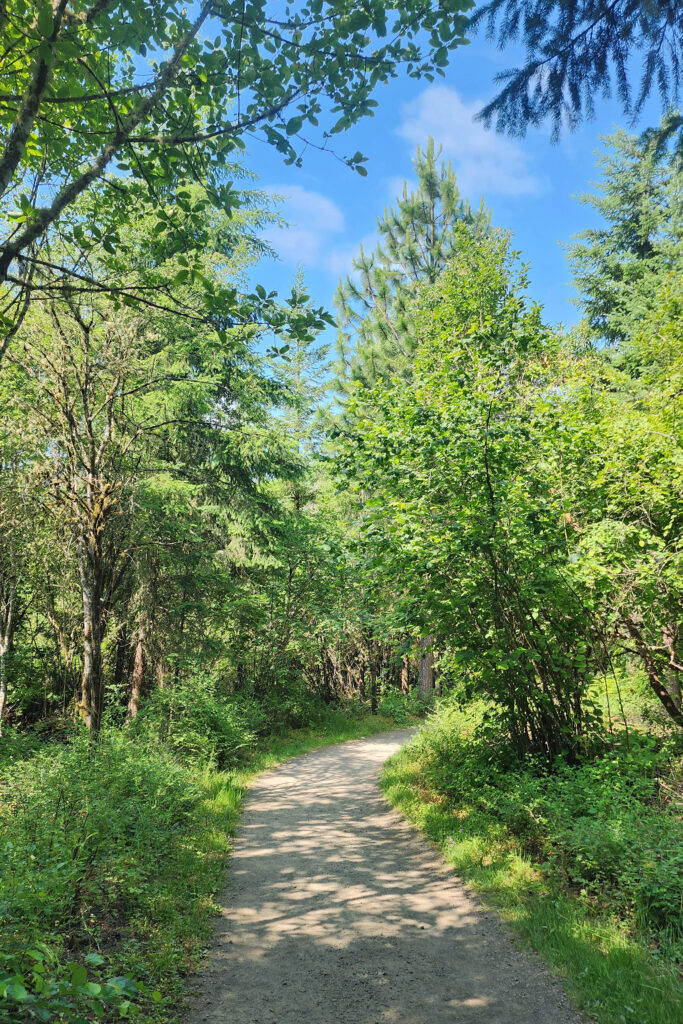
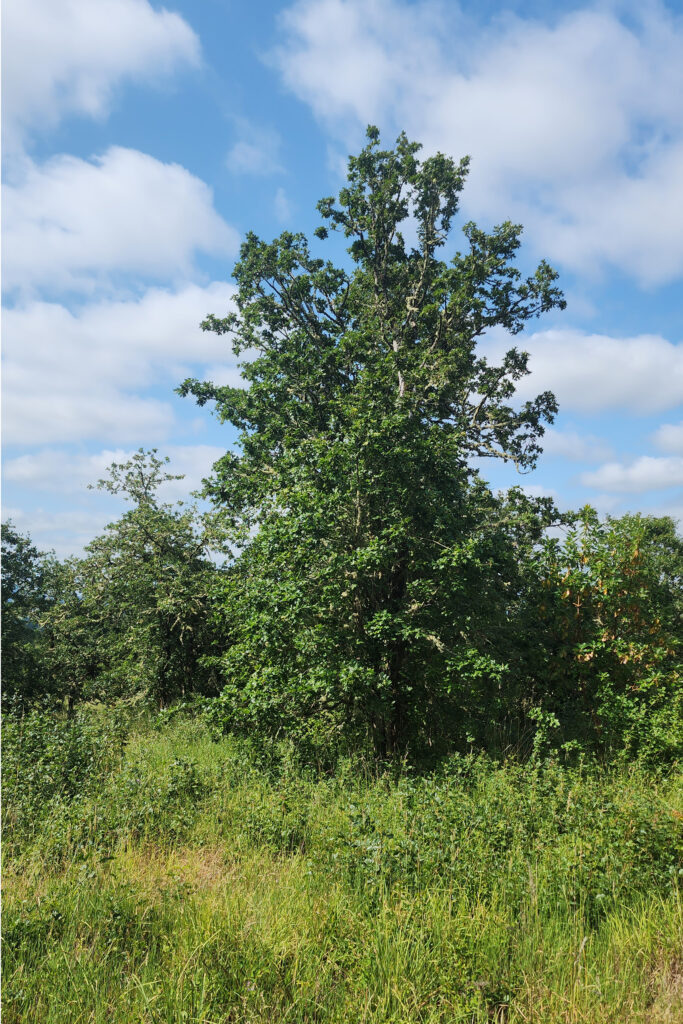
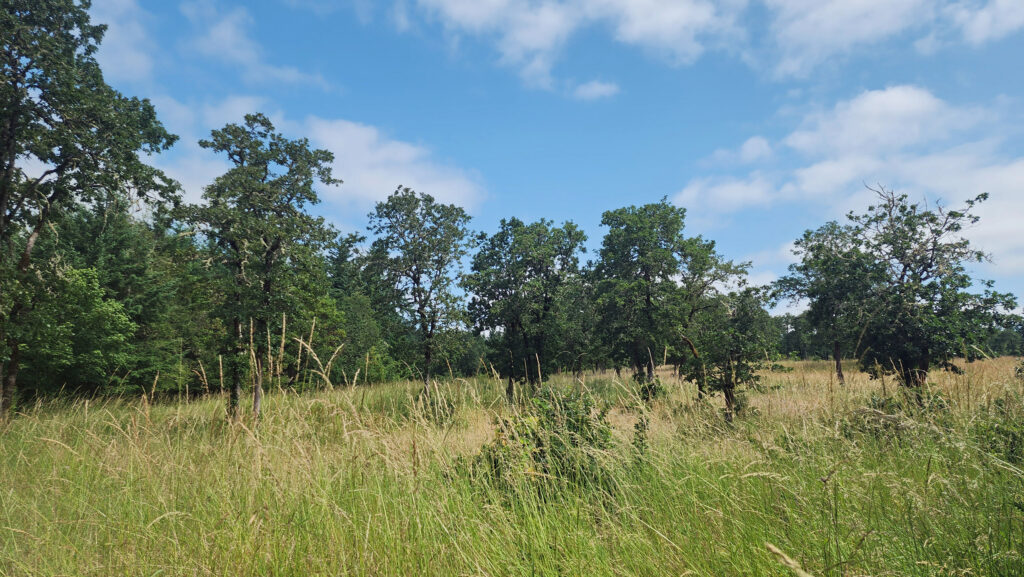
Cooper Mountain Nature Park is located on the southwestern edge of Beaverton. The park is jointly managed by Metro, the Portland area’s regional government, and the Tualatin Hills Park and Recreation District. Three and a half miles of trails take the visitor through three distinct habitats – oak woodland, open prairie, and conifer forest. The hike described here traverses most of the park’s 230 acres.
There is more to do at the park than just hiking, too. The park’s Nature House hosts a variety of classes and educational events, there are nature play areas for children, and there is a demonstration garden that features low-maintenance and wildlife-friendly plants.
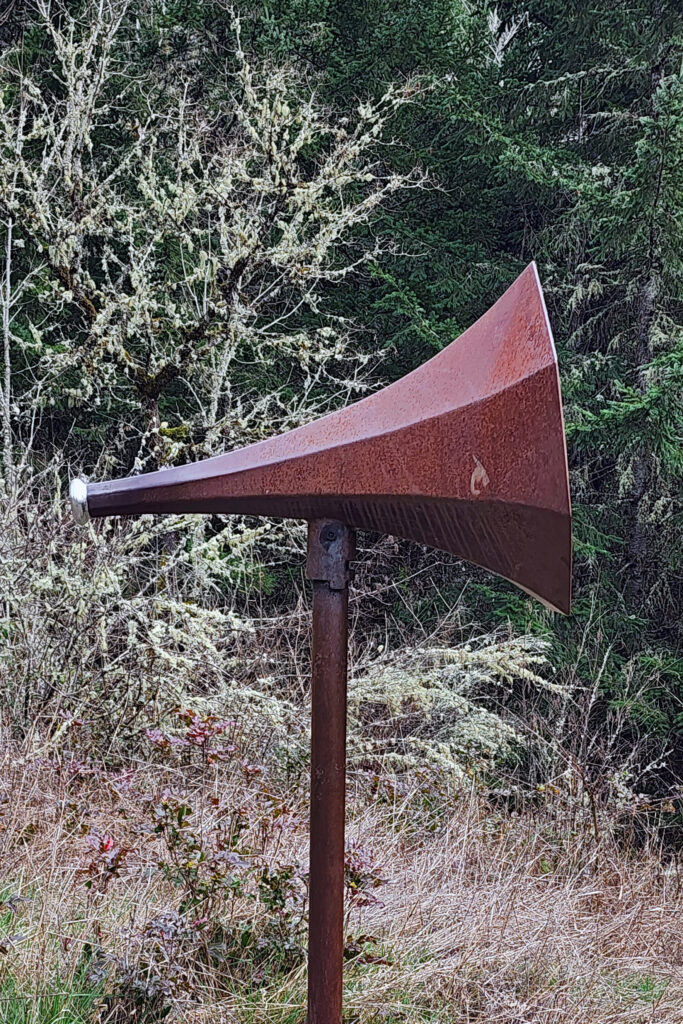
One of the interesting features of the park are the three “listening trumpets” located along the trails. Created by Portland artist Christine Bourdette, the trumpets act as natural sound amplifiers that can catch birdsong and other sounds of nature from a distance. Try them out if you visit the park.
The Hike:
Where: Cooper Mountain Nature Park, 18892 SW Kemmer Rd, Beaverton, Oregon
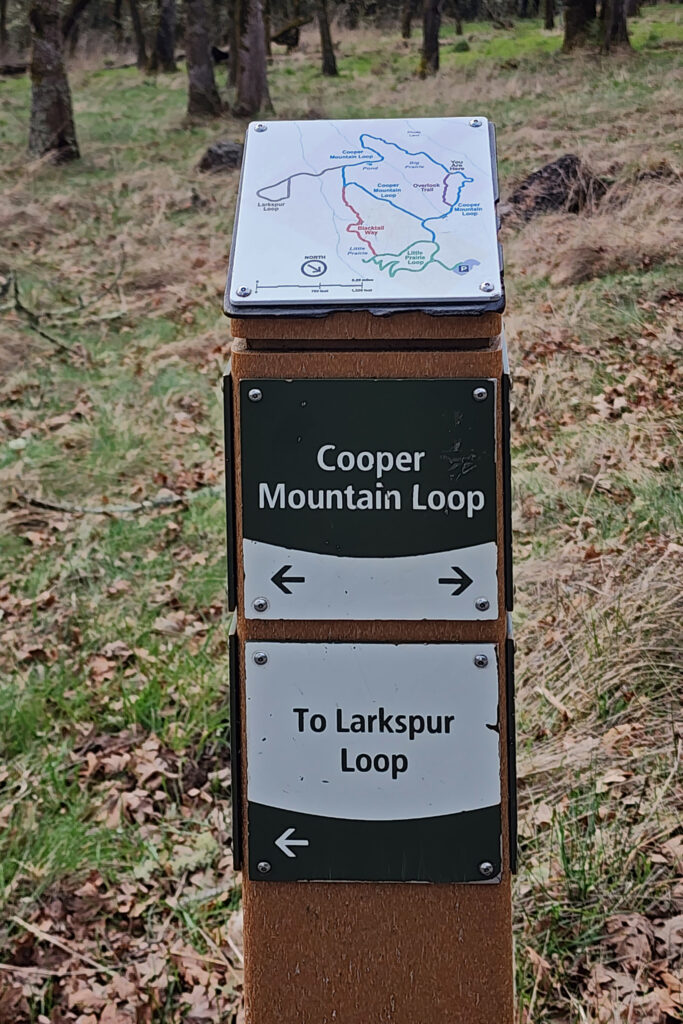
The trails here are hiker only – horses, dogs and other animals (except service animals), and bicycles are prohibited. Drones are also prohibited. The trails are mostly compacted gravel and are useable year round. All trail junctions have directional signage with a small trail map. Interpretive signs are located at places of interest along the trails.
Trailhead:
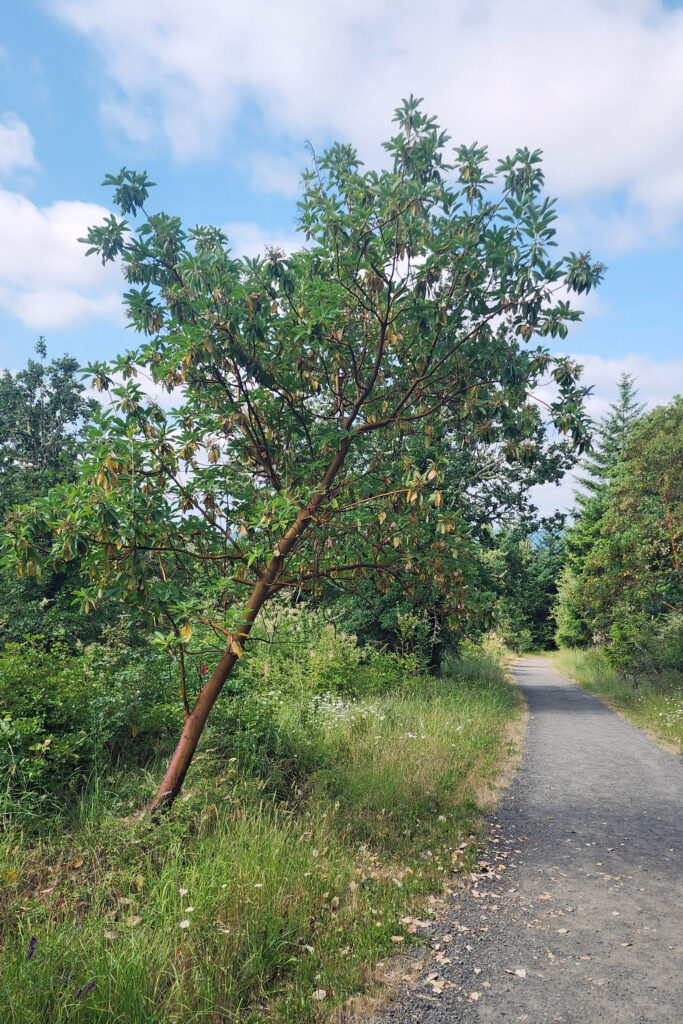
There are restrooms in the Nature House at the parking lot and drinking water is available. There are about 40 parking spaces with an overflow area that will accommodate another fifteen vehicles. Parking is free. The parking lot fills up early on weekends and sometimes even on weekdays in the spring and summer, so best to come early. If the parking lot is full, you may be able to park along Kemmer Road.
The hike:
The hike starts at the southeast corner of the parking lot adjacent to the playground. Stay right at the first two trail junctions. At 0.3 miles, continue straight onto Cooper Mountain Loop that takes you into an area of coniferous forest.
In another tenth of a mile turn left onto the Overlook Trail that takes you back into a more open prairie habitat with good views of Chehalem Mountain to the south. You’ll also find one of the listening trumpets along the trail. At the 0.6 mile mark the Overland Trail rejoins the Cooper Mountain Loop. Turn left and follow Cooper Mountain Loop, which takes you downslope with prairie to your left and forest to your right.
At the low point of this hike (elevation 420 feet) the trail makes a 180⁰ bend and regains some of the elevation you’ve lost, then turns right and takes you to Quarry Pond, where you might find a few waterfowl and increasingly rare northern red-legged frogs. Just beyond the pond, you’ll come to the Larkspur Loop junction at the 1.2 mile mark. Take the out and back lollipop loop and return to the junction. Turn right onto Cooper Mountain Loop again. Here the trail begins to climb back toward the trailhead.
At the next junction, turn right onto Blacktail Way, which climbs, steeply in places, for half a mile to the next junction. Here there is a short trail to the right to a viewpoint. Back at the junction, turn right onto Little Prairie Loop and follow it through the forest and back to the trailhead.
Tualatin Hills Nature Park
Other area attractions and activities:
The Beaverton area features numerous other parks and natural areas. Another of my favorite hiking spots is Tualatin Hills Nature Park, which I will feature in an upcoming post. And slightly farther out (about ten miles west of Cooper Mountain), the newly opened Chehalem Ridge Nature Park is another of the areas nature parks and another outstanding hiking area.
And after your hike, the Beaverton area has many fine places to get lunch and slake your thirst. If you just crave a good beer after your hike, try the nearby Taplandia Taphouse, or the White Oak Taphouse.Neither Taplandia nor White Oak have much of a food menu, so if you’re hungry, try Murrayhill Taphouse or Cafe Murrayhill. Both have full food and drink menus, and are located across a parking lot from each other on the shore of Murrayhill Lake. And McMenamin’s Greenway Pub is also close to Cooper Mountain and offers both decent food and a good beer menu.
Conclusion:
Cooper Mountain has become one of my favorite hiking areas in the southwestern part of the Portland metro area. I’m sure you’ll enjoy it as much as I do.
Posted May 2, 2025. Updated with new photos June 16, 2025.
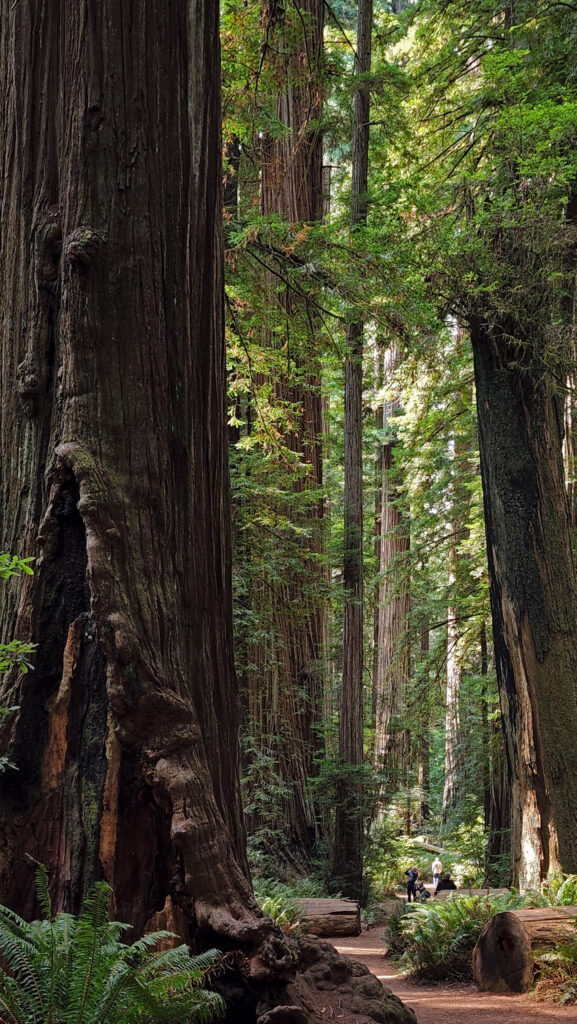
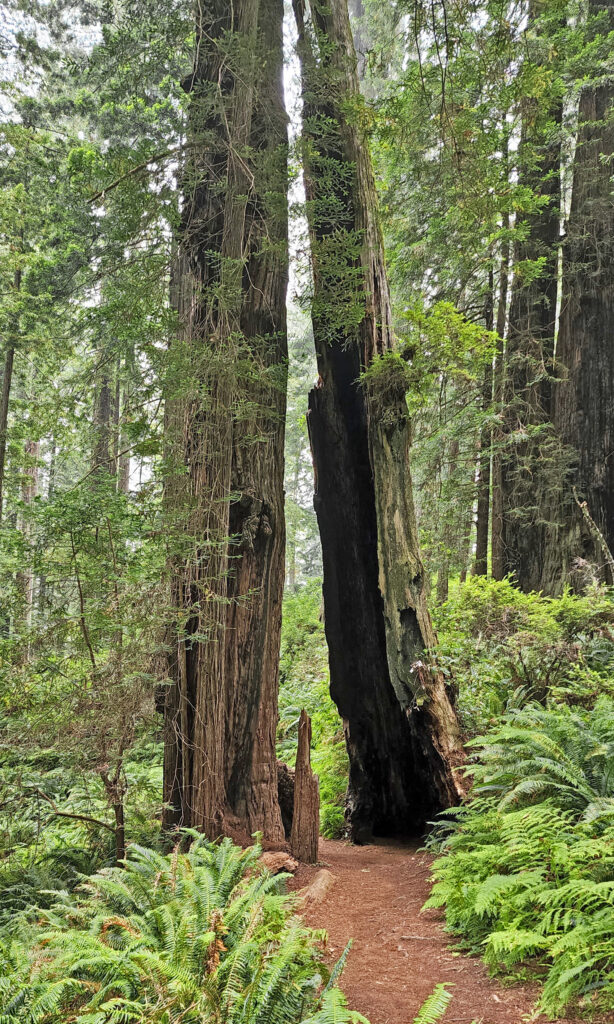
The mild climate and abundant rainfall of the northern California coast makes for ideal growing conditions for conifers, especially for Sequoia sempervirens, the California Coast Redwoods, the tallest trees in the world. Immersing yourself in a old growth redwood forest is a magical experience. You simply cannot walk through a grove of mature coast redwoods and not be awestruck by their massive size and their incredible height. It can truly be a not-of-this-world experience.
Jedediah Smith Redwoods
My wife and I had the pleasure of spending a few days exploring the redwoods this summer. On our first day, we drove through Jedediah Smith Redwoods State Park , part of the Redwood National and State Parks complex that is made up of three California state parks that were established in the 1920s, and the connecting lands of Redwood National Park, established in 1968.
Jedediah Smith Redwoods
We stopped at a number of places in Jedediah Smith Redwoods to do short hikes into the forest. The out and back hikes on the Mill Creek Trail (to the Grove of the Titans) and the Nickerson Ranch Trail both take you through old growth redwood groves that are really indescribable. There just aren’t words to adequately express the experience. And the short Stout Grove Loop Trail near the north end of the park is equally impressive.
Jedediah Smith RedwoodsJedediah Smith Redwoods
The best way to experience the redwoods is on foot, of course, and there are 18 miles of hiking trails in the park, but the drive through the park on Howland Hill Road is itself pretty awesome, even if you never get out of your car. The road is unpaved, narrow, and winding, so not suitable for trailers or motor homes, but all other vehicles can manage it okay, at least in the summer.
Smith River
We stayed in Crescent City, but the park has a large campground with 102 campsites (four of which are dedicated accessible sites). There are also four cabins with electric heaters and lights but no kitchen or bathroom. Campsites and cabins can be reserved through the park website (linked above). The campground is located on the Smith River on Highway 199 about five miles northeast of Crescent City. In the summer there is a footbridge across the river connecting the campground to the Stout Grove.
Endert’s Beach
The next day, we hiked the short trail to Endert’s Beach, just south of Crescent City in Del Norte Coast Redwoods State Park. The park has eight miles of untouched coastline. (As of October 2026 the only park trail to the coast is closed, making the coastline inaccessible at this time). The park has a large campground with 143 sites (no hookups) that is open from late May until early October. Check the park website for reservation availability. In 2002 a large parcel of previously logged land was added to the park and is currently the site of a large ongoing restoration project that may affect campground accessibility. You can learn about the project at the Mill Creek Day Use Area, or on the park website or the Redwood National and State Parks website.
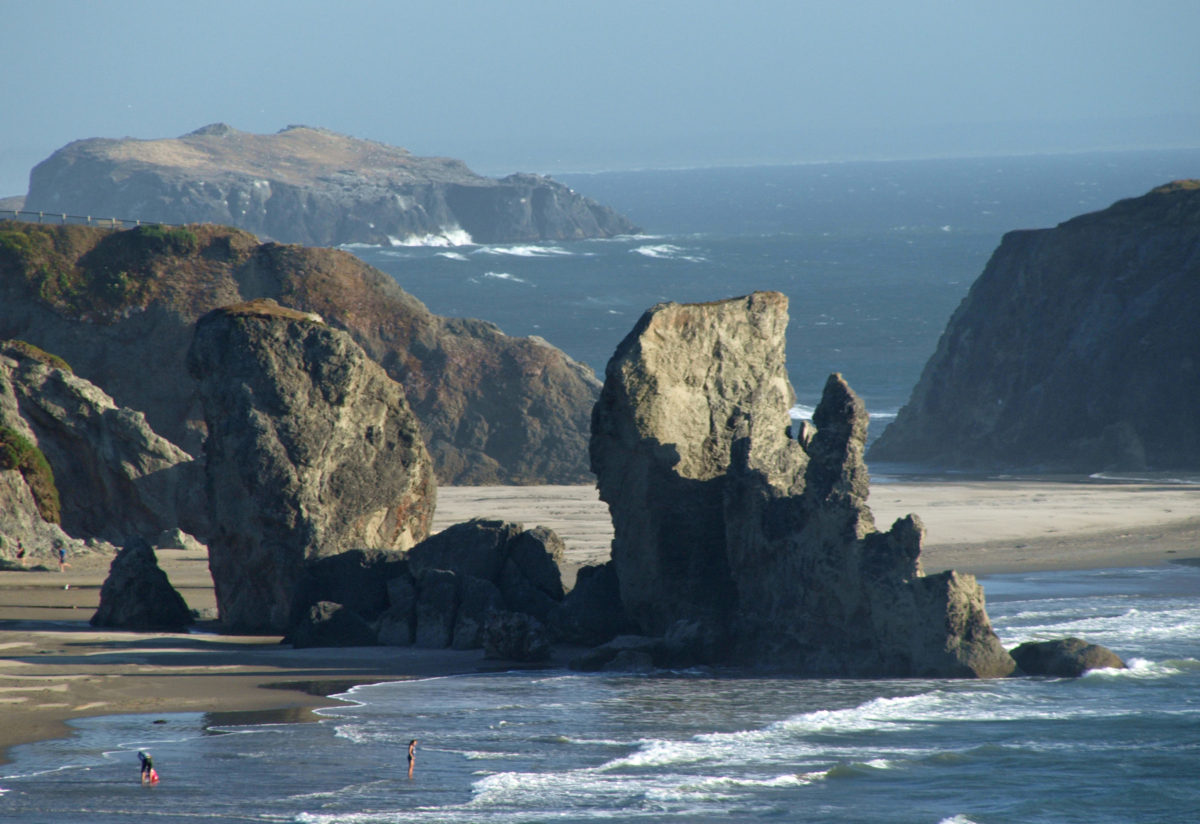
Near the south end of the park, Wilson Beach is a nice place to take a break and do some beachcombing. A little farther south, at Requa, we took a short detour to the Klamath River Overlook at the far south end of the park. The overlook provides a good view south across the mouth of the Klamath River, a thousand feet or so below.
View from Klamath River Overlook
Back on Hwy 101, if you take the first exit south of the Klamath River Bridge, the Klamath Beach Road will take you to several beach access points, a campground, and the High Bluffs Overlook, which has a picnic area with nice ocean views. From there, you can either loop back to Hwy 101 on Coastal Drive, or continue south to the Newton B. Drury Scenic Parkway, a more scenic and quieter route through Prairie Creek Redwoods State Park than Hwy 101.
“Big Tree,” Prairie Creek Redwoods
Along the parkway, we did a short hike on the Ah-Pah Trail. You’ll find a number of other trailheads on the parkway that will also take you deep into the redwoods. We stopped briefly at the somewhat cheesy Big Tree Wayside, then at the visitor center at the park headquarters. Back on Hwy 101 a few miles south of the park headquarters, we also stopped at Elk Meadows Picnic Area, where we hiked to Trillium Falls (a nice hike, but the falls are not very impressive), mostly to kill some time before we headed to Fern Canyon, our afternoon destination.
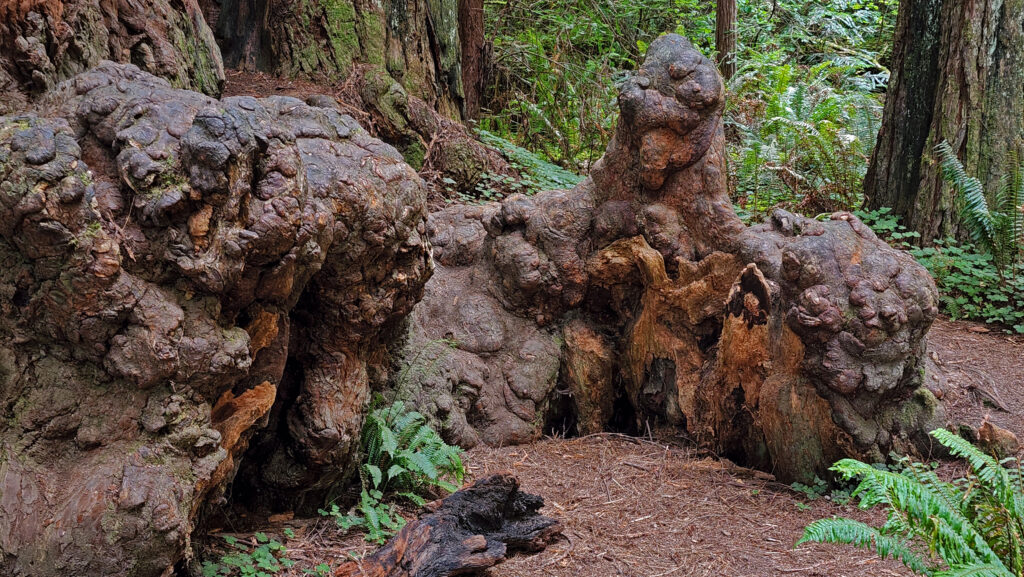
Prairie Creek Redwoods
Fern Canyon is popular enough to require a timed entry parking permit between June 15 and September 15 that is available only online. You can reserve either morning or afternoon permits. We had no problem getting a permit the day before we left on our trip, but we were there in the middle of the week. Weekends might be a different story. Parking permits are available on the park website.
Fern CanyonFern Canyon
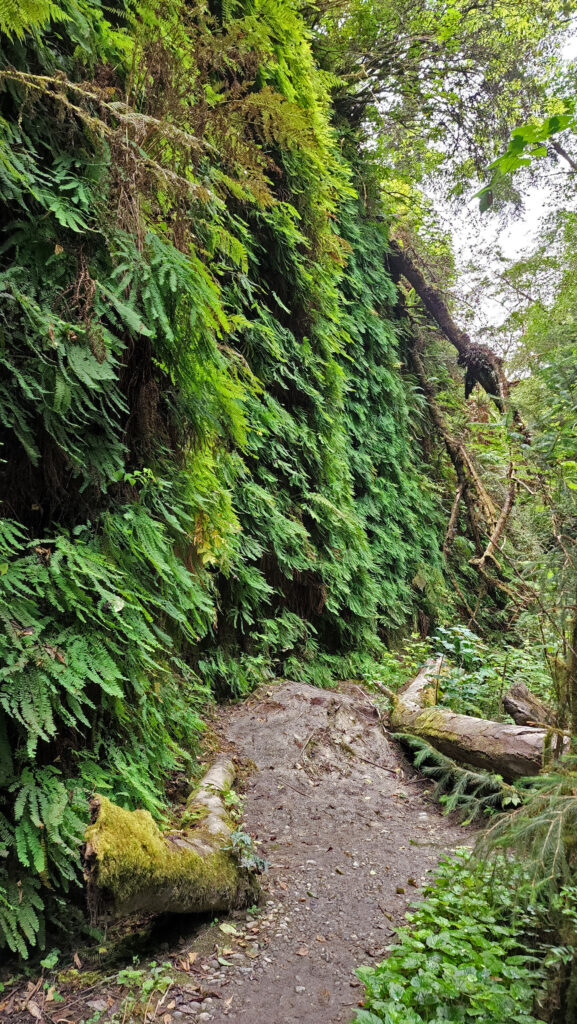
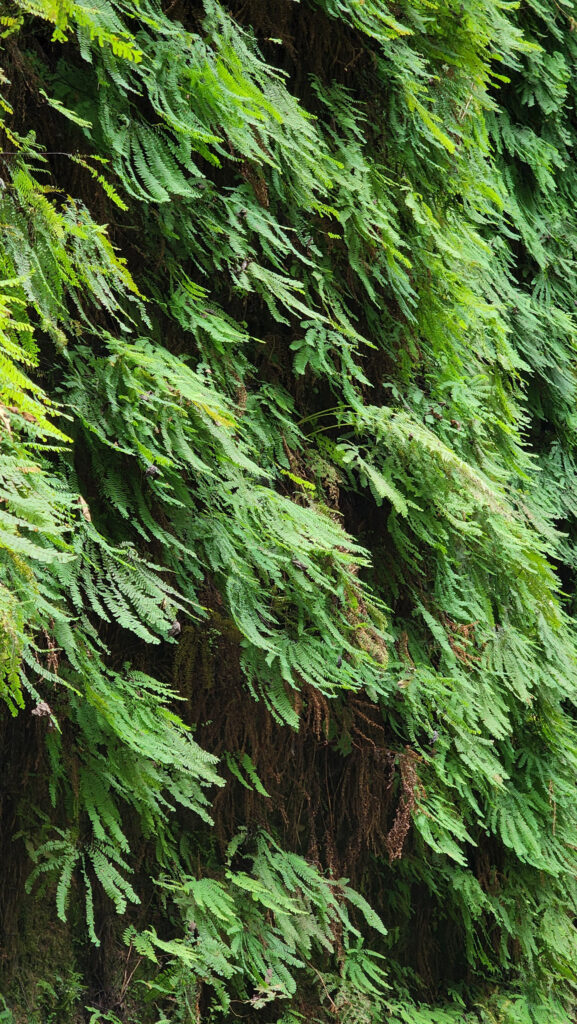
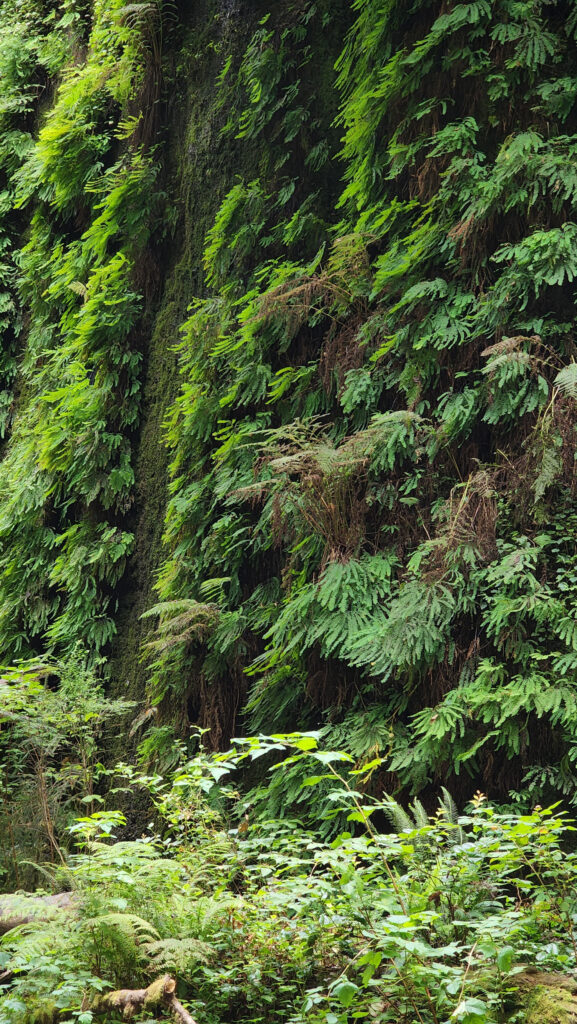
The Fern Canyon Trail takes you through a 50 foot deep canyon, its vertical walls covered in a variety of different kinds of ferns. The “trail” is mostly non-existent. You’re essentially hiking the creek bed. There are some makeshift boardwalks, but plan on getting your feet wet. There was also a big logjam that we had to climb over. But that was a small price to pay, because the canyon is wonderfully scenic and utterly unique. I had never seen anything quite like it in all my years of hiking.
Fern CanyonFern Canyon
We stayed in Eureka that evening. The next morning we started for home. There is another state park a few miles south of Eureka, Humboldt Redwoods State Park, that has the largest contiguous old growth redwood stand in the world (according to the park website), but we didn’t have time to visit on this trip. It was a long drive to our next stop in Ashland, Oregon, and we wanted to get an early start. But we’ll be back, maybe next summer, to continue our exploration of the northern California coast. Mendocino beckons.
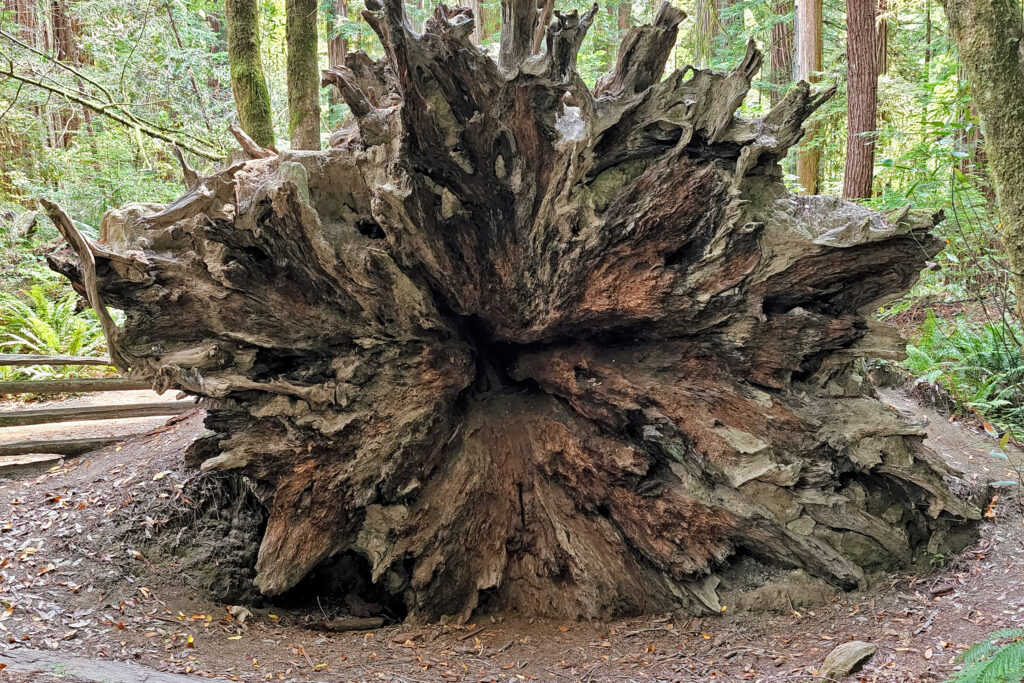
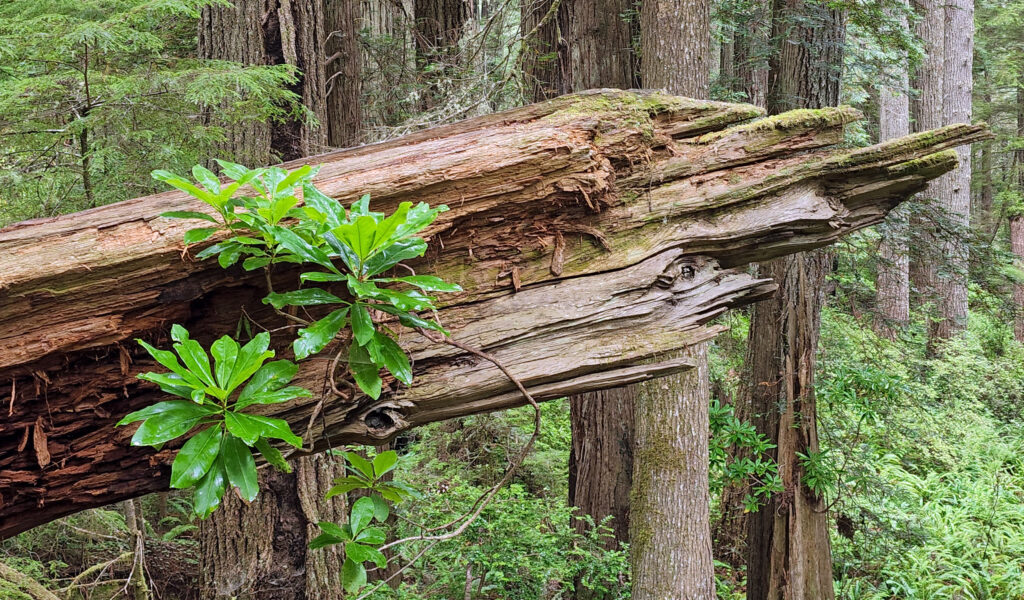
Prairie Creek Redwoods
Our trip to the redwoods also featured stops in a number of places on the southern Oregon coast between Bandon and the California border. Check out my Bandon and Southern Oregon Coast posts. The southern Oregon coast is sparsely visited, but spectacularly beautiful, and definitely worth a look.
Point Defiance Park in Tacoma, Washington is a 760 acre urban oasis located on a peninsula jutting into Puget Sound. The park has something for almost everyone – a variety of botanical gardens, old growth temperate rain forest areas, a large salt water beach, an off-leash dog park, 15 miles of hiking and biking trails, an ADA accessible waterfront path, a recreation of Fort Nisqually, a marina, and the Point Defiance Zoo and Aquarium. All together, the park’s attractions draw more than three million visitors every year.
If you’ve never been to Point Defiance, check out the park’s website to see all of what the park offers visitors.
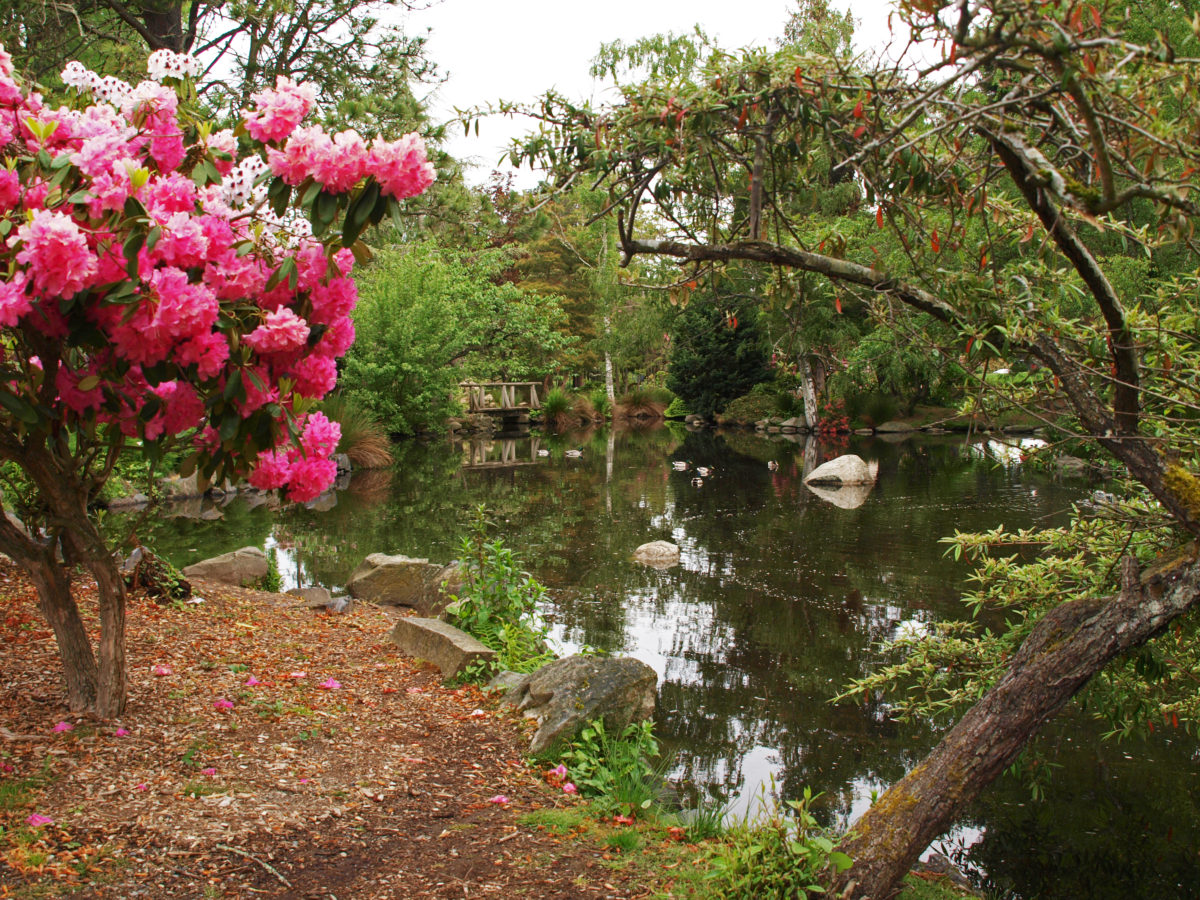
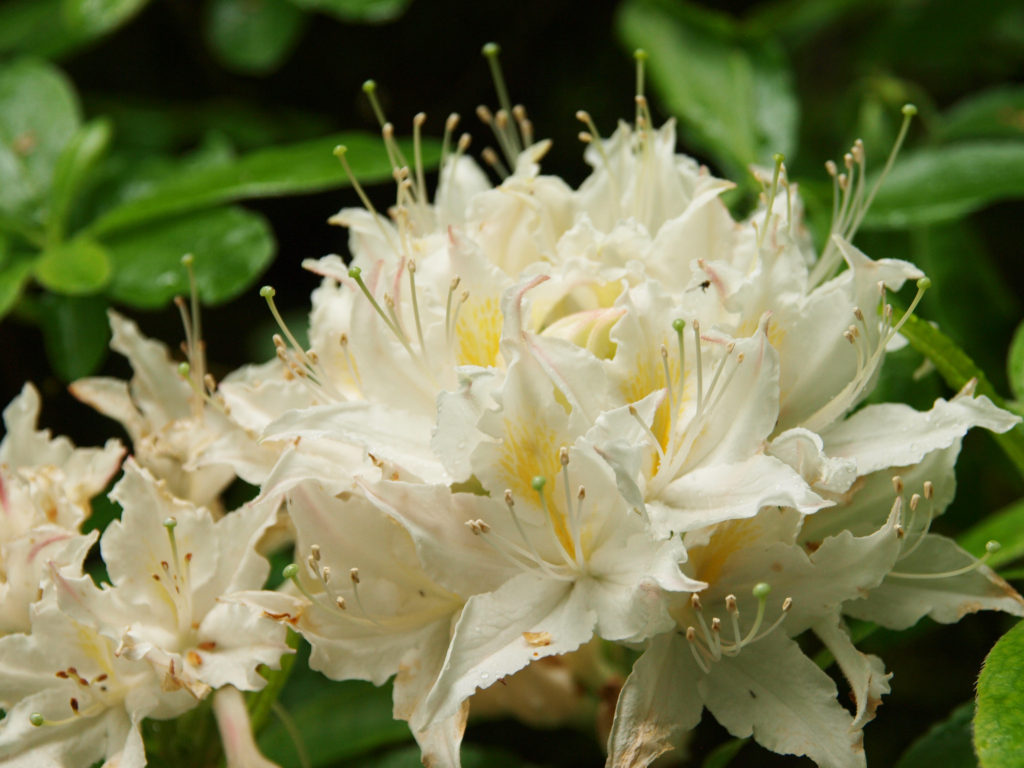
Our first stop on our most recent visit was the Rhododendron Garden. Resembling a natural old growth forest more than a formal garden, the trails through the garden are quiet and peaceful, and in the spring and early summer, when the rhodies are in full bloom, this is probably the most beautiful of the park’s gardens.
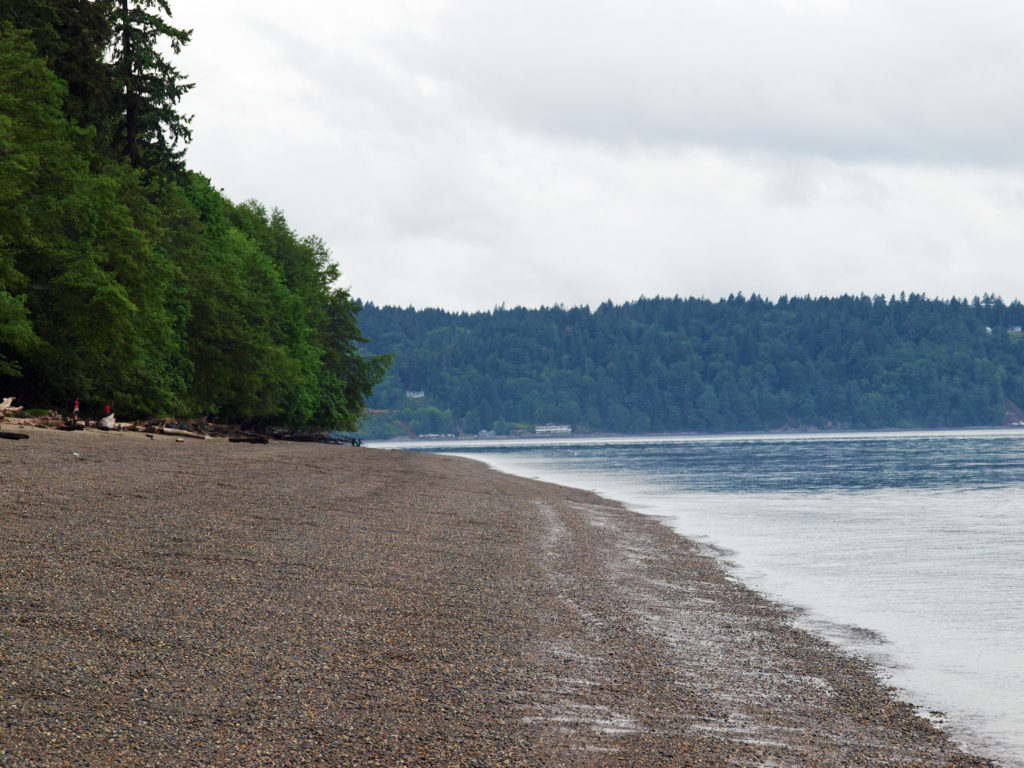
Owen Beach is a very popular spot on summer weekends. The beach is wide (at least at low tide) and extends for quite a ways along the shore, so it can probably absorb the crowds. On our last visit it was almost completely deserted, though.
There is a wide, paved, ADA accessible path (the Promenade) connecting the beach with the marina area of the park and the Point Ruston Waterwalk, giving unhindered pedestrian and bicycle access to the park from the Tacoma waterfront. And a construction project completed in 2022 expanded the parking lot, created new entry and exit paths for pedestrians and cyclists separated from the vehicle roadway, a new beach pavilion, new restrooms, a new ADA accessible children’s playground, new ADA accessible plazas and pathways, and a renovated WPA-era picnic shelter.
The outer loop of the Five Mile Drive provides numerous waterfront access points with views across Dalco Passage to Vashon Island and across The Narrows to the Gig Harbor area of the Kitsap Peninsula.
The outer loop is closed to vehicular traffic part of the day to give cyclists, runners, and pedestrians access to the northern half of the park free from conflicts with motor vehicles. On our most recent visit it was closed after 2:00 pm, but on our previous visit it was, I believe, closed in the morning. Check the Point Defiance Park website (linked above) for the current schedule if you plan to visit the park.
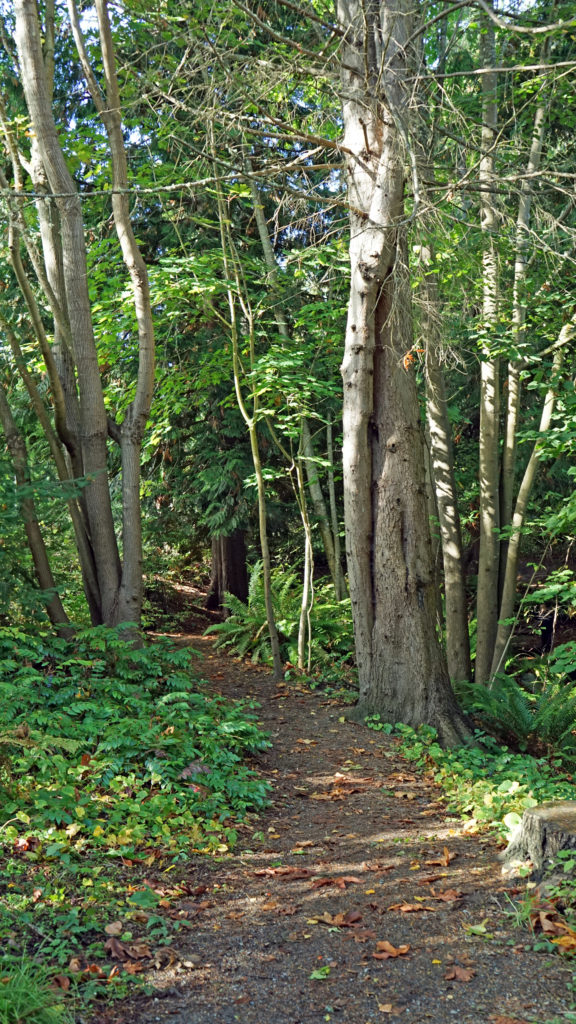
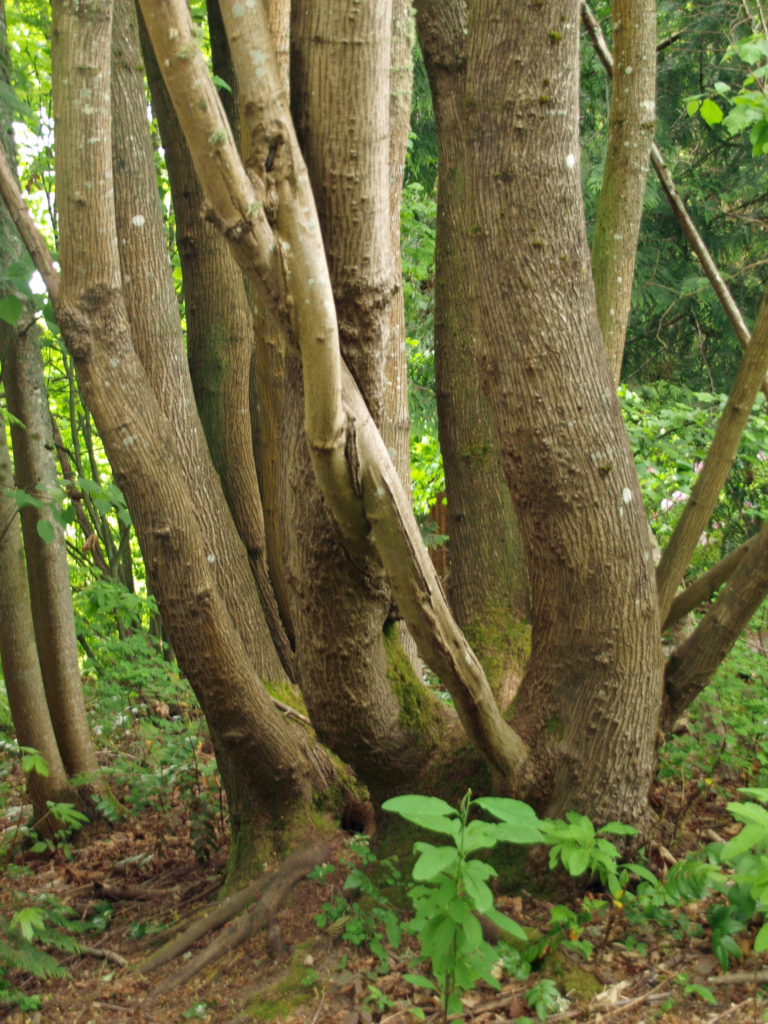
Most of the outer loop section of the park is heavily forested. There are miles of trails winding through the forest. It’s beautiful, serene, and it’s not hard to forget that you’re only a few miles from the second largest city in Washington.
The Fort Nisqually reconstruction is a living history museum where volunteers and staff, dressed in period clothing, demonstrate the crafts of the 19th century. This Hudson’s Bay Company trading post was the first non-Native settlement on Puget Sound. The original fort was located in what is now DuPont, Washington. The recreation here was built in the 1930s by the Works Progress Administration. It is currently scheduled for updating, beginning with the Clerk’s House, that will start this year (2025).
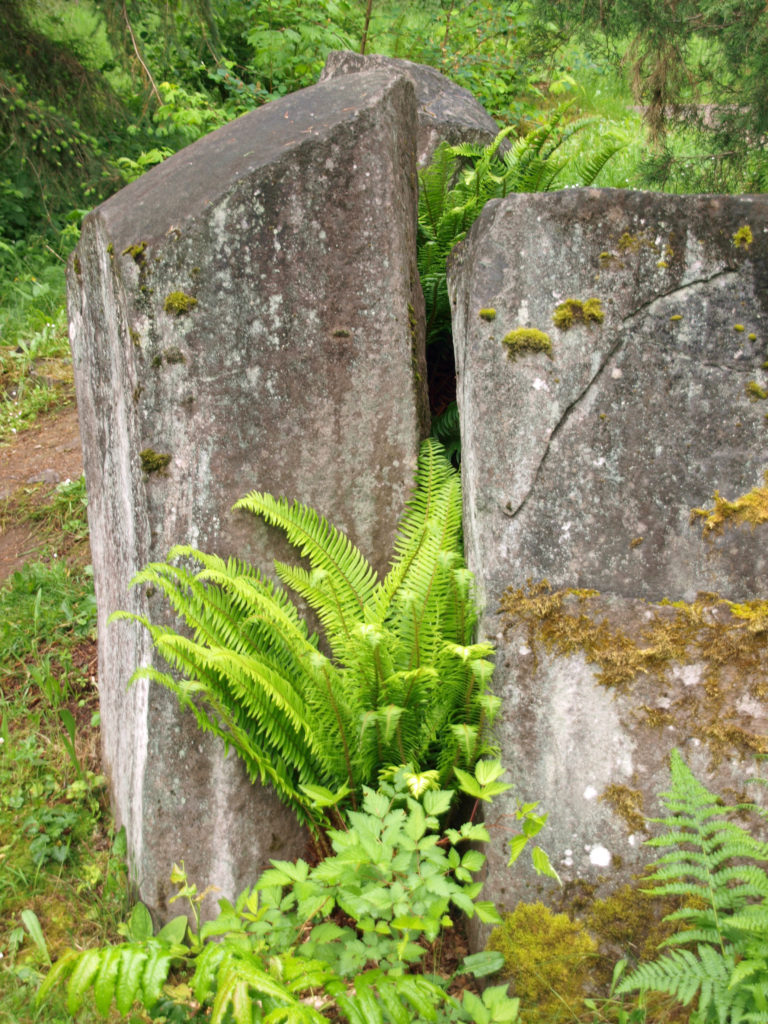
The Northwest Native Garden’s emphasis is, as the name suggests, on plants native to the Northwest’s temperate rain forest. There’s a small pond, small streams and waterfalls, a meadow, and rock formations. It’s a relatively small area, and the trails can be walked in fifteen minutes or so, but you’ll want to linger.
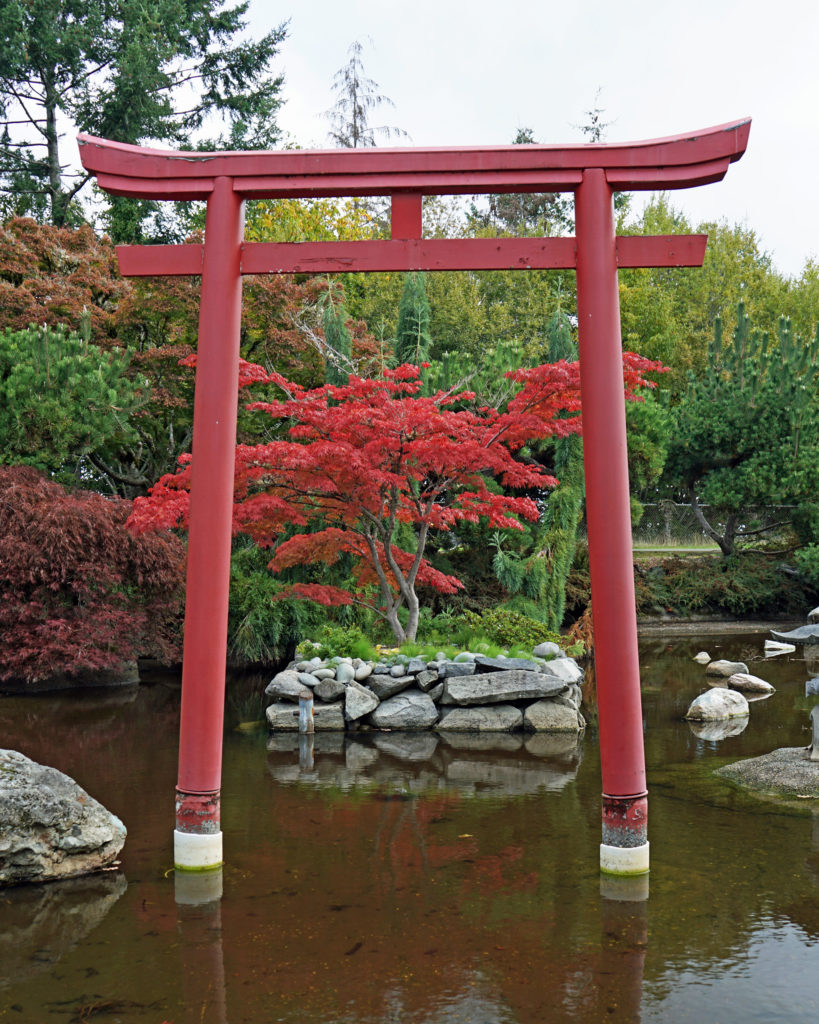
On both of our recent visits our final, and longest, stop was at the botanical gardens area near the entrance to the park. Here there is a large pond with a waterfall, an herb garden, a large rose garden, a dahlia garden, an iris garden, and a Japanese garden. We could easily have spent even more time here than we did on either visit. And if you visit the zoo and aquarium, you could easily spend most of the day just in this section of the park.
Point Defiance Park is one of the largest, and best, city parks in the Pacific Northwest. The park is similar in many ways to Vancouver, BC’s Stanley Park. Point Defiance is, without question, one of Tacoma’s top attractions.
Originally posted May 19, 2019. Most recently updated February 18, 2025.
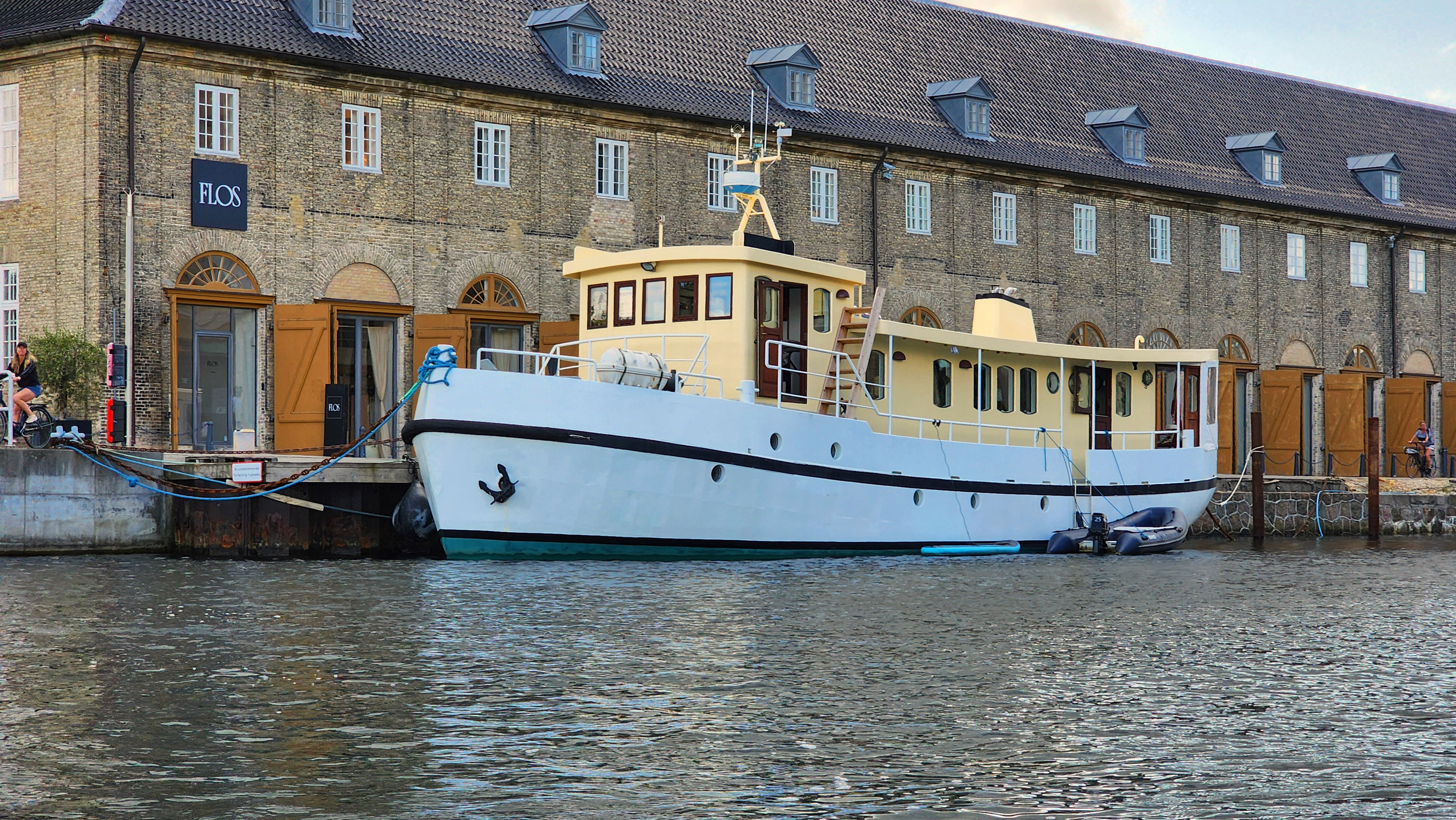
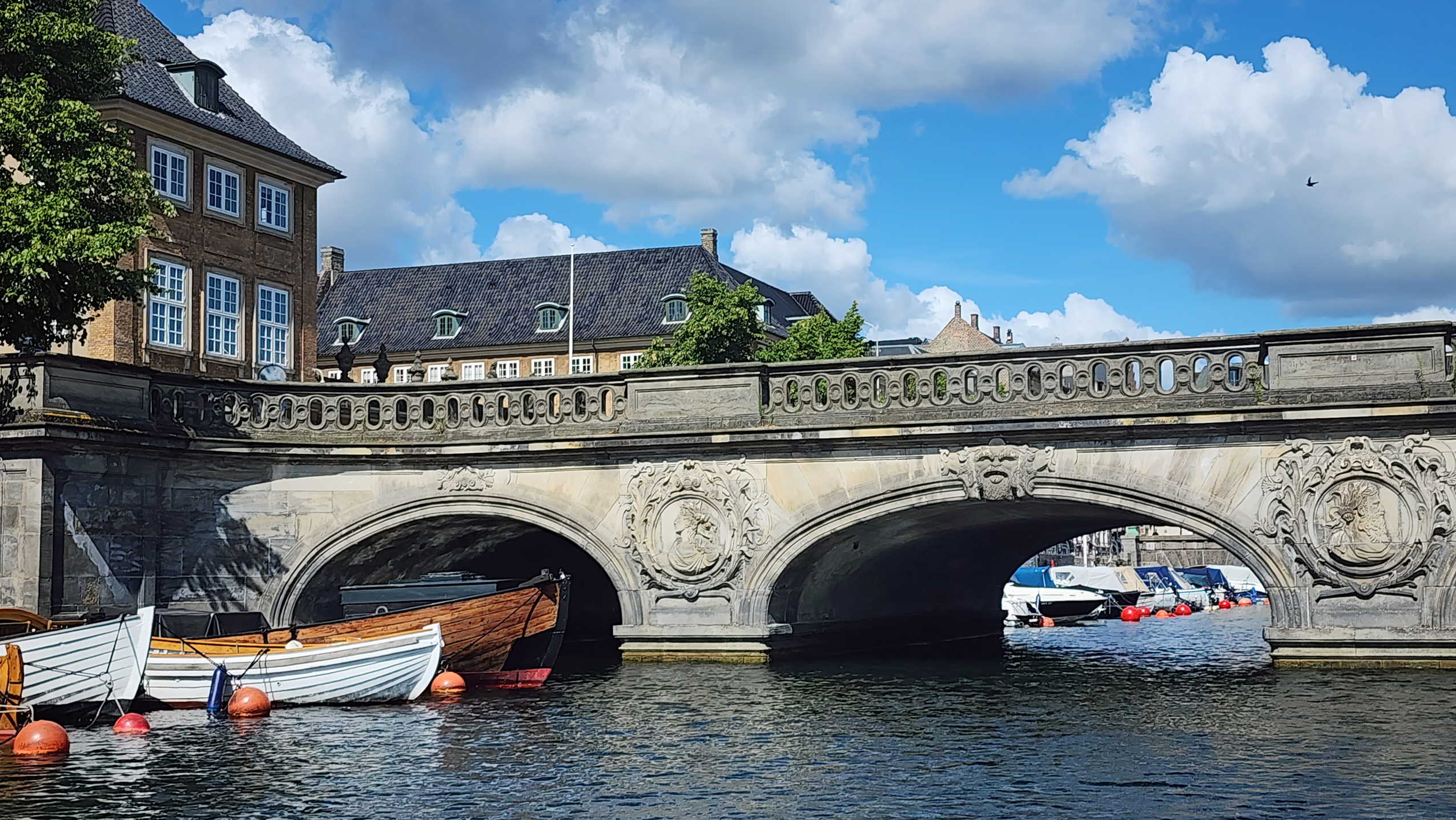
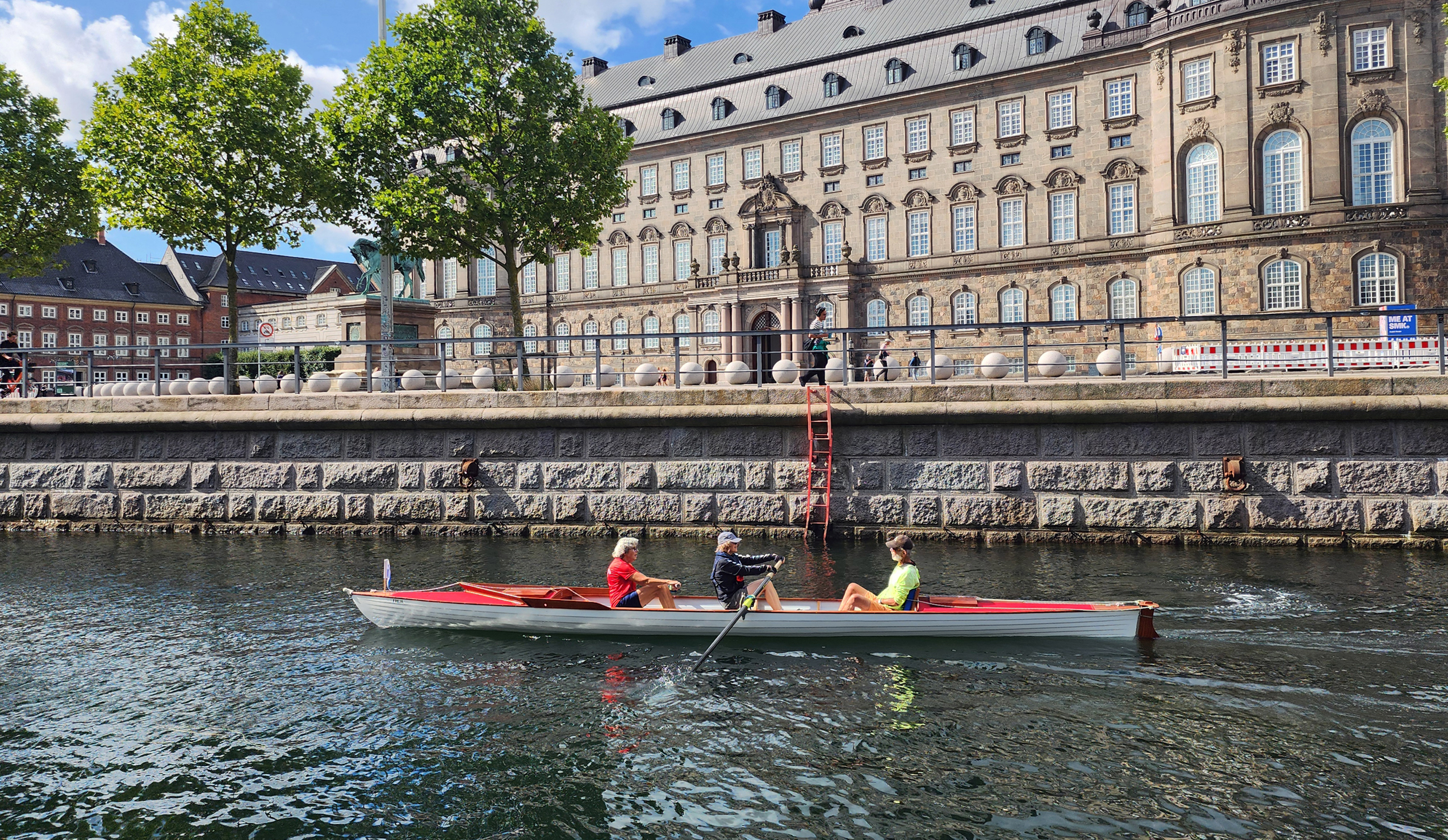
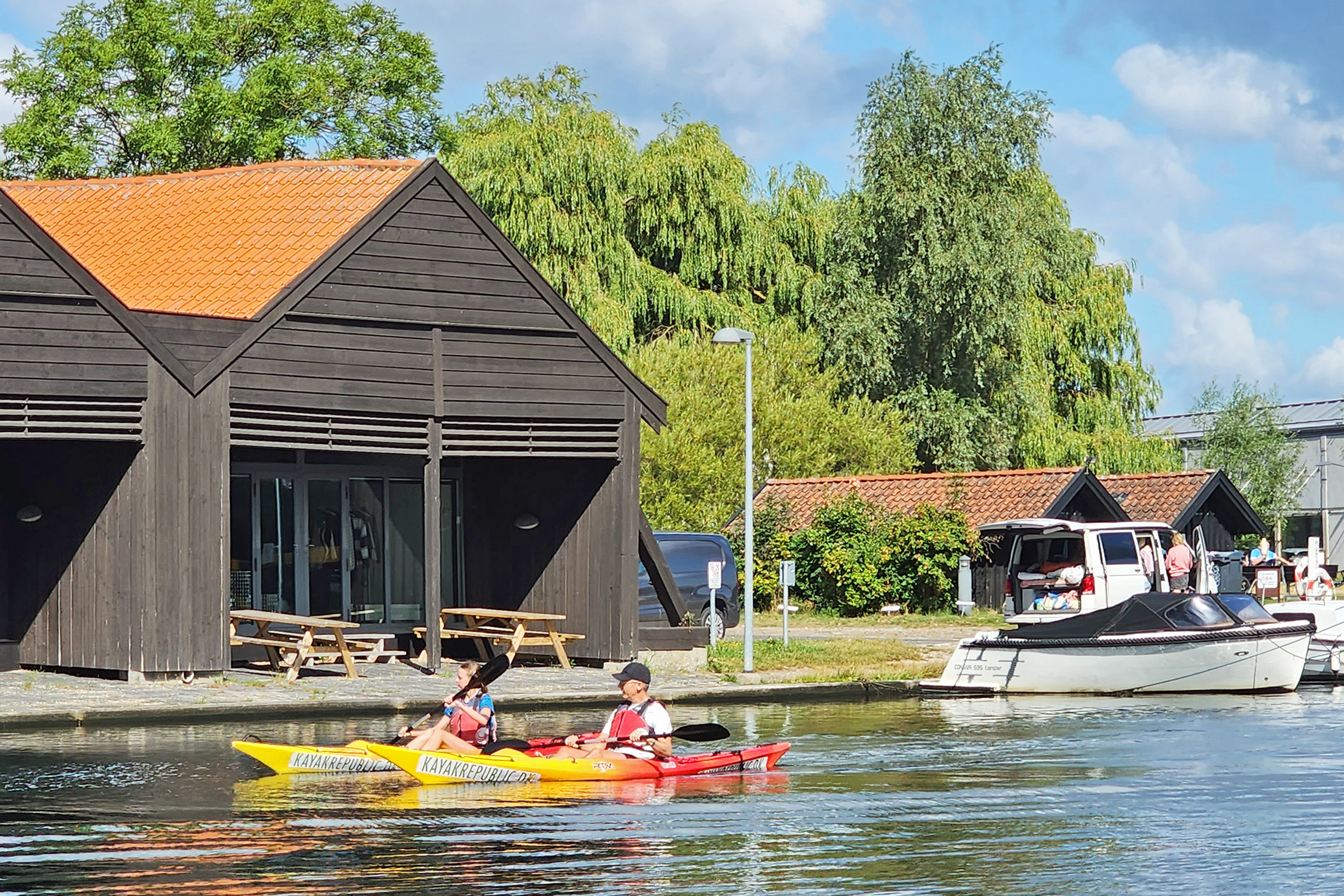 There were many people on the water that day (and every day that we were there). In addition to the tour boats, both large and small, there were many kayakers out exploring the city, and many others in private boats and rented “Go Boats.”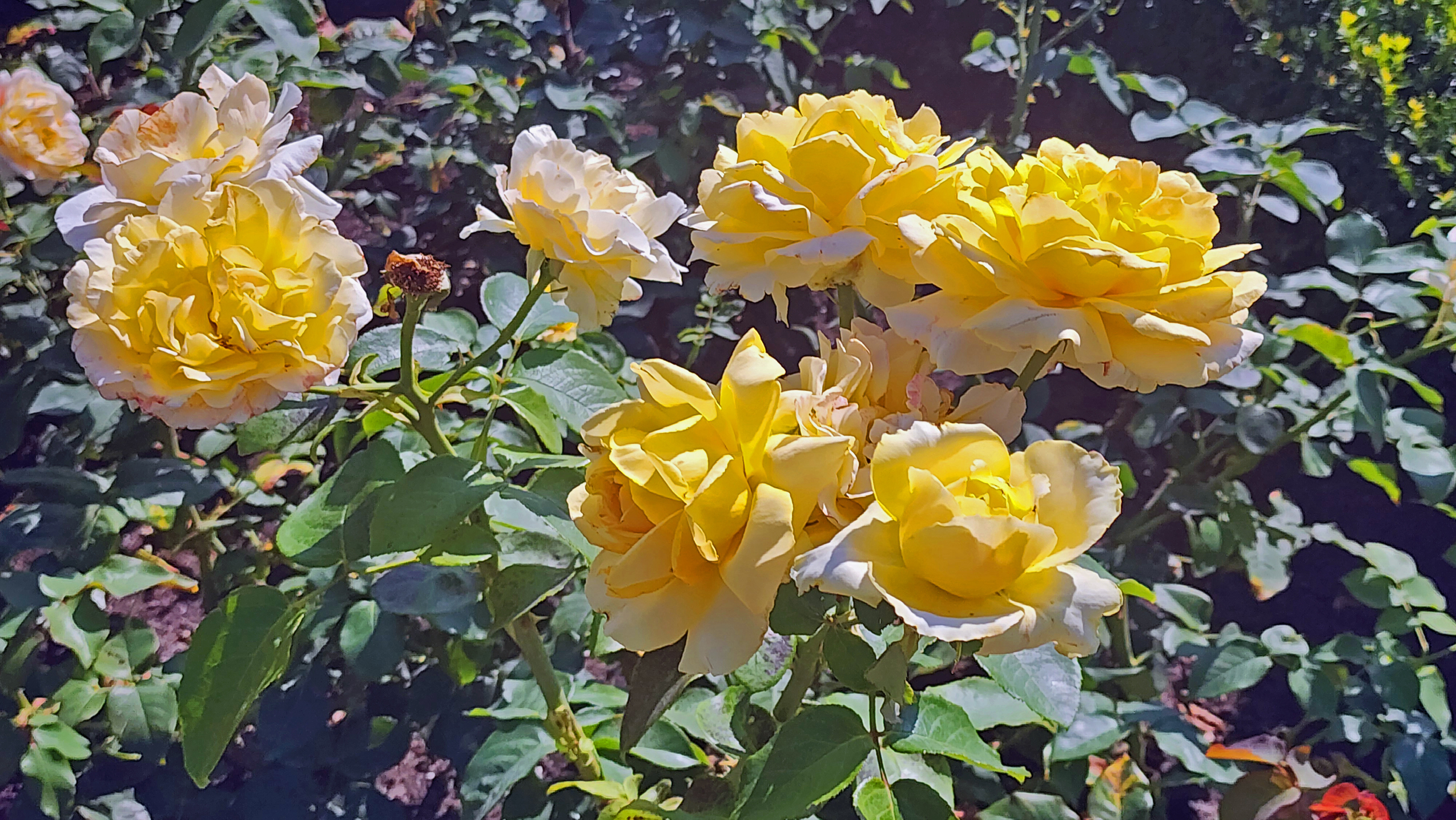

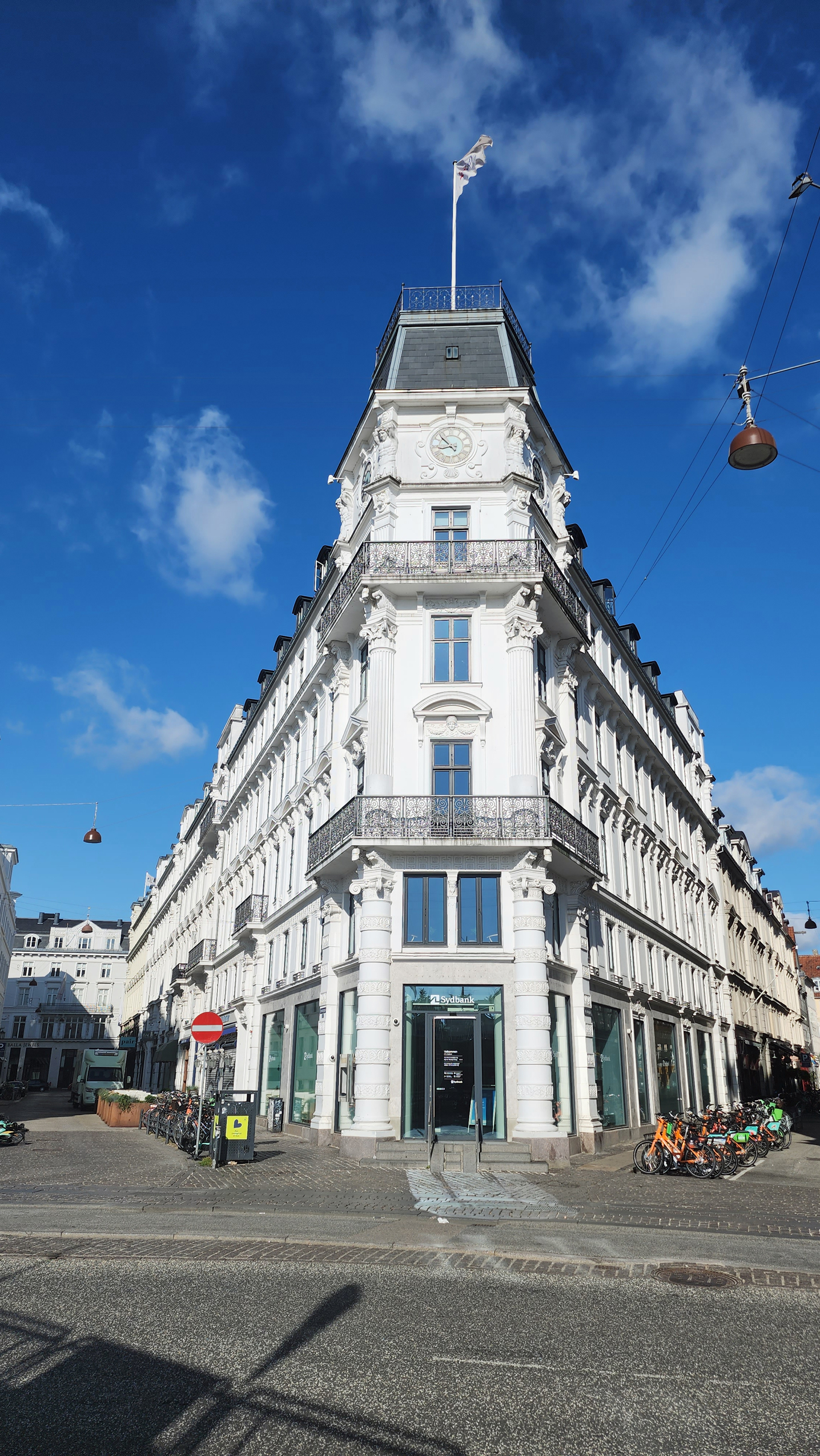
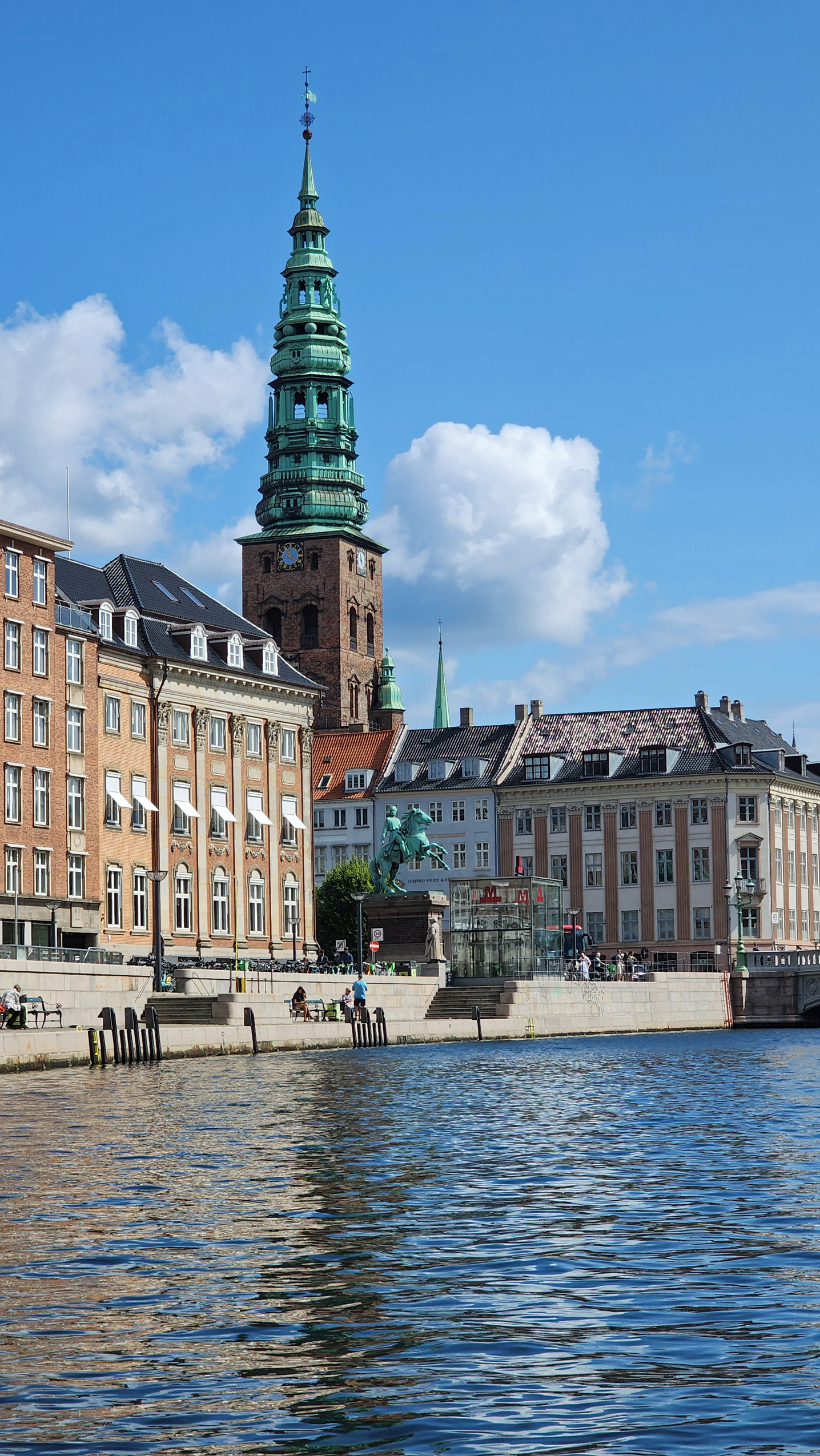
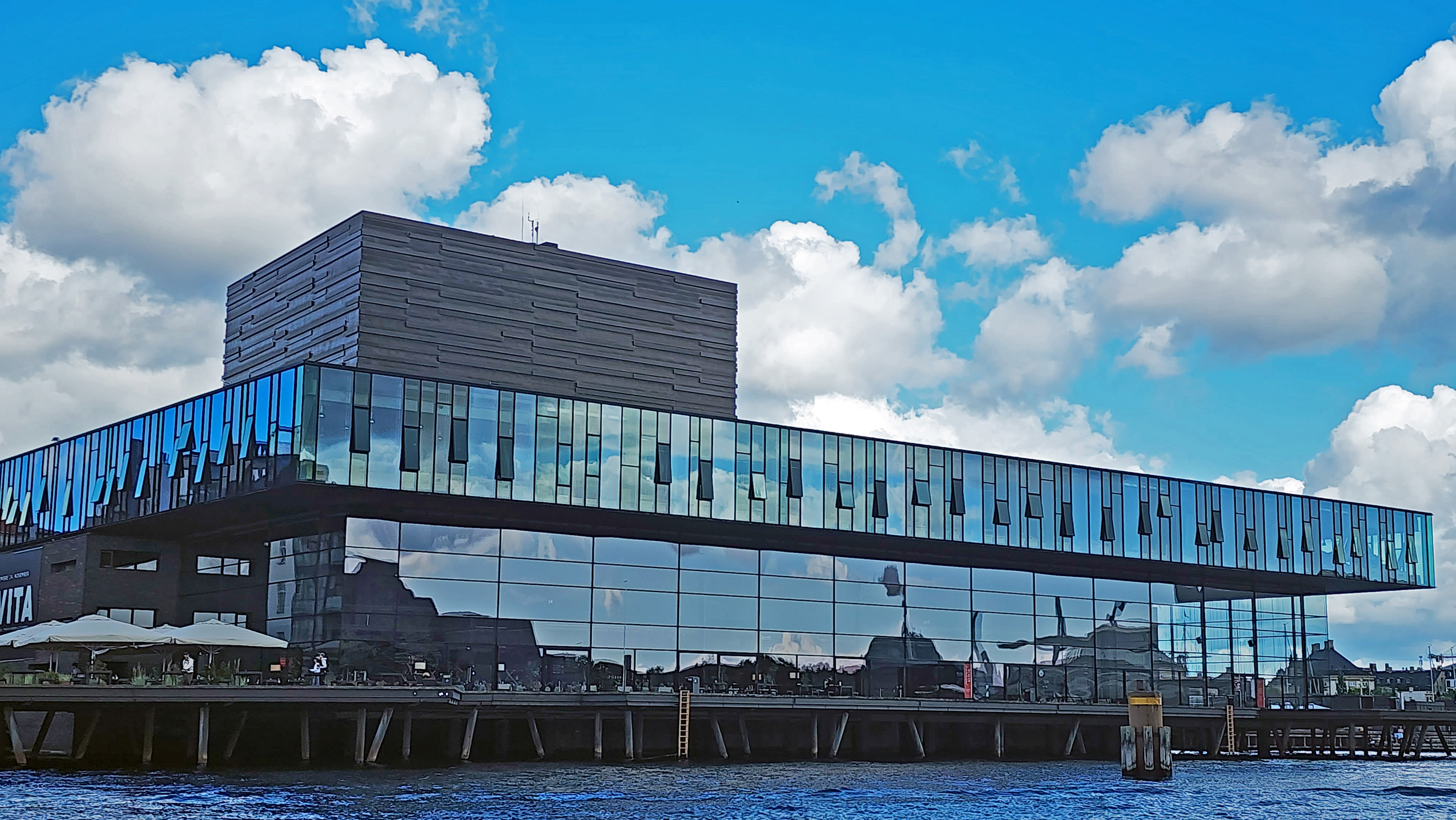 I’m a big fan of architecture in general and Copenhagen has a wide range of building styles from centuries old churches to ultra-modern office buildings. The images above are only a tiny slice of what you can find in the city center.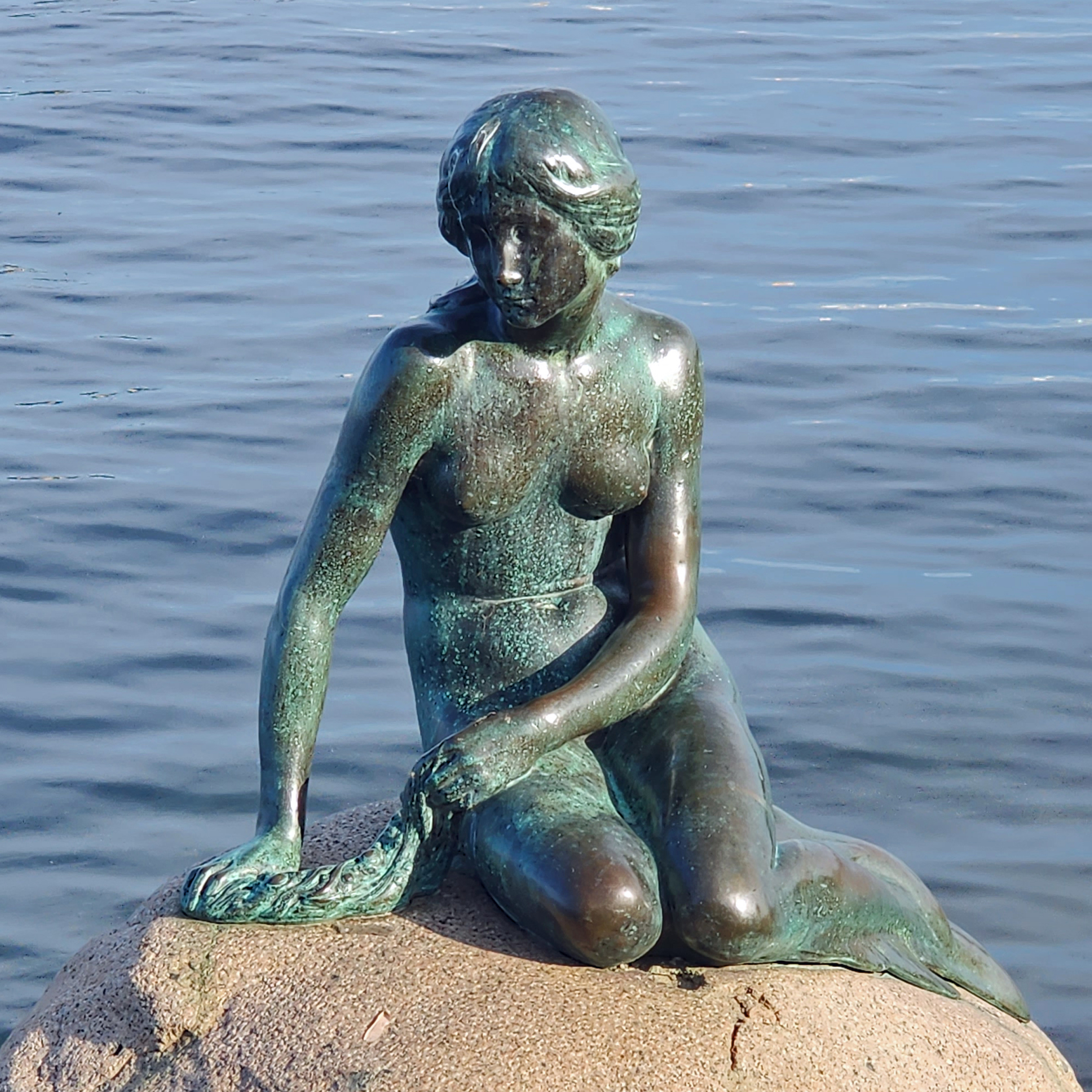
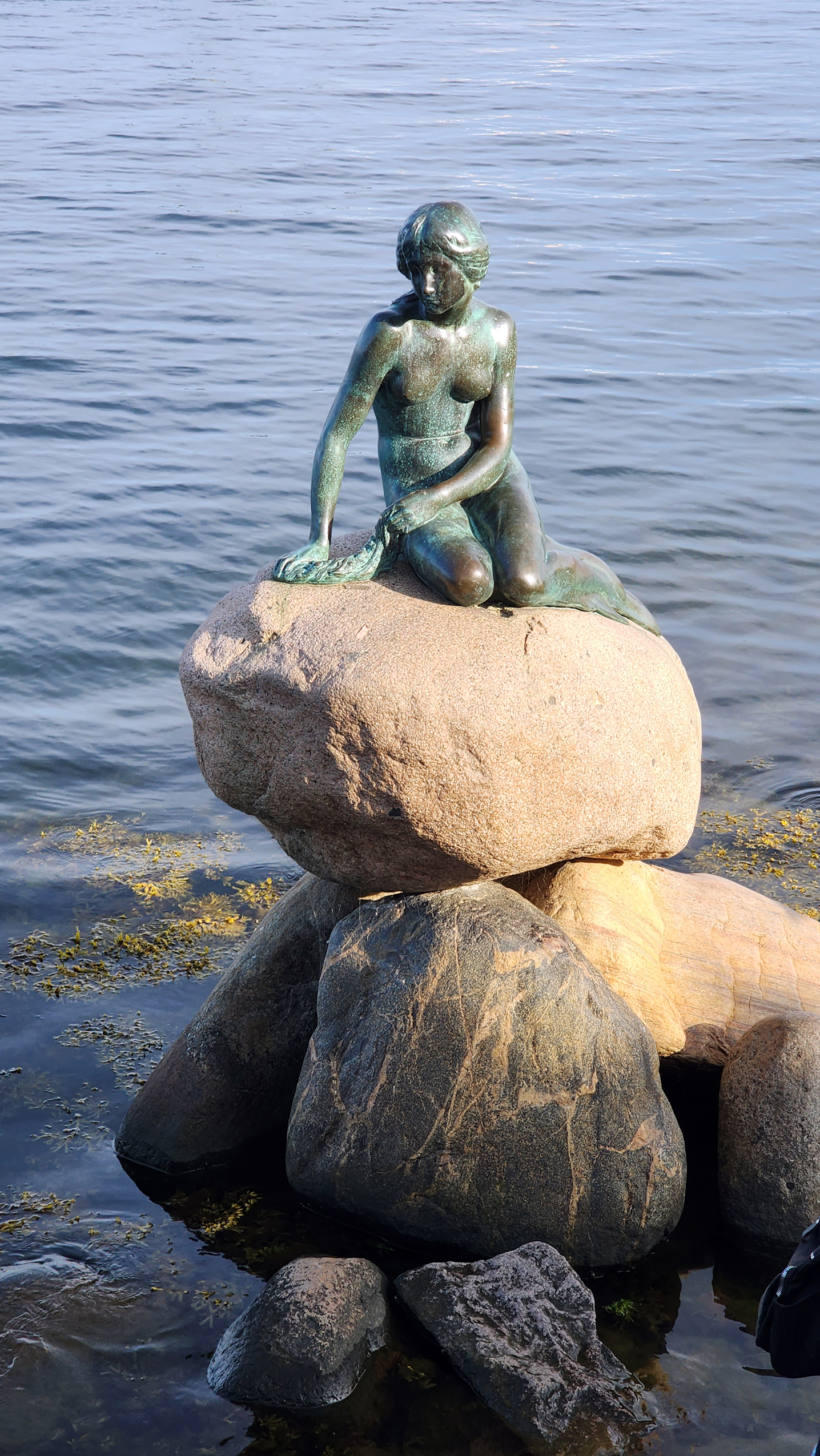 The Little Mermaid sculpture was inspired by the 19th century Hans Christian Andersen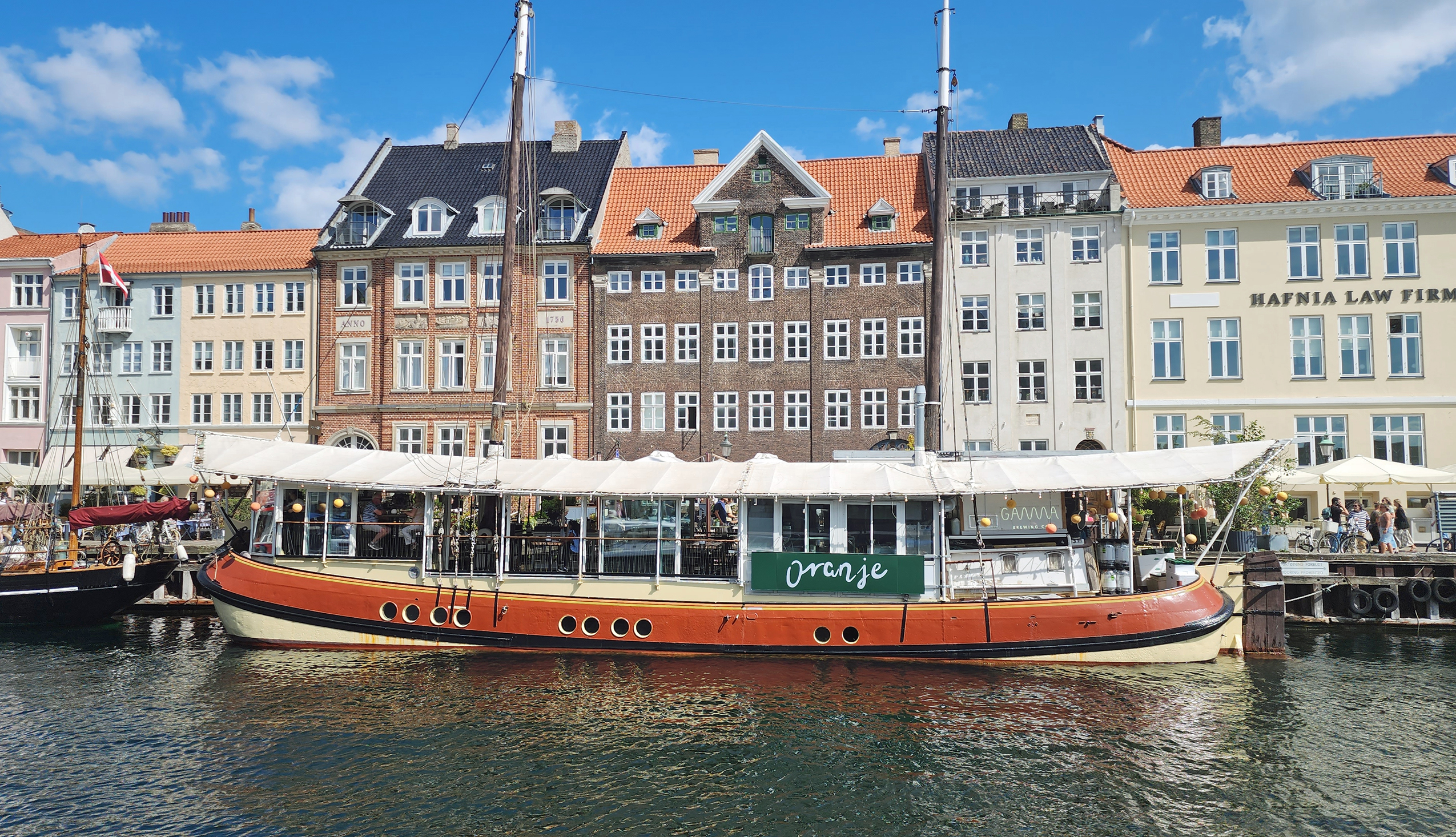
 Denmark is part of the European Union but uses its own currency, the Danish krone. Euros are accepted most places, though, and even American dollars in some places. And almost every place accepts credit cards.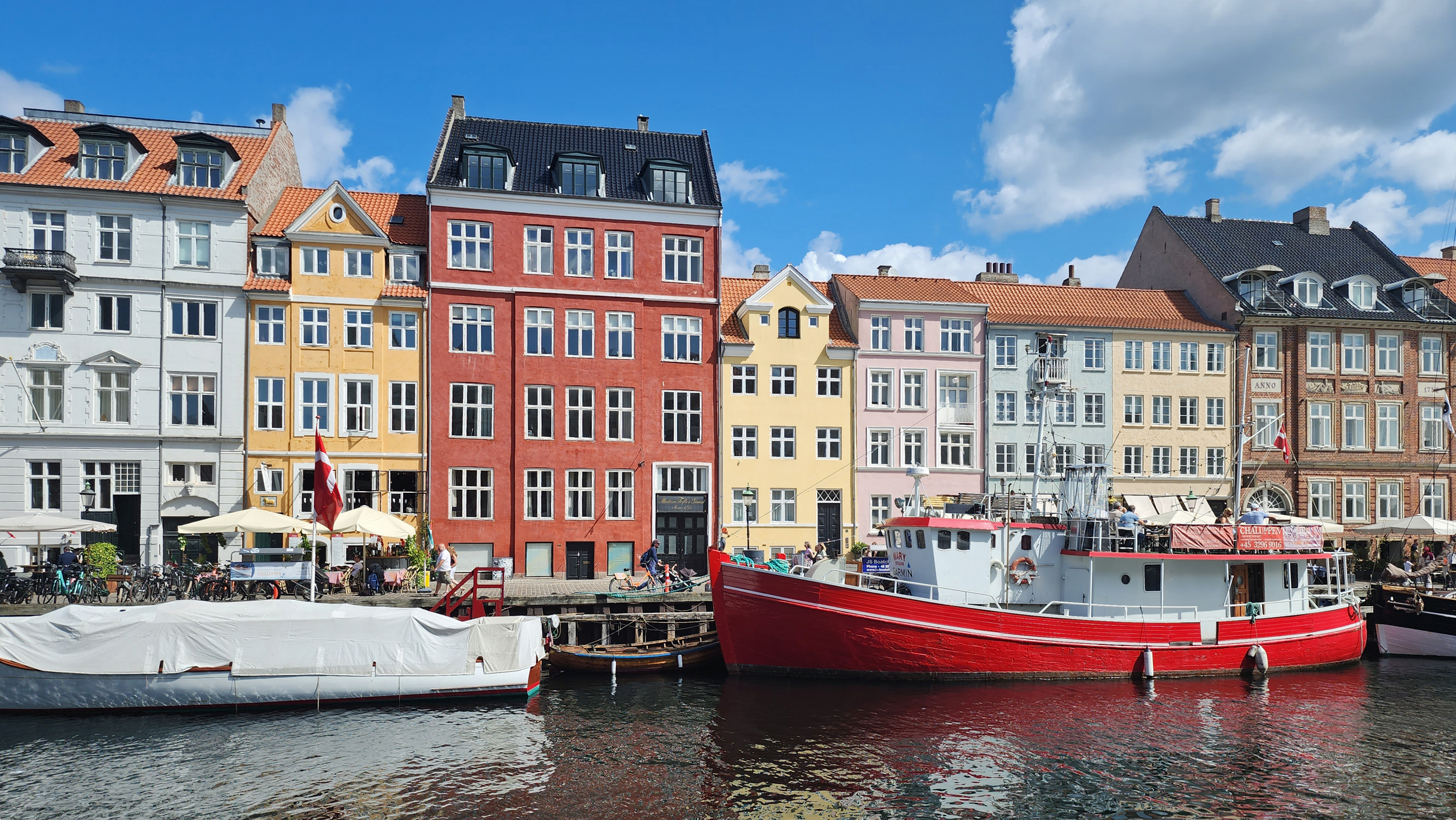






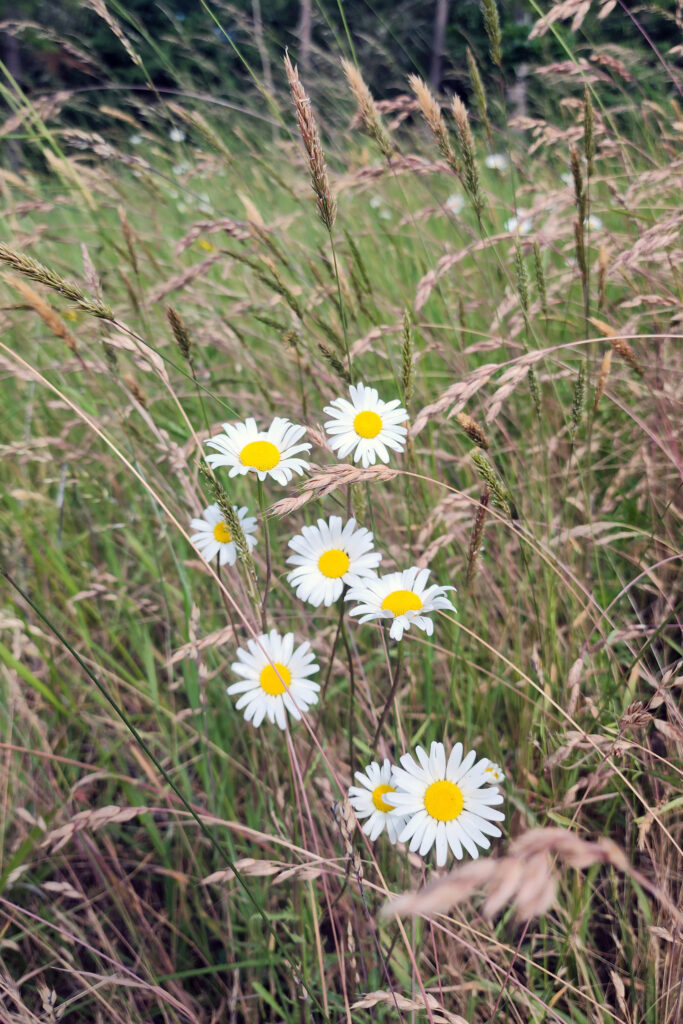 Introduction:
 The Park: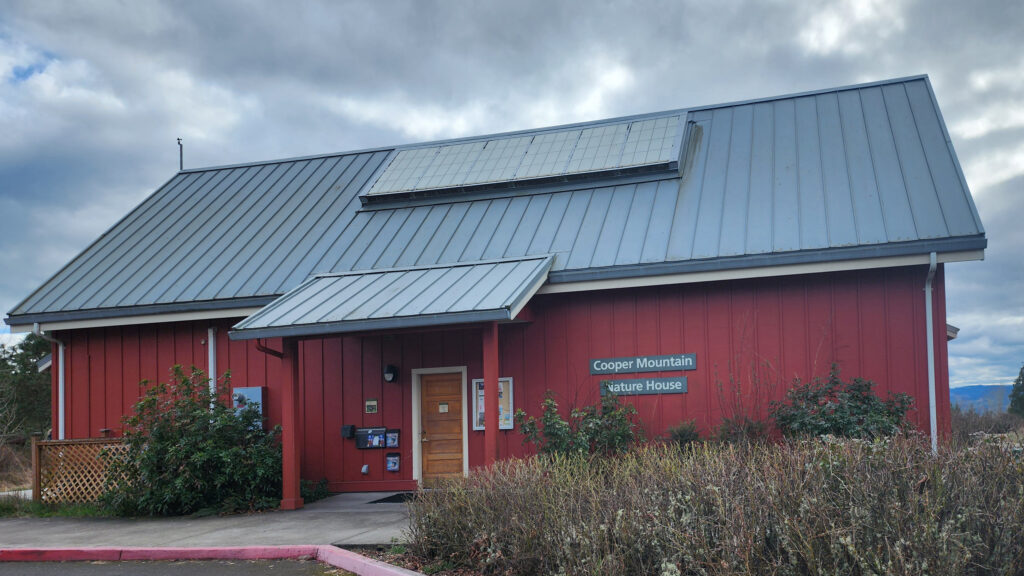
 The Hike: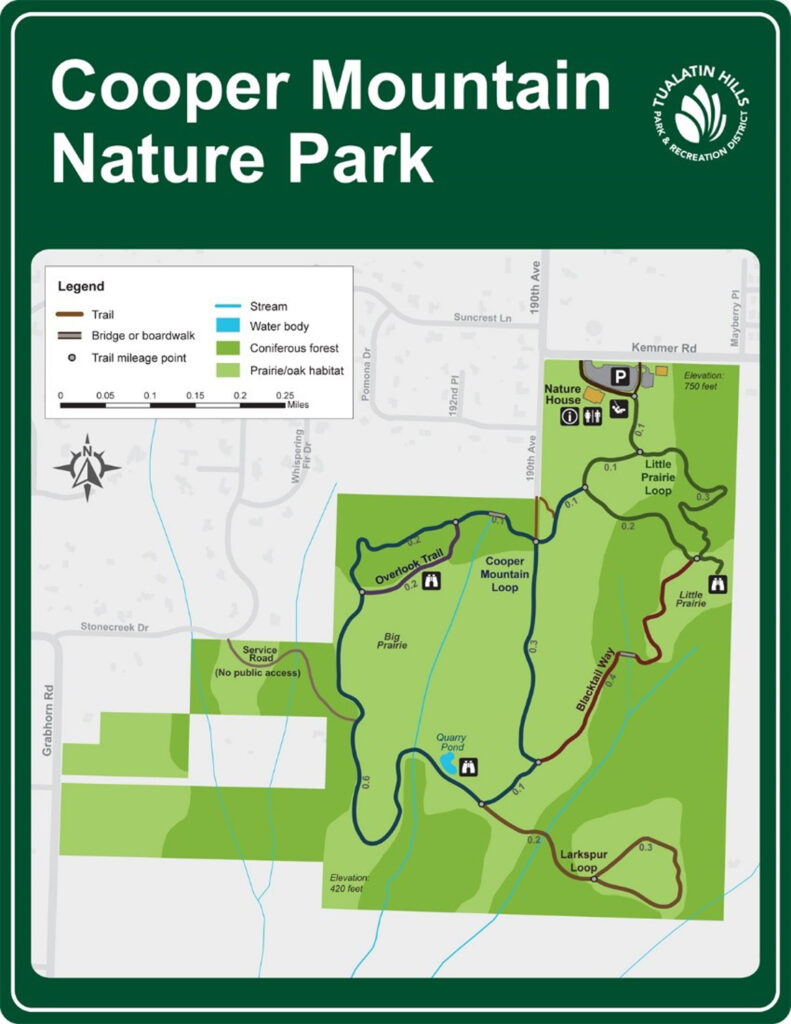
 Trailhead:
 The hike: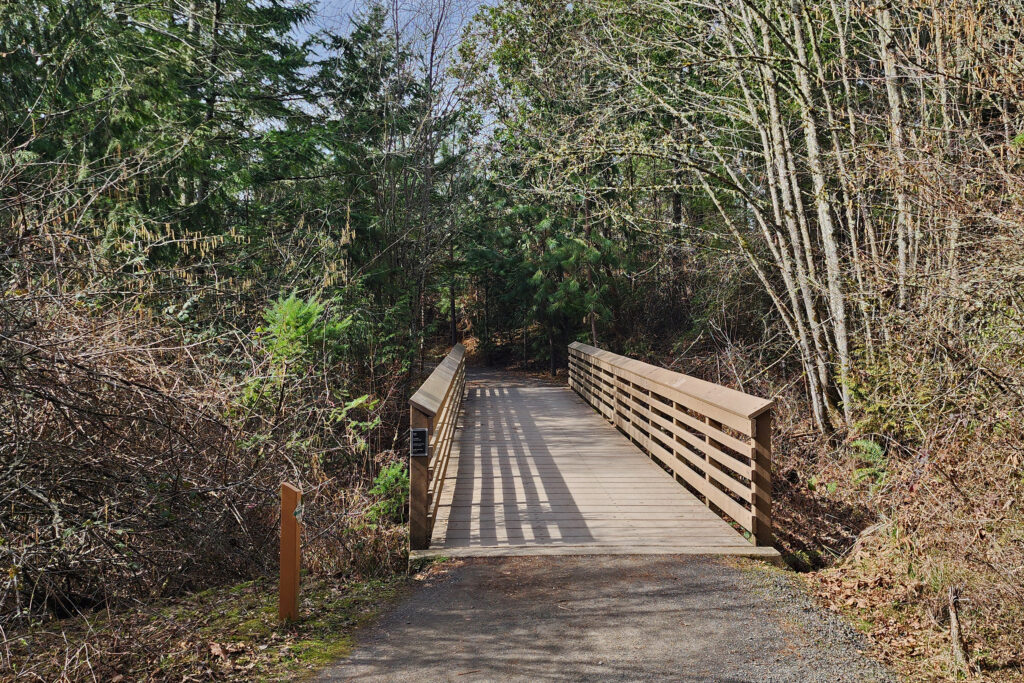
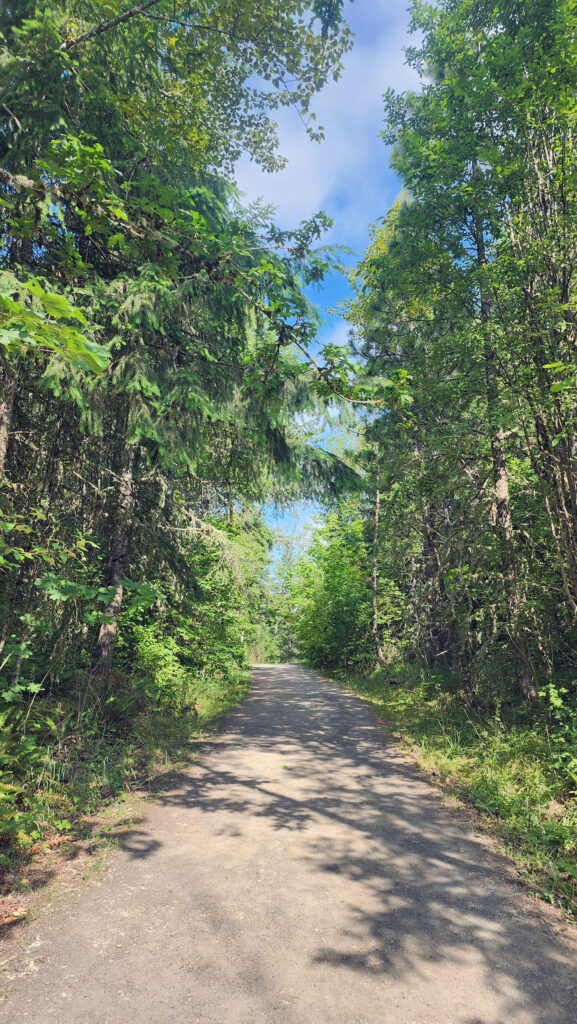
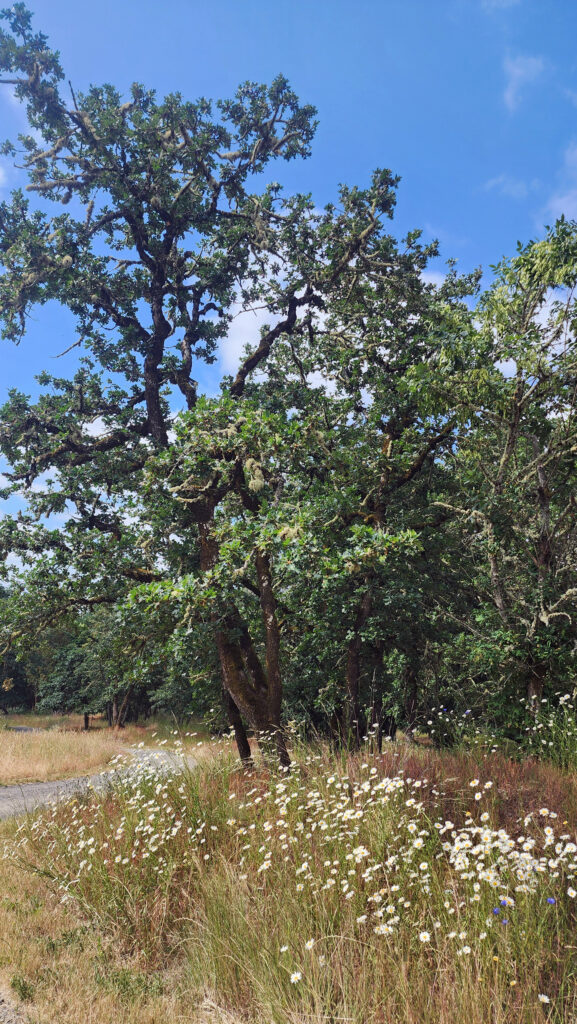
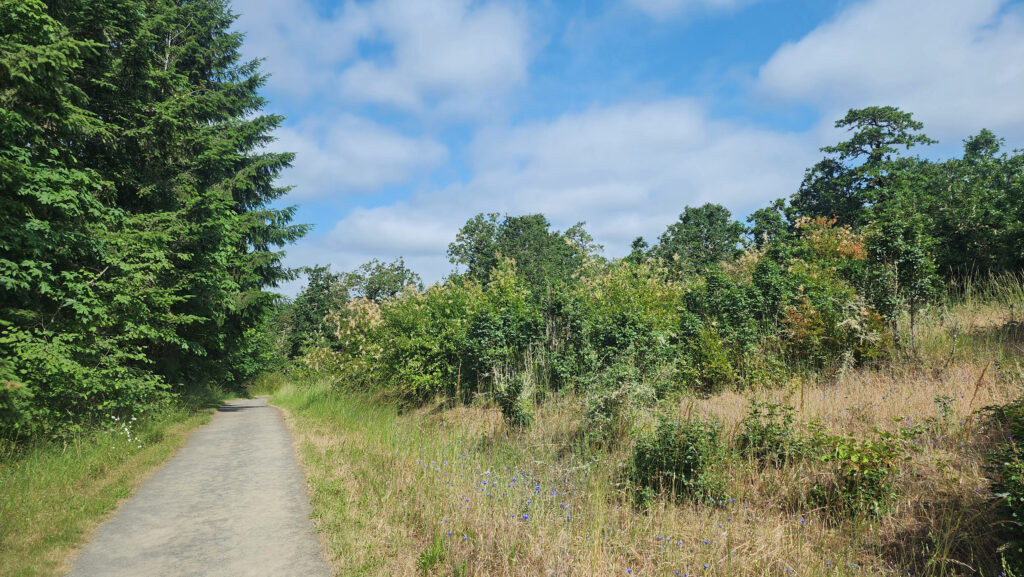 At the next junction, turn right onto Blacktail Way, which climbs, steeply in places, for half a mile to the next junction. Here there is a short trail to the right to a viewpoint. Back at the junction, turn right onto Little Prairie Loop and follow it through the forest and back to the trailhead.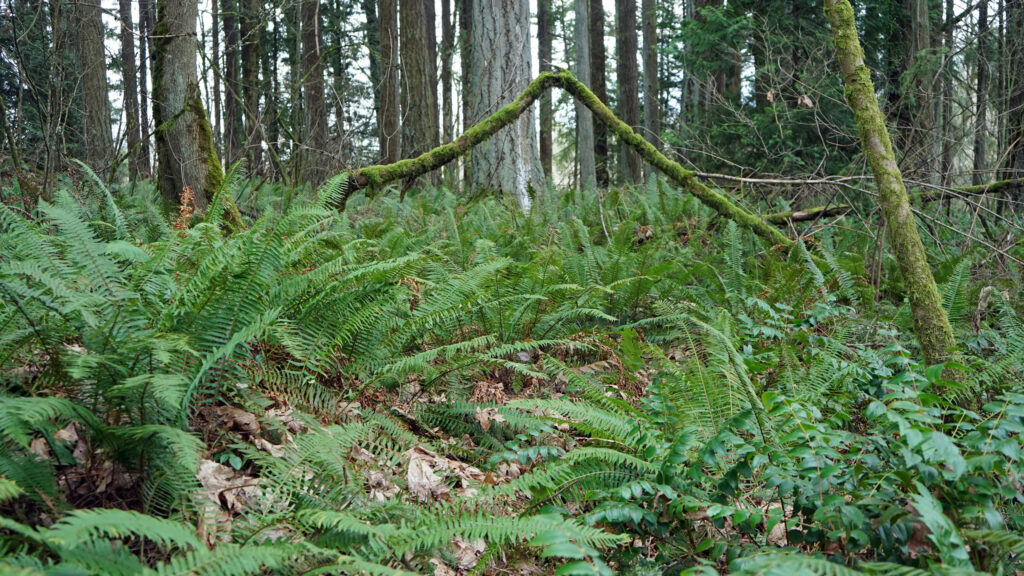
 Posted May 2, 2025. Updated with new photos June 16, 2025.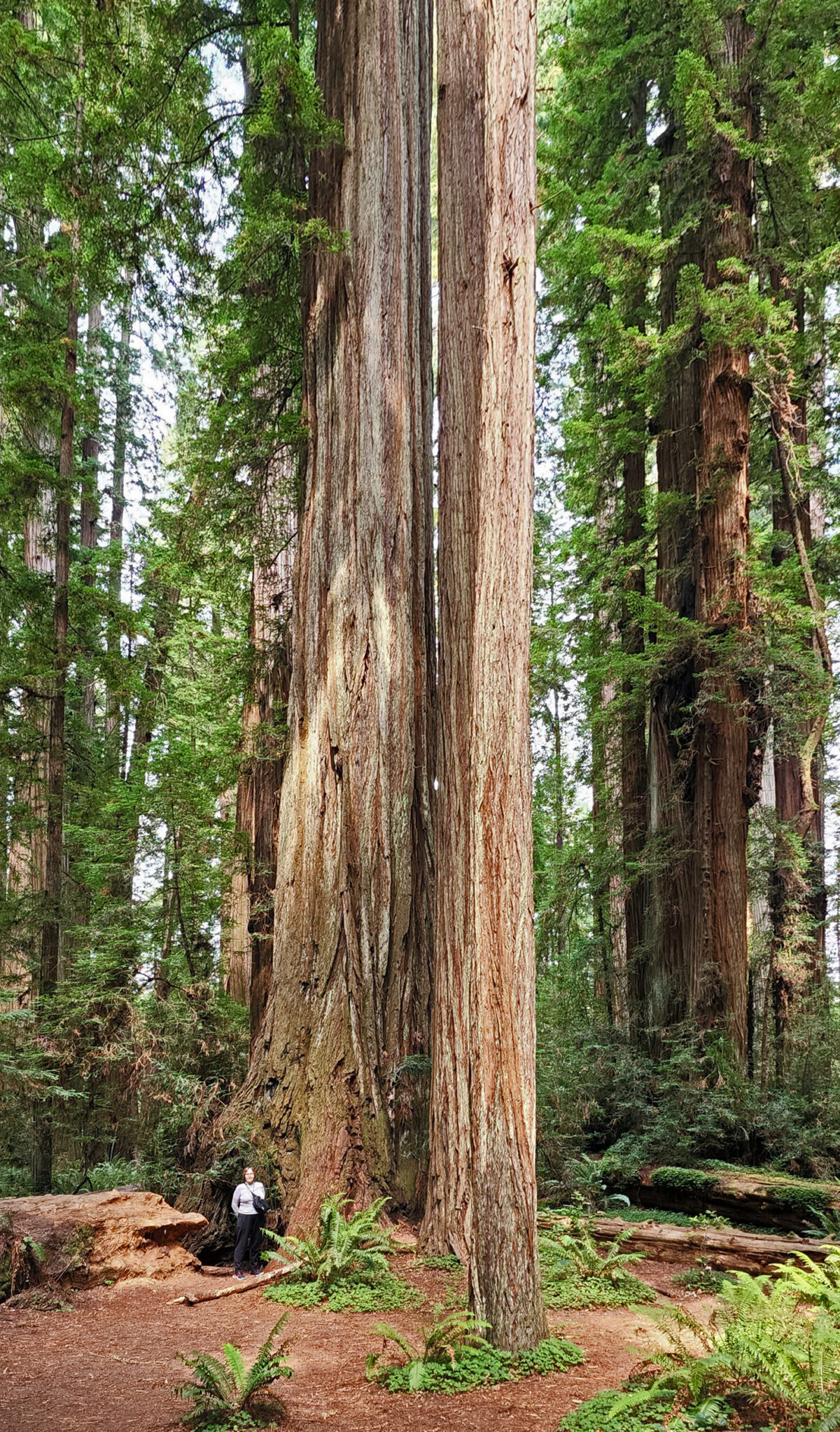







 If you’ve never been to Point Defiance, check out the park’s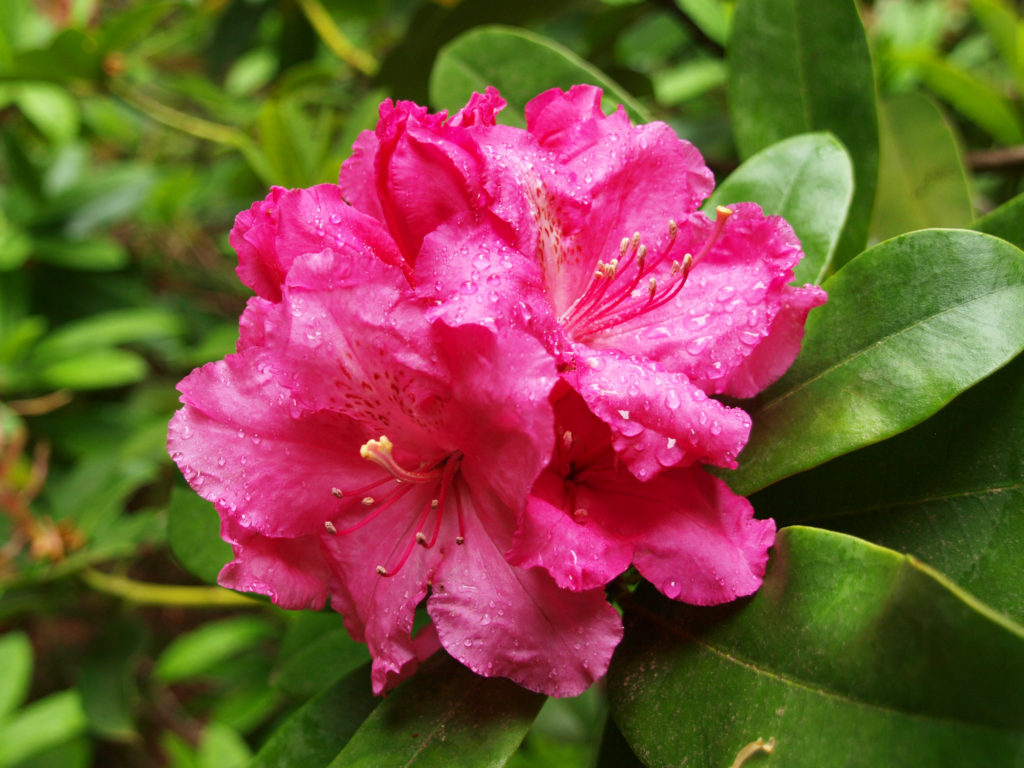
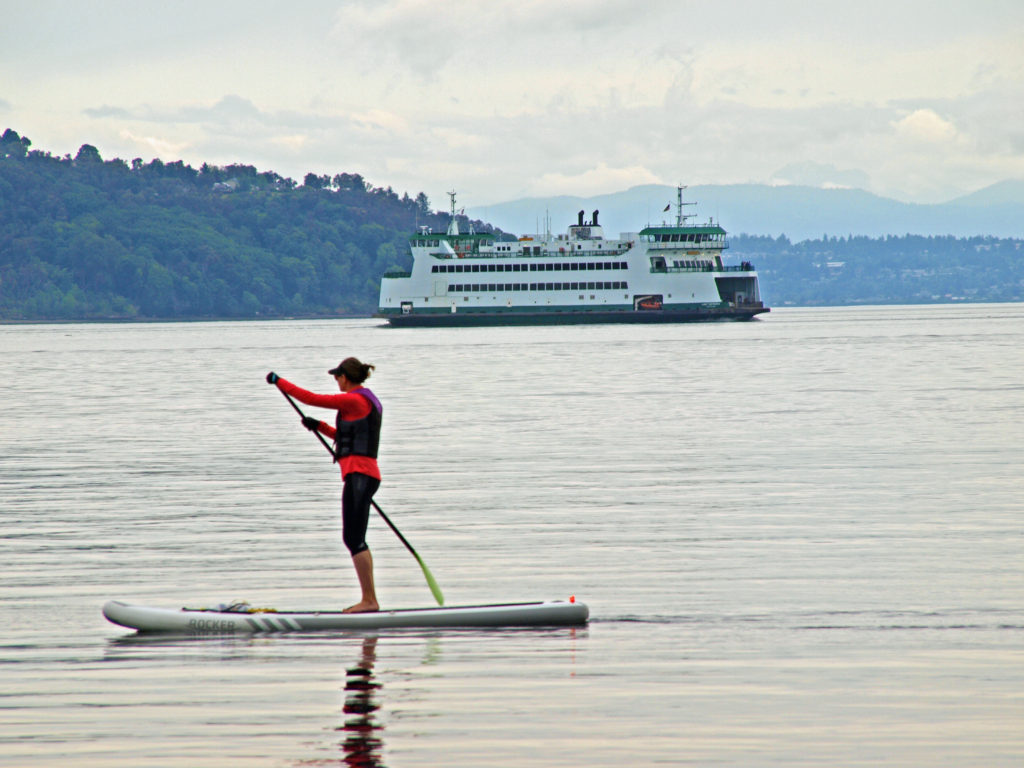 There is a wide, paved, ADA accessible path (the Promenade) connecting the beach with the marina area of the park and the Point Ruston Waterwalk, giving unhindered pedestrian and bicycle access to the park from the Tacoma waterfront. And a construction project completed in 2022 expanded the parking lot, created new entry and exit paths for pedestrians and cyclists separated from the vehicle roadway, a new beach pavilion, new restrooms, a new ADA accessible children’s playground, new ADA accessible plazas and pathways, and a renovated WPA-era picnic shelter.
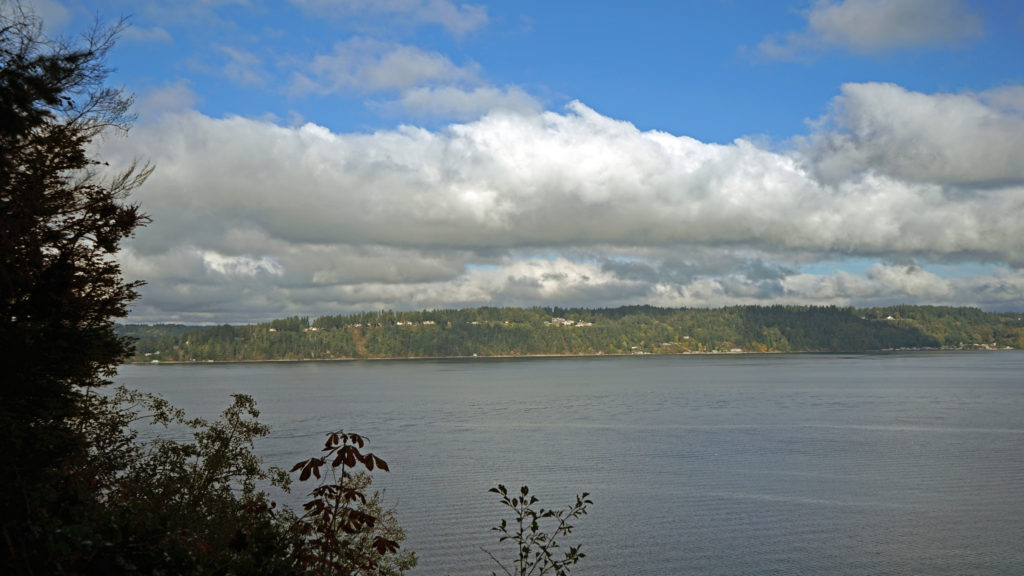 The outer loop of the Five Mile Drive provides numerous waterfront access points with views across Dalco Passage to Vashon Island and across The Narrows to the
  The outer loop is closed to vehicular traffic part of the day to give cyclists, runners, and pedestrians access to the northern half of the park free from conflicts with motor vehicles. On our most recent visit it was closed after 2:00 pm, but on our previous visit it was, I believe, closed in the morning. Check the Point Defiance Park website (linked above) for the current schedule if you plan to visit the park.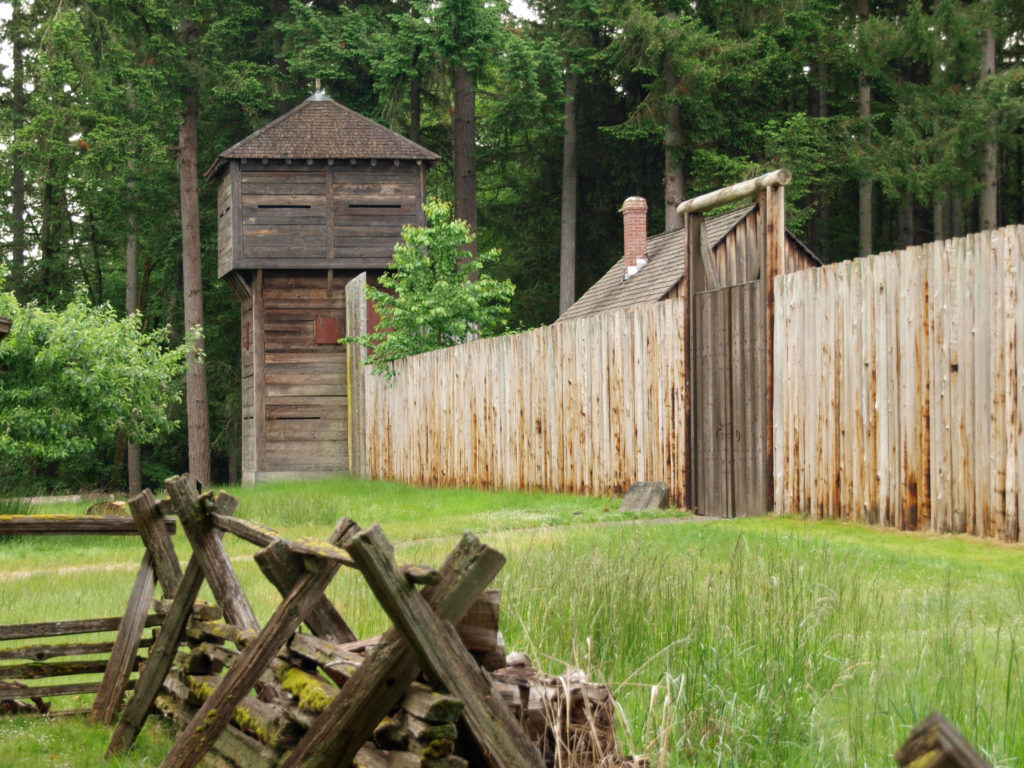
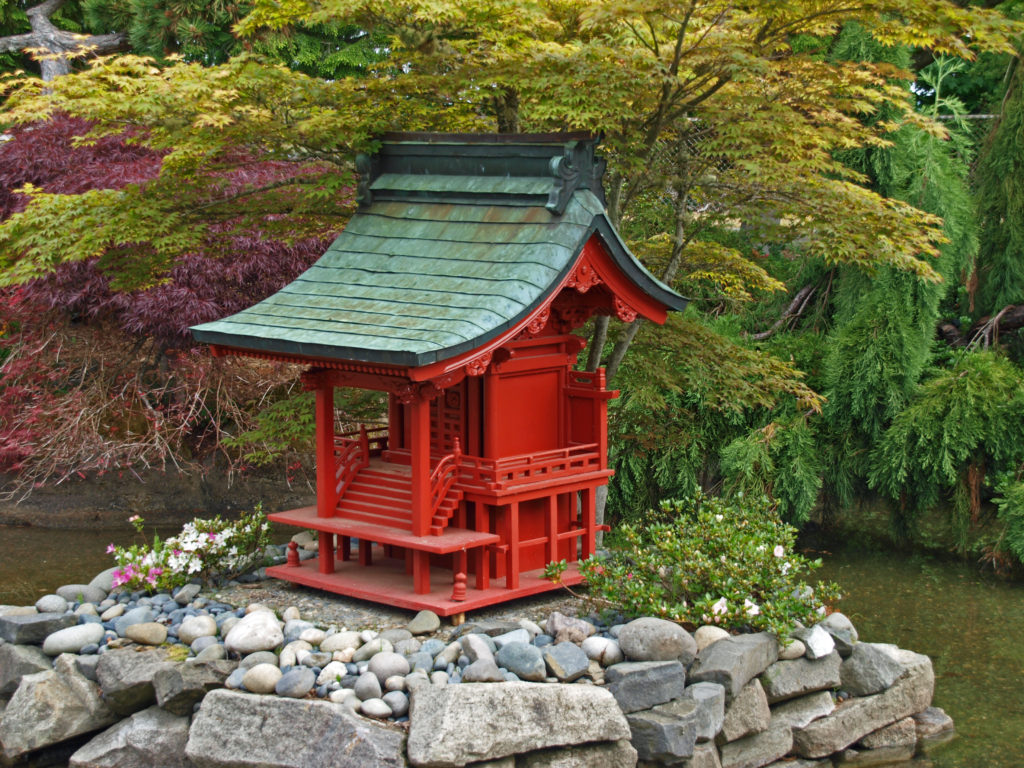
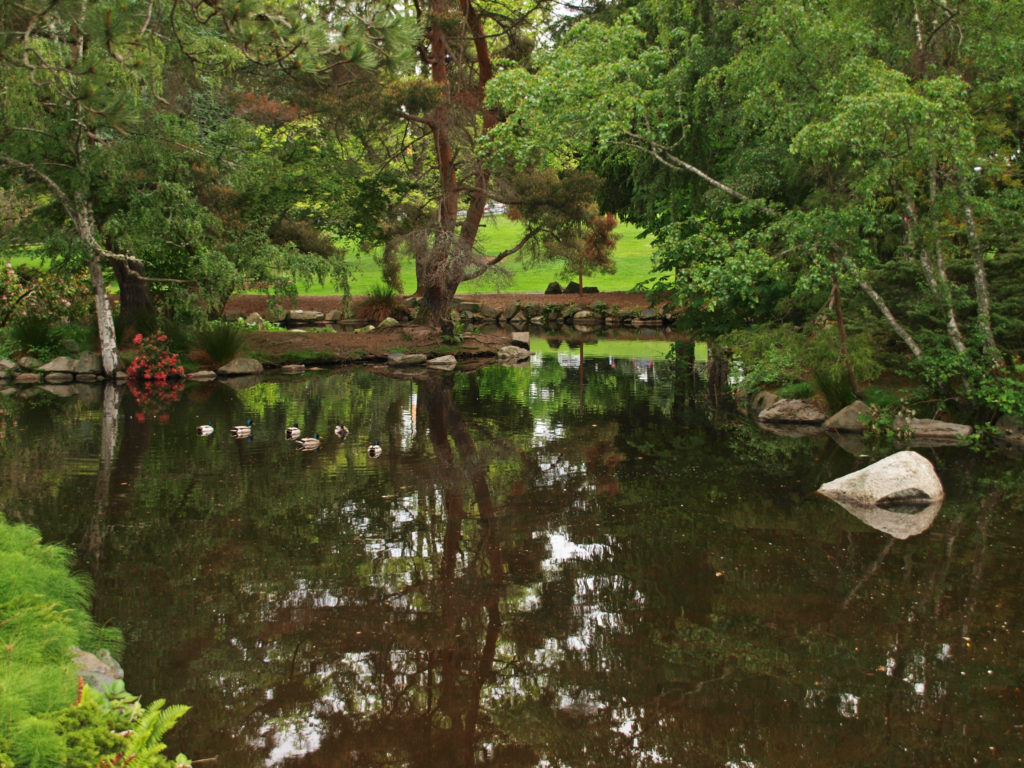 On both of our recent visits our final, and longest, stop was at the botanical gardens area near the entrance to the park. Here there is a large pond with a waterfall, an herb garden, a large rose garden, a dahlia garden, an iris garden, and a Japanese garden. We could easily have spent even more time here than we did on either visit. And if you visit the
 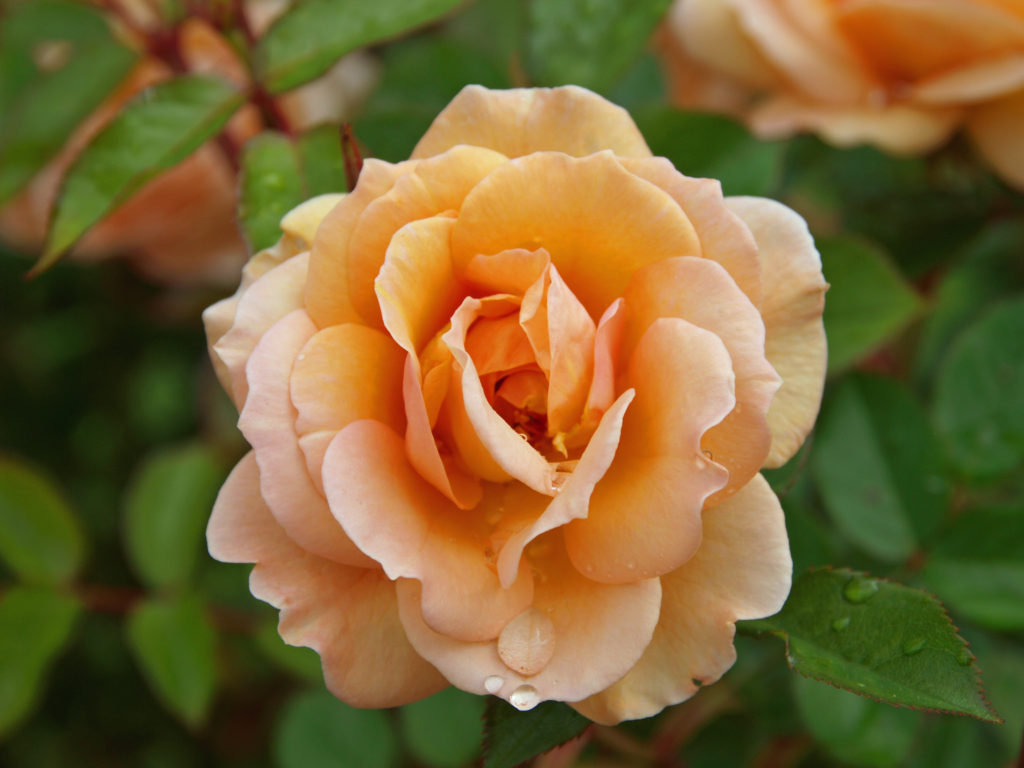 Point Defiance Park is one of the largest, and best, city parks in the Pacific Northwest. The park is similar in many ways to Vancouver, BC’s Stanley Park. Point Defiance is, without question, one of Tacoma’s top attractions.
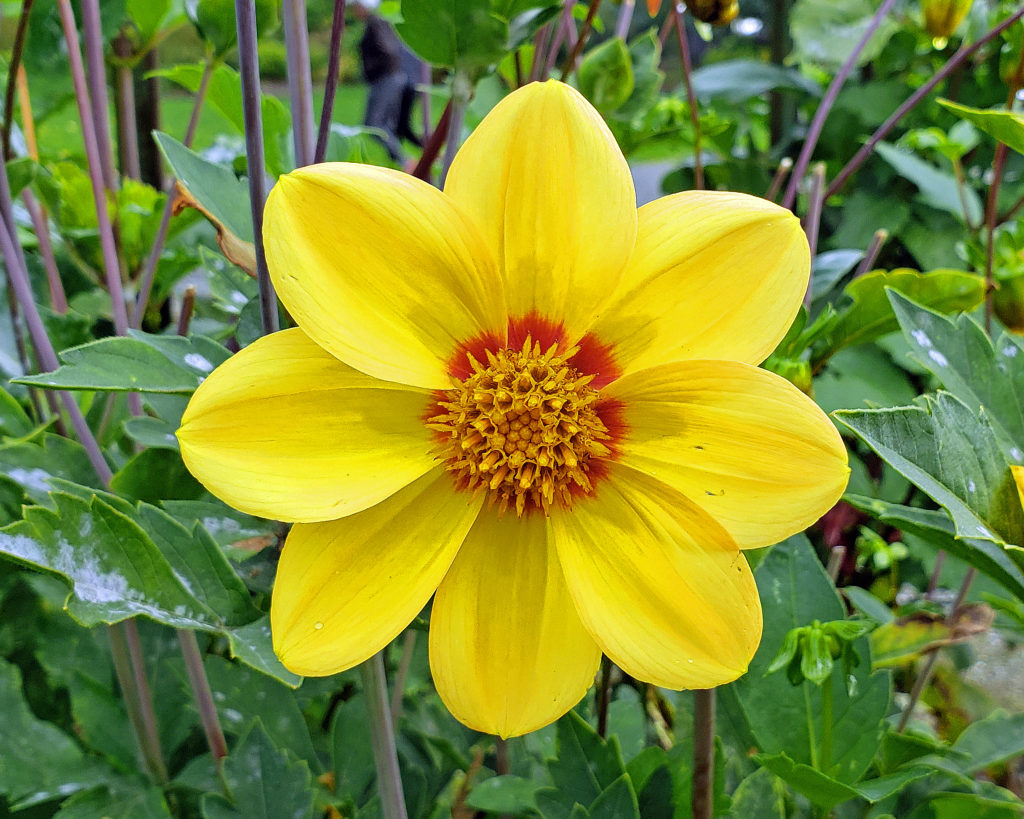 Originally posted May 19, 2019. Most recently updated February 18, 2025.