
by Alan K. Lee
Introduction
On the tour of Scandinavia that my wife and I took in August 2026, Odense was our first stop after we left Copenhagen. (It’s pronounced something like ood-en-say, although that may not be exactly correct, but it’s definitely not oh-dense, which is how I was initially pronouncing it). I knew nothing about the city prior to our visit, but quickly learned that both Hans Christian Andersen and Thomas Danbo, whose giant troll sculptures can be found around the world, were born in Odense. We were only there for a few hours, but that was enough to tour a couple of the churches in the city center, spend some time exploring Fairy Tale Park, and get an unexpected taste of Andersen’s legacy.
History
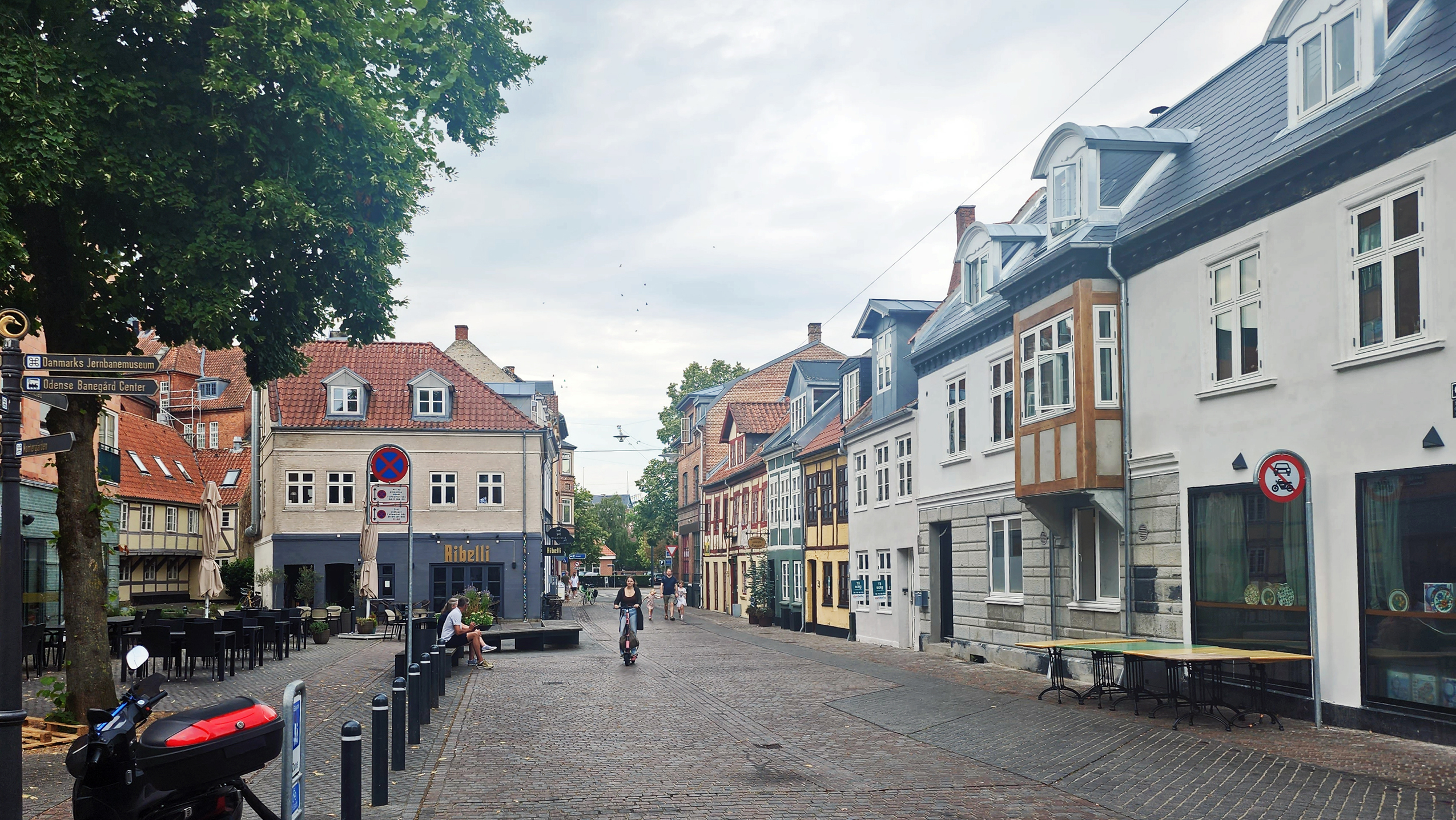
The Odense area has been inhabited for at least 4000 years, and the city of Odense is more than 1000 years old. By the late 11th century it was a thriving city. Throughout the Middle Ages, Odense was a commercial center. In the 18th century a five mile long canal was constructed from Odense to the sea, making the Port of Odense a center of maritime trade. From 1919 to 2012 the Odense Steel Shipyard was one of Denmark’s largest ship builders. And Odense has been a railroad hub since a large railroad terminal was built there in 1865, further enhancing the area’s commerce and increasing the city’s population.
The City
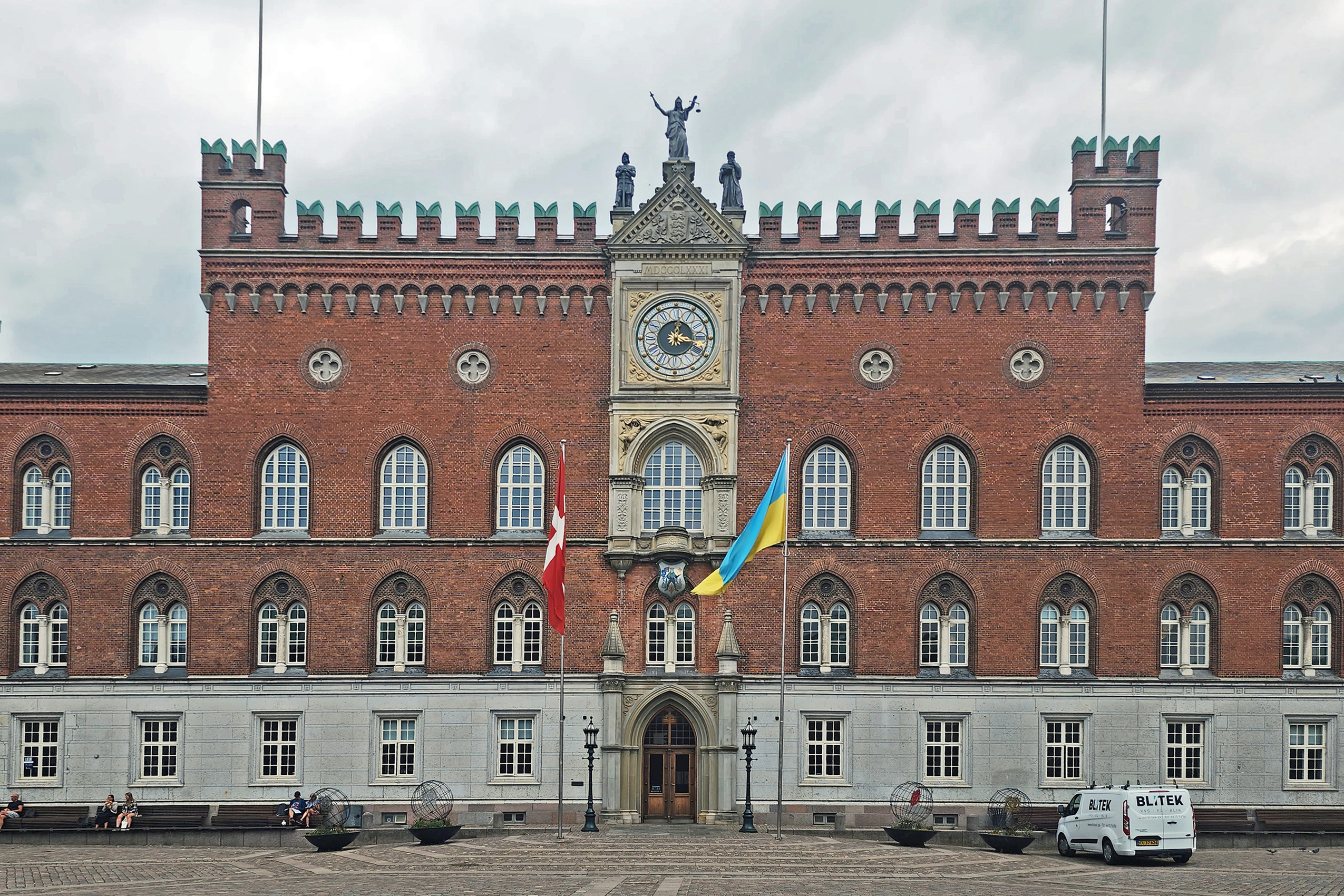
Today, Odense is the largest city and commercial center of Funen Island, about 100 miles (160 km) west of Copenhagen. Odense is the third largest city in Denmark, with a population of about 185,000.
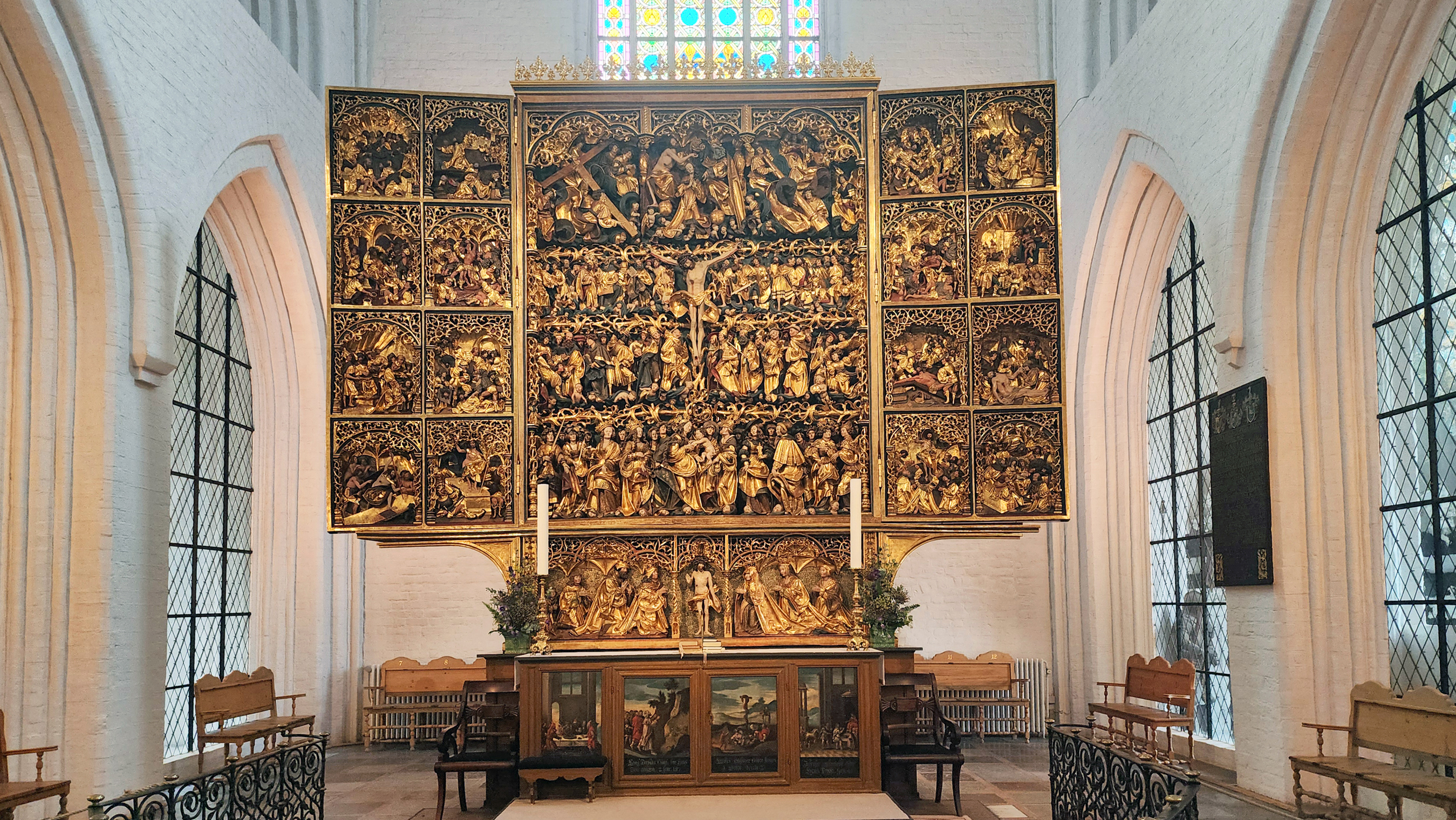
The historical center of Odense boasts two large churches, St. Alban’s Church (Sankt Albani Kirche) and St. Knud’s Church (Sankt Knud’s Kirke), only a short walk from each other.
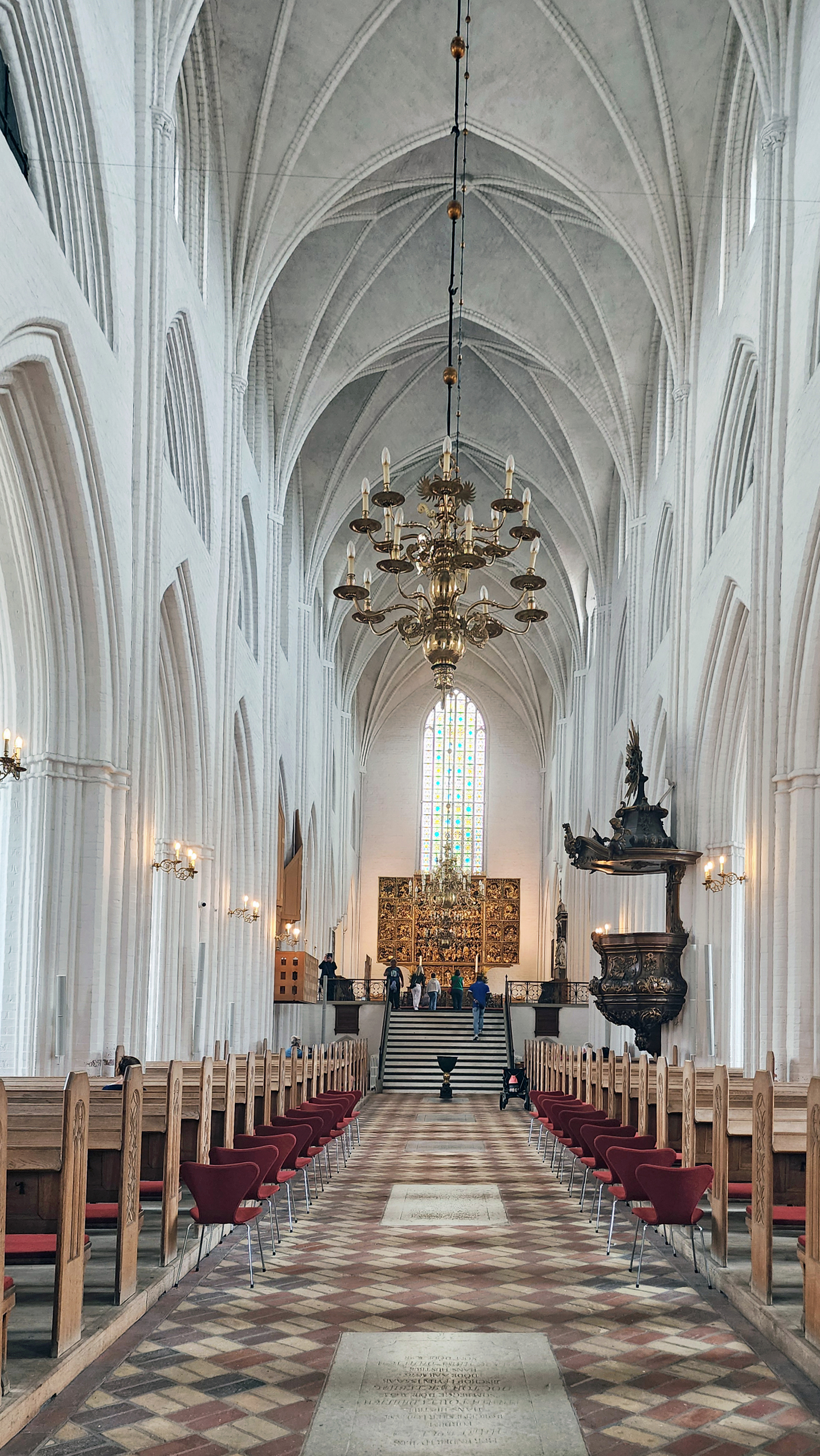
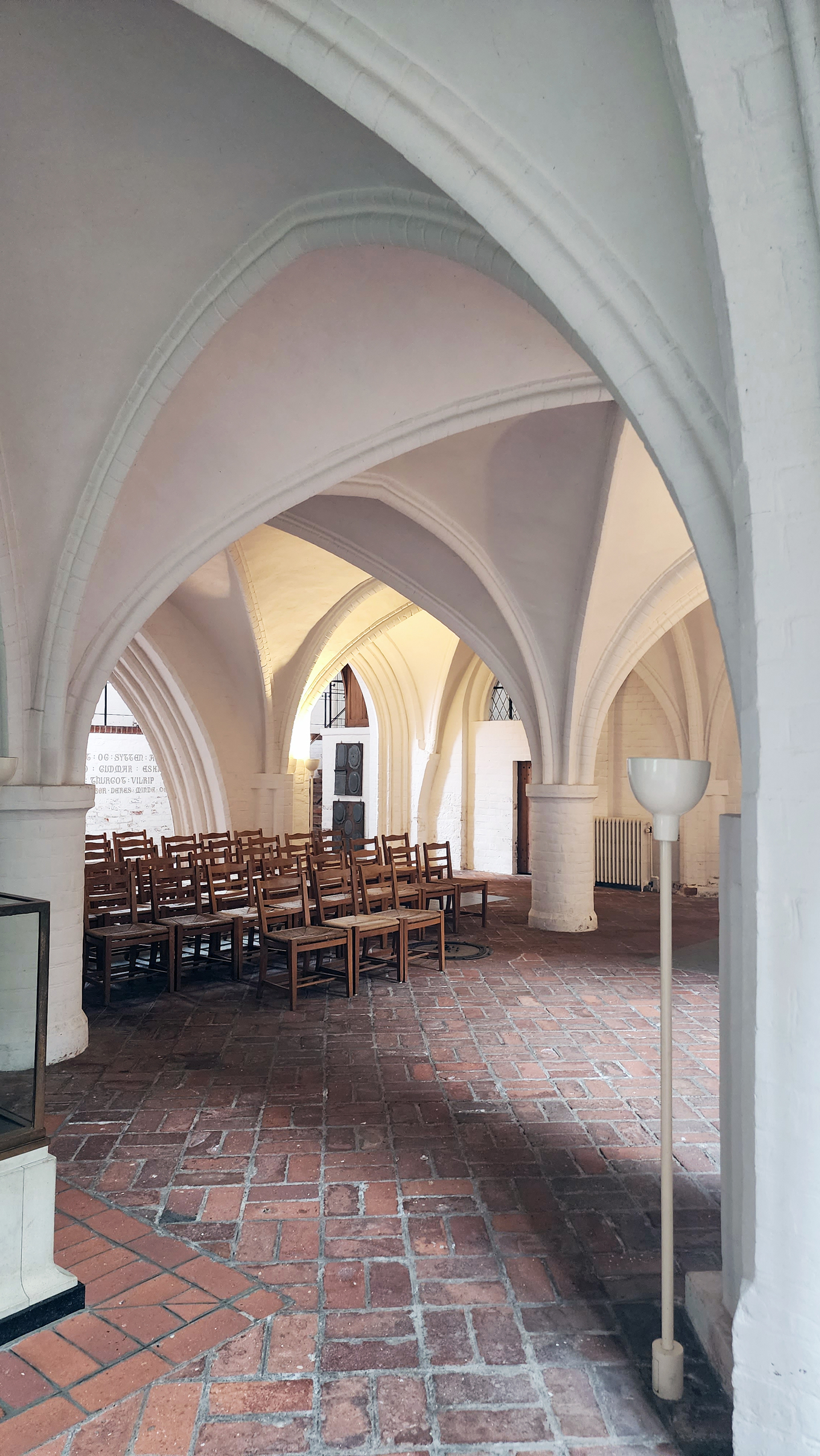
Saint Knud’s Church (aka Odense Cathedral) was built sometime after King Knud (King Canute) and his brother were murdered in 1086. The present church was built adjacent to the ruins of St. Alban’s Priory, where the murders took place. The exact date of the construction of Saint Knud’s Church is not known for certain.
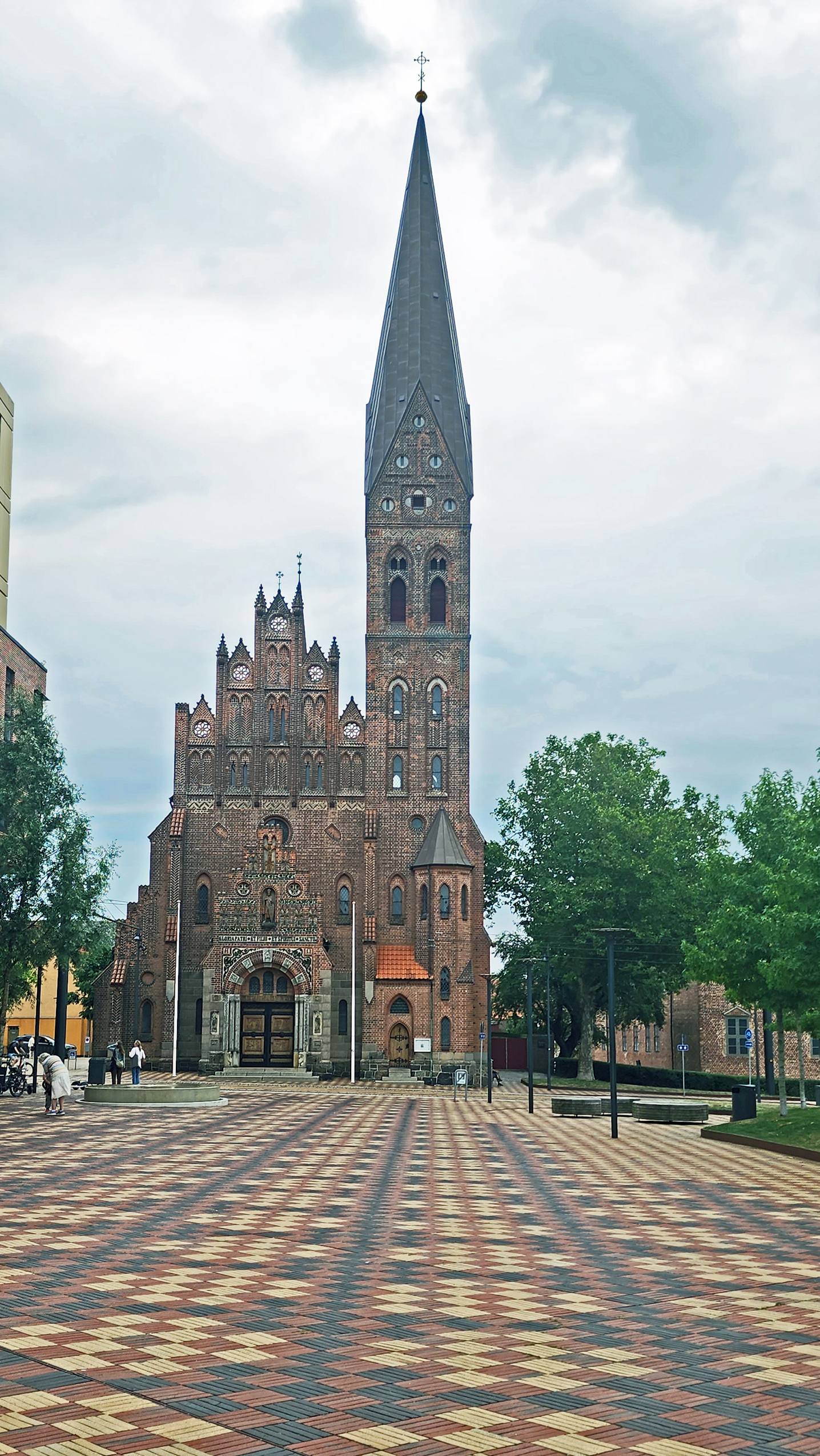
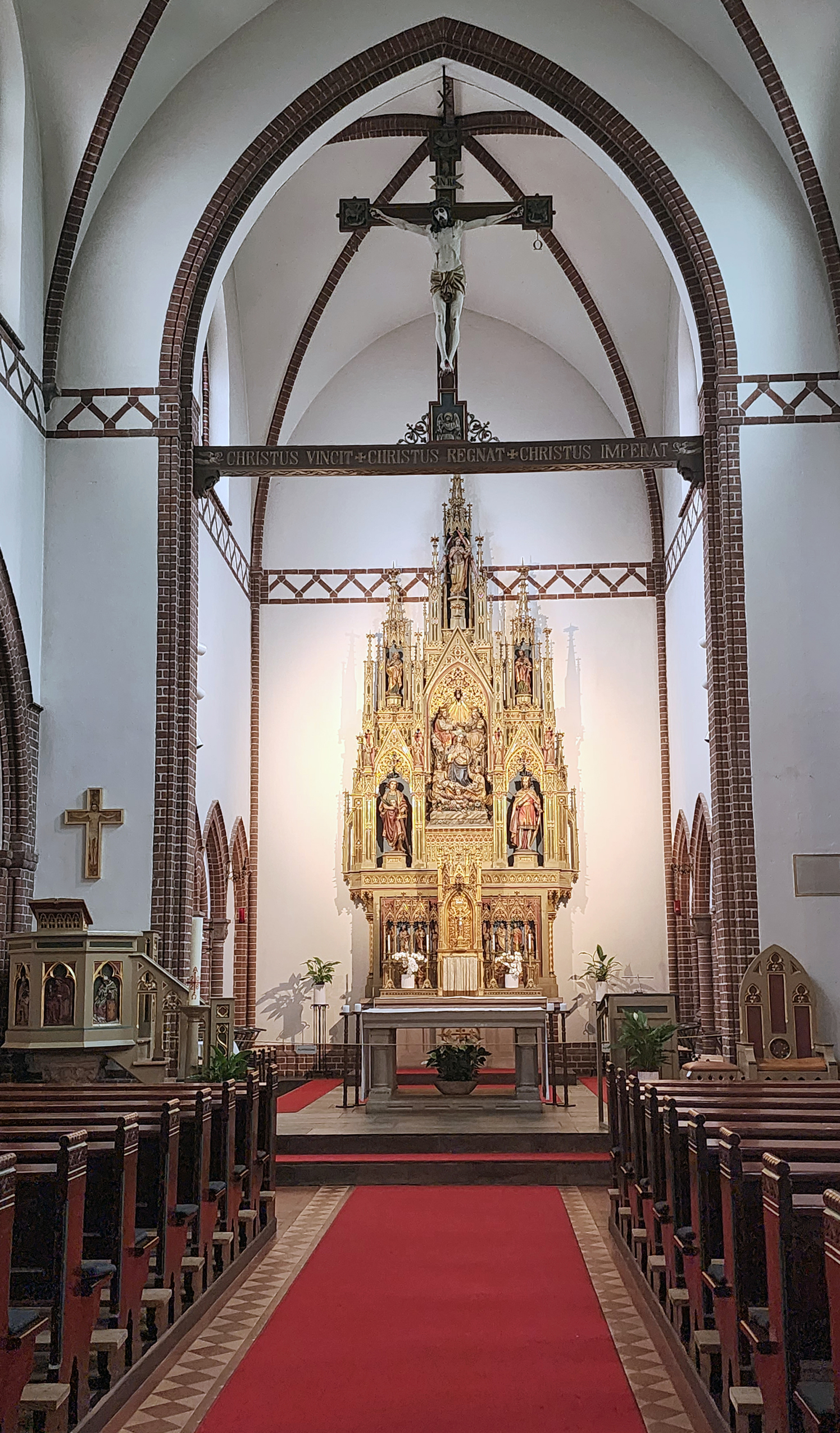
The present day Saint Alban’s Church is a Roman Catholic church and not to be confused with the earlier St. Alban’s Priory. It was built in the early 20th century.
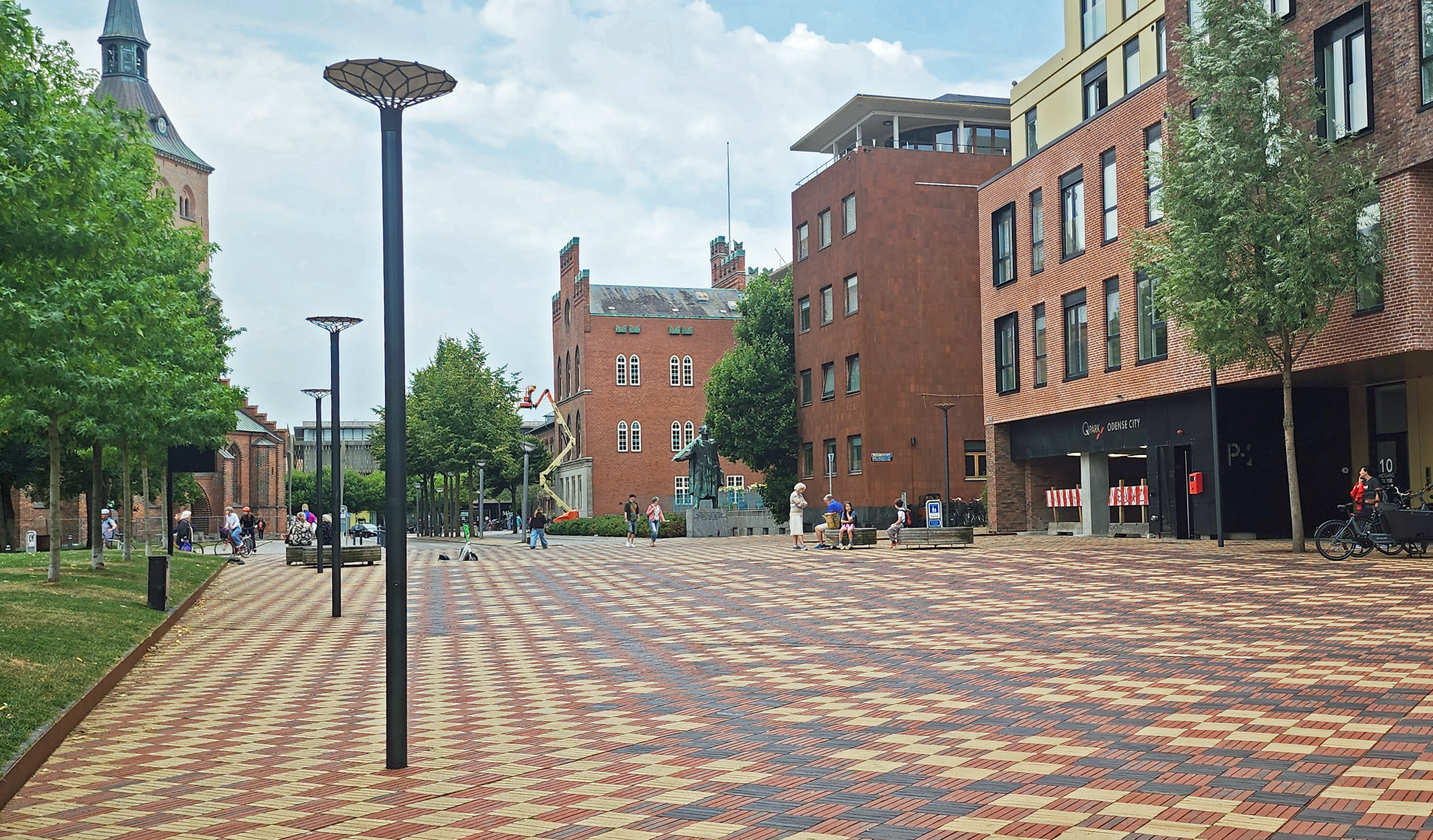
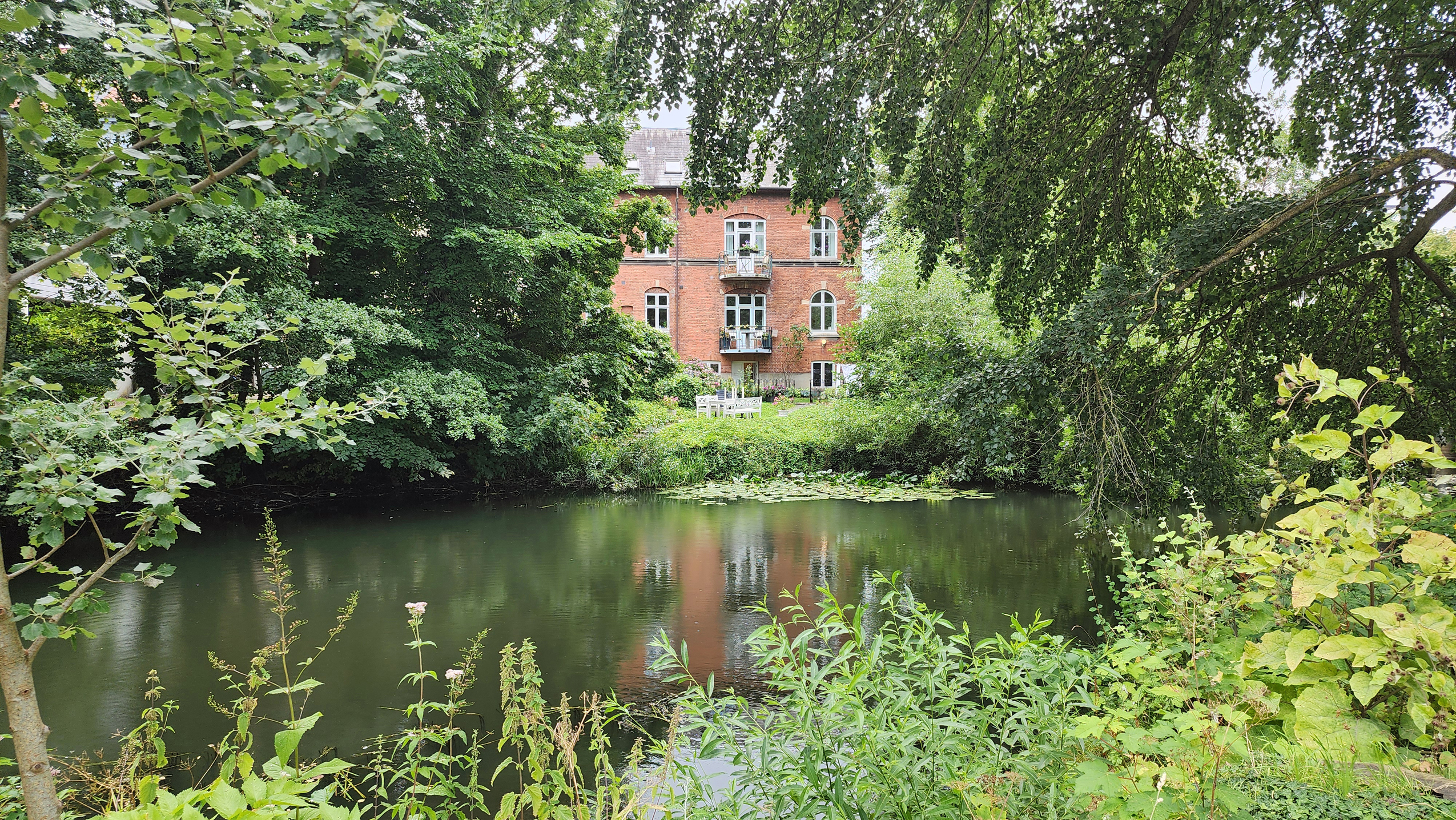
The two churches are separated by the Albani Torv plaza, which sits on the site of the ancient St. Alban’s Priory, and are only about 400 feet apart. Just south of St. Knud’s Kirke, the Fairy Tale Garden is a beautiful little park with a stream running through it.
Hans Christian Andersen
Andersen was born in Odense in 1805. Andersen is, of course, known for his fairy tales, including The Little Mermaid that inspired both the famous sculpture in Copenhagen and the Disney movie of the same name. He also wrote plays, poems, novels, and travelogues.
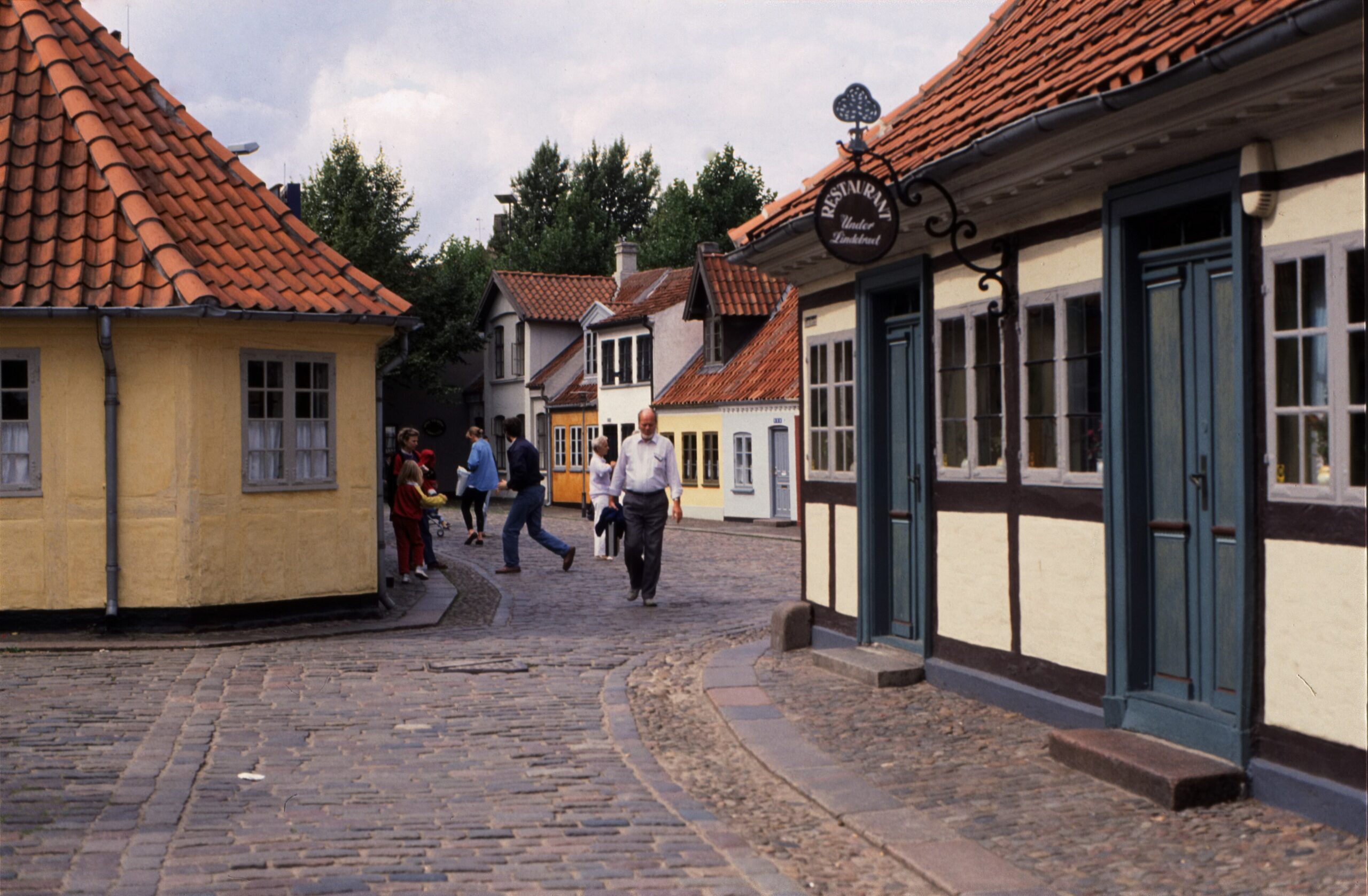
Andersen left Odense at the age of 14 to pursue an acting career in Copenhagen. What is believed to be the house where he was born in is now a museum. His childhood home is also now a museum. Both are within easy walking distance of St. Alban’s and St. Knud’s churches in the old city center.
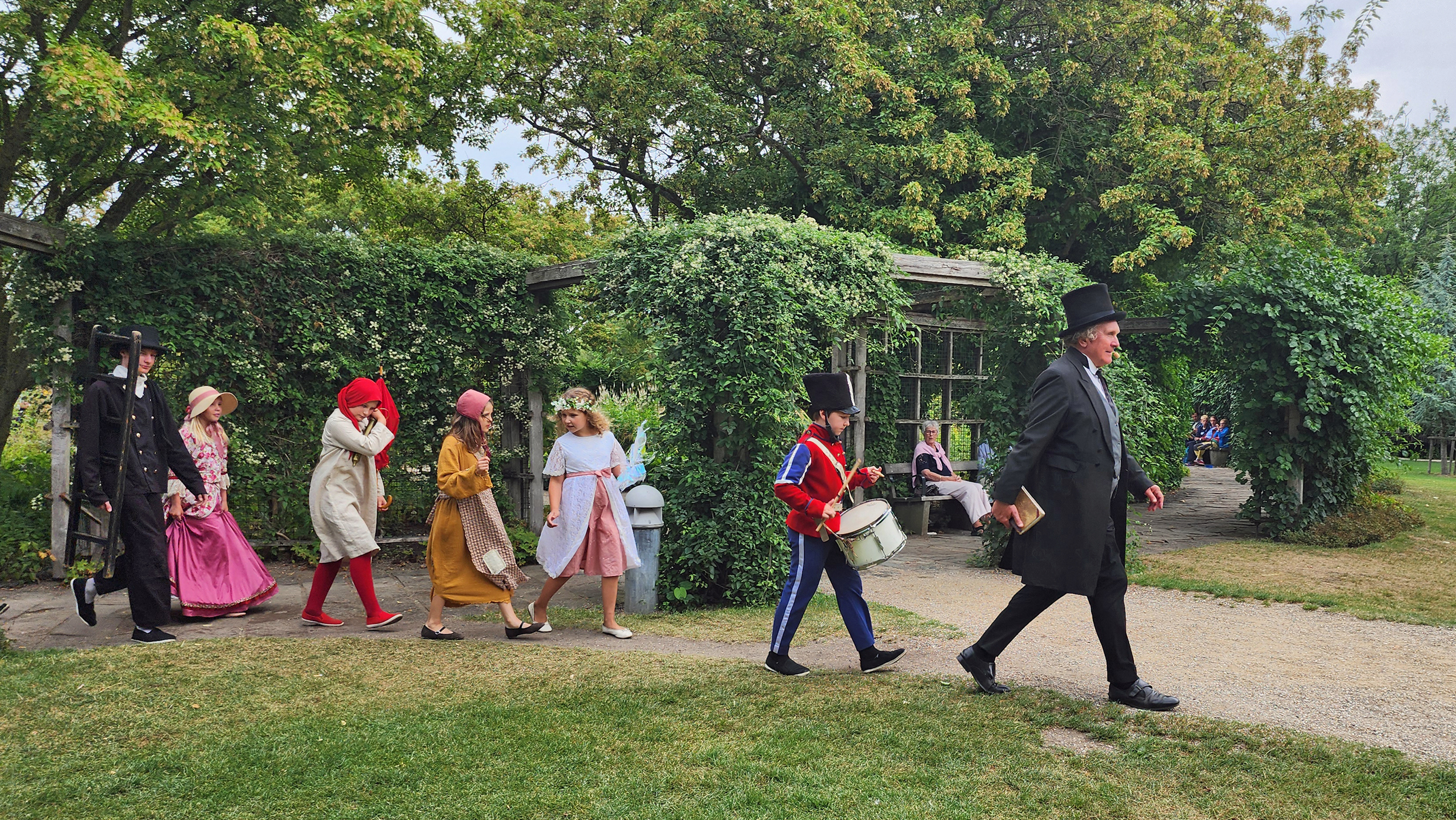
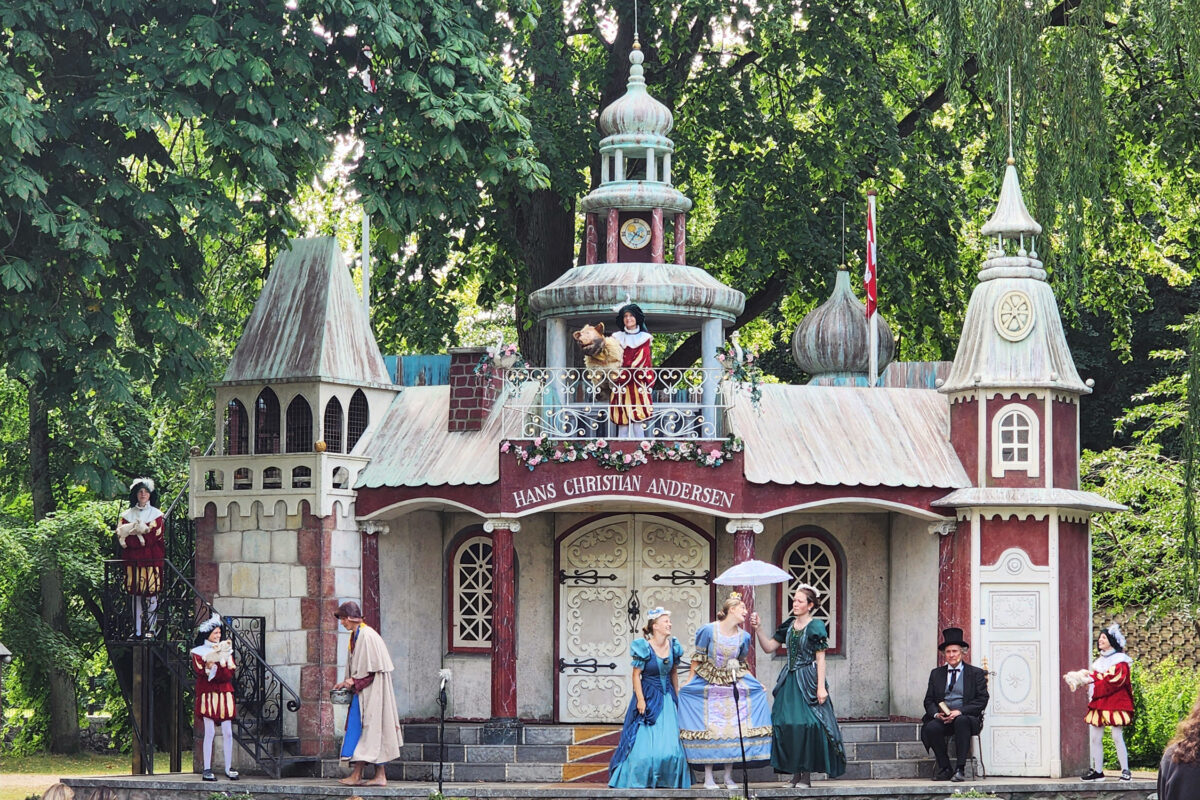
My wife and I were wandering through the Fairy Tale Garden when we started hearing a drum beat that kept growing louder. Then a man dressed as Andersen entered the park followed by a troupe of children dressed in period costume, one of whom was the drummer we had been hearing. This procession is known as the Hans Christian Andersen Parade. They marched through the park to the Fairy Tale Castle (depicted in the featured image at the top of this post) children’s playhouse where they later performed a play inspired by Andersen’s fairy tales.
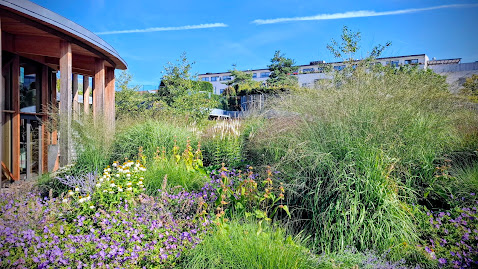
We did not have time to tour either Andersen’s birthplace and the adjacent garden (H.C. Andersen Haven) or his childhood home, but both look like places we would have enjoyed visiting if we had had more time.

Thomas Danbo
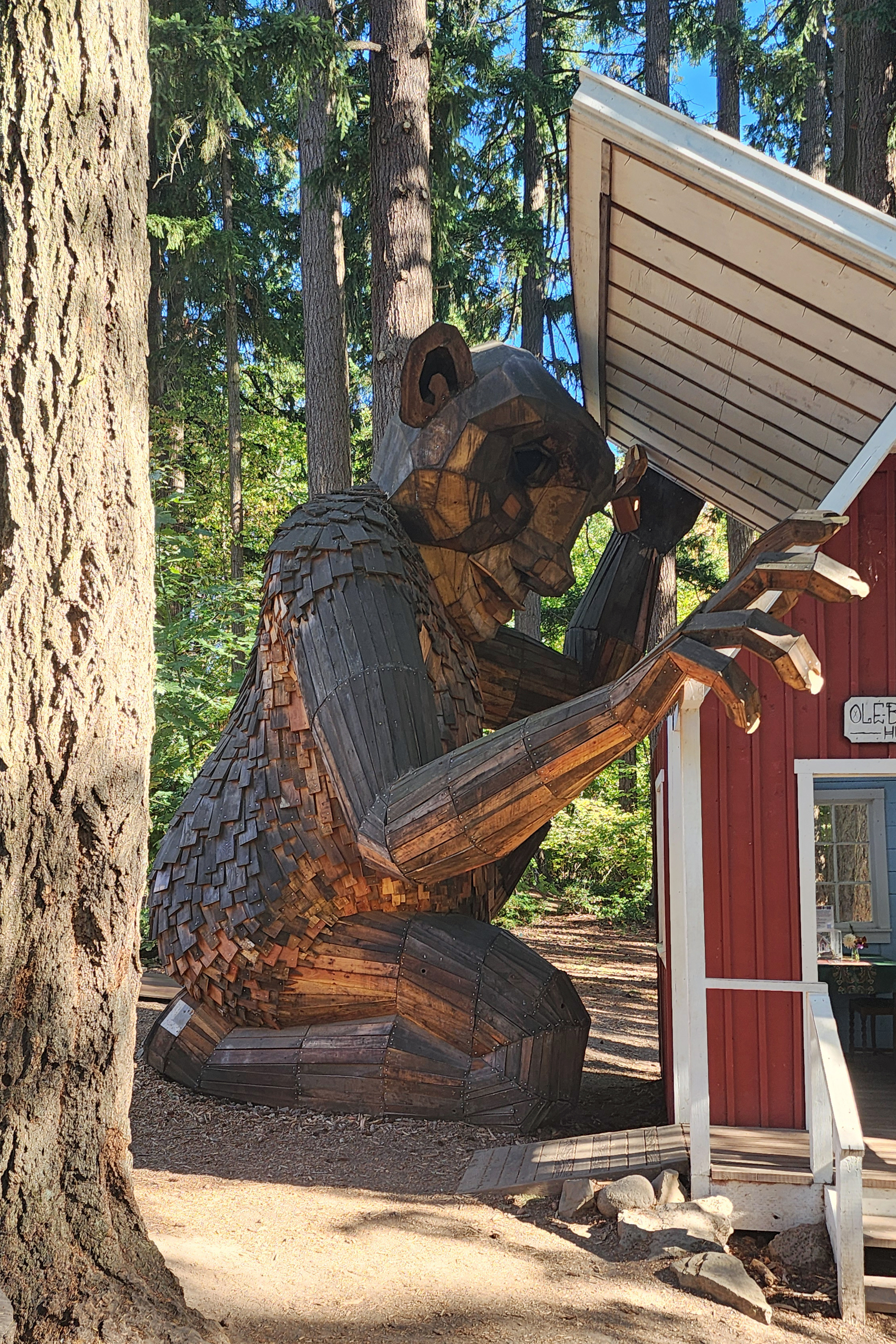
Danbo was born in Odense in 1979. His early art works included music, street art, and graffiti. In 2006 he enrolled in the Kolding School of Design, studying Interaction Design. He began making giant troll sculptures in 2014, using reclaimed materials. He has created more than 150 troll sculptures located in 20 countries in Europe, North America, Asia, South America, and the Caribbean Islands. One of his trolls is located in Portland, Oregon, only a few miles from our home.
Street Art
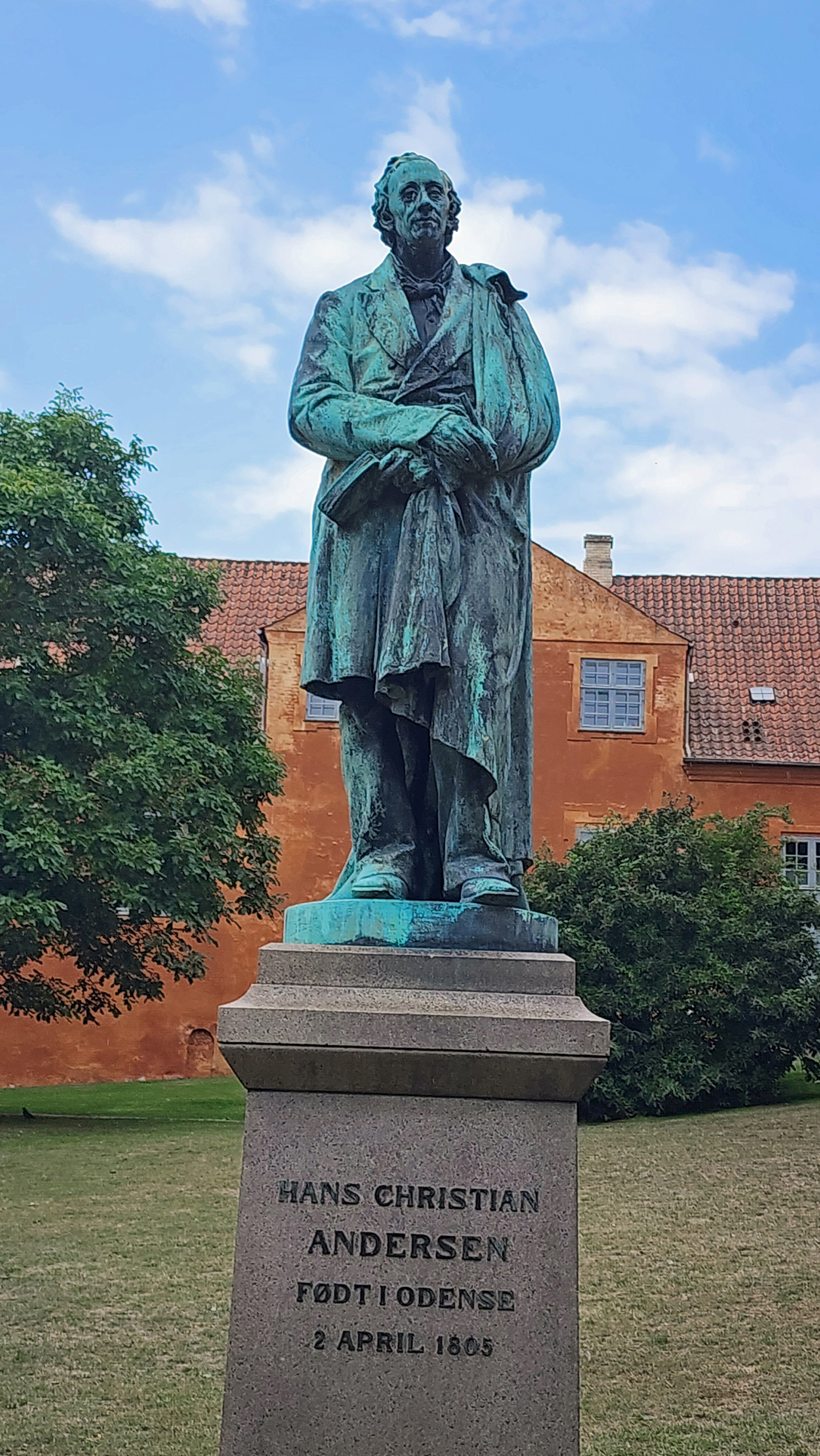
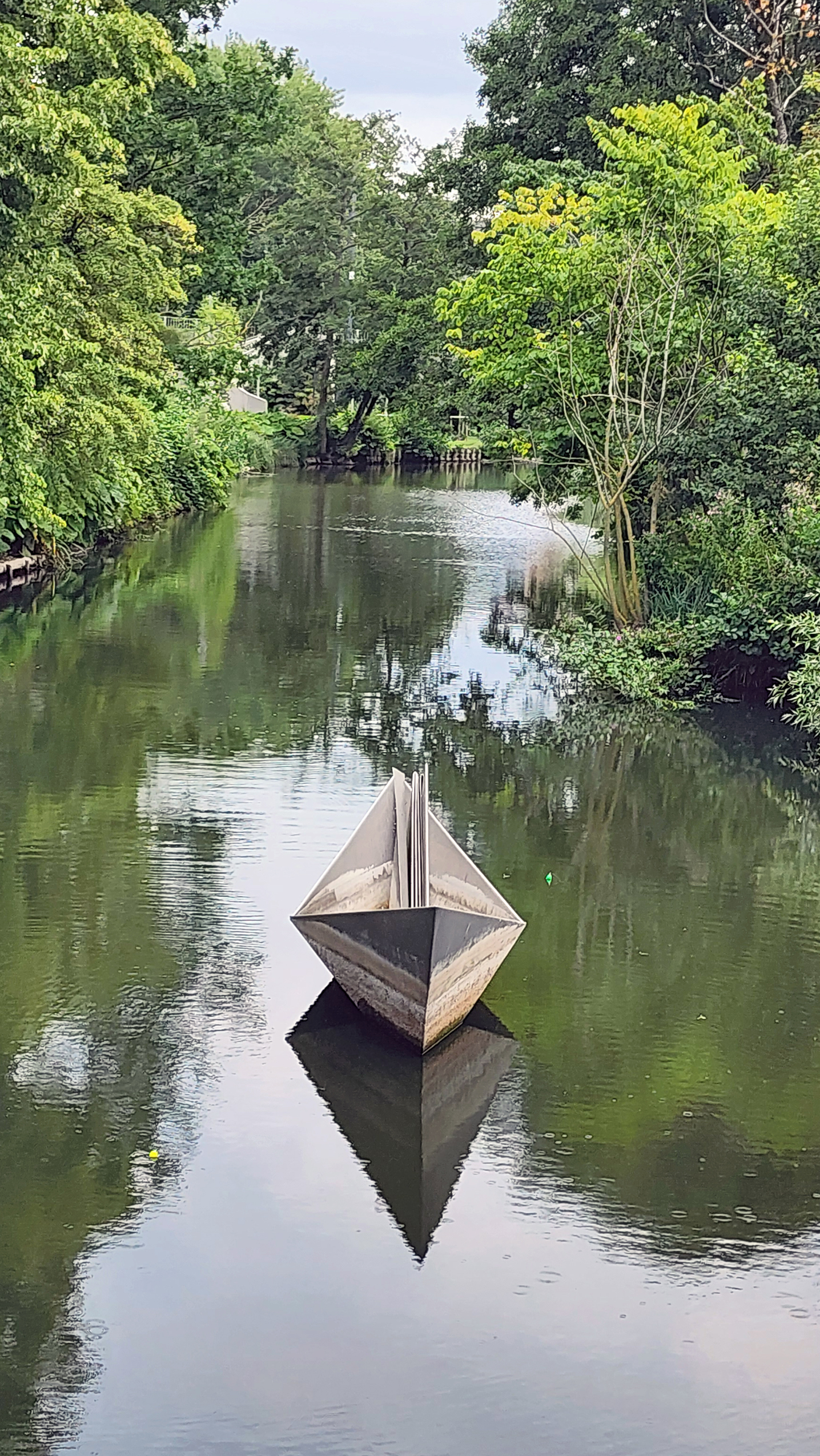
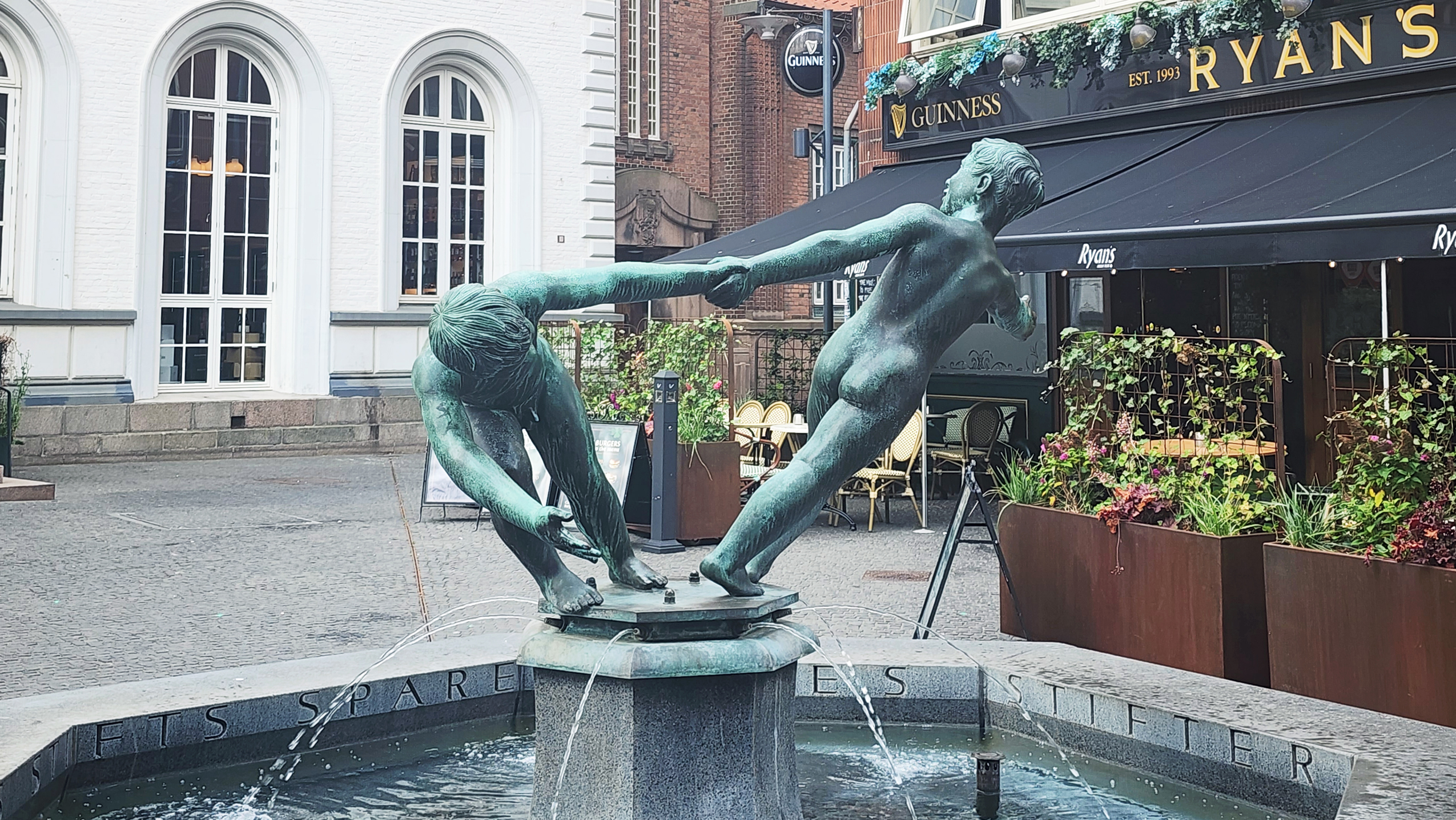
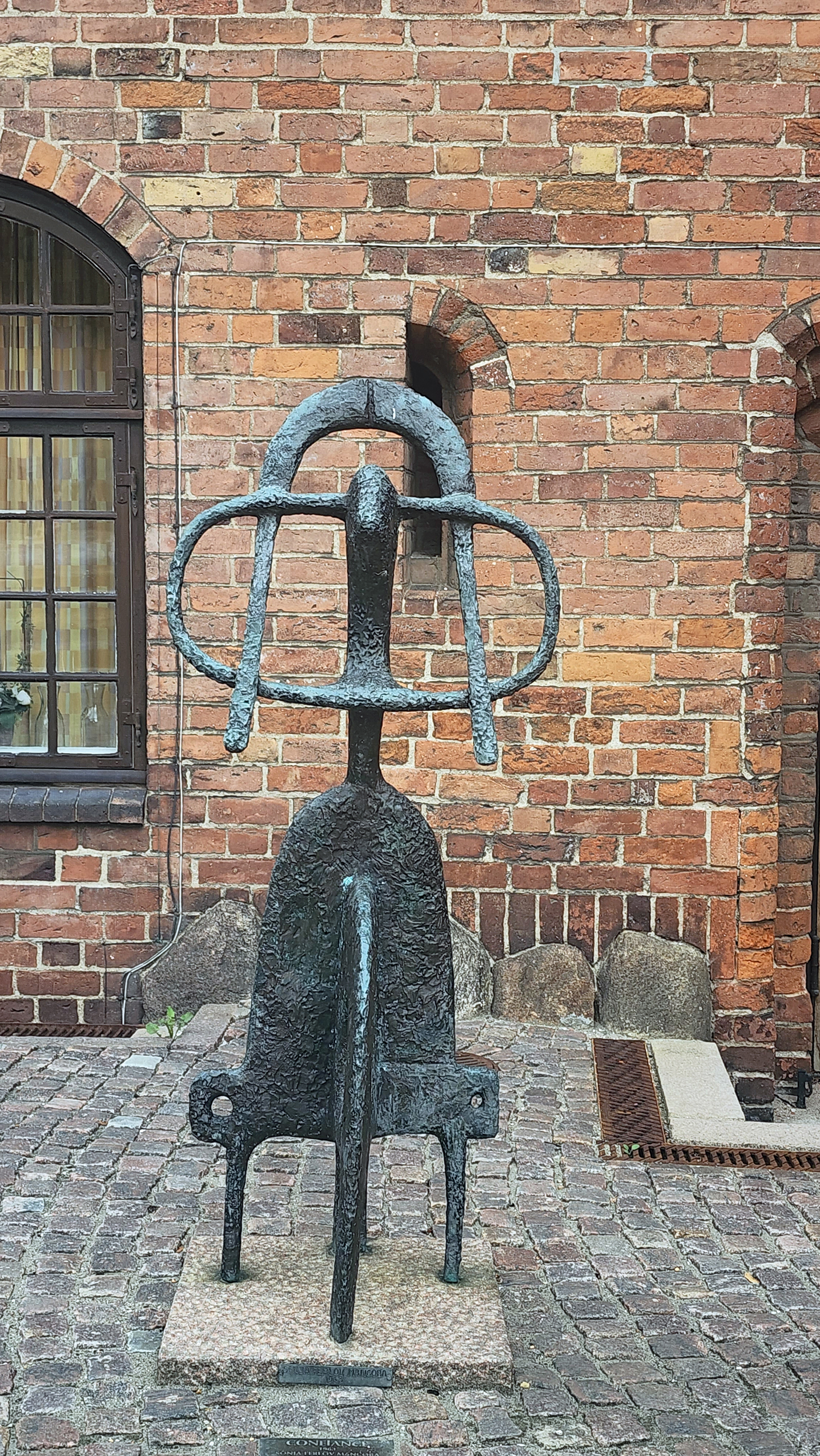
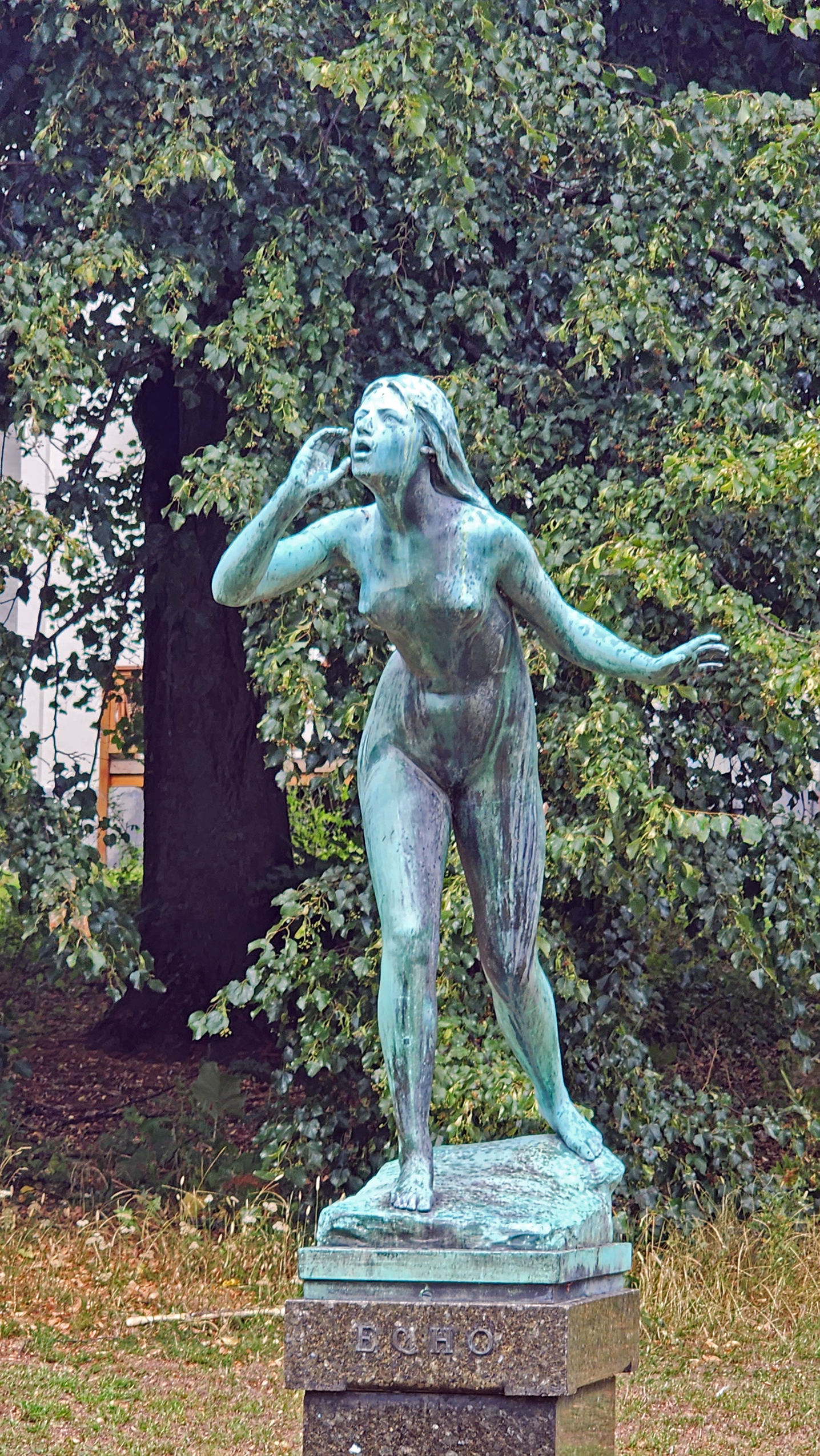
My wife and I are both art lovers, and for us part of the fun of exploring a city new to us is simply wandering around and discovering public works of art. And the old center of Odense has a number of interesting bronze sculptures and other artworks, some of which are shown above and below. Odense also has a number of art museums and galleries, including the Brandt Art Museum (Kunstmuseum Brandts) and the Albert Contemporary gallery, neither of which we had time to visit.
Conclusion
While Odense does not offer the amazing amount of attractions for the traveler that Copenhagen does, it is a worthwhile stop on a tour of Denmark, particularly if you are a fan of Hans Christian Andersen. We did not get to spend much time in Odense, but we saw enough to wish that we could have spent more time there. If we ever decide to revisit Copenhagen, I’m sure that we will also return to Odense to discover what else it has to offer.
Posted October 9, 2026
All photos © Alan K. Lee, except as noted