On the tour of Scandinavia that my wife and I took in August 2026, Odense was our first stop after we left Copenhagen. (It’s pronounced something like ood-en-say, although that may not be exactly correct, but it’s definitely not oh-dense, which is how I was initially pronouncing it). I knew nothing about the city prior to our visit, but quickly learned that both Hans Christian Andersen and Thomas Danbo, whose giant troll sculptures can be found around the world, were born in Odense. We were only there for a few hours, but that was enough to tour a couple of the churches in the city center, spend some time exploring Fairy Tale Park, and get an unexpected taste of Andersen’s legacy.
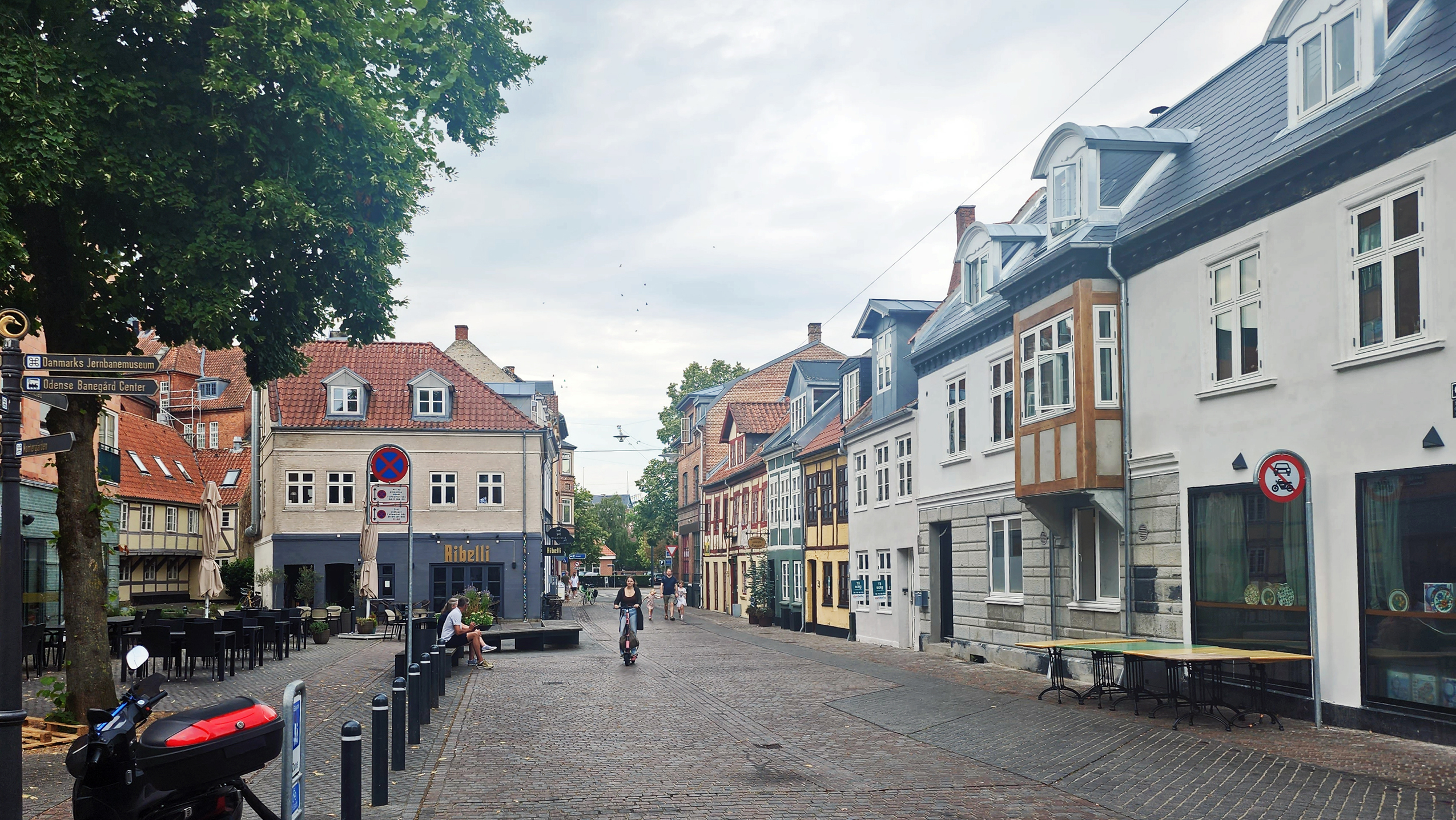
Old city center, Odense
History
The Odense area has been inhabited for at least 4000 years, and the city of Odense is more than 1000 years old. By the late 11th century it was a thriving city. Throughout the Middle Ages, Odense was a commercial center. In the 18th century a five mile long canal was constructed from Odense to the sea, making the Port of Odense a center of maritime trade. From 1919 to 2012 the Odense Steel Shipyard was one of Denmark’s largest ship builders. And Odense has been a railroad hub since a large railroad terminal was built there in 1865, further enhancing the area’s commerce and increasing the city’s population.
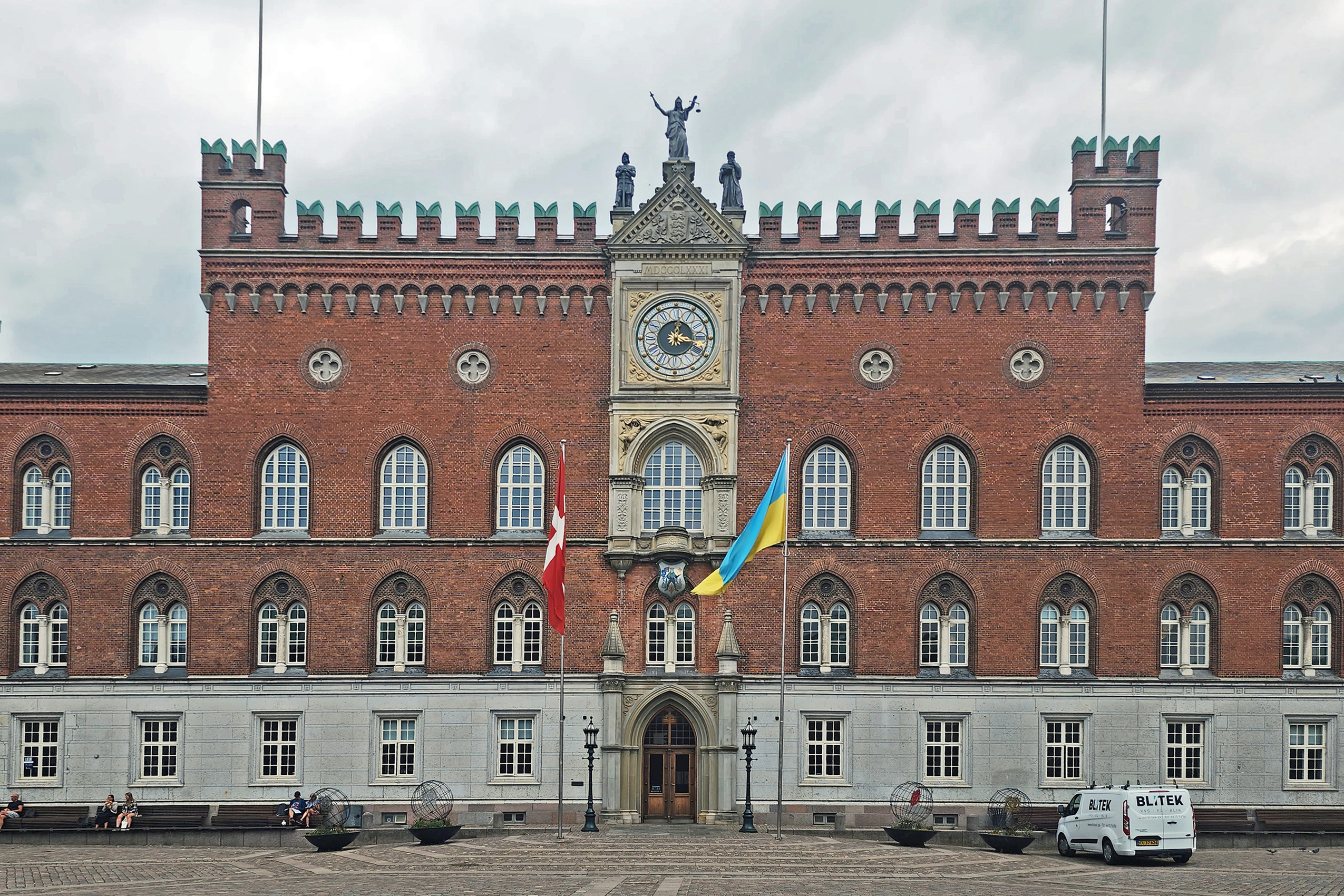
Odense City Hall
The City
Today, Odense is the largest city and commercial center of Funen Island, about 100 miles (160 km) west of Copenhagen. Odense is the third largest city in Denmark, with a population of about 185,000.
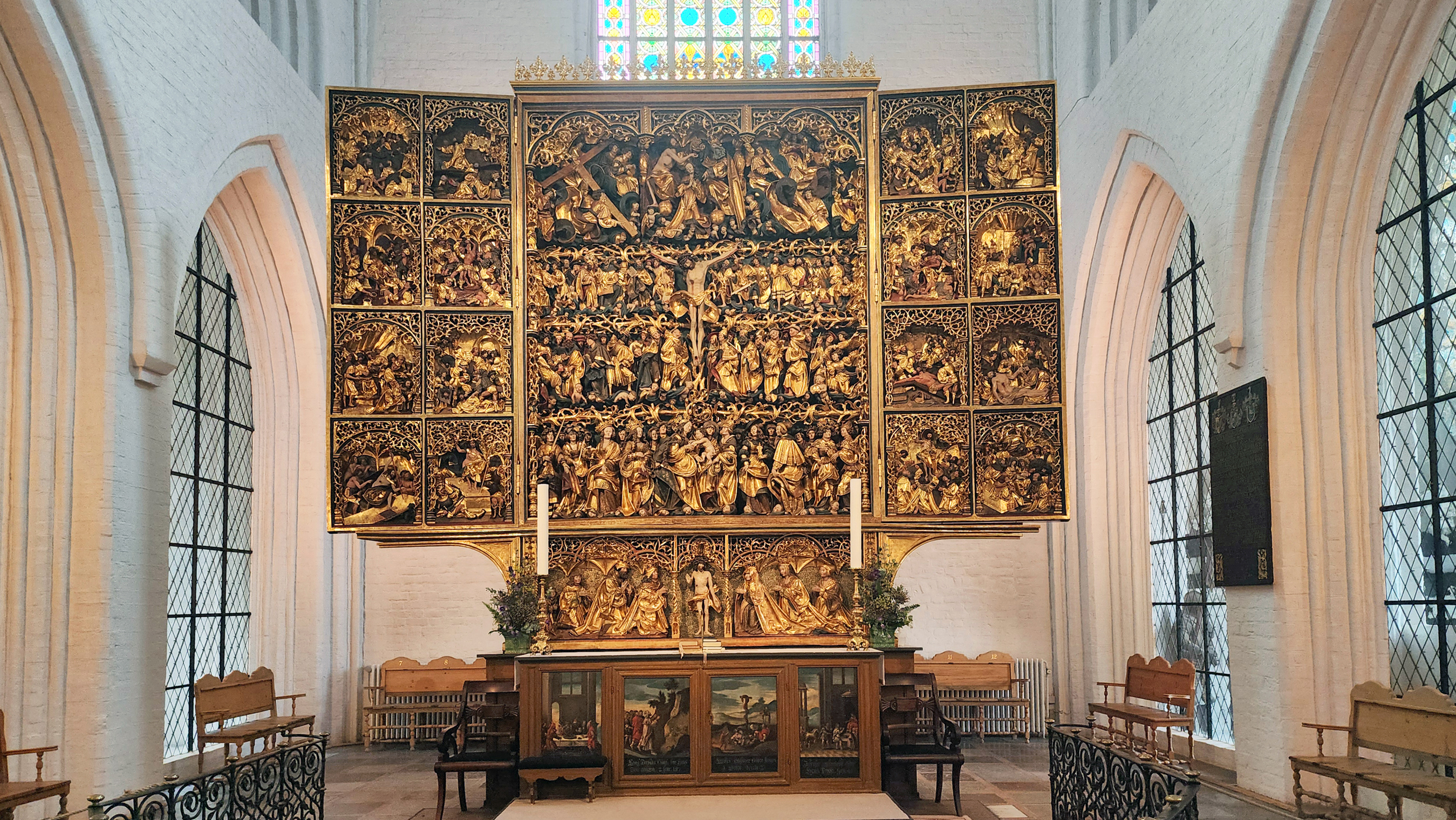
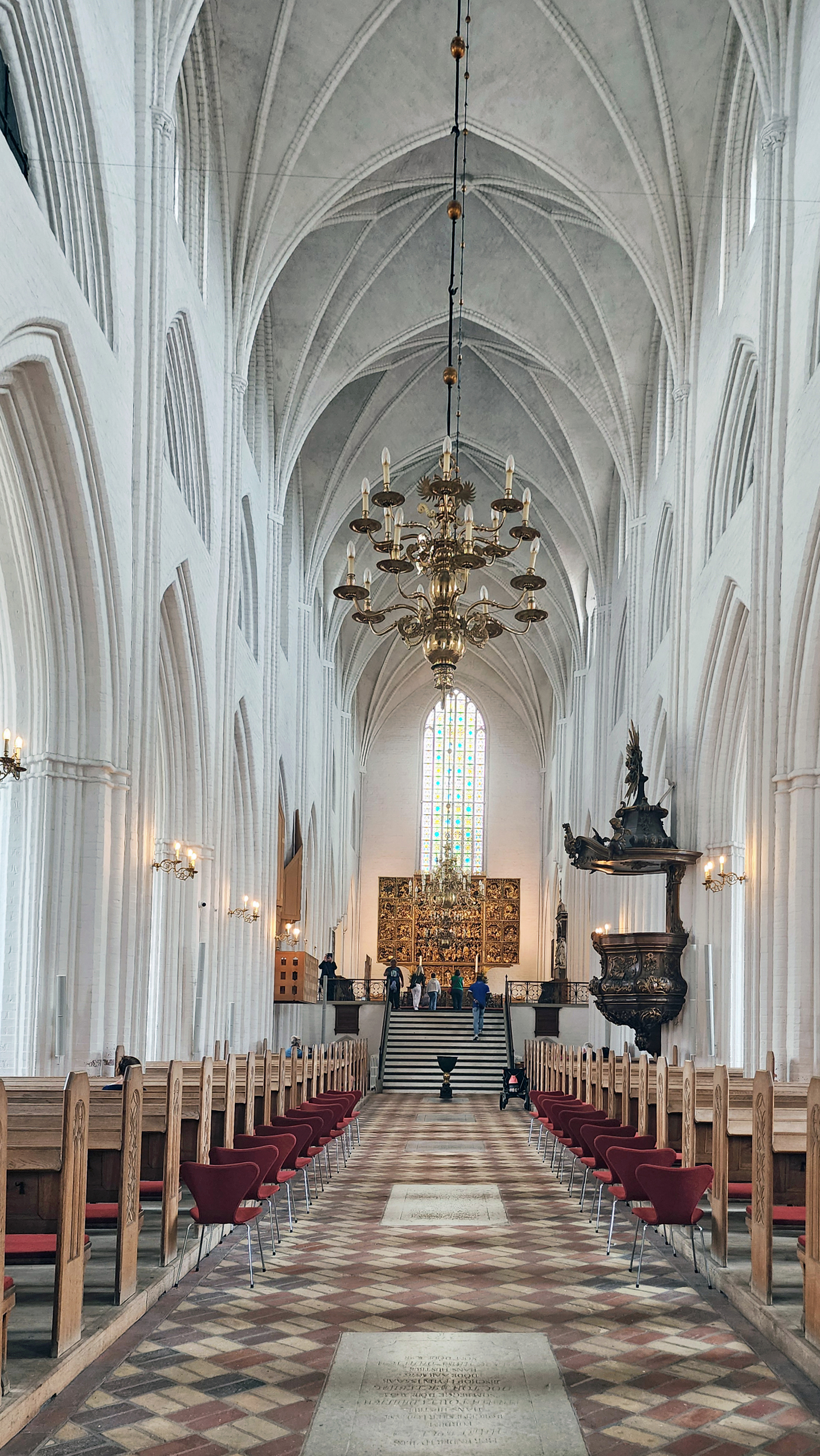
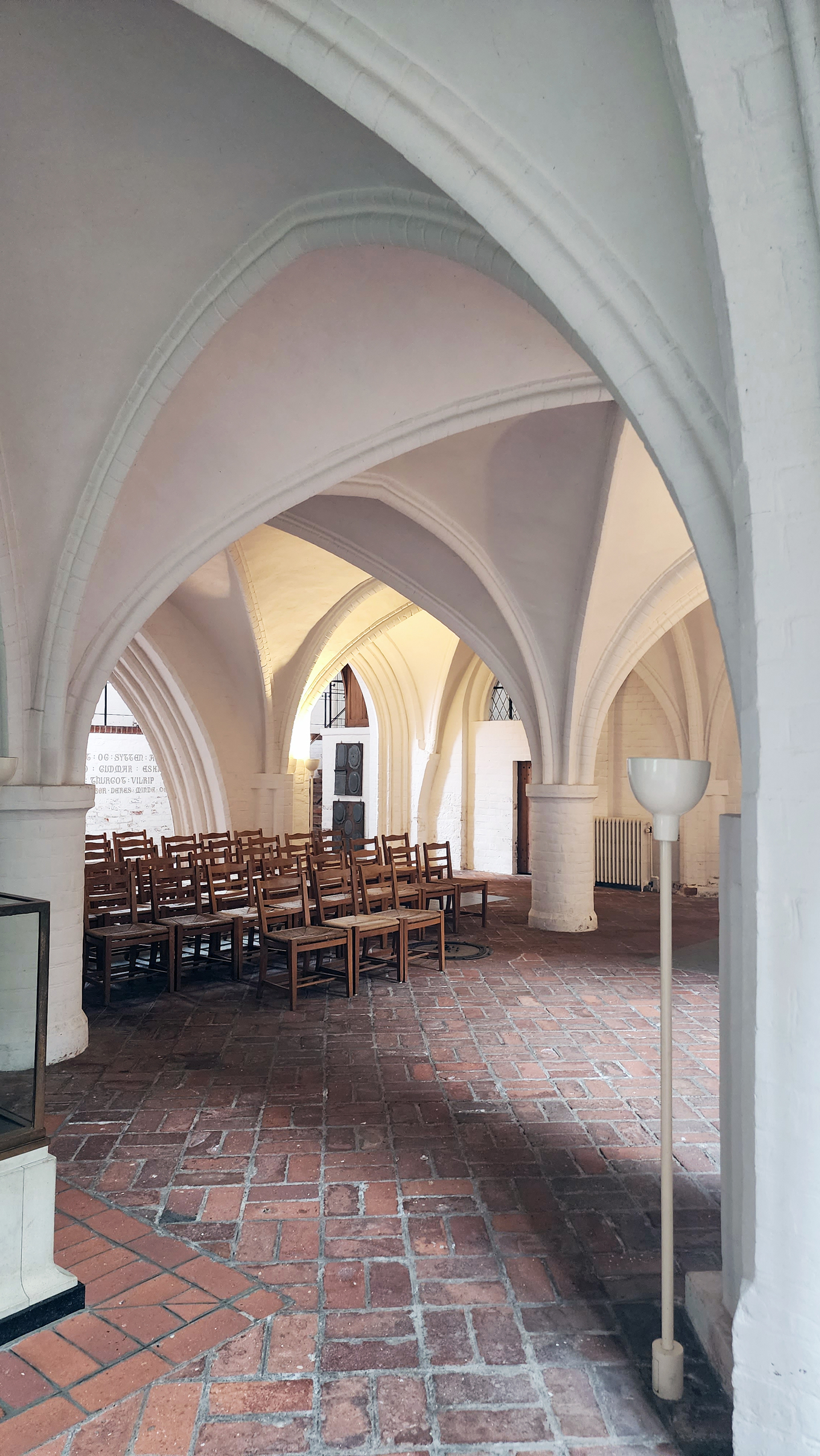
Sankt Knud’s Kirche
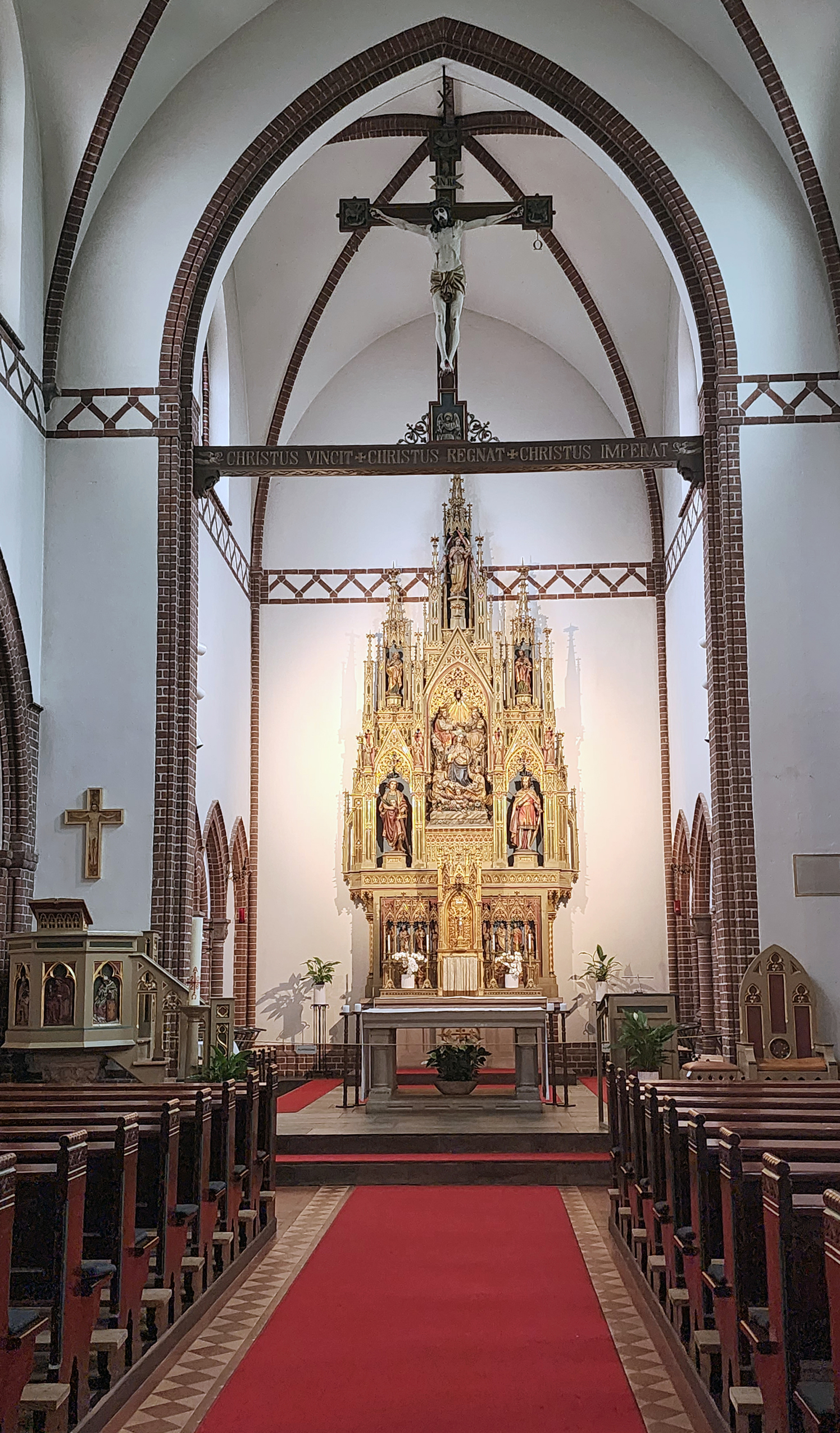
The historical center of Odense boasts two large churches, St. Alban’s Church (Sankt Albani Kirche) and St. Knud’s Church (Sankt Knud’s Kirke), only a short walk from each other.
Sankt Knud’s KircheSankt Knud’s Kirche
Saint Knud’s Church (aka Odense Cathedral) was built sometime after King Knud (King Canute) and his brother were murdered in 1086. The present church was built adjacent to the ruins of St. Alban’s Priory, where the murders took place. The exact date of the construction of Saint Knud’s Church is not known for certain.
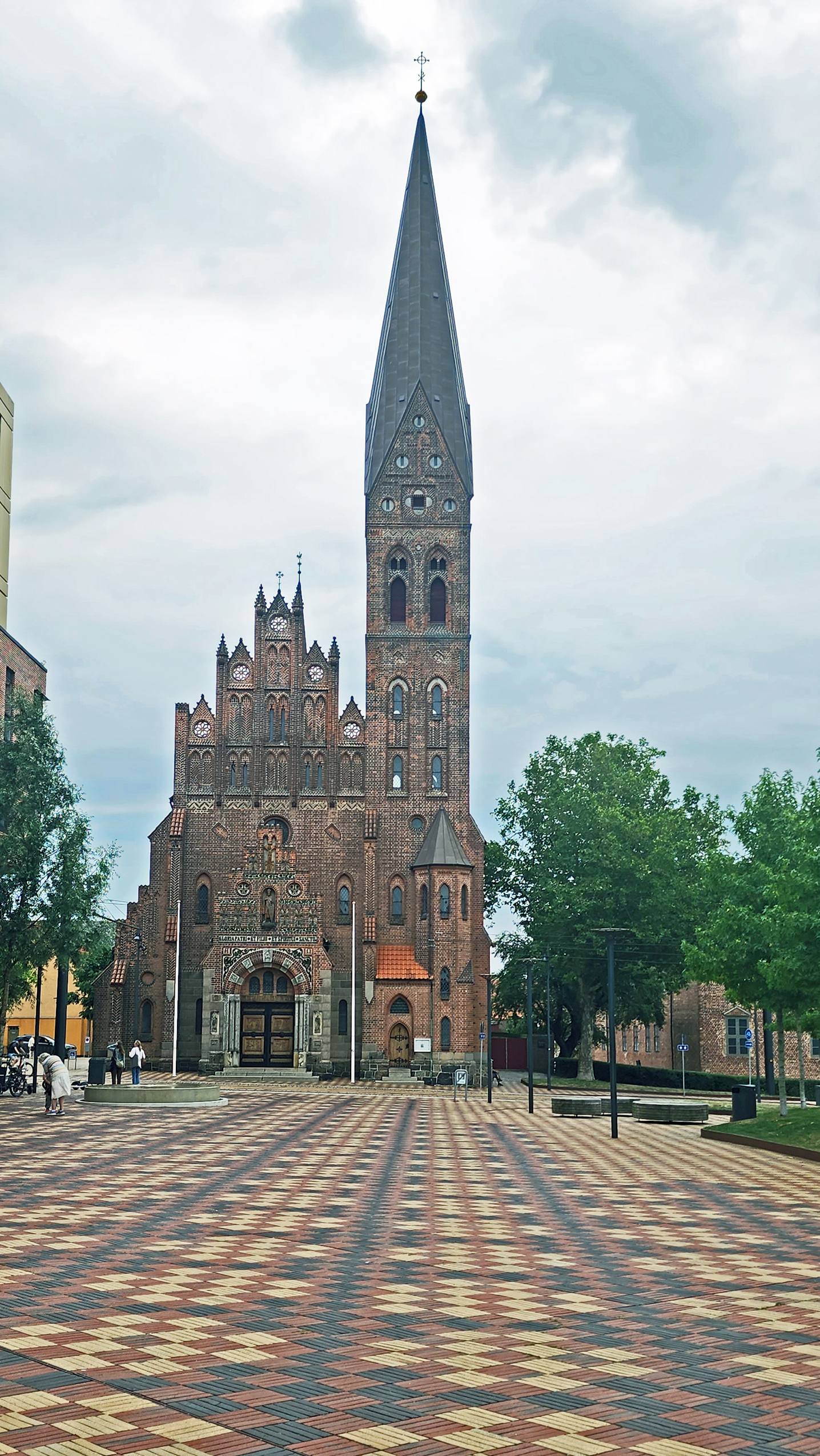
Sankt Albani KircheSankt Albani Kirche
The present day Saint Alban’s Church is a Roman Catholic church and not to be confused with the earlier St. Alban’s Priory. It was built in the early 20th century.
Albani Torv
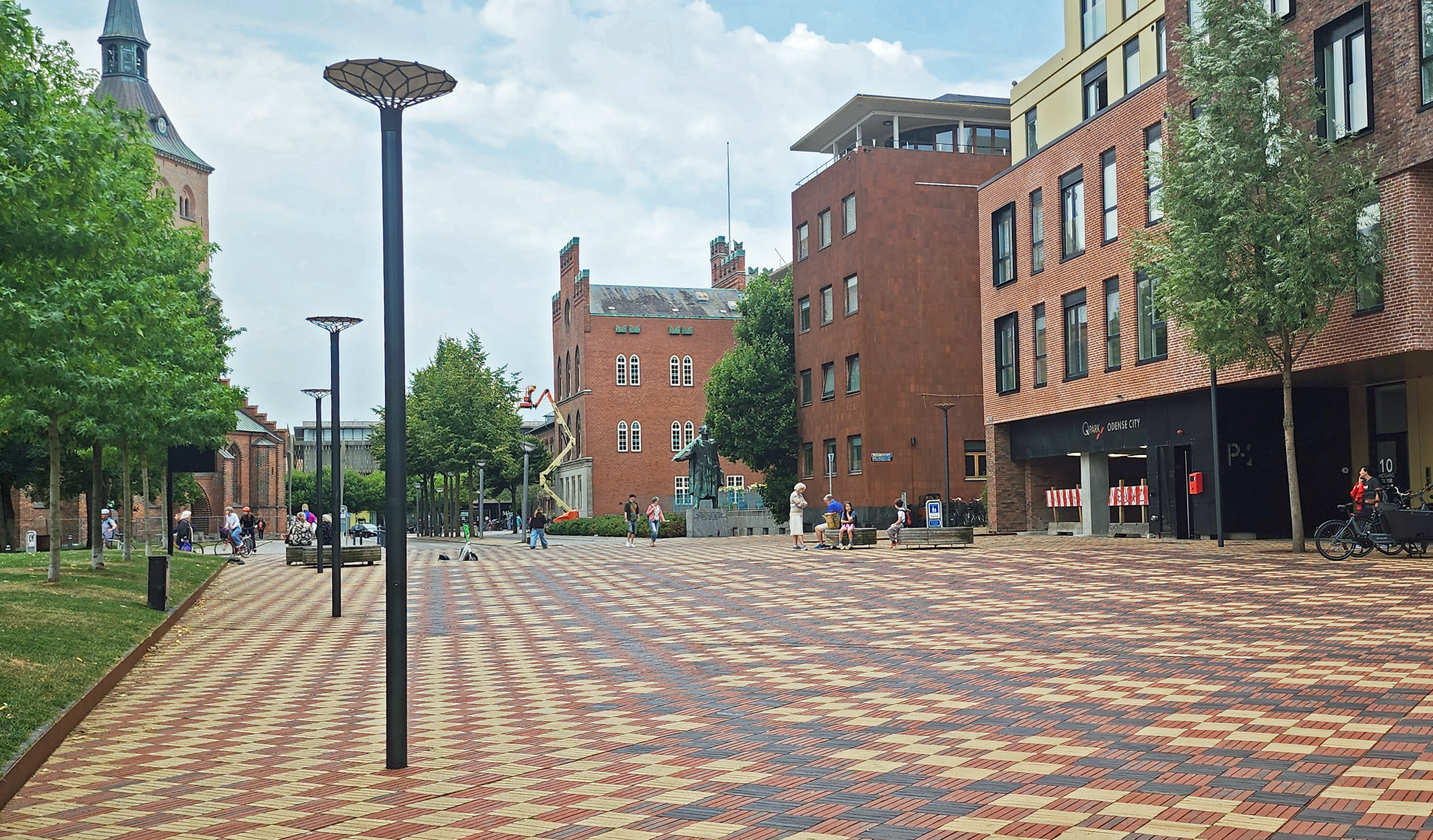
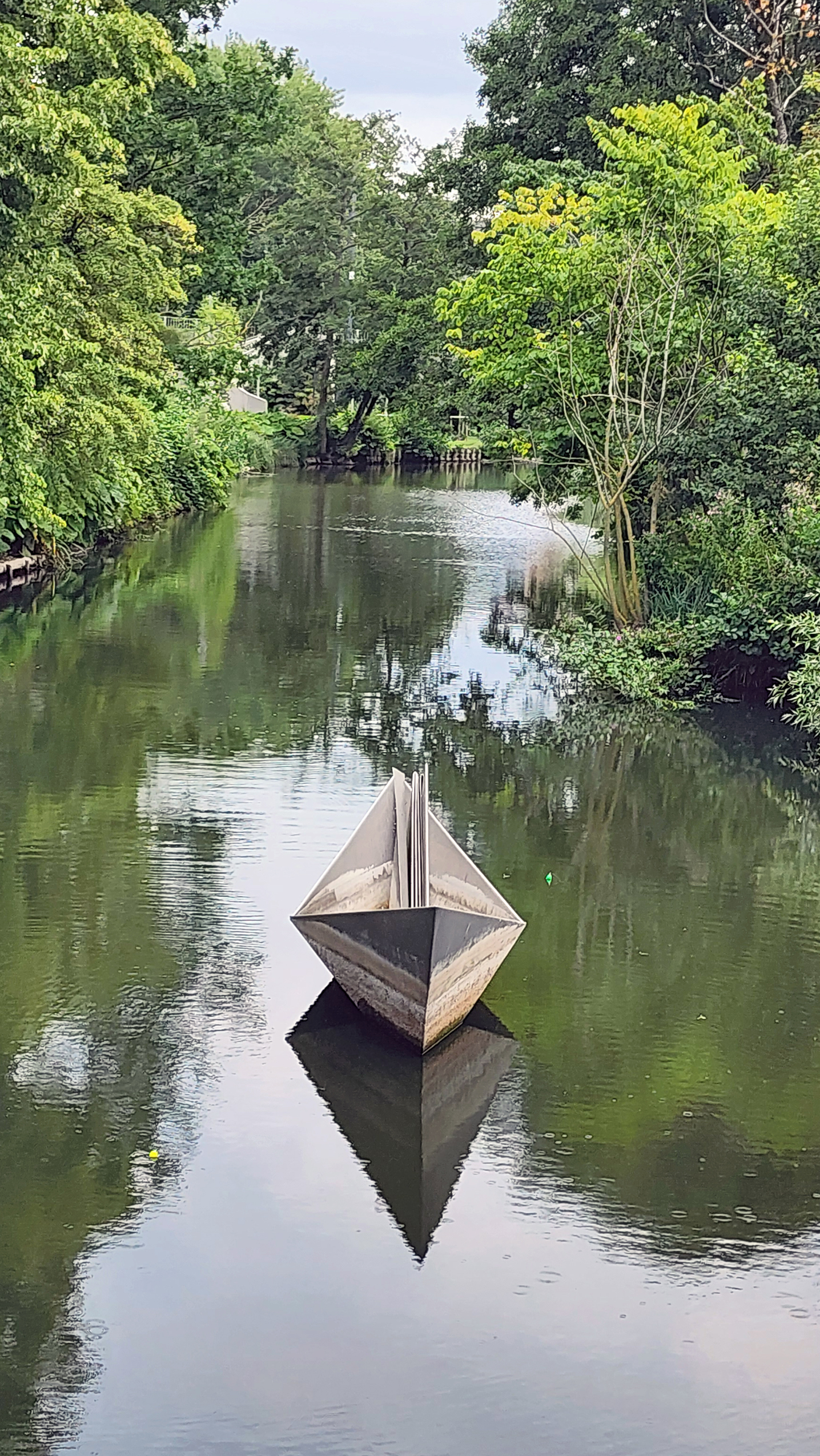
The two churches are separated by the Albani Torv plaza, which sits on the site of the ancient St. Alban’s Priory, and are only about 400 feet apart. Just south of St. Knud’s Kirke, the Fairy Tale Garden is a beautiful little park with a stream running through it.
Hans Christian Andersen statueFairy Tale Park
Hans Christian Andersen
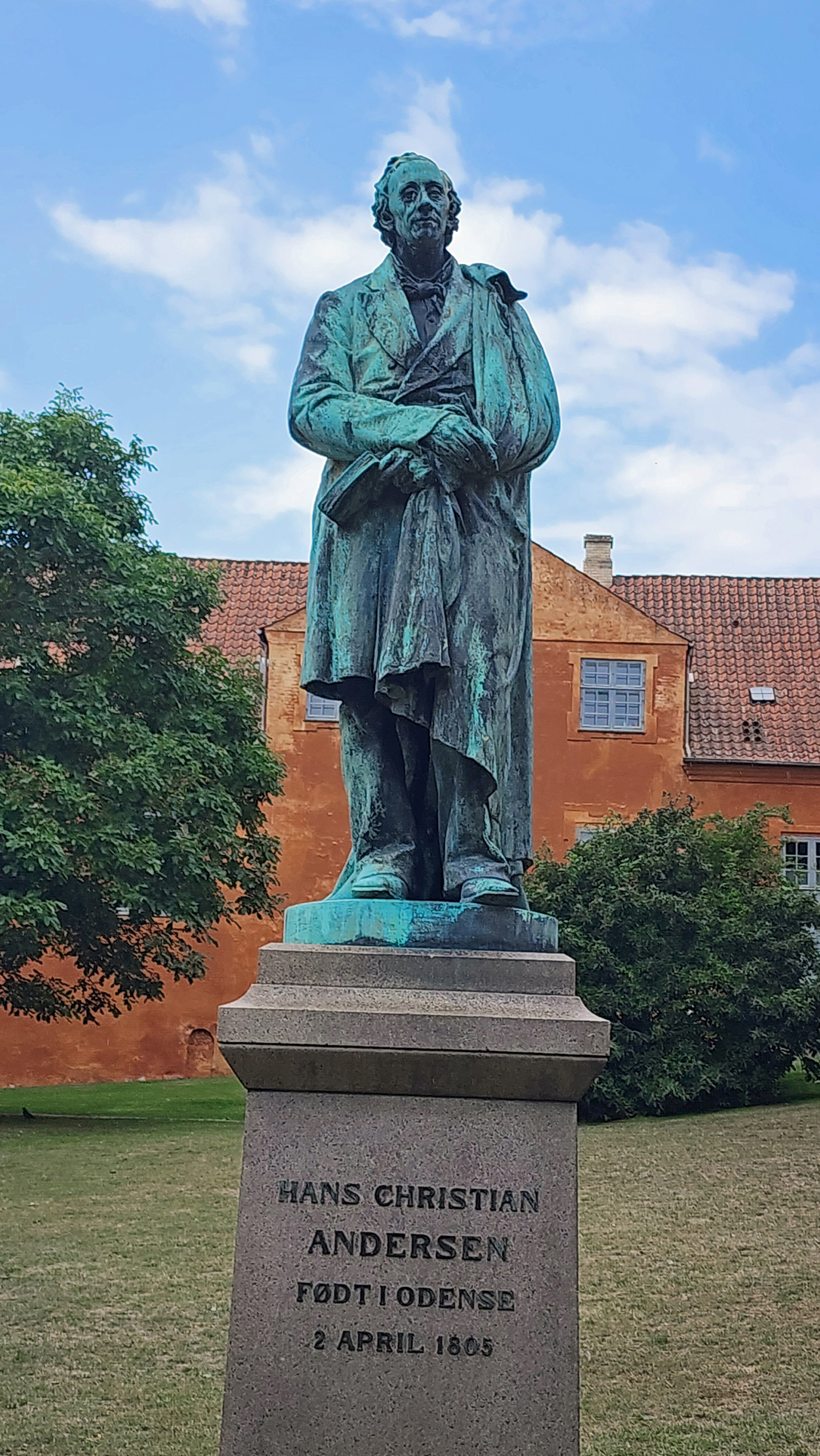
Andersen was born in Odense in 1805. Andersen is, of course, known for his fairy tales, including The Little Mermaid that inspired both the famous sculpture in Copenhagen and the Disney movie of the same name. He also wrote plays, poems, novels, and travelogues.
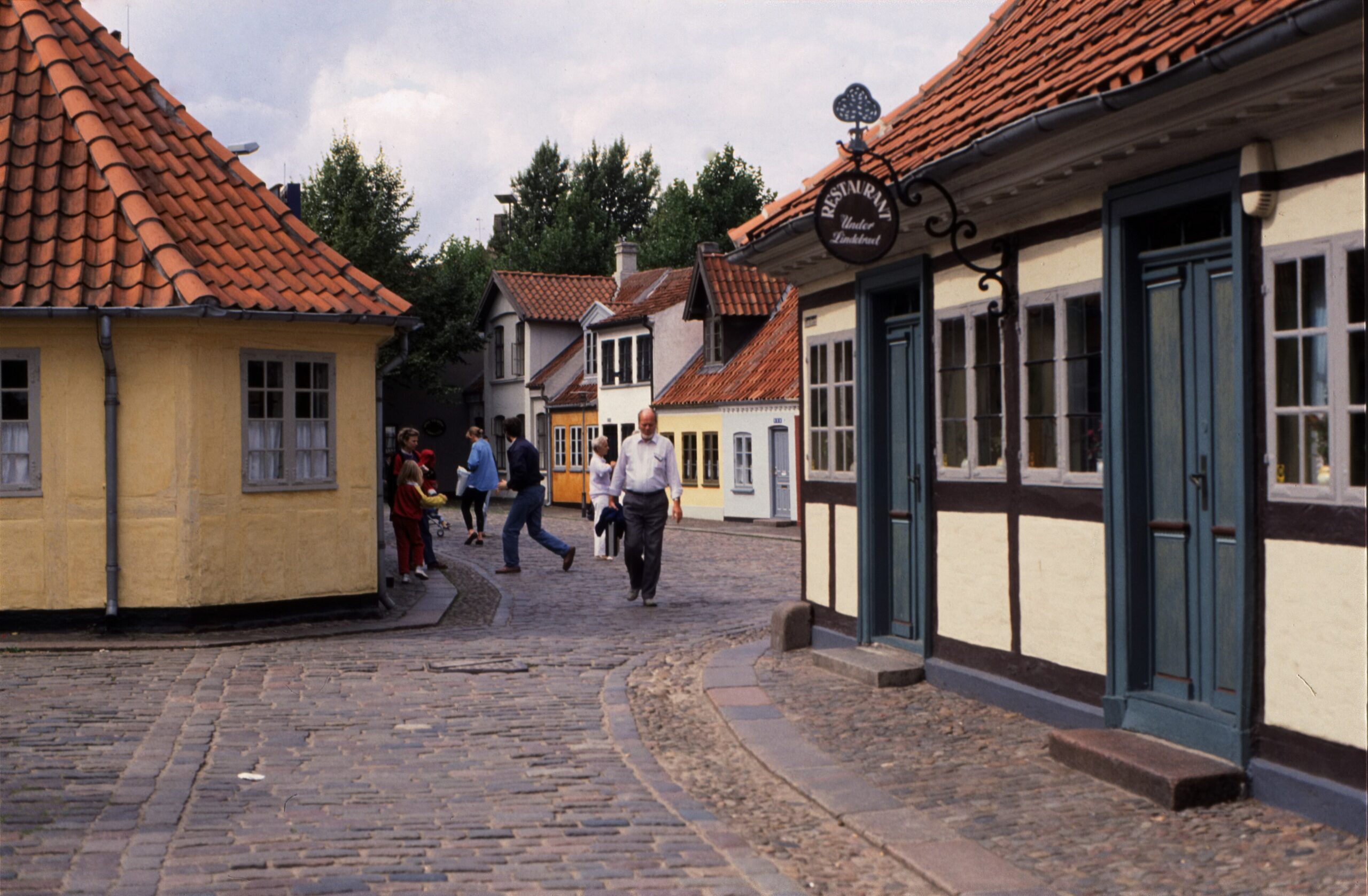
Birthplace of Hans Christian Andersen (yellow house on left), photo credit to Rudiger Stehn, sourced from Wikimedia Commons
Andersen left Odense at the age of 14 to pursue an acting career in Copenhagen. What is believed to be the house where he was born in is now a museum. His childhood home is also now a museum. Both are within easy walking distance of St. Alban’s and St. Knud’s churches in the old city center.
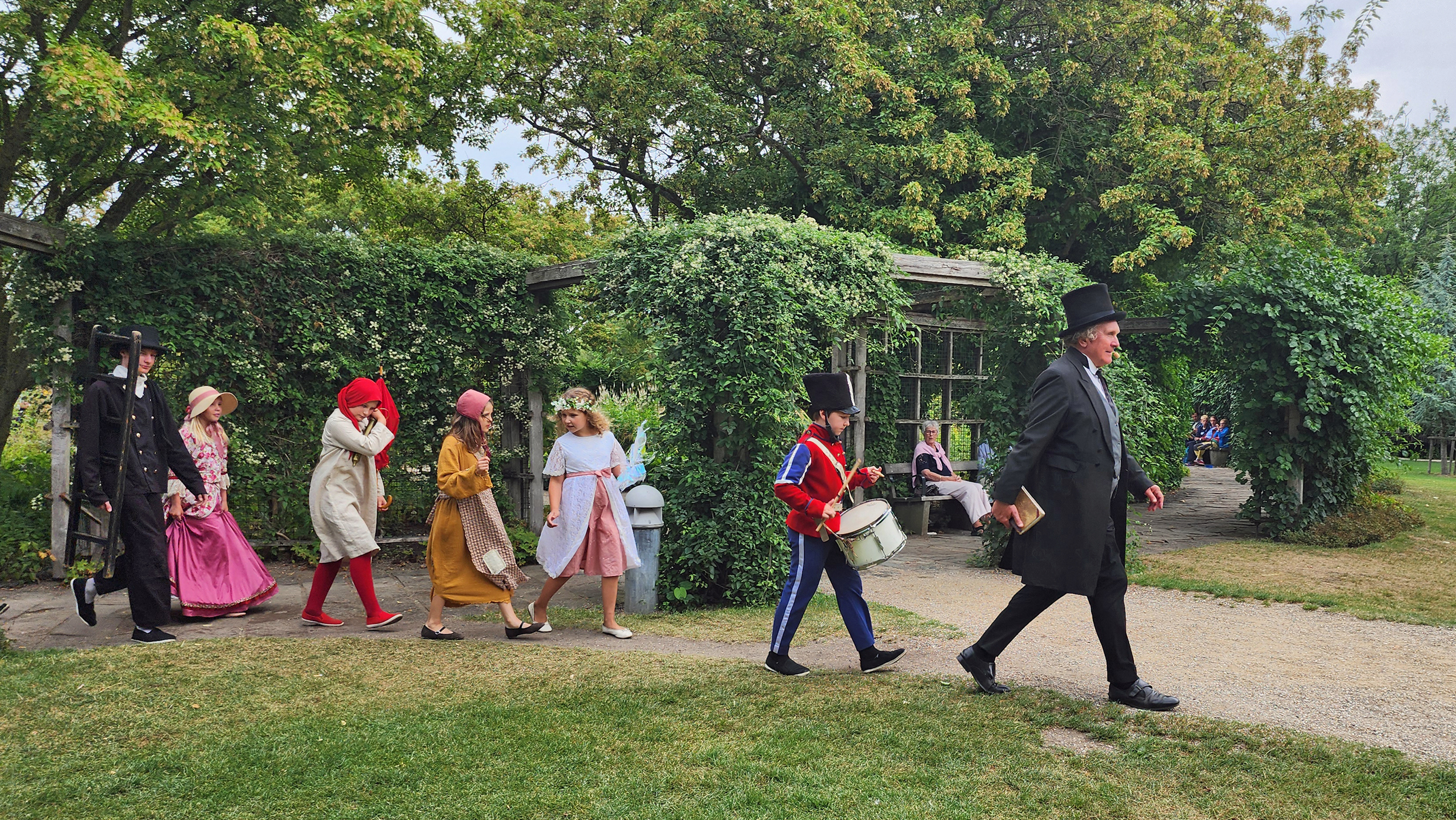
Hans Christian Andersen Parade, Fairy Tale Park
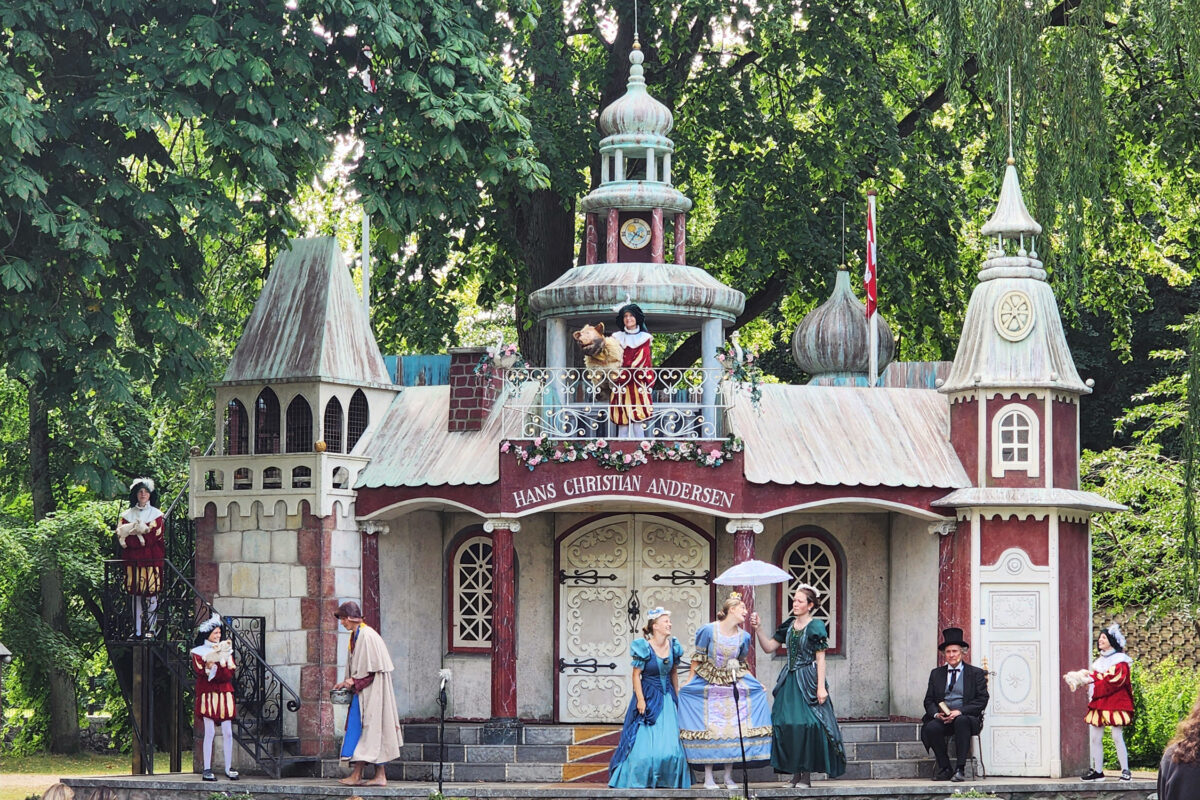
My wife and I were wandering through the Fairy Tale Garden when we started hearing a drum beat that kept growing louder. Then a man dressed as Andersen entered the park followed by a troupe of children dressed in period costume, one of whom was the drummer we had been hearing. This procession is known as the Hans Christian Andersen Parade. They marched through the park to the Fairy Tale Castle (depicted in the featured image at the top of this post) children’s playhouse where they later performed a play inspired by Andersen’s fairy tales.
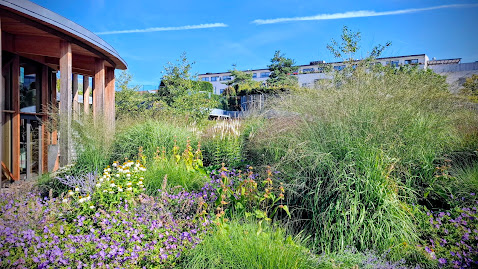
H.C. Andersen Haven, photo credit to “dg b.”, sourced from Google Maps
We did not have time to tour either Andersen’s birthplace and the adjacent garden (H.C. Andersen Haven) or his childhood home, but both look like places we would have enjoyed visiting if we had had more time.
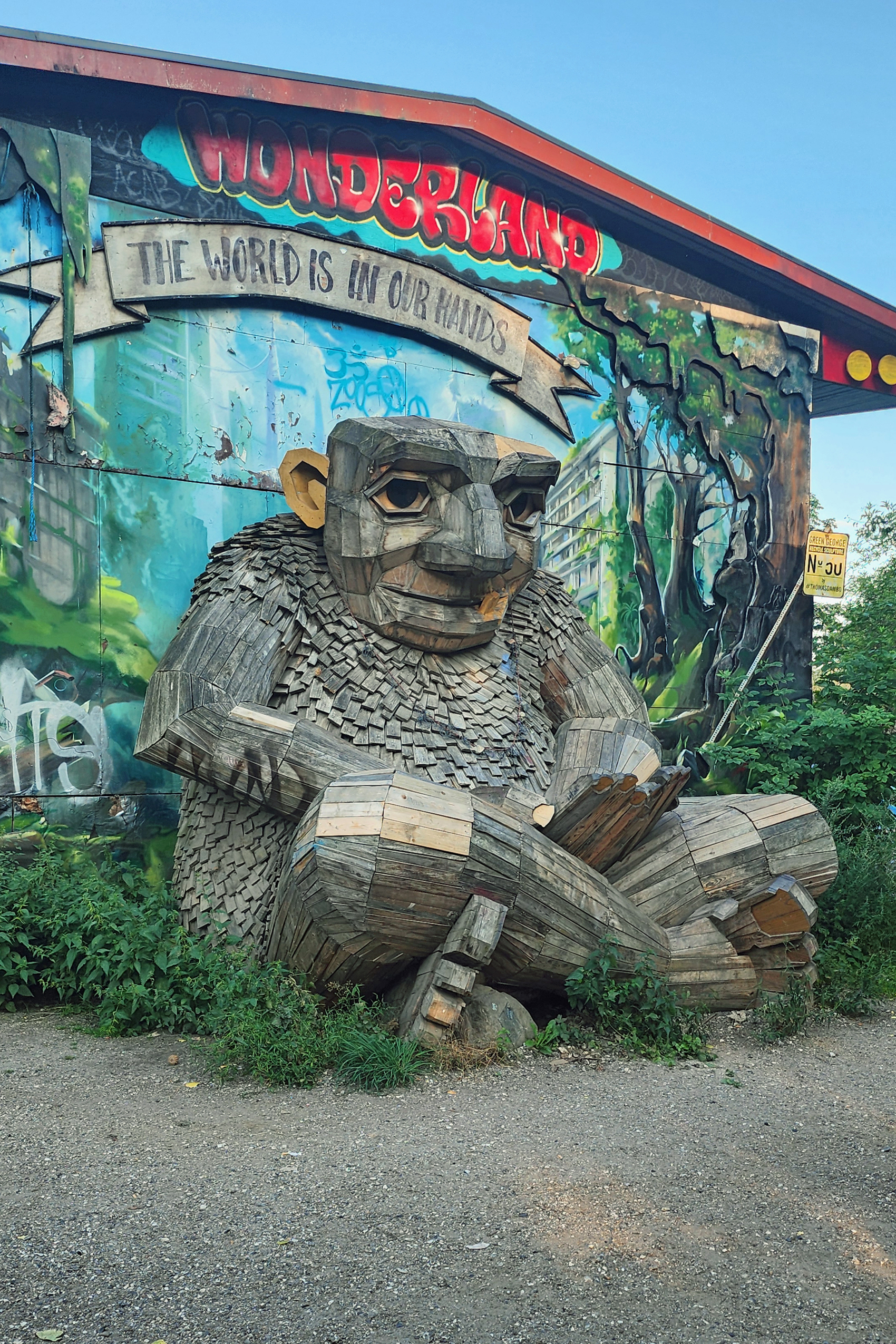
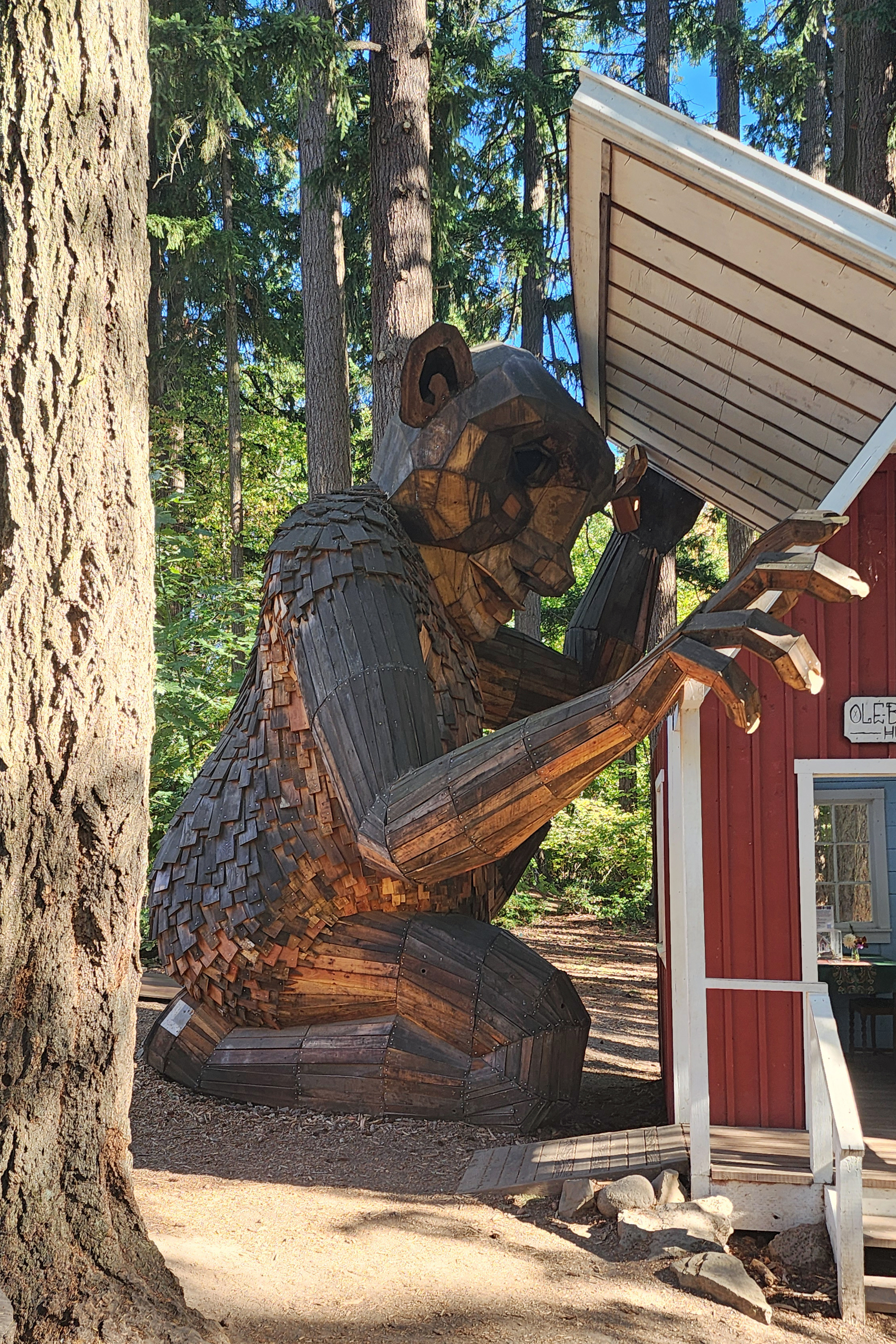
Danbo was born in Odense in 1979. His early art works included music, street art, and graffiti. In 2006 he enrolled in the Kolding School of Design, studying Interaction Design. He began making giant troll sculptures in 2014, using reclaimed materials. He has created more than 150 troll sculptures located in 20 countries in Europe, North America, Asia, South America, and the Caribbean Islands. One of his trolls is located in Portland, Oregon, only a few miles from our home.
Odense street art
Street Art
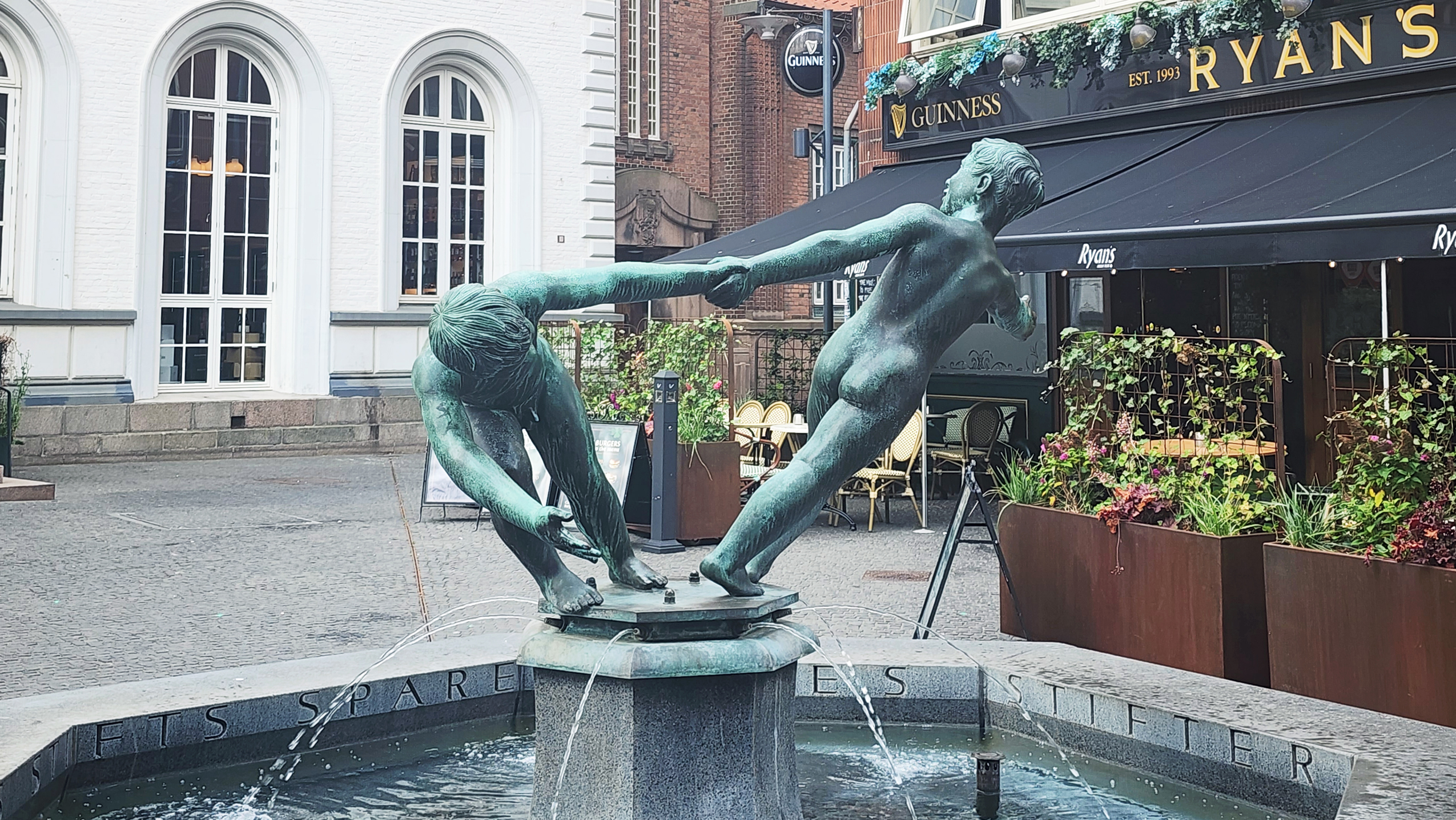
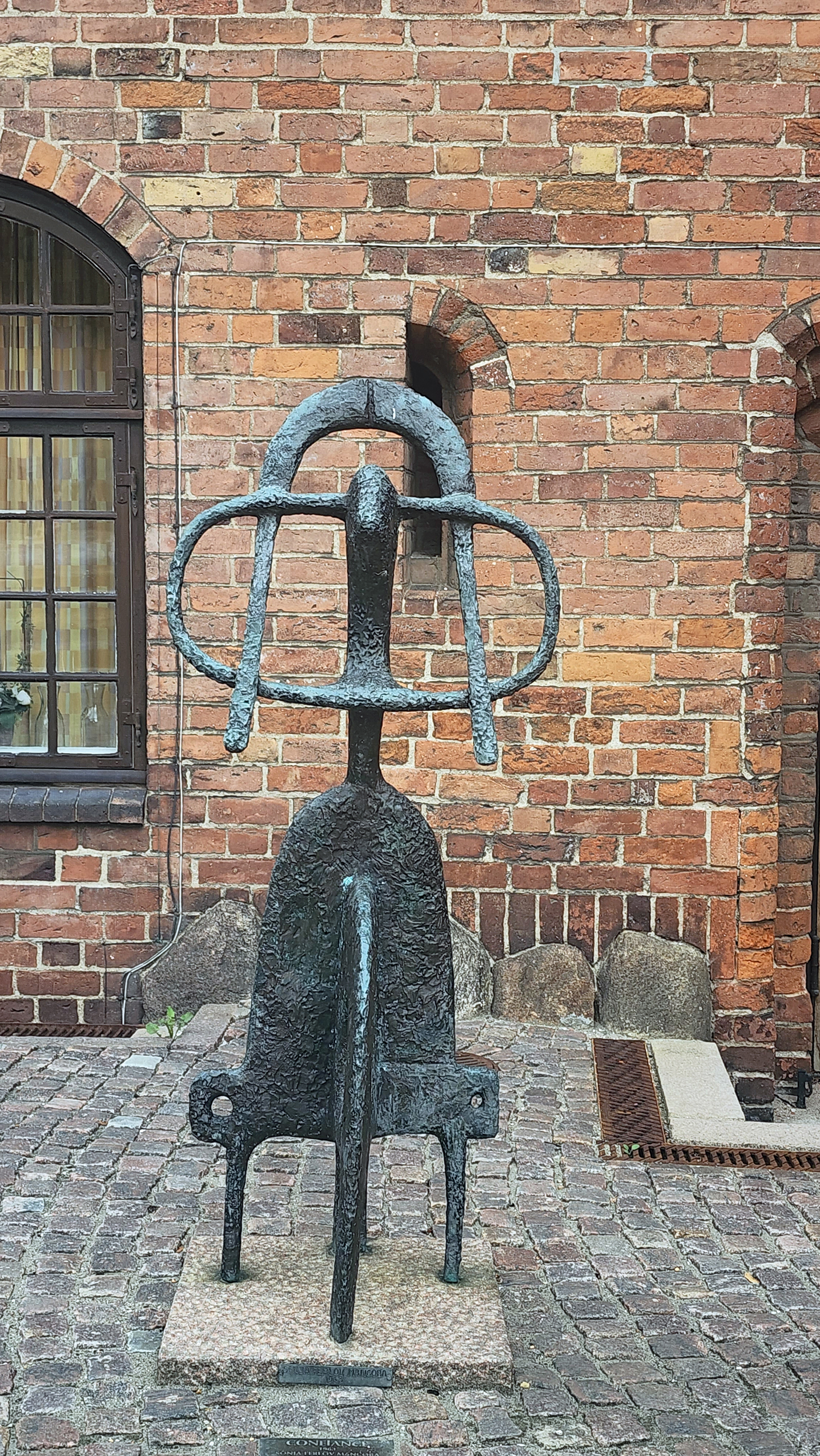
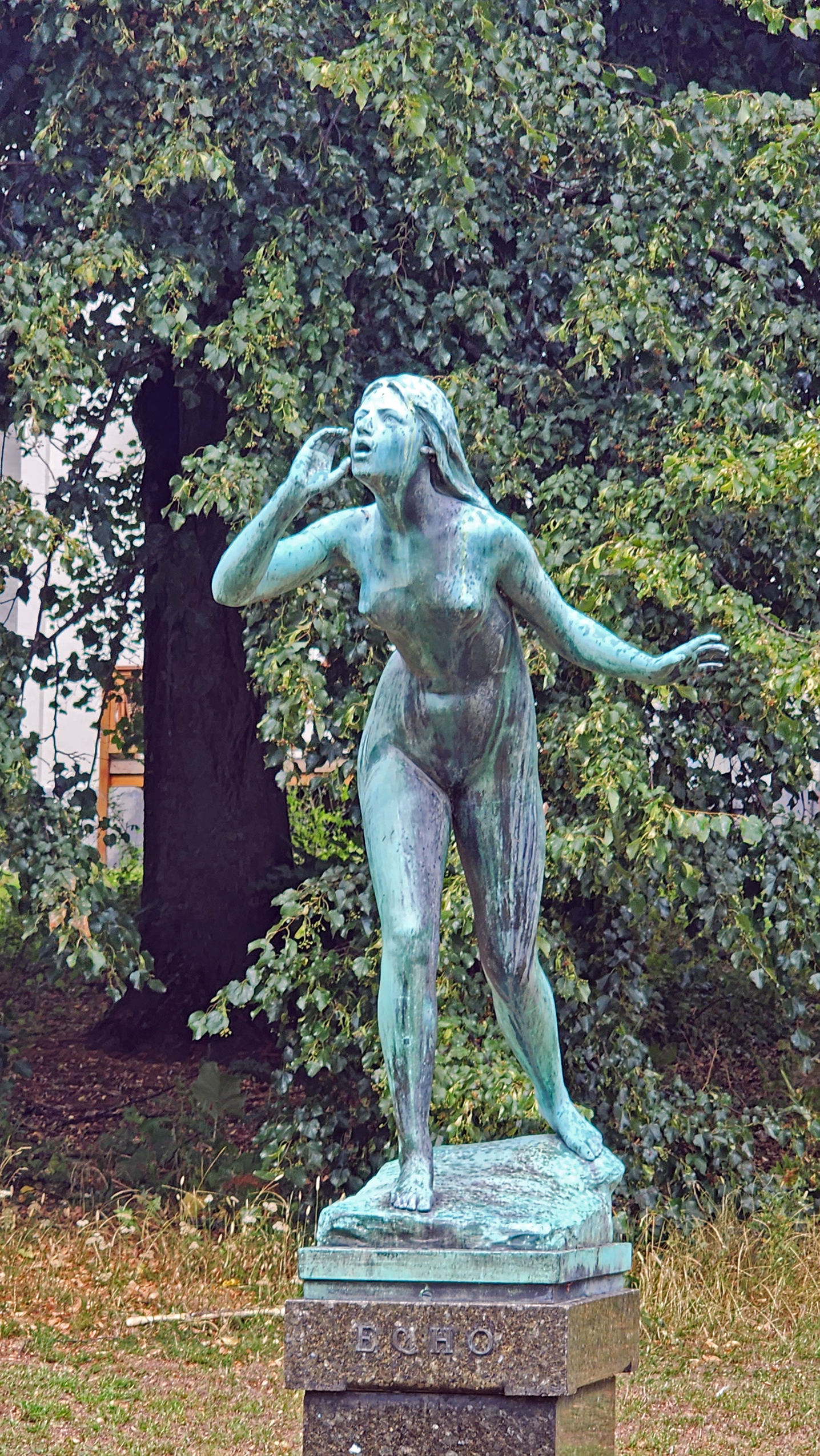
My wife and I are both art lovers, and for us part of the fun of exploring a city new to us is simply wandering around and discovering public works of art. And the old center of Odense has a number of interesting bronze sculptures and other artworks, some of which are shown above and below. Odense also has a number of art museums and galleries, including the Brandt Art Museum (Kunstmuseum Brandts) and the Albert Contemporary gallery, neither of which we had time to visit.
Odense street artFairy Tale Park sculpture
Conclusion
While Odense does not offer the amazing amount of attractions for the traveler that Copenhagen does, it is a worthwhile stop on a tour of Denmark, particularly if you are a fan of Hans Christian Andersen. We did not get to spend much time in Odense, but we saw enough to wish that we could have spent more time there. If we ever decide to revisit Copenhagen, I’m sure that we will also return to Odense to discover what else it has to offer.
If Copenhagen is a bucket list destination for you and you are trying to decide between it and any other place, you can’t go wrong by picking Copenhagen. It wasn’t particularly high on my bucket list, but Scandinavia in general was, partly because all four of my grandparents were born in Scandinavia (none in Denmark, though). So, a tour of Scandinavia won out when my wife and I were planning our latest adventure. Copenhagen just happened to be the starting point of the tour. And we couldn’t have been more delighted by the charm and history of the city. We enjoyed our visit immensely. It’s a very cool place and I would love to go back someday.
The City
Copenhagen is the capital of Denmark and its largest city. Its population of 670,000 and metropolitan area population of 2.1 million make it very similar in size to Portland, Oregon, where we live. Copenhagen is a much more international city than Portland, though. In fact, the closest city to Copenhagen is Malmo, Sweden, only 15 miles away as the crow flies. The two cities have been connected by a road and rail bridge since 2000, making travel between the two cities and two countries quick and easy. And Copenhagen is very much a European city.
Copenhagen, especially the old city center, is bounded and defined by water. The name Copenhagen translates to Merchants Harbor and the city has been a center of maritime trade since its inception.
Most of the city is located on the island of Zealand. A smaller part is on the island of Amager. An even smaller part is the islet of Slotsholmen, the location of Christiansborg Palace. In addition to the channel separating Zealand from Amager, the city has numerous canals and side channels, so that no part of the city center is far from a waterway of some sort.
And one of the best ways to get an introduction to the city is by boat. We booked a small (twelve passenger) boat tour on our first full day in Copenhagen that was well worth the price. Our captain described the city’s sights in ways that were both informative and hilarious at times. We learned a lot and laughed a lot on that tour.
There were many people on the water that day (and every day that we were there). In addition to the tour boats, both large and small, there were many kayakers out exploring the city, and many others in private boats and rented “Go Boats.”
Rose garden in the King’s Garden (Kongens Have)
We found the city and its people to be friendly and welcoming. Denmark (and all of Scandinavia for that matter) ranks high on both the lists of the happiest places in the world and those having the highest quality of life. And you don’t need to learn any Danish to get by. Almost everyone speaks English.
King Christian V sculpture, Kongens Nytov Square, Copenhagen
History
Archeological evidence indicates that the Copenhagen area has been inhabited for at least 5000 years, and probably much longer. Copenhagen itself originated as a fishing village in the 11th century. The city of Copenhagen dates to the 12th century construction of a fortress on the site of what is now Christiansborg Palace. The original fortress was replaced by Copenhagen Castle in the 14th century, which was torn down and replaced by the first Christiansborg Palace in the 18th century.
Christiansborg Palace
We spent one whole day exploring Copenhagen’s history, touring Rosenborg Castle (finished in 1624), Christiansborg Palace, and the Amalienborg Museum (in one of the four palaces making up the Amalienborg Palace complex). The three palaces (or “slots” in Danish) can be visited on a single combination ticket. Rosenborg Castle is the only one of the three that requires a timed entry ticket, so visit it first if you want to see all three.
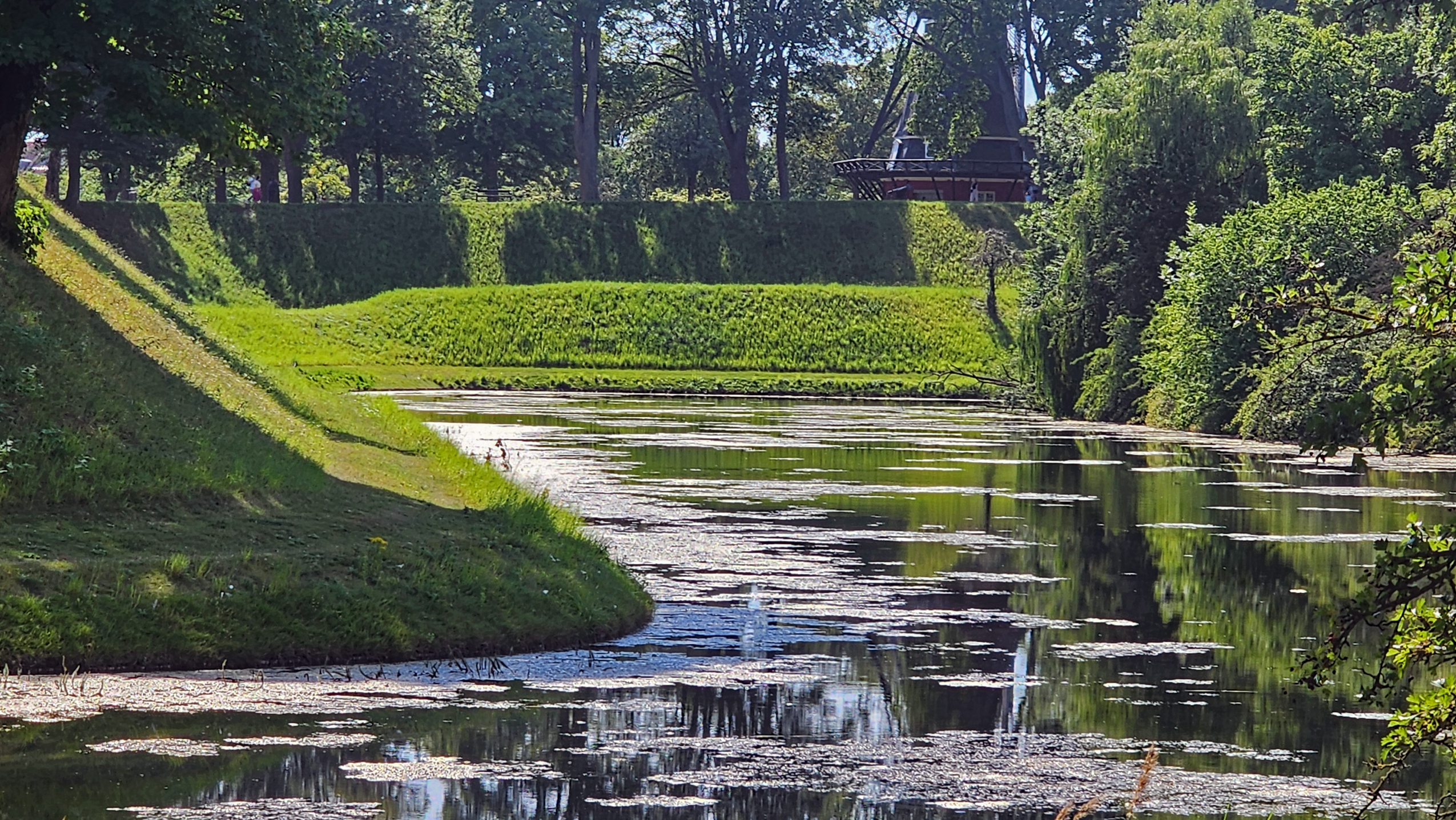
Kastellet, Copenhagen
We also visited Kastellet on that same day, a former fortress near the site of the Little Mermaid sculpture that continues to house military buildings (of no particular architectural interest) that are surrounded by a beautiful public park. And we ended the day with a visit to Freetown Christiania (see below). That made for a long and tiring, but very interesting, day.
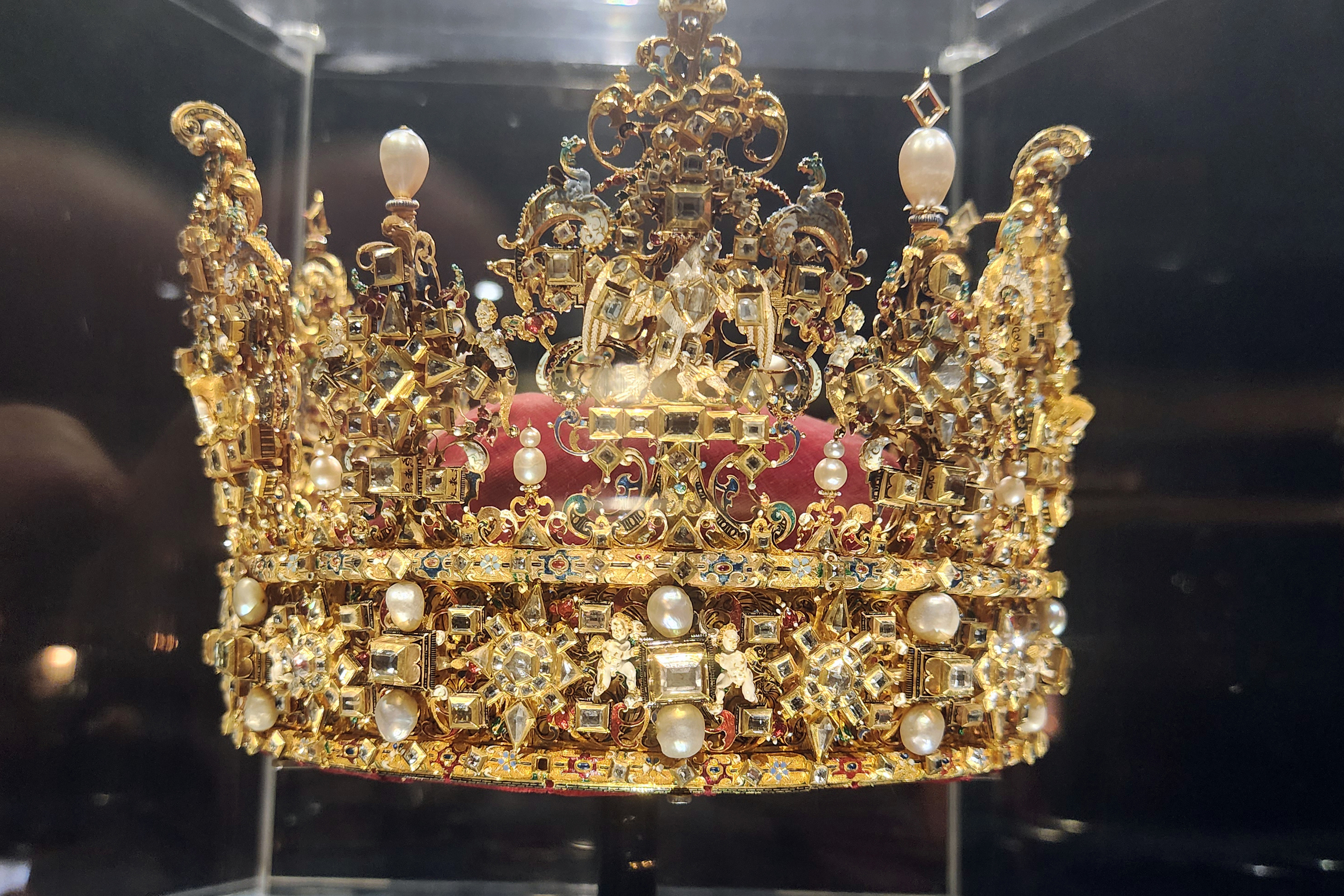
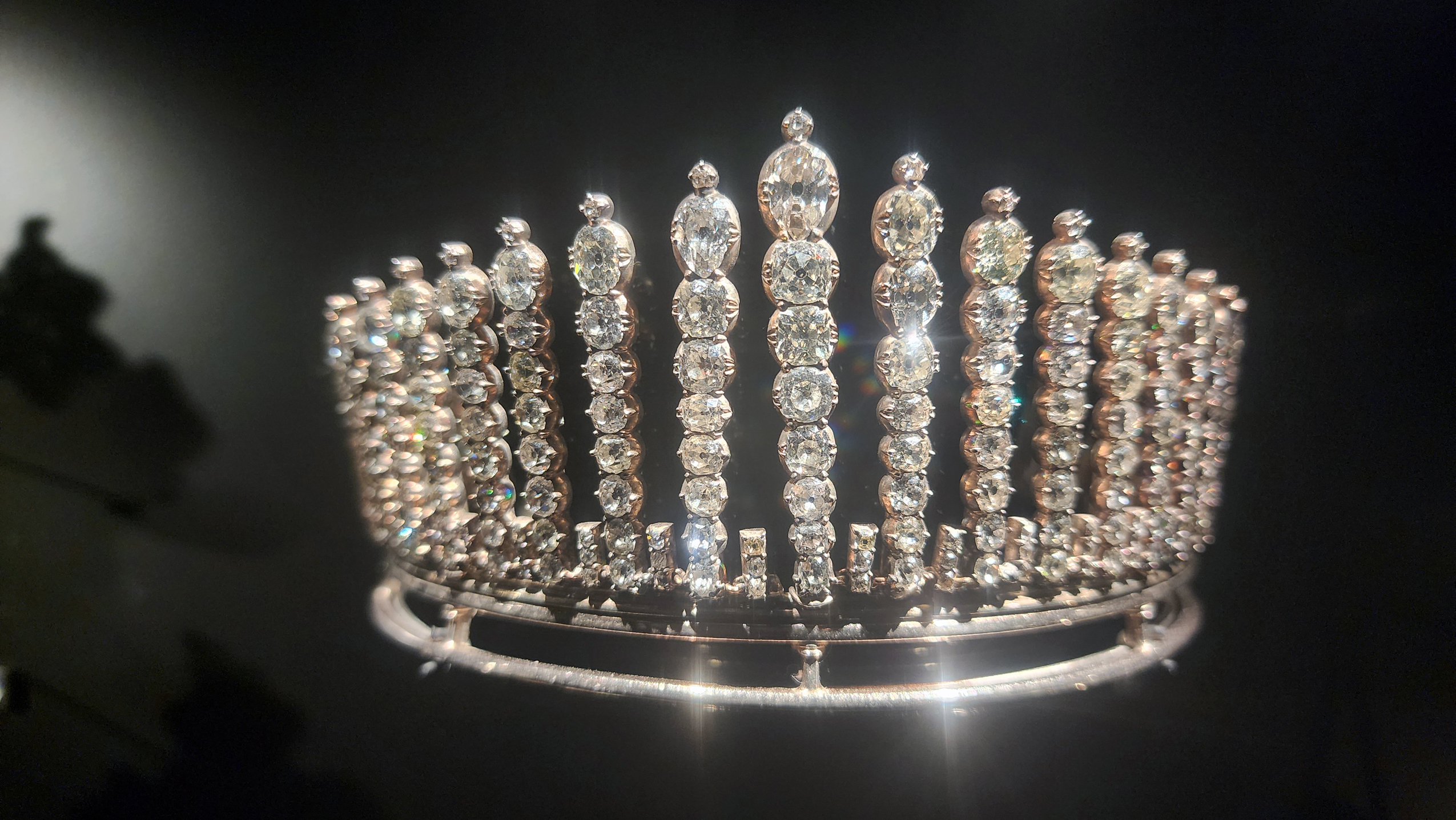
Crown of King Christian IV, Rosenborg Castle
Rosenborg Castle
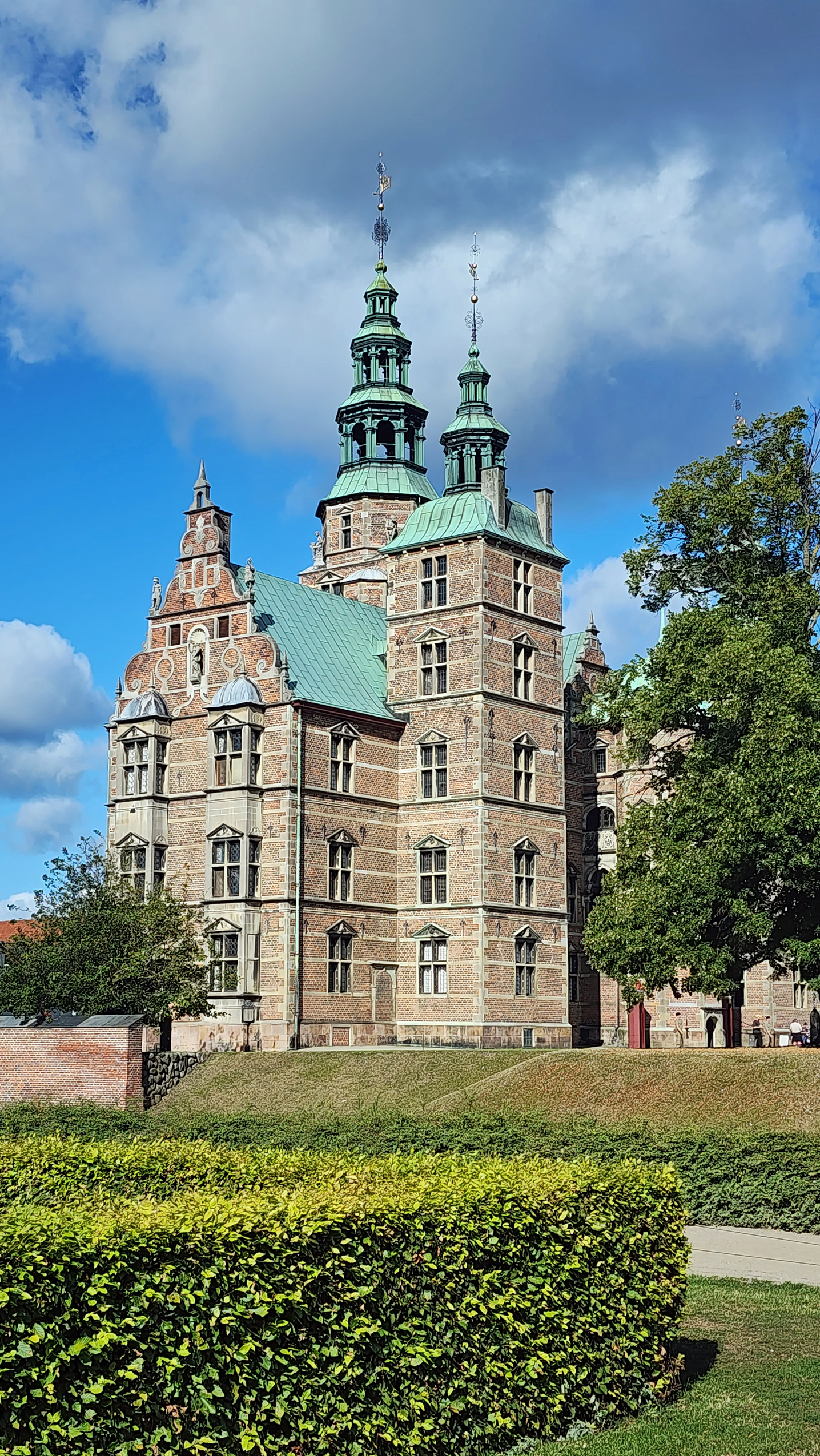
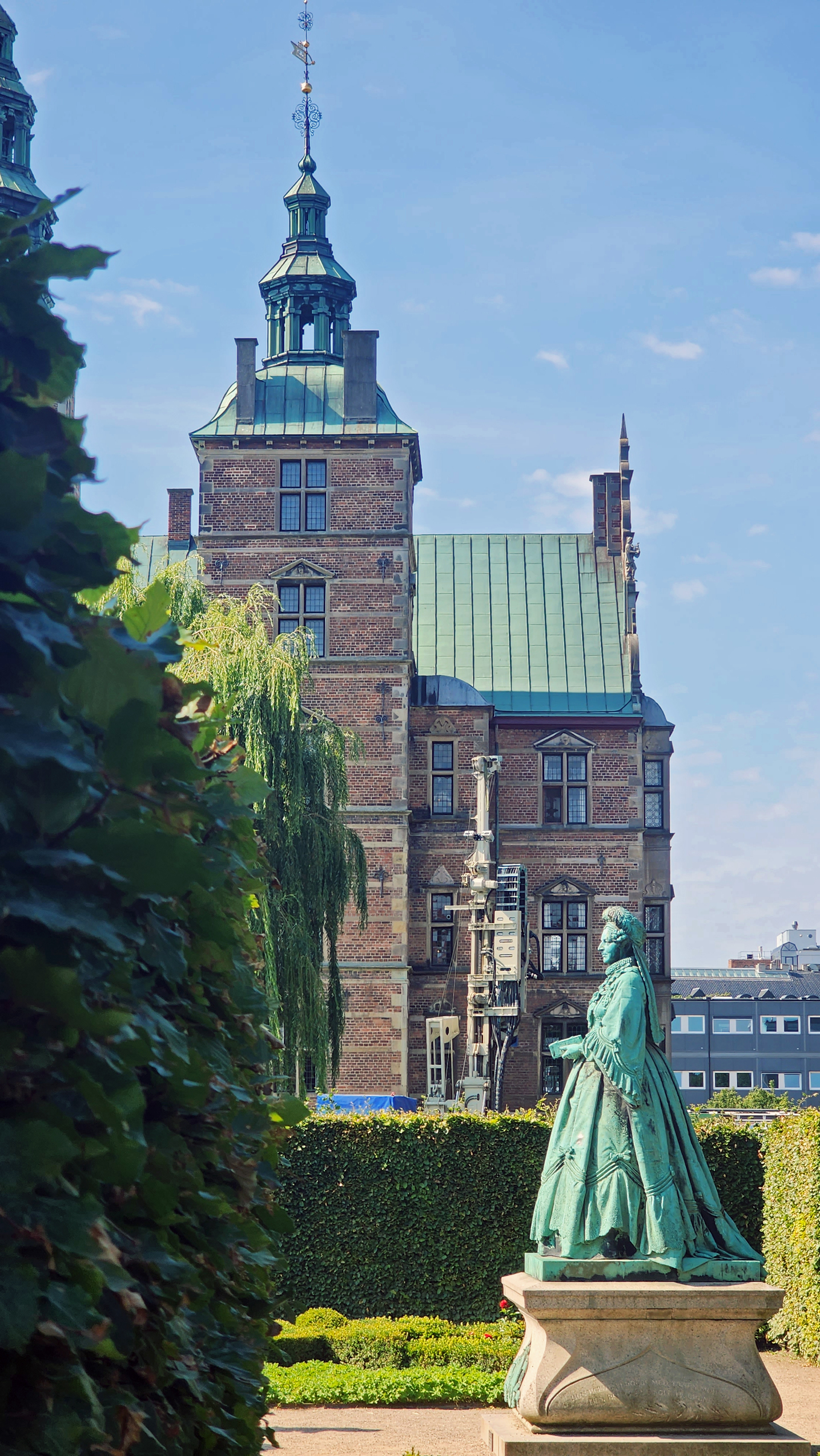
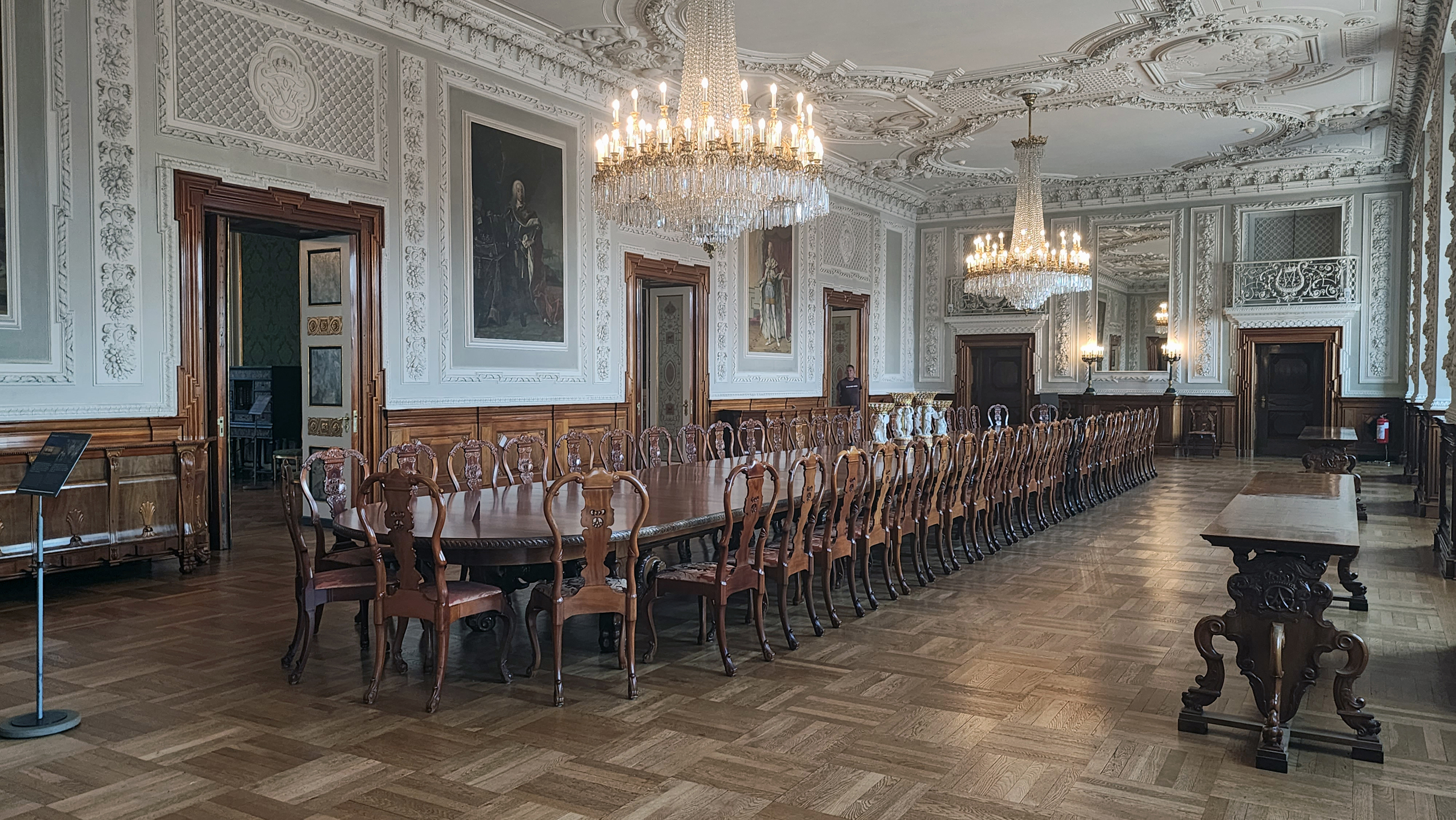
Rosenborg Castle (Rosenborg Slot) was built by King Christian IV as a summer residence in 1606, then expanded to its present size in 1624. Some of Christian IV’s possessions, including his private writing cabinet (and his bathroom) are on display. And everything on display can only be described as magnificently opulent.
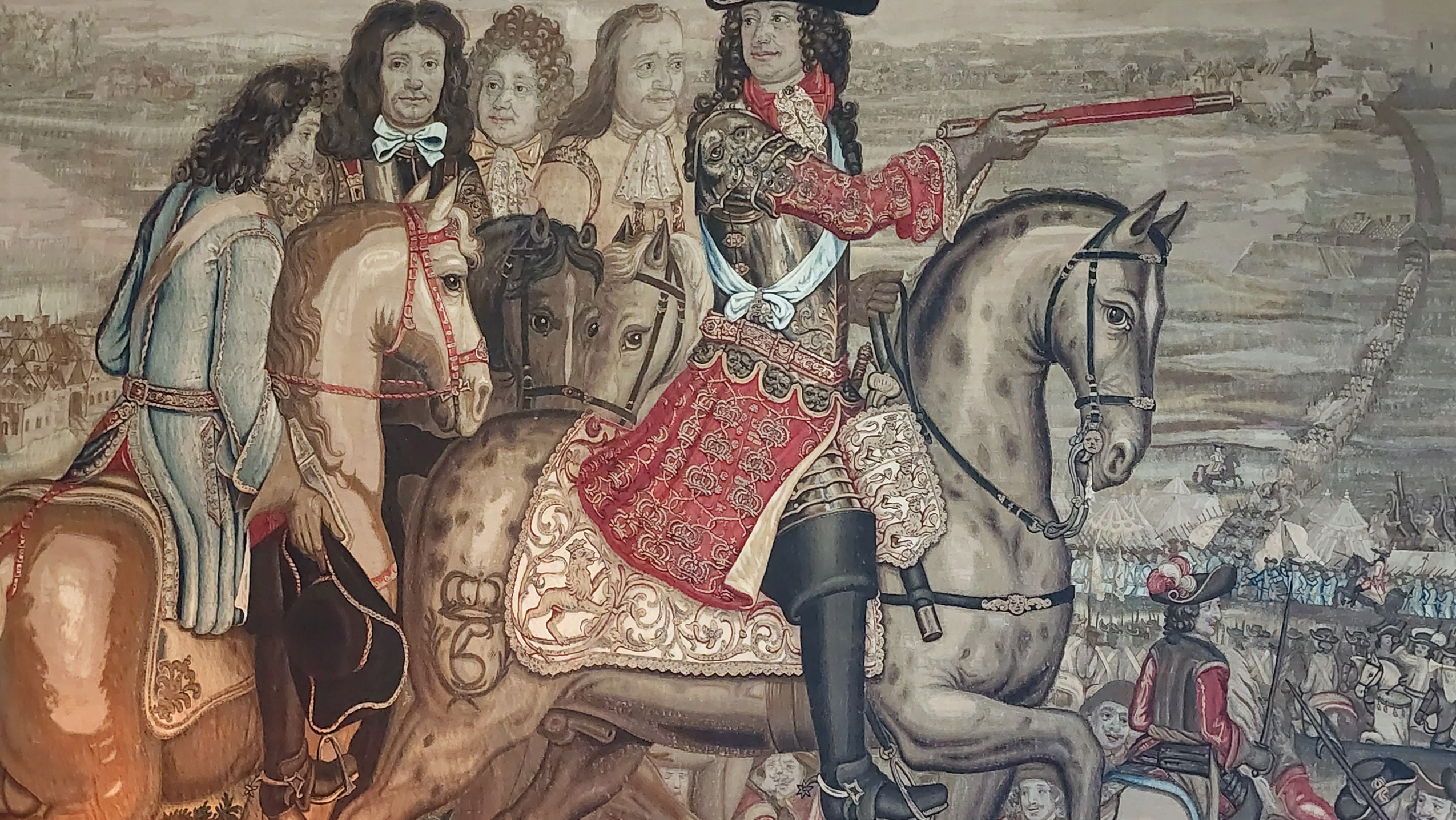
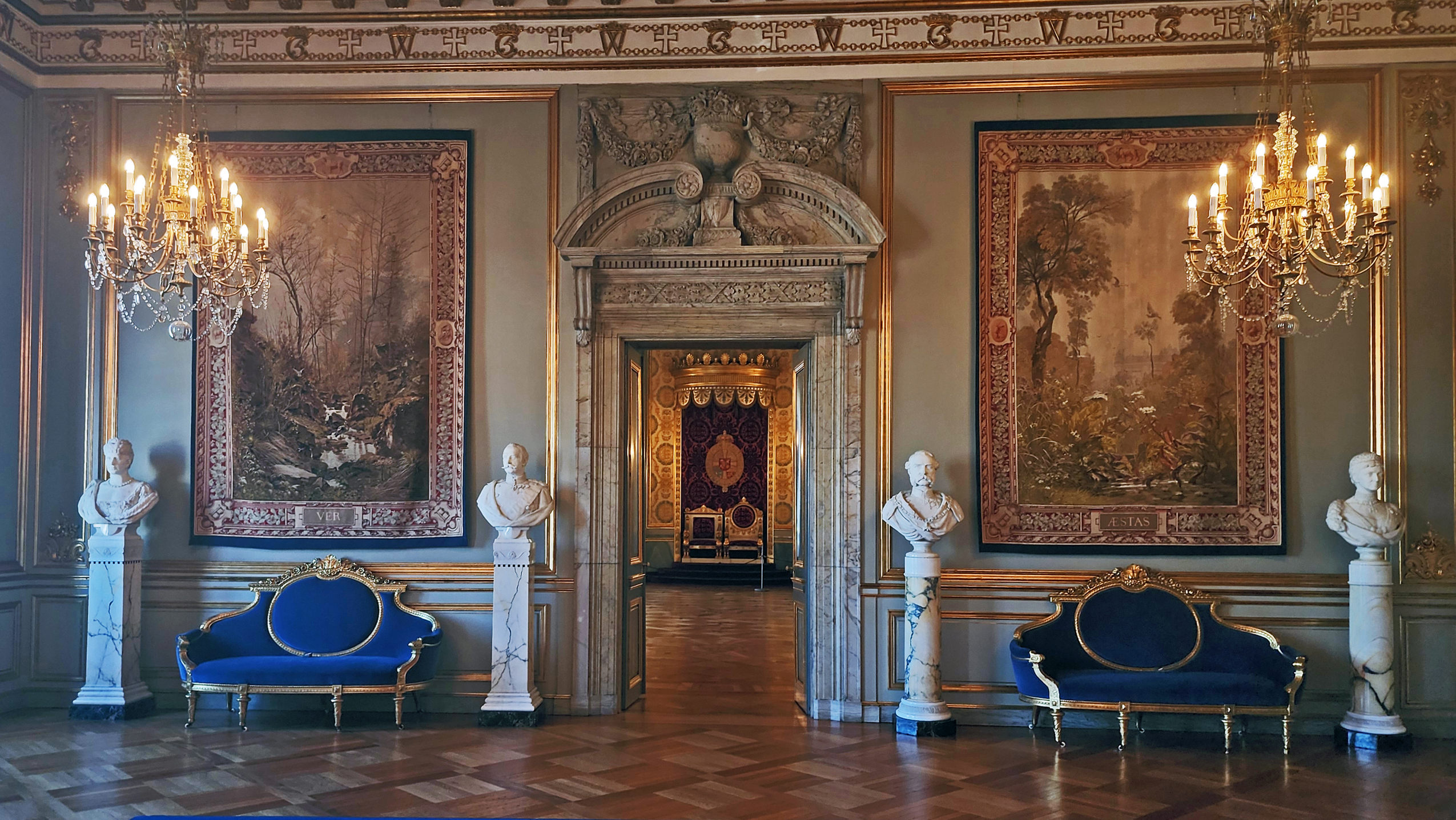
17th century tapestry, Rosenborg Castle
The Knight’s Hall contains the coronation throne, queens throne, three life-size silver lions, and twelve tapestries from the 17th century. The Danish Crown Jewels can be viewed in the castle basement (which has a separate entrance from the main castle).
Rosenborg CastleRosenborg Castle
The King’s Garden (Kongens Have), also known as the Castle Garden, is located adjacent to the castle. See the Parks and Natural Areas section below.
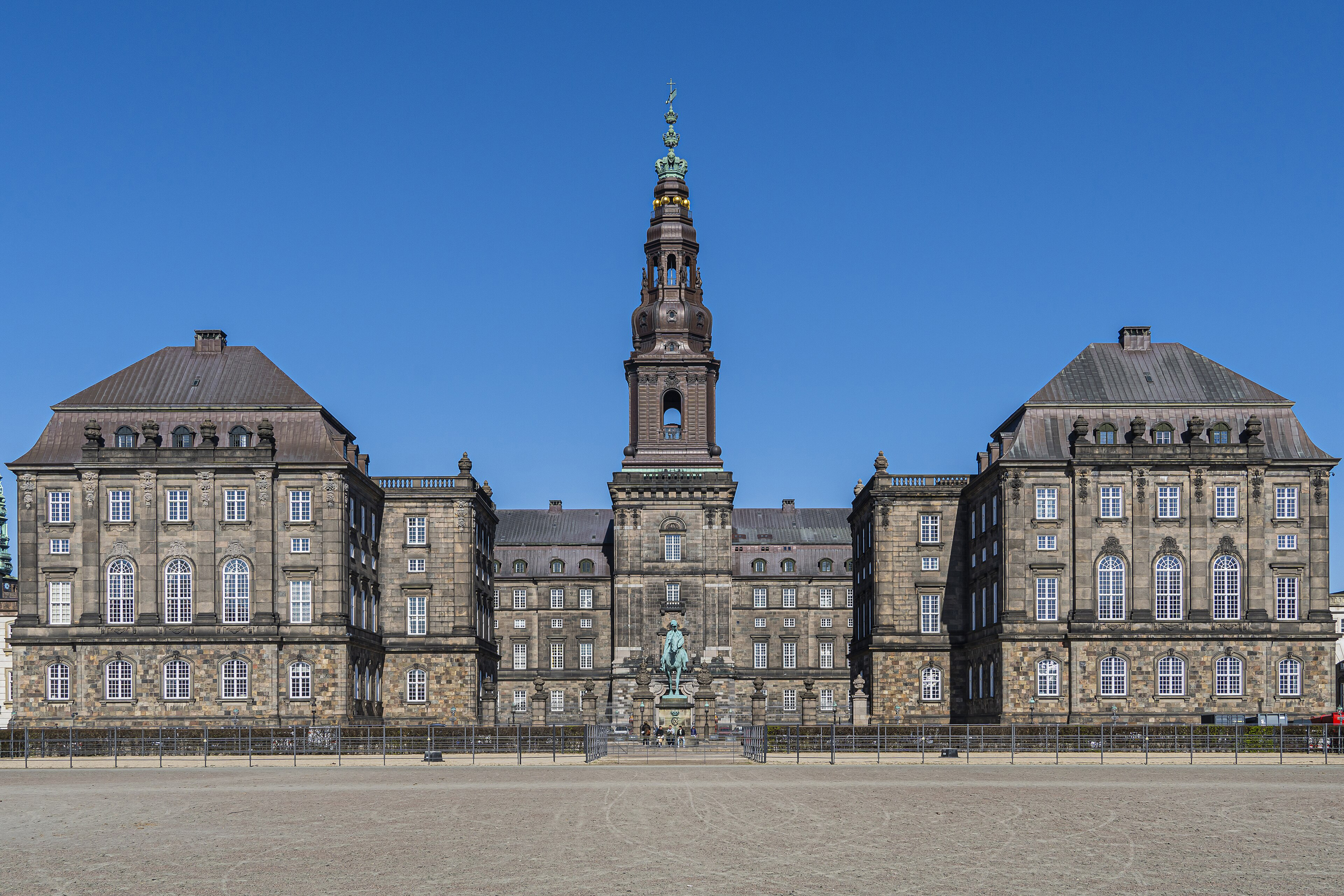
Christiansborg Palace, photo credited to Jakob SR, sourced from Wikimedia Commons
Christiansborg Palace
The original Christiansborg Palace (Christiansborg Slot) was completed in 1745. A fire in 1794 nearly destroyed the structure, which was then replaced by the second palace, completed in 1828.
Christiansborg Palace
In 1849, when Denmark became a constitutional monarchy, the first Danish Parliament met in the south wing of the palace. The only king to use the second palace as a residence was Frederick VII, from 1852 to 1863.
Christiansborg Palace
The second palace also burned, in 1884. Construction of the current palace was completed in 1928 and is the seat of the current Danish Parliament, as well as the Danish Supreme Court and the office of the Prime Minister, making it the seat of all three branches of the Danish government.
Amalienborg Museum
Amalienborg Museum
The Amalienborg Museum is located in one of the four buildings making up Amalienborg Palace. The palaces surround a central courtyard with a statue of King Frederik V at its center. The structures were originally the homes of four noble families, but were purchased by the Danish royal family after the original Christiansborg Palace burned in 1794. The palace has been the official residence of the royal family ever since.
King’s Garden (Kongens Have), Copenhagen
Parks and Natural Areas
Copenhagen is a beautiful city with many parks and natural areas. The largest park in the central city is Kongens Have, adjacent to Rosenborg Castle.
Kongens Have, Copenhagen
The park has large open areas, shaded lanes lined with trees, a formal rose garden, and a children’s playground. There is also a monument to Hans Christian Andersen, and a café (the Herkules Pavillon Café).
Children’s playground, Kongens Have, Copenhagen
There are many other parks that we did not have time to explore, including Faelledparken, about a mile north of Rosenborg Castle, and Amager Faelled, on Amager Island about a mile south of the city center.
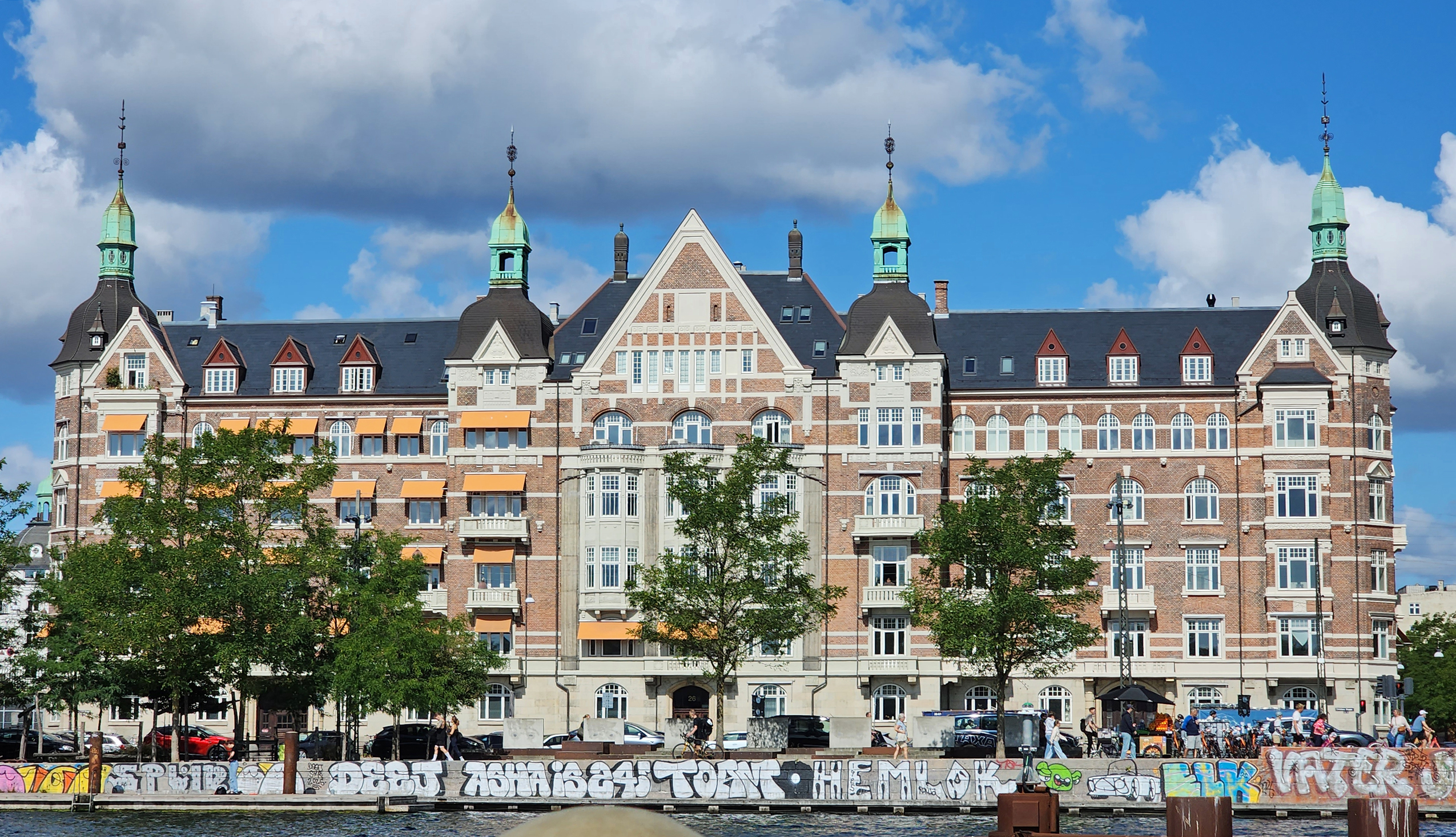
Art and Architecture
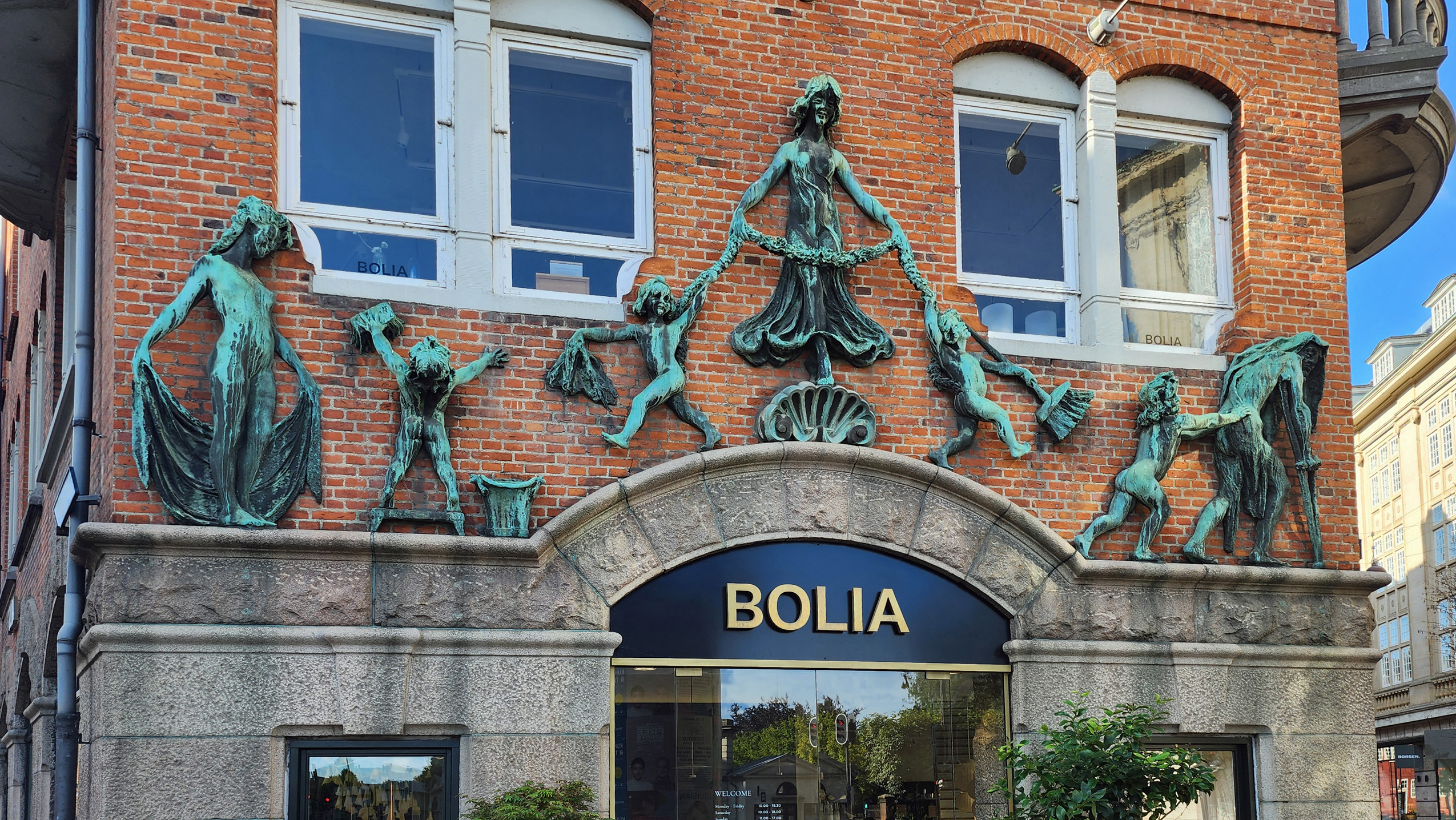
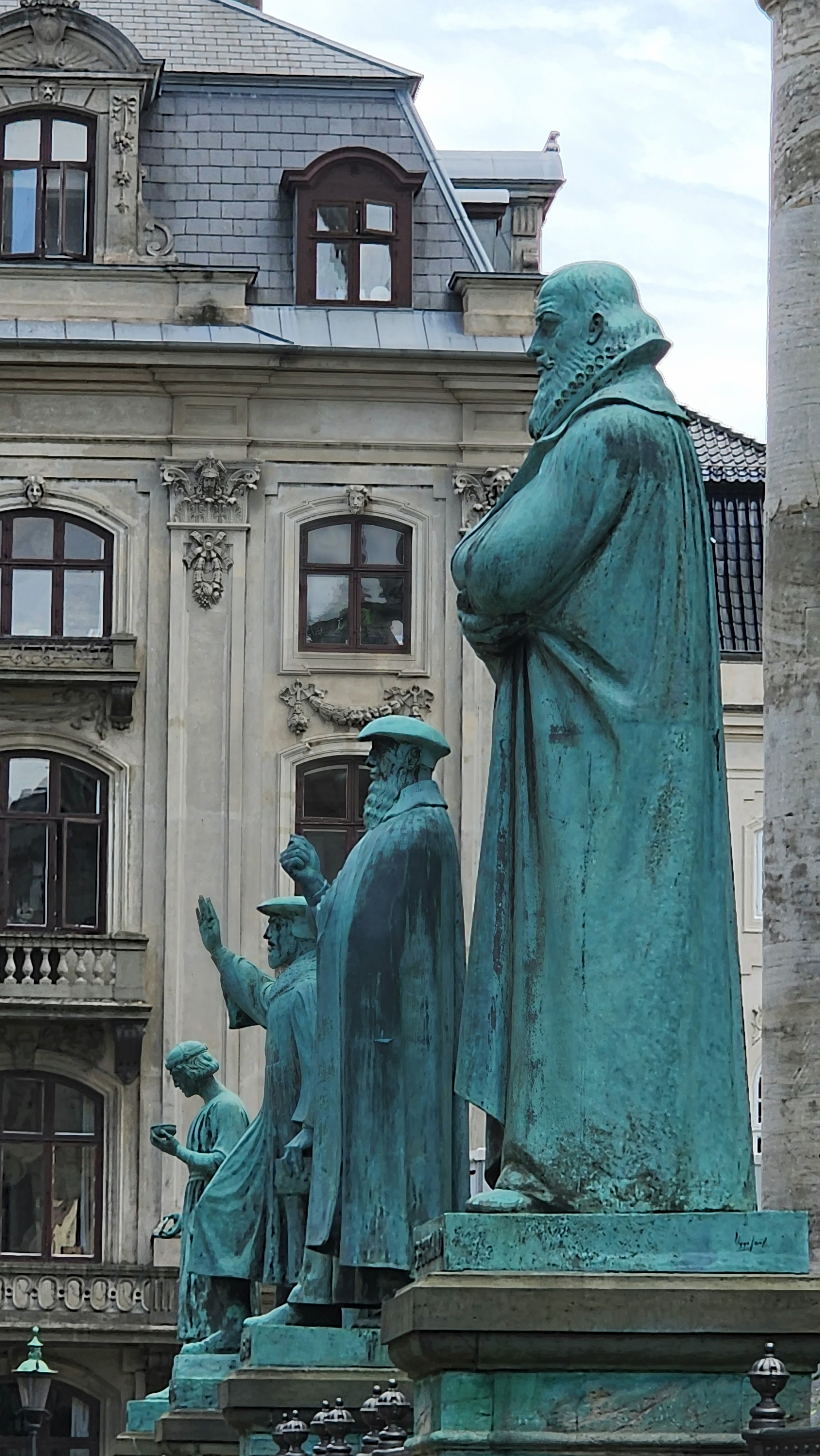
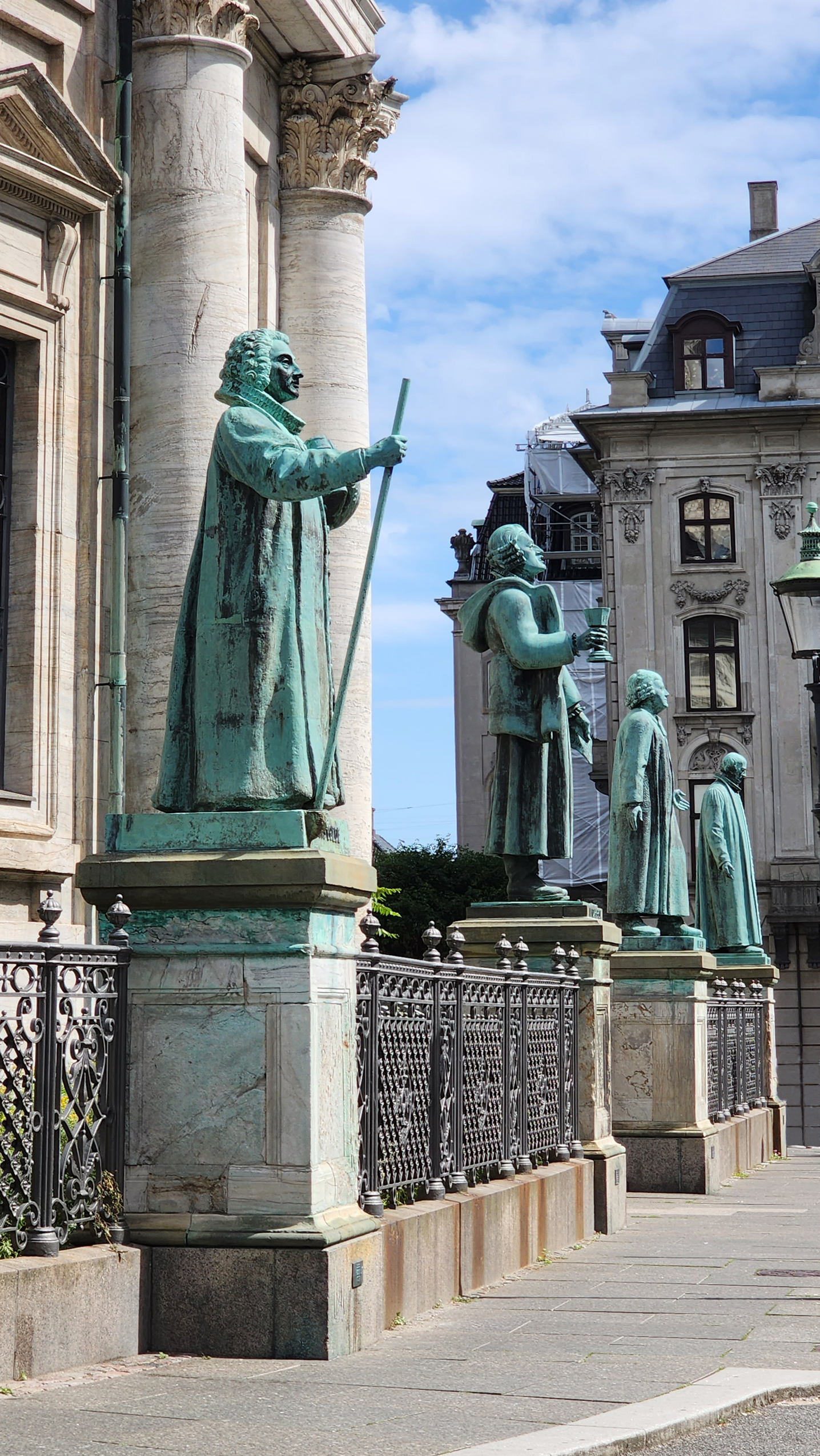
Statues, monuments, and many other public art exhibits are scattered throughout the city center. And there are many art museums and galleries in the old city, including the Nicolaj Art Gallery and the Ny Carlesberg Glyptotek.
I’m a big fan of architecture in general and Copenhagen has a wide range of building styles from centuries old churches to ultra-modern office buildings. The images above are only a tiny slice of what you can find in the city center.
The Little Mermaid
The Little Mermaid
Edvard Eriksen’s iconic bronze sculpture is one of the top tourist attractions in Copenhagen and not to be missed. Although not imposing (the sculpture is less than five feet tall), it has been captivating people ever since its creation in 1913.
The Little Mermaid sculpture was inspired by the 19th century Hans Christian Andersen fairy tale of the same name. It was commissioned by Carl Jacobsen, son of the founder of Carlsberg, one of the ten largest beer brewers in the world. He was inspired by a ballet based on the fairy tale and wanted the ballerina, Ellen Price, to model for the sculpture, but she refused to pose nude. The model was actually Ericksen’s wife, Eline Ericksen.
Nyhavn, Copenhagen
Nyhavn
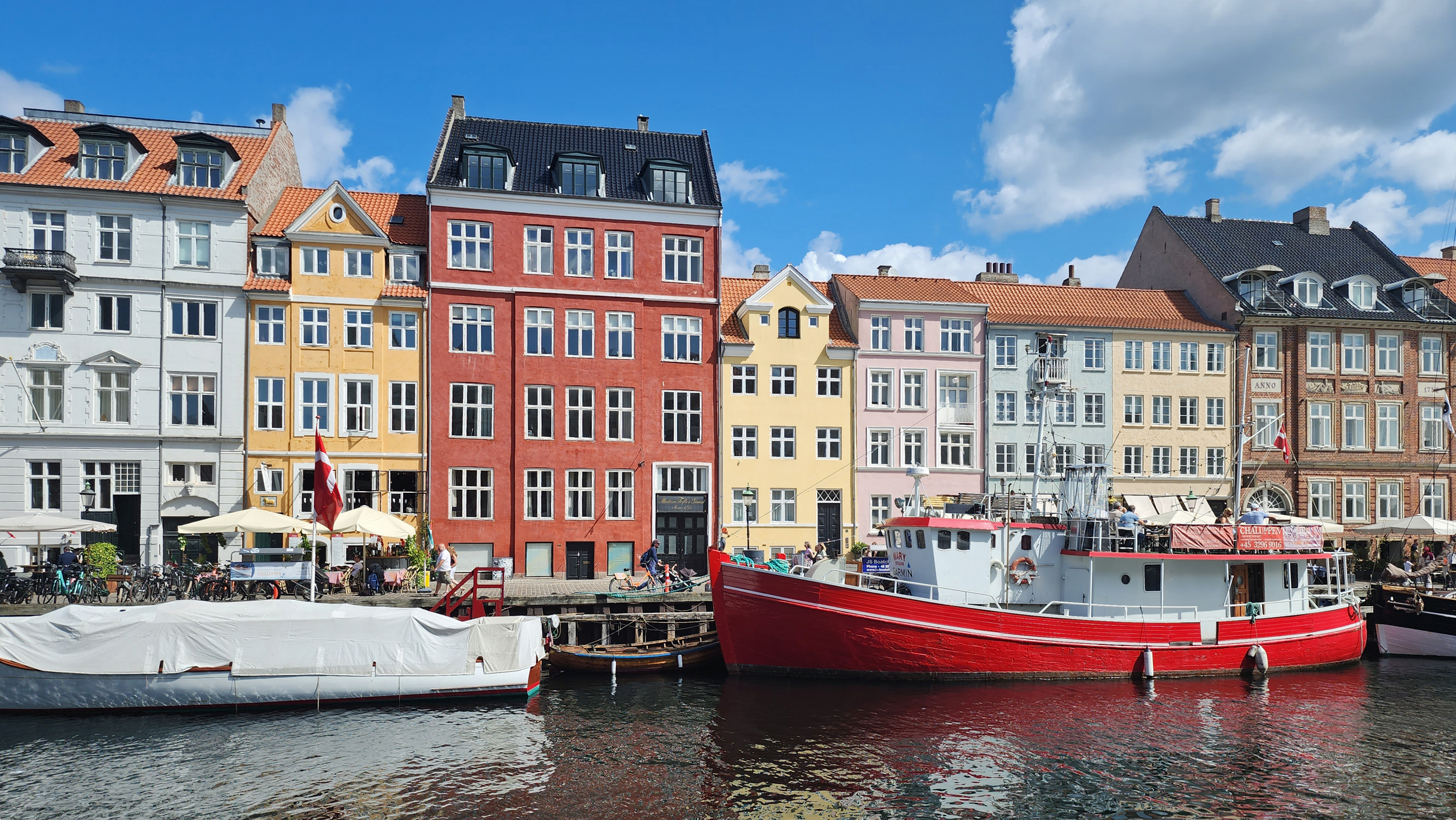
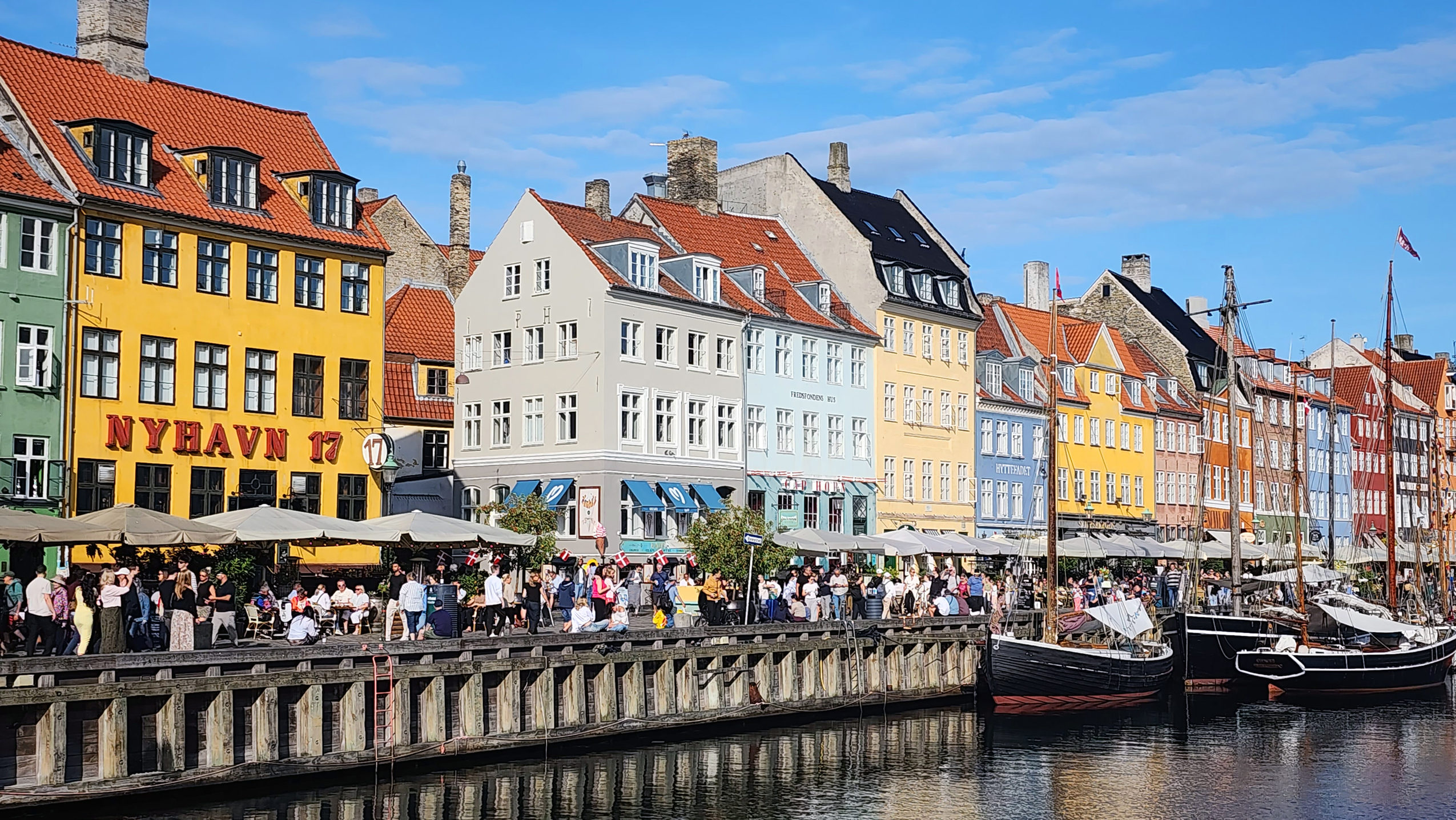
Another iconic location in Copenhagen is Nyhavn, where brightly colored buildings house cafes, pubs, and townhouses along both sides of a canal. Hans Christian Andersen lived and wrote in three different houses in Nyhavn. Built in the 17th century, Nyhavn (“new harbor”) was once home to sailors, merchants, taverns, and bordellos. Today it a mecca for tourists.
Nyhavn, Copenhagen
In summer, Nyhavn is a great place to get a beer and relax in an outdoor café, as long as you don’t mind the throngs of tourists that flock there. In winter, it is home to a Christmas Market that is something of a tourist attraction of its own.
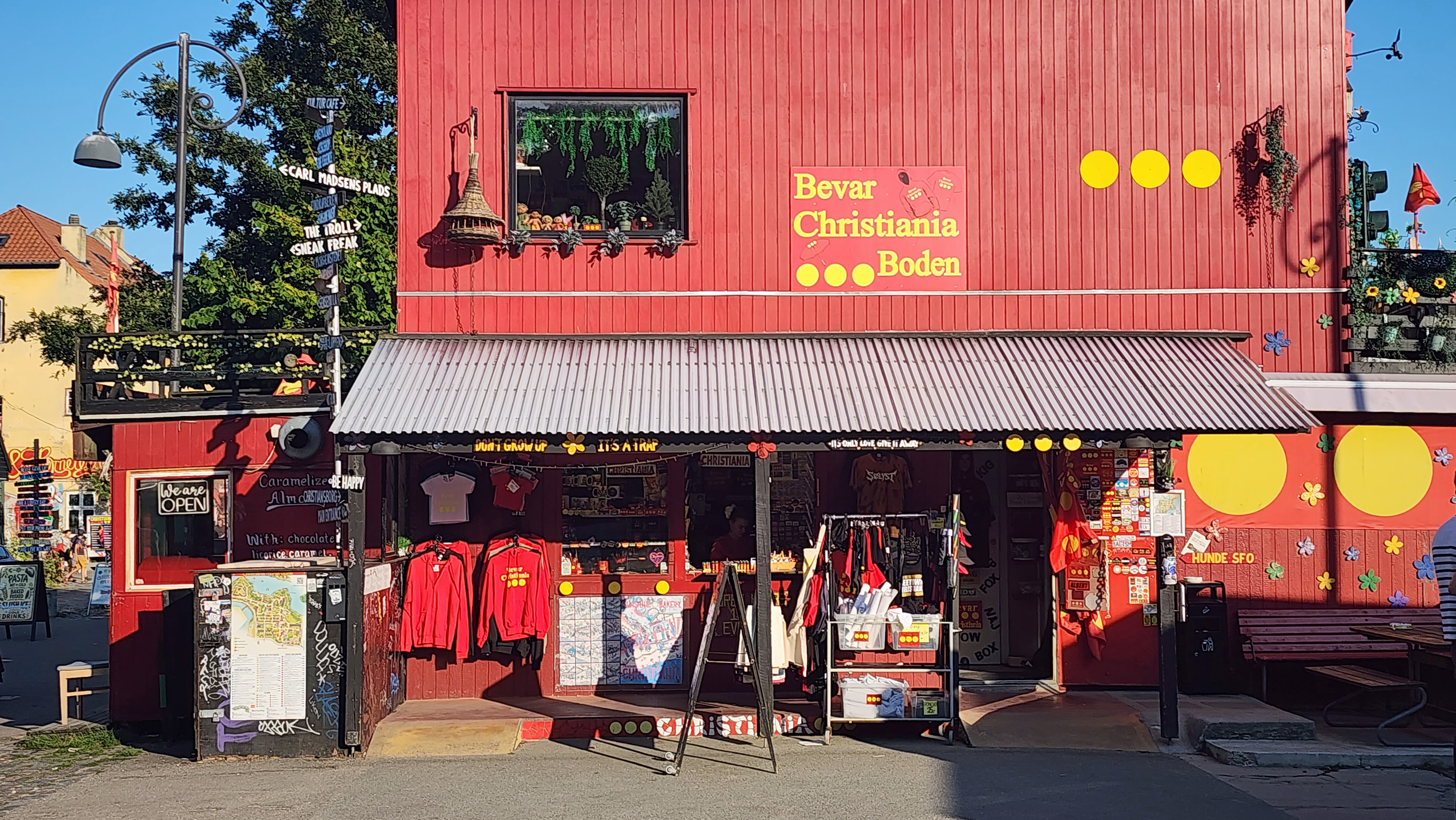
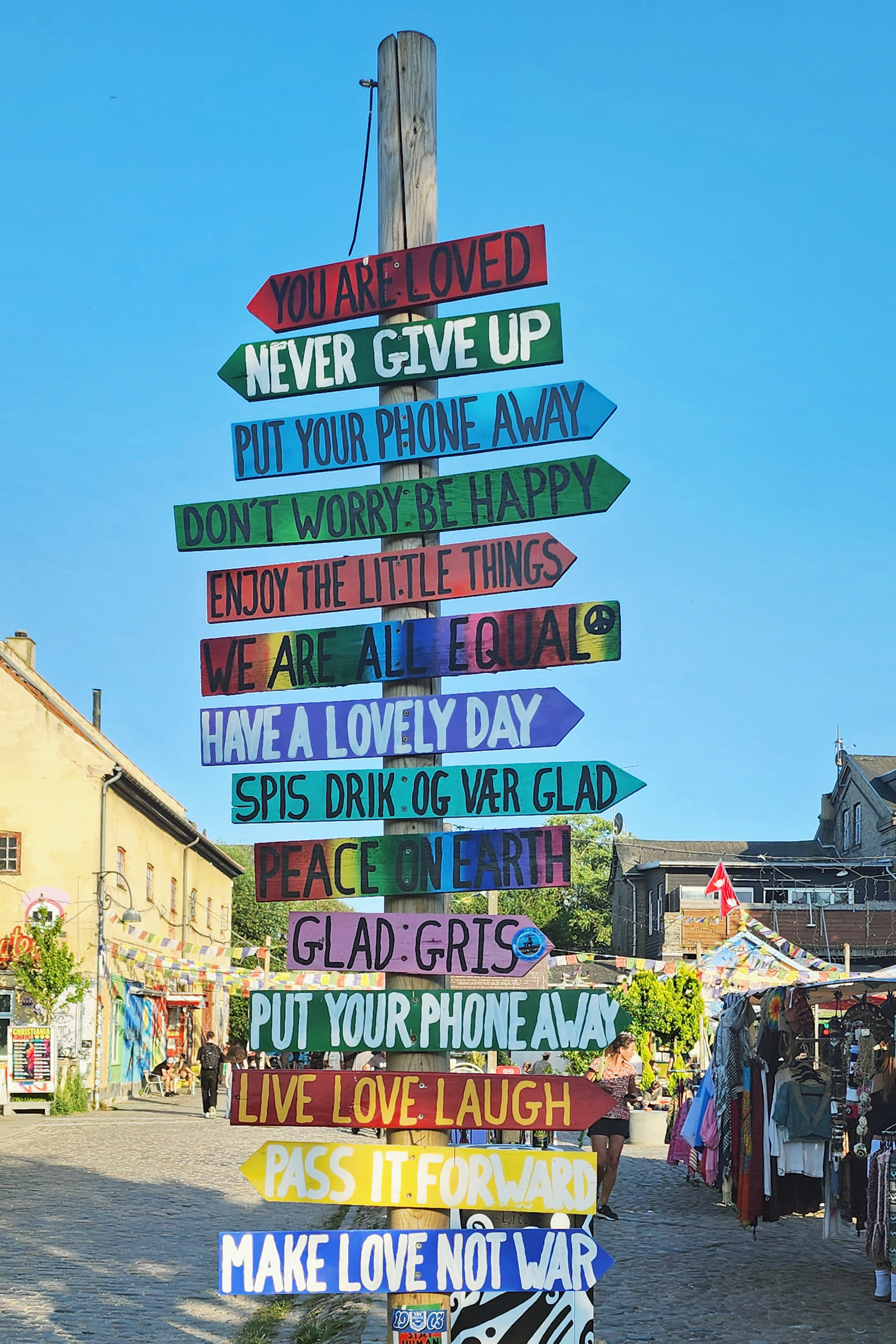
Freetown Christiania, Copenhagen
Freetown Christiania
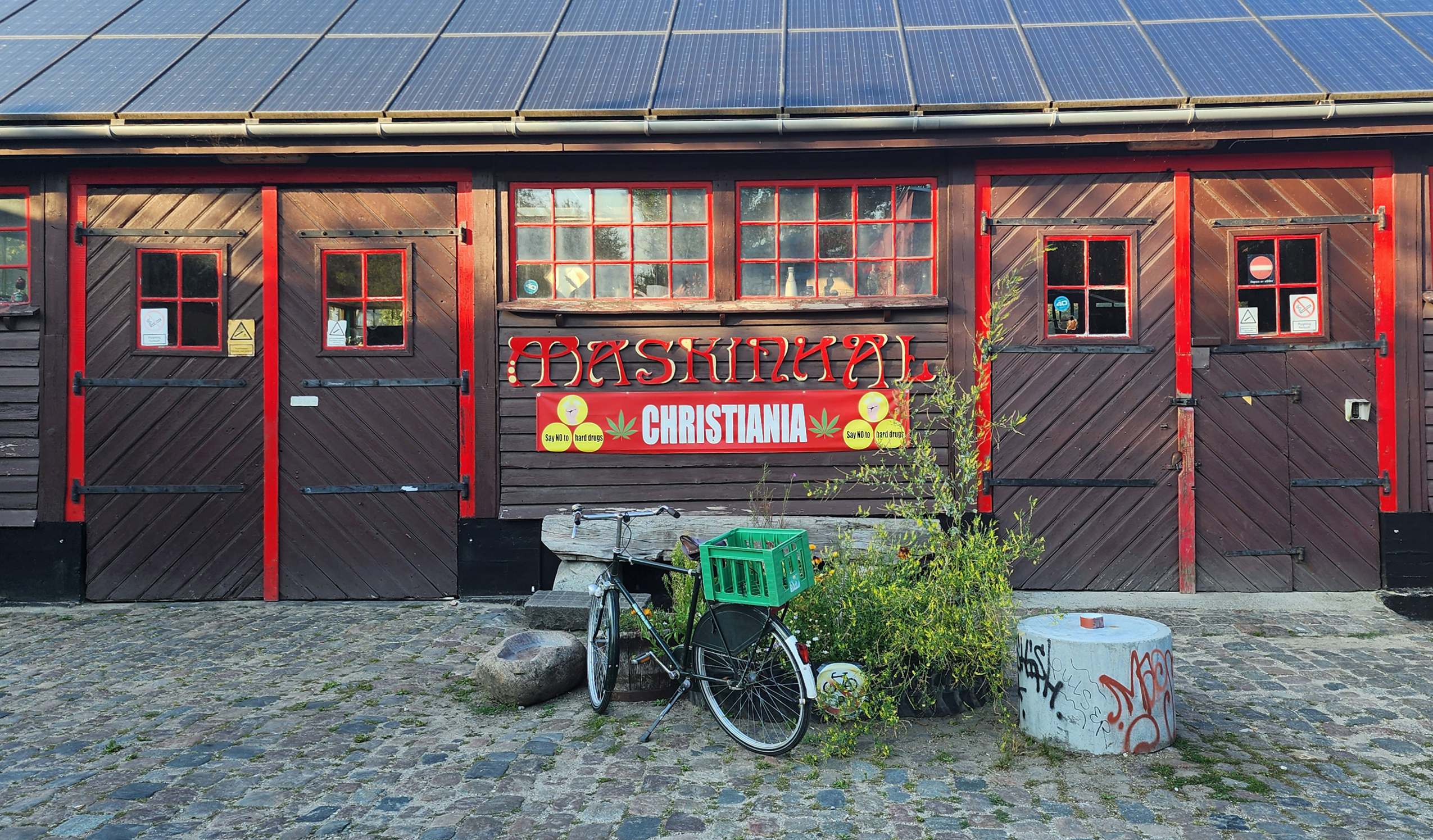
In 1971, counter-culture journalist Jacob Ludvigsen declared a former military barracks on Amager Island “open” and Freetown Christiania (more often just called Christiania) was born. Christiania was, and still is, an intentional community akin to a hippie commune.
Christiania, Copenhagen
One of Christiania’s most contentious (mostly to outsiders, but also to a lesser extent to Christiania residents) provisions was open tolerance to drug use and drug dealing. Aptly named Pusher Street became home to open stalls selling cannabis, but hard drugs were only slightly less publicly sold. The cannabis stalls were removed by the residents and Pusher Street was dug up in 2016 after two police officers and a citizen were shot by a cannabis dealer. Cannabis is still widely tolerated, but hard drugs are not.
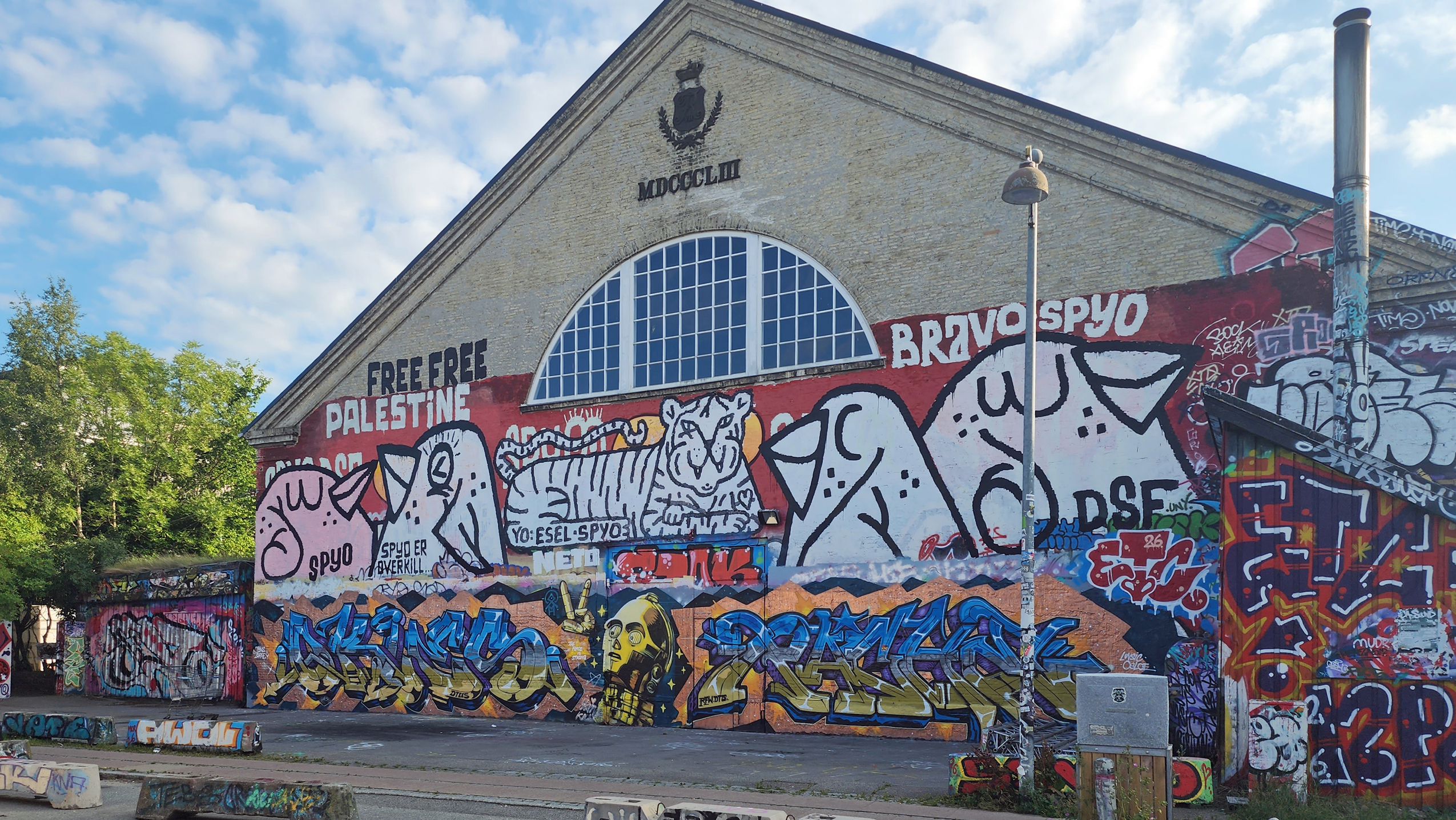
Christiania, Copenhagen
Ownership of the former barracks was bandied about in Danish courts until the Danish Supreme Court ruled that the state was still the ultimate land owner. But Copenhagen and Christiania leaders came to an agreement that resulted in the newly created Foundation Freetown Christiania acquiring 19 of the 84 acres of the former barracks. Residents of Christiania went from squatters to the legal owners in 2012.
“Green George”Freetown Christiania
Today, Christiania is one of the top five tourist attractions in Copenhagen. It is home to many artists, and public art installation are common, including one of Thomas Dambo’s giant troll sculptures. Other troll sculptures of his can be found around the world, including one in Portland, only a few miles from my home. The Christiania Art Gallery is also a place you might want to visit. (Bring Danish krone if you might want to buy anything – they don’t accept Euros or US dollars). There are also numerous shops and cafes, including Café Nemoland.
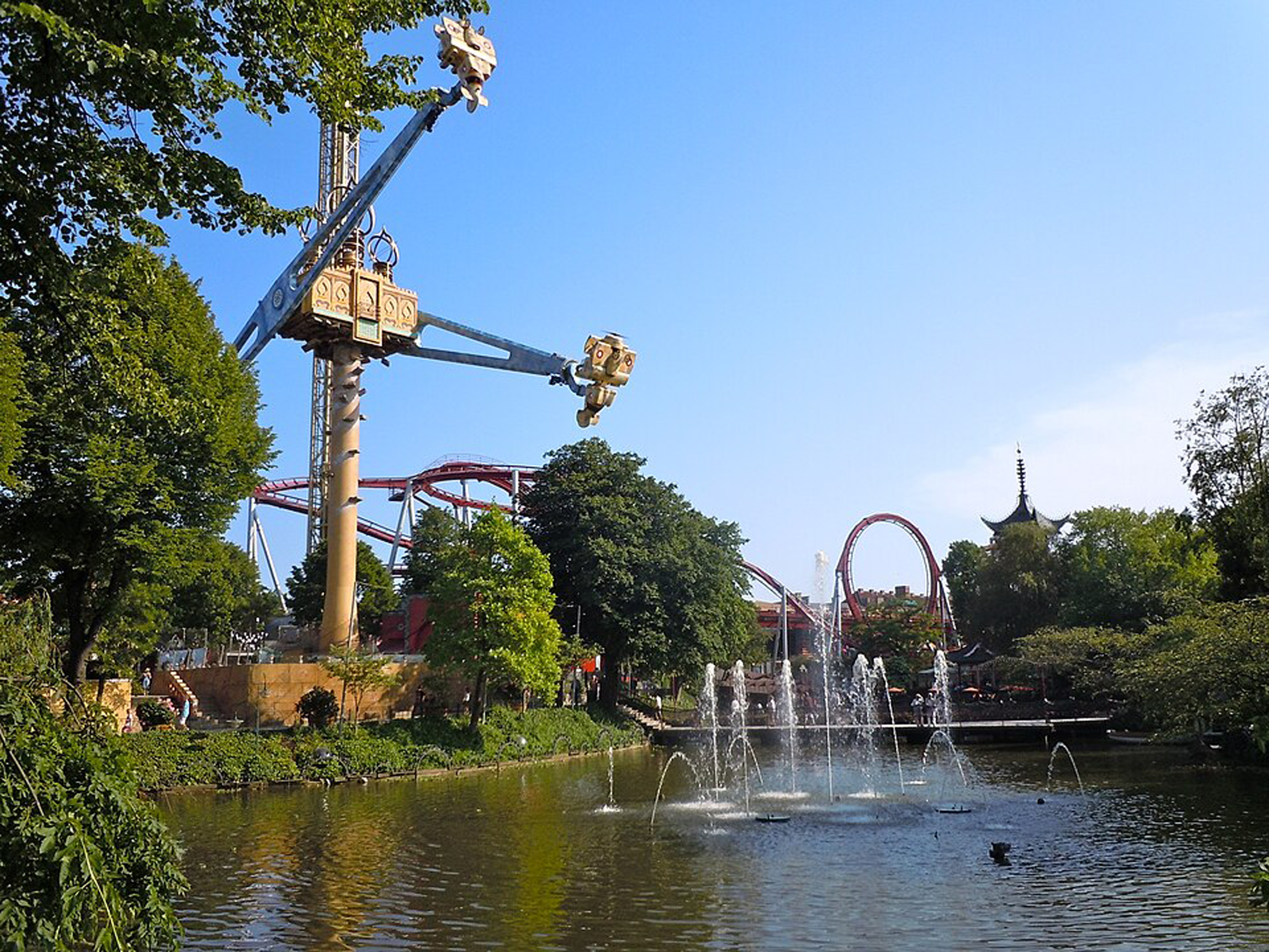
Tivoli Gardens, photo by Sarah Ackerman, sourced from Wikimedia Commons
Tivoli Gardens
Tivoli Gardens (often referred to as just Tivoli) is an amusement park located in the middle of Copenhagen with 30 different rides and many other attractions. It opened in 1843 and has been in continuous operation ever since, 183 years and counting. It is the second oldest continuously operated amusement park in the world, second only to the Dyrehavsbakken (or simply Bakken), which opened to the public in 1756 and is also located in Denmark, not far from Copenhagen. We did not visit Tivoli, but if you have young children or are just into thrill rides, it might be a must see attraction. It gets somewhat mixed reviews, though. Most of the criticism seems to be due to the cost of admission. An entrance and ride pass (for ages eight and up) currently costs about $60. Children 3-7 get in for half price and children under three get in free.
Practical Matters
Today, Copenhagen is a sprawling metropolis, but the old town section of the city is compact and walkable. Getting around is easy, either on foot or by the efficient, safe, and quick Metro train system or municipal buses. Our hotel was several miles from the city center, but only about a five minute walk to a Metro station and a 15 minute train ride away from the old town center.
Denmark is part of the European Union but uses its own currency, the Danish krone. Euros are accepted most places, though, and even American dollars in some places. And almost every place accepts credit cards.
Nyhavn
Pubs and cafes are found everywhere in the city center, especially along the waterfront and in other touristy areas. You don’t really need a guidebook. Menus in most cafes and restaurants are printed in both Danish and English, some in English only. And almost everyone speaks passable English, so if you have any questions just ask your server. Servers are paid a living wage, so tipping is optional, but appreciated. At some of the cafes and pubs that we ate it wasn’t even an option, but where it is 10% is sufficient.
Hotel Bella Sky
There are many hotels and other accommodations available in downtown Copenhagen. Prices (including taxes and fees) for hotels generally start at about $350 per night on summer weekends, but can be much higher depending on location and degree of luxury desired. Our hotel, several miles from the city center, was a little over $300 per night and was more than adequate.
Conclusion
Copenhagen’s a fascinating place, especially if you love to be on the water, with a long and interesting history, friendly and welcoming people, beautiful art, architecture, and parks, and far more to see than we could in the three days we had there. A week (or two) would have been better. But our visit was long enough to fall in love with the city and its people. I heartily recommend that, if you can, you should visit at least once in your life. It’s really a magnificent city.
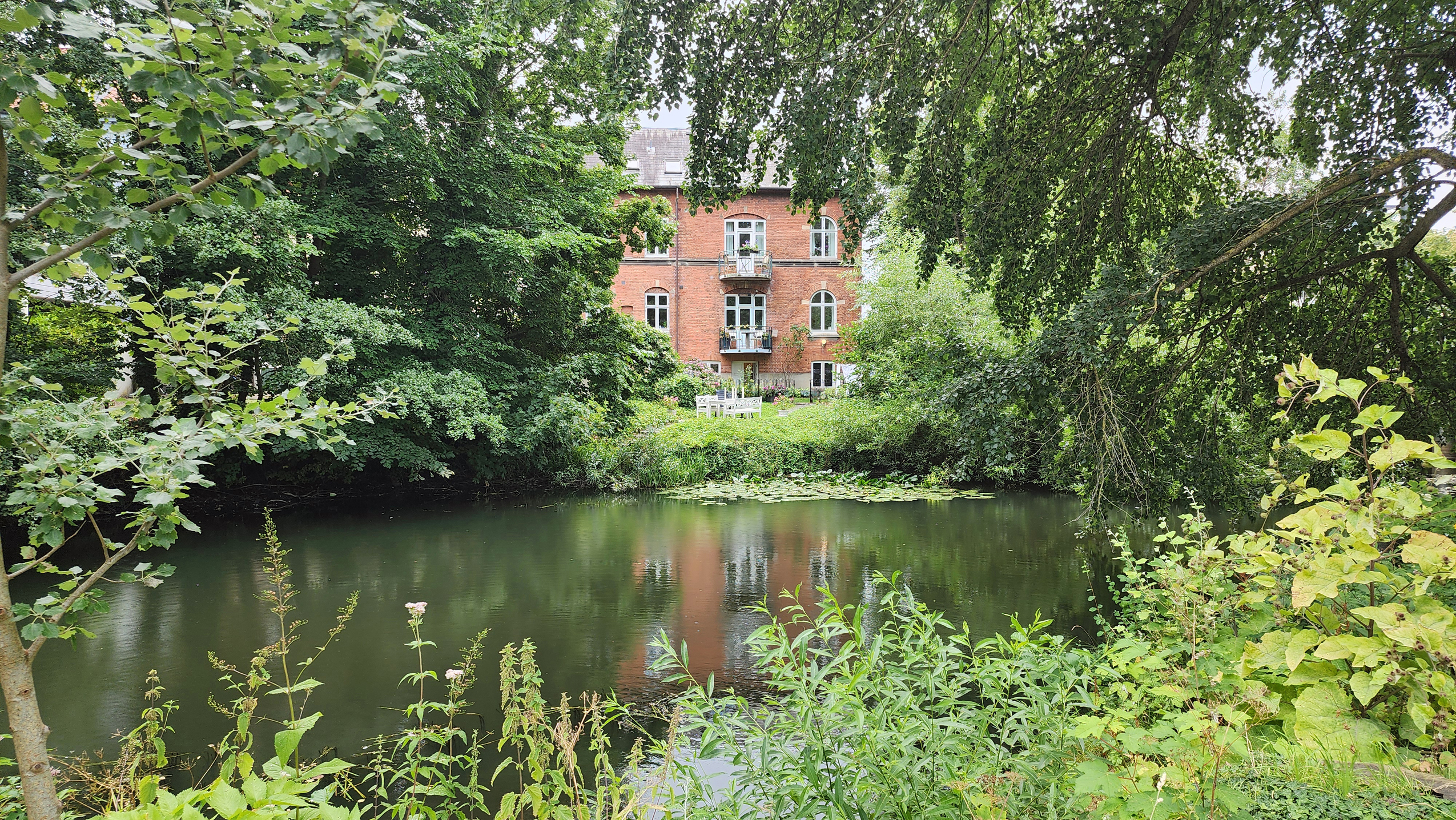
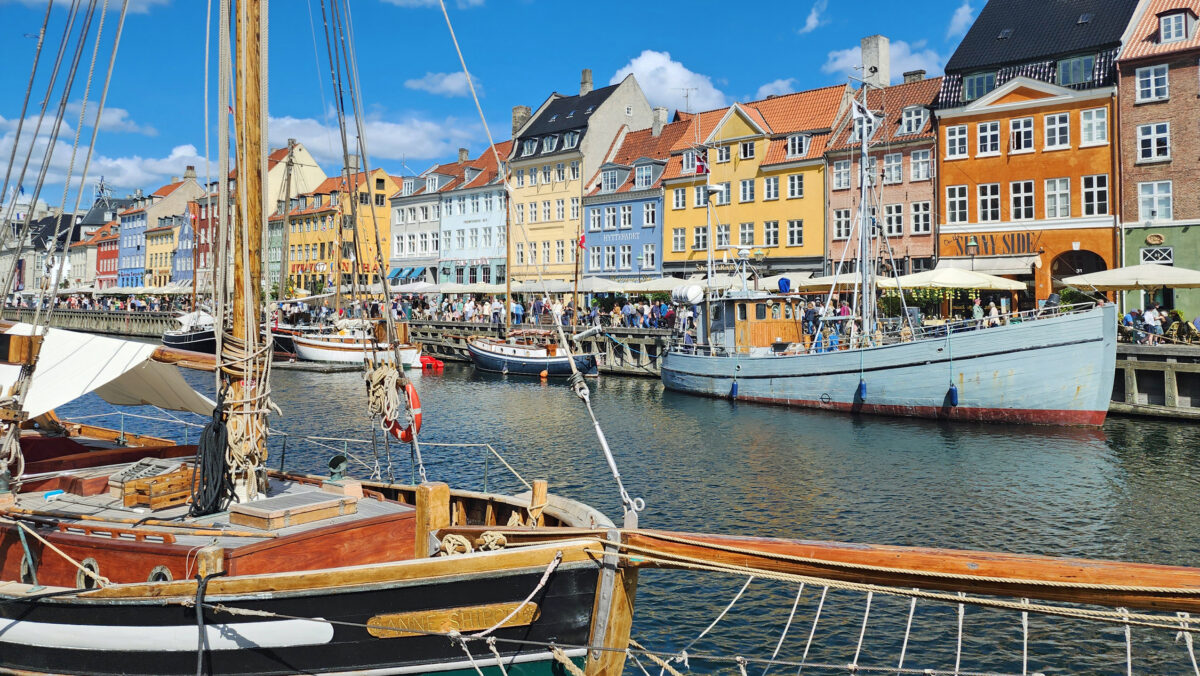
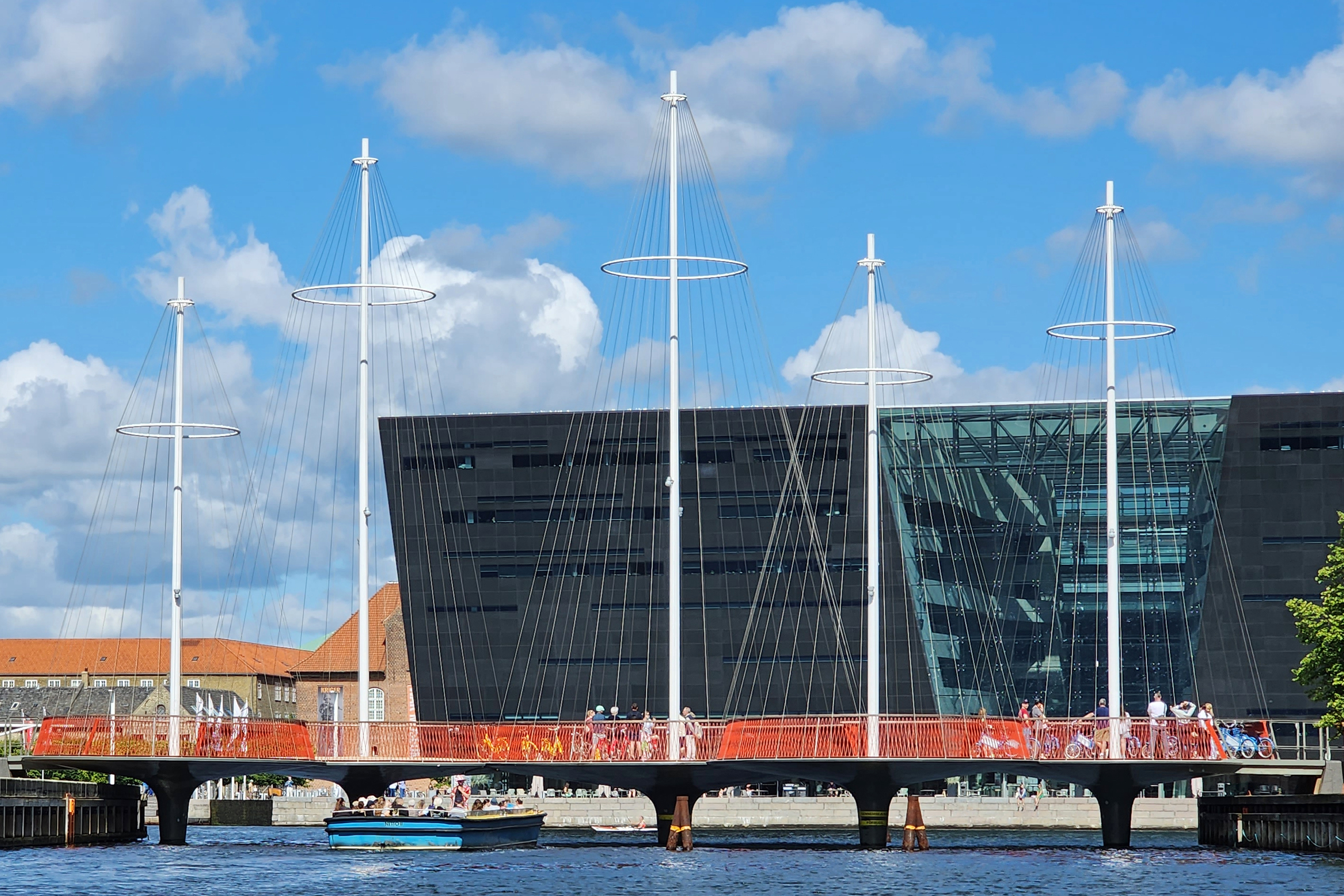
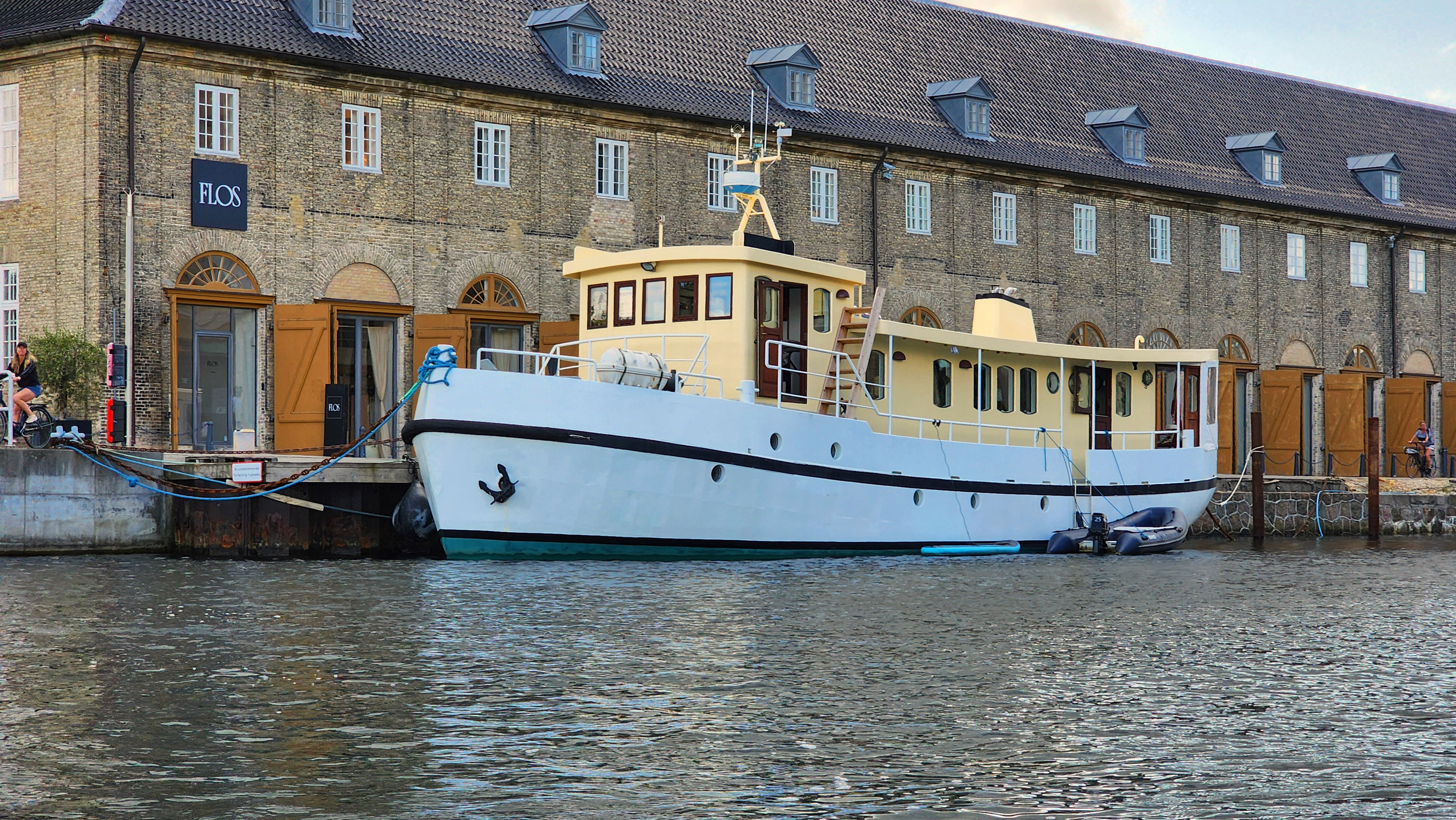
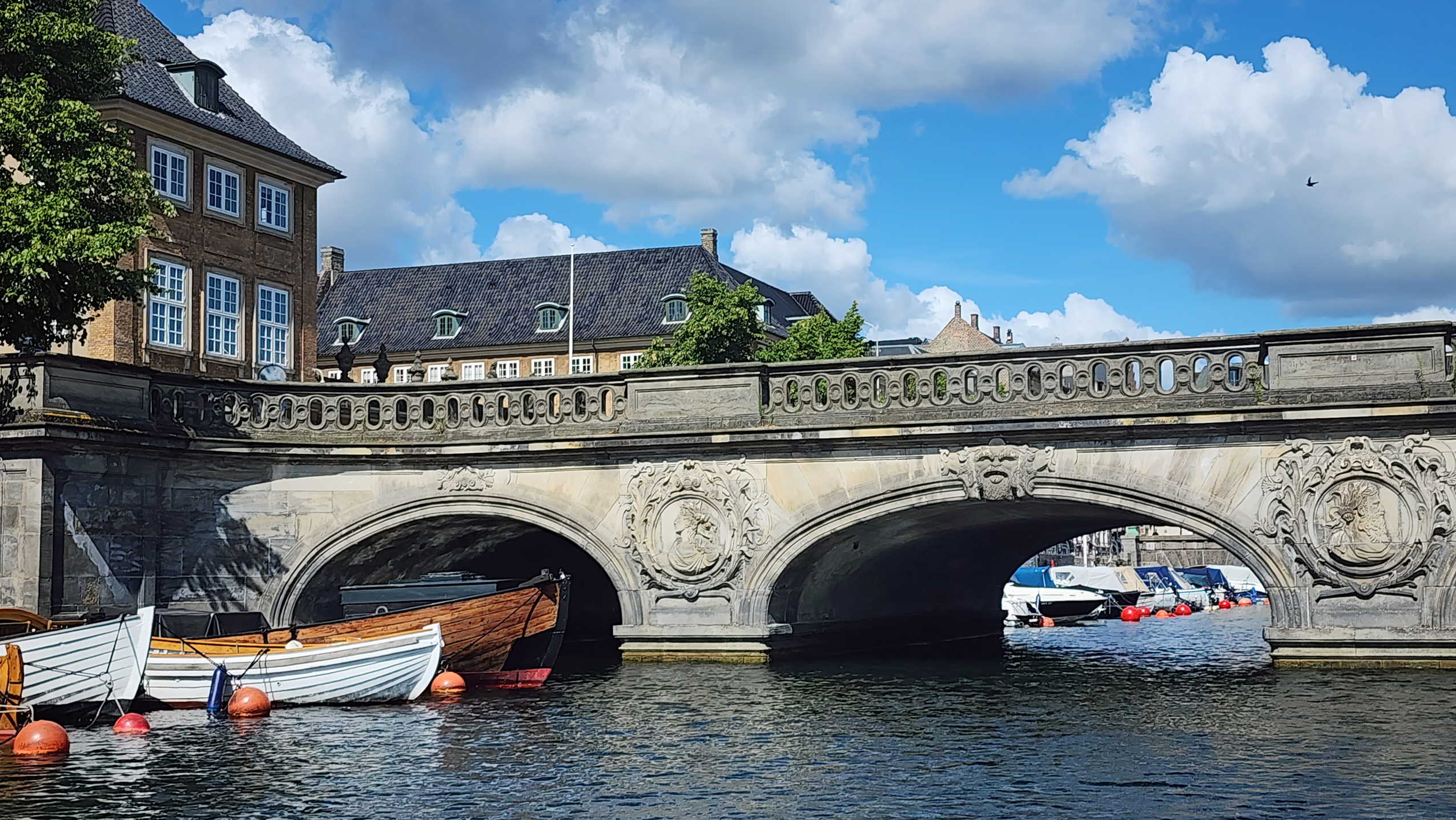
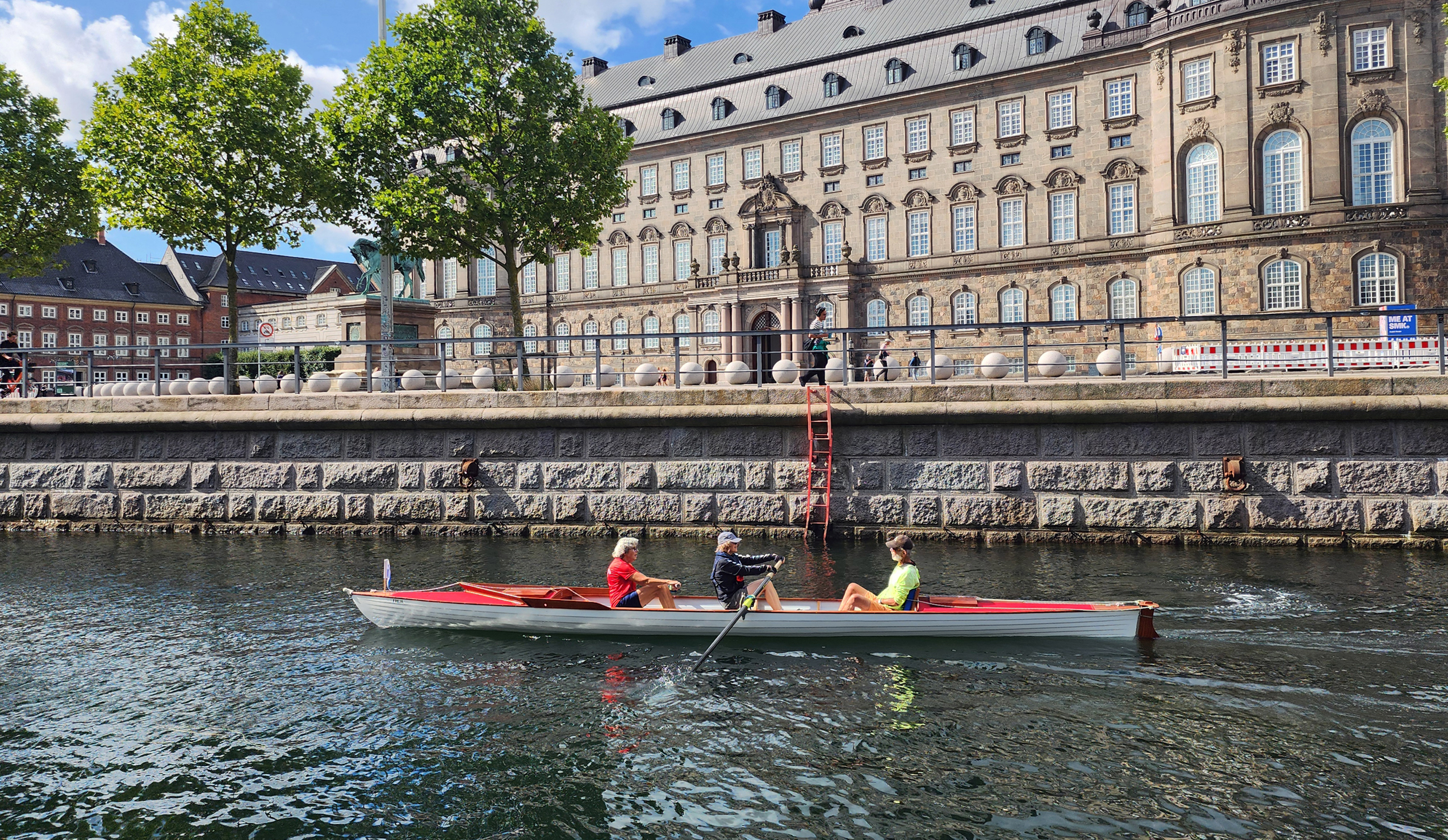
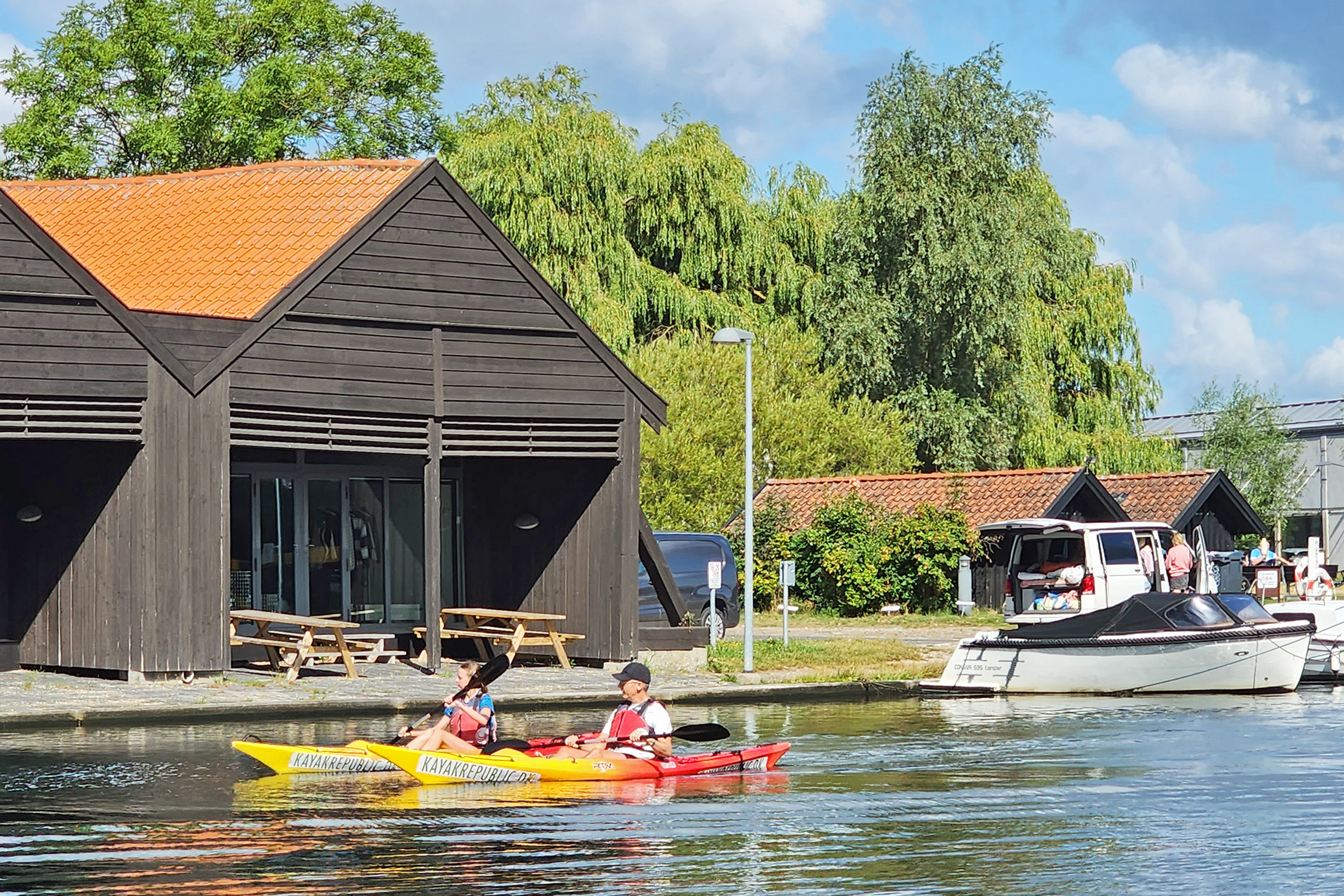 There were many people on the water that day (and every day that we were there). In addition to the tour boats, both large and small, there were many kayakers out exploring the city, and many others in private boats and rented “Go Boats.”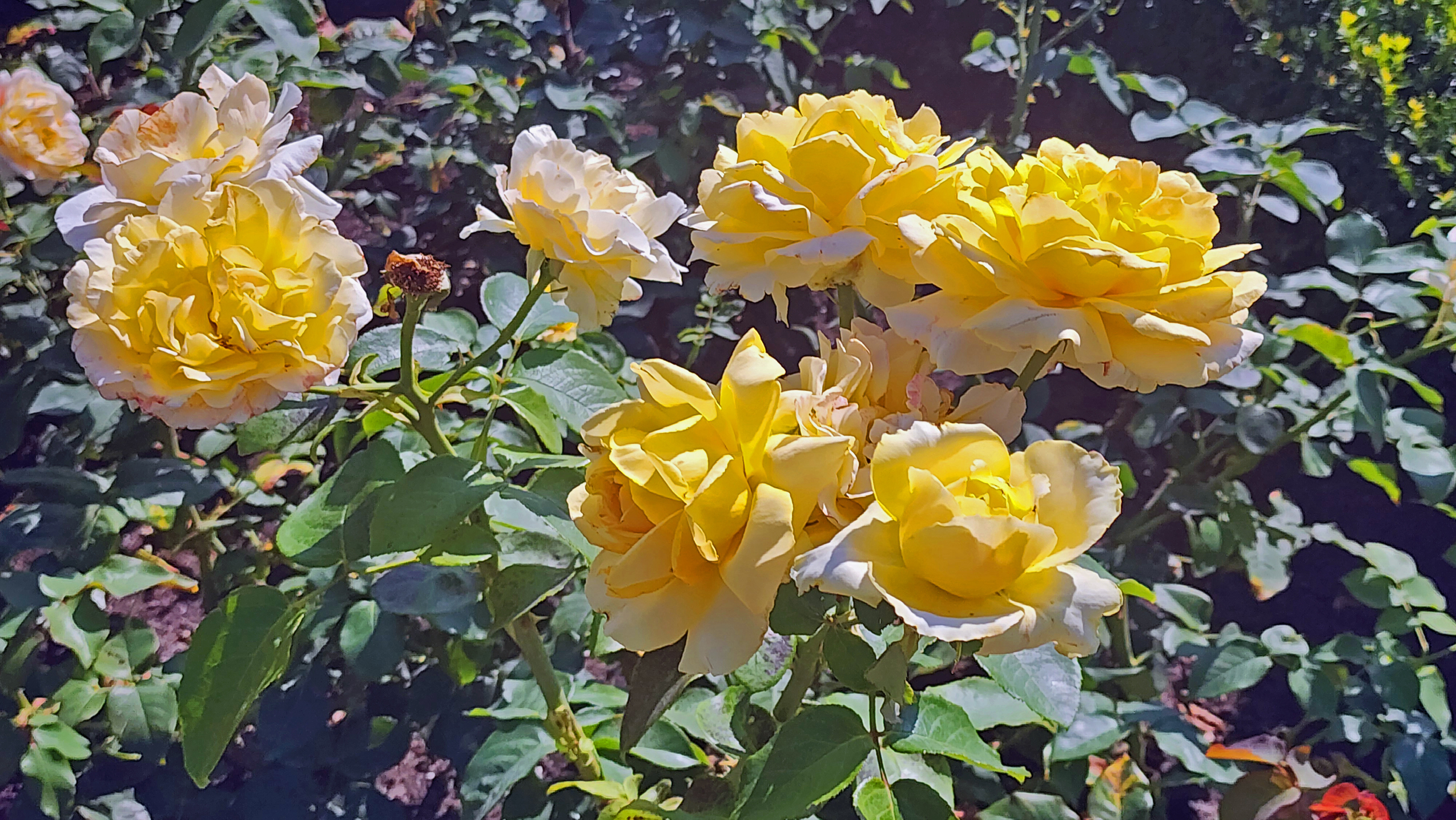
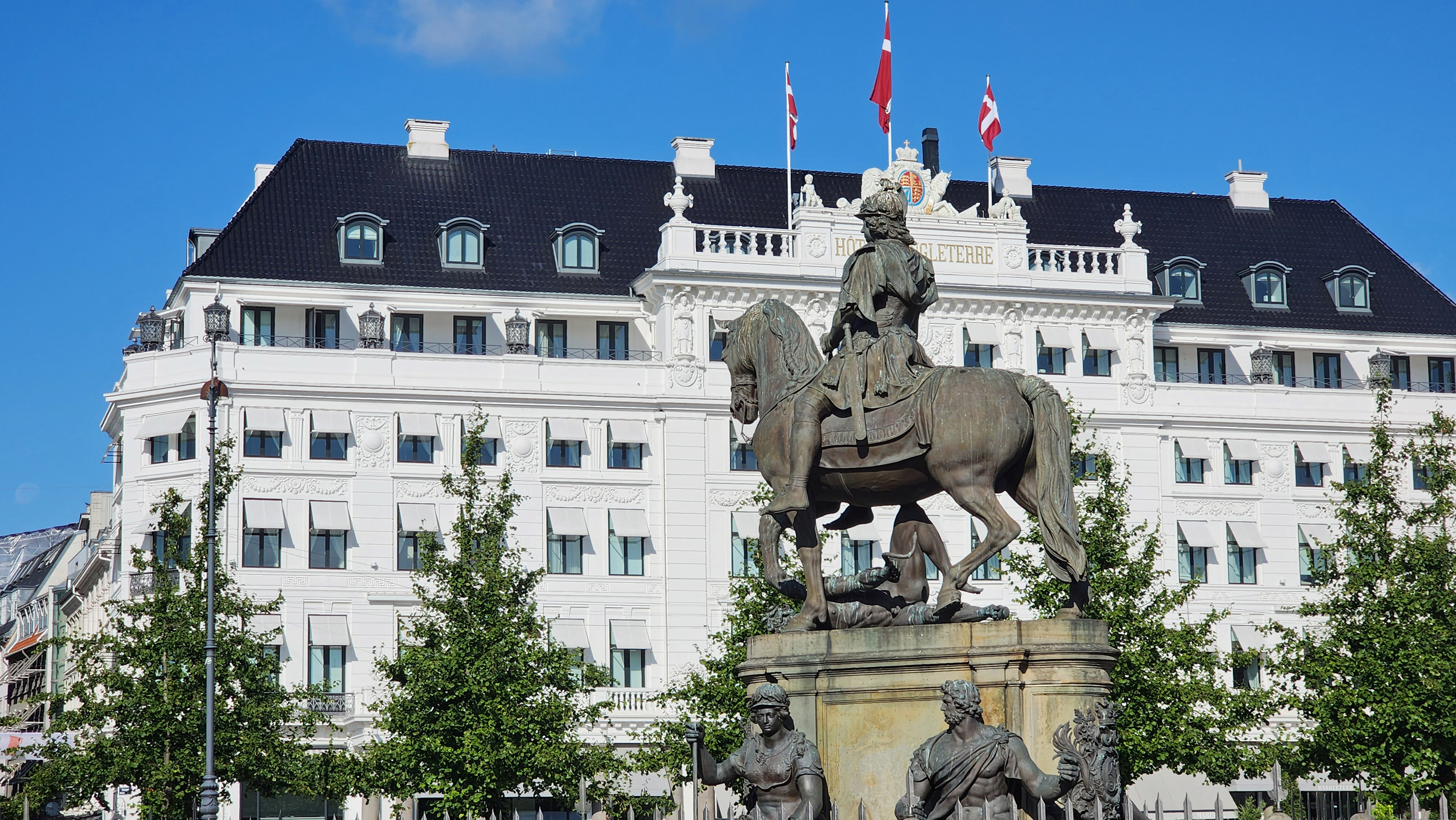
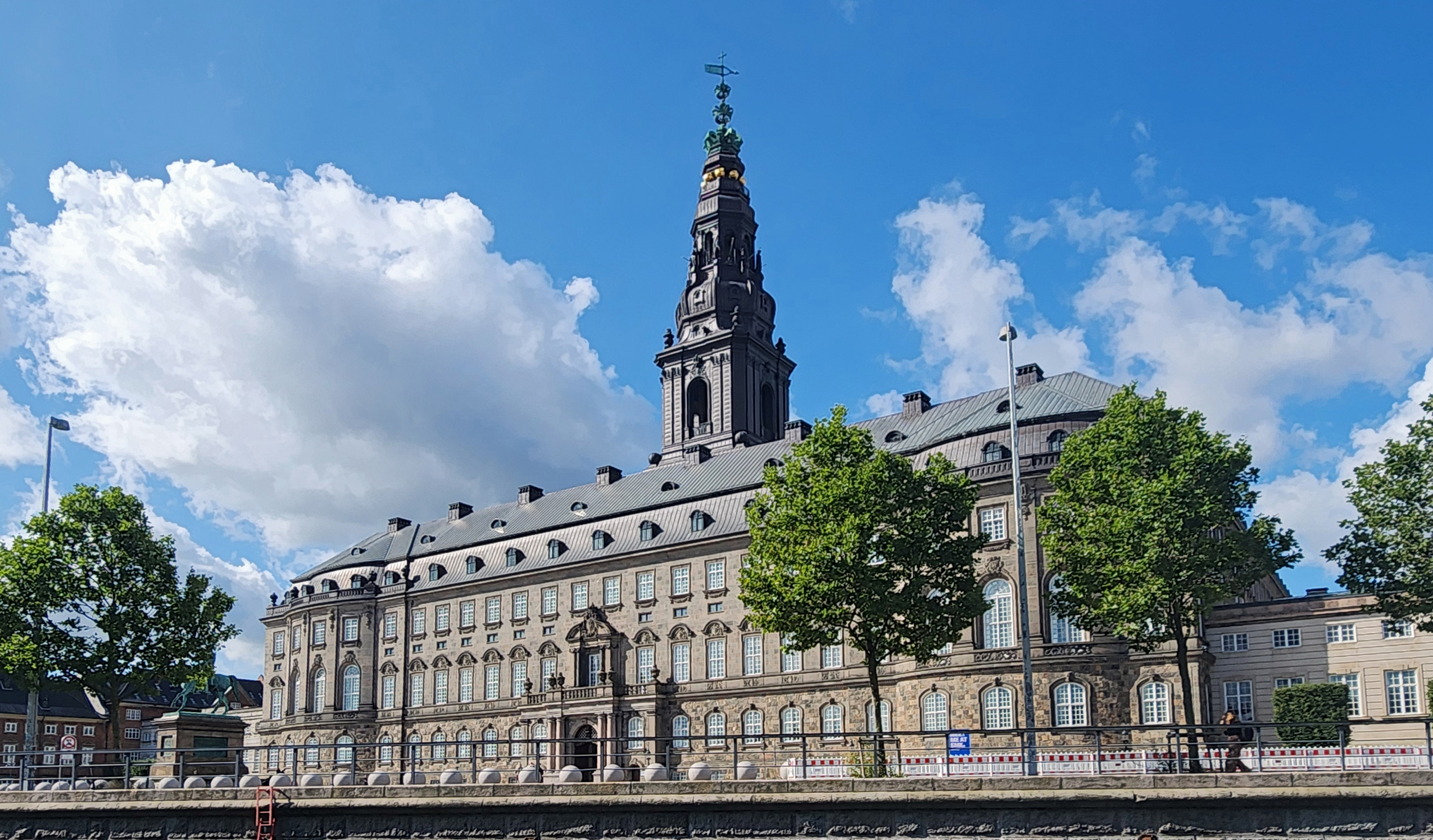
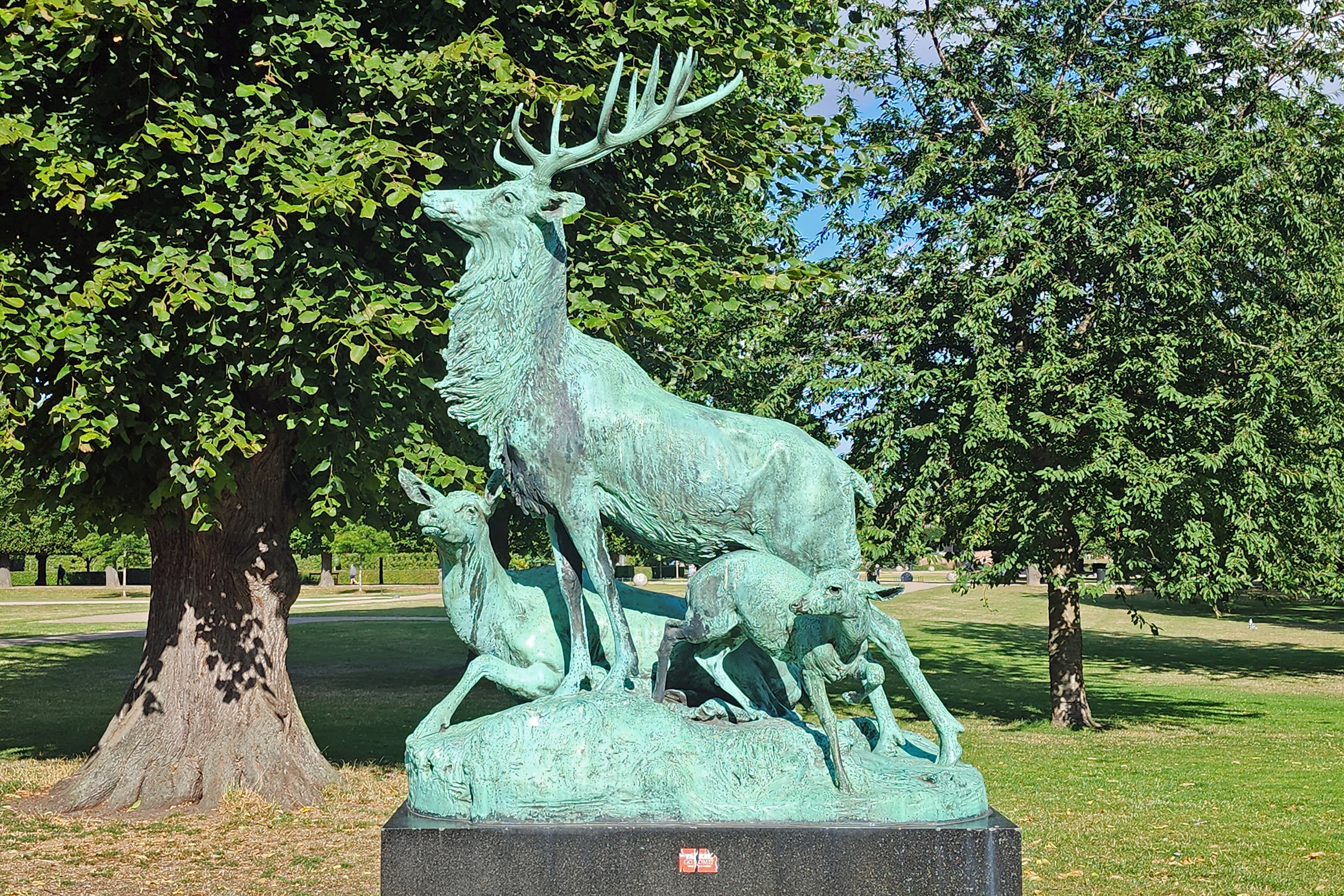
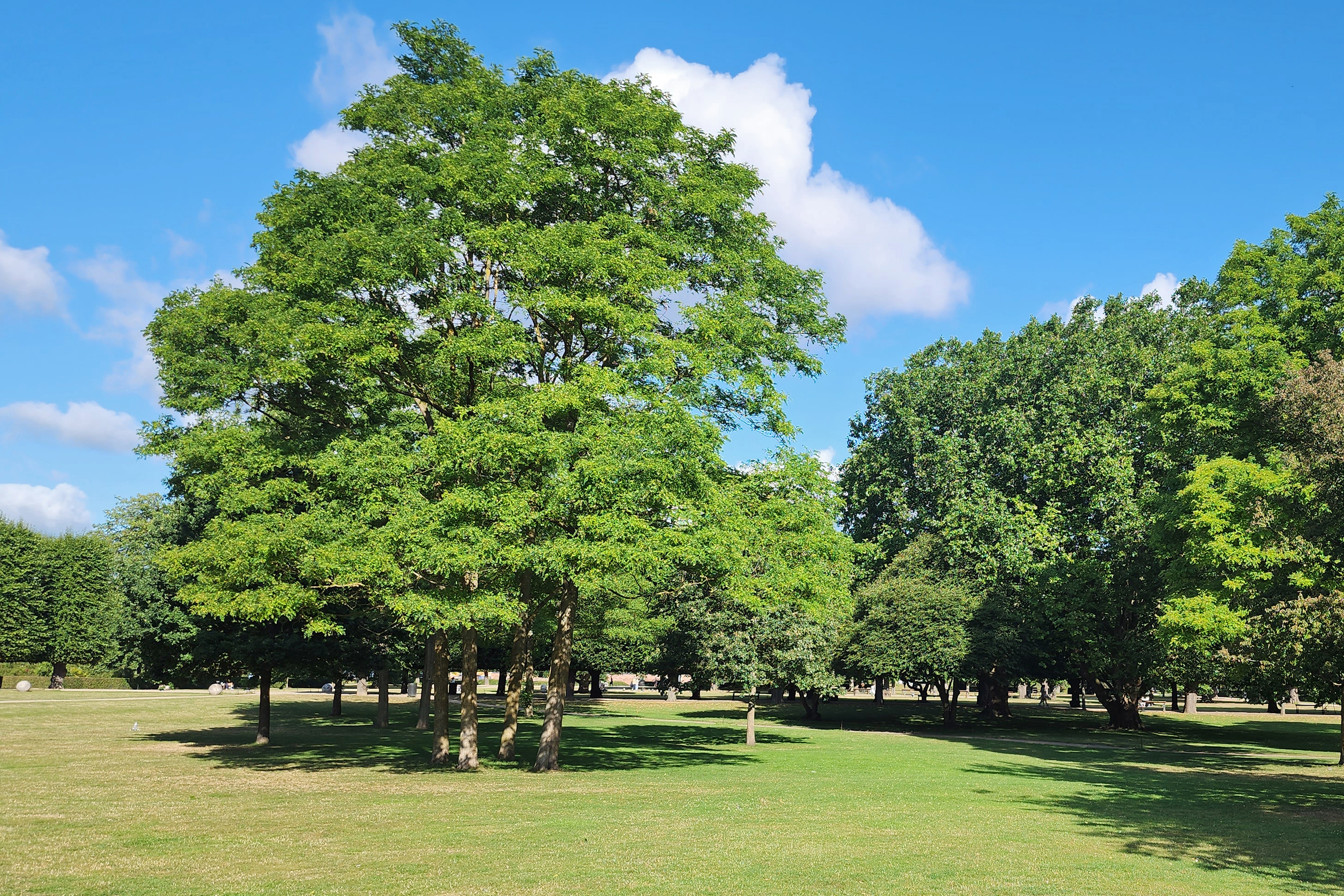
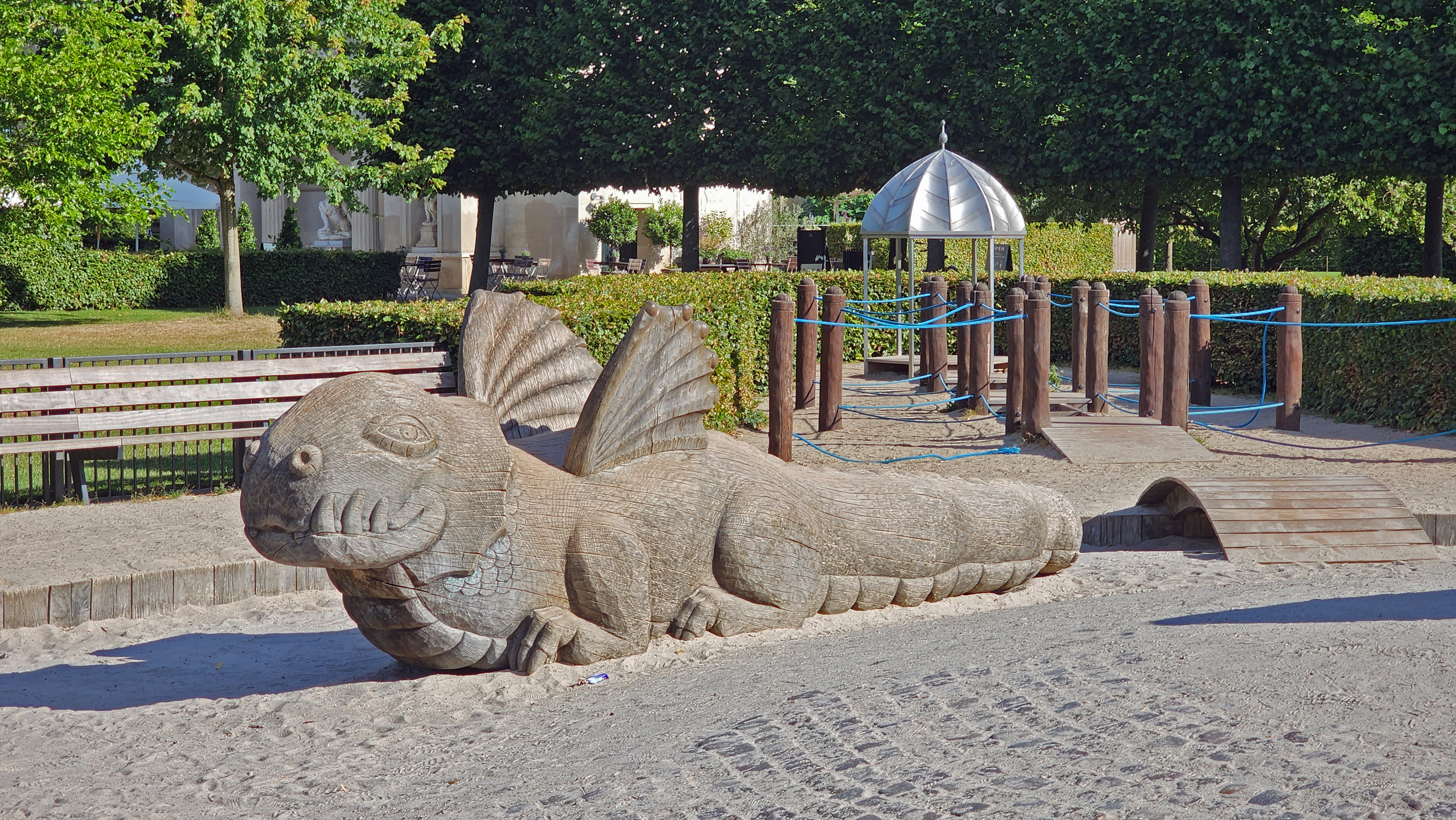
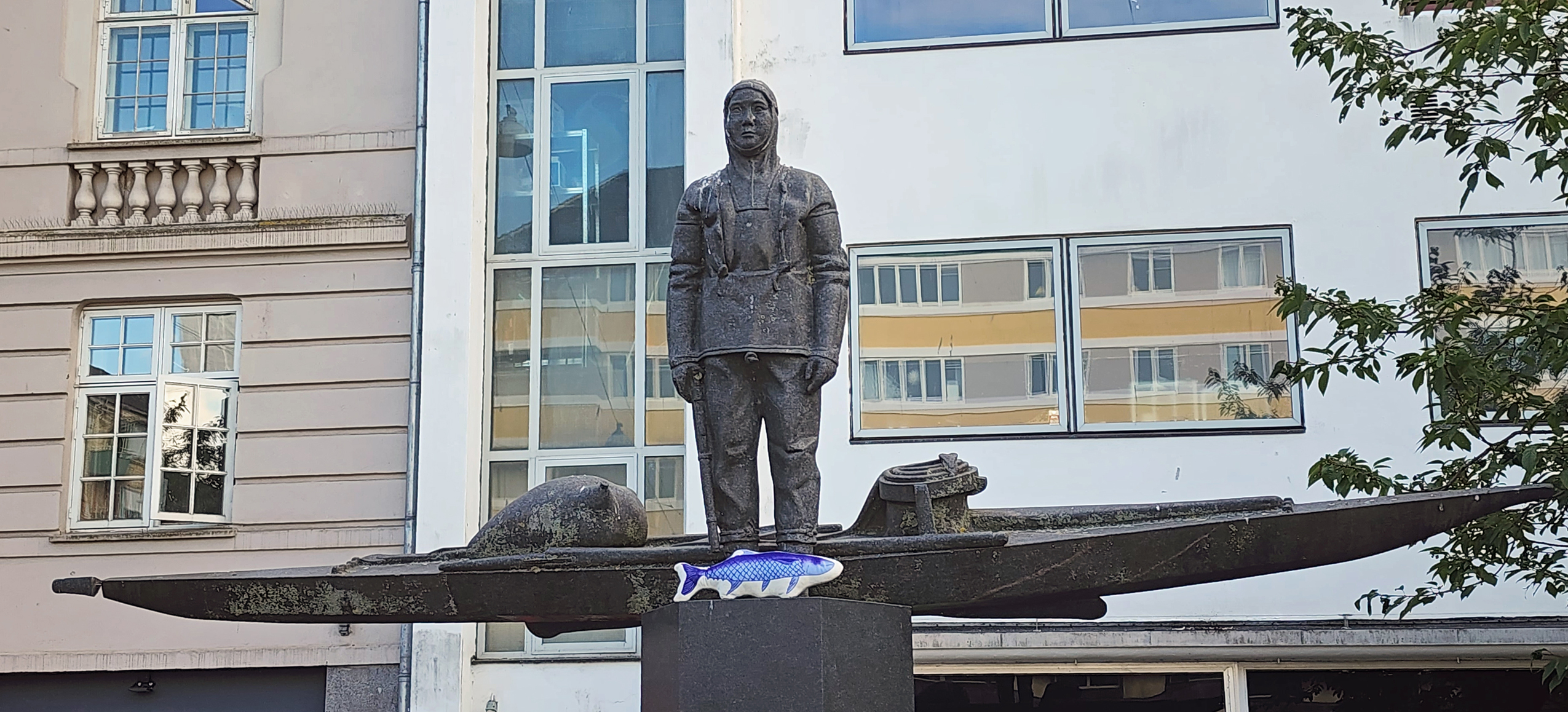
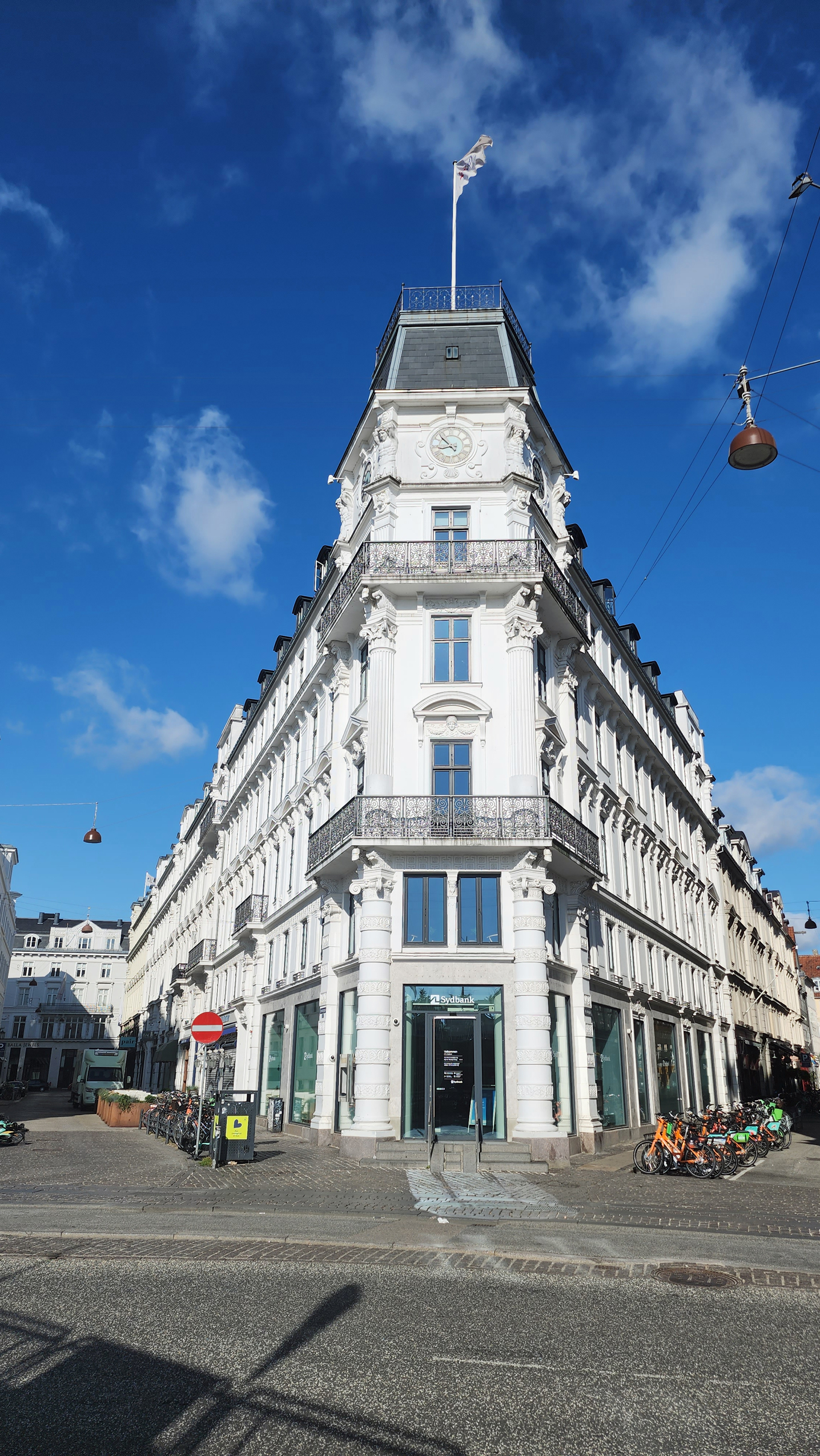
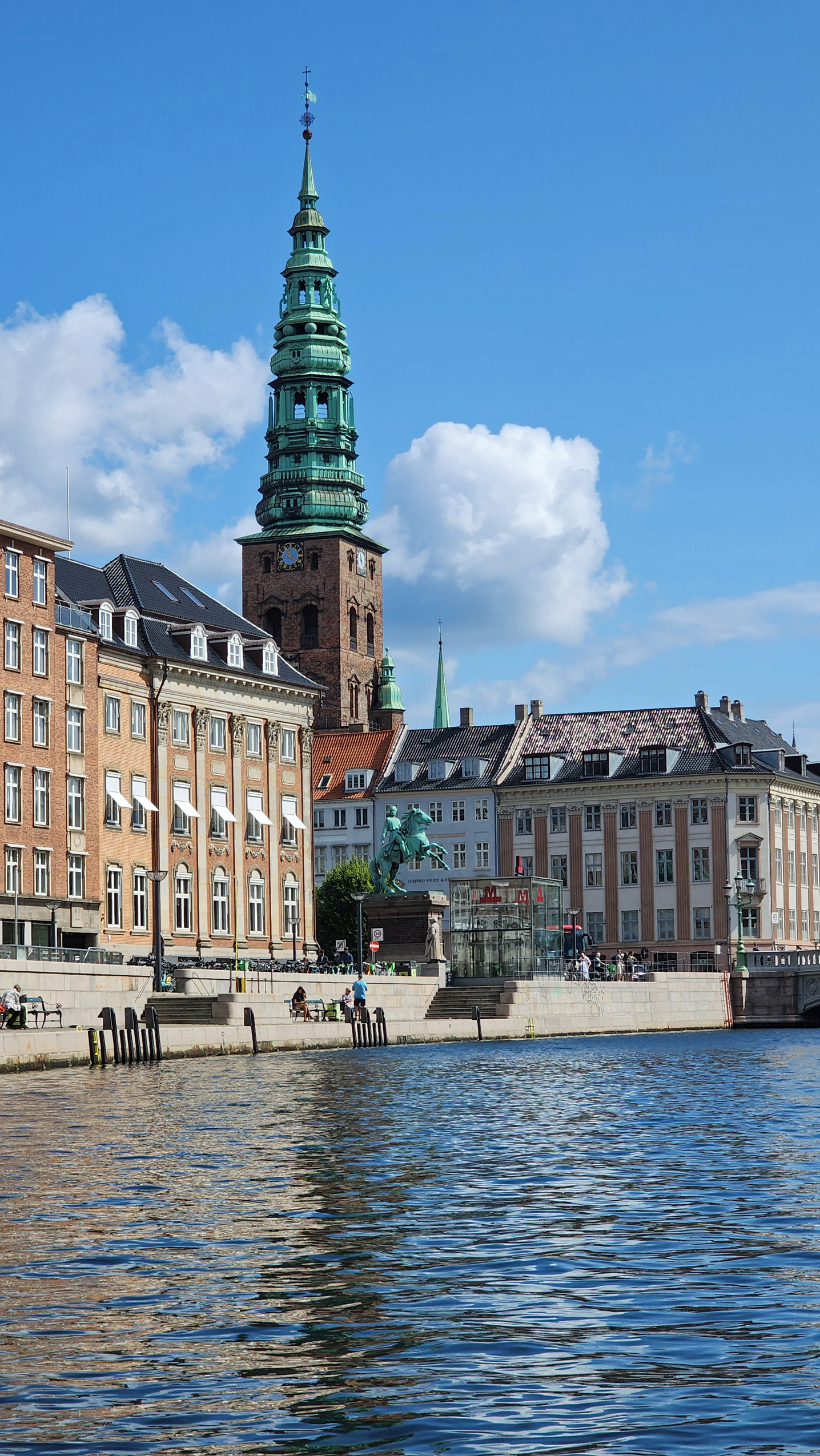
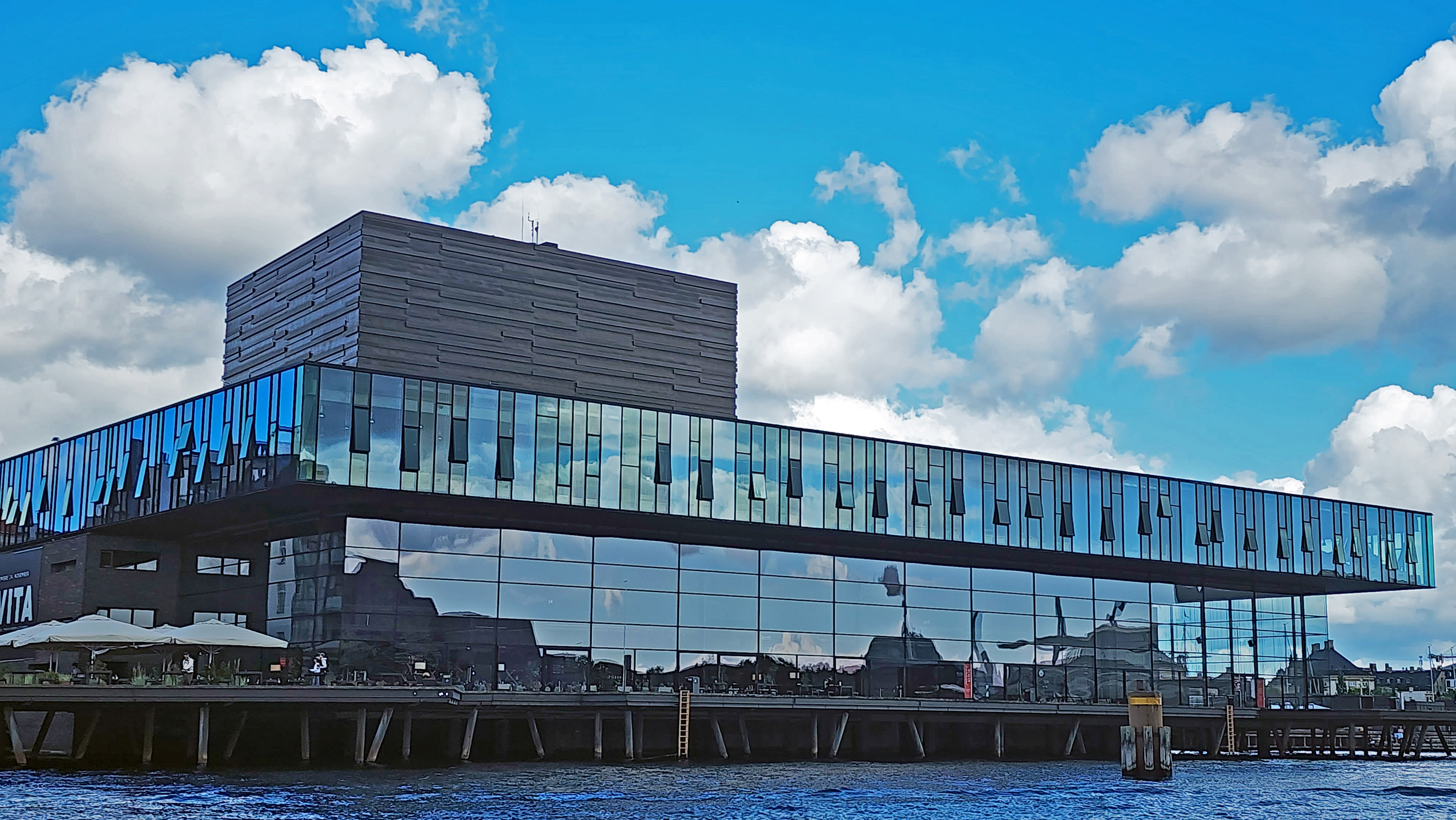 I’m a big fan of architecture in general and Copenhagen has a wide range of building styles from centuries old churches to ultra-modern office buildings. The images above are only a tiny slice of what you can find in the city center.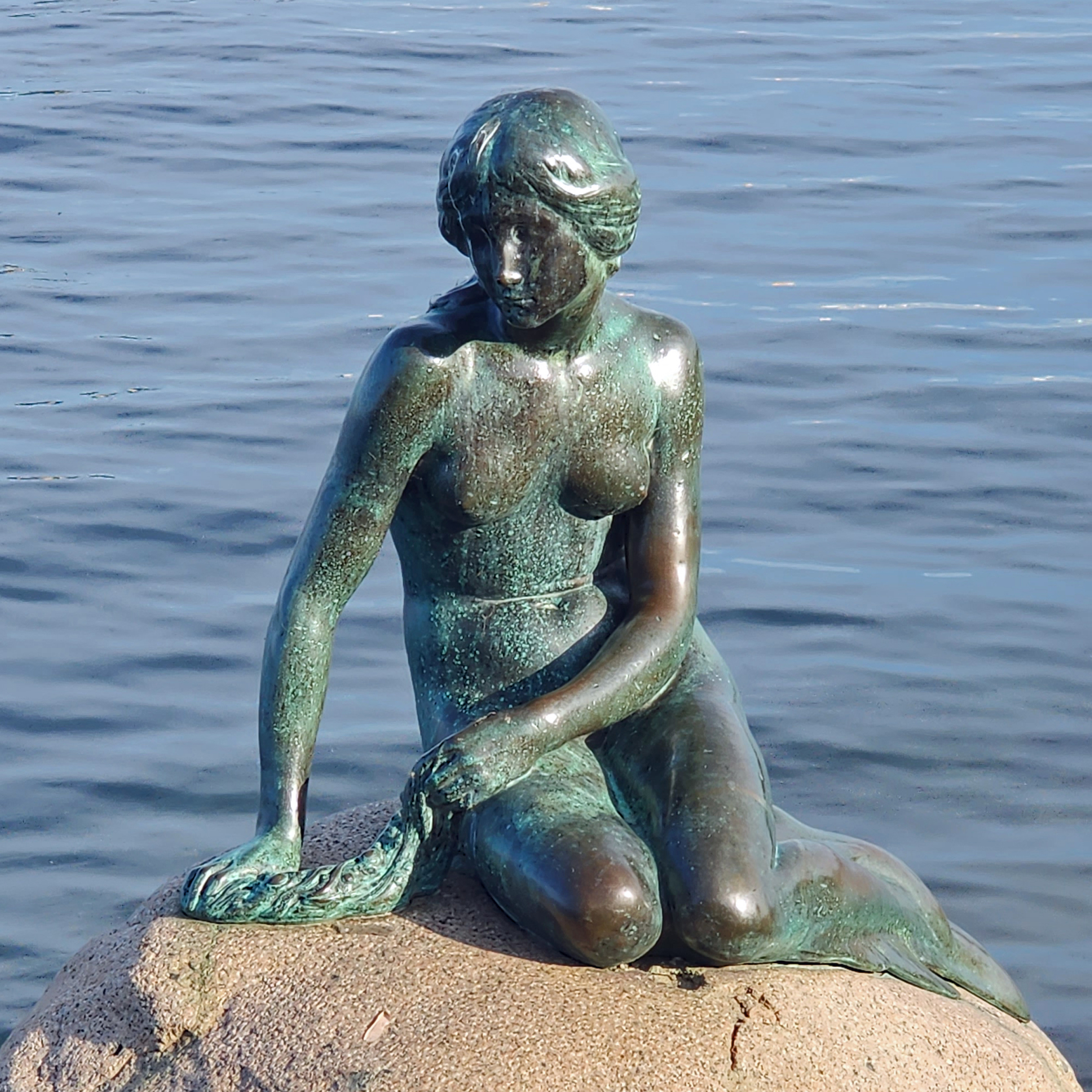
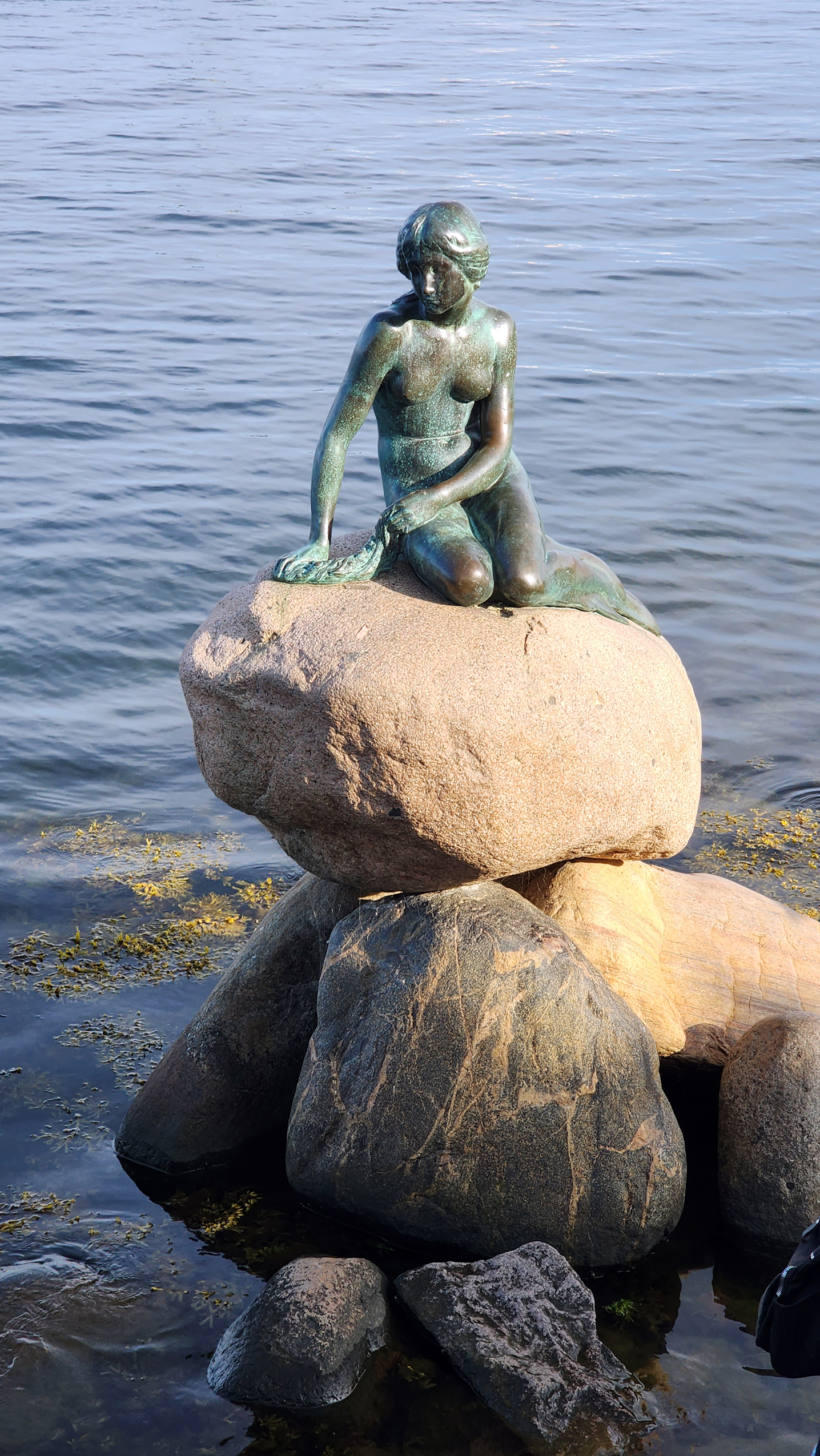 The Little Mermaid sculpture was inspired by the 19th century Hans Christian Andersen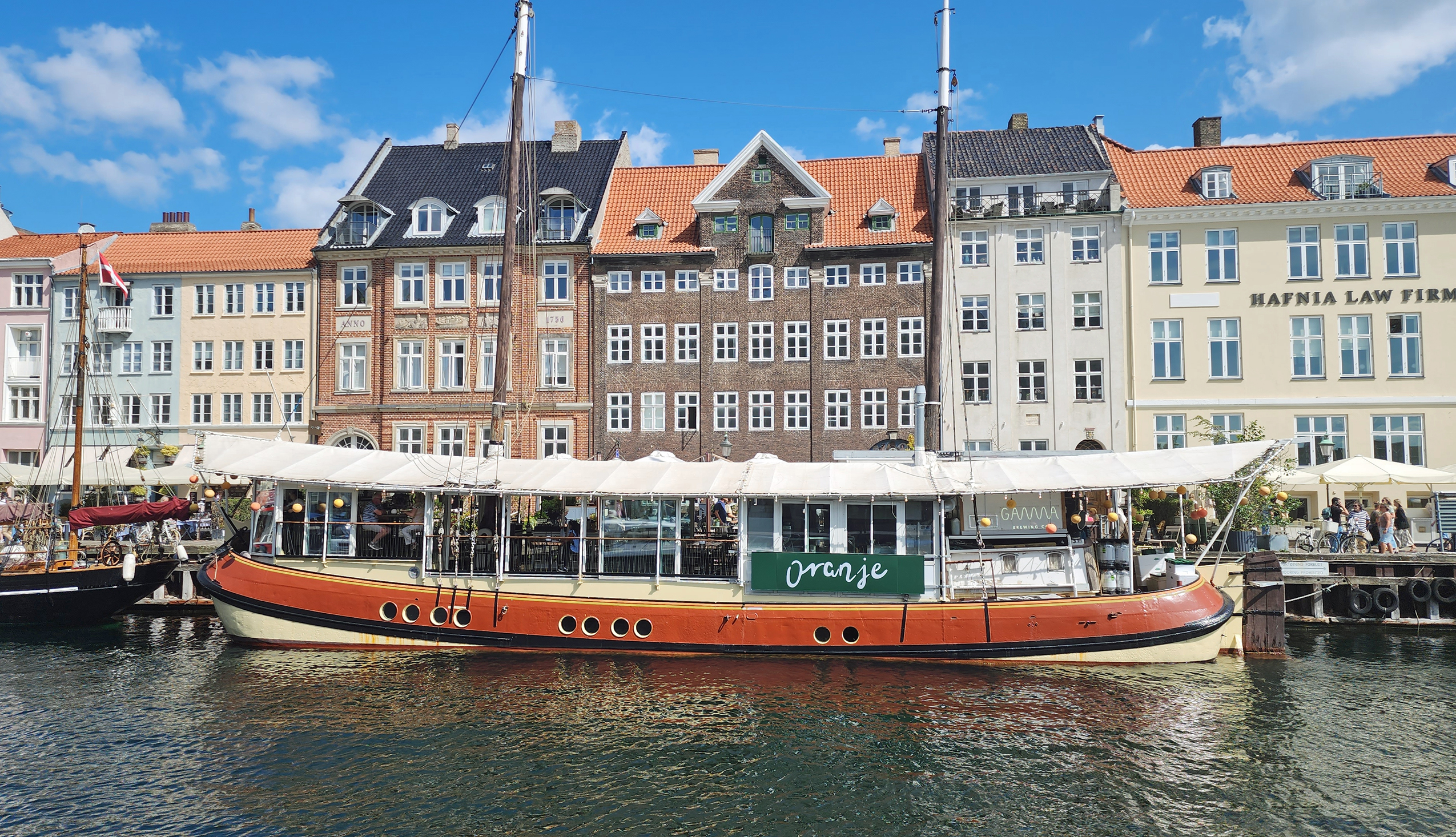
 Denmark is part of the European Union but uses its own currency, the Danish krone. Euros are accepted most places, though, and even American dollars in some places. And almost every place accepts credit cards.