Spokane, Washington

by Alan K. Lee

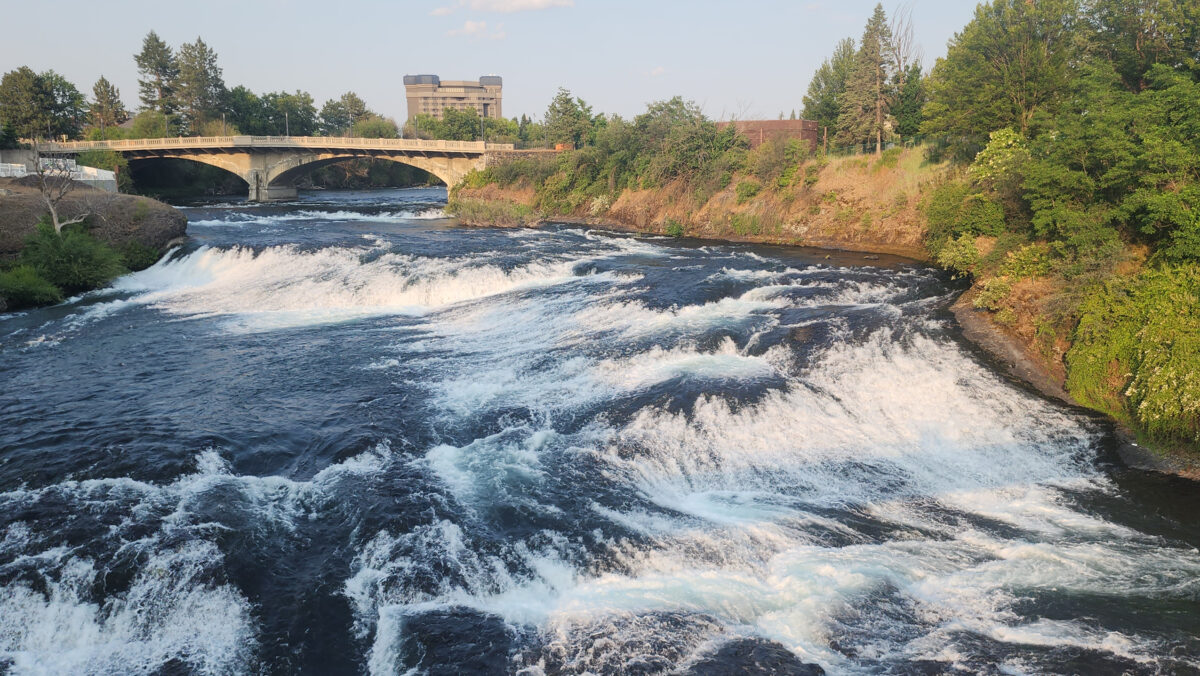
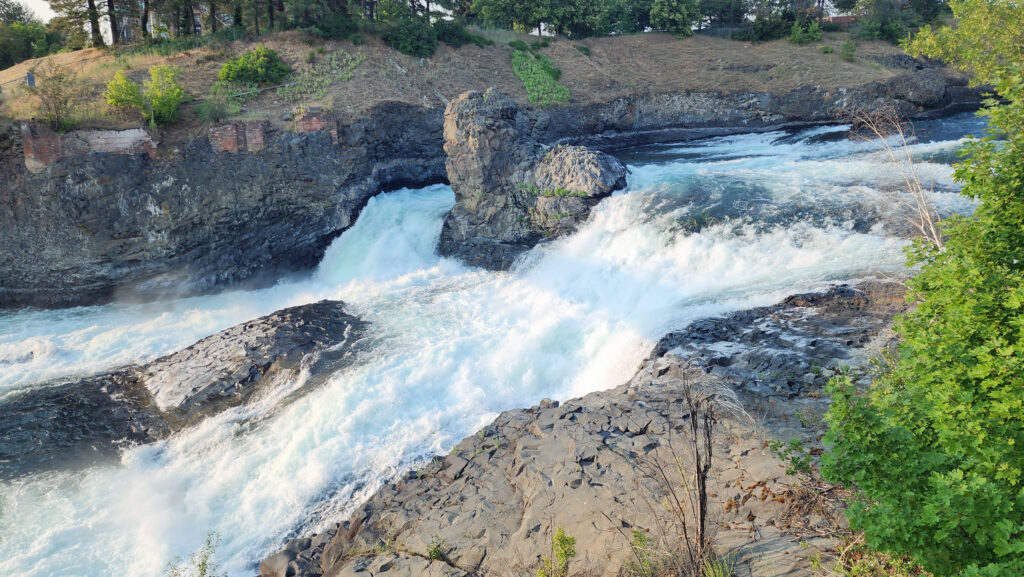
Spokane Falls

Introduction

My wife and I had driven through Spokane once or twice on our way to Glacier National Park, but it had been decades since I had actually set foot in Spokane. My wife, though, had spent a few days there a couple of years ago and had enjoyed her time there. That got me to thinking about paying the town another visit, so we packed up our bags and spent a few days exploring the city this past summer.
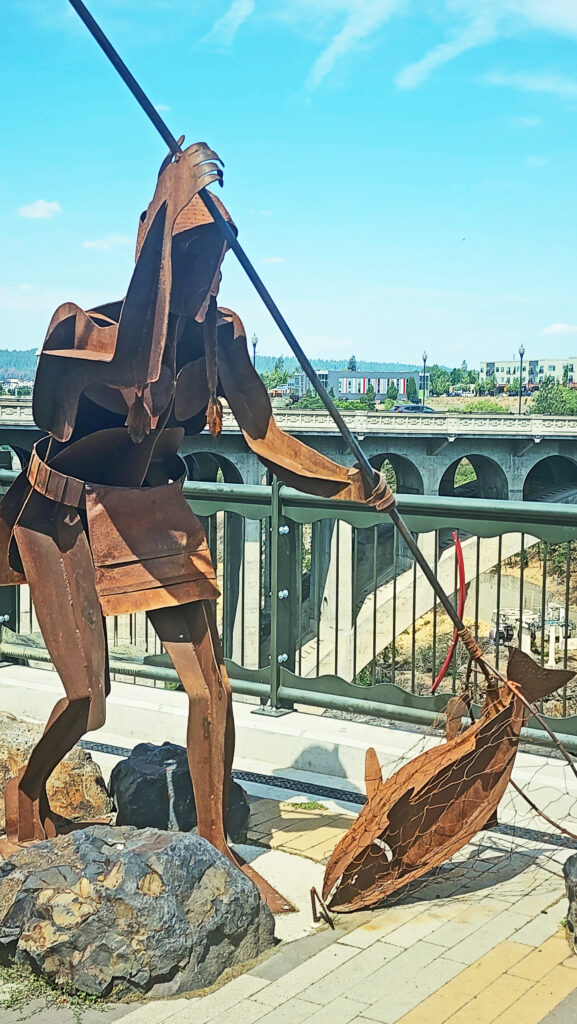
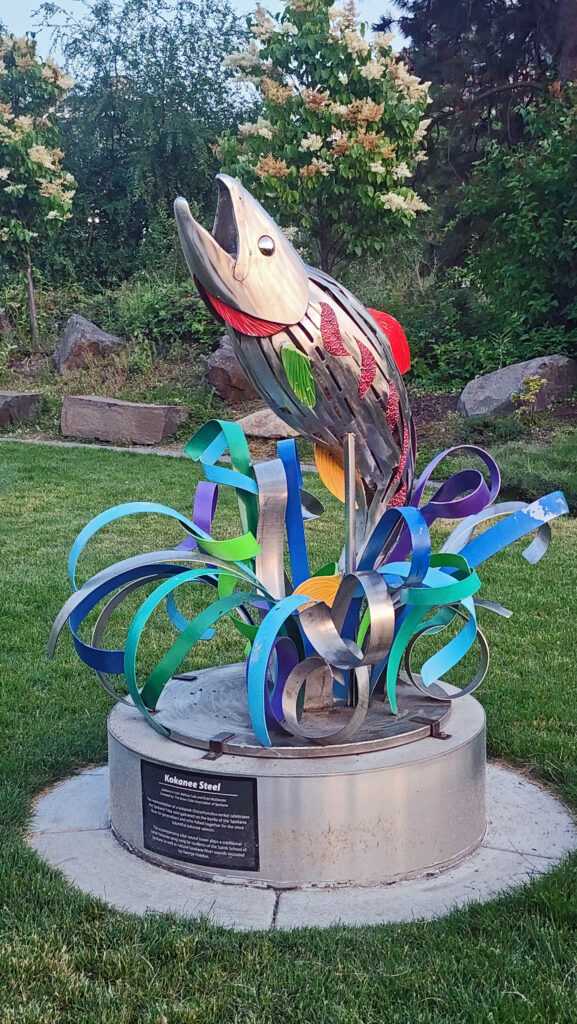
A Place of Truths Plaza
Riverfront Park

History

The city gets its name from the Spokane (or Spokan) Tribe of Native Americans that lived in what is now eastern Washington for millennia prior to the arrival of European settlers. The first European presence in the Spokane area was a trading post of the North West Company that opened in 1810. The city of Spokane was incorporated (originally as Spokane Falls) in 1881, the same year that the Northern Pacific Railway line was completed, linking Spokane to both Seattle and the Midwest and East Coast of the United States.
Downtown Spokane

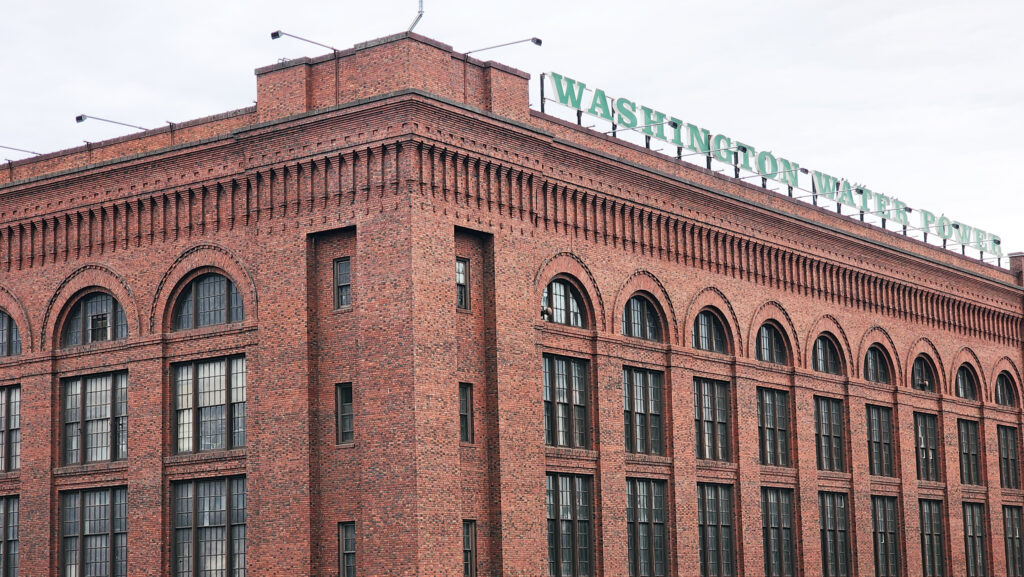
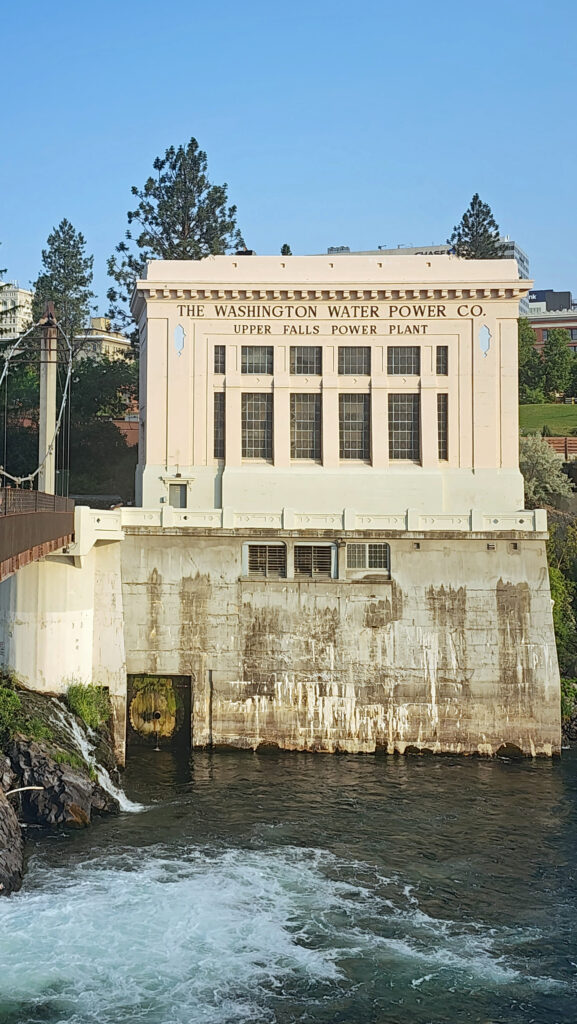
Two years after the city was incorporated, gold was discovered near Coeur d’Alene, Idaho, about 30 miles east of Spokane. That set off a boom in both Spokane’s economy and population. By 1890 Spokane’s population was almost 20,000. By  1910 it exceeded 100,000. The city was powered by electricity generated at Spokane Falls by the Washington Water Power Company. Many of the buildings constructed in that period are still standing, giving the visitor a visual link to the city’s early history.
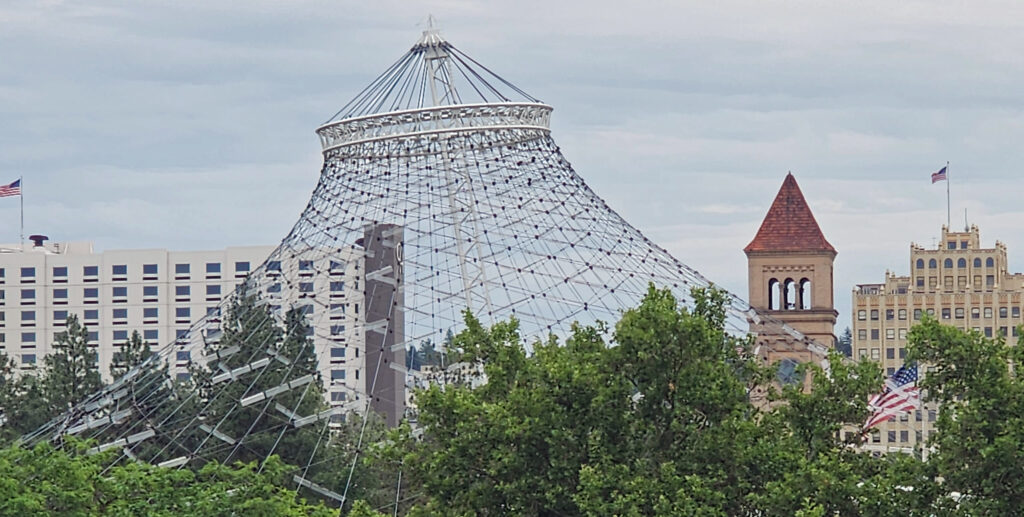
Expo 74 U.S. Pavilion, Riverfront Park

With the decline of the mining industry in the early 20th century and then the advent of the Great Depression, Spokane’s economy stagnated and its population plateaued. By the 1960s Spokane was in serious decline. To turn things around, the local business community began a planning process that eventually led to Spokane hosting the environmentally themed World’s Fair, Expo ’74, and the revitalization of the downtown area. Today, Spokane has a lively downtown, the site of Expo ’74 has become Riverfront Park, and you’ll find public artworks scattered throughout the city.
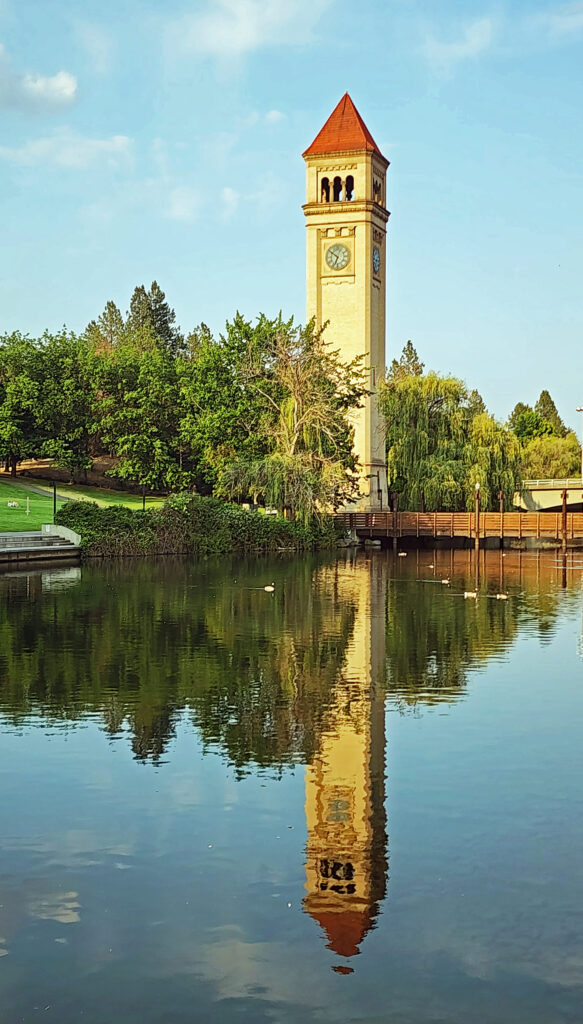
Great Northern Clock Tower
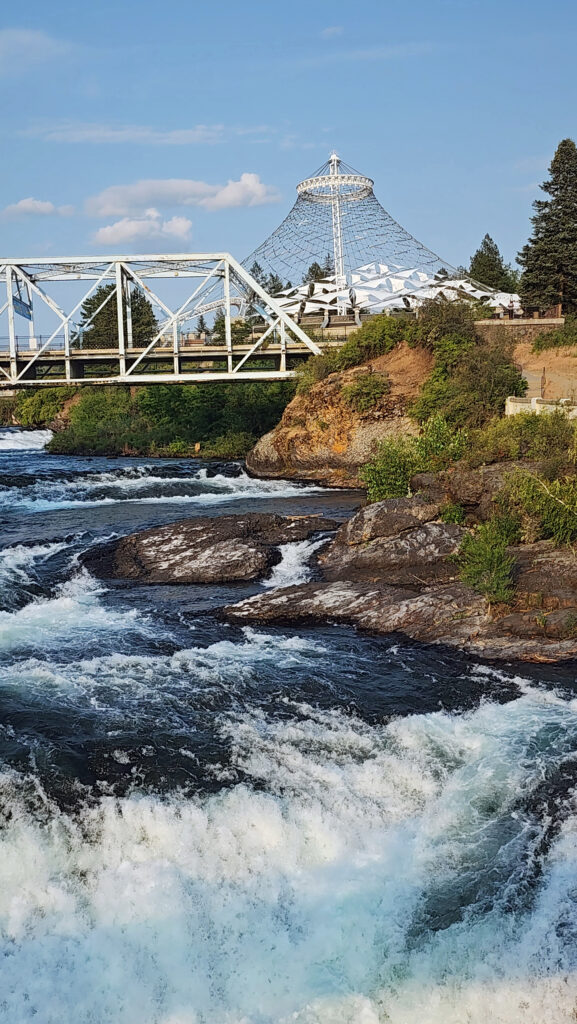
Spokane River and Expo 74 U.S. Pavilion

Getting There

We chose to drive from our home in the Portland area. It’s a long drive – 350 miles and 5½ hours (plus any stops along the way). It’s a little shorter trip from Seattle – 280 miles and 4¼ hours. Flying from Portland to Spokane takes just over an hour and tickets can be had for as little as $150 dollars. Cost and flight time from Seattle are similar. A brief search of Amtrak routes and ticket costs yielded a quickest trip from either Seattle or Portland of 7½ hours and basic coach fares of $50-70 (one way), but you might need to be flexible on your departure and return dates, and the cheapest tickets were for overnight trips.
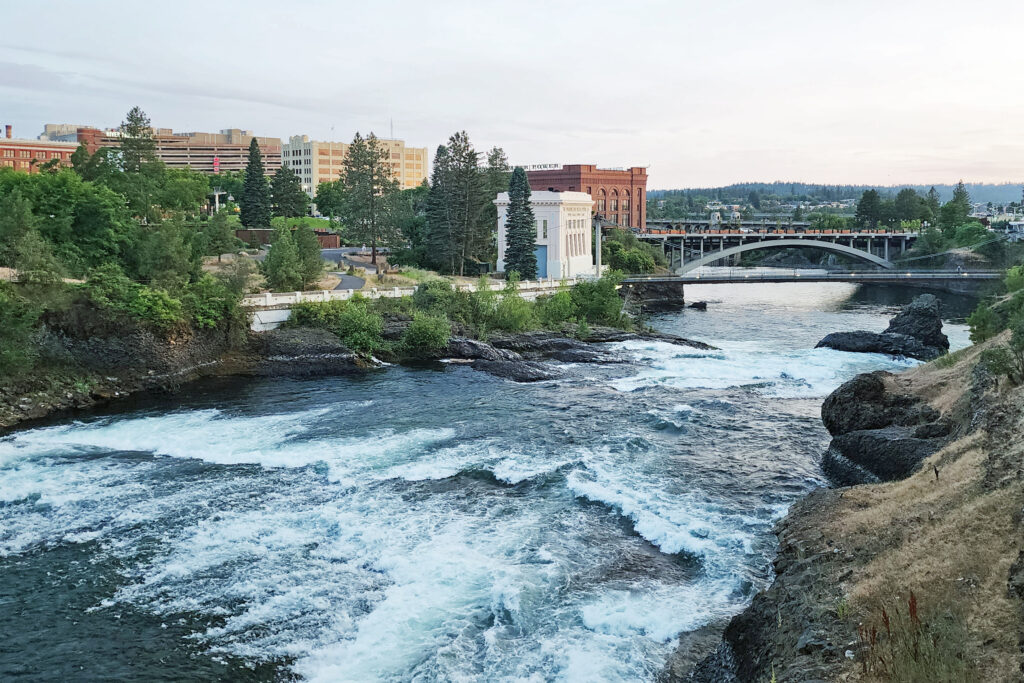
Spokane River and downtown Spokane

Our Visit

I’m old enough to remember a trip my older brother and I took to see the World’s Fair in 1974. Although I didn’t remember much about the actual fair, one of the things that left a lasting impression on me was Spokane Falls. Not many cities have a major waterfall in the middle of the downtown area. The fair spread across both banks of the Spokane River and Havermale and Canada Islands in the river. Canada Island is literally in the middle of the two cascades of the upper falls.
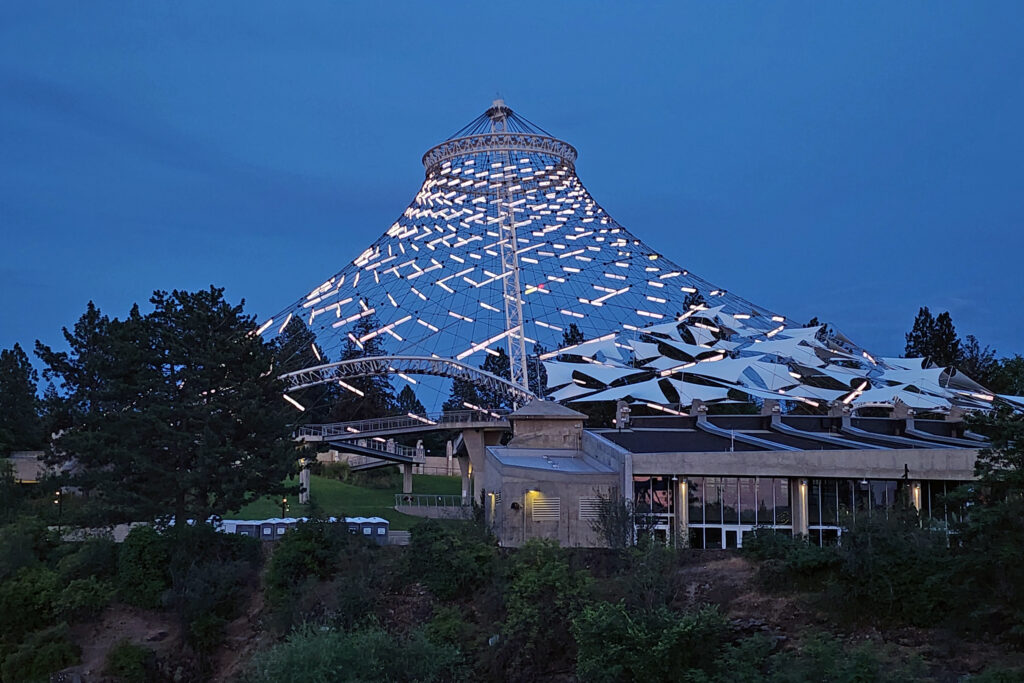
Expo 74 U.S. Pavilion

Most of the Expo ’74 structures were dismantled after the fair closed, but the Spokane Pavilion and the bones of the United States Pavilion still stand. The U.S. Pavilion was an open air structure with a fabric roof. The roof is gone, but the supporting structure remains, the cables that supported the roof now strung with hundreds of lights that are lit every night. The ground below is now a grassy park, part of Riverfront Park, the jewel of Spokane’s downtown.
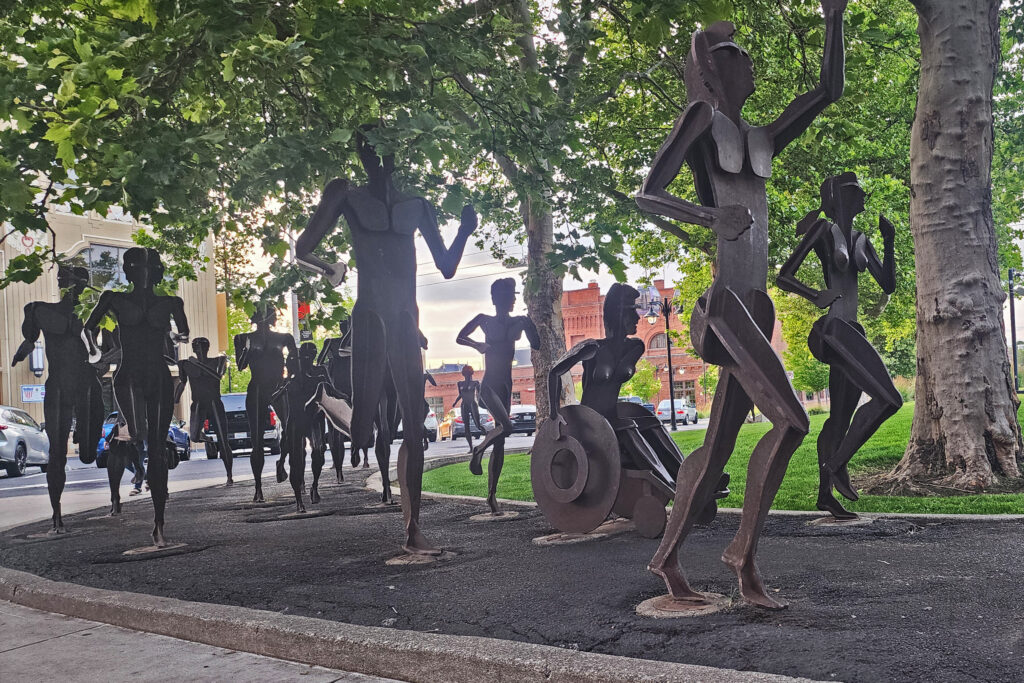
Downtown Spokane

We spent three days exploring downtown Spokane. Riverfront Park and Spokane Falls kept drawing us back. It’s really quite a marvelous area. Spokane is still the second largest city in Washington  (the metropolitan area has a population of over 600,000), but it’s also small enough to have retained something of a small town vibe, something Seattle, Portland, and Vancouver, BC, definitely lack.
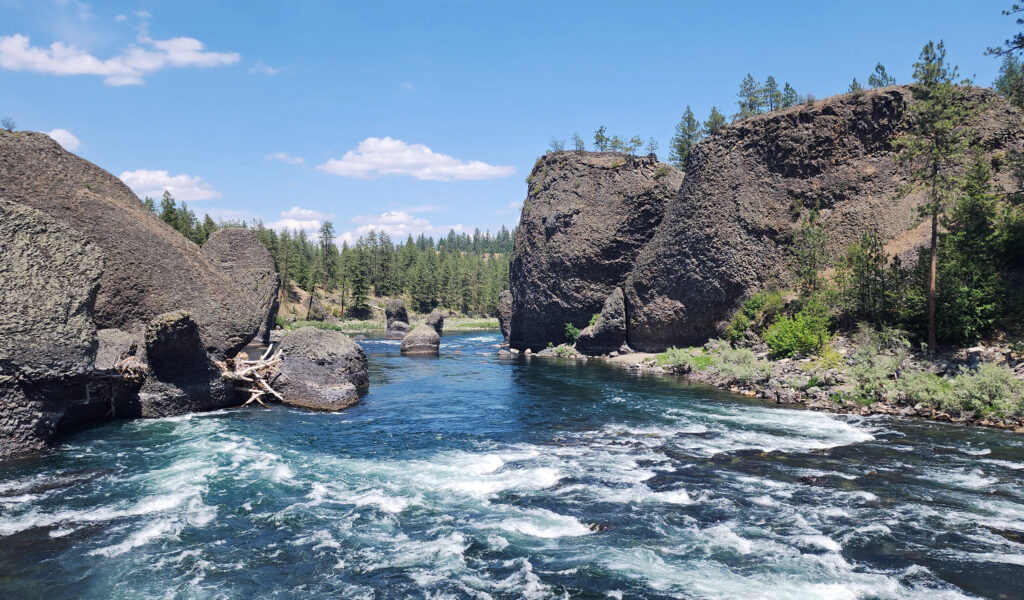
Spokane River, Riverside State Park

On our last day in town, we drove to Riverside State Park, a 9000 acre park along the banks of the Spokane and Little Spokane Rivers, about five miles downstream of downtown Spokane. The Bowl and Pitcher area of the park features a picnic area, ranger station, and campground on the east bank of the Spokane River, and miles of hiking trails on the west bank.
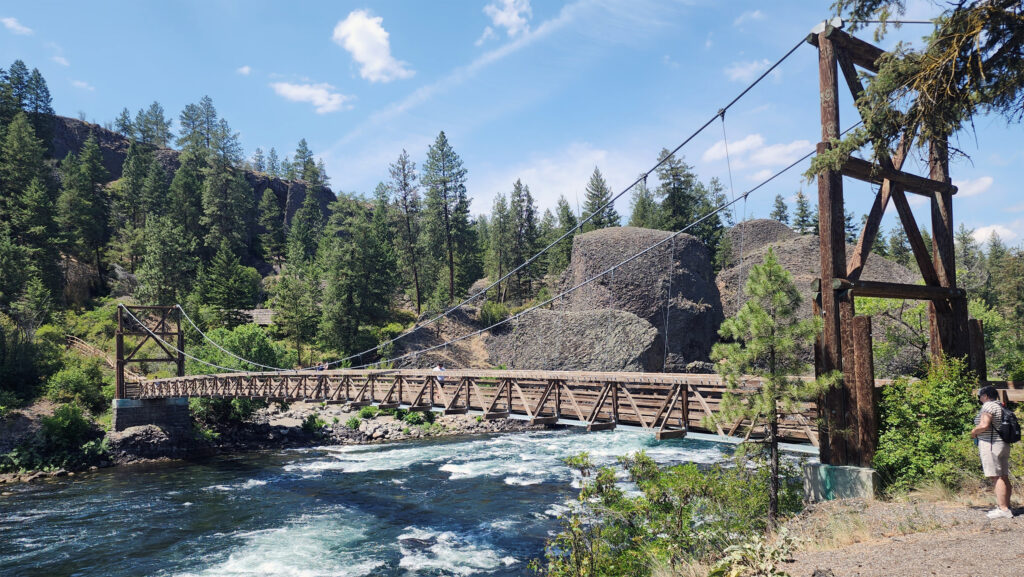
Riverside State Park

The trail network is accessed by a pedestrian-only suspension bridge spanning the Spokane River. We crossed the bridge and did a short hike along the river, but we could easily have spent all day there.
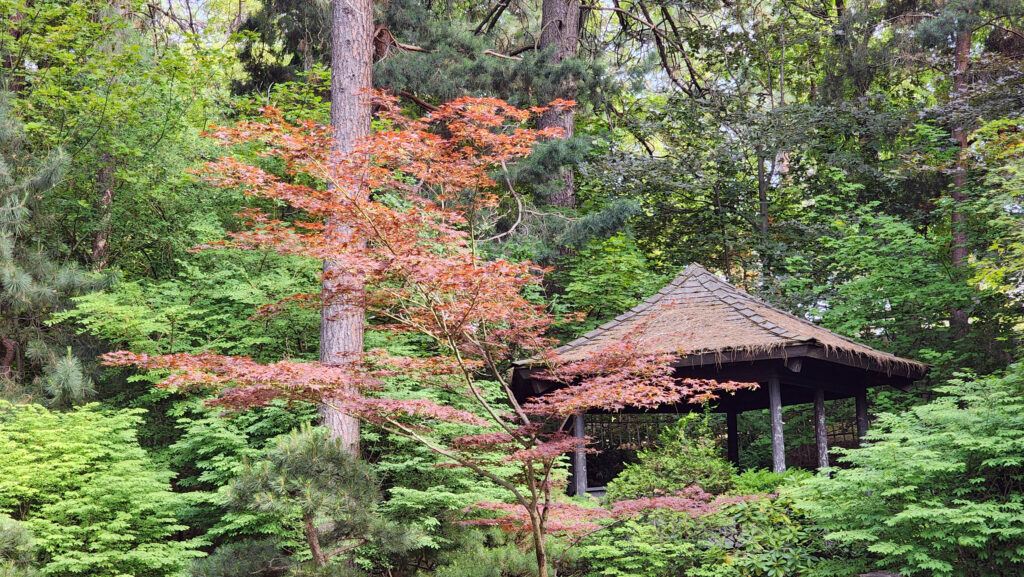
Japanese Garden, Manito Park

Later that day we visited the Japanese garden and rose garden in Manito Park before returning to our hotel to get ready for the long drive back to Portland.
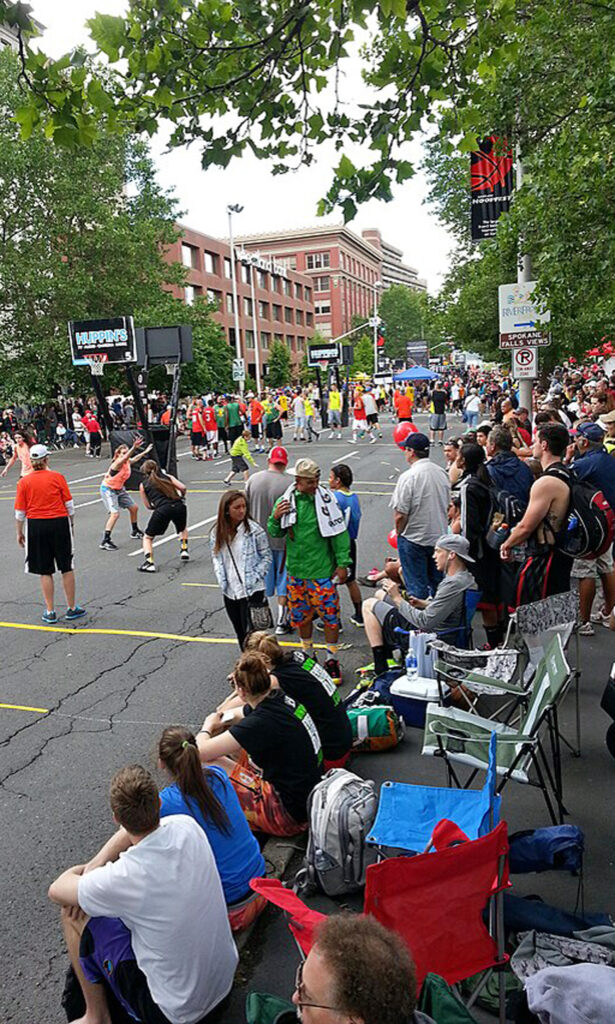
Spokane Hoopfest. Photo sourced from Wikimedia Commons. Photo by Tahota
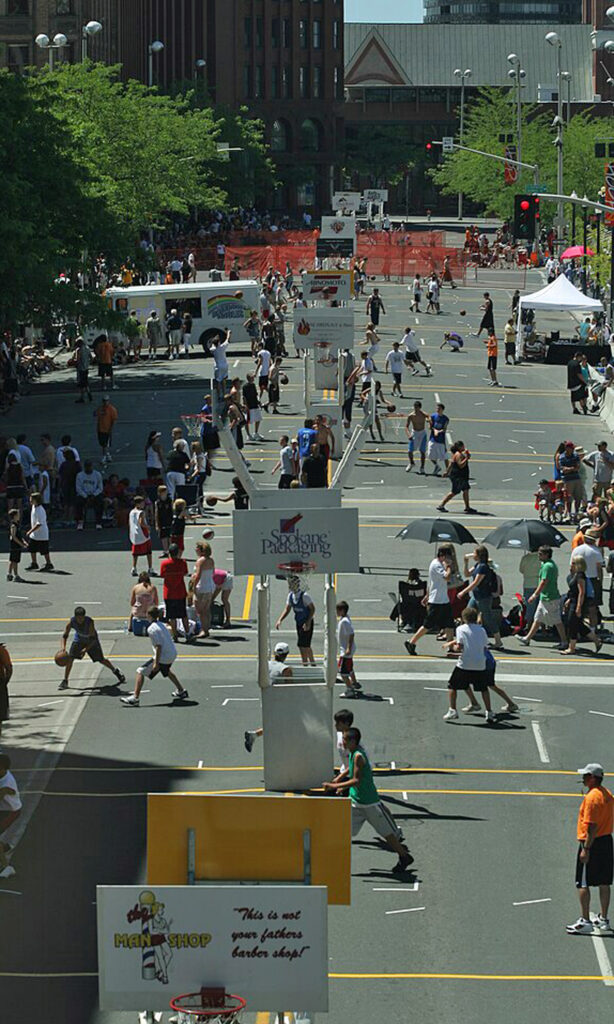
Spokane Hoopfest. Photo sourced from Wikimedia Commons. Photo by Mike Tigas

We left Spokane the next morning, the day before the start of Hoopfest 2025. The Spokane Hoopfest is the largest 3-on-3 basketball tournament in the world. Every year more than 6000 teams and 25,000 players take part in the tournament that features 450 courts covering 45 city blocks and draws more than 250,000 spectators. It is a very, very big deal. One I had never heard of. And I’m sorry we missed it.
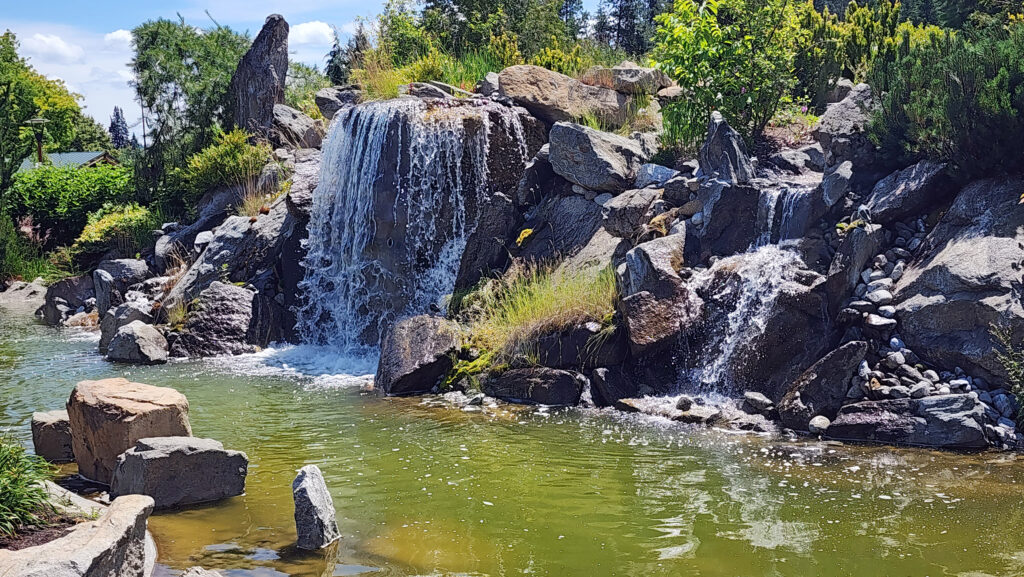
McEuen Park, Coeur d’Alene, Idaho

Other Area Attractions

There are a number of other areas near Spokane that are worth visiting. We took day trips to both Sandpoint, Idaho, and Coeur d’Alene, Idaho during our weeklong visit. Look for future posts on both on this site in the coming months. Outdoor enthusiasts might want to take the 30 mile journey to Mount Spokane, northeast of the city. And if you drive to Spokane, or fly and rent a car, Grand Coulee Dam and Lake Roosevelt National Recreation Area are about a 90 minute drive west of Spokane, making for an easy day trip or a worthwhile detour on a trip back to Seattle. We didn’t make that side trip, but we did make a detour to Palouse Falls, a spectacular 200 foot high falls on the Palouse River south of Ritzville, Washington, on our way back to Portland.
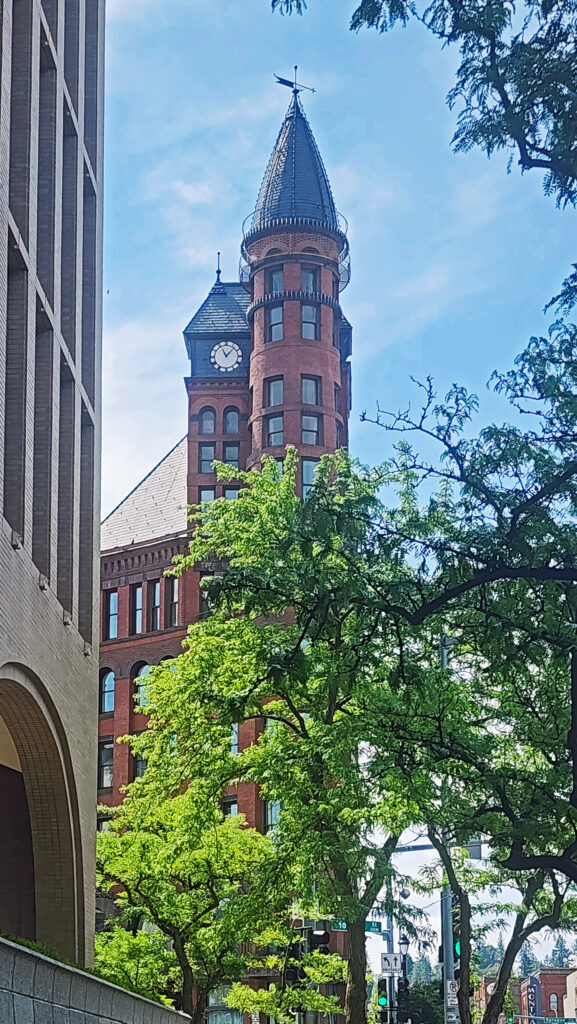
One of the many early 20th century buildings in downtown Spokane
Upper Falls Powerhouse, Washington Water Power Co.

Conclusion

I was surprised by how much I enjoyed my time in Spokane. It’s a beautiful city with an interesting history and lively downtown. Visiting the site of Expo ’74 brought back memories that I had long forgotten, and our side trips to Sandpoint, Coeur d’Alene, and Palouse Falls added to the enjoyment of our trip. I think we’ll be back. (And if you go, make sure to stop by Rosie’s Restaurant and try their breakfast burrito. It’s one of the best I’ve ever had).
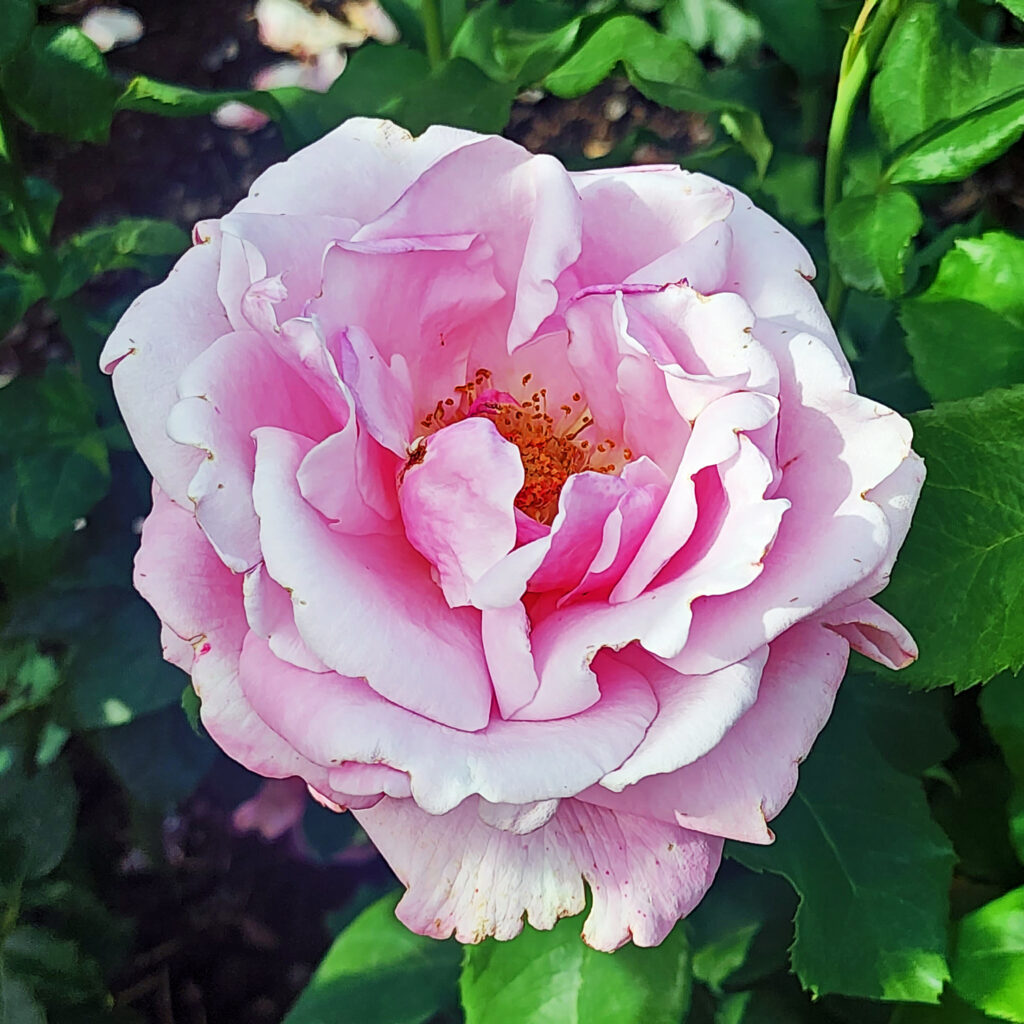
Rose Hill, Manito Park

Posted September 10, 2025

All photos © Alan K. Lee, except as noted


Granville Island and False Creek, Vancouver, BC

By Alan K. Lee

Granville Island Public Dock

Introduction

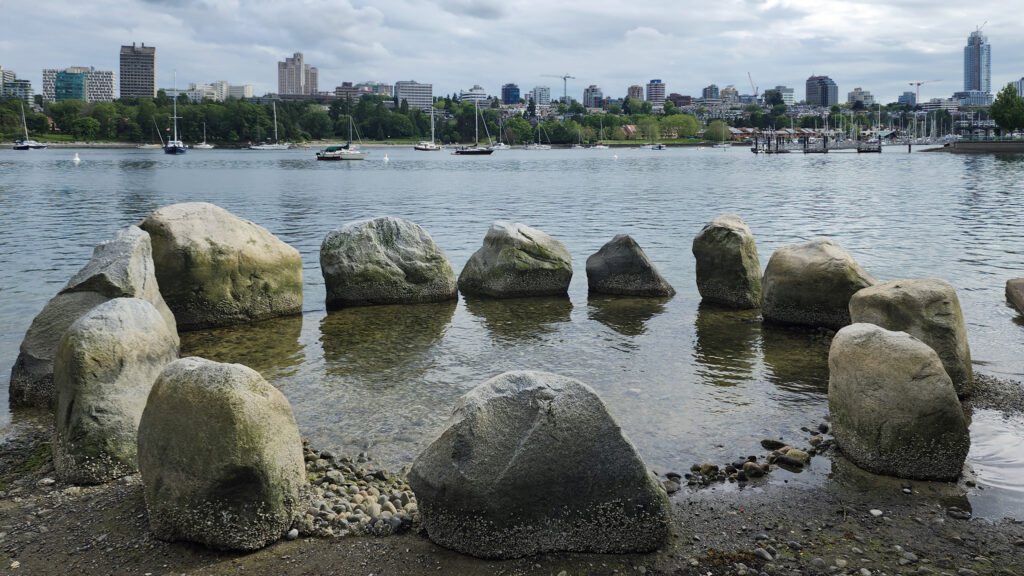
Travel guides for Vancouver, B.C. all highlight Granville Island as one of the prime tourist destinations in the city, and rightly so. It has a wealth of shops, art galleries, restaurants and pubs, theaters, and open spaces in a compact, pedestrian friendly setting. Granville Island is located in the False Creek area immediately south of downtown Vancouver. False Creek, as its name implies, is not a creek. It’s a saltwater inlet off of English Bay that separates downtown Vancouver from the rest of the city. And False Creek has much more to offer the traveler than just Granville Island.

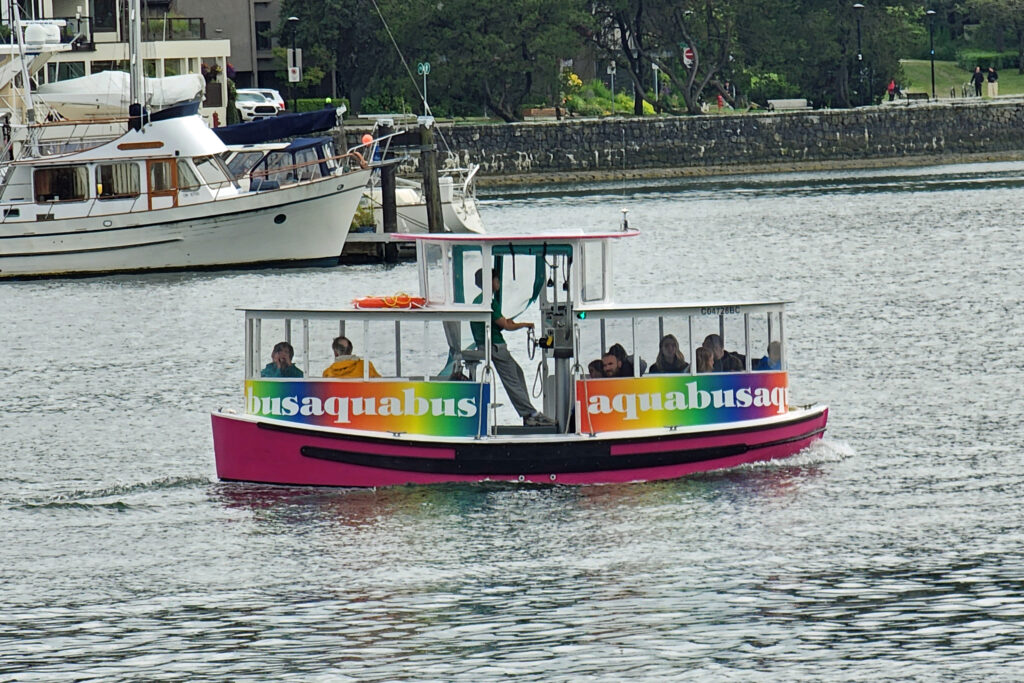
Aquabus water taxi

Water taxis

You can drive to Granville Island, but it’s probably not the best way to get there, especially if you’re staying in the south end of downtown, as my wife and I were on our recent visit. You can also walk across the Granville Bridge to get there, but that’s also not the best way. The best way is by water taxi.

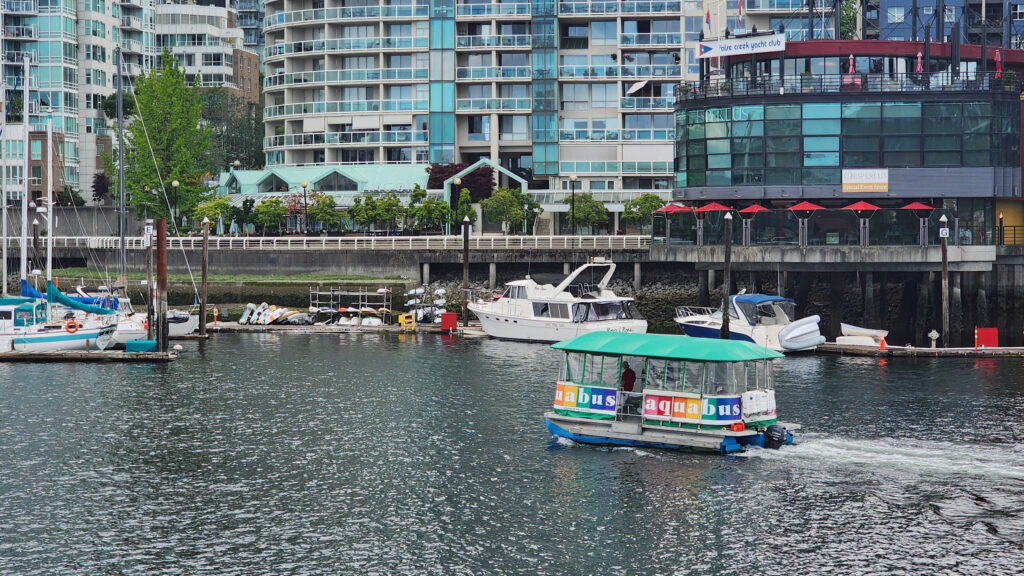
Aquabus water taxi

Two companies, Aquabus and False Creek Ferries, operate water taxis on False Creek. Both have numerous ferries that run frequently and dock at multiple locations along False Creek. Not only are they convenient, they’re also simply fun. Buy an all-day pass and spend the day exploring the area. You won’t run out of things to do.  Just riding the ferries is entertaining in and of itself. Day pass tickets for both companies cost $20 for adults and $18 for seniors and children. (All prices quoted in this post are in Canadian dollars). Aquabus has more ferries, but False Creek Ferries also serves the Vancouver Maritime Museum and the Kitsilano area that Aquabus does not.

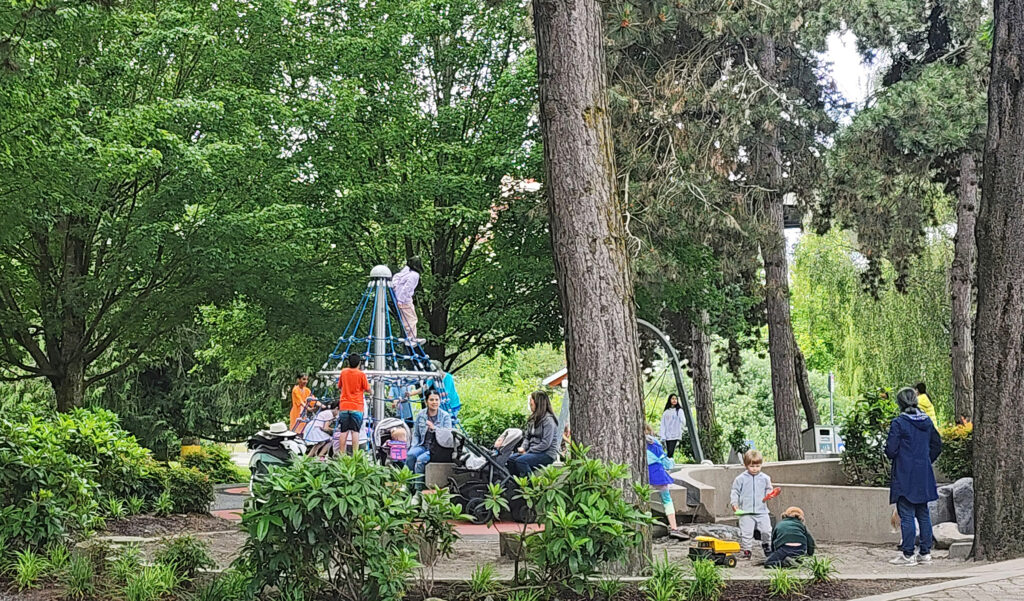
Granville Island playground

Granville Island

If you only have a short time to spend in Vancouver, Granville Island should be near the top of your list of places to visit. And if you have more time, you could easily spend a full day exploring the island and not run out of things to do.

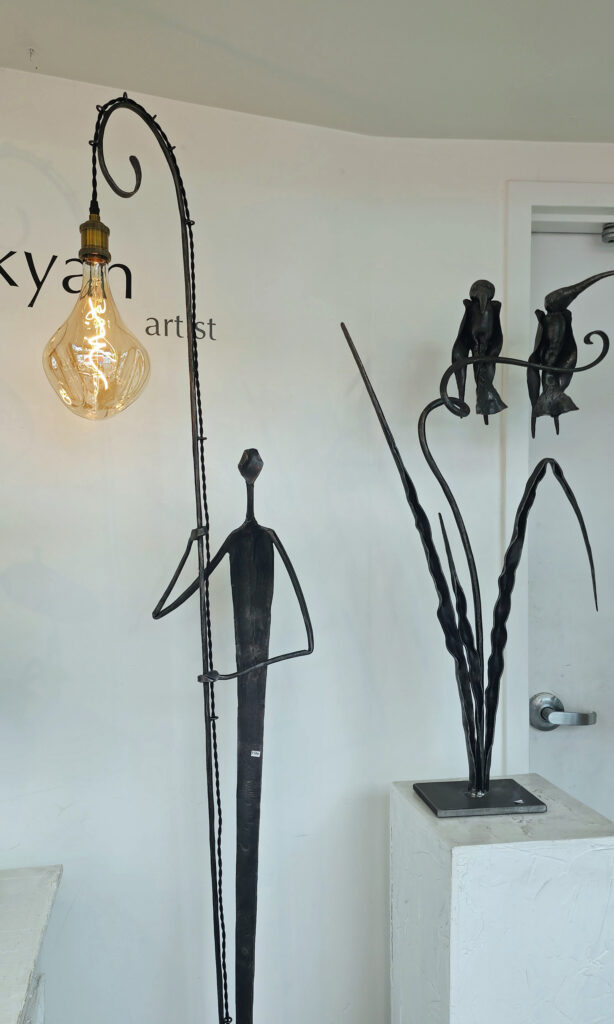
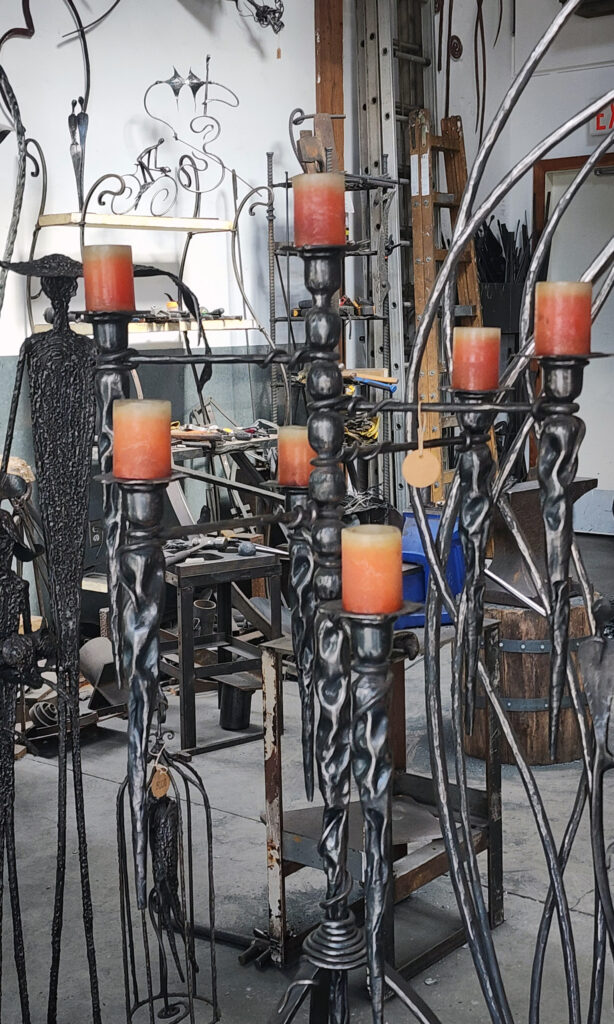
BC Blacksmith Gallery
BC Blacksmith Workshop

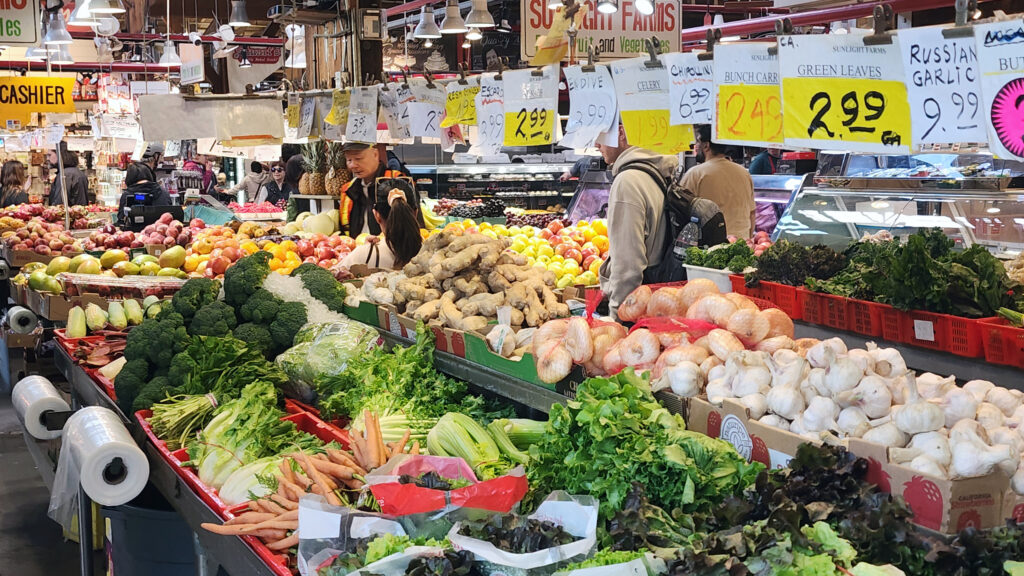
Granville Island is a small area (only a half mile long by a quarter mile wide), but jam packed with literally dozens of restaurants and pubs, more than 100 studios, art galleries and boutiques, many theaters and performance venues, a public market (called Public Market) that rivals Seattle’s Pike Place Market, public docks for both small boats and canoes and kayaks, a community center, a water park, a large playground, a public park, a hotel, and the list goes on.

Granville Island Public Market

My wife and I often like to just show up and see what we find when visiting a new location (which we essentially did here), but Granville Island can be a little overwhelming for the first-time visitor. The Granville Island website offers a “plan your visit” interactive function, though,  that you can use to make a custom plan based on your interests and how long you can stay (from a few hours to all-day plus). I highly recommend it, especially if you only have a short time to dedicate to Granville Island.

Olympic Village Square

The Village

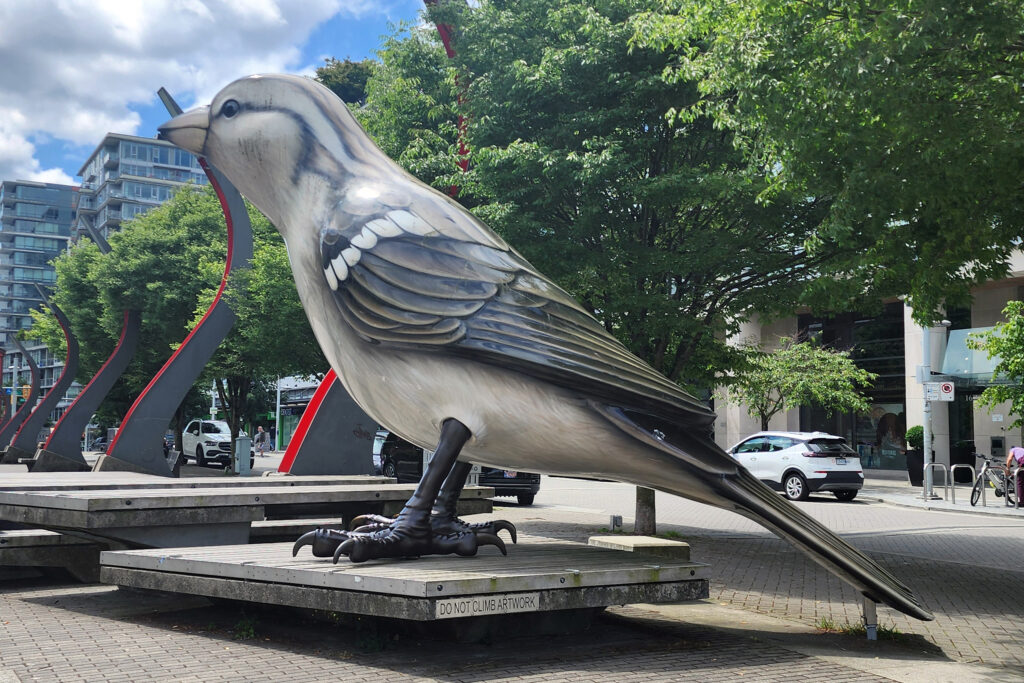
The Village, located on the southeast shore of False Creek, was the site of the athlete’s village at the 2010 Winter Olympics and Paralympics. After the Olympics, the area was converted into residential housing, commercial spaces, and parks and plazas. The Olympic Village Square features two huge sculptures of sparrows that are eighteen feet tall. My wife and I had lunch in the Village twice (once at Tap and Barrel and once at Craft Beer Market). It’s a nice area to just hang out and relax.

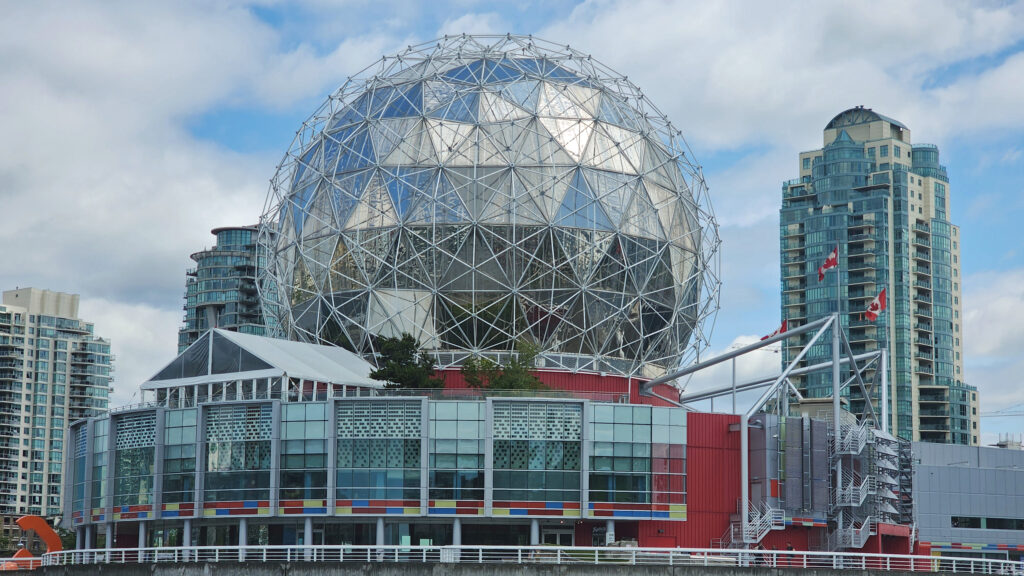
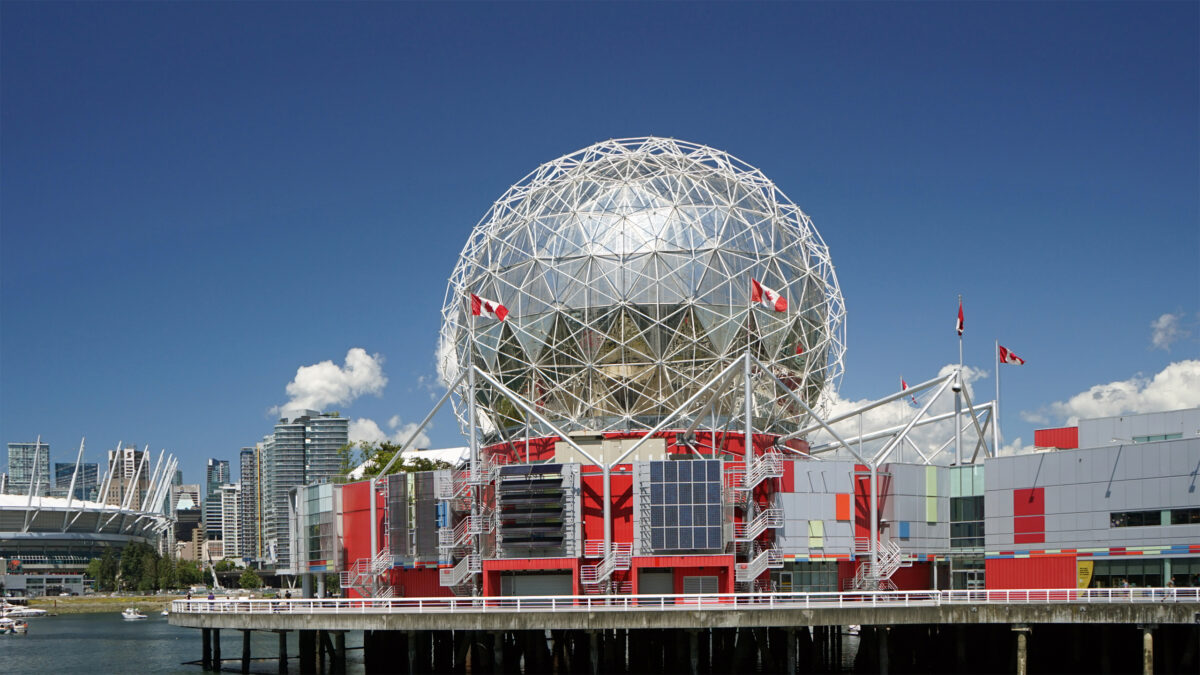
Science World

Science World

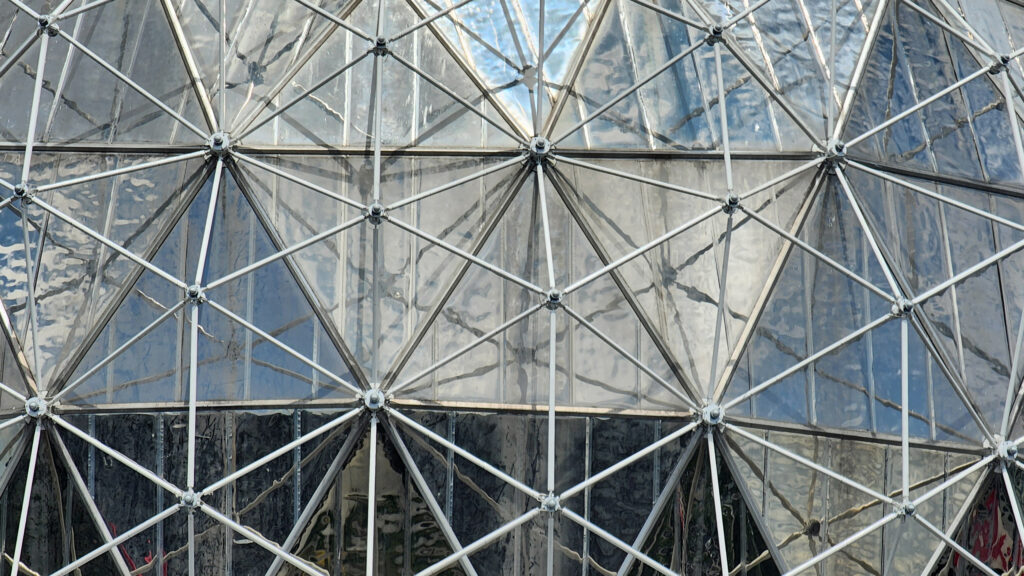
Science World is the large geodesic dome at the east end of False Creek that is visible from all over the area. It was originally constructed to be the Expo Centre for the 1986 World’s Fair (Expo ‘86). Today it is a science center and museum run by the non-profit ASTC Science World Society.

Science World

Science World houses numerous permanent displays and interactive science exhibits, rotating temporary exhibits, and an OMNIMAX theater.  The Science World Society also runs outreach programs, sponsors lectures and classes, and conducts youth camps. Ticket prices (2024) range from $34.85 for adults to $23.65 for children (3-12). Youth (13-18) and senior (65+) admission is $28.10. The OMNIMAX theater is temporarily closed (as of September 2024).

David Lamb Dock, Yaletown

Yaletown

Yaletown, just north of the False Creek waterfront, was once a warehouse district. Today, many of the old warehouses have been converted into restaurants, pubs, cocktail lounges, and shops and boutiques featuring cutting edge décor and fashions. Yaletown’s a vibrant, young, hip district that has an energy and vibe that is unique to the area.

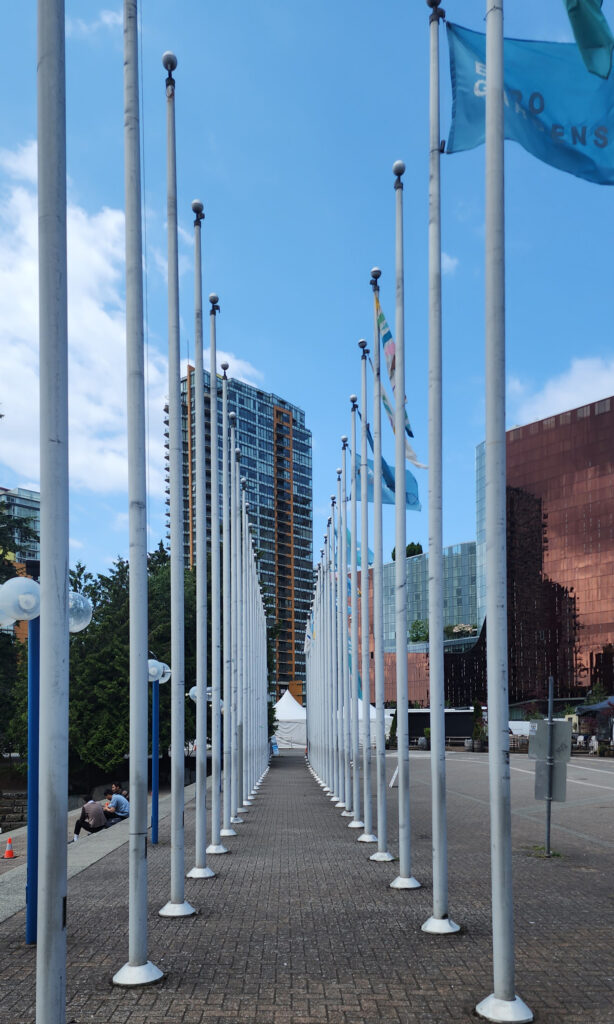
Plaza of Nations

Plaza of Nations

The Plaza of Nations, to the east of Yaletown, was the site of Expo ‘86’s British Columbia Pavilion. The structures and glass-roofed plaza, originally meant to be temporary structures, became an entertainment center after the conclusion of the world’s fair, with a 4500-seat concert venue. But the structures were deemed unsafe in 2007 and were demolished in 2008. Today, the area consists of an open plaza and a developing mixed-use commercial, residential, and entertainment district.

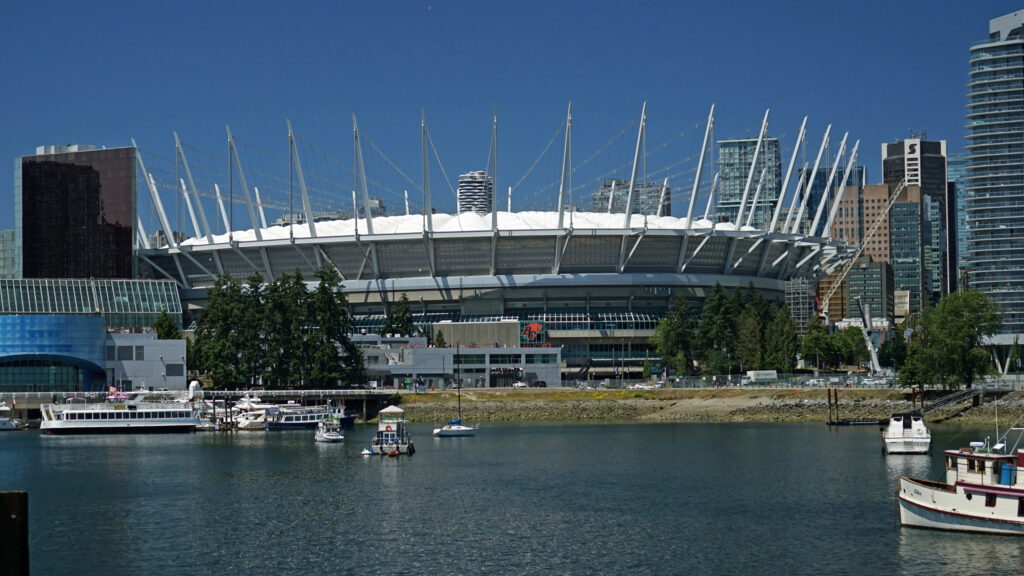
BC Place

The Plaza of Nations is located just west of BC Place, a large stadium with a retractable roof that was the main stadium of the 2010 Winter Olympics and Winter Paralympics. Today, it is home to the Vancouver Whitecaps of the North American Soccer League and the BC Lions of the Canadian Football League.

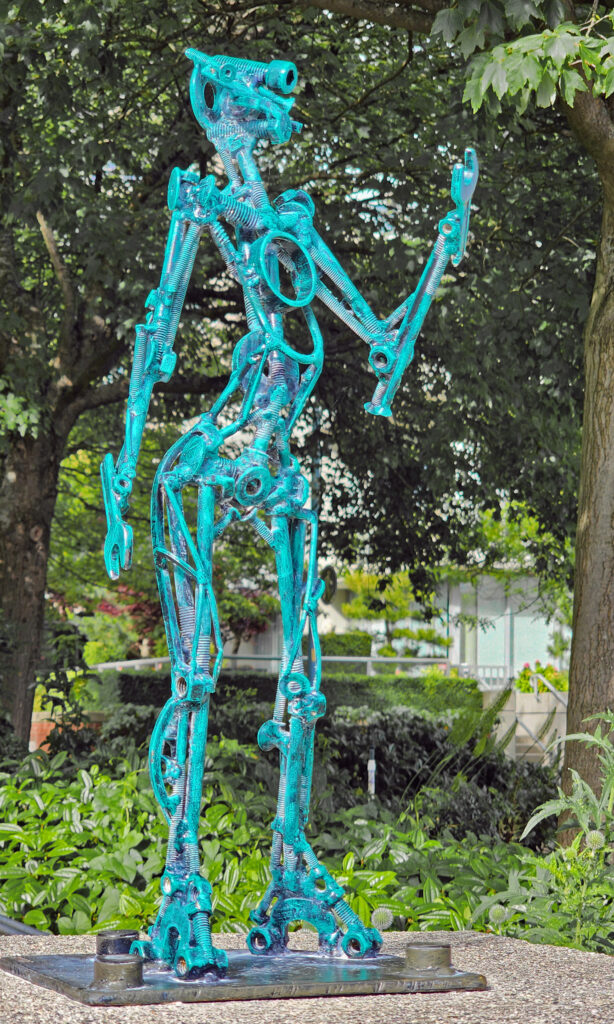
Metal sculpture near Plaza of Nations
Plaza of Nations


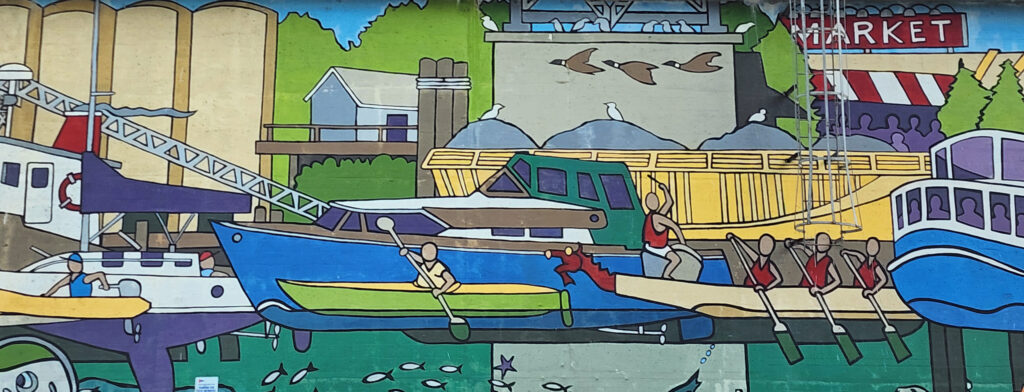
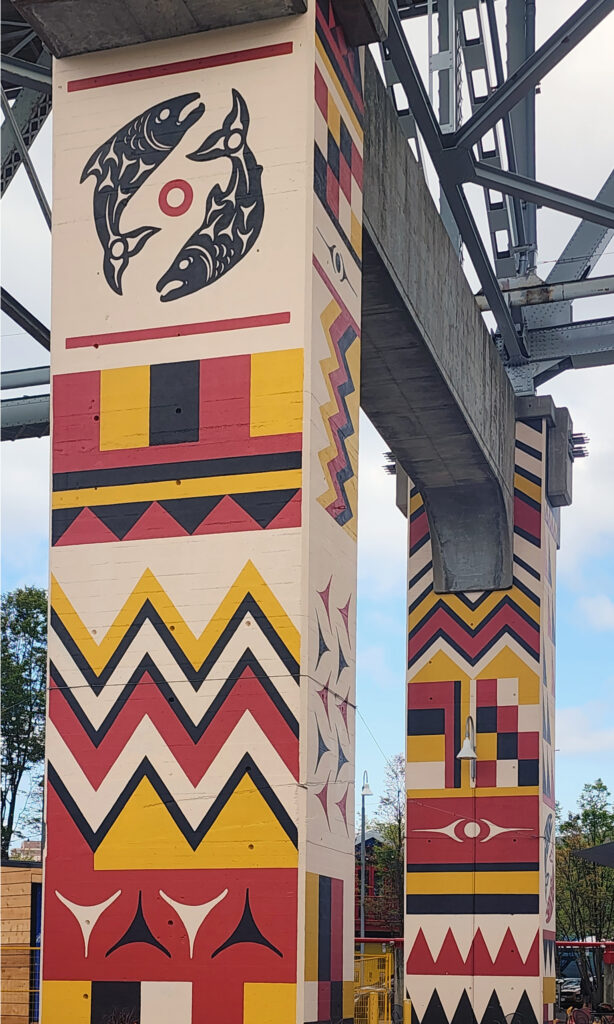
Granville Bridge mural

Public Art

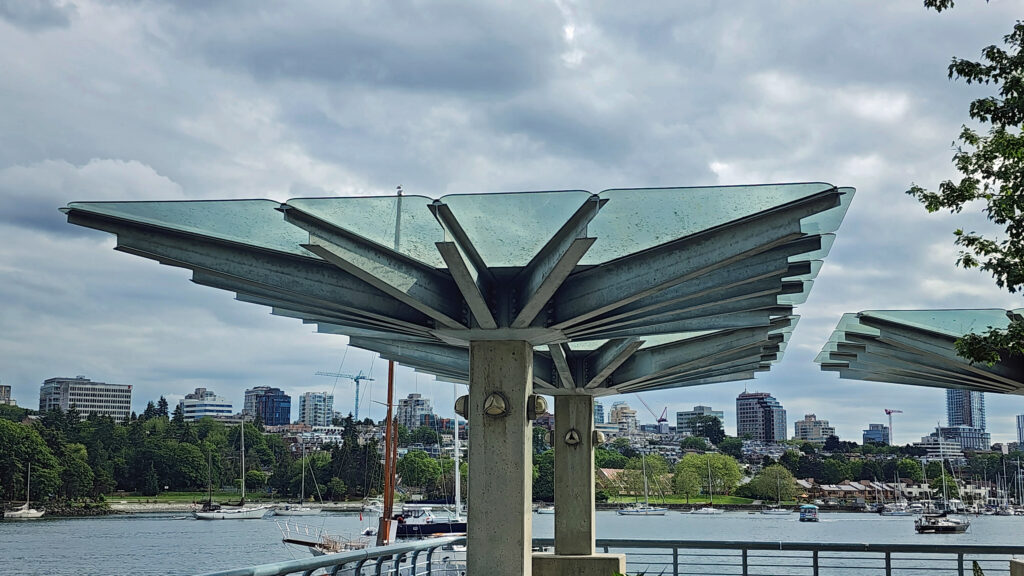
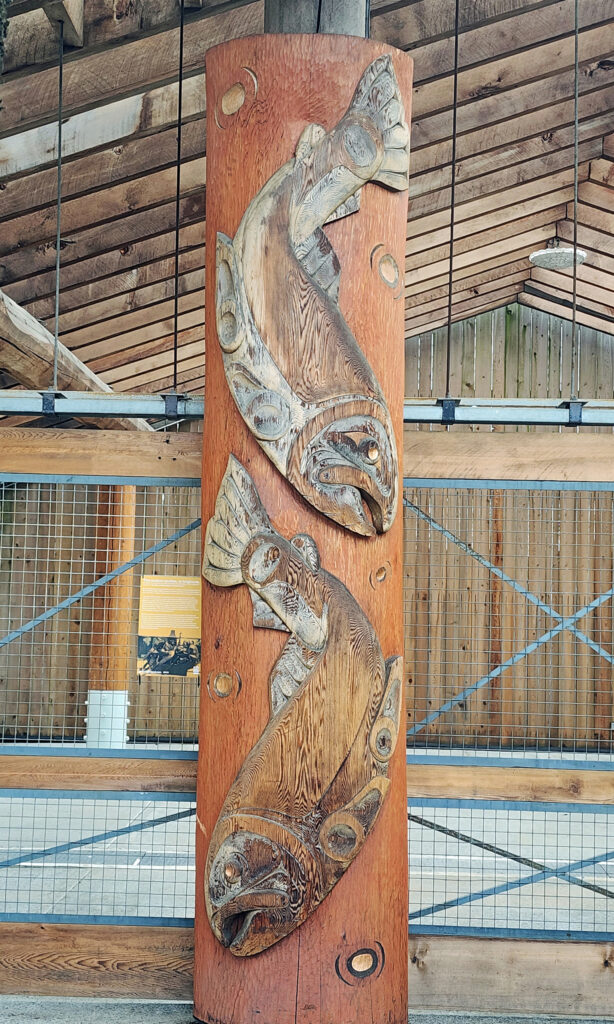
Throughout the False Creek area, in the parks and plazas, along the walkways, and all over Granville Island, you will find outstanding examples of public art, from Native American (First Nations) art to modern contemporary art. And the galleries and studios of Granville Island are an art lovers delight.

Indigenous Wood Carving, Granville Island
Granville Bridge
David Lam Park

Parks

Numerous parks line the shores of False Creek. At the east end you’ll find Creekside Park adjacent to Science World and Concord Community Park just to the north. Along the south shore, Hinge Park has open spaces and a small wetlands area, and Charleson Park has a children’s playground and a dog park. Ron Basford Park on Granville Island has an amphitheater and a nice view of the city from a grassy hilltop.

Hinge Park

Along the north shore, George Wainborn Park, David Lam Park and Coopers’ Park offer open spaces, fountains, sports courts, a skate park, and nice views of the False Creek waterfront.

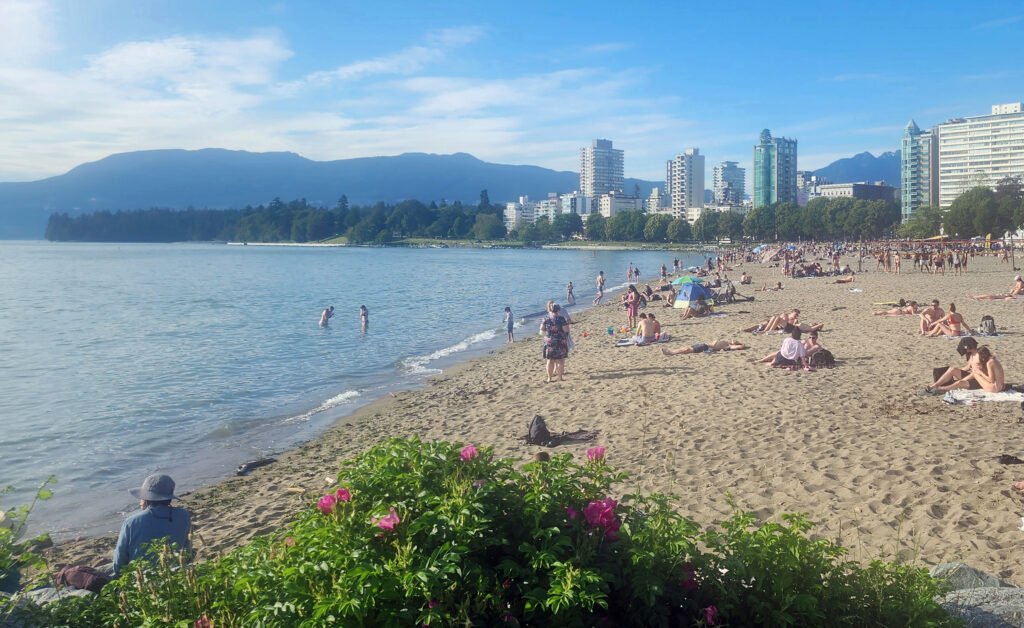
English Bay Beach

And to the west of the main False Creek area, Sunset Beach Park at the mouth of False Creek and English Bay Beach Park to the north offer an uninterrupted, mile-long stretch of sand that is a popular picnicking area and a great spot to view the sunset.

George Wainborn Park

Conclusion

Granville Island was on my radar long before we made this trip, but the rest of the False Creek area was not. In the end, my wife and I wound up spending more time exploring False Creek than we did any of the Vancouver area’s other destinations, and that’s worth noting because there are many other parts of the area that offer visitors a unique and enjoyable experience. Check out my Stanley Park post and look for upcoming posts on Capilano Bridge Park and Grouse Mountain in North Vancouver and the Gastown/Chinatown district in the north end of downtown Vancouver.

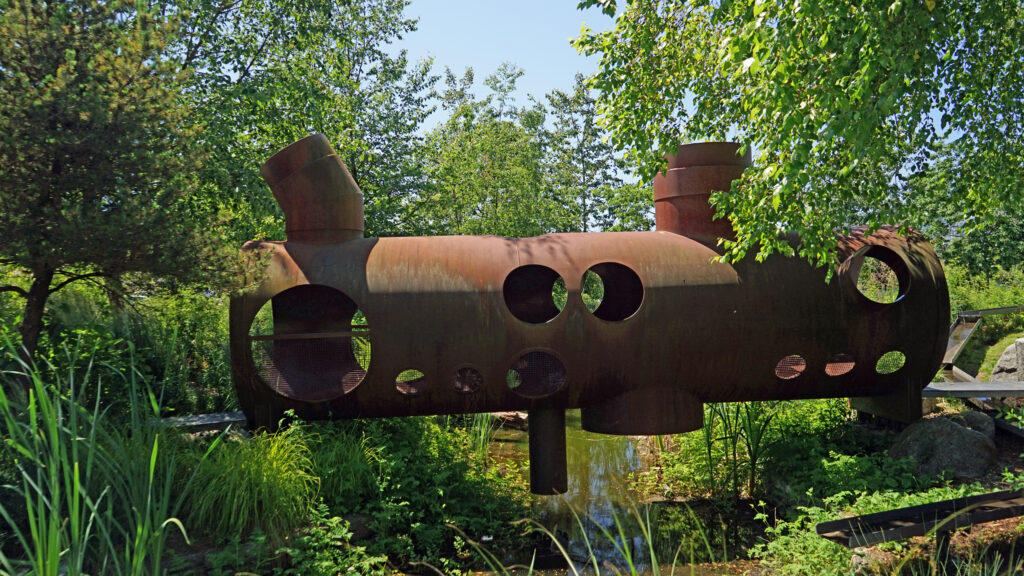
Granville Island Duck Pond

Posted September 15, 2024

All photos © Alan K. Lee