by Alan K. Lee
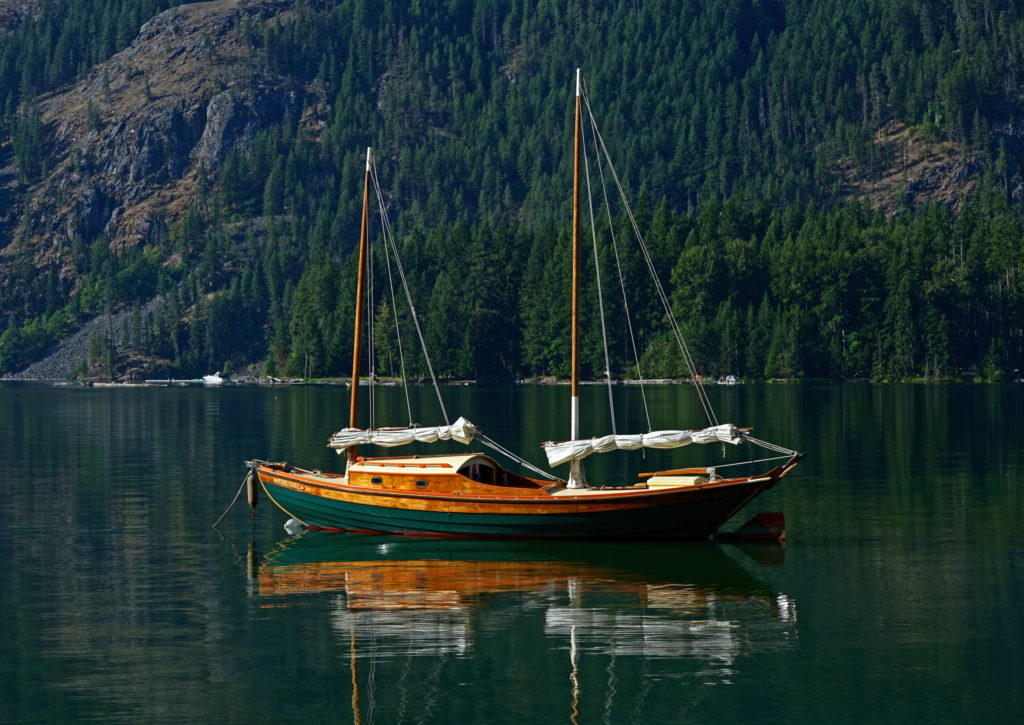 My wife and I have visited the small community of Stehekin at the head of Lake Chelan in central Washington several times. Our most recent visit came on a week-long escape during the pandemic in 2021.
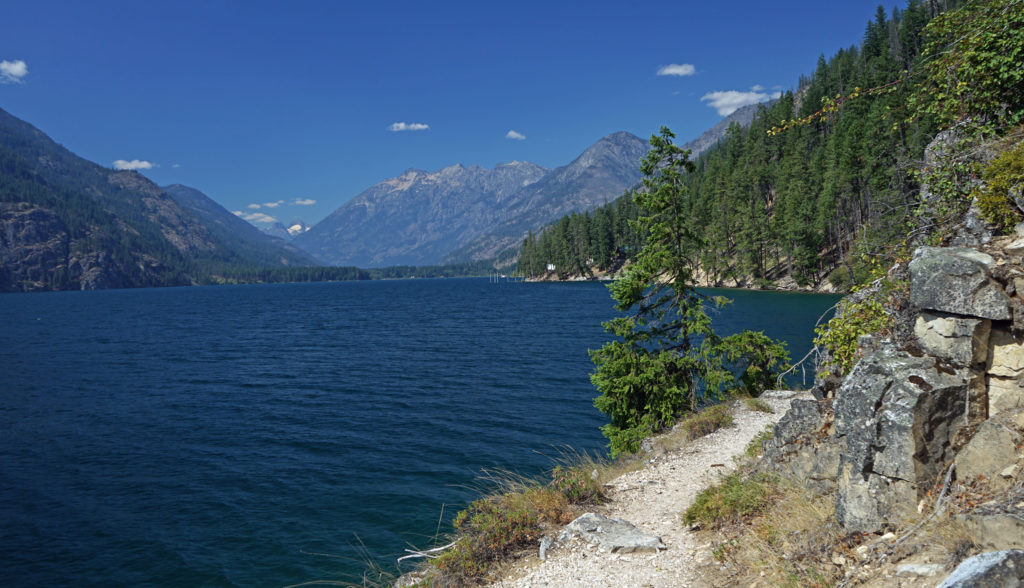
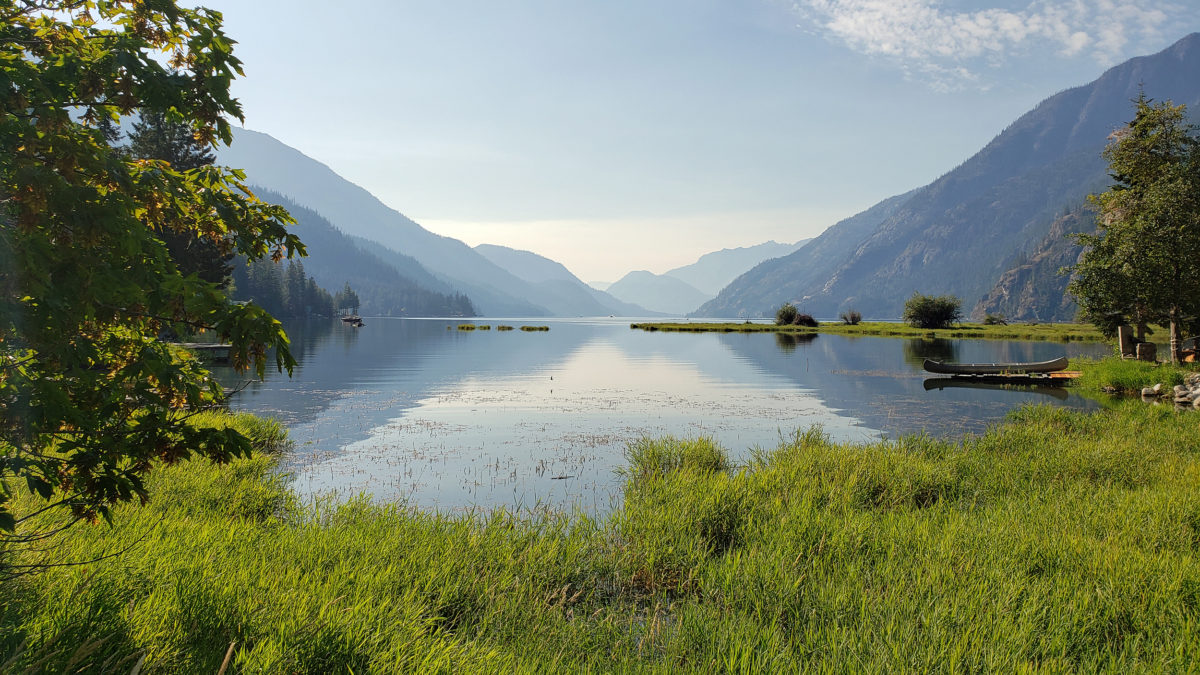
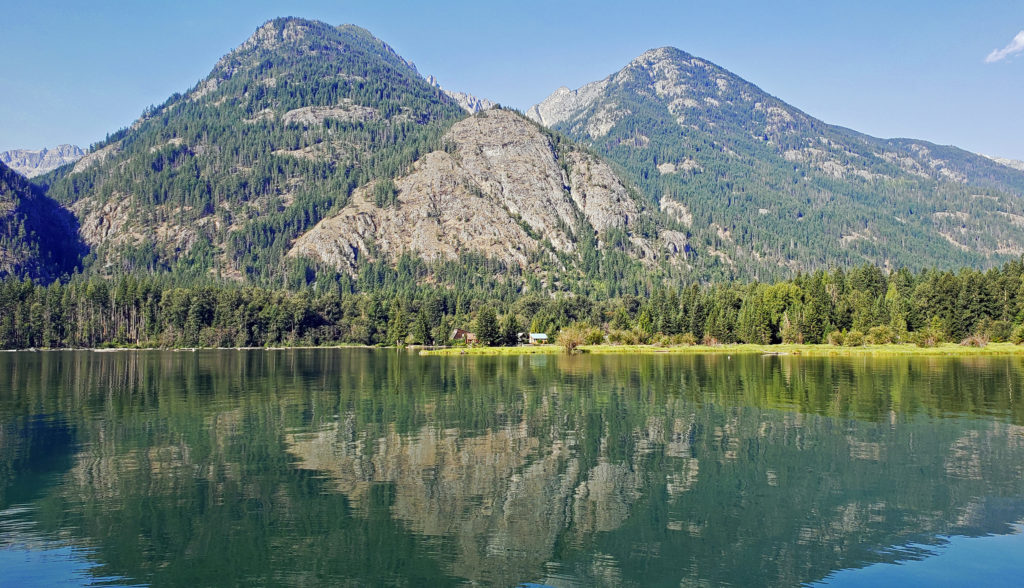
Lake Chelan is a fjord-like body of water, fifty miles long and no more than two miles wide at any point. It is also one of the deepest lakes in the United States, with a maximum depth of 1486 feet. Only Crater Lake and Lake Tahoe in the U.S. are deeper. The upper end of the lake is part of Lake Chelan National Recreation Area, which borders North Cascades National Park.
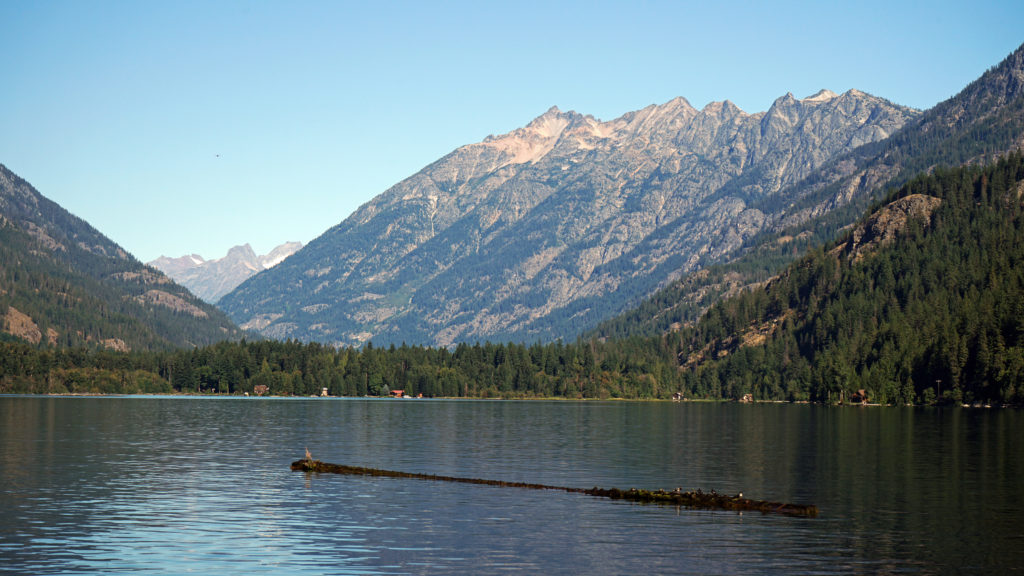
The Lake Chelan Basin was formed by two glaciers during the last ice age, an alpine glacier that came down the valley from the North Cascades, and a lobe of the Cordilleran ice sheet that later came up the valley from the east. The terminal morraine of the Cordilleran glacier, at what is known as The Narrows, forms the narrowest and shallowest part of the lake.
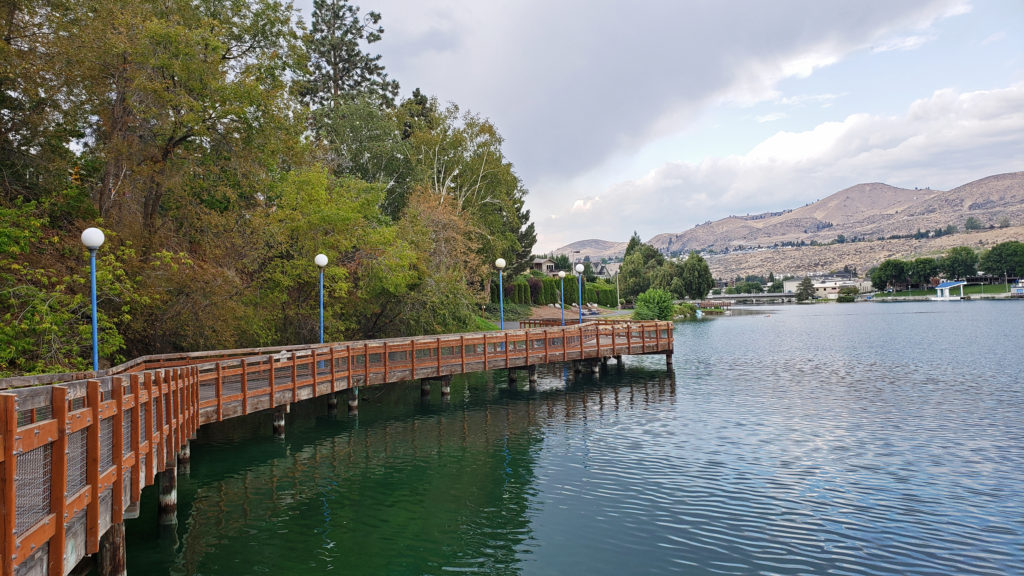
The town of Chelan, 170 miles east of Seattle and 160 miles west of Spokane, lies at the lower, eastern end of the lake, and is the jumping off spot for exploring the lake. While Chelan offers a lot for the visitor to enjoy, we spent only one night there before heading up the lake in 2021. We stayed at the Riverwalk Inn, a 13 room hotel across the street from Riverwalk Park that has been in operation since 1918. There is also a café on the property, but, unfortunately, it was closed when we were there.
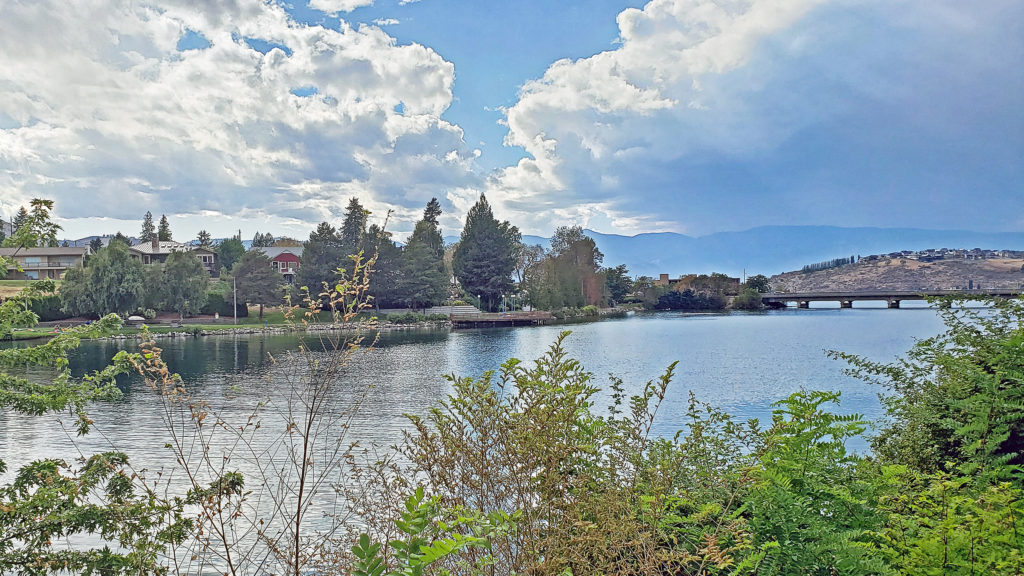
While I can recommend the Riverwalk Inn, Chelan has a wide variety of other lodging options, from rustic cabins to full service hotels. Chelan also has a variety of places to eat and drink. If you’re a fan of craft beers, you’ll want to check out Stormy Mountain Brewery. While the service was somewhat lacking, the beer selection and quality were both good and the pulled pork nachos we had were superb.
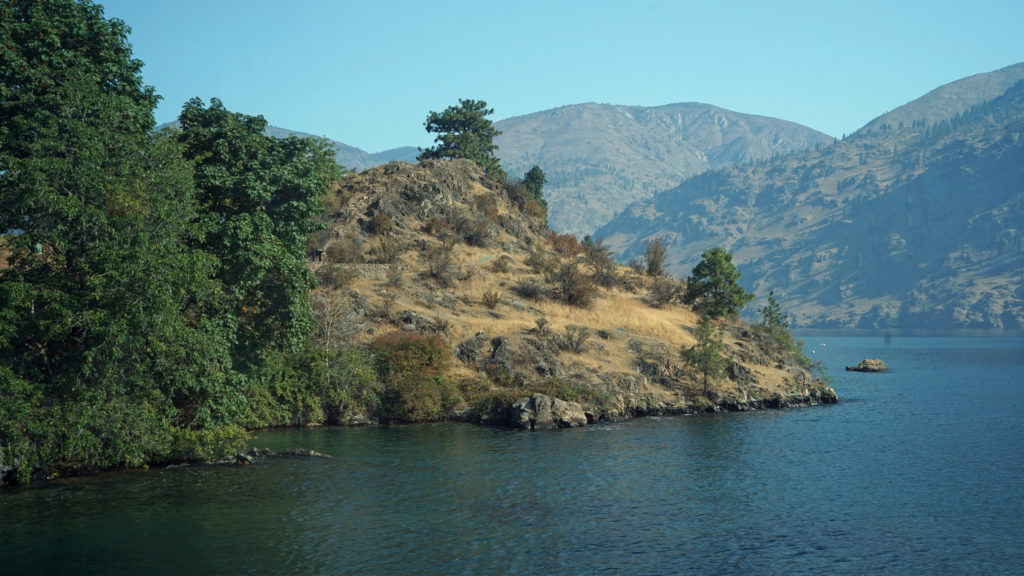
The lower end of the Lake Chelan is easily accessible and can be explored by car. From Chelan, the South Lakeshore Road goes as far as Twenty-five Mile Creek State Park, twenty miles from Chelan. On the north shore, you can drive as far as Green Point, about ten miles from Chelan. Beyond those two points, though, there are no roads along either shore of the lake, and no access to the lake by road. The only way to explore the majority of the lake is by boat.
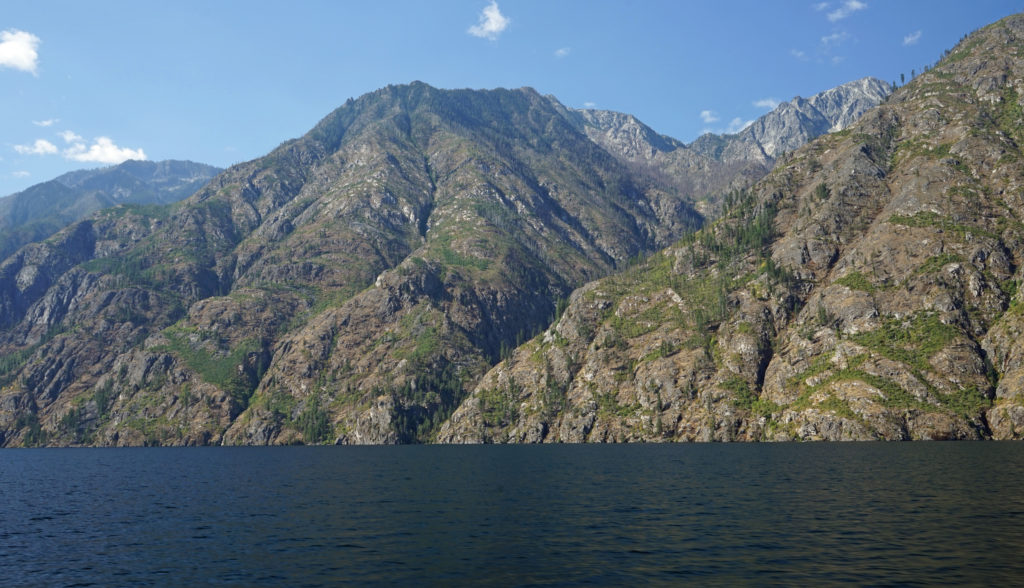
Between Twenty-five Mile Creek State Park and Stehekin the surrounding mountains drop steeply to the shore. The only structures you will see are a few isolated cabins along the shore and a small group of cabins at Lucerne.
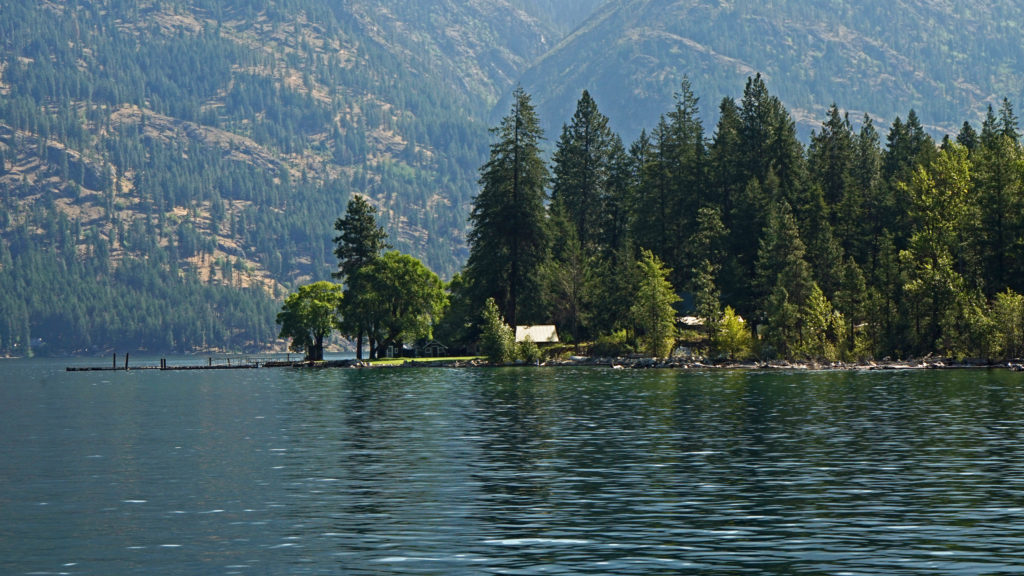
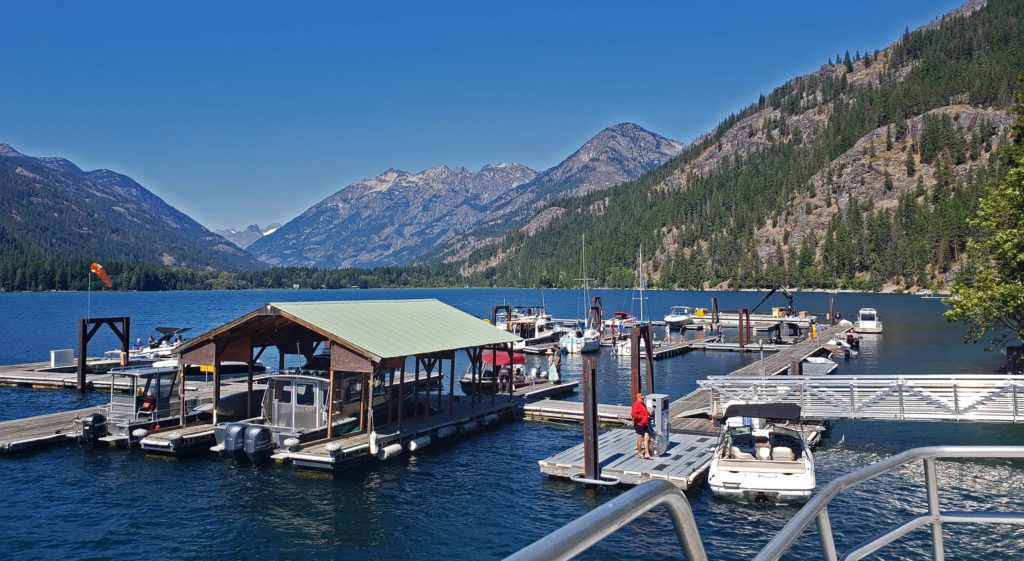
Stehekin lies near the upper end of the lake, surrounded by the peaks of the North Cascades. It is a strikingly beautiful and totally unique place. What sets Stehekin apart from almost all other communities in the Pacific Northwest is that you cannot get there by car. The only road out of Stehekin dead ends in North Cascades National Park. You have to come by boat, float plane, or on foot. The Stehekin area has fewer than 100 year round residents, but, despite its isolation, bustles with tourists, summer residents, Pacific Crest Trail through-hikers, and seasonal workers from spring through fall.
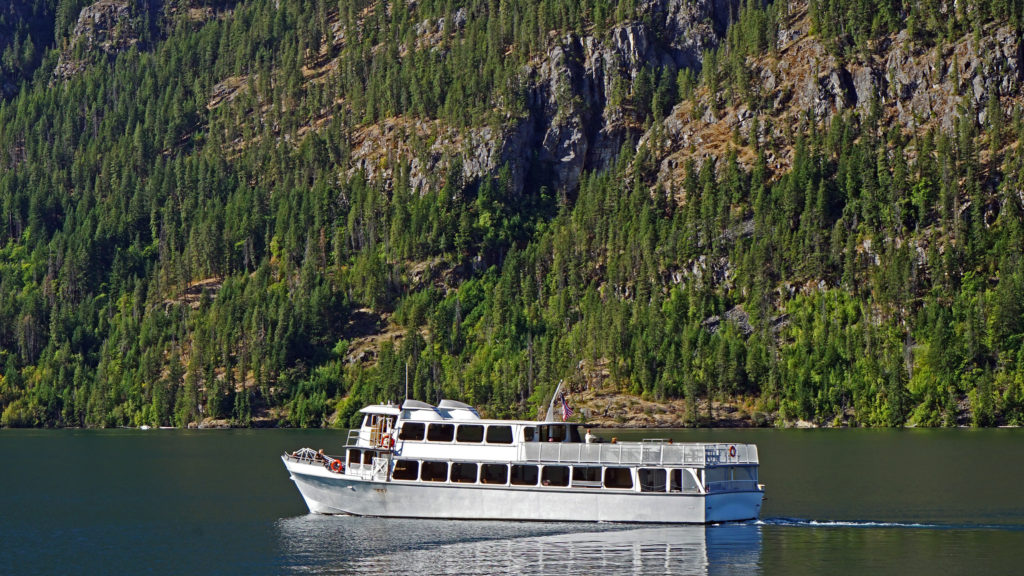
Getting to Stehekin from Chelan requires some advance planning. If you don’t have a boat of your own, you can rent one in Chelan, but most visitors to Stehekin come by passenger ferry. Lake Chelan Boat Company (better known as Lady of the Lake) operates three ferries that run from Chelan to Stehekin. Another option is the Stehekin Ferry, which runs from Fields Point Landing (about 17 miles from Chelan on the south shore of the lake) to Stehekin. In the summer months, demand is high and tickets sell out well in advance. Reservations need to be several months before your planned visit. Note: Lake Chelan Boat Company is in the process of acquiring the Stehekin Ferry business, so you should be able to reserve a trip on the Stehekin Ferry through the Lady of the Lake website linked above beginning sometime in the spring or summer of 2025.
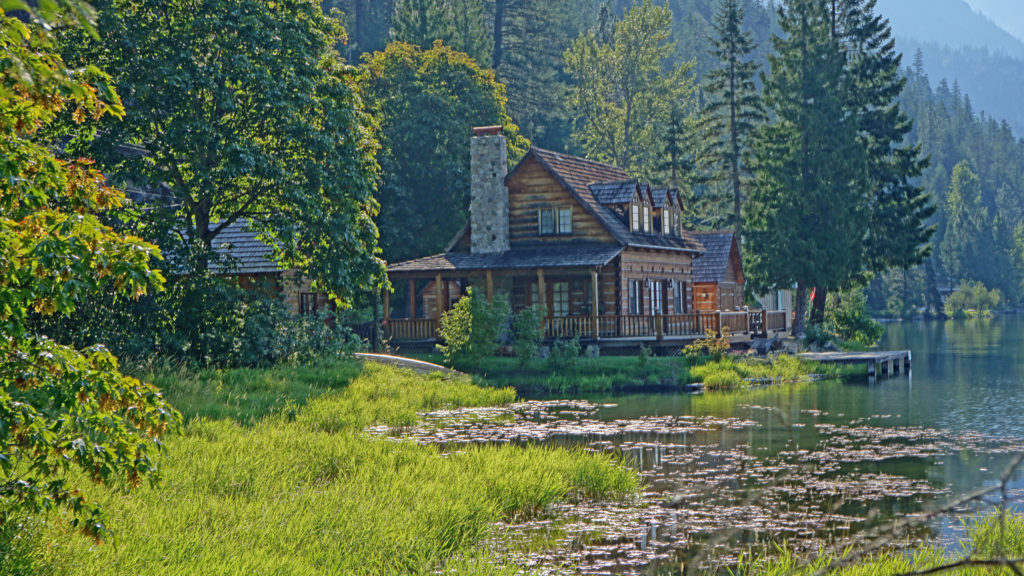
You can do a day tour from Chelan to Stehekin and back via ferry, and many visitors to Stehekin are day trippers. But the length of the ferry ride (from an hour and a half to four hours each way, depending on which ferry) limits the amount of time you have to explore the area. Many people, my wife and I included, prefer to spend multiple days in Stehekin, but lodging options are limited and also require some advance planning.
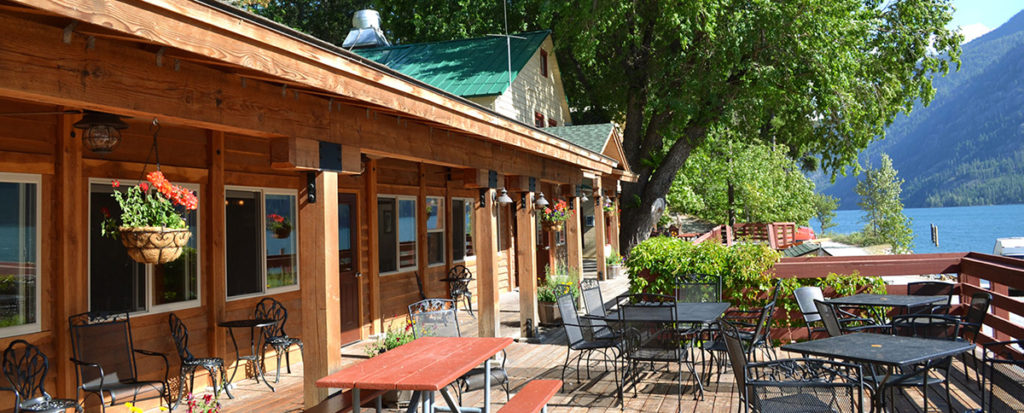
North Cascades Lodge in Stehekin is located at the ferry landing. It’s the most convenient and has by far the most rooms available. The only other lodging options are private cabin rentals, the Stehekin Valley Ranch, ten miles up the valley from the ferry landing, and a few primitive campgrounds. Lodging reservations must also be made well in advance, and must be coordinated with your ferry reservations.
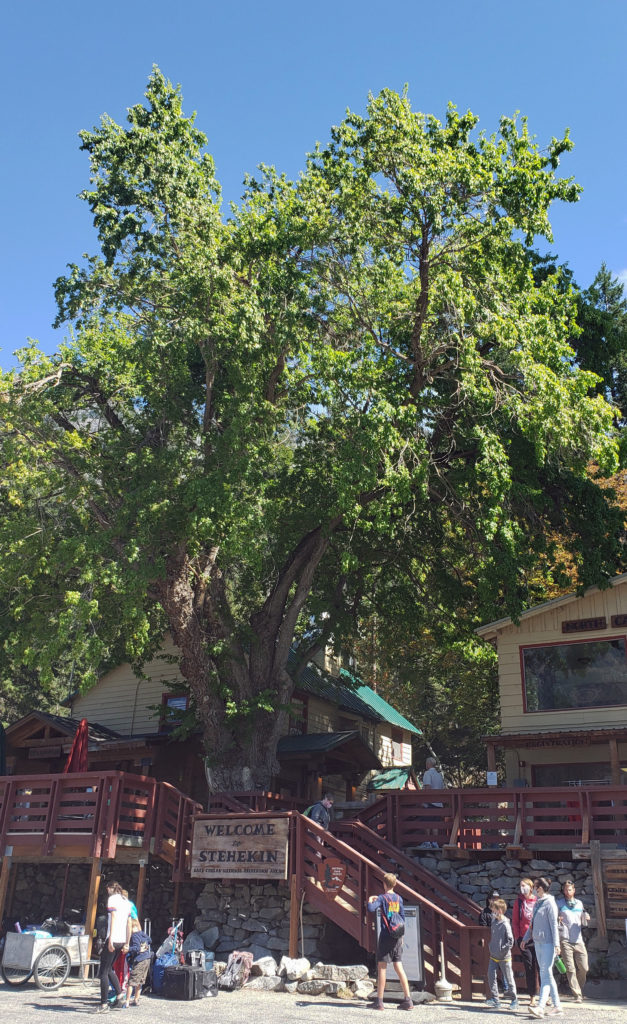
We have stayed at North Cascades Lodge several times. You can rent a room (some with fireplaces) with a private bath, a cabin with a small kitchen, or an entire lakefront house that sleeps as many as 12. Our room was fairly basic, but comfortable and large enough to serve our needs well. The lodge also has a store and a full service restaurant, one of the few dining options in Stehekin. Stehekin Valley Ranch also has a dining room (reservations required), and you can get breakfasts and lunches at Stehekin Valley Pastry Company (aka The Bakery), located a couple of miles from the ferry landing. The only other dining option is renting a cabin with a kitchen and cooking your own meals.
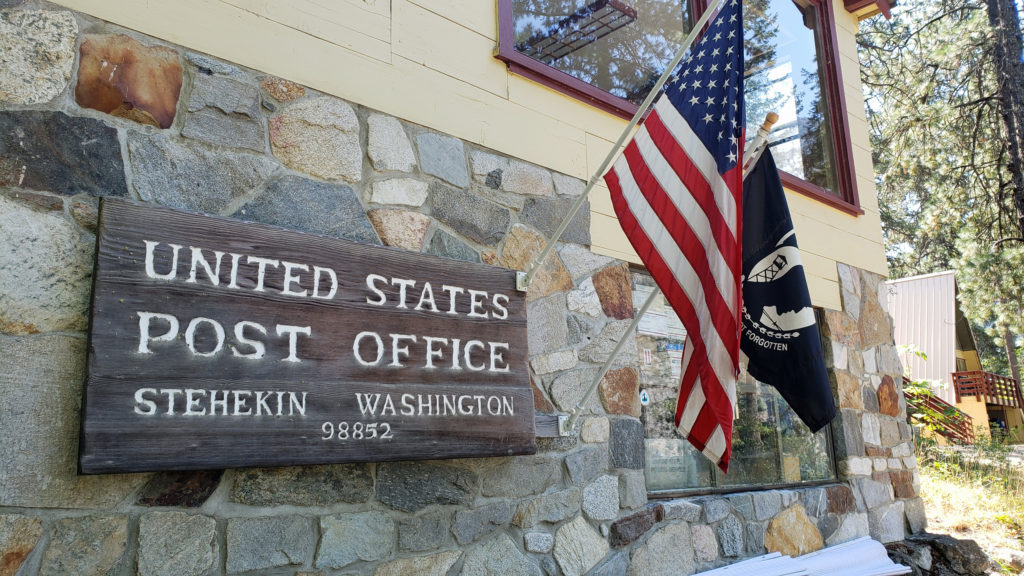
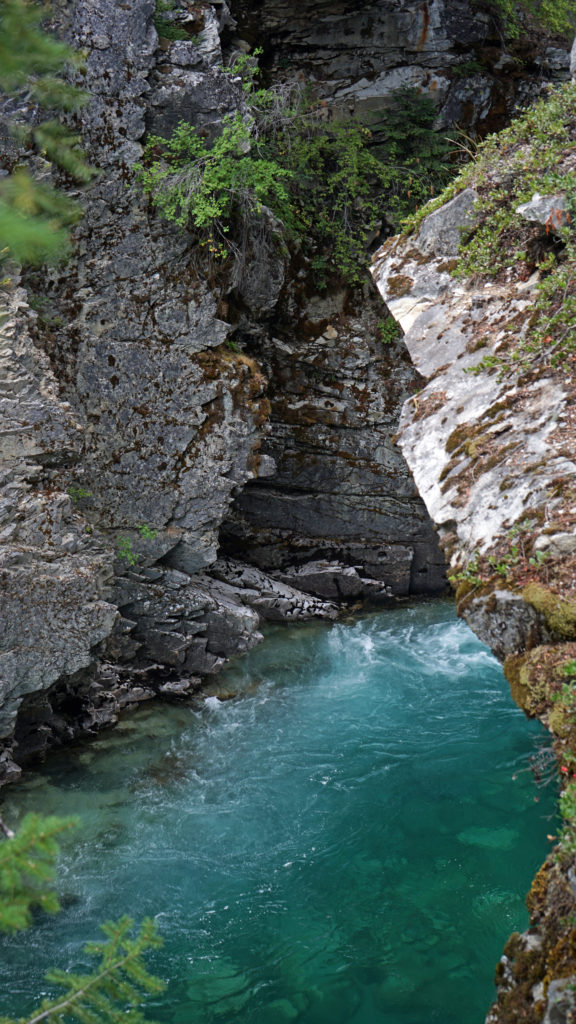
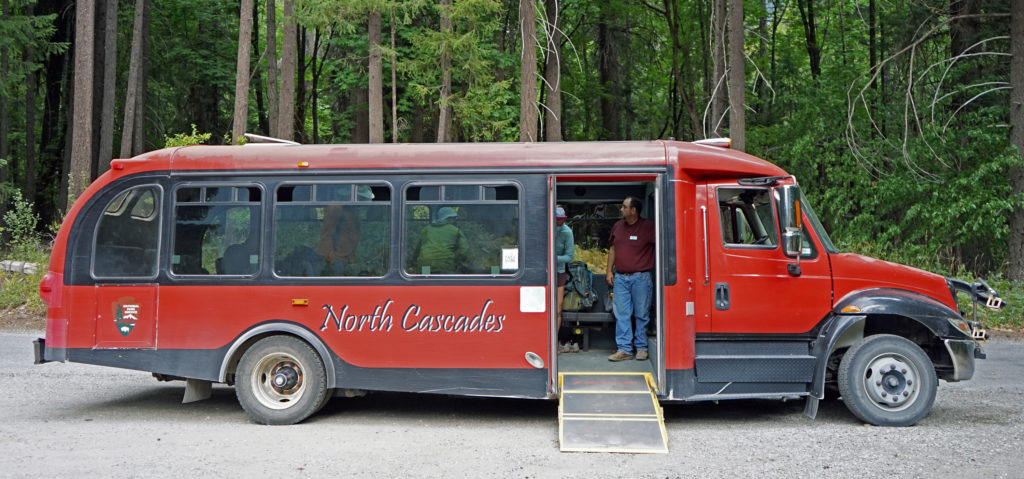
A few people arrive in Stehekin by float plane. A surprising number arrive on foot, many of them Pacific Crest Trail through-hikers. The PCT crosses the Stehekin River at High Bridge about ten miles up the valley from the head of the lake. The National Park Service operates a shuttle bus (called the Red Bus for obvious reasons) between Stehekin and High Bridge. There is also a post office in Stehekin where through-hikers can send supplies for the final leg of their hike to the Canadian border and the end of their journey. And a few backpackers make it to Stehekin via the 23 mile hike over Cascade Pass from the west side of the Cascades.
Stehekin is one of the most isolated communities in the country. Not only is there no road access, there’s no cell phone service and only very limited wi-fi. But that’s part of its appeal. Turn off your phone. Forget about TV. The sheer beauty of the place and its proximity to North Cascades National Park and Glacier Peak Wilderness, as well as the PCT, make it an ideal destination for the outdoor oriented traveler. And there are plenty of things to keep you entertained while there.
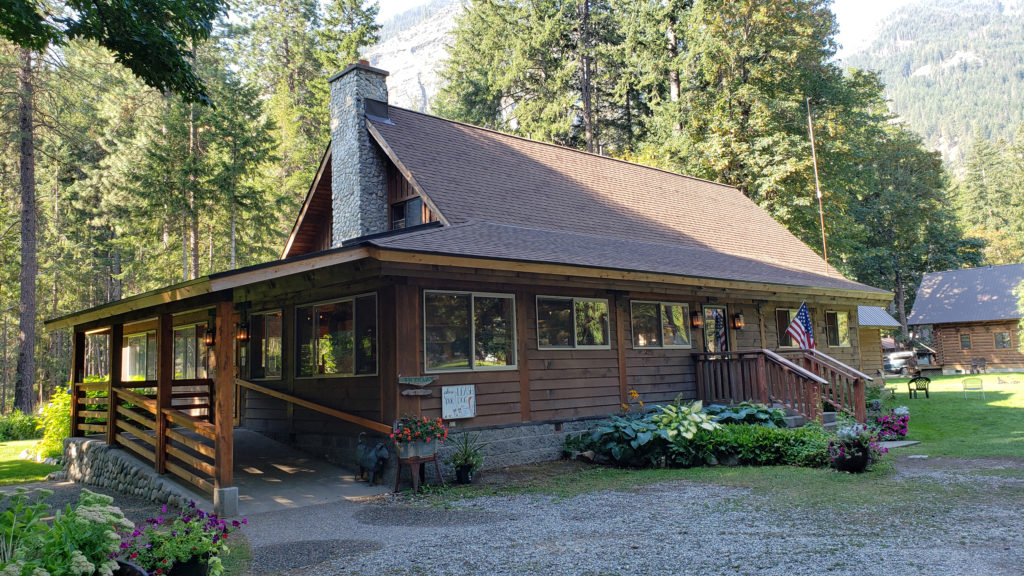
The Golden West Visitor Center, operated by the National Park Service, is located near the ferry terminal and is a good starting point for your exploration of the area. There is an information desk there, and you can find books, maps, and other items related to the area. And audiovisual programs are available throughout the day. It was closed due to the Covid-19 pandemic when we were last there, and was closed during the Pioneer Fire in 2024, but should reopen for the 2025 season. Check the North Cascades National Park website for more information.
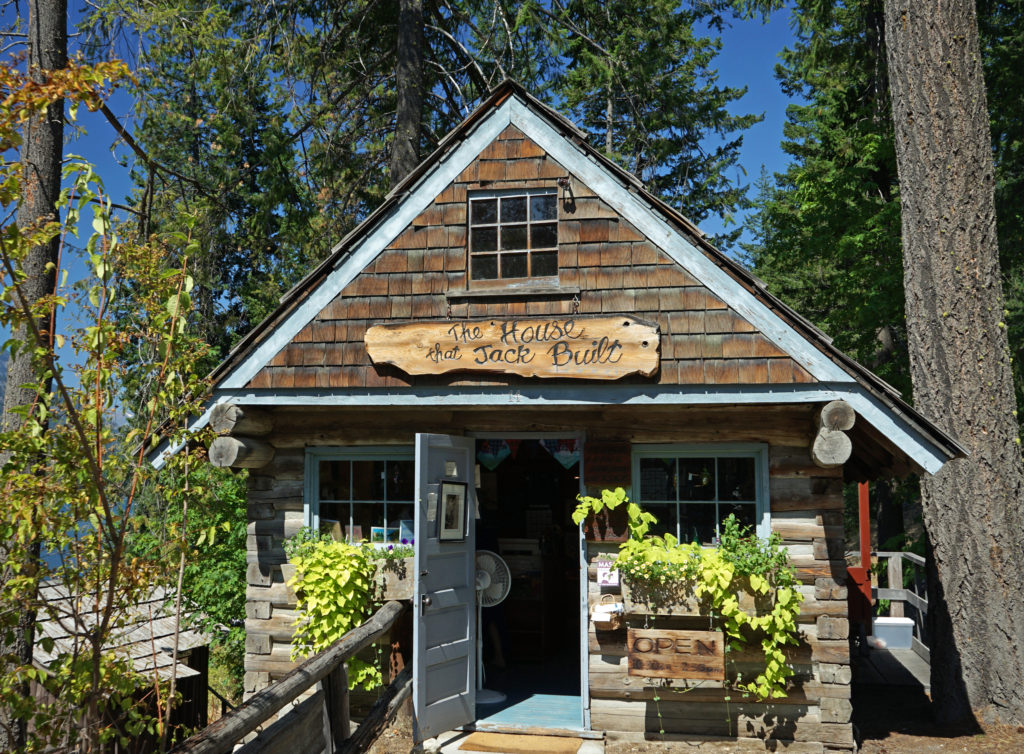
Just uphill from the North Cascades Lodge, adjacent to the visitor center, there is a craft shop, The House That Jack Built, that displays and sells souvenirs, hand crafted gifts, and artwork created by local artisans. It’s small, but worth checking out.
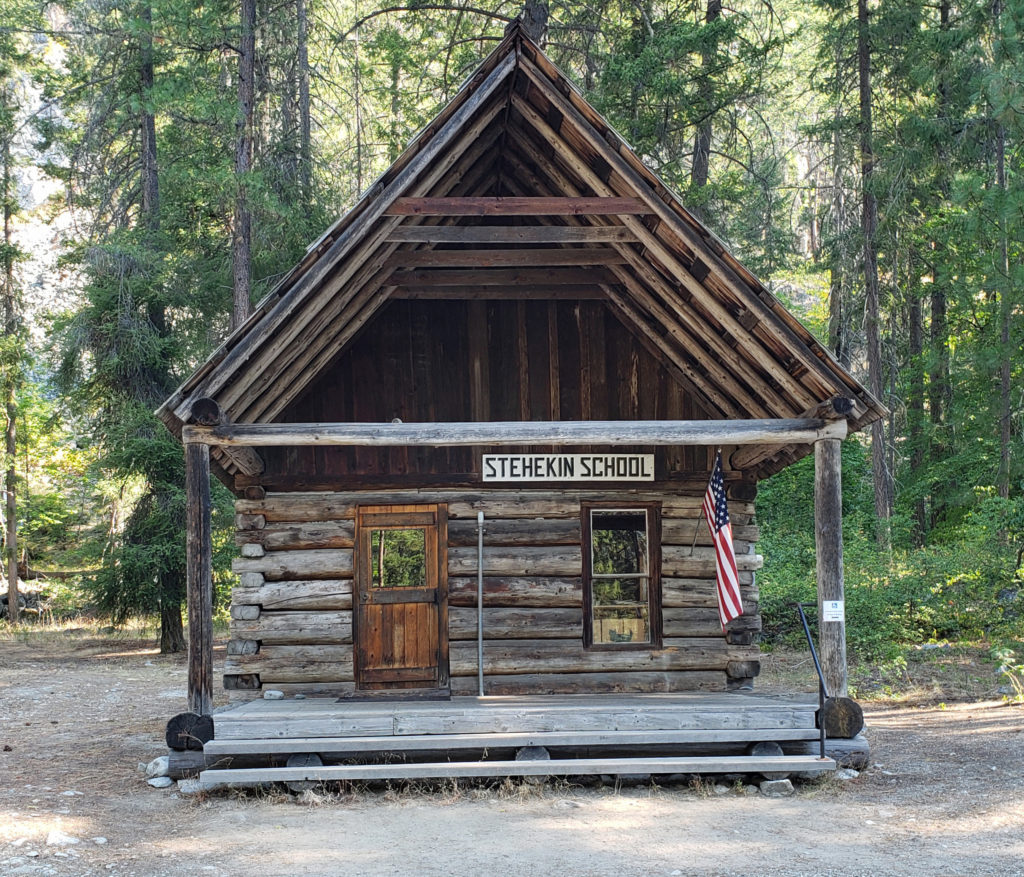
You can rent bikes (or bring your own) and ride the road up the valley to The Bakery (a must stop), 320 foot high Rainbow Falls (another must stop), The Garden, an organic produce farm, the Old Stehekin School (now a free museum), or all the way to High Bridge. The Red Bus also makes daily runs to The Bakery, Rainbow Falls, and High Bridge. You can even rent ATVs and explore the valley that way (no off-roading allowed, though).
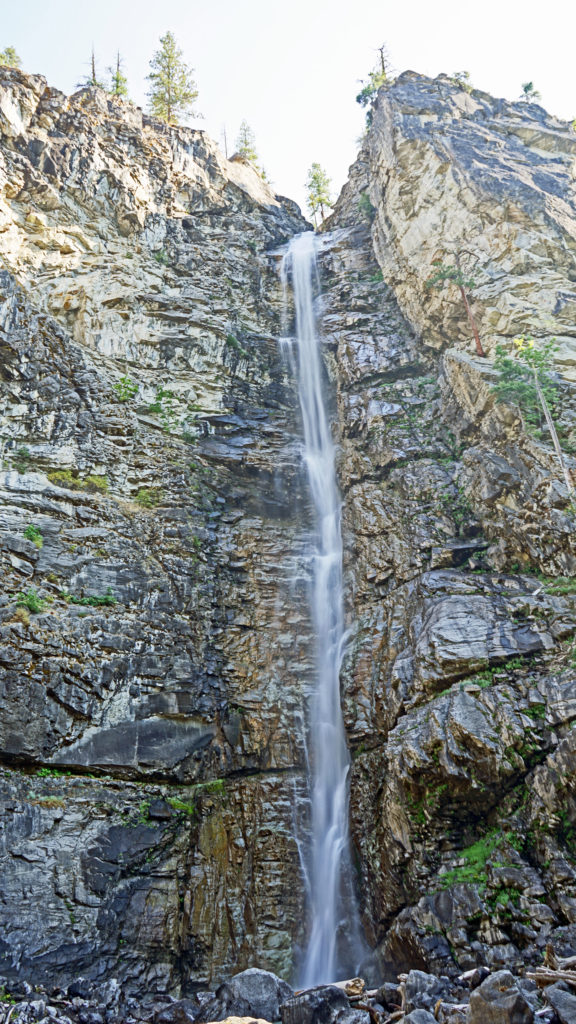
You can rent kayaks or an electric boat at Stehekin to explore the lake, and there are a number of hiking options, from short loop trails in the Stehekin area to longer outings along the shore of the lake or from the Rainbow Falls and High Bridge areas. Or you can just relax in Stehekin and enjoy the view of the lake and the surrounding mountains.
On our most recent outing we rented bikes and rode to the Bakery and Rainbow Falls one morning. That is a very easy ride on a paved road. We also stopped at The Garden and the Old Stehekin School. Above Harlequin Bridge the road is gravel and a little more challenging, although on a previous visit we rode all the way to High Bridge and back.
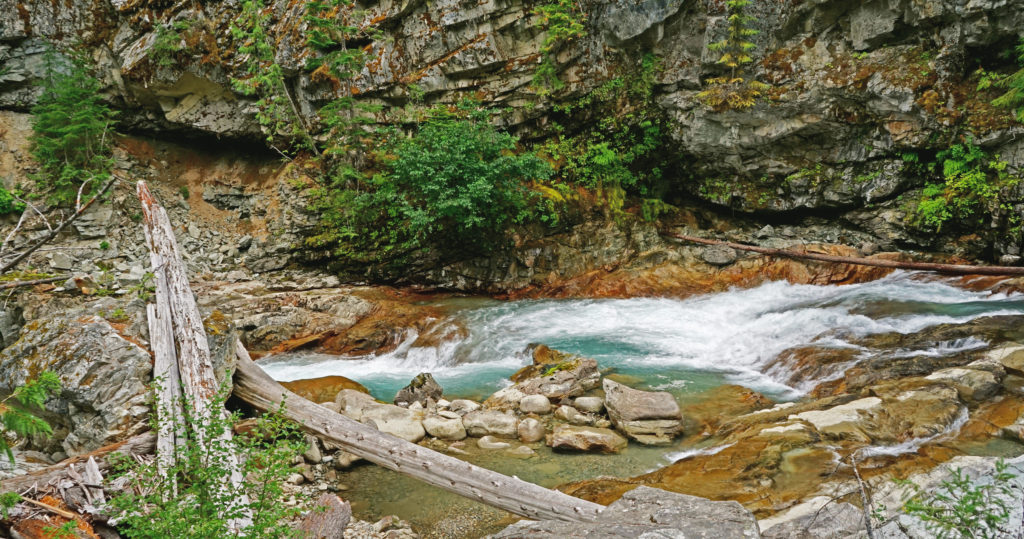
The next day we rode the Red Bus to High Bridge in the morning to hike and photograph the upper end of the valley, and returned on the Red Bus that afternoon. There are several worthwhile hikes starting at High Bridge. The 5.5 mile out and back Agnes Gorge Trail leads to a 200 foot deep canyon and a very scenic section of Agnes Creek in Glacier Peak Wilderness. You can also do the 3.3 mile out and back hike from High Bridge to Howard Lake on the PCT. It’s also possible to do a longer loop that takes you past Howard Lake and returns to High Bridge along the Stehekin River. Or you can hike a portion of the PCT that follows Agnes Creek. High Bridge is also the starting point for the 16 mile roundtrip to the summit of McGregor Mountain, more than 6500 vertical feet above High Bridge – more than a bit beyond my capabilities at this point, I’m afraid.
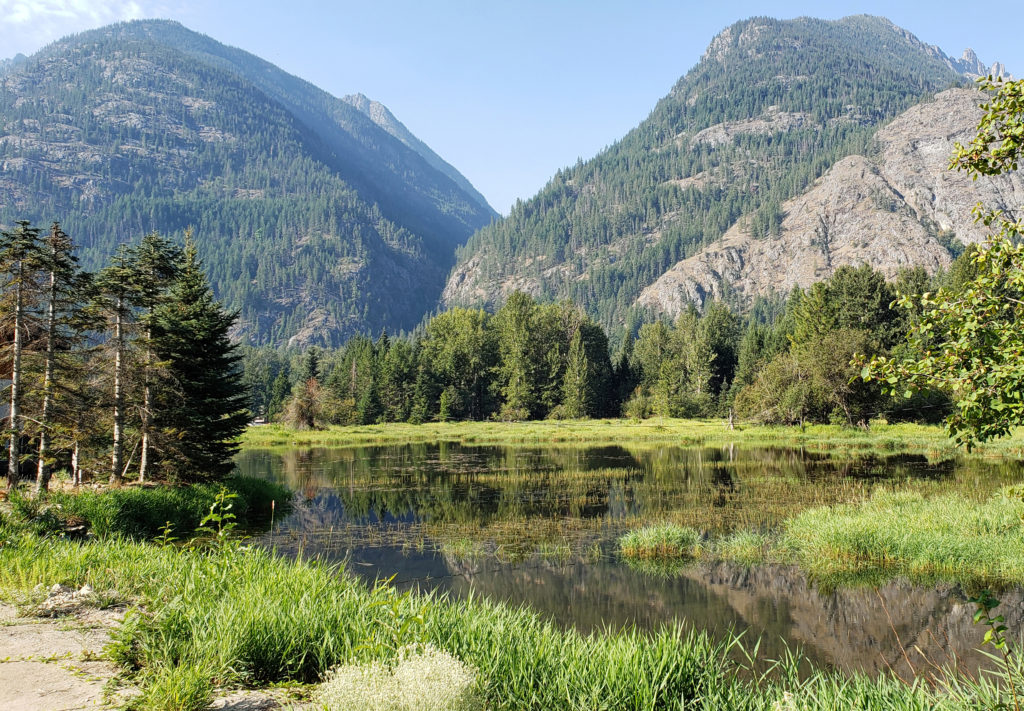
We had planned to get out on the lake on our final day in Stehekin, but it was very windy that day, so we spent the day reading and relaxing at the lodge instead. No problem, though. The beauty and uniqueness of the Stehekin area make it a wonderful place even when the weather doesn’t cooperate. It’s one of my favorite places in the Northwest to visit despite the difficulty in getting there. The only reason that we haven’t visited more often is that there are so many other wonderful places in the Pacific Northwest (and beyond) to explore.
Originally posted September 30, 2021. Most recently updated February 22, 2025.
All photos © Alan K. Lee, except as noted
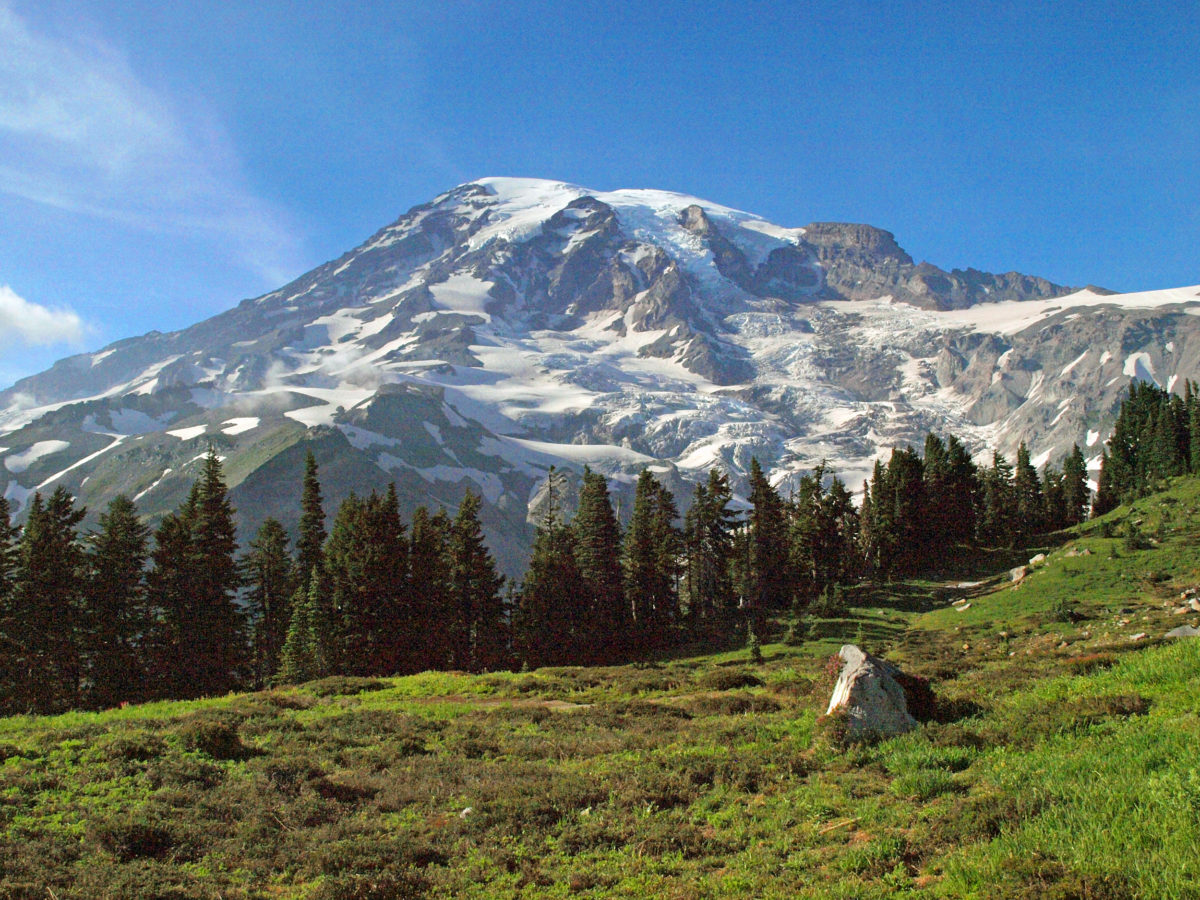
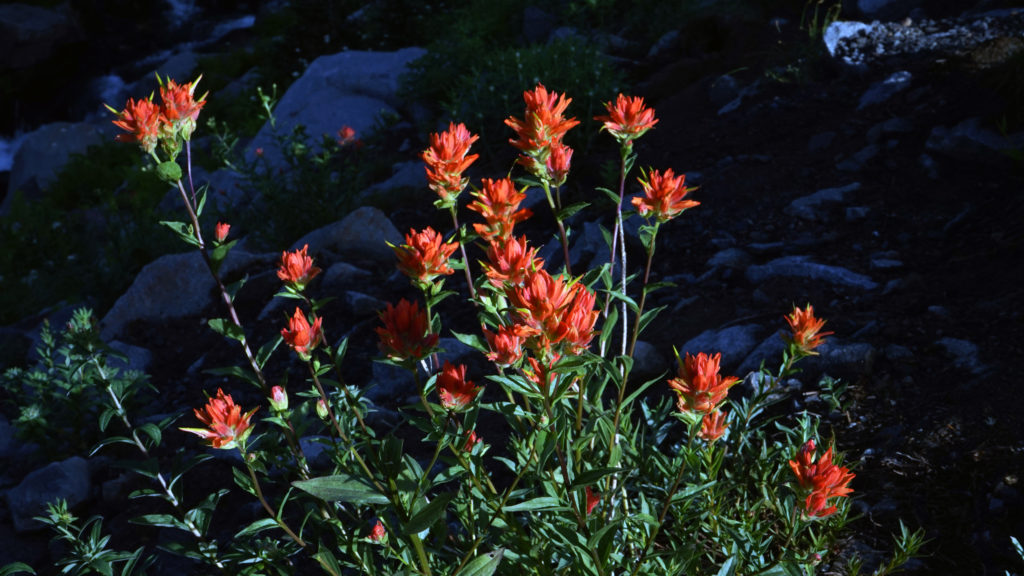
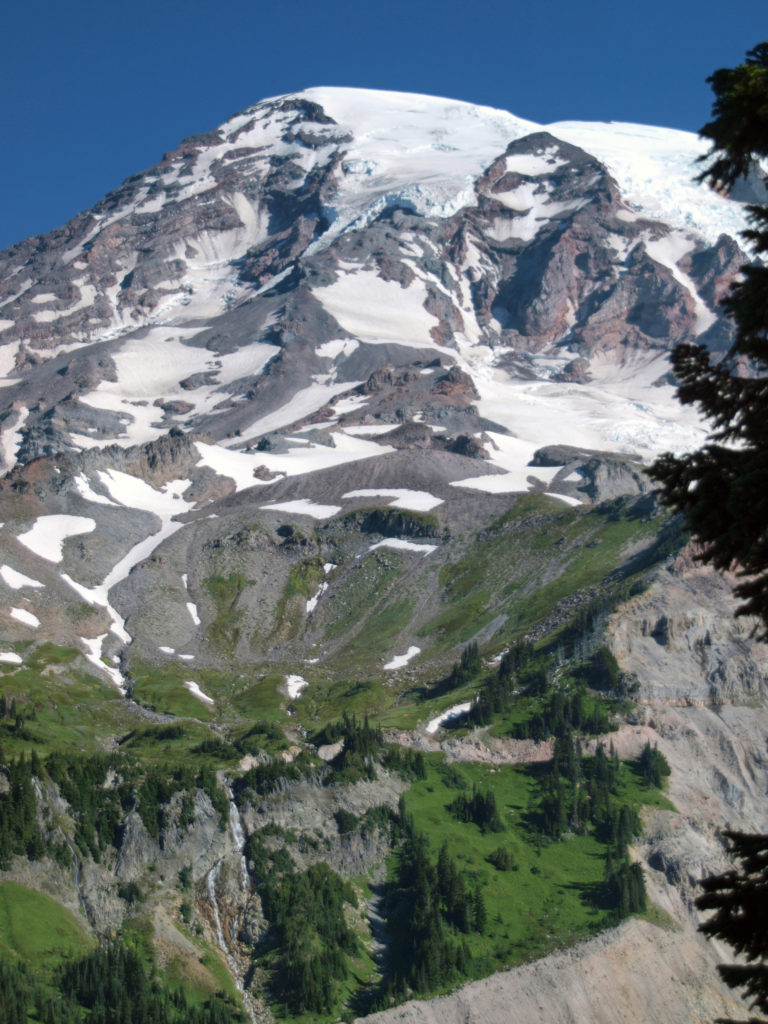
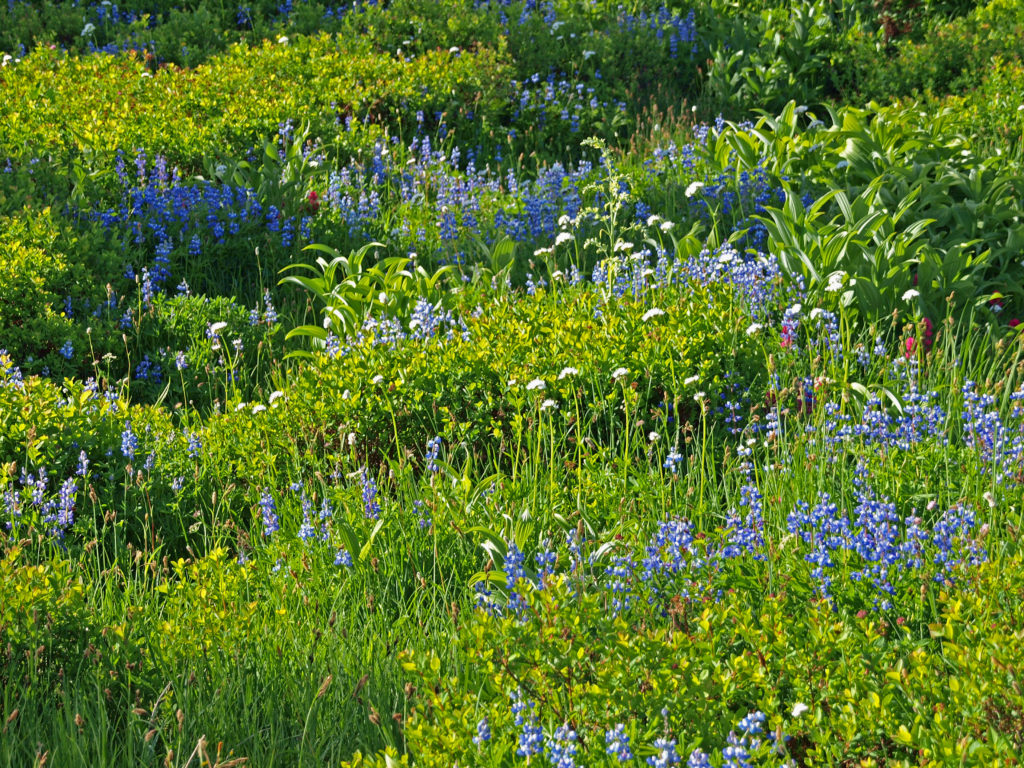
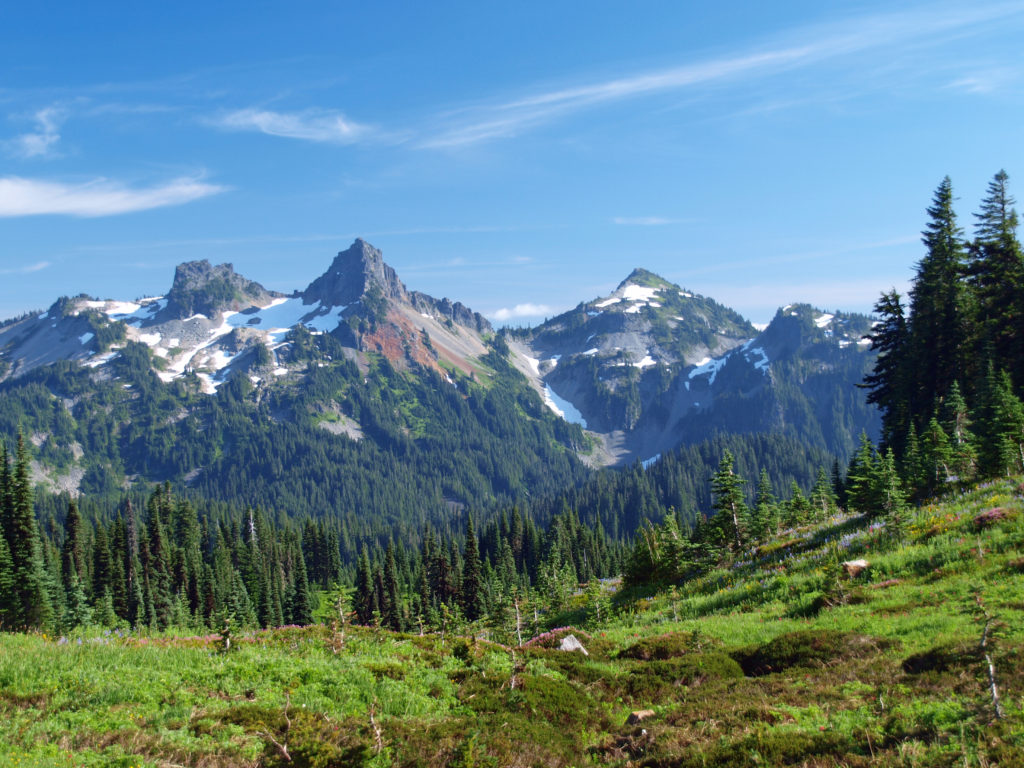
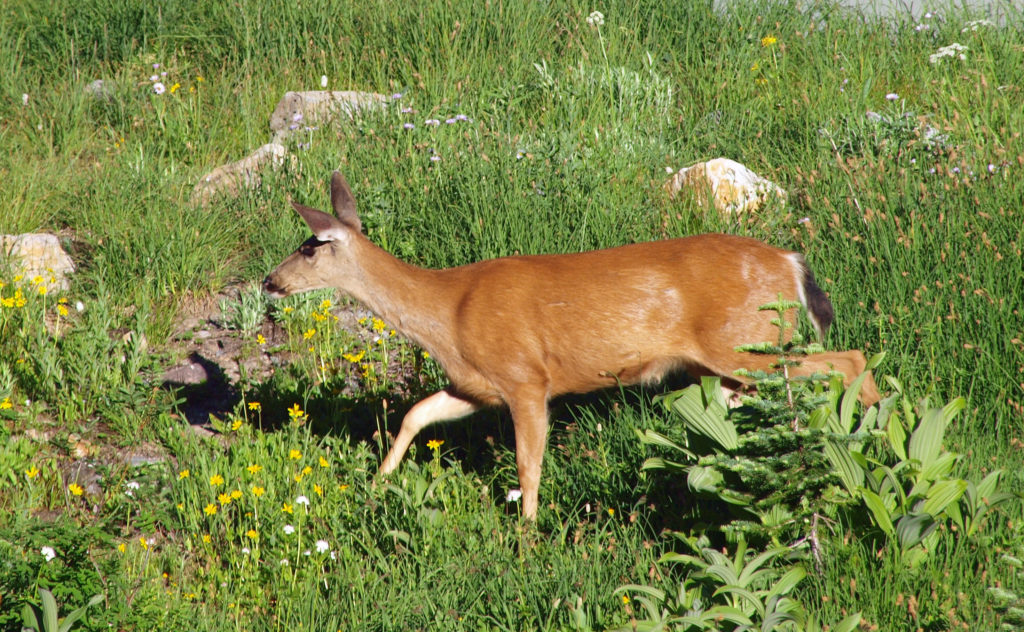
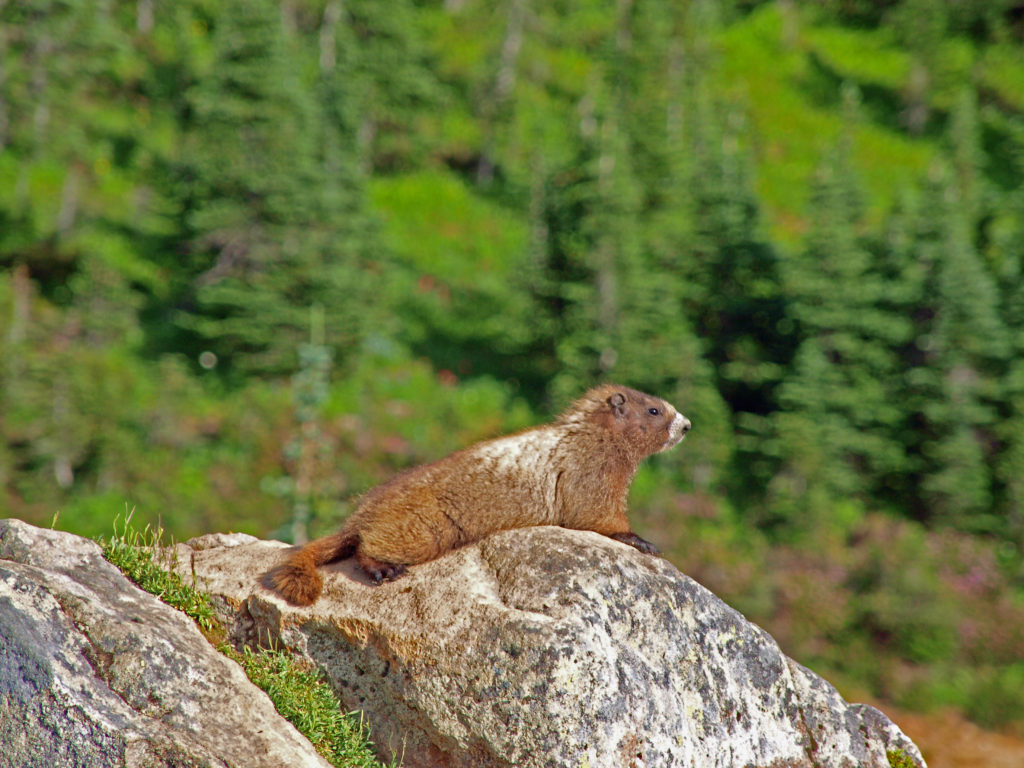
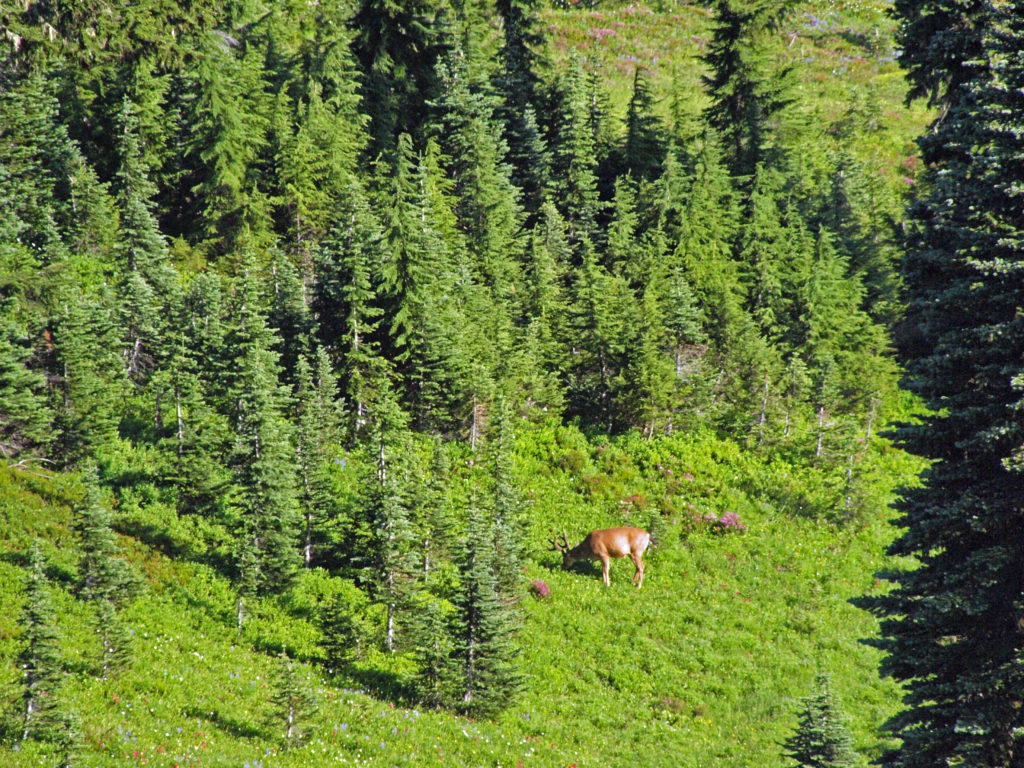
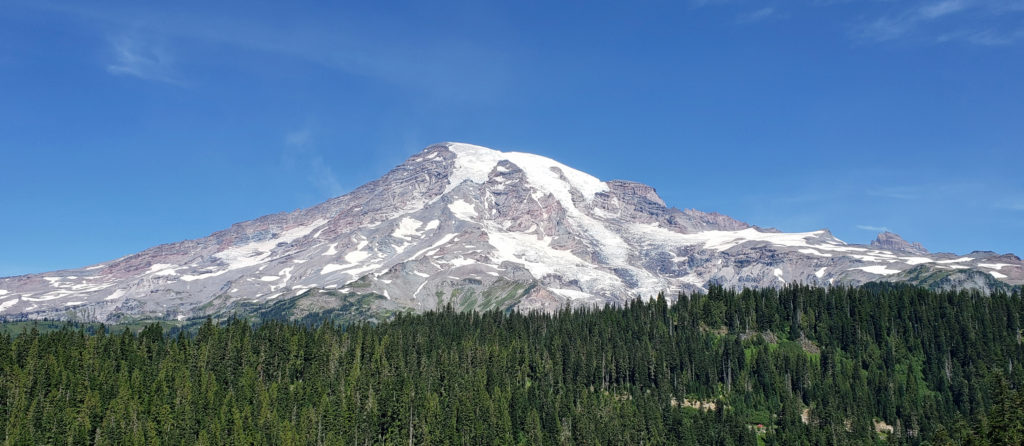
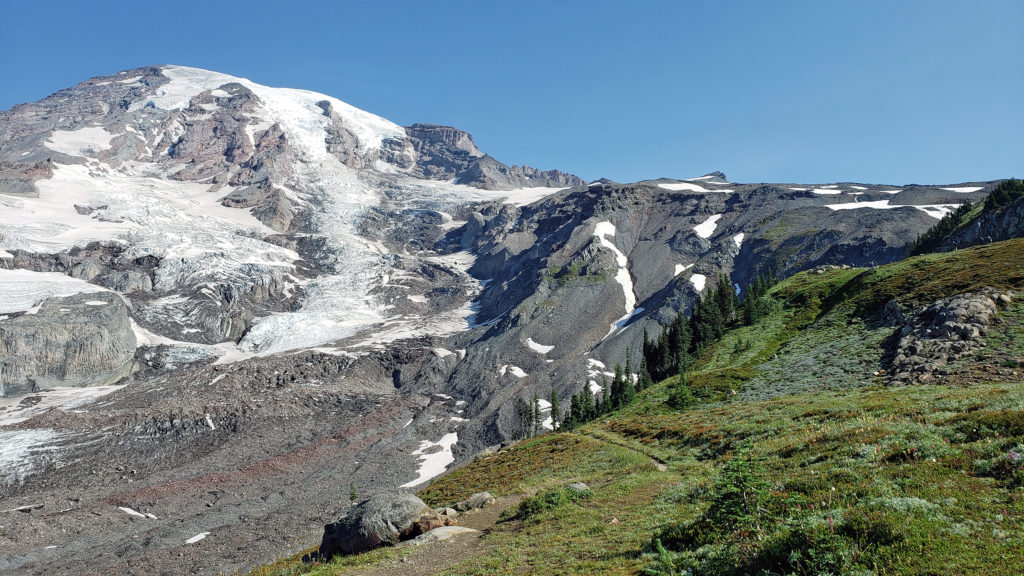 The highlights of the trip were the two hikes we did on the Skyline Trail. The first was the four mile out and back hike to Panorama Point. The second was the roughly four mile Skyline-Golden Gate loop. Both are listed as “moderate” hikes, but both have significant elevation gains (1700′ and 1400′ respectively). We did both hikes early in the day during the week, but we were far from the only ones on the trail, especially on the hike to Panorama Point. But the area above Paradise is so incredibly scenic that the crowds didn’t diminish the experience much.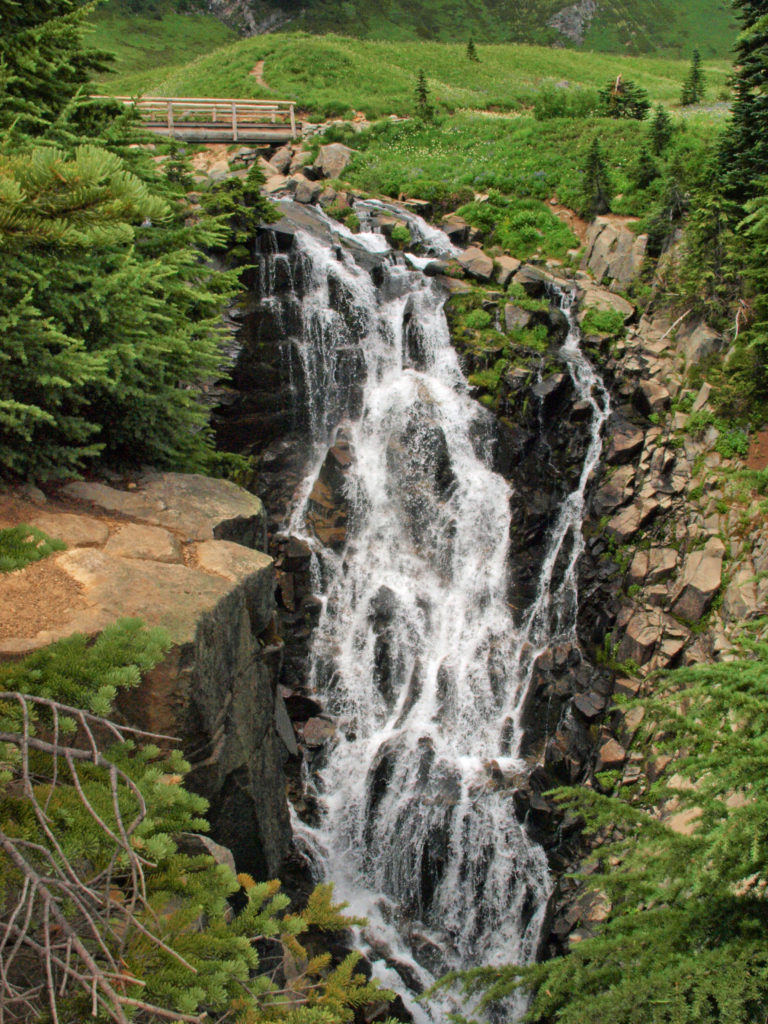
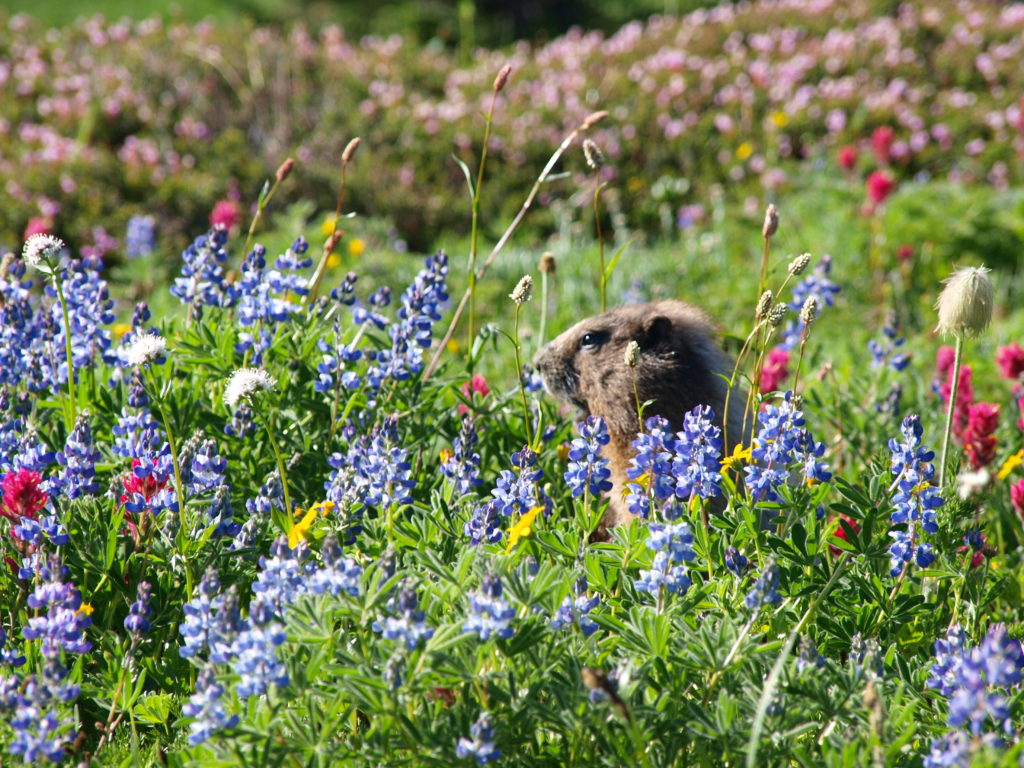
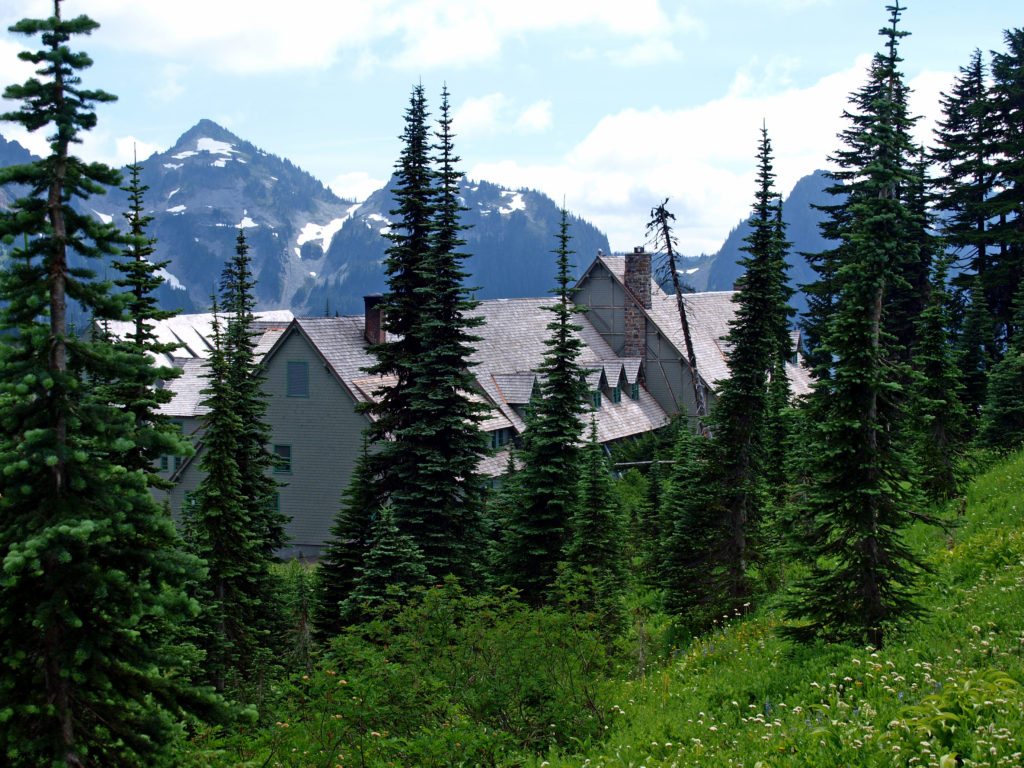
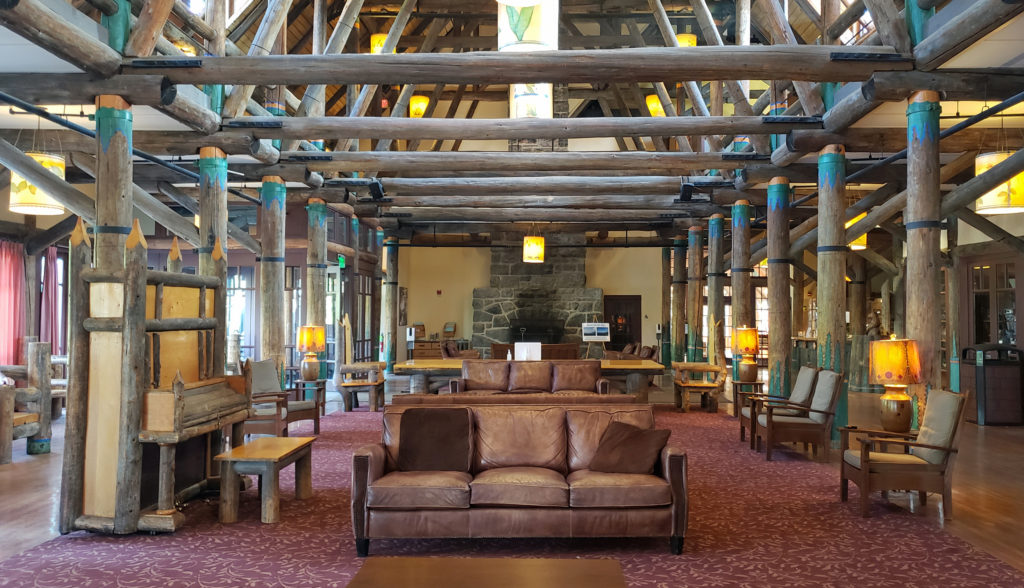 Close to Paradise Inn, the Jackson Memorial Visitor Center, named after long-time U.S. Senator Henry M. Jackson, offers general information, exhibits, a park film, guided ranger programs, a book/gift store and a cafeteria. Unfortunately, all visitor centers in the park are currently closed due to the ongoing pandemic.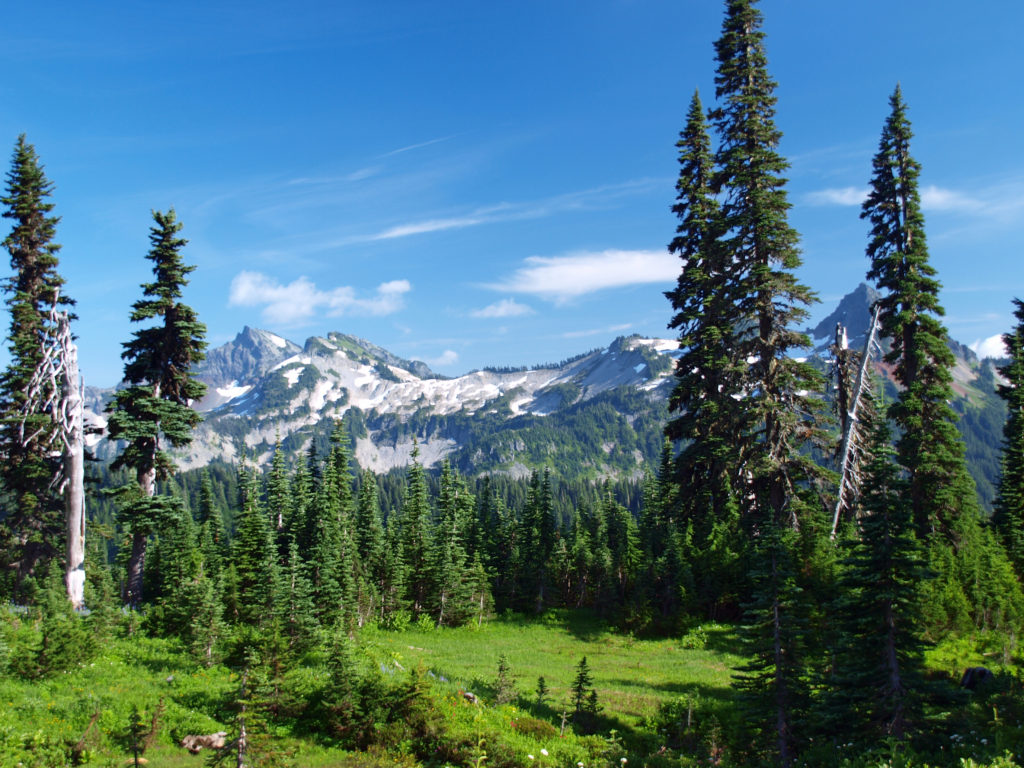
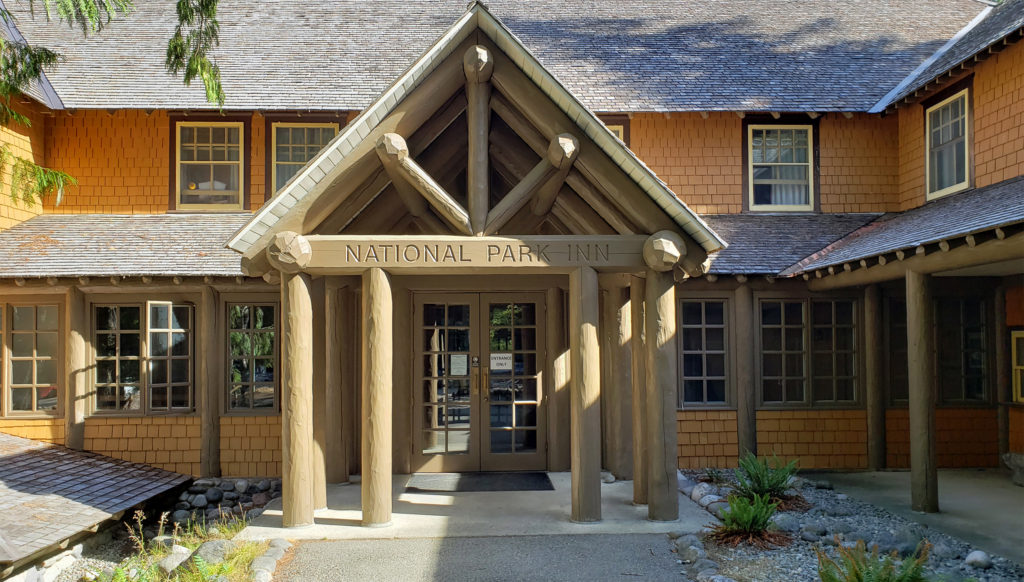 Both Paradise Inn and the National Park Inn have full service restaurants, but both were operating on a reduced scale due to the pandemic when we were there in August. The National Park Inn dining room was closed, but take out meals could be ordered and picked up at the reception desk in the lobby. The dining room at Paradise Inn was open for dinner only for most of our visit, but closed (unexpectedly) for the season on our last day there. Paradise Inn also has a limited service cafe, and there is a cafeteria at the Jackson Memorial Visitor Center that is open daily during the summer season and on most weekends and holidays in the winter (depending on road conditions). The National Park Inn restaurant is open year round.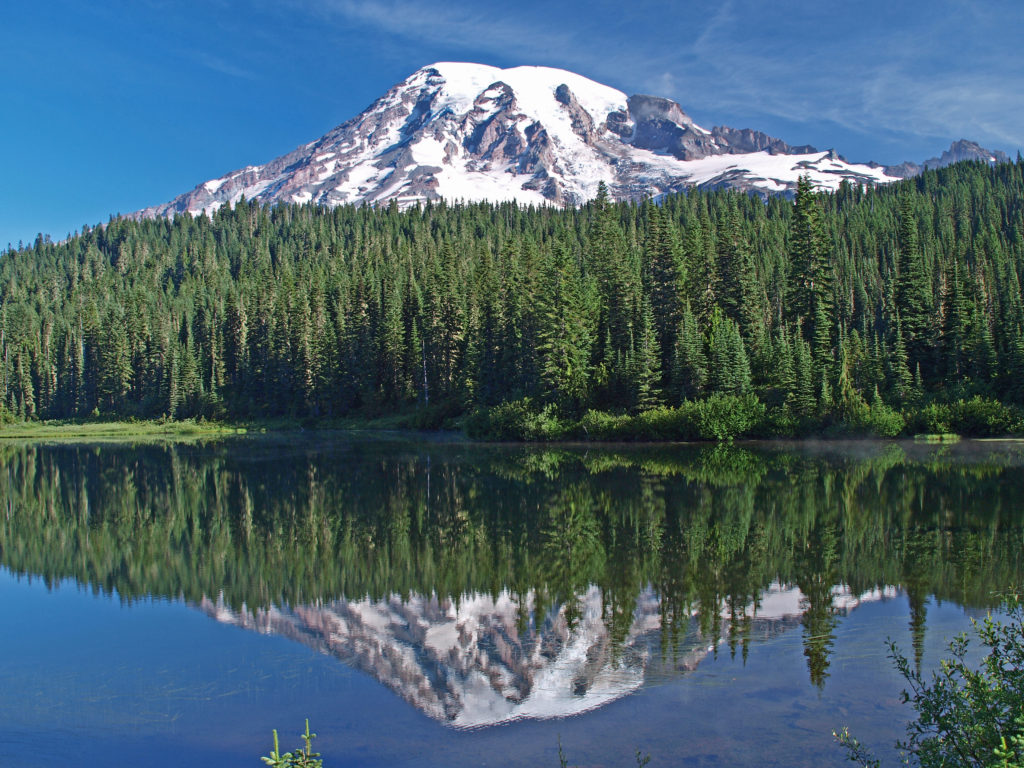
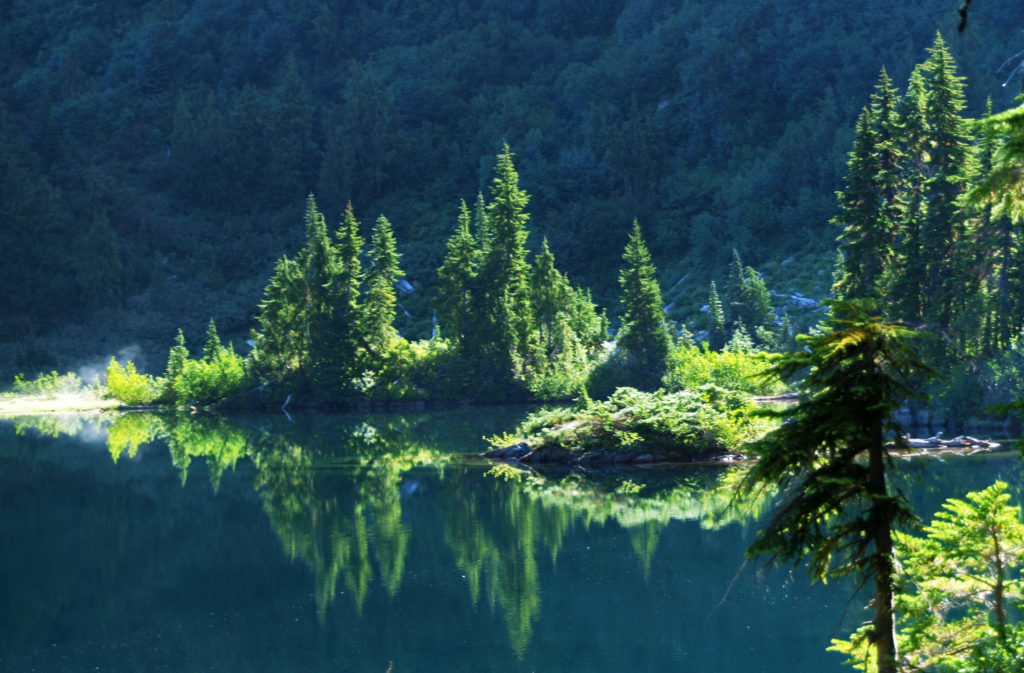 The nearby Snow Lake Trail is an easy and worthwhile hike. To the east, the Stevens Canyon area has a number of interesting areas, including Box Canyon, a 180 foot deep slot canyon, and a number of roadside waterfalls.
 The Longmire area has some interesting history, a museum, nice hiking trails, and the National Park Inn offers both lodging and dining options for the visitor. The road to Longmire is also plowed in the winter, so it’s a year round destination. (The road from Longmire to Paradise is open in winter when the weather allows.)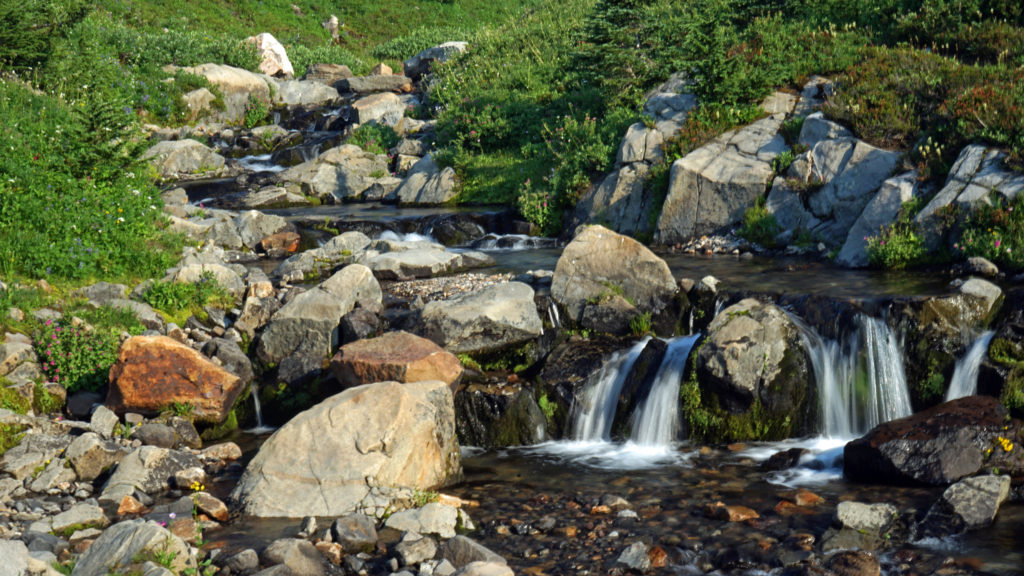
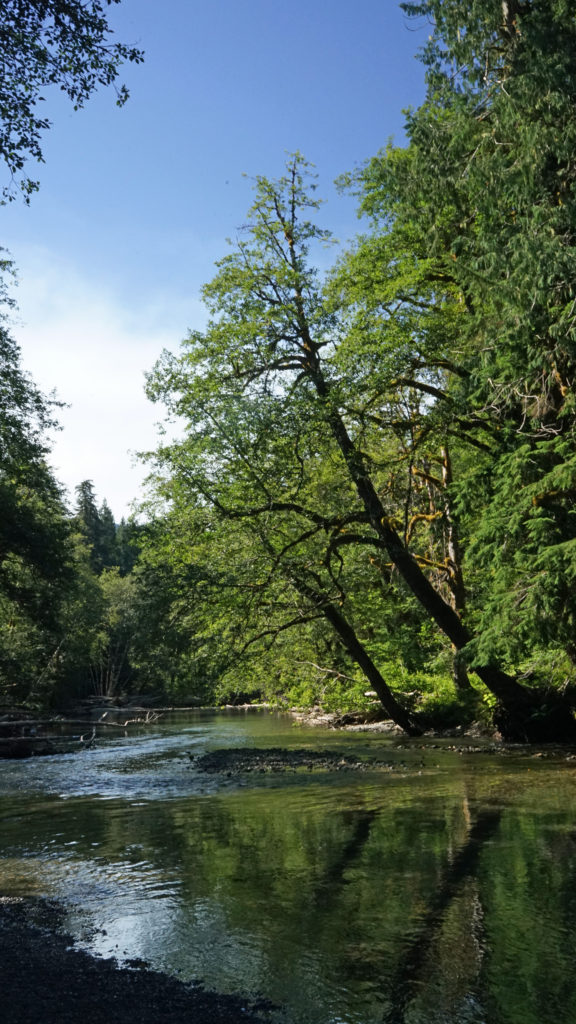 In the Ohanapecosh area in the southeastern corner of the park, the Grove of the Patriarchs Trail is a good family friendly outing. And the nearby Silver Falls Trail is a must for waterfall lovers. In the northeastern section of the park, the Sunrise area offers beautiful views of the eastern side of the mountain and has an abundance of hiking trails.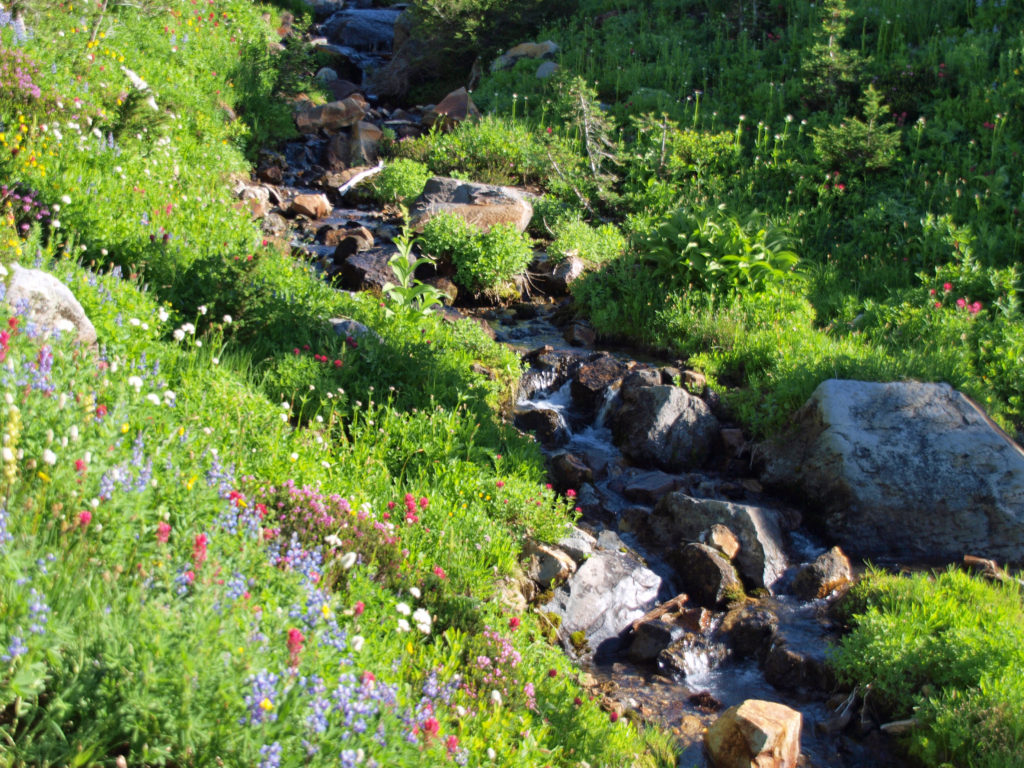
 The Lake
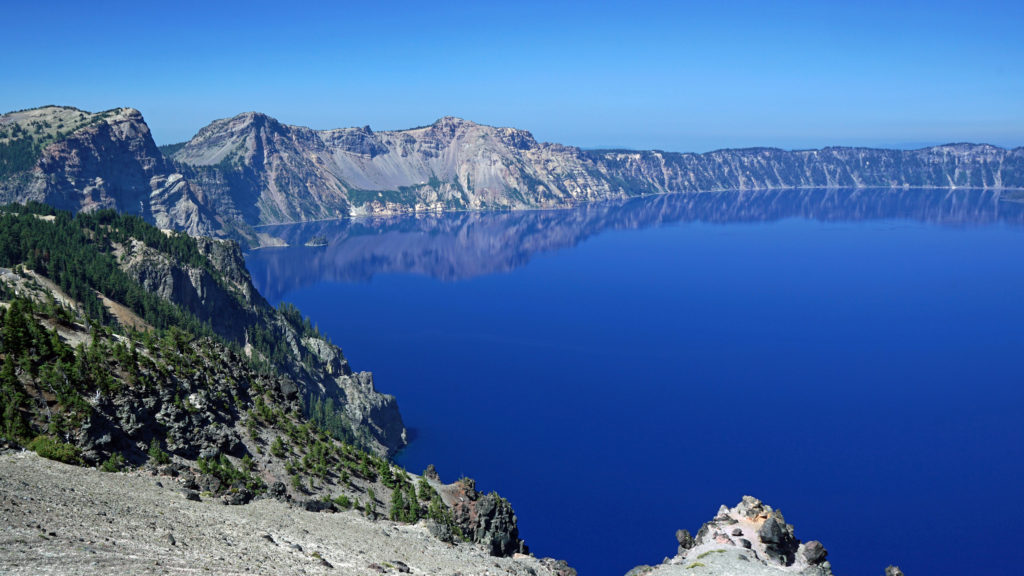
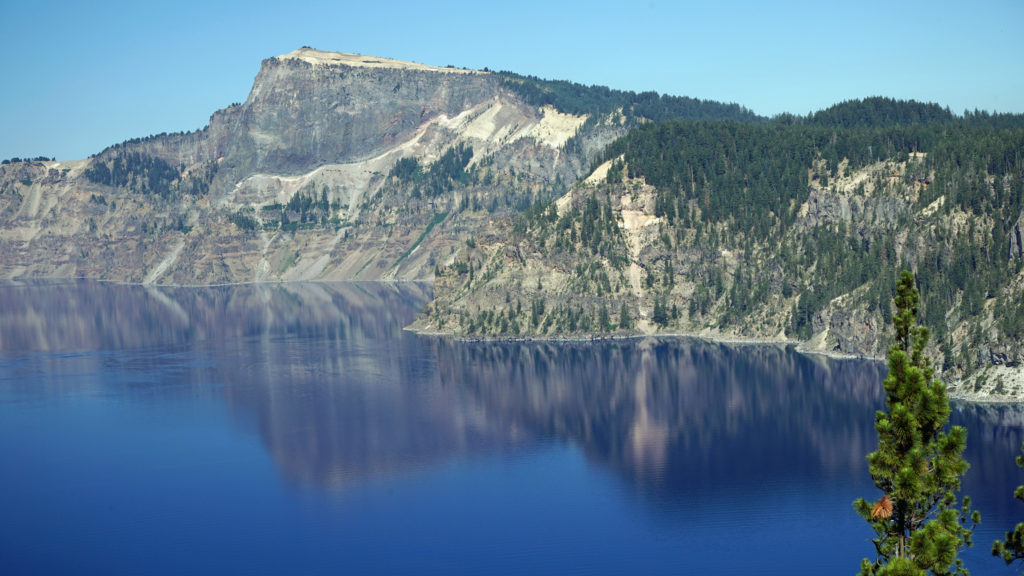
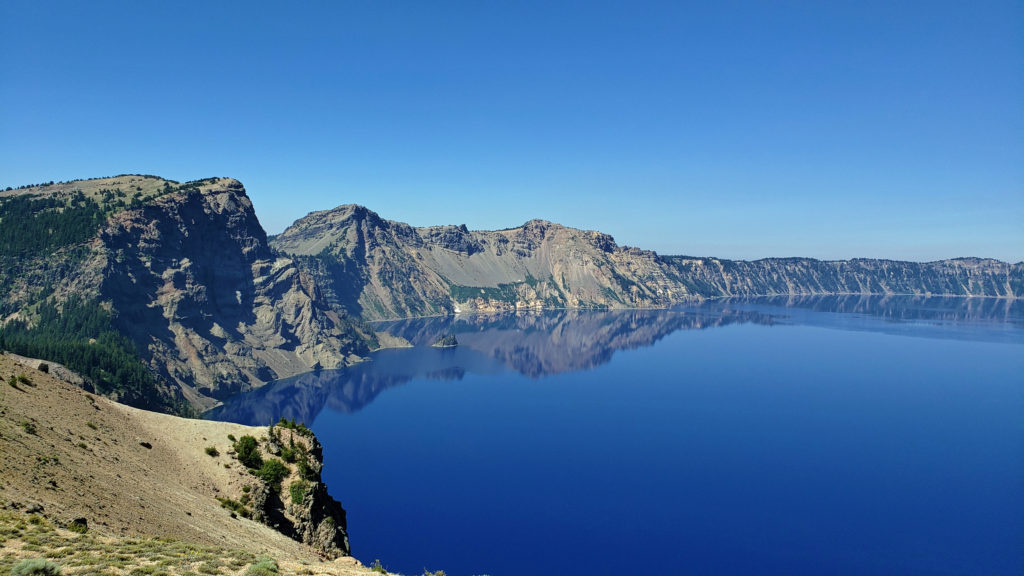
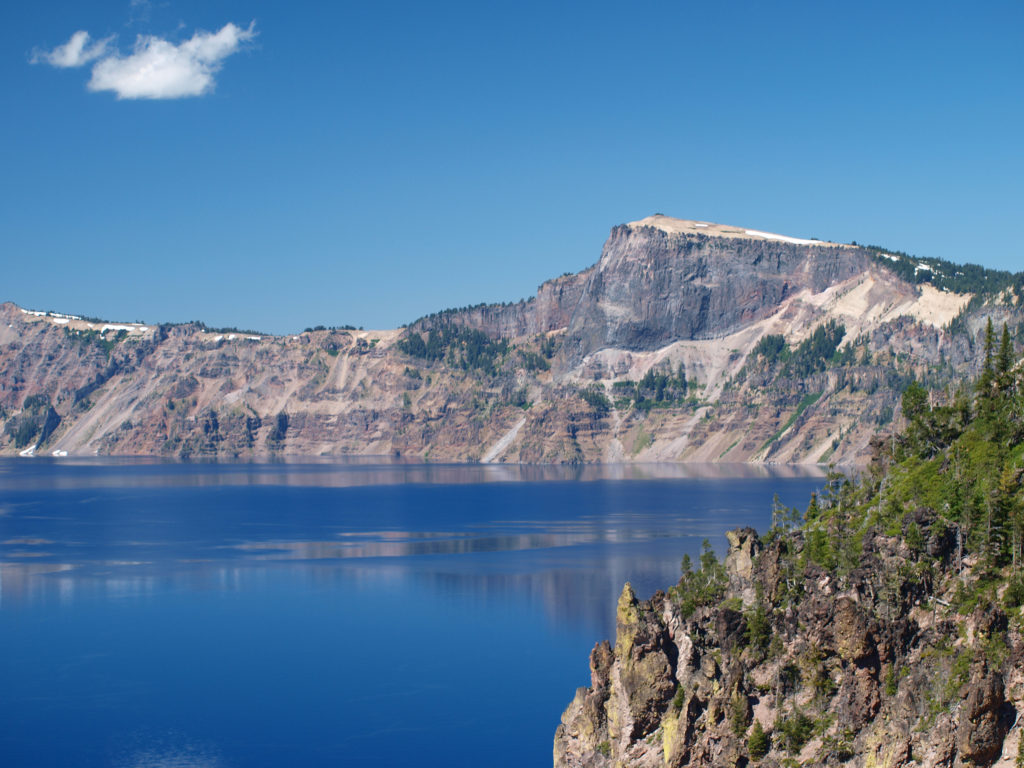 Crater Lake is 1943 feet deep, making it the deepest lake in the United States, second deepest in North America, and ninth deepest in the world. It is also one of the cleanest and clearest lakes in the world. It’s that combination of depth and clarity that results in its intense deep blue color.
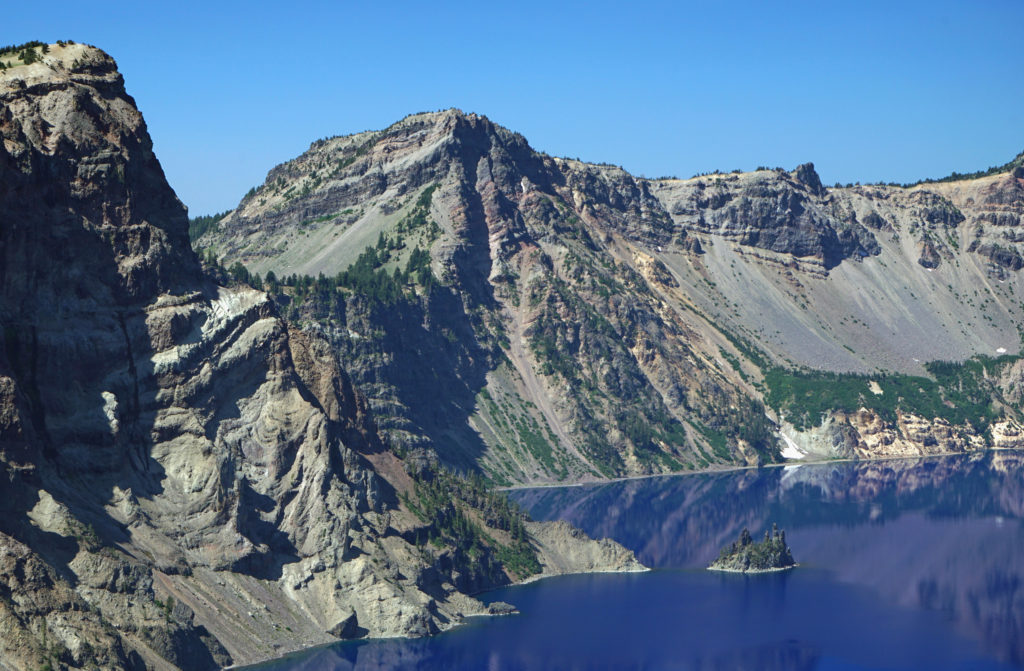 The caldera that Crater Lake occupies was formed 7700 years ago when the summit of 12,000 foot tall Mount Mazama collapsed after a massive eruption. Over time rain and snow filled the caldera to its present level. The lake has no outlet. The level of the lake remains nearly the same because the amount of evaporation from the surface of the lake closely matches the amount of precipitation falling on it in any given year.
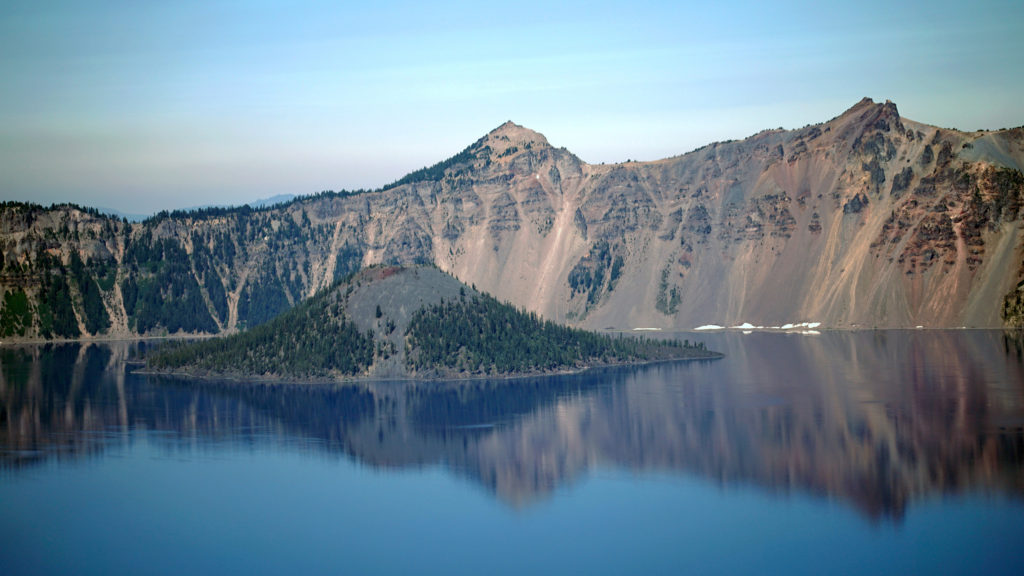
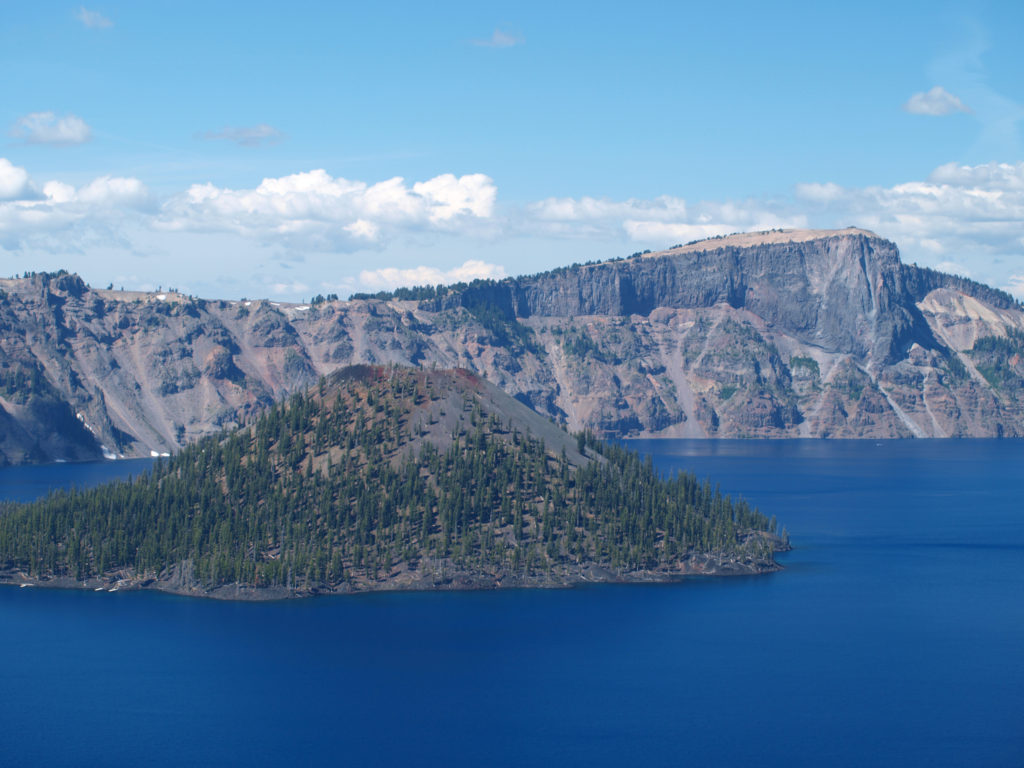 Wizard Island formed sometime after the eruption that formed the caldera. It rises 770 feet above the surface of the lake, 2713 feet above the deepest point in the lake. It last erupted about 5000 years ago, but it is considered dormant, not extinct. Conceivably, it could erupt again at any time. Merriam Cone also erupted after the caldera was formed, but never reached the lake surface. Its summit lies almost 500 feet below the average lake level.
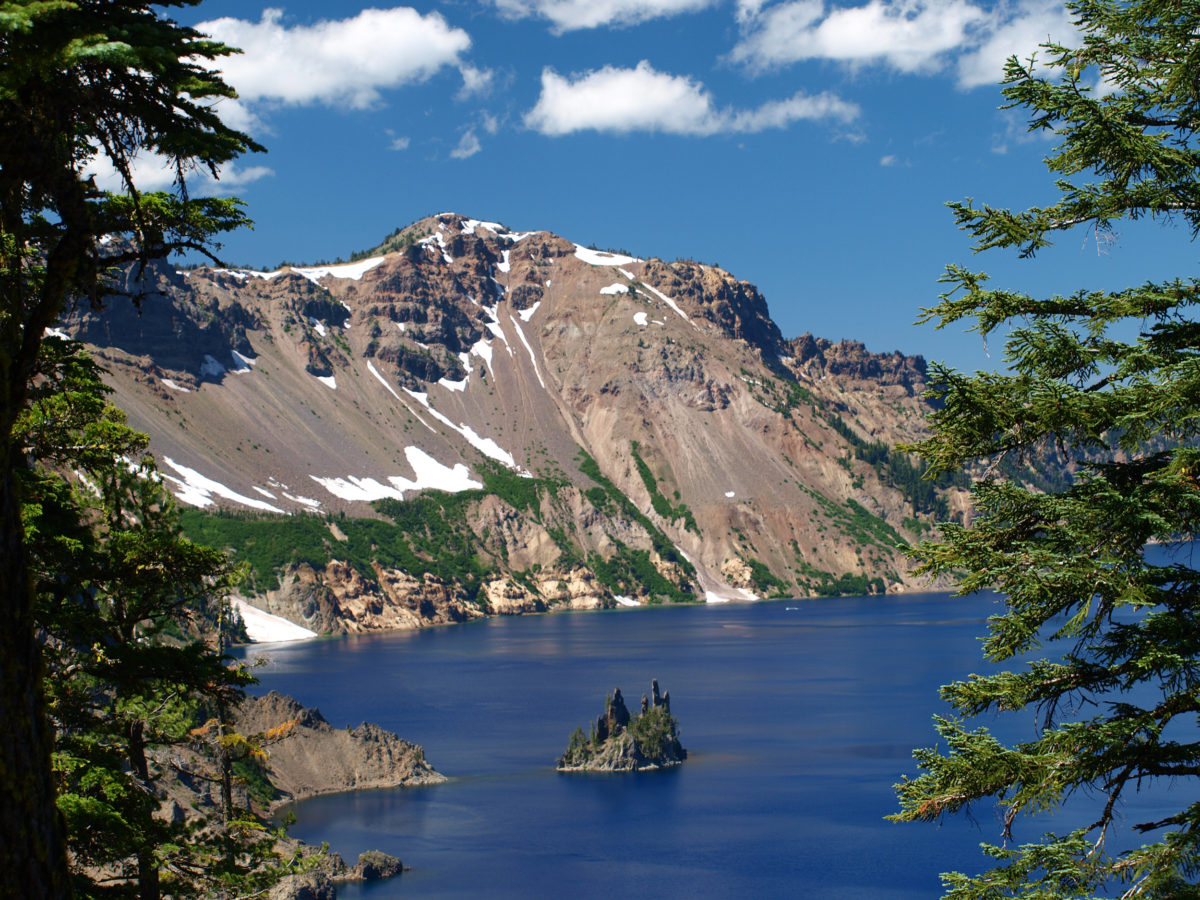
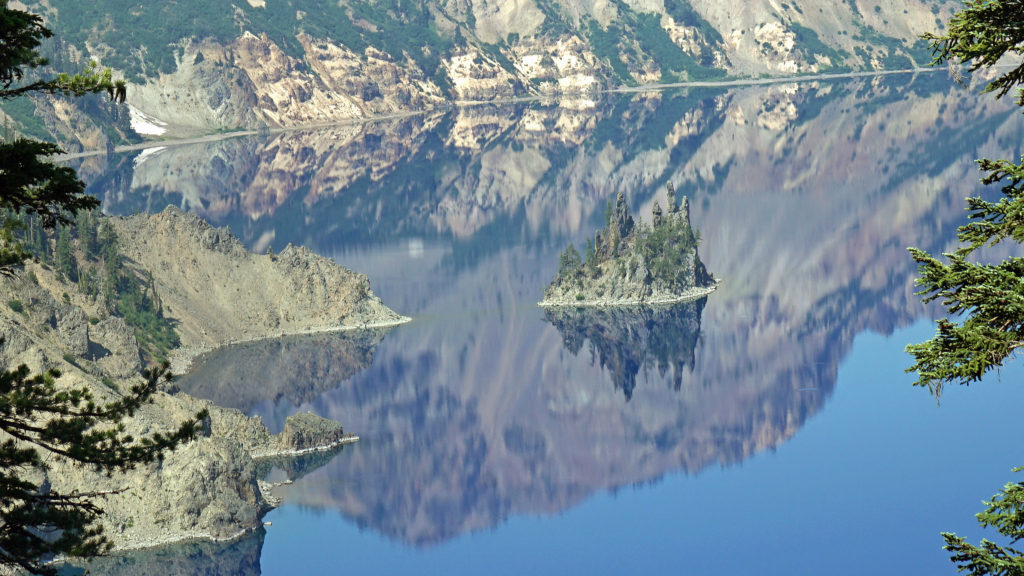
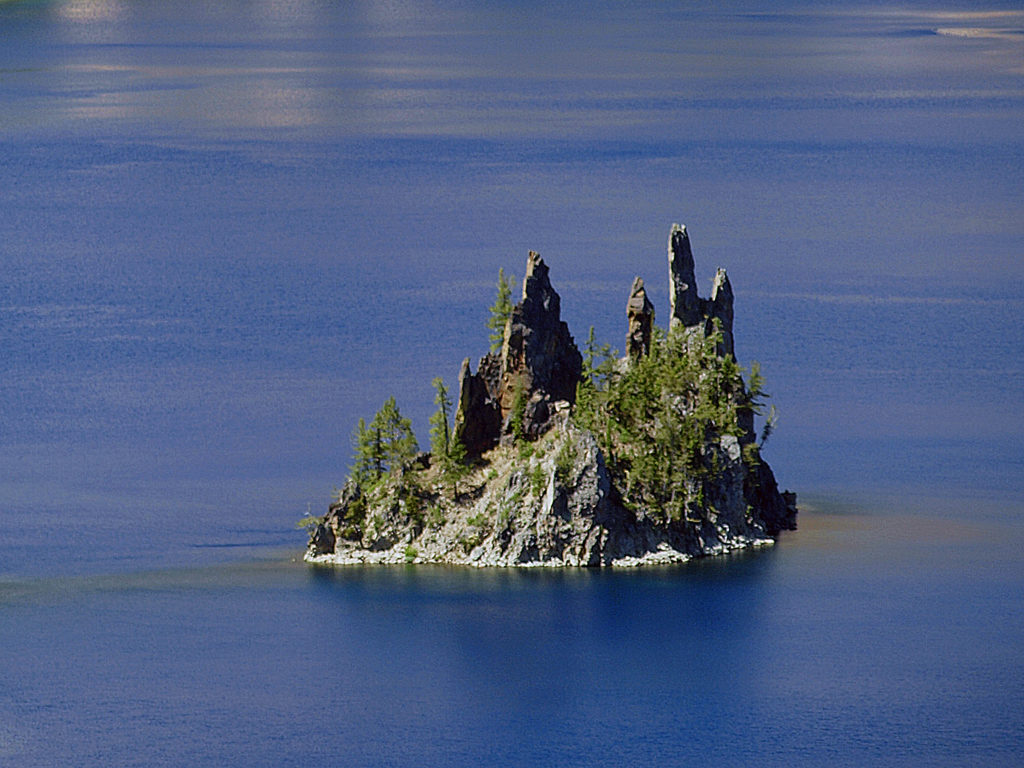 Phantom Ship, a remnant of an eruption 400,000 ago, rises 170 feet above the lake surface. Its formation predates that of Mount Mazama itself.
 The Park
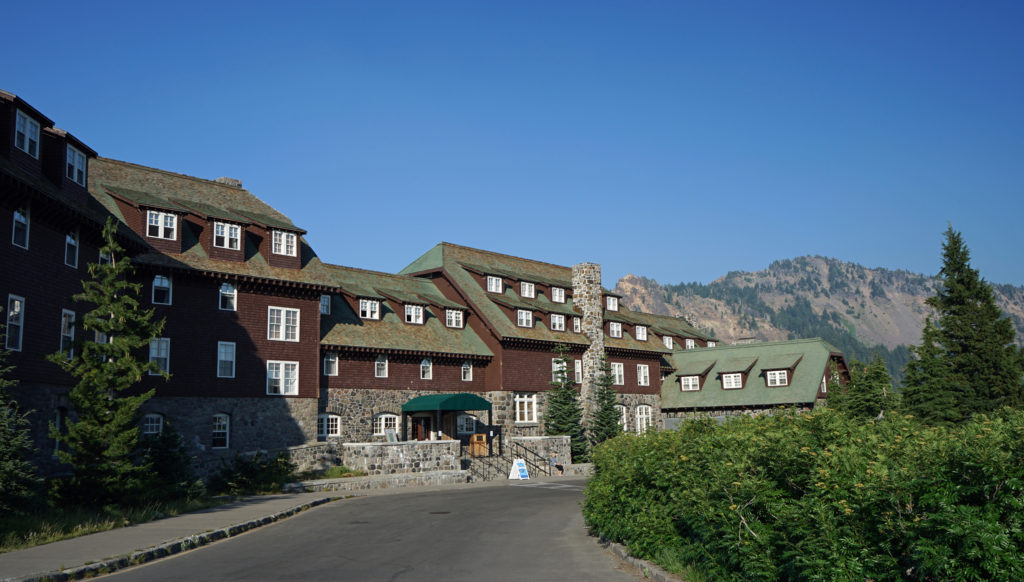 Crater Lake Lodge
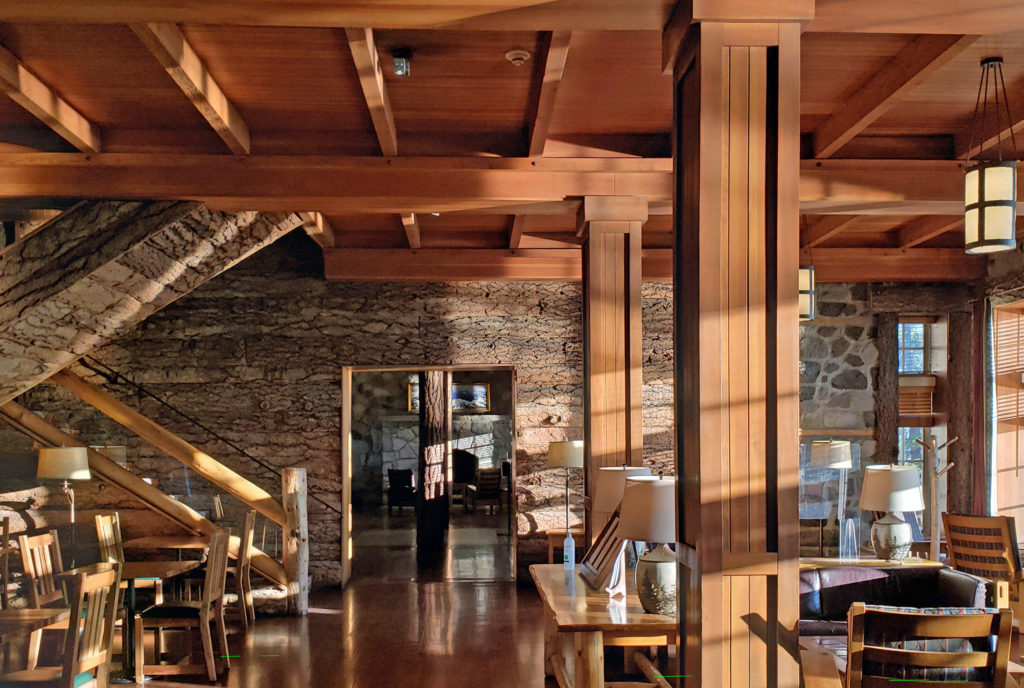 My wife and I recently spent three nights at the lodge. Although it lacks the amenities of a luxury hotel, our room was comfortable, with a private bathroom, and the location more than makes up any lack of luxuries.
 The Rim Drive
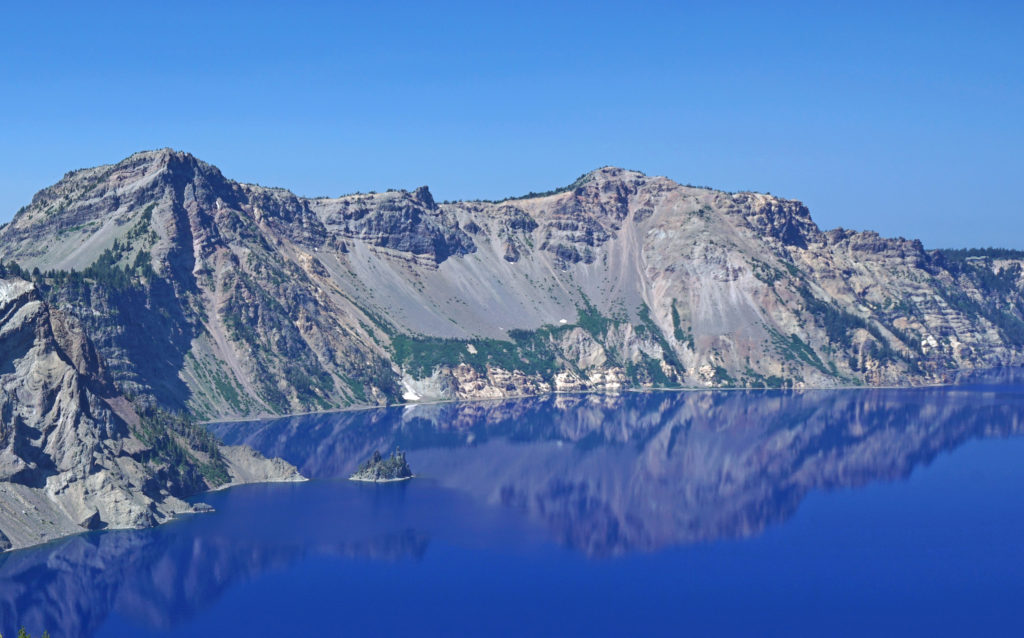 You’ll want to stop at all of the viewpoints. Maybe combine the drive with a hike down to Cleetwood Cove and a boat tour of the lake. You can get off at Wizard Island and hike to the summit and then catch a later boat back.
 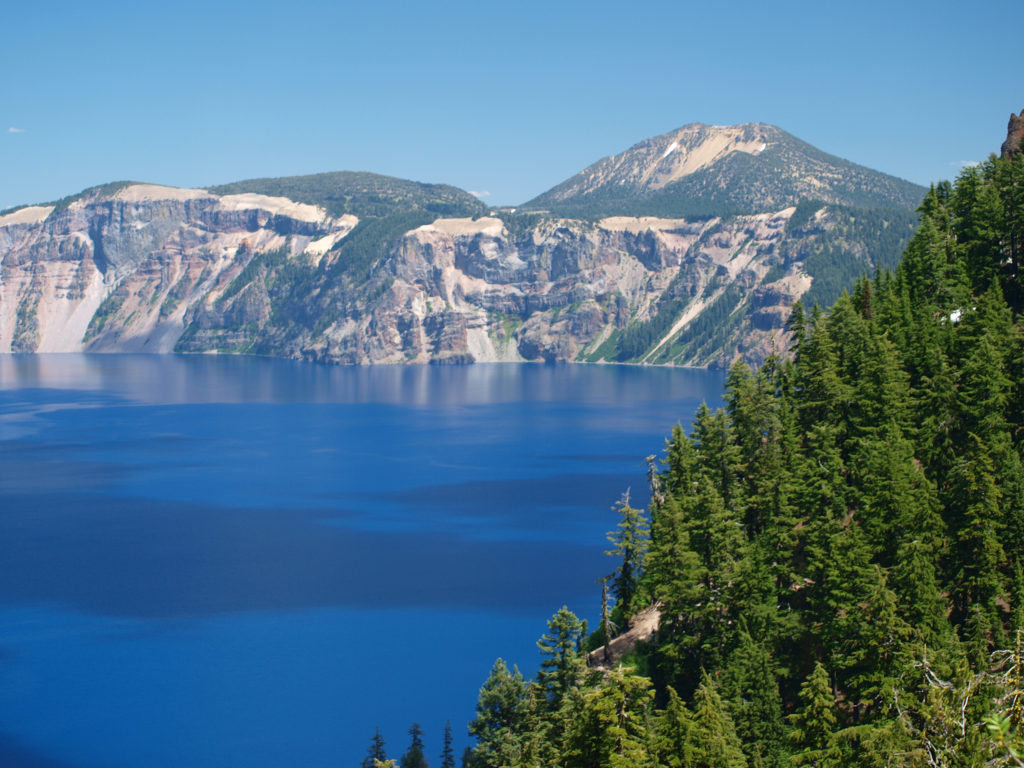 For a more adventurous day, hike to the summit of Mount Scott, the highest point in the park. It’s a two mile hike to the summit with 1250 feet of elevation gain, so it’s not an easy hike (All Trails rates it “moderate”), but the view might just be worth the effort.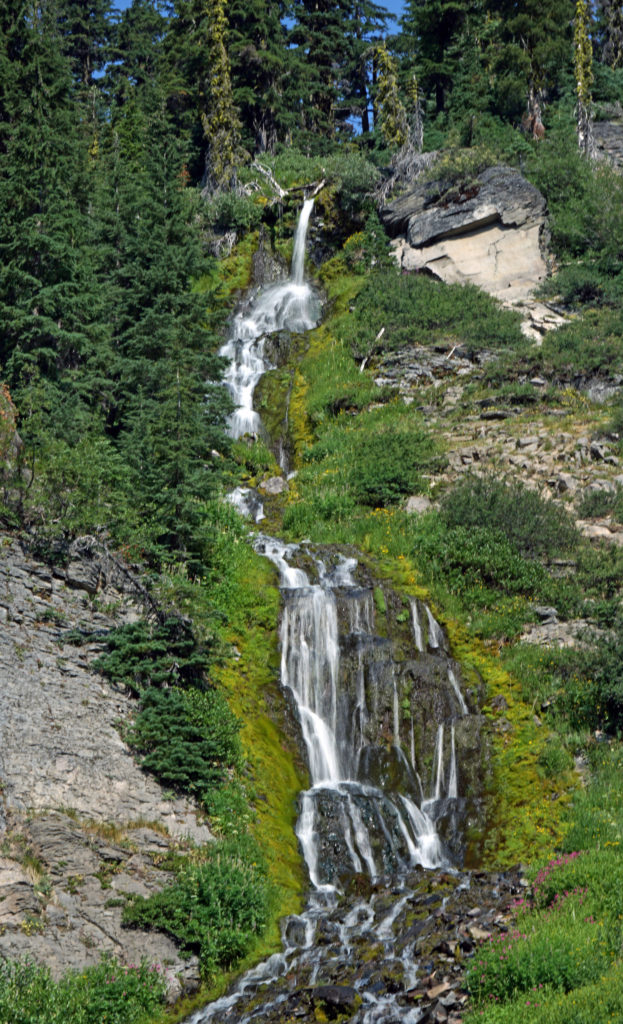
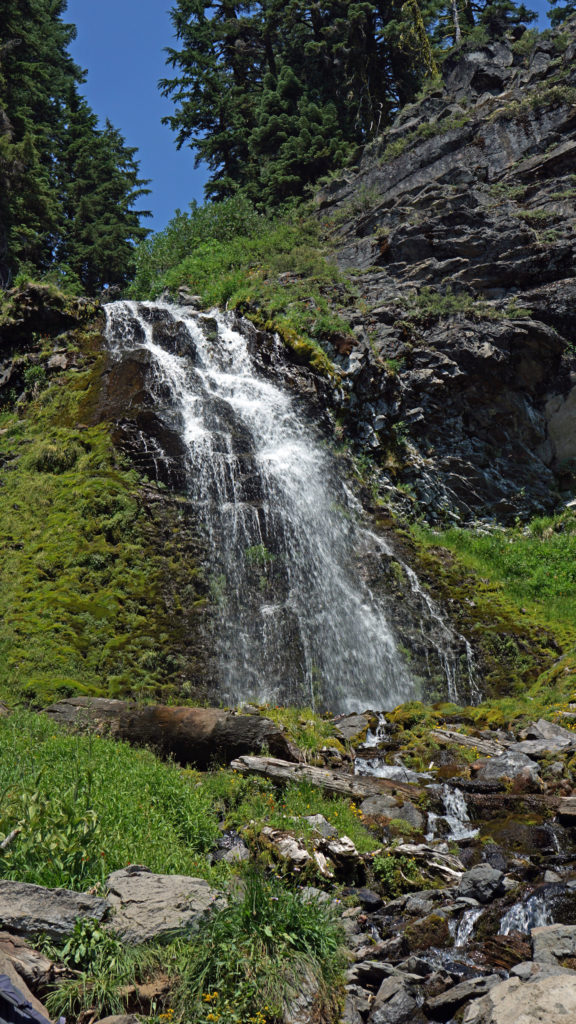 Hiking Trails
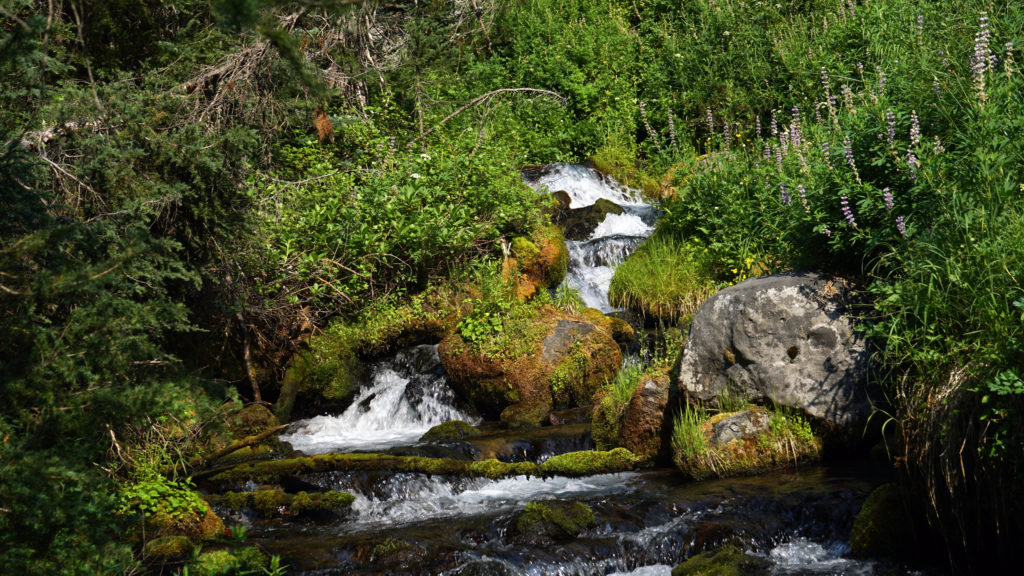 The Pacific Crest Trail passes through the park, but does not ascend to the rim of the caldera. Hikers on the PCT can take the Dutton Creek Trail that climbs up to the Rim Village, then hike the trail that parallels the West Rim Drive and reconnect with the PCT north of the lake.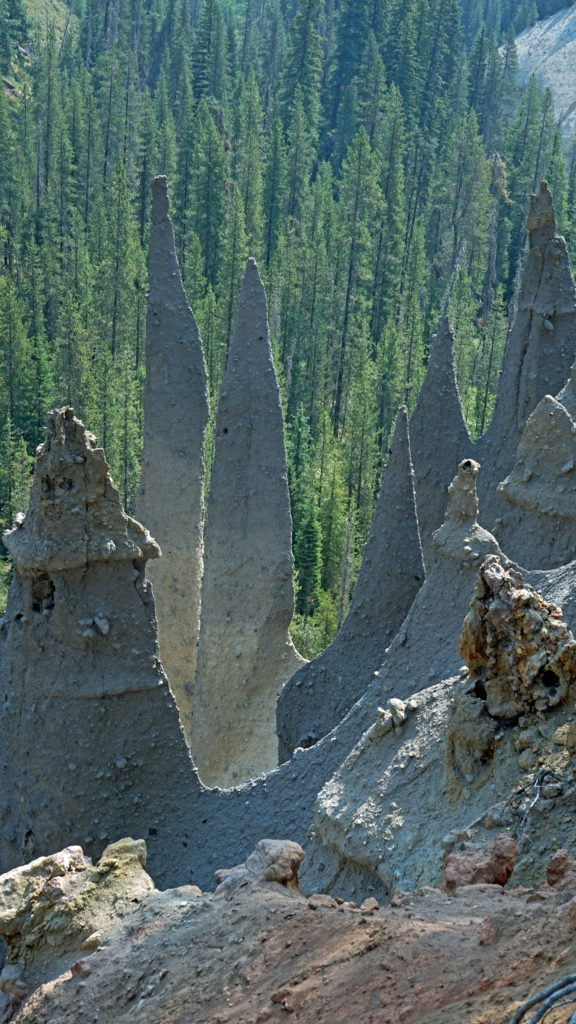
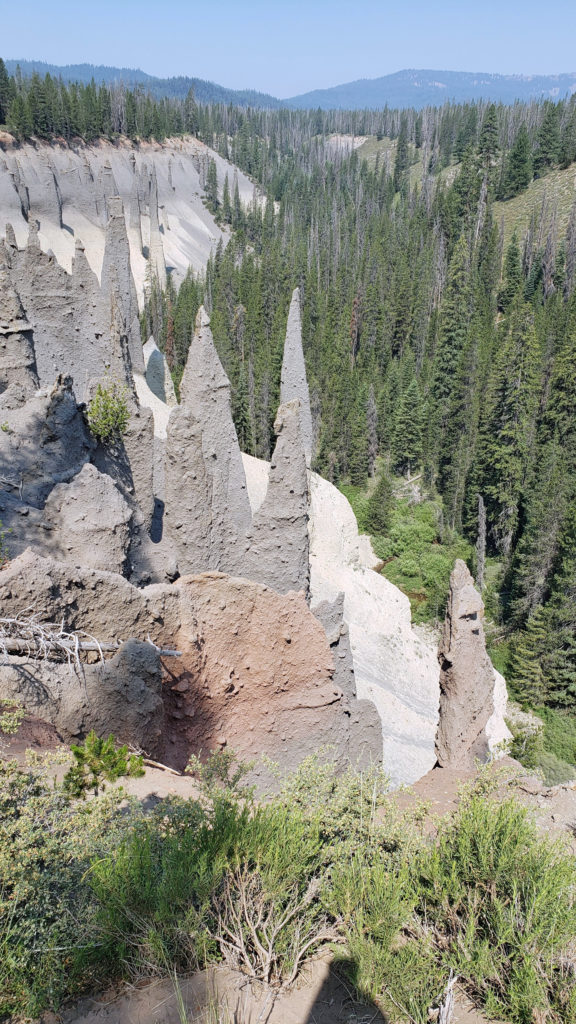 The Pinnacles
 Practical Info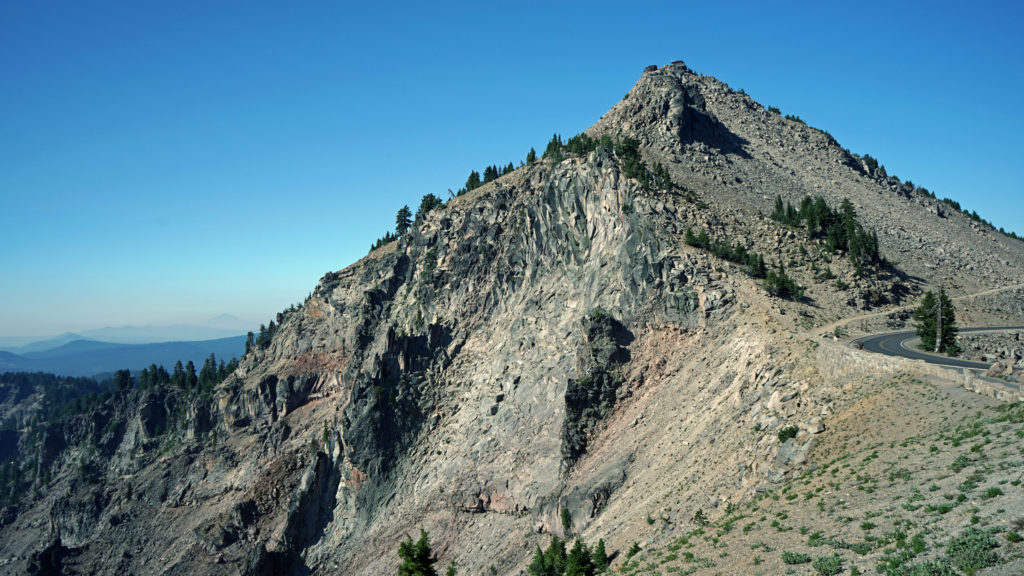
 There are two lodges in the park, Crater Lake Lodge in the Rim Village and The Cabins At Mazama Village that are open for the summer season. Crater Lake Lodge has 71 rooms, starting at $246/night. The Cabins At Mazama Village has 40 rooms, all at $160/night. Prices listed are for the 2024 season. Note that the concessionaire that operates both lodges is changing, so prices may also change. Check the park website (linked above) for current information.
 There are two campgrounds in the park. Mazama Campground has 75 RV sites, 18 tent sites with electricity, and 121 tent sites without electricity. Tent sites start at $22. RV sites run from $32 to $44 per night. Mazama Campground is usually open from early June through late to September. Lost Creek Campground, located on Pinnacles Road, is a primitive tent only campground with 18 sites, operated by the park service. Lost Creek Campground is currently closed and will not be open for the 2024 season. Backcountry camping is allowed in the park by
  Dining options in the park are somewhat limited. The dining room at Crater Lake Lodge is open to all visitors, but reservations can only be made by people staying in the park. The Rim Village Cafe offers “grab and go” sandwiches and salads (I had a pulled pork sandwich from there on our recent visit that was very good). It is open from 9am to 8pm in the summer and 10am to 5pm in the winter. The Annie Creek Restaurant in Mazama Village is open from 7am until 9pm. The Mazama Village Store sells packaged sandwiches and snacks.
 Summer park entrance fees are $30 for private vehicles and $25 for motorcycles. Winter fees are $10 less. Snowmobilers, bicyclists, and pedestrians are charged $15 per individual. All entrance fees are good for seven days. Entry reservations do not need to be made.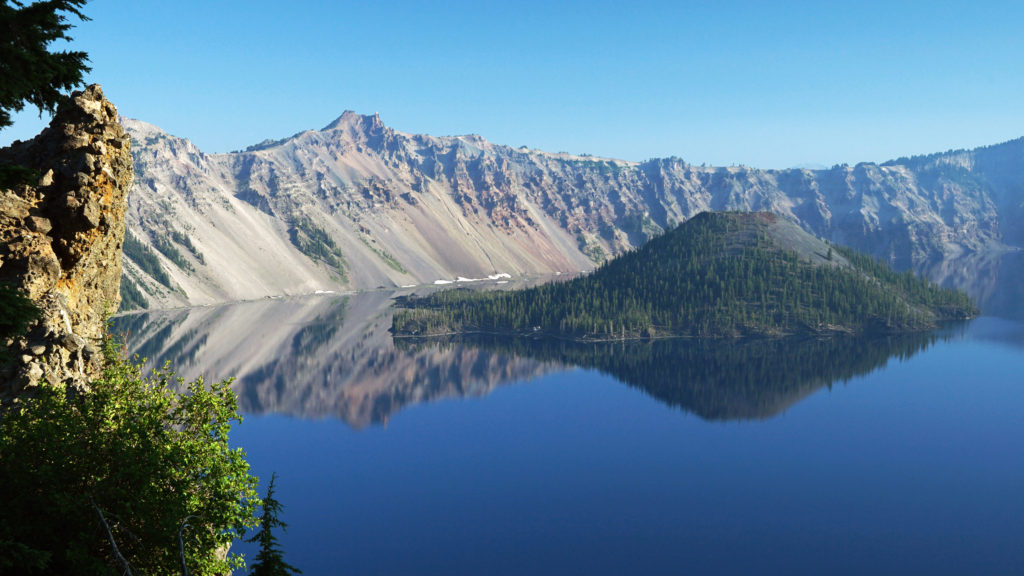
 Originally posted September 13, 2021. Most recently updated April 6, 2024.
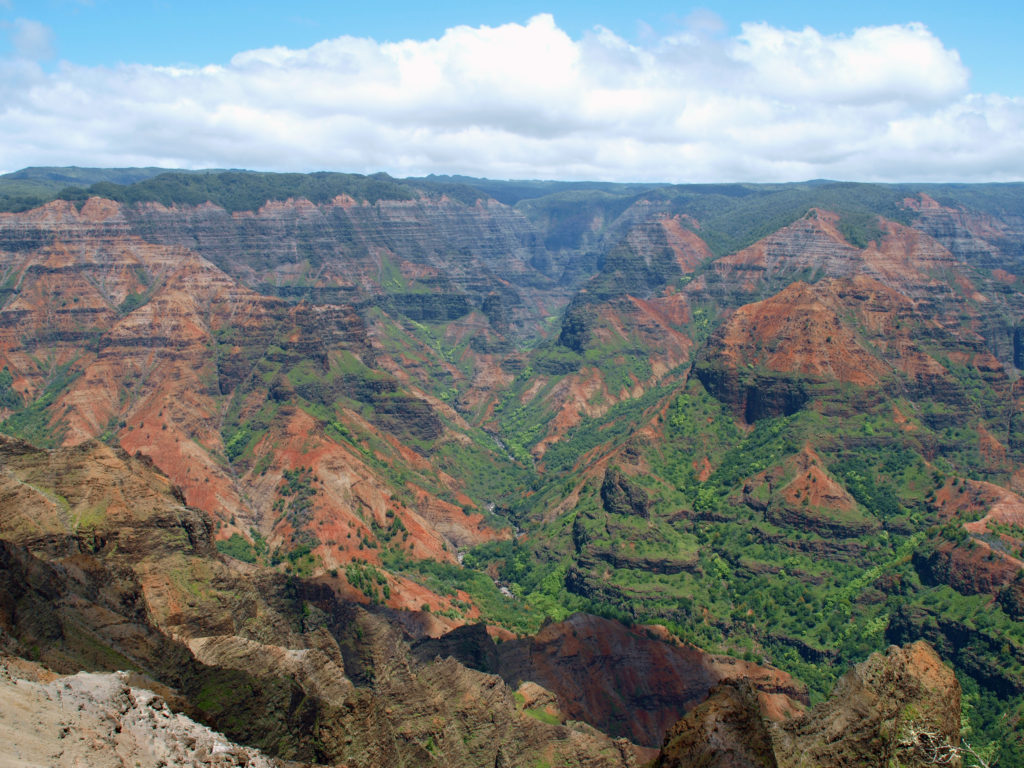
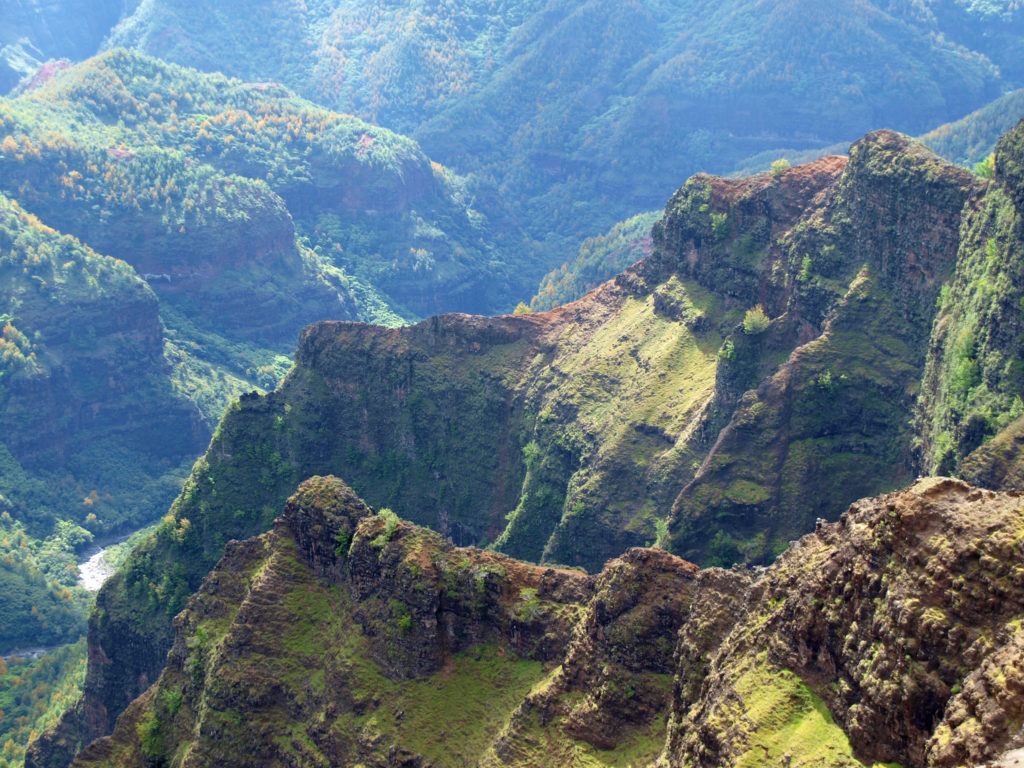
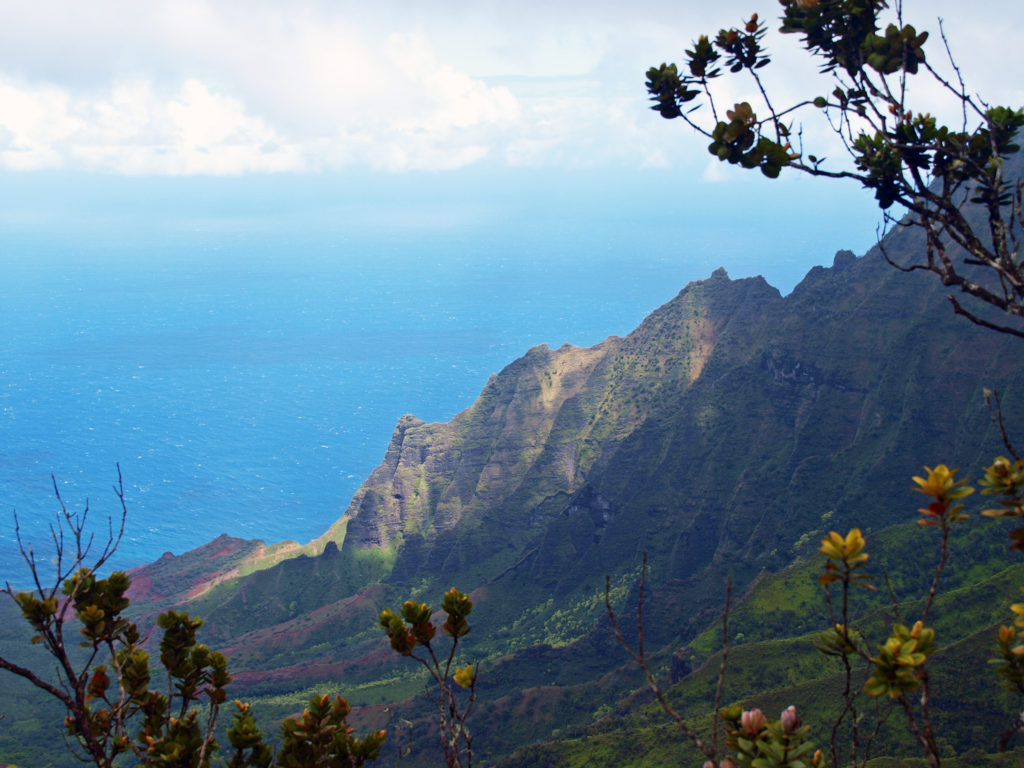
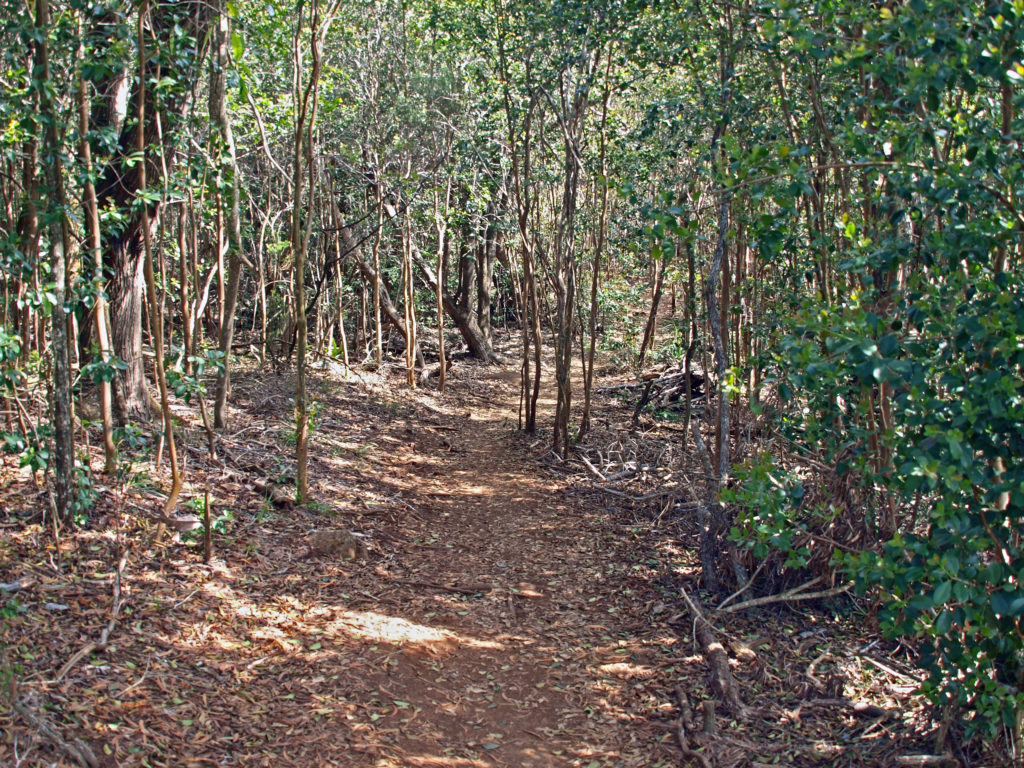 For hikers, there are more than 45 miles of trails in the canyon. You could easily spend days in the canyon and not hike all of the trails. For those that do want to spend multiple days hiking or sightseeing,
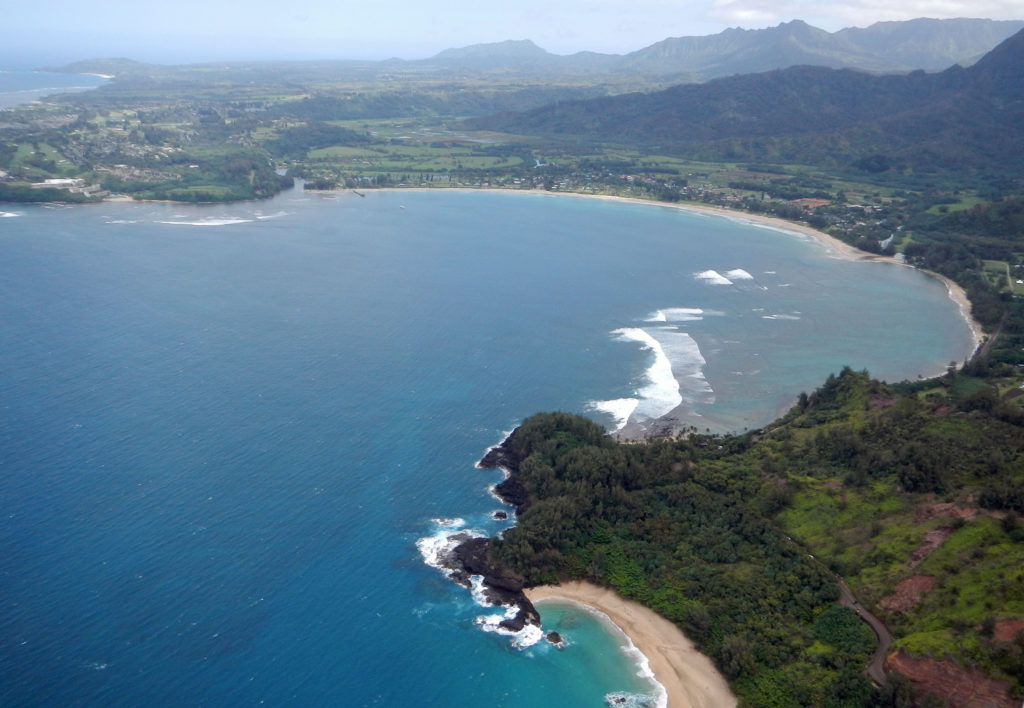
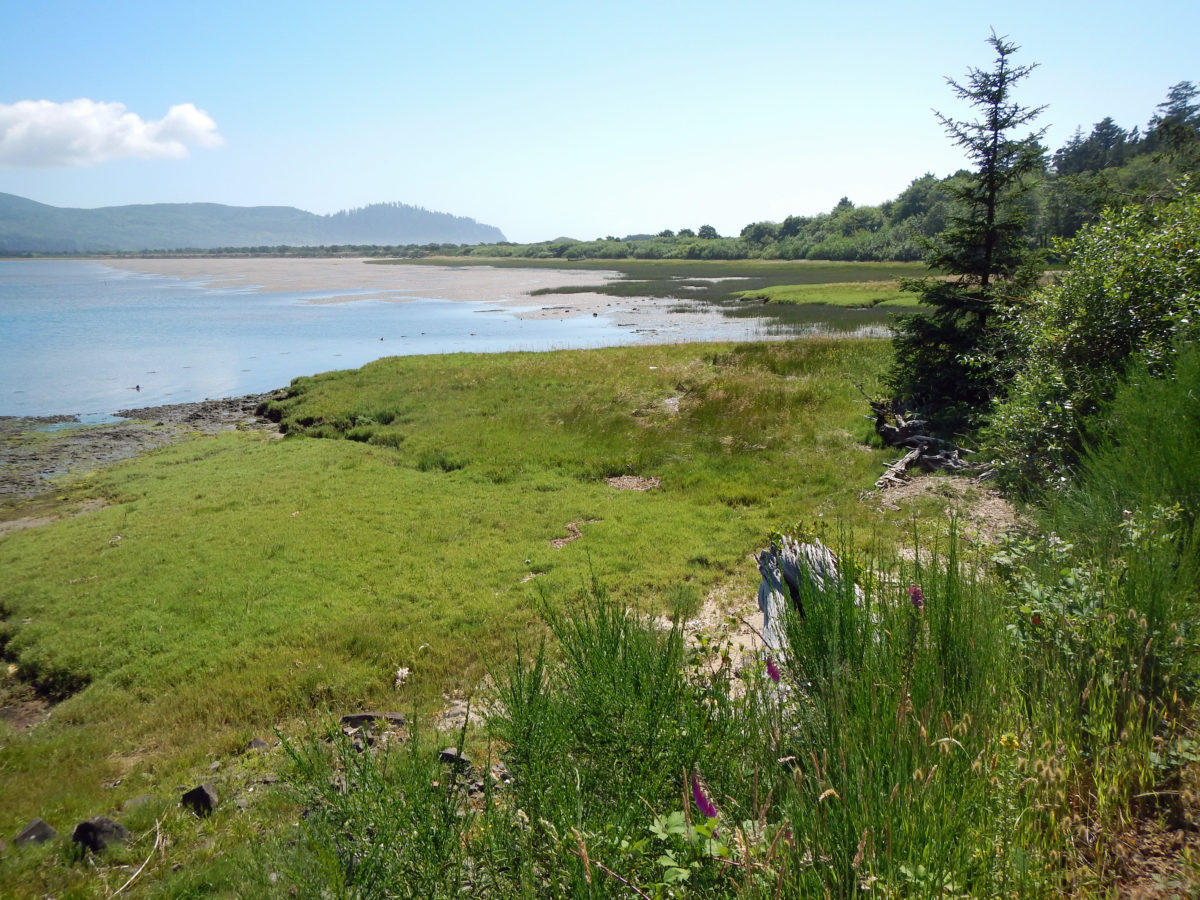
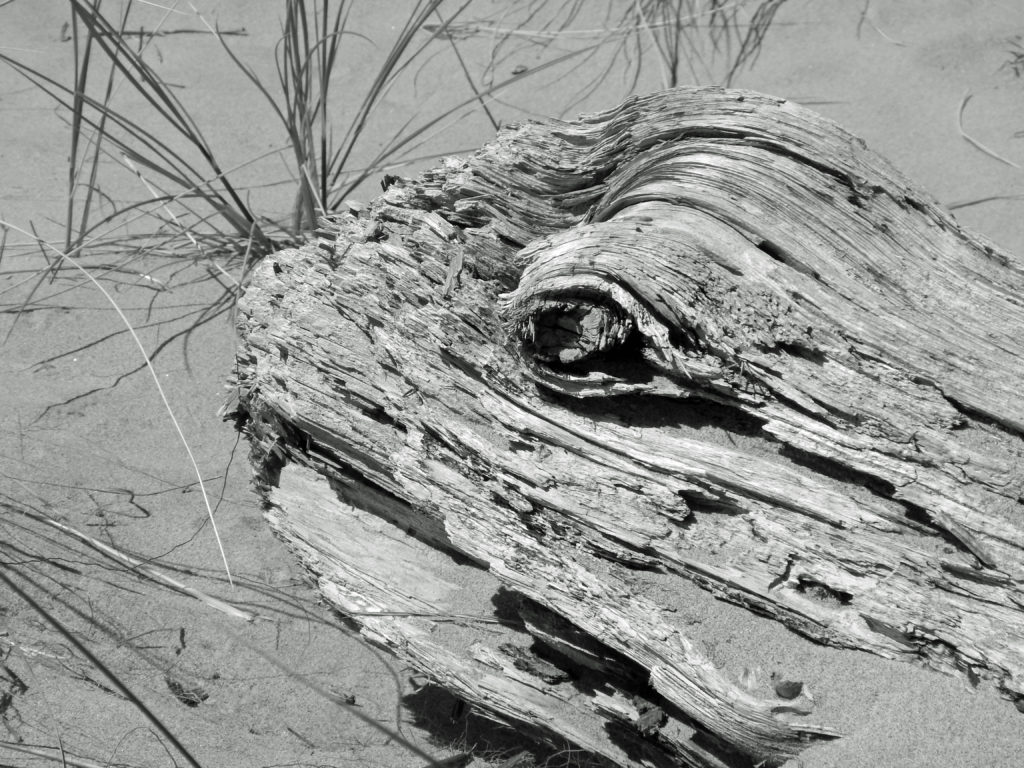
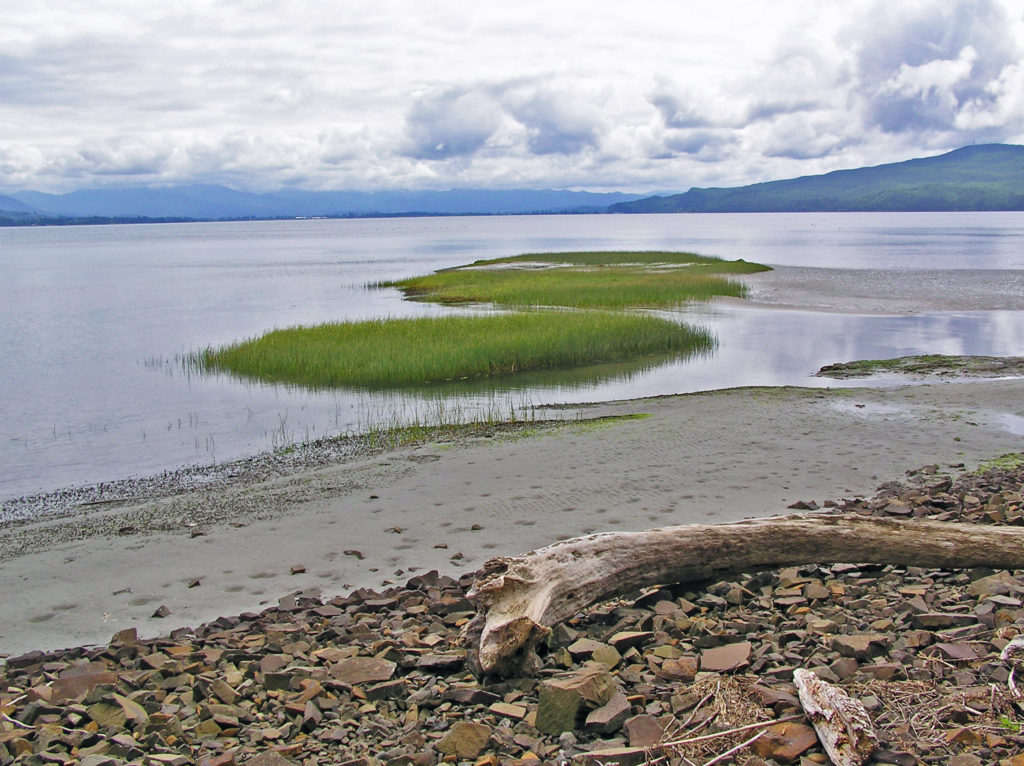
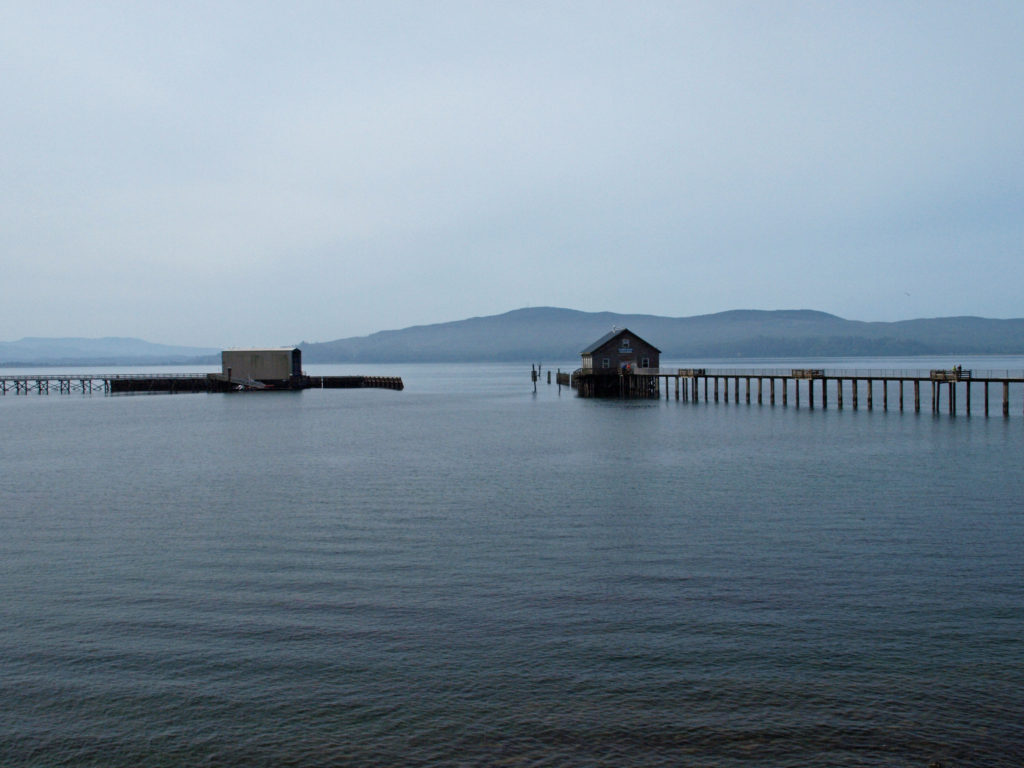
 Bayocean Peninsula, on the northern Oregon coast, is a sandspit that separates Tillamook Bay and the Pacific Ocean. It is, by any measure, a nature lover’s paradise, whether you’re a beachcomber, hiker, mountain biker, boater, birder, wildlife lover, or photographer.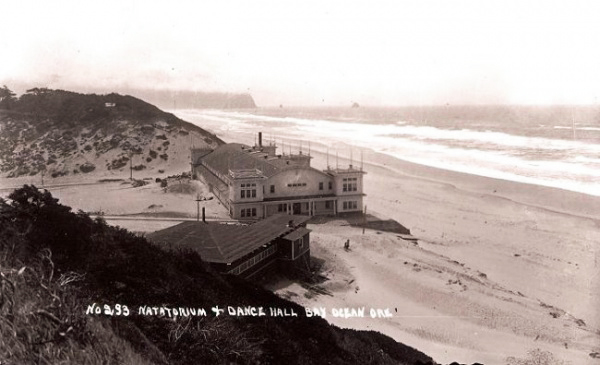
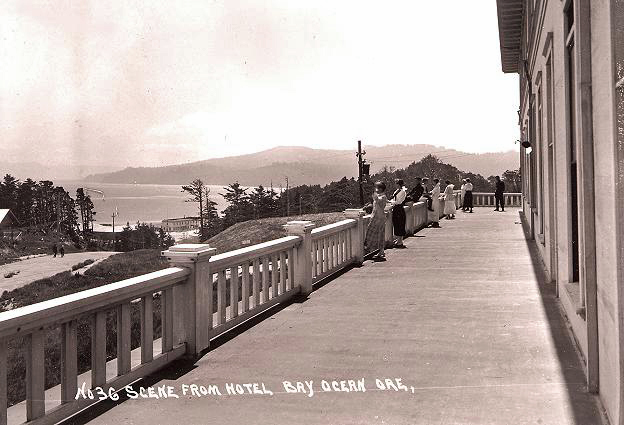
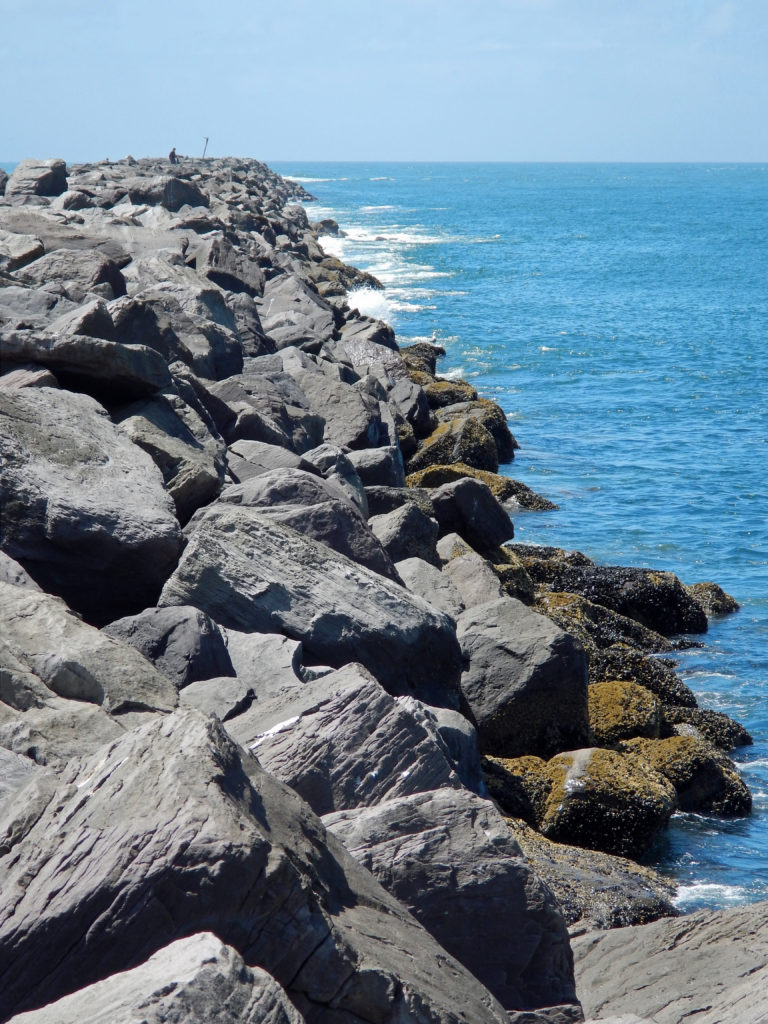 To make crossing the Tillamook bar safer, the Army Corps of Engineers recommended jetties be built on both the north and south sides of the bay’s mouth. But half of the cost (a then considerable $2.2 million) would have to be paid by local residents. To cut the cost to a more affordable amount, the local port district proposed building only one jetty. The resulting north jetty, completed in 1917, did make crossing the bar much smoother and safer, but it also contributed to the town’s demise by changing the near shore currents, which began eroding away the beach in the 1920s.
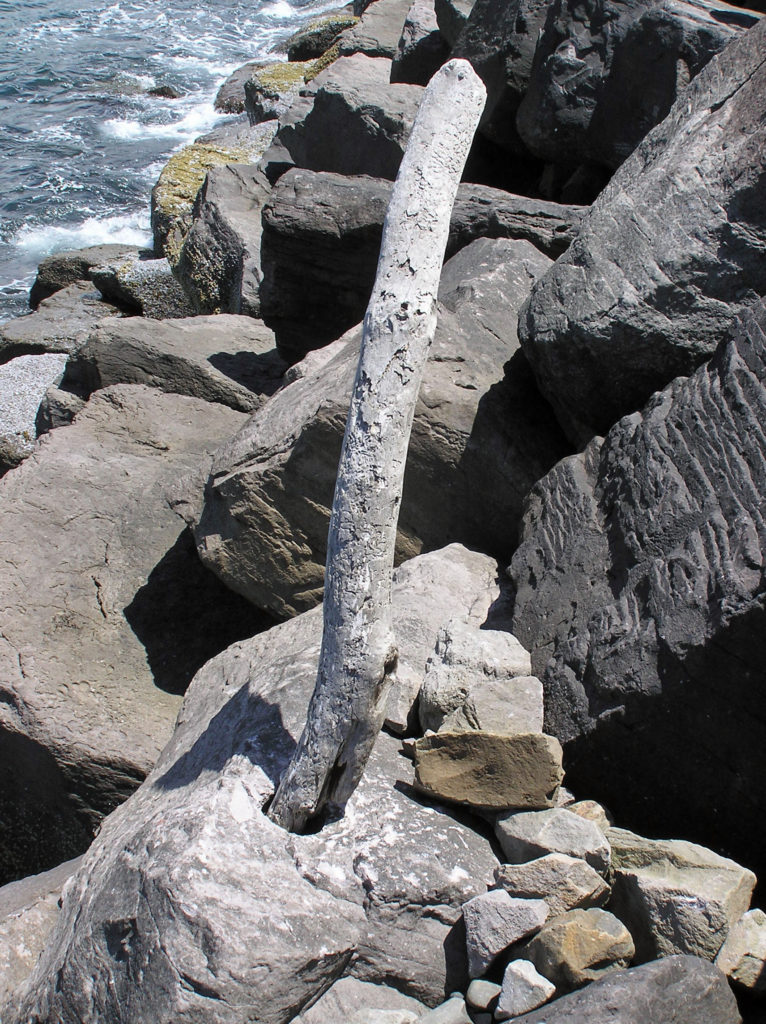 In 1932 the north jetty was extended, further accelerating the erosion. The natatorium was destroyed by waves during a massive storm that winter. By 1938 almost 60 homes had fallen into the sea. Other storms over the years took many of the remaining buildings, and in 1952 another major storm breached the southern end of the peninsula, turning Bayocean Peninsula into an island. The Bay Ocean Park post office closed in 1953 and most of what was left of the town was bulldozed by the Corps of Engineers in 1956 during a project to build a dike across the breach created in 1952. The last house on the peninsula washed away in 1960, and the last structure, a long abandoned garage, fell into the sea in 1971.
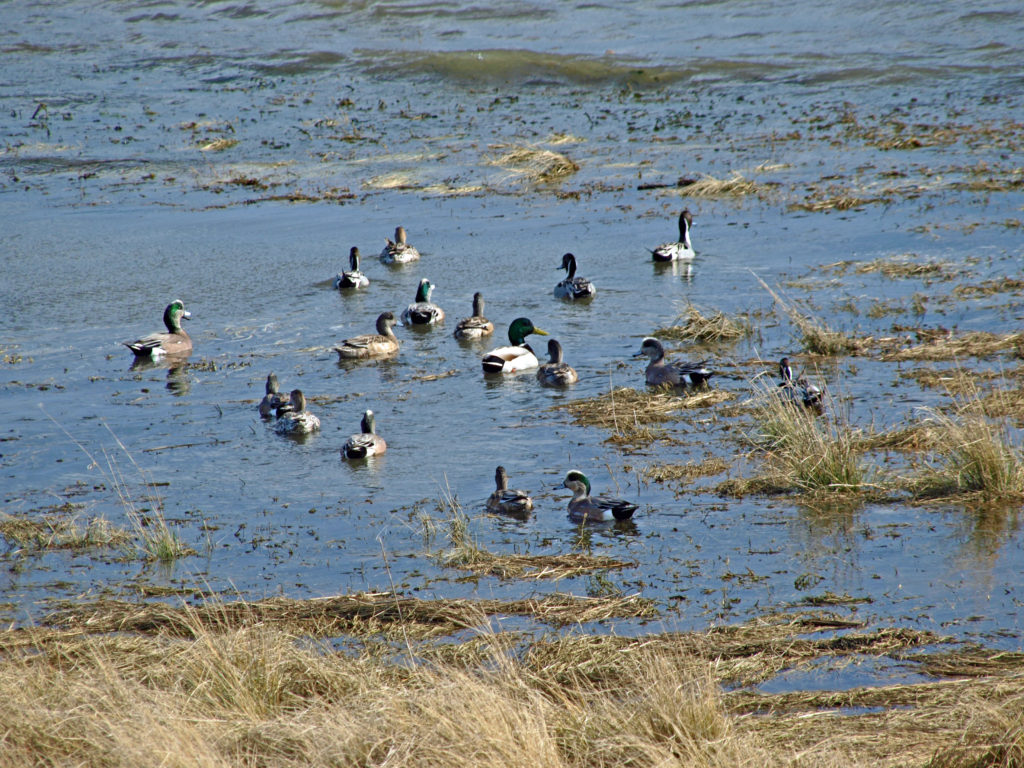
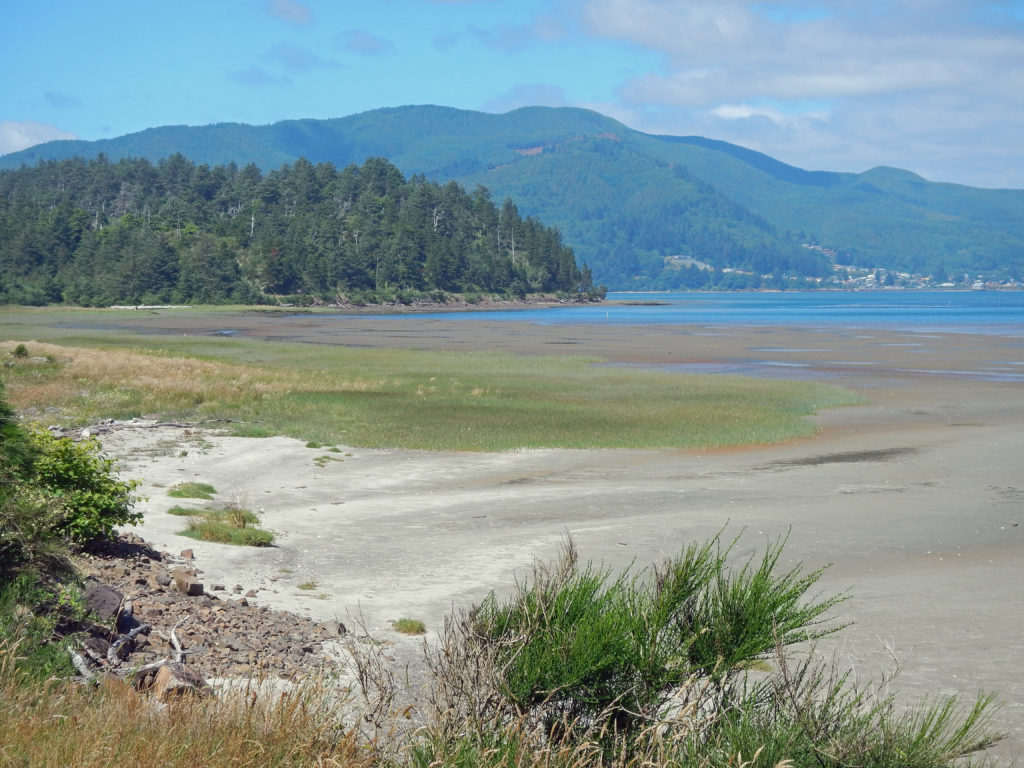
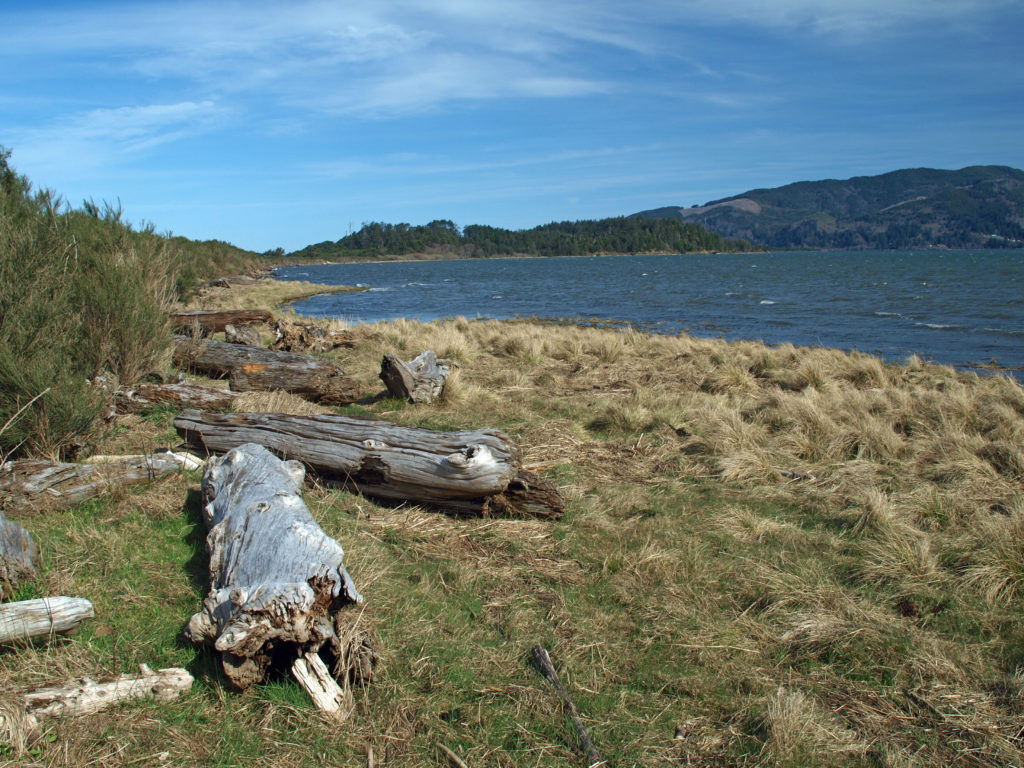 The south jetty was eventually built in the 1970s and that stopped the erosion of the peninsula, but by then the town of Bay Ocean Park was long gone. Today, nothing remains of the town. What’s left, though, is a treasure trove of delights for the outdoor enthusiast: miles of untrammeled beach, unspoiled dunes, a bay shore sheltered from the prevailing winds, an upland spruce and pine forest, and an abundance of waterfowl and other wildlife. The haul road used in building the south jetty is now an ideal mountain bike and hiking trail on the bay side of the peninsula.
 To reach Bayocean from the town of Tillamook, follow the signs for the Three Capes Scenic Route (Oregon Highway 131). After crossing the Tillamook River bridge, turn right onto Bayocean Road toward Cape Meares. At milepost five, turn right onto the old south jetty haul road (aka the dike road) and proceed to the trailhead parking area. There are pit toilets at the trailhead, but no water.
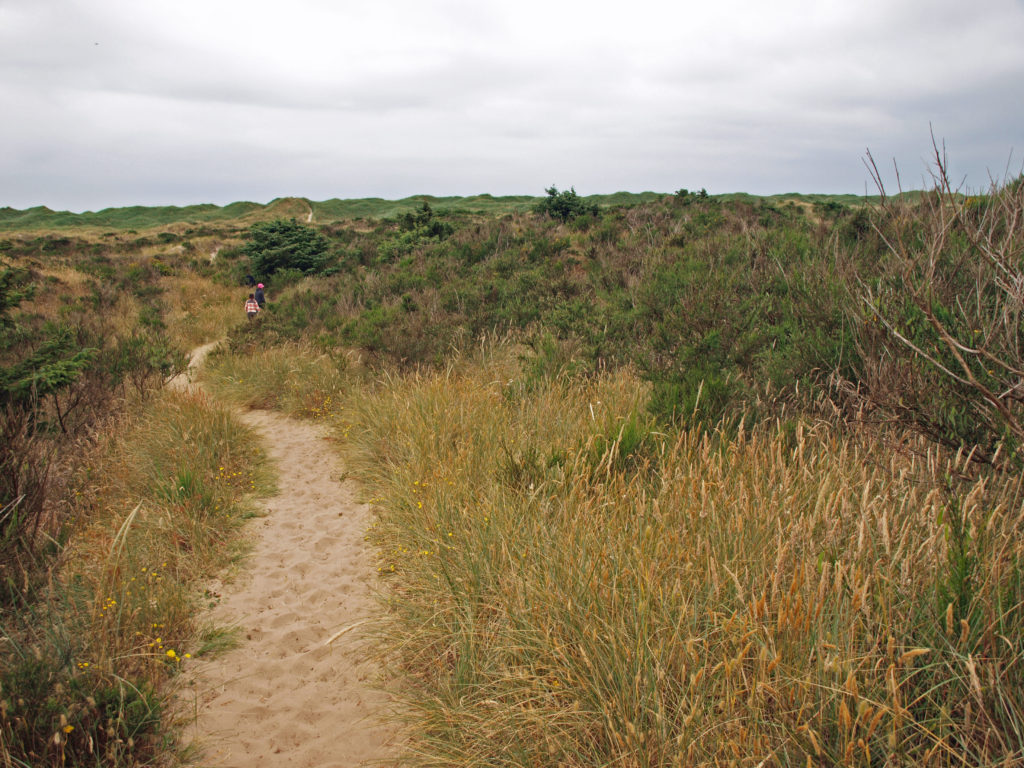 From the trailhead, the road continues north beyond a locked gate. You can also hike through the dunes to the beach from the trailhead parking area. The road along the bay shore is mostly gravel, with a few sandy stretches, and mostly flat. It’s an easy four mile bike ride to the south jetty.
 Hikers can do a 7½ mile loop by hiking through the dunes to the beach, walking the beach to the south jetty, and returning along the bay side on the gravel road. There are several trails connecting the dike road to the beach, making shorter loops possible. And a longer hike or bike ride (10 mile loop or 9 mile out and back along the beach) can be done by starting at the beach access in the town of Cape Meares, instead of the Bayocean trailhead. See my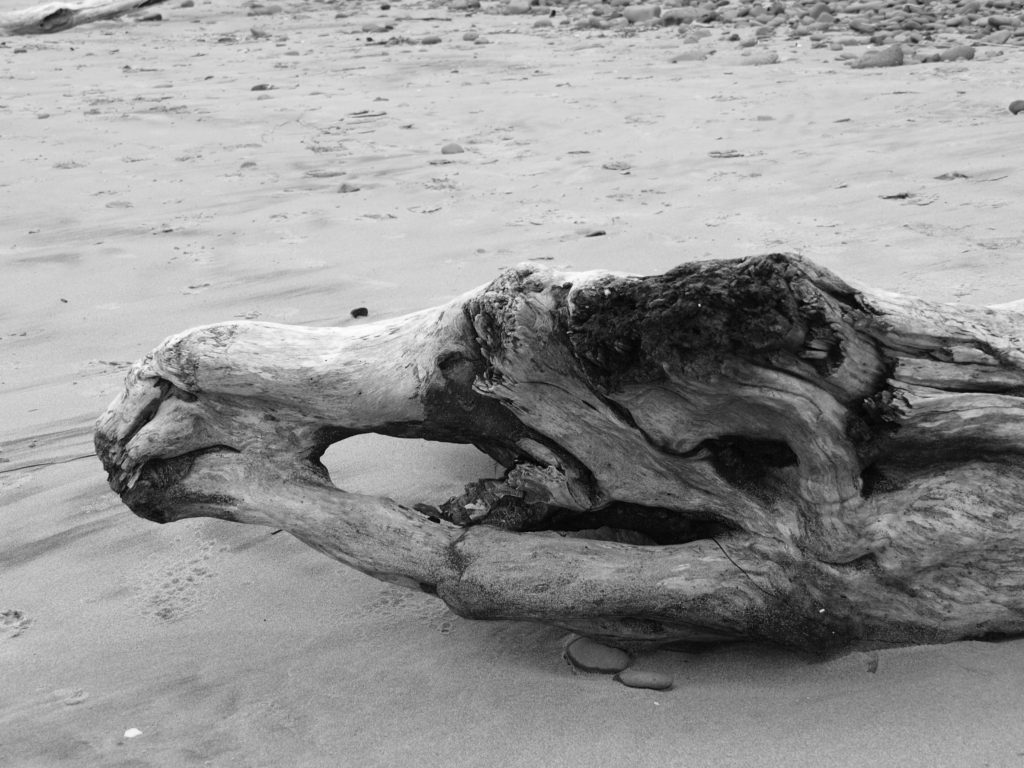
 The north Oregon coast has much to offer beyond Bayocean Peninsula, of course.
  Originally posted April 23, 2019 by Alan K. Lee, updated July 8, 2021 and March 4, 2024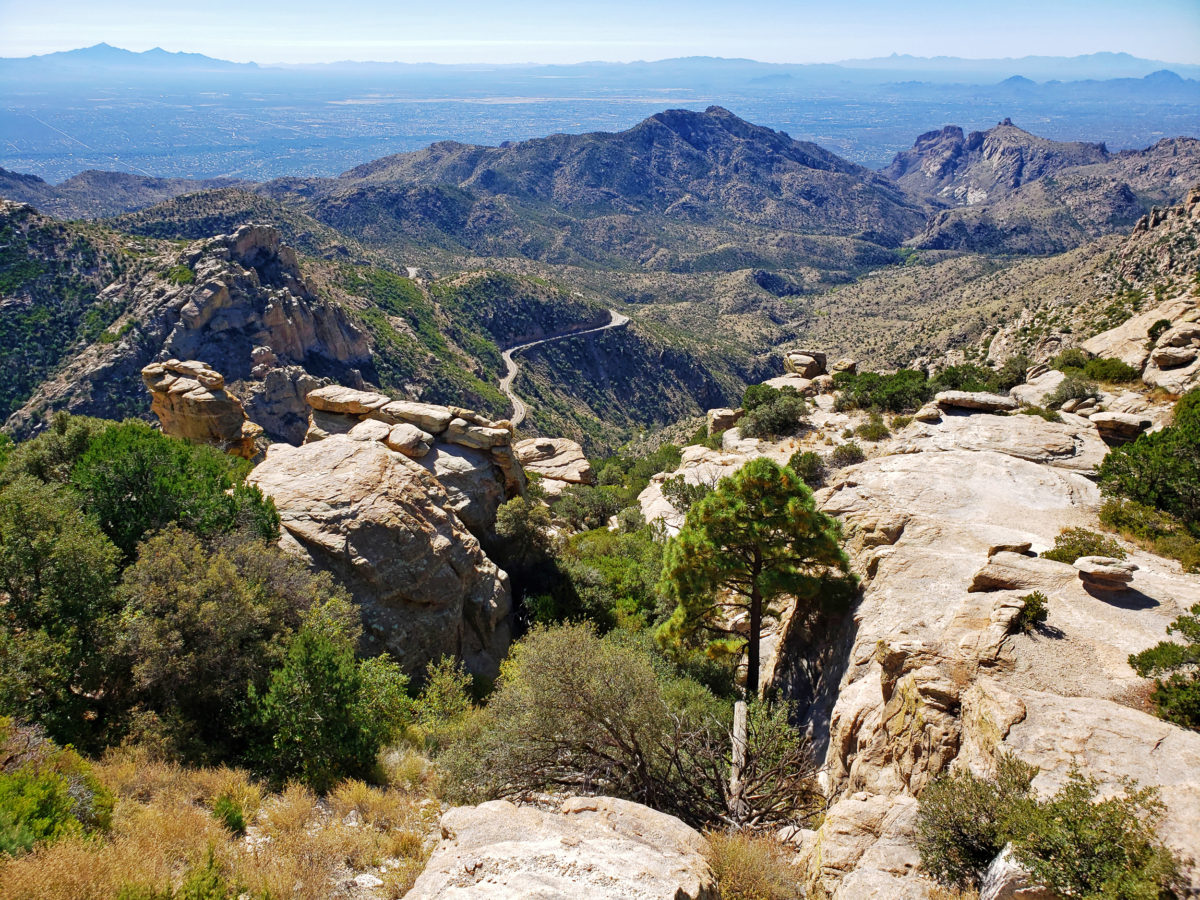
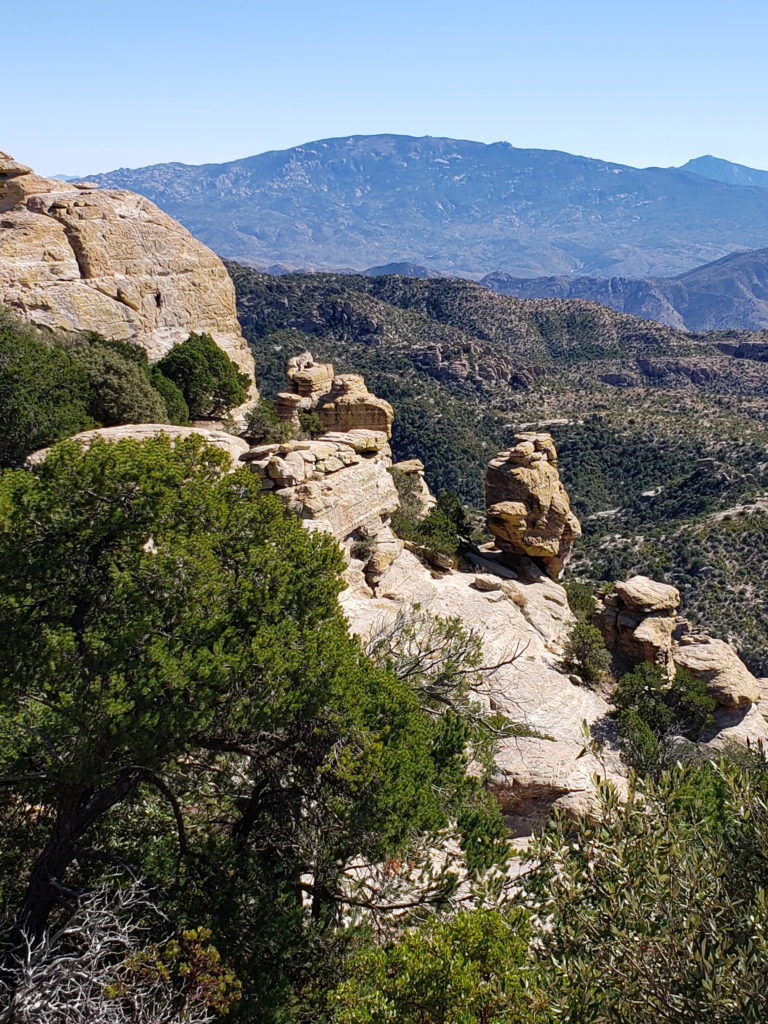
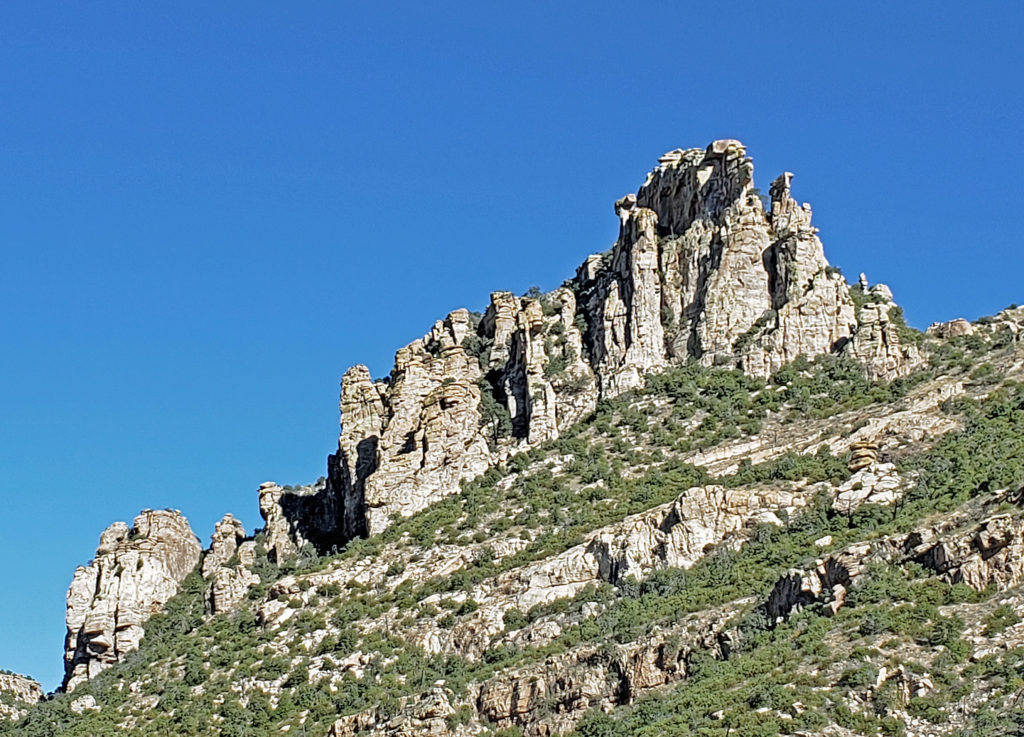 If you’re ever in the Tucson area, consider making the drive to the top of Mount Lemmon. A paved road takes you to the summit, more than 6500 feet above the valley floor. Numerous viewpoints along the way provide spectacular vistas of the mountain, the surrounding desert below, and the mountains beyond. And numerous trailheads provide access to the ridges and canyons beyond the road for those who want to lace up their hiking boots and immerse themselves in the desert or mountain environment.
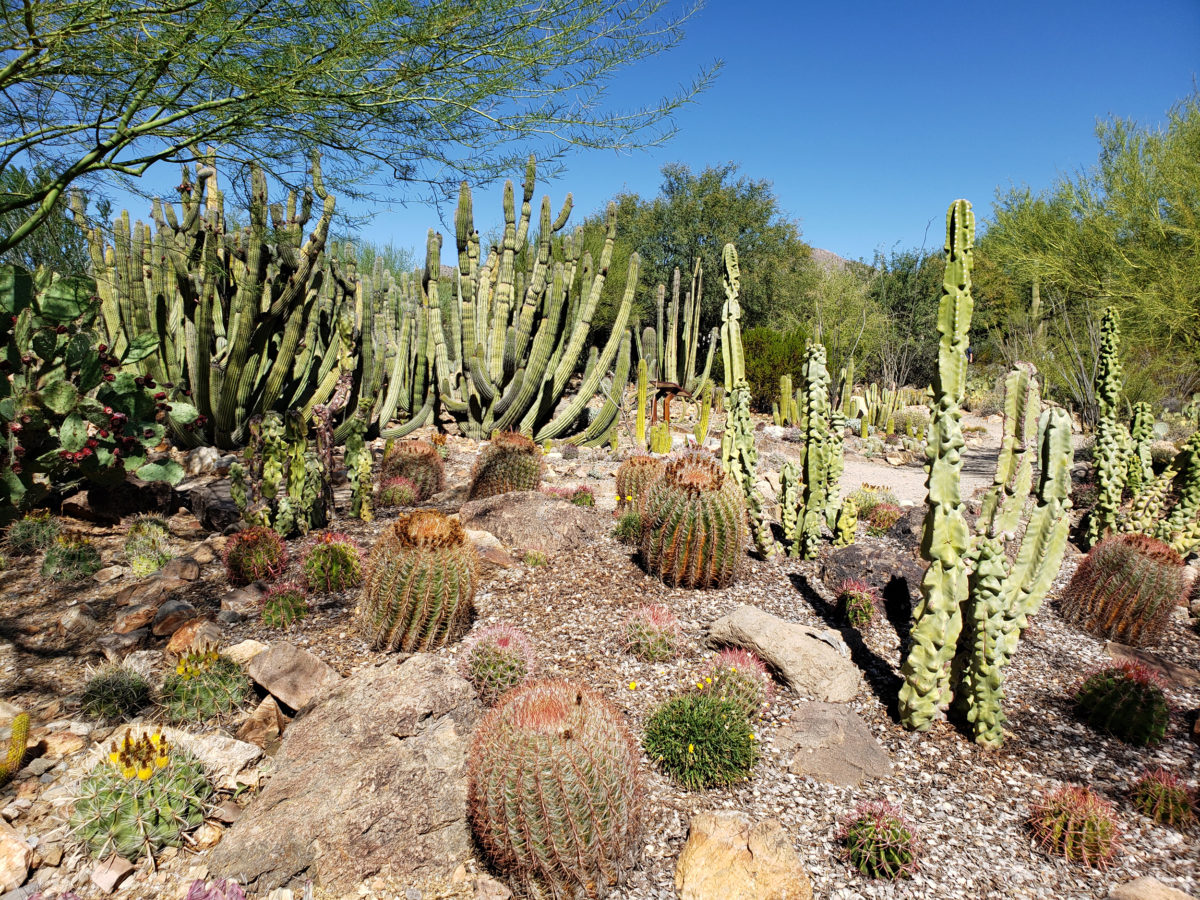
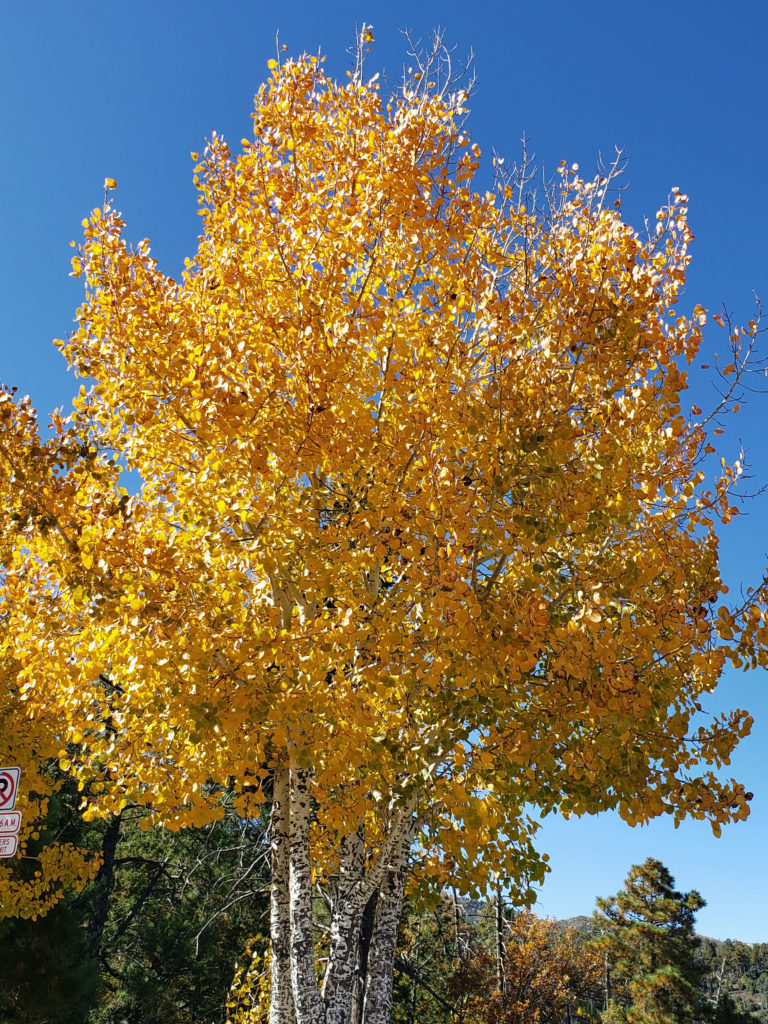
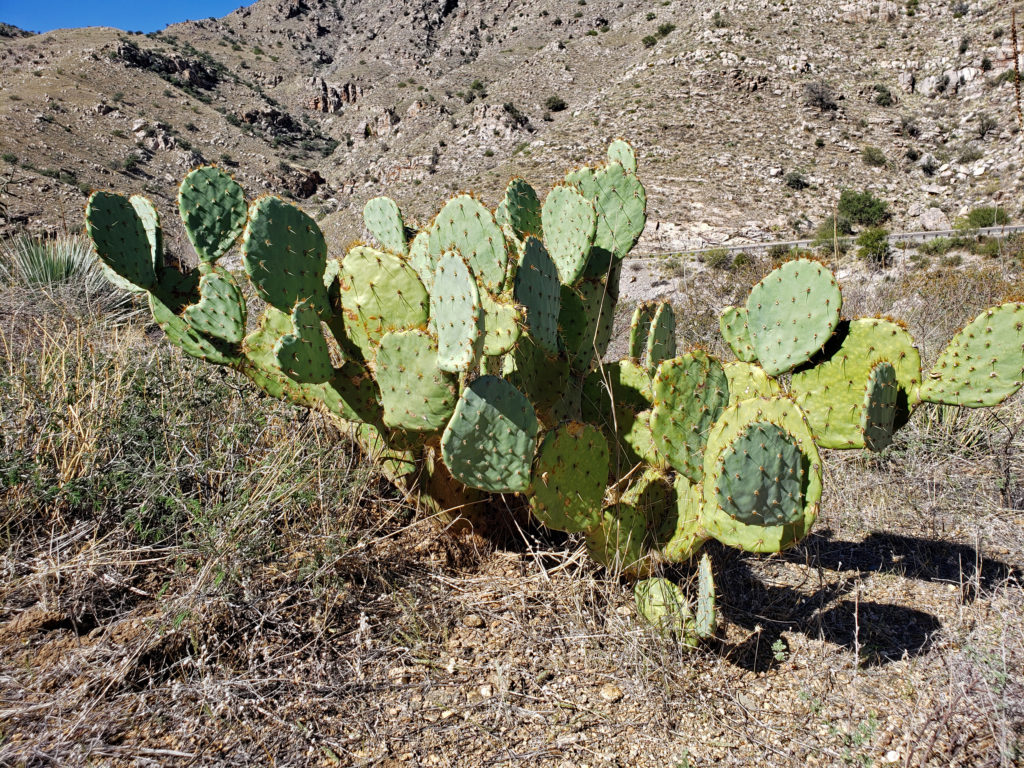
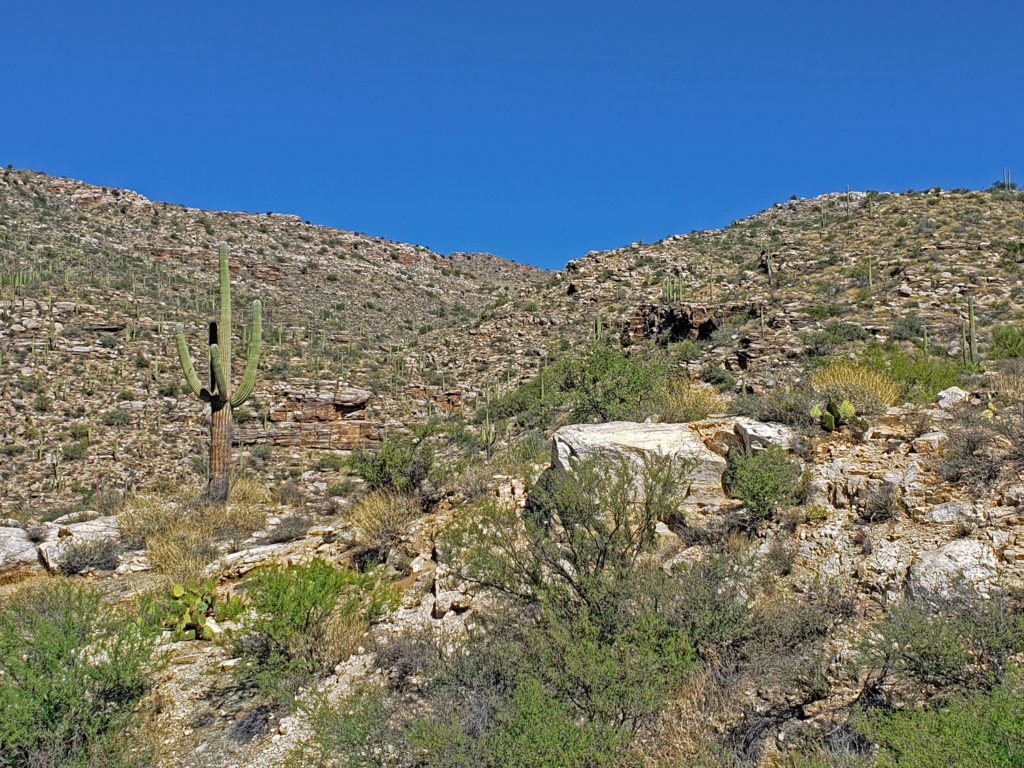 The drive takes you through numerous climatic and ecological zones, from the iconic saguaro cactus of the Sonoran Desert at the base of the mountain to an aspen and ponderosa pine forest at the summit.
 My wife and I made the drive to the summit in October 2019 while in Arizona to visit my brother and attend a wedding. I had never heard of Mount Lemmon and I wasn’t keen on making that long of a side trip, but my wife convinced me that it would be worthwhile, and she nailed this one. Mount Lemmon is more than just worthwhile, and worth more than just a side trip. It’s a worthy destination in its own right.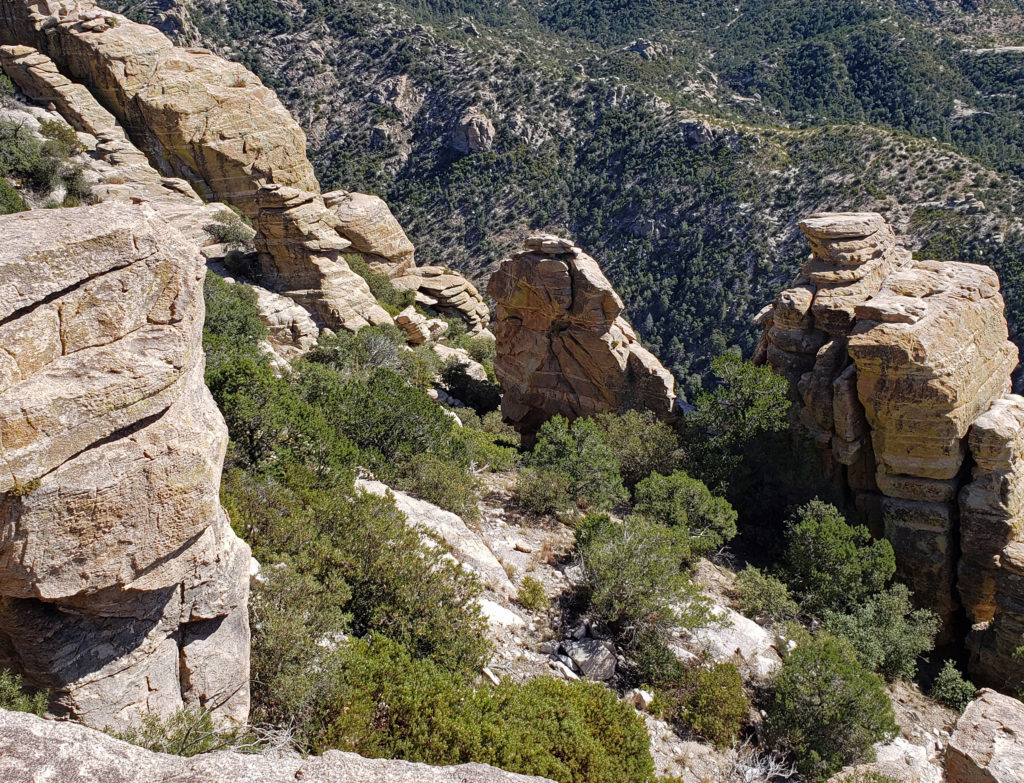
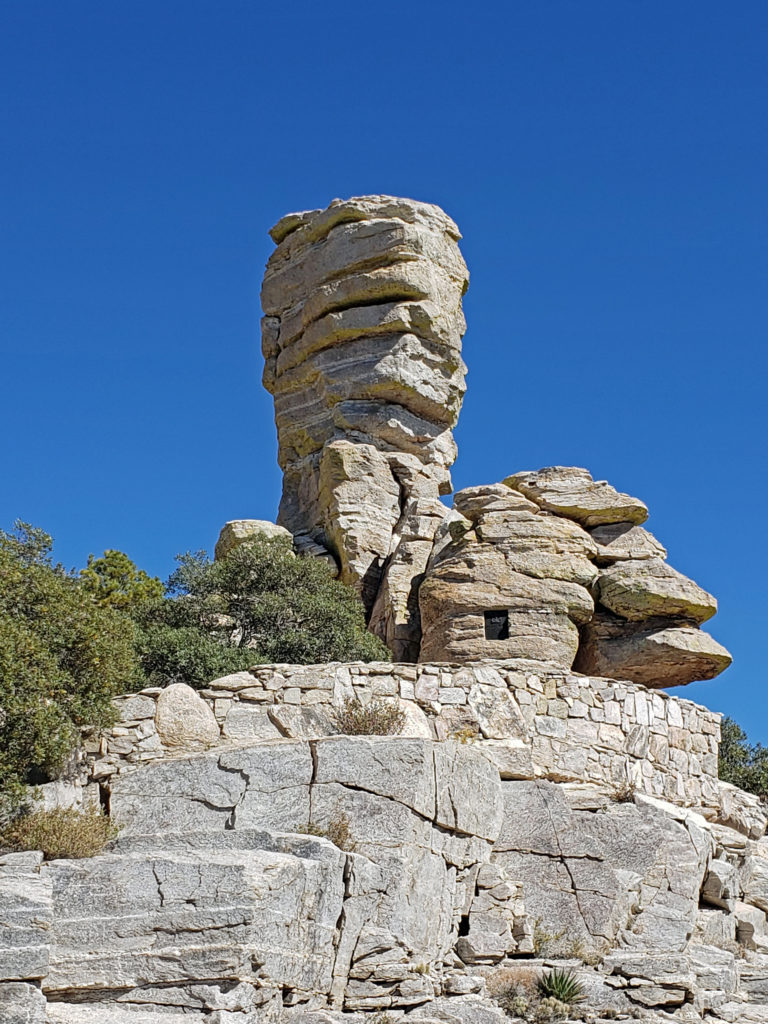
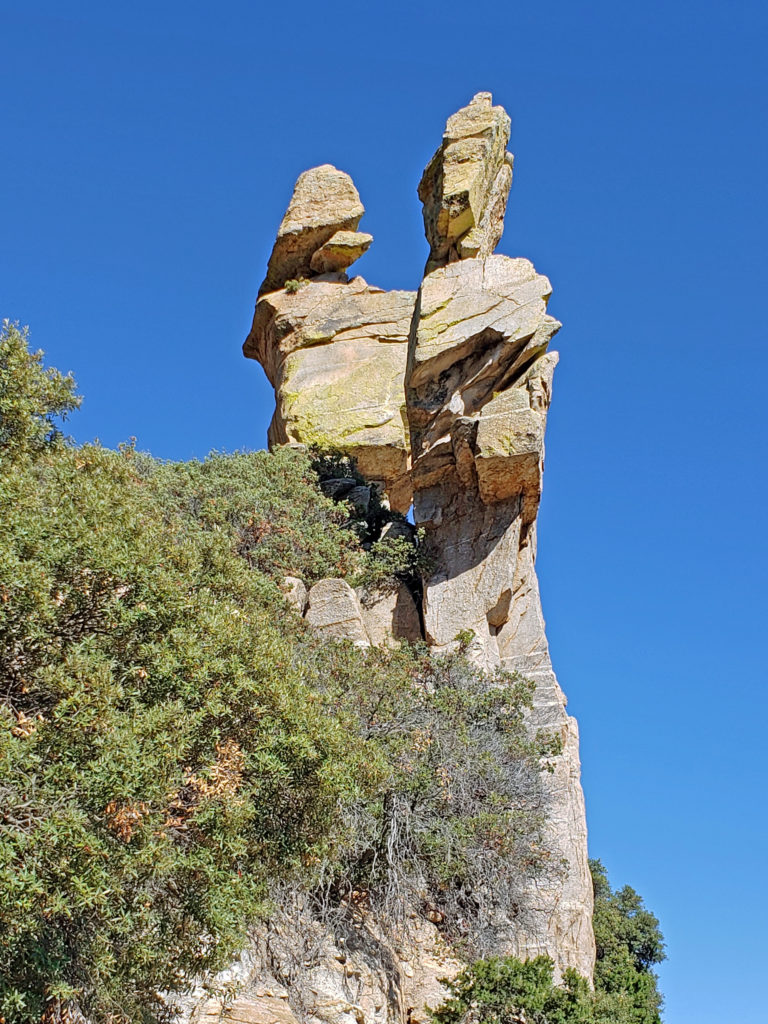
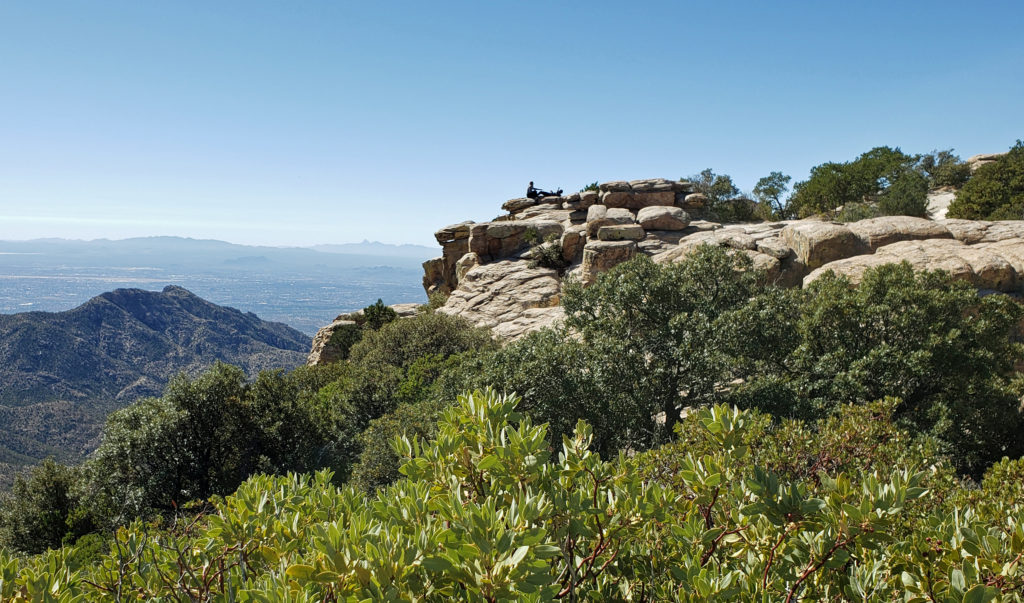 Windy Point, about seventeen miles from the beginning of the highway in Tanque Verde, has got to be one of the most spectacular viewpoints in southern Arizona. You’ll want to stop here and just wander around for a while. Take in the views of Tucson and the desert far below, the mountains beyond, and the rock formations around you. About four miles farther up the highway you’ll come to the San Pedro Vista, which gives you a panoramic view east across the San Pedro Valley to the Galiuro Mountains.
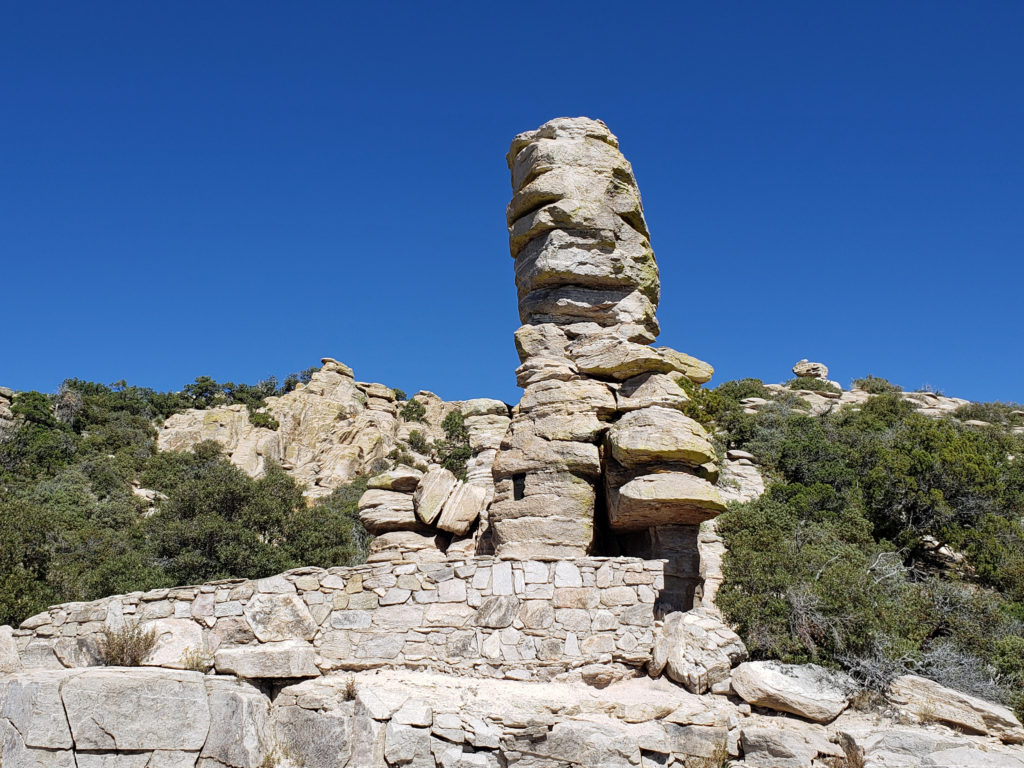 Another couple miles brings you to the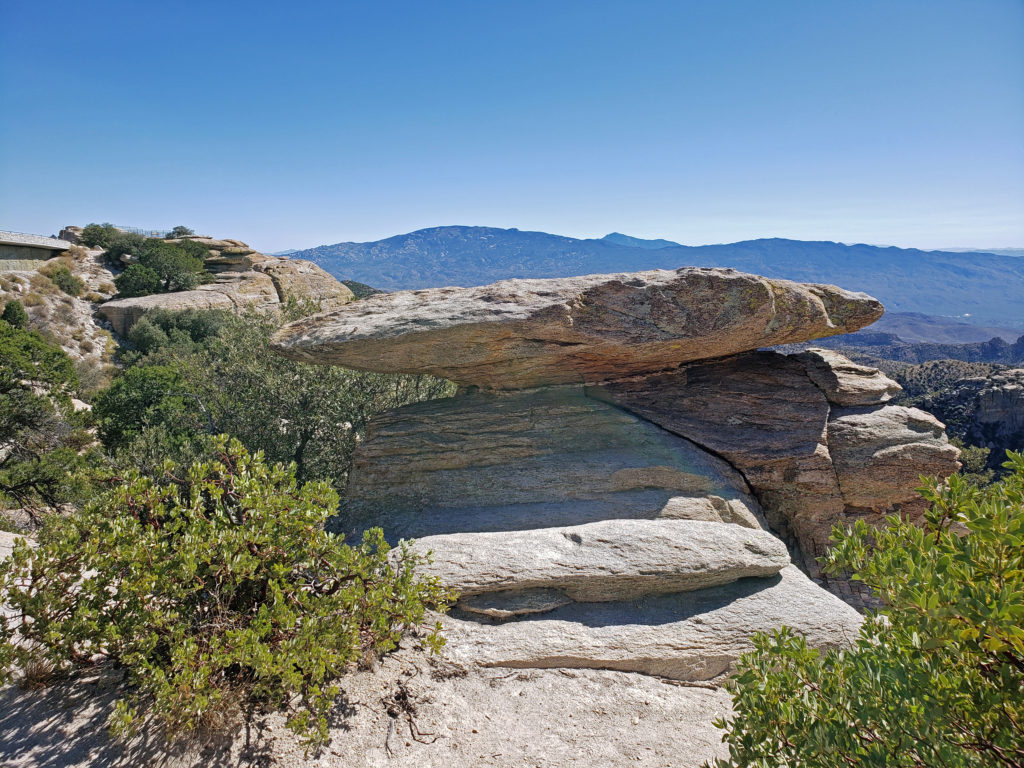
 If you go, note that the summit of Mount Lemmon can be thirty degrees cooler than Tucson, so dress accordingly. And if you plan to do any hiking, avoid mid-summer if possible and always bring plenty of water. There are no sources of safe drinking water on any of the hiking trails in the area, to my knowledge.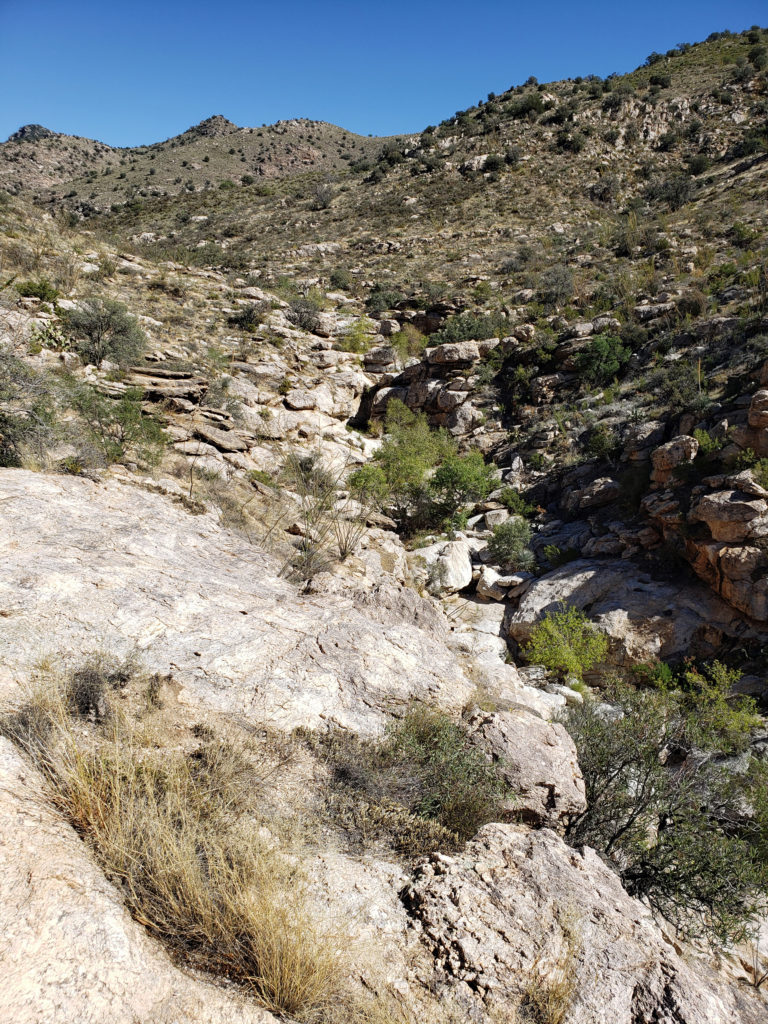
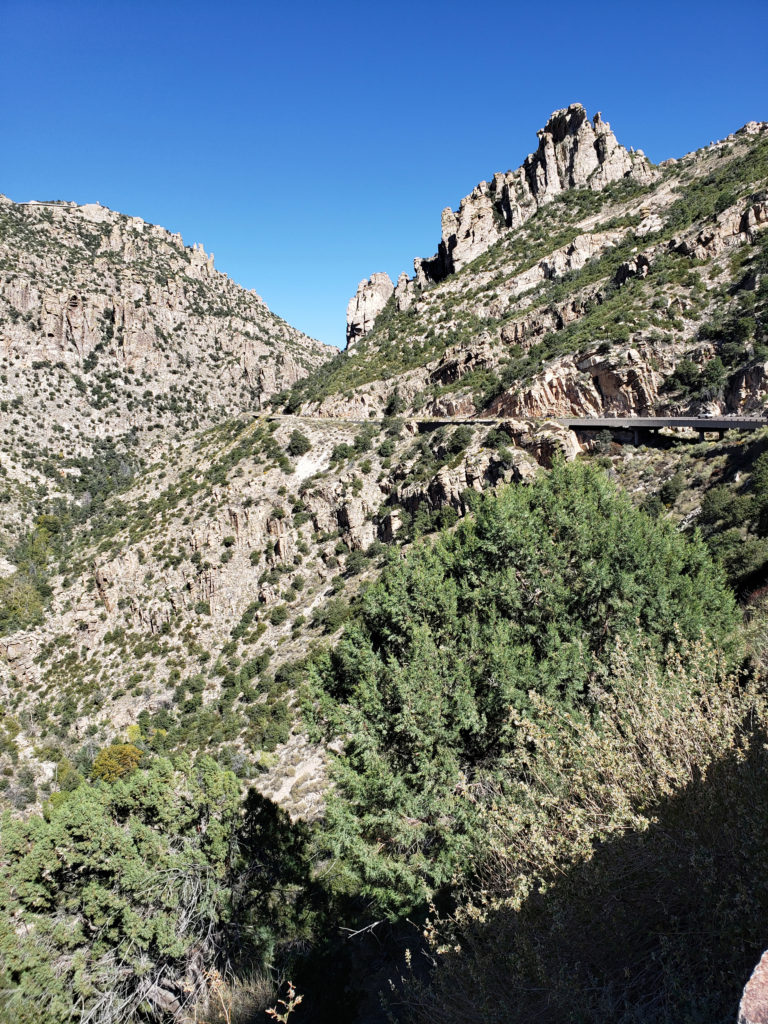 Not only am I glad we took the drive, I wish we could have spent more time exploring the mountain. For those that do have the time, there are several picnic areas along the highway and a few places to eat in Summerhaven, and there are several campgrounds a short ways off of the highway if you want to spend more than a day on the mountain. If you don’t want to camp, Summerhaven also has a few rental cabins, and a newly built small hotel. Check the
  Note: In the summer of 2020 the entire area was closed to the public because of the Bighorn Fire that burned 120,000 acres in the Santa Catalina Mountains. Photos taken after the fire showed some badly burned areas, but others that were largely untouched. All of the area is open again, including the Palisades Visitor Center.