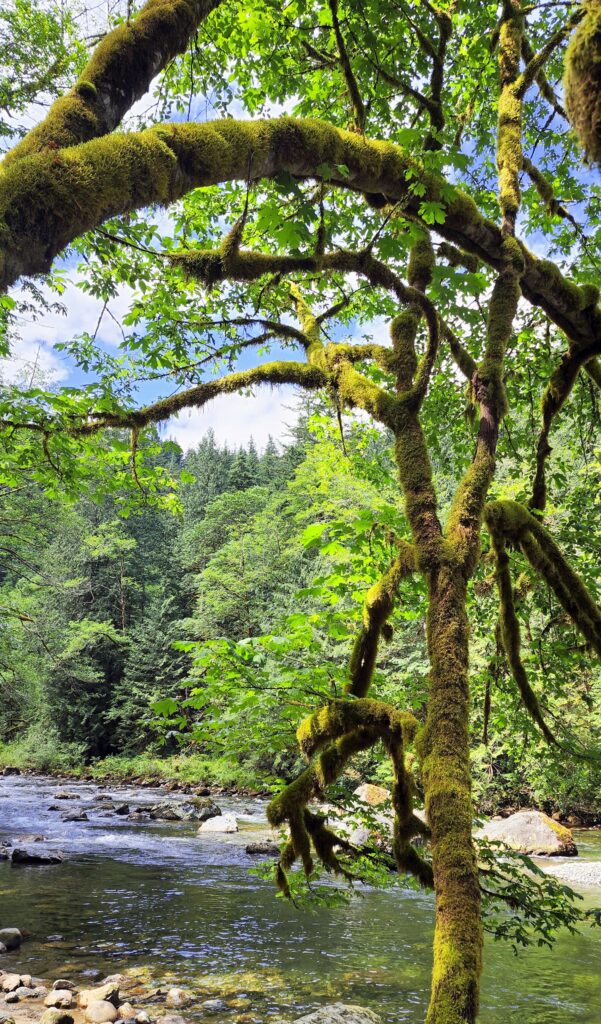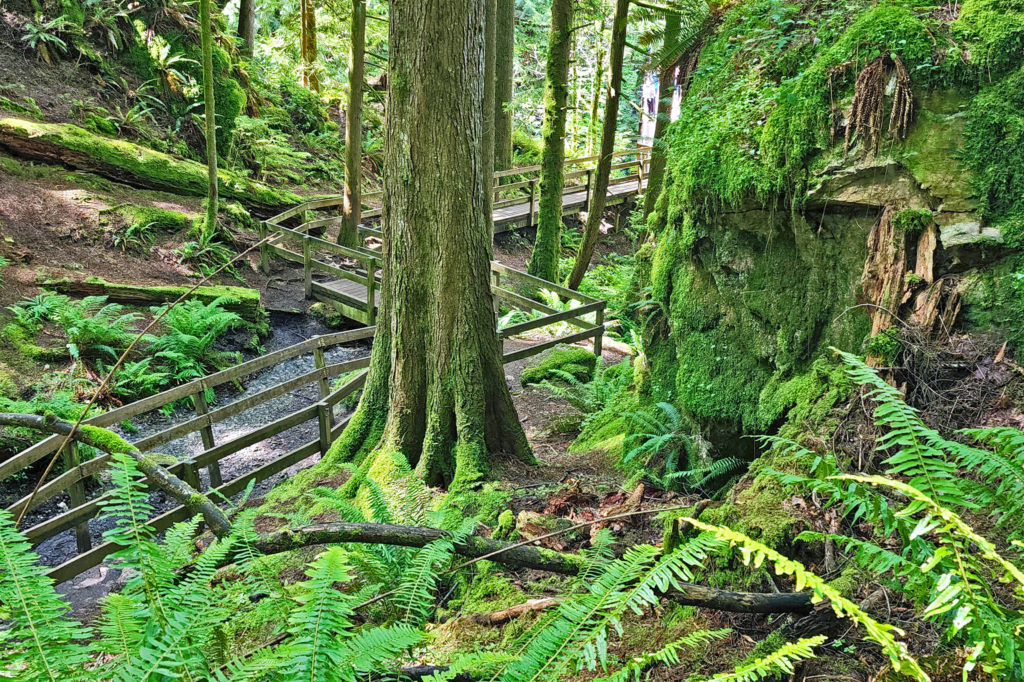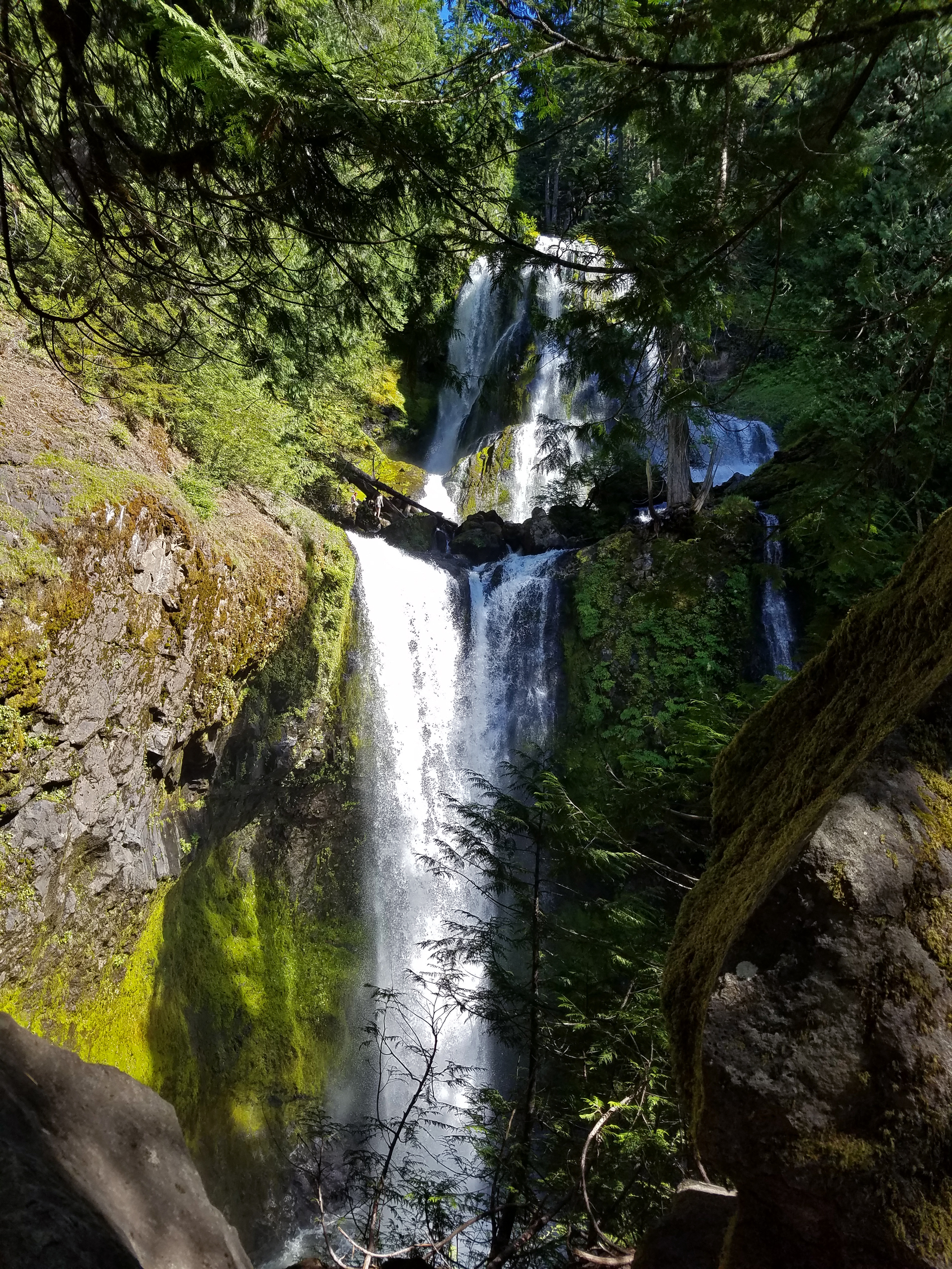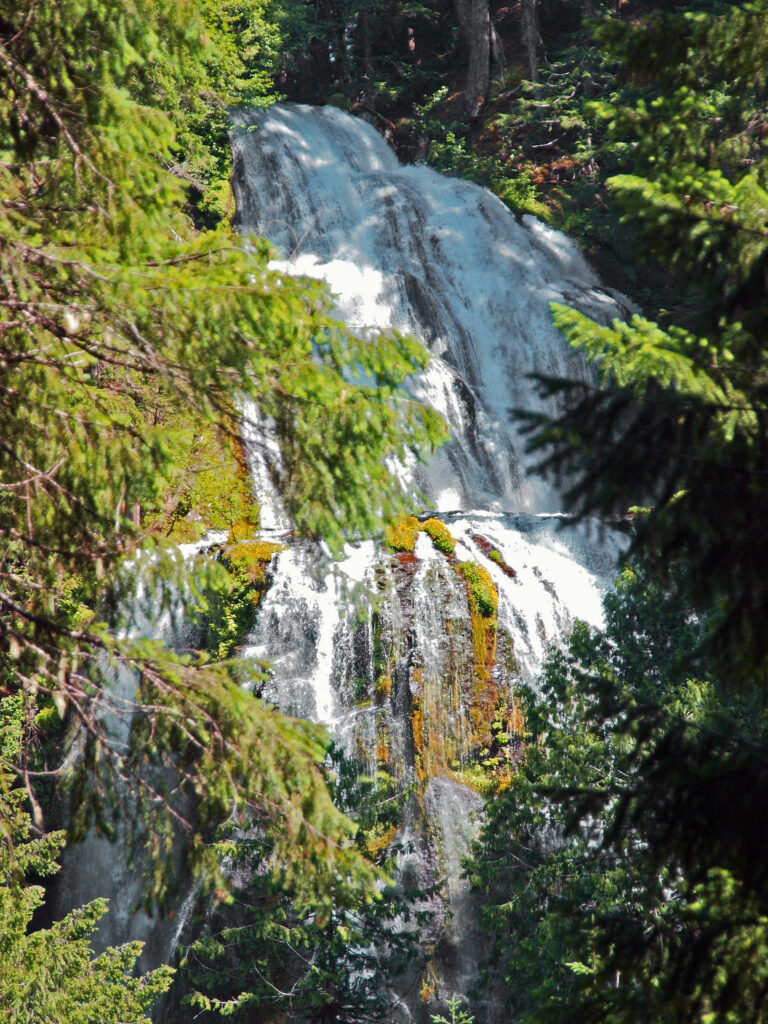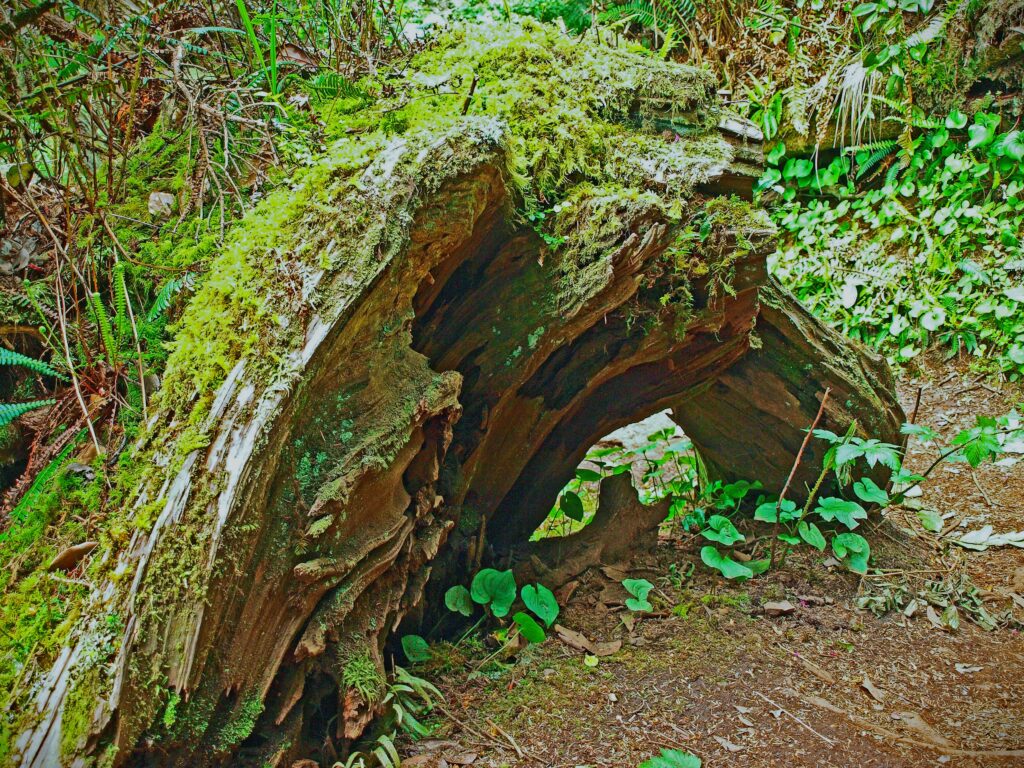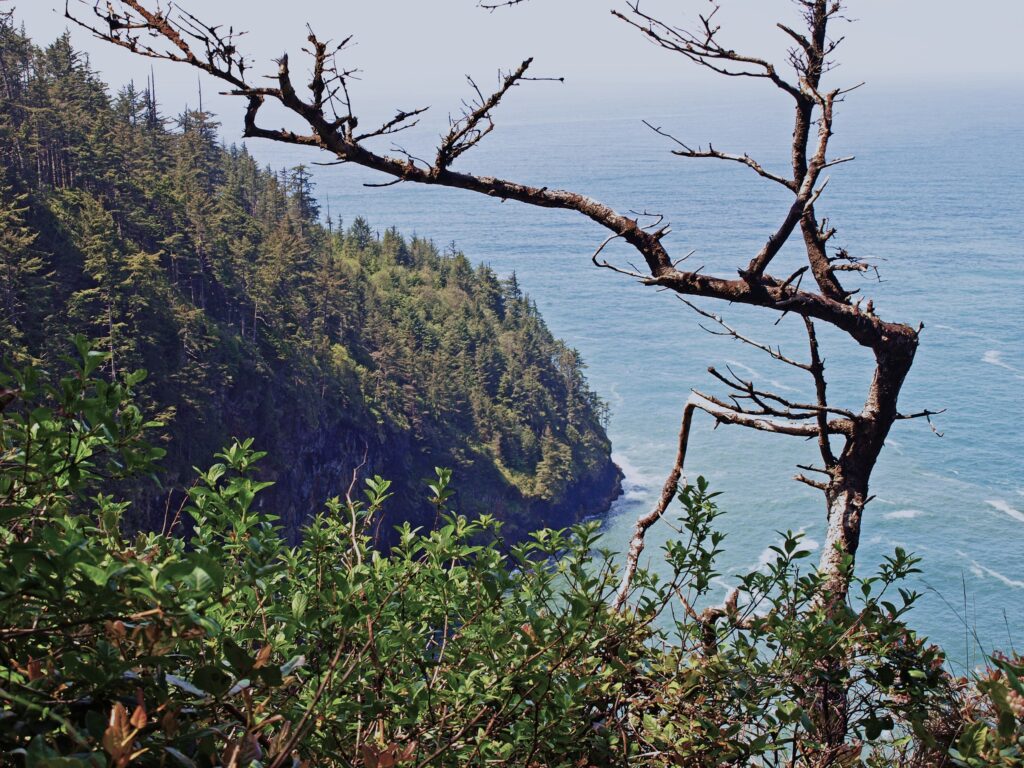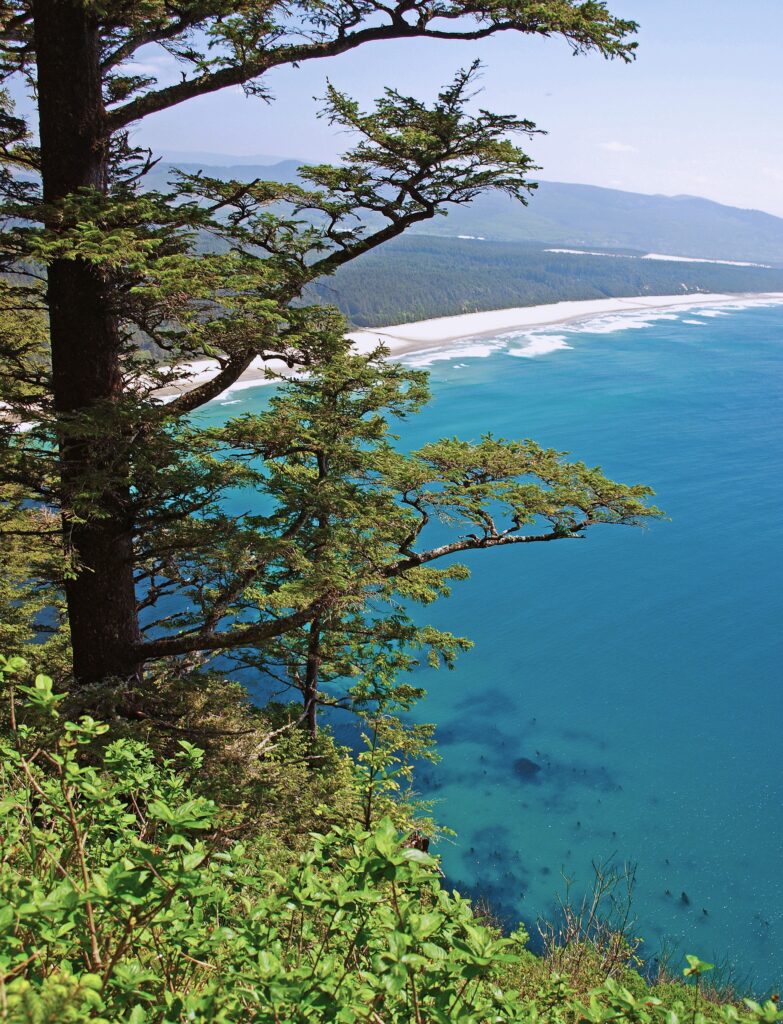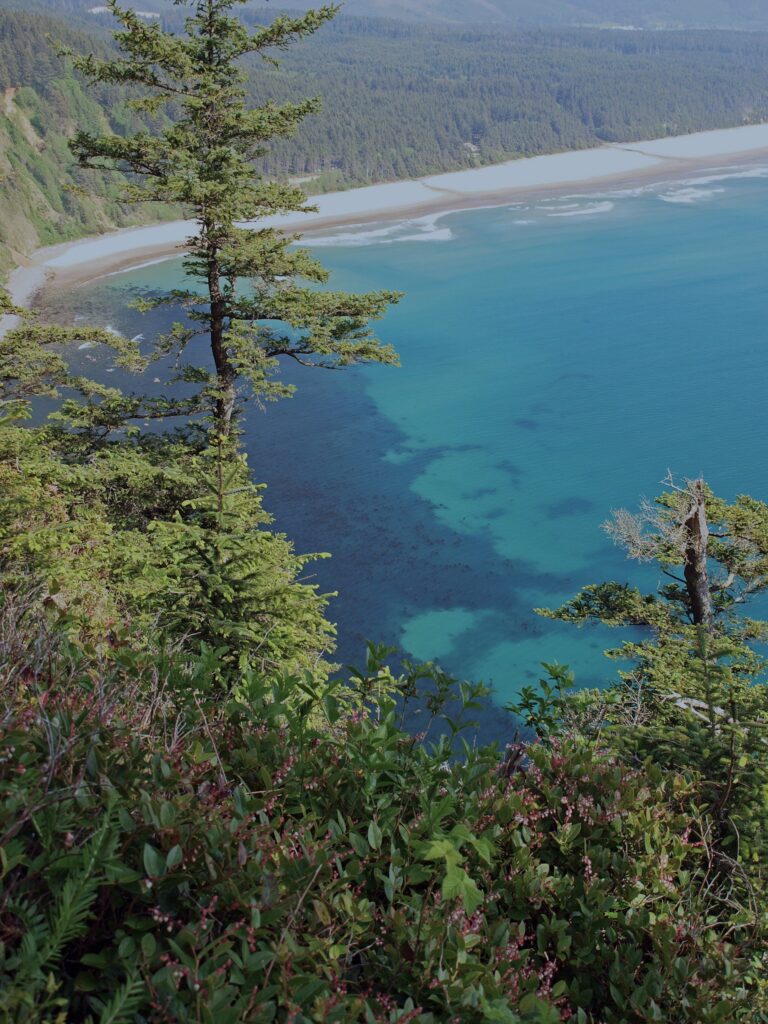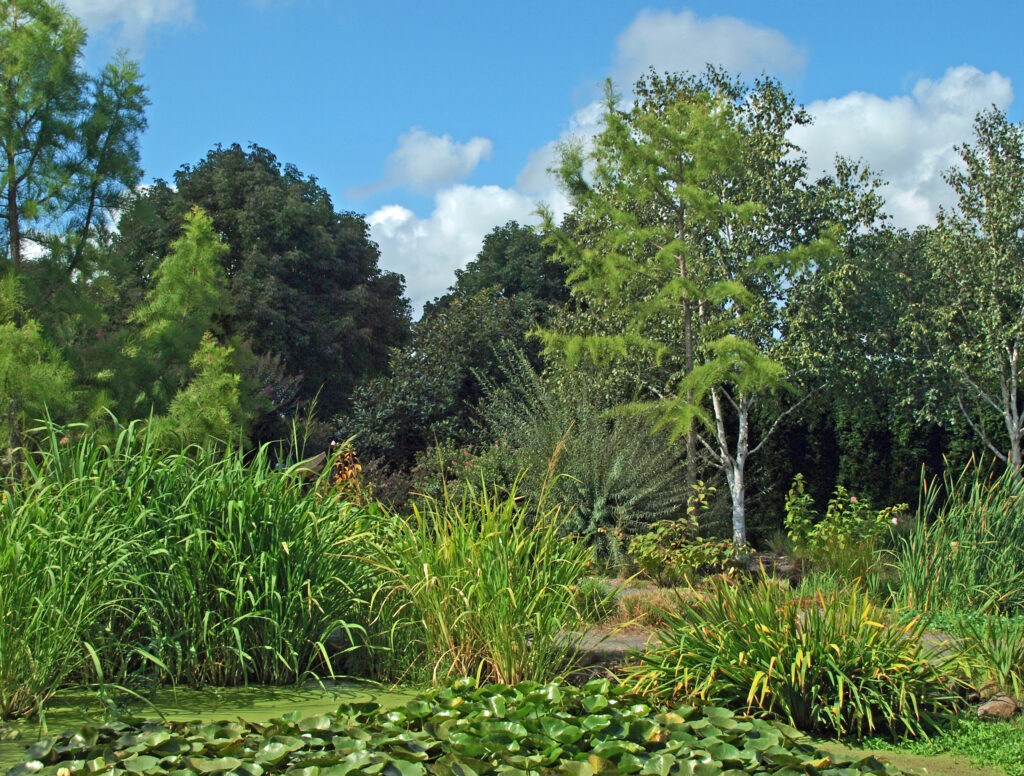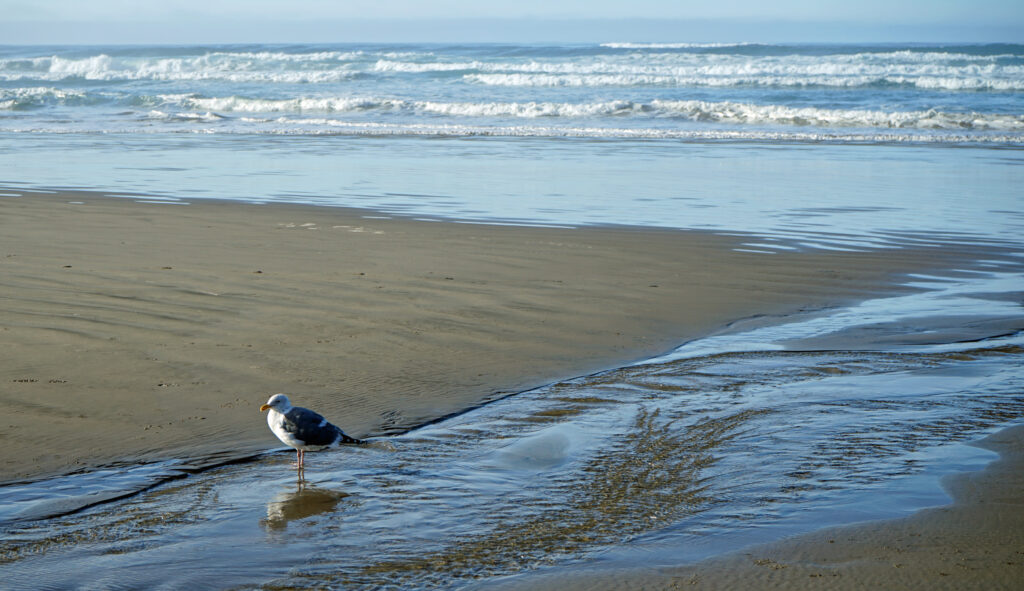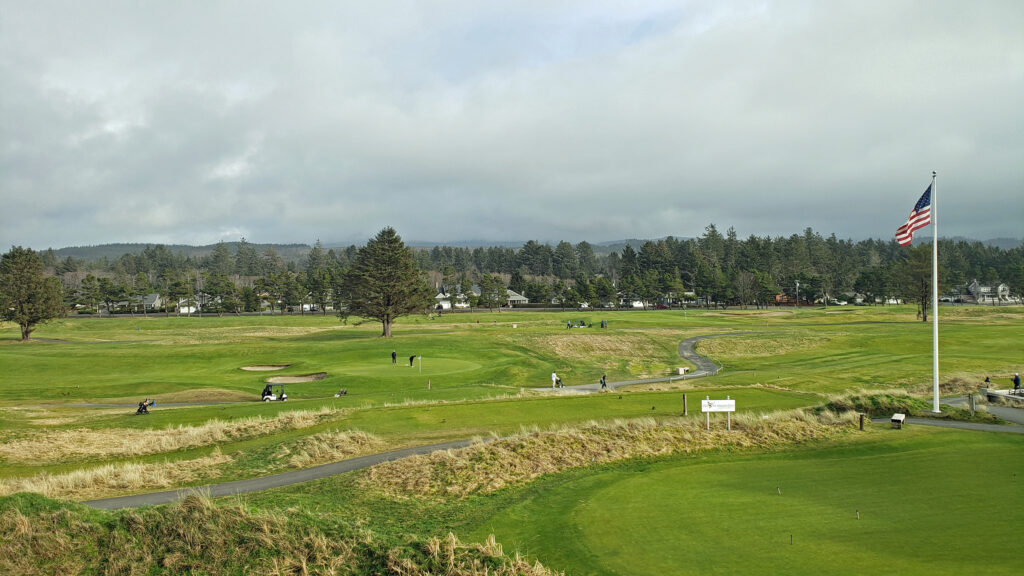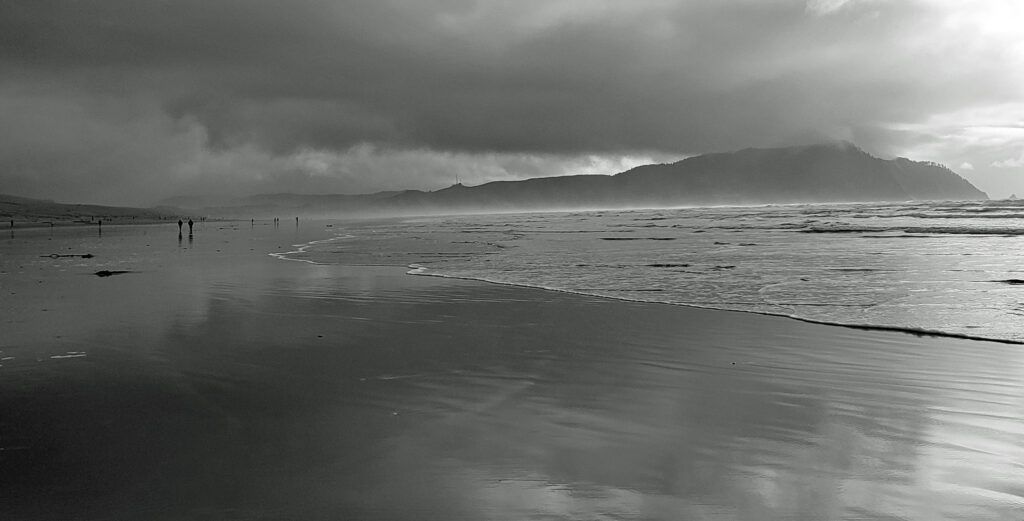
Clear Lake Loop Trail

Clear lake Loop Trail

Where:   Upper McKenzie River Valley, Willamette National Forest, Oregon

Distance:   5.0 miles

Elevation gain:   Minimal

Difficulty:   Easy to Moderate (for rough sections of the trail through the lava flows)

Clear Lake

Overview:

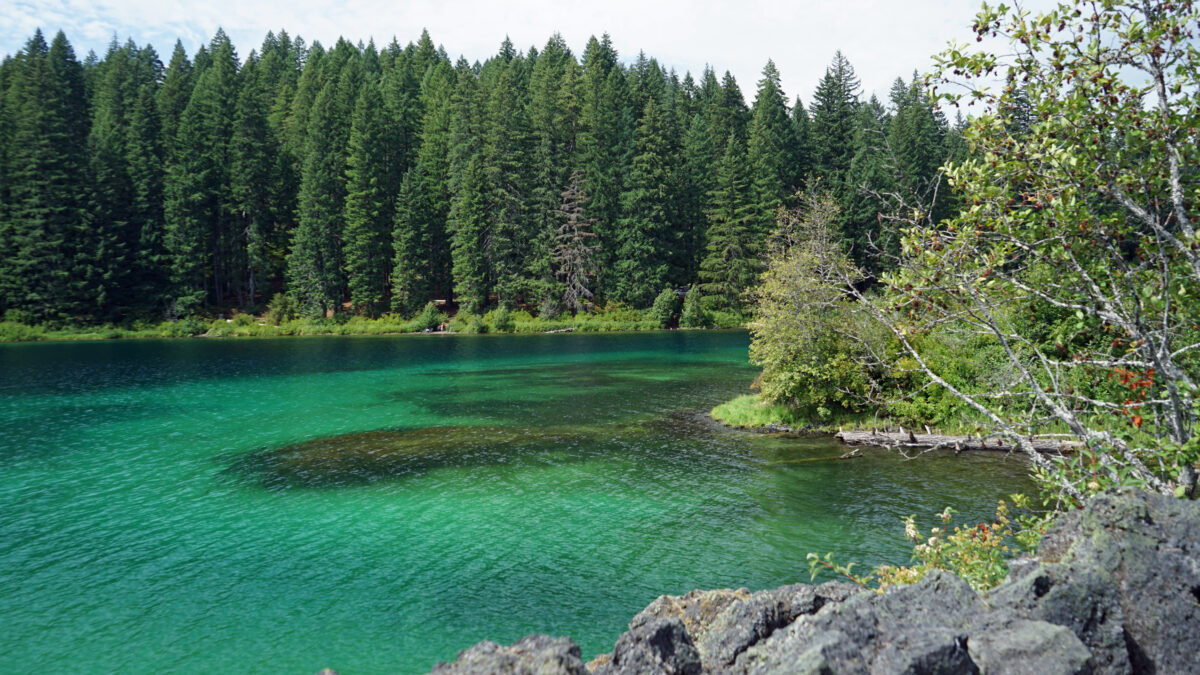
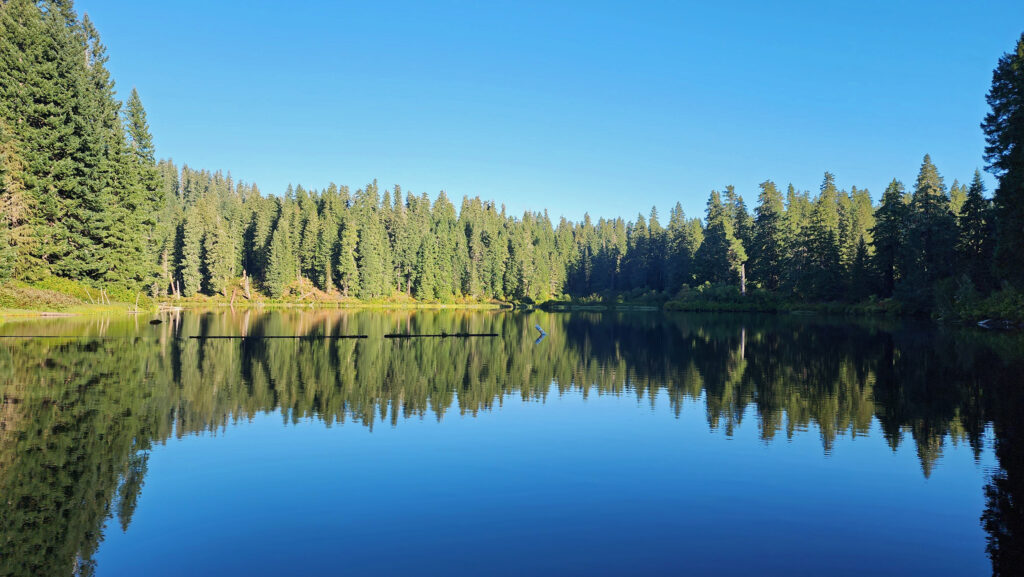
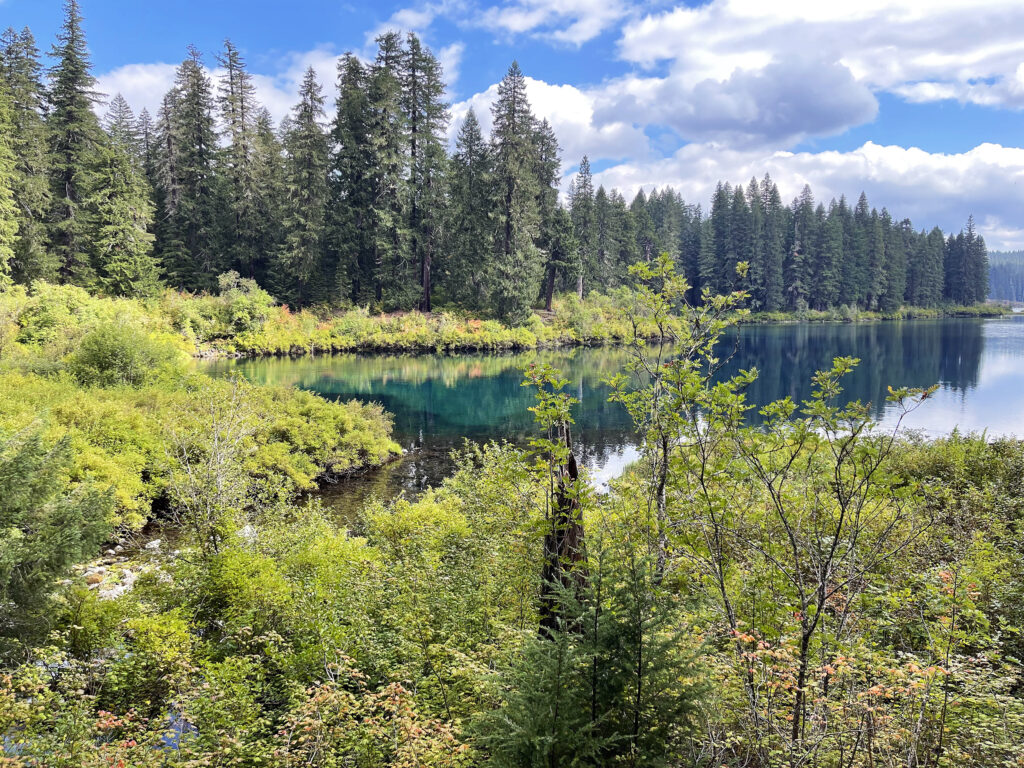
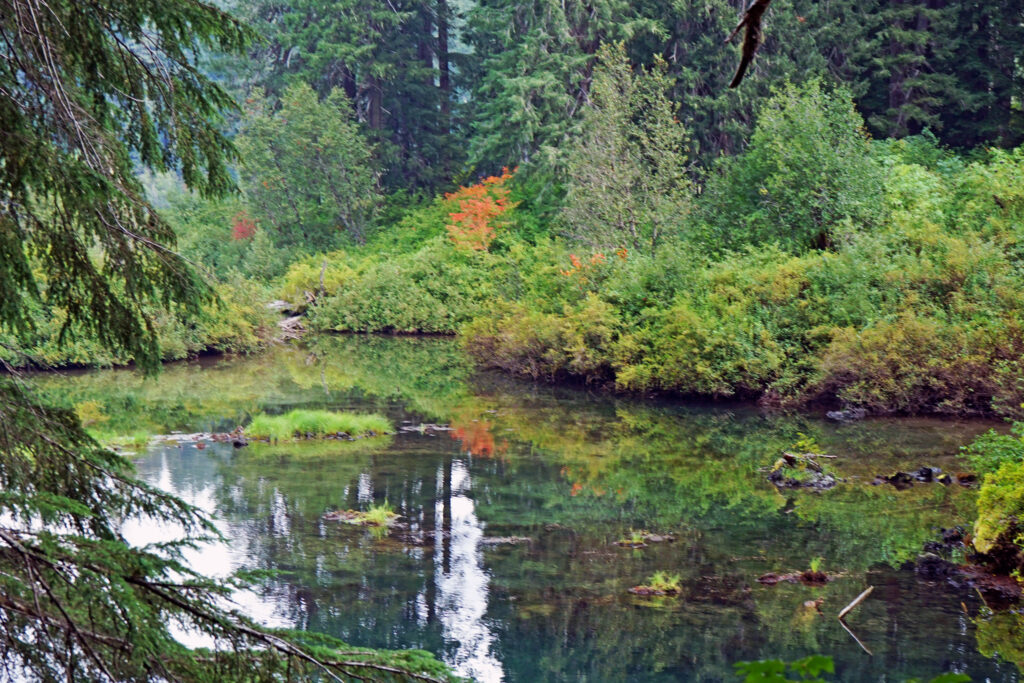
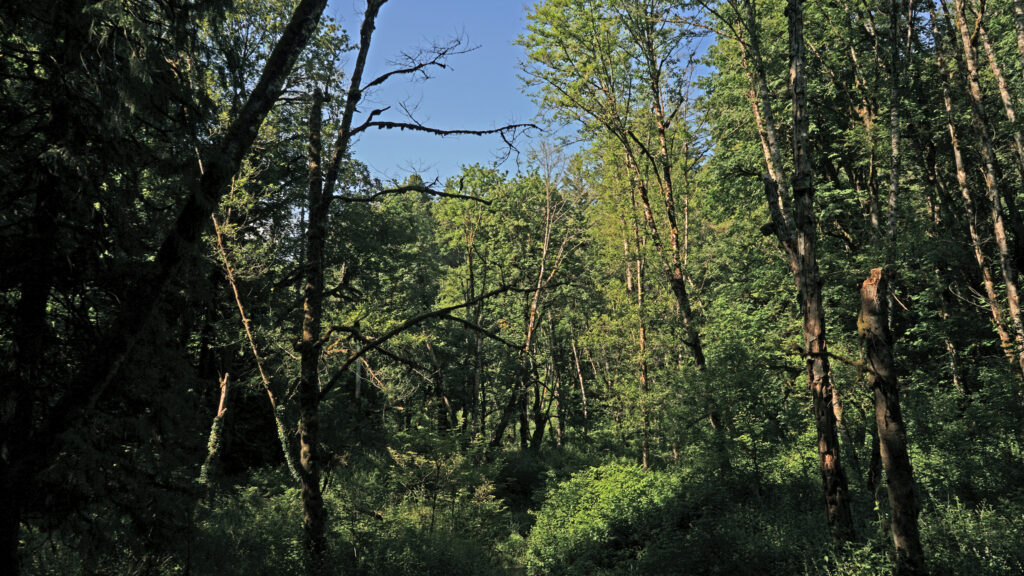
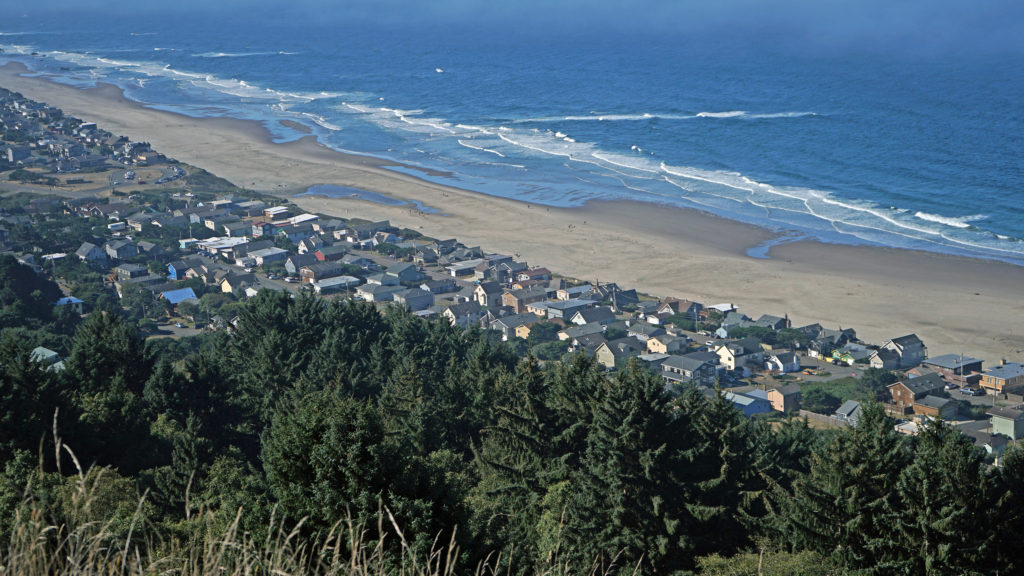
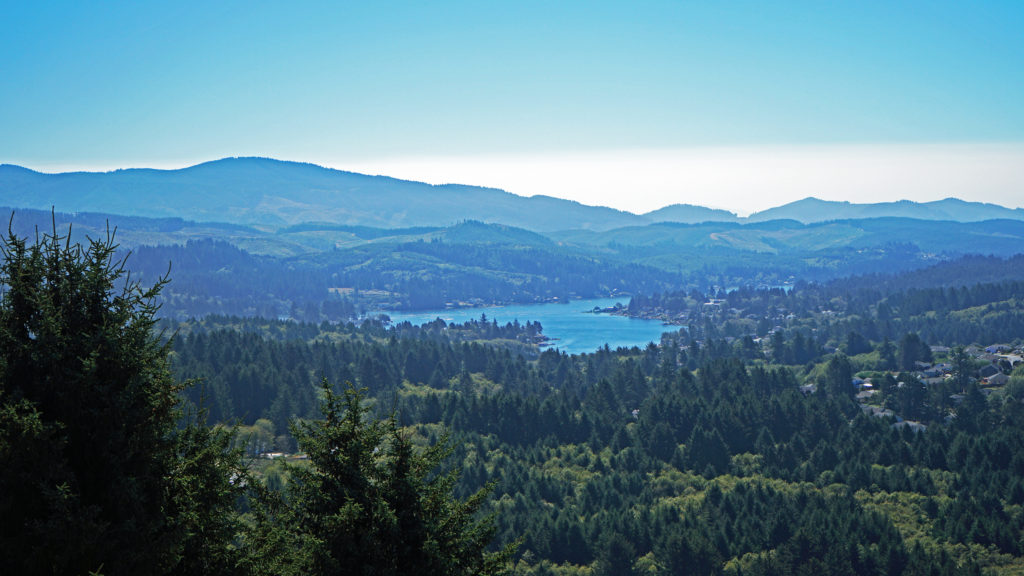
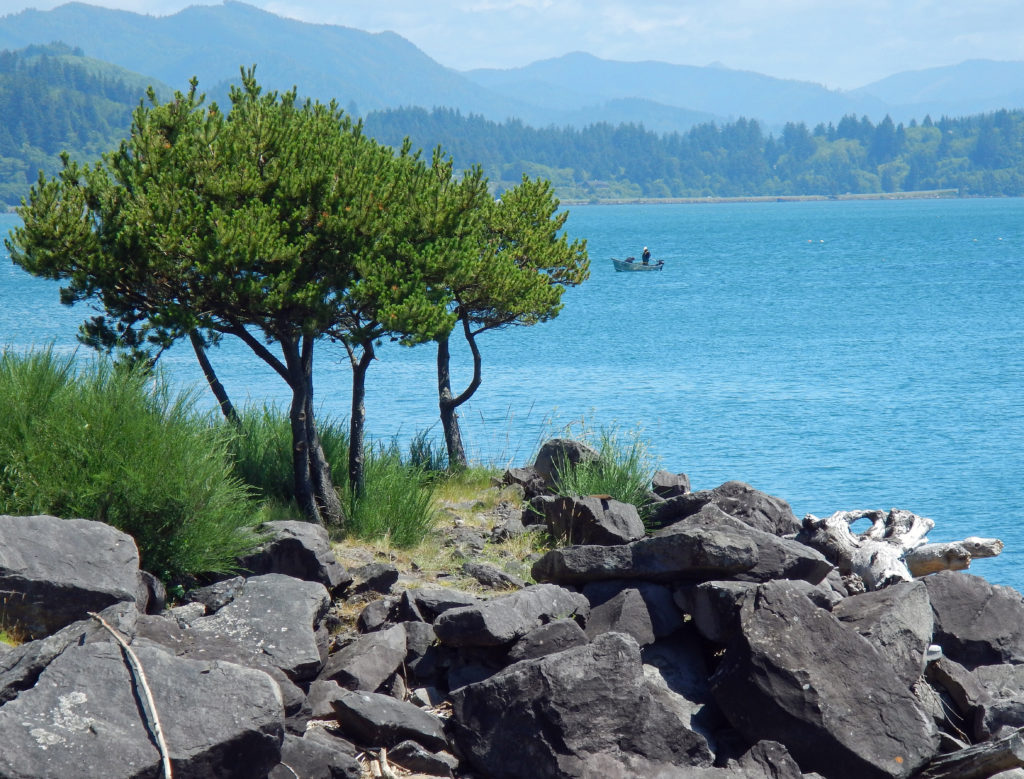
Clear Lake is one of the clearest (as the name would suggest), cleanest, coldest, and most beautiful lakes in the Cascade Range. It’s also the headwaters of the spectacularly beautiful McKenzie River. This hike takes you through the forest and lava fields around the lake, with great views of the lake from all sides.

Note that the trail along the west side of the lake may be closed periodically to protect bald eagle nesting sites. Call the McKenzie River Ranger Station at 541-822-7254 for more information. (The Ranger District’s website wasn’t much help, and the link to their email didn’t work).

Map:   Oregon Hikers

Getting there:

Clear Lake is located along Oregon Hwy 126 about 65 miles east of Eugene. From the Portland area, take I-5 south to exit 253, then travel east on Ore Hwy 22 for 79 miles to the junction with US Hwy 20, go west for three miles, then turn south on Ore Hwy 126. The lake is about three miles south of the junction. From the Bend area, take US Hwy 20 west over Santiam Pass to the junction with Ore Hwy 126, then south to the lake.

Clear Lake Trail

Trailheads:

You can start this hike from either the day use area at Clear Lake Resort on the northwest side of the lake or Coldwater Cove Campground on the southeast side. The resort has a small cafe (open limited hours) and restrooms, and drinking water is available. There is no charge to park and a Northwest Forest Pass is not required.  The Coldwater Cove trailhead is at the end of Forest Road 770, about one mile east of Hwy 126 just south of the lake. There are vault toilets at the campground and drinking water is available. Parking requires a Northwest Forest Pass. The trail description below starts and ends at the resort.

Clear Lake

The hike:

If you’re starting the hike at the resort, park in the day use area at the resort (unless you are renting one of the cabins or the yurt) and walk north through the resort along the shore of the lake. In a few hundred yards you’ll see the trailhead on your right.

North end of Clear Lake

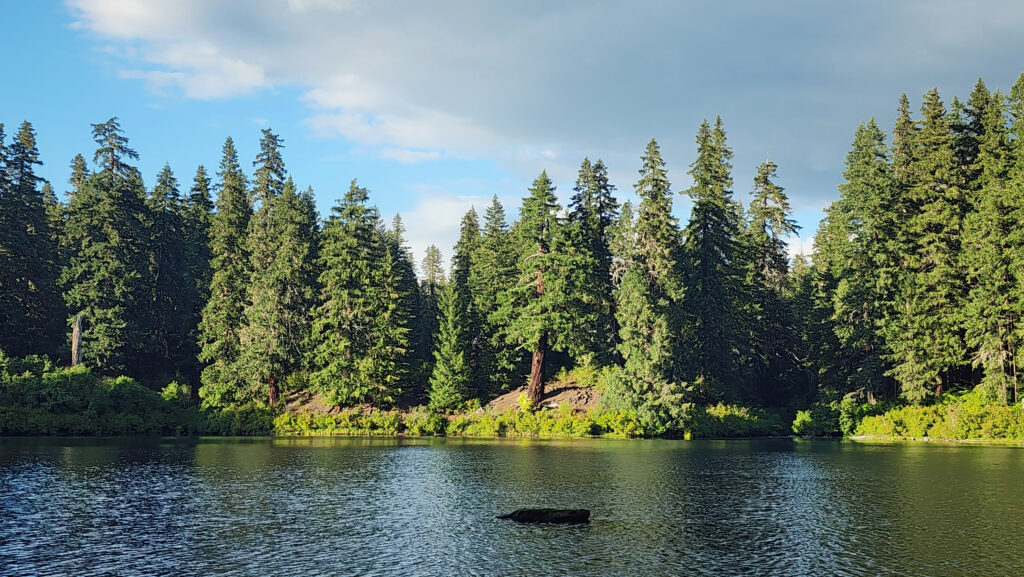
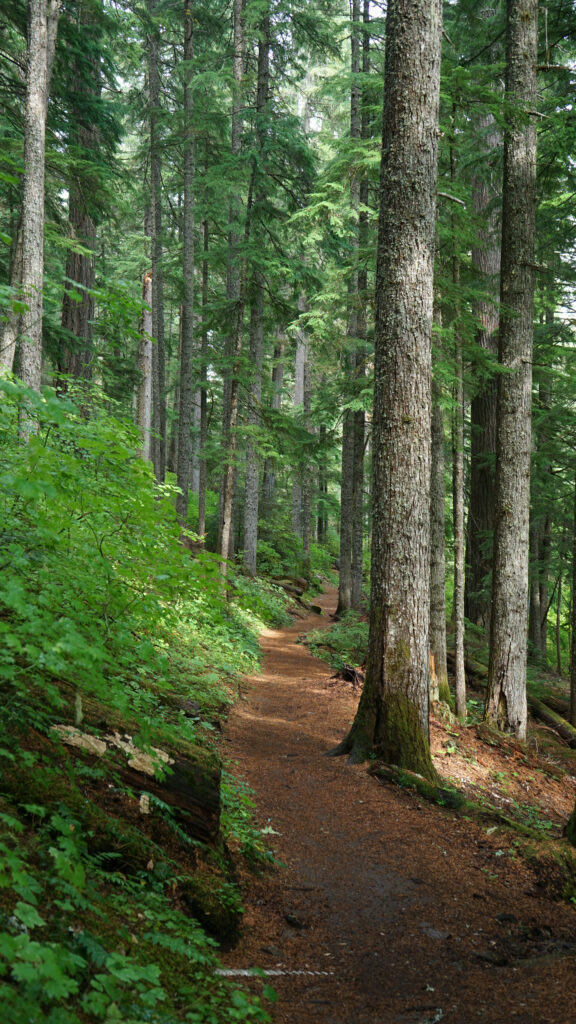
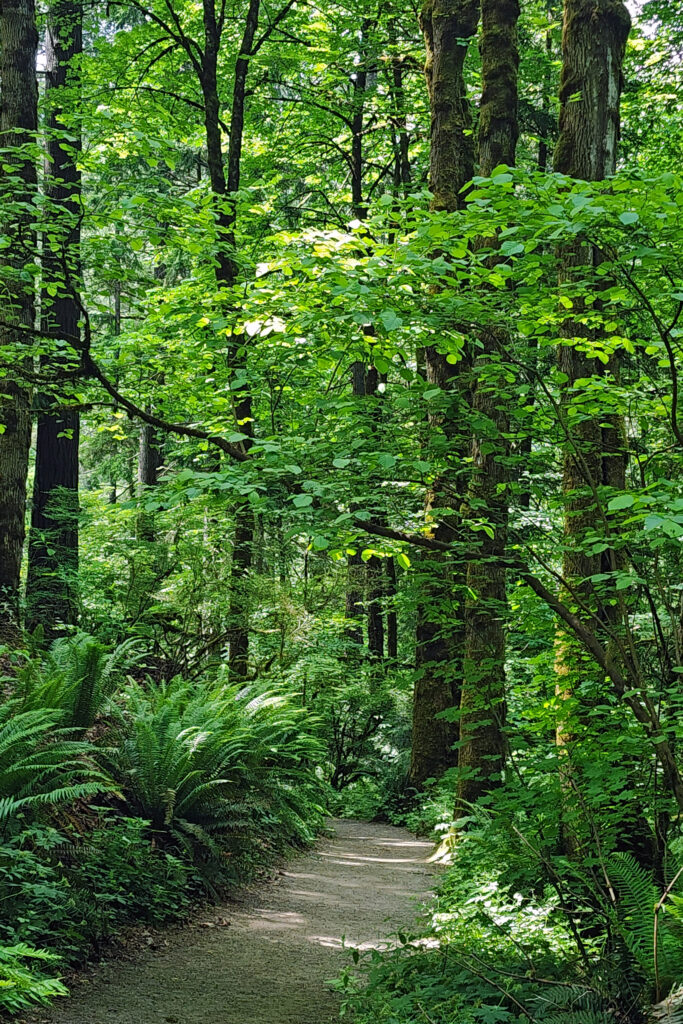
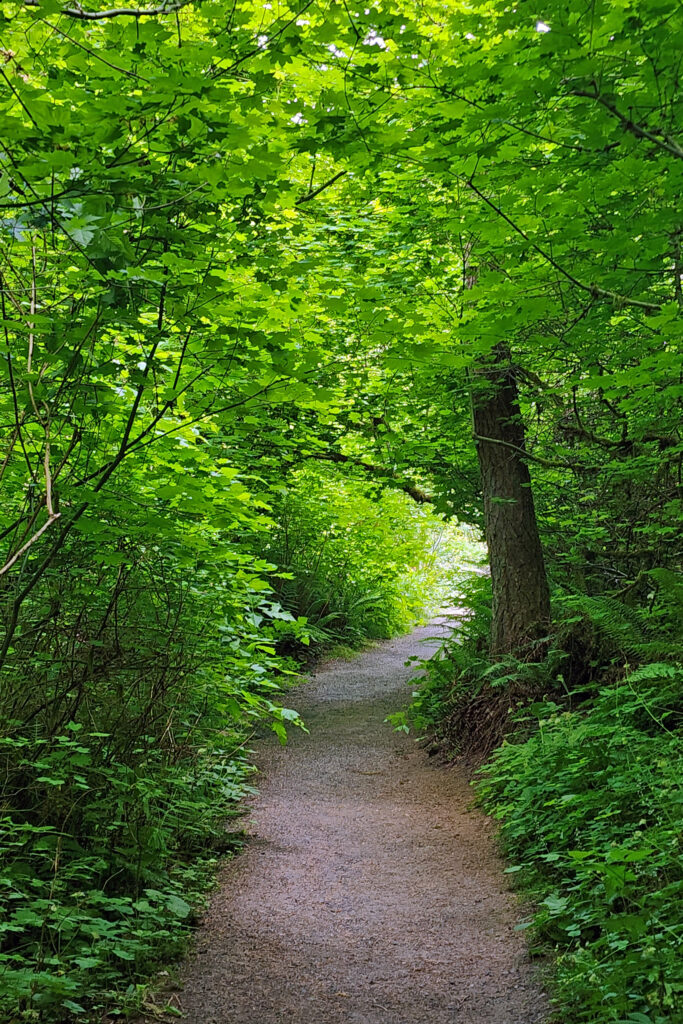
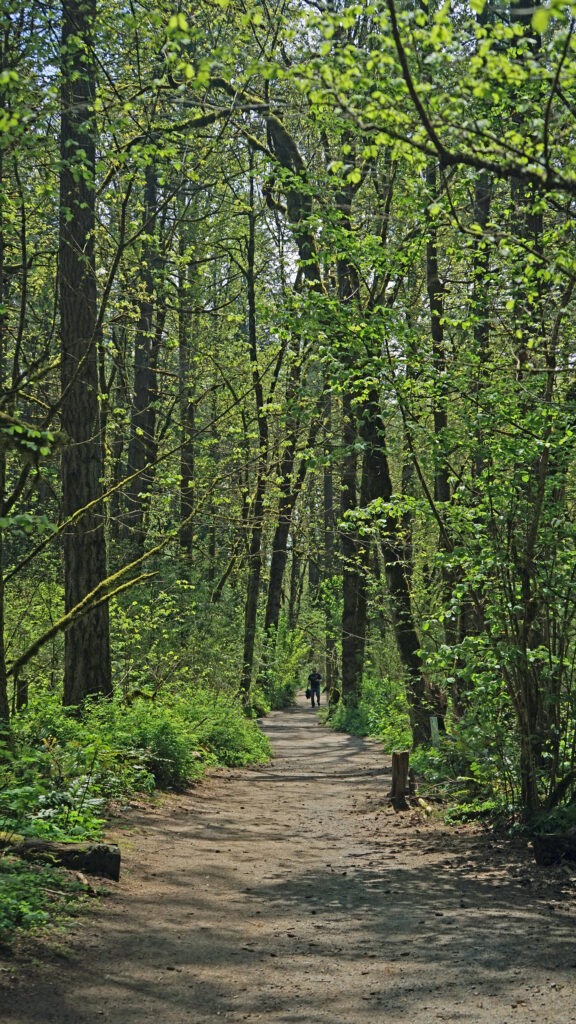
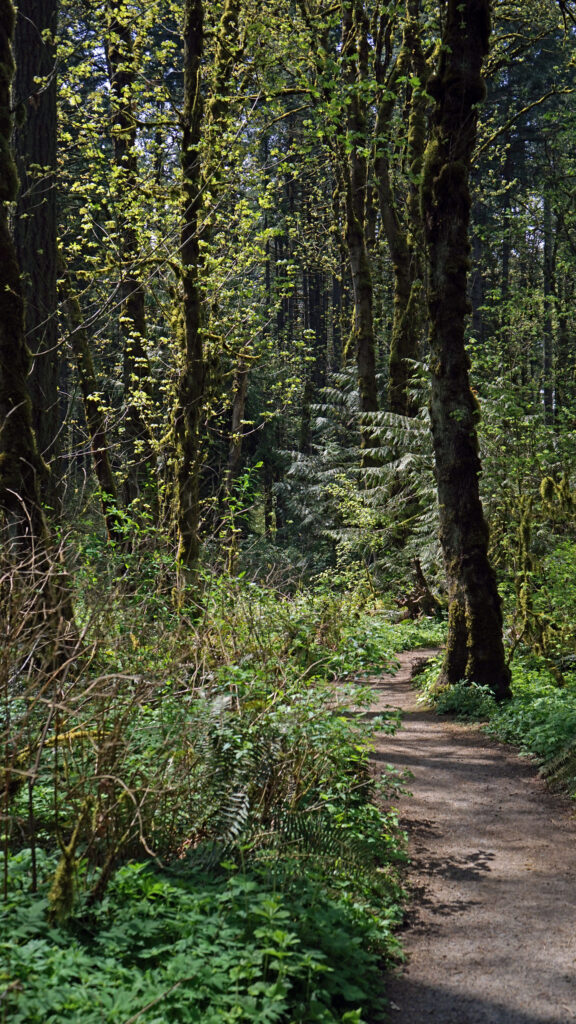
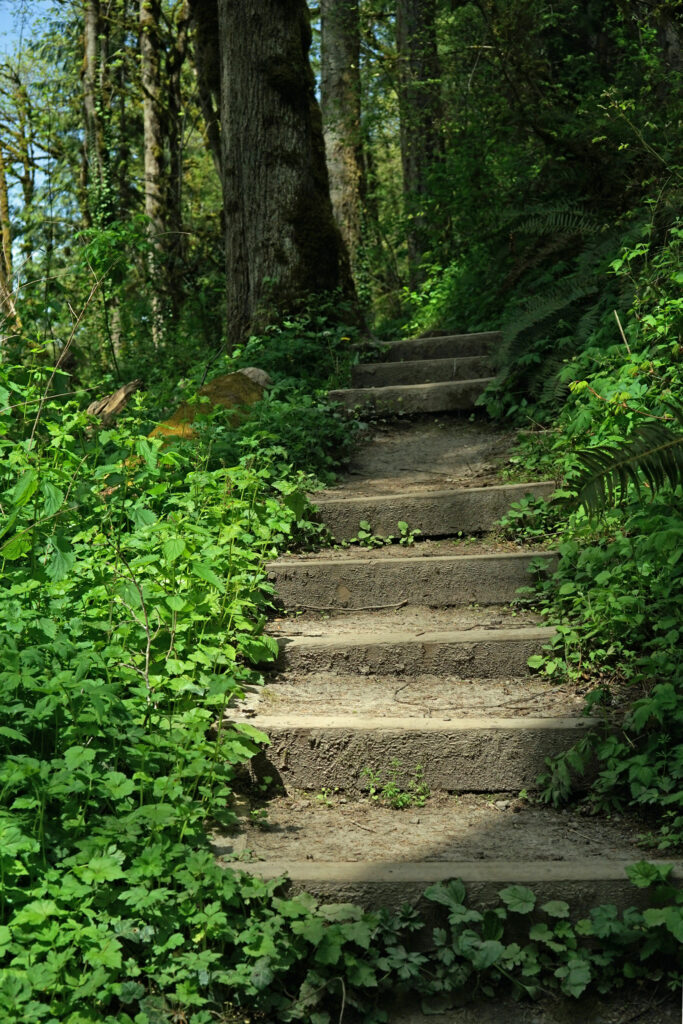
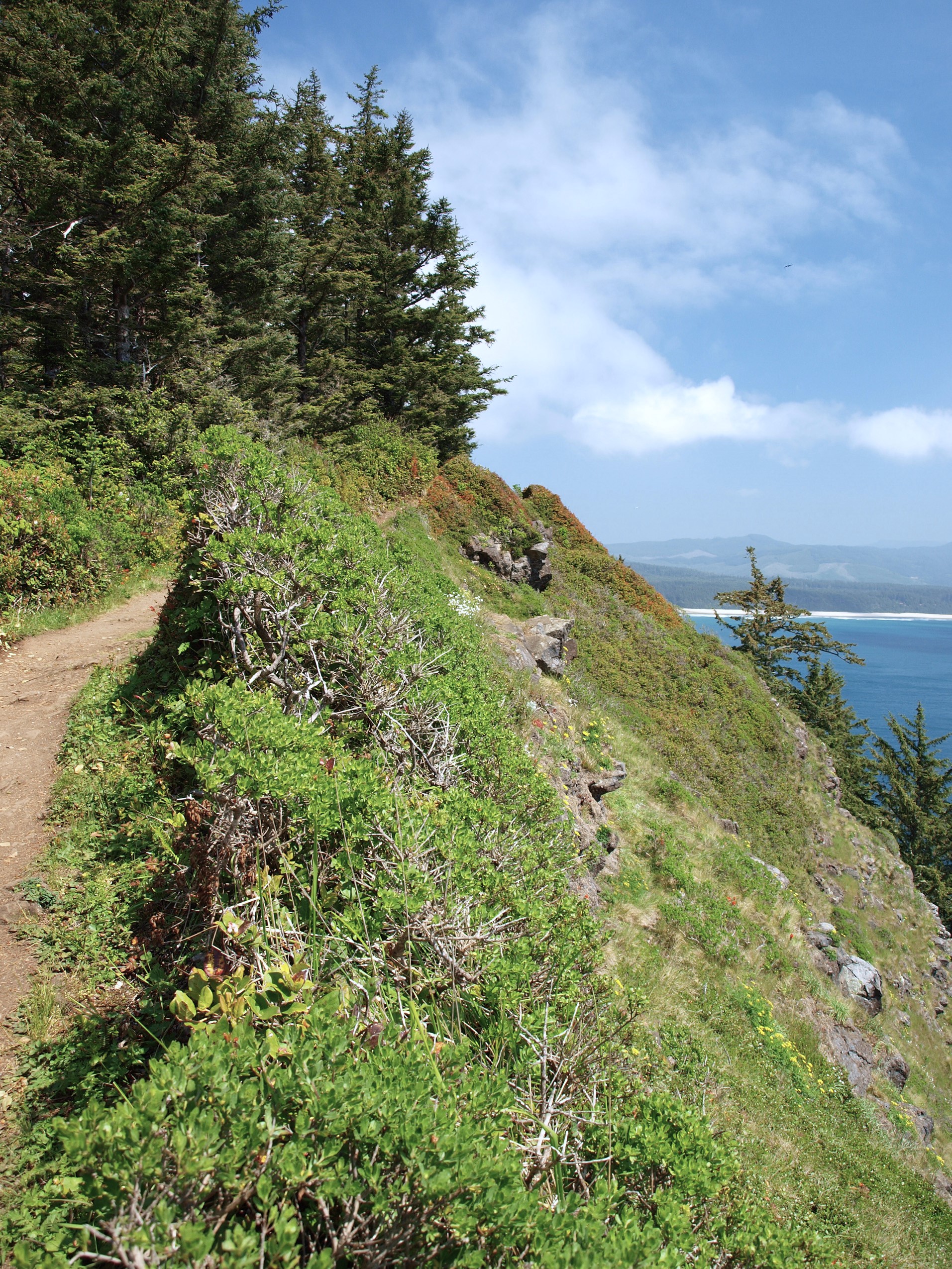
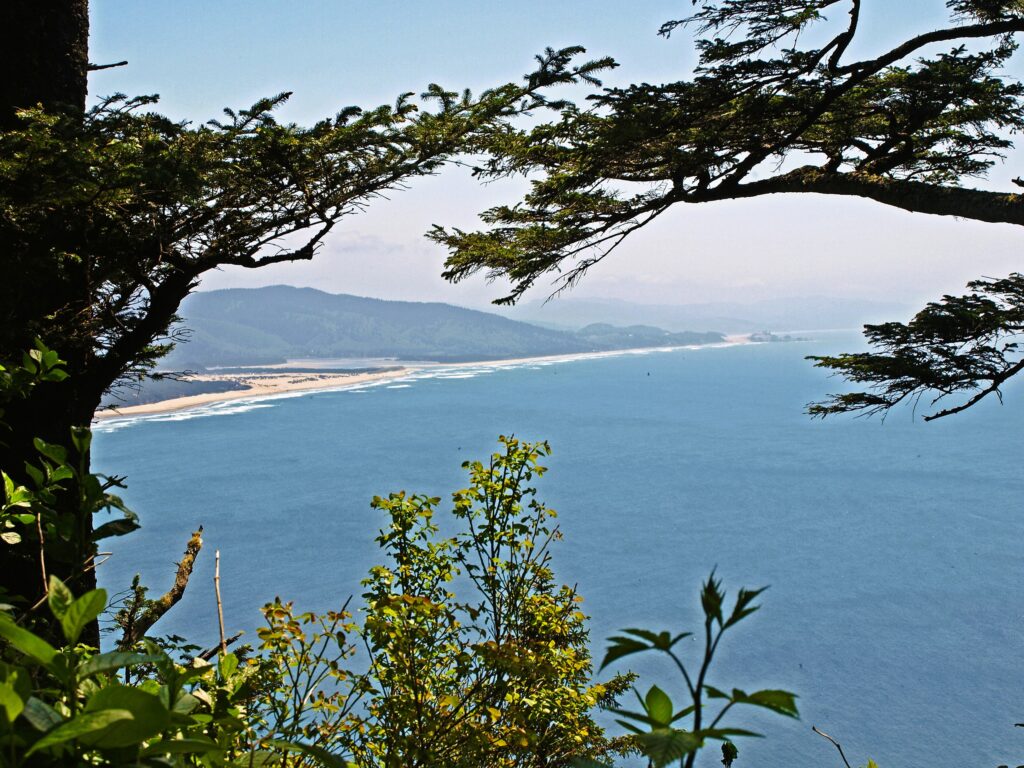
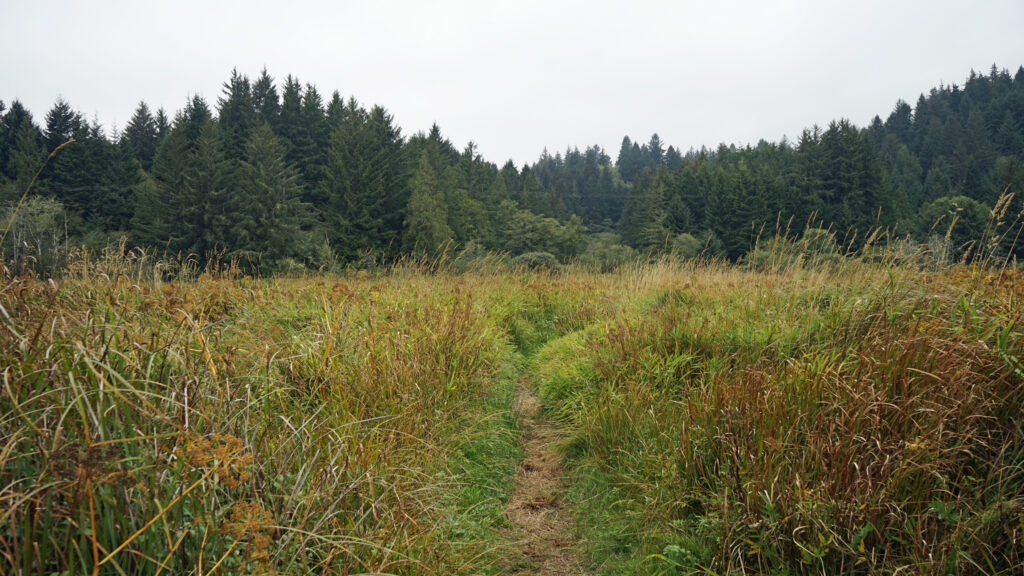
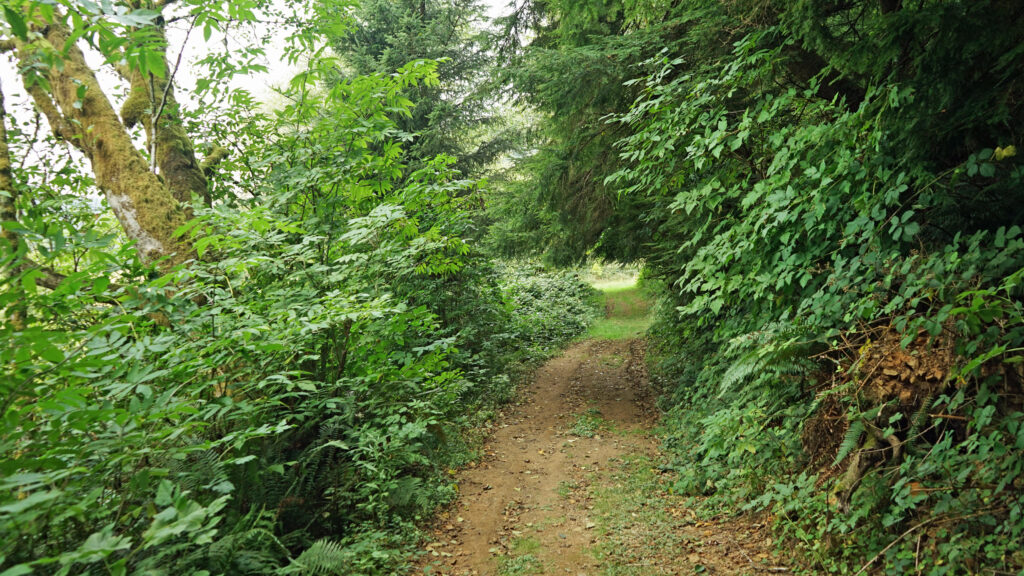
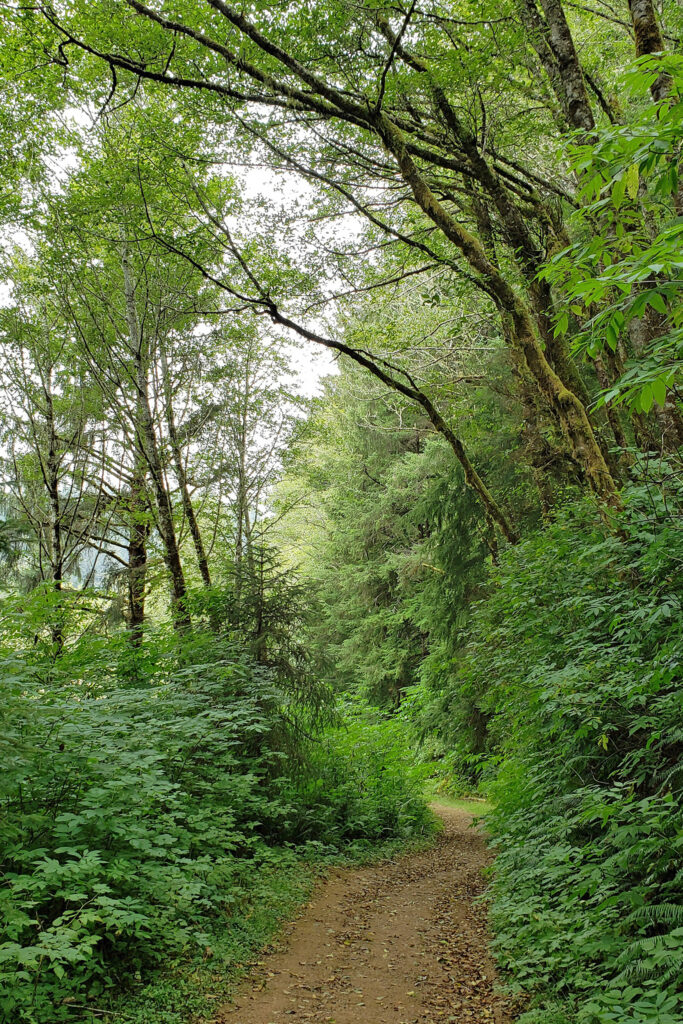
The first part of the trail takes you through the forest with filtered views of the lake. Several side trails lead down to the lake for better views.

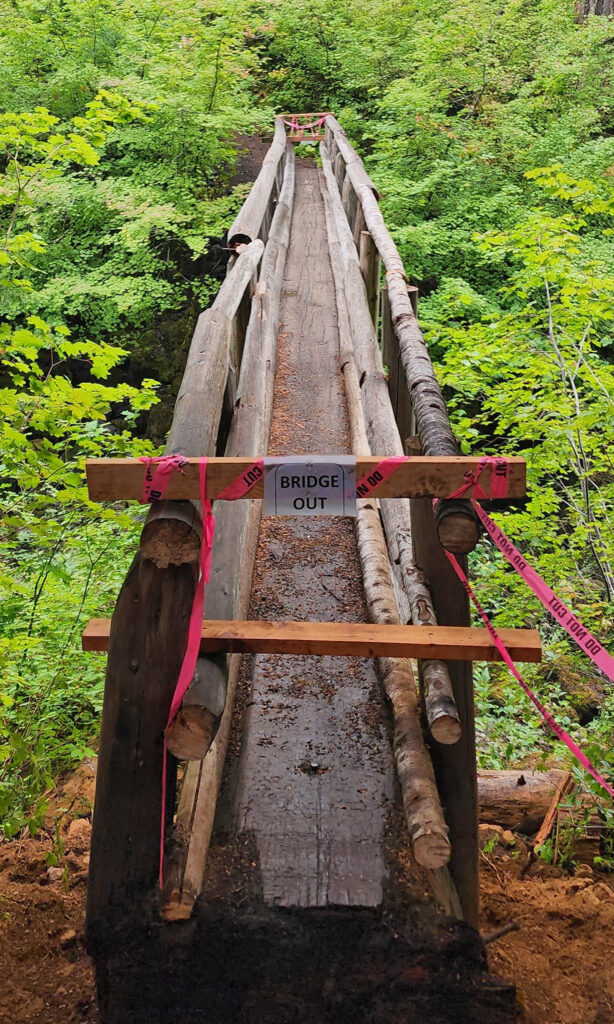
The old Fish Lake Creek bridge, 2022
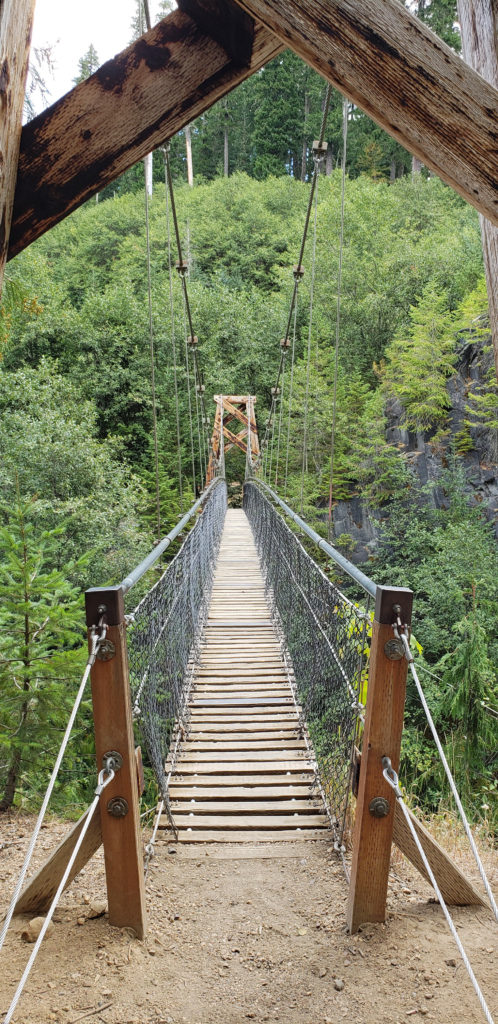
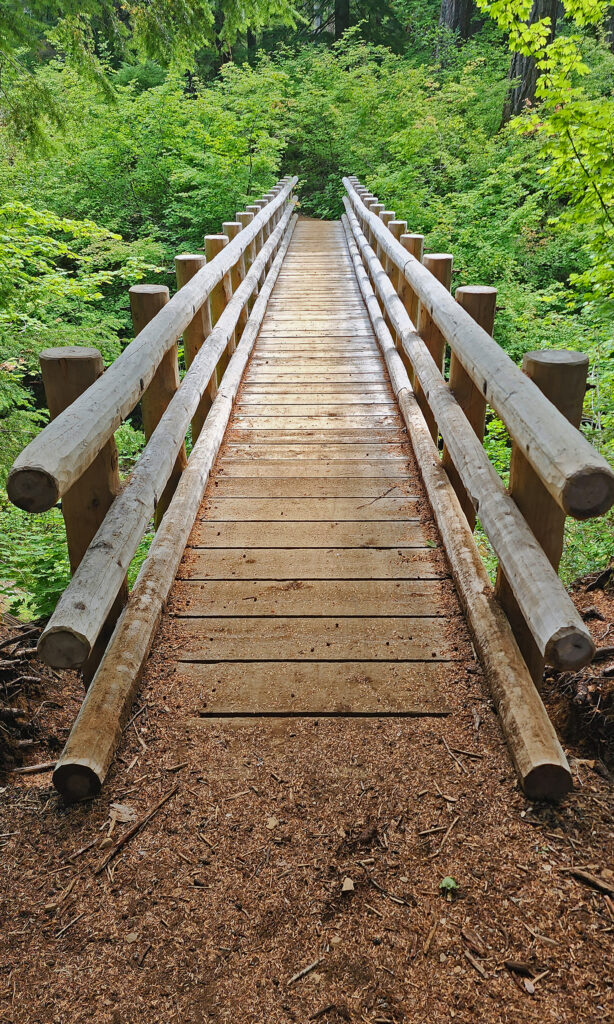
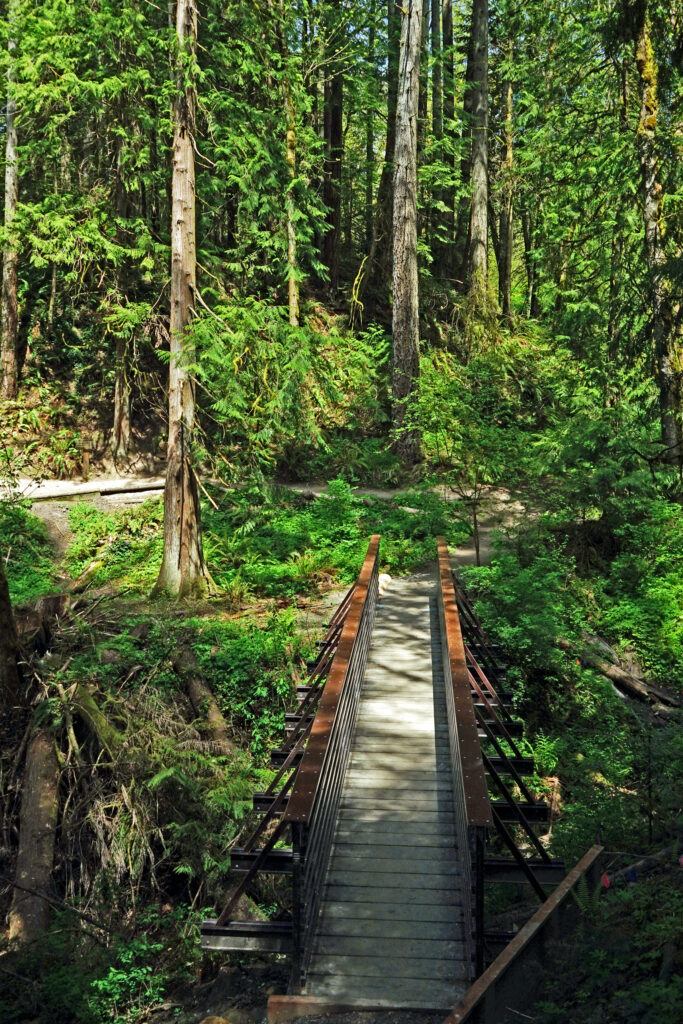
The new and much improved Fish Lake Creek bridge, 2024
The new Fish Lake Creek bridge

The trail continues north away from the lake, then crosses Ikenick Creek and doubles back to the lake before turning north again for about a half mile to a junction with the McKenzie River National Scenic Trail. Here the trail crosses Fish Lake Creek. (The Forest Service was in the process of replacing the old single log bridge when I was there in 2022 and the bridge was closed, but the creek was dry and you could scramble down the slope and climb back up the other side. The new bridge was in place when I did this hike again in the summer of 2024.

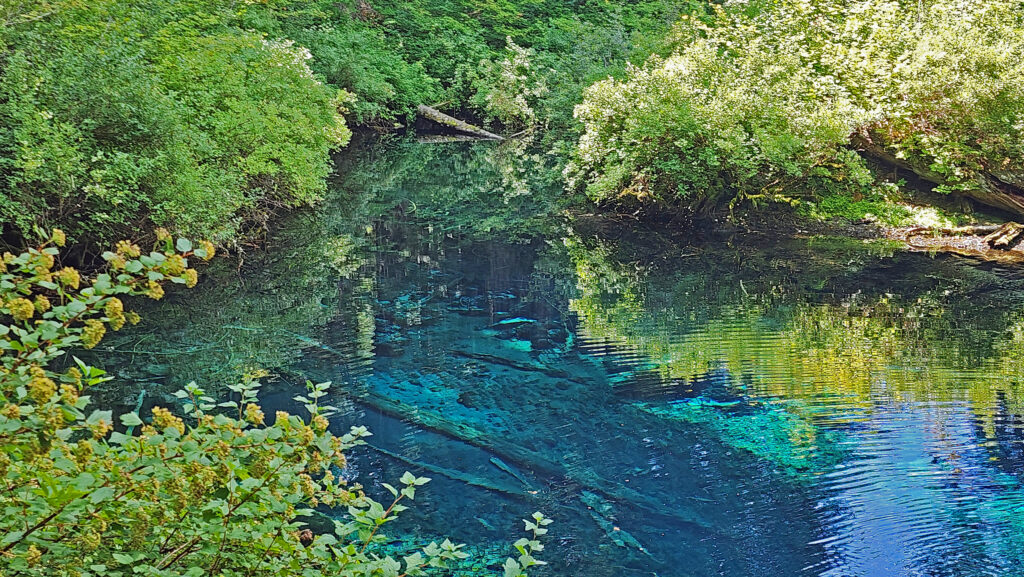
Great Spring

After crossing Fish Lake Creek, the trail turns south and runs along the eastern shore of the lake to the Great Spring. This was the source of the McKenzie River before Clear Lake was formed about 3000 years ago when a lava flow damned the river.

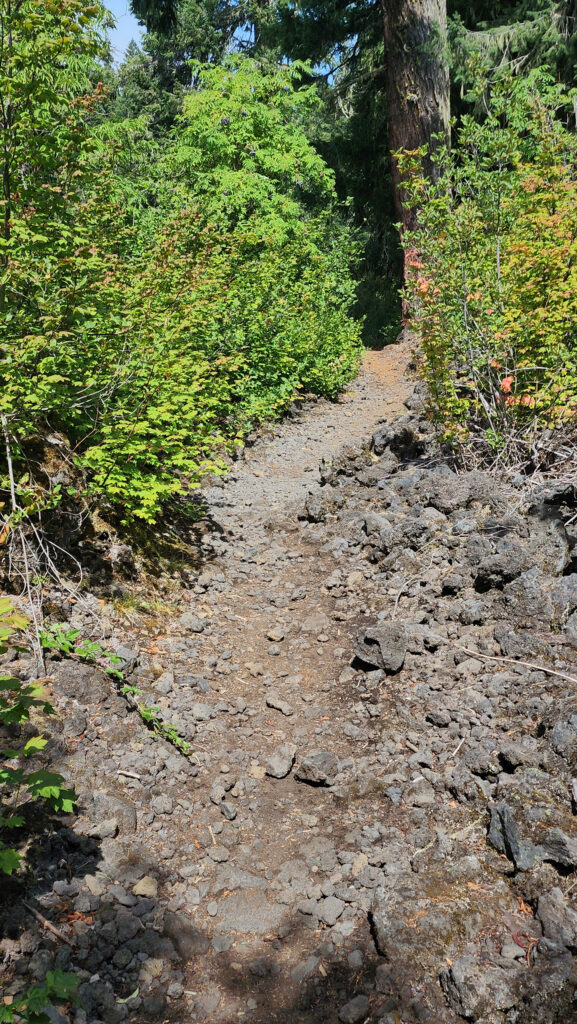
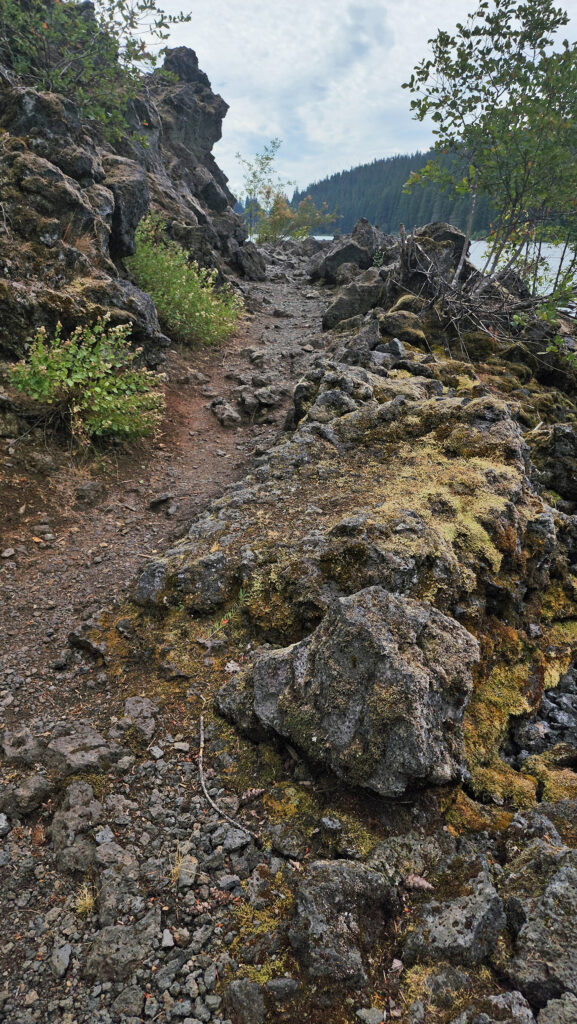
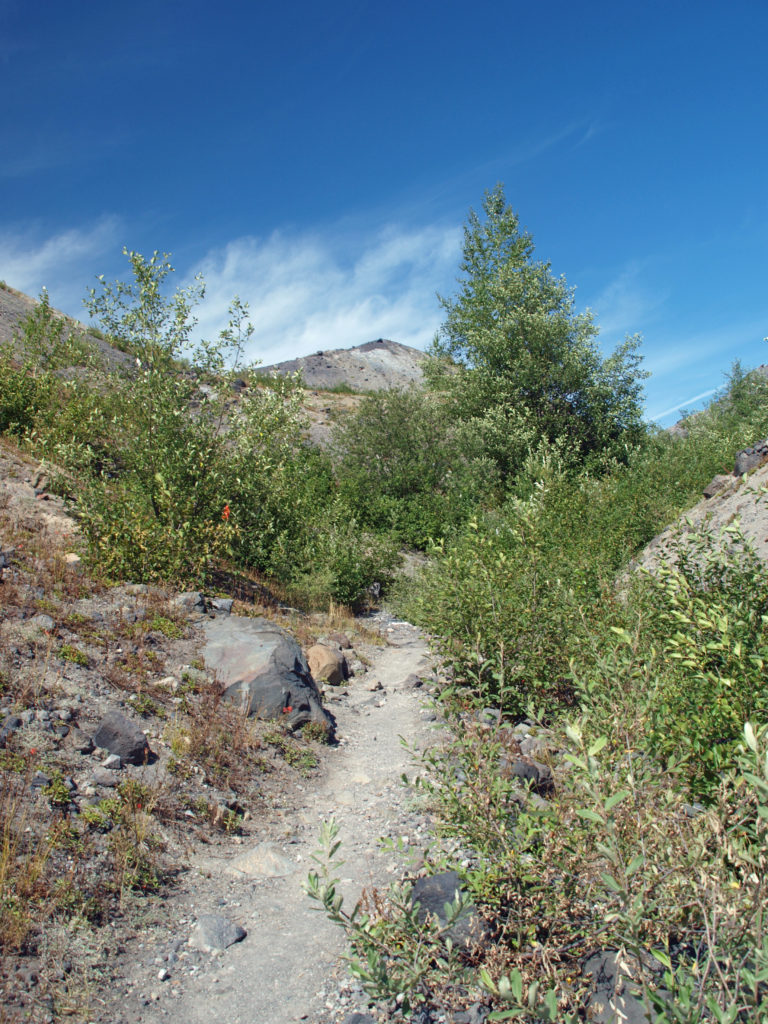
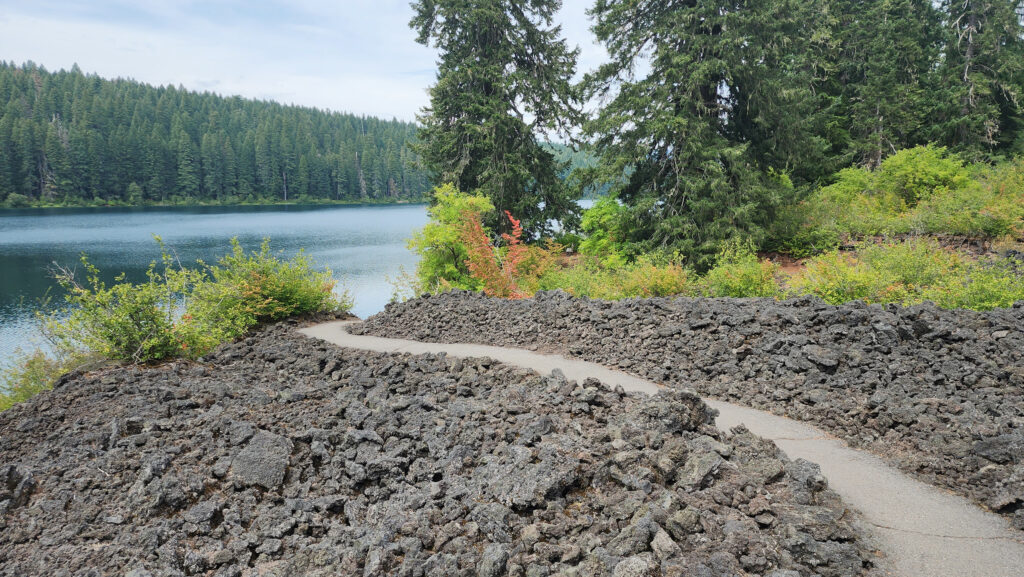
From the Great Spring the trail follows the east shore through the lava fields and forest. Parts of the trail are pretty rough. Good quality hiking boots are advised, although I did this hike in sneakers on my latest visit. But open toed sandals or flip flops are definitely not acceptable footwear on this section of the trail.
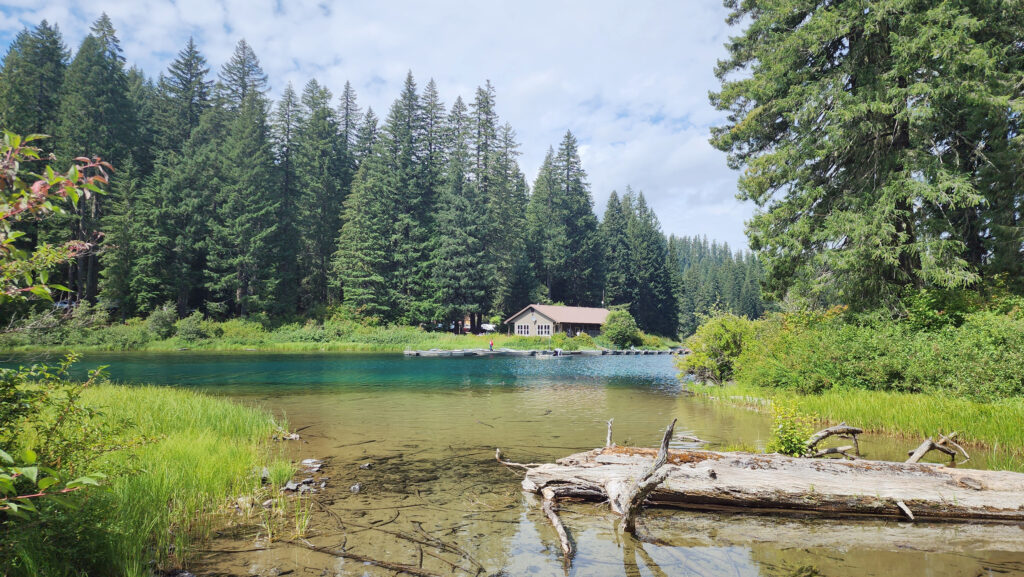
Clear Lake Lodge from the opposite shore

The section of trail immediately north of Coldwater Cove Campground is paved. South of the campground, the trail runs through the forest to the south end of the lake where you’ll come to a trail junction. Turn right to return to the resort.

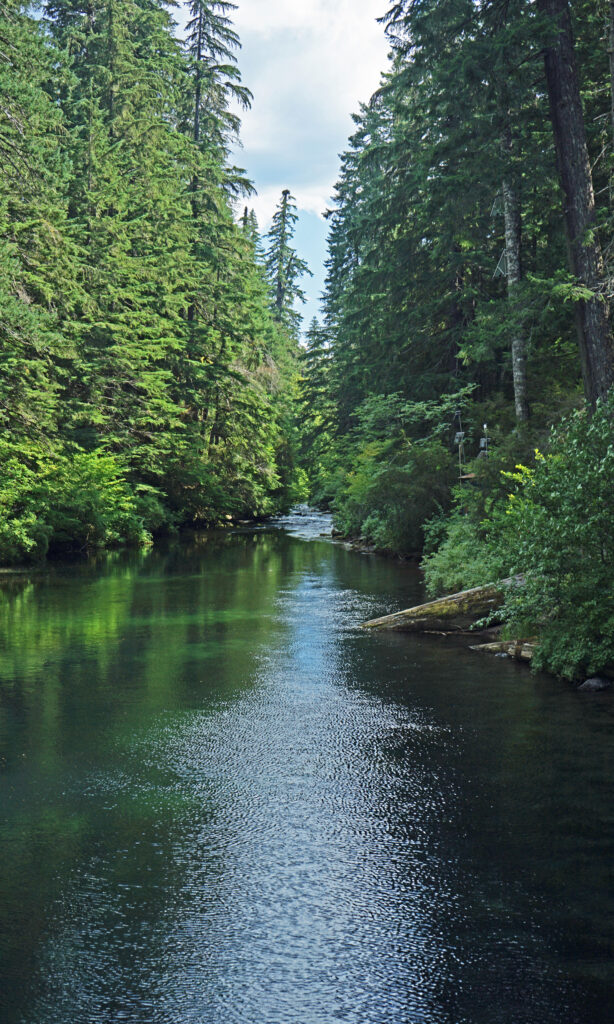
Clear Lake outlet and the beginning of the McKenzie River

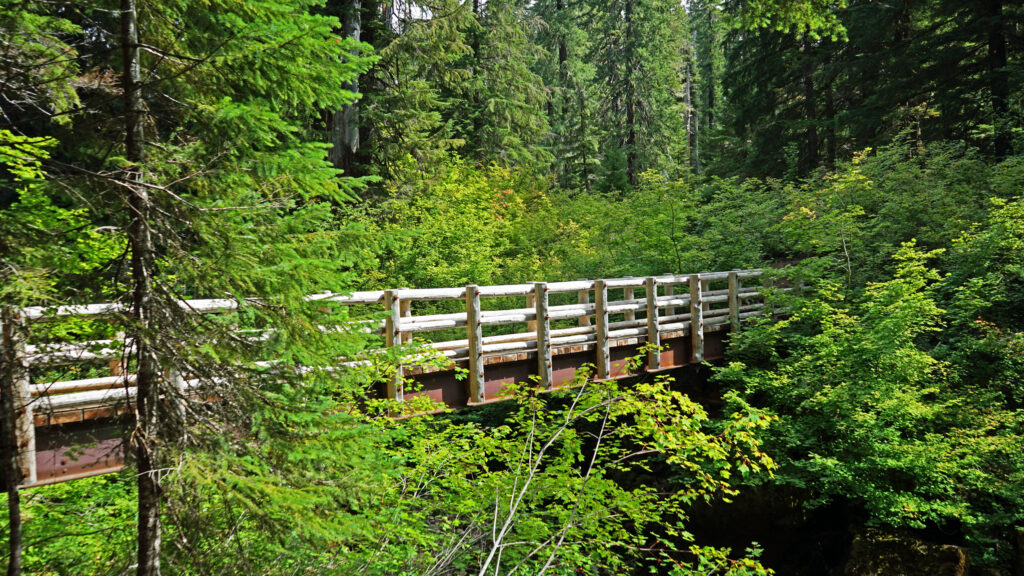
The trail crosses the lake’s outfall on a bridge that provides good views south to the beginning of the McKenzie River and north across the lake. Across the bridge, the trail turns north through the forest along the west shore of the lake. There is one good side trail that will take you to the lakeshore, but the main trail gives only limited views of the lake before you return to the resort where you started.

Clear Lake

Other area attractions and activities:

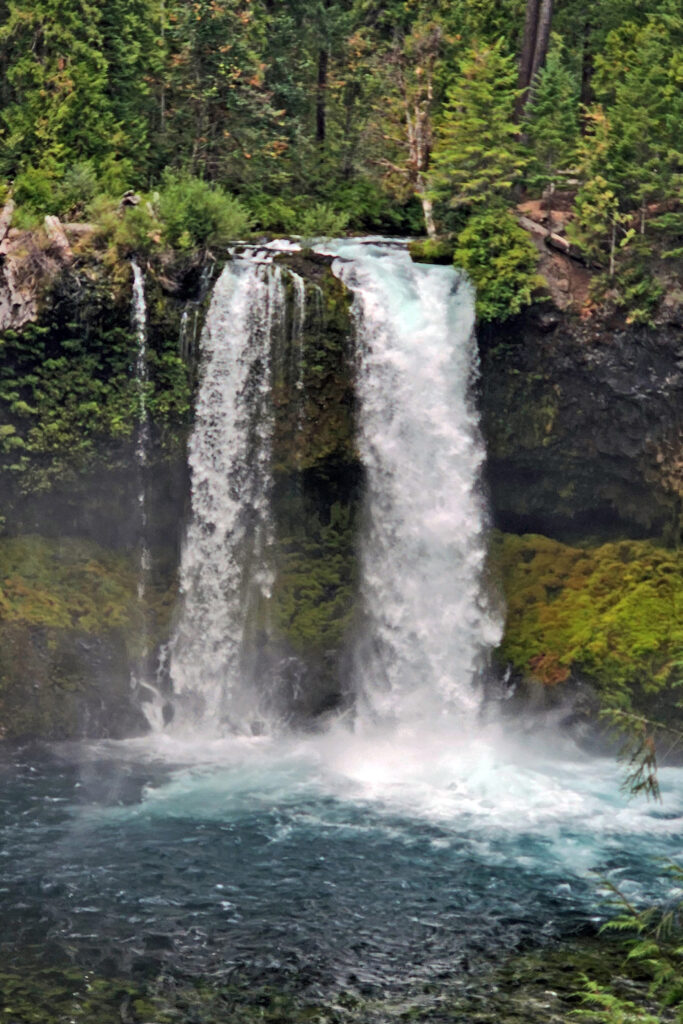
Koosah Falls

There are too many other hikes in the area to list all of them, but two of the best are the  four mile out and back hike to the Blue Pool on the McKenzie River, and the 2.6-mile McKenzie Waterfalls Loop that takes you past both Sahalie and Koosah Falls on the McKenzie. The Pacific Crest Trail crosses Santiam Pass northeast of Clear Lake giving hikers access to trails in both the Mount Jefferson Wilderness to the north and the Mount Washington Wilderness to the south.

Fish Lake

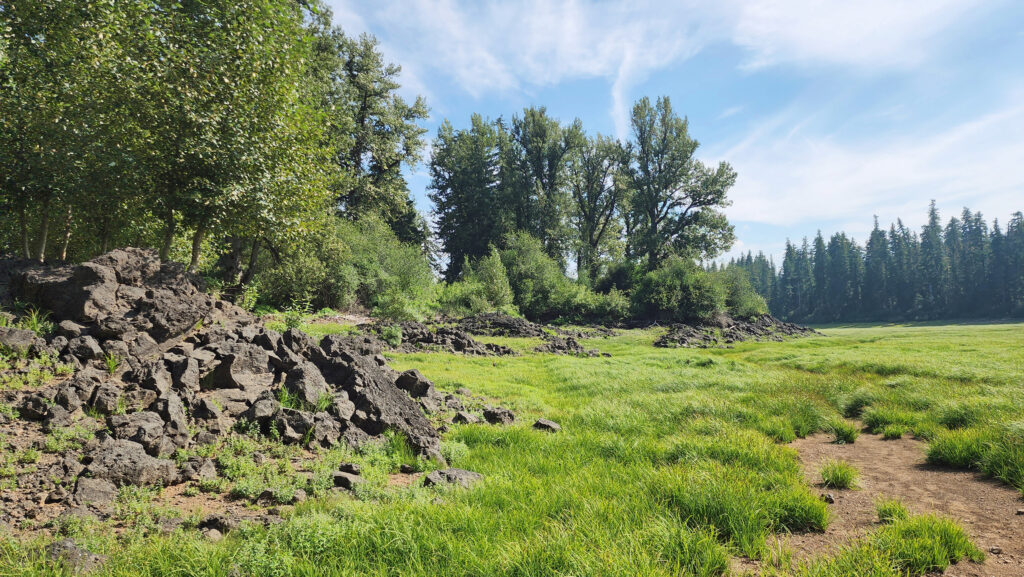
Fish Lake, a few miles north of Clear Lake, is definitely worth a visit. The lake dries up completely in the summer and becomes a lush, green meadow, even in late summer when the surrounding forest is bone dry. The 19th century Santiam Wagon Road crossed the Cascades here, and there was a Forest Service guard station here in the first half of the 20th century. Several of the Forest Service buildings and historic homesteads have been preserved and the area is now a National Historic Site.

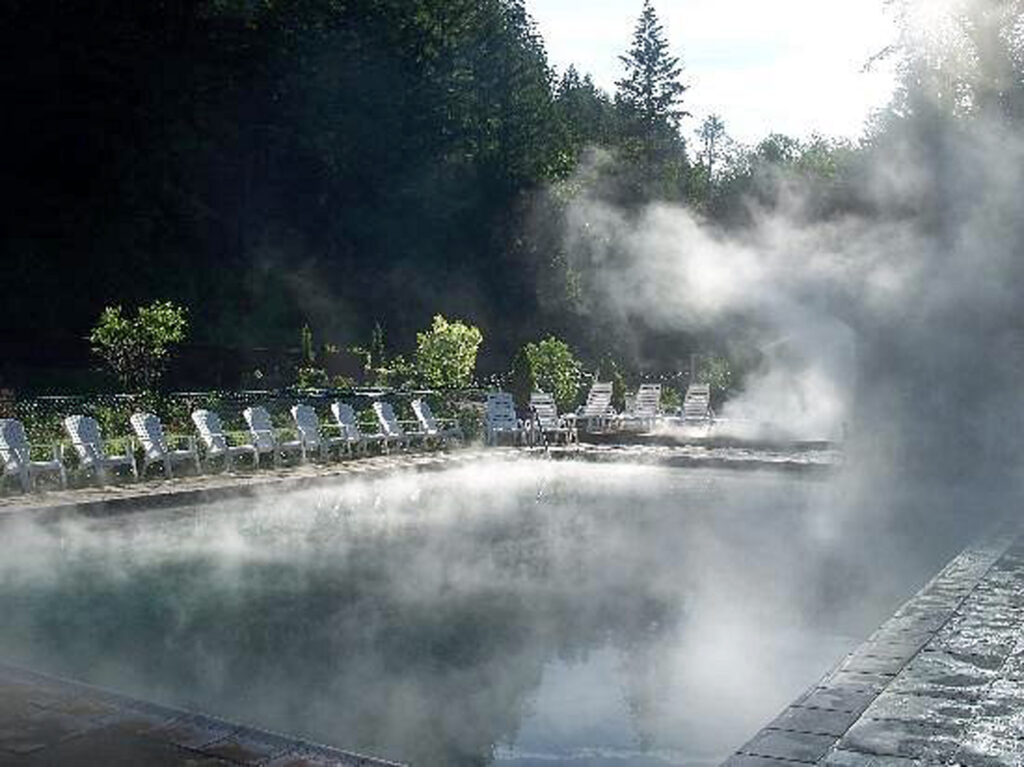
Thermal pool at Belknap Hot Springs. Photo from Tripadvisor website.

One of the many hot springs in the Cascade Range is Belknap Hot Springs, located about 15 miles south of Clear Lake. The hot springs are at Belknap Hot Springs Lodge and Gardens. Day use visitors can soak in one of the hot springs pools for a $10/hr fee.

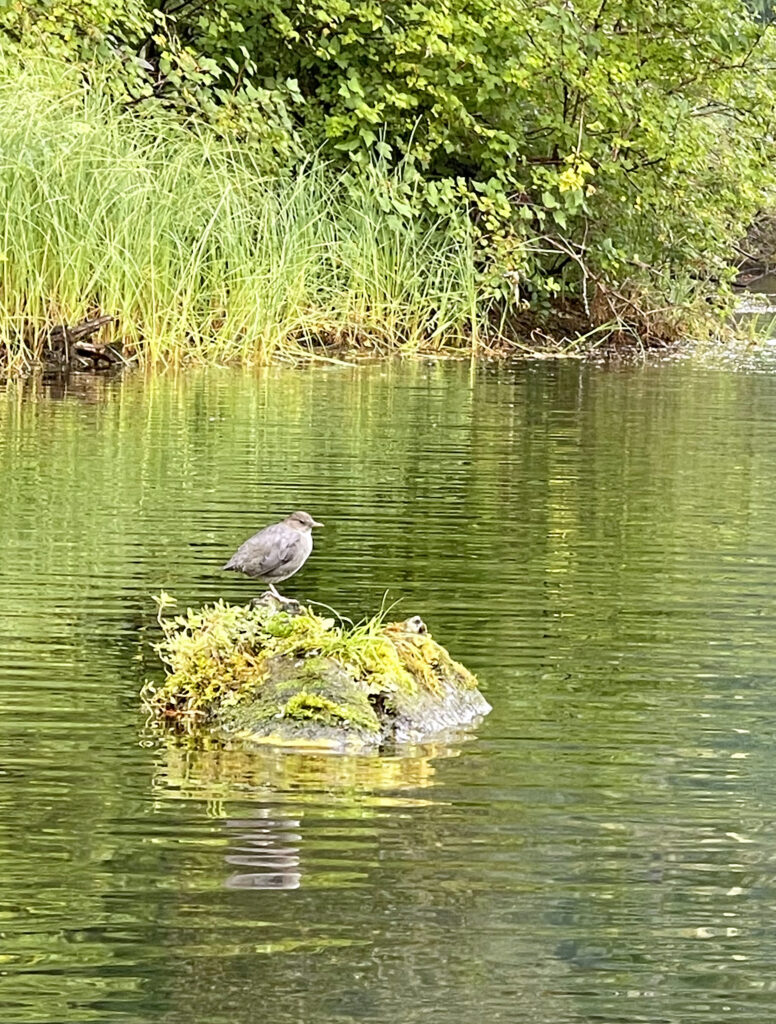
American Dipper. Photo by Joan E. Newman

Originally posted June 22, 2023. Updated September 7, 2024.

All photos ©Alan K. Lee, except as noted

Mount St. Helens

The 1980 eruption of Mount St. Helens was one of the most significant natural disasters in U.S. history. Everyone knows about the eruption, but a little history is in order here, I think.

Mount St. Helens had been dormant for 123 years until it awoke in March 1980. On March 15th a series of small, shallow earthquakes were recorded, centered below the summit of the mountain. In the days that followed, more quakes occurred, the largest a magnitude 4.2 quake on March 20th.

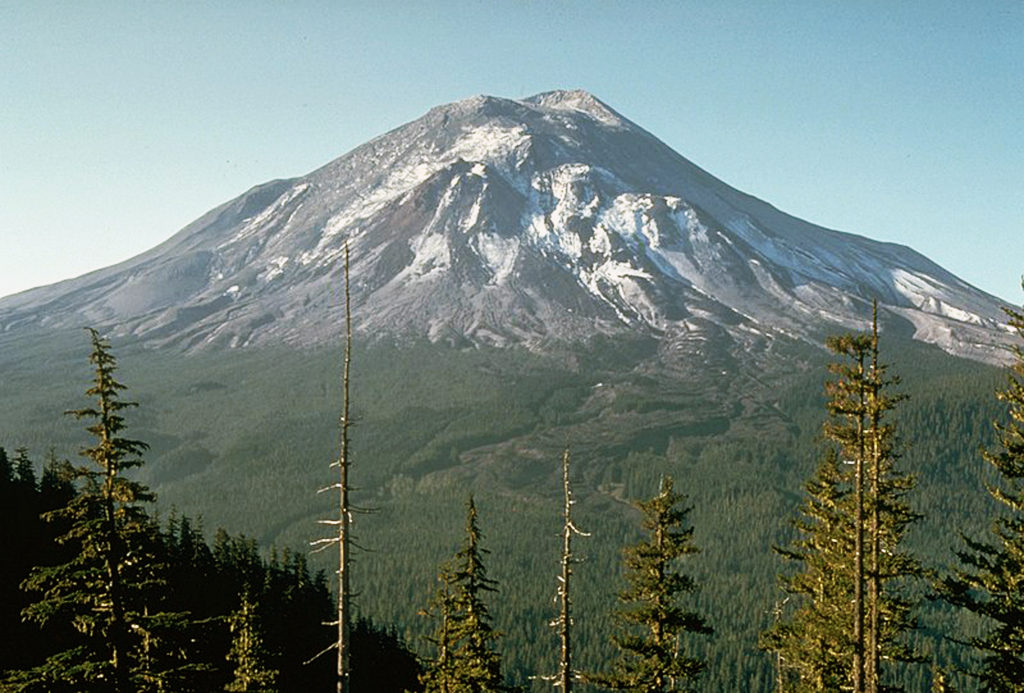
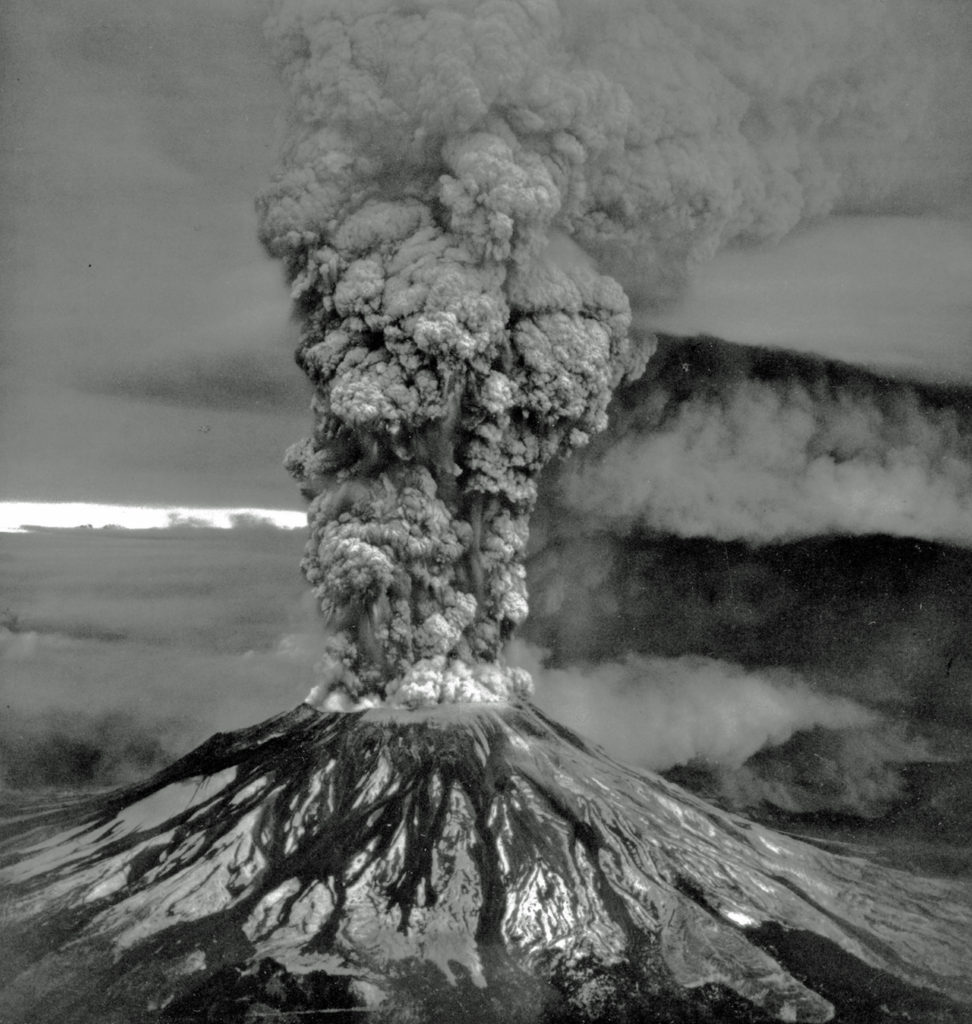
Mount St. Helens, May 17, 1980. Photo by Harry Glicken, USGS/CVO. Sourced from Wikimedia Commons.

Between March 25th and 27th 174 earthquakes greater than magnitude 2.6 were recorded, the largest a magnitude 5.1 quake on the 27th. The first eruption, also on the 27th, opened a new summit crater. The north flank of the mountain also began bulging outward, with the bulge growing 5-6 feet per day. More eruptions occurred over the next week few weeks. By April 7th the new crater measured 1700 by 2300 feet and was 500 feet deep. By mid-May the north side of the mountain had moved outward by 400 feet and the summit area had begun to collapse.

Mount St. Helens, May 18, 1980. Photo credited to U.S. Geological Survey. Sourced from Wikimedia Commons.

At 8:32 a.m. on May 18, 1980 a magnitude 5.1 earthquake caused the north flank of the mountain to collapse in the largest landslide ever recorded. A few seconds later the mountain erupted in a lateral blast that devastated an area as far as 20 miles from the summit and felled 230 square miles of forest. The blast superheated the waters of Spirit Lake instantly, causing a huge secondary steam explosion. This secondary explosion was heard as far away as San Francisco (but, interestingly, was not heard in the Portland area).

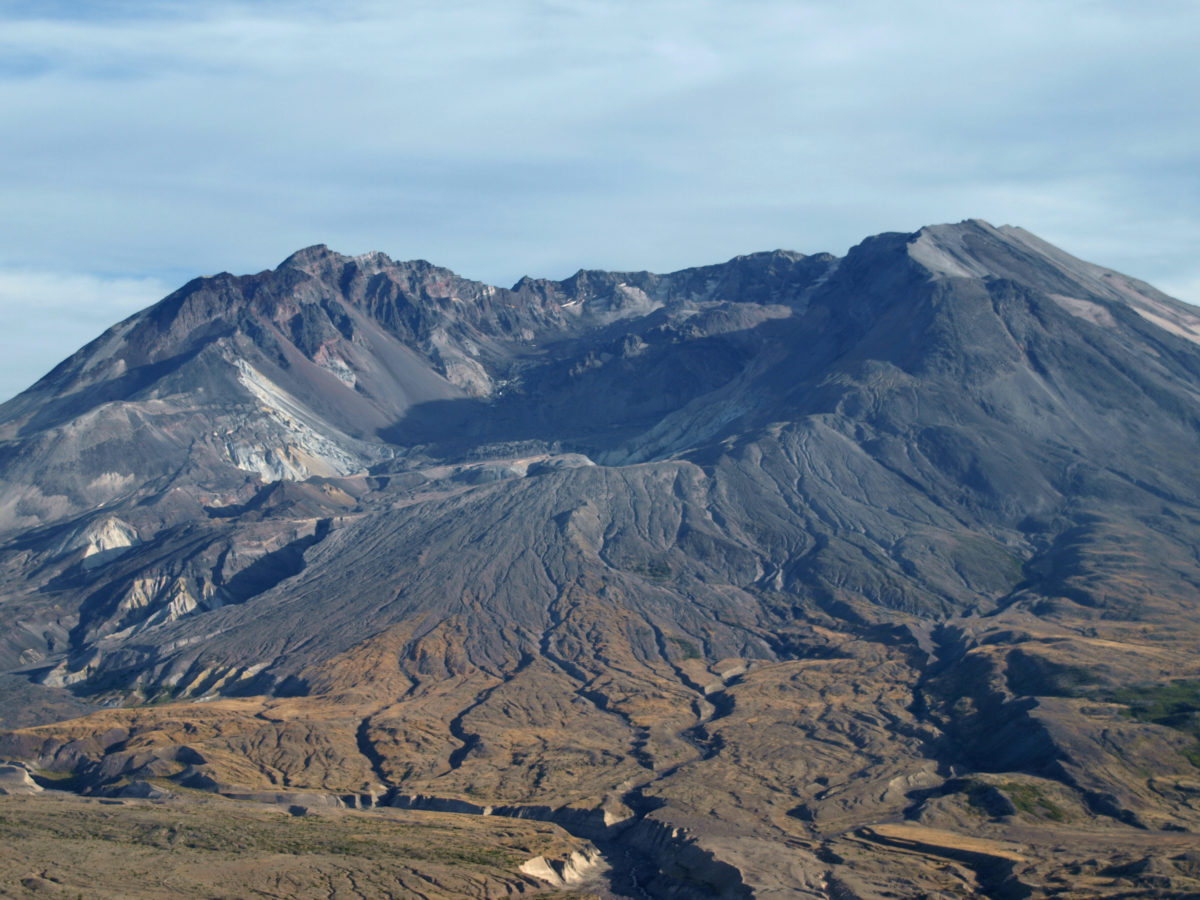
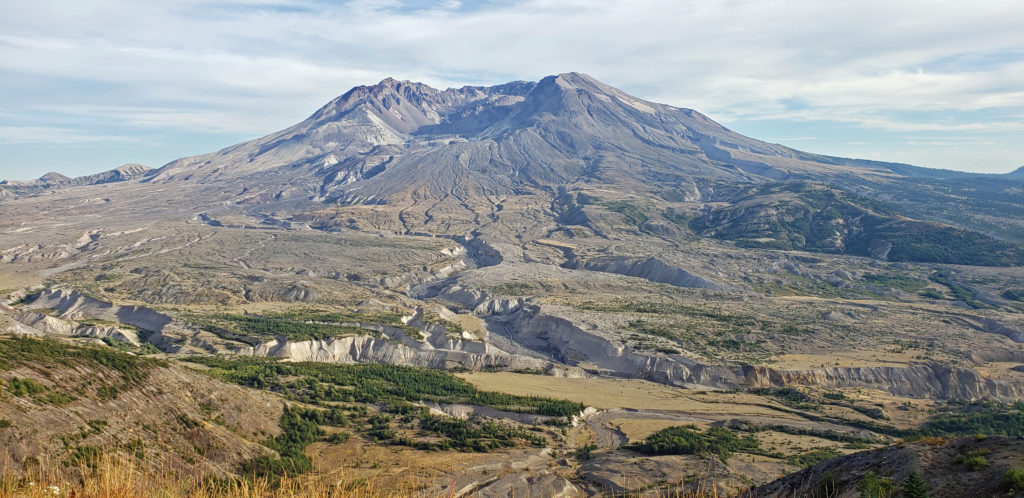
Mount St. Helens from Johnston Ridge, August 2018

The eruption sent an ash cloud 12 miles into the sky. In the Yakima Valley, northeast of the mountain, the ash cloud completely blocked the sun and noon was as dark as midnight. Ash fell as far away as Minnesota. The energy released by the eruption was estimated to be equivalent to 24 megatons of TNT, more than 1400 times the energy released by the atomic bomb that destroyed Hiroshima in World War II.

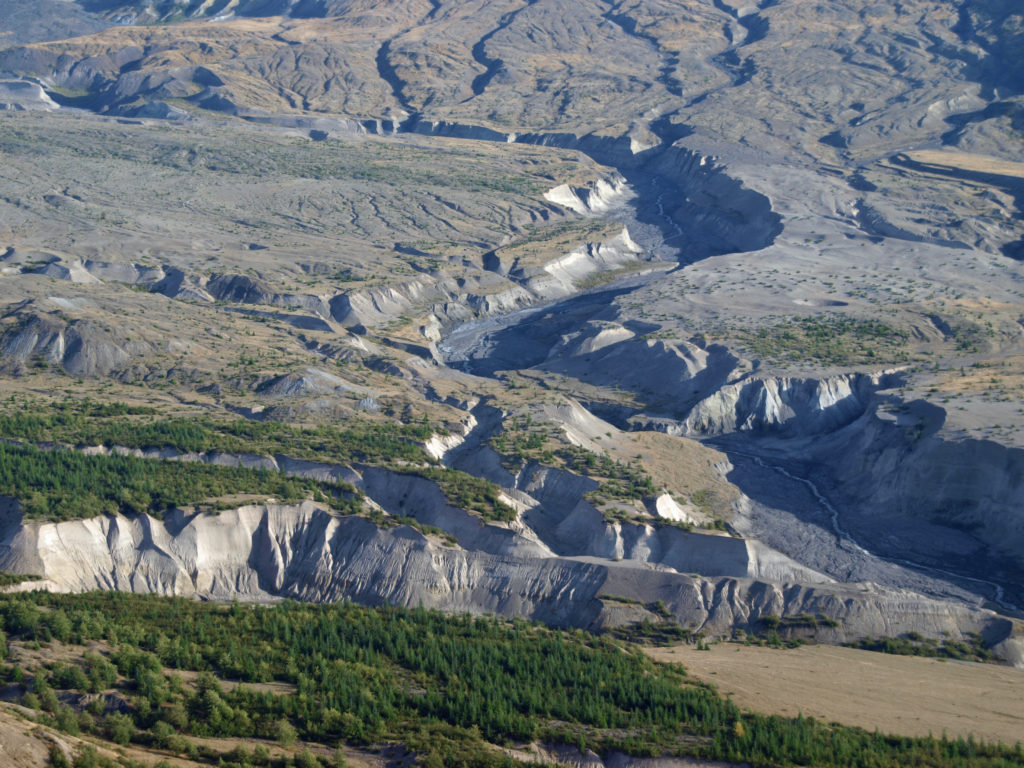
Pumice Plain between Johnston Ridge and the crater

At least 55 people were killed in the eruption. The official total is listed as 57, but two people on the list who were reported missing after the eruption may not have been in the blast zone that day, and three others who are not on the official list may have been. Two of the most prominent people that died that day were Harry R. Truman and David A. Johnston.

Pumice Plain below Johnston Ridge.

Eighty-three year old Harry Truman  owned Mount St. Helens Lodge on the shore of Spirit Lake. He had lived there for more than 50 years and refused to leave when the area was evacuated. He was a colorful, locally well known character who had lived an eventful life and had become something of a celebrity in the months leading up to the eruption. He was buried by the initial landslide.

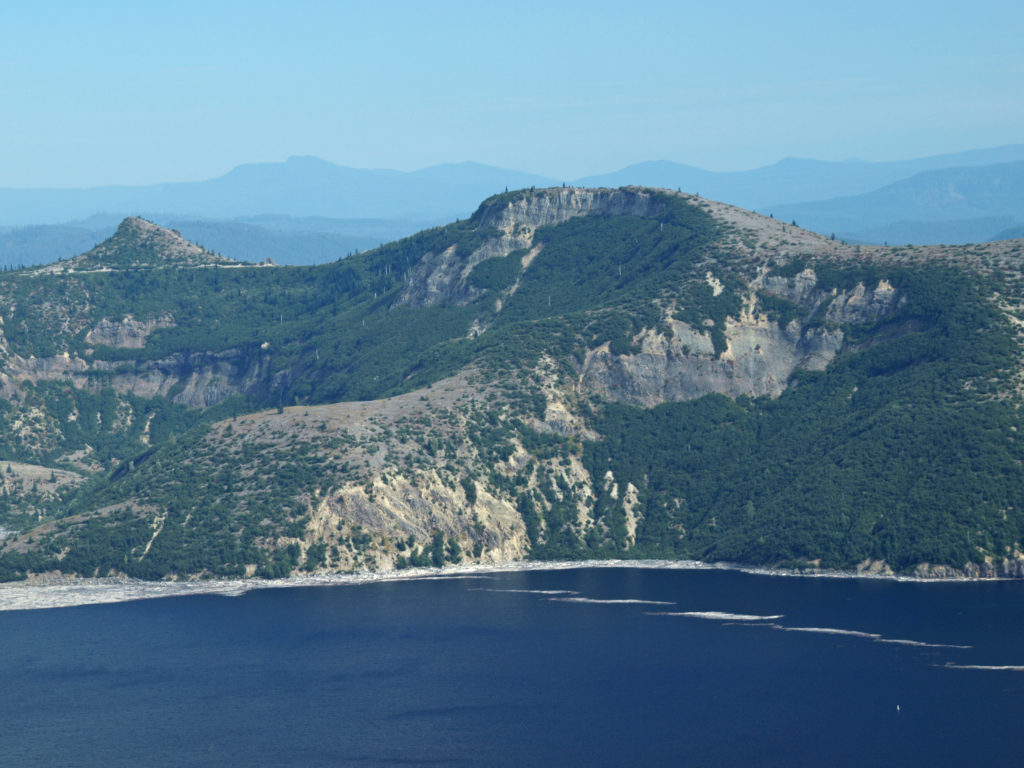
Spirit Lake and Windy Ridge

David Johnston was a highly respected geologist and volcanologist. He was camping near where the Johnston Ridge Observatory is now located. He was the first to report the eruption. “Vancouver! Vancouver! This is it!” he radioed the USGS office in Vancouver, Washington just before he was hit by the blast.

Boundary Trail, Johnston Ridge

Also killed in the eruption were photographers Reid Blackburn  and Robert Landsburg. Blackburn’s body was found in his car at Coldwater Camp four days after the eruption. His camera was found later, but the film was not salvageable. Landsburg’s body was found seventeen days after the eruption. His camera was found inside his backpack under his body. The film in his camera survived and the photos he took before the ash cloud engulfed him provided some of the most dramatic and scientifically valuable photos of the eruption.

Young Noble Firs on Johnston Ridge

Thirty-eight years after the eruption, when these photos were taken, the area between the new crater and Johnston Ridge still looked much like it did when I first visited the area some 25 years before. Trees were beginning to regrow on the north side of the ridge, though, and shrubs and wildflowers were abundant. The land is recovering, but it will be generations, perhaps centuries, before the forest returns to anything like it was before the eruption.

Spirit Lake

The Johnston Ridge Observatory is a good place to begin an exploration of Mount St. Helens. At the observatory you can view interpretive displays and videos, and get information about the mountain, the eruption, and area hiking trails. The observatory is located at the end of the Spirit Lake Highway (WA 504). To get there from the Seattle area, travel south on I-5 and take WA 505 (Exit 63) through the town of Toledo to the junction with WA 504. From Portland, take Exit 49 off I-5 at Castle Rock. Johnston Ridge is approximately 50 miles east of I-5. There is an $8 parking/entry fee, payable at the observatory.

Wildflowers along the Boundary Trail on Johnston Ridge

One of the best hikes on the mountain is the trail to Harry’s Ridge, which begins at the Johnston Ridge Observatory. Total out and back mileage is about eight miles and total elevation gain is about 1000 feet. Check out my Harry’s Ridge Hike post for a more detailed description of the hike. You can also hike into the heart of the blast zone between Johnston Ridge and the crater. Check the Johnston Ridge Observatory website, linked above, for current information.

Lava Canyon

Another one of my favorite Mount St. Helens hikes is the Lava Canyon Trail on the southeast side of the mountain. Distances and elevation gains vary depending on how far down (or up) the canyon you go. You don’t have to go far down the trail from the upper trailhead to see some of the most spectacular waterfalls in the Pacific Northwest, though. The initial section of the trail is ADA accessible and everyone can view some of the best waterfalls.  Again, check my blog post on Lava Canyon for more details.

Lava Canyon

Both the Harry’s Ridge and Lava Canyon hikes are among the best in the Northwest. They are very different, but both are incredibly beautiful and relatively easy hikes, and both can be done in a single weekend. But even if you’re not a hiker, visiting the Johnston Ridge Observatory and taking the short ADA accessible trail at Lava Canyon are more than worthwhile for everyone. And anyone who has not explored the mountain should do so at some point. It’s an unforgettable experience.

Lava Canyon

Originally posted March 27, 2021 by Alan K. Lee. Updated and re-posted June 19, 2023.

All photos © Alan K. Lee, except as noted


Hoyt Arboretum Hike

Hoyt Arboretum

Where:   Washington Park, Portland, Oregon

Distance:   2.4 miles

Type:   Loop

Elevation gain:   Approx. 600 feet

Difficulty:   Easy

Map:   Hoyt Arboretum Map

 Overview:

Hoyt Arboretum was created in 1928 to help conserve endangered species and educate the public about the need to do so. Over its 95 years of existence, more than 6000 trees and plants representing more than 2000 species and varieties from around the world have been planted in the arboretum, many of them threatened or endangered. One of the things that makes the arboretum special, in my opinion, is that it has the look and feel of a natural forest, not a botanical garden, and even though many of the trees and plants are not native to the Pacific Northwest, they are incorporated into the forest and never seem out of place.

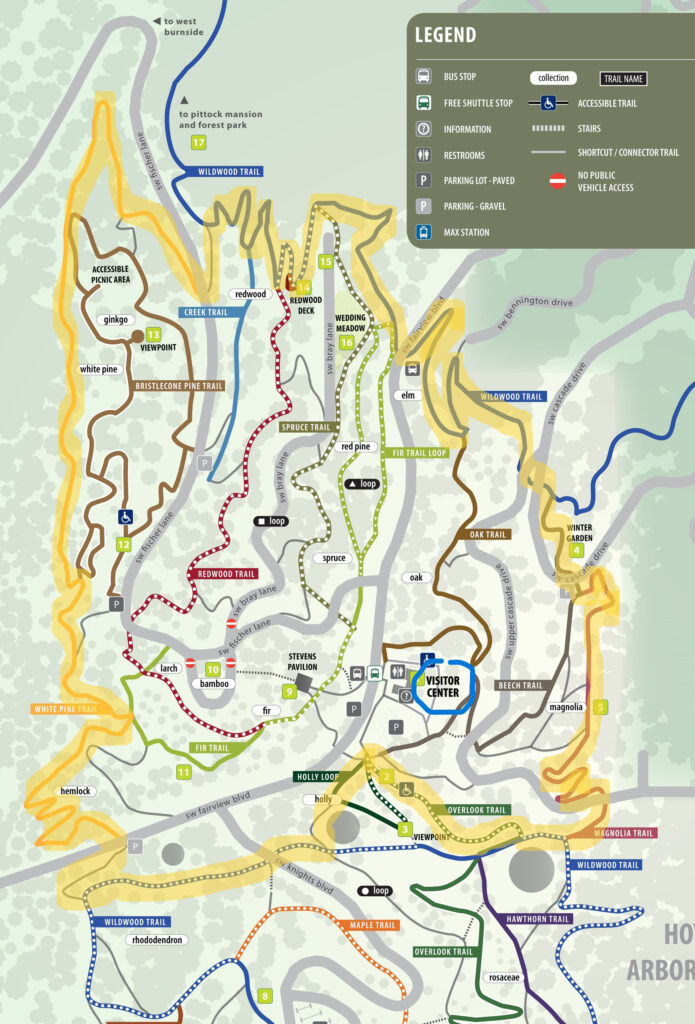
Hoyt Arboretum offers a multitude of possible hikes over its 189 acres and 12 miles of trails. The hike described here passes through many of the arboretum’s tree collections and is a good introduction to the arboretum for anyone that has not visited previously. It also incorporates several short sections of the iconic Wildwood Trail that meanders for 30 miles through Washington and Forest Parks. The trail junctions in the arboretum are well signed, so it would be hard to get lost, but the sheer number of intersecting trails can be confusing. I recommend carrying a map of the trail system whenever you’re hiking in the arboretum. Download and print the arboretum map linked above or pick up a free map and brochure at the visitor center. The brochure provides some interesting information and has a larger and more easily read map than the download.
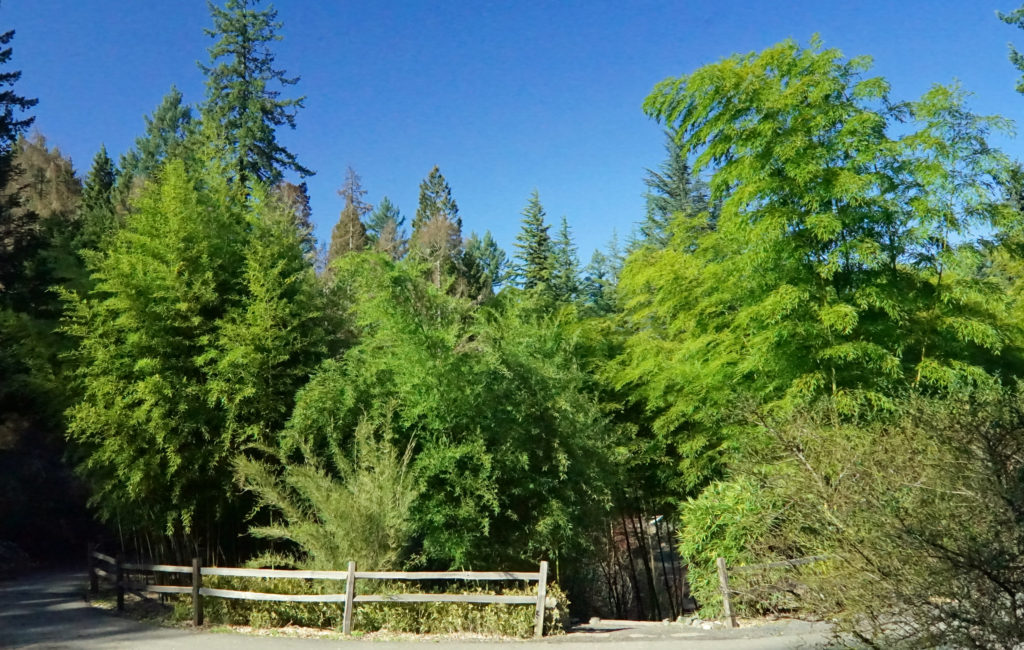
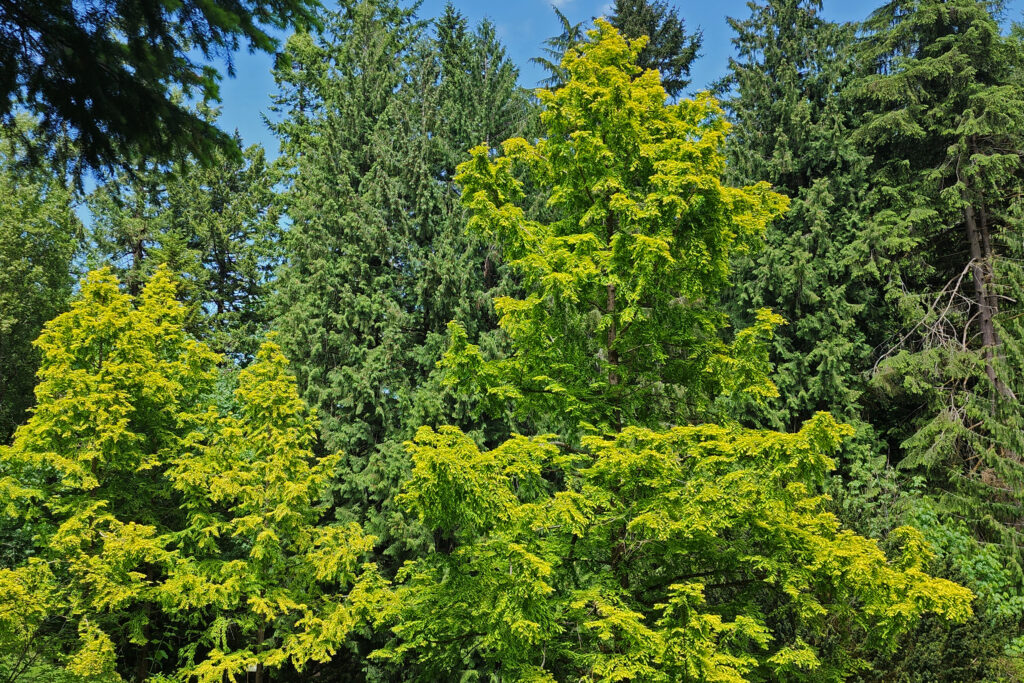
Bamboo Forest

Getting there:

The Visitor Center is located at 4000 Fairview Boulevard SW, Portland, Oregon 97221. It can be reached by car via West Burnside Street or US Hwy 26. Parking at the visitor center costs $2 per hour (free before 9:30 am) or $8 per day. There are other free parking areas (including along Fairview Blvd in front of the visitor center) that are shown on the map, but most are small and are often full. Public transit options include TriMet bus line #63 (with a stop at the Visitor Center) and the MAX light rail red and blue lines. The Washington Park Station on the light rail lines is 200 feet below ground with an elevator to the surface entrance located between the Oregon Zoo and the World Forestry Center. And there is a free shuttle bus that runs through Washington Park and makes stops at the zoo, Hoyt Arboretum, and the Japanese Garden.

Trailheads:
There are multiple trailheads that can be used to access the hike described here, but the Hoyt Arboretum Visitor Center is a logical starting point and the one used for this description. The Visitor Center includes a small gift shop and public restrooms.

Overlook Trail

The hike:

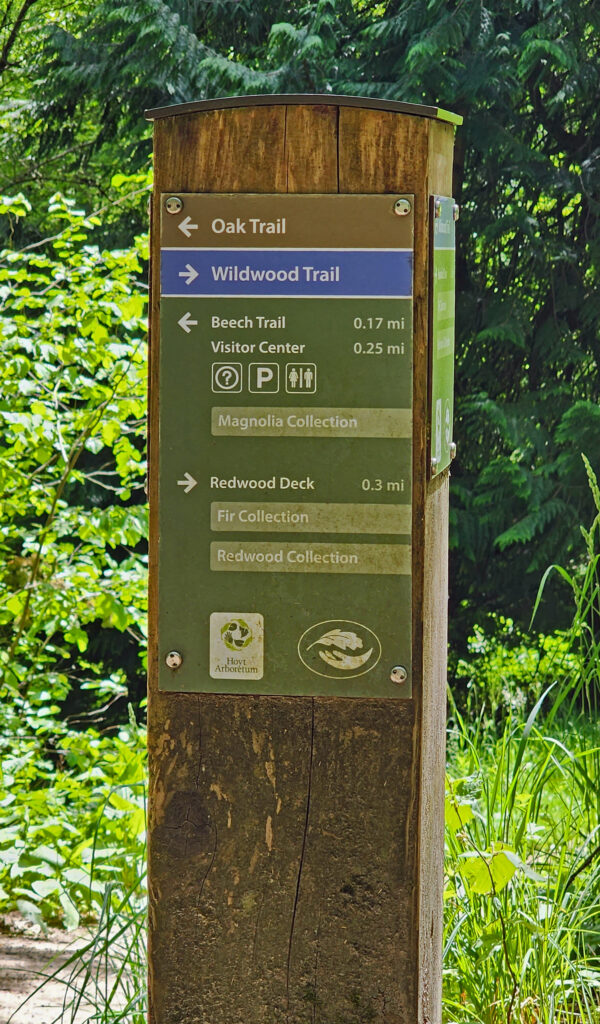
This hike starts at the opposite end of the parking lot from the Visitor Center. Look for the paved Overlook Trail to the left. Follow the paved path to the first trail junction and turn left onto the gravel Wildwood Trail. At the next trail junction turn left onto the Magnolia Trail, which switchbacks down to and across Upper Cascade Drive and through the arboretum’s Magnolia Collection.

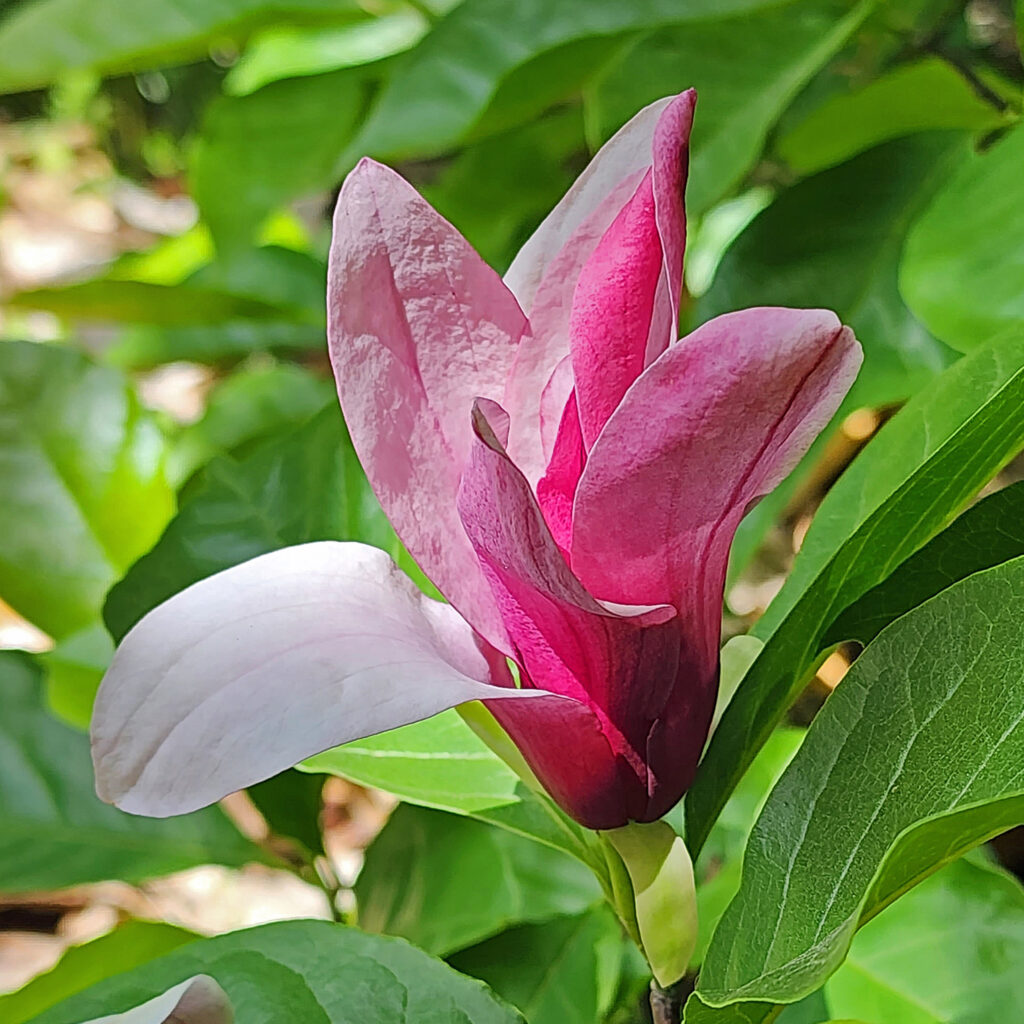
Magnolia Trail

Just before reaching Cascade Drive, turn right onto the Beech Trail and cross the road into the Winter Garden. Just beyond the Winter Garden, turn left onto another section of the Wildwood Trail and follow it as it climbs up to Fairview Blvd. Across the road the trail descends through the forest to the Redwood Deck, which provides a good view into the arboretum’s Redwood Collection.

Winter Garden

Continue on the Wildwood Trail past the junction with the Redwood Trail, descending to Johnson Creek. Stay on the Wildwood Trail, passing the junction with the Creek Trail, as it climbs up the slope west of the creek. At the next junction, turn left onto the connector trail that takes you to Fisher Lane.

White Pine Trail

Cross Fisher Lane onto the White Pine Trail, which gradually climbs away from the road to a ridge, where it turns south and runs along the western edge of the arboretum for about three quarters of a mile, through the White Pine and Hemlock Collections, to Fairview Blvd where it ends.

White Pine Trail

Cross Fairview Blvd and take the connector trail to the right, which descends to a junction with another section of the Wildwood Trail. Turn left onto Wildwood and follow it, crossing Knights Blvd. Just before reaching a water reservoir, turn left onto a connector trail that takes you to the Holly Trail. Follow the Holly Trail down a set of stone steps to the parking lot where the hike started.

Beech Trail

Other area attractions and activities:

Washington Park is home to the Oregon Zoo, the World Forestry Center, the Portland Japanese Garden, the Oregon Vietnam Veterans Memorial, and the International Rose Test Garden, in addition to Hoyt Arboretum.

Portland Japanese Garden

Posted June 3, 2023 by Alan K. Lee

All photos © Alan K. Lee


Sitka, Alaska

by Alan K. Lee

Sitka, Alaska is located on a protected harbor on the western shore of stunningly beautiful  Baranof Island in Southeast Alaska. To the west of the city many small islands dot Sitka Sound, and Mt. Edgecumbe, a dormant volcanic cone, rises 3200′ above the sound on Kruzof Island. To the north and east, Harbor Mountain and Mount Verstovia tower over the city, forming a dramatic backdrop.

Sitka Waterfront

My most recent visit to Sitka came in 2018 when my wife and I flew there to visit a friend of hers who had recently moved back to Sitka after having lived in Portland for many years. It had been more than twenty years since we had last visited, but not a lot had changed in those two decades. The town was a little bigger, maybe a little more touristy, but still a low key, relaxed place where people don’t lock their car, and usually leave the keys in it without fear of it being stolen.

Sea Otter, Sitka Sound

Southeast Alaska is not traditionally considered part of the Pacific Northwest, but they are close geographically, are similar ecologically, and have closely linked cultures and histories, so I’m going to stretch the definition of the Pacific Northwest a little and include Sitka in the Northwest Destinations category here.

Sitka Sound

The weather in Southeast Alaska is always chancy. On our first visit, there were low clouds blocking views of the surrounding mountains the whole time we were in Sitka, and the only sunshine we saw on our two week trip was in Ketchikan on the day we flew in and again on the day we flew out. But this time we had sunshine and blue skies for most of our four days in Sitka.

Indian River

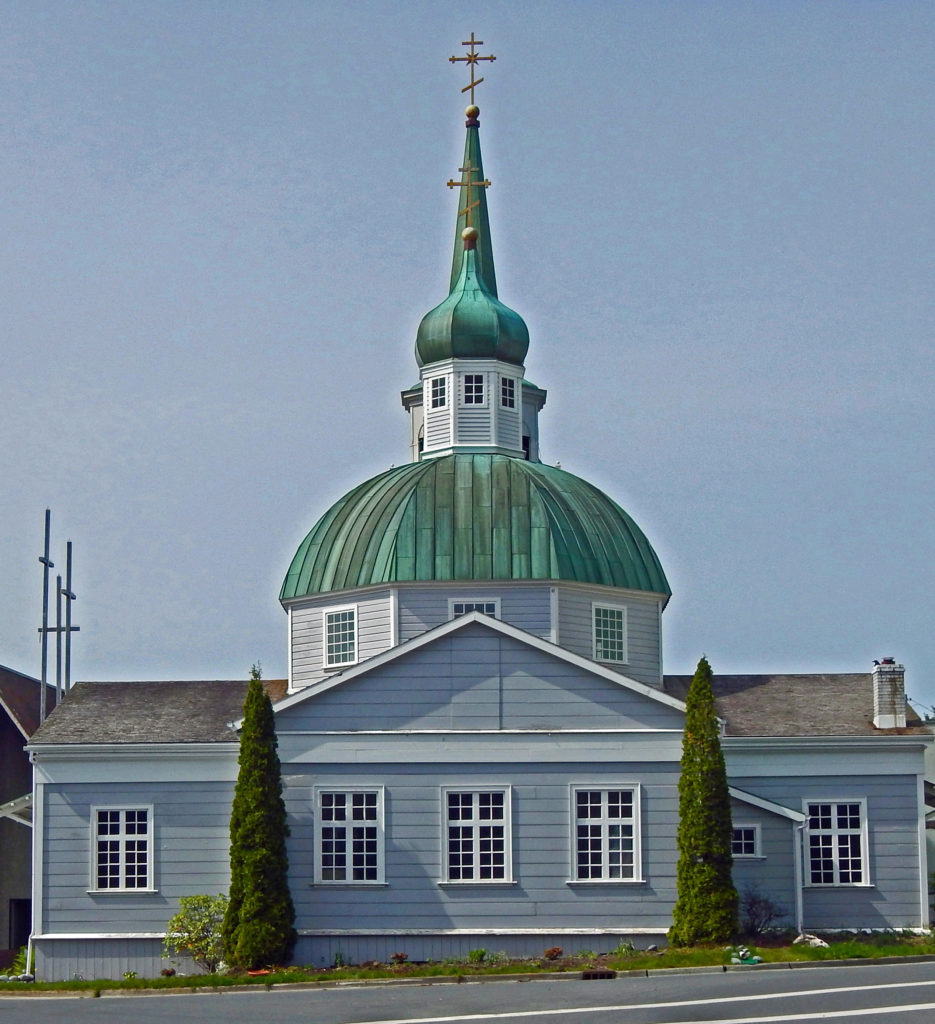
Sitka is an interesting and unique blend of Native American, Russian, and American cultures. The Tlingit people have inhabited the area for thousands of years. The name Sitka derives from the Tlingit name for the area, Shee Atika. In the 1740s Russians began exploring the area, and in 1799 Fort St. Michael was established at the present site of Sitka. The Tlingits burned down the fort in 1802, but the Russians returned two years later and forced the Tlingits out of the area. The Russian community of New Archangel, which became Sitka when the United States purchased Alaska from Russia in 1867, was founded in 1804 on the site of the destroyed Fort St. Michael. In the early 1820s some of the Tlingit people returned to the area, and there is still a Tlingit community in Sitka today. The Russian influence is also still present in modern Sitka. St. Michael’s Cathedral is an active Russian Orthodox church.

St. Michael’s Cathedral

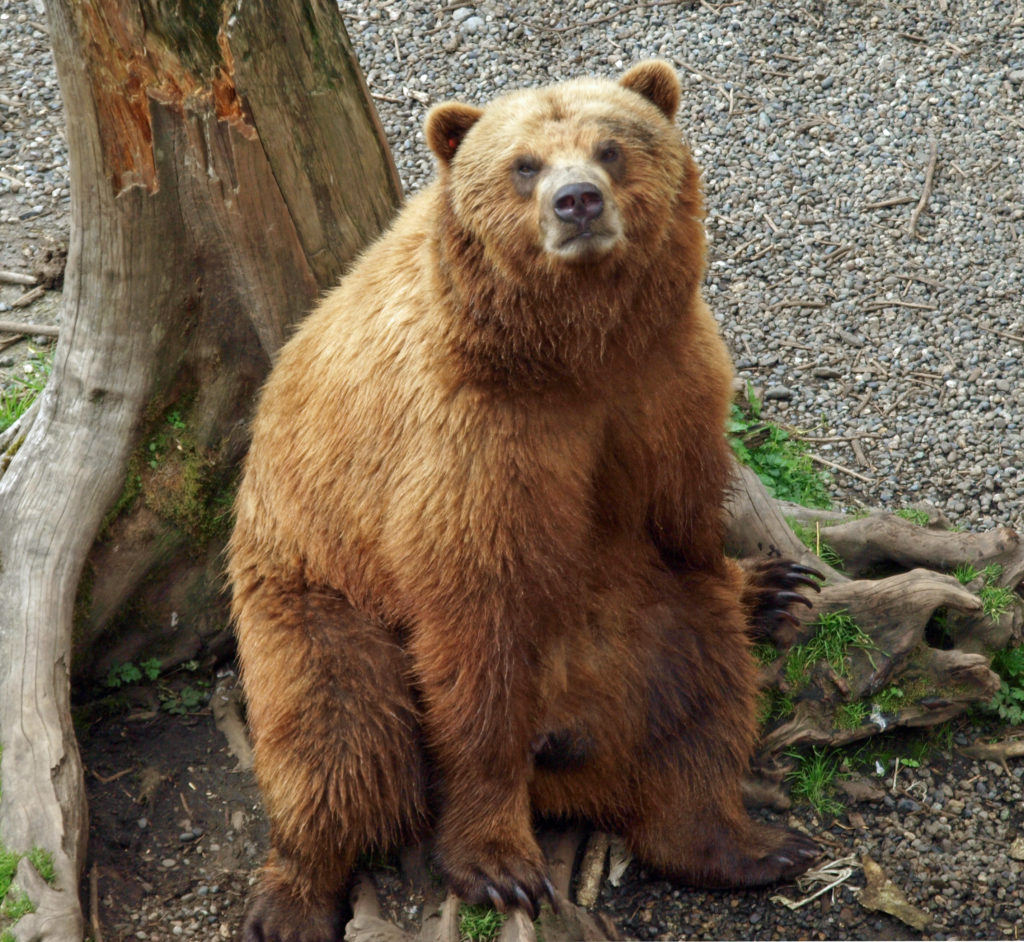
In town, the Sitka National Historical Park (locally known as Totem Park) is a must see, as are the Alaska Raptor Center, St. Michael’s Cathedral (built between 1844 and 1848), the Russian Bishop’s House (1842), and the Sitka Historic Museum. The Sheldon Jackson Museum, the Sitka Sound Science Center, the Lutheran Cemetery, and the Russian Cemetery are also definitely worth visiting. Sitka is a very walkable city, and all of the above are within easy walking distance of the city center. It’s also a very bike friendly city, and renting a bicycle is a good way to get around town. A few miles outside of town, the Fortress of the Bear, a non-profit refuge for orphaned cubs, offers close up views of brown bears, if you are so inclined.

Bald Eagle, Alaska Raptor Center
Sitka National Historical Park


Alaska Brown Bear, Fortress of the Bear

If you’re a fisherman, Sitka offers world class salmon and halibut fishing in the offshore waters. The Sitka Salmon Derby is held every May and June. The inland streams and lakes also offer quality fly fishing opportunities. For hikers, there are several trails that begin in Sitka, from the relatively flat Indian River Trail to the much steeper Verstovia Mountain Trail and Gavin Hill/Harbor Mountain Trail. Other hiking trails begin north and south of the city. Kayaks and boats can be rented in the city, and Sitka Sound looks to be a kayaker’s paradise.

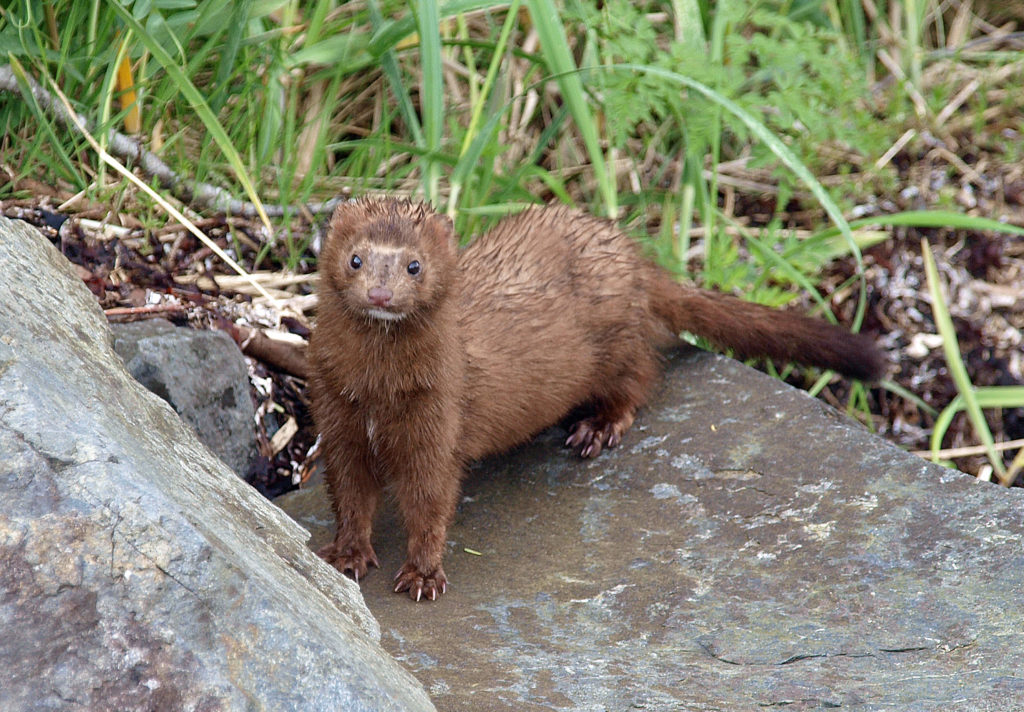
American mink, Indian River

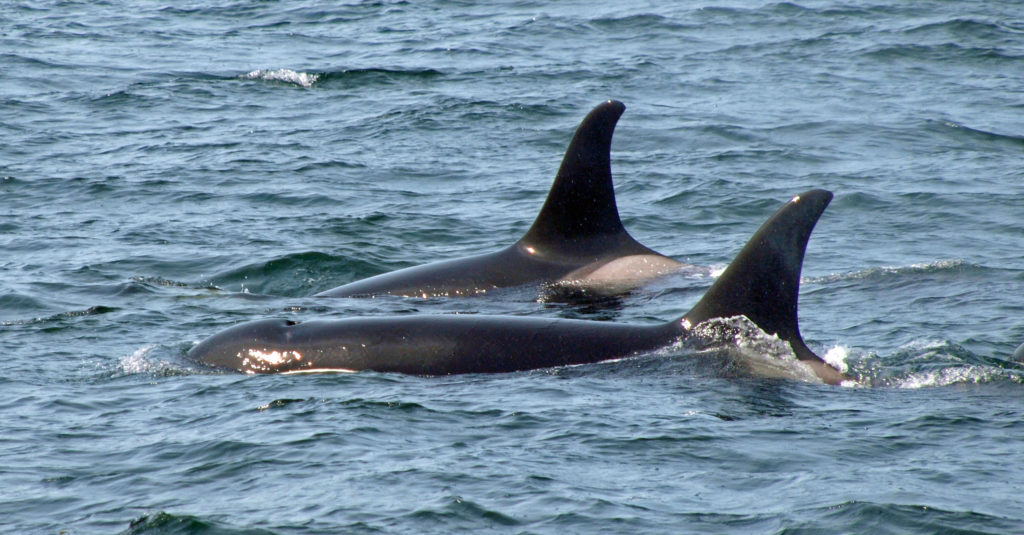
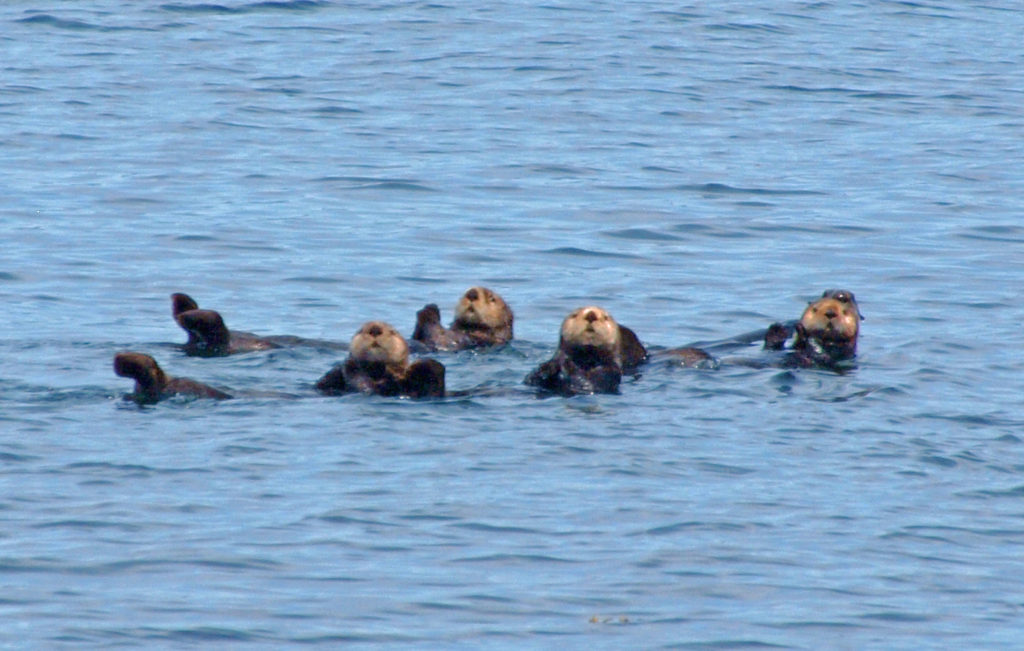
Flightseeing, ATV tours, hiking tours, city walking tours, car tours, kayak tours, and wildlife boat tours are all available in Sitka. On our trip, we took a sightseeing tour of Sitka Sound that was nothing short of incredible. I would highly encourage anyone who is planning a visit to find the time to do the same. We saw dozens of sea otters up close, probably fifty or more bald eagles, many other seabirds, seals, dolphins, humpback whales, and a pod of orcas, all within the space of about three hours.

Humpback Whale, Sitka Sound
Orcas, Sitka Sound

Sitka is also a very arts oriented town. In addition to numerous galleries in the city, the Sitka Jazz Festival is held every February, the Sitka Summer Music Festival is held in June or July, and the Sitka Fine Arts Camp and Arts & Science Festival for young artists is also held every summer. Other festivals include the Sitka Seafood Festival in August, The Alaska Day Festival (celebrating the transfer of Alaska from Russia to the United States) in October and the Sitka Whalefest in November.

Sitka National Historical Park


Sea Otter, Sitka Sound

Sitka, despite its remote location, is relatively easy to get to. Alaska Air has non-stop flights daily from both Portland and Seattle, making it possible to visit Sitka on a long weekend. If you have more time, Sitka is a stop on most Alaska cruises. And Sitka can also be reached by ferry, which is how my wife and I traveled there on our first visit. Check the Alaska Marine Highway website for schedules, fares, and other information. Other useful websites include Visit Sitka , Travel Alaska , Welcome To Sitka , and Trip Advisor.

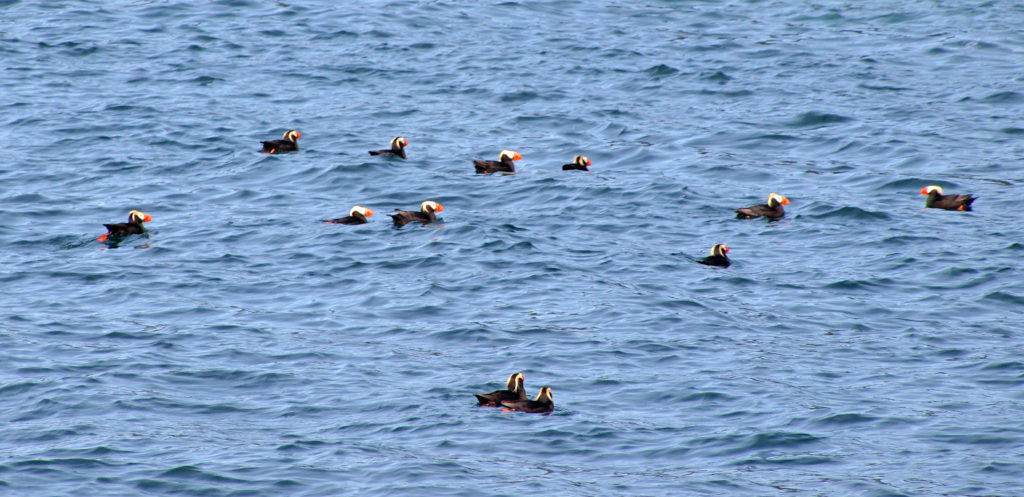
Tufted Puffins, Sitka Sound

On our 2018 trip to Sitka we also visited Ketchikan and Juneau. The weather was so bad in Ketchikan that I took few photos and didn’t post anything from there. The weather was better in Juneau. Click here to view my post from Juneau.

Sea Otters, Sitka Sound

Originally posted July 30, 2018. Most recently updated May 30, 2023.

All photos © Alan K. Lee


Tryon Creek Hike


Tryon Creek

Tryon Creek Hike

Where:   Tryon Creek State Natural Area, Portland, Oregon

Distance:   2.4 miles

Type:   Loop

Elevation gain:   350 feet

Difficulty:   Easy

Map:   Oregon State Parks

Overview:

Tryon Creek State Natural Area is a 658 acre preserve in southwest Portland that is much loved and well used. The area had been logged between 1870 and 1960 to make railroad ties and provide fuel for a wood-fired iron smelter in nearby Lake Oswego. In the 1960s the area was slated for development, but a group of local residents created the Friends of Tryon Creek organization that successfully lobbied to protect the area. Tryon Creek State Park was created by the Oregon legislature and opened to the public in 1975. Friends of Tryon Creek continues to be an active participant in maintaining and managing the park. For more information on the park, go to their website or click here to view an earlier post on this site.

There are a myriad of loops and out-and- back hikes possible at Tryon Creek. The park has a total of 15 miles of trails, including a short all access paved trail, a paved bike path that runs the length of the park, all-use trails open to horses, and hiker-only trails. Dogs are permitted on leash. Bikes are not permitted, except on the designated bike path. The park is a day-use area only. Camping is prohibited.

All of the trails are well used, so you’re unlikely to find real solitude here, unless you come during really bad weather. But that doesn’t detract much from the park’s appeal. In general, the farther from the Nature Center that you get the fewer people that you’ll encounter. The southern and western parts of the park are the least used. The hike described here includes two of my favorite trails, the Big Fir and Lewis and Clark trails, but they’re also two of the most traveled trails in the park.

Getting there:

The main entrance to the park is located at 11321 Terwilliger Boulevard in southwest Portland. To get there by car, take I-5 south from Portland to the Terwillger Boulevard exit (#297). Cross back over the freeway on Terwilliger and follow it for 2.4 miles to the park’s main entrance. Public transport is available via Trimet bus lines 38 and 39.

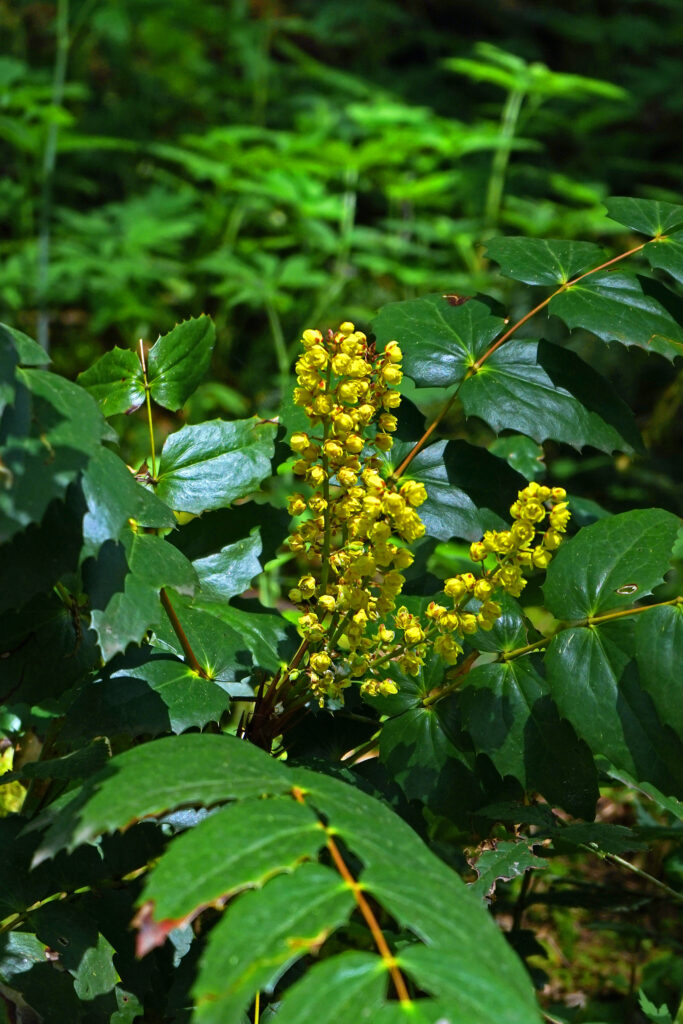
Oregon grape

Trailheads: 
The primary trailheads and largest parking area in the park (by far) are located at the main entry on Terwilliger Boulevard, and this hike starts there. There are six other trailheads scattered around the perimeter of the park.

The hike:

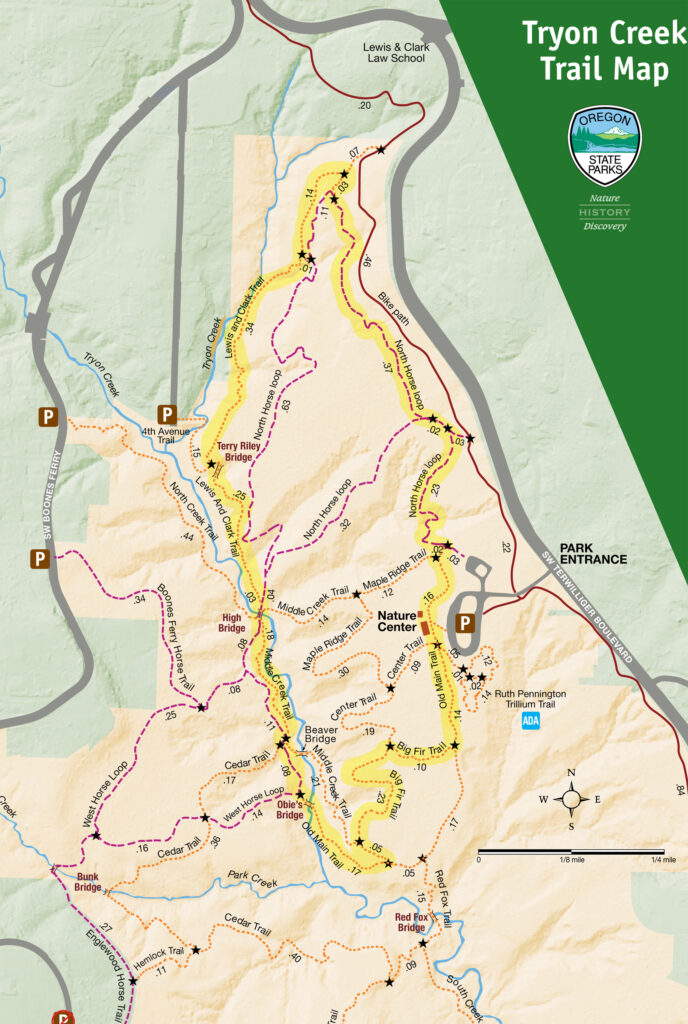
The hike begins at the Nature Center, where you can pick up a free map if you haven’t printed out the Oregon State Parks map linked above, and get park information from the staff. The trails in the park are well signed, but there are so many intersecting trails that a map can be very helpful, especially if you’re new to the park.

Old Main Trail

From the Nature Center take the Old Main Trail south. This is a wide gravel path that also serves as a service road. In about a tenth of a mile turn right onto the Big Fir Trail.

Big Fir Trail

This short trail (less than half a mile) winds through some of the largest Douglas fir trees in the park, along with many mature bigleaf maples, and descends toward Tryon Creek. It is, in my opinion, one of the prettiest trails in the park. Stay left at the junctions with the Center and Maple Ridge trails. The Big Fir Trail then rejoins the Old Main Trail.

Tryon Creek

Turn right onto the Old Main Trail and cross Tryon Creek on Obie’s Bridge at the 0.7-mile mark of the hike. This is the lowest point on this loop. Just beyond the bridge, turn right onto the West Horse Loop. This is a mixed use trail used by both hikers and equestrians (hikers are required to give way to horses). In a tenth of a mile, turn right onto the hiker-only Middle Creek Trail, which follows Tryon Creek to High Bridge at the one-mile mark of the hike.

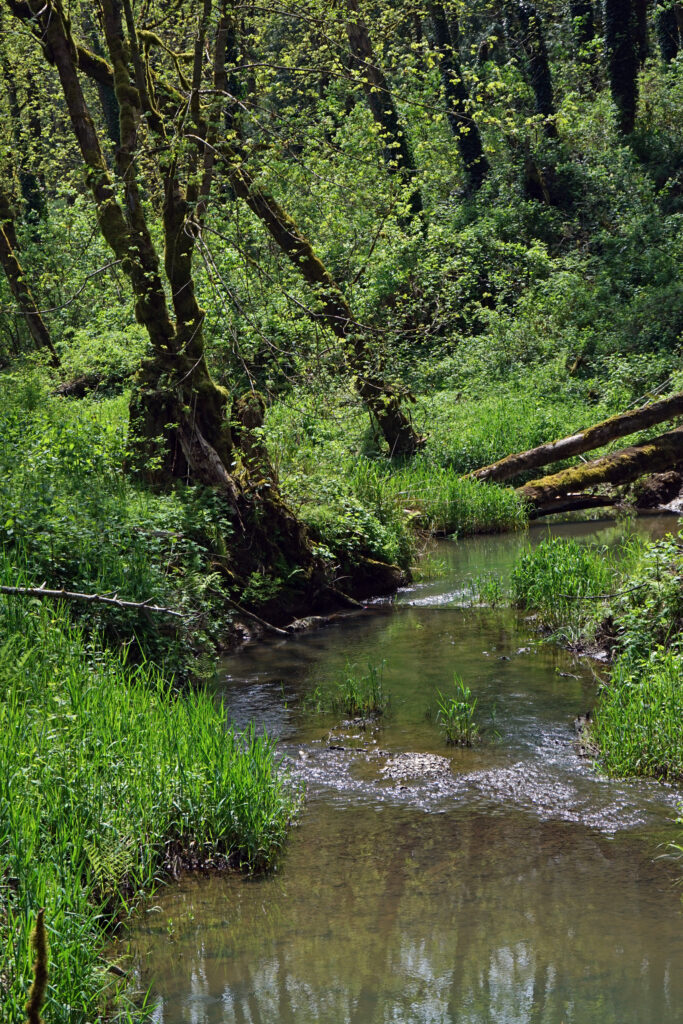
Tryon Creek
Lewis and Clark Trail

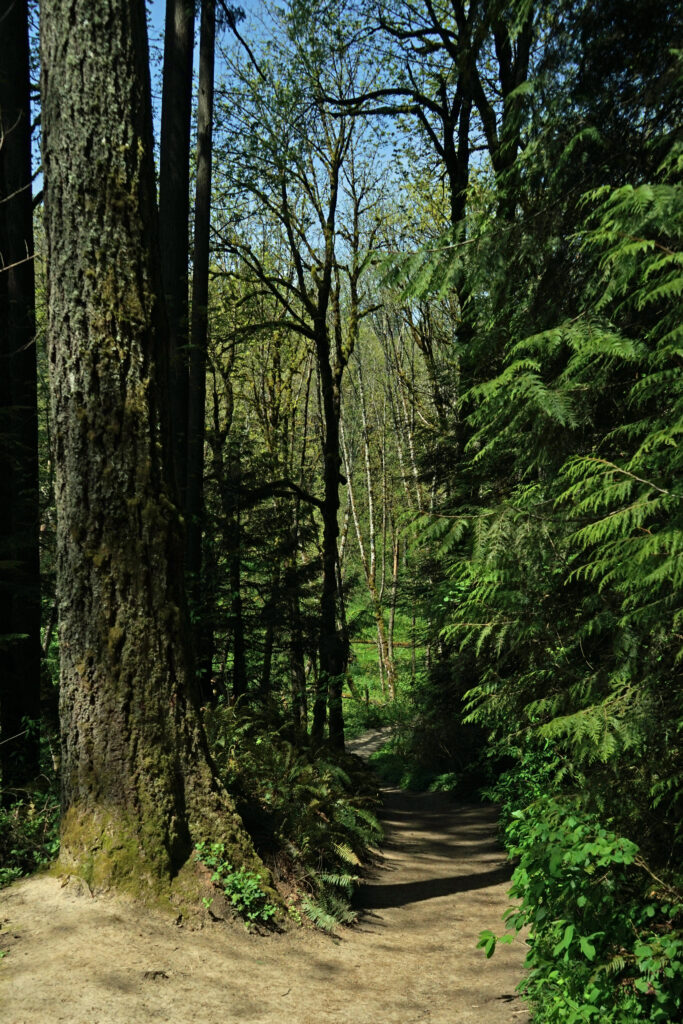
Turn left onto the Lewis and Clark Trail at the junction just beyond High Bridge. This trail recently reopened after being closed for several years after the original Terry Reilly Memorial Bridge washed out in a flood. The Lewis and Clark Trail might be my favorite trail in the whole park. It has a few steep sections and can be slippery when wet, but it is also one of the wildest trails in the park. The trail winds through the second-growth Douglas fir and bigleaf maple forest with a typical temperate rainforest understory of ferns, shrubs, and vine maple. You’ll cross a tributary of Tryon Creek on the new, higher, and much sturdier Terry Reilly Bridge.

Terry Reilly Bridge

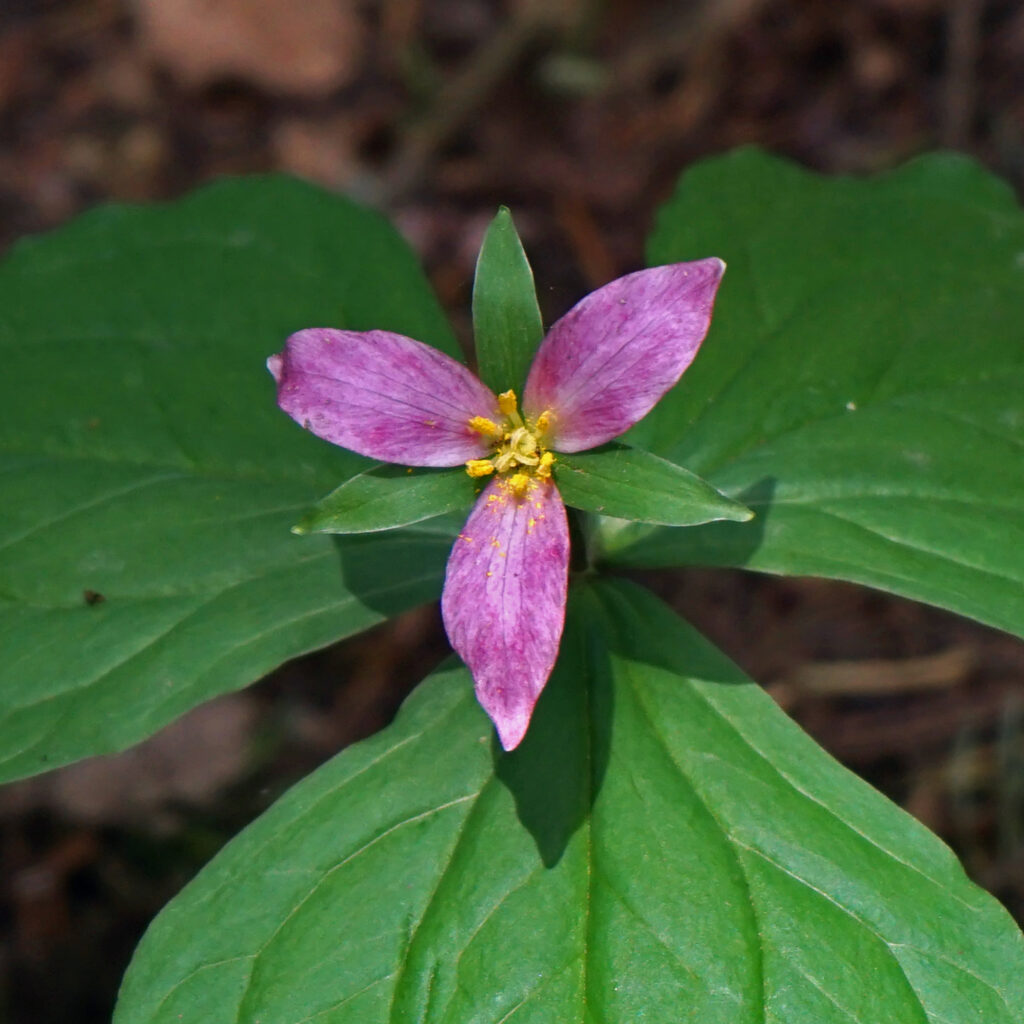
From the bridge the trail climbs through the forest. This is a prime location for trilliums, the three petal white to purple flowers that are the signature plant of the park. On my latest hike here the trilliums were past their prime but there were a few still in bloom.

Trillium
Trillium

Three tenths of a mile from the Terry Reilly Bridge you’ll see a short connector trail between the Lewis and Clark Trail and the North Horse Loop. Stay left on the the Lewis and Clark Trail for another couple of hundred yards. This is the highest point of the hike. At the junction, turn south (right). This will bring you to another junction with the North Horse Loop.

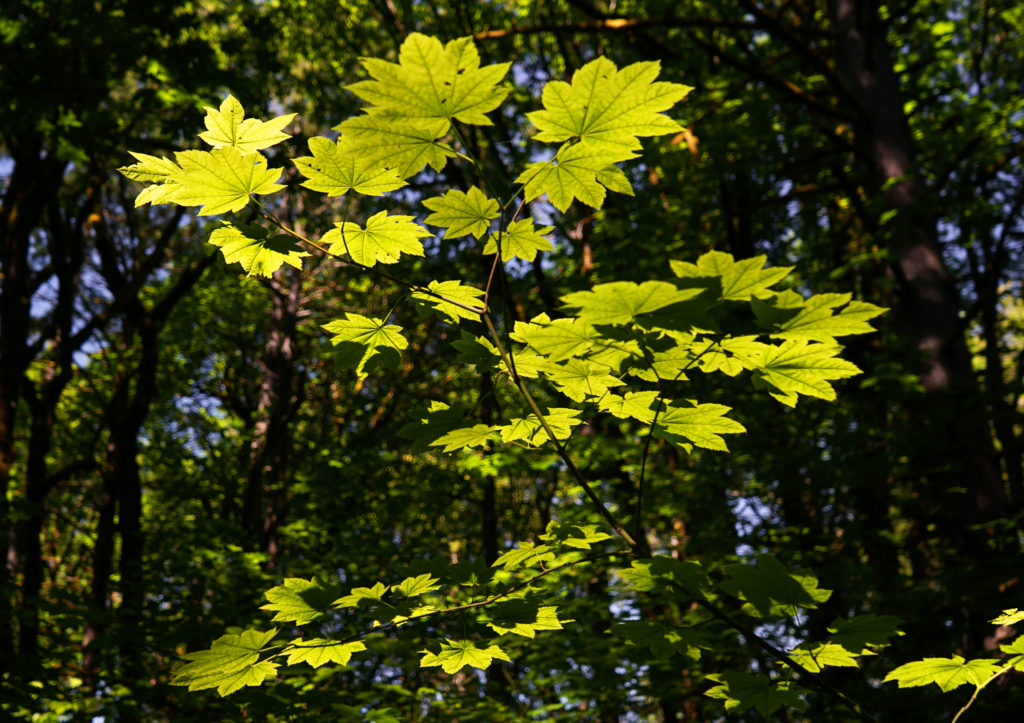
Vine maple

At the junction turn left onto the North Horse Loop and follow the mixed use trail for four tenths of a mile to another junction. Stay left there, then right at the next junction at the 2.0-mile mark of the hike. Continue on the North Horse Loop for another quarter-mile, then take a short connector trail to your right to a junction with the Maple Ridge Trail. Turn left there and return to the Nature Center.

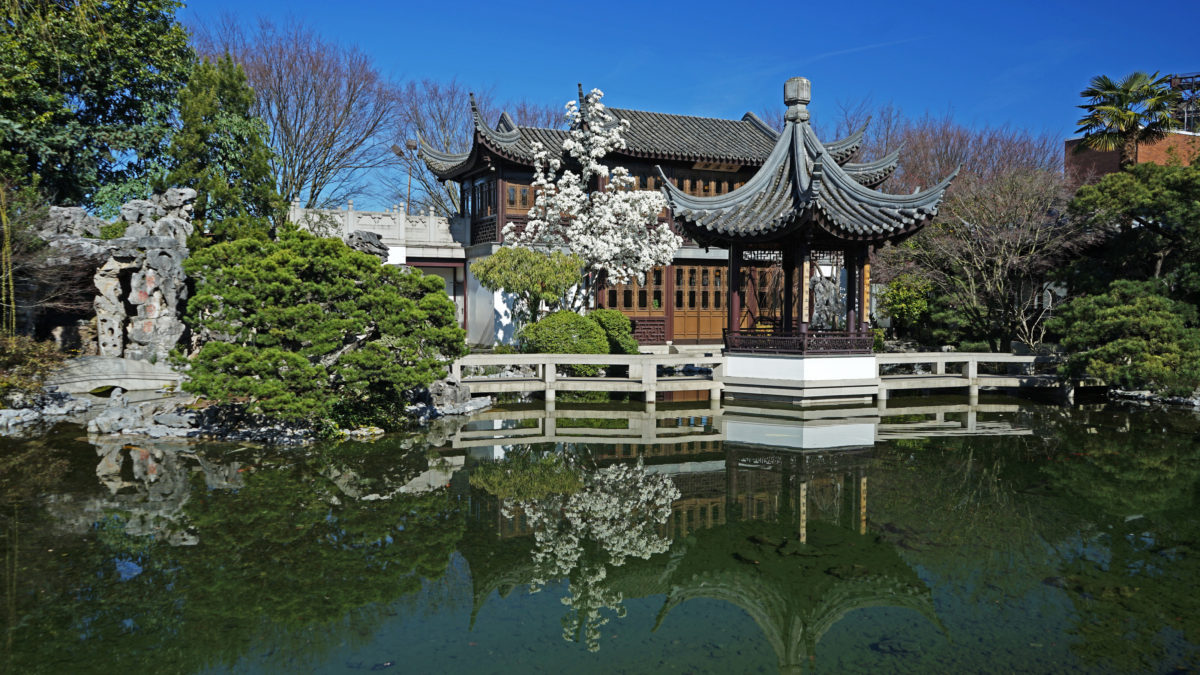
Lan Su Chinese Garden

Other area attractions and activities:

Tryon Creek is only a few miles from downtown Portland, where you’ll find one of my favorite outdoor spaces in Portland, the Lan Su Chinese Garden, a true urban oasis in the middle of the city. Not far from downtown, in Washington Park, is another of my favorite places, the Portland Japanese Garden. And not far from that, also in Washington Park, is Hoyt Arboretum. Those three places, easily visited in a single day, make for a triumvirate of incredibly beautiful places for the outdoor enthusiast to relish the best of what Portland has to offer.

Posted May 18, 2023  by Alan K. Lee.

All photos ©Alan K. Lee

Cinque Terre

by Alan K. Lee

The following is an expanded and updated version of an August 2018 post on this site.

After years of talking about visiting Italy someday, my wife and I packed our bags and headed across the Atlantic in May 2018, bound for Cinque Terre and Tuscany. We left Portland on a Wednesday afternoon and landed in Florence on Thursday afternoon (local time), sleep deprived and feeling very jet lagged.

Florence

It took a while for us to find our Airbnb rental. In addition to being sleep deprived, we discovered that the street addresses in Florence are not sequential – 50 daVinci, for example might be somewhere between 200 and 500, with 51 daVinci blocks away – something we found both nonsensical and frustrating. But the beauty, charm, history, food, and art of the country, and people we encountered, more than made up for the country’s shortcomings.

Arno River and the Ponte Vecchio, Florence

Once we finally found our rental and got checked in, we spent a little time exploring the center of the city, then crashed early and tried to make up for our sleepless night on the plane. In the morning we made our way to the train station in central Florence and, with a little help from a Trenitalia agent, boarded our train for Cinque Terre, where our next Airbnb was waiting for us in the town of Manarola.

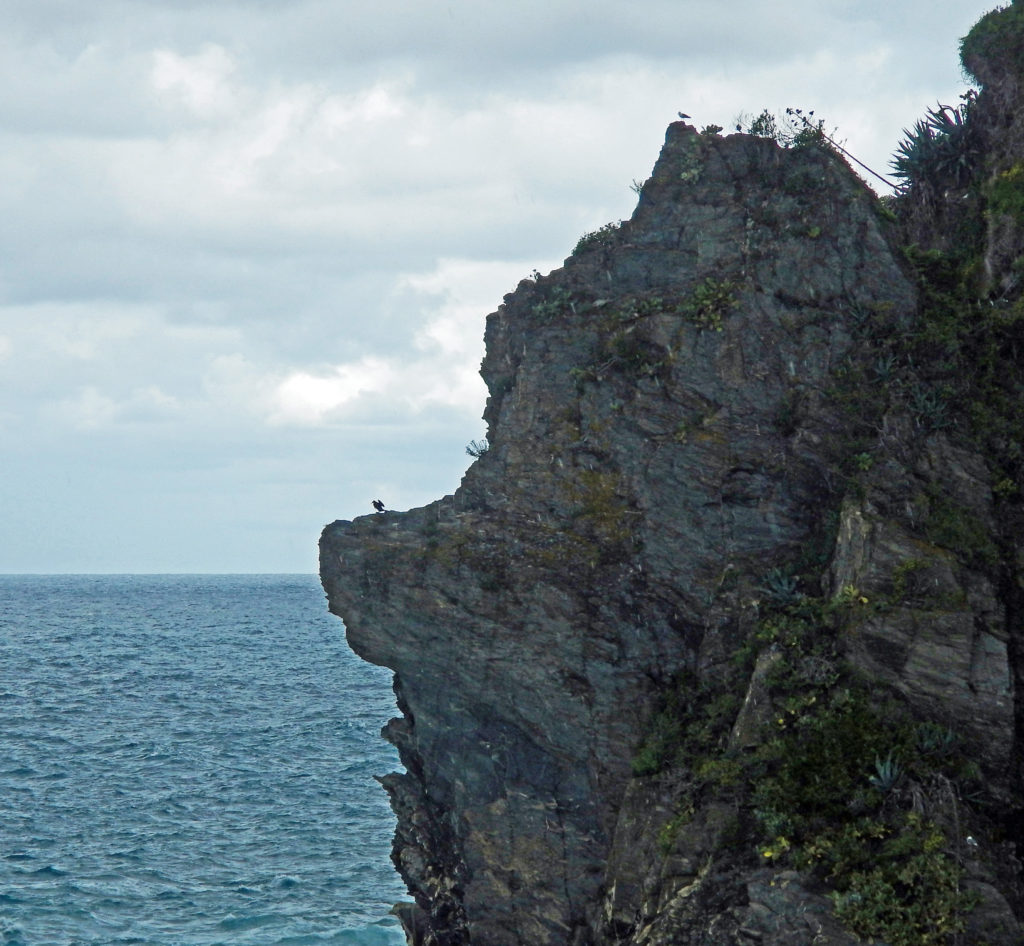
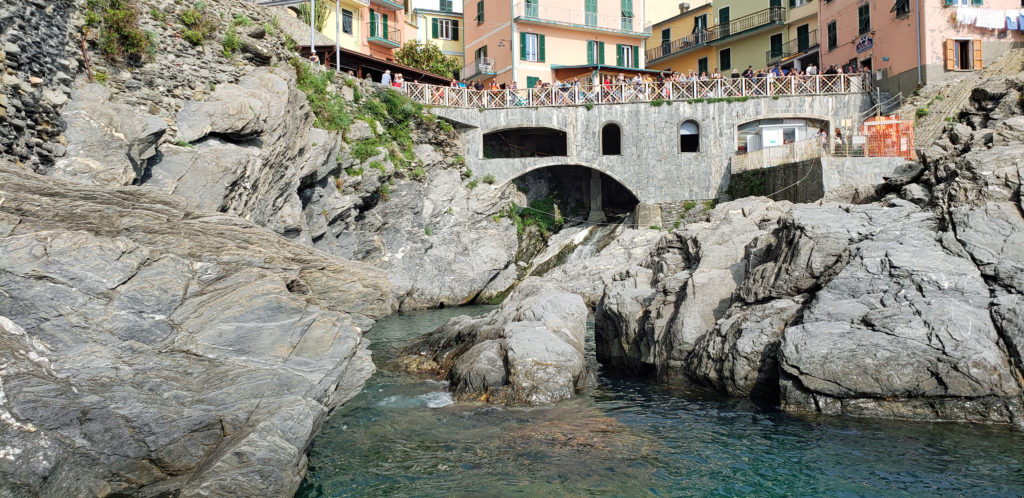
Rock face at Manarola

We chose to stay in Cinque Terre because most of the tourists are day trippers and we thought we might get a more authentic and less crowded experience in the mornings and evenings. That turned out to be true to a certain extent. A lot of other visitors had the same idea that we did, though. But it didn’t matter. It’s just an incredibly beautiful place.

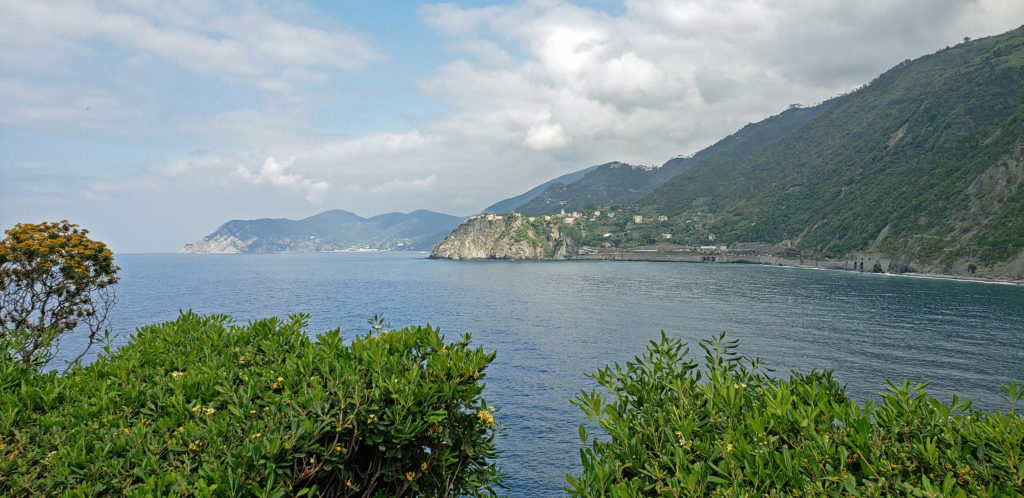
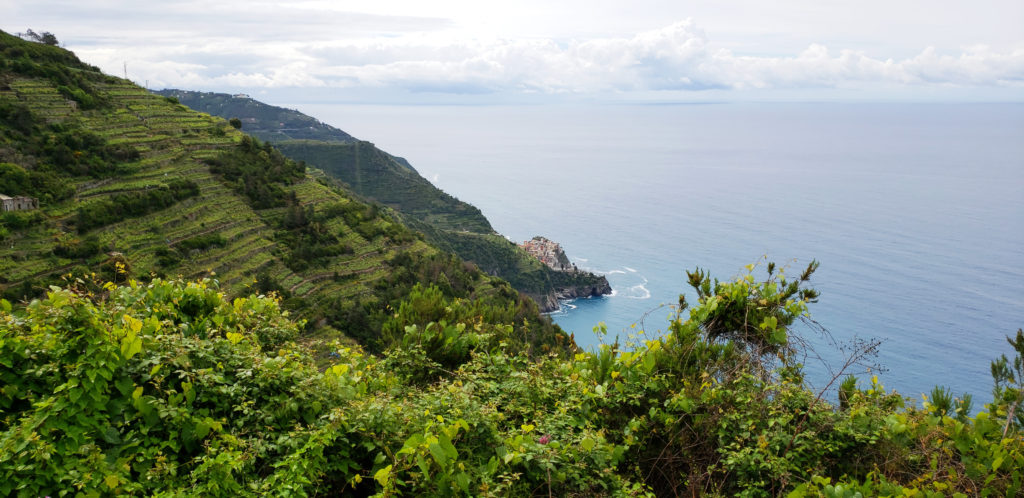
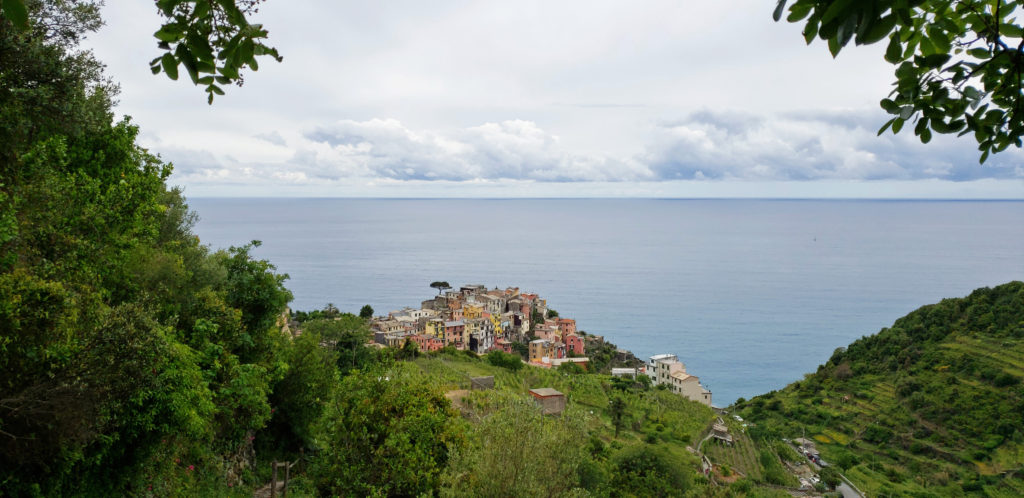
Cinque Terre coastline looking north toward Manarola (center) and Monterosso (far distance).

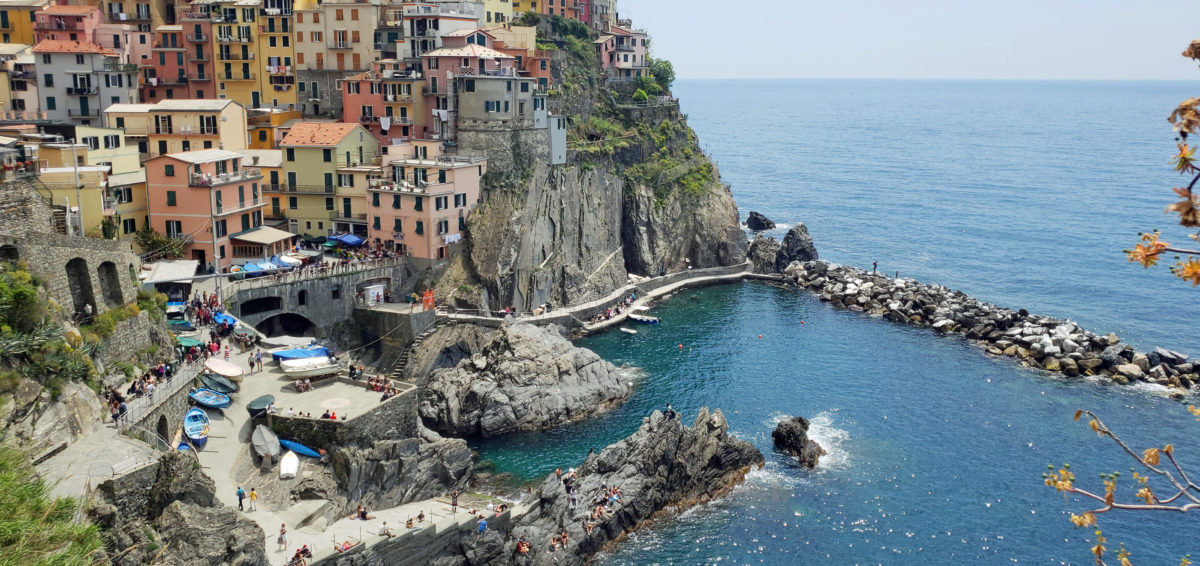
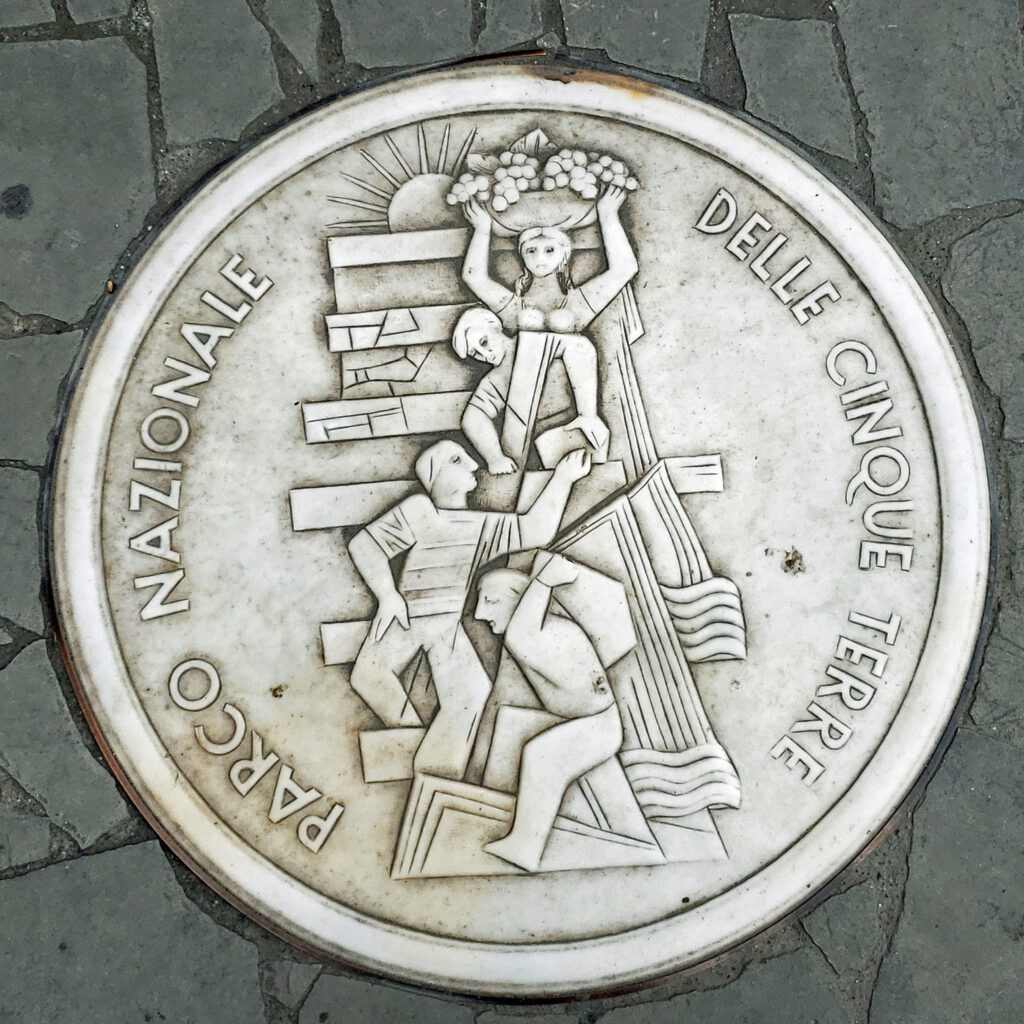
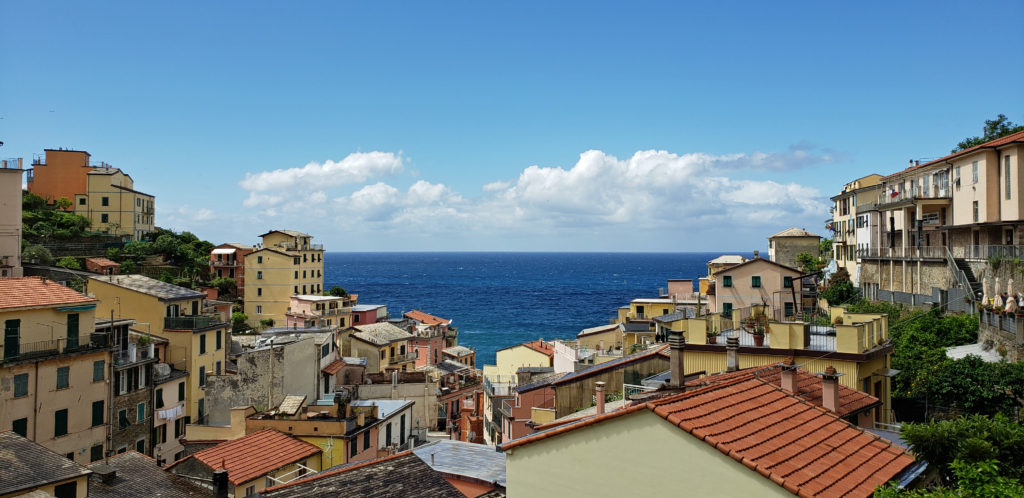
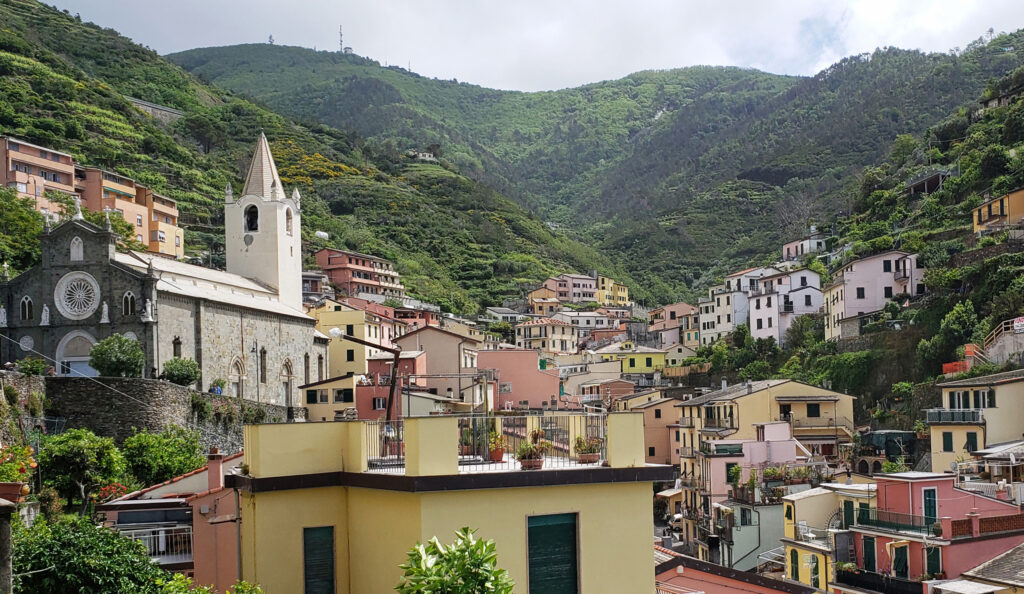
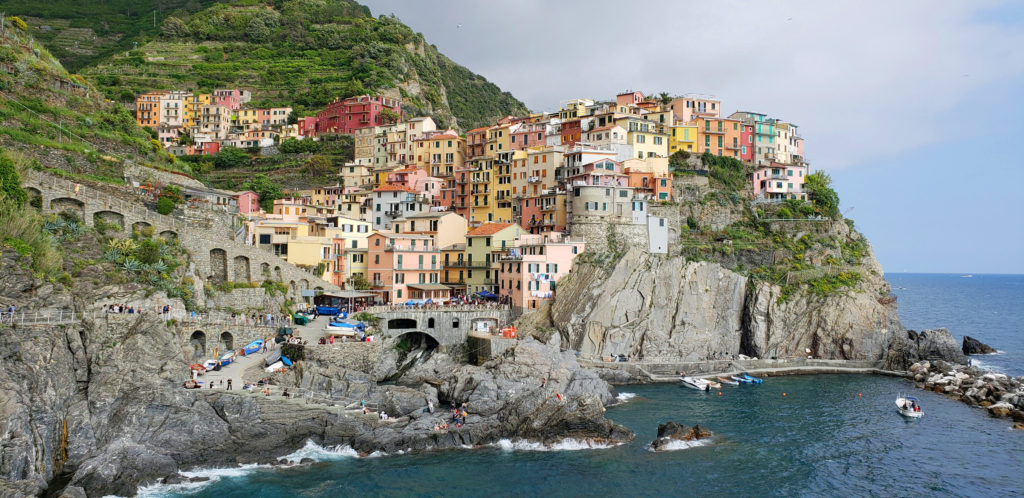
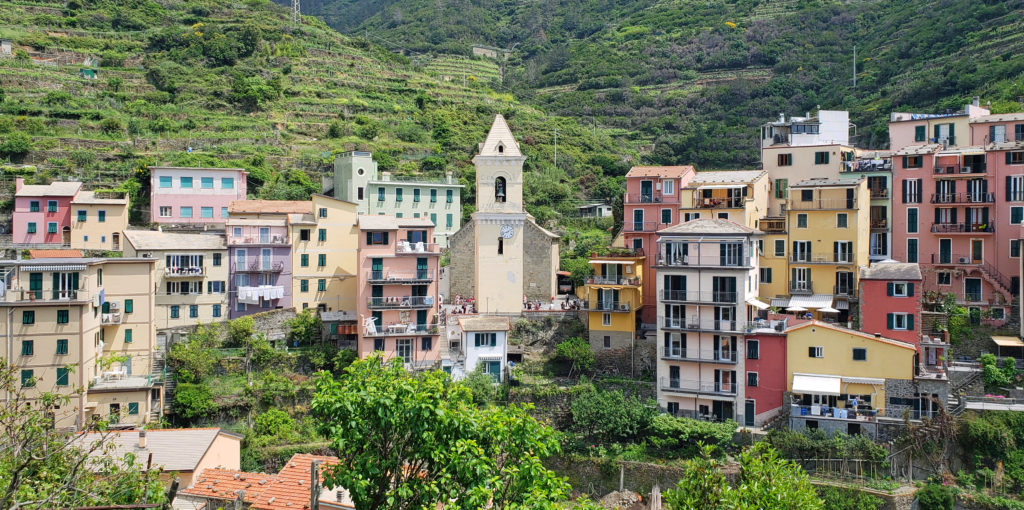
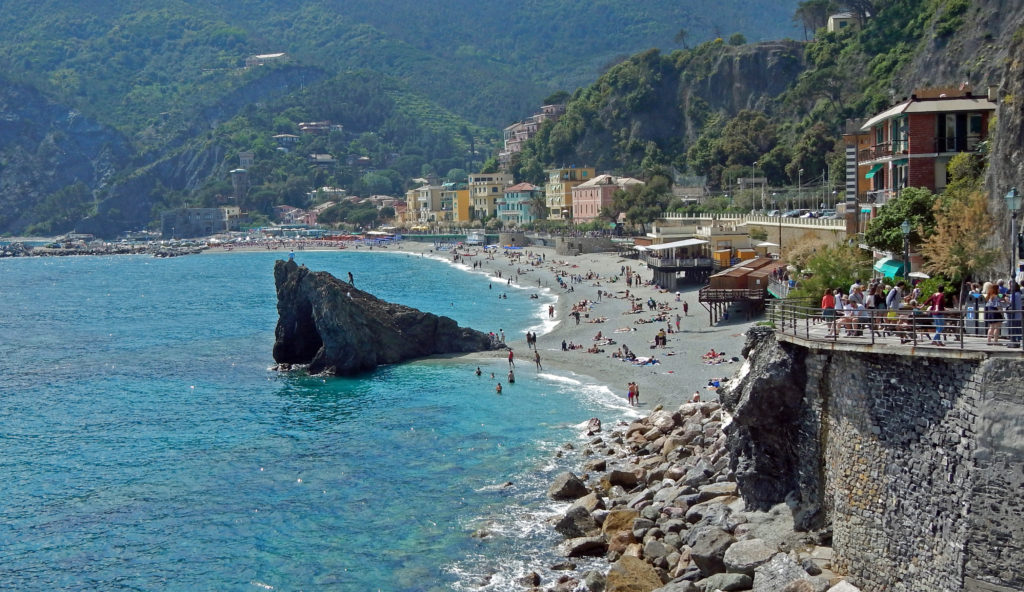
Cinque Terre consists of five small villages (cinque terre translates to “five lands”) perched on the edge of the Mediterranean Sea between Pisa and Genoa. All five of the villages are remarkably well preserved. The whole area is a national park, so development is very restricted. There are no big resorts or hotels, and cruise ships can’t dock anywhere in Cinque Terre. Vehicular access and parking are also very limited, making it more difficult to get to Cinque Terre than other parts of Italy, especially for tour buses. There were plenty of tourists even in May, to be sure, but the incredibly beautiful location and the charm of the villages themselves make the hordes of tourists less objectionable.

Riomaggiore

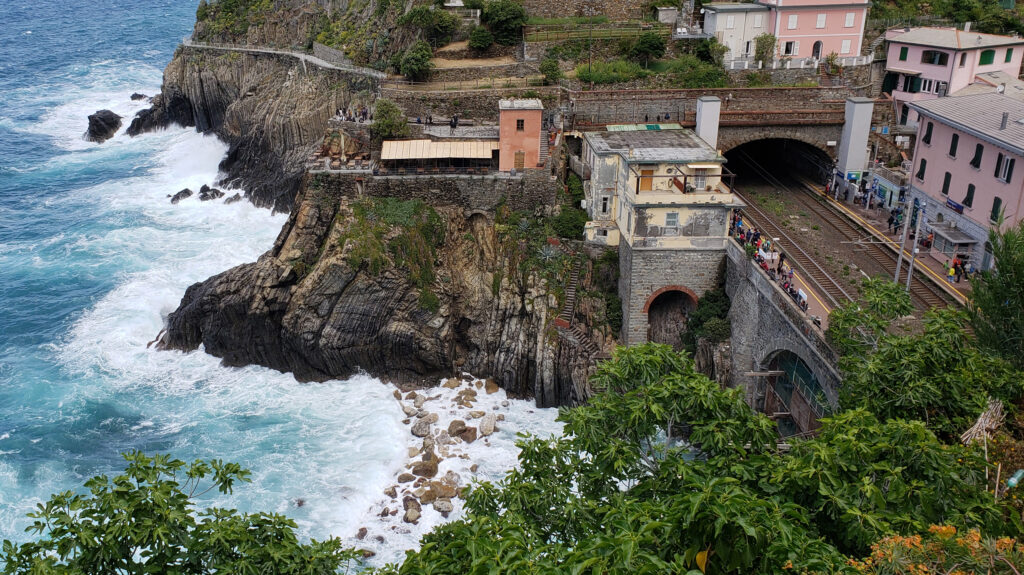
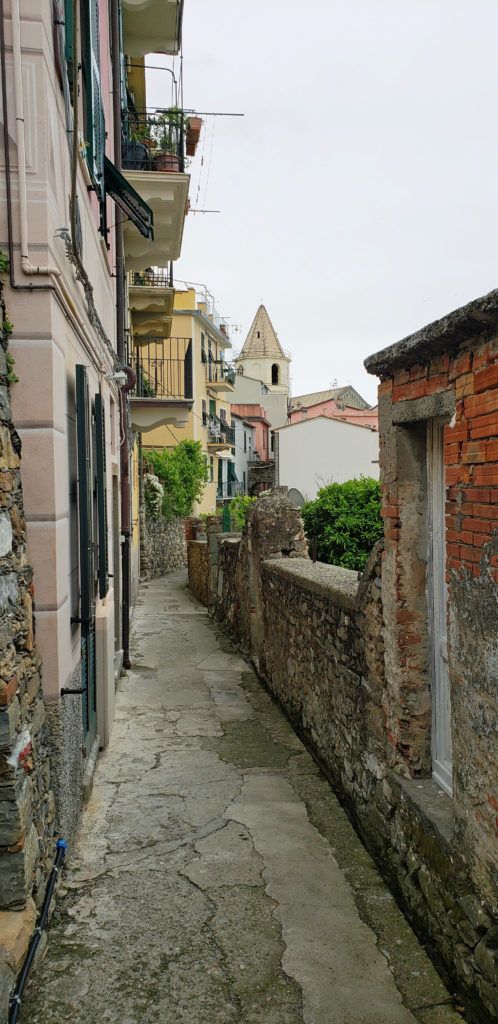
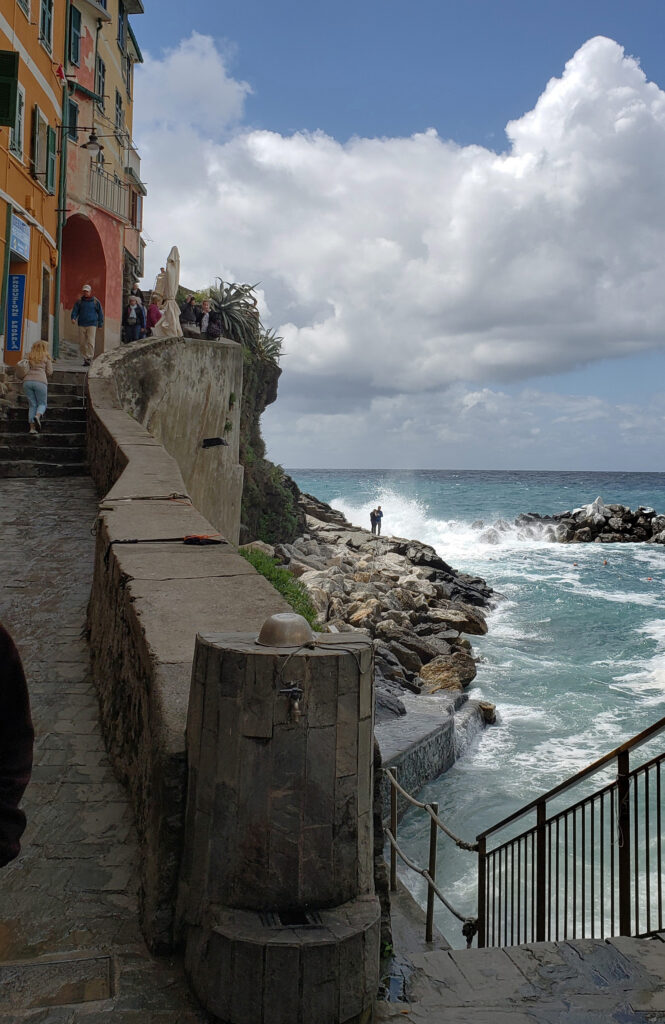
Riomaggiore is southernmost of the five villages and the first you come to if you’re coming from Pisa or Florence, as we were. We didn’t spend much time there, just enough to walk up the steep main street from the harbor where we could get a good view of the town and the surrounding area.

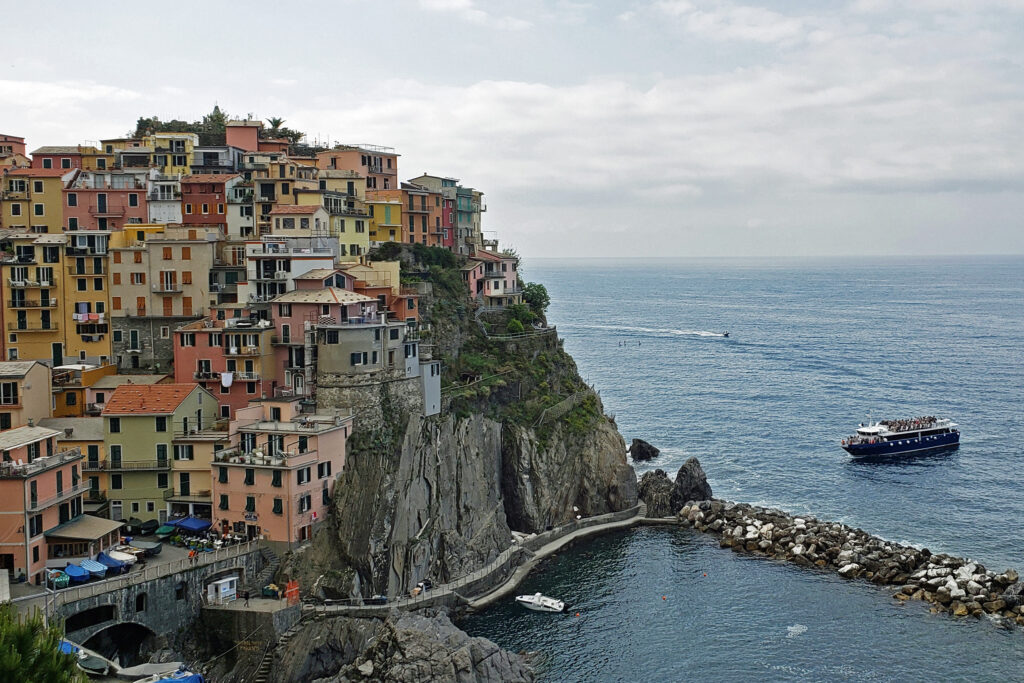
Manarola

Manarola is the next village. We spent most of our time there, since we were staying there, but I think it is also the most beautiful of the five villages, so we would have spent a lot of time there regardless. You could make an argument for any of the five being the prettiest, though, and a lot of people would vote for Vernazza.

Corniglia

Corniglia is the middle village, and the only one not on the water. It’s also the least visited. Many visitors may skip Corniglia because of the 380-step climb from the railroad station to the town, but if you can manage it the climb is well worth it. Corniglia is the least touristy of the five villages, but there are still plenty of interesting sights to see and places to visit, and also plenty of good places to eat and drink.

Vernazza

Vernazza has a pretty harbor and the view from the top of the Doria Tower is stunning. There are also a maze of narrow pedestrian alleyways lined with flowers in brightly colored pots that are a joy to explore. And Vernazza probably has more cafes and restaurants than any of the other villages.


Monterosso al Mare

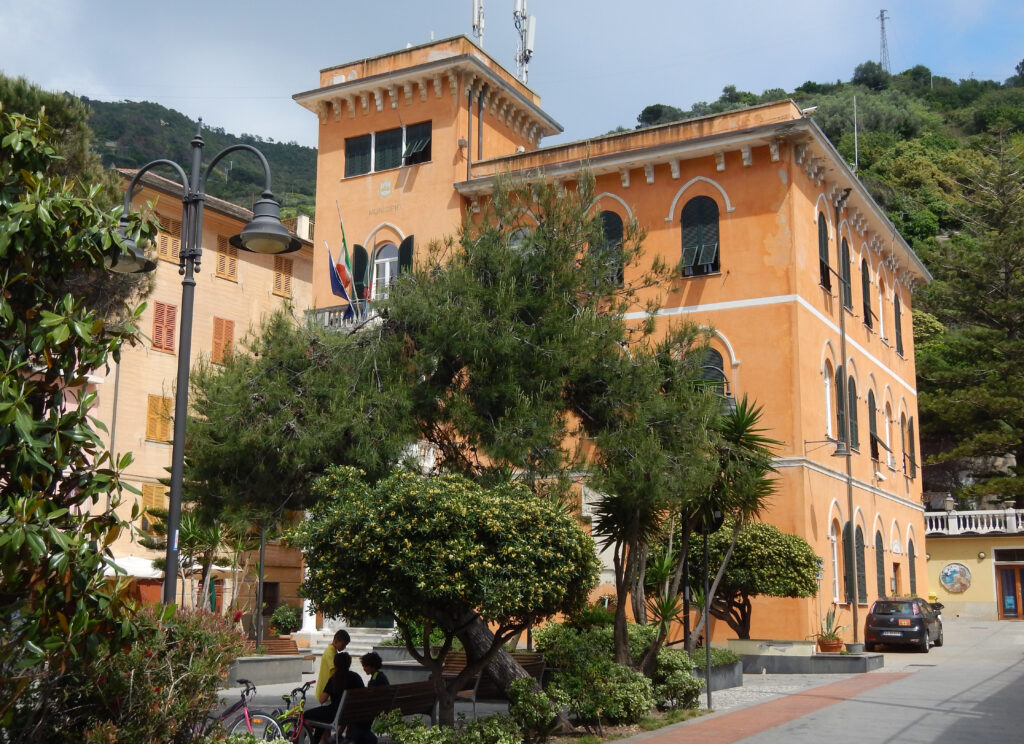
Monterosso al Mare is the northernmost of the Cinque Terre villages and the only one with a beach. It is also the largest and most touristy of the five, but it still retains much of its original charm.

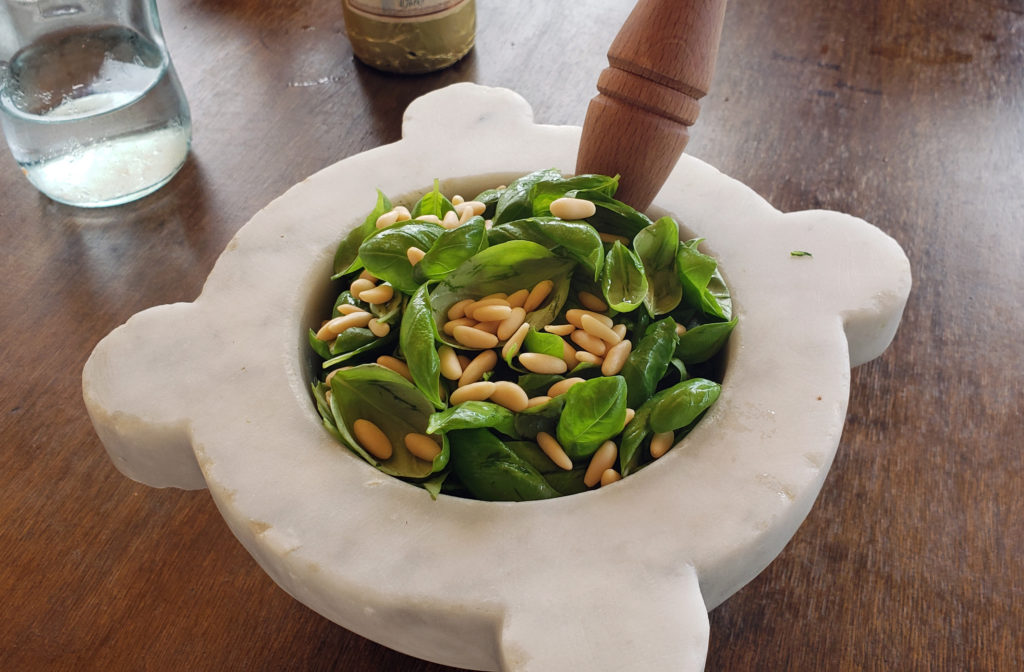
Because we would not be home on Mother’s Day, my two stepdaughters bought my wife (and me) tickets to a pesto making class and lunch at the Nessum Dorma Restaurant in Manarola, something I would not have done on my own, but which turned out to be both a good introduction to Italian cuisine and loads of fun. And the food was very good, including the pesto that we made ourselves.
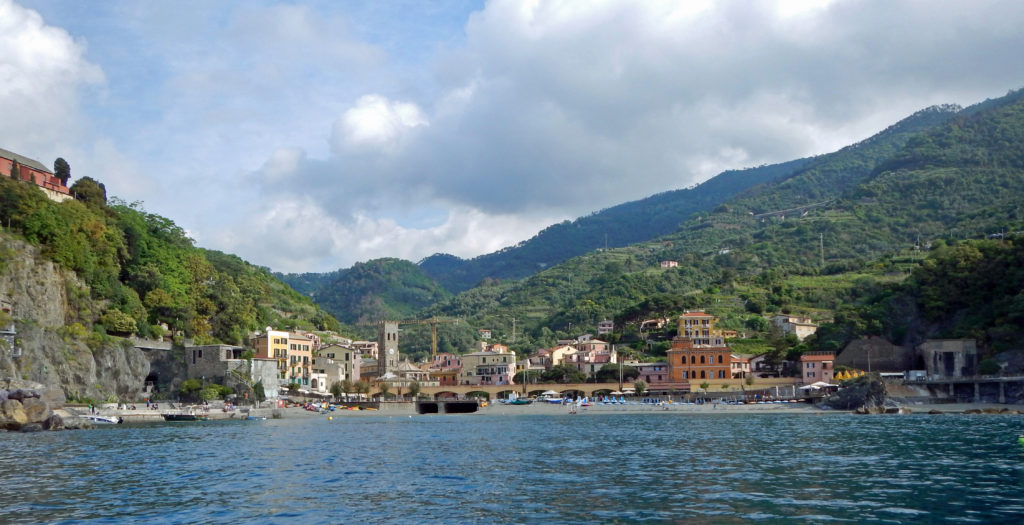
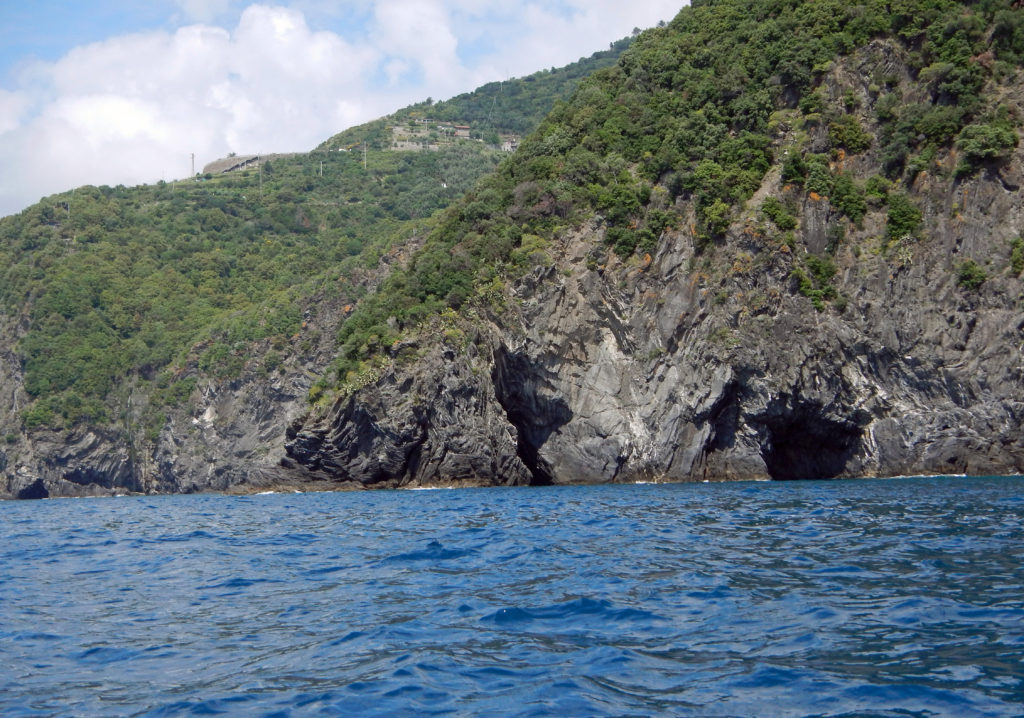
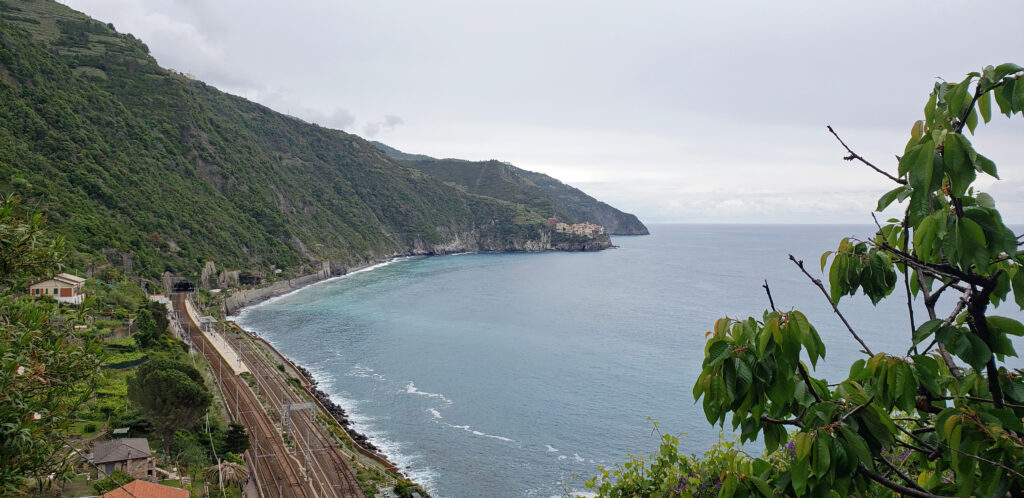
Monterosso al Mare
Sea caves between Monterosso and Vernazza

The next day we made our way to Monterosso al Mare. There we took a guided kayaking trip along the coast to Vernazza. Along the way we were able to paddle into a couple of sea caves and to the base of a waterfall. Pretty cool stuff, and well worth the expense. Getting out on the water gives you a completely different perspective, and photo opportunities that can’t be had from shore. This was definitely one of highlights of the trip.

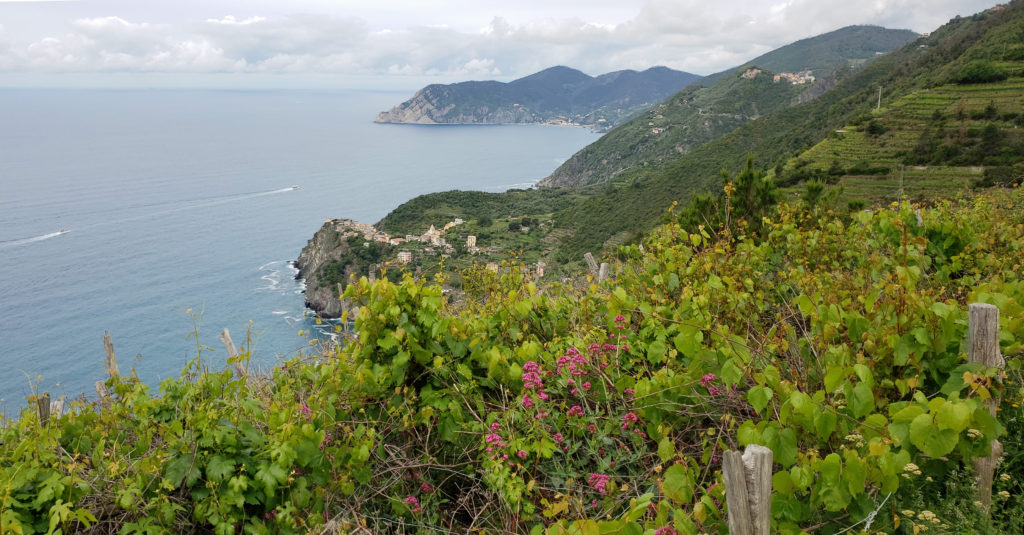
View south from Corniglia, looking toward Manarola

We found that the best way to get to Cinque Terre, and the best way to get from town to town, is by train. The train system in Italy is much better than some have portrayed it (at least when the employees are not on strike). Trains run on time (or close), run frequently, and the system is easy to use. It can be confusing at first, especially in large train stations like the Santa Maria Novello station in central Florence. But the Trenitalia agents were helpful, and after our first day we traveled around for the next two weeks without incident (except for the ticket machine that took our cash but didn’t give us the tickets).

Riomaggiore train station

Tickets for the local trains in Cinque Terre cost €5.00 each way regardless of your destination. If you’re in Riomaggiore, tickets to Manarola (which is a two-minute journey) cost the same €5.00 as tickets to Monterosso, so it can get expensive if you’re trying to see all five villages in a day. You can buy a Cinque Terre Train Card at any of the train stations that allows unlimited train travel between the villages and also north to Levanto and south to La Spezia, but unless you are making a lot of stops the savings are small (or non-existent).

Manarola

Note: There are two types of Cinque Terre Cards. The Trekking Card gives you access to the Blue Trail from Corniglia to Monterosso. The cost is €7.50 for a one-day pass and €15.00 for a two-day pass, with discounts for seniors and children. The Train (Treno) Card also gives you access to the Blue Trail, plus unlimited access to the National Park shuttle busses, free use of public toilets, free wi-fi at train stations, and free entrance to some of the museums in La Spezia, in addition to unlimited train travel. A one-day Train card currently costs €18.20 for adults, €14.80 for seniors (70+), and €11.40 for children (4-11). One-day family (two adults and two children) cards are €47.00. Two- and three-day cards are also available. The Cinque Terre Travel website has a lot of good information on the train system.

Manarola

Another way to get from village to village is by boat. There are large tour boats that make regularly scheduled trips from village to village (except Corniglia) at reasonable rates. They can be crowded and don’t run except in calm conditions. (Because they are too large for the small harbors they nose into the rocky shore and even a little chop can make getting on and off dangerous).

Manarola

The tour boats weren’t operating on the day we had set aside for a tour, but we had already been out on the water kayaking, so it wasn’t a great loss. There are also private boats that can be hired. They are more expensive, but if you have a small group of people, hiring a private boat can be more affordable on a per passenger basis.

View from above Corniglia, looking south to Manarola

Hiking opportunities abound in Cinque Terre but be prepared for some serious elevation changes. The popular low elevation Blue Trail between Corniglia and Manarola and the Via dell’Amore between Manarola and Riomaggiore were both closed because of landslides when we were there. The Via dell’Amore’s reopening is scheduled for some time in 2024, but this being Italy, don’t hold your breath. When the Blue Trail between Manarola and Corniglia reopens is anybody’s guess. The Blue Trail between Corniglia and Monterosso was open we were there, and remains open as of May 2023, but again, this is Italy, so don’t count on it. Hiking the Blue Trail requires a Cinque Terre Trekking Card. All of the other trails in Cinque Terre are free.

View from Volastra, looking north to Corniglia (center) and Monterosso (far distance)

We did take the park shuttle from Manarola up to the village of Volastra, then hiked the high route from there to Corniglia. Most of that trail is relatively flat and has great vistas from Manarola all the way to Monterosso. The final portion to Corniglia is steeply downhill. After exploring Corniglia we returned to Manarola by train.

Corniglia

There are miles of other trails from Levanto north of Cinque Terre to Portovenere to the south. Definitely check out the Italian Fix website if you’re planning to do any hiking in Cinque Terre, as it has a lot of information on hiking in Cinque Terre and vicinity and is updated frequently.

Corniglia

Our five days in Cinque Terre passed quickly, then we were on to Lucca for a few days, then Siena, with a brief stop in Pisa to see the Leaning Tower, and finally back to Florence.

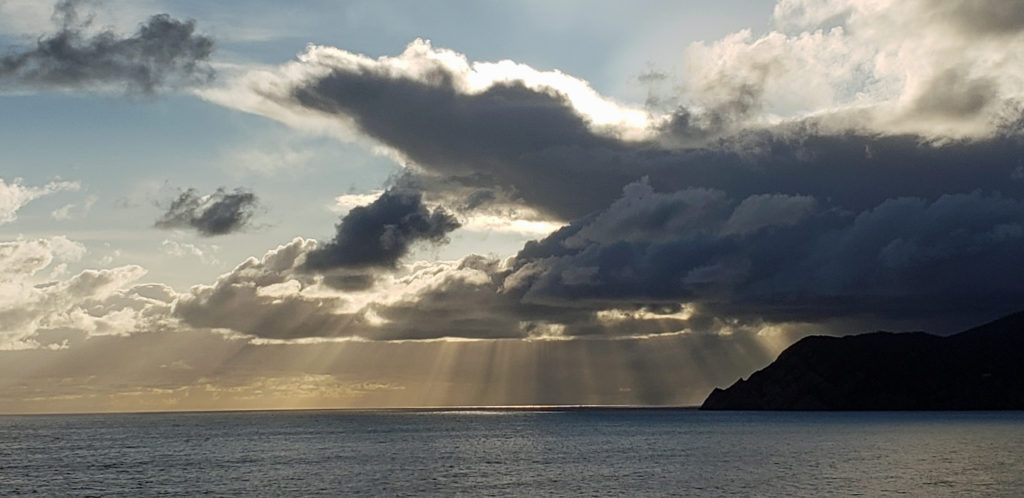
Evening sky from Manarola
Would I go again? In a heartbeat. I could probably spend every evening for the rest of my life sitting at one of the cliffside tables at the Nessum Dorma restaurant in Manarola, looking across the little harbor to the colorful houses stacked one on top of another, sipping a local wine and munching on cheese and bruschetta or focaccia, and be perfectly happy.


Riomaggiore

Originally posted August 20, 2018. Updated and re-posted May 8, 2023.

All photos © Alan K. Lee

God’s Thumb Hike

God’s Thumb Hike

Where:    Oregon Coast

Type:    Out and back

Distance:   4.5 miles

Elevation gain:   1100 feet

Difficulty:   Easy to moderate

Map:    Oregon Hikers website

Overview:  

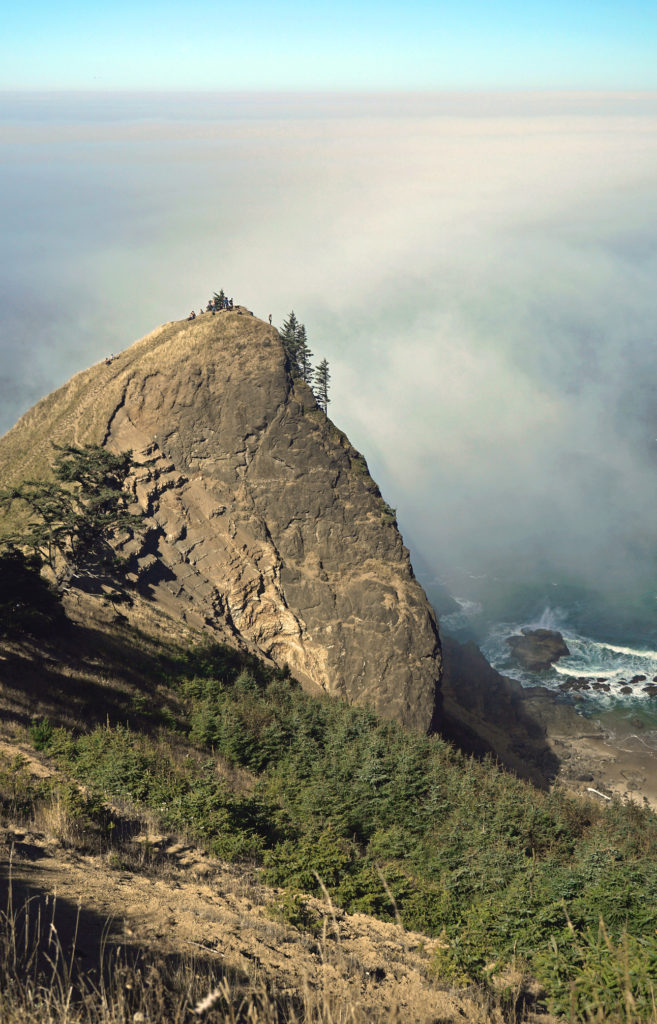
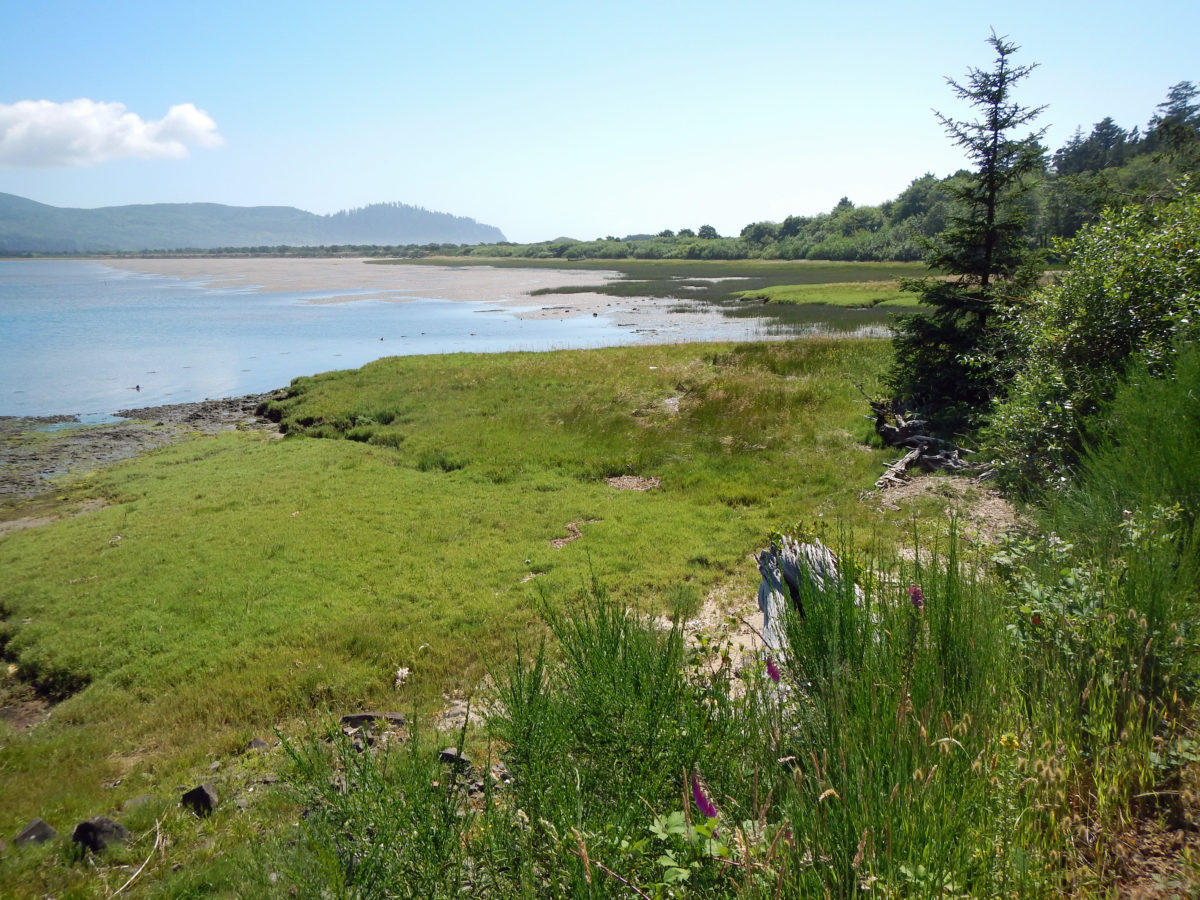
God’s Thumb is a conical basalt headland rising out of the sea like a giant thumb just north of Lincoln City, Oregon. I first laid eyes on God’s Thumb in the 1980s, from the open grassland on the summit of Cascade Head. From there the Salmon River Estuary is immediately below you and just beyond is the town of Lincoln City. In between, there is a rocky headland – God’s Thumb. There’s also an isolated cove and a nice beach visible from Cascade Head. I wondered how you could get there. When I inquired about the area, I was disappointed to find out that you couldn’t. Even though God’s Thumb was (and is) part of the Siuslaw National Forest, there was no public access to it. The only ways to get there crossed private property that were not open to the public.

The God’s Thumb hike remained closed to the public until about a decade ago. Although people occasionally trespassed across private property to get to it, God’s Thumb remained largely unknown. But in 2013 Lincoln City purchased about 500 acres of property that was the site of a failed subdivision and negotiated an easement with the owner of the neighboring property, making God’s Thumb legally accessible to the public for the first time.
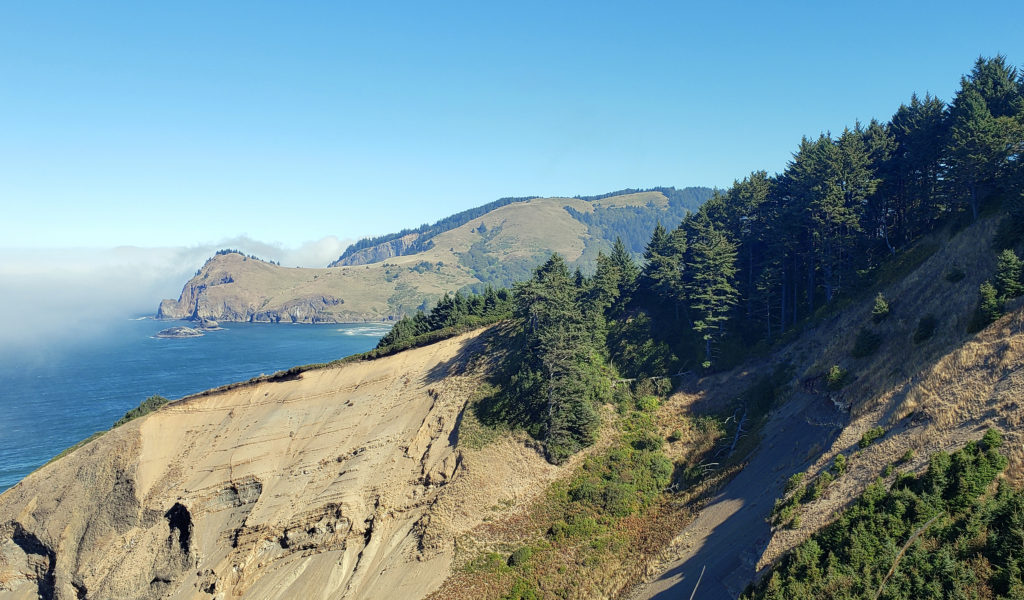
Trailhead:

The God’s Thumb hike starts just north of Lincoln City. Coming from Lincoln City, go north on Hwy 101, past the turn to Road’s End and Chinook Winds Casino, and turn left onto NE Devil’s Lake Boulevard at the next traffic signal. The trailhead is on your left just before the cul de sac at the end of the road.

The hike:

From the parking area at the trailhead, the trail wanders through the woods for about a quarter mile before crossing Logan Creek on a bridge. On the other side of the creek you’ll come to Sal La Sea Drive. You’ll note that there is a small parking lot there. Turn right and walk up Sal La Sea Drive another quarter mile and turn right onto Port Drive. You’ll see a gate ahead. You’ll also note that there is parking for four or five cars at the end of Sal La Sea Drive. (See A few notes on parking, below). Walk around the gate and follow an old gravel road straight up the hill. In about a quarter of a mile you’ll come to a junction. Turn left and walk out to The Knoll.

You don’t want to skip this because the view here is spectacular. The Pacific Ocean is spread out before you in all its glory. The Road’s End section of Lincoln City is directly below you. Lincoln City stretches out before you, with Devil’s Lake to the east and Siletz Bay to the south. The view extends south to Cape Foulweather. You might want to park yourself on the grassy summit and just sit for a while. Apparently, the local herd of elk also like the view because they often bed down here at night.
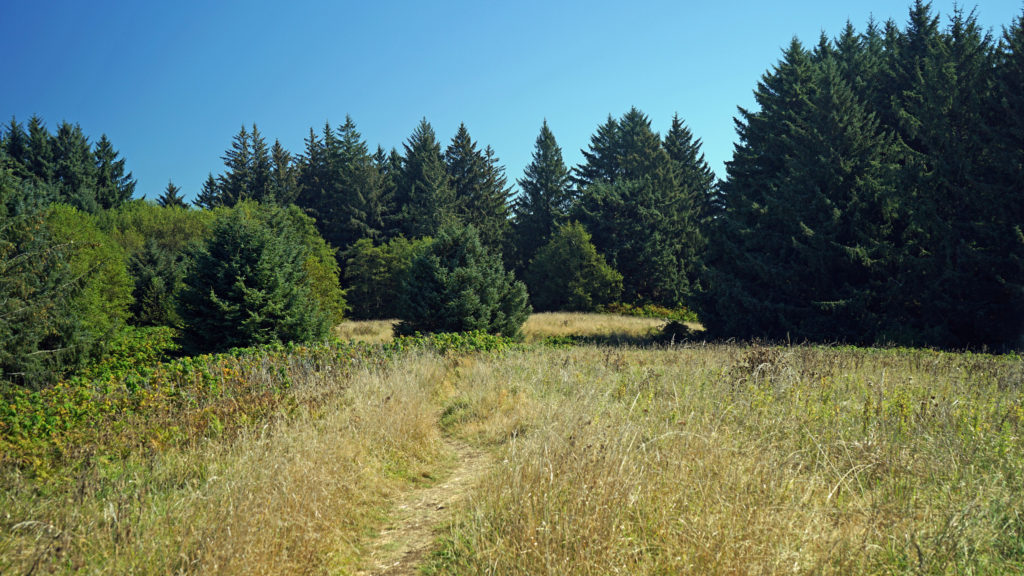
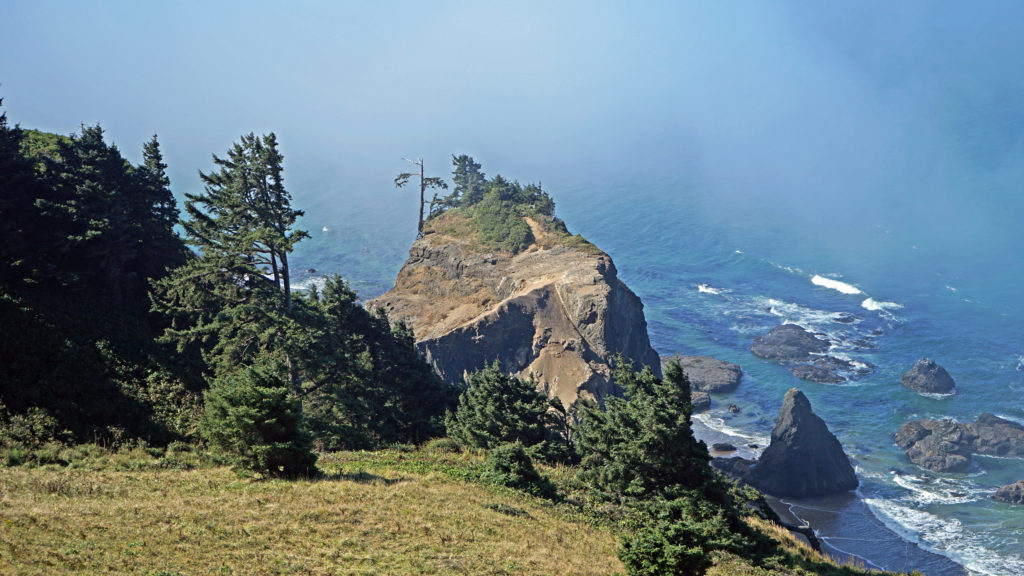
When you’re done taking in the view from The Knoll, return to the main trail and continue north. This portion of the trail is on the easement granted to the city by the property owner. The trail takes you through a spruce and hemlock forest and across a small meadow. Parts of the trail are steep, but the elevation gain is modest, and most people won’t have any difficulty. You’ll soon come to a trail junction. Stay left to continue on to God’s Thumb. You’ll pass through more spruce, hemlock and alder forest, and across several grassy meadows before the trail swings to the west and comes to another trail junction. The trail to the right comes up from the private Camp Westwind on the Salmon River Estuary. Stay left at the junction and you’ll soon see God’s Thumb in front of you. Stop here and admire the view of The Thumb and the surrounding cliffs, the two coves and beaches on either side of The Thumb, and Cascade Head to the north.
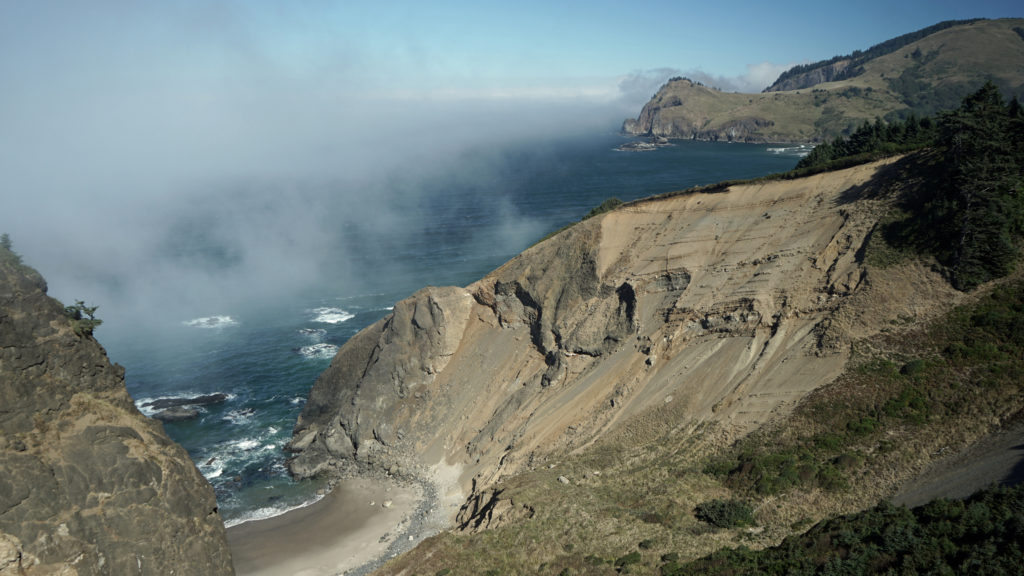
The trail then drops steeply down the slope and across along a narrow ridge before climbing very steeply up the slope to the summit of God’s Thumb. This section can be tricky to navigate and can also be slippery if the trail is wet. Some people choose not to venture down and then up to the summit. But if you do, you’ll be rewarded with magnificent views in all directions. Even if you don’t, the views you do get make the hike well worthwhile.
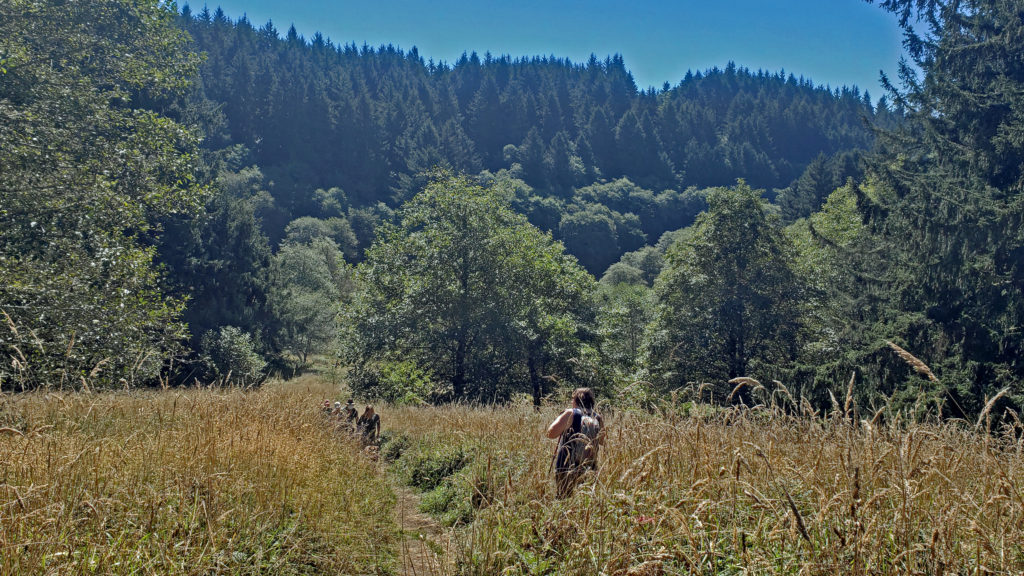
When you’re done taking in the views, return the way you came. When you reach the second trail junction, before you get to The Knoll, you have the option of taking the trail to the left for an alternate, slightly longer route back to the end of Devil’s Lake Boulevard where you left your car. Check the Oregon Hikers website for a description of this trail and more information about the whole hike. If you don’t take the alternate route, venture out to The Knoll again. The view might be completely different if the fog has come in (or gone out).
A few notes on parking:

The two parking areas along Sal La Sea Drive that I mentioned are both okay to park in (legally) if you want to shorten your hike a little. But they’re not officially sanctioned because they fill up quickly and many people have parked on residential streets close by when they are full, to the ire of the local residents. Please do not park on any residential street. The Devil’s Lake trailhead was developed to give hikers an additional parking area and lessen the amount of people parking where they shouldn’t. If all of the parking areas mentioned are full, you can park at Road’s End State Recreational Area on Logan Road and walk up Sal La Sea Drive to the Port Drive trailhead. That makes the round-trip hike only about half a mile longer than starting at the Devil’s Lake Boulevard trailhead. And under no circumstances should you use the shorter trail from the end of Logan Road to get to God’s Thumb. The property owner has not granted public access across their property. They haven’t fenced it off, but please respect their property rights. And besides, there is no public parking anywhere on Logan Road other than at Road’s End State Recreation Area, so you risk having your vehicle towed if you park illegally.

Other area hikes and other attractions:
Other worthwhile hikes in the Lincoln City area include the Nature Conservancy’s Cascade Head Preserve, the Hartz Cove Trail on the north side of Cascade Head, and the Drift Creek Falls Trail in the Coast Range foothills to the east. More on those in later posts. And farther south, the Beaver Creek State Natural Area offers a nice, quiet, and peaceful hike that not many people know about.

And the central coast from Lincoln City to Newport has numerous other attractions, including the Oregon Coast Aquarium in Newport, the charming (but increasingly touristy) town of Depoe Bay, Chinook Winds Casino in Lincoln City, and numerous state parks and waysides.

Originally posted (in a slightly different format) May 19, 2021 by Alan K. Lee. Edited, reformatted, and re-posted May 3, 2023.

All photos © Alan K. Lee

Bayocean Peninsula Hike

By Alan K. Lee

Bayocean Peninsula Hike

Where:   Tillamook County, Northern Oregon Coast

Type:   Out and back beach walk or loop hike

Distance:   3.6- or 7.7-mile loop hikes or out and back hikes up to 8.2 miles

Elevation gain:   Minimal

Difficulty:   Easy to Moderate (depending on length)

Map:   Google Maps 

Guidebooks:

100 Hikes: Oregon Coast by William L. Sullivan

120 Hikes on the Oregon Coast by Bonnie Henderson

Oregon’s Best Coastal Beaches by Dick Trout

Oregon Coast Hikes by Paul M. Williams

 Overview:

Bayocean Peninsula separates Tillamook Bay from the Pacific Ocean. The peninsula runs from the mouth of the bay south for five miles to Cape Meares. I’ll describe two loop hikes that include a beach walk and a return on the bay side, but out and back hikes on the beach or the bay side of the peninsula are also options here.

Source: Wikimedia Commons

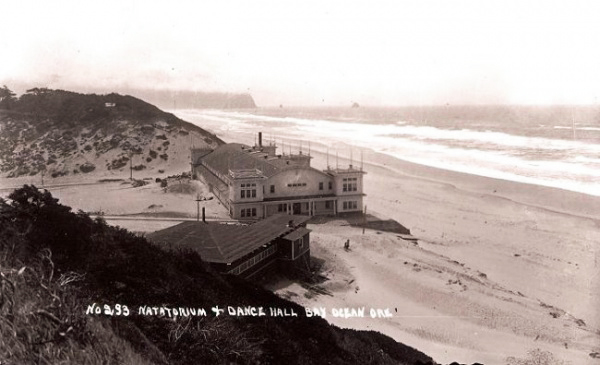
Bayocean Peninsula was once home to the resort community of Bay Ocean Park. A century ago the town had a large hotel, what was billed as the largest natatorium (indoor swimming pool) on the west coast and 2000 residents. But the ocean reclaimed all of it. Today, nothing is left of the town. See my Bayocean Peninsula post for more information.

The peninsula is now an undeveloped county park. There has never been a campground, but in the past backcountry camping was permitted. That has changed, however, and overnight camping is no longer allowed.
Getting there: 

From the town of Tillamook, drive west on Third Street (Ore Hwy 131). After crossing the Tillamook River bridge, turn right onto Bayocean Road toward Cape Meares. At milepost five, turn right onto the old south jetty haul road (sometimes called the Dike Road) and proceed to the trailhead parking area.

Trailhead:

The trailhead parking area has space for about 25 vehicles. There are chemical toilets but no water available. There is a $10 Tillamook County day use fee, payable at the trailhead. An alternative trailhead is the beach access in the town of Cape Meares about a mile west of the Dike Road turnoff. There is no parking fee, but also no facilities. Add about 1.8 miles to the distances listed above.

The hike:

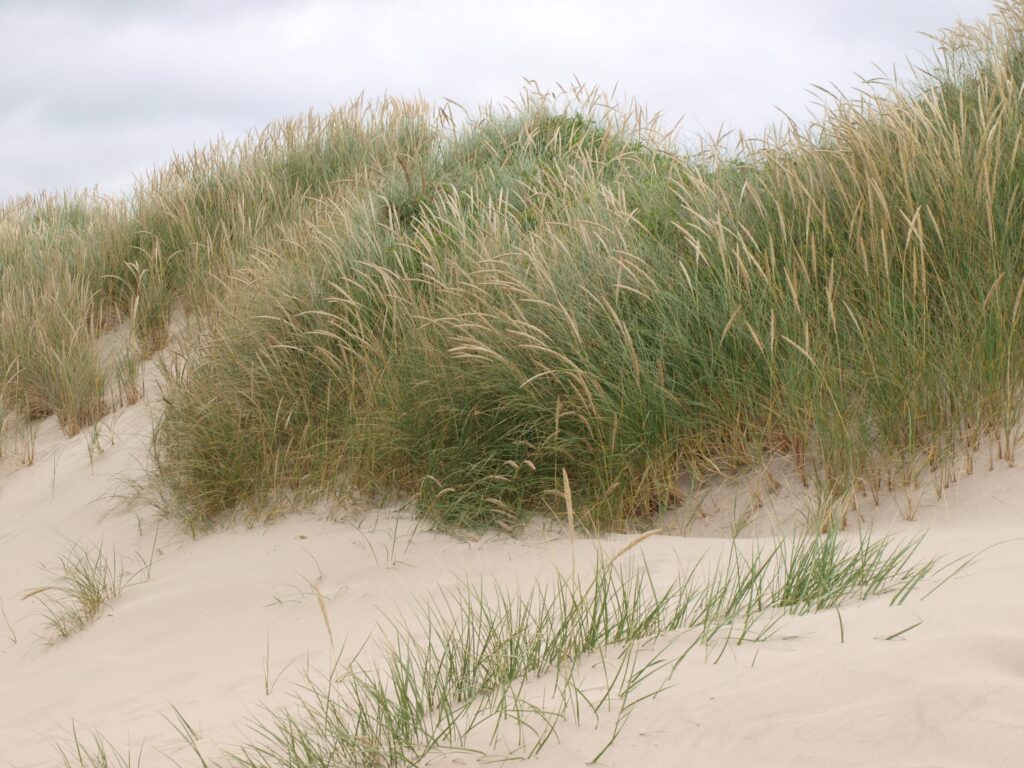
From the northwest corner of the Dike Road parking area, follow the trail through the dunes to the beach and turn north. In a little over a mile, look for a sandy draw between forested bluffs. Here you have a choice. If you follow the draw inland, a trail will take you through the spruce and pine forest to the bay side of the peninsula. From there you can return to the trailhead on the old jetty haul road for a 3.6-mile loop hike.

Or, continue along the beach until you reach the south jetty at the mouth of Tillamook Bay. You’ll be rewarded with one of the least crowded beaches on the entire coast. You might have the beach to yourself even on summer weekends.
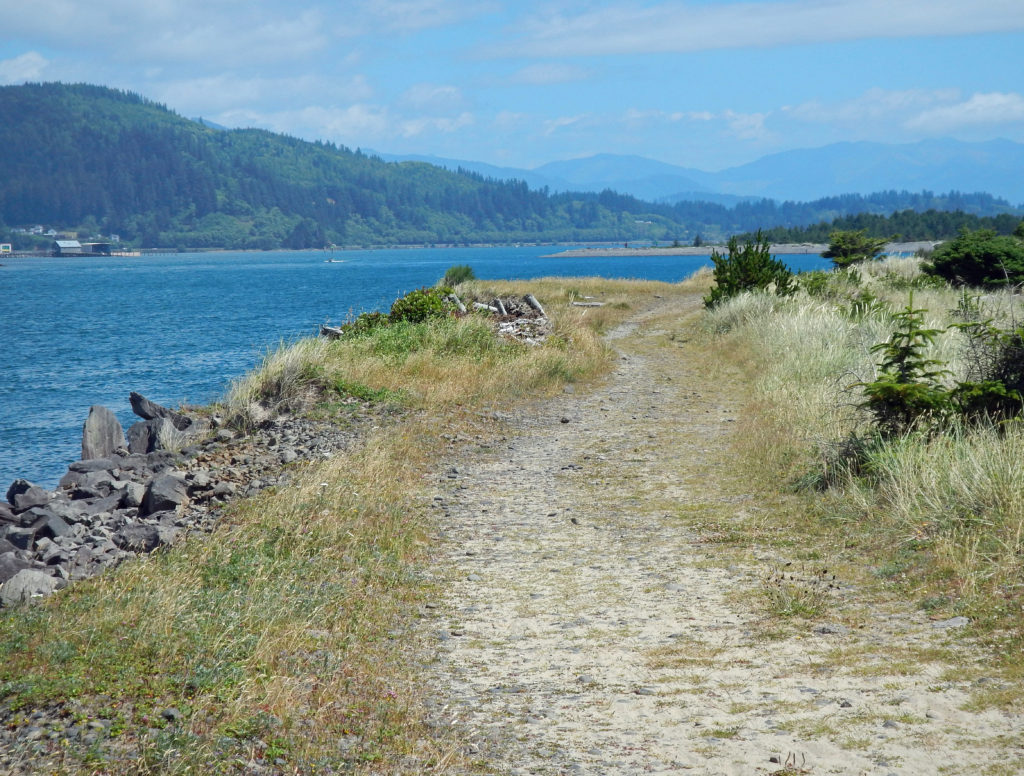
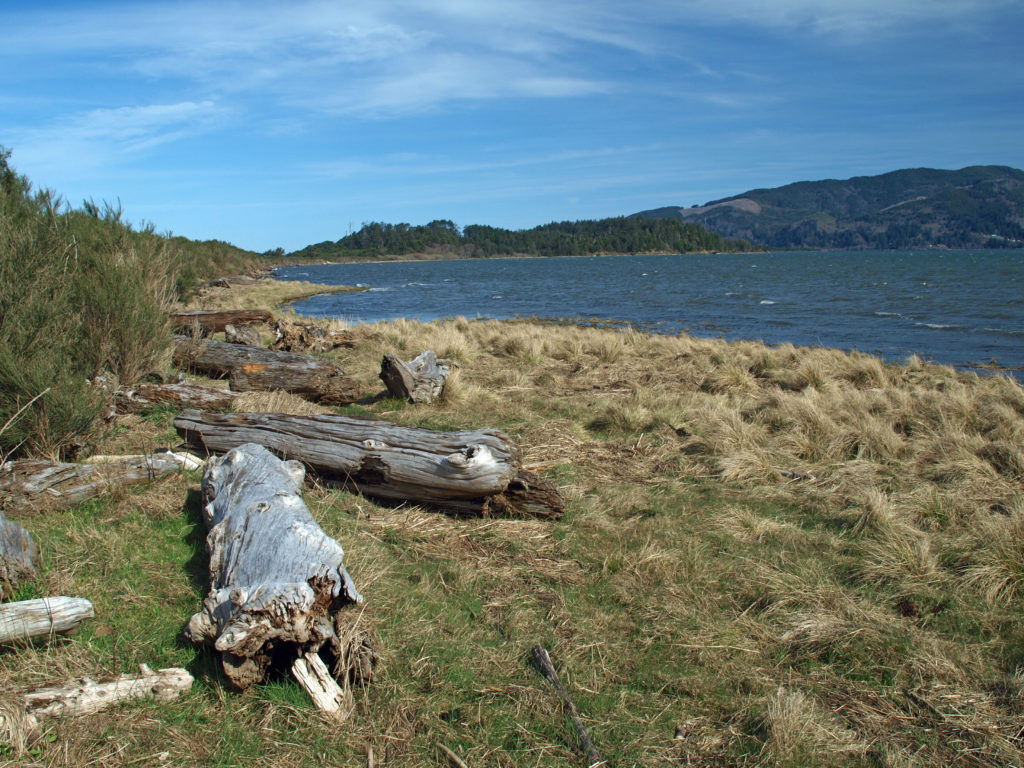
From the jetty you can return the way you came for 7.2 mile out and back beach walk or complete the 7.7-mile loop hike by following the jetty inland to the old jetty haul road and following it back to the trailhead. The road is rock and gravel with some sandy stretches. It runs along the bayshore, with good views of the shore and bay, with a couple of stretches in the pine and spruce forest of the peninsula interior.
Note: At the time of this update (April 2024), the north end of the haul road is closed to the public due to jetty construction work, so the longer loop is not possible. The construction work does not affect the beach or the Bay Ocean Park townsite.

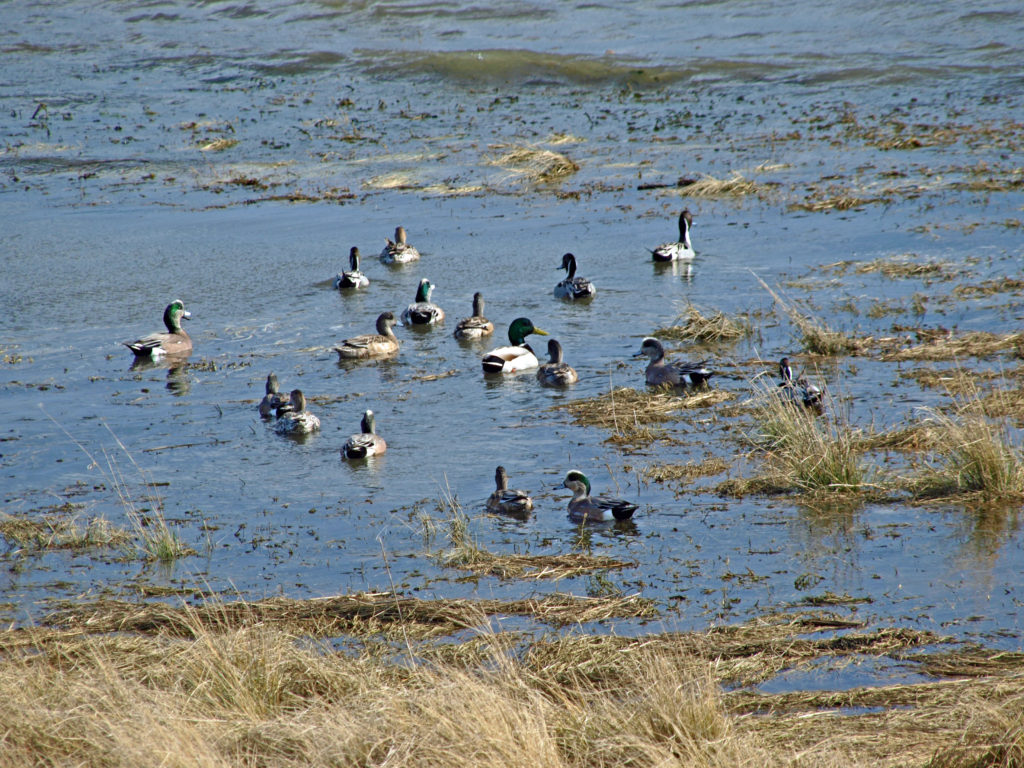
Look for ducks and geese on the water and shorebirds along the water’s edge. This is one of the best birding areas for waterfowl on the coast.
Near the end of the hike look for a sign labeled Bayocean Townsite. Here a trail leads toward the beach to the old townsite. The trail loops south through what was then the bayfront (the whole peninsula has shifted a couple of hundred yards to the east and much of the old townsite is now under the waves), then returns to the haul road, where there is an interpretive display that tells the tale of the town and its demise. From there, return to the parking area. (If you started at the town of Cape Meares, hike from the Dike Road parking area through the dunes and return to Cape Meares on the beach.)
Other area attractions and activities:

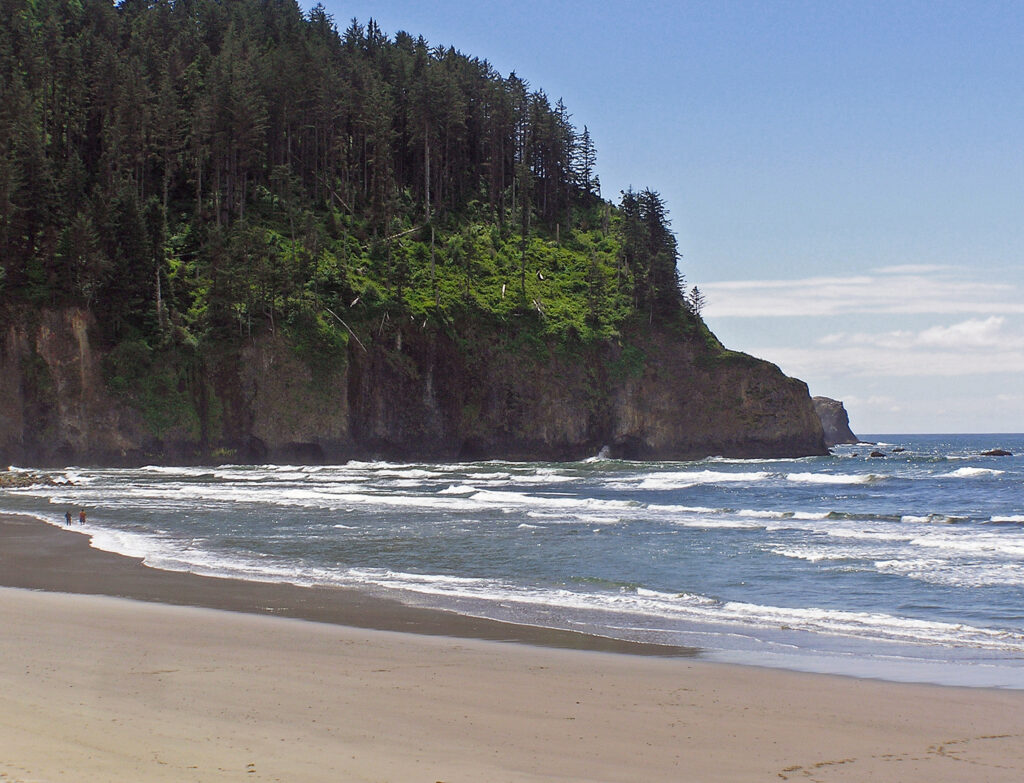
The beach walk south to the base of the Cape Meares headland provides an up-close view of the ocean waves crashing against the rocky headland, and Cape Meares State Scenic Viewpoint, on top of the headland, provides spectacular ocean views both north and south, one of the best whale watching spots on the coast, a lighthouse dating to 1890, and the spectacular Octopus Tree, a many trunked Sitka Spruce.

Farther south, Cape Lookout offers more hiking options, including a unique hike to the tip of the cape, which extends two miles into the Pacific.

If you want to quench your thirst after your hike, stop at the Pelican Brewing pub on First Street in Tillamook or de Garde Brewing a block south at the corner of Second and Ivy. Tillamook is also home, of course, to the famous Tillamook Cheese Factory, one of the most visited tourist destinations in Oregon. And Tillamook is also home to Blue Heron French Cheese Company.

Originally posted April 26, 2023. Most recently updated April 18, 2024.

All photos © Alan K. Lee, except as noted

British Columbia’s Gulf Islands

by Alan K. Lee

My wife and I love to explore new places, and most of our travels are to places that we have never been to before. But there are a few places that have drawn us back again and again. One of those is British Columbia’s Gulf Islands.

The Gulf Islands are located off the southeast coast of Vancouver Island. There are six main islands in the Southern Gulf Islands: Salt Spring, Mayne, North Pender, South Pender, Saturna, and Galiano. The Northern Gulf Islands consist of Thetis, Penelakut, Valdes, and Gabriola Islands. Each island has its own particular charms, and all are well worth exploring.
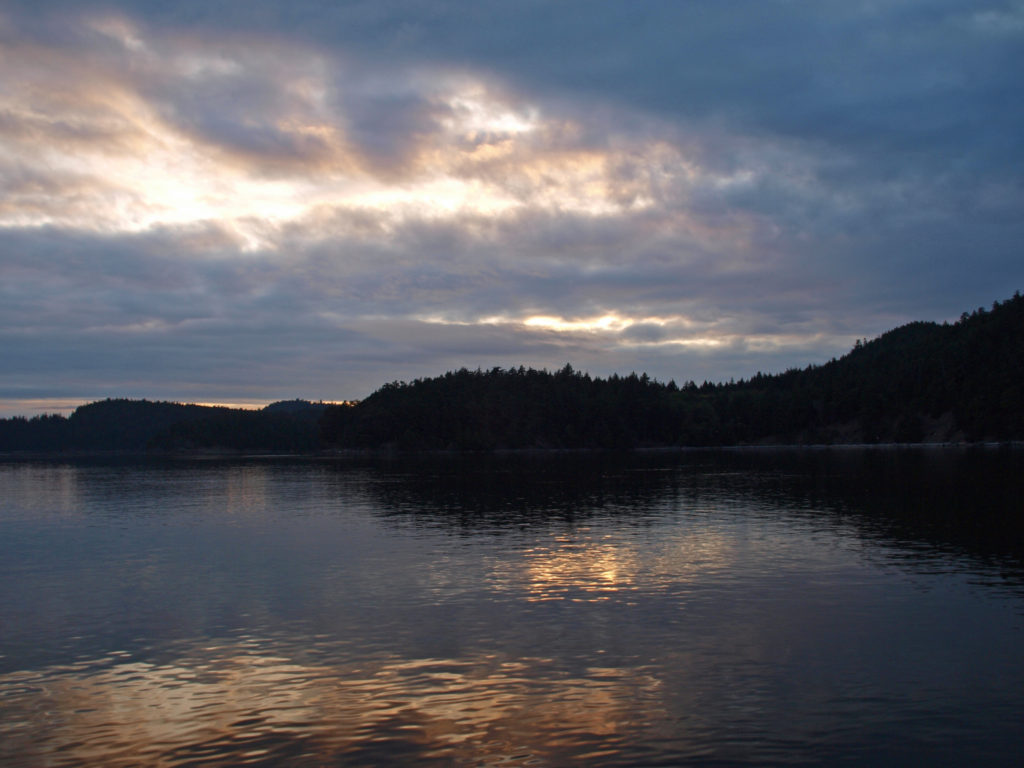
The Gulf Islands Guide has a description of each island and good information on events and accommodations in the Islands. Other useful websites include Gulf Islands Tourism, and Salt Spring Island.org.

There are many reasons to visit the islands, not the least of which is that they are simply flat out gorgeous. Everywhere you go, every vista at every turn, the beauty of the islands is on display for your enjoyment.

Our latest visit to the Gulf Islands came in 2024 with a trip to Salt Spring Island, the largest, most accessible, and most visited of the islands. Ganges, on Salt Spring, is the commercial and cultural heart of the Islands. It is the largest (and really the only) town in the Southern Gulf Islands. For more information, check out my Salt Spring Island post here.

One of the charms of the Gulf Islands is that they are largely untrammeled by commercial development. There are no big resorts, no malls, nothing to draw in the masses except the natural beauty that surrounds you everywhere in the Islands. But once there, many people are captivated not only by the scenery and wildlife, but also by the people and the islands’ culture and lifestyle.

The Gulf Islands offer an abundance of outdoor activities, from hiking and mountain biking to sailing and kayaking, camping, fishing, whale watching, and more.

There are no commercial airports in the Gulf Islands, but there are float plane companies that will take you to the islands. And the Victoria airport is only a few miles from the Schwartz Bay ferry terminal, so flying to Victoria and renting a car is a an option for people from outside the Northwest that want to visit the Southern Gulf Islands.

Most visitors to the Gulf Islands arrive via one of the BC Ferries. Passenger and car ferries travel from Tsawwassen on the B.C. mainland south of Vancouver to Long Harbor, near Ganges on Salt Spring Island, and from Schwartz Bay on Vancouver Island north of Victoria to Fulford Harbor on the south shore of Salt Spring. There is also a smaller ferry from Crofton on Vancouver Island to Vesuvius on the northwest side of Salt Spring. The other Southern Gulf Islands are serviced by ferries departing the Long Harbor terminal or Schwartz Bay.

Thetis and Penelakut Islands are reached by ferries from Chemainus on Vancouver Island. Gabriola Island is a short ferry ride from Nanaimo. Be sure to check the ferry schedules on the BC Ferries website. Reservations may be required, especially on summer weekends, and the ferry system is designed to serve island residents, not tourists, so island hopping can be difficult. Getting from one island to another in the Southern Islands by ferry sometimes requires going back to Salt Spring Island and then taking a second ferry from there. And there are no ferries from Thetis or Penelakut to Gabriola.
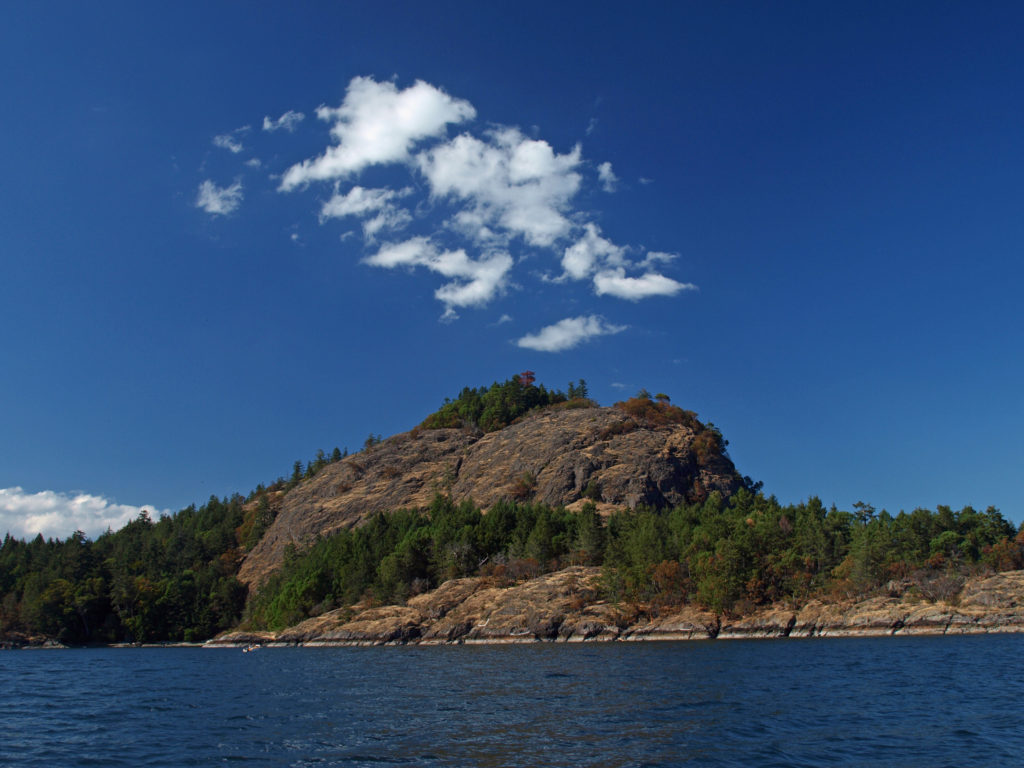
I’ve found that a good way to explore the Southern Gulf Islands by car is to base yourself on Salt Spring and pick an island to explore each day. North and South Pender Islands are connected by a bridge, so they can be explored in a day. Take another three days to explore Mayne, Saturna, and Galiano. That still leaves you several days to see all Salt Spring has to offer, or to explore the Northern Gulf Islands, even if you have only a week.
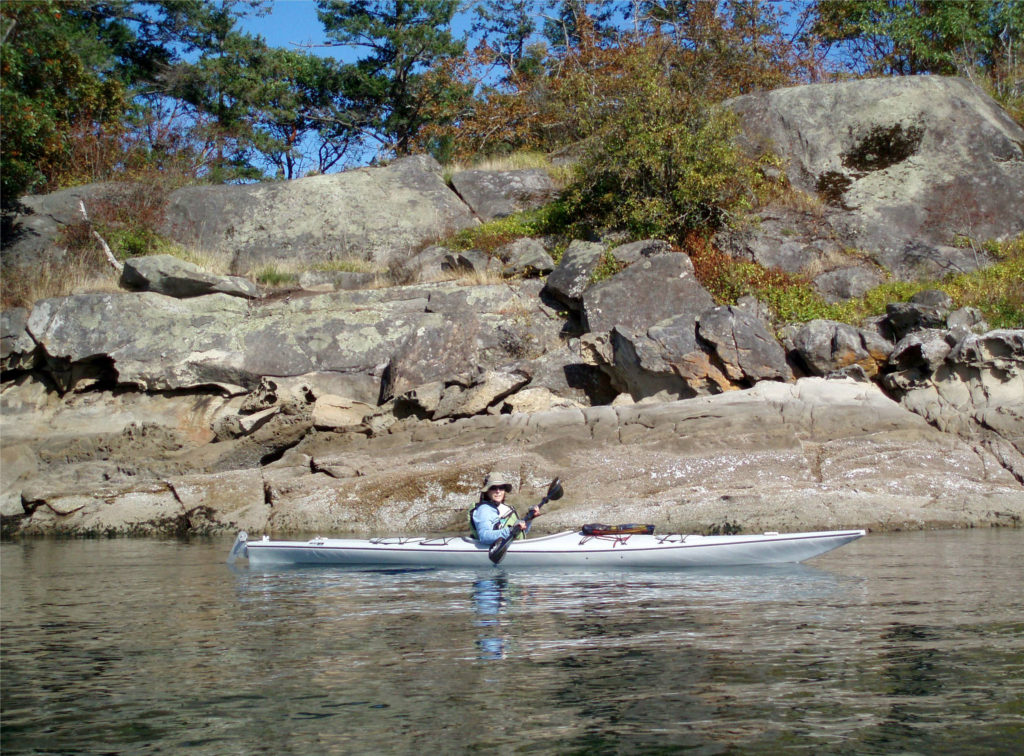
There is a bus system on Salt Spring Island, but public transportation is limited or nonexistent on the other islands. You can get around without a car, though. There is a unique Car Stop system, sort of an organized hitchhiking system, on all of the Southern Islands. Look for the Car Stop signs and stick out your thumb. Someone will stop to give you a ride. Drivers can be selective about who they pick up, and of course hitchhikers can be equally selective about whose car they get into. But it’s generally safe, and it’s free. It also a unique way to get to know some of the locals.
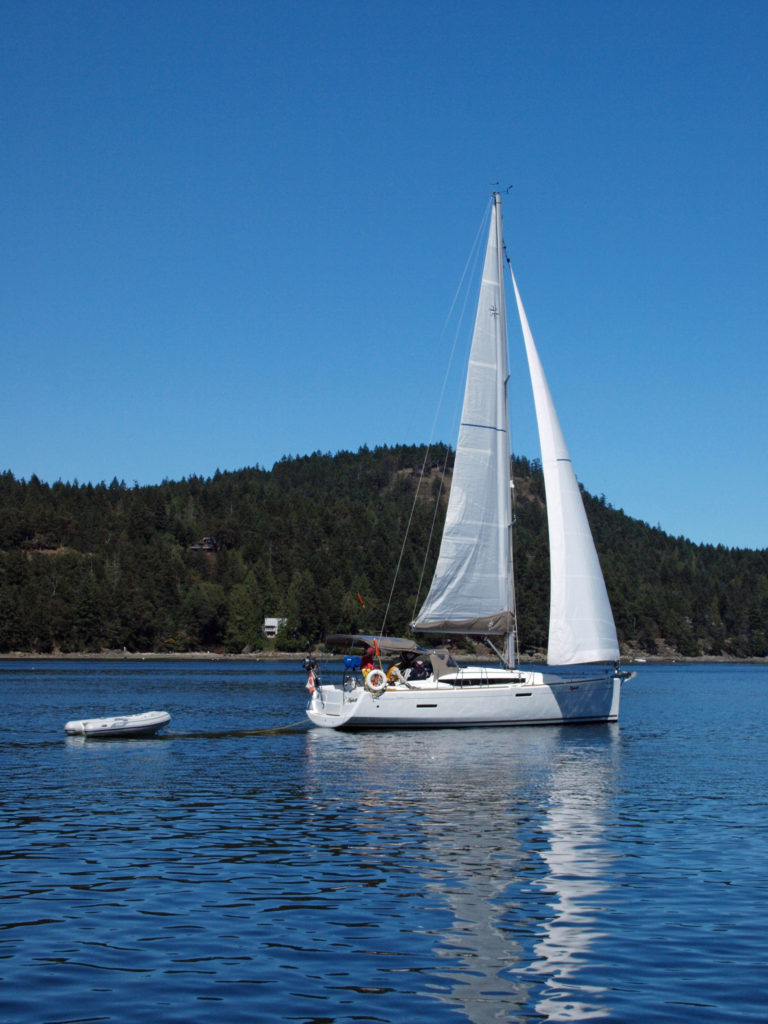
If you or one of your fellow travelers is an experienced boater or sailor, you can charter a sailboat or power boat and explore the islands by sea. Full-service marinas are located at Sidney on Vancouver Island, and on Salt Spring, Pender, Galiano, and Thetis Islands, and there are public docks on most of the islands. Experience is essential and charter companies require proof of competence, but if you have the necessary qualifications, this is an excellent way to explore the Islands. We have done this, and I can personally recommend it.

There are a wide variety of accommodations available on the islands, from full-service resorts and hotels to traditional B&Bs to single rooms available through Airbnb. Most of the accommodations are on Salt Spring Island, but you can find small resorts and many individual houses for rent on the other islands. If you’re a kayaker, this is a perfect jumping off point. Ganges Harbor and its numerous islands are well worth exploring. Prevost Island, a short paddle to the southeast of Ganges Harbor is also worth a visit. A portion of Prevost is set aside as part of the Gulf Islands National Park.
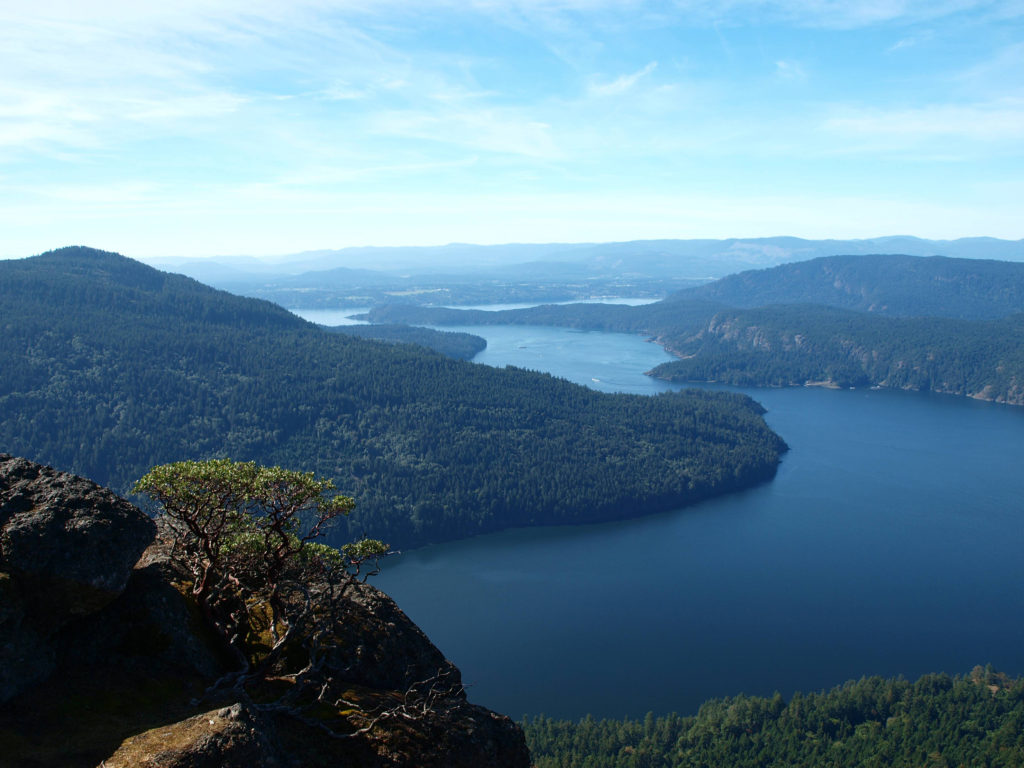
There are a number of Provincial Parks in the Islands that are worth exploring. Salt Spring Island has four: Mount Maxwell Park on the west side of Salt Spring Island provides spectacular views of Salt Spring Island and across Saanich Inlet to Vancouver Island to the west; Ruckle Park on the southeast coast of Salt Spring has hiking trails that take you along the shore of Swanson Channel and a campground with eight RV sites (no hookups) and 78 walk in tent sites; Mt. Erskine Park, just west of Ganges has several challenging hiking trails; and Burgoyne Park is located on the Saanich Inlet at the base of Mount Maxwell.

Galiano Island also has several provincial parks, and portions of North and South Pender Islands and Saturna Island are set aside as part of the Gulf Islands National Park.

You can’t see everything British Columbia’s Gulf Islands have to offer in a week, or even two, but it’s time enough to fall in love with them, which happens to a lot of first-time visitors. It happened to us. It’s brought us back numerous times, and we will visit again in the near future. And the proximity of the Gulf Islands to Victoria and the rest of Vancouver Island makes for a wide variety of possible itineraries on an extended vacation.

Originally posted July 2, 2018. Most recently updated January 20, 2025.

All photos © Alan K. Lee


Twin Falls Trail

Twin Falls Trail

Where:   South Fork Snoqualmie River, Washington Cascades

Type:   Out and back

Distance:   2.6 miles round trip

Elevation gain:   525 feet

Difficulty:   Easy

Overview:

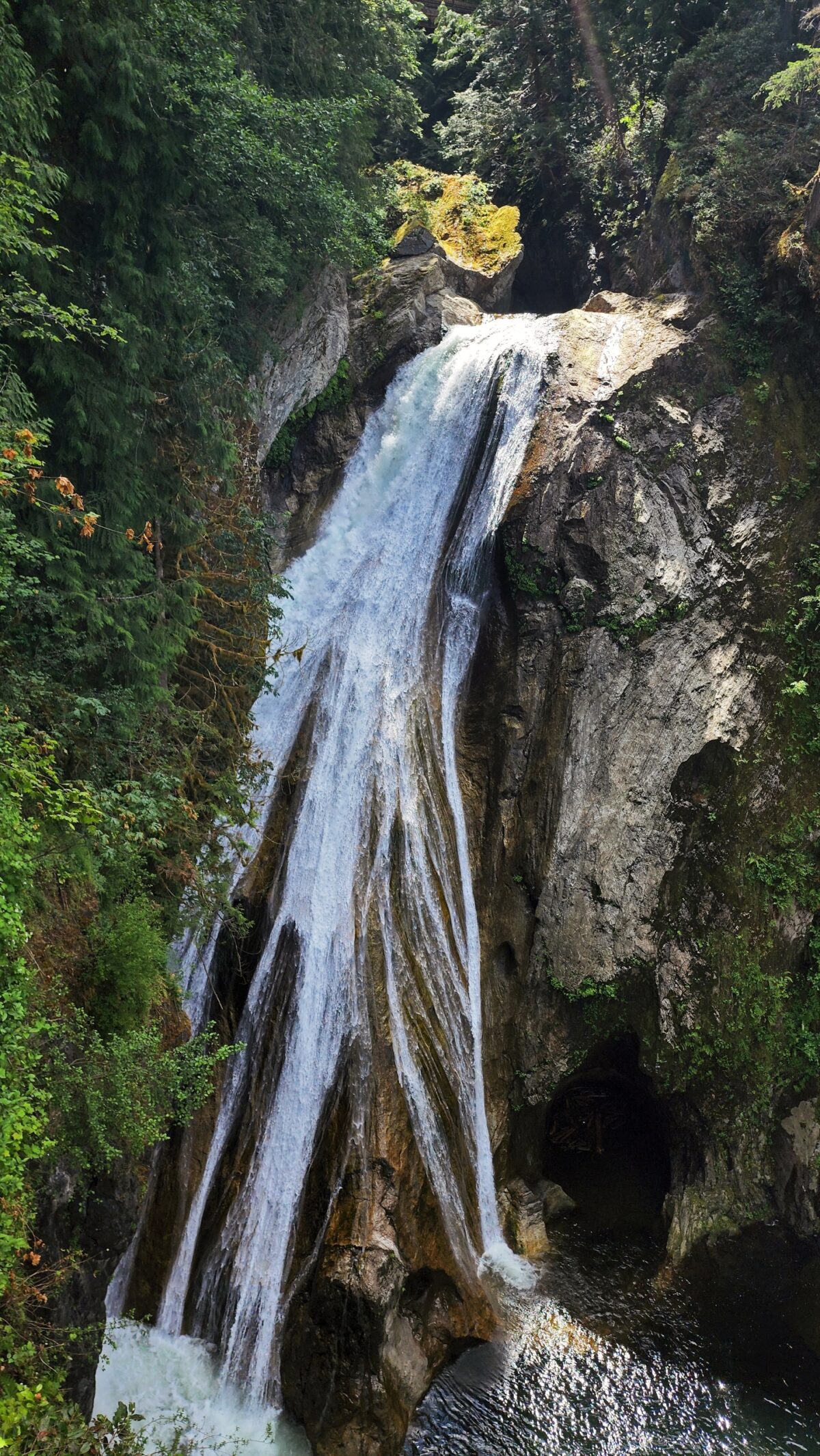
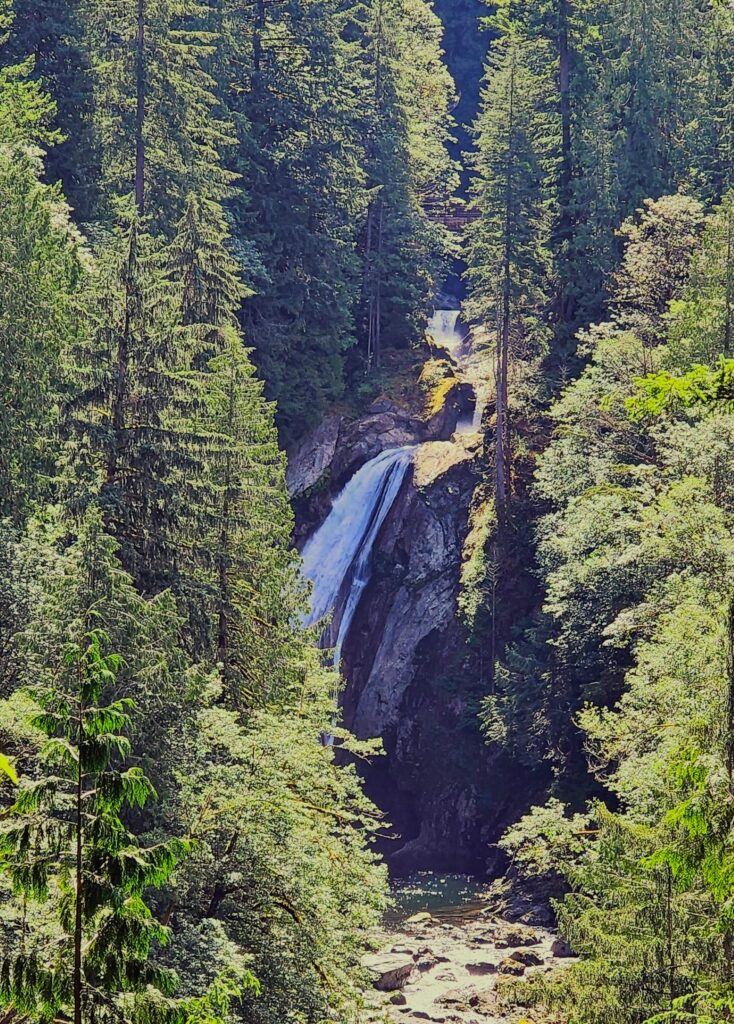
The Twin Falls Trail is a relatively easy, family friendly hike to a beautiful set of falls consisting of a lower falls and a smaller two-tier upper falls. We had two of our grandkids with us (ages four and six), and both made the round trip without much difficulty.

Getting there:

Twin Falls is located just off Interstate 90 east of Seattle. Take Exit 34 and go south on 468th Ave, turn left onto 159th St and proceed to the parking area at the end of the road.

Trailhead:

The sizeable parking area has room for 30 or 40 cars and there is room along the road to park if the lot is full. There are restrooms (vault toilets) but no water available. There is a $10 parking fee if you don’t have a Washington Discover Pass.

Best Time to go:

We did this hike in 2022 on the fourth of July, definitely not the best time to go if you want to avoid crowds. We were there in the morning, though, and the trail wasn’t overly crowded on the way to the falls – lots of people coming up the trail as we were going back, though. The trailhead and falls are both under 1000’ elevation, so the trail is snow free most of the year and makes for a good winter getaway from the Seattle metro area. Being so close to Seattle and so easily accessible means that it is likely to be crowded whenever you go in the summer, so it’s best on weekday mornings and evenings.

The hike:

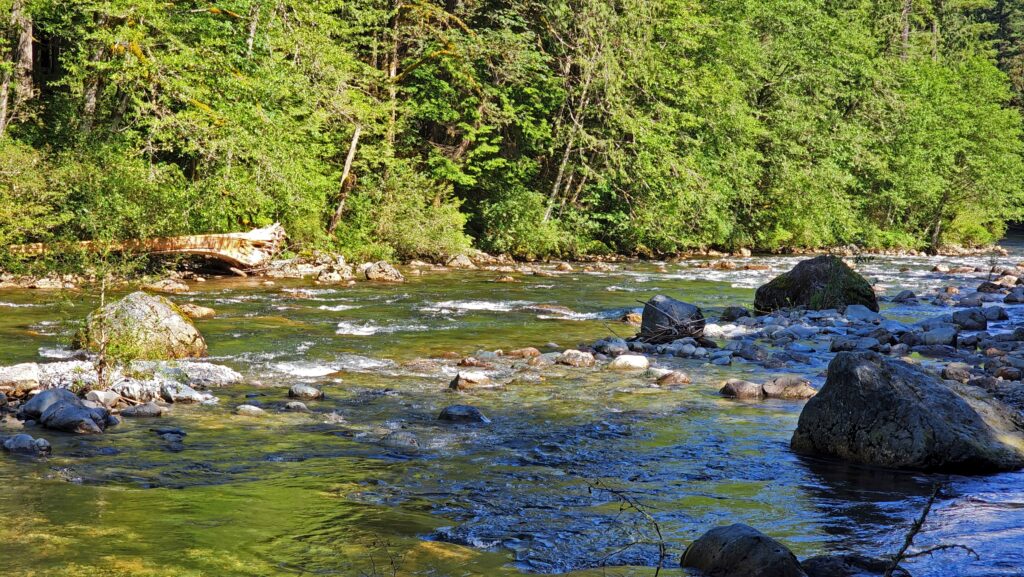
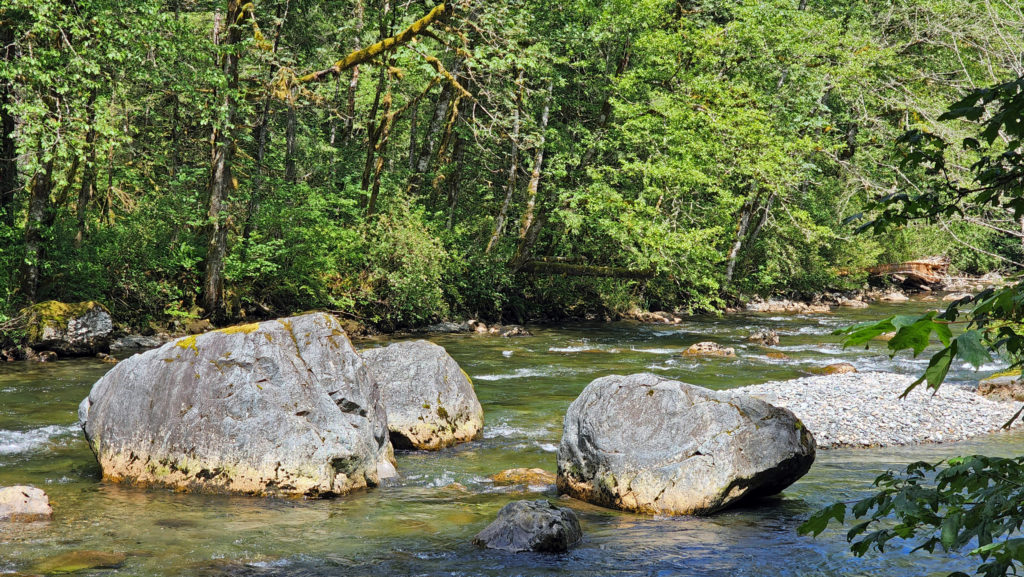
The first half of the hike to the falls parallels the river with little elevation gain. There are several places on this section of the trail where you can access the river. Then the trail turns away from the river and switchbacks up to a high point where there is a partial view of the lower falls.

The trail then drops back down before making a second climb to another summit. Beyond that the trail descends a series of stairs and a side trail leads down another set of steps to a viewpoint of the lower falls that is well worth the 104 steps back up to the main trail.
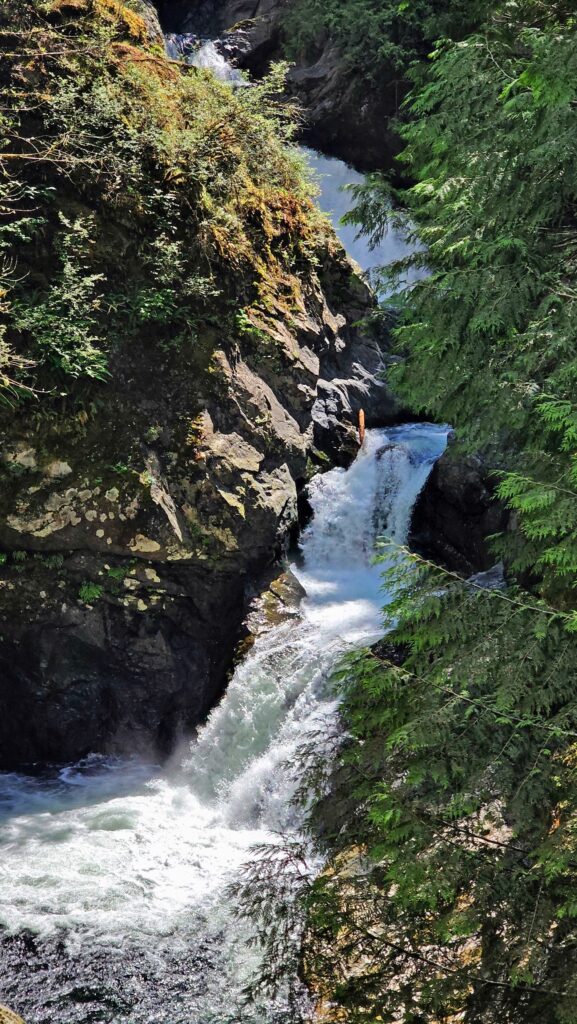
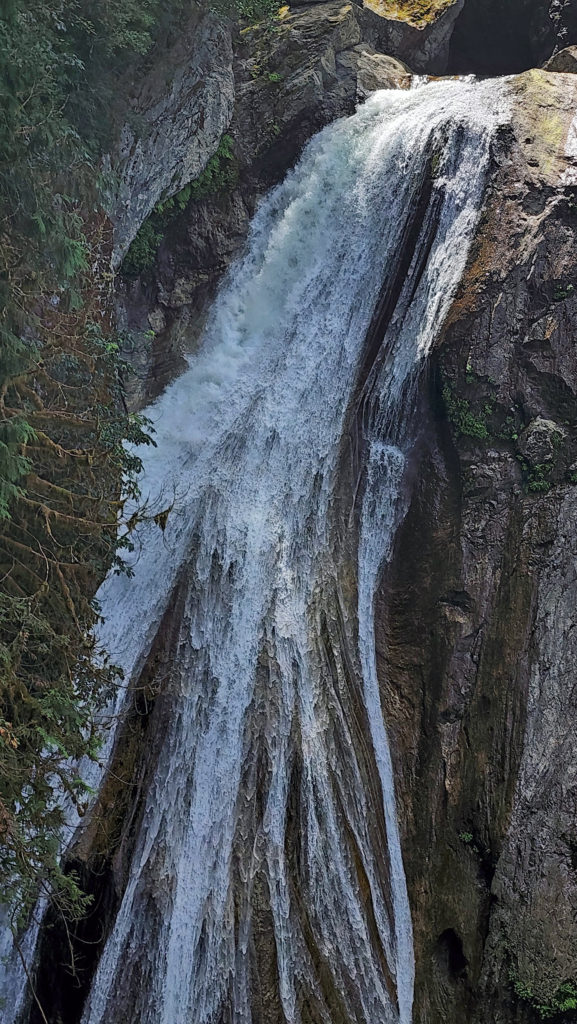
Continue on the main trail and descend another set of stairs to a bridge over the river. There are awesome views from the bridge, both down the valley and of the two upper falls. Cross the bridge and climb another set of stairs for the best view of the upper falls. Take in the views, then return the way you came.


Other area attractions and activities:

For other hikes in the area and a broader overview of the Snoqualmie Valley, click here.

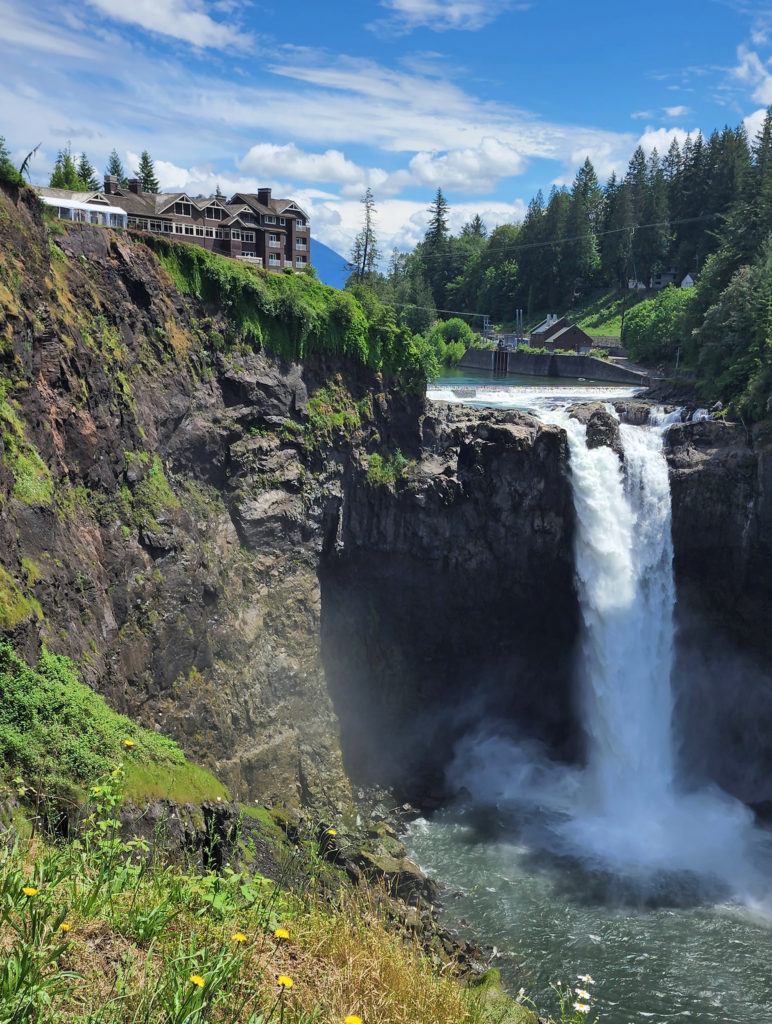
Snoqualmie Falls

Posted April 18, 2023 by Alan K. Lee

All photos ©Alan K. Lee


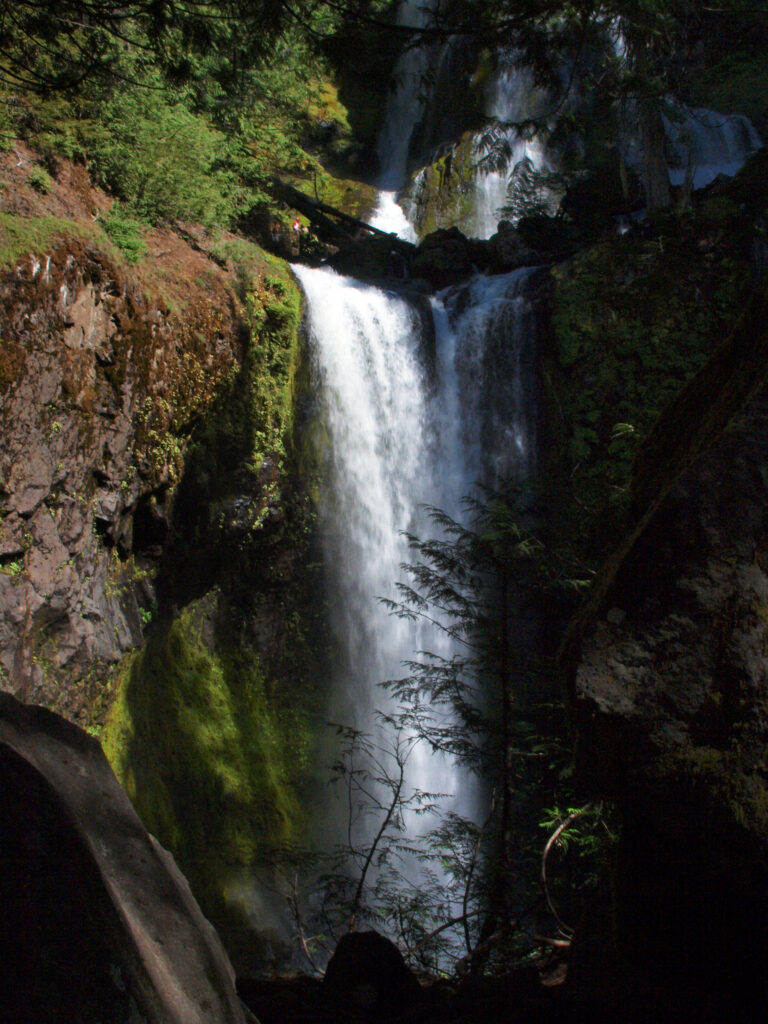
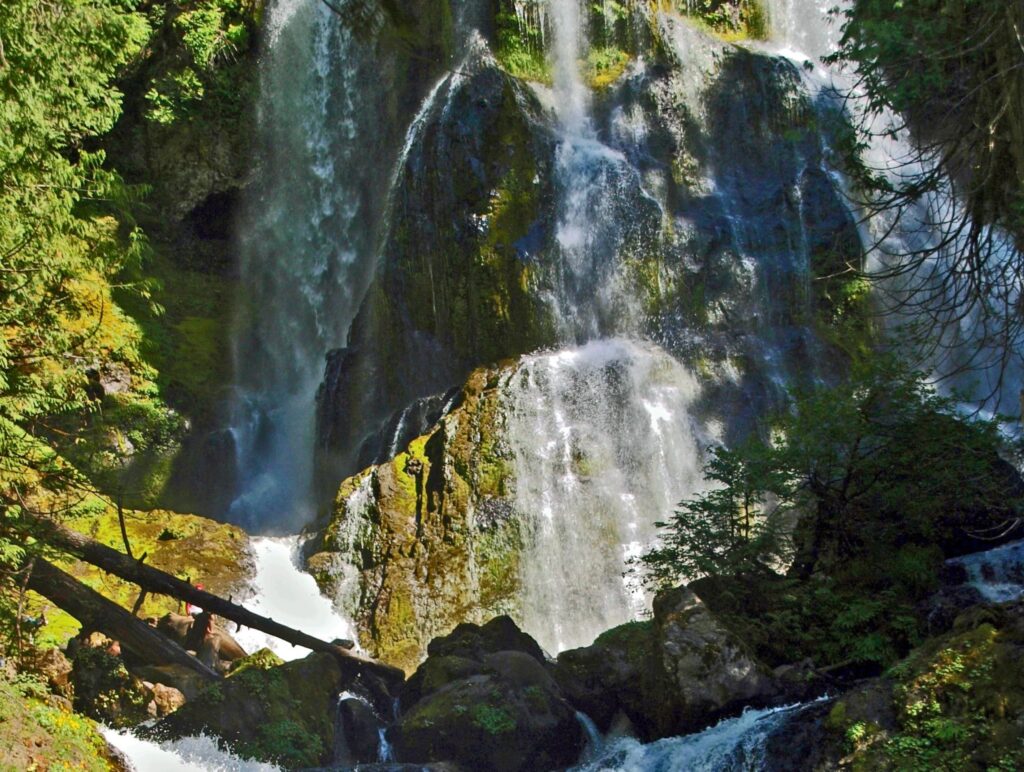
Falls Creek Falls

Falls Creek Falls Trail

Where:   Washington side of the Columbia River Gorge
Type:   Out and back

Distance:   3.4 miles round trip

Elevation gain:   600 feet (to the base of the falls)

Difficulty:   Easy

Maps:    Green Trails No. 397 Wind River

              Friends of the Columbia River Gorge

Overview:

The Falls Creek Falls trail is an easy 1.7-mile family friendly hike to a beautiful two-tier waterfall about 15 miles north of the Columbia River Gorge town of Carson, Washington.

Getting there:

From Portland, take I-84 east to Cascade Locks. Take exit 44 and follow signs to the Bridge of the Gods. Cross the bridge ($3 toll) and turn right onto Washington Hwy 14. Follow WA 14 for 5.9 miles through Stevenson to Carson. At the roundabout, take the second exit onto the Wind River Hwy and follow it through Carson for 14.3 miles. Just past the Carson Fish Hatchery, turn right onto NF-30. Go 0.8 mile, then turn right onto NF-3062.  The trailhead parking area is 2.3 miles from the junction, at the end of the road.

Best time to go:  

April through November. (The falls are at an elevation of just over 2000 feet, so the trail is often snow free in winter, but the road is gated from Dec. 1- Mar. 30, making for a much longer hike.) Like most Cascade Range waterfalls, Falls Creek Falls is at its most spectacular in spring, fed by the Cascade Range snow melt. But even in mid-summer the falls are impressive. This is a popular trail on summer weekends, so it’s best done during the week, if possible. On summer weekends, plan to get to the trailhead early. Trail use decreases after Labor Day, but this remains a popular trail until the fall rains arrive.

Trailhead:

The trailhead has parking for about 50 vehicles and has a restroom (vault toilet). A Northwest Forest Pass is not required.

The hike:

From the trailhead, proceed about 100 yards on Trail #152A to a junction. Turn right and follow the trail along Falls Creek. The trail gradually climbs through the forest for half a mile, where it crosses the creek on a suspension bridge. Above the bridge, the trail ascends the slopes above the creek before returning to the creek at the base of the falls 1.5 miles from the trailhead. From the base of the lower falls, it’s a bit of a scramble up slope to the upper falls, but well worth the effort. Return the way you came when you’re done enjoying the falls.

Other area attractions and activities:

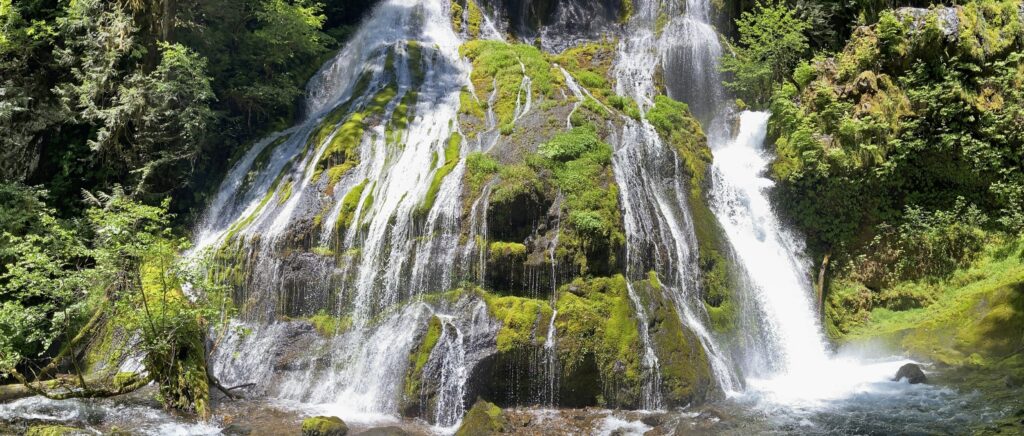
Panther Creek Falls

Panther Creek Falls is an impressive, complex, and beautiful falls about five miles southeast of Falls Creek Falls. It’s a short out and back hike, less than a half-mile round trip. The trail descends steeply from the road to a viewing platform, with about 200 feet of elevation gain coming back.

Panther Creek Falls. Cropped image of a photo by Jeff Hollett. Sourced from Wikimedia Commons.

Carson Hot Springs

Carson Hot Springs has been drawing people to its thermal baths since 1901. Today, the resort bills itself as a rustic retreat that prioritizes immersion in the surrounding forest environment over the glitz and glamour of high-end spas. The resort includes a rustic hotel and an 18-hole golf course, as well as the hot springs themselves.

Bonneville Dam

Bonneville was the first dam constructed on the Columbia River, completed in 1938. It’s a complex structure consisting of a navigation lock, two powerhouses, and a spillway spanning three islands between the Oregon and Washington shores. There are visitor centers on both the Washington and Oregon sides of the dam. The Bradford Island Visitor Center on the Oregon side has a viewing room where you can watch salmon and steelhead climbing the dam’s fish ladder.

Columbia Gorge Interpretive Center

The Columbia Gorge Interpretive Center is a museum dedicated to the preservation, conservation, and interpretation of the cultural and natural history of Skamania County and the Columbia River Gorge.  I’m not a great fan of museums, but I spent at least a couple of hours there the first time I visited. It’s definitely worth a visit. It’s located on SW Rock Creek Drive, about a mile west of downtown Stevenson, directly below Skamania Lodge.

Food and drink –

For me, there is nothing better after a hike than a good, cold beer. Fortunately, there’s no shortage of quality pubs in the area. In Carson, Backwoods Brewing, located on the east side of Wind River Hwy, features 16 draft beers, plus hard ciders, seltzer, and kombucha. In Stevenson, try 54 40 Beer Lodge on Hwy 14 or Walking Man Brewing on 1st Street. Across the river in Cascade Locks, Thunder Island Brewing, Cascade Locks Ale House, and Gorges Beer Company are all located on Wa Na Pa Street, Cascade Locks’ main drag. As far as food goes, all the pubs listed have typical pub fare.

Posted April 12, 2023 by Alan K. Lee
All photos © Alan K. Lee, except as noted

Charleston, South Carolina

by Alan K. Lee

Charleston, South Carolina and Savannah, Georgia had been on my bucket list of travel destinations for a long time. So, when my wife and I decided to visit Asheville, North Carolina and Great Smoky Mountains National Park, taking a side trip to Charleston and Savannah seemed like a sensible addition to our itinerary. It wouldn’t add much expense and, being only 100 miles apart, we could get at least a taste of both cities in the limited amount of time we had. (To see my post on our visit to Asheville, click here).

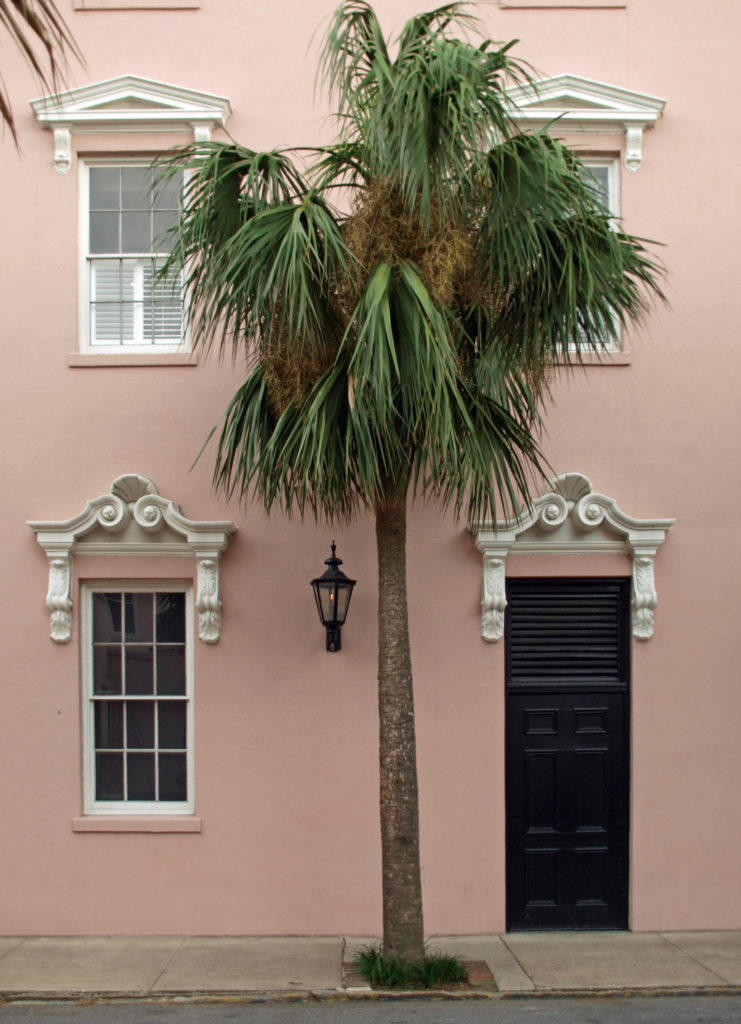
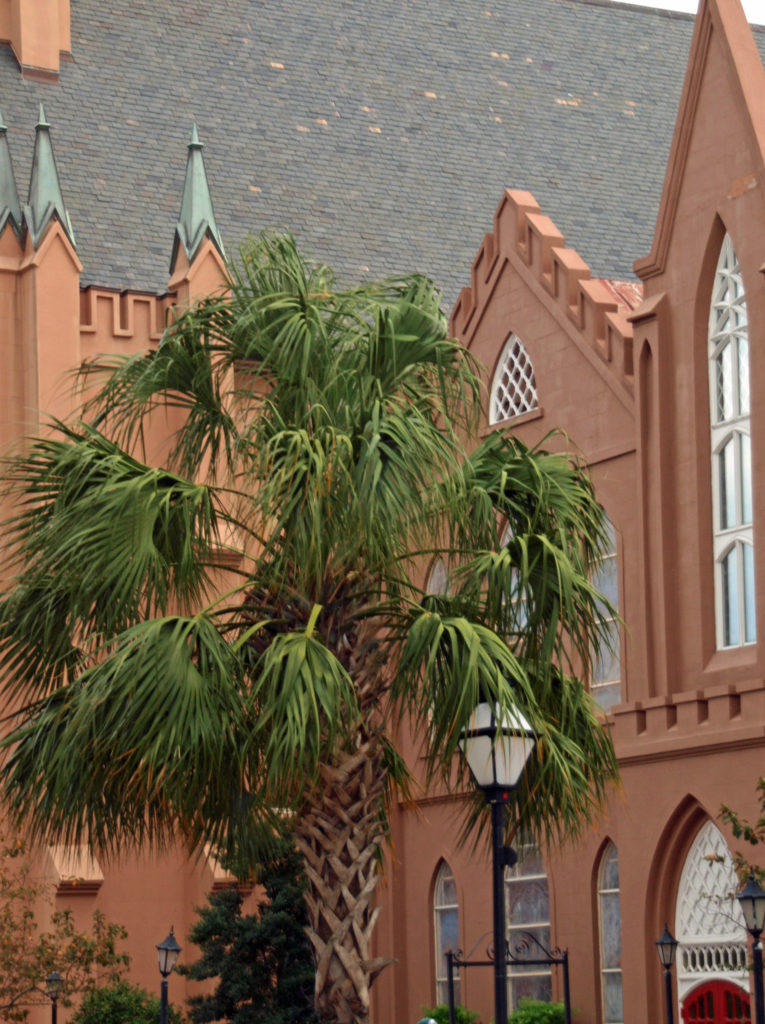
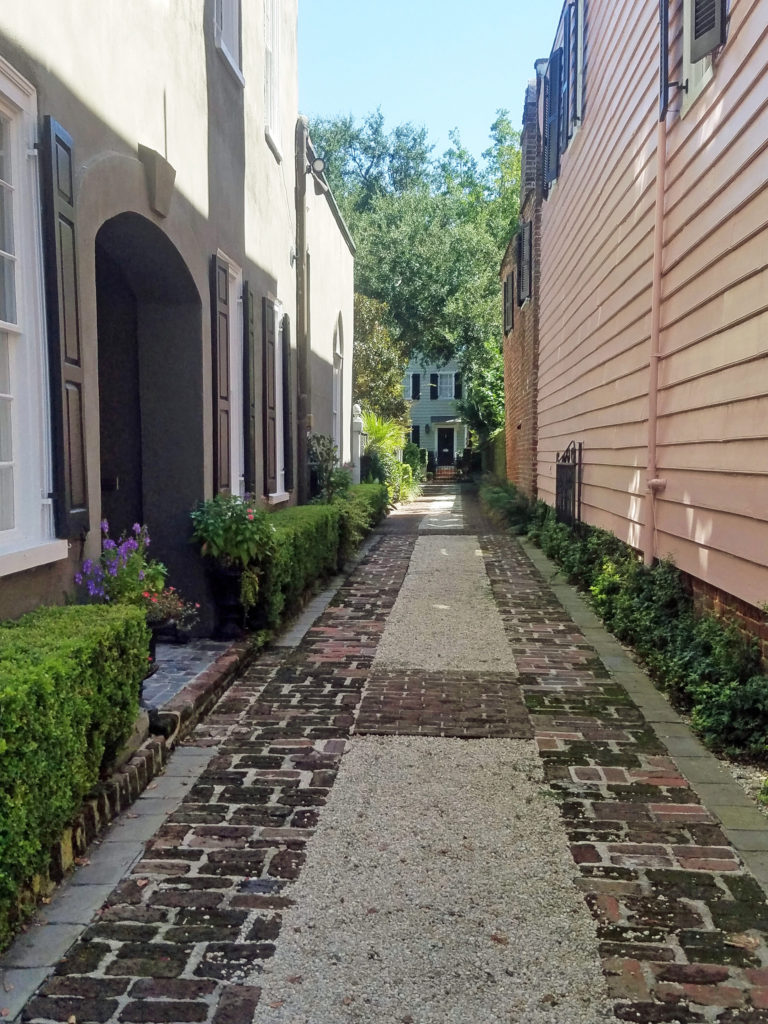
We drove from Asheville to Charleston on a Sunday morning and spent the afternoon wandering around the historic center of the city. It’s older and more traditional, more Old South, than Asheville, but no less charming – lots of wonderful old houses and buildings, in all conditions from newly renovated to literally falling down, often the one adjacent to the other.

The oldest surviving structure in the city, the Middleburg Plantation House, was constructed in 1699. Spanning more than three centuries, the architecture of Charleston includes Georgian, Federal, Greek Revival, Gothic Revival, Italianate, Queen Anne, Charleston Single House, and Art Deco style buildings and houses.

We found a wonderful restaurant, the now closed Hominy Grill, not far from our Airbnb for dinner that evening. The menu featured fresh, home-style food taken wonderfully upscale. Winner of the 2008 James Beard Award for Best Chef Southeast, we found it to be just a great place to eat. Actually, the food was wonderful everywhere we ate in Charleston. It would take a long time to sample all of the many acclaimed restaurants in the city. The annual Charleston Food + Wine Festival brings thousands of tourists to Charleston each March, and food tours are popular year around.

While many people come to Charleston just for the food, there is much more to see and do in Charleston, of course. There are walking and carriage tours of the city, and plantation and garden tours. Fort Sumpter, where the first shots of the Civil War were fired, is a short distance outside of town. You can learn some of the history of the area and see the city from the water on a boat tour of the harbor. The city has a number of outstanding museums, including the Charleston Museum, the Nathaniel Russel House, and Kahal Kadosh Beth Elohim. And there is much more to see and do, more than we had time for in our three days in the city.

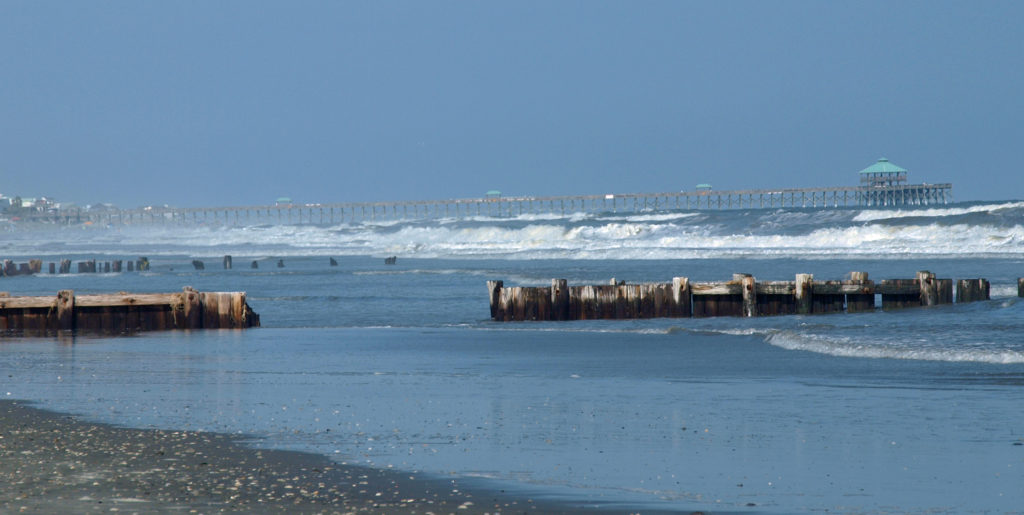
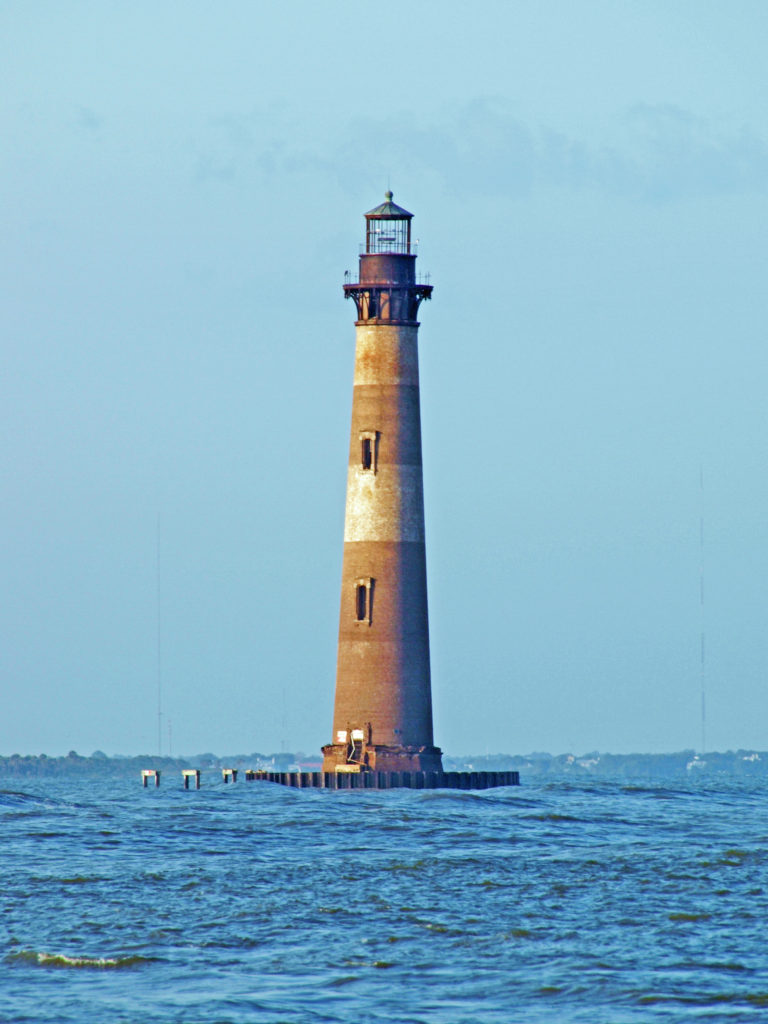
We spent most of our second day in Charleston exploring more of the historic center of the city, then ended the day with a trip to Folly Beach, about ten miles south of the city. Near the center of the small town of Folly Beach, Folly Beach Pier extends more than 1000 feet into the Atlantic Ocean. Folly Beach County Park lies at the west end of the island. At the east end, Lighthouse Inlet Heritage Preserve   offers a more secluded beach about a quarter mile walk from the end of East Ashley Avenue with a view across the water to Morris Island Lighthouse, which is surrounded by water just offshore from the westernmost point of Morris Island.

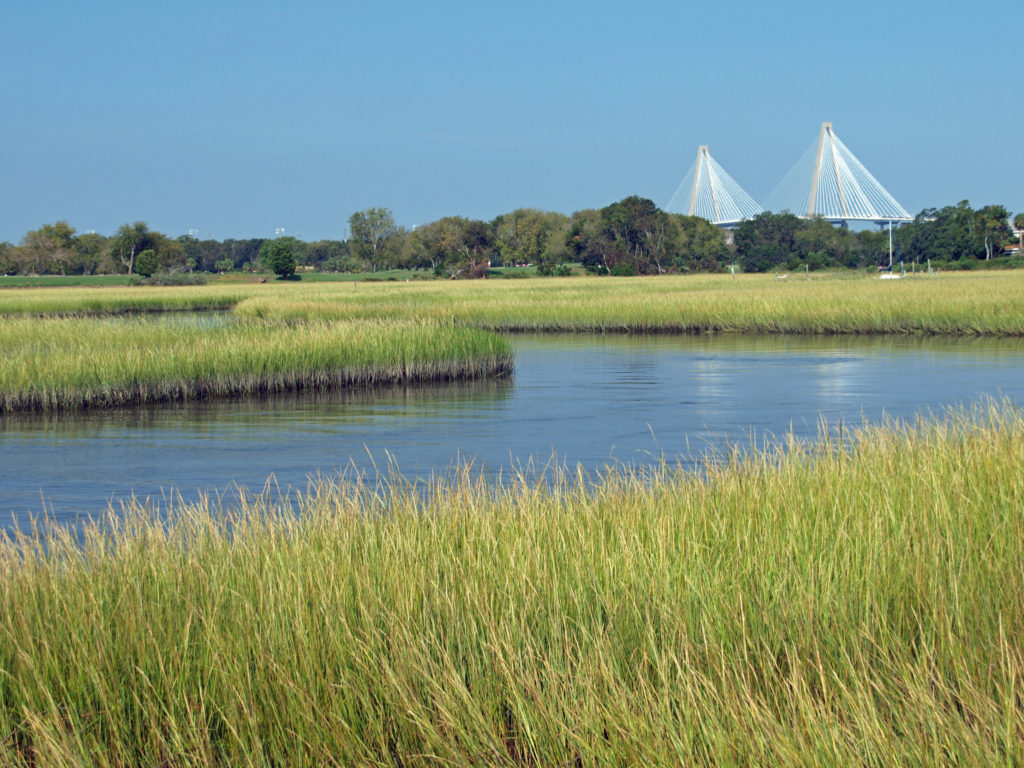
The next day we made the short trip across the Ravenel Bridge to Shem Creek Park in Mount Pleasant. The park encompasses a large salt marsh where Shem Creek meets Charleston Harbor. There are extensive boardwalks that allow you to get out in the marsh, and nice views across the harbor to downtown Charleston. It’s a nice place to get away from the city for awhile and rest your feet. And after all the walking around Charleston that we did the previous days, my feet needed a rest.

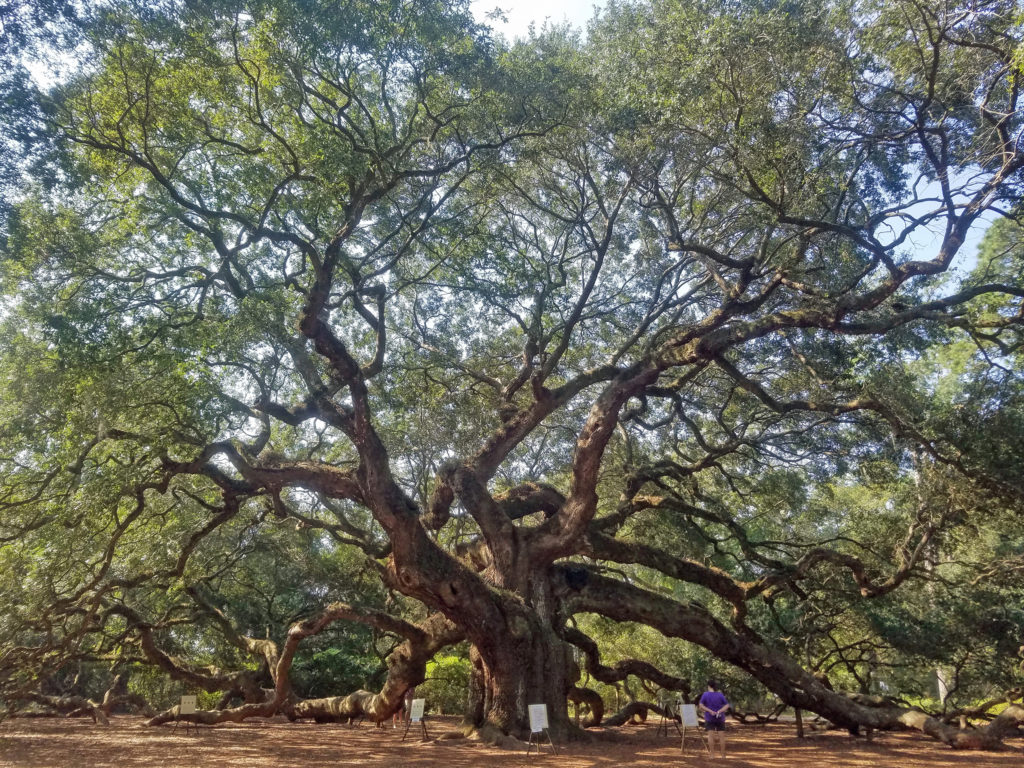
Our final morning in Charleston we made a second stop at Hominy Grill for breakfast. On our way out of town we made a couple of stops not far outside of Charleston. The first was the Angel Oak Tree on Johns Island. This huge Southern live oak is estimated to be 400-500 years old. It’s trunk measures 28 feet in circumference, it’s 66 feet tall, and its canopy covers 17,200 square feet of ground.

After leaving Angel Tree, we made a second stop at Caw Caw Interpretive Center, another of Charleston County’s many parks. There are six miles of trails and boardwalks through a former rice plantation that is now marshland and swamp. The park is managed for wildlife, and is home to otters, alligators, deer, and other wildlife. Caw Caw is one of coastal Carolina’s birding hot spots. It’s also the site of the 1739 slave revolt known as the Stono Rebellion.

We had a great time exploring Charleston. It’s really a beautiful and charming place. But to really see all it has to offer, you need to plan for more than a three-day visit. For more information, check out the Charleston SC Visitors Guide and Discover South Carolina websites.

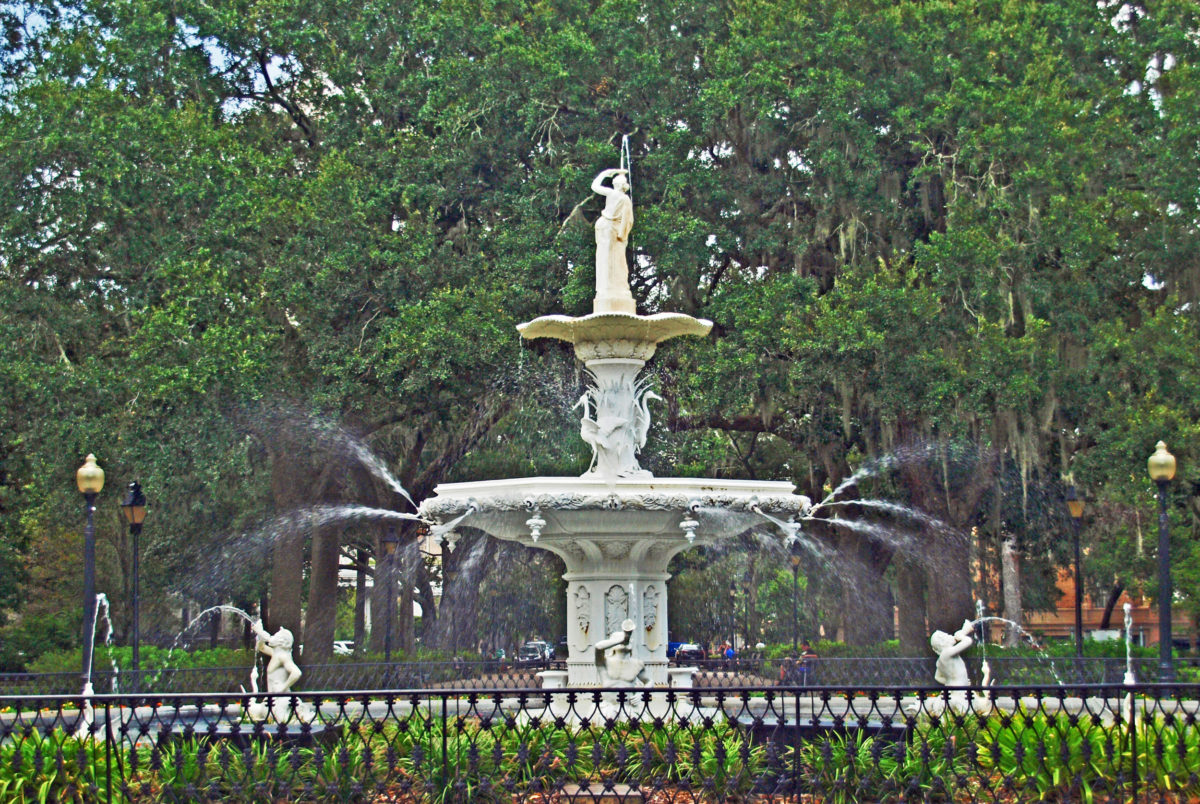
Forsyth Park, Savannah

After our visit to Charleston, we made the two-hour drive to Savannah. To read about our visit to Savannah, click here.

Originally posted Jan. 20, 2020. Updated and re-posted April 9, 2023.

All photos © Alan K. Lee


Cape Lookout Hike

Cape Trail

Where:   Cape Lookout State Park, northern Oregon coast

Type:   Out and back

Distance:   4.8 miles

Elevation gain:   500 feet

Difficulty:   Moderate (for distance and rough trail)

Map: Cape Lookout State Park Trail Guide  

Guidebooks:

100 Hikes / Travel Guide Oregon Coast & Coast Range – William L. Sullivan

Beer Hiking Pacific Northwest – Rachel Wood & Brandon Fralic

60 Hikes Within 60 Miles Portland – Paul Gerald

Day Hiking Oregon Coast – Bonnie Henderson

Overview:

Cape Lookout is a narrow sliver of land extending two miles out into the Pacific Ocean between Cape Meares and Cape Kiwanda. The hike to its tip provides the hiker with a unique experience and some of the best viewpoints on the entire coast. The trail passes through an old growth spruce-hemlock forest with an understory of salal, salmonberry, huckleberry, and sword ferns. In summer the open areas are carpeted with wildflowers. The end of the trail, at the top of a cliff 400 feet above the ocean, is one of the best whale watching spots on the Oregon coast and one of the best places to observe sea birds.

Best times to go:

This trail can be hiked any time of the year, but trail conditions are usually best in late summer and early fall. Even then, the trail can be muddy. At other times of the year, it can be very muddy in places. The best times to avoid crowds are the winter months or anytime that it is raining. So, if solitude is what you’re after, gear up and go. On summer weekends the parking area fills up quickly, so it’s best to go early in the morning or in the evening after most of the crowd has gone home.

Getting there:

From Tillamook, take Ore Hwy 131 (Three Capes Scenic Route) west. At 5.0 miles, angle left onto Whiskey Creek Road. At the Netarts Bayfront, rejoin the Three Capes Scenic Route and follow it south to Cape Lookout State Park. The trailhead is 2.7 miles beyond the entrance to the state park campground and day use area.

From Lincoln City, take US Hwy 101 north and turn left onto Booten Road (1.4 miles north of the Nestucca River bridge). Proceed to Pacific City. Turn left onto Pacific Avenue and re-cross the Nestucca River. Immediately west of the bridge turn right on Cape Kiwanda Drive and follow it past Pelican Brewing. North of Cape Kiwanda (see the Other Attractions section below) the road becomes McPhillips Drive then Sand Lake Road. Continue to the T intersection, turn left, and proceed 3.2 miles to the trailhead.

Trailhead: Cape Lookout State Park

There are no facilities at the trailhead, but water and restrooms can be found at the day use area of the state park, just north of the cape.

The hike:

From the end of the parking area, take the Cape Trail to the left. (To the right is the trailhead of the North Trail, which descends 2.3 miles to the state park day use area). On the Cape Trail, in about a hundred yards you’ll come to the junction with the South Trail, which descends 1.8 miles to a little used beach.

The Cape Trail then descends gradually to a viewpoint at the 0.6-mile mark where you can see south to Cape Kiwanda and Cascade Head. Near the overlook, look for a bronze plaque set in stone that commemorates the site where a B-17 bomber crashed on a foggy day in 1943.

From there, the trail crosses to the north side of the cape and comes to a viewpoint at the 1.2-mile mark. Here you can see north to Cape Meares and Three Arch Rocks. Just west of the viewpoint, the original trail slid into the ocean about 30 years ago. The present trail detours away from the cliff through a boggy area on a boardwalk.

The trail returns to the south side of the cape and continues for another 1.2 miles, climbing and descending several times, to a viewpoint at the end of the cape, 400 feet above the ocean. Views there stretch from Cape Foulweather, 40 miles to the south, to Neahkannie Mountain, 40 miles to the north.

The end of the trail is the best spot to see gray whales. It’s not uncommon to see a dozen or more in an hour as they round the tip of the cape during the peaks of their spring and fall migrations. The journey between their feeding grounds in the Bering Sea and their breeding and calving grounds in Baja California is a round trip of more than 6000 miles.

You’ll probably linger for a while at the end of the trail, but when you’ve had your fill of sightseeing and whale watching, return to the parking area the way you came.

Other hiking options:

The North Trail is a 4.6-mile out and back hike with 800 feet of elevation gain from the day use area at Cape Lookout State Park to the beginning of the Cape Trail (or a 2.3-mile one way hike if you have someone drop you off at either end). For the ambitious, the North Trail and the Cape Trail can be combined into a 9.4-mile out and back hike with 1300 feet of elevation gain.

The South Trail is a 3.6-mile out and back hike with 800 feet of elevation gain from the Cape Trail to the beach to the south. The South Trail can also be combined with a 4.0-mile beach walk to an RV parking area as a 5.8-mile shuttle trip.

From the state park day use area, the beach to the north extends more than five miles to the mouth of Netarts Bay, making for out and back options up to 10+ miles in length. (Looping back along the bayfront is not an option.)

Tunnel Beach near Oceanside

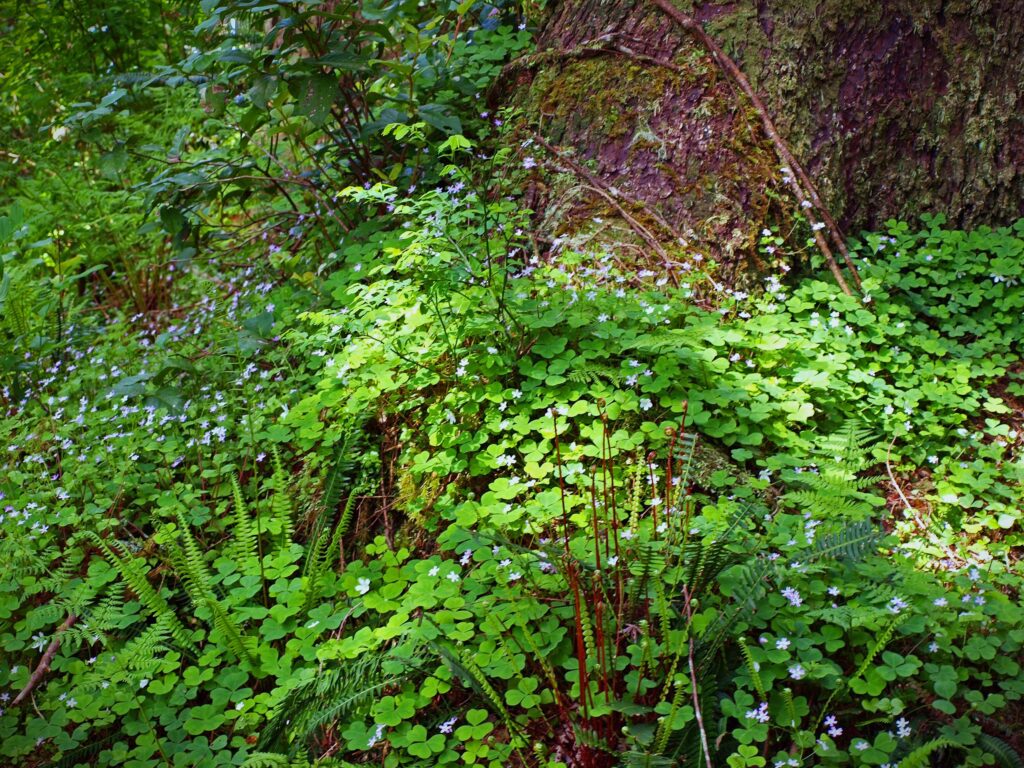
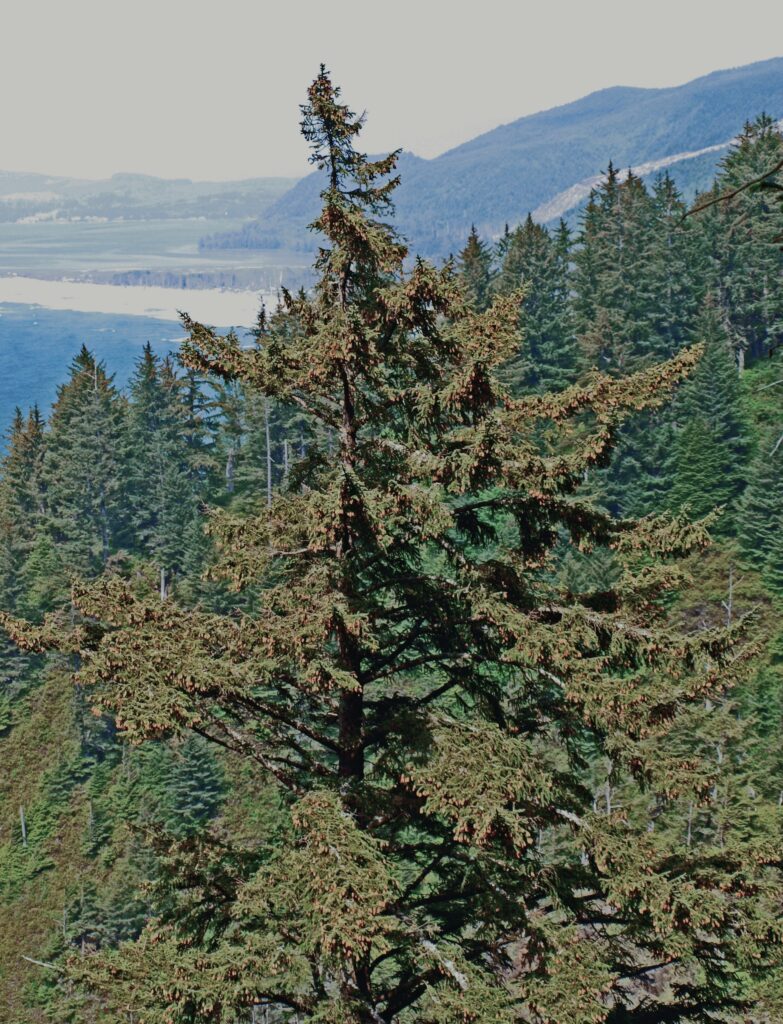
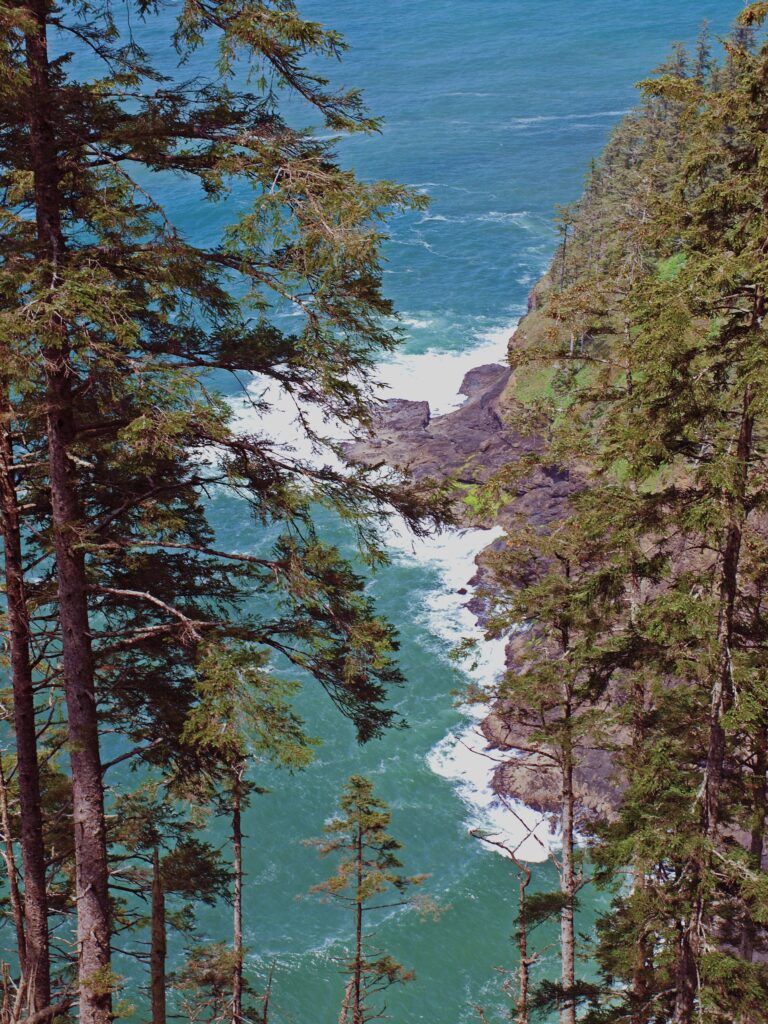
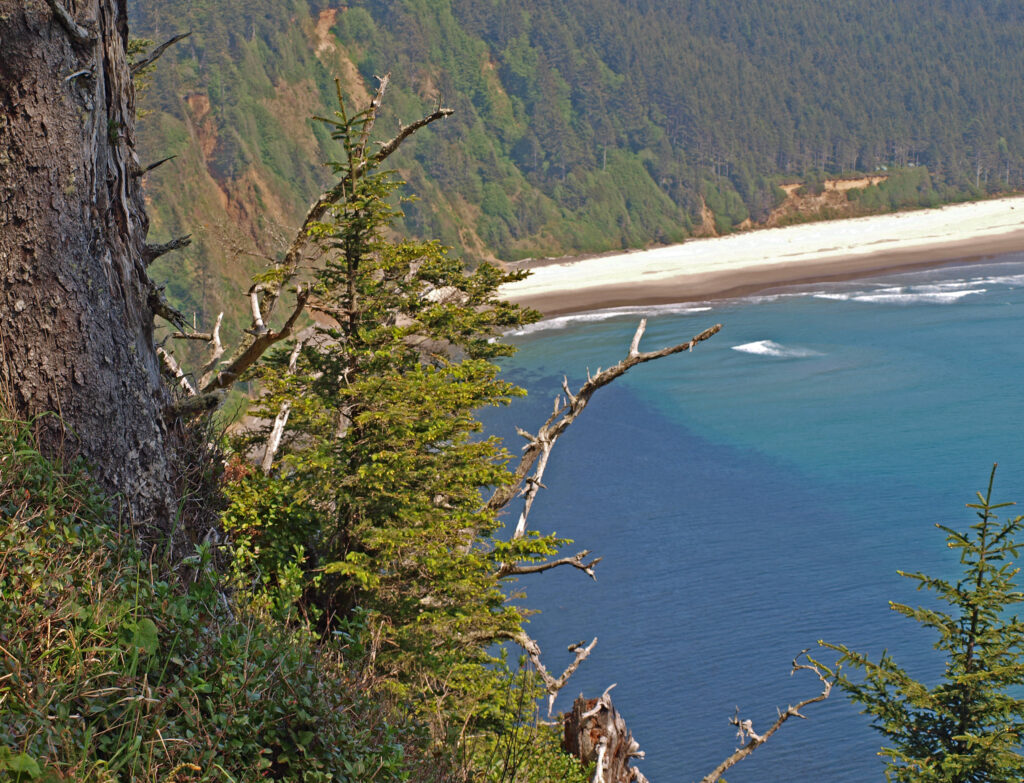
Other area attractions and activities:

To the north of Cape Lookout, the small town of Oceanside, one of my favorite small towns on the northern Oregon coast, has a nice beach (with a unique tunnel through the headland at the north end that leads to a very picturesque beach) and several good places to get a bite to eat. North of Oceanside, Cape Meares State Park has a working lighthouse, several short trails, and another good whale watching site.

Cape Kiwanda with Cape Lookout in the distance

To the south, Cape Kiwanda is a sandstone headland that is unlike any of the other rocky headlands on the Oregon coast. Just to its south, the town of Pacific City has a nice beach that is home to Oregon’s only dory fleet of fishing boats that launch directly from the beach. Pelican Brewing, on the beachfront, is one of the coast’s largest (and best) brew pubs, and there are several other decent places in town to get food or drink.

In conclusion:

The Cape Trail at Cape Lookout is one of the best hikes on the northern Oregon coast and one of the best places to watch gray whales on their annual migration. Combine the hike with visits to Cape Meares and Cape Kiwanda for an outstanding and easy day trip from the Portland or Salem areas.


Posted April 6, 2023 by Alan K. Lee
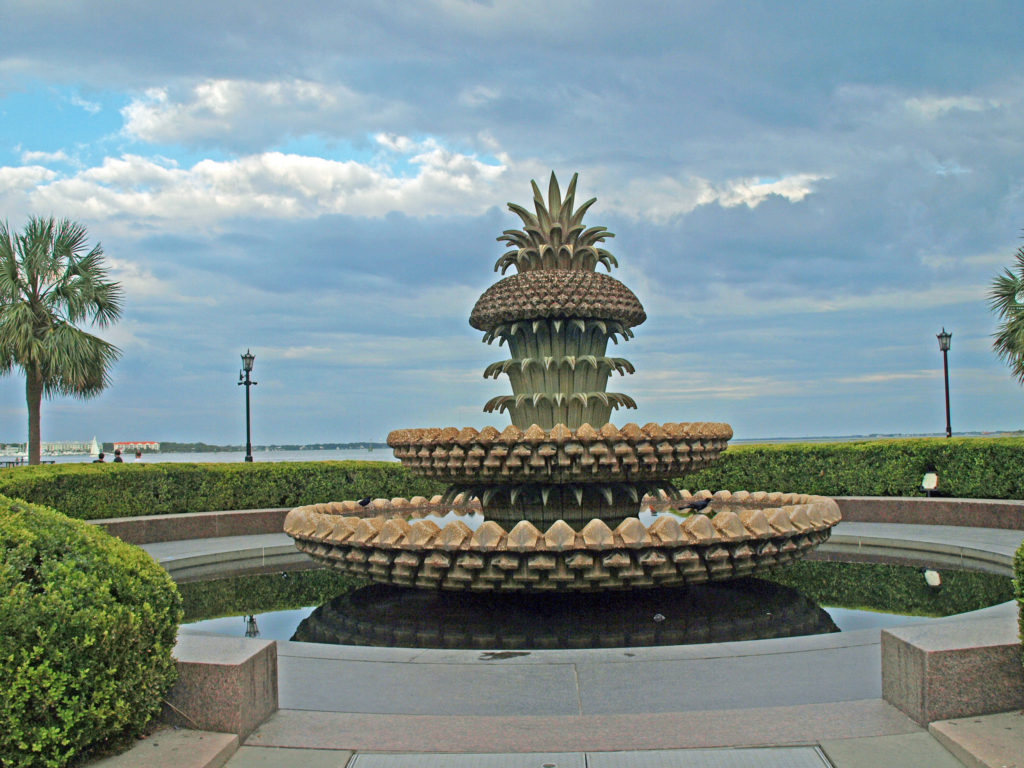
All photos © Alan K. Lee

The Trail of Ten Falls

Lower South Falls

The Trail of Ten Falls

Where:   Silver Falls State Park

Distance:    7.2 miles

Elevation gain:    800 feet

Difficulty:   Moderate (for length a steep climb out of the canyon)

Map: Oregon State Parks map and brochure

Guidebooks:

Hiking Waterfalls in Oregon by Adam Sawyer

Afoot & Afield: Portland/Vancouver by Douglas Lorain

100 Hikes in the Central Oregon Cascades by William L Sullivan

Waterfall Lover’s Guide: Pacific Northwest by Gregory A. Plumb

Waterfalls of the Pacific Northwest by David L. Anderson

Overview:

 Silver Falls was voted Oregon’s favorite state park a few years ago, and for good reason.  With more than ten waterfalls, six of them more than 90 feet in height, Silver Falls is a waterfall lovers paradise. And the Trail of Ten Falls (there are actually eleven named and at least one unnamed falls along the trail) is one of the finest hiking trails in the Pacific Northwest. I don’t know of anywhere else where you can see a dozen falls on a single hike, and four of them here have trails that actually take you behind the falls.
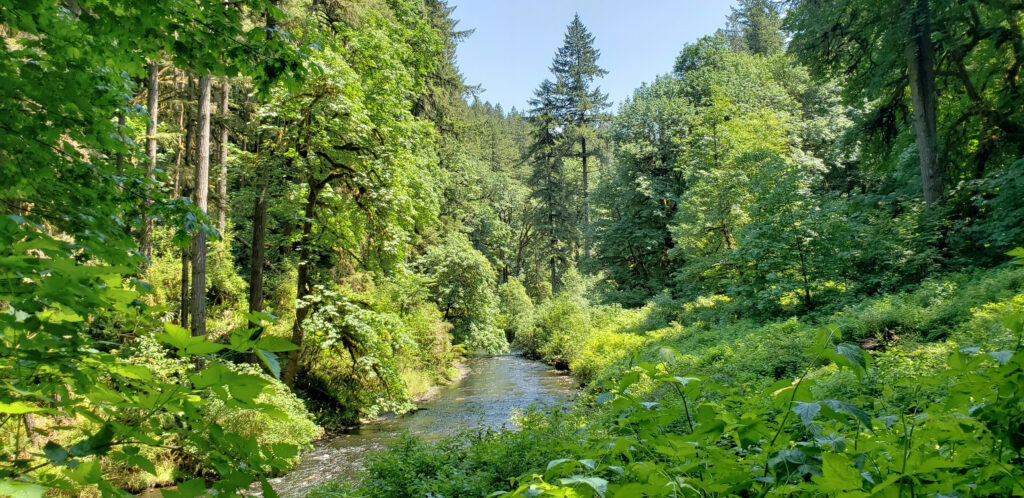
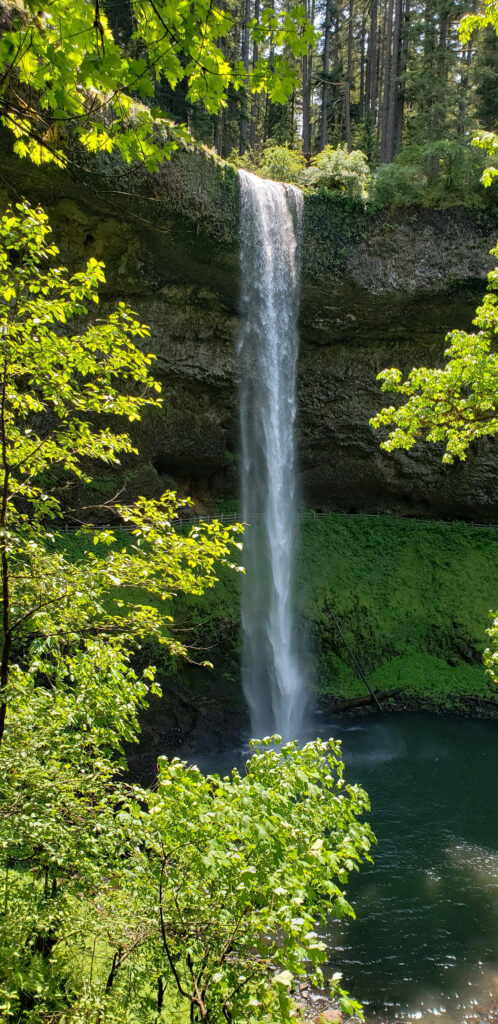
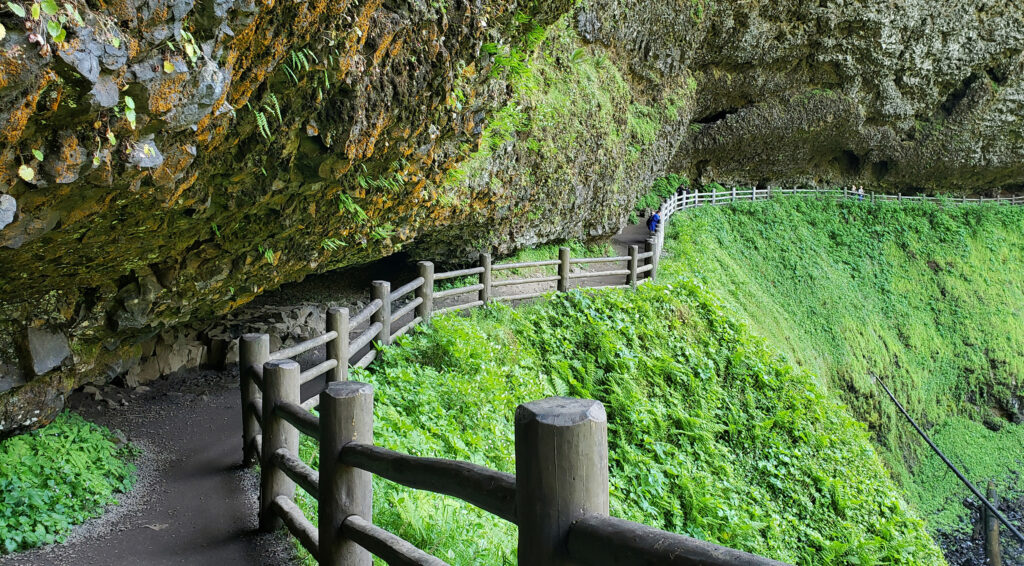
It’s no wonder, then, that Silver Falls can be crowded. The area around South Falls gets by far the most use and can be very crowded on summer weekends. But this is a spectacularly beautiful hike and is worth doing even at the park’s busiest times.

Best Times to Go:

Flows in the creeks are at their highest, and the falls at their most spectacular, in winter and early spring. Late September through October is best for fall color. Summer is best for reliably good weather, but the park is almost always crowded with other hikers in summer. For my money, the best times are weekday mornings in spring and fall. But there is no bad time to hike here, except when there is snow or ice on the trails. But even in mid-winter, the trails are usually open and snow free, and you might even have the trail to yourself.

Getting there:

Silver Falls State Park is located about fifteen miles east of Salem, Oregon. Coming from Salem or south, take Ore Hwy 22 east and look for signs to Silver Falls. The turn off onto Ore Hwy 214 is about five miles east of Interstate-5. The South Falls day use area is about 15 miles from Hwy 22.

Coming from the north, take exit 271 off I-5 at Woodburn. Proceed through Woodburn on Ore Hwy 214, which will take you through the towns of Mount Angel and Silverton. The park is about 12 miles from Silverton.

South Silver Creek
Trailheads:

There are two primary trailheads that can be used for this hike. The North Falls trailhead has a fairly small parking lot, but the recent (July 2023) opening of the North Canyon day-use area more than doubles the amount of parking on the north end of the park. And the new North Rim Trail connects the two parking areas, so either can be used as the north end trailhead. The South Falls area gets much more use than the north end, but also has much more parking, so it is the most common starting point for this hike. The trail can also be accessed from the Winter Falls trailhead.

The hike:

South Falls

Most people start and end their hikes at the South Falls Day Use Area, so I’ll start there as well. From the parking area, follow the signs to the top of South Falls. There is a viewpoint there, and seeing the creek disappear over the edge of the cliff is a pretty awesome sight. From there, the trail descends to a good vantage point a quarter of a mile or so down the trail. There are several more places where you can get a good view of the entire falls farther down the trail before it dives behind the falls.

Just below the first viewpoint look for a signed side trail to Frenchie Falls. This is the eleventh named falls and the smallest by volume. When I was last there, in early June, it was just a trickle, and it often dries out by mid-summer. But it’s worth a look.

Canyon Trail behind South Falls

Continue down the main trail, which will take you behind South Falls. Here you will be between two layers of the Columbia River Basalt lava flows that are about 15-16 million years old. In between is a softer layer of sedimentary rock laid down by an ancient stream. This softer layer has eroded away to form the “cave” behind the falls.

Lower South Falls

Below the falls there are several good viewpoints. Just downstream of the falls you’ll come to the first trail junction. The trail across the bridge will take you back to the parking area. Continuing on the Canyon Trail, you’ll next come to Lower South Falls at approximately the one-mile mark. Here the trail also goes behind the falls.

Canyon Trail

Below the falls, you’ll come to the junction with the Maple Ridge Trail at the 1.4-mile mark. The Maple Ridge Trail climbs out of the canyon and returns to the parking area, making for a 2.5-mile loop. Beyond the Maple Ridge Trail junction, the Canyon Trail leaves the south fork of Silver Creek and joins the north fork. Following the creek upstream, look for an intermittent waterfall across the creek at the 1.9-mile mark.

Lower North falls

The trail then takes you to Lower North Falls (30 feet) at the 2.4-mile mark. Just above the falls a side trail leads to Double Falls, the highest in the park at 184 feet (combined drops). The volume of water flowing over Double Falls is much less than the falls on the two forks of Silver Creek, but still worth a look.

Double Falls
Drake Falls
Middle North Falls

Next up is Drake Falls (27 feet), then the 106-foot drop of Middle North Falls. A side trail here leads behind the falls, but dead ends on the other side. Back on the main trail, you will come to the junction of the Winter Falls Trail at the 2.9-mile mark. A half mile out and back side trip will take you to the base of Winter Falls.

Winter Falls


Like Double Falls, Winter Falls is on a side stream and the volume of water is much less than the falls on North and South Silver Creeks. From the falls, the Winter Falls Trail will take you up out of the canyon to a junction with the Rim Trail. From there you can return to the South Falls Day Use Area to complete a 4.5-mile loop.

Twin Falls

If you return to the Canyon Trail, you will next come to Twin Falls (31 feet), three tenths of a mile from the Winter Falls Trail junction. Just beyond Twin Falls there is a steep side trail leading up to the new North Canyon day-use area (the old group camp area) trailhead.

North Falls

Stay on the Canyon Trail for another mile to North Falls (134 feet). Here once again the trail goes behind the falls. Look up to the ceiling of the overhang and you may be able make out cylindrical indentations that were formed when lava flowed around tree trunks and solidified before the trees burned. From North Falls, the trail climbs steeply to the North Falls trailhead three tenths of a mile beyond the falls.

Upper North Falls

The 0.6 mile out and back trail to Upper North Falls (65 feet) passes under the highway bridge at the North Falls parking area.

North Falls viewed from the Rim Trail

Back at the North Falls trailhead, take the Rim Trail. At about 0.3 miles from the North Falls trailhead you’ll come to a nice view back to North Falls. From there, it is 1.6 miles on a mostly flat trail back to the South Falls parking area.

Other area attractions and activities:
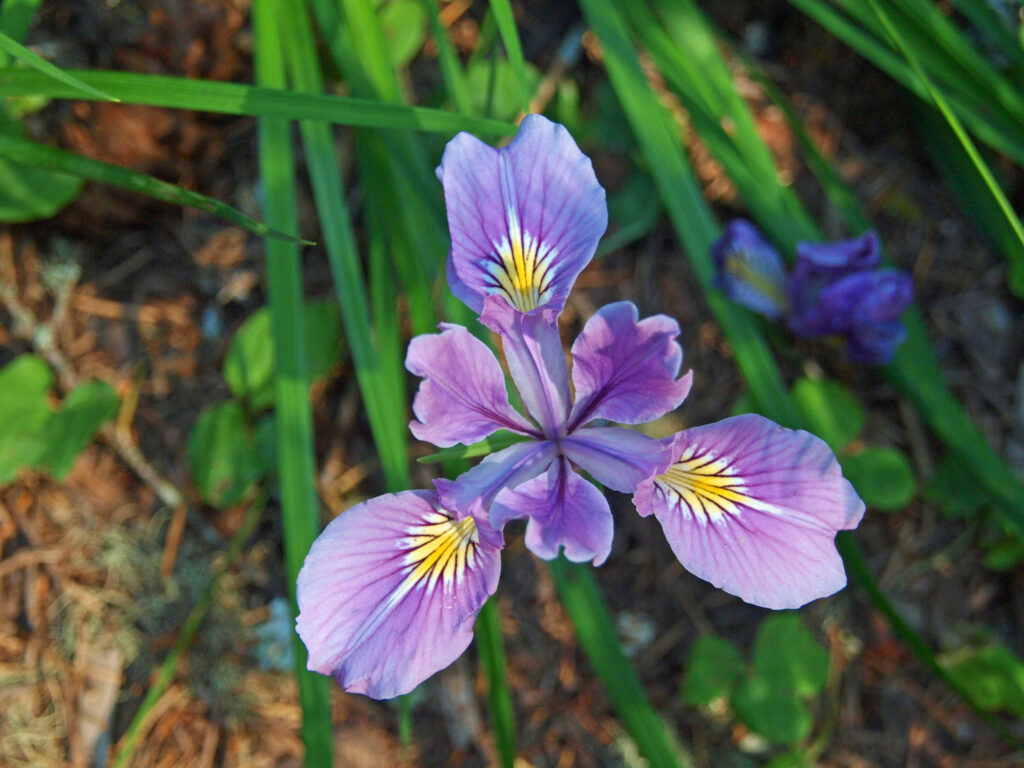
Silver Falls State Park is Oregon’s largest state park. In addition to the Trail of Ten Falls, the park has 35 miles of back country trails open to hiking, mountain biking, and horseback riding. There is also a campground with 91 camp sites and 14 cabins, and a café and a nature store at the South Falls Day Use Area.

The Oregon Garden

The nearby town of Silverton has a variety of dining and lodging options. Stop in at the Silver Falls Brewery and Alehouse after your hike for a bite to eat and a pint of craft brewed beer. Or try the Benedictine Brewery near Mount Angel that is operated by monks from the Mount Angel Abbey. Silverton is also home to the Oregon Garden, one of the state’s leading botanical gardens. Next door to the Oregon Garden is the Gordon House, the only surviving Frank Lloyd Wright designed house in Oregon.

The Trail of Ten Falls is an iconic hiking trail that every serious hiker in the state has likely done multiple times. It’s so spectacular that it alone is worth making the trek to Oregon from wherever you reside, no matter how far away that is. As an Oregon resident, I know I’m a little biased, but I don’t think I’m exaggerating here. If you’re a waterfall lover, come see for yourself. A trip to Silver Falls, combined with a visit to the waterfalls of the Columbia River Gorge will make for an unforgettable experience.
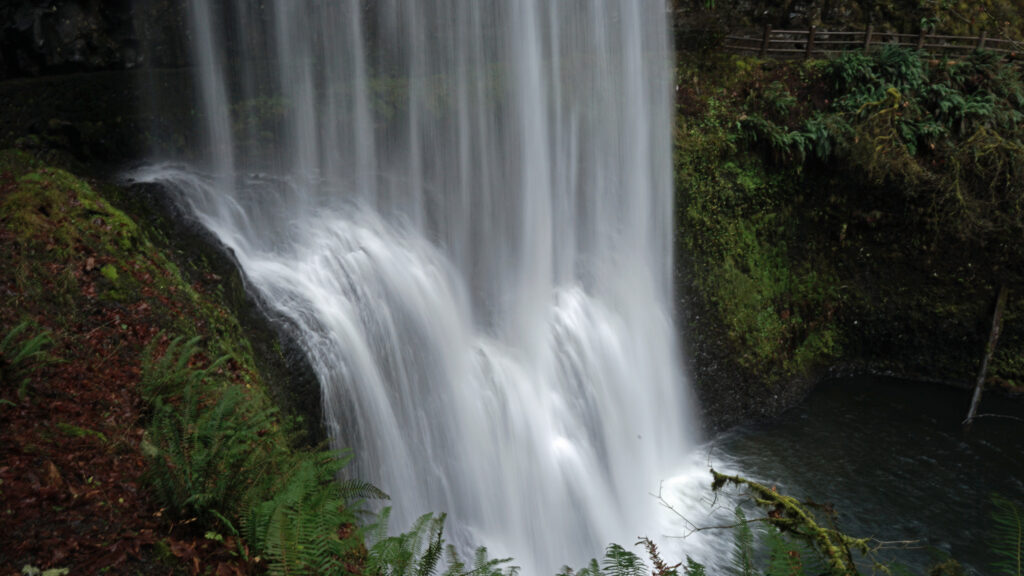
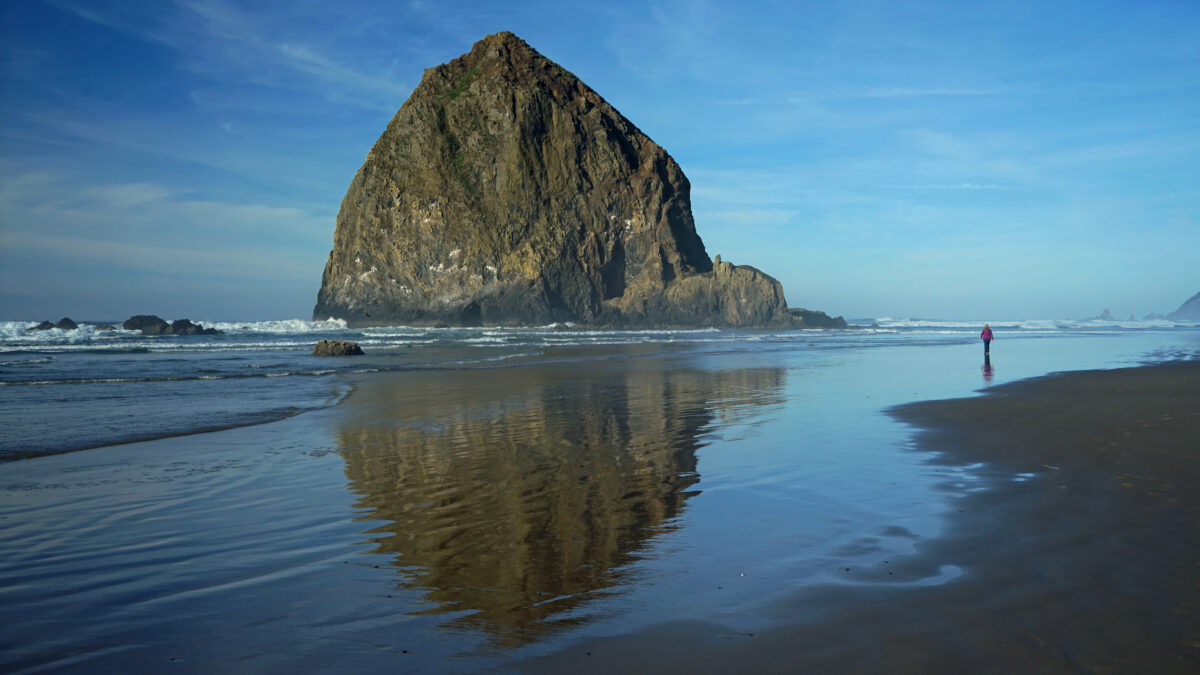
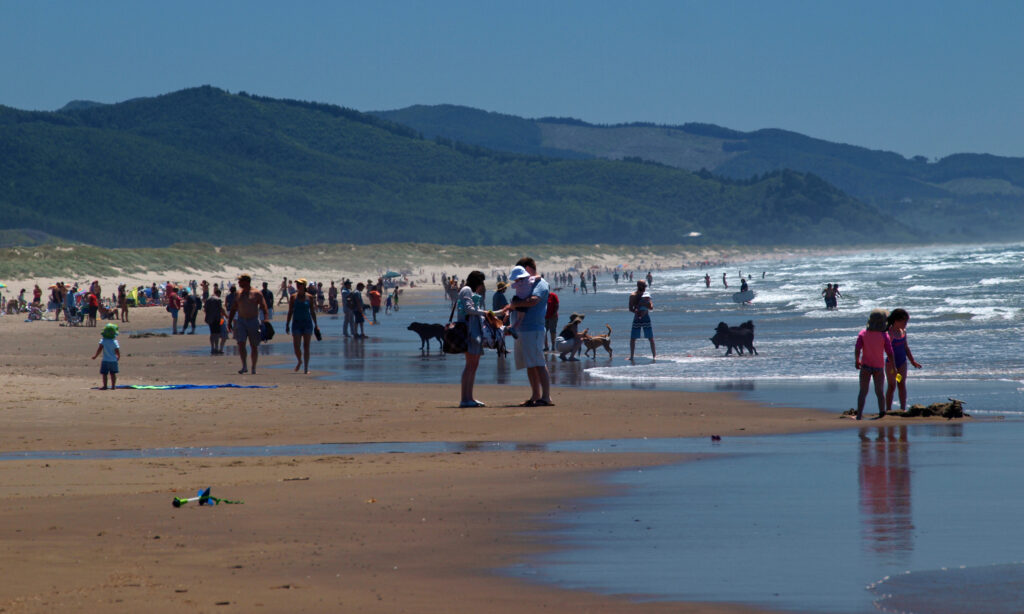
Lower South Falls

Posted March 27, 2023 by Alan K. Lee. Updated August 2, 2023.

All photos © Alan K. Lee


Northern Oregon Coast

By Alan K. Lee

Manzanita Beach

The Oregon Coast is one of the prime tourist attractions of the state. Tens of thousands of visitors descend on the Oregon coast each weekend in the summer. With beautiful beaches, rocky headlands, working lighthouses, busy fishing ports, ultra-fresh seafood, charming small towns, and more, the Oregon coast has a lot to offer over its 360-mile length. The northern Oregon coast, because of its proximity to the Portland metro area, gets the bulk of the tourist traffic, so it can be crowded and tacky gift shops and ugly beach front motels abound. But it also has its share of charming towns that avoid the worst of the commercial ugliness and are worth visiting any time of the year.

I’ll cover four of my favorite northern Oregon coastal towns in this post: Cannon Beach, Gearhart, Manzanita, and Oceanside. They all have their own unique personality, but they all share a few things in common. They’re all small (none have more than 3,000 year-round residents), they’re all beachfront towns and the Pacific Ocean plays a big role in their culture and community, all but tiny Oceanside have an active arts scene, and you can find outstanding places to eat and drink in each of them.
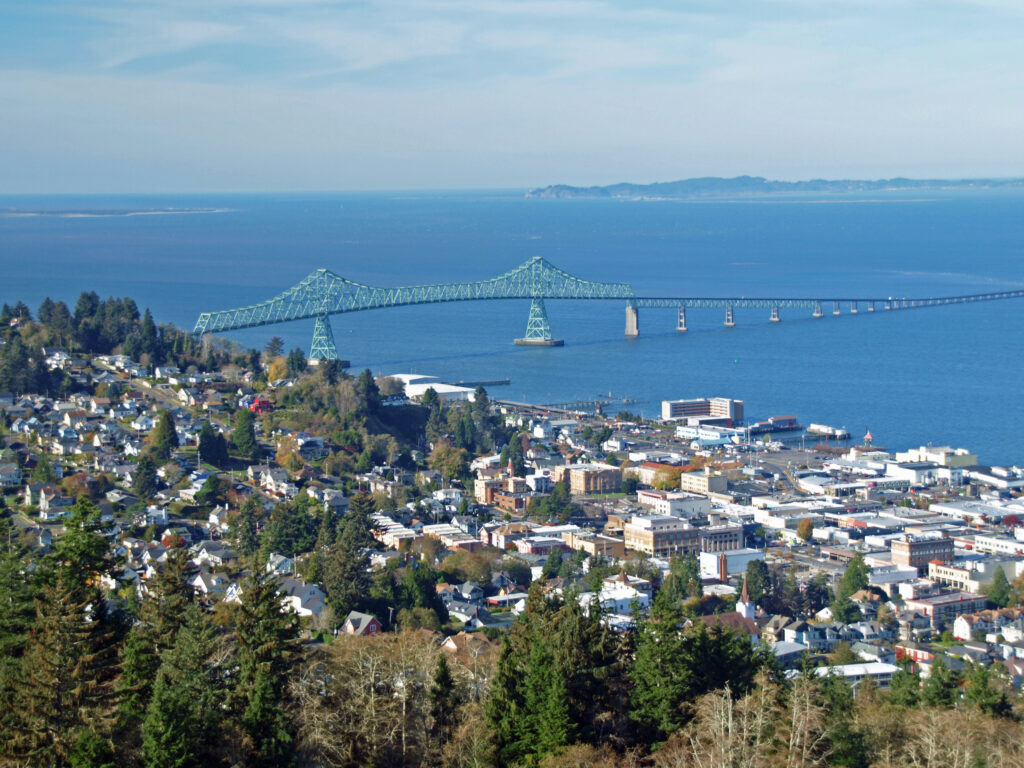
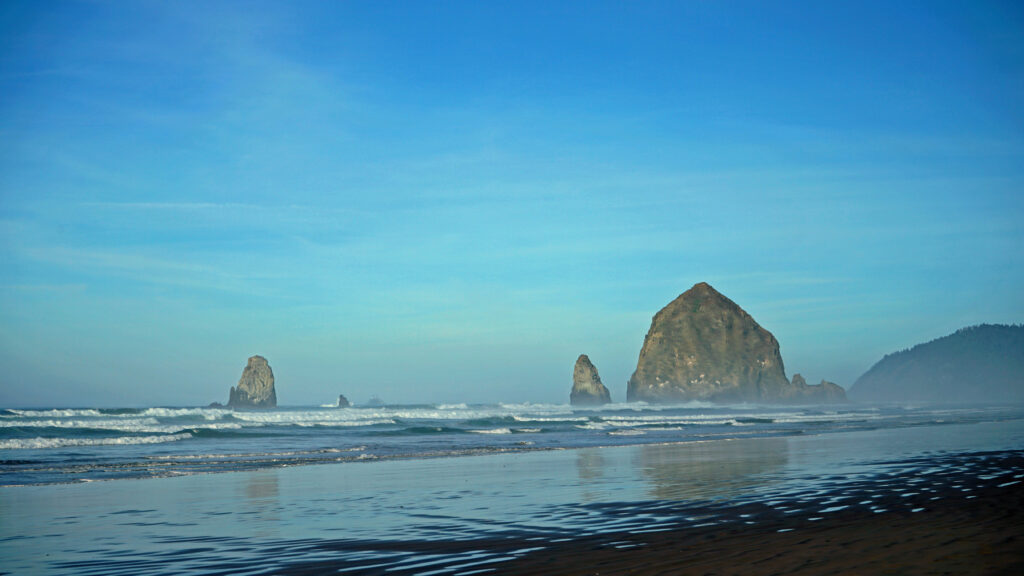
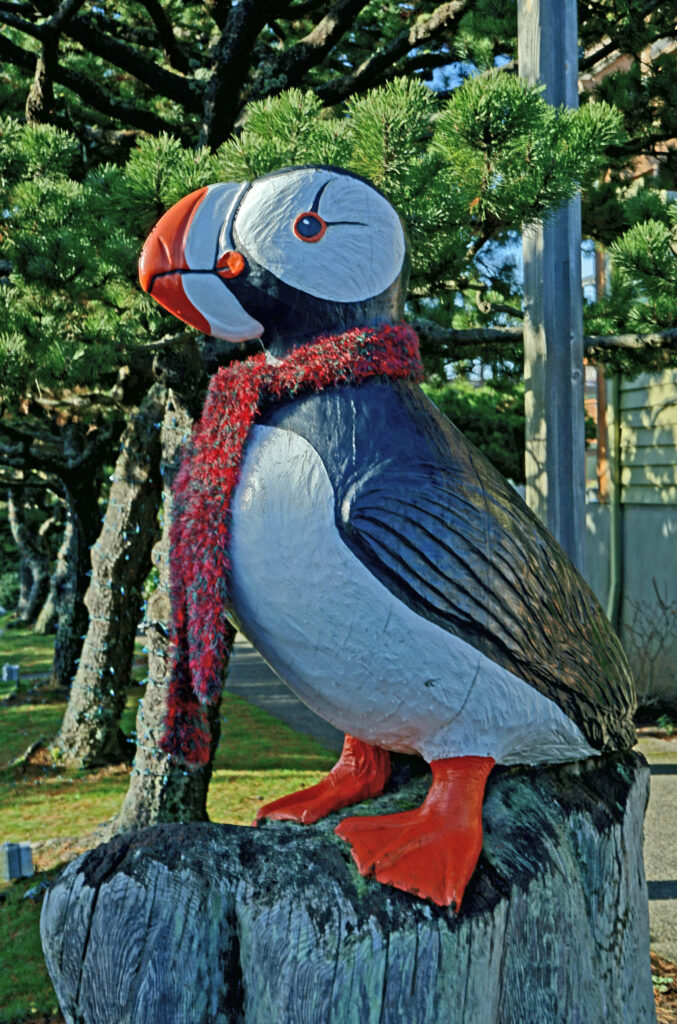
View from the Astoria Column

Astoria, the first American settlement west of the Rockies, is a good place to start an exploration of the Oregon coast, and it has enough to offer the traveler that I’ve covered it in a previous post. Click here to view that post. But I’ll start this post with the town of Cannon Beach.

Haystack Rock

Cannon Beach

Cannon Beach is probably best known for Haystack Rock, the huge sea stack that sits just off the beach. But for me, the chief attraction of Cannon Beach is the many fine art galleries that can be found in the town. If you’ve followed this blog or my Instagram account (@alanlee633), you know that my wife and I are big fans of the visual arts. For art lovers, Cannon Beach is the premier destination on the Oregon coast. Some of our favorite galleries are White Bird Gallery (fine arts and crafts) ,  North By Northwest Gallery (American masters and regional artists), Jeffery Hull Gallery (original watercolor and oil paintings), and DragonFire Gallery (original works by Northwest artists).

Puffin sculpture, Cannon Beach

Besides the beach and the galleries, Cannon Beach also has many casual and fine dining establisnments. For breakfast or lunch, try the Lazy Susan Cafe. For fresh, affordable seafood check out Tom’s Fish and Chips or Ecola Seafood Restaurant and Market. Castaway’s Global Cuisine features Cajun-Creole and Caribbean food. If you’re looking for a good craft beer, Public Coast Brewing (at the north end of downtown), Bill’s Tavern and Brewhouse (downtown), and Pelican Brewing (at the south end of downtown) all offer a good selection of craft beers and pub food. Fine dining options include Newman’s at 988, and the dining room at the Stephanie Inn (both south of the main downtown area).

Gearhart Golf Links

Gearhart

Gearhart offers a different vibe than Cannon Beach. It’s less of a tourist town (all of the typical tourist attractions and the associated tackiness can be found in the adjacent town of Seaside) and has a more residential feel. There are fewer dining options or galleries, but the laidback nature of the town and the miles of uncrowded beach make Gearhart one of my favorite places to stop on the north coast.

Gearhart Beach

What really sets the Gearhart beach apart is that there are no oceanfront motels or restaurants, and really no beachfront residences. There are a couple of condo complexes close to the beach, but most residences are set back 700-900 feet from the sand. That gives the beach at Gearhart a unique character, with most of the houses out of view. And the sand goes on forever. You can walk the beach all the way to the mouth of the Columbia River at Fort Stevens State Park fifteen miles to the north.

Gearhart Hotel

Gearhart is also known for being the childhood home of famed chef James Beard. There are no five star restaurants there, but the town does have a few places to find good food and drink. Pacific Way Café and Marketplace offers a bakery, coffee shop, café, and small marketplace. Grandma’s Corner Restaurant, on Hwy 101, a local favorite for breakfast and lunch, is known for its friendly service and made from scratch comfort food like your grandma made it. Decent pub fare and good craft brews can be found at the Sand Trap Pub in the Gearhart Hotel. Wander through the hotel and check out the many whimsical paintings and historical photos displayed in the hallways. The art may not be to your taste, but it is creative and typical of all the McMenamin’s hotels.

Gearhart doesn’t have the many galleries that Cannon Beach offers, but there are a couple worth checking out. A Great Gallery, catercorner to Pacific Way Café, features the paintings of owner and artist Susan Thomas. Speakman Studios, on Pacific Way just east of Hwy 101, features artworks by Diane and Jay Speakman and their daughter Rachel. The studio is currently undergoing renovations but will reopen sometime in 2023. In the meantime, some of the Speakman’s art can be seen at The Art of Interiors in Cannon Beach.

Manzanita

Manzanita

Manzanita, located at the base of Neahkahnie Mountain on a peninsula between the ocean and Nehalem Bay, mixes residential and commercial areas, and like Gearhart, has very limited oceanfront commercial development, just a couple of motels and a few vacation rentals on the north end of town that could get away with calling themselves “oceanfront” and a few houses on the south side that really are beachfront. Most of the houses on the south end of town, though, are set back 300-500 feet from the beach and there are no commercial structures. With less than 1000 full time residents, Manzanita is smaller than either Cannon Beach or Gearhart. It gets more tourist traffic than Gearhart, but far less than Cannon Beach.

Manzanita Beach and Neahkahnie Mountain

Dining options worth checking out in Manzanita include Yolk (all day breakfasts), Offshore Grill and Coffee House (seasonal food from local farmers), and Big Wave Café (seafood, steaks, and burgers). For an upscale dinner, try Neah-Kah-Nie Bistro (next door to Yolk).

Art lovers should visit 4th Street Studio and Gallery (local and regional artists), Polaris Gallery (paintings by gallery owner J. Scott Wilson), and Hoffman Gallery (local and visiting artists) at Hoffman Center for the Arts.

Oceanside

Oceanside

Oceanside is the farthest south of the four towns and is not on Hwy 101, both of which lessen its tourist traffic. It’s also the smallest of the four. But it has a spectacular beach, with a unique tunnel cut through a headland that links Oceanside Beach with the aptly named Tunnel Beach to the north. To the south, the beach runs for two miles to the town of Netarts on Netarts Bay. And about a mile north of town, Short Beach, almost unknown to outsiders, gives access to the beautiful two-tier Larson Creek Falls. At low tide, you may also be able to get around the point to the south and explore Lost Boy Beach. (Take care here, though, because you could get trapped by the rising tide).

Tunnel Beach

The beaches are the star here, but the town has its own charm, with many homes built on the side of a steep hillside overlooking the ocean that look like they could tumble down onto the beach at any time. (A mile or two to the south, several homes came close to doing just that about 25 years ago). There are also several good cafes and restaurants in town. Rosanna’s Café is my personal favorite, although Current Café and Lounge (across the street from Rosanna’s) and Blue Agate Café (a block north, adjacent to the beach parking area) both get slightly better ratings. Oceanside is lacking in galleries but check out Kristy Lombard Pottery in nearby Tillamook or Bay City Arts Center about five miles north of Tillamook in the town of Bay City.

View from Ecola Point

Other Attractions

There is more to the north coast than just the towns and beaches covered here, of course. The beach and bayfront at Bayocean Peninsula, Short Sand Beach at Oswald West State Park, the family-friendly beach at Hug Point, the stunningly beautiful Ecola State Park, and the historic Fort Stevens State Park are all must see destinations. The cheeses and ice cream available at Tillamook Cheese Factory, one of the most visited tourist attractions in the state, is worth braving the crowds. You can go deep sea fishing on a charter boat out of Garibaldi or ride the steam train from Garibaldi to Rockaway Beach. For hikers, the Tillamook Head, Cape Falcon, and Cape Lookout trails offer scenic vistas only accessible by foot and well worth the effort it takes to get there. You can find fresh seafood everywhere. There’s storm watching in the winter. And the list goes on.

Haystack Rock, Cannon Beach

Posted March 24, 2023

All photos ©Alan K. Lee

Beaver Creek Loop Trail

Beaver Creek Loop Trail

Where:   Beaver Creek State Natural Area (now part of Brian Booth State Park)                       on the central Oregon coast

Distance:   2.7 to 3.3 miles, depending on starting point

Elevation gain:   Minimal

Difficulty:   Easy

Map:    Beaver Creek State Natural Area website

Overview:

You might not find this hike in any guide book, and that is a big part of its appeal. Thousands of people flock to the Oregon coast every weekend, even in the winter, but very few will make their way to Beaver Creek. You won’t find the trails crowded, even on a sunny day when Ona Beach, where Beaver Creek flows into the ocean, is elbow to elbow with people. You won’t find an old growth forest on this hike, nor any grand views or waterfalls. The woods and marsh are pretty enough, but can’t compete with the scenic attractions of the beaches and headlands only a few miles away. But what you will find at Beaver Creek is peace and quiet. You may see blacktail deer, maybe a beaver or river otter in the creek, possibly a bald eagle or an osprey flying overhead. More than 75 species of birds can be found at Beaver Creek, so bring your binoculars. You’ll probably encounter a few other hikers on the trail or see people paddling the creek. But you’ll also be able to find some solitude here.

Beaver Creek Marsh

Getting there:

Beaver Creek State Natural Area is located about eight miles south of Newport, just off Hwy 101 on the central Oregon coast. At Ona Beach, turn east off of Hwy 101 onto North Beaver Creek Road instead of west into the beach parking lot. In 1.2 miles, you’ll come to the park’s visitor center (called the Welcome Center) on your right. The visitor center is open daily from 12:00 to 5:00. The staff will be happy to answer any questions you may have. You can get a map and brochure there, but I’d print out the map from the park website (linked above) before you leave home just in case. The first time I hiked this loop I didn’t have a map. The trail junctions we’re signed for the most part, but there were a few places where a map would have been a big help.

Trailheads:

Beaver Creek Loop Trail

You can start the hike at the visitor center in the summer and fall when the water level in the marsh is low. Ask at the visitor center if the trail across the marsh is passable.

There’s also a parking area along the road a few hundred yards east of the Welcome Center, so you can also start the hike there if you choose. You may also be able to get a map at the kiosk there.

From late fall through late spring the trail across the marsh will likely be submerged. If so, head back toward the beach on North Beaver Creek Road. In about a quarter mile, turn left onto South Beaver Creek Road. In just over one mile, look for a gate on the left side of the road with an Oregon State Park sign. Park at a pullout on the right side of the road just beyond the gate. Walk around the gate and up a service road. In a little less than half a mile you’ll come to a junction with the Beaver Creek Loop Trail on your right. You can either turn right onto the trail there (to do the loop in a counterclockwise direction), or walk up the road a couple hundred yards and pick up the trail just beyond a group of agricultural buildings (to do the loop in a clockwise direction).

Beaver Marsh Trail

The hike:

Starting at the visitor center, take the Beaver Marsh Trail east. In little over a quarter mile you’ll come to a boardwalk that takes you to a viewing platform out in the marsh. Beyond the boardwalk, the trail leads through the marsh to a bridge over Beaver Creek. On the other side of the bridge, you’ll come to a junction with the Beaver Creek Loop Trail. The loop can be hiked in either direction, but for our purposes we’ll turn right and do the hike counterclockwise.

Beaver Creek Loop Trail

From the bridge the trail follows an old access road (this area was privately owned until the early 2000s). In a quarter of a mile you’ll come to the junction with the North Fork Trail. If you’re pressed for time or just want a short hike, the North Fork Trail offers the shortest loop here (1.6 miles, starting and ending at the boardwalk parking area). Continuing on the main loop trail, you’ll come to the junction with the Snaggy Point Trail in another quarter of a mile. This is a popular trail that climbs 360 feet to a viewpoint overlooking the marsh and the Pacific Ocean beyond, then continues east to rejoin the main loop trail.

Beyond the Snaggy Point Trail junction, the loop trail continues through the forest along the edge of the marsh to a junction with the Antler Overlook Trail, which connects to the Cooper Ridge Trail and provides another overcrossing of the upland area. The main loop trail then continues through the forest to the agricultural  buildings mentioned in the winter trailhead description. Beyond the buildings walk up the service road for a couple hundred yards and look for the loop trail branching off to the left. The trail follows the edge of an open field.
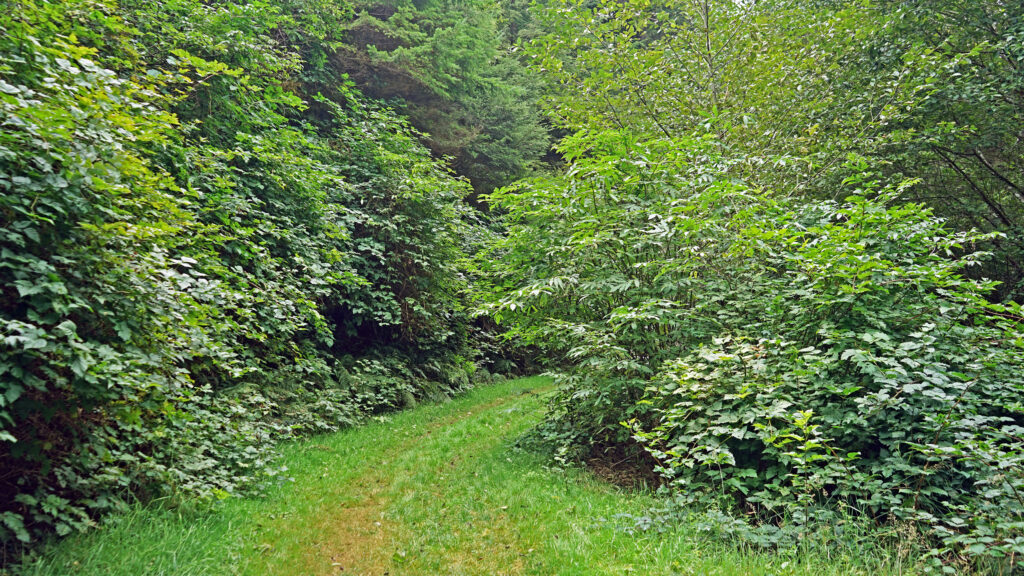
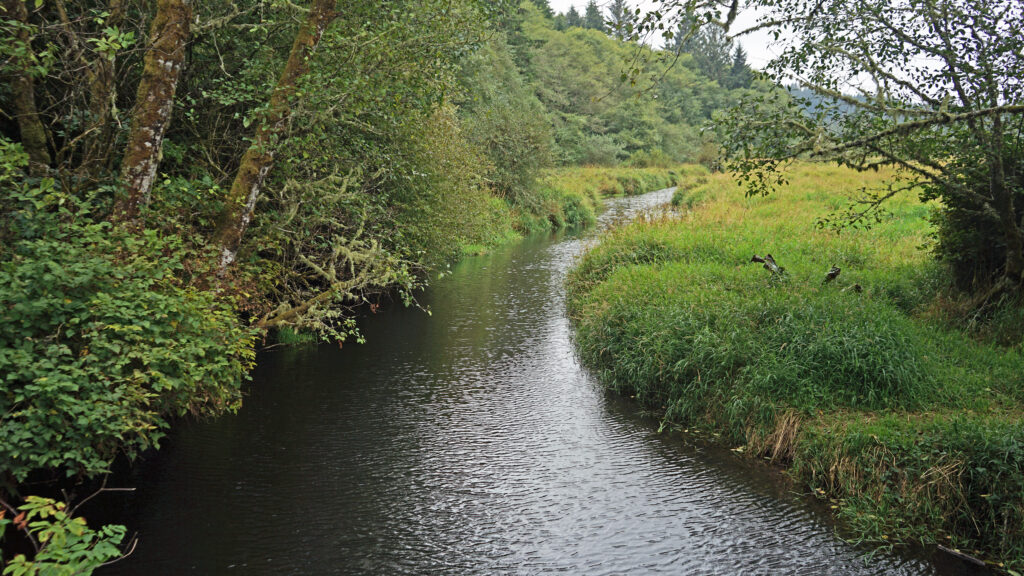
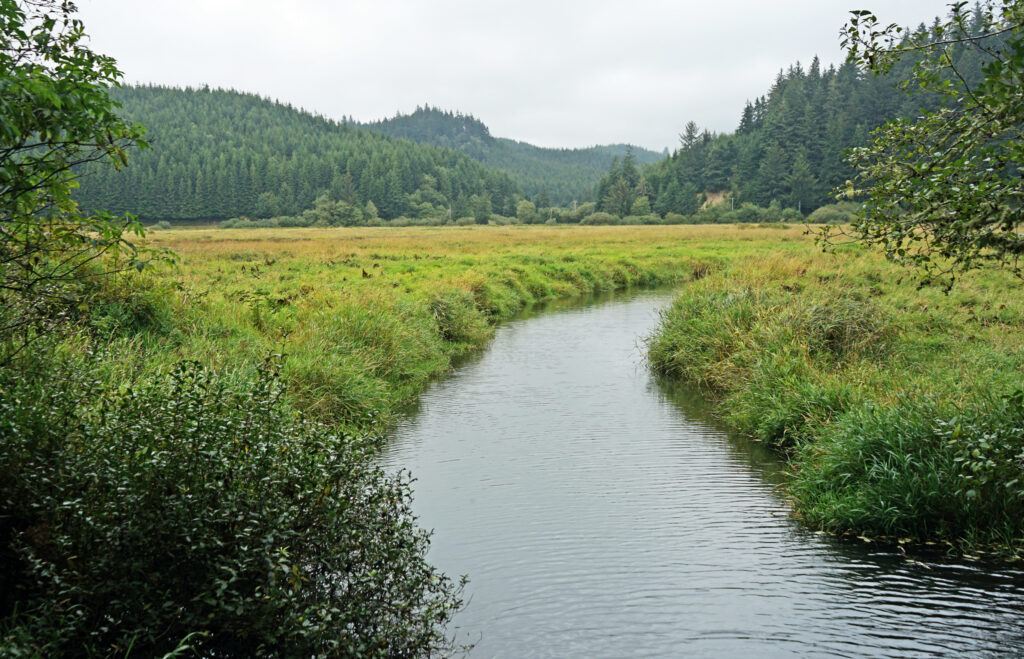
Beaver Creek Loop Trail

In another quarter of a mile you’ll come to a junction with the Elk Meadows Trail, an 0.8 mile loop through the woods and a couple of meadows. The main loop trail continues along the eastern edge of the Beaver Creek State Natural Area for another three quarters of a mile, passing the Cooper Ridge and Snaggy Point trail junctions, to the bridge across Beaver Creek and the trail back across the marsh.

Beaver Creek

With the out and back Beaver Marsh Trail, the full hike is 3.3 miles from the visitor center, 2.7 miles if you start and end the hike at the boardwalk parking area instead of the visitor center, and 2.9 miles from the winter trailhead. Add 0.8 mile to those numbers for Elk Meadow Trail extension. You can also make it a longer hike by taking a side trip through the upland area. All together there are a little over six miles of trails to explore in the park.

Beaver Creek

Other area attractions and activities:

Besides hiking the Beaver Creek Loop and the upland trails, another way to explore the area is by canoe or kayak. Just east of Hwy 101, there is a parking area and boat ramp on Beaver Creek that is an ideal launching point. The creek is a flat water paddle with little current, so it’s a good place for kids and beginners to try their hand at getting out on the water. It’s also possible to launch a canoe or kayak at the boardwalk parking area east of the visitor center and paddle across the marsh to the creek.

Ona Beach

And, of course, the beach is right there. Rest your legs after your hike and lounge on the sand at Ona Beach for a while and watch the waves. Or, if you’re up for more hiking, it’s only a 1.5 mile walk on the beach to Seal Rock, one of the more scenic spots on the central coast.

God’s Thumb

Other interesting hikes in the central coast area that could easily be paired with Beaver Creek include God’s Thumb and Drift Creek Falls in the Lincoln City area. (Look for a post on the Drift Creek Falls hike later this spring.)

Tufted Puffin. Photo from the Oregon Coast Aquarium website.

And in the South Beach section of Newport, just south of the bay bridge, there are two attractions well worth a stop on your way to or from Beaver Creek. The Oregon Coast Aquarium is one of the Pacific Coast’s premier aquariums, and Oregon State University’s Hatfield Marine Science Center is home to one of the country’s top marine science education and research programs. The Oregon Coast Aquarium is open 10:00-5:00 daily. Ticket prices range from $15 for children 3-12 to $25 for adults. Admission for seniors (65+) and teens (3-17) is $20. Infants and toddlers get in free. Tickets can be purchased online or at the gate. The visitor center at the Hatfield Center is open 10:00-4:00 Thu-Mon. Admission is $5 (ages five and up) and tickets need to be purchased online on the center’s website.

Posted March 14, 2023 by Alan K. Lee
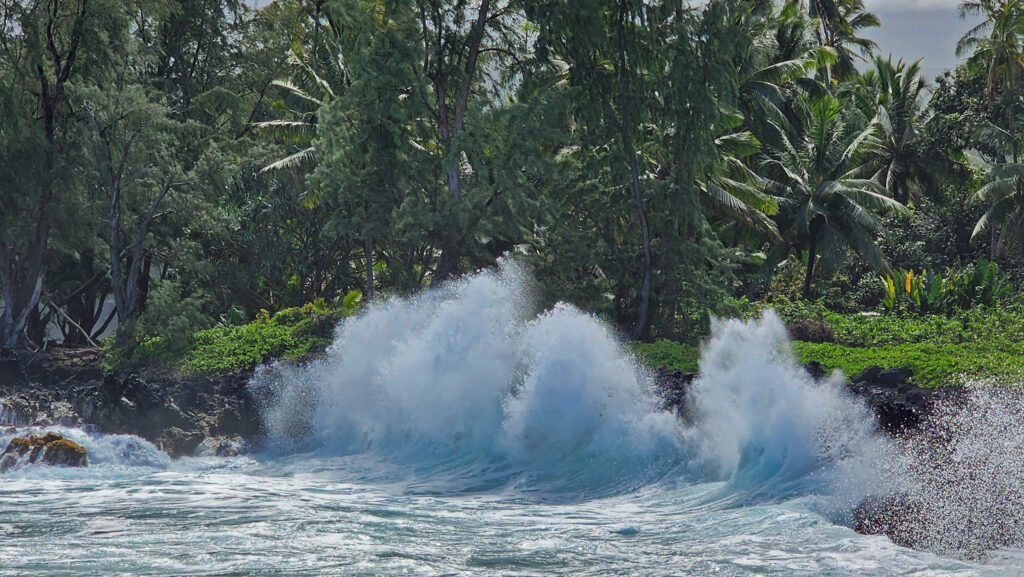
All photos ©Alan K. Lee, except as noted


Hana

by Alan K. Lee

My wife and I have taken many winter vacations to Hawai’i over the years. We had made three trips to Maui, and had seen most of the island, but we had never made it to Hana. On our only attempt to get there, we badly underestimated the time it would take. We made it only about halfway there. But this time we made it a priority to visit Hana and spend enough time there to really explore the area.

Ke’anae

Getting to Hana is either a pain or part of the adventure, depending on your mind set. The Road to Hana  is justifiably famous. It’s only a little over 50 miles from Kanhului to Hana, but that is very deceiving. With over 600 curves, 59 one lane bridges, and a speed limit that is 25 mph or less most of the way, the round trip from Kahului will take a minimum of five hours. But eight to ten hours on the road is more typical. In other words, it’s an all day outing, so start early.

Ho’okipa Beach

There are many viewpoints and other stops worth making along the way, but a few stand out. A few miles east of Pa’ia, and just past Mama’s Fish House, stop at Ho’okipa Beach. It’s a beautiful beach, known for its surfing and kite boarding. But the real attraction for us was the honu (green sea turtles) that can often be found hauled up on the east end of the beach. On our first visit, that end of the beach was cordoned off and more than 30 honu were resting on the sand. There were fewer on our recent visit, but there were no barriers, so it was possible to get very close. But, keep your distance and don’t disturb them if find yourself there. They’re sacred to the native Hawaiians and somewhat rare.

The shore at Ke’anae

About halfway to Hana, take the short side road to Ke’anae. (That is as far as we got on our first attempt to make it to Hana.) Stop at Aunty Sandy’s Famous Banana Bread (it’s famous for a reason) and pick up a freshly baked loaf, then drive to the end of the road and watch the waves crashing against the rocks. If the surf is up it can be a spectacular sight.

Falls at Pua’a Ka’a

A few miles past Ke’anae, Pua’a Ka’a State Wayside has a nice waterfall with a good swimming hole below it, and there are restrooms and picnic tables there.

Waiʻānapanapa State Park

Just before you reach Hana, Waiʻānapanapa State Park is a must see destination. This was probably my favorite spot in the Hana area. It’s another great place to see surf crashing against the lava rock of the shore, and it has a small black sand beach. It is so popular, though, that you now have to make timed entry reservations in advance. Go to the park website for more information.

There are a lot of things that you’ll miss if you’re visiting Hana as a day trip. Better to do as we did and spend a night or two. That will give you enough time to really see and enjoy the East Maui area. But be forewarned, Hana is expensive.
Hana-Maui Resort

Accommodations in Hana are limited and very expensive. The nightly rate for the two bedroom vacation rental that we stayed in was nearly $500, for example. Rooms in the Hana-Maui Resort start at over $700 per night. There are other somewhat less expensive options, but plan ahead. We booked our rental almost three months in advance, but there were few options left by then. I looked at some vacation rentals that were booked up a for more than a year.

Hana-Maui Resort

Likewise, dining options are limited in Hana. The Hana Ranch Restaurant has decent food at a reasonable (for Hana) cost. The dining room at Hana-Maui Resort has an upscale menu, both in quality and price, and is one of only a few places open for breakfast. There are a few other restaurants that get decent ratings, and there are many food trucks scattered around town. If your accommodations include a kitchen, cooking your own food is a cheaper option. There are only two small stores in Hana where you can buy groceries, though, so I’d advise stocking up in Kahului beforehand. (Costco and Wallmart are both close the Kahului Airport).

St. Mary’s Church, Hana

Hana town is a bit of old Hawai’i, and is interesting in that regard, but the town isn’t the main attraction. The adventure of just getting there is part of the attraction, but there are also a number of beaches worth checking out, and more attractions beyond the town.

Red Sand Beach

The Hana Bay Beach Park on the harbor front is worth a visit. Close by, Red Sand Beach is small beach that is a bit of a hike, but worth the effort. The trail starts near the end of Uakea Road, just past the Hana Community Center. The hike isn’t long, but the trail is steep in places and can be slippery if it’s wet, so caution is advised. The beach is located at the base of a red sandstone cliff, the source of its distinctive dark red sand.

Koki Beach
Hamoa Beach

A few miles past Hana, on Haneo’o Road, are two more beaches to check out. Koki Beach Park has more red sand at the north end of the beach. It’s a beautiful spot, but not safe for swimming. A few miles south, Hamoa Beach is a better spot to get in the water. You’ll also probably see a few surfers here.

Hana Lava Tube

Just off the road back to Kahului, a few miles west of Waiʻānapanapa State Park, Hana Lava Tube (Ka’eleku Cavern) is an interesting side trip from the town of Hana. Lava tubes form when the surface of a lava flow cools and solidifies, and the molten lava flowing underneath drains out, leaving a cavern below the surface of the lava flow. The cave isn’t wheel chair accessible, but it’s an easy, mostly flat, kid friendly walk that takes about half an hour.

Ohe’o Gulch Falls, Kipahulu

South of Hana, beyond Koki and Hamoa Beaches, the highway continues on to the Kipahulu section of Haleakala National Park. This is better known as the Seven Sacred Pools. We were there not long after a series of severe rainstorms battered the island, and the water in the creek was still high, so the pools were closed to swimming. But the shoreline is beautiful, there are several small waterfalls, and there’s a hiking trail to a couple of bigger waterfalls up the mountain a ways.

Lindberg grave, photo by Yurivict, sourced from Wikimedia Commons

Beyond Kipahulu, the other attraction is the grave of Charles Lindberg. (We missed the turnoff to it, though, so we didn’t see it on this trip.) This is as far as most people venture beyond Hana. But what most people don’t know is that the Pi’ilani Highway continues past the Lindberg grave, and is a back door to Hana, or in our case, an alternate route back to Kahului.

Southeast shore of Maui
Souteast shore of Maui

Calling it a highway is a bit of a joke, at least for the first twenty miles or so past the Lindberg grave. It’s even more winding than the Road to Hana, narrow, one lane mostly, with many blind corners, and short segments of gravel or dirt. It’s passable without a four wheel drive or high ground clearance vehicle, though, and it takes you along the wild and largely unpopulated southeast coast of Maui, an area few tourists can say they’ve seen. The road then traverses the southern slope of Haleakala to the town of Kula. From there, it’s a short hop back to Kahului.

Surfing Goat Dairy

We made one last stop before between Kula and Kahului, the Surfing Goat Dairy , where we purchased some goat cheese and chocolates. It’s an interesting place (check out their website) and the baby goats were adorable. We ended our Hana adventure with a pit stop at the Ale House in Kahului for dinner and a pint or two.

Makahiku Falls

Our trip to Hana was an interesting adventure. I’m not sure we’ll go back, but I wouldn’t have missed it for anything. If you’ve never been to Hana and can fit it into your itinerary, it’s definitely worth the trek, at least once. The Hana area is wild, beautiful, and unique, quite different from the more traveled parts of the island. For an overview of the rest of Maui, click here.

Wailua Falls


Posted March 3, 2023.
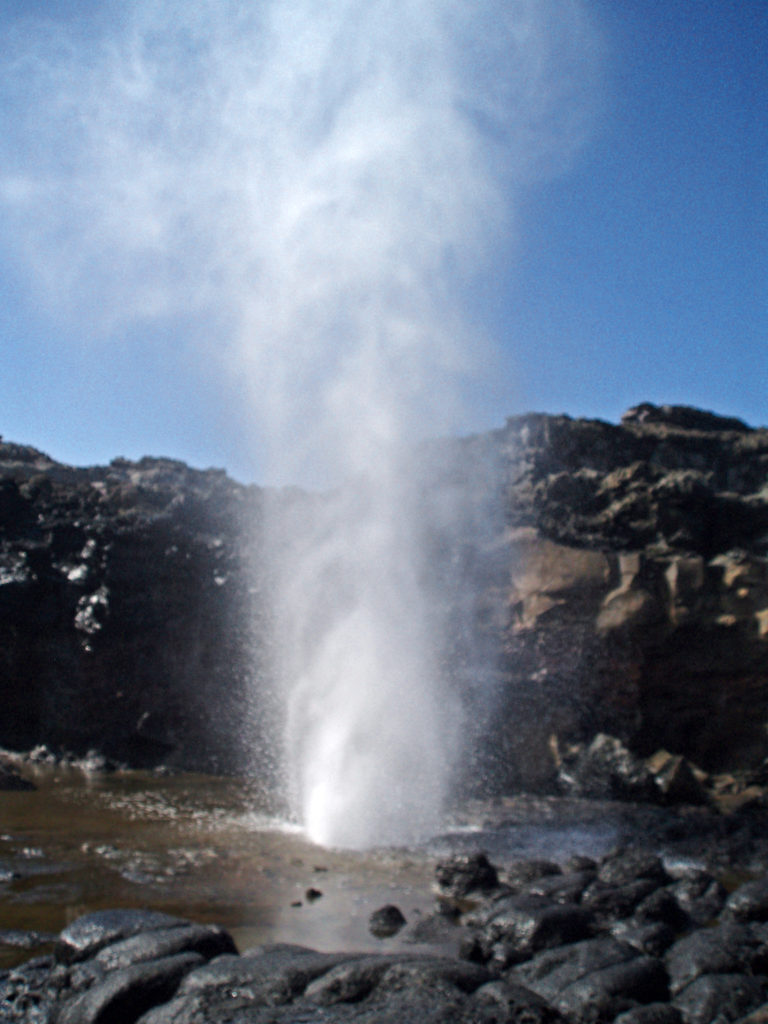
All photos © Alan K. Lee, except as noted.


The Island of Maui

by Alan K. Lee

Maui and the other Hawaiian Islands have so many attractions that it’s hard to list them all. Suffice it to say that there is something for everyone on the island of Maui, no matter where your interests lie.

My wife, Joan, and I have made a number of trips to Maui over the years. Although it is not my favorite Hawaiian island (that would be the Big Island), there is so much to do on Maui that we still haven’t seen it all. Our trips were all different. We stayed on  different parts of the island, traveled with or visited different members of my wife’s family, took in different sites, and took part in different activities.

On our first trip, we stayed in Ka’anapali in West Maui, attended a traditional luau in Lahaina, toured the north shore, explored Pa’ia, spent a day lounging on the beach at Kihei, and made an unsuccessful attempt to get to Hana (more on that later).

On our second trip, with ten other members of my wife’s family, we stayed in the Upcountry town of Haiku and explored the Upcountry area on the north slope of Haleakala, took a whale watching cruise out of Lahaina, hired a professional photographer to do a family photo shoot on the beach at Kihei, and drove to the top of Haleakala to view the sunrise.

A couple of years ago my wife’s cousin Ruthee and her husband Mikel retired and moved to Kihei, Maui. We visited them in their home in 2019 and again recently. In 2019 we visited the Iao Valley, did some hiking in the Makena area of South Maui, and found a remarkable group of more than 30 green sea turtles sleeping on Ho’okipa Beach near Pa’ia. The four of us then flew to Kona for five days of exploring the Big Island. On our most recent trip we finally made it to Hana, where we stayed for two nights.

Maui is called the Valley Island. Most of the population lives in the Kahului and Wailuku areas in the valley between Haleakala and the West Maui Mountains, hence the island’s nickname. Most of the tourist activity, though, is centered in the West Maui area around Ka’anapali and Lahaina, and the South Maui area around Kihei and Wailea.


Kula Lodge

Less populated, less touristy, and more authentically Hawaiian, the North Maui area around Pa’ia and the Upcountry area on the slopes of Haleakala offer a different experience for those who are turned off by the touristy and often overcrowded Ka’anapali and Kihei areas. The same is true for Hana, but for slightly different reasons. But if you just want to lounge on the beach and soak up the sunshine, Kihei and Ka’anapali are perfect.

Haleakala Crater
Haleakala summit view

Haleakala is another world. At more than 10,000 feet high, the summit is often cloud hidden, and occasionally snow-capped. The summit crater looks like it was transplanted from Mars. And the sunrises are legendary. On our second trip, half the group (including my wife) got up at 3:00 am in order to catch that sunrise. I was part of the other group that chose to sleep in. We met the first group at the Kula Lodge for breakfast, then drove on up to the summit. Well worth it, even if we missed out on the sunrise experience.

Haleakala sunrise. Photo by Joan Newman
Iao Needle

Near Wailuku, Iao Valley State Park is another almost otherworldly experience. There it’s a trip into the tropical jungle, and something of a time trip back into what the Jurassic period must have been like. It wouldn’t have been too surprising to encounter a dinosaur there on our jungle hike. And the Iao Needle is spectacular.

North Shore, halfway to Hana

And then there is Hana. Our first attempt to get to Hana was thwarted by a lack of planning and sabotaged by all of the incredibly scenic stops along the way. We made it about halfway on that first attempt before we had to turn around and make our way back to West Maui in time for dinner. Click here to learn more about Hana and our recent visit.

Kihei Beach

Like most visitors, we spent a lot of time just hanging out on various beaches around the island on all of our trips. With dozens of beaches and more than 30 miles of sandy shoreline, there are plenty of choices. Beach safety should always be a concern, of course. If you’re going to swim, snorkel, windsurf, or kayak, it’s a good idea to check the HI Ocean Safety website for safety tips and links to current advisories before heading to the beach of your choice.

Ahihi Kina’u Natural Area Reserve, South Maui
Big Beach, Makena Beach State Park

Makena Beach, also known as Big Beach, is a good choice in the South Maui area. With more than a half mile of sand, there’s plenty of room for everyone to spread out. To the north of Big Beach, over a small headland, is the more secluded Little Beach. Be forewarned, though, that Little Beach is clothing optional. And Kihei offers numerous beaches and parks, most with lifeguards, along six miles of shoreline.

In West Maui, Ka’anapali Beach is one of the best swimming beaches on the island, and features a daily cliff diving ceremony at sunset. But five hotels and six condominium complexes face the beach, so it’s often very crowded. There are also several nice beaches in the Kapalua area to the north, and in Lahaina to the south of Ka’anapali.

Ho’okipa Beach

The North Shore beaches, such as Ho’okipa Beach and Kanaha Beach, offer some of the best kiteboarding and windsurfing in the Islands, and there are protected areas at both ends of Baldwin Beach, making it one of the best swimming beaches on the island. One of the nicest beaches, though small, is at Mama’s Fish House, which happens to serve some of the best seafood in the Islands. It’s expensive, but worth the indulgence. Going at lunchtime is at least slightly less expensive, and when we were there the  lunch menu was the same as the dinner menu. Reservations are an absolute must and need to be made at least six months in advance.

Nakalele Blowhole

On the northwest corner of the island, north of Kapalua, Nakelele Blowhole is a spectacular sight. Not only is it one of the biggest blowholes that I’ve ever seen, shooting water a hundred feet into the air, but you can walk right up to it in relative safety (though maybe not the smartest thing to do). Whether or not it is spouting, and how high, depends on the tide and probably wave height and direction, so it might not be the best idea to go there solely to see the blowhole. But the shoreline along that portion of the island is spectacular, and it’s only a short drive from Kapalua, so well worth the trip if you’re on that part of the island. And if you catch it at its best, it’s truly memorable.

Old Lahaina Courthouse

There is way more to Maui than what I’ve covered here, of course. If you’re a golfer, there are courses from championship level resort courses, such as the Plantation Course at Kapalua that annually hosts the PGA Tournament of Champions, to more affordable public courses such as Maui Nui, Pukulani, and Waiehu. Horseback riding is a popular activity, and there are many hiking trails around the island. There are ziplines. You can descend below the waves in a submarine. Or snorkel in the submerged crater of an extinct volcano at Molokini. You can coast down the slopes of Haleakala on a mountain bike.  And I’ve barely mentioned the cultural and dining experiences available. There’s almost no reason not to go.

Kihei Beach

Check the Go Hawaii/Maui website for more information on Maui dining, accommodations, activities, and more.


Kihei sunset

Originally posted as Something For Everyone on Maui on October 22, 2019. Updated and re-posted on March 3, 2023.

All photos © Alan K. Lee, except as noted.


Asheville, N.C.

by Alan K. Lee

Asheville, N.C. had never been on my bucket list of travel destinations, nor had Great Smoky Mountains National Park. But some years ago the daughter of friends of ours moved to Asheville, and we started hearing about what an interesting city it is. So, my wife and I decided to pay a visit. And when we did, we found that it was indeed a very interesting place.

Our timing wasn’t the best. A hurricane had just missed Asheville a few days before we arrived. There was still plenty of evidence, in the form of downed limbs and trees, of the power of the storm, but the center of the storm had passed to the west of Asheville and the city had not suffered any major damage. And the weather was fine while we were there.

We spent our first full day in Asheville exploring the city. It’s an old city, but it’s got a very young, very hip feel to it. There are 60+ breweries in town, for example, the most per capita of any US city, and second only to Portland, Oregon (where we’re from) in total number.

Asheville is also a very arts oriented city. As well as sampling a few of the brew pubs, we also visited a few of the galleries and artists studios in the River Arts District and the city center, but our limited amount of time there didn’t allow us to fully explore Asheville’s arts scene.

Asheville is also a great destination for foodies. There are many very good restaurants in the city and there’s a thriving farm-to-table food scene. If you’re ever there, I highly recommend that you seek out Sunny Point Cafe in particular. It’s a wonderful restaurant in West Asheville. Everything’s made with fresh, local ingredients, and everything we had was done superbly. (It was so good that we ate there three times and I bought their cookbook). City Bakery in downtown Asheville is also a great place to start your day.

The city has much more of a Pacific Northwest vibe to it than I was expecting. Besides the galleries and studios, the restaurants, and breweries, Asheville is much like Portland in its easy access to nature and its outdoor oriented residents. I think you could move the whole city to the Willamette Valley or the Puget Sound region and it wouldn’t feel out of place at all. It has Southern roots, certainly, but what we saw of it was more New South than Old South.

On our second day, we trekked to Great Smoky Mountains National Park and drove up to Clingman’s Dome, one of the highest points east of the Rockies. The top of the divide was in the clouds and the valleys were filled with fog, but in between it was clear and the views were spectacular.

We spent most of the rest of the day hiking to a number of the park’s many waterfalls. The Smokies have a different, softer feel to them than the mountains of the Western U.S., but they have their own appeal. We were there a little too early in the season to catch much in the way of  fall colors, but there were hints of how beautiful it would be in a few weeks.

We had planned to drive back to Asheville via the Blue Ridge Parkway, but portions were closed due to trees downed by the hurricane. The Parkway runs from Great Smoky Mountains National Park all the way to Shenandoah National Park in Virginia, 469 miles in total. We were able to drive about a 25 mile section of the parkway near Asheville that was open, but not being able to see more of it was disappointing.

Our third day was split between further explorations of Asheville and a visit to Chimney Rock State Park, about 25 miles southeast of Asheville, near the town of Bat Cave.

There’s an elevator that takes you from the parking area up to near the top of Chimney Rock, which is a tall free standing spire on one side of a very large granite dome. The elevator wasn’t working, though, so we climbed the 492 steps (I counted them) to the top, then another 80 to a nook called the Opera Box that looks down on the top of Chimney Rock and provides a great view of the valley below.

After the climb and descent (going down was worse than going up), we did a 1.4 mile out and back hike to Hickory Nut Falls, a very impressive 480 foot waterfall on the other side of the dome.

After leaving the park we had lunch in the community of Chimney Rock, then went for another short hike along the Broad River.

Biltmore Estate. Image from Wikimedia Commons

Asheville is probably most famous for being the site of the Biltmore Estate, the largest private home in the country. Unfortunately, it takes the better part of a full day to tour the estate, and we didn’t have the time. So, that will have to wait until our next visit.

Asheville is a fascinating city, worth a longer visit than we gave it, and a great place to use as a base to explore the Great Smoky Mountains, tour the Blue Ridge Parkway, and visit the surrounding countryside. I hope that we will be able to return someday to more fully take in what Asheville has to offer, and more fully explore Great Smoky Mountains National Park and and the rest of the southern Appalachian Mountains via the Blue Ridge Parkway. For more information about visiting Asheville, click here.

After visiting Asheville, we visited two charming Old South cities: Charleston, SC, and Savannah, Georgia. Check out our posts on Charleston here, and Savannah here.

Originally posted  December 22, 2019. Updated and re-posted January 30, 2023

All photos  © Alan K. Lee, except as noted

Sunriver Resort

by Alan K. Lee

Sunriver Resort in Central Oregon has become a favorite destination for my wife and I over the years. Even during the first year of the corona virus pandemic we spent the 4th of July holiday at Sunriver with my step-daughter and her family. That year was a little different – we cooked all of our meals at the house we rented instead of dining out as we usually do, for example. But the nature center was open (with restrictions), as was the marina and the stables. And there are miles of bike paths winding through the resort and residential areas, which we took full advantage of.

Meadow near Sunriver Nature Center

Sunriver Resort is located about 15 miles south of Bend on the site of the former Camp Abbot, a WWII era Army training facility for combat engineers. After the end of WWII, Camp Abbot was abandoned. Most of the buildings were demolished and the land was sold to private developers. The only remaining Camp Abbot structure is the former officer’s club, now the resort’s Great Hall. Of Camp Abbot’s 5500 acres, 2200 were added to the Deschutes National Forest and the remaining 3300 acres eventually became what is now Sunriver.

Bike path bridge at Sunriver Lodge

Sunriver is more than just a destination resort. It is also a planned community of more than 4000 homes and condominium units. Most of the residences are second homes, many of them available as short-term rentals. Sunriver also has about 1500 full time residents, a fire department, several parks, community water and wastewater treatment systems, a public works facility that maintains the roads, bike paths and parks, and an airport.

Sunriver Marina

Recreational facilities at the resort include two public golf courses, two private courses open to resort guests, tennis and pickleball courts, several swimming pools, parks, and the large Sunriver Homeowners Aquatic and Recreation Center (SHARC). Sunriver Marina offers canoe and kayak rentals and guided rafting trips. And the Sunriver Stables offer horseback and pony rides.

Deschutes River above Benham Falls

In the winter, snow sports take center stage. Snowshoe and cross country ski trails are close by. Alpine skiers and snowboarders make up a large portion of Sunriver’s winter visitors, as Mount Bachelor, one of the Northwest’s premier ski areas, is only about a 30 minute drive from the resort. Mount Bachelor also has a Nordic center with more than 30 miles of cross country ski trails.

Deschutes River
Floating the Descutes at Sunriver

With 300 days of sunshine a year, Sunriver has much to offer the outdoor enthusiast. Hiking, biking, fishing, and river rafting and paddling are all popular summer activities. The Deschutes River forms the western boundary of the resort, and the river is wide and placid in that stretch, perfect for a leisurely float. And floating the river is a very popular activity in the summer. The river is often crowded with people enjoying the river in canoes, kayaks, rafts, and inner tubes.

Benham Falls

Downstream of the resort, the river changes drastically, becoming narrow and raging as it cuts through an ancient lava flow. Scenic Benham Falls is only a few miles from the resort. A relatively flat paved bike path makes cycling from Sunriver to Benham Falls quick and easy. You can also drive there, but the bike path is shorter and probably faster. And there is a somewhat longer and more challenging mountain bike trail from Sunriver to the falls for the more adventurous.

Lava Butte

The bike path continues on to Lava Butte and the Lava Lands Visitor Center, part of Newberry National Volcanic Monument. Also part of the National Monument, Newberry Crater (actually a caldera) contains two lakes, East and Paulina, and a large and fascinating obsidian flow. You can also drive to the summit of Paulina Peak on the caldera rim where you’ll look down into the caldera and take in the panoramic views of the Cascade Range peaks to the west, the ponderosa and lodgepole pine forests surrounding the caldera, and the  sage and juniper lands of the high desert to the east. Newberry Crater is about 25 miles by road from Sunriver. (Look for a future post on this site with more information and photos of Newberry Crater).

Paulina Lake viewed from Paulina Peak

Sunriver Resort makes an ideal base for exploring all that Central Oregon offers. Besides Newberry Crater and Lava Butte, other attractions in Newberry National Volcanic Monument include the Lava Cast Forest , and Lava River Cave.

Hosmer Lake
Sparks lake

West of Sunriver, the Cascade Lakes Highway runs parallel to the crest of the Cascade Range and passes close to Todd, Sparks, and Elk Lakes. Hosmer Lake, just off the highway, is a fly fishing only lake where motor boats are prohibited, making it ideal for paddlers. The highway also passes close by Big and Little Lava Lakes, Davis Lake, Cultus Lake, Crane Prairie Reservoir, and Wickiup Reservoir.  For those seeking to get deeper into nature, numerous hiking trails lead from the highway into the adjacent Three Sisters Wilderness Area to the west.

High Desert Museum

While you’re in the area, I highly recommend that you visit the High Desert Museum, on Hwy 97 about ten miles north of Sunriver. The museum offers visitors a chance to see native wildlife up close, and to learn about both the pioneering history of the area and the culture and lifestyles of the Native American tribes that lived in the area for thousands of years prior to the arrival of white settlers. The High Desert Museum consistently rates as one of the top attractions in Central Oregon.

Old Mill District, Bend

For those wanting a more urban experience, Bend is only about a 20 minute drive north of Sunriver. Once a small lumber town, Bend is now a fast growing city with a population of about 90,000. Besides being one of the West’s premier outdoor recreation centers, Bend also has many fine dining establishments, brew pubs, wine bars, boutique hotels, art galleries, and numerous specialty shops. I’ll cover Bend in more detail in a future post.


Sunriver Lodge

Sunriver itself has a variety of restaurants, a nice brew pub (Sunriver Brewing), a number of small shops, and many fun things for kids to do (think bumper cars and climbing walls). Most of that is concentrated in The Village, located near the main entry to the resort. The Lodge also has several restaurants, and there is a Mexican restaurant (Hola!) on the river next to Sunriver Marina.

Mule Deer in Sunriver residential area

Sunriver Resort offers a variety of rooms and suites in the Lodge and adjacent Lodge Village and River Lodges. More than 300 homes and condos in Sunriver can also be booked through the resort. Check the resort website for more information. Many other vacation rentals are available through VRBO, Vacasa, Airbnb, and Sunriver Vacation Rentals.

Sunriver Nature Center

We’ve visited Sunriver Resort many times, and we will return again many more times, I’m sure. It’s a great place for the whole family, and Central Oregon is a paradise for people who love the outdoors.

Deschutes River at Sunriver

Originally posted December 20, 2020. Updated and re-posted January 21, 2023.

All photos © Alan K. Lee