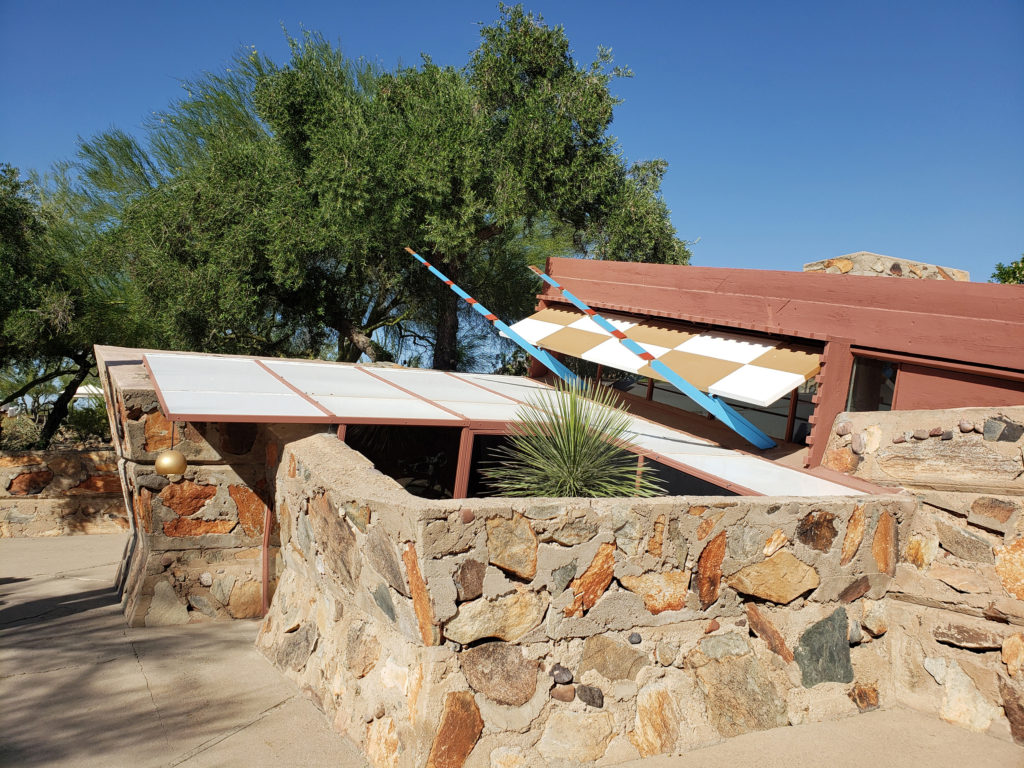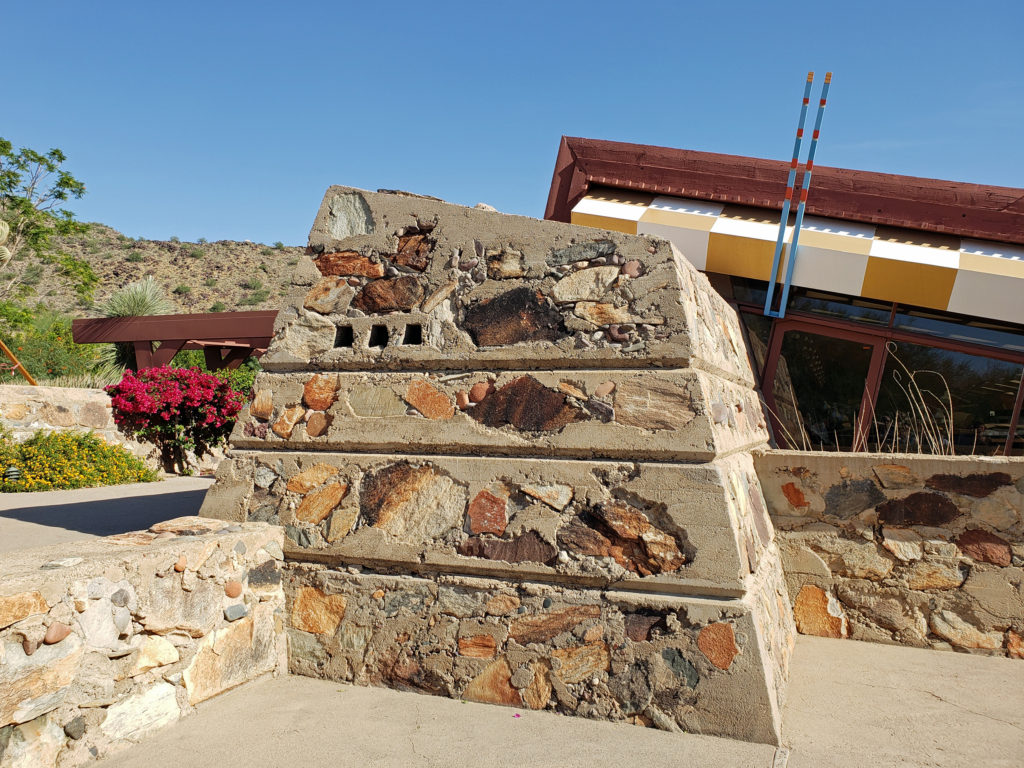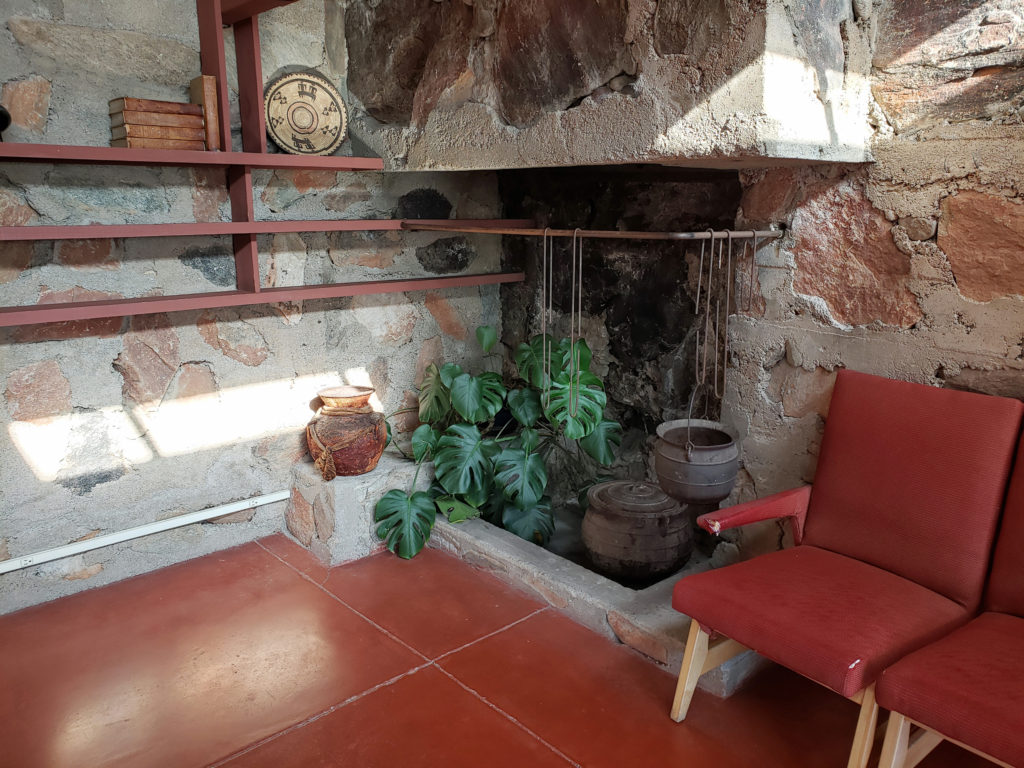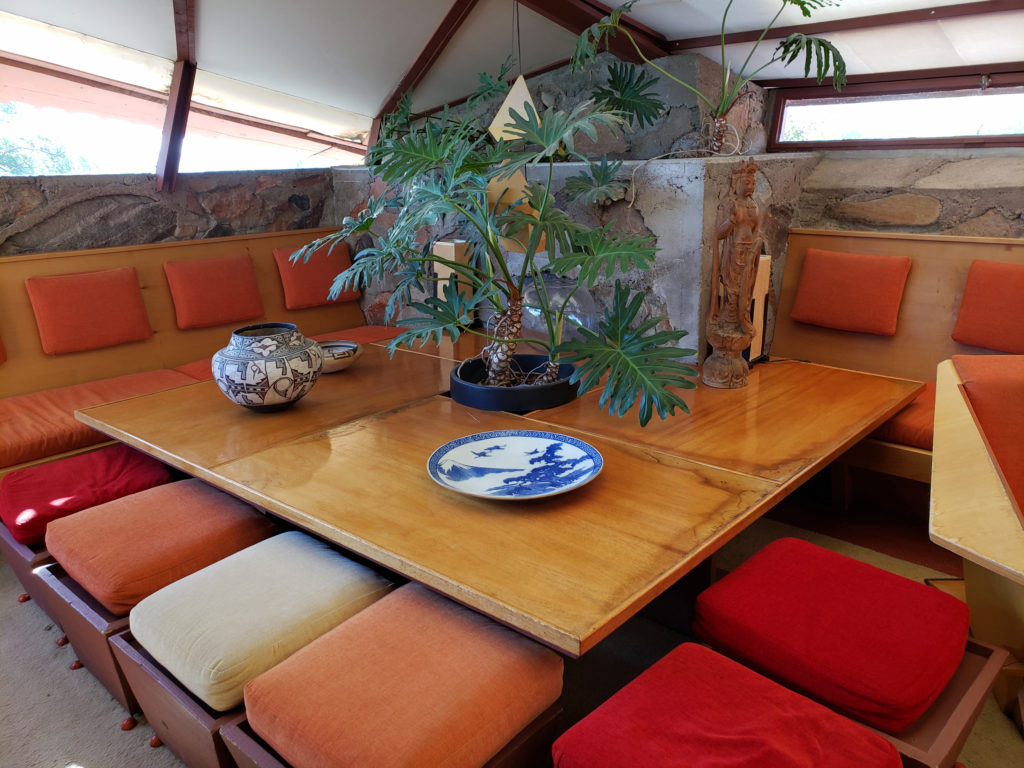
Frank Lloyd Wright’s Taliesin West

By Alan K. Lee

Many of us that live in the Pacific Northwest have a connection of one kind or another to the state of Arizona. Many Northwest retirees, like my parents, become snowbirds, escaping the Northwest winters by spending the colder months in the sunnier and warmer climes of the desert Southwest. Others, like my brother, escape at an earlier age. Most of the rest of us have vacationed at least once in Arizona, or at least have dreamed of doing so. My wife and I have both lived in the Pacific Northwest all our lives, but we’ve made many trips to Arizona over the years. One of our favorite places is Frank Lloyd Wright’s Taliesin West.

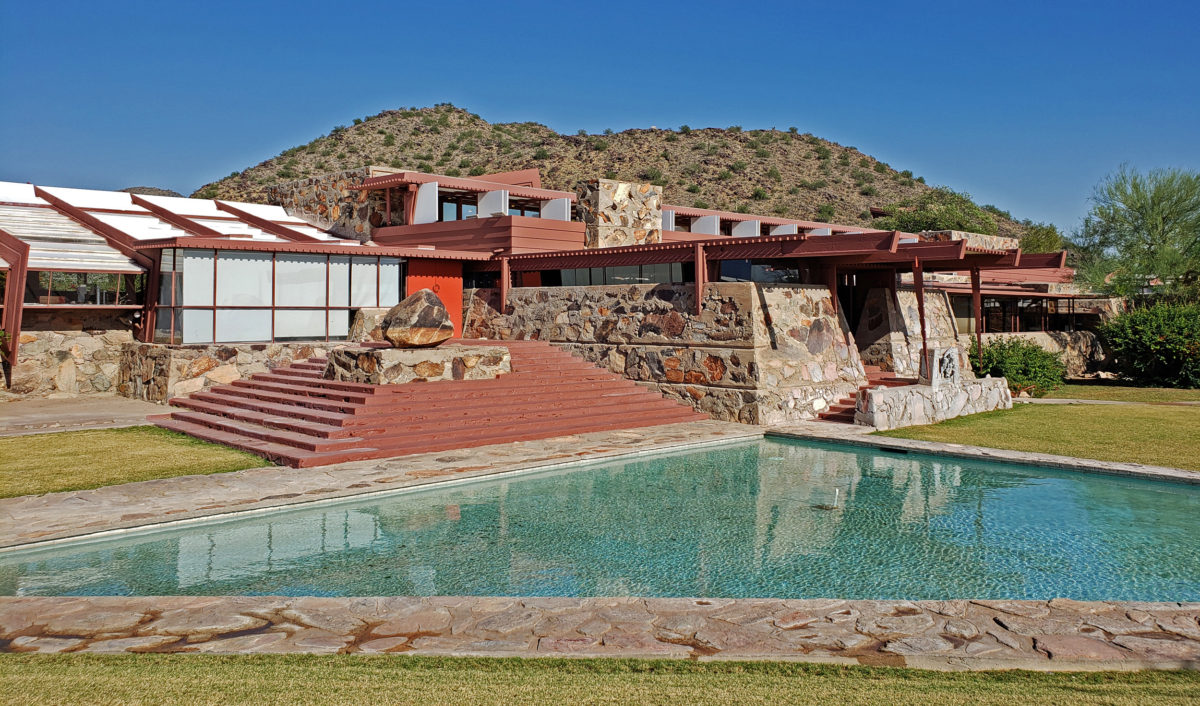
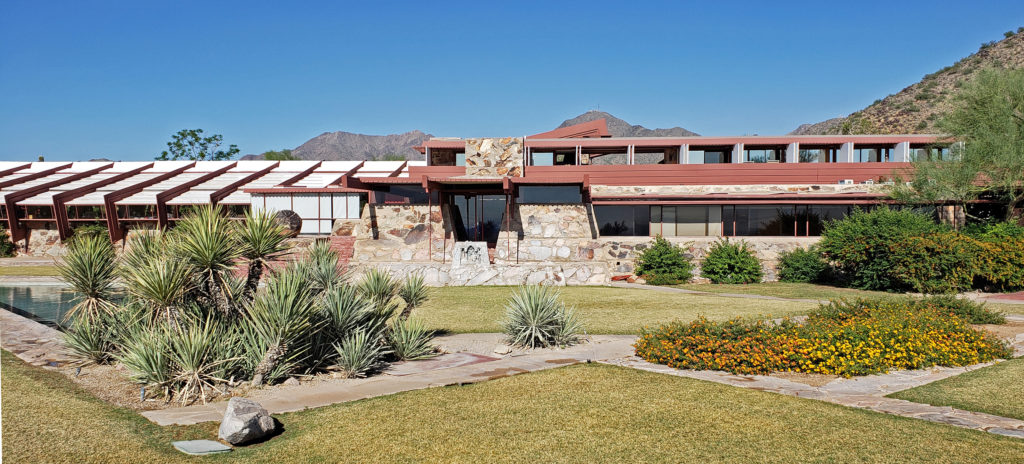
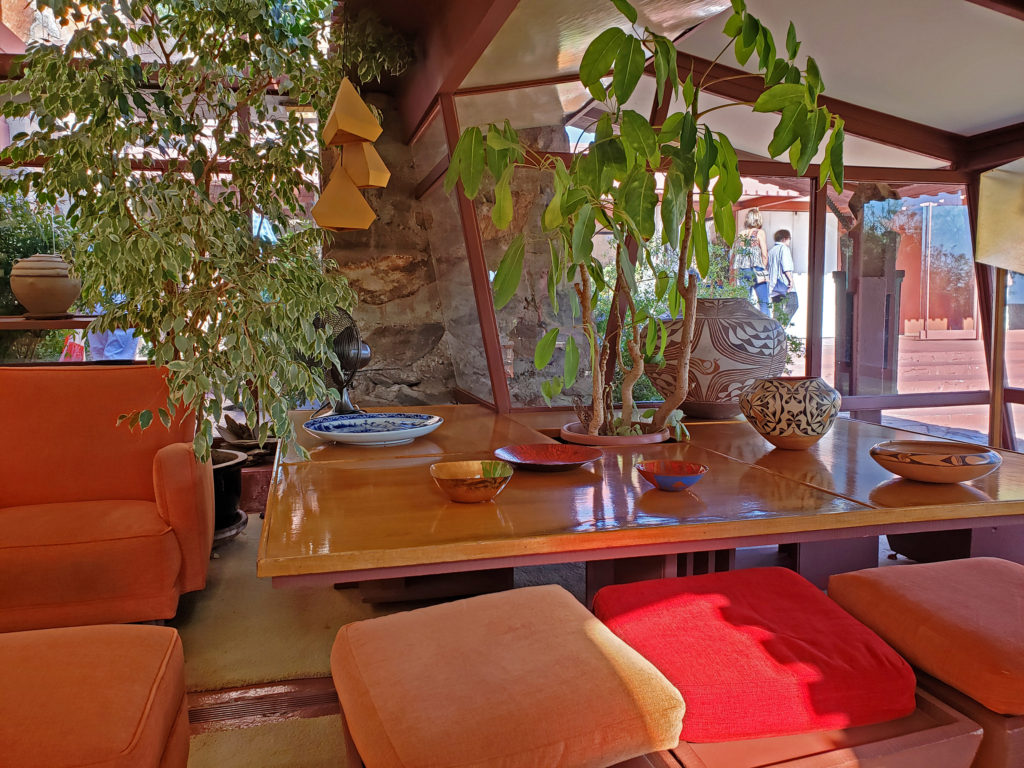
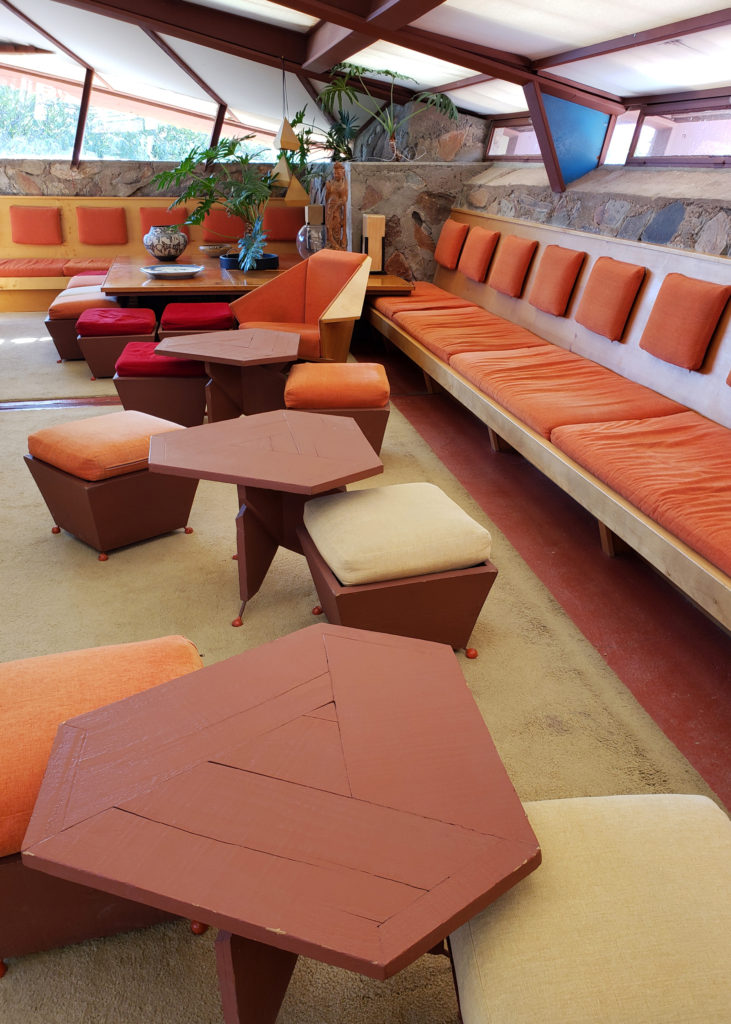
Taliesin West is one of Frank Lloyd Wright’s most iconic creations. Begun in the same year that Falling Water, arguably his greatest creation, was built, Taliesin West was Wright’s winter home for the last two decades of his life.

Taliesin West was founded as the winter home for the Frank Lloyd Wright Fellowship, Wright’s school of architecture. It was always a school of architecture as well as Wright’s winter home. The Fellowship evolved into the Frank Lloyd Wright School of Architecture, which conducted classes at Taliesin West until 2020, when it  separted from the Frank Lloyd Wright Foundation, changed its name to The School of Architecture, and moved its campus to Cosanti and Arcosanti, Arizona.

Wright’s designs and his design philosophy had a profound impact on American architecture. He is without question the most famous American architect, by a wide margin. Ask anyone to name an architect and almost all, if they can name any, will name Wright.

Wright first achieved fame shortly after the turn of the 20th century for his Prairie House residential designs, and he was always more interested in designing homes for people than structures for businesses or government agencies. During the Great Depression he designed a planned community that featured simple, affordable residences that he called Usonian homes. Although his planned community was never built, many Usonian homes were. One of those, the Gordon House, is now located at the Oregon Garden in Silverton, Oregon, not far from my home.

Over his long career, Wright designed more than 1100 structures, 532 of which were built. But as famous and influential as he was, for much of his career he received few commissions. In the 1920s he made most of his income from writing and lecturing, rather than from his designs.

In 1932 Wright formed the Taliesin Fellowship, an apprenticeship program that taught not just architectural design, but also construction and “farming, gardening, and cooking, and the study of nature, music, art, and dance” according to the Frank Lloyd Wright Foundation website.

The original Taliesin, in Spring Green, Wisconsin, was Wright’s primary residence for most of his life and also served as the campus of the Taliesin Fellowship. In 1934, to escape the often brutal weather in Wisconsin, Wright began taking his students to Arizona each winter.

Taliesin West began as the winter camp for Wright and his students. And it was an actual camp in the beginning. The students lived in tents for their first few winters in Arizona, and Taliesin West was an ongoing project for many years. Even after most of the structures were completed, for example, all of the windows were simply openings in the walls, without glass, for almost a decade.

Wright’s design philosophy was holistic, and humanistic. He saw houses as organic structures that should be built in harmony with their environment and in tune with their inhabitants. “It is quite impossible to consider the building as one thing, its furnishings another and its setting and environment still another,” he wrote. He believed that all had to work “as one thing.” There is a story, whether true or not I don’t know, that the purchasers of one of his early residential designs invited him to their home after they moved in and he was so appalled by the way they had furnished the home that from that point on he not only designed the structures, he designed all of the furniture (much of it built in), the lighting, the rugs, the artwork, and even the dinnerware that went into them.

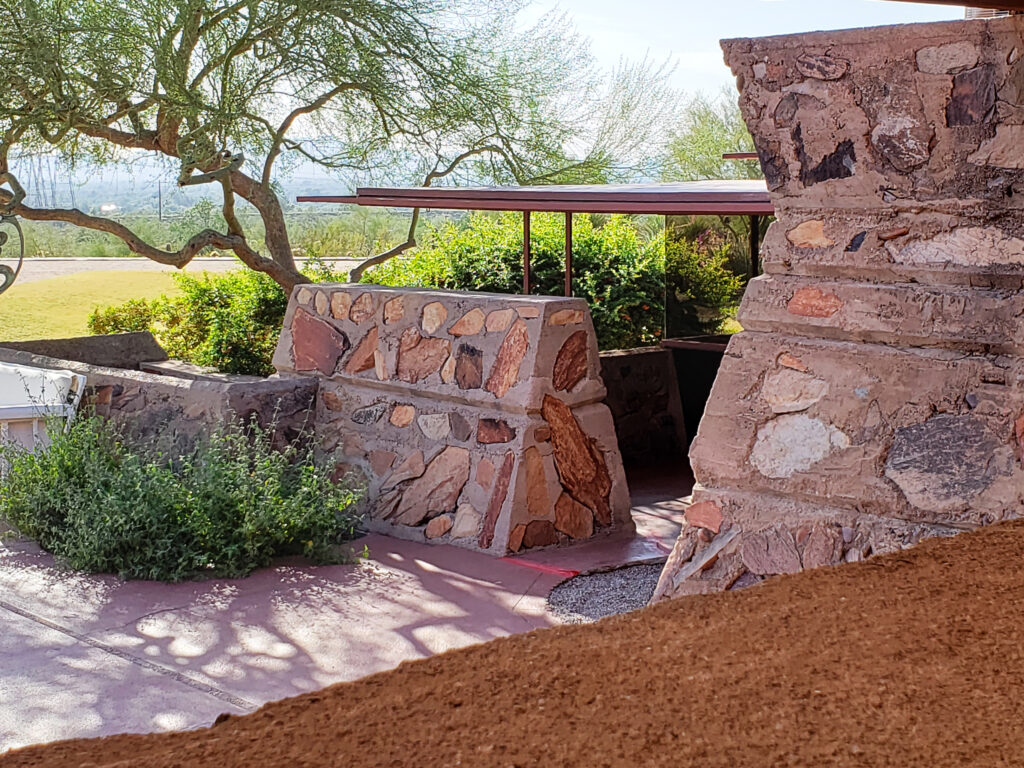
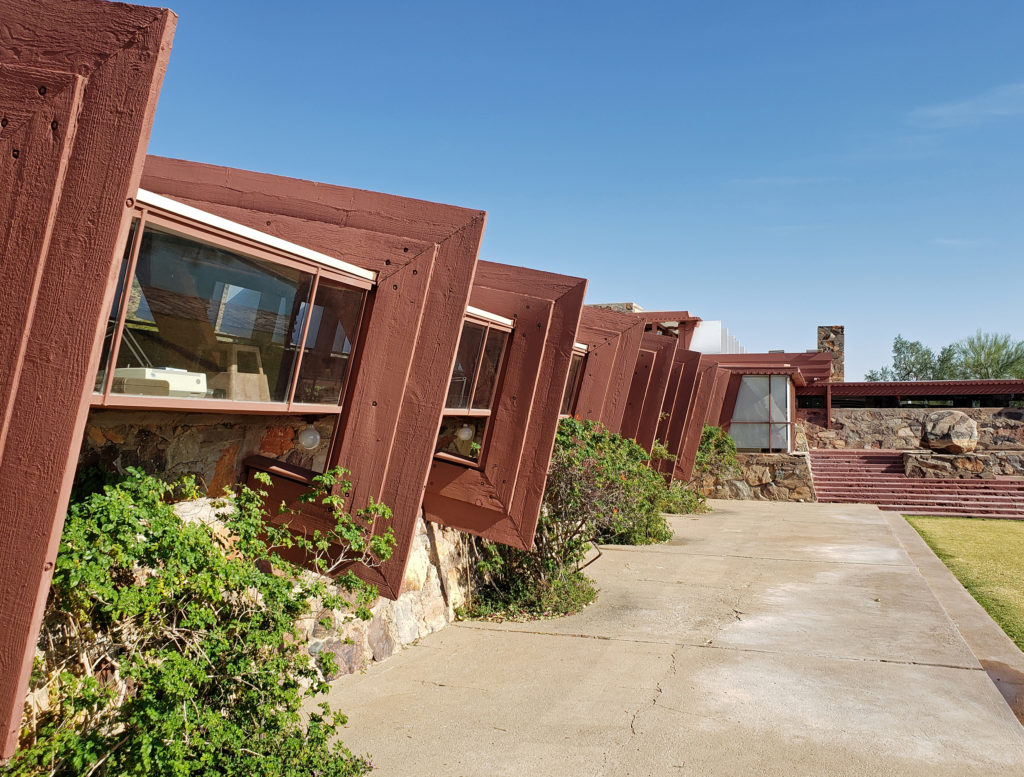
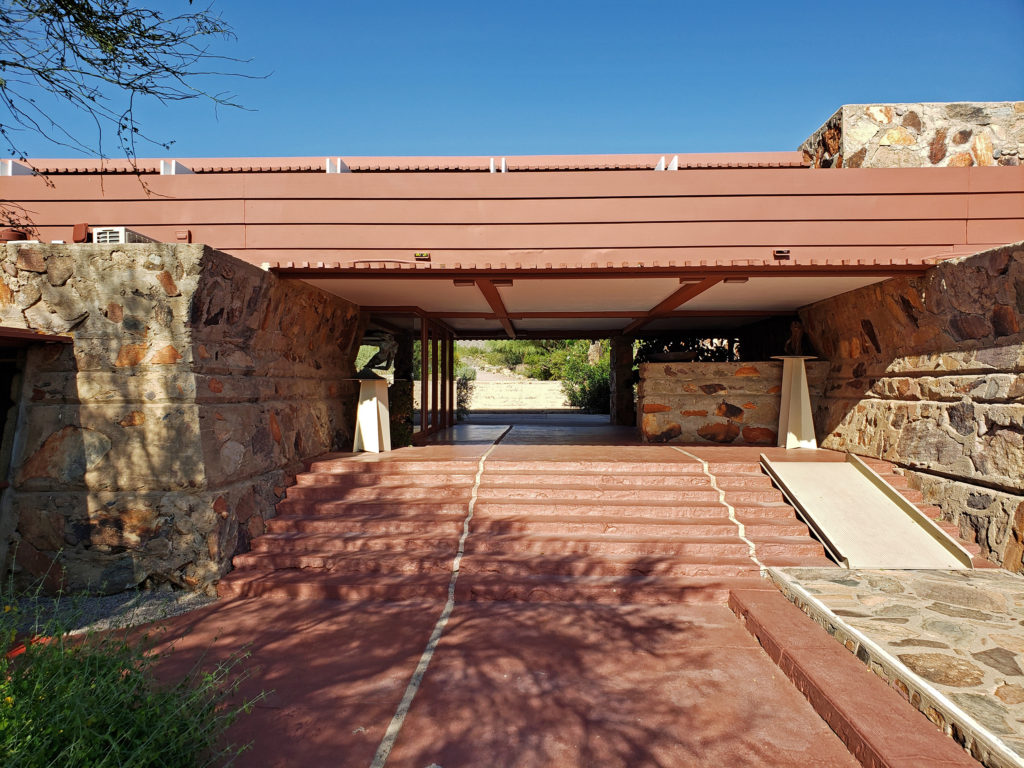
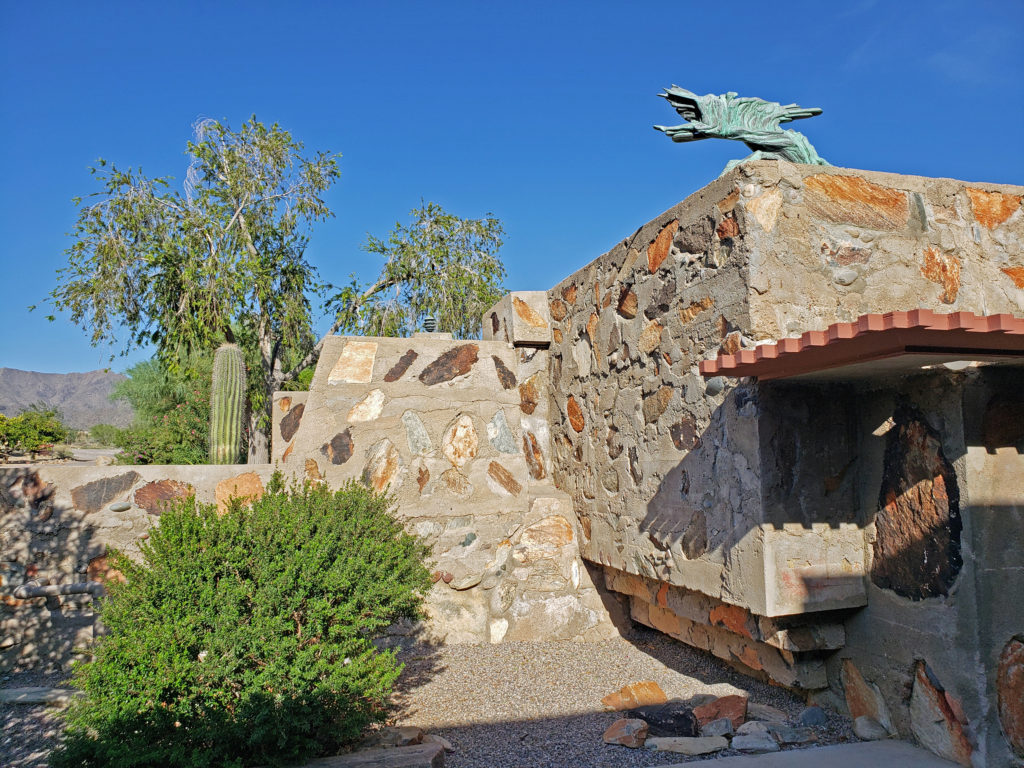
The structures at Taliesin West reflect Wright’s belief that architecture must reflect the natural setting of the site. To that end, they were built using native stone and other materials harvested from the site. That, and the long, horizontal orientation and flat roofed construction help them blend almost seamlessly into the environment. Taliesin West would still be a beautiful and striking piece of architecture even if it was located elsewhere, but it would not be as in harmony with its setting as it is, and it would be a lesser work.


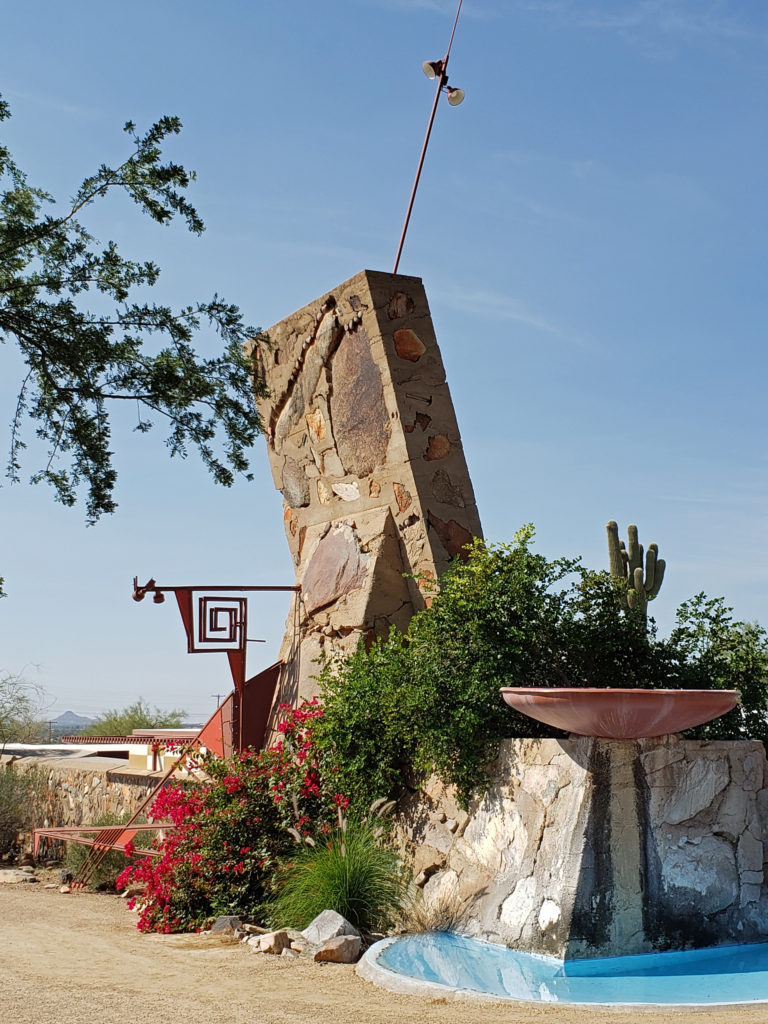
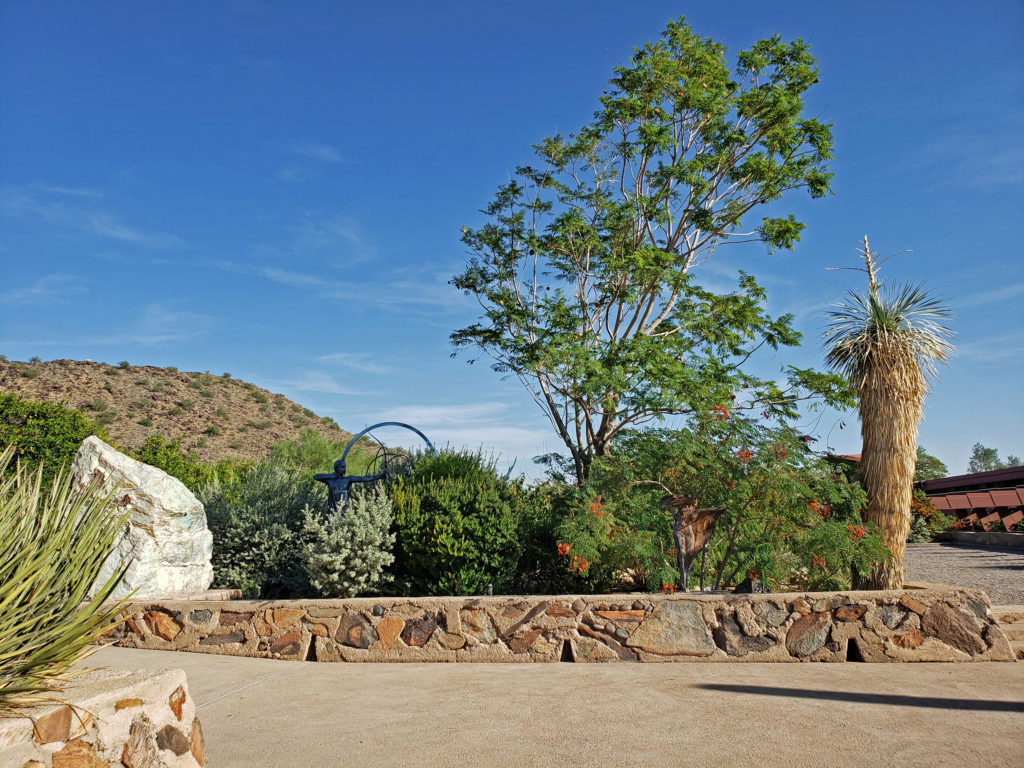
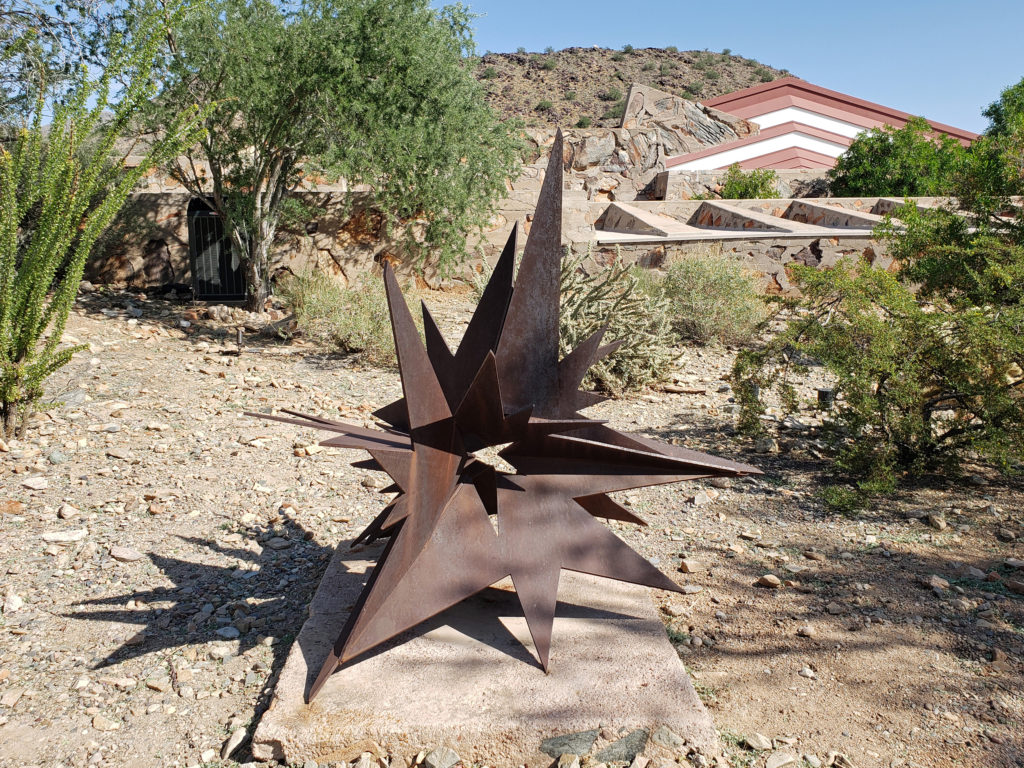
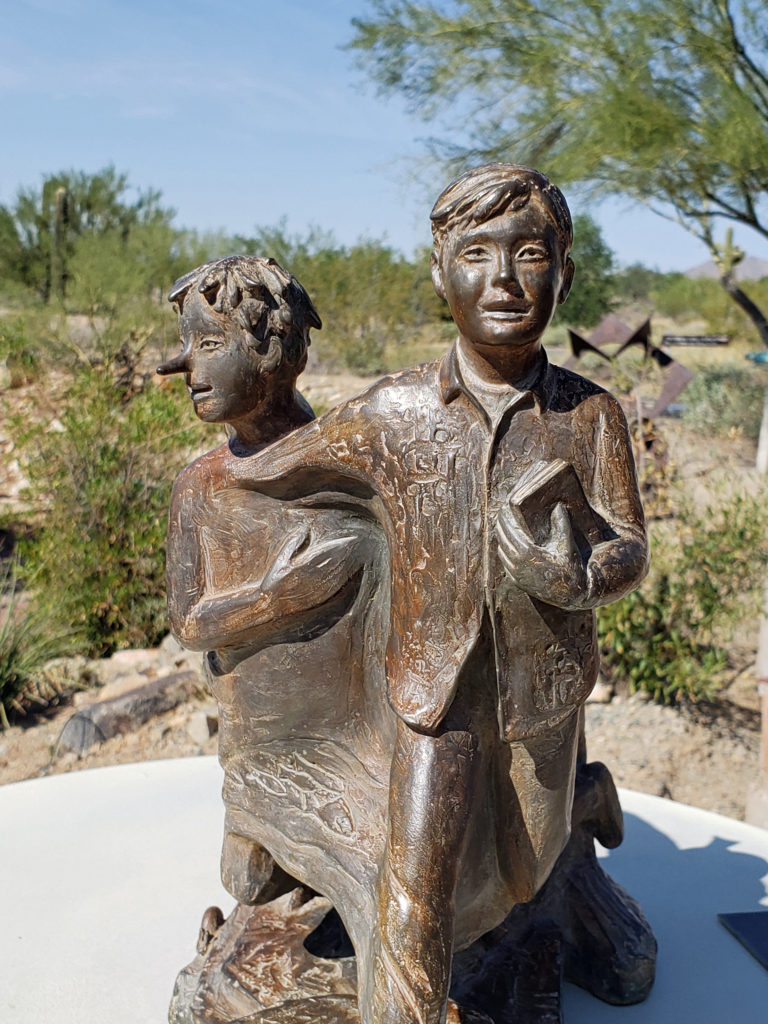
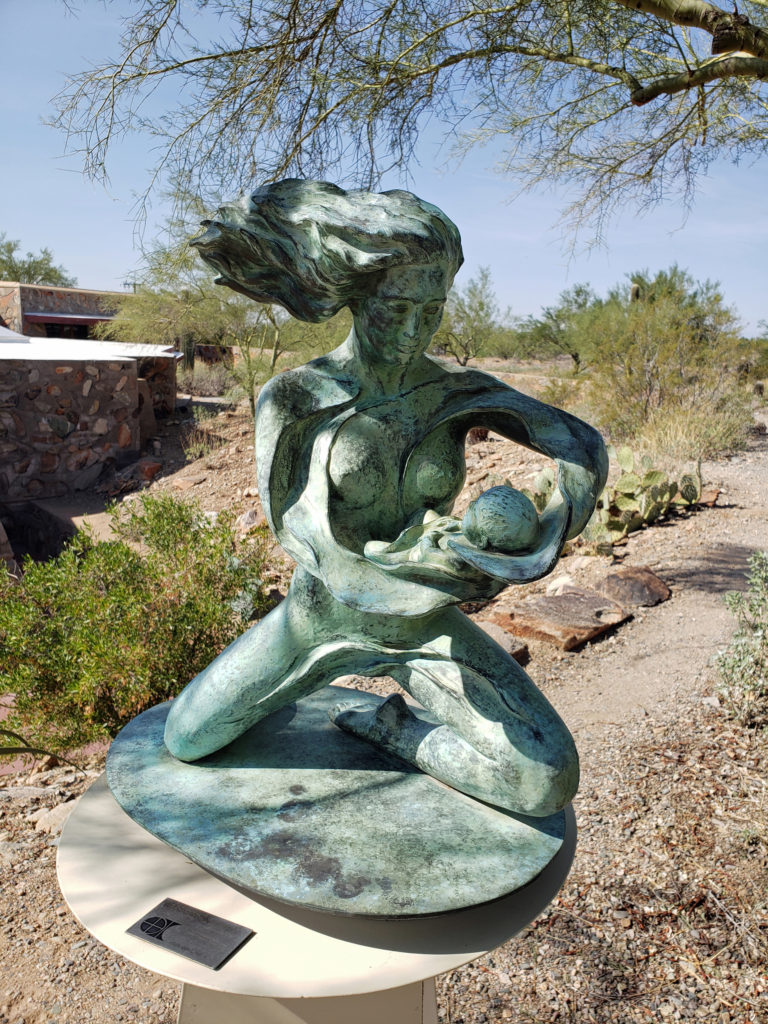
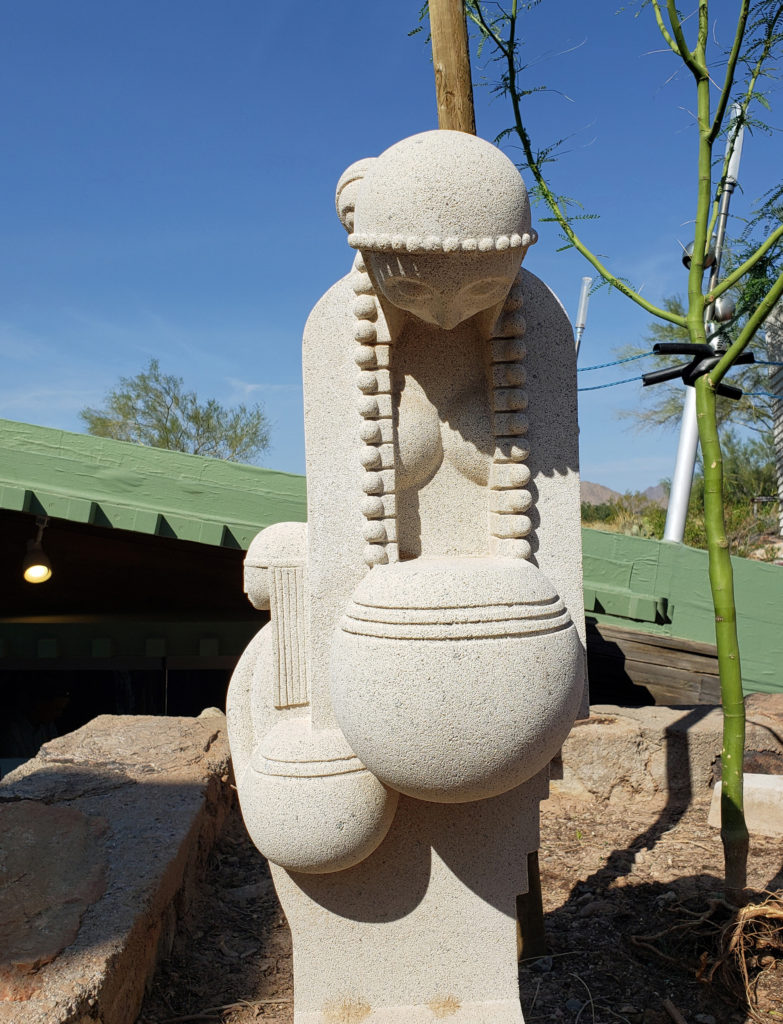
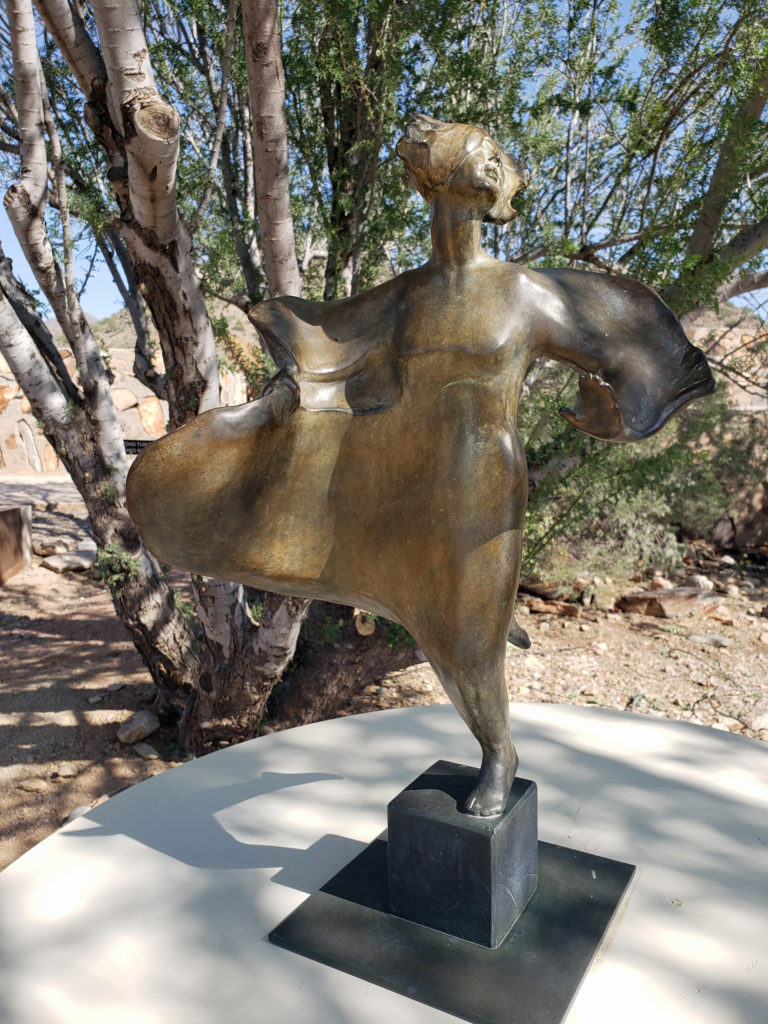
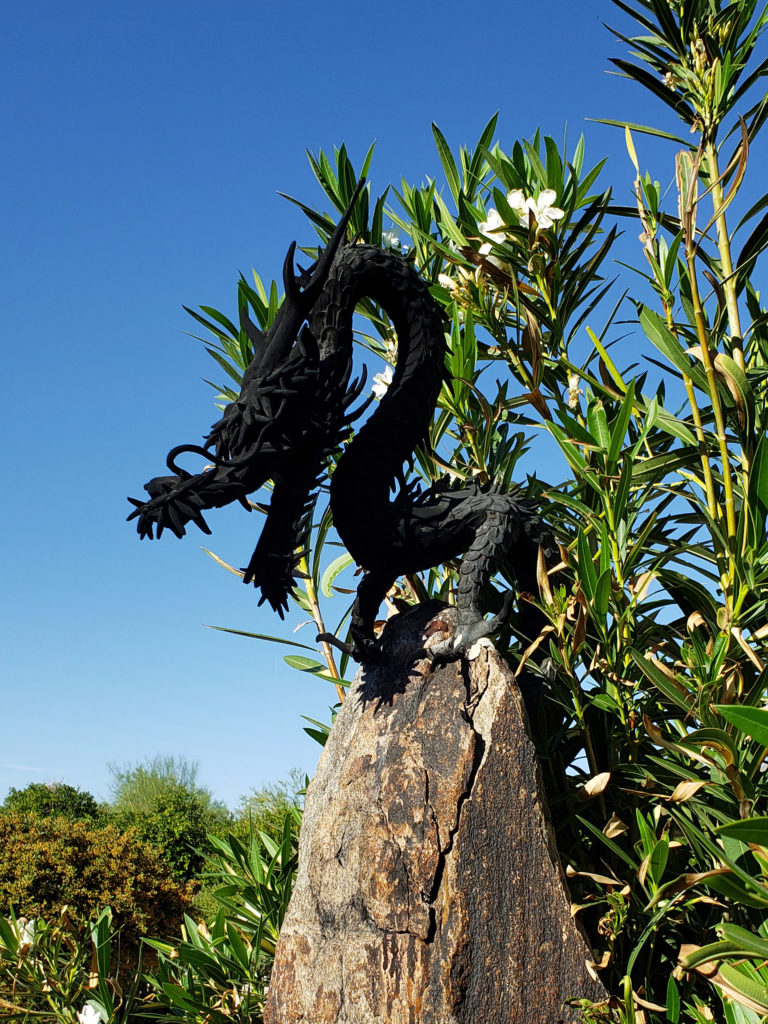
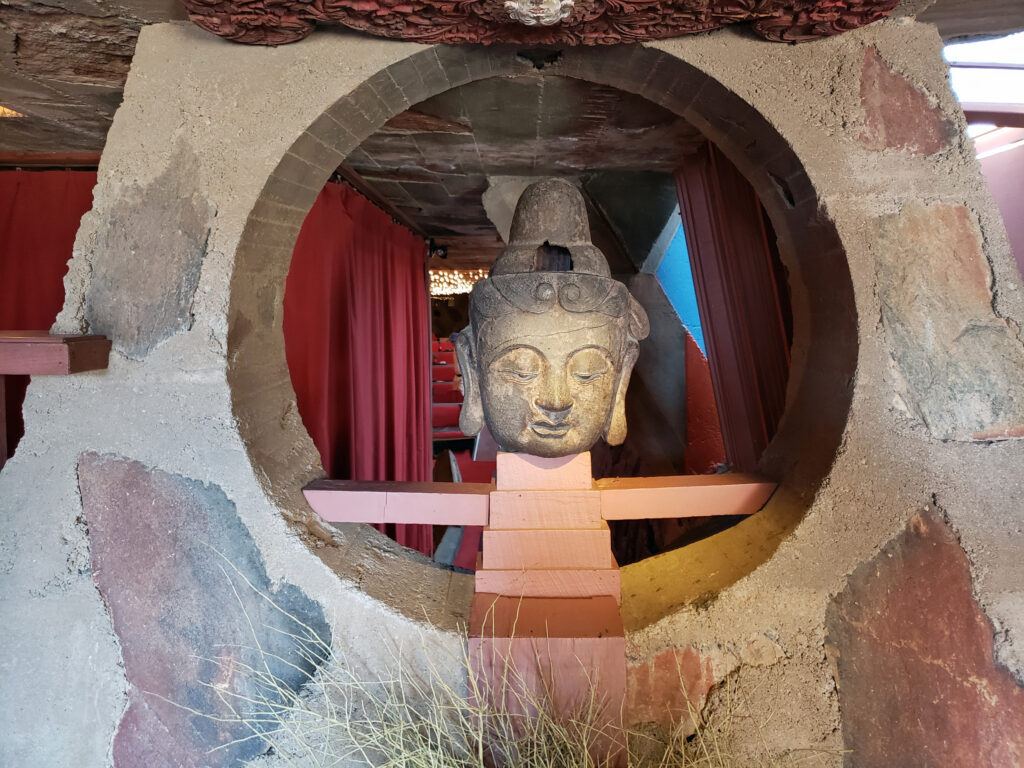
The grounds of Taliesin West are beautifully landscaped and feature many outdoor works of art by various artists. Wright saw architecture as the “mother” of all the arts, and art was an important component of his designs, as was the landscaping.

Wright’s work ensures his place in history as one of the architectural greats. Today, Taliesin West lives on as testament to that greatness, and as home to the Frank Lloyd Wright Foundation.

Taliesin West is located in Scottsdale, Arizona, about 20 miles northeast of downtown Phoenix.

Originally posted November 26, 2019. Updated and re-posted January 7, 2022.

All photos © Alan K. Lee

Jasper National Park

by Alan K. Lee

In August 2019, on a long road trip from our home near Portland, Oregon, my wife and I travelled to both Banff and Jasper in the Canadian Rockies. We had been to Banff before, but had never visited Jasper National Park.

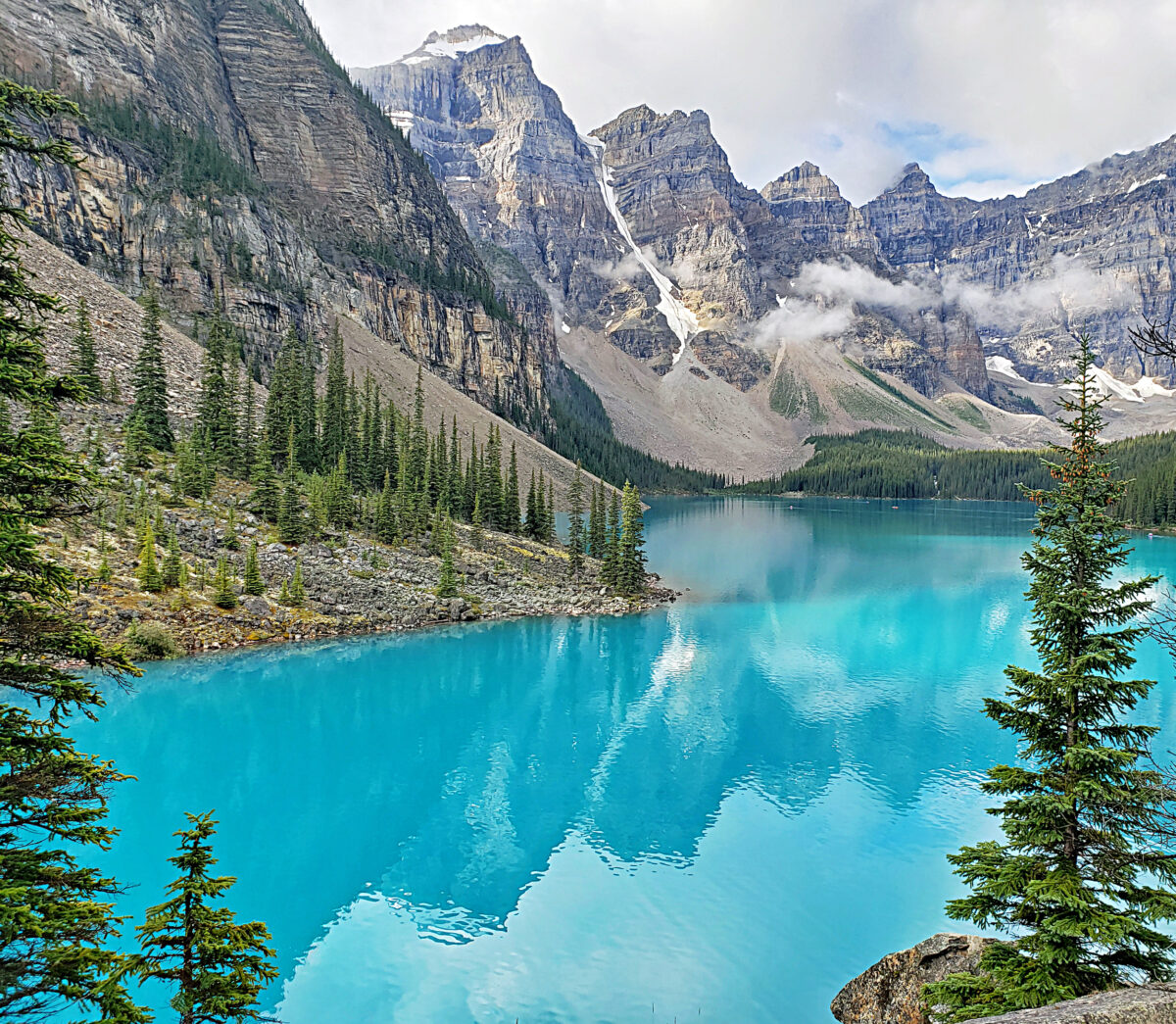
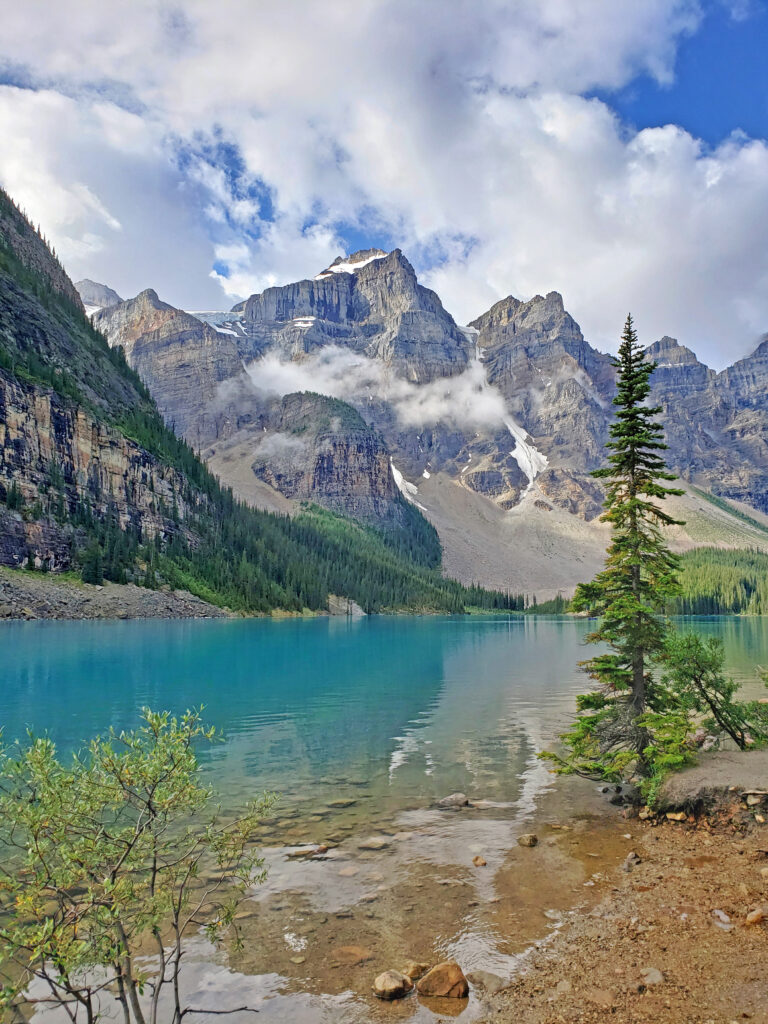
Moraine Lake, Banff National Park

We spent a few days exploring Canmore, just outside of Banff National Park, and the town of Banff, then visited Moraine Lake, Johnston Canyon, and Lake Louise before heading north into Jasper National Park on the Icefields Parkway. (Click here to read about our time in Banff).

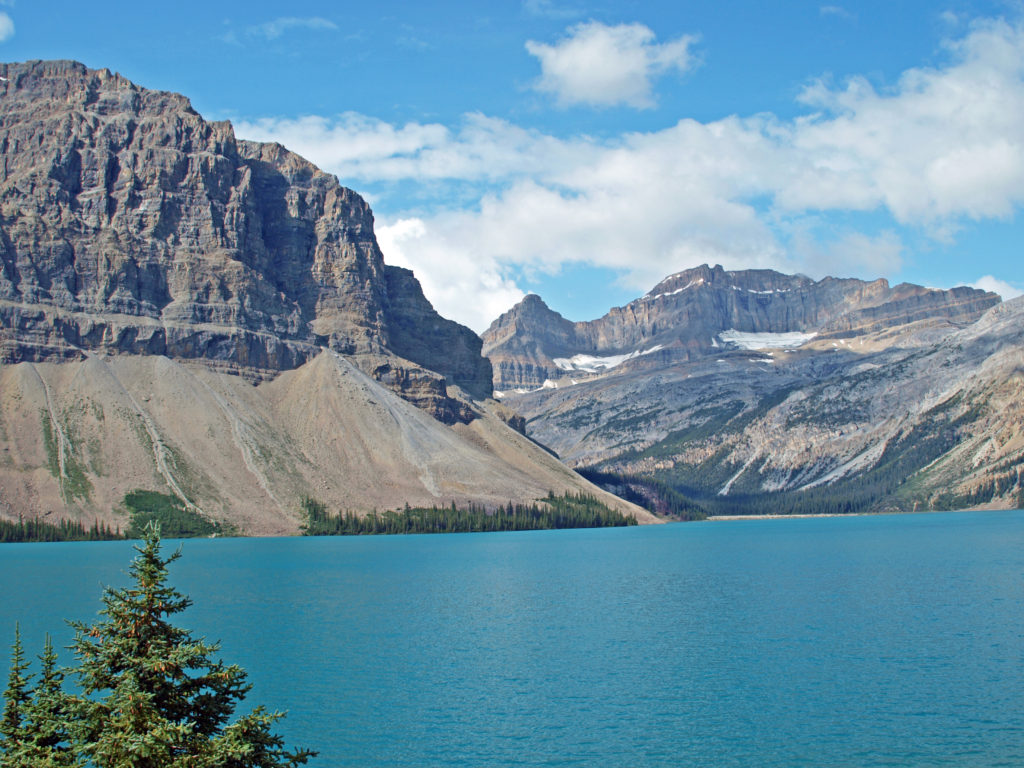
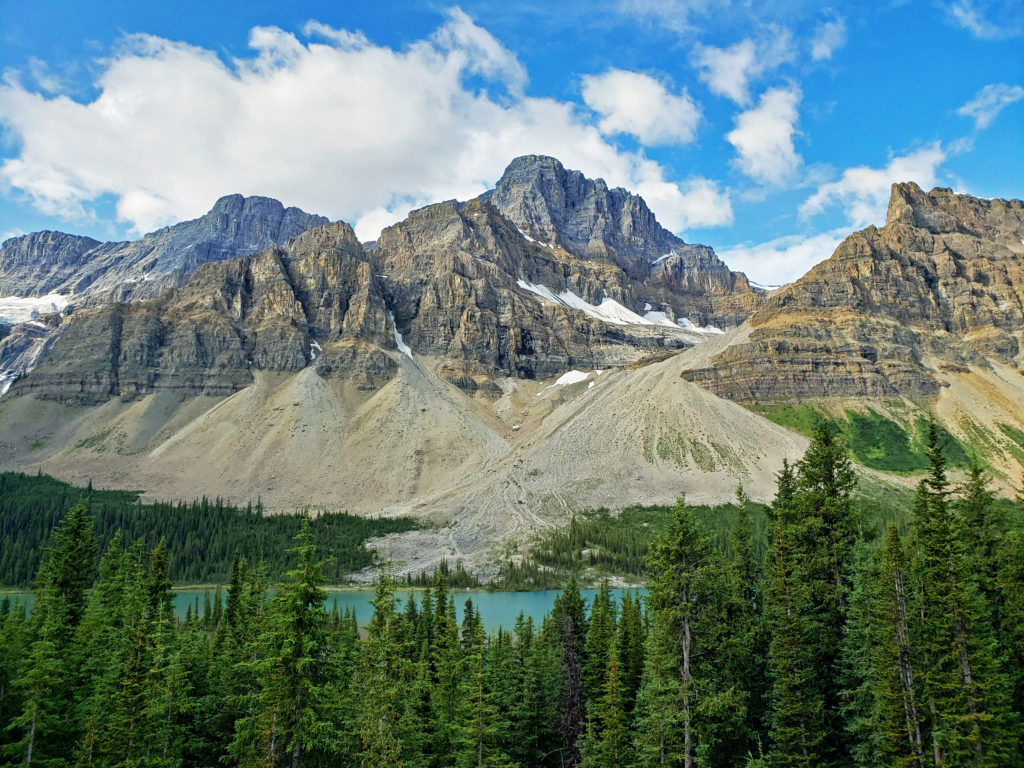
Bow Lake, Banff National Park

The Icefields Parkway parallels the Continental Divide from just north of Lake Louise to the town of Jasper. It is without question one of the most scenic drives I’ve ever taken. Jagged peaks, glaciers, pristine lakes, spectacular waterfalls – it has it all.

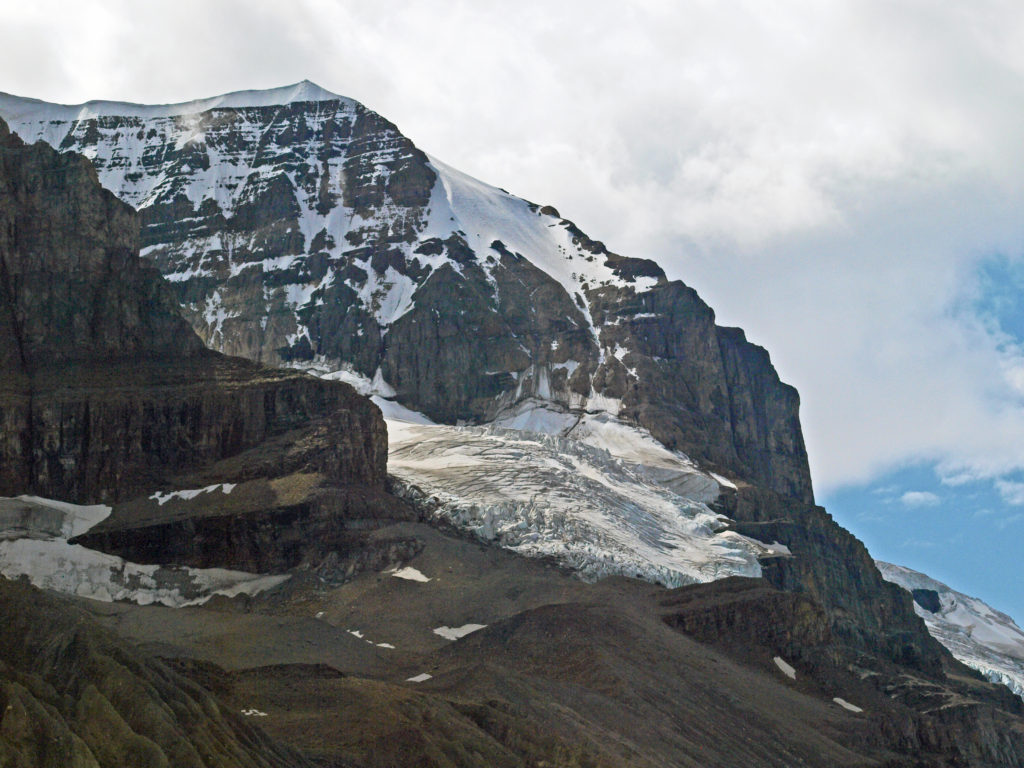
Mount Andromeda, Jasper National Park

From the beginning of the Icefield Parkway, just north of Lake Louise, the country felt wilder, more remote, and more removed from civilization. While Banff and Lake Louise seem relatively civilized because of the facilities, and the crowds, Jasper National Park is another animal. You won’t completely leave the crowds behind, of course, but you don’t have to venture very far off the road to find places with little or no trace of civilization.

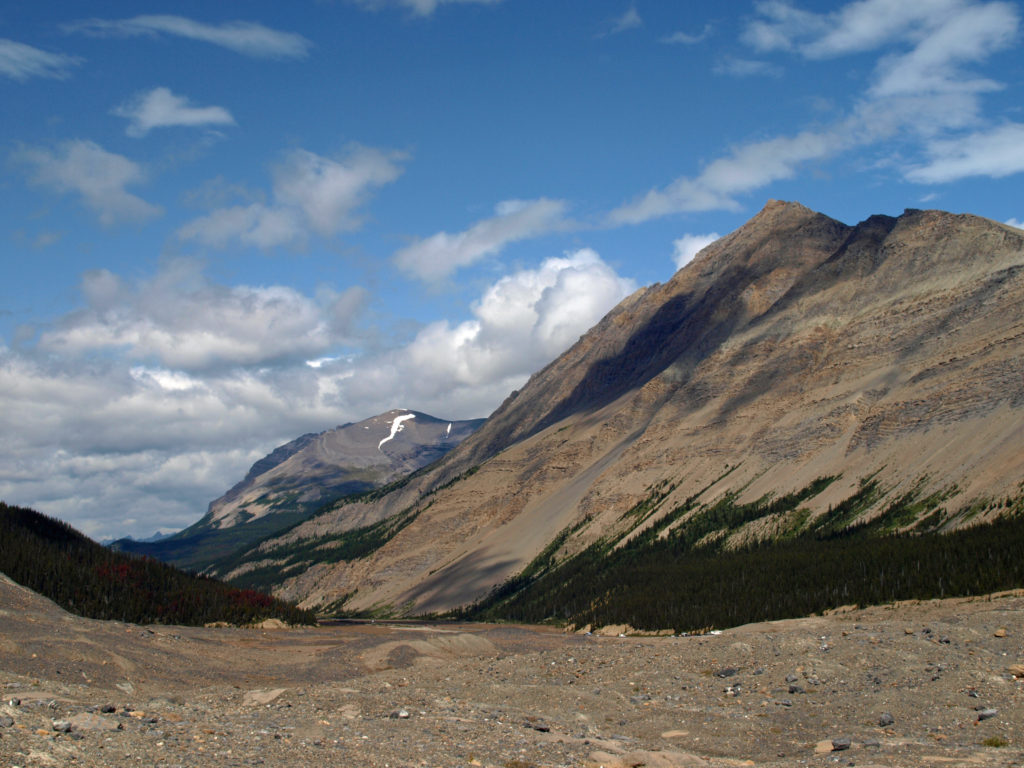
Wilcox Peak, Jasper National Park

Although it is only 143 miles (230 km) long and can be driven in less than three hours, you’ll want to spend a full day or more exploring the many scenic viewpoints, hiking trails, lakes, rivers, glaciers, waterfalls, and wildlife viewing opportunities that the Parkway offers.

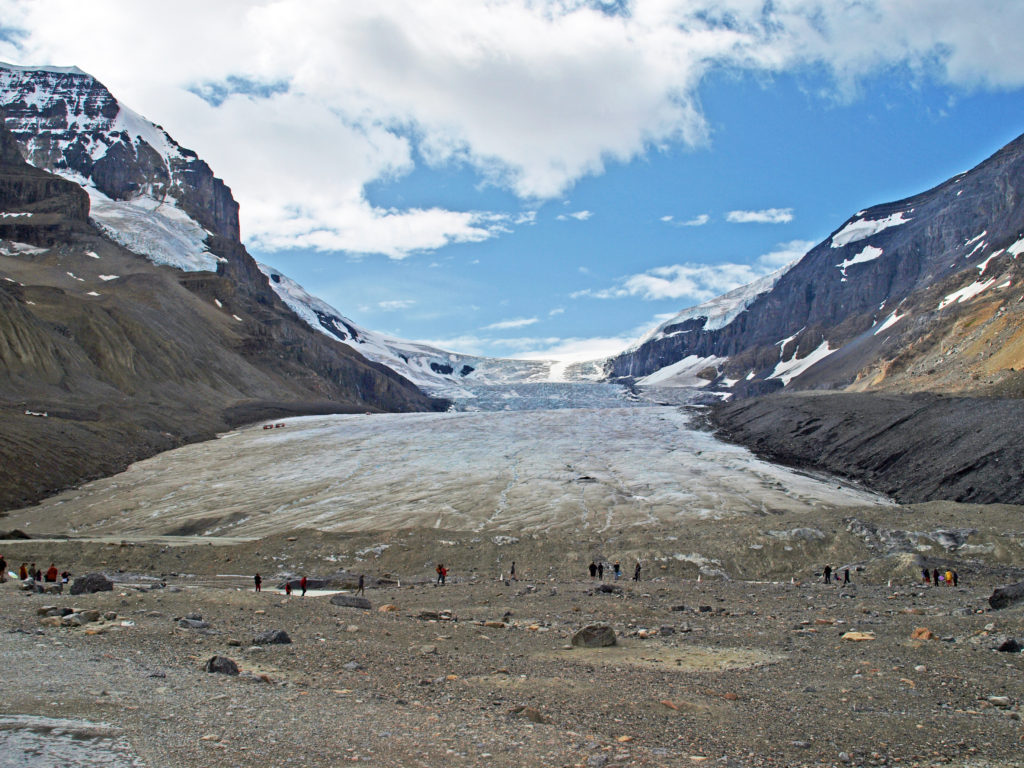
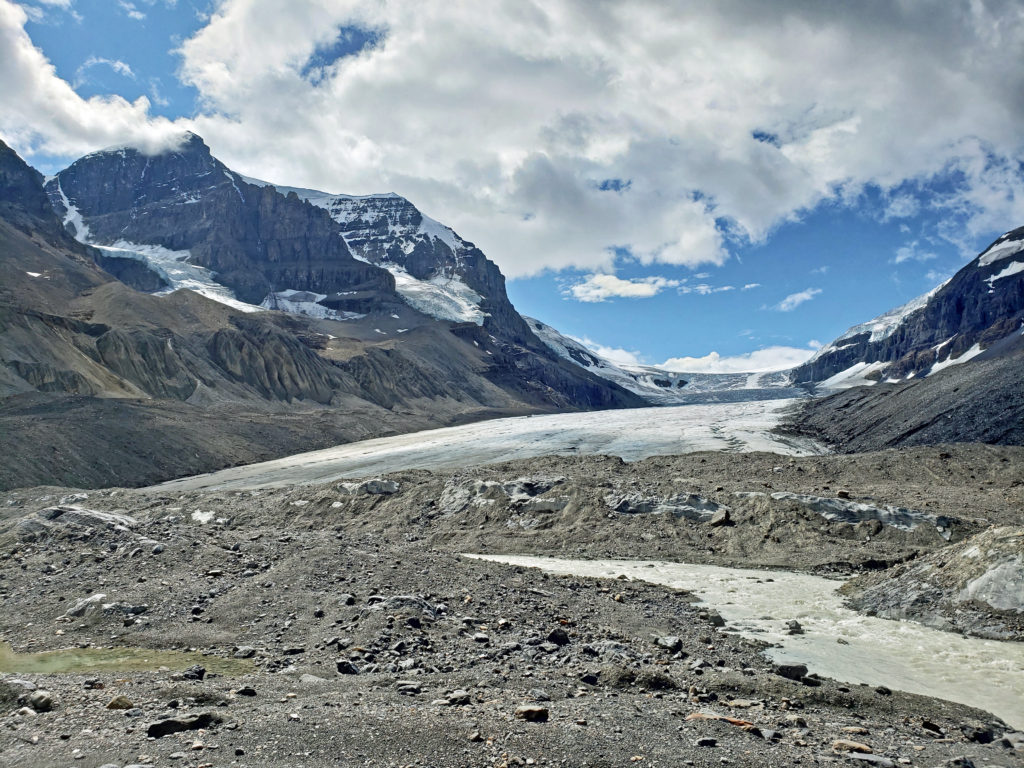
Athabasca Glacier

We didn’t have enough time to stop at every viewpoint along the parkway, much less do any serious hiking or exploring. (If we go back, we’ll budget our time more wisely because there is so much that we missed on this trip). Our first stop after leaving Banff and entering Jasper came at the Icefield Centre, where the Athabasca Glacier drops down from the Columbia Icefield that straddles the Continental Divide.

Athabasca Glacier

From the Icefield Centre, visitors can take tour busses up to the Athabasca Glacier, then onto the glacier itself in special sno-coaches equipped to deal with the unique terrain presented by the surface of the glacier. You can also take a guided hiking tour onto the surface of the glacier.

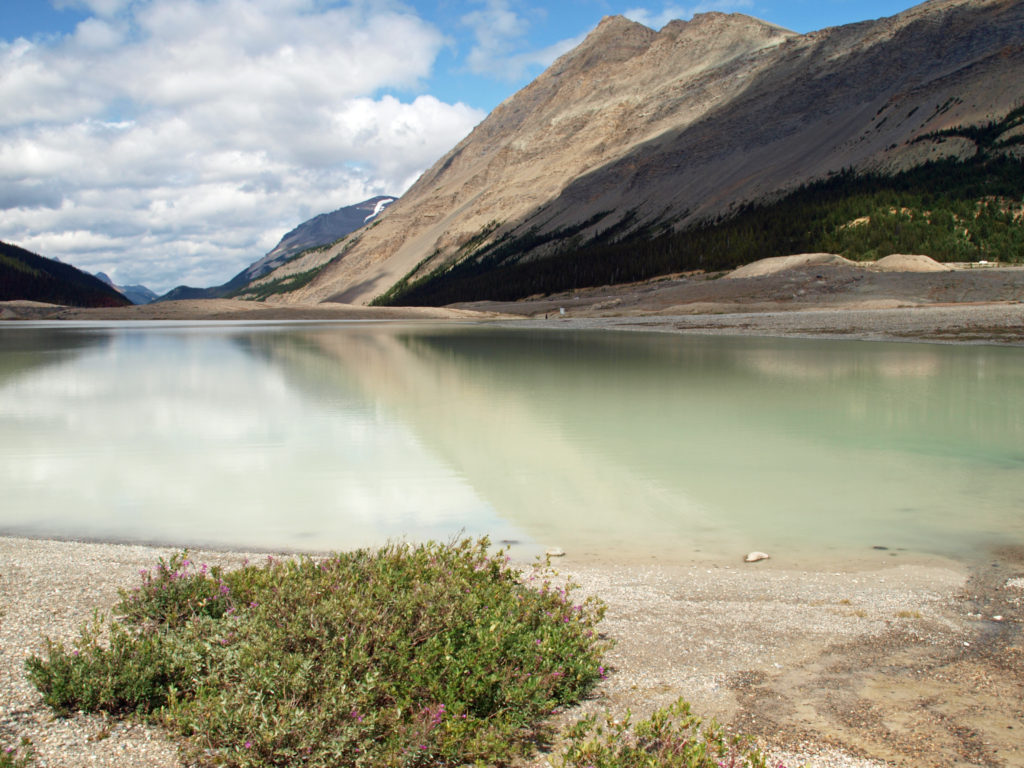
Sunwapta Lake

We opted instead to hike to the terminal moraine of the glacier, where we could get a good view of the entire glacier as it descends from the massive Columbia Icefield. We then drove to nearby Sunwapta Lake, fed by runoff from the glacier. The whole area is beautiful, a bit unworldly, and truly magnificent.

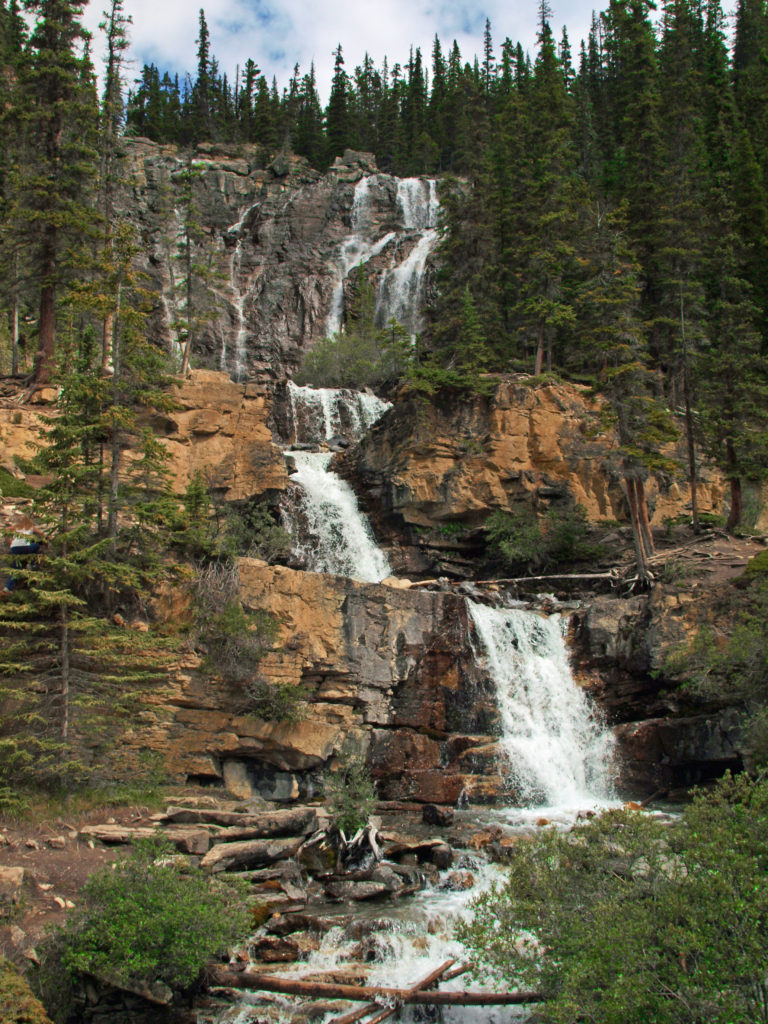
Tangle Falls

From the Icefield Centre, the parkway follows the Sunwapta River north. We stopped for a short time at Tangle Falls, a beautiful series of small falls, which is immediately adjacent to the highway, no hiking required.

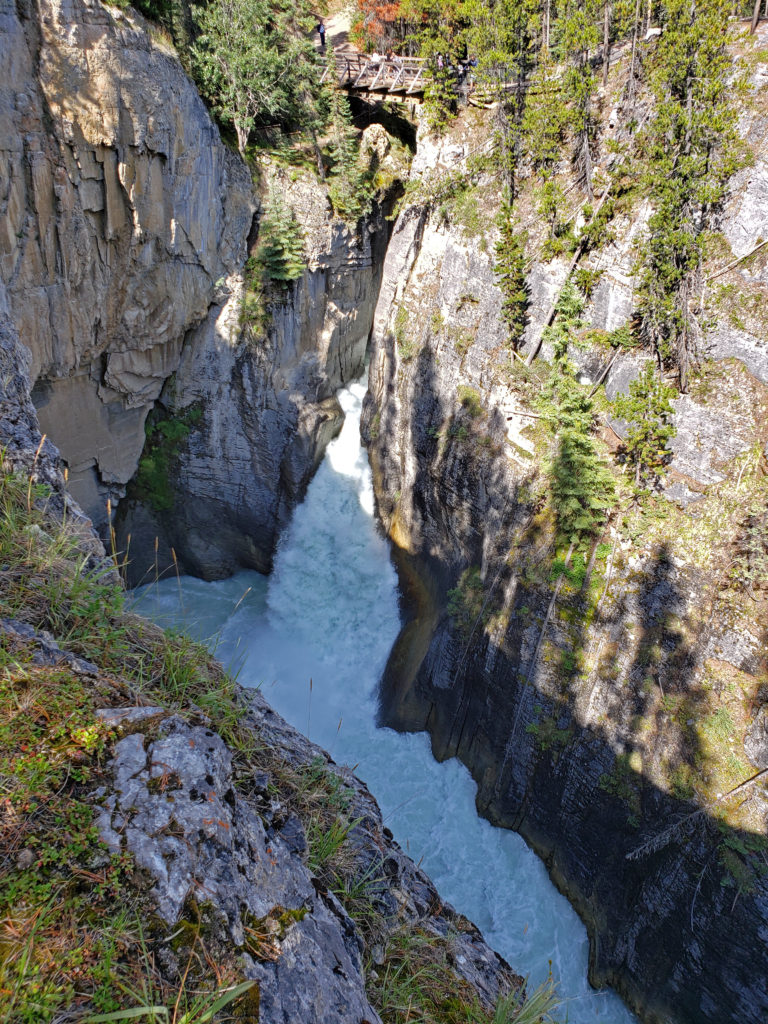
Sunwapta Falls

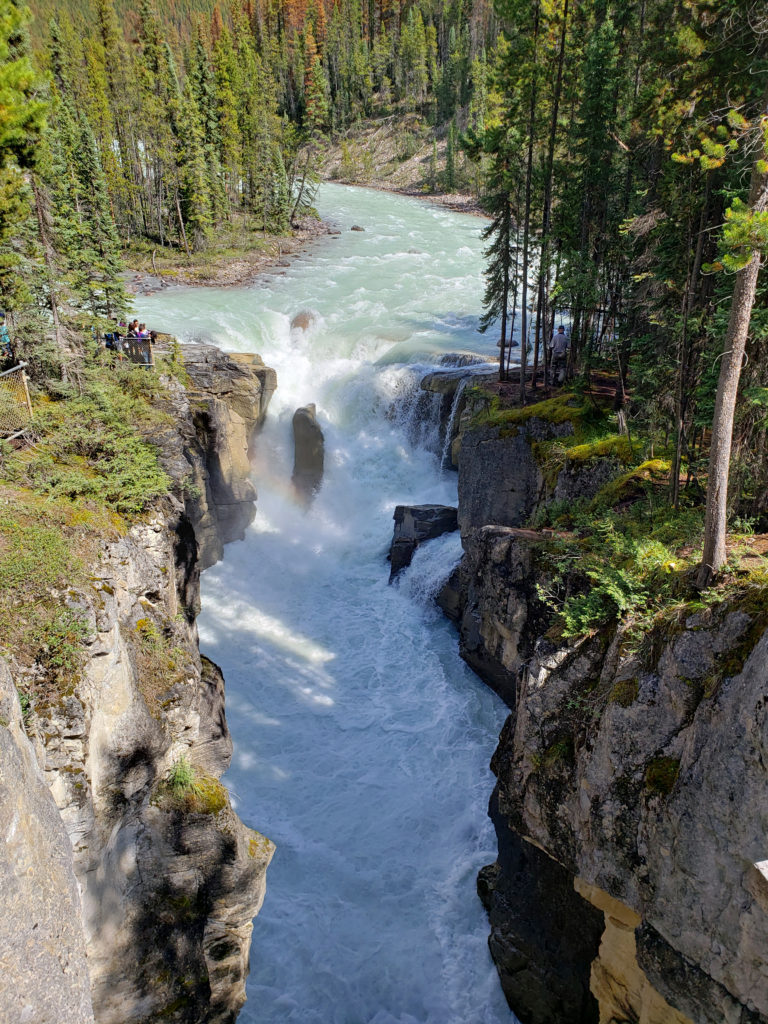
Then it was on to Sunwapta Falls. A short walk of a few hundred feet brings you to the top of the falls, where the Sunwapta River drops into a narrow canyon. The Sunwapta is a sizable tributary of the Athabasca River and the volume of water funneling into such a narrow passage is very impressive to see, and hear. The best view is from a pedestrian bridge that crosses the riverjust below the main falls. There is also a much less traveled 1¼ mile trail to Lower Sunwapta Falls, where the gorge empties out into the broad Athabasca Valley.

Athabasca Falls

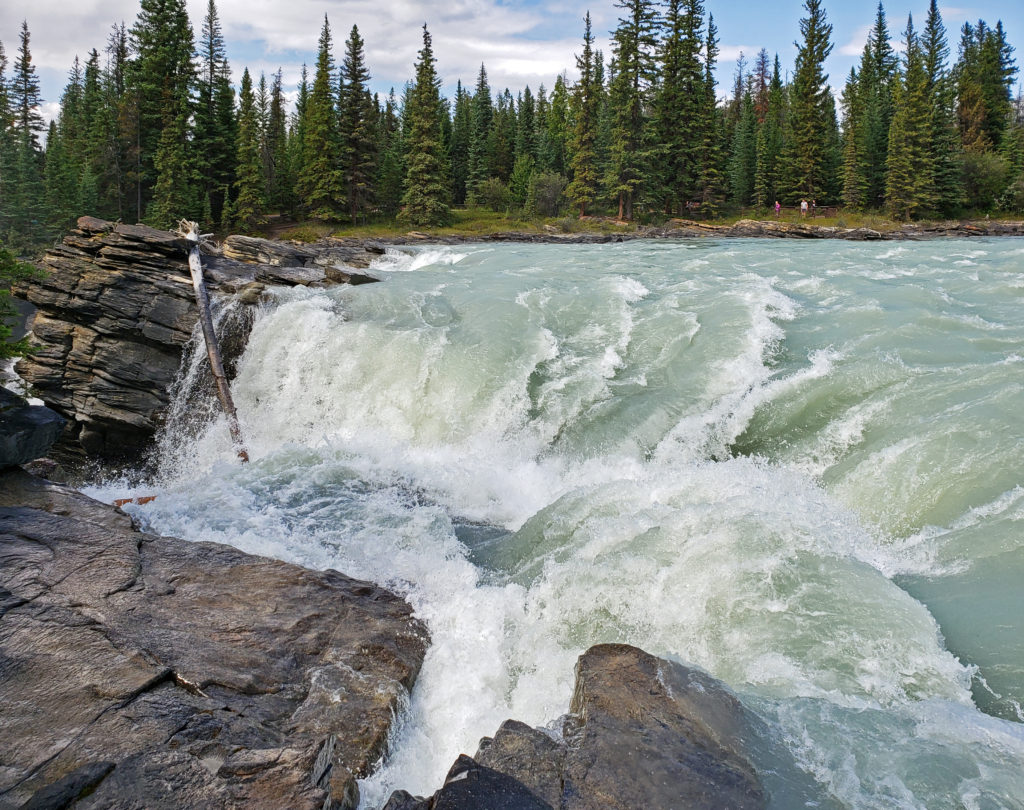
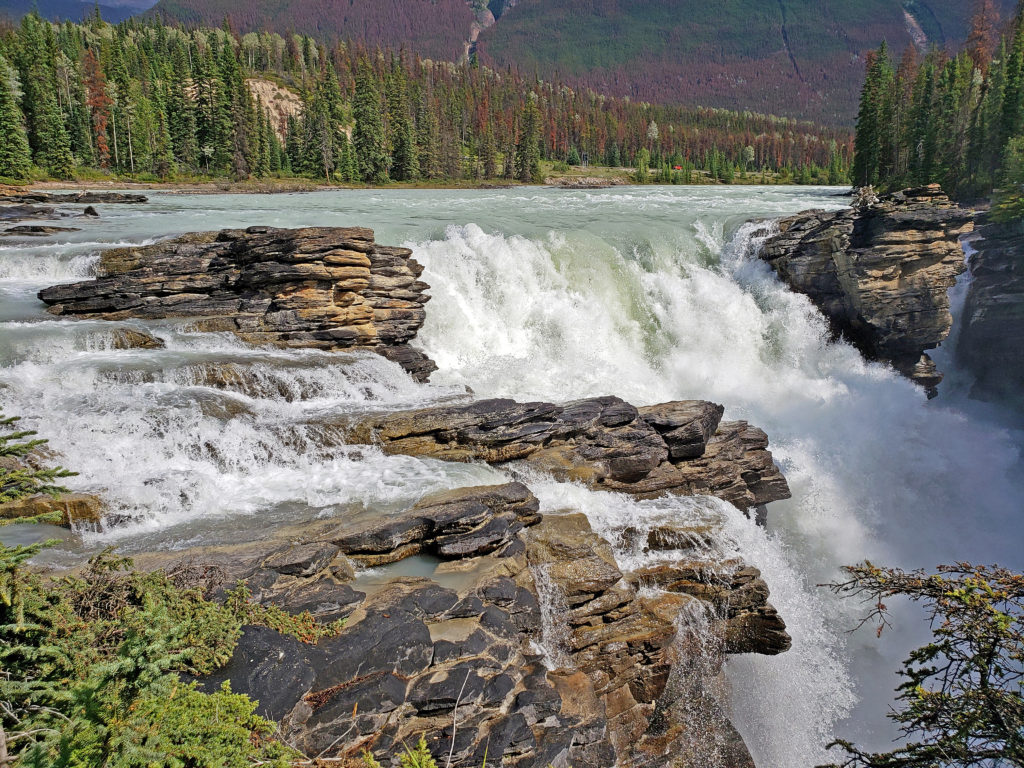
Our next stop was Athabasca Falls. Here Hwy 93A splits off from the Icefields Parkway. Like at Sunwapta Falls, the river here also drops into a narrow gorge, and a pedestrian bridge above the gorge gives a fantastic view of the falls. Before we left on our trip I saw a video of a black bear crossing that same bridge, full of tourists. Some of the people froze in place and some ran for their lives. The bear passed within inches of some of the people, paying them no mind, and went on its way.

Athabasca Falls

If Sunwapta Falls was impressive, and it was, the Athabasca River here is bigger, the volume of water is greater, and the noise of the falls is deafening. Awesome is the only word for it. Athabasca Falls is world famous for a reason. Many highly hyped tourist attractions turn out to be less than advertised, but Athabasca Falls is not one of them.

Astoria River Valley

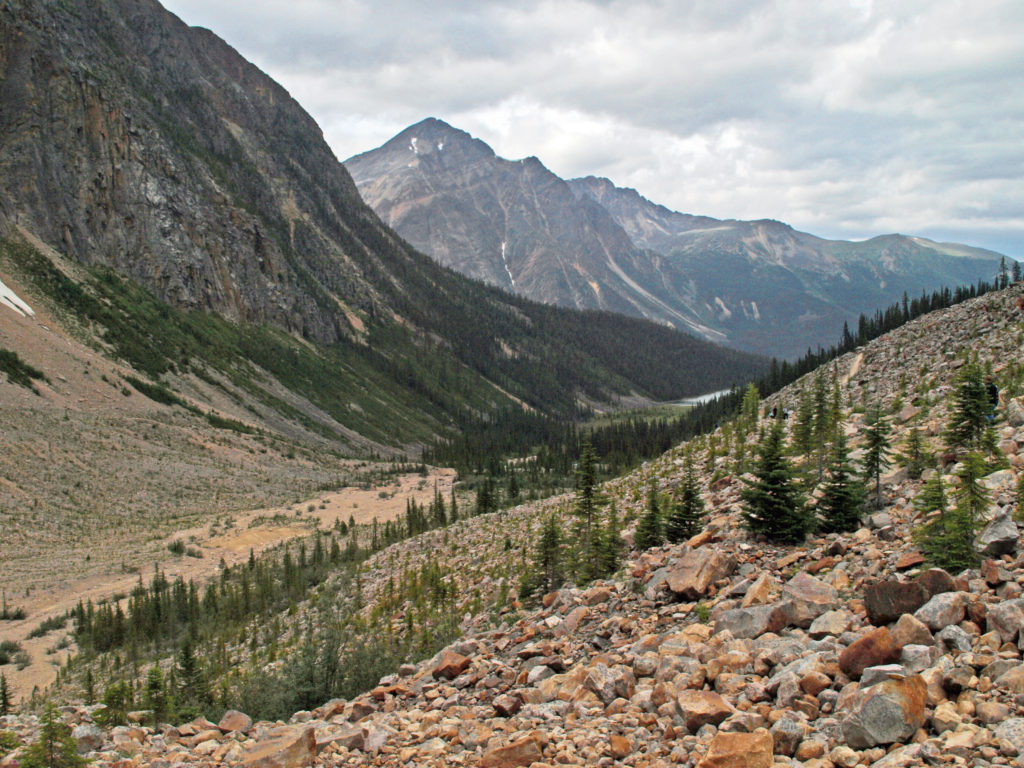
After leaving Athabasca Falls, we continued north on Hwy 93A instead of returning to the Icefields Parkway and followed it about ten miles north to the junction of the road leading to the Mount Edith Cavell Day Use Area. The road up has a half dozen very sharp switchbacks, and trailers and RVs over 25′ are not allowed. (There is a parking area at the base of the road where you can leave your trailer, if you want to unhitch.) The road is paved, though, and fine for passenger vehicles and smaller RVs. The day use area is at the end of the road, directly below the summit of Mount Edith Cavell.

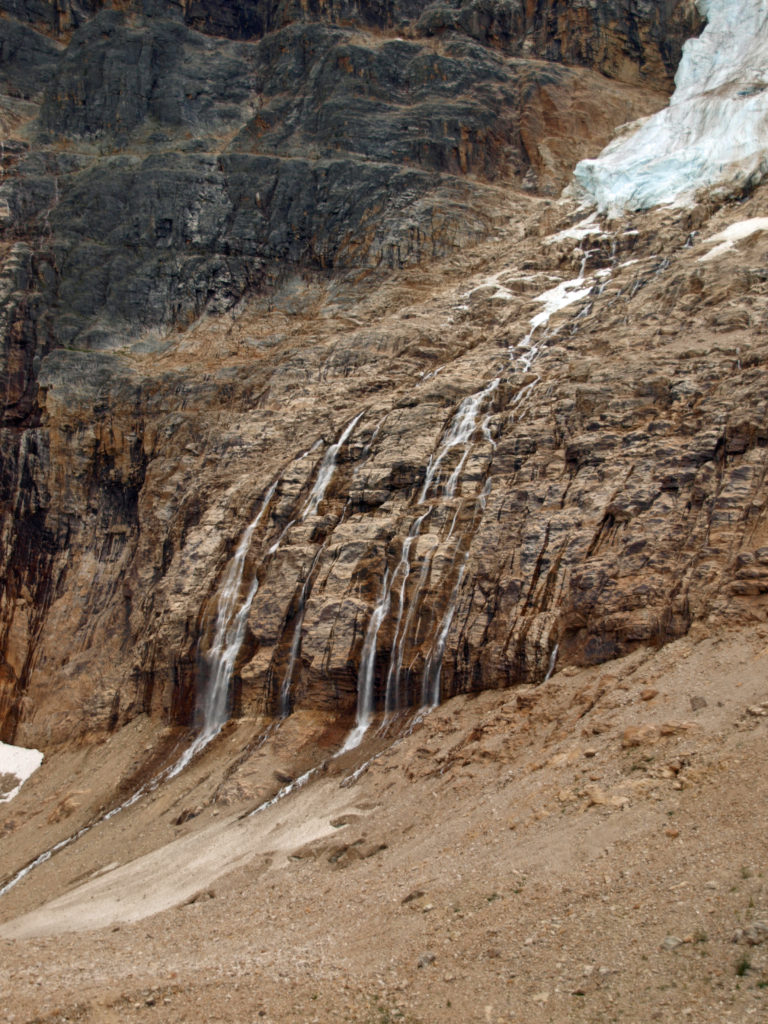
Meltwater from the Cavell Glacier, Mount Edith Cavell

The mountain is named for a British nurse who helped hundreds of British, French, and Belgian soldiers escape German-occupied Belgium in World War I. She was arrested, tried, and executed by the Germans in 1915.

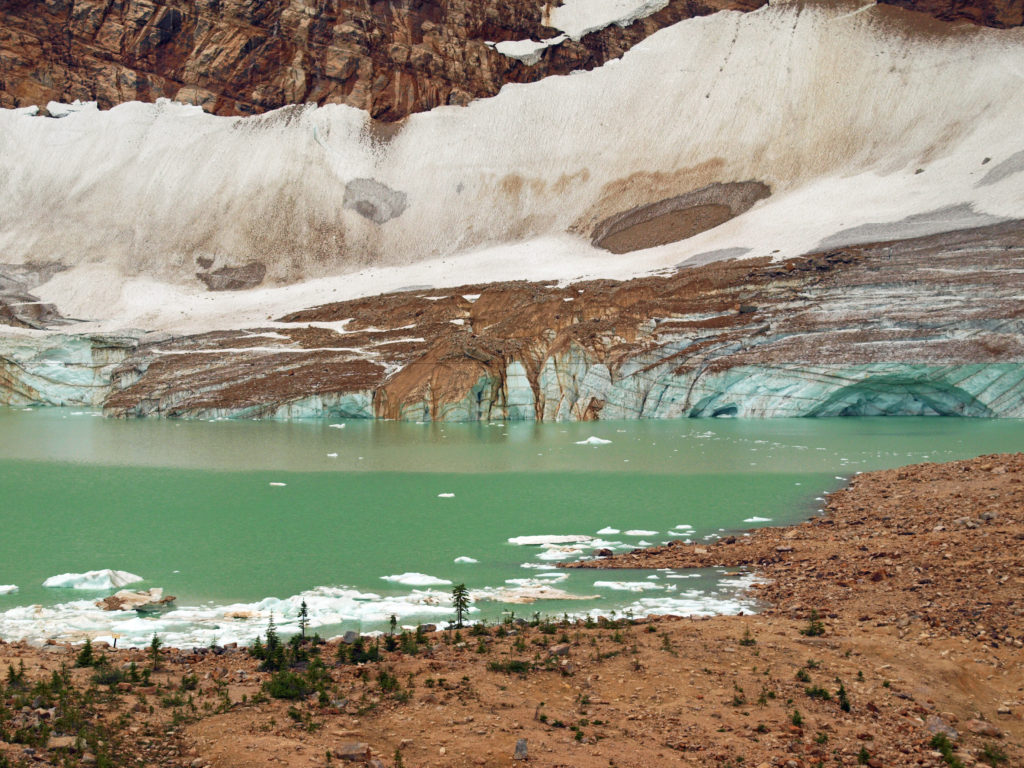
Cavell Pond, Mt. Edith Cavell

From the day use area, a short but steep trail leads to a viewpoint that looks down to Cavell Pond and up nearly 5000 vertical feet to the 11,047′ summit. The lake was still partially ice covered when we were there in the middle of August.

The Icefields Parkway ends at the town of Jasper, a smaller, less crowded, and lower key version of Banff. There are abundant restaurants, pubs, galleries, and shops there, but accommodations are limited, and hotels and motels are expensive. Book your stay well in advance. We opted for staying in a travel trailer at an RV park 30 miles (48 km) from Jasper, just outside the park boundary, because that was the only thing available through Airbnb when we were planning our trip. It was a little inconvenient, but in the end it worked fine.

Maligne Canyon

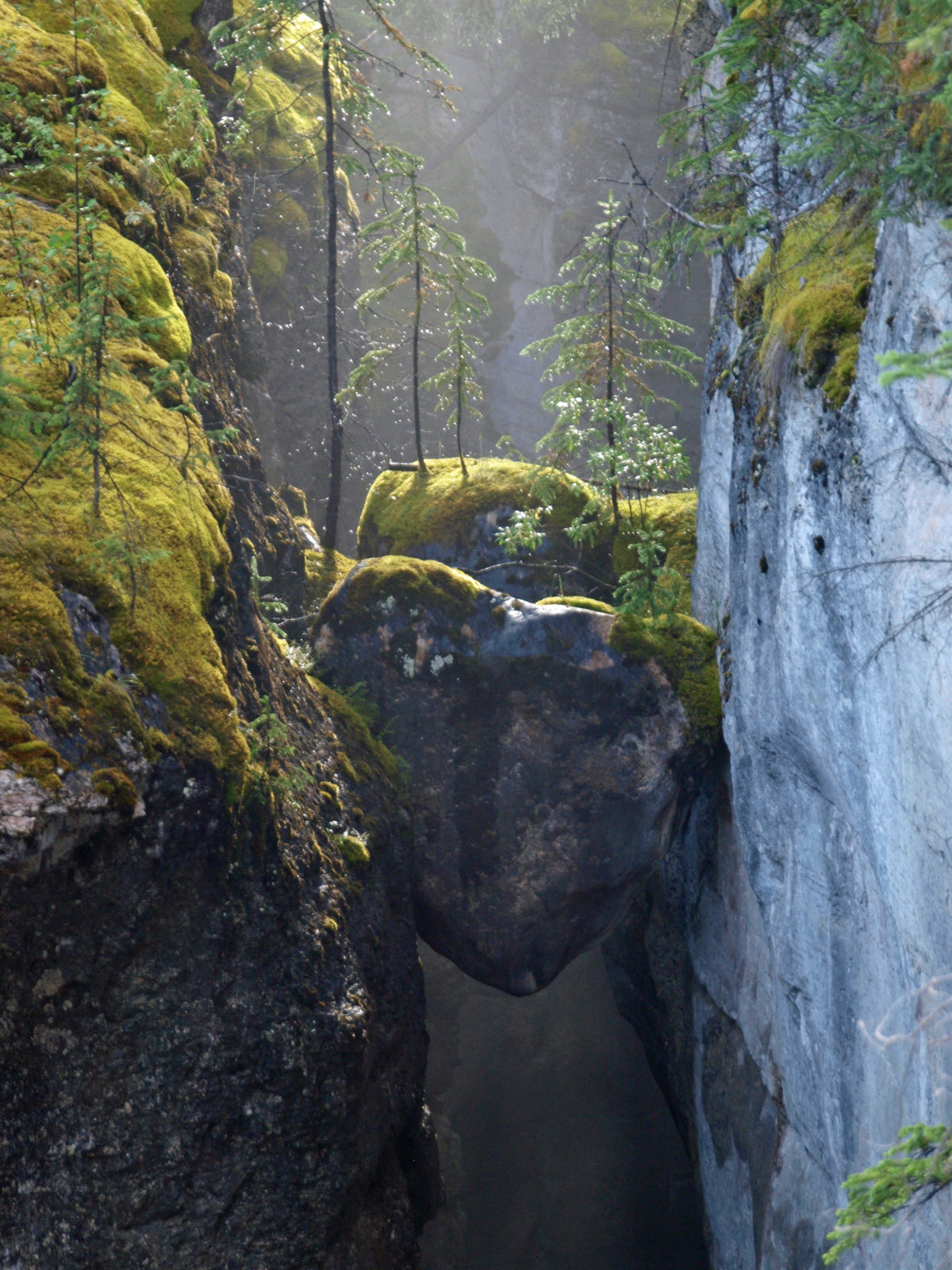
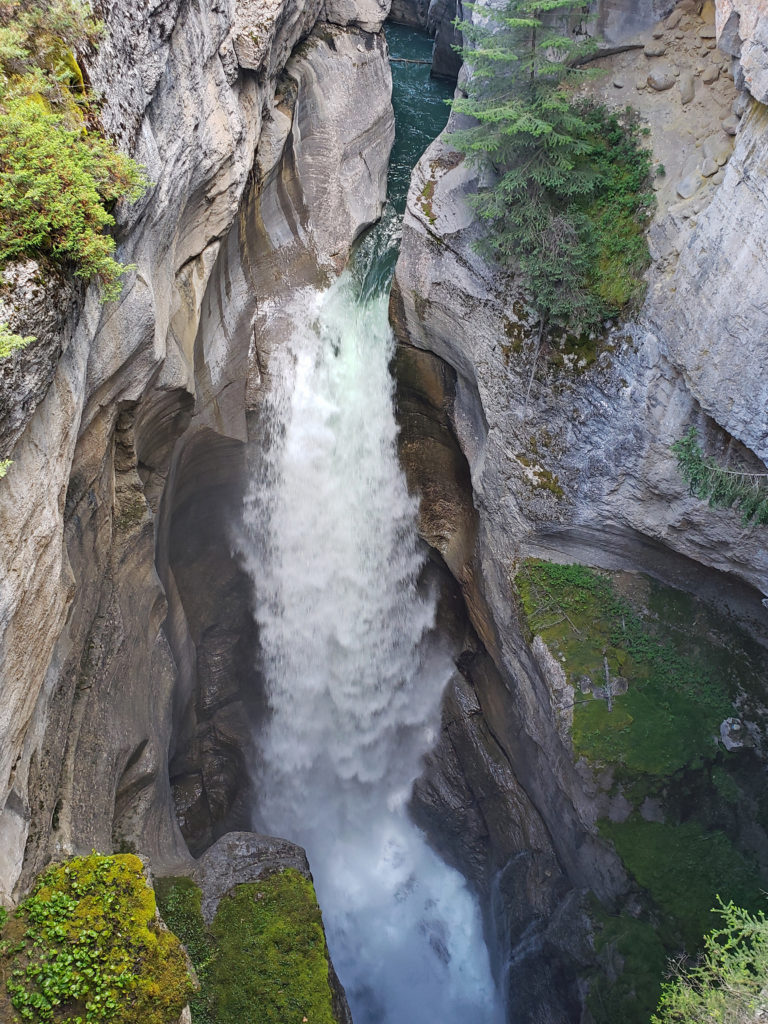
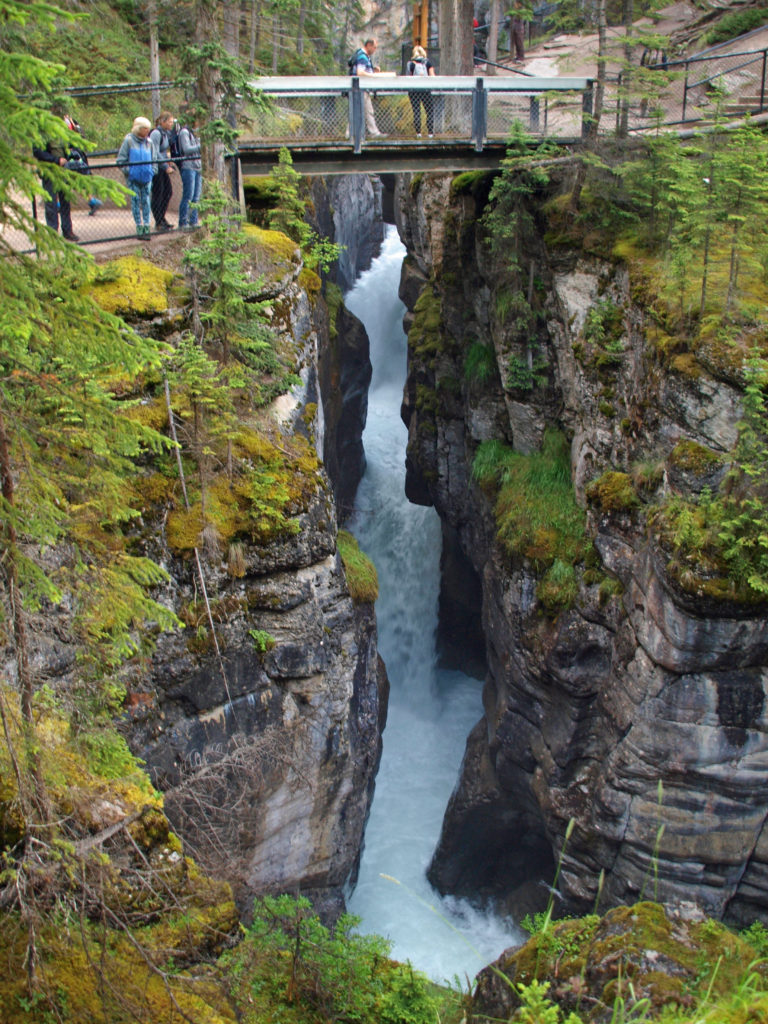
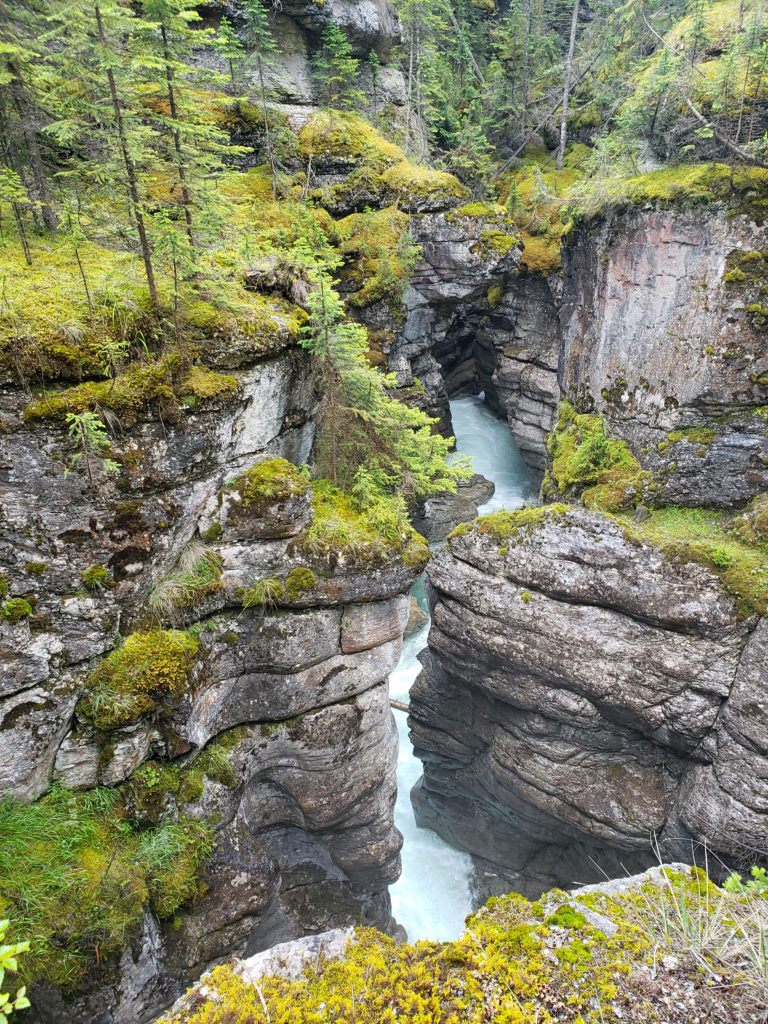
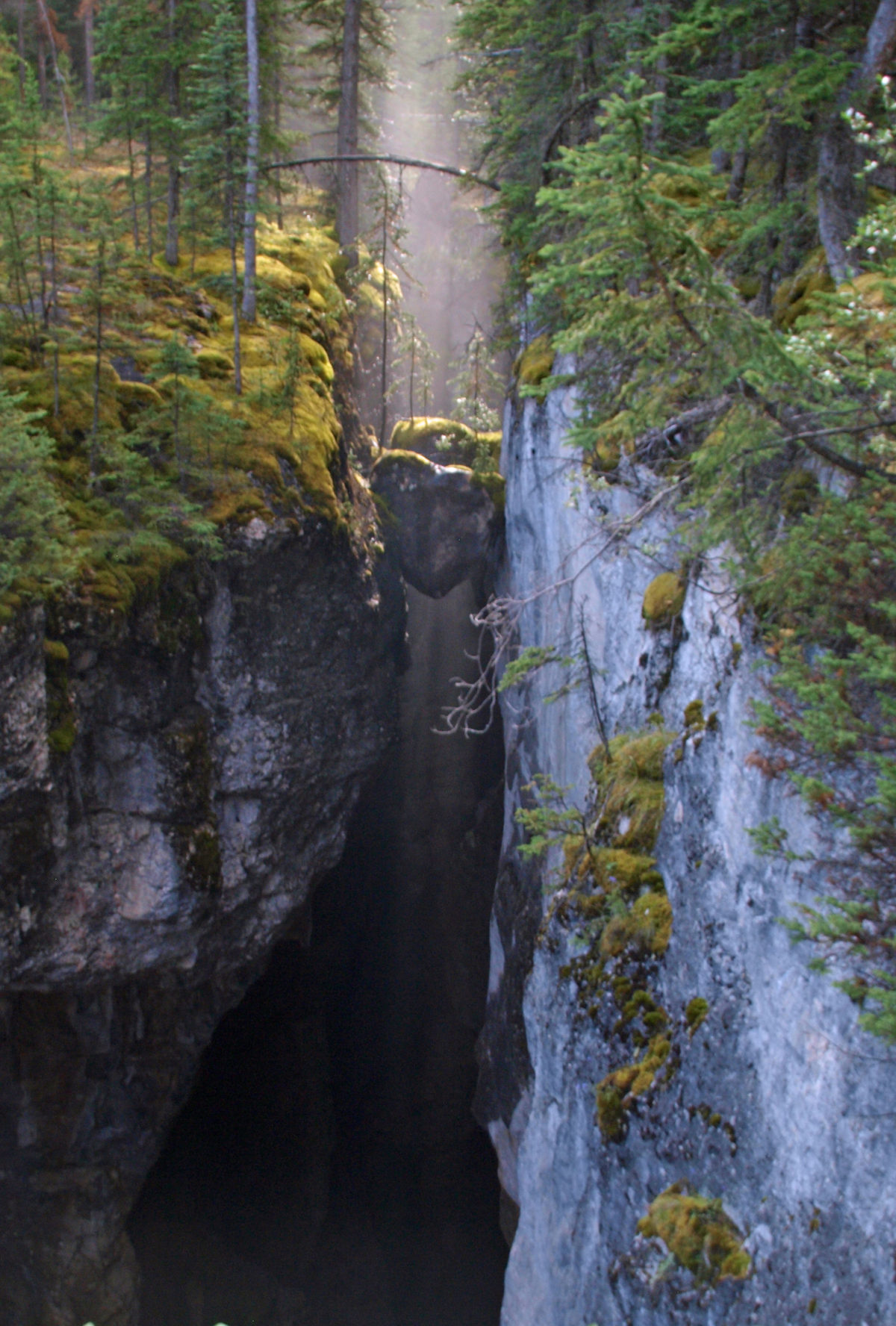
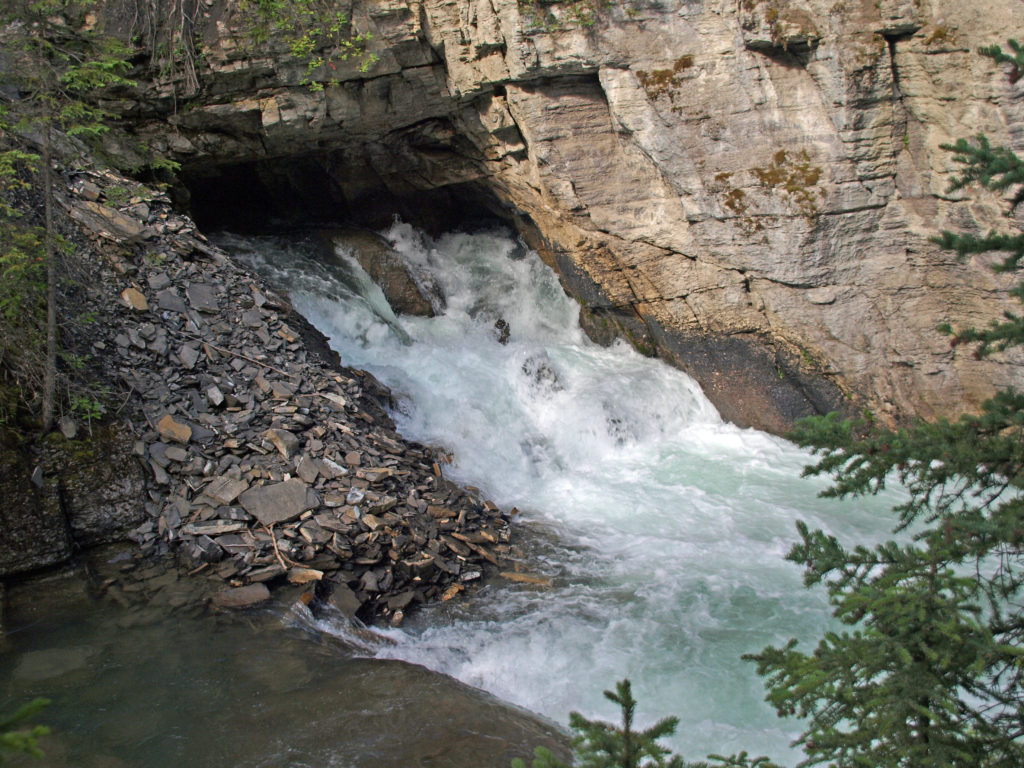
No visit to Jasper National Park should go without a stop at Maligne Canyon, just a few miles northeast of town. Here the Maligne River flows through a narrow slot canyon. In some places the canyon is more than 150 feet deep and only 10 feet wide. It’s an amazingly place, not to be missed.

Maligne Canyon

To get to Maligne Canyon from Jasper, take Hwy 16 toward Edmonton. Just outside of town, turn right onto Maligne Lake Road and cross the Athabasca River. A few miles down the road you will first come to Maligne Canyon Viewpoint, then the Maligne Canyon Trailhead parking area.

Maligne Canyon

From the trailhead parking area, look to the southeast and you’ll see, strangely enough, a restaurant (Maligne Canyon Wilderness Kitchen). The trail begins there. A short ways down the trail you will come to First Bridge. It spans the canyon immediately downstream of an impressive waterfall.

Maligne Canyon

There are a total of five foot bridges that cross the Maligne River. The first four all give incredible views down into the canyon. The trail along the rim of the canyon also offers numerous viewpoints. Words simply cannot describe this place.

Maligne Canyon

Because it is so spectacularly beautiful, Maligne Canyon can also be spectacularly crowded. Come early in the day (before 9:00) if possible to beat the tour bus crowd. The crowds thin out, though, below Second Bridge. Below Fourth Bridge the canyon opens up and becomes less spectacular, but still scenic. One way of avoiding some of the crowds, though a longer hike, is to start at the lower trailhead at Fifth Bridge and hike up the canyon.

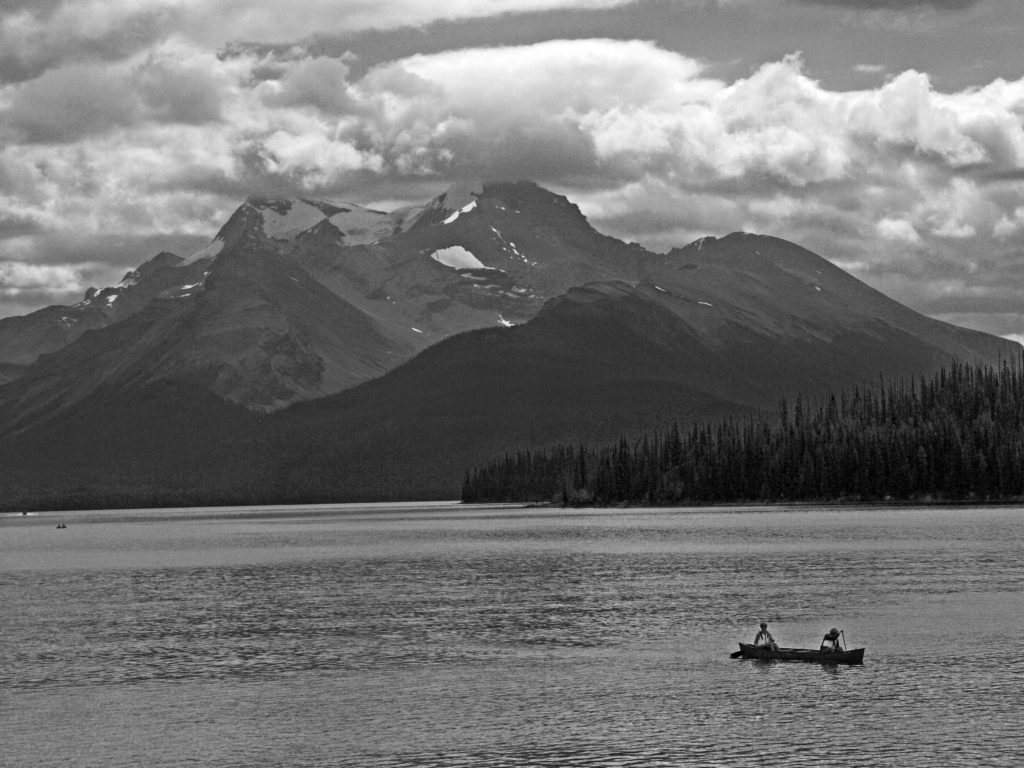
Maligne Lake

After spending most of the morning at Maligne Canyon, we drove the 25 miles south to Maligne Lake. There we did a short hike along the east shore of the lake. The north end of the lake is less scenic than the fjord-like southern end, but there are no roads beyond the north end of the lake. Tour boats take visitors part way down the lake, but we weren’t there at the right time of day to get good photos, so we opted to skip the boat ride this time, one of the many things we left for our next visit to Jasper.

If you’re contemplating a visit to Jasper National Park, plan to spend at least five days. And you could easily spend longer. There’s a lot to see, as Jasper is a big place, larger than Yellowstone National Park. The two and a half days we had were not close to enough. If you want to see the Canadian Rockies and time is a constraint, my advice would be to skip Banff and focus on Jasper. Banff has it’s attractions, but Jasper is much less crowded and even more scenic. The Icefields Parkway website is a good starting point for planning your trip. Another good reference is the Jasper National Park website.

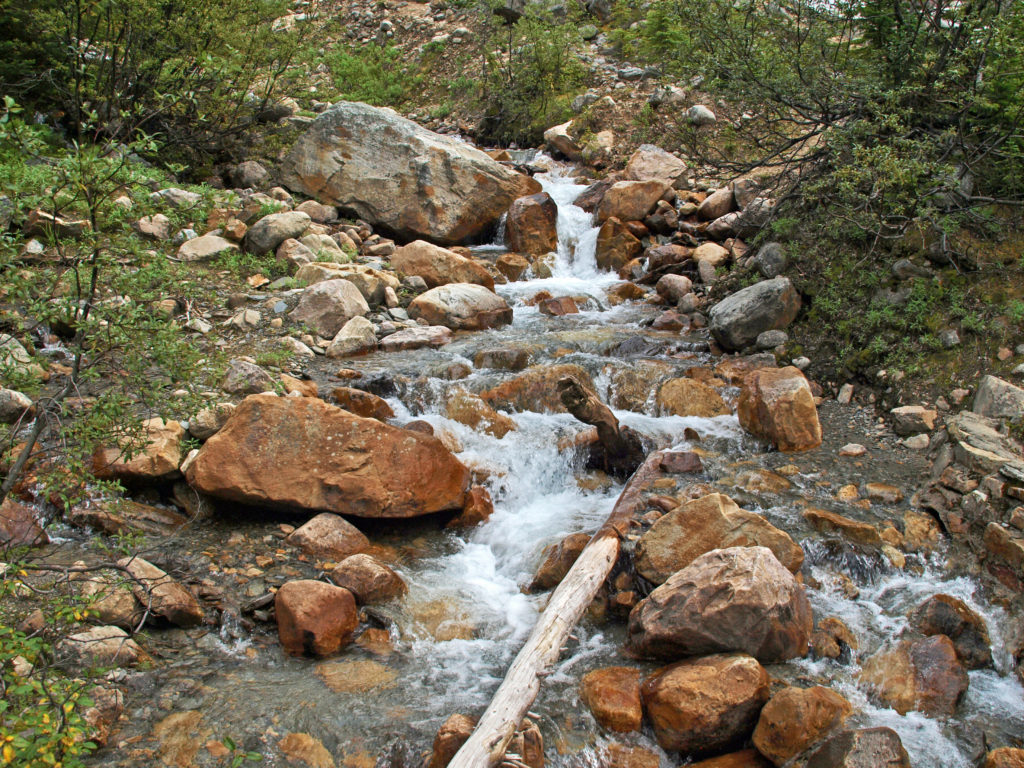
Creek along Edith Cavell Trail

Originally posted September 19, 2019 as The Icefields Parkway. Edited, updated, and re-posted December 26, 2022.

All photos © Alan K. Lee

Banff National Park

by Alan K. Lee

Banff National Park

Banff National Park in the Canadian Rockies is flat out gorgeous, one of the most beautiful places I’ve ever been. My wife and I made our first visit a couple of decades ago and loved it. But it took us twenty years to get back. We finally made it back to Banff in August 2019 as part of a long road trip from our home in the Portland, Oregon area.

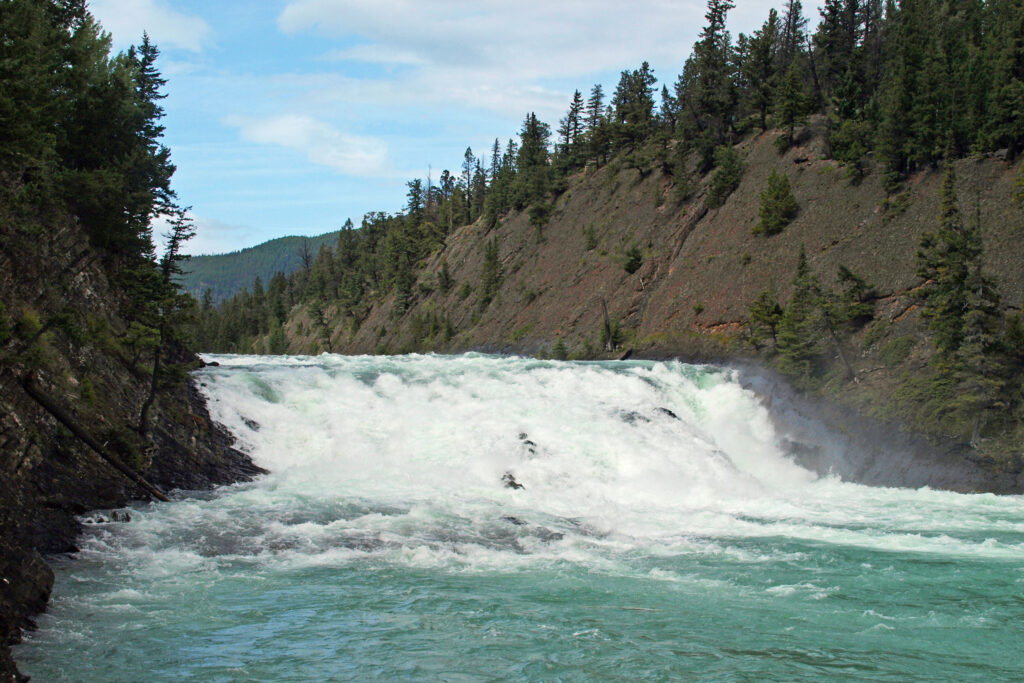
Bow Falls

It was a long drive. It’s more than 700 miles from Portland to Banff by the shortest route, even farther by the route we took. We took our time, though, and stopped in a number of places in southern British Columbia on the way. (Banff is a long ways from pretty much everywhere. If you don’t want to make the long drive, another option is to fly to Calgary and rent a car. Banff is less than a two hour drive west of Calgary.)

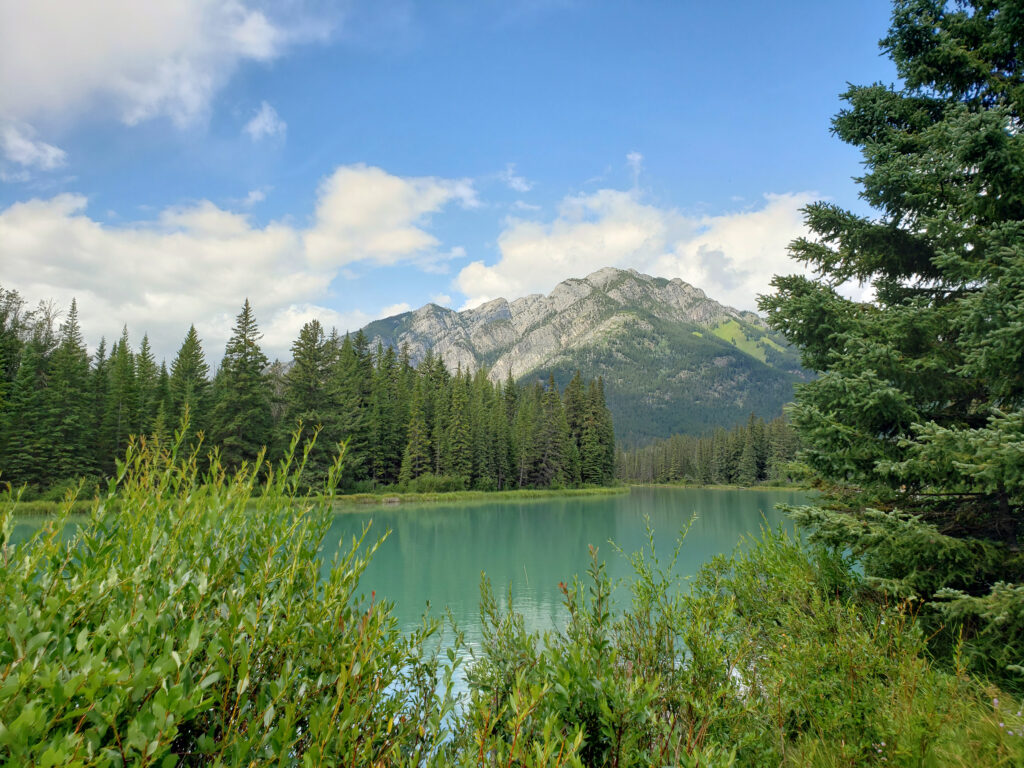
Bow River

Besides being incredibly scenic, Banff is also significant in that it is part of one of the largest protected areas in North America. The park borders three other Canadian national parks, Kootenay, Yoho, and Jasper. The four national parks in turn border more than half a dozen provincial parks and protected areas. Altogether, the contiguous protected area totals more than 12,000 square miles (31,500 square kilometers). That’s almost four times the size of Yellowstone National Park, for comparison.

Policeman’s Creek
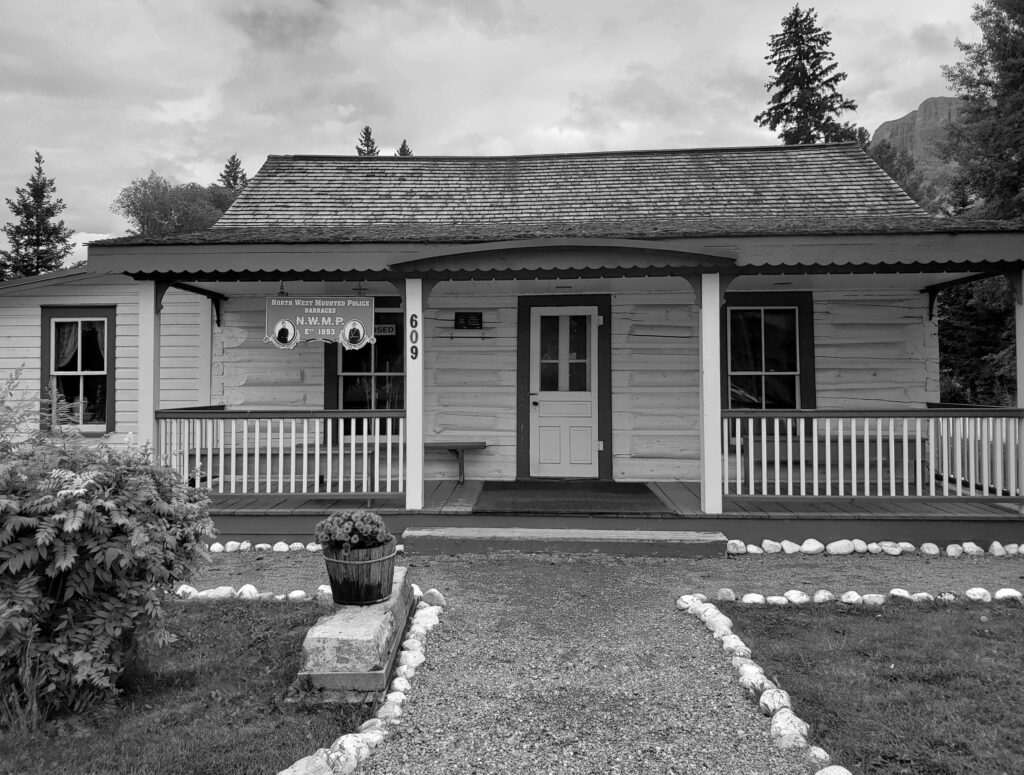
Historic North West Mounted Police Barracks, Canmore

On our 2019 trip, we rented a house in Canmore, just outside the park, since it was more affordable than staying in the park itself. Canmore turned out to be a pretty interesting place in its own right. It has a compact and very walkable downtown area with plenty of cafes and restaurants, brew pubs (try Canmore Brewing), interesting art galleries (don’t miss the Jeff Walker Gallery), and some interesting historical sites. There’s also a nice walking trail along Policeman’s Creek. And Canmore is only about a five minute drive from the southern entrance to Banff National Park.

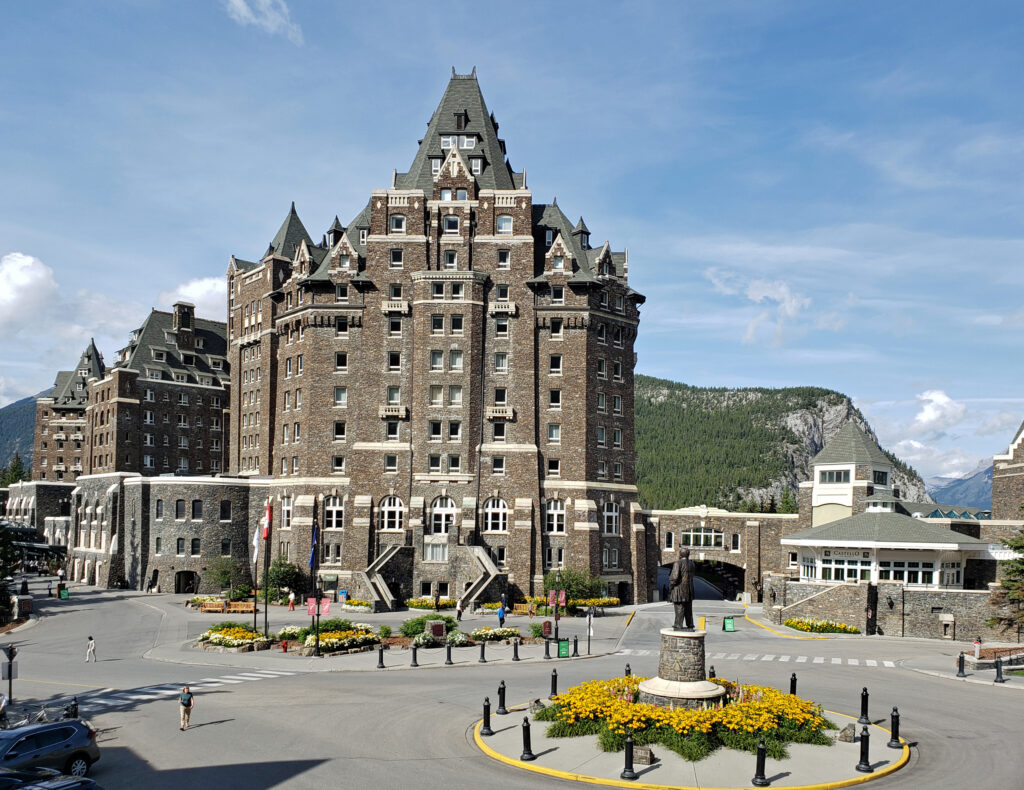
Banff Springs Hotel

The town of Banff, although crowded and touristy, is charming enough to warrant at least a few hours of your time. The Banff Springs Hotel is also worth a visit, even if you’re not staying there. If you’re a hiker, try the Tunnel Mountain Trail. We didn’t hike all the way to the top, but still got some great views of the town and the surrounding mountains, and a good workout.

Upper Falls, Johnston Canyon

One of the best hikes you’ll find anywhere is the Johnston Canyon Trail, about 15  miles north of the town of Banff. Here Johnston Creek cascades through a narrow gorge with many small waterfalls and two larger ones.

Moraine Lake

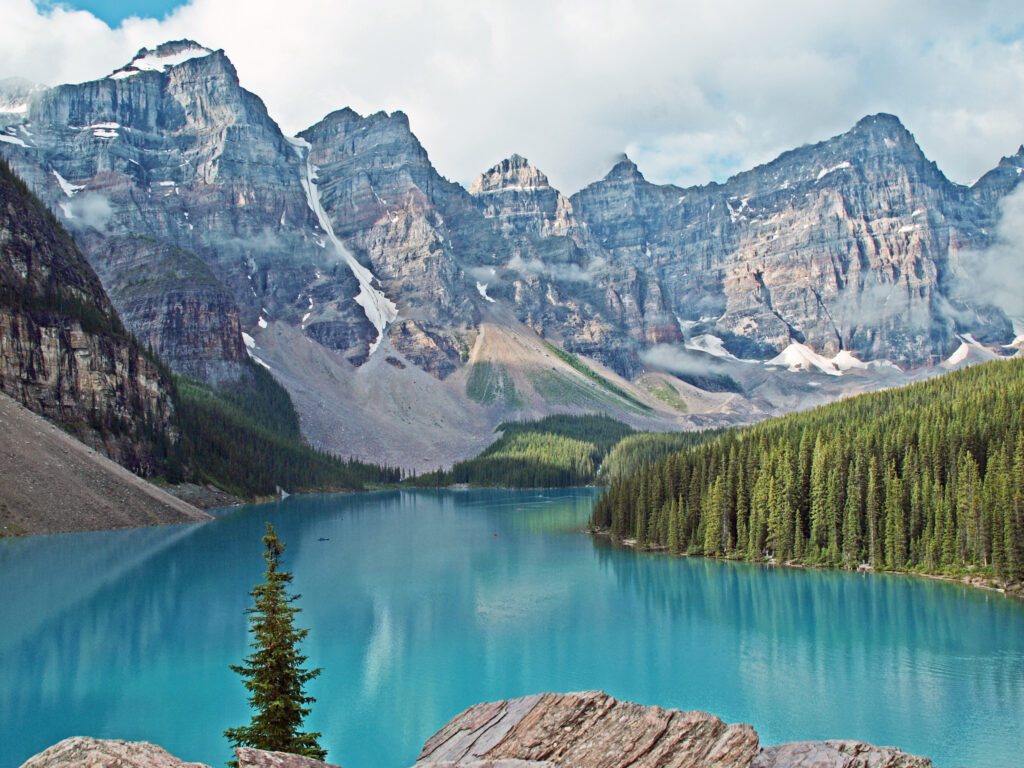
Another must see destination in Banff National Park is Moraine Lake. The turquoise blue water and soaring peaks surrounding the lake make it one of the most beautiful lakes in the world. It’s an easy walk up to a stunning viewpoint from the parking lot, and there is a trail along the shoreline that gives you more incredible views of this beautiful lake and the high peaks above it. You can also rent a canoe there and get out on the water for more spectacular views. And again, go early. Parking at the lake is limited and traffic on the road to the lake may be restricted if the parking lot is full.

Moraine Lake

You can avoid the parking hassles and the crowds, at least in the morning or evening, by booking a room at the Moraine Lake Lodge. It’s expensive, but if you can afford it, it might be worth it.

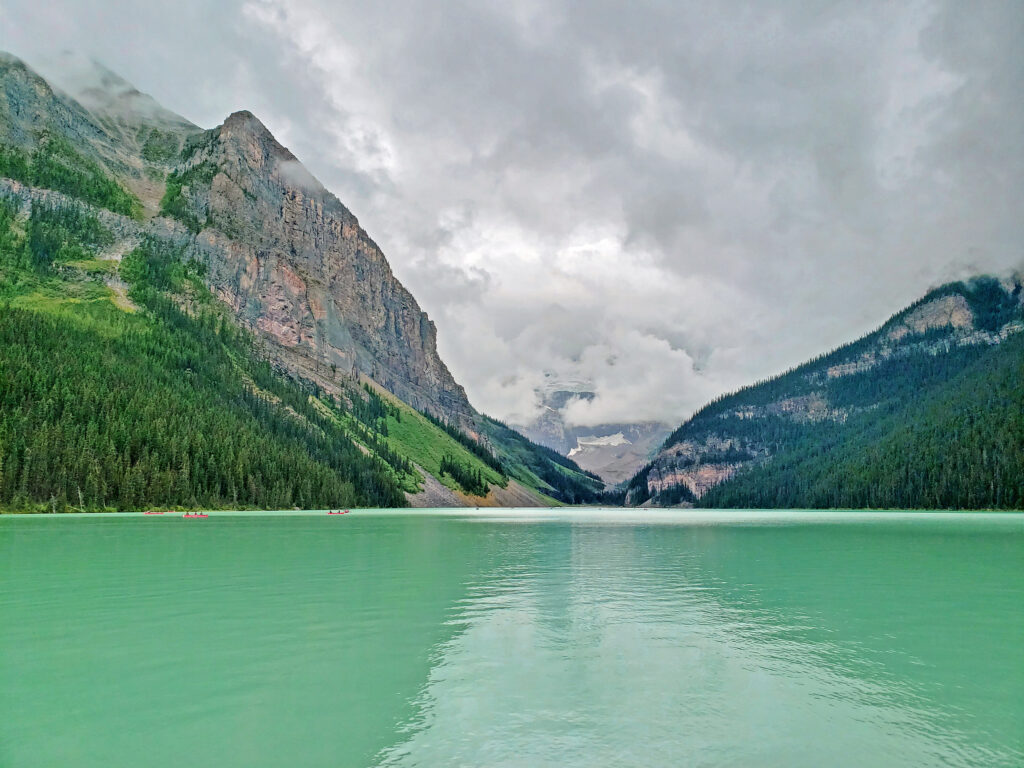
Lake Louise

Lake Louise is justifiably famous, but fame brings people. Lots of people. There’s a lot more parking here than at Moraine Lake, but even though we were there early, we still had to park in one of the lower lots and walk up to the lake. And honestly, Moraine Lake is even prettier and less crowded. But if you’ve never been there, seeing Lake Louise is worth fighting the crowds. Rent a canoe and get out on the water, or take a hike along the shore to get away from the crowds. And, like the Banff Springs Hotel, Chateau Lake Louise is a destination in itself.

The portion of Banff National Park north of Lake Louise has a lot of attractions that many visitors never see. This part of the park was new to me. On our first trip we were among the many that didn’t venture north of Lake Louise. On this trip we did, though. Our journey took us on into Jasper National Park on the Icefields Parkway.   

Hector Lake

Drive a few miles north from Lake Louise on the Trans Canada Highway, turn onto the Icefields Parkway, and you’re in a different world. The crowds thin out and the country becomes wilder, more open, and more removed from civilization.

Bow Lake

Unfortunately, we didn’t have enough time to really explore that part of the park. We made a quick stop at Hector Lake viewpoint, only a few miles from Lake Louise, and stopped for a little longer at Bow Lake before motoring on into Jasper National Park. (Click here to go to our post on Jasper.)

Bow River

There’s much more to Banff than I have described here, of course. It’s a big park, and you could easily spend a couple of weeks there without running out of things to do, longer if you also visit some of the surrounding parks. But it’s worth the effort to get there at least once in your life, even if you can only spend a few days there.

“B’Air of Importance” by Shannon Ford, Banff Springs Hotel

Originally posted December 26, 2022. Most recently updated July 31, 2024.

All photos © Alan K. Lee

Clear Lake

By Alan K. Lee

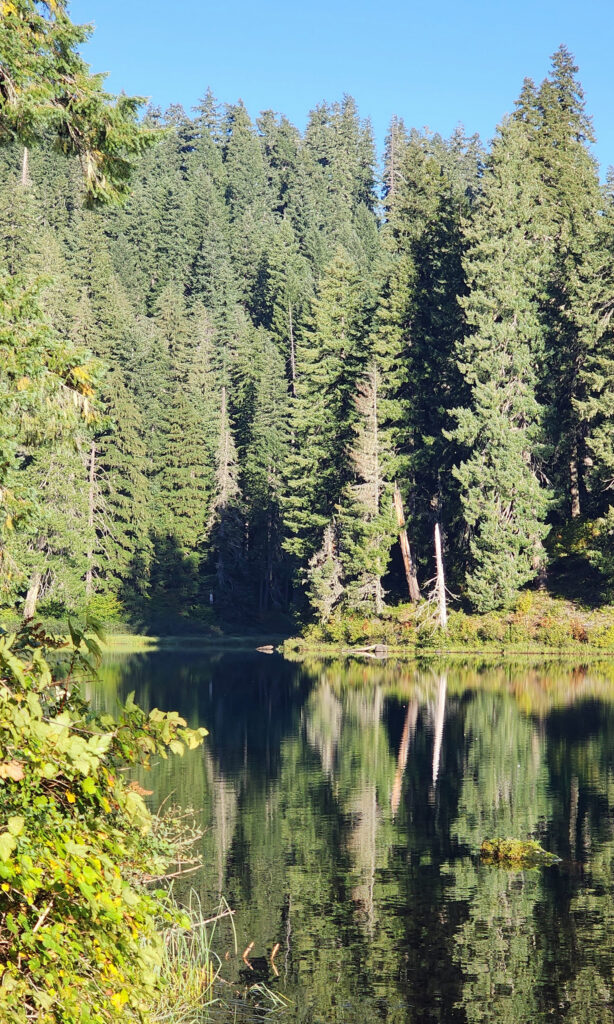
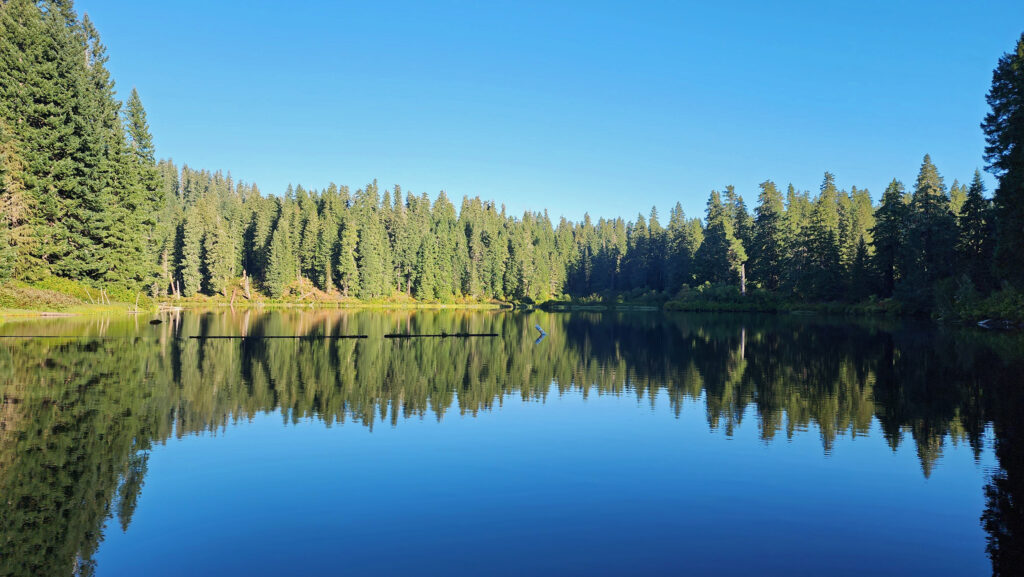
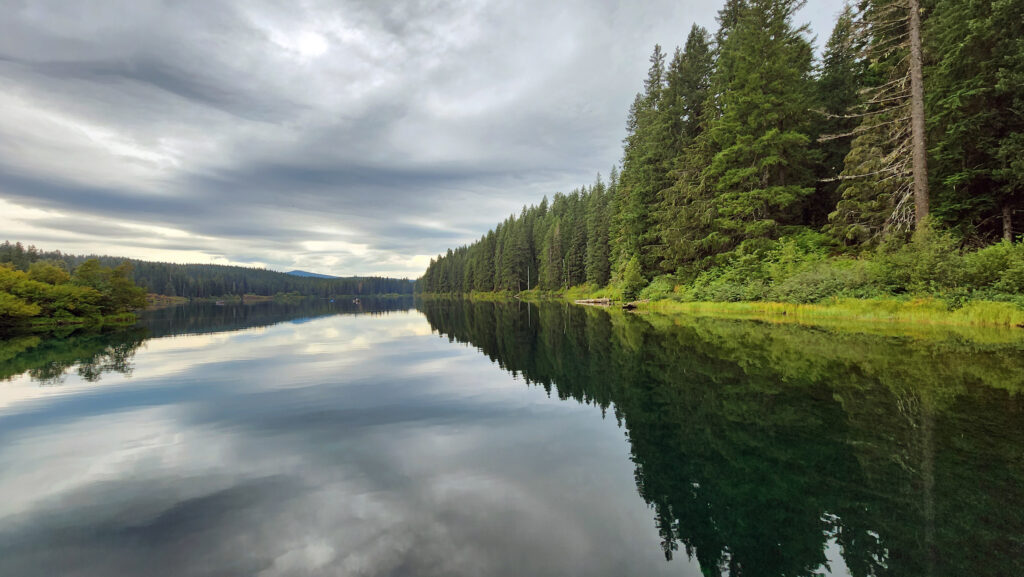
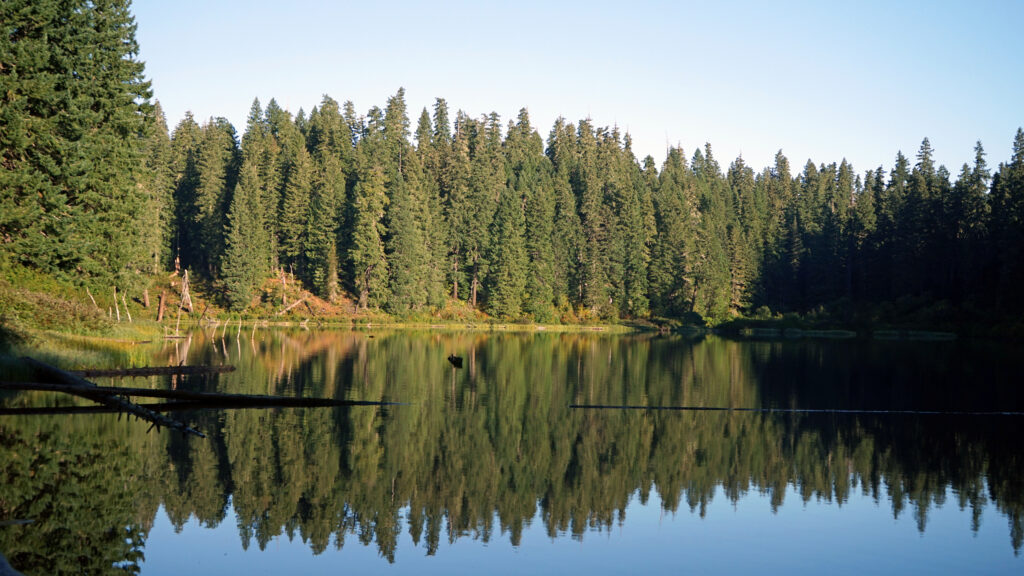
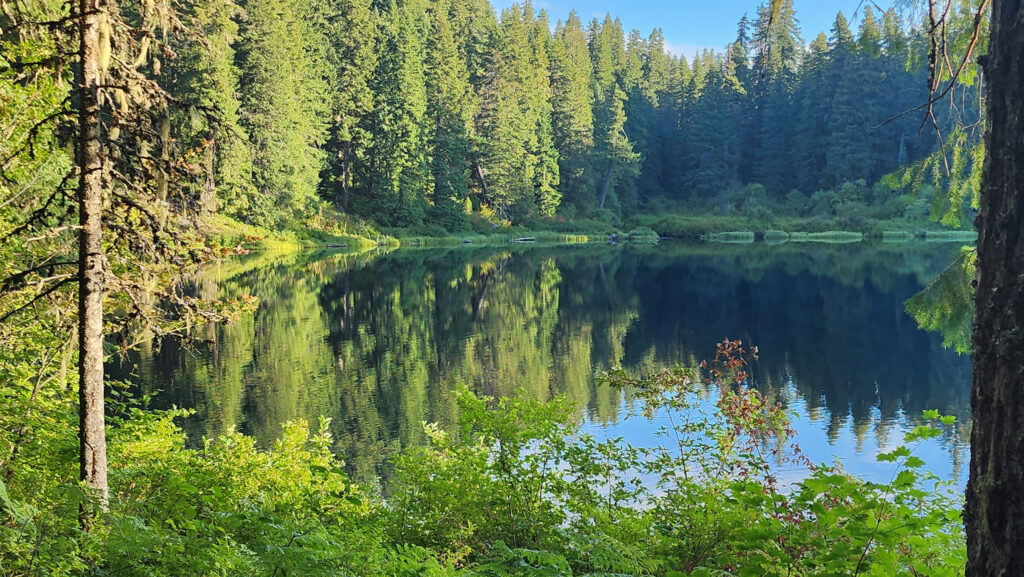
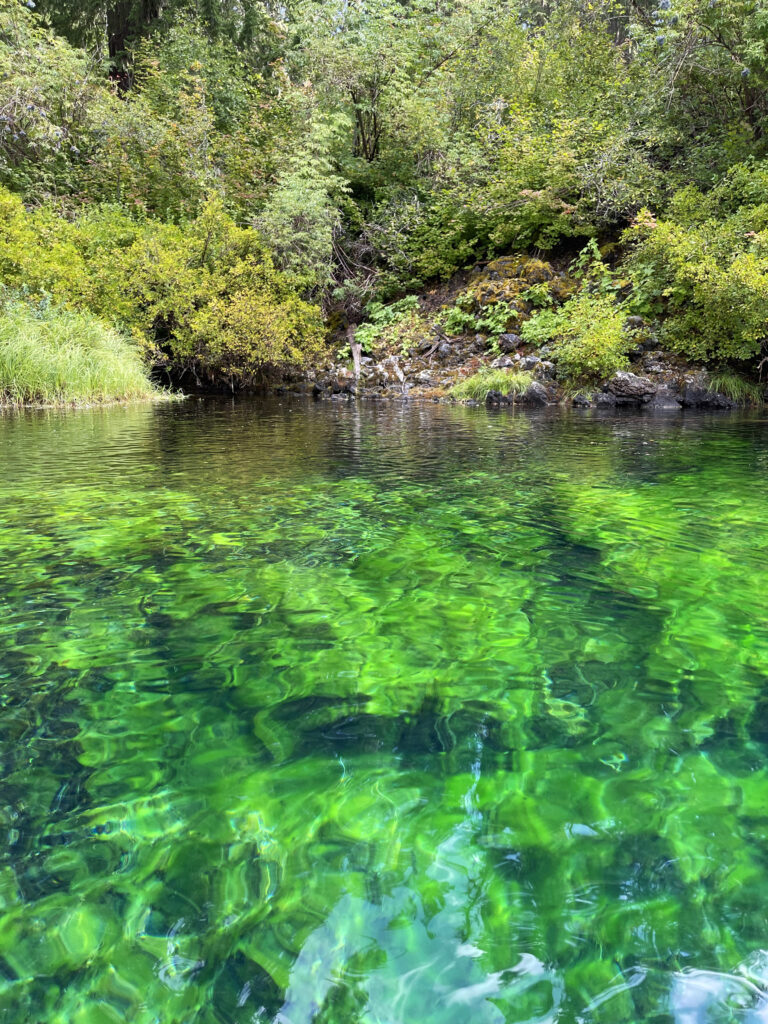
Clear Lake, in the central Oregon Cascades, is the source of the McKenzie River, and as its name suggests, it’s one of the clearest lakes you’ll find in the Cascade Range (or anywhere, for that matter). It’s also one of the cleanest, coldest, and most beautiful lakes in the Cascades.

Clear Lake is very young geologically, having been formed only about 3000 years ago when a lava flow from nearby Sand Mountain dammed the McKenzie River. One of the remarkable features of Clear Lake is the Underwater Forest, remnants of the forest that stood on the shore of the McKenzie prior to the eruption. The clean and very cold water of the lake preserved the trees, and some of them still stand upright on the lake bottom.

Clear Lake offers the outdoor enthusiast a number recreational options, including hiking, fishing, paddling, or just taking in the views and soaking up the beauty and peacefulness of nature.

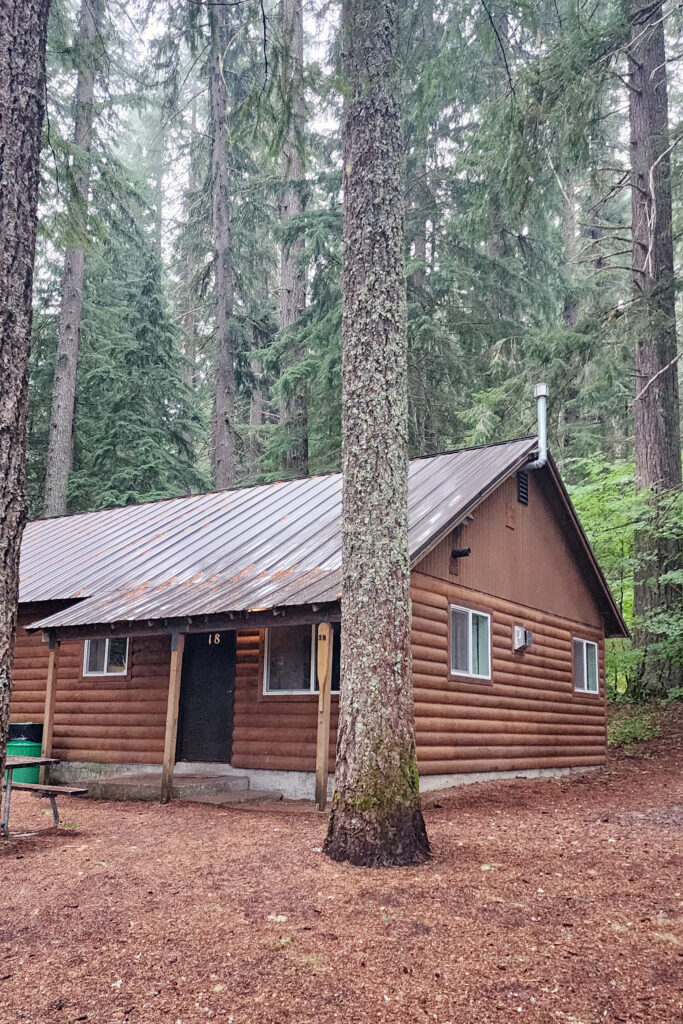
My wife and I have taken short vacations at Clear Lake a couple of times in the past couple of years, most recently in August 2024. Both times, we stayed in one of the cabins at Clear Lake Resort on the northwest shore of the lake. Coldwater Cove Campground, on the southeast shore of the lake, is another option. The campground has 34 campsites, drinking water, and vault toilets, but no RV hookups. There are many other campgrounds and a few other resorts within a short drive of Clear Lake, as well. And the lake is also close enough to all of the communities in the Willamette Valley and Central Oregon to make it a day trip destination if you don’t want to spend the night.

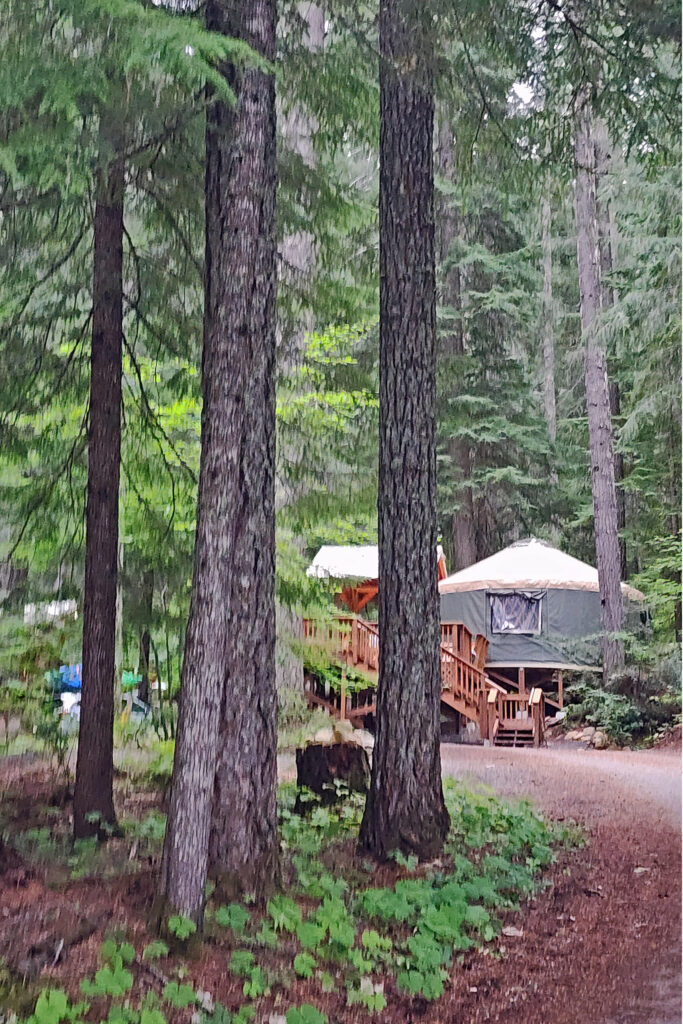
Clear Lake Resort is a good option for those, like my wife and I, that prefer the warmth of a heated cabin to an unheated tent or cramped RV. The resort has 14 cabins and one yurt. Six of the cabins have two bedrooms, a full kitchen, and a bathroom. The other cabins and the yurt have power but no indoor plumbing. (There is a heated central rest room with showers at the resort).

The resort also has a small cafe and a day use area with picnic tables, a large fire pit, and a boat ramp. And you can rent row boats or canoes there (motorized craft are prohibited on the lake).

For hikers, the Clear Lake Loop Trail is an easy 5.0 mile hike with almost no elevation gain. You can start the hike from either the resort or Coldwater Cove Campground. Note that the trail along the west side of the lake may be closed periodically to protect bald eagle nesting sites. Call the McKenzie River Ranger Station at 541-822-7254 for more information. (The Ranger District’s website wasn’t much help, and the link to their email didn’t work).

The Clear Lake and upper McKenzie area is one of the most scenic and most interesting parts of the Cascades, and offers a number of other hiking options besides the Clear Lake Loop. The 2.6-mile McKenzie Waterfalls Loop is another easy, family friendly hike that takes you to both Sahalie and Koosah Falls. The 3.9-mile out-and-back Blue Pool hike is another. Like the Clear Lake Loop, both of those also incorporate parts of the 22 mile long McKenzie River National Scenic Trail. And the nearby Santiam Pass and McKenzie Pass areas both give access to the Pacific Crest Trail and more expansive views of Mount Jefferson, Three Fingered Jack, Mount Washington, and the Three Sisters.

Clear Lake also offers other recreational options besides hiking. Fishing is a popular activity at Clear Lake, as it is in most Cascade lakes. Brook and cutthroat trout reproduce naturally in the lake and rainbow trout are stocked annually. You’ll usually see at least a few people fishing from row boats on the lake in the morning and evening.

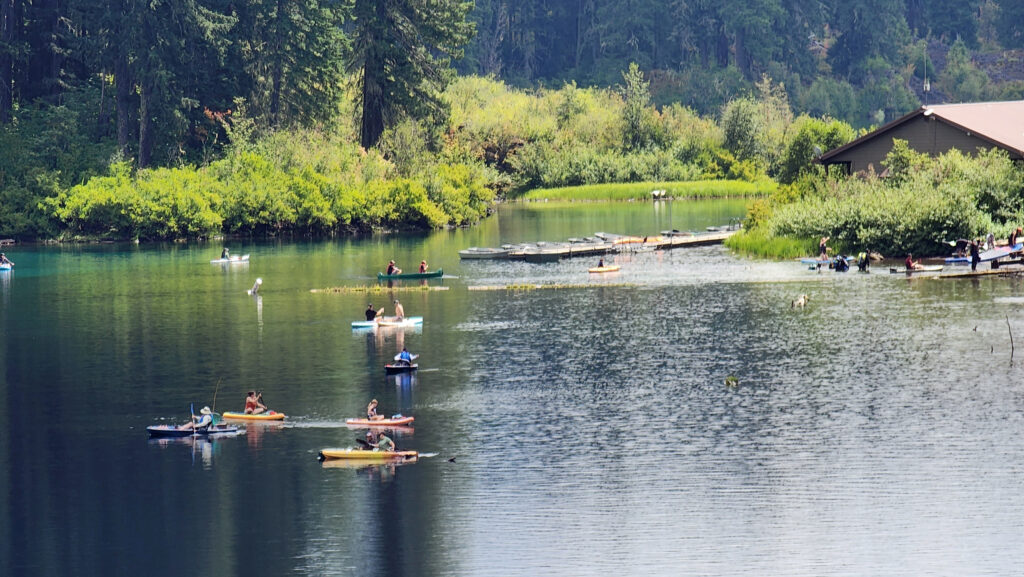
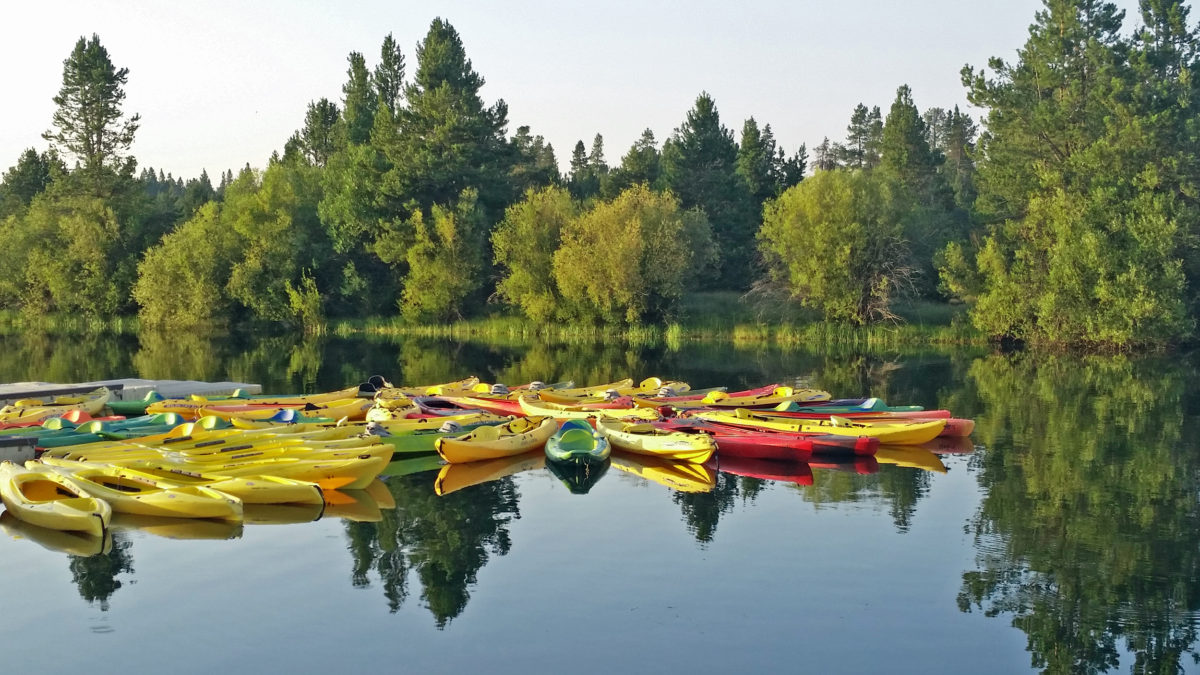
The lake is also a great place to paddle, and canoes and kayaks are a frequent sight on the lake. The clear water allows you to see deep into the lake and you get a perspective that you can’t get from the shore. My wife spent part of our stay exploring the lake in her kayak both times that we’ve there. Some of the photos here were taken by her from her kayak. Boats can be launched at either the day use area at the resort or at the campground’s boat ramp. Summer weekends can be very crowded with day trippers, though, as you can see from the photo above.

Photo by Joan E. Newman

If you’re a scuba diver, the clear water and submerged forest make Clear Lake a great place to dive, even though the water is extremely cold (38° year round). Check the Scuba Bubbles website for more information about diving in Clear Lake.

Photo by Joan E. Newman

From the Portland area, Clear Lake is about a 130 mile drive. Take I-5 south to Salem, then Ore Hwy 22 east past Detroit Lake to the junction with US Hwy 20. Go west on Hwy 20 for three miles to the junction with Ore Hwy 126. Clear Lake is a few miles south of the junction. From the Eugene area it’s a 75 mile drive on Hwy 126 to the lake. From Bend, the lake is a 50 mile drive west on Hwy 20, or about 65 miles via the very scenic McKenzie Pass Hwy (Ore 242).


You can take in Clear Lake and do the Waterfall Loop in a weekend. Make it a long weekend and add the Blue Pool hike or spend a day out on the lake. Better yet, make a week of it and check out Fish Lake, the Santiam Pass and McKenzie Pass areas, and the lower McKenzie River. You won’t run out of things to do.

Originally posted November 29, 2022. Updated September 6, 2024.

All photos ©Alan K. Lee, except as noted.

Lake Crescent and Vicinity

by Alan K. Lee

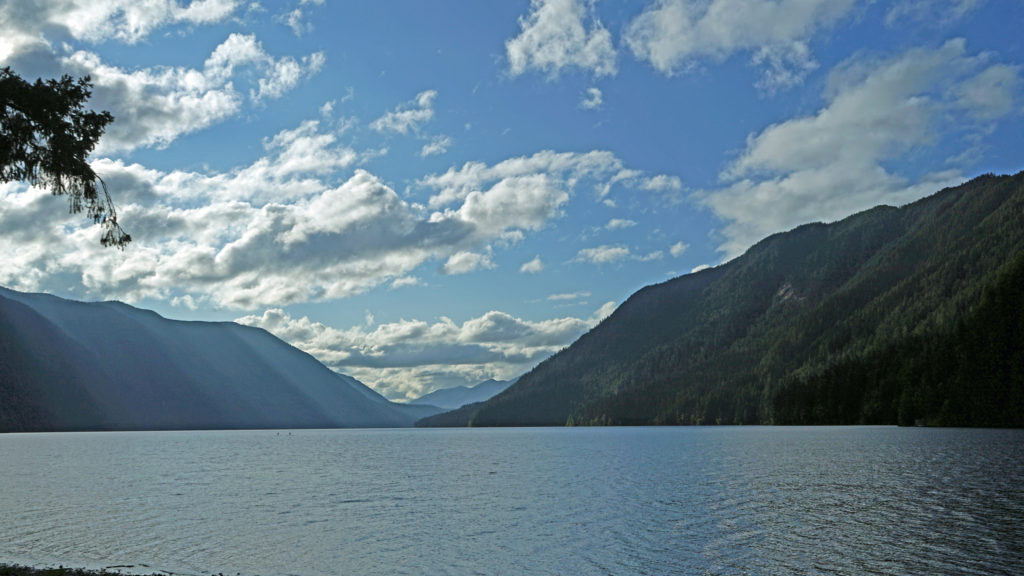
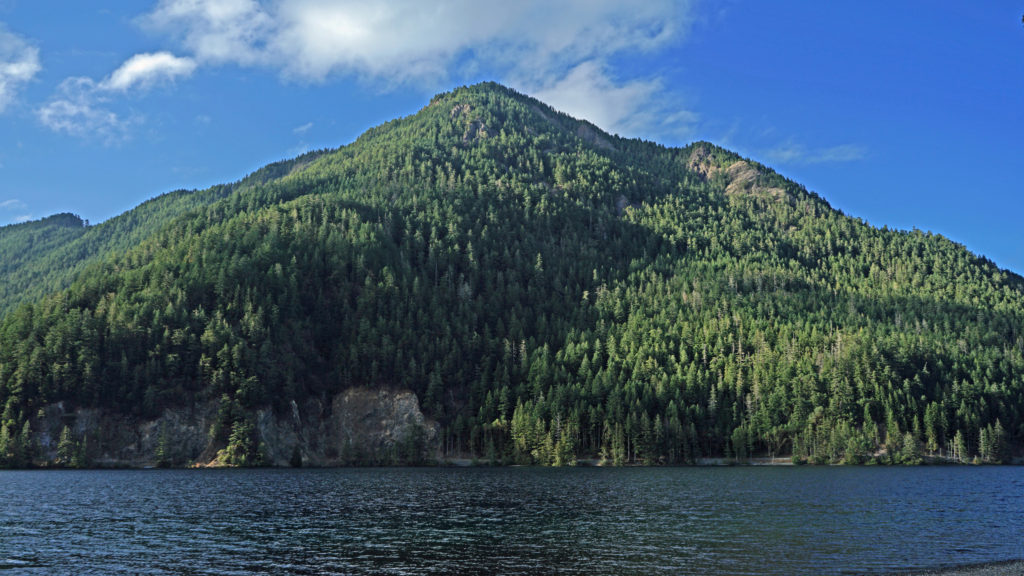
Lake Crescent, the nearby the Sol Duc Valley, and Hurricane Ridge are three of the prime attractions of Olympic National Park. My wife and I had the pleasure of visiting Lake Crescent and vicinity on an “escape from the pandemic” tour of the Olympic Peninsula in September 2020.

After spending three days in the magnificent Quinault Rain Forest, we made stops at Ruby Beach and Rialto Beach before heading on to Lake Crescent.

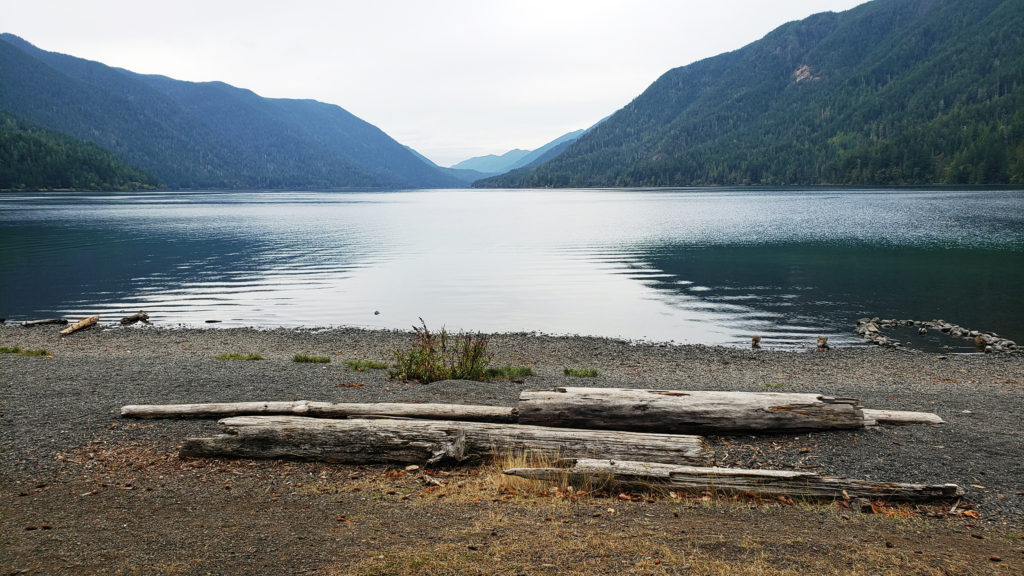
After checking in at Lake Crescent Lodge, we did a short but scenic and relaxing loop hike along the lake shore and through the forest east of the lodge. Lake Crescent lies in a glacier carved valley in the northern portion of Olympic National Park. The lake’s depth (nearly 600 feet) and clarity give the lake a brilliant deep blue color. Lake Crescent and nearby Lake Sutherland were once a single body of water, but a huge landslide about 7000 years ago divided the original lake into the separate lakes found today.

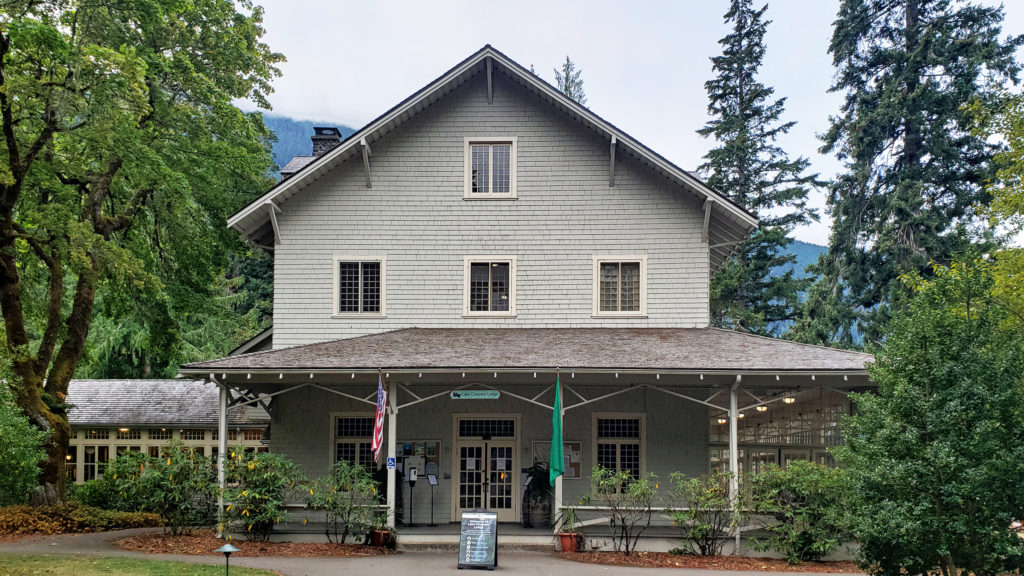
Lake Crescent Lodge, like Lake Quinault Lodge where we stayed on the first part of our trip, is one of the iconic grand lodges of the American West. Built in 1915, Lake Crescent Lodge is perhaps a little less grand than the other grand lodges, but it is no less significant in terms of its history and its romantic appeal. The main lodge is smaller than Lake Quinault Lodge, and the lodge rooms do not have private bathrooms. But there are many individual one and two bedroom cabins on the lake shore – the Singer Tavern Cottages and the Roosevelt Fireplace Cabins – that Lake Quinault and the other comparable lodges lack. More modern additions – the Storm King Rooms, Marymere Rooms, and Pyramid Mountain Rooms – are tucked into the woods a ways back from the shore. Our Storm King Room still had a view of the lake, though, and a nice balcony. All of the cabins and modern additions have private bathrooms.

As at Lake Quinault Lodge, the restaurant at Lake Crescent Lodge served only take out meals when we were there because of the corona virus pandemic. The lodge dining room was open for seating, however, so after our hike that first afternoon we claimed a window table looking out over the lake. Our meals were both very good, but Joan’s salmon “catch of the day” was a small (maybe 4 oz.) portion, and probably not worth the $28 price tag. My fish and chips were cheaper and more substantial, but we chose to drive to nearby Port Angeles for dinner the next two nights.

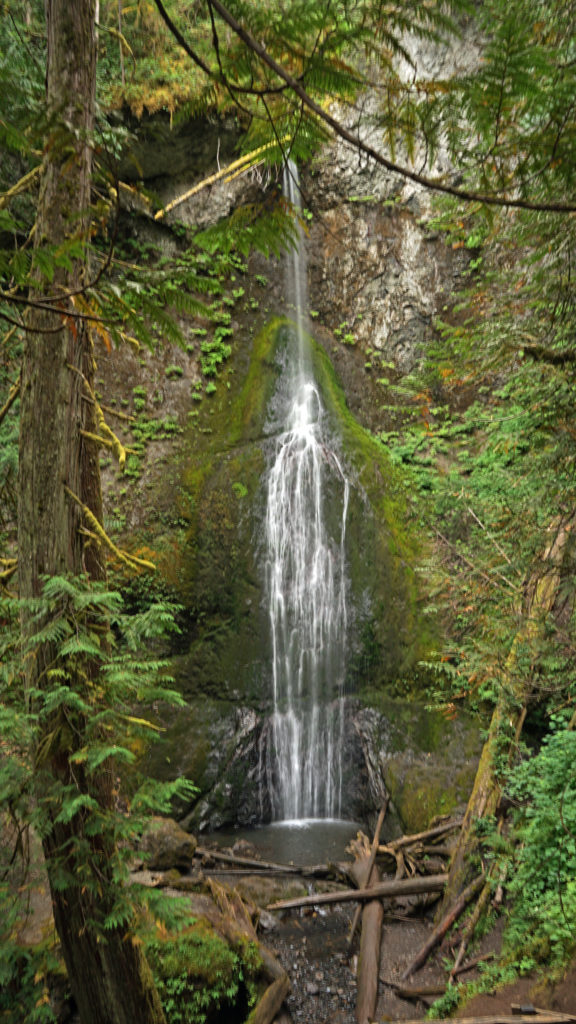
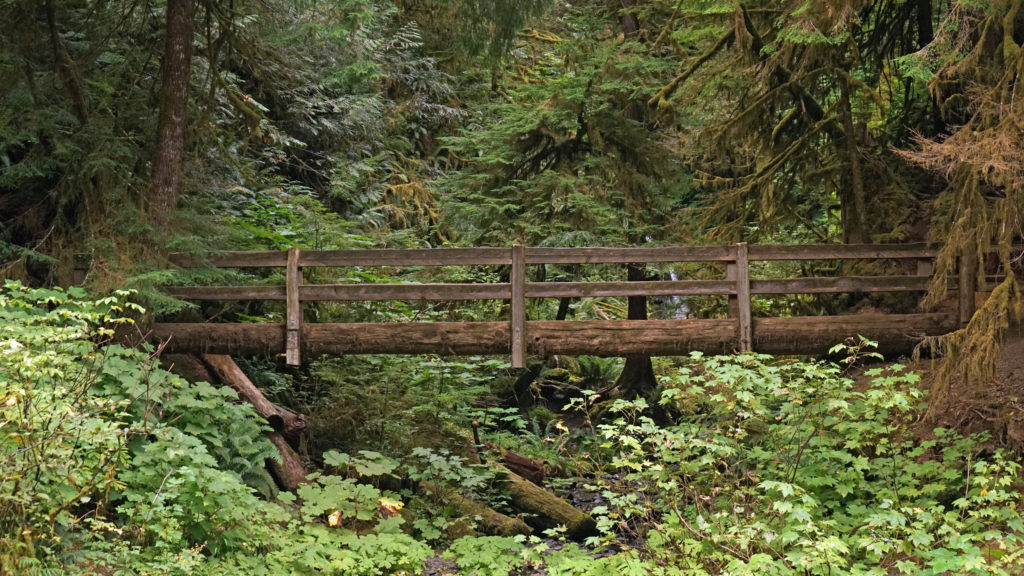
The next morning we hiked from the lodge to Marymere Falls, a picturesque 90 foot waterfall on Falls Creek. The trail is an easy 1.5 mile hike through old growth forest with minimal elevation gain to the lower viewpoint. From there the trail climbs steeply to an upper viewpoint. Both viewpoints offer unobstructed views of the falls.

My wife took her kayak out for a paddle on the lake that afternoon while I relaxed on our room’s balcony with a good book (Graham Greene’s Travels With My Aunt).

That evening we drove into Port Angeles, about 20 miles to the east, and dined at Next Door Gastropub. They have a good selection of beers and the Cuban pork sandwich that I had was quite good. After dinner we wandered around a bit, searching out some of the many public artworks scattered around the downtown area, before returning to Lake Crescent.

The following morning, we drove to the Sol Duc Valley west of Lake Crescent and hiked to Sol Duc Falls. Originally called “Sole Duck,” the spelling was officially changed to Sol Duc in 1922 to more accurately reflect its derivation from a Quileute language word meaning sparkling waters. The family friendly trail (less than a mile long) takes you through a dense forest with minimal elevation gain to the 48 foot falls. There the Sol Duc River breaks into a number of channels before making a sideways drop into a deeper gorge. There are many bigger and more spectacular waterfalls in Olympic National Park, but certainly none more scenic.

The nearby Sol Duc Hot Springs was once the site of a five star hotel. Built in 1912, the hotel lasted only four years, though, before burning down in 1916. The resort was rebuilt on a less grand scale in the 1920s and operated for a half century before closing in the 1970s. After being vacant for a number of years, it was renovated and reopened in the 1980s. Today the resort includes a restaurant and a variety of cabins with private bathrooms and modern amenities. Those staying at the resort have free access to a swimming pool, soaking pools, and hot tubs, all heated by water from the hot springs. People not staying at the resort can also enjoy the hot springs for a small fee.

A 17 unit RV campground that will accommodate RVs up to 36 feet is located a quarter mile from the resort. The RV campground sites have water and electric hookups, and there is a sewer dump station. A separate 82 unit “dry” campground is located nearby. The campground has restrooms, but no showers. The camp sites will accommodate small RVs, but do not have water or electric hookups.

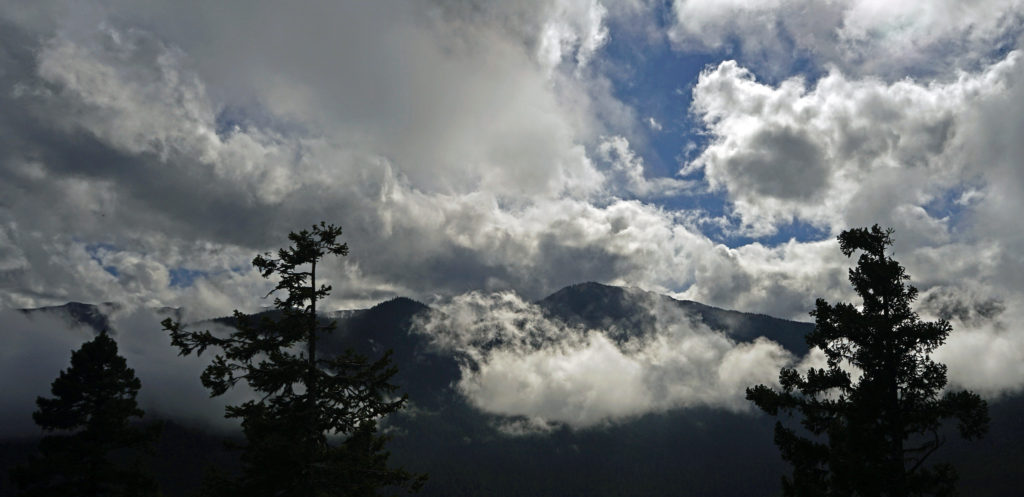
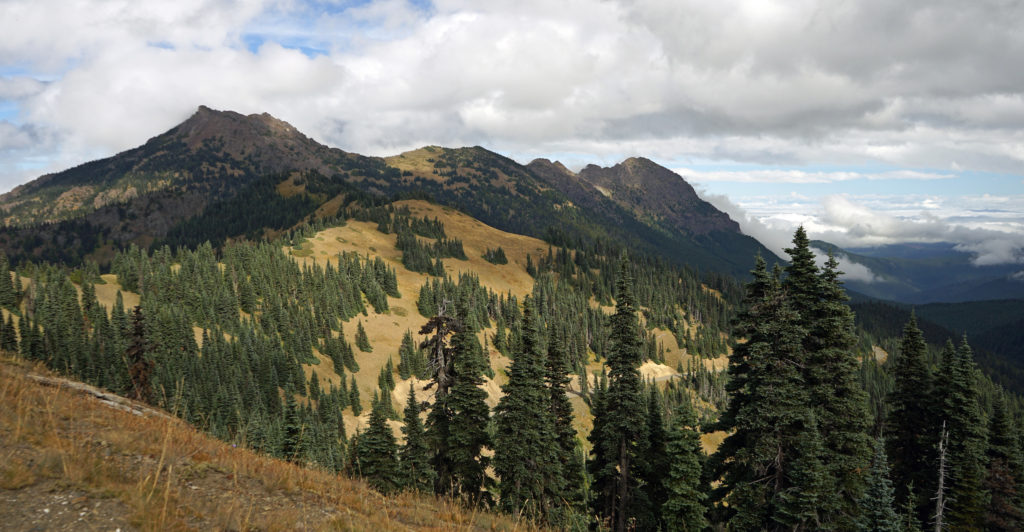
After our hike to Sol Duc Falls we drove to the Hurricane Ridge Visitor Center to do some more hiking and sightseeing. The visitor center is located 17 miles south of Port Angeles at an elevation of 5242 feet above sea level. Hurricane Ridge is the only alpine area in Olympic National Park accessible by car, which makes it very popular and means it can be very crowded, especially on summer weekends. We were there in the middle of the week in late September, though, so crowds weren’t much of an issue.

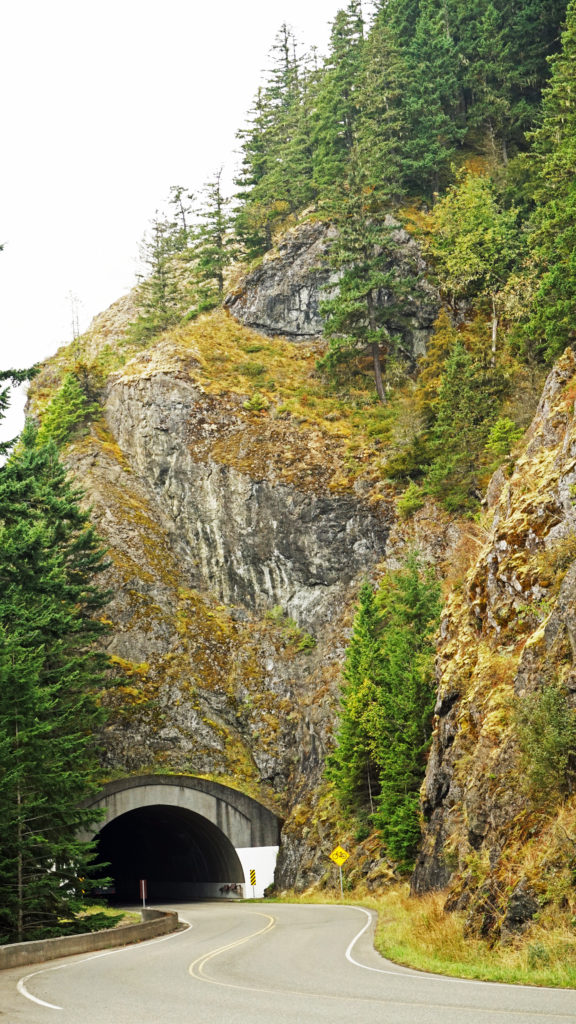
The Hurricane Ridge Road is paved, but winding with poor sight lines and several tunnels. It is also a popular challenge for cyclists because of the elevation gain, so go slow and watch for bicycles on the road.

The visitor center’s gift shop and restrooms were open, but the main part of the center was closed due to the corona virus pandemic. The rangers were manning an information desk outside on the sidewalk, though, where they were giving out maps and answering questions.

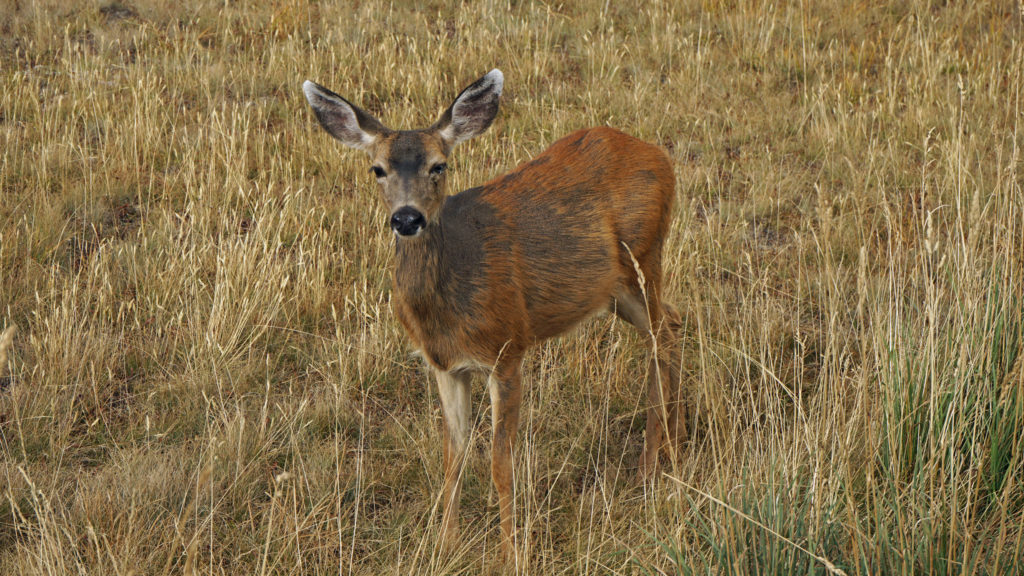
Several short loop and out and back hikes ranging from a half mile to a mile and a half take you from the visitor center to viewpoints with great views in all directions. Look for wildlife when you’re there. We’ve seen mountain goats there in the past, and on this visit a doe was grazing only a few feet off one of the trails, almost within arms reach. Past the visitor center, at the end of the road, you’ll find the trailhead for a longer 3.2 mile round trip hike to Hurricane Hill with even more spectacular panoramic views.

The following morning we somewhat reluctantly checked out of the lodge. Our six days in the Olympics were a much needed getaway from both the pandemic and the wildfires that had threatened many of the populated areas of western Oregon. We in the Pacific Northwest are lucky to have such a magnificent place so close at hand. Olympic National Park is a jewel worth visiting, no matter how far you have to come to experience it.

From Crescent Lake, we headed on to Port Townsend for the final part of our trip. Look for an upcoming post on Port Townsend, one of my favorite places in the Northwest, and home of the annual Wooden Boat Festival.

Originally posted November 7, 2020. Updated and re-posted November 9, 2022.

All photos © Alan K. Lee

Southern Oregon Coast

by Alan K. Lee

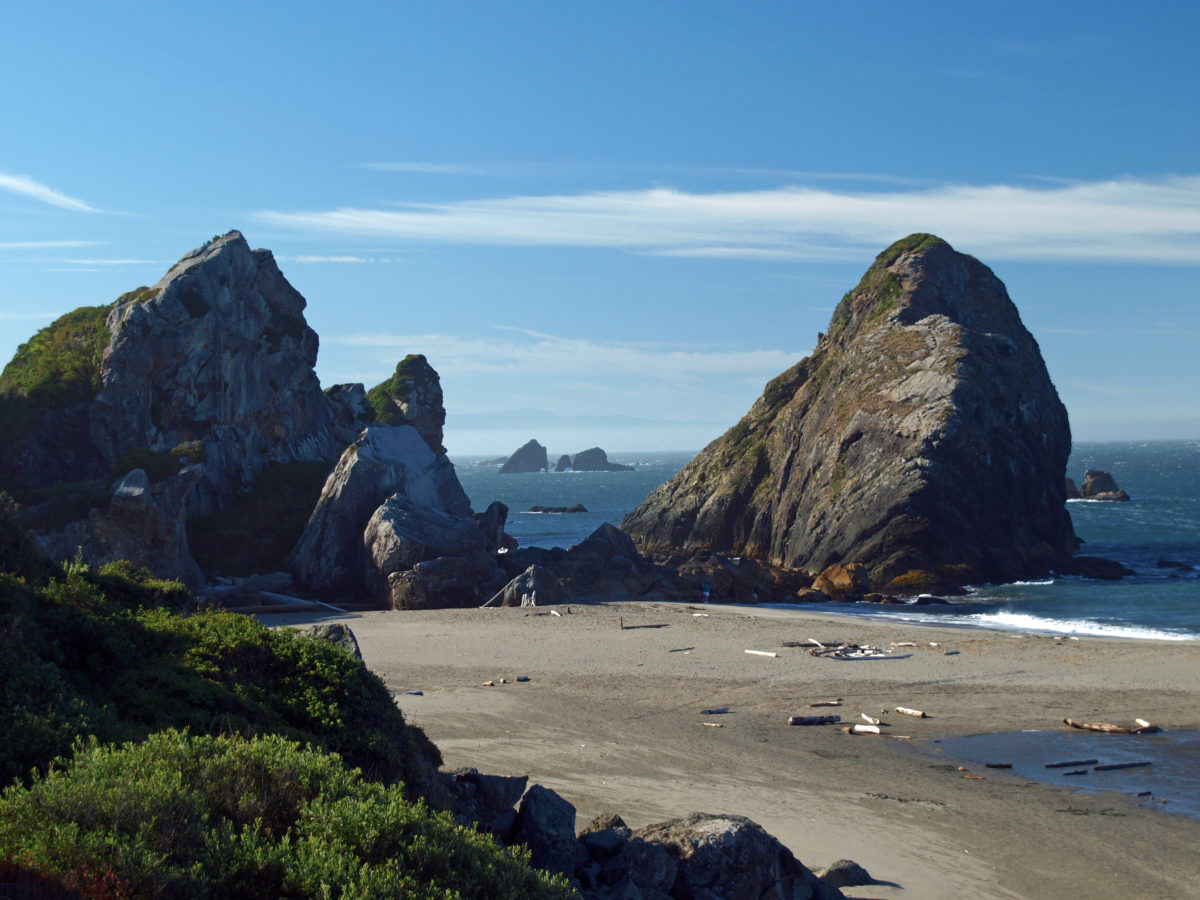
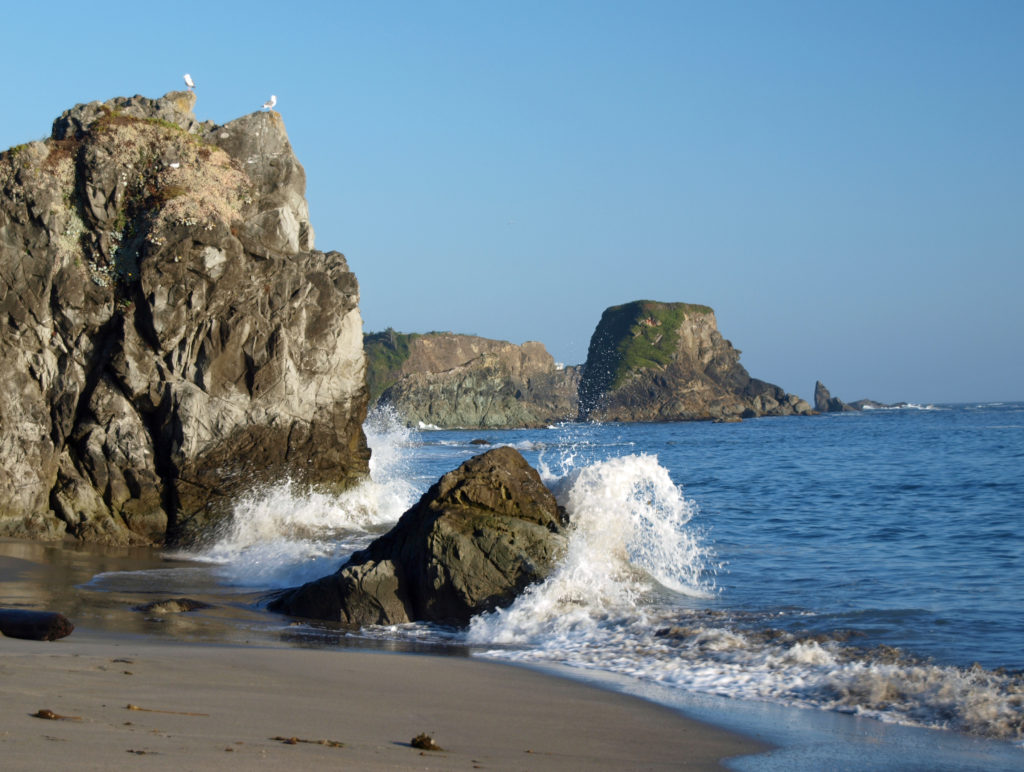
The Oregon coast is renowned for its beautiful beaches and dramatic headlands, and nowhere is that more pronounced than on the twenty-nine mile stretch of coastline between the towns of Gold Beach and Brookings. Less well known than Big Sur or the Cape Mendocino area in northern California, the Southern Oregon Coast nevertheless rivals both in terms of the sheer beauty and majesty of its scenery. And since it is far removed from major population centers – more than 300 miles from Portland and almost 350 from San Francisco – it is far less traveled than the northern and central Oregon coastal areas or any part of the California coastline.

So, let’s go! We’ll travel north to south, but it works just as well in the other direction. In Gold Beach, start your day with a cup of coffee or espresso and a scone or maybe a breakfast burrito at First Chapter Coffee House. While you’re there, the attached bookstore and art gallery are worth a look – lots of used books, with a few old and rare volumes.  (If you’re starting out in Brookings, try the Bell and Whistle Coffee House at the marina in Harbor, on the south side of the Chetco River.)

If you want to find information on the area, check out the Visit Gold Beach website. The Gold Beach Visitor’s Center at the south end of town is normally a good place to get info. There’s a friendly staff, free wi-fi, and a nice beach where they sometimes hide glass floats for visitors to find. It is open from 9am-3pm Wed-Sun. (If you’re traveling south to north, Travel Oregon’s Brookings Welcome Center, just north of the Oregon-California border, is a good place to get information. There’s also a nice beach there.The Travel Oregon wepage for Brookings is also a good resource.)

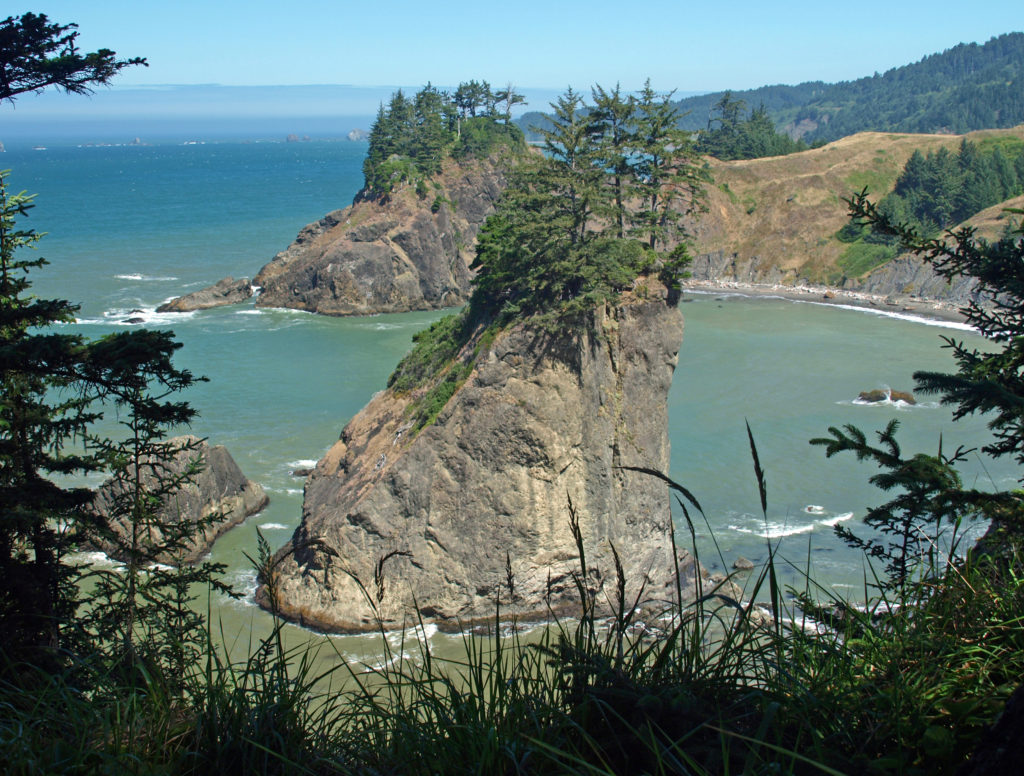
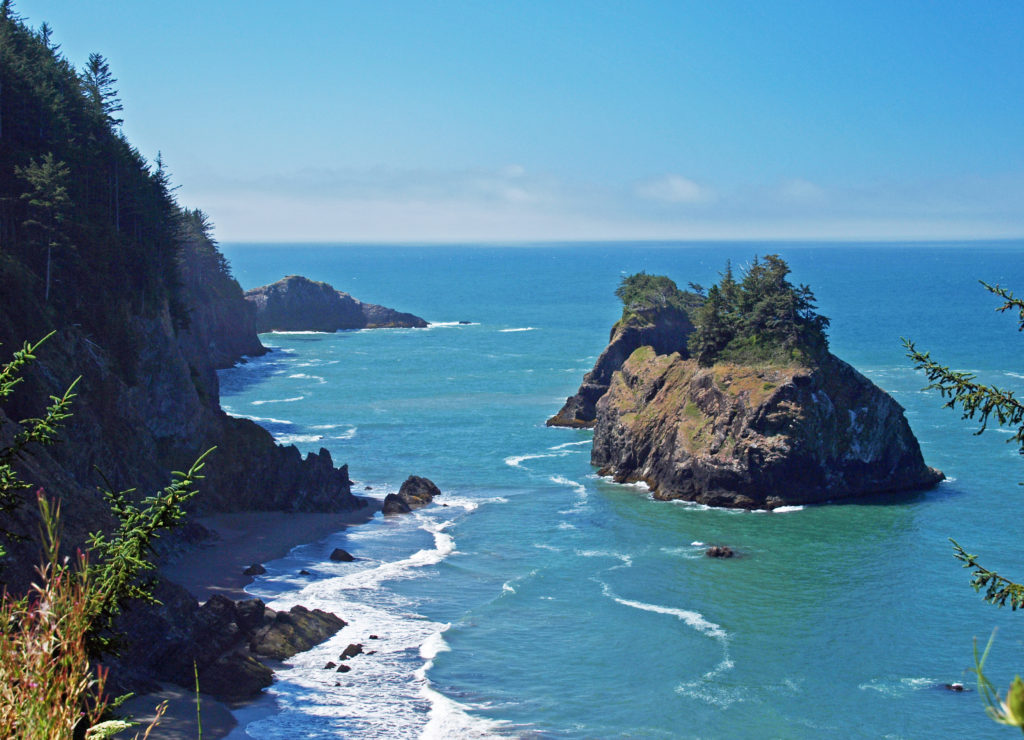
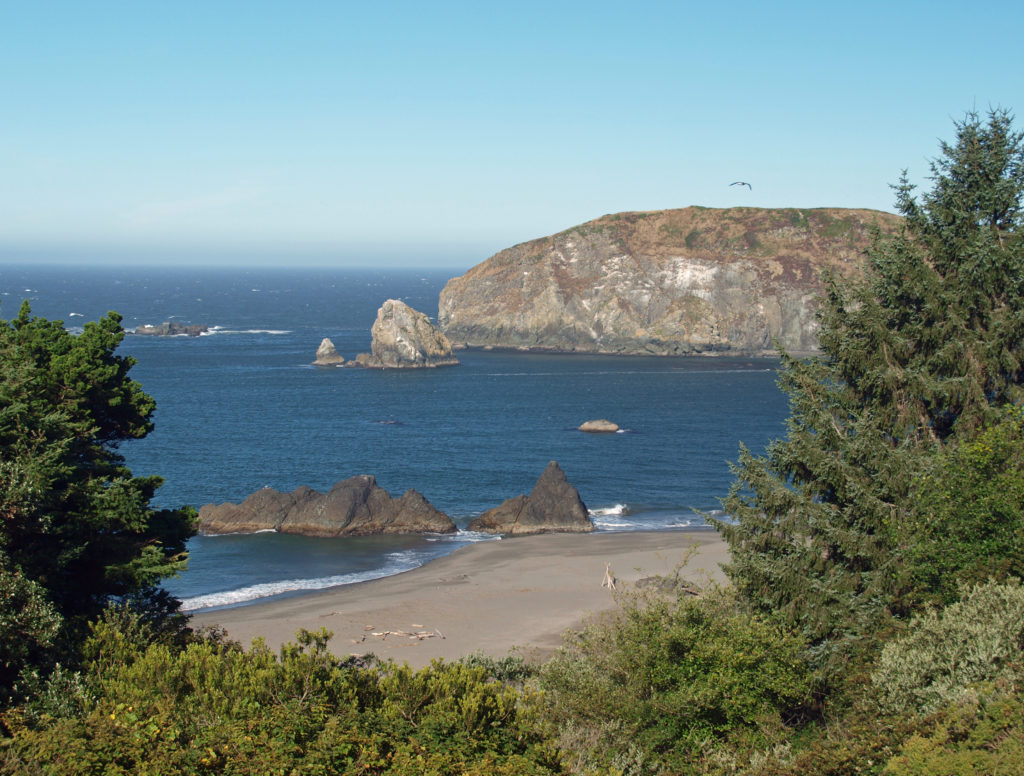
Traveling south from Gold Beach, your first stop should be at Cape Sebastian. Take a short hike there to a beautiful viewpoint. Then make another stop at Myers Creek Beach Viewpoint. There’s a nice beach there and good views of the Cape Sebastian headland, Hunters Cove and Hunters Island just offshore.

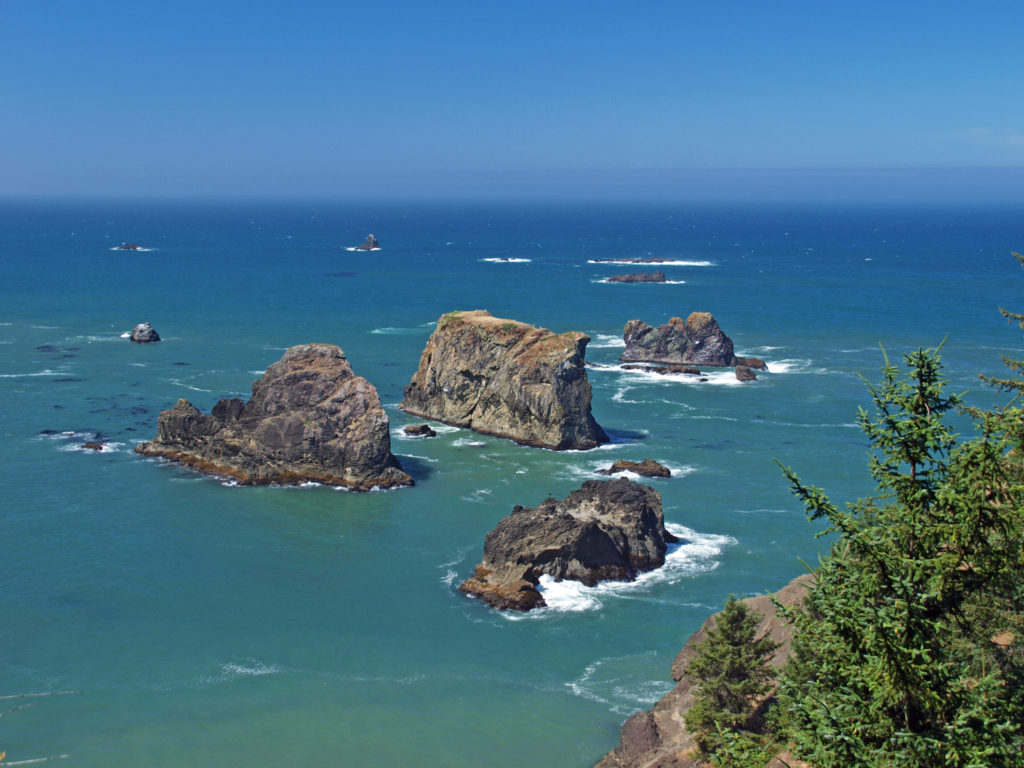
A little farther south is the Pistol River State Scenic Viewpoint with another nice beach and views of another, smaller headland and offshore rocks. Next up is Windy Point and Arch Rock. Windy Point is well named, but there are spectacular views to be seen there. A little south of Arch Rock is the Spruce Island Viewpoint. Then comes Secret Beach, which is not much of a secret anymore. Look for a small turnout with room for only a few cars. The trail to Secret Beach is short but steep and can be slippery if it’s wet. But Secret Beach is one of the more beautiful spots on this stretch of coast – definitely worth a stop if you can find it.

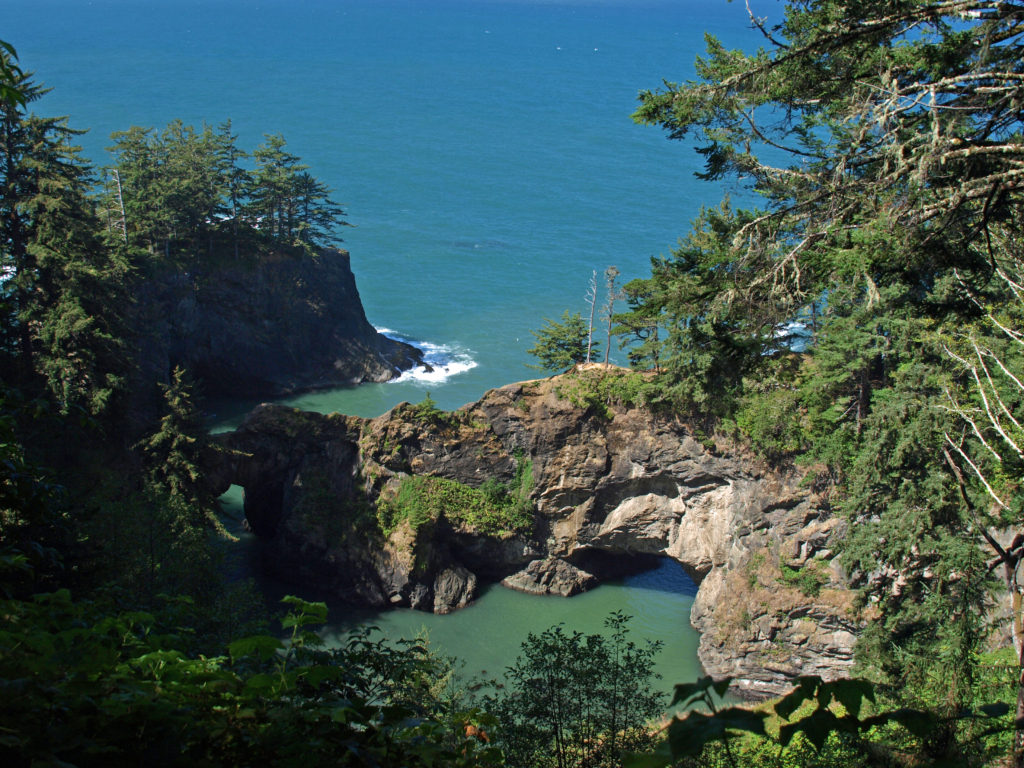
The next viewpoint to the south is Seal Cove, about a half mile south of Secret Beach. Just beyond Seal Cove comes Natural Bridges, and this is one you don’t want to miss. A short trail takes you to a spectacular viewpoint. Take your time, explore the area, and just take in the views. There are some steep, unmaintained trails beyond the viewing platform, and a side trail with a “trail closed”  warning sign. The trail is not baracaded, though, and I walked beyond the sign for a ways before coming to a very steep descent that looked less than safe. If you’re both brave and foolhardy, it is possible to get to the top of the bridges. But I wouldn’t recommend trying.

Hwy 101 crosses Thomas Creek a couple miles south of Natural Bridges. At 345 feet above the creek, the Thomas Creek Bridge is the highest in Oregon. It’s not the prettiest bridge on the coast by a long ways, but it’s impressively tall. There’s a short trail to a viewpoint. It’s worth a brief stop.

About a mile south of Thomas Creek you’ll come to a turnout with access to the Indian Sands Trail. This is one I haven’t done for some reason, but from the photos I’ve seen it looks like an interesting combination of sand dunes and rocky headland with at least one natural bridge. Next time I’m in the area I will definitely stop and explore this area.

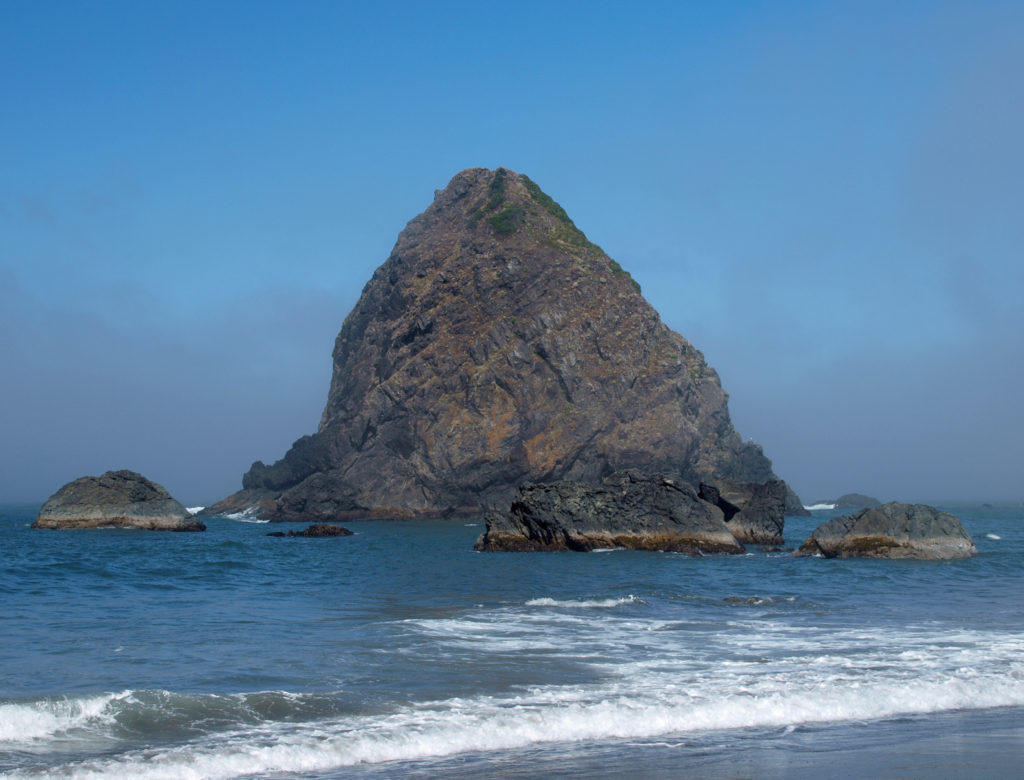
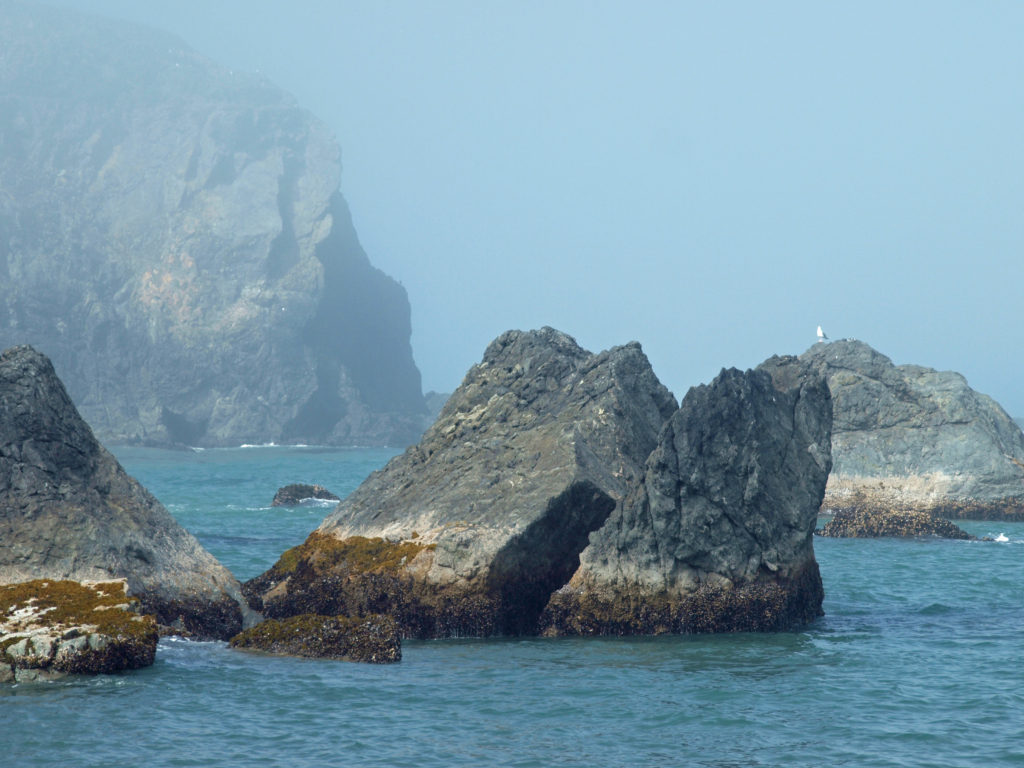
Whaleshead Beach is a place that I have visited a few times. There’s a large parking area and a few picnic tables – a nice place to have lunch. The road in is short, but a little rough. There’s a sign recommending four wheel drive, but there were plenty of two wheel drive cars in the parking lot the last time we were there, so you can safely ignore the sign, just take it slow. The last time we were there my wife and I spent a couple of hours just wandering up and down the beach taking photos. Fog drifted in and out and the sun broke through from time to time, the light changing from minute to minute. Very quiet, calm, and relaxing place. Nice views of the Whaleshead Island and the other offshore rocks, and the cliffs of Whaleshead just north of the beach, too.

South of Whaleshead Beach you come to House Rock first, then Cape Ferrelo. Both have short trails and viewpoints worth checking out. Then, just north of Brookings, comes Harris Beach. There is a popular state park here with 150 campsites. Being right next to the large campground and on the outskirts of the town of Brookings, Harris Beach is often crowded. But it’s also one of the nicest beaches on the entire Oregon coast, so it’s worth spending some time there despite the crowds. In fact, it’s worth spending a lot of time there. There are actually three beaches, Harris Beach being the most northerly. The others are Rock Beach and South Beach. All are connected at low tide, and can be reached with a little scrambling at high tide.

The towns of Brookings and Gold Beach that bookend this stretch of the coast aren’t the main attractions here, but they’re both worth spending a little time to explore at the end of the day. Brookings is the bigger town, with more to see and do. Gold Beach is smaller and quieter, with more of a lost-in-time vibe. Both have decent dining options. If you’re ending your day in Brookings, try Black Trumpet Bistro,  Superfly, or Oxenfre Public House for dinner. Chetco Brewing Company has a good selection of beers and there’s a vegan food truck there. In Gold Beach, try Barnacle Bistro, Port Hole Cafe or The Crow’s Nest.

Accommodations in the area range from typical small town motels for under $100 per night to the world class TuTuTun Lodge on the north bank of the Rogue River in Gold Beach ($295 and up in the summer). There are numerous RV parks in both towns. Besides Harris Beach, there are campgrounds at Humbug Mountain State Park (39 RV and 56 tent sites) on Hwy 101 about 20 miles north of Gold Beach, and Loeb State Park, (48 sites with water and electricity) about five miles east of Brookings on the Chetco River.

The Southern Oregon Coast is truly an unspoiled gem. It’s an all day drive from Portland or San Francisco, but the reward is one of the Pacific coast’s, if not the world’s, most spectacular shorelines. And since you’re in the area, the town of Bandon, about 50 miles north of Gold beach, and the magnificent Redwoods of the northern California coast are well worth exploring, as well.


Originally posted Jan. 17, 2019. Updated February 3, 2021 and October 15, 2022.

All photos ©Alan K. Lee

Bandon, Oregon

by Alan K. Lee

Bandon-by-the-sea

Bandon, Oregon, on the southern Oregon coast, happens to have been my home for the first seven years of my life. Although I did most of my growing up in Salem, I consider Bandon my home town as much or more than I do Salem.  I go back to Bandon often, most recently in July this year (2025).

History

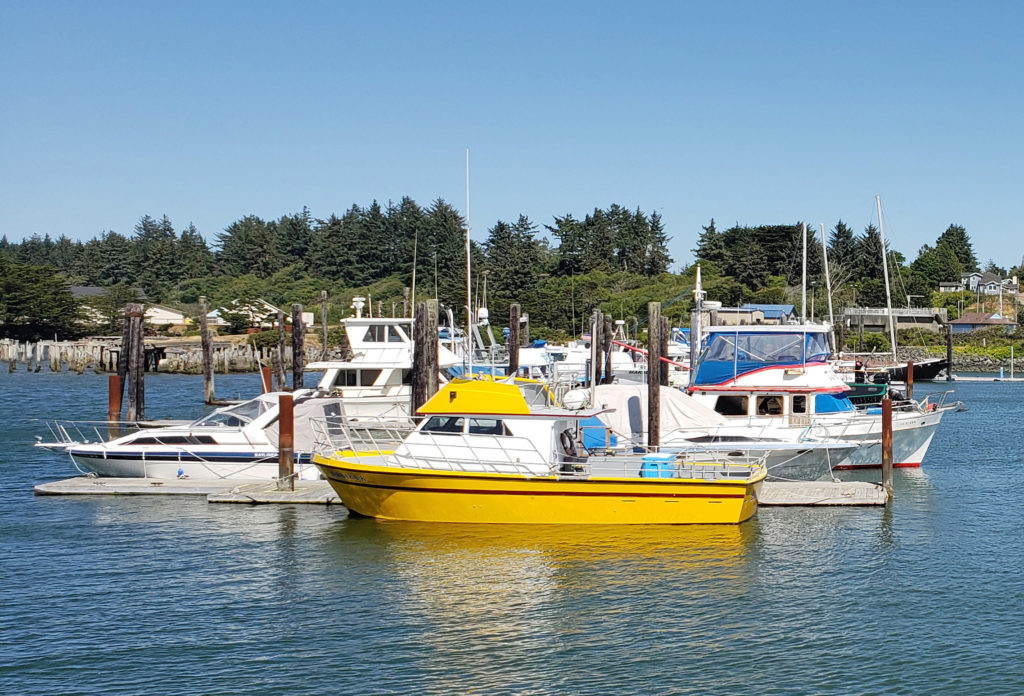
Bandon was founded almost 150 years ago by George Bennett (often referred to as Lord Bennett), an Irish peer from Bandon, Ireland. In its early days, the economy of Bandon, Oregon was primarily agricultural. Bandon has been known for both its cheese and cranberries since the 1880s. The first jetty was also constructed in the 1880s, and Bandon was soon home to a fishing fleet and a robust shipping industry.

One of the things Lord Bennett brought to Bandon from Ireland was gorse, a thorny, thick growing plant with bright yellow flowers. In Ireland it was used for privacy hedges and property boundaries because it is almost impenetrable. In Oregon it went wild and was one of the state’s first invasive plants. Besides being thick and thorny, it is also a very oily plant and burns readily. In 1936 a small forest fire started from a slash burn that got out of hand, spread to the gorse near the town, and then to the town itself, destroying all but 16 of the 500 structures in the town. The fire decimated the community and all but ended shipping to and from the harbor.

In my youth, Bandon was primarily a mill town, with fishing and agriculture secondary industries. Today, the lumber and plywood mills are long gone. There is still a small fishing fleet that operates out of the harbor, Bandon is still one of the leading cranberry producing areas of the country, and dairy farming is still an important component of the economy. But it is tourism that drives the economy today. The three main tourist draws are the beaches, Bandon Dunes Golf Resort, and the old town section of Bandon.

The Beaches

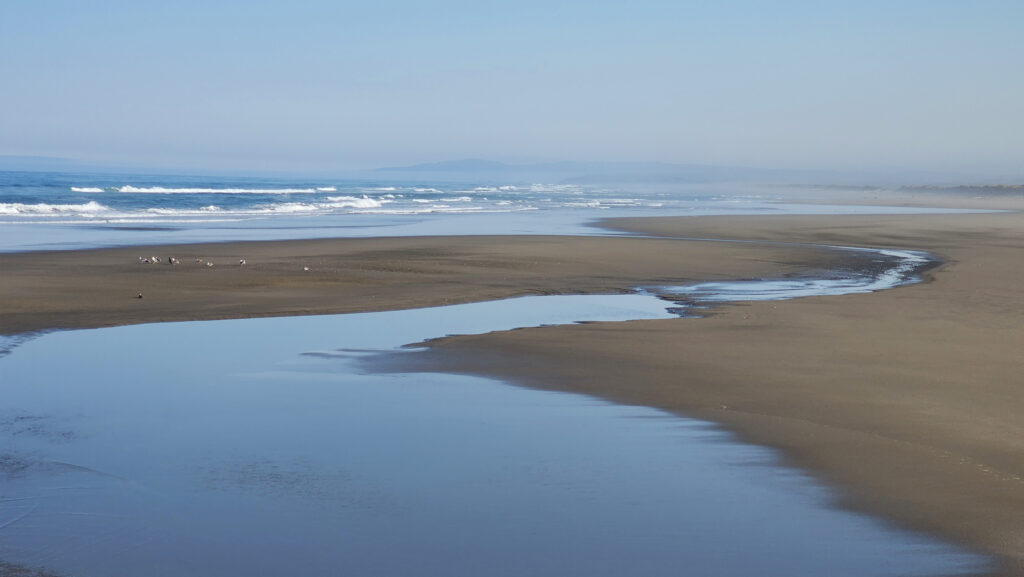
The beaches on either side of the Coquille River are dramatically different. To the north, a wide flat beach stretches for ten miles to the Cape Arago headland, interrupted only by Fivemile Point. The north beach can be accessed from Bullards Beach State Park, Whisky Run, located just north of Bandon Dunes, and Seven Devils State Park, another mile or so to the north.


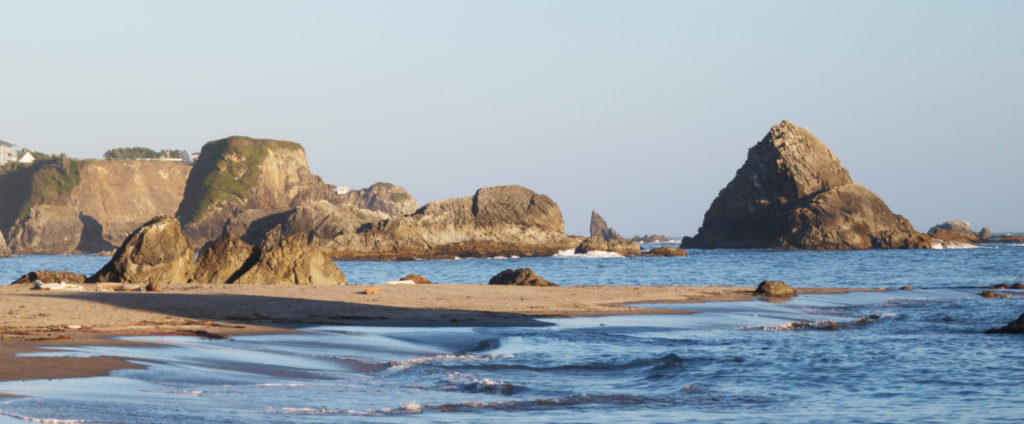
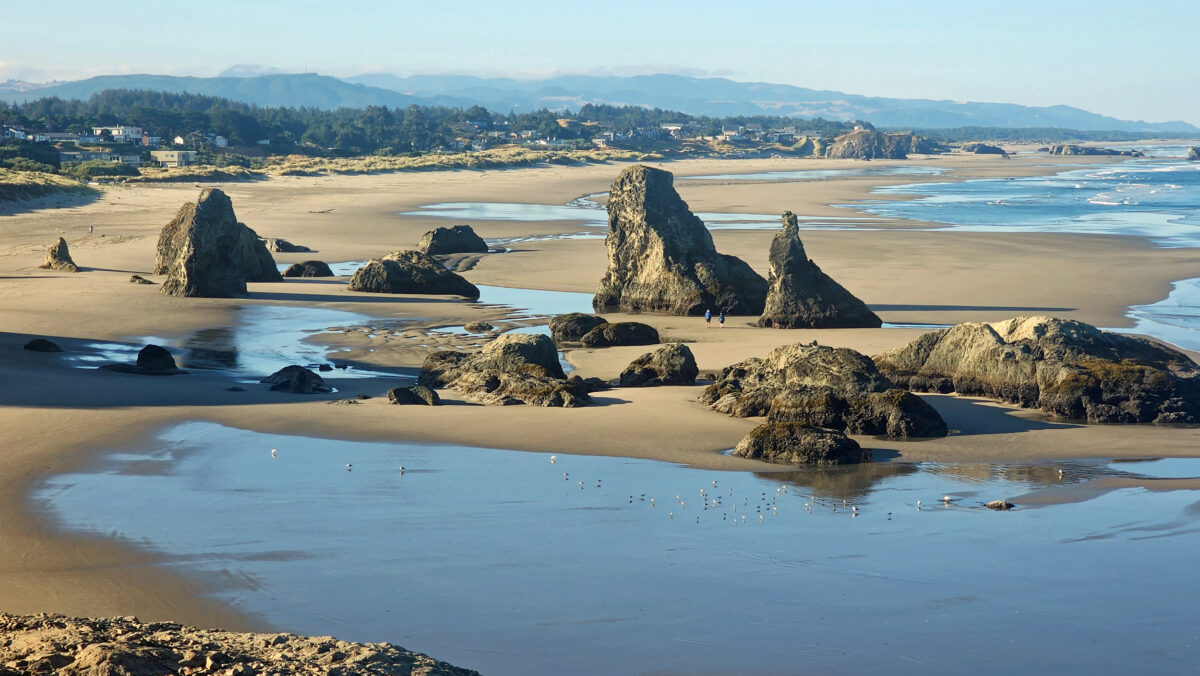
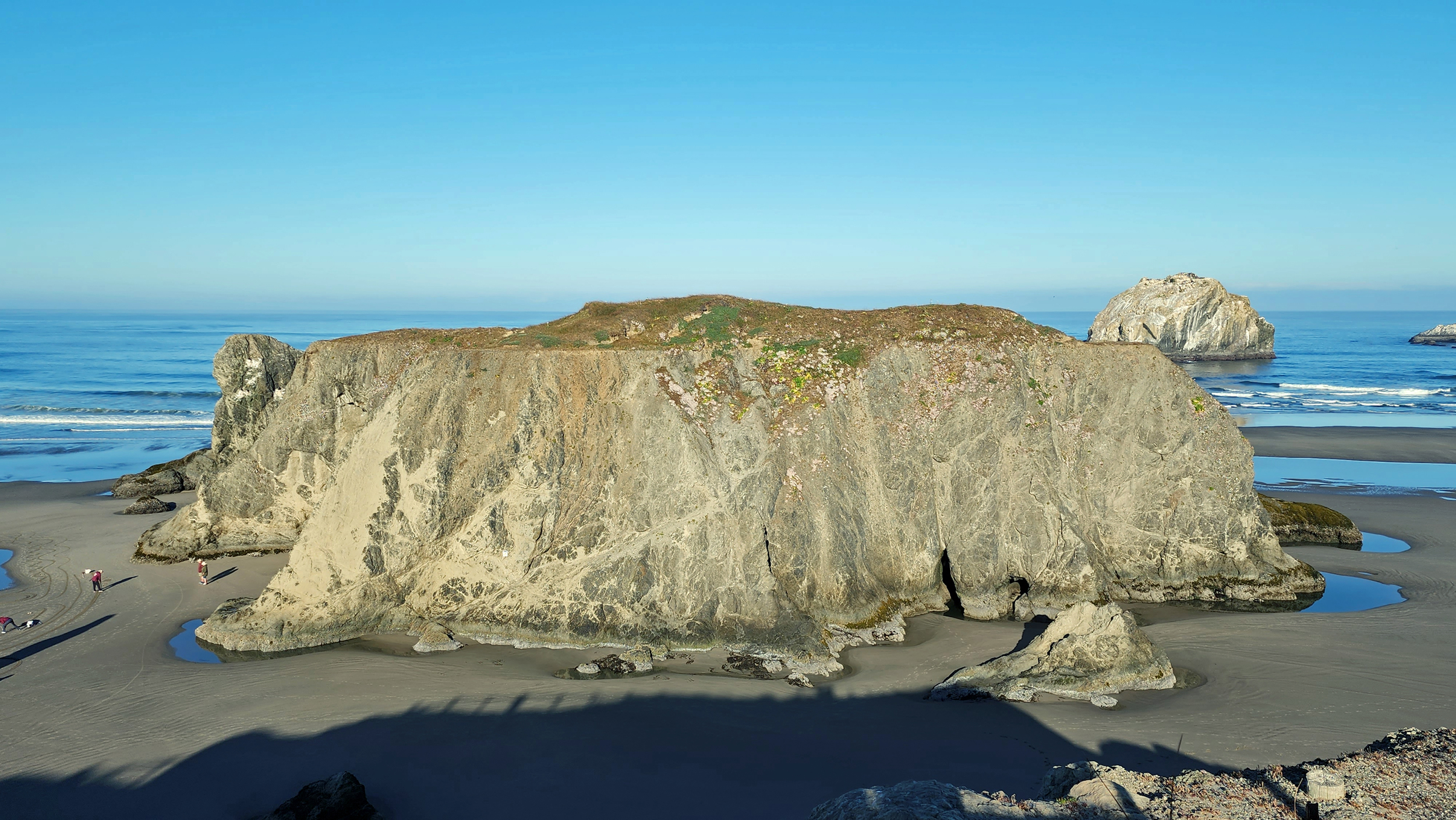
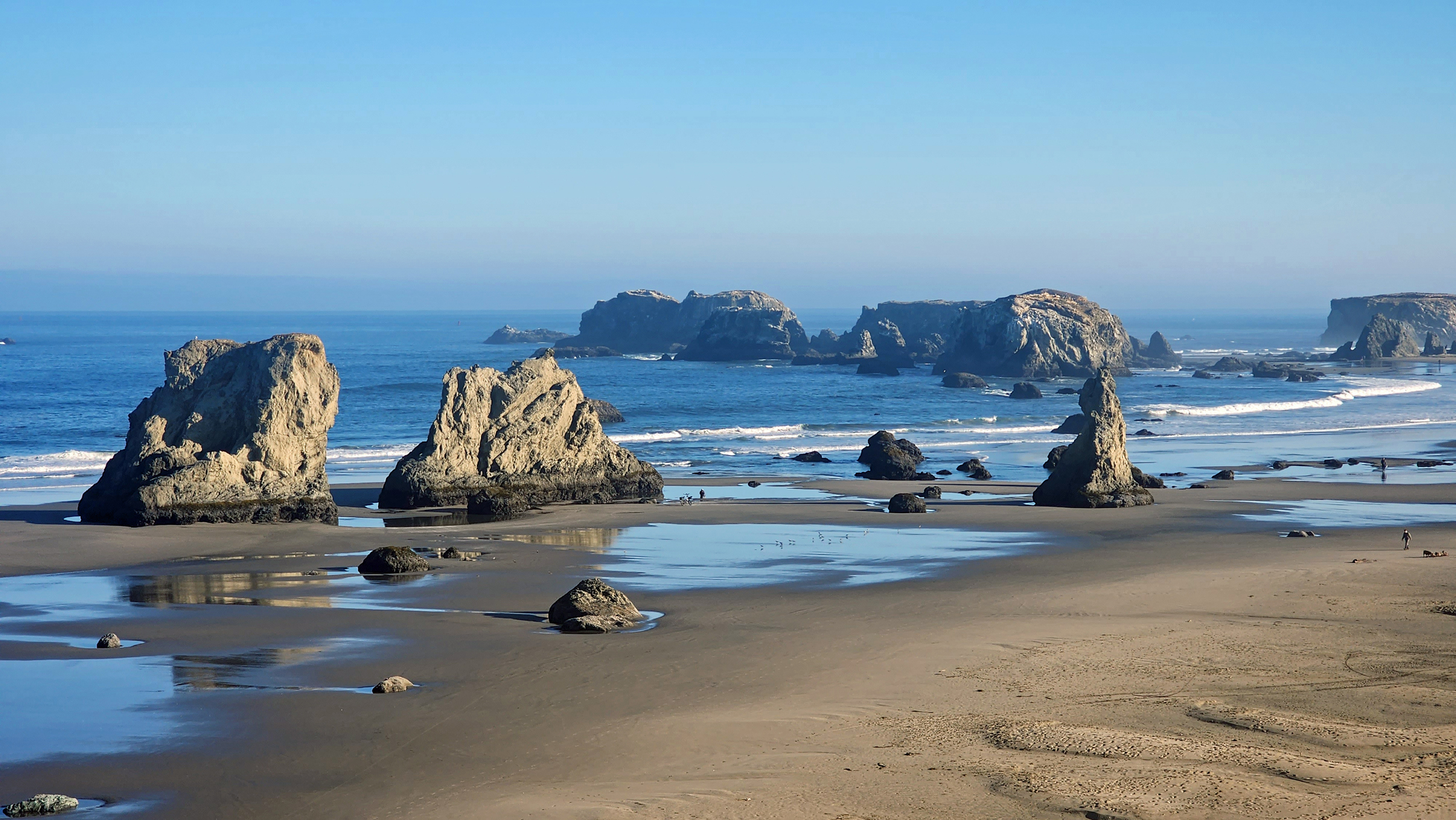
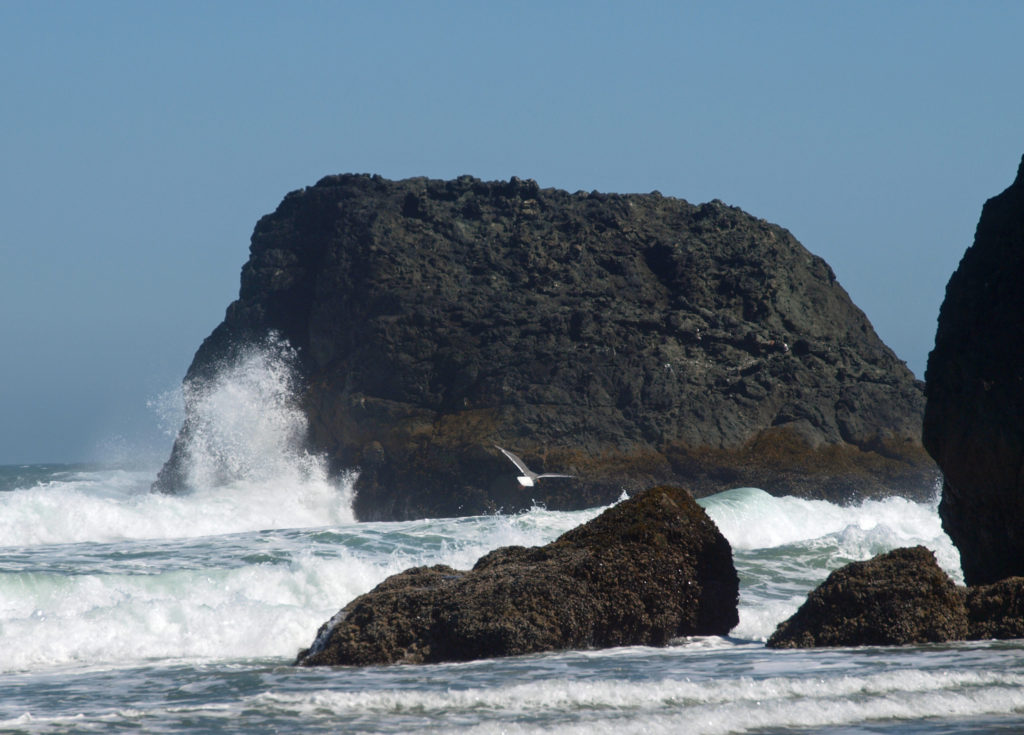
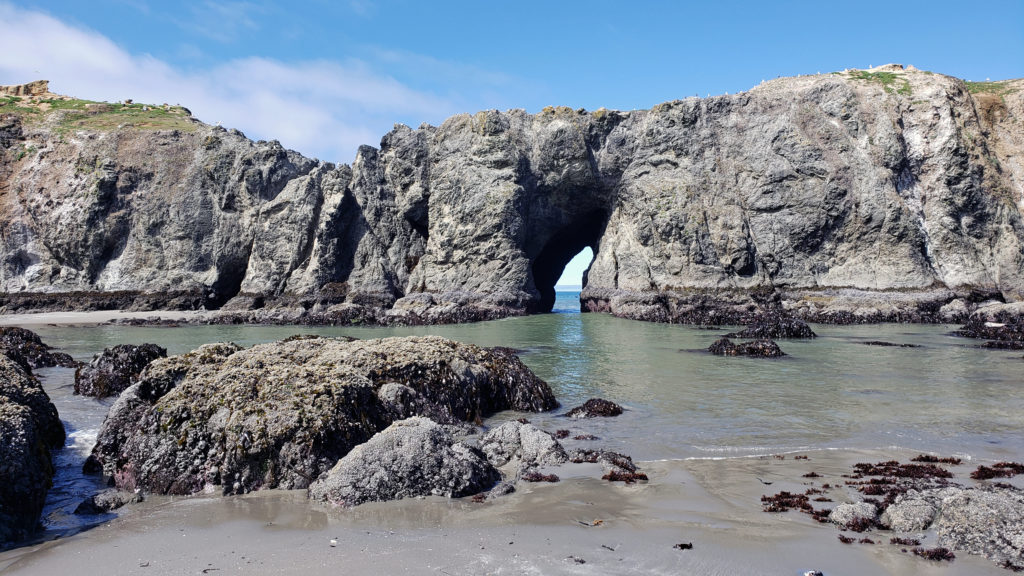
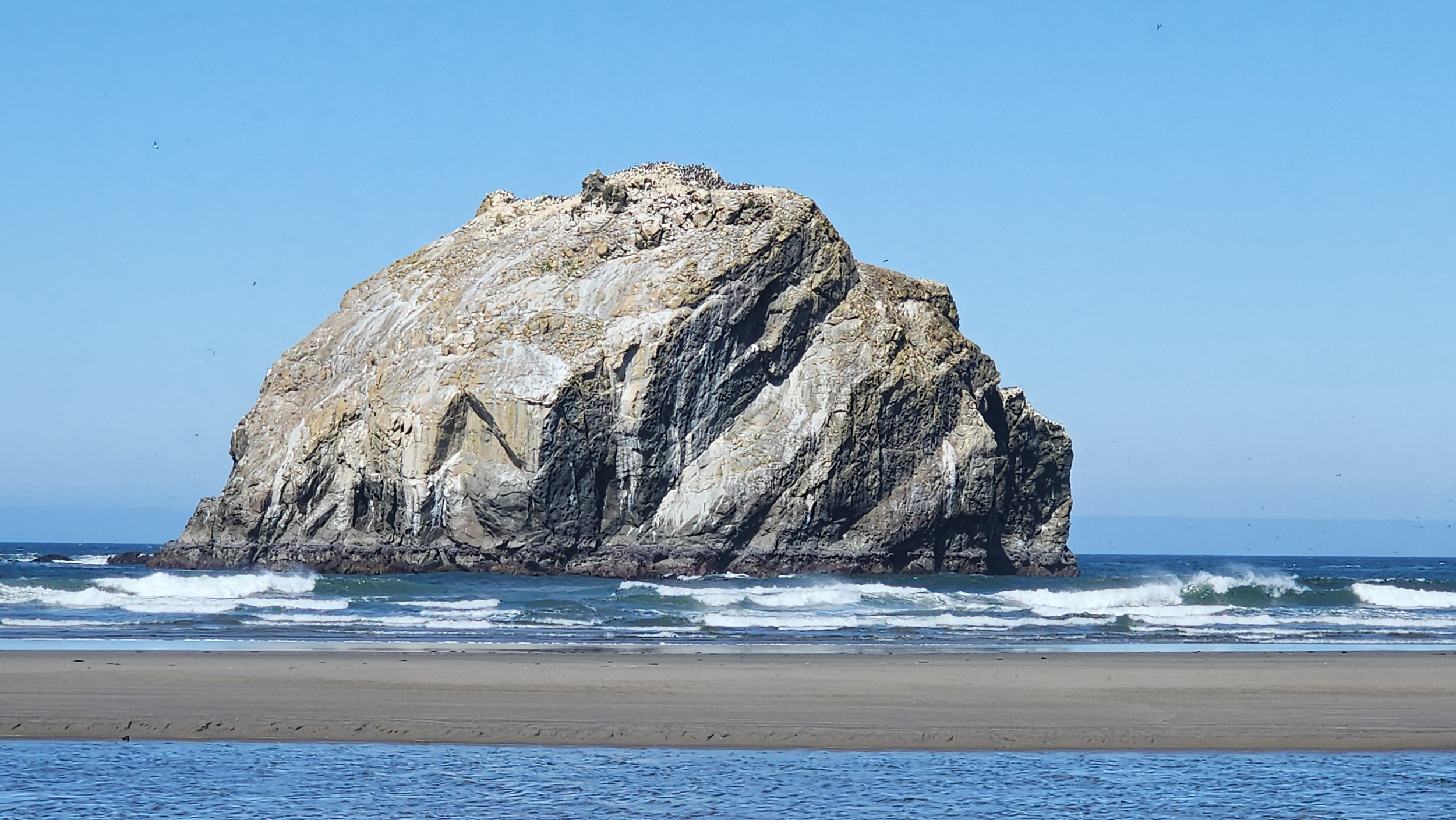
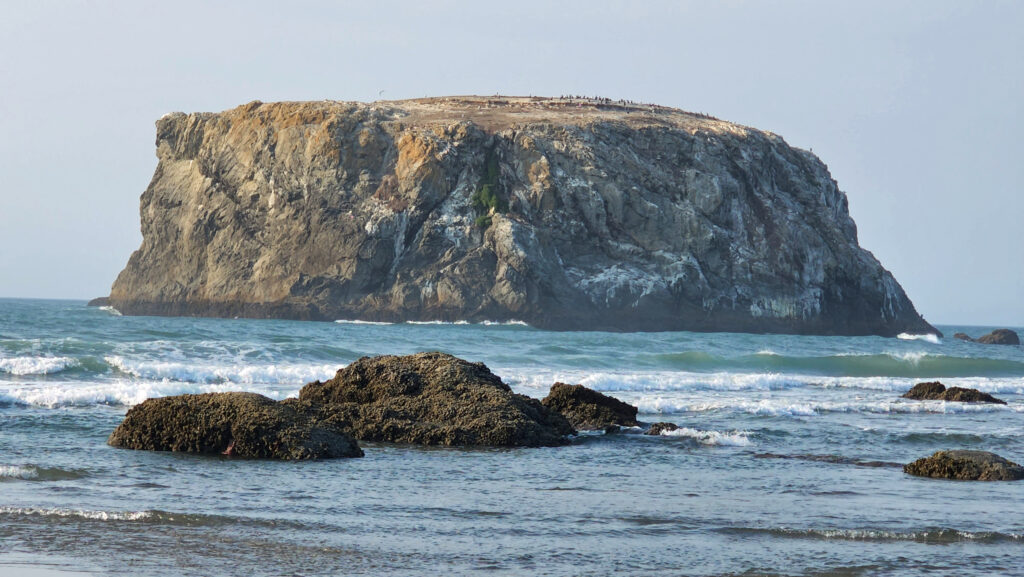
The beach to the south of the Coquille River is a spectacular collection of sea stacks and offshore islands, including Face Rock and Table Rock, that are part of the Oregon Islands National Wildlife Refuge. This is rightly regarded as one of the most beautiful beaches on the Oregon Coast.

Access can be had from the south jetty area, from the wayside at the end of 11th Street, and from Face Rock State Scenic Viewpoint on the Beach Loop Road. Farther south on the Beach Loop Road are other beach access points at Devils Kitchen and Bandon State Natural Area.

Coquille River Lighthouse

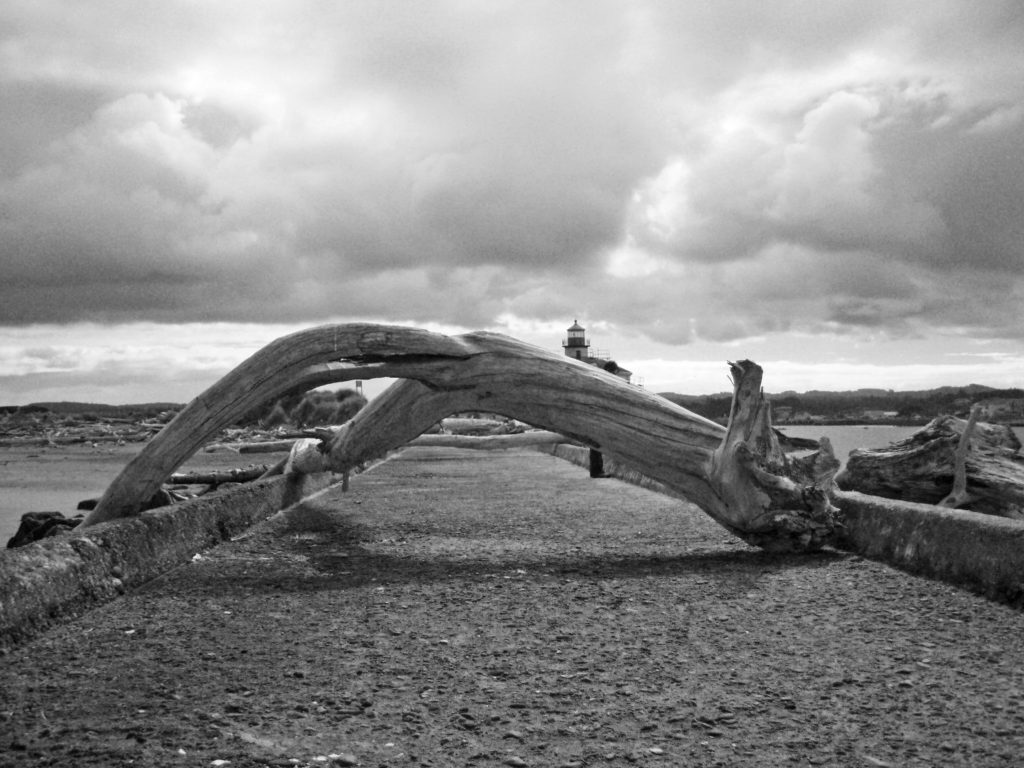
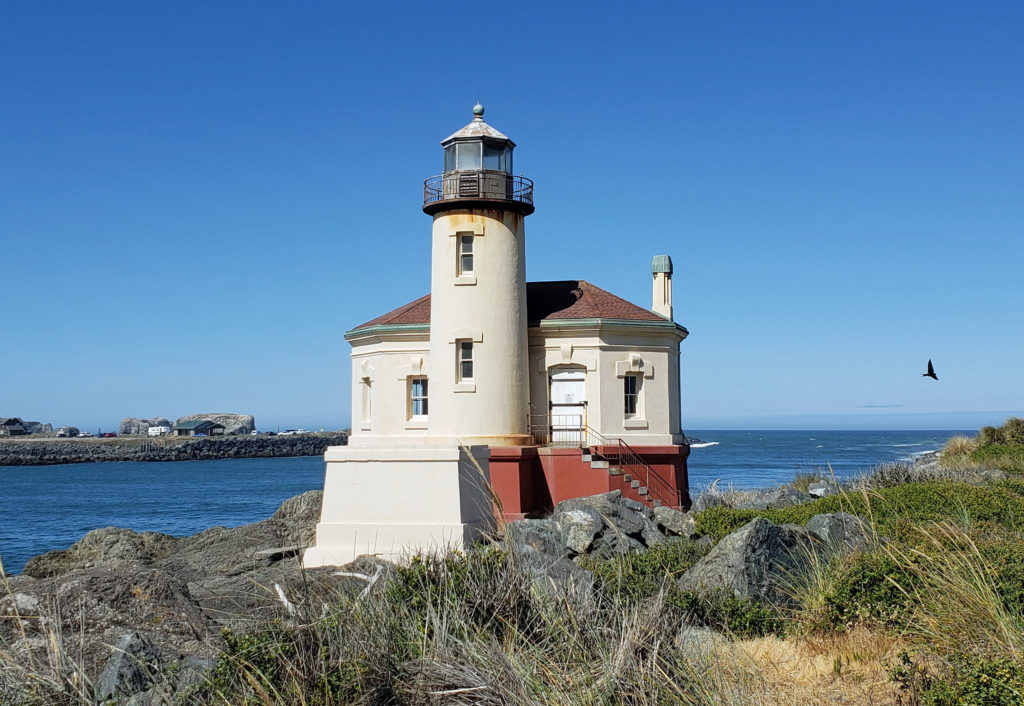
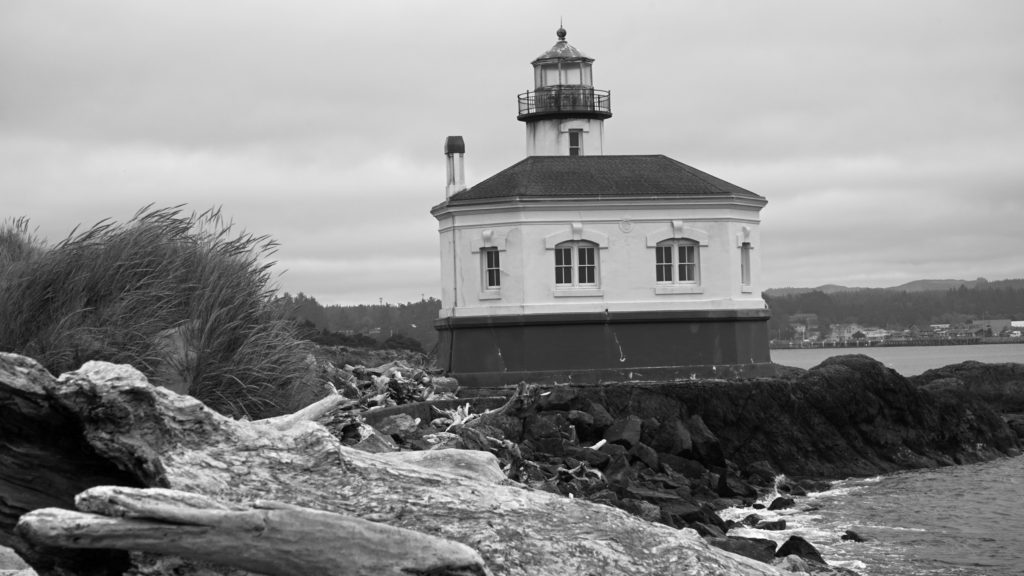
The Coquille River Lighthouse is located at the mouth of the Coquille River on the north jetty, across the river from the old town section of Bandon. It was constructed in 1895-96 and began operating on February 29, 1896. In addition to the lighthouse itself, there was a foghorn, a lighthouse keeper’s residence, and a barn. Various improvements were made in the following years, including a boathouse for the lighthouse tender. None of the other structures remain.

In 1939 the Coast Guard took over the lighthouse and deemed it unnecessary. The lighthouse was replaced by an automated light on the south jetty. The lighthouse sat abandoned for 24 years until it became part of the new Bullards Beach State Park in 1963. It was another 13 years before renovation of the lighthouse began, but it finally opened to the public in 1979. In 1991, during Bandon’s centennial celebration, a solar powered light was installed, ending the Coquille River Lighthouse’s 52 years of darkness. Further renovation of the lighthouse was done in 2007. The bottom floor of the lighthouse is staffed by volunteers and open to the public, but the tower and the light are not.

Circles in the Sand

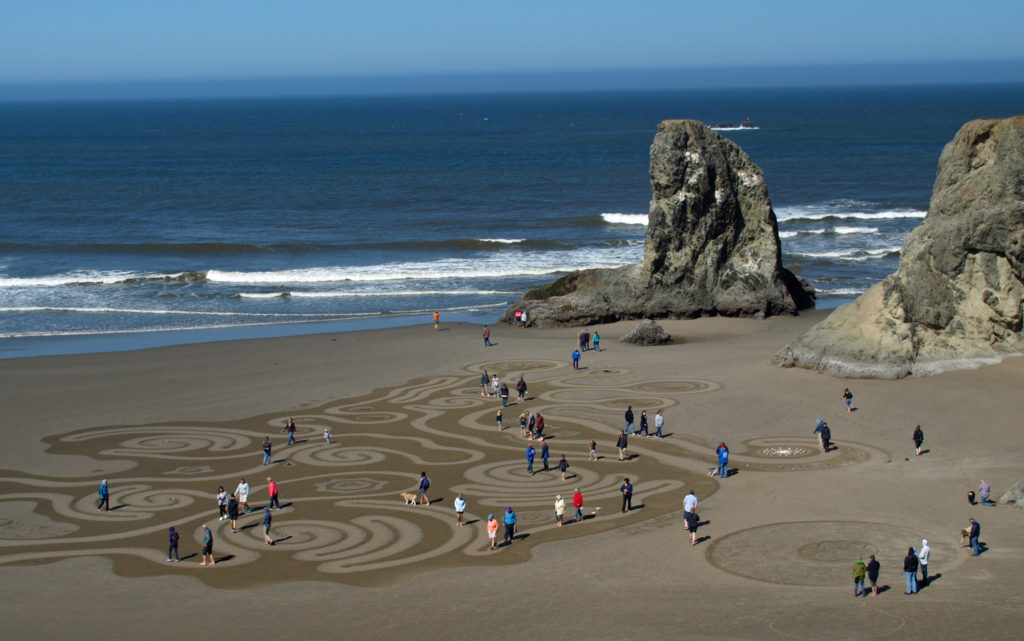
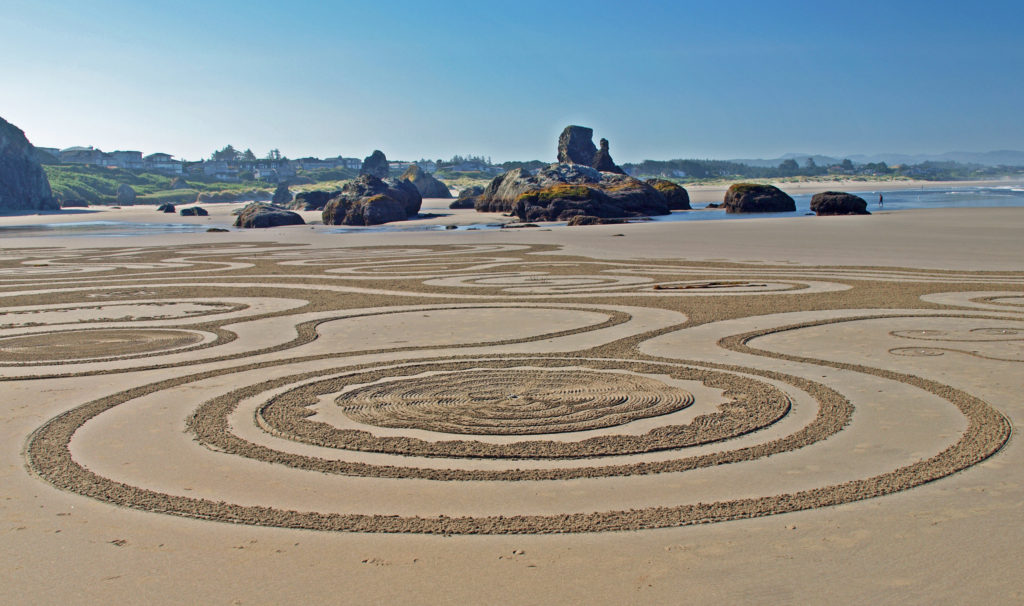
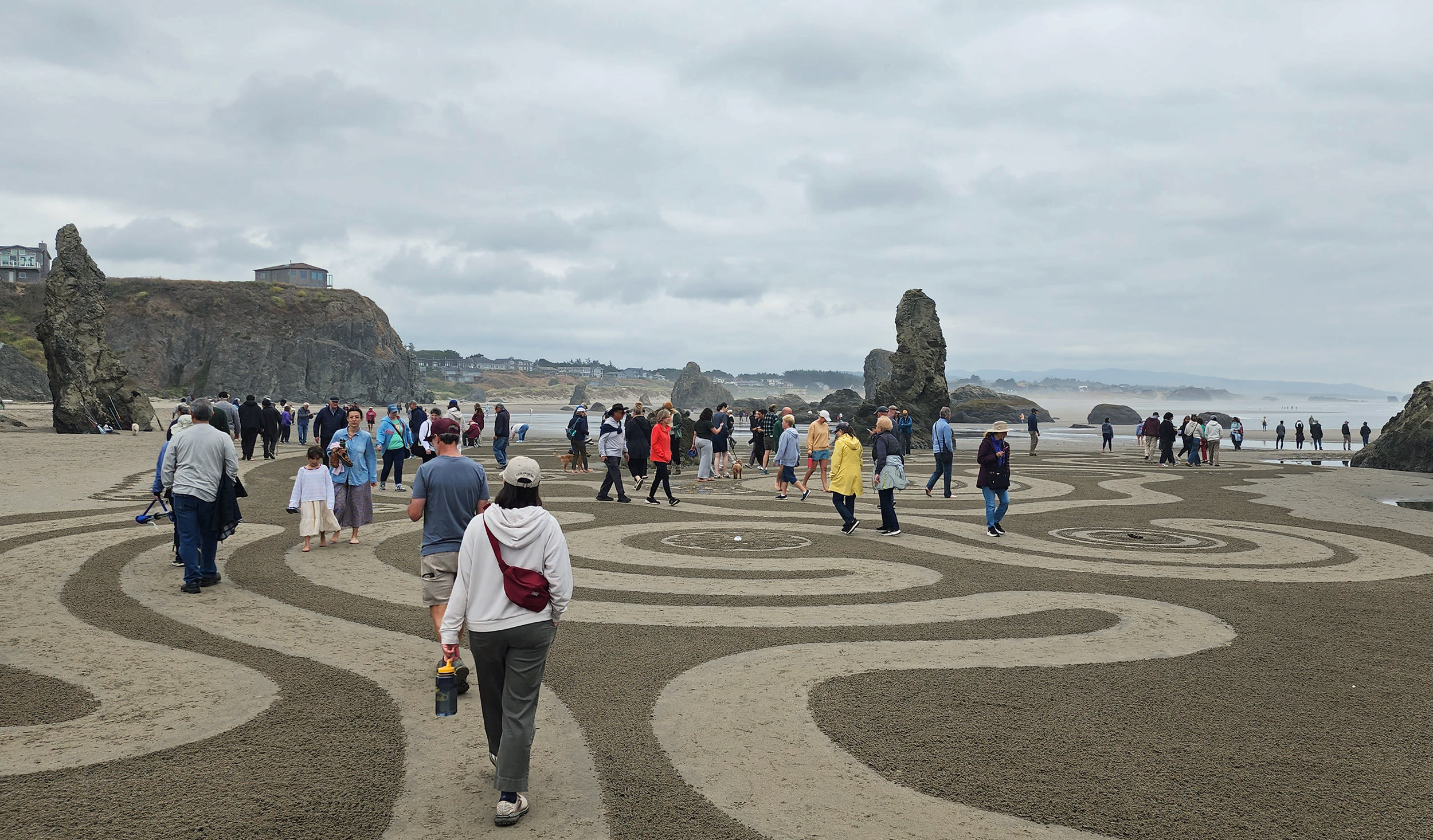
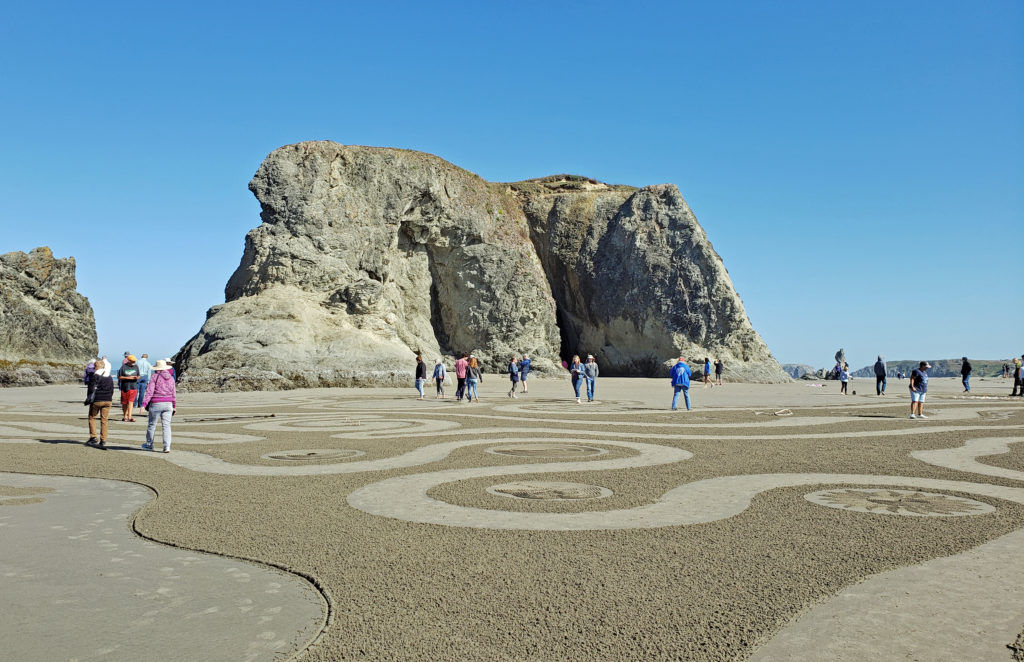
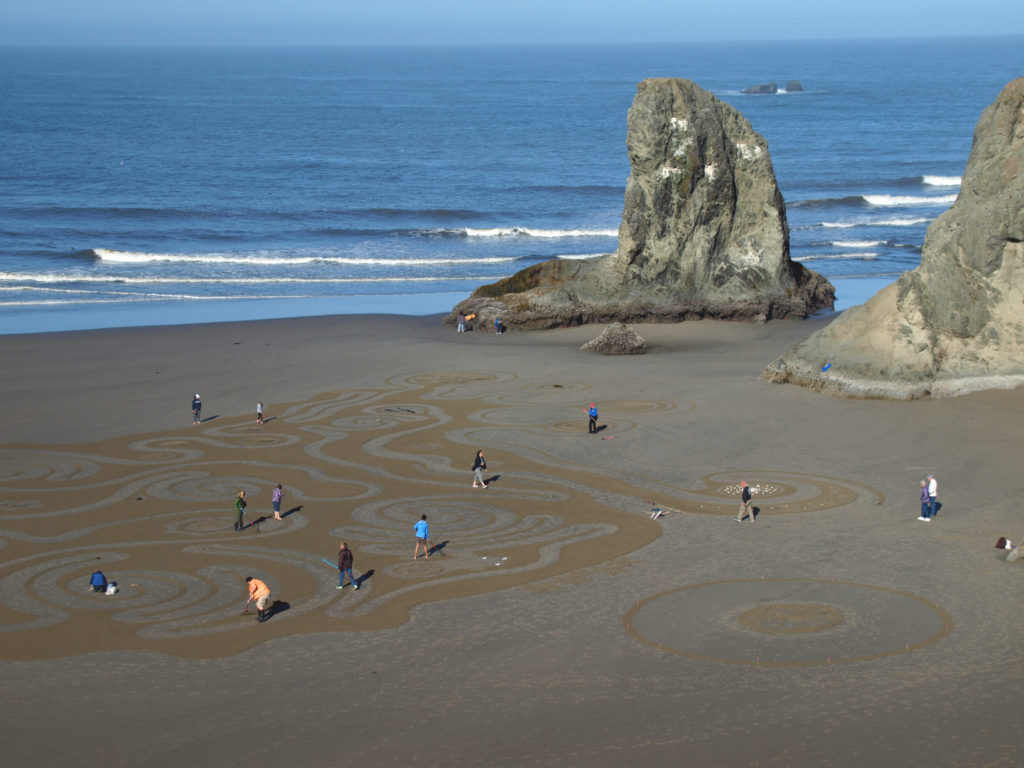
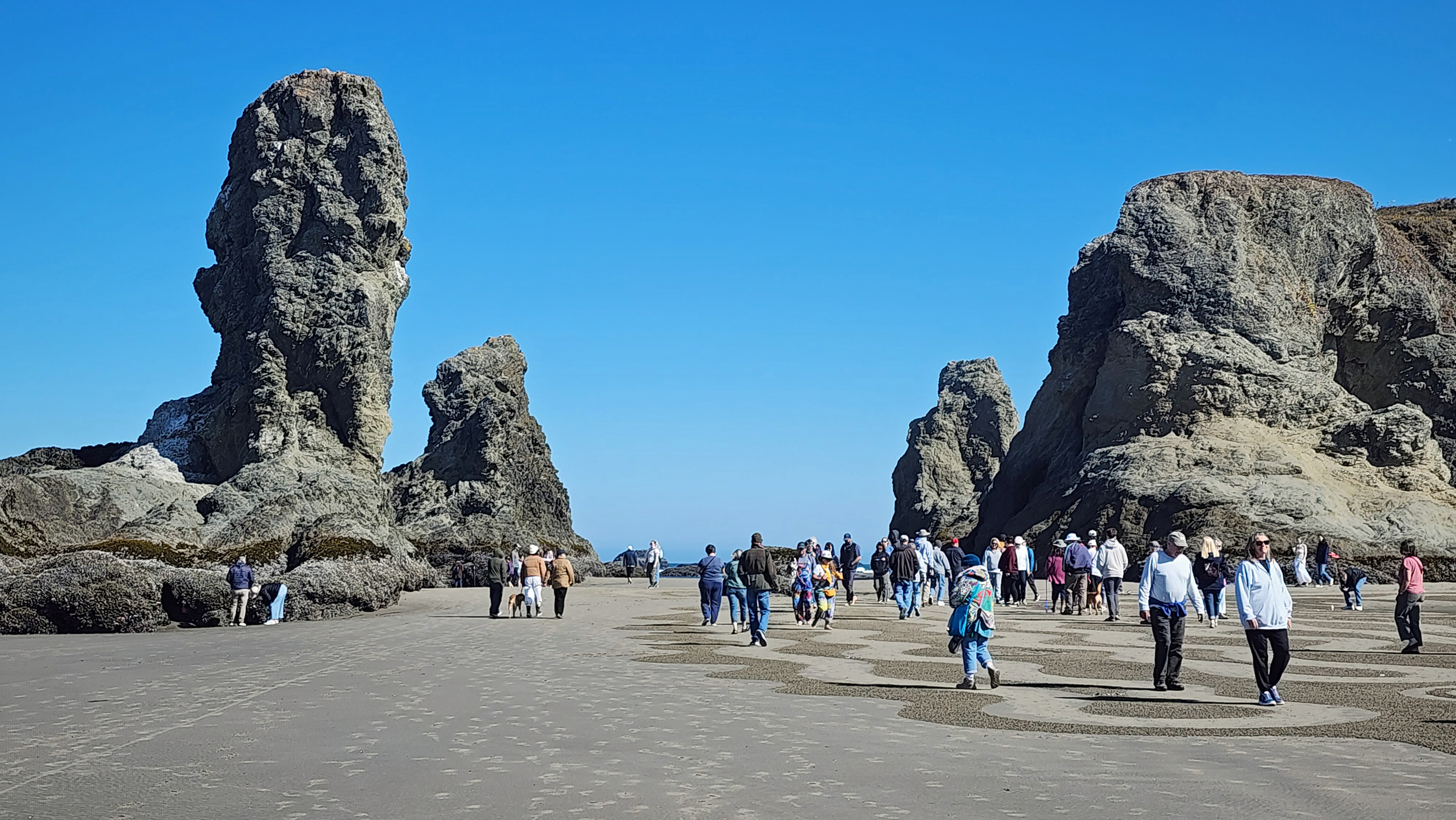
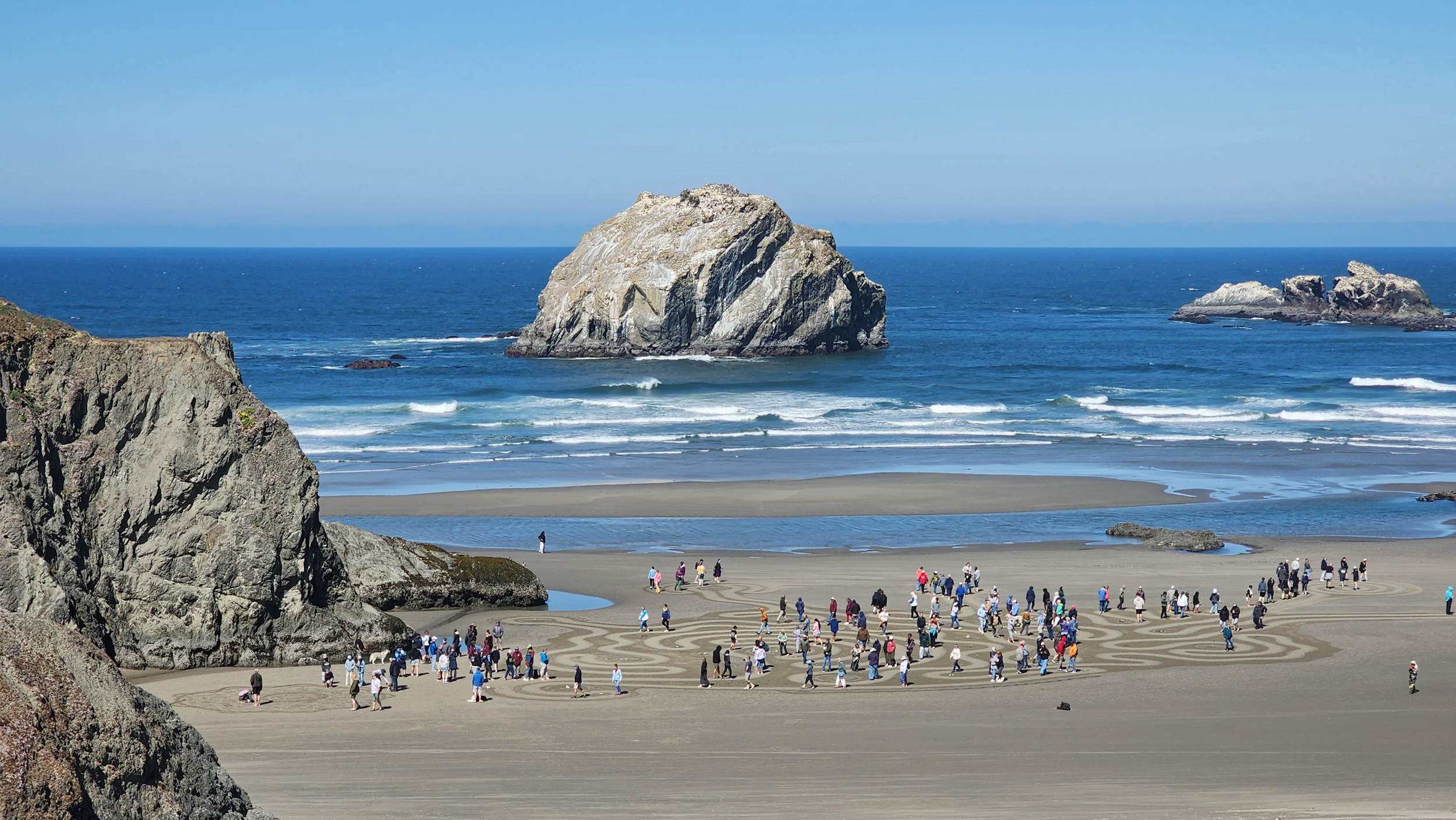
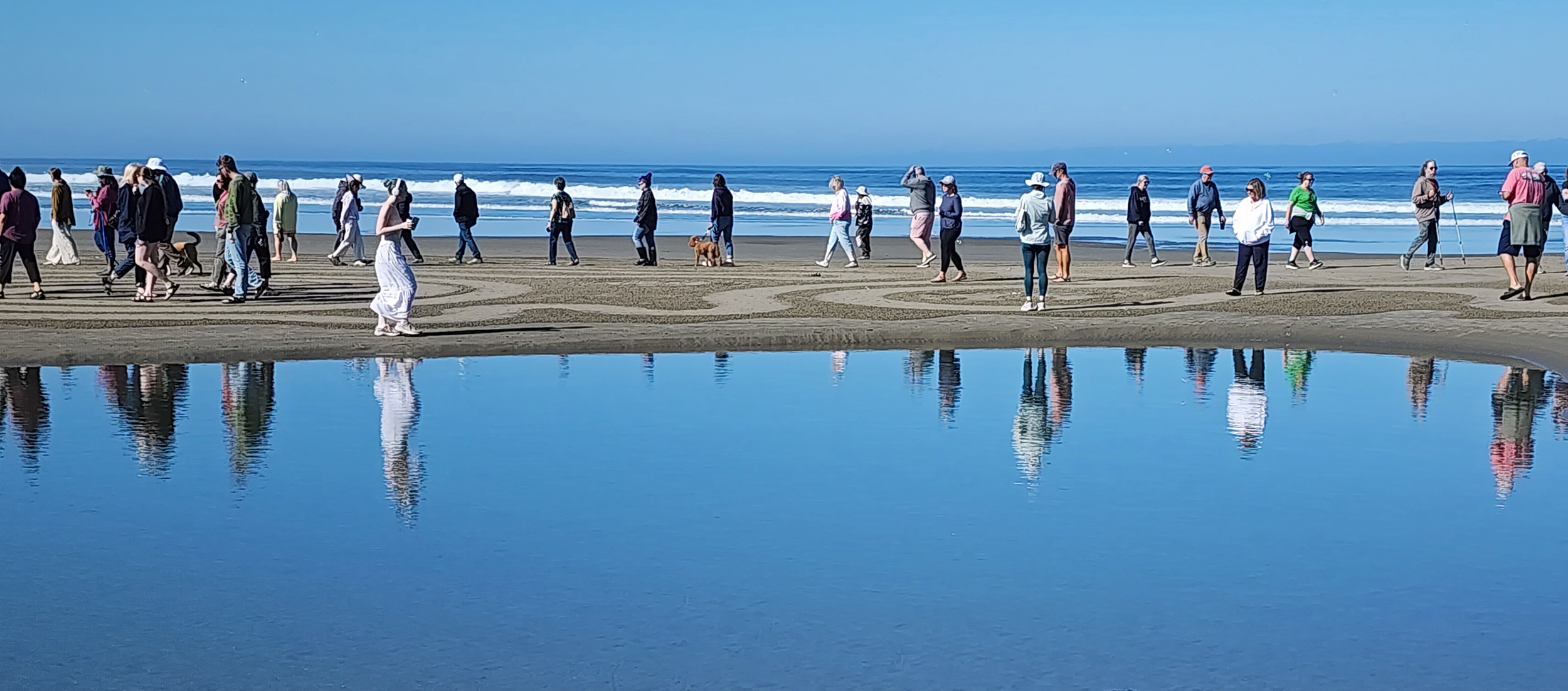
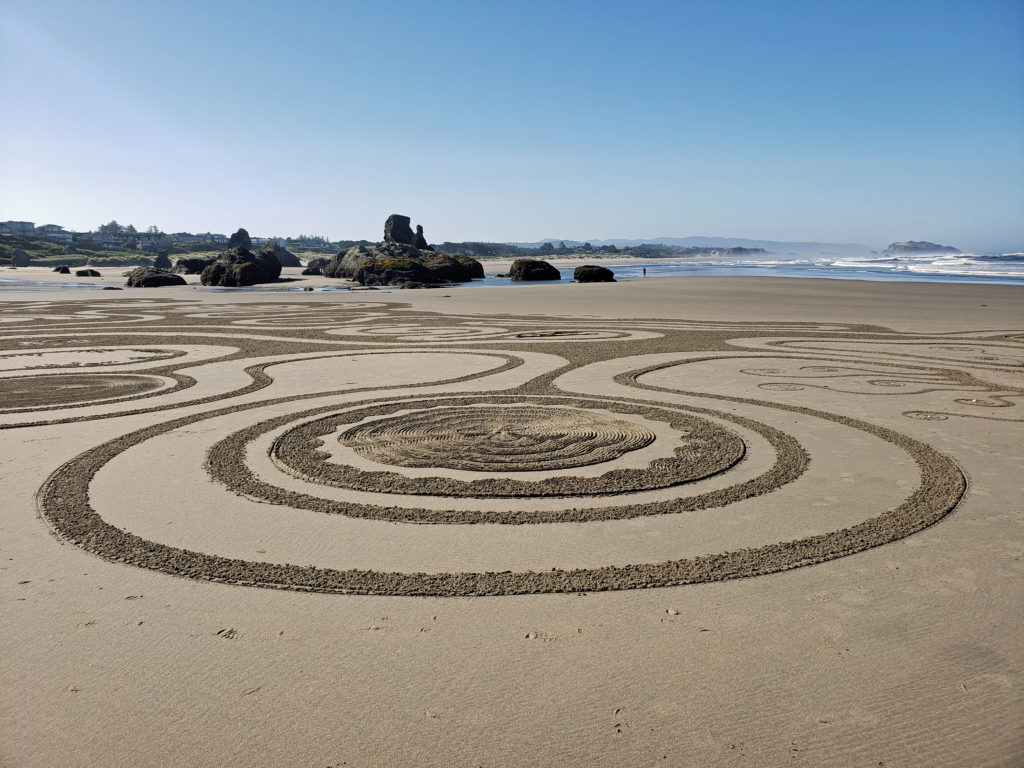
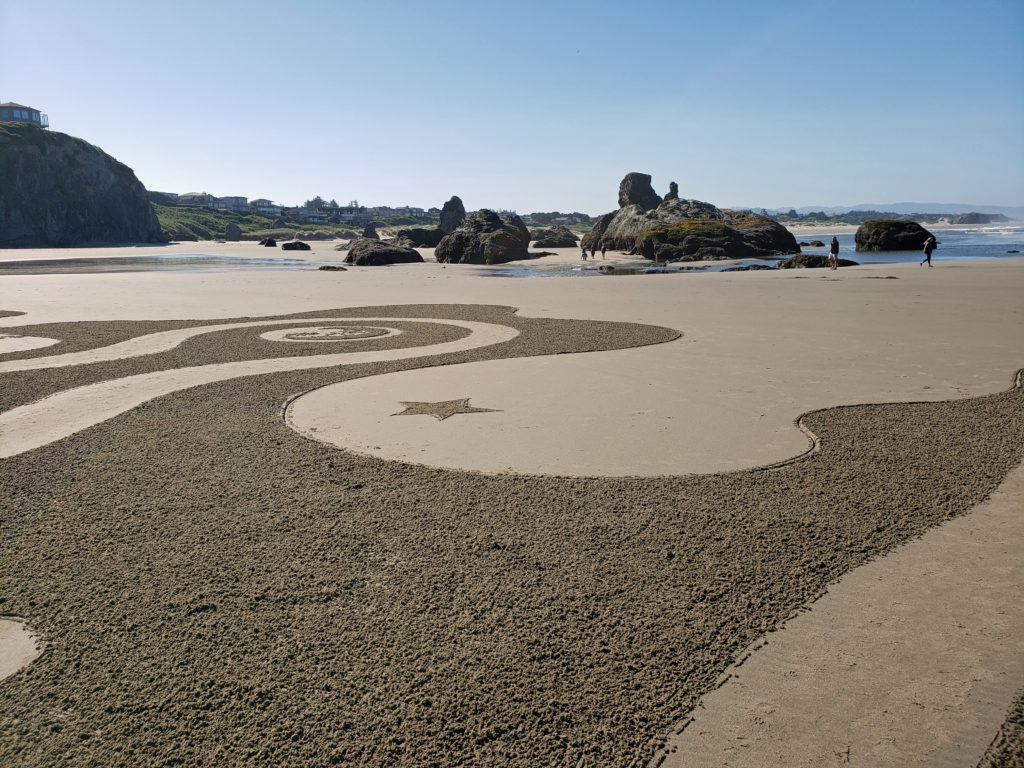
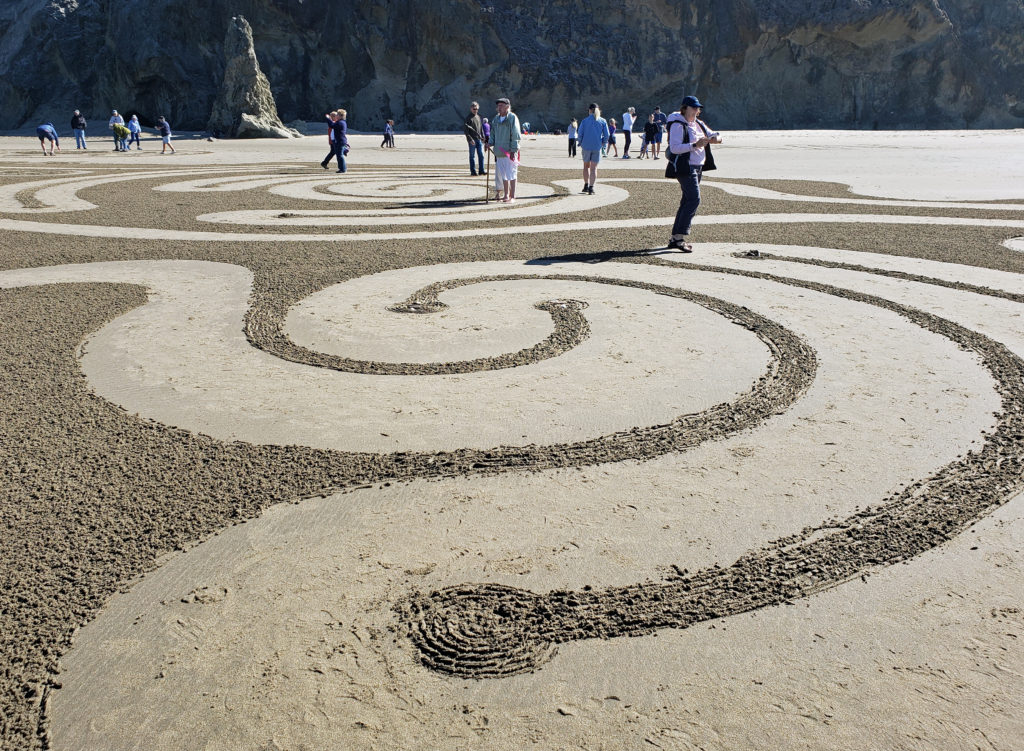
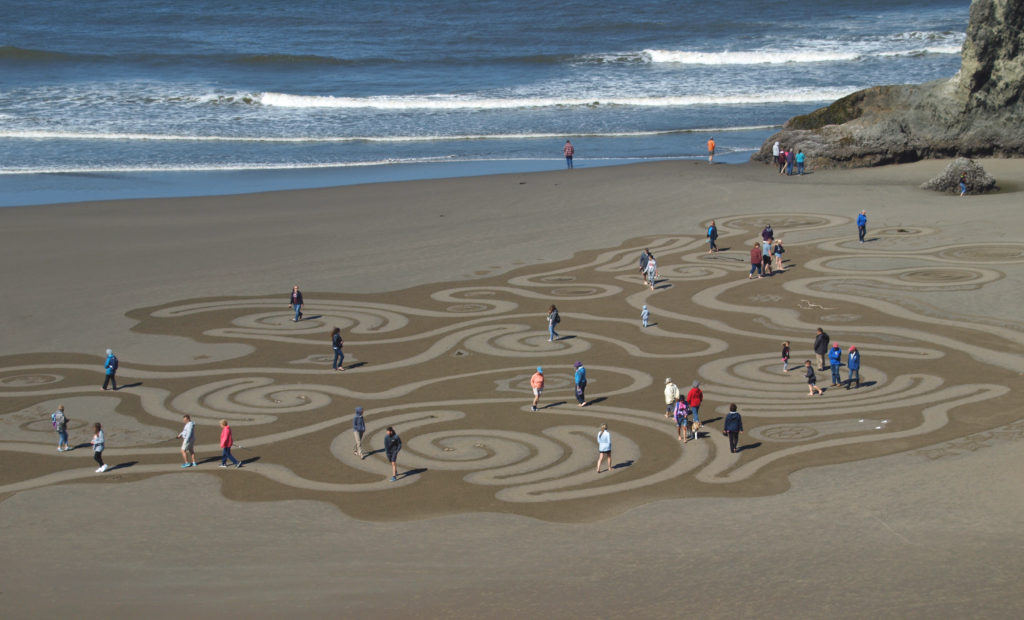
Denny Dyke began creating labyrinths on the Bandon beach in 2011 as part of his ministry, Sacred Journeys. The labyrinths are intended as a form of walking meditation. Over the next few years Dyke created hundreds of labyrinths, and he and a team of volunteers continue to create dozens of labyrinths every year, each unique and lasting only until the next high tide.

The Circles in the Sand labyrinths have become true works of art in the thirteen years that Dyke and his team have been creating them. They have also become very popular events, as have other walking labyrinths in other locations.

Golf

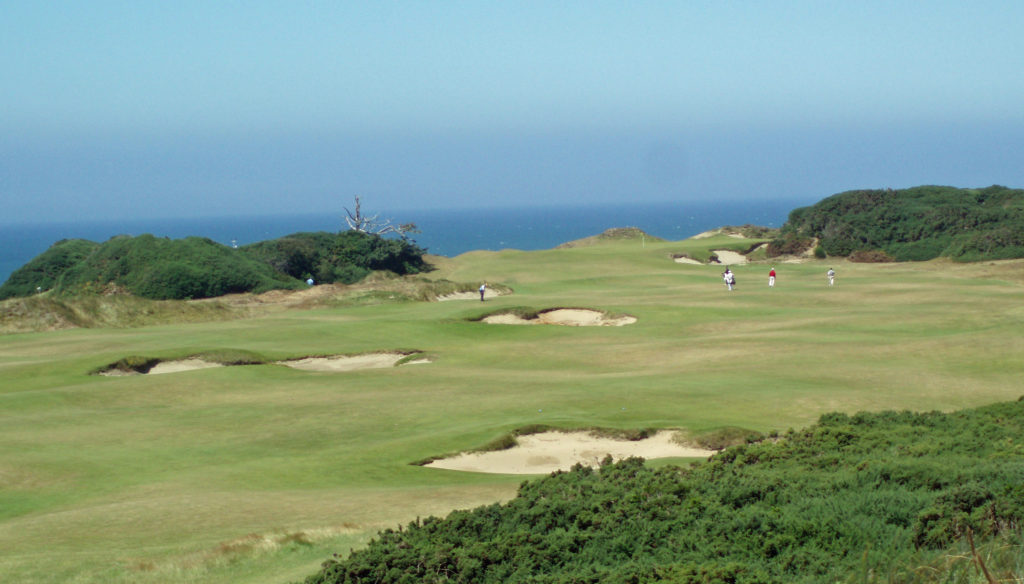
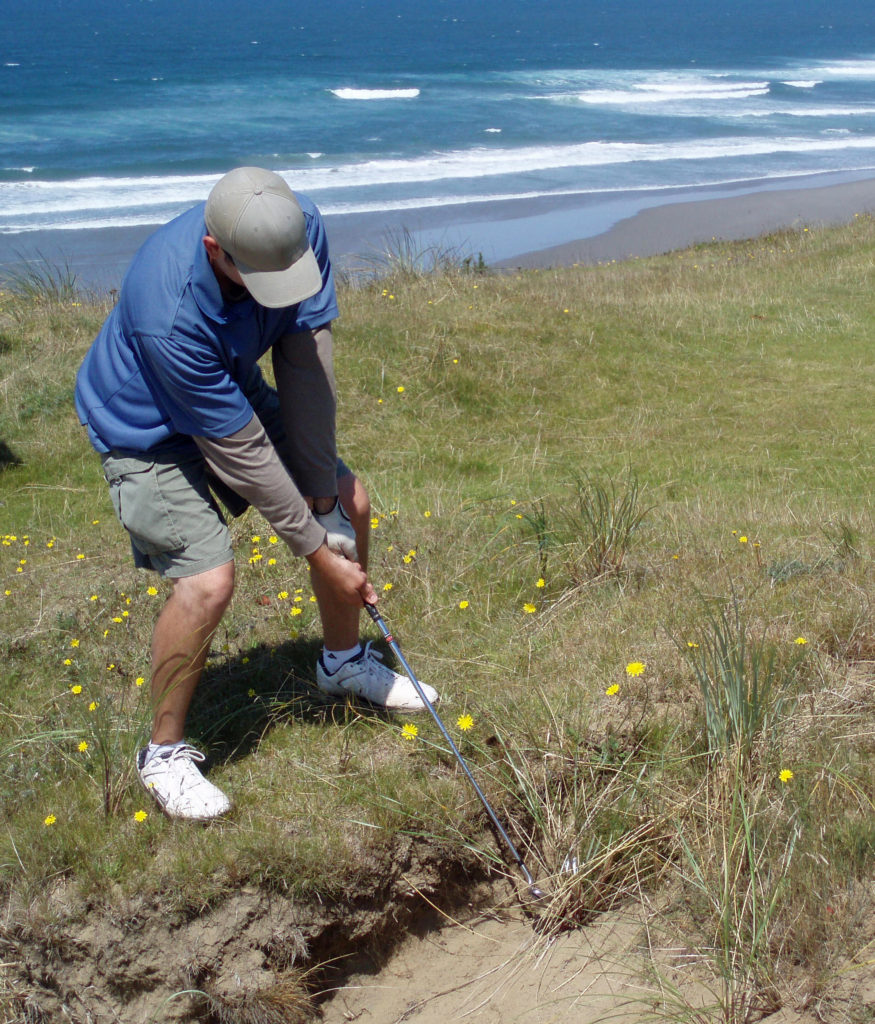
If you’re a golfer, you have likely heard a lot about Bandon Dunes Golf Resort. There are now five full length courses: Bandon Dunes, Pacific Dunes, Bandon Trails, Old MacDonald, and Sheep Ranch.

All of the Bandon Dunes courses are consistently rated in the top 100 courses in the United States, and the 13 hole par three course, Bandon Preserve, is a challenge in itself. A few miles south of town, Bandon Crossings offers a lesser known, much less expensive, and equally challenging course that should be on every golfer’s radar.


Old Town

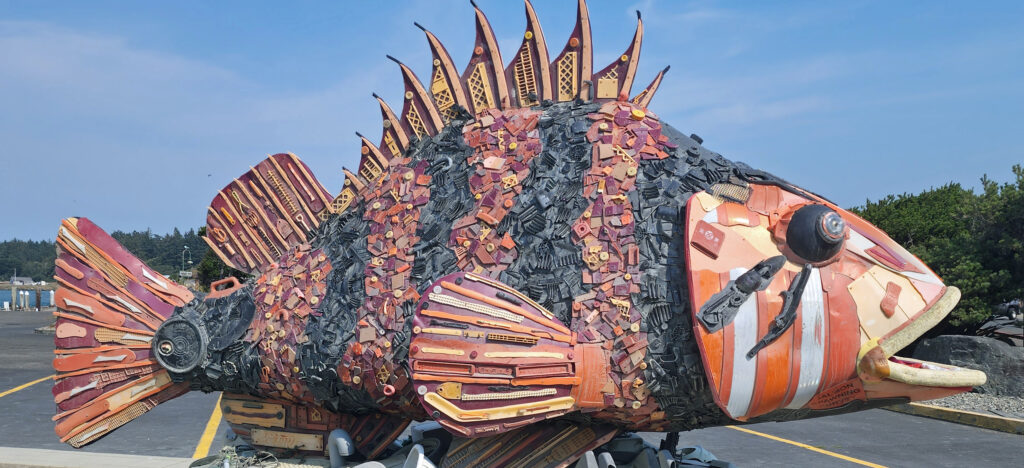
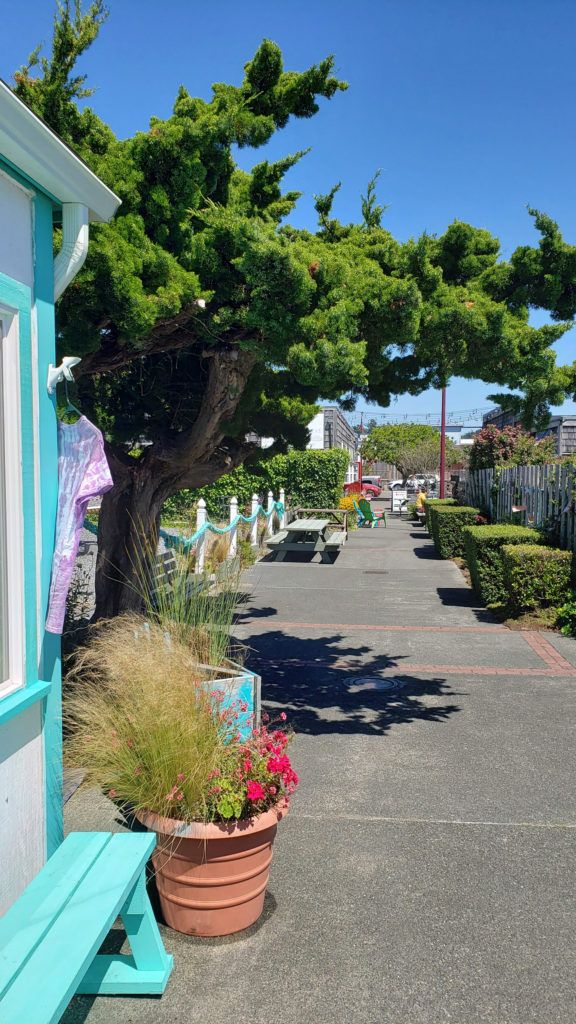
Bandon’s Old Town area is loaded with restaurants, galleries, gift shops, and outdoor art exhibits. Art lovers will want to visit Second Street Gallery, and everyone should take in the Washed Ashore exhibit, which displays sculptures and other artworks created entirely from marine debris picked up from the beach. Washed Ashore is a non-profit organization dedicated to educating the public about plastic pollution of the oceans and waterways, and to making positive changes in consumer habits.

Good eats abound in Old Town. Start your day at Bandon Coffee Cafe or Bandon Baking Company. Stop at Face Rock Creamery to sample locally made cheeses and ice cream. Seafood lovers will want to sample the fare at Tony’s Crab Shack and Bandon Fish Market. Pub fare and quality draft beer are both to be had at Foley’s Irish Pub and Bandon Brewing Company. Decent and affordable Mexican food can be had at La Fiesta. And if more upscale dining is what you’re looking for, try The Loft Restaurant and Bar or Alloro Wine Bar and Restaurant.


Accommodations

There are many hotels, motels, vacation rentals, and other accommodations in Bandon. Useful websites include: Visit the Oregon Coast,  Bandon Chamber of Commerce,  Bandon Dunes Golf Resort,  Trip Advisor,   Airbnb, and Vacasa.

There is a campground at Bullards Beach State Park with 103 full-hookup sites and 82 sites with water and electricity. And there are a number of commercial RV parks in the immediate area.

Getting There

Bandon isn’t exactly easy to get to. It’s about a 2½ hour drive from Eugene, three hours from Medford, and 4½-5 hours from Portland. There are no commercial flights to Bandon Airport. United Express does have daily flights from San Francisco and twice weekly flights from Denver to the Southwest Regional Airport in North Bend, but there are no direct flights between North Bend and Portland or other cities. There is no railroad serving Bandon, and there does not appear to be any bus service to Bandon. But Bandon’s remoteness means that it is less crowded than the northern or central Oregon coast, and the spectacularly beautiful beaches and interesting old town make it worth the trip. And, of course, there is Bandon Dunes, if you’re a golf fanatic.

Consider combining a visit to Bandon with a drive south along the spectacular Southern Oregon Coast and through the Redwoods of the northern California coast, one of the most beautiful and least visited sections of the Pacific coast. My wife and I did just that in 2022. Give yourself a week or more for that trip because there is just so much to see and do.

Best Times To Visit

For my money, September and October are the best months to visit Bandon and the rest of the Oregon coast. The summer crowds are gone, the high winds that frequently makes the beaches uncomfortable on summer afternoons are less frequent and the weather is often better in the fall than any other time of the year. But there is really no bad time to visit.

Originally posted July 24, 2018. Most recently updated November 8, 2025.

All photos © Alan K. Lee

Snoqualmie Valley

by Alan K. Lee

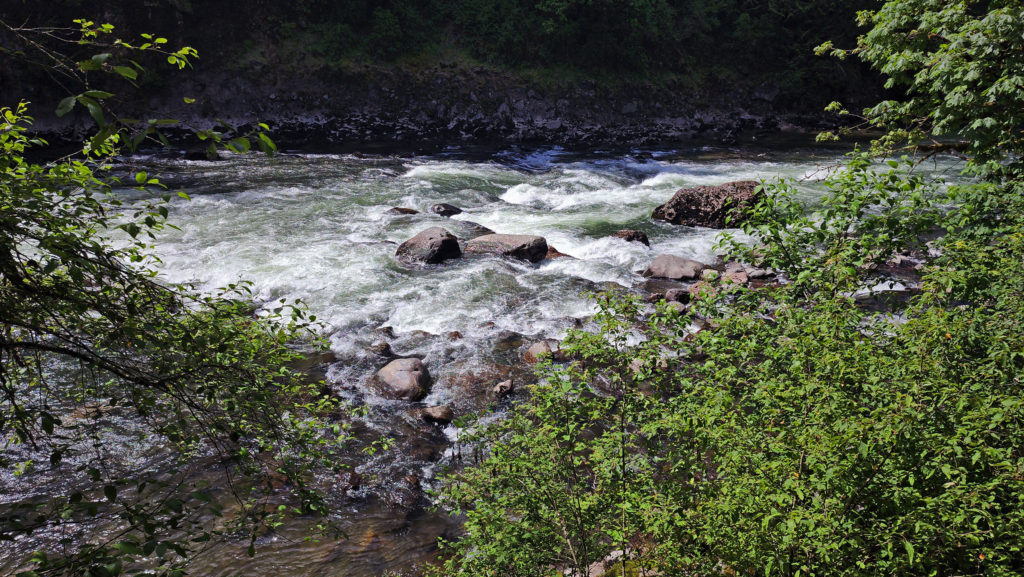
The beautiful Snoqualmie Valley runs from just east of Seattle, Washington southeast to Snoqualmie Pass at the crest of the Cascade Mountains. The valley’s proximity to Seattle and its eastern and southern suburbs makes the Snoqualmie Valley quite literally Seattle’s backyard. We’ll touch on some of the many recreational opportunities in the Snoqualmie Valley and in the Snoqualmie Pass area, but we’ll focus first on the two areas we visited on our most recent visit, Twin Falls on the South Fork of the Snoqualmie, and Snoqualmie Falls on the main stem.

Snoqualmie River

The middle and south forks of the Snoqualmie River arise near Snoqualmie Pass, which is only about 45 miles as the crow flies from downtown Seattle. The middle, south, and north forks of the river all come together to form the main stem of the Snoqualmie River just above the magnificent Snoqualmie Falls.

To say that the river is a very popular destination for people looking to escape the city is a bit of an understatement. On summer weekends it can seem like half the population of the metro area can be found along its banks or in the surrounding mountains. But there are dozens, probably hundreds, of hiking trails and other attractions, so the crowds disperse to some extent. But we were last there on the Fourth of July, and Snoqualmie Falls was a madhouse that day. Nevertheless, my wife and I still enjoyed our time there, and we had done a hike earlier in the day that was much less crowded. More on that below.

Snoqualmie Falls

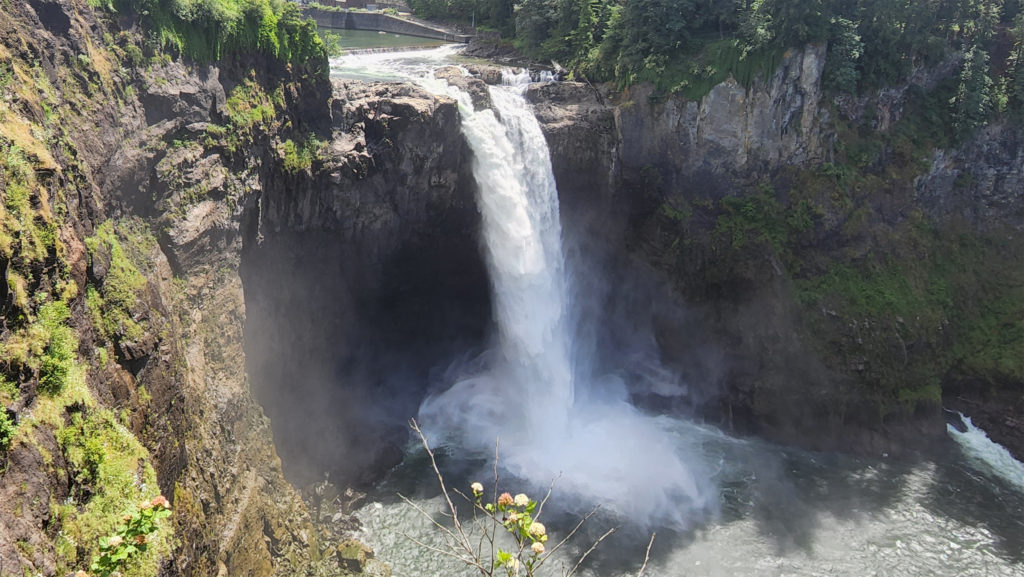
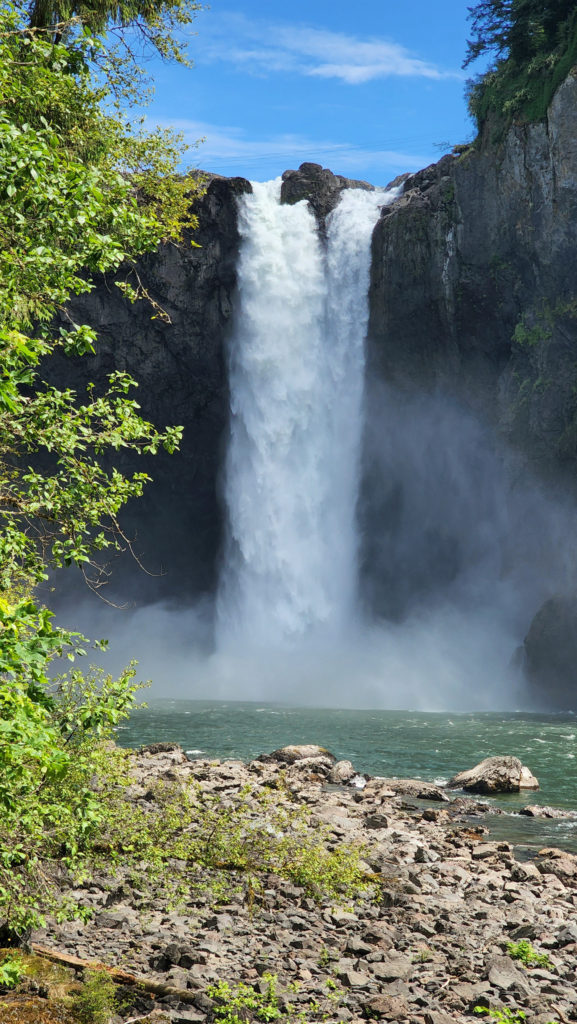
Less than an hour’s drive from most of the Seattle metropolitan area, Snoqualmie Falls gets a lot of tourist traffic. More than 1.5 million people visit the falls annually. Most of the visitors are day trippers, but Salish Lodge sits on the north bank of the river at the top of the falls, so there are still many people in the area mornings and evenings. You’re not going to find solitude here.

The falls have been used to generate electricity since the turn of the 20th century. The first power plant was built in 1899. Power Plant #1 is largely inconspicuous because it is entirely underground, the first underground power plant built in the country. Power Plant #2, built in 1910 on the north bank of the river just downstream of the falls, is much more conspicuous, with three large pipelines running above ground down the slope to the plant.

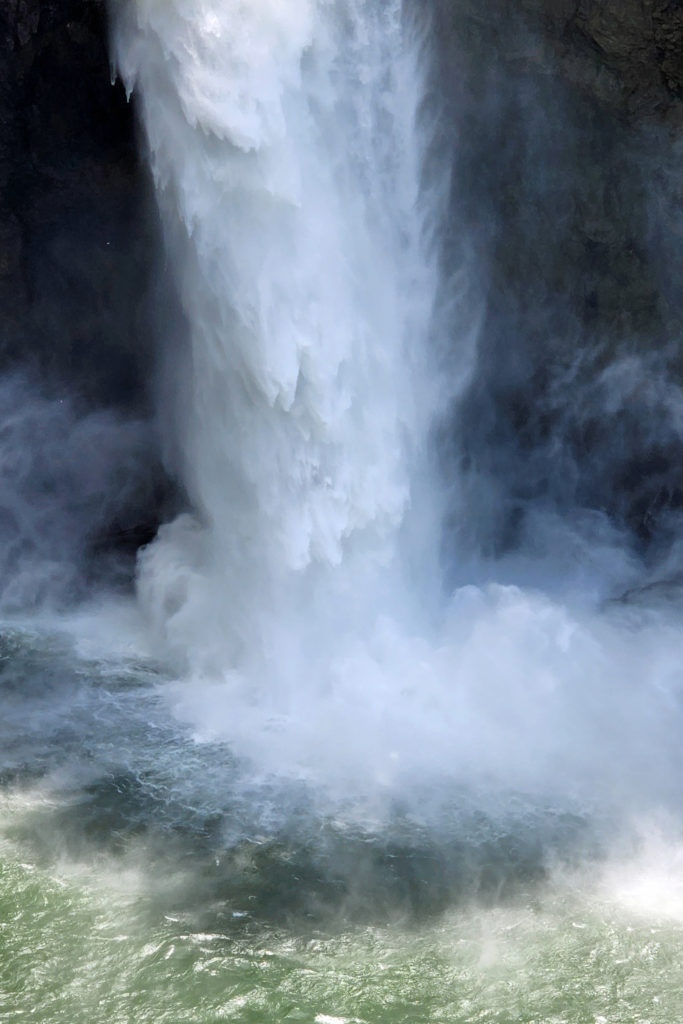
So, this is not prime wilderness. But with a 268 foot vertical drop, Snoqualmie Falls is more than twice the height of Niagara Falls. And fed by the abundant winter and spring rains and the spring and summer snow melt from the Cascade Mountains, the volume of water flowing over the falls can be an awesome sight.

The Fourth of July might be the worst possible time to visit the falls. It took us some time just to find a parking place, and the viewing areas at the top of the falls were elbow to elbow. After waiting our turn to get photos at several view points, we hiked down to the base of the falls. There were fewer people at the bottom than the top, but it wasn’t uncrowded by any means. My advice would be to go on a weekday, if possible, come early in the day if you can only come on a weekend, and avoid holiday weekends completely. But despite the crowds (and the heat), we enjoyed our stop.

The falls are just a few miles off of Interstate 90, near the town of Snoqualmie. Take Exit 25 and follow Snoqualmie Parkway to the falls.

Twin Falls

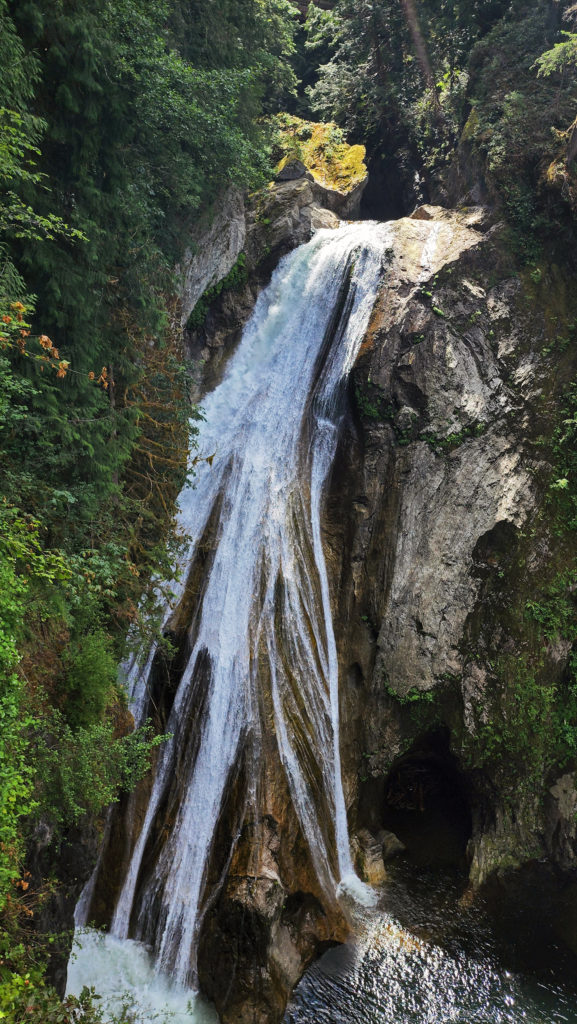
Earlier in the day, we hiked to Twin Falls on the South Fork of the Snoqualmie River. This is a relatively easy, family friendly hike. The Washington Trails Association rates the hike Easy/Moderate. We had two of our grandkids with us (age four and six), and both made the 2.6-mile round trip without much difficulty. Twin Falls is a little less than ten miles east of Snoqualmie Falls. For a more complete description of the hike with more photos, click here.

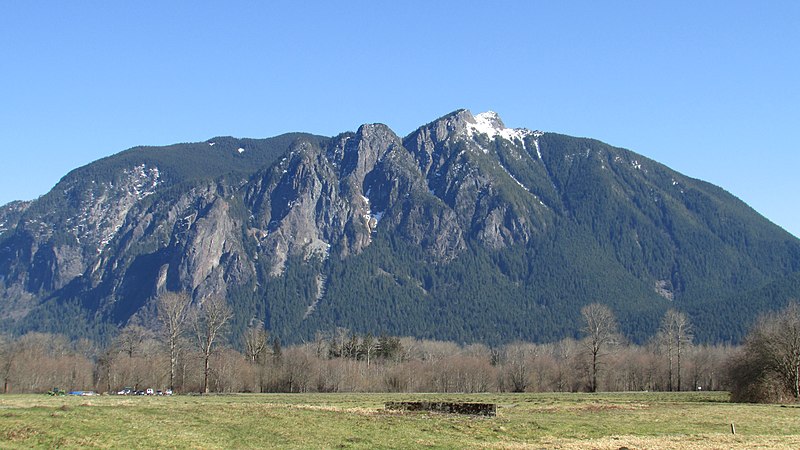
Mount Si. Photo by Chris Light.

There are many other hikes in the Snoqualmie Valley that offer a variety of difficulty levels for all types of hikers. According to the Washington Trails Association, the Mount Si Trail is the most popular hike in the state. It’s not a trail for everyone, though. The eight-mile round trip gains a staggering 3150 feet in elevation. The WTA rates it Hard. No kidding. But, despite the difficulty, upwards of 100,000 people make the trek every year.

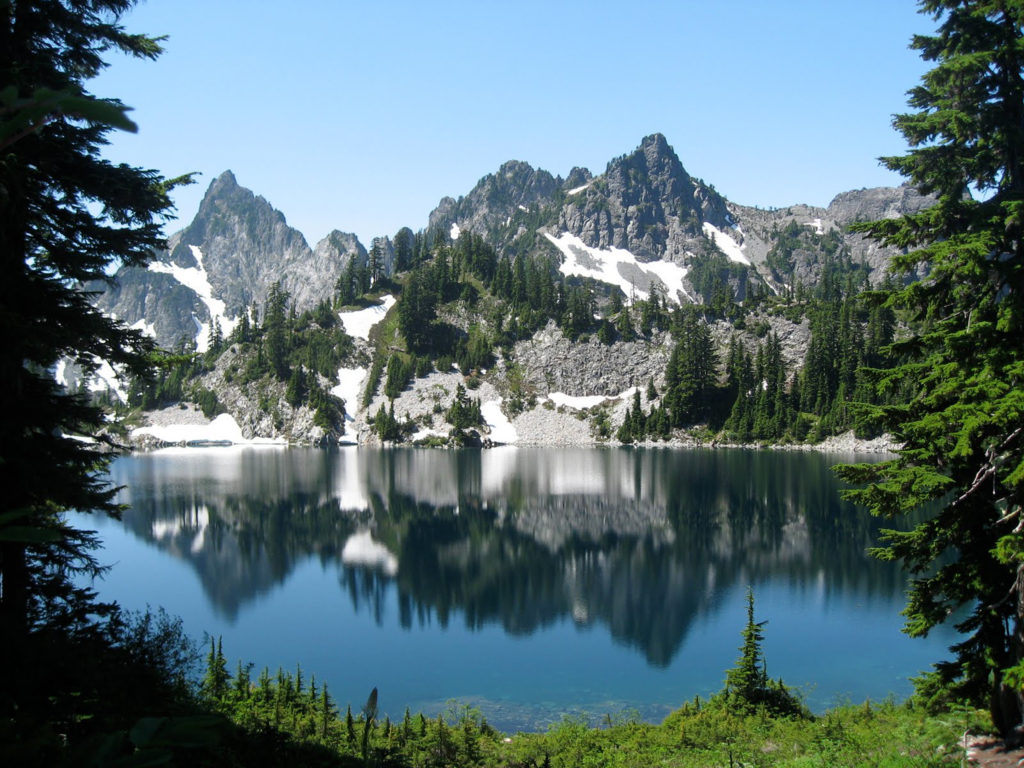
Snow Lake. Photo by Maryann Huang.

The Snow Lake Trail on Snoqualmie Pass offers a slightly shorter and easier hike (7.2 miles round trip with 1800 feet of elevation gain, rated Moderate/Hard). I was captivated by the photo above that I saw many years ago on the internet. Snow Lake is incredibly beautiful, as you can see.

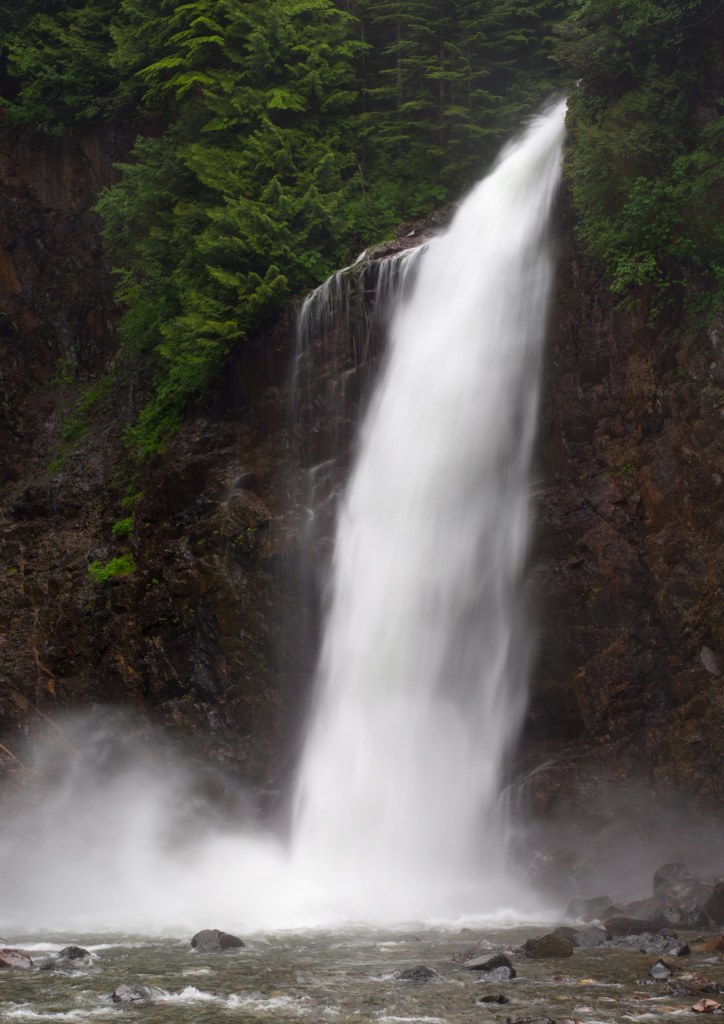
Franklin Falls. Photo by Bobby Marko.

For those of you with young children (or grandchildren) in tow, there are many kid-friendly trails in the Snoqualmie region in addition to Twin Falls, including Franklin Falls, Lodge Lake, Oxbow Loop, Mirror and Cottonwood Lakes, and many others. Check the WTA website for more family friendly hiking options.

As well as hiking, the Snoqualmie Valley offers many other outdoor activities, from mountain biking, fishing, boating, and camping in the summer to cross country and alpine skiing, snow shoeing, and snowmobiling in the winter.

View from Mount Si. Photo by VOXroy.
North Bend

And if outdoor activities aren’t your thing, there are still options for you. For a luxury hotel experience, you can’t beat the Salish Lodge at Snoqualmie Falls. The nearby town of North Bend has some nice restaurants and an interesting history. Fans of the David Lynch TV series, Twin Peaks, may recognize parts of the town. The series was partially filmed in North Bend.

If you’re interested in sightseeing, but don’t want to (or aren’t able to) hike, the Summit at Snoqualmie ski area operates several chair lifts in the summer that will take you up to scenic viewpoints. Adult tickets are $20, and senior and youth tickets are $15. There are also a variety of bars and restaurants at the resort.

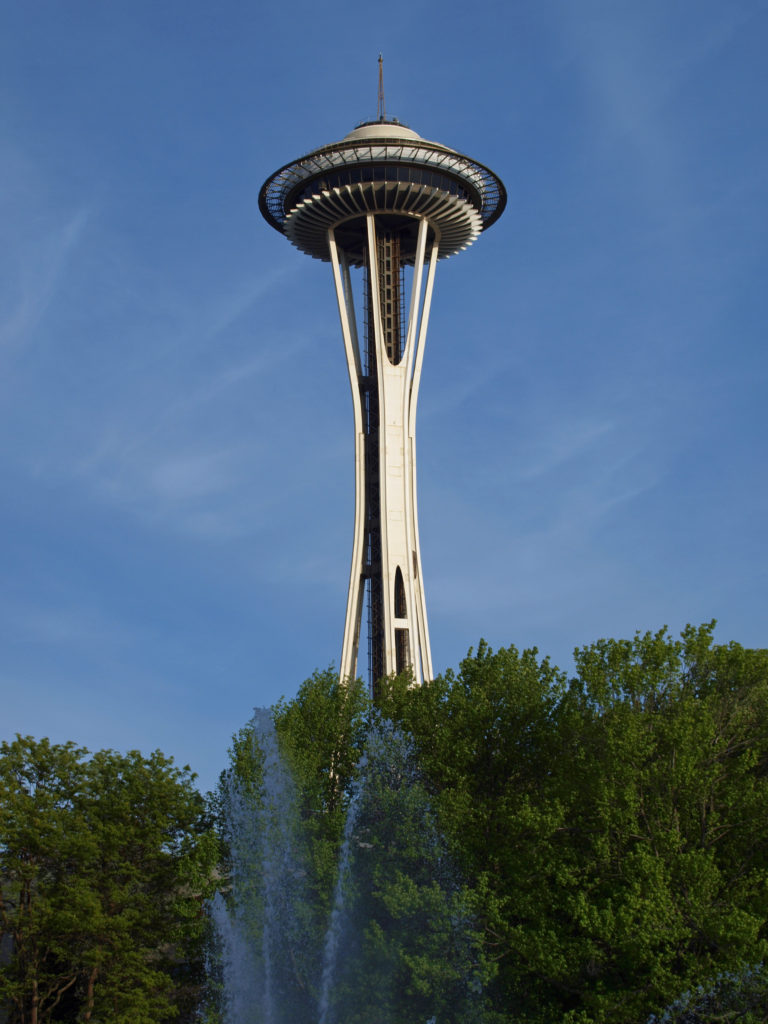
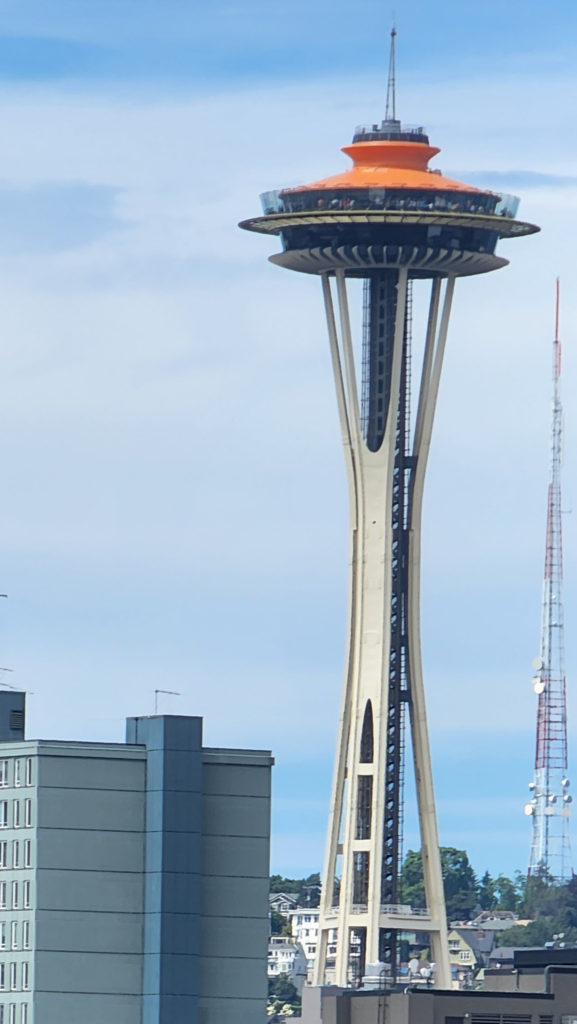
If you’re visiting the Seattle area, you’ll surely want to take in the Seattle Center and the Space Needle, but also take the short drive up the Snoqualmie Valley to get a taste of the outdoor experience that Seattleites value so much.


Posted August 29, 2022

All photos © Alan K. Lee, except as noted
Seattle Aquarium

by Alan K. Lee

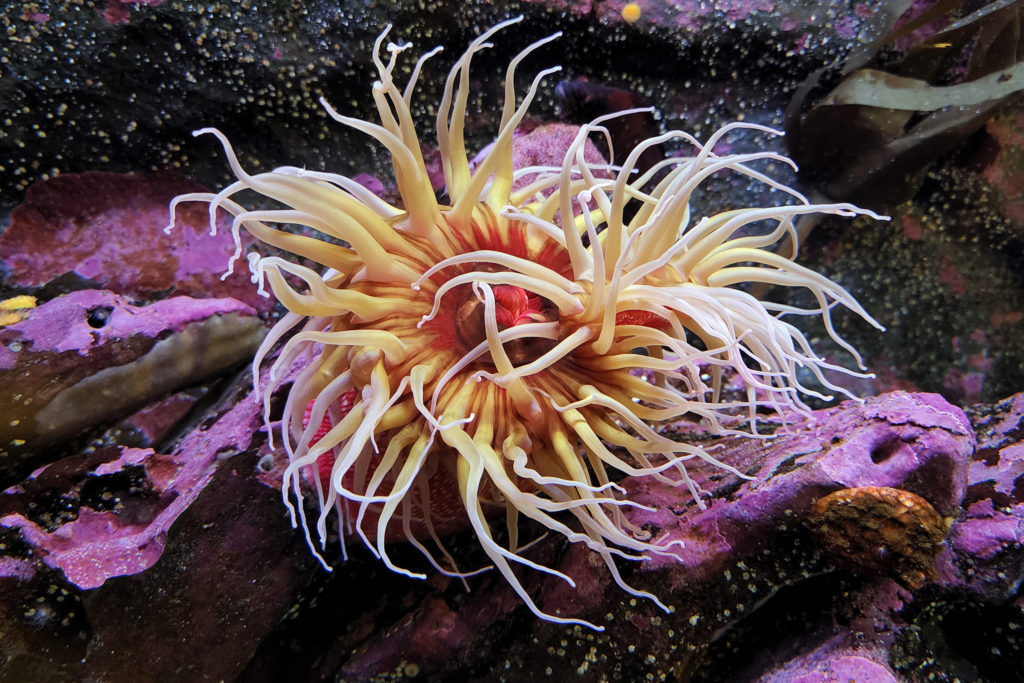
The Seattle Aquarium is a fun-filled and educational experience for the whole family. The aquarium’s displays and exhibits focus on the marine life of Puget Sound. You’ll explore tide pools, see salmon, halibut, lingcod, and other fish living in Puget Sound, marine birds like the tufted puffin, black oystercatcher, and pigeon guillemot, and marine mammals, including sea otters, harbor seals, and fur seals.

The aquarium is managed and operated by the nonprofit Seattle Aquarium Society under a long-term agreement with the City of Seattle. The aquarium’s mission, Inspiring Conservation of Our Marine Environment, guides the aquarium society’s activities, which extend beyond the aquarium.

The Seattle Aquarium Society runs a variety of public programs that give people the chance to explore and learn about beach ecosystems, salmon migration and life cycles, and other aspects of the local marine environment. And the society runs summer camps for kids and distance learning programs in addition to their hands on programs.

The Seattle Aquarium is located on the waterfront in downtown Seattle north of the ferry terminals. There are many other nearby attractions, such as the Seattle Great Wheel (two blocks to the south), and Pike Place Public Market, one of Seattle’s iconic institutions (two blocks to the east). After visiting Pike Place, continue on another quarter mile east and catch the Monorail (another iconic Seattle institution) at 5th and Pine for a quick ride to the Seattle Center and the Space Needle.

Pike Place Public Market

Other attractions near the aquarium include The Seattle Art Museum, just three blocks from the aquarium, and the Seattle Public Library, less than half a mile away. (Take the elevator or escalators to the 10th level of the library for some of the best views of downtown Seattle).

My wife and I spent the recent Fourth of July weekend exploring Seattle and vicinity with my step-daughter and her family. The grandkids had a great time at the aquarium, riding the Great Wheel and the Monorail, and seeing the sights from the top of the Space Needle. Seattle is truly a great place for the whole family. And the environment surrounding Seattle, both terrestrial and marine, is beautiful and often awe inspiring. Look for an upcoming post on this site on the Snoqualmie Valley, just a short drive east of Seattle. The abundance of close at hand natural areas perfectly balances the urban environment, making a visit to Seattle an even more attractive trip for everyone.

Posted August 27, 2022.

All photos © Alan K. Lee


Quinault Rain Forest

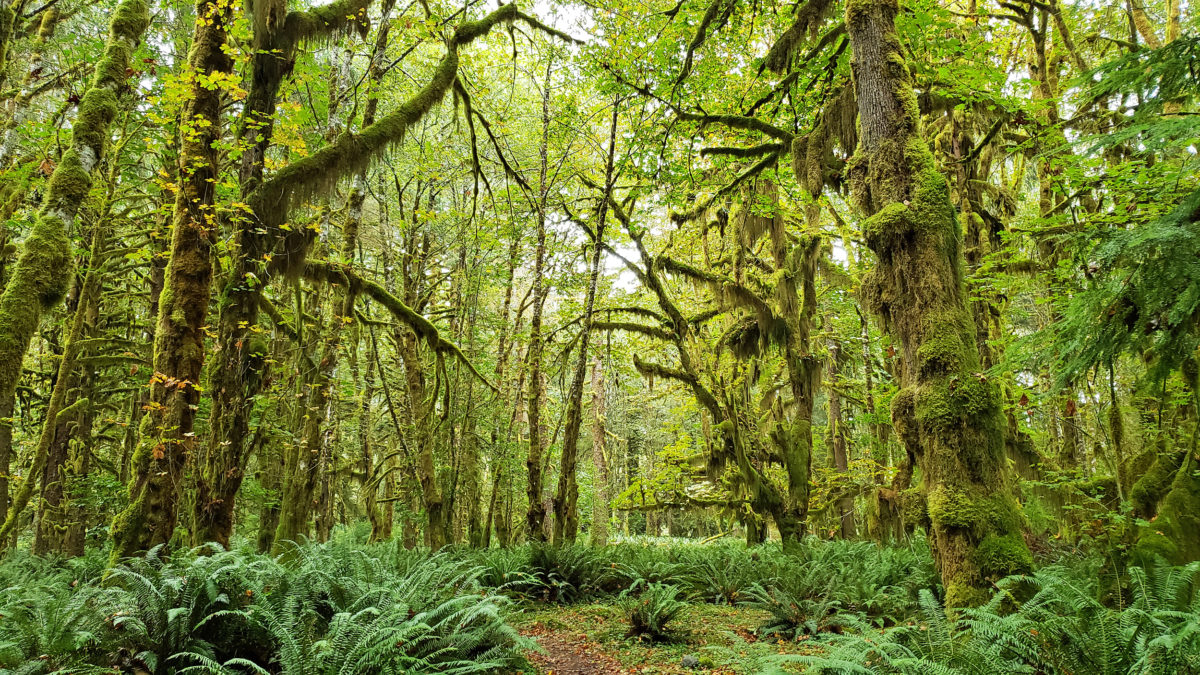
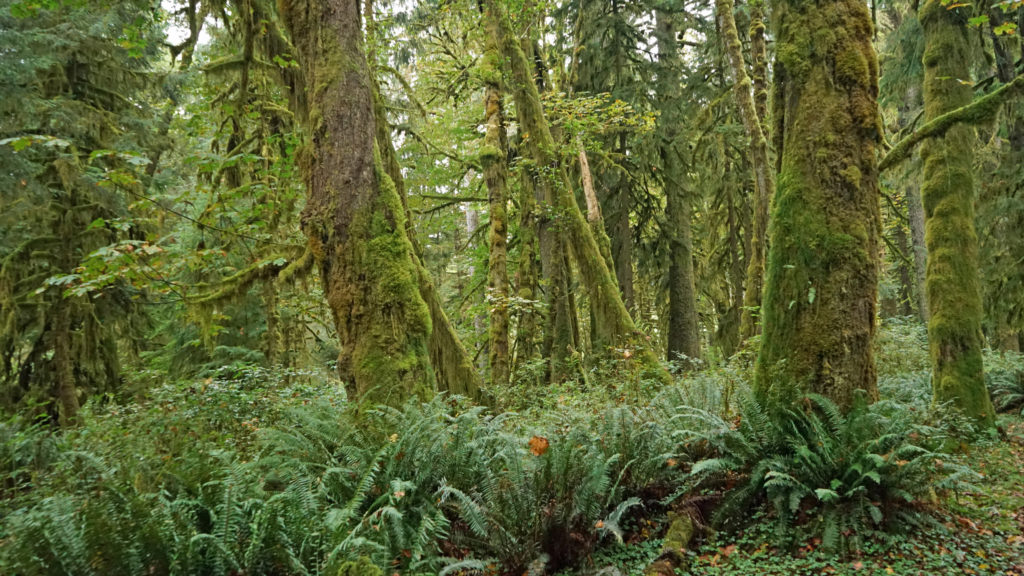
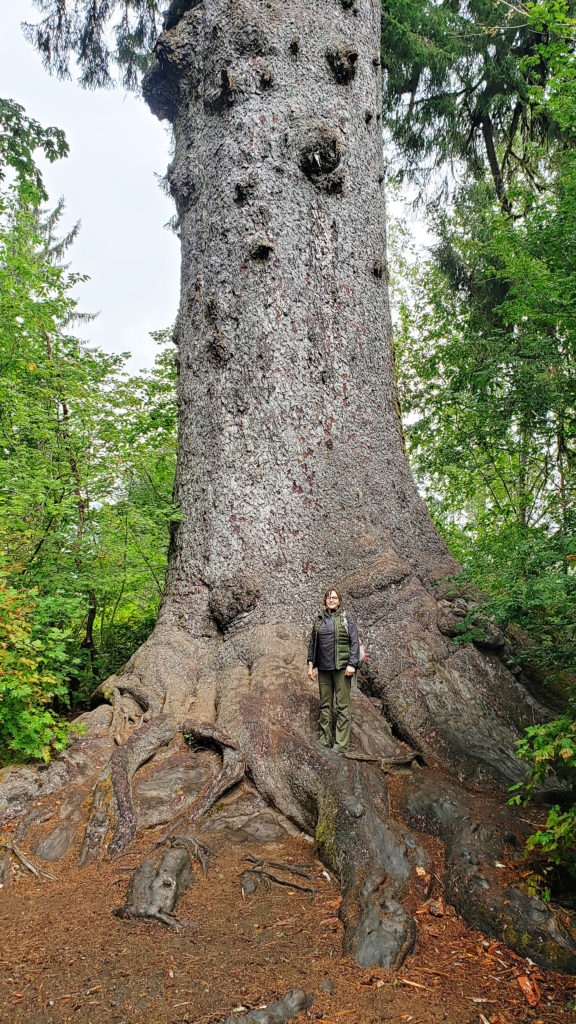
Rainfall in the Quinault Rain Forest is measured in feet, not inches. Average annual rainfall is about 12 feet. Some years see 15 feet. All that rain combined with a mild climate results in a lot of vegetation. Ferns cover the ground. Moss hangs from tree limbs. There are trees everywhere. And the trees are big. The largest Sitka Spruce in the world grows on the shore of Lake Quinault. The world’s largest Douglas Fir, Western Red Cedar, and Mountain Hemlock are all found in the Quinault Valley. And the Quinault Rain Forest is also home to the largest Yellow Cedar and Western Hemlock trees in the United States.

The Quinault Rain Forest lies in the southwestern corner of Olympic National Park, the adjacent Olympic National Forest, and the Quinault Indian Reservation in western Washington. It’s less than a four hour drive from either Portland or Seattle, but it seems a world apart, and more than a little stuck in time. It looks much as I remember it from when I first visited as a child more than a half century ago. Cell phone service and wi-fi availability are spotty. There are no big resorts and no towns of any size. Urban America is nowhere to be found.

The pandemic has kept all of us from traveling as much as maybe we’d like. That certainly applies to my wife and I. Most of our vacation plans for 2020 had to be cancelled. And just when the parks and recreation areas were beginning to reopen,  wildfires in western Oregon and Washington shut them down again. But the Olympic Peninsula was largely unaffected by the fires. So, my wife and I decided that the Olympics would be an ideal, and much needed, escape from Portland, and in September 2020 we headed to the Olympic Peninsula. Our first stop was Lake Quinault.

We treated ourselves to a stay at the historic Lake Quinault Lodge, one of the iconic grand lodges of the American West. The original Lake Quinault Lodge was built in 1904. The Boathouse annex was built in 1923. The original lodge burned down in 1924 and the current main lodge was constructed in 1926 on the site of the older lodge. Two additional annexes have been added since then. The existing lodge was placed on the National Register of Historic Places in 1998.

Rooms at the lodge are a little pricey, but you’re paying for the history, charm, and iconic nature of the lodge more than for the amenities provided. There are no TVs in any of the main lodge rooms, no fridges, or microwaves, no phones and no cell phone service. But that’s all part of the charm. The Boathouse and the other two annexes offer a few more amenities. Some come with fireplaces, the Lakeside Rooms are billed as family friendly, and the Boathouse Rooms are pet friendly. Our room in the main lodge came with all we needed, a comfortable bed and a view of the lake.

Services at the lodge were limited by the pandemic during our stay. The swimming pool, sauna, and game room were closed. The restaurant served take out meals, but the dining room was closed (outside seating was available and you could eat in the main hall or in your room). However, all services have been restored to pre-pandemic levels.

Some people undoubtedly come to Lake Quinault Lodge just to relax and enjoy the lodge and the setting, which I fully understand. On our second day there my wife launched her folding kayak from the beach in front of the lodge and spent an afternoon paddling Lake Quinault. Canoe rentals are available at the lodge if you don’t bring your own. I spent that afternoon relaxing in an Adirondack chair on the beach with a good book.

A somewhat cheaper alternative to Lake Quinault Lodge is the nearby Rain Forest Resort, which has a 16 room lodge, cabins (some with hot tubs), an RV park, and a restaurant. The world’s largest Sitka Spruce grows a short walk from the resort. Other options are the Quinault River Inn on Hwy 101 in Amanda Park, and Lochaerie Resort on North Shore Road. And there are three campgrounds on the south shore of Lake Quinault, and two (one a walk-in) on the north shore.

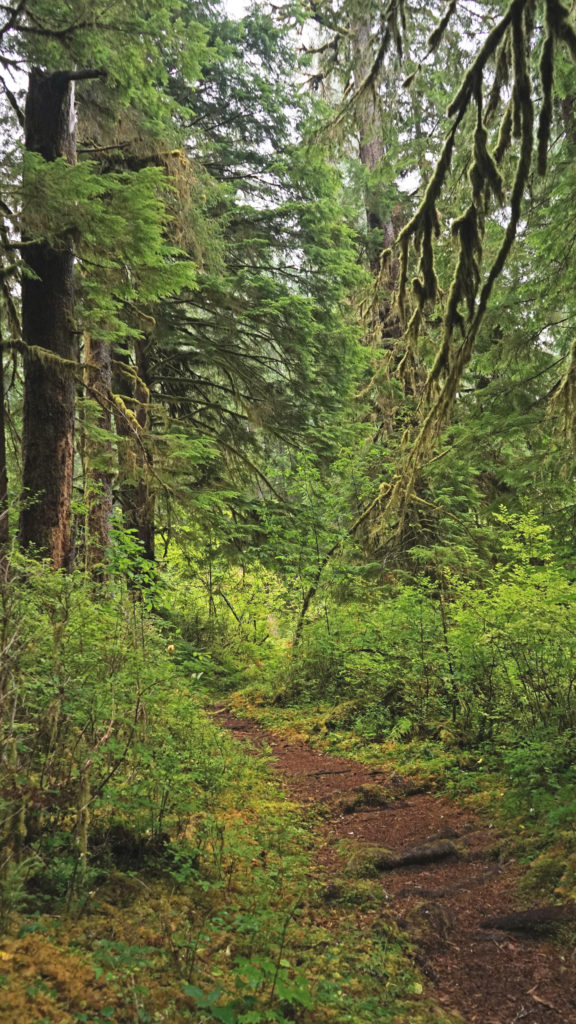
Lake Quinault Lodge, the Rain Forest Resort, or any of the three south shore campgrounds make an ideal base for exploring the area. Hikers have a variety of options, from the half mile Rain Forest Nature Trail Loop to a loop of about seven miles that takes you to Gatton Creek Falls, Cascade Falls, the Cedar Bog, the Rain Forest Nature Trail, and along the lake shore. Cutoff trails make shorter loops of various distances possible. Other hiking trails are a short drive from the lodge.

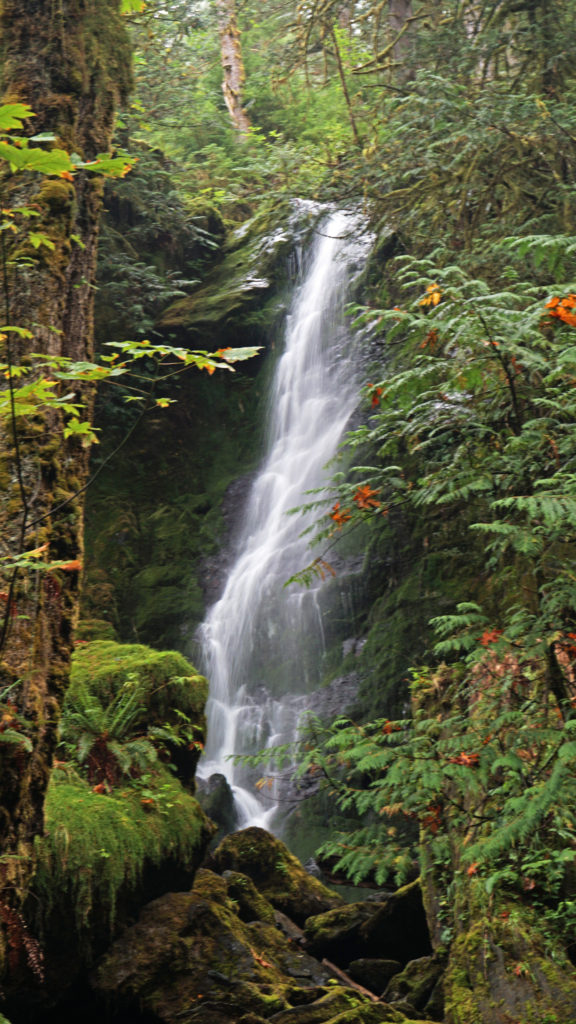
Two stops along South Shore Road worth making are Merriman Falls and Bunch Falls. Both are just east of Lake Quinault and both are right by the road, so no hiking required.

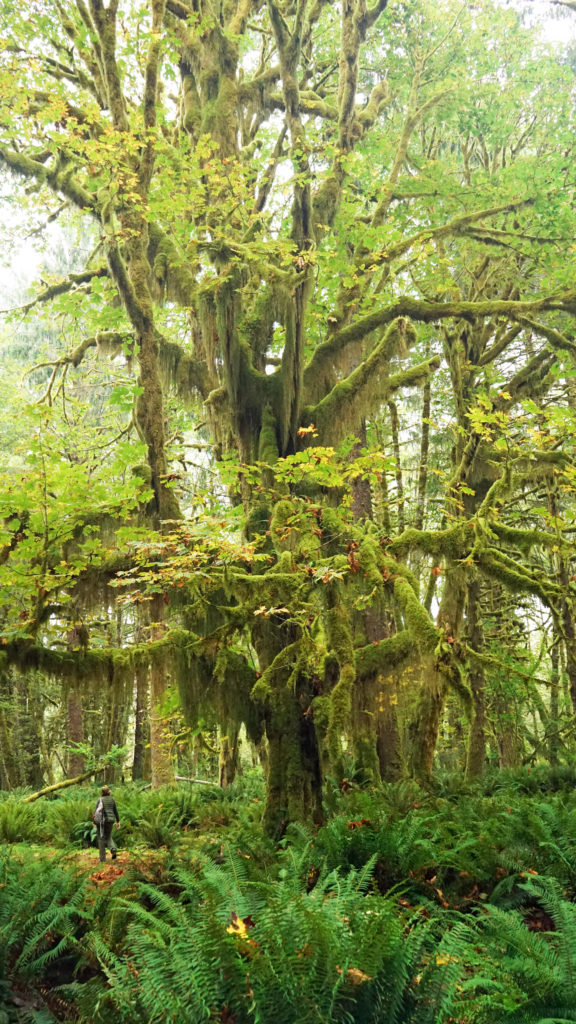
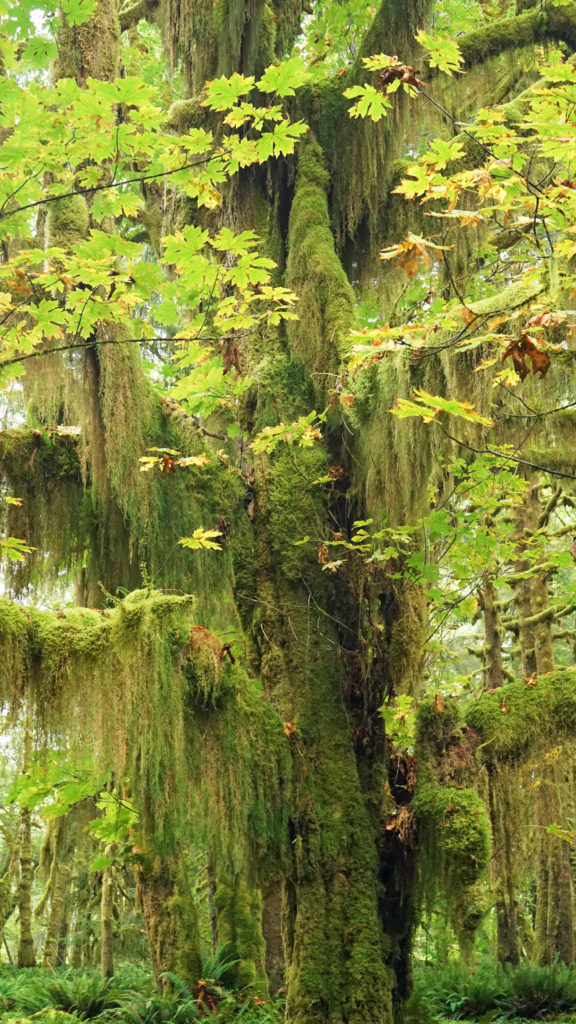
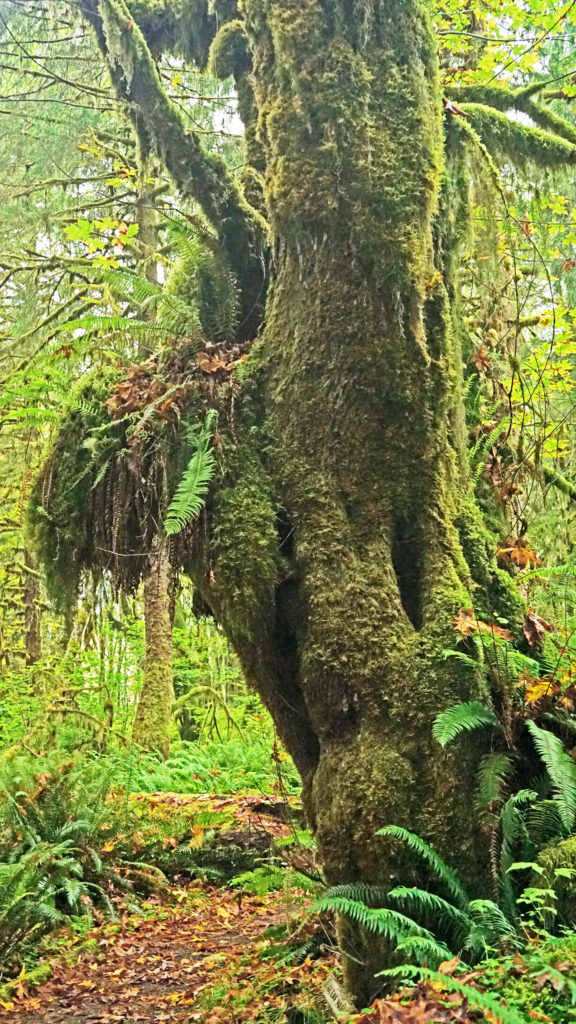
One hike that everyone should do is the Maple Glade Trail at the Quinault River Ranger Station on North Shore Road. It is spectacularly beautiful, and like the Rain Forest Nature Trail, it’s an easy 0.5 mile loop. But, unlike the Rain Forest Nature Trail, which takes you through a coniferous forest of Douglas Fir, Western Hemlock, and Western Red Cedar, the Maple Glade Trail immerses you in a Bigleaf Maple forest. There the ground is covered in ferns and other low growing shrubs and the maples soar overhead, but in between is mostly open and airy. The effect is like being in a gigantic room carpeted with ferns and roofed with a canopy of maple leaves.

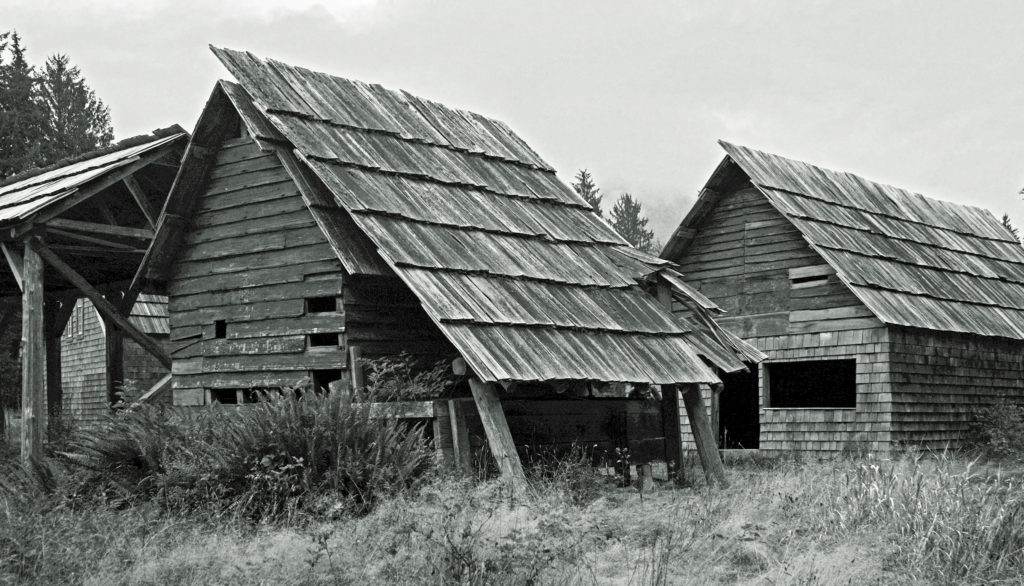
The Maple Glade Trail can be extended by taking the connecting trail to the Kestner Homestead. There you’ll find the Kestner house, barn, outbuildings, and a cool old rusted delivery truck.

There are also much longer hikes that can be taken into the Olympic National Park from the Quinault Valley. The most famous, and probably most hiked, is the Enchanted Valley Trail. It’s a 13 mile hike along the East Fork of the Quinault River to reach the Enchanted Valley, so it is not a casual outing. Most people do it as a 3-5 day backpacking trip. My backpacking days are behind me, but the Enchanted Valley is one of the hikes that I regret having never done.

Those of us that live in western Oregon and Washington can be a bit blasé about the rain forest. We live in the middle of one, after all. But we shouldn’t take it for granted. The Quinault Rain Forest is a beautiful and spectacular reminder of what once stretched uninterrupted from the Redwoods of Northern California to the vast forests of southeast Alaska. If you have never experienced the grandeur of the coastal rain forest of the Pacific Northwest, you owe it to yourself to visit at least once. I don’t think you’ll regret it.

Originally posted October 26, 2020. Updated and re-posted August 11, 2022.

All photos © Alan K. Lee


Silver Falls State Park

By Alan K. Lee

Silver Falls State Park was voted Oregon’s favorite state park by an Oregonian/OregonLive readers poll. And no wonder. With more than ten waterfalls, six of them more than 90 feet in height, and four that you can actually walk behind, Silver Falls is a waterfall lovers paradise. And who doesn’t love waterfalls?

Silver Falls State Park is located in the Cascade Range foothills about 20 miles east of Salem. To get there from the Portland area, head south on I-5 to Woodburn and take Oregon Highway 214 through Woodburn, Mount Angel, and Silverton to the park. From Salem, take Oregon Highway 22 east for about 12 miles and follow the signs to the park. Day use parking permits cost $10 and can be purchased at the North Falls, South Falls, and North Canyon parking areas. Twelve month passes cost $30 and 24-month passes $50, available on the park website. Beginning in January 2026, 12-month parking passes will increase from $30 to $60 and 24-month passes will no longer be sold.

Canyon Trail

The park was created largely through the efforts of one man, photographer June Drake. He grew up in nearby Silverton and waged a twenty year campaign, from 1906 to 1926, to get the federal government to declare the area a national park. When that ultimately failed, he convinced the Silverton and Salem Chambers of Commerce to buy options on some of the land, to be later sold to the state, and purchased 160 acres himself that also became part of the park. Silver Falls State Park was created in 1931 and was dedicated on July 23, 1933.

South Falls Lodge

The park as we know it today was shaped by the efforts of the Works Progress Administration (WPA) and the Civilian Conservation Corp (CCC) during the Great Depression. From 1935 to 1942, 200 WPA and CCC workers built roads, parking areas, trails, bridges, and buildings, and planted trees to reforest areas that had been logged or burned. Many of the buildings, including the South Falls Lodge and Nature Store, are still in use today, more than 80 years after they were built.

The park includes a campground with 91 campsites (48 with water and electric hookups) and 14 cabins, an extensive day use area, including a cafe and nature store, near South Falls, a new day use area near North Falls, equestrian trails, bike trails, the Trail of Ten Falls that takes you to all of the falls, and 35 miles of backcountry trails.

South Falls

Smith Creek Village, near the backcountry portion of the park, has a restaurant, small cottages and cabins for rent, larger multi-bedroom lodges with kitchenettes and full bathrooms, and event spaces that will sleep up to 75 guests.

Trail behind South Falls

The newly opened North Canyon day use area is part of a planned North Gateway that will include a visitor center and a new 50 unit campground. Construction of the campground and the finish of the partially completed visitor center were put on hold in November 2025 until additional funding is secured.

Lower South Falls

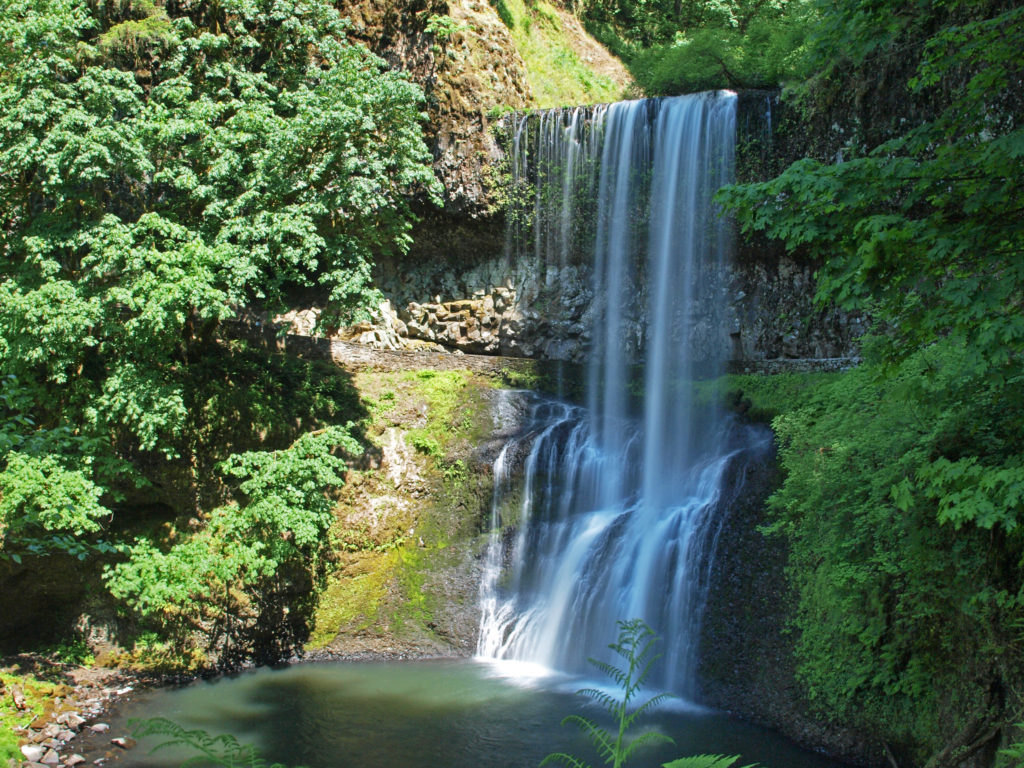
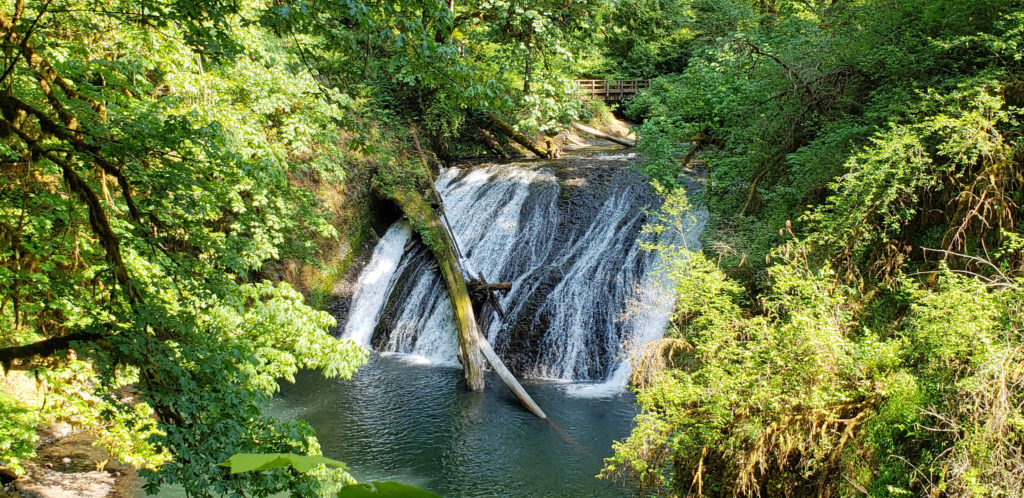
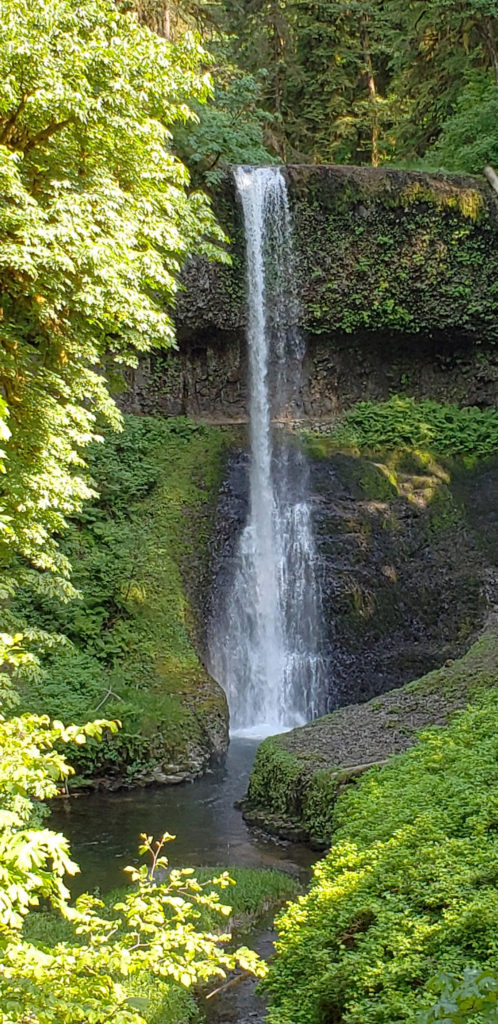
The waterfalls are the main attraction of the park, of course, and the Trail of Ten Falls is one of the finest hiking trails in the Pacific Northwest. I don’t know of anywhere else that you can see that many waterfalls, and actually get behind four of them, on a single hike. Silver Falls State Park is truly unique.

Lower North Falls

There are a variety of hiking options in the park, from a less than one mile loop that takes you from the top of South Falls down into the canyon and behind the falls then back to the starting point, to the full Trail of Ten Falls that takes you to all of the falls to the 35 miles of backcountry trails away from the waterfalls. And the backcountry  offers both mountain biking and horseback riding trails.

Middle North Falls

For a detailed description of the Trail of Ten Falls, click here. And some of the shorter loop hikes are described in my Winter Hikes at Silver Falls post. There is also a new trail from the North Canyon day use area to the North Falls parking area.

The best times to visit Silver Falls are in the early spring when the falls are at their full force and in the fall when the reds and yellows of the maples and alders contrast with the deep greens of the conifers. Summer weekends can be very crowded, so come early or visit on a weekday if you can. But even on weekdays you will find plenty of company. Winter has its own charms, and you might even find some solitude then. The trails can be slippery when wet and are dangerous when icy, so check the weather forecast before you go.

North Falls

Whether you’re out for a picnic, a short walk, a long hike, an overnight stay in a cabin, tent, or RV, a horseback ride, or an outing on your mountain bike, Silver Falls State Park has it all.

Upper North Falls

Silver Falls State Park is one of the truly outstanding places in the Pacific Northwest to lace up your hiking boots and experience nature at it finest. Silver Falls is one of the gems of the Pacific Northwest, and not to be missed.

Originally posted June 30, 2018. Most recently updated November 13, 2025.

All photos © Alan K. Lee

Circles in the Sand 2022

by Alan K. Lee

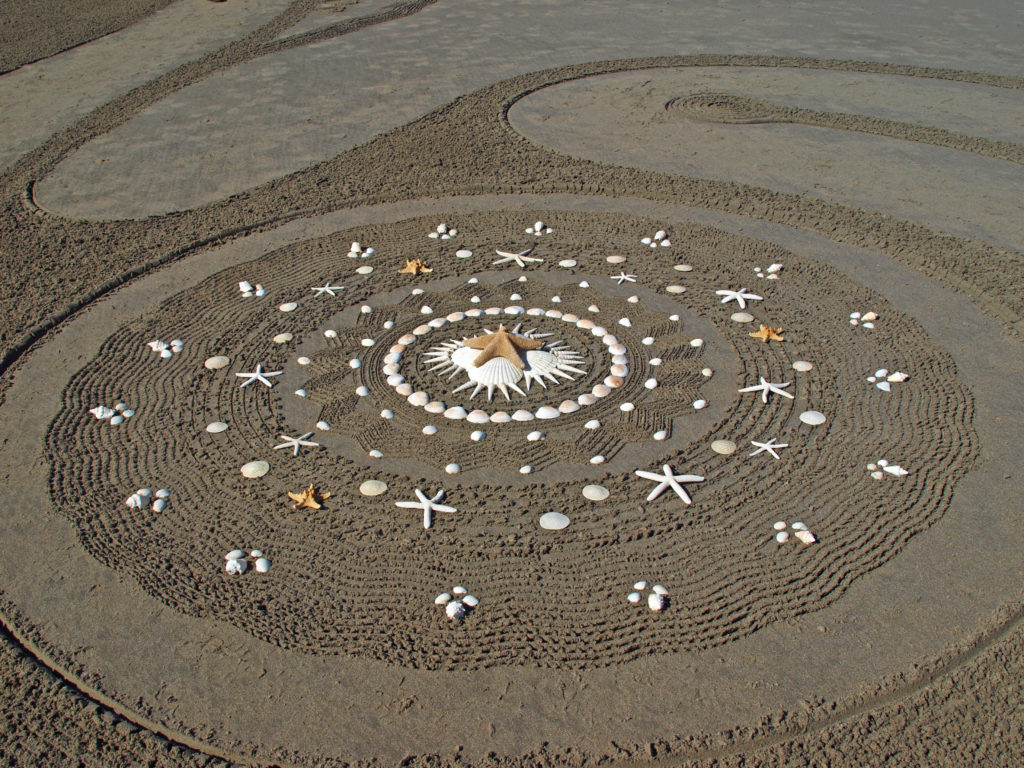
The Circles in the Sand labyrinths began appearing on the beach at Bandon, Oregon in 2011. Created by Denny Dyke part of his ministry, Sacred Journeys, the labyrinths are intended as a form of walking meditation. Over the next few years Dyke created hundreds of labyrinths.

In 2014 Dyke’s efforts evolved into the Dreamfields labyrinths, larger and more elaborate than his original creations. The labyrinths are not mazes – there is one path and there are no dead ends or wrong turns.

The labyrinths are true works of art, each unique, each washed away by the next high tide. The sand is carefully groomed by a group of volunteers to a design by Dyke. Driftwood, kelp, shells, and other things left behind by the retreating tide are incorporated into the designs. Other shells and rocks are brought in and purposely incorporated into the design by the labyrinth builders, and the sand is raked into intricate and beautiful geometric designs.

The Circles in the Sand labyrinths are created on the beach below the Face Rock Wayside in Bandon. The beach there is a mix of flat sand and soaring sea stacks and off shore islands that is one of the most beautiful beaches on the Oregon coast.

Together with the rock formations at Coquille Point, a short distance north of the Face Rock Wayside, this stretch of beach is truly spectacular, well worth a visit at any time of the year. Combining a visit with the opportunity to experience Circles in the Sand makes for a unique and memorable experience.

Thousands of people walk the labyrinths each year. The labyrinths can be walked by anyone, free of charge. Circles in the Sand is funded entirely by donations. The 2022 schedule runs through August 15. For more information, click here.

Originally posted July 24, 2019. Updated and re-posted June 18, 2022.

All photos © Alan K. Lee

Powells Wood Garden

by Alan K. Lee

My wife and I recently paid a visit to Powells Wood Garden in Federal Way, Washington, just north of Tacoma. We had seen a set of photos taken at Powells Wood that were quite beautiful, so we decided to take a side trip on our recent weekend visit to Gig Harbor and check it out in person.

What we found was a beautiful three acre botanical garden containing eight “rooms” separated by manicured hedges, and an adjacent 35 acre natural area preserve. We spent several very pleasant hours exploring the botanical garden and the nature preserve. It was a nice way to unwind after the drive up from Portland.

The botanical garden is small, but it’s a nicely constructed set of gardens and a place that any flower lover will enjoy.

The adjacent natural area is a maturing second growth forest with many large conifers, a small stream, and the typical temperate rainforest understory of native shrubs and ferns. Several trails loop through the preserve. We hiked most of the trails that afternoon and saw only a few other people.

Powells Wood Garden is located at 430 S. Dash Point Road in Federal Way. The garden is open Tuesday through Saturday from 10am to 3pm. Admission is $7 per person (children 12 and under are free). Tickets can be purchased online on the Garden’s website . Reservations are not required and tickets can also be purchased on site.

If you visit Powells Wood Garden, you might also want to stop in at Dash Point State Park, a few miles west of Powells Wood. The main attraction at Dash Point is the 3000 feet of Puget Sound shoreline. But there are also miles of hiking and mountain biking trails and a campground with 141 campsites.

While Powells Wood Garden is probably not worth a trip to Tacoma on its own, the Tacoma area has a lot of other attractions, not the least of which are the Museum of Glass and the Tacoma Art Museum, both part of the Tacoma Museum District.

And across the Tacoma Narrows from the city of Tacoma, the charming small town of Gig Harbor is well worth a visit, as well. Gig Harbor has a beautiful waterfront and the community has done a good job of preserving its history as it has grown from a small fishing village into a bedroom community of Tacoma. It’s one of our favorite towns in the Northwest and one we return to often.

If you find yourself in the Tacoma area and you’re interested in flowers, gardens, or natural areas, pay a visit to Powells Wood Garden. It’s definitely worth seeking out.

Posted June 12, 2022

All photos © Alan K. Lee

Tryon Creek State Natural Area

by Alan K. Lee

I visit Tryon Creek State Park in southwest Portland often, as it is only a few miles from my home. I go to connect with nature and escape the noise and hustle and bustle of the city. The park is an urban oasis where it’s easy to forget that you’re in the middle of a major metropolitan area. That is a major draw and the park is a much beloved, and much used, place. But the park is big enough (658 acres) that it seldom feels overly crowded.

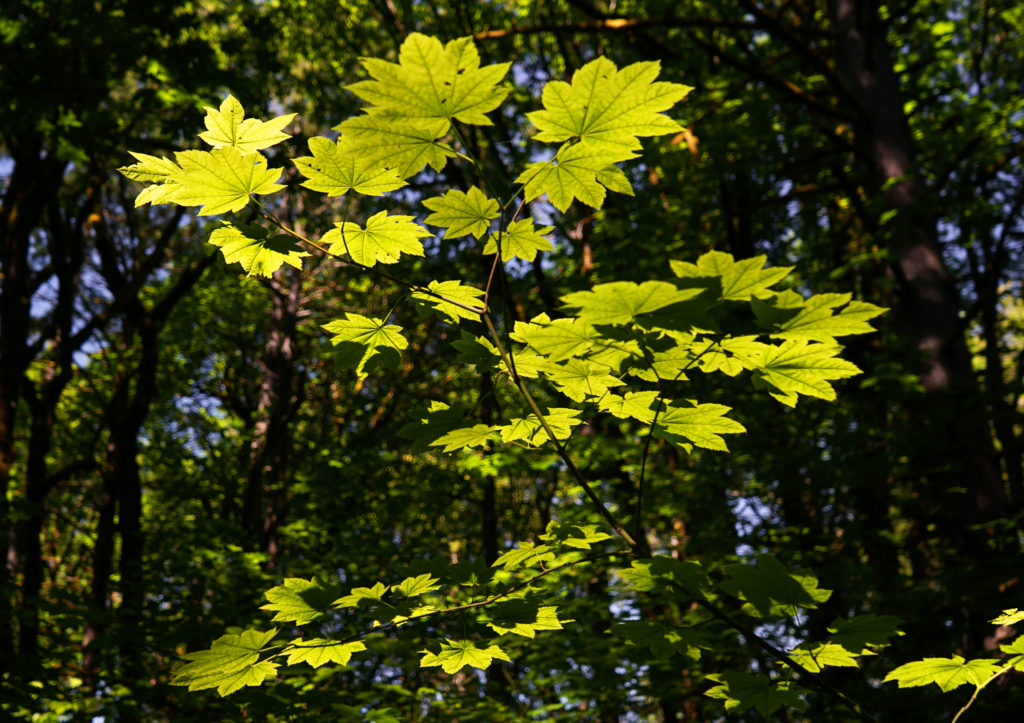
Bigleaf maples cover a large part of the park and, as a photographer, I appreciate the extraordinary quality of light under their canopy. The light can change dramatically from season to season, day to day, and sometimes moment to moment. I find the interplay of light and shadow always beautiful, endlessly fascinating, and often challenging to capture with the camera. It is one of the things that continues to draw me back to the park.

The park, now officially called Tryon Creek State Natural Area, is a transitional second growth forest. What is now the park was logged at least once between 1870 and 1960 to provide fuel for the iron smelter that once operated nearby and to produce ties for the railroad industry.

Today, the forest has regrown. While still not a mature old growth forest, the new forest contains many large Douglas firs, western hemlocks, western red cedars, bigleaf and vine maples, and red alders.

Nearly 300 different forest plants and flowers grow in the park. Blacktail deer, raccoons, coyotes, red foxes, beaver, and more than two dozen other mammals roam the park. More than 70 species of birds have been seen in the park. And cutthroat trout, coho and chinook salmon, and steelhead can be found in Tryon Creek.

The area was saved from development in the late 1960s and early 1970s by a combination of dedicated citizens, the Friends of Tryon Creek, Multnomah County, and the State of Oregon. Tryon Creek State Park was officially dedicated on July 1, 1975.

Many, if not most, of the park’s visitors come to hike the nearly fifteen miles of hiking and mixed use trails. Some bring their horses to ride the three and a half miles of equestrian trails. There is also a three mile paved bike path running through the park and a paved all abilities trail. The Nature Center, with a friendly staff, interpretive exhibits, a small store, and public restrooms, is a popular starting point for many visitors.

The park is jointly managed by the Oregon Parks and Recreation Department and the Friends of Tryon Creek. The park’s mission has always included adult and youth environmental education programs, including day camps, a junior ranger program, school field trips, guided tours of the park, and special events. It is not uncommon to encounter large groups of children, and sometimes adults, in the park.

Many of the events and programs sponsored by the park were cancelled or available only online during the majority of the Covid-19 pandemic. The Nature Center was closed and entrance to the park was limited at times. While we’re still living with Covid, most, if not all, of the park’s programs have been restored, and the Nature Center is open again.

The main parking area and the Nature Center are located at 11321 SW Terwilliger Blvd in Portland. The park is currently open from 7:00 am to 9:00 pm. (closing times vary with the season). For more information, check the park’s website or call 1-800-551-6949.

And finally, this reminder from the Friends of Tryon Creek:

“It is important to ground ourselves and acknowledge the people whose land we are utilizing; the Clackamas Chinook, the Wasco-Wishram, the Willamette Tumwater, the Multnomah, and other Chinookan peoples, as well as the Tualatin Kalapuya, the Cayuse, the Molalla and other tribes and bands of the Columbia and Willamette Rivers. It is important to acknowledge the original inhabitants of the land now known as Tryon Creek State Natural Area, and to recognize that we are here because of the sacrifices that were forced upon them. We also remember that we are guests of this land and must do our best to honor the original peoples, through authentic cultural narratives and continued stewardship of the water, the land, and plants that make up this forest community.”

Originally posted July 29, 2020. Updated and re-posted May 25, 2022.

All photos © Alan K. Lee


Hoyt Arboretum

by Alan K. Lee

Hoyt Arboretum, in Portland, Oregon, was founded in 1928 to conserve endangered tree species and help educate the community about the value and wonder of trees and the natural environment.

Today, the arboretum features more than 100 collections of trees and plants, organized by taxonomy and geography, spread over 189 acres in Washington Park in Portland’s West Hills. There are more than 2300 species native to six continents represented in the arboretum collections.

The arboretum features a small visitor center, a covered picnic structure, and 12 miles of hiking trails, including a portion of the 30 mile long Wildwood Trail that connects Washington Park to the Pittock Mansion, the Portland Audubon Society sanctuary, and Forest Park, the nation’s largest forested city park. The arboretum also makes a number of outdoor areas available to rent for weddings or other private events.

The visitor center is a good place to begin your visit to the arboretum, especially if it is your first visit. It is open daily from 10:00 to 3:00. You can pick up a free map there, which I have found to be very useful. You can also download a map from the arboretum’s website. The arboretum’s trails are well signed, but there are many intersecting trails and an almost limitless number of possible loops to hike, so having a good map is definitely a plus. The visitor center staff are also friendly and can answer any questions that you may have. The center also includes restrooms and a small gift shop.

Many of the trees and plants throughout the arboretum are labeled and there are interpretive signs describing the featured collections. And, if you want information on specific trees and plants, you can access the arboretum’s online plant directory.

As an educational institution as well as a conservatory, arboretum staff regularly conduct public tours, sponsor educational events, and offer a variety of classes to the public.

Hoyt Arboretum is just one of a number of attractions in Washington Park, making it one of the true centerpieces of what makes Portland such an attractive place to live. Besides the arboretum, Washington Park is also home to the Oregon Zoo, the Portland Japanese Garden, the World Forestry Center, the Oregon Vietnam Veterans Memorial, and the International Rose Test Garden.

More information on the arboretum, directions, and parking and public transit information can be found on the arboretum’s website (linked above).

Hoyt Arboretum is one of my favorite places in the Portland area. Whether you want to learn more about the environment, are interested in the plants and trees in the arboretum’s collections, want to find a quiet and peaceful retreat, or just want to stretch your legs, Hoyt Arboretum is a great place to spend a few hours. Add in the other attractions in Washington Park and you can easily make a day of it.

Originally posted April 8, 2020. Updated July 15, 2020 and May 5, 2022.

All photos © Alan K. Lee

Bryce Canyon National Park

by Alan K. Lee

Exploring Bryce Canyon National Park can be an otherworldly experience. Hiking through the eroded limestone hoodoos, you might imagine yourself on another planet – Mars, maybe, or Tatooine.  I lack that kind of imagination for the most part, but Bryce Canyon is still a magical place for me. I’ve never seen another place quite like it.

The term “canyon” is a bit of a misnomer here. The park’s main features are the eroded amphitheaters of the slopes of the Paunsaugunt Plateau. The hoodoos were formed through wind erosion and the freeze-thaw cycle, rather than being eroded by running water, so they aren’t true canyons. The park’s namesake canyon is actually just the largest of more than a dozen of those natural amphitheaters. (It’s now called Bryce Amphitheater, not Bryce Canyon, on park maps.)

Before you visit Bryce Canyon, there are a few things that you should know about the park. The first is the altitude. The top of the plateau varies from just under 8000 feet to just over 9000 feet in elevation. The air is noticeably thinner than you’re probably used to. Factor that into any hiking plans that you make.

The altitude also means that nights can be cold there even in the middle of summer. And in spring and fall, it’s not uncommon to encounter cold weather even in the middle of the day. (The photos here were taken in early May and, as you can see, there was still snow in places). Winters are cold, sometimes very, and can be snowy. Many of the trails are closed in winter. But winter also has its charms. Most of the best photos I’ve seen of Bryce Canyon have been taken when the hoodoos were covered in snow.

The second thing you should know is that Bryce Canyon is a very popular place in the summer. The park gets more than two million visitors each year, the vast majority of them between the middle of June and the middle of September. The area around Bryce Canyon Lodge can be very crowded at times, as can the various viewpoints along the 18 mile rim drive.

The good news is that you don’t have to hike very far into the hoodoos to get away from the crowds. There are a number of loop and out-and-back trails that will get you away from the crowds, some of them fairly easy hikes. The rim trail along the edge of the Bryce Amphitheater can also get you away from the worst of the crowds without actually descending into the hoodoos. And if you don’t want to (or can’t) hike into the amphitheaters, there are mule rides available. Check at the visitor center when you arrive. Some of the trails in the park are also paved and wheelchair accessible.

The only road in the park (other than a section of Utah Hwy 12 that cuts across the far northern end of the park) runs north to south along the top of the Paunsaugunt Plateau from the park entrance to Yovimpa Point and Rainbow Point at the southern end of the plateau. Because the park receives so many visitors in the summer, traffic congestion can be a problem. Consider parking your car at the visitor center or the lodge and taking the free shuttle that runs the length of the park. The buses run frequently and you can hop off at any of the viewpoints and catch a later shuttle if you want to do some hiking or just sit and enjoy the scenery for awhile. Taking the shuttle also makes point to point hikes possible without having two cars.

Besides being a spectacularly beautiful place during the day, Bryce Canyon is also great place to star gaze. It’s far from any light polluting urban areas, and the night skies in the park can be incredible. The park offers both astronomy programs and guided full moon hikes. Check the Bryce Canyon National Park website for more information.

The  park website is a good place to begin when planning a trip to Bryce. The Utah.com website also has a lot of good info. The Travel Awaits what to know and best places to stay web pages are also full of very useful information.

The Covid-19 pandemic is still with us as I write this (Feb. 2022), but the park is open with only a few restrictions. Masks are still required for everyone, regardless of  vaccination status, in all NPS buildings, crowded outdoor spaces, and all forms of enclosed public transportation. But there are no other restrictions and all facilities are open. Additional details are available on the park website and at www.nps.gov/coronavirus.

If you’re not ready to begin traveling again, though, here are links to a short video by National Geographic, a ten minute video by Amazing Places On Your Planet, and an hour and fifteen minute documentary from the 4K Relaxation Channel. There is also a six minute video on the park website.

The videos don’t give you the full experience of actually being there, of course, but they will give you a taste of what the park offers, and maybe help to tide you over until you can safely travel there in person once the pandemic has run its course.

Bryce Canyon is one of southern Utah’s five national parks (the “Big Five” ): Zion, Bryce, Capitol Reef, Arches, and Canyonlands. Throw in the sprawling Grand Staircase-Escalante National Monument, Cedar Breaks National Monument, Kodachrome Basin State Park, Coral Pink Sand Dunes State Park, Natural Bridges National Monument, and Lake Powell, and you have the makings of a truly epic road trip.

Originally posted March 20, 2020. Updated and re-posted February 19, 2022.

All photos © Alan K. Lee

Canyon de Chelly National Monument, Arizona

by Alan K. Lee

Canyon de Chelly is a strikingly beautiful canyon located on the Navajo Nation in the northeast corner of Arizona. The canyon walls rise vertically from the flat bottom of the canyon as much as 1000 feet to the canyon rim, and everywhere you look there are spectacular rock formations, like the 750 foot spire known as Spider Rock (pictured below).

The name Chelly comes from the Spanish spelling of the Navajo name for canyon, tseyi, which translates literally as “within the rock.” Over time the Spanish pronunciation, “chay-ee”, has evolved into the current pronunciation, “shay”.


Located a couple of miles east of Chinle, Arizona, the monument’s Welcome Center is a good place to start your visit. Pick up a free map of the monument and watch a short film about the monument to orient yourself. The park rangers can answer any questions you have about tours of the canyon, accommodations, the canyon’s history or geology, what plants and animals you’ll find in the park, or any other questions you might have. There is also a gift shop where souvenirs of your visit can be purchased.

Canyon de Chelly is worth a visit just for the spectacular scenery it affords, but it is also an important cultural and historic site. The canyon is one of the longest continuously inhabited places in North America. The Ancestral Puebloans (also known as the Anasazi) first settled in the area some 4,000 years ago. The canyon was later occupied by the Hopi, descendents of the Ancestral Puebloans, and more recently by the Navaho.
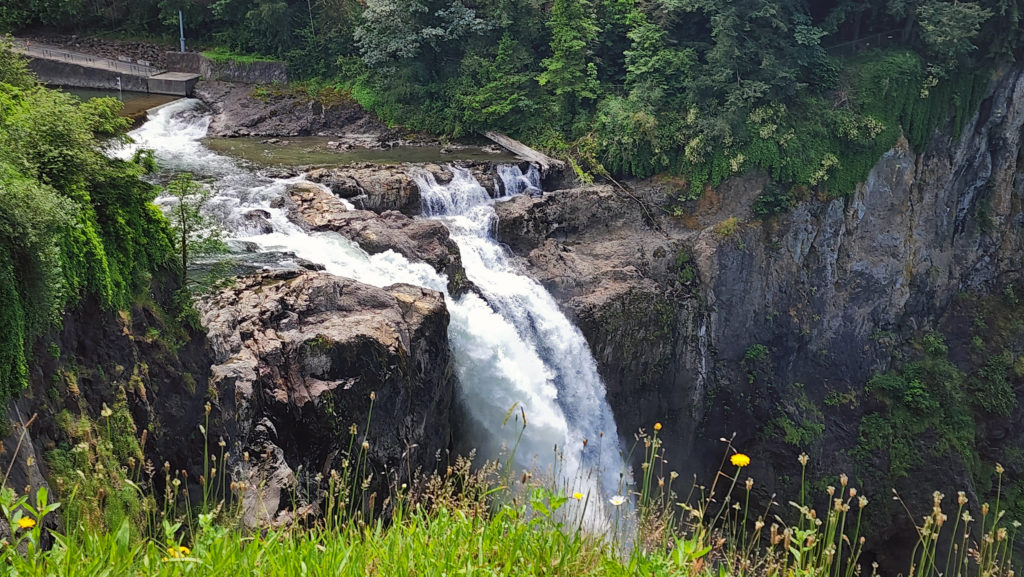
Canyon de Chelly National Monument is actually owned by the Navaho Tribal Trust, not the federal government. It is jointly managed by the tribe and the National Park Service. Two main canyons, Canyon de Chelly and Canyon del Muerto, along with several smaller side canyons, make up the majority of the monument’s 83,000 acres.

About forty Navaho families live within the monument, some of whom still farm the canyon floor and raise livestock as their ancestors did. Access to the floor of the canyon is restricted to tours led by tribal guides or NPS rangers, except for the White House Ruin Trail, which descends more than 500 feet from south rim of Canyon de Chelly to the bottom of the canyon and across the floor of the canyon to the ruins.

Unless you take one of the guided trips through the canyon, hiking the White House Ruins Trail is the only way to get a close up view of any of Ancestral Puebloan ruins in the canyon. And walking the same ground that the ancestral people walked thousands of years ago and seeing where and how they lived can bring a profound feeling of connection to those people across all those centuries. It is really well worth the effort if you can make the hike.

(February 2022 update: The White House Overlook and Trail are currently closed because of safety and law enforcement concerns. Check the park website Alerts page for current information.)

Although access to the canyon floor is restricted, the South Rim Drive along Canyon de Chelly and the North Rim Drive along Canyon del Muerto provide a total of ten overlooks into the canyons. Plan to spend at least half a day touring the rim drives. Add another two hours or more if you plan to hike to the White House Ruins. And if you want to tour the canyon floor, there are half and full day jeep, horseback, and hiking options available. A list of tour operators can be found here. There are also free ranger led hikes. Ask at the Welcome Center about availability and schedules.

My wife and I have taken many trips to Arizona over the years. We have been fortunate enough to have visited many of the parks and other natural and culturally significant sites in the state. Canyon de Chelly stands out as one of the best, both scenically and culturally. The photos here are from a trip we took that also included a visit to Chiricahua National Monument. That was a number of years ago, but the memories remain fresh in mind. And once the corona virus pandemic ends and we can all travel safely again, I hope to go back and revisit the canyon.

Pandemic update: As of February 2022, the park is open. Masks are required in all indoor areas and outdoors where social distancing is not possible. There are no other requirements. 

Originally posted May 14, 2020. Updated and re-posted February 14, 2022.

All photos © Alan K. Lee

Chiricahua National Monument, Arizona

By Alan K. Lee

Chiricahua National Monument in the southeastern corner of Arizona is geological  wonderland of rocks – hoodoos, balanced rocks, stacked rocks, rocks of all shapes and sizes.

The Chiricahua Mountains are one of a number of mountain ranges known as “sky islands” that run from the Sierra Madre Occidental in Mexico to the Rocky Mountains. The rock that is the central feature of Chiricahua originated as pyroclastic flows from a massive volcano just south of the monument that erupted about 27 million years ago. It is estimated that amount of material ejected in that eruption was more than 100 times that of the 1980 eruption of Mount St. Helens.

As with Bryce Canyon, the rock formations of the Chiricahua Mountains are more the result of wind erosion and the freeze-thaw cycle than erosion by running water.

Chiricahua National Monument was created in 1924 to protect the fantastic rhyolitic tuff rock formations. The original monument was a little over 4200 acres in size. Additions in 1938, 1978, and 1984 brought the size of the monument to its current 11,985 acres. Most of the park (10,340 acres) is designated wilderness.

Although the altitude at Chiricahua (from 5100 to 7300 feet) makes it cooler than many parts of Arizona, this is still Arizona after all, and it can get dangerously hot. Triple digit temperatures are possible from May through September. And despite this being part of the Chihuahua Desert, thunderstorms are an almost daily occurrences from early July into early September. Almost half of the monument’s annual rainfall of 19.3″ falls in the months of July and August.

April and May and are the driest months, with daily high temperatures varying from the low 70s to the mid 80s, and spring is probably the best time to visit. The days are also pleasant from mid-September to mid-November, but rain is more common than in the spring. Winters are much cooler, with snowfall and sub-freezing temperatures common from December through March.

Hiking is a popular activity at Chiricahua. There are 17 miles of trails in the park, with hikes of various lengths, from 0.2 to 9.5 miles. Trails range in difficulty from easy saunters to strenuous hikes with elevation gains of up to 1000 feet. Horses are also permitted (with restrictions) on many of the trails. As elsewhere in Arizona, carrying enough water is essential. The park staff recommend hikers carry at least one quart for each hour they plan to be out during the summer months. Sunscreen and a hat are also essential, even in spring and fall.
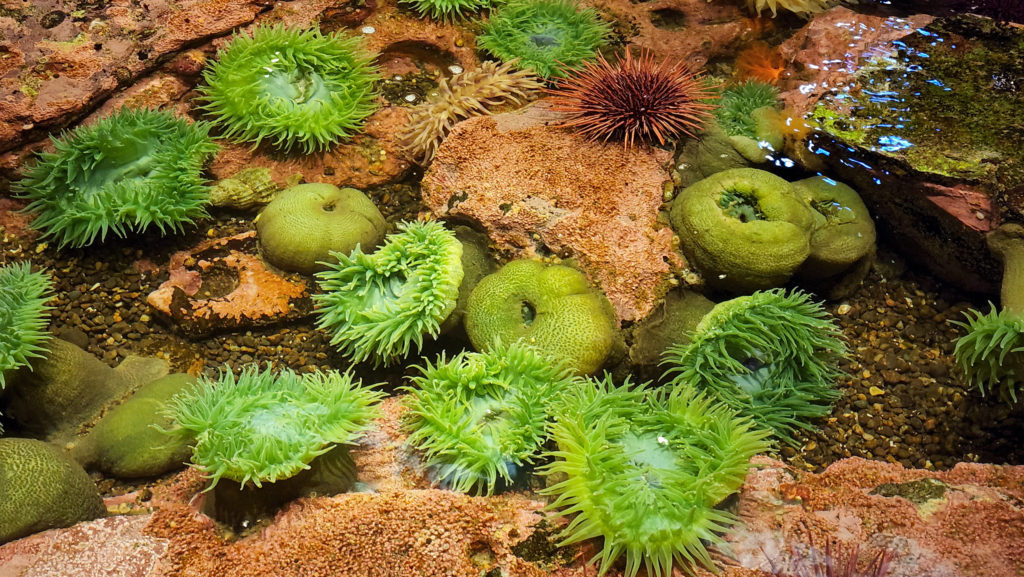
A free hiker shuttle runs from the visitor center to two of the more popular trailheads. Check in at the visitor center the day before or the morning of your hike to reserve a seat. The shuttle is limited to 14 people and reservations cannot be made on line or by phone.

Bird watching is another popular activity at the monument. More than 170 species have been recorded within the monument boundaries, and the American Bird Conservancy has designated Chiricahua National Monument an Important Bird Area. (And the San Pedro Valley, an internationally known birding hot spot, is only about 75 miles to the west). The monument also is home to 71 species of mammals, 46 species of reptiles, 8 amphibian species, and uncounted numbers of insect species.
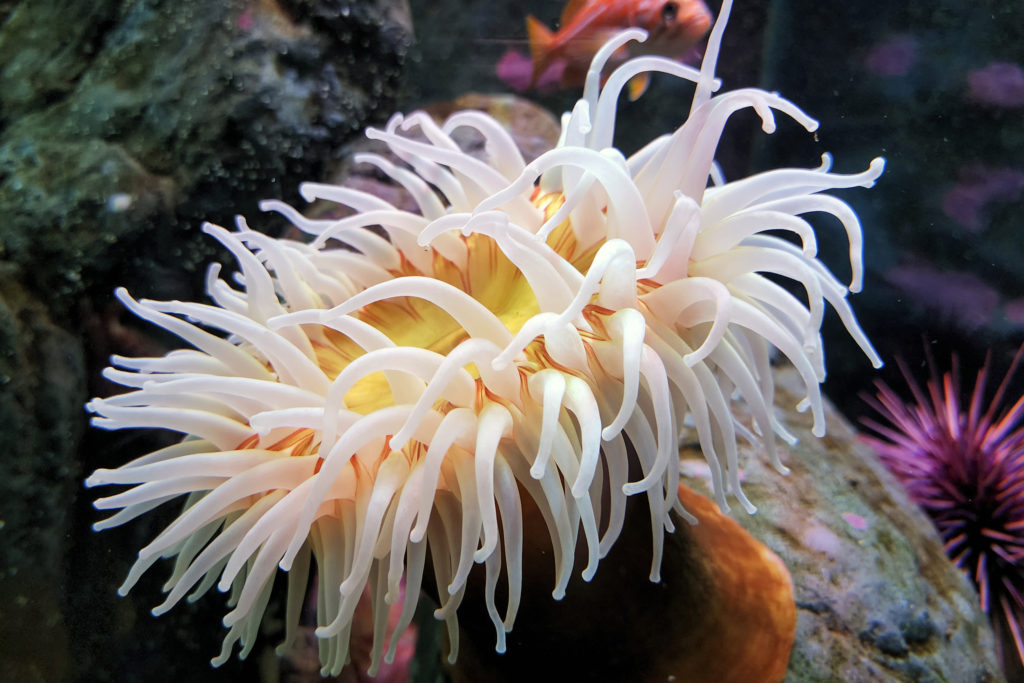
People interested in the history of the area should check out the historic Faraway Ranch, just off the main road near the park entrance.
Chiricahua has never been a particularly popular place, owing mostly, I think, to its remote location and relatively small size. Even at the peak of its popularity, in 1993, it saw an average of only 350 visitations per day. In recent years the average has been about 150 per day. This is a place where it’s still possible to find some solitude, and it doesn’t take hours of hiking to find a quiet place to yourself.

There is a 26 unit campground in the park, but no other accommodations. The campground can accommodate RVs up to 29 feet (several reviews suggested that 20 feet is a more realistic max, though). The campground has running water and flush toilets, there are no RV hookups. Wilcox, 35 miles to the northwest, has a number of RV parks with full hookups, and has a variety of other accommodations for those that do not want to camp.

Chiricahua National Monument is not on a lot of people’s bucket lists, but it should be in my humble opinion. The scenery is outstanding, it’s a geologically interesting area, the biological mix of plant and animal species is interesting, and it’s unique. There’s no place else like it. It is well worth the 35 mile detour off of I-10 if you are traveling through the area, and is an end-point destination on its own that is worth considering. Combine a visit to Chiricahua with the many attractions in the Tucson area (only a two hour drive away), Karchner Caverns State Park, the old copper mining town of Bisbee, and the famous wild west town of Tombstone, to make a vacation the whole family will enjoy.

February 2022 update: 

The visitor center is open daily from 8:30 to 4:30, but the museum exhibits are closed due to Covid-19. The hiker shuttle service is not operating, also due to Covid-19 protocols. Masks are required in all buildings and outdoor areas where social distancing is not possible. The historic ranch house at Faraway Ranch is closed for renovations. The campground is open. The park has experienced some storm damage and some of the roads may be closed temporarily, but the main road is open.

Originally posted April 28, 2020. Edited, updated, and re-posted February 5, 2022

All photos © Alan K. Lee

Exploring Southwest Idaho, Part 4: Boise

By Alan K. Lee

During our exploration of southwest Idaho, my wife and I used Boise as our base and did day trips to Thousand Springs, Balanced Rock, Bruneau Dunes, and the Snake River Birds of Prey National Conservation Area, as I’ve documented in the past few posts.

Boise is Idaho’s capital and largest city, with a metropolitan area population of around 750,000. It’s large enough to have many of the amenities of a big city, but small enough to still retain something of a small town feel. And it’s a surprisingly modern and cosmopolitan city, blending elements of both West Coast and Rocky Mountain cultures.

My wife and I are both art lovers, and Boise has a vibrant arts community featuring both visual and performing arts. The Velma V. Morrison Performing Arts Center on the Boise State University campus is home to the Boise Philharmonic, Ballet Idaho, the Trey McIntyre Project (modern dance company), and the Boise Shakespeare Festival. The Gene Harris Jazz Festival is held each spring, also on the Boise State campus.

The Boise Art Museum  in Julia Davis Park, just south of the downtown center, features permanent American, Northwest, Native American, and Asian Art collections, and rotating temporary exhibits. In addition to the Boise Art Museum, there are a number of notable art galleries in the downtown area, including the Art Source Gallery, Capitol Contemporary Gallery, the Delia Dante Gallery and FireFusion Studio, and MING Studios.

There is also an interesting street art scene in Boise, featured prominently in the building murals of the outdoor gallery known as Freak Alley in the downtown center.

Many fine Victorian houses and architecturally interesting buildings can also be found in the downtown area.

Other points of interest in the downtown area include the Anne Frank Human Rights Memorial and the Wassmuth Center For Human Rights, the Idaho Black History Museum, the Idaho State Museum, the Basque Museum and Cultural Center, and the Idaho Discovery Center, a hands-on, interactive science, technology, engineering, and mathematics (STEM) educational center.

If you want to take a break, grab a bite to eat, and have a glass of wine or a pint of beer, there are plenty of places in downtown Boise to do just that. Moon’s Kitchen Cafe, Wild Root Cafe, and the vegan High Note Cafe are all within a few blocks of the capitol building. Goldy’s Corner is a small cafe and bakery that features a take-a-book/leave-a-book free library. For beer lovers, Ten Barrel Brewing Boise, Prost German Pub, Mad Swede Brew Hall, and Bittercreek Alehouse are all within a few blocks of the Capitol. Near Julia Davis Park you’ll find Boise Brewing, White Dog Brewing, Mother Earth Brew Company, and the Double Tap Pub. If you’re an oenophile, Les Bois Wines, Voodoo Cellar Boise, Thick As Thieves, Press and Pony, and Ochos are all within two blocks of the Capitol. I’m sure Boise has an interesting night life scene, but we didn’t explore that aspect of the city on this trip.

We did explore a number of Boise’s many parks and natural areas. The nearly 25-mile long Boise River Greenbelt has many miles of trails along both banks of the river.

Anne Morrison Memorial Park on the south bank of the river, and the Julia Davis Park, just south of the downtown area on the north bank, are large urban parks with a variety of open spaces and tree lined paths along the river.


Julia Davis Park is also home to the Boise Rose Garden and Zoo Boise. Idaho Botanical Garden, a mile or so southeast of downtown, is also definitely worth a visit.

Kathryn Albertson Park , across Americana Blvd from Anne Morrison Park, is a nature park with several large ponds that is home to a variety of wildlife and provides the visitor with more intimate natural areas to explore.

I hadn’t been in Boise for quite a few years. The last time had been for an environmental conference and I didn’t see much of the city on that trip. And, honestly, we didn’t come to Idaho to explore Boise on this trip. But I found it surprisingly beautiful and interesting on a number of different levels. It’s definitely not the cowboy town I remember visiting in my younger days. Boise has grown up a lot (and maybe it was never as much of a cow town as I remember it being).

We had a great time exploring Boise, but there is far too much there to experience it all in in the short time we had on this trip. We’ll almost certainly be visiting Idaho again in the near future, and I’m sure we’ll spend another few days exploring more of what Boise has to offer. We may even see what Boise nightlife is like on our next visit.

Boise is definitely worth visiting, and southwest Idaho has many truly unique, beautiful, and enjoyable places to visit, all within a short drive of each other. For more on those, check out my other Exploring Southwest Idaho posts:

Thousand Springs

Balanced Rock and Bruneau Dunes

The Snake River Canyon and Birds of Prey

Posted January 17, 2022. Updated April 8, 2025.

All photos © Alan K. Lee

Exploring Southwest Idaho, Part 3: The Snake River Canyon and Birds of Prey

by Alan K. Lee

The roughly 100 mile (as the crow flies) stretch of the Snake River, from south of Boise to just west of Twin Falls, is a geologically interesting area, wildlife is abundant, the scenery is outstanding, and there’s plenty there for those interested in the history of the American West, as well. Thousand Springs, Balanced Rock, Bruneau Dunes, and the Snake River Canyon are all beautiful, unique, and well worth visiting.

Snake River Birds of Prey

People from all over the world come to the Morley Nelson Snake River Birds of Prey National Conservation Area to view, photograph, and study the hawks, owls, eagles, and falcons that make the Snake River Canyon home. And Boise is home to the World Center For Birds of Prey, the home base of the Peregrine Fund, a non-profit environmental organization that played a key role in bringing the Peregrine Falcon back from the brink of extinction. The Peregrine Fund now runs raptor recovery and protection programs around the world. The canyon is not just for hardcore birders, though. It is spectacularly beautiful for one thing. And there are cultural and historic attractions as well.

There are two primary access points to the Snake River Canyon in the Birds Of Prey NCA – Swan Falls and Celebration Park. Our first stop was the Dedication Point Overlook on the rim of the canyon above the Swan Falls area. The canyon here is about 600 feet deep, with sheer vertical walls several hundred feet high below the rim. There was a group of photographers there attempting to get photos of raptors. We saw a few hawks soaring overhead, but too high to get decent photos. It’s a scenic spot, though, and we hung around for awhile, before heading down to Swan Falls.

The falls are long gone, flooded by construction of Swan Falls Dam in the early 1900s. Swan Falls was the first hydroelectric project on the Snake River. A fish ladder was constructed, but was largely ineffective, and the dam effectively blocked salmon and steelhead passage. That was a different era, and the fish ladder was never made functional. Newer dams were built both upstream and downstream with no fish ladders at all. Electricity was the point. The fish didn’t matter. But it’s a historically interesting and beautiful area, so it’s worth a visit even if, like me, you’d rather see the dam gone.

A new power generation facility was constructed at Swan Falls Dam in the 1990s. The dam’s original power plant is now open to the public, with some of the century-old generators and other equipment still in place. There are also displays depicting the history of the area, and the construction and operation of the dam. We walked across the dam after visiting the power house museum, then drove down the canyon a ways. The road was too rough for the car, though, and we turned around and drove back up to Dedication Point, and then on to Celebration Park.

Celebration Park is Idaho’s only archaeological park. Petroglyphs dating back as far as 10,000 years can be found there. Visitors can learn about the Native American “lifeways” at the visitor center, try their hand at throwing a spear with an atlatl, and explore the petroglyph area on a self-guided walk.  There is a picnic ground, and a small tent campground. The visitor center is open from 10:00 to 2:00 daily, except holidays. Check the park website for more information.

A short ways downstream, the Guffey Railroad Bridge provides pedestrian and equestrian access to the south bank of the Snake River and the Guffey Butte area. The bridge was built in the late 19th century and carried rail traffic until the 1940s. It is listed in the National Register of Historic Places. Guided tours of the area highlighting the area’s early mining and railroad history are conducted periodically.

Hikers will find trails on both sides of the river. On the north side a trail follows the river upstream for about five miles to the end of the road from Swan Falls Dam. A side trail leads to Halverson Lake, nestled against the cliffs of the canyon wall.

We didn’t have time to do any hiking at Celebration Park, but the trail to Swan Falls would be an interesting outing, and a good place to do some serious raptor watching, if you’re so inclined, away from most of the human influences in the Conservation Area.

Back in Boise, we toured the World Center For Birds of Prey the following morning. The staff there are friendly and knowledgeable, and dedicated to the mission of educating the public about birds of prey and protecting the vulnerable populations of raptors around the world. We sat in on a talk given by two of the staff that was fascinating, informative, and entertaining.

There are a number of raptors from around the world on display there, birds that for one reason or another could not be returned to the wild. Being able to see these magnificent birds up close was a highlight of our trip. The center is also home to a pair of California Condors, North America’s largest bird, that are part of the captive breeding program that has helped save the species from extinction.


For more on Boise, a lively, surprisingly cosmopolitan city that still has a small town vibe, and the other posts in this series, click on the links below:

Thousand Springs

Balanced Rock and Bruneau Dunes

Downtown Boise

Originally posted June 20, 2019. Most recently updated April 8, 2025.

All photos © Alan K. Lee